




Abstract
Ozonation, combined with suitable catalyst represents an interesting option in removing poorly degraded pollutants from stabilized landfill leachate. Therefore, this study aimed to eliminate chemical oxygen demand (COD), color, and ammoniacal nitrogen, and to improve the biodegradability of stabilized landfill leachate using the heterogeneous catalytic ozonation with natural zeolite (Faujasite) in comparison with solo ozone or adsorption treatment. First, Faujasite was characterized and used in batch studies to find the optimum removal, followed by isotherm and kinetic studies to understand the mechanism. Next, ozonation as sole treatment under different operating conditions of pH and reaction time was applied. Subsequently, Faujasite was combined in the same reactor with the ozone in heterogeneous catalytic ozonation to enhance the treatment performance. Removal for ammonia, COD, and color by ozone as sole treatment were 29%, 47%, and 90%, respectively, compared with 63%, 66%, and 60% reductions by Faujasite as adsorbent. Heterogeneous catalytic ozonation with Faujasite shows ∼64% and 93% of the COD and color removal at pH 11. At this pH, Faujasite promoted ozone degradation, whereas 35% of ammonia was removed at pH 5 because of the interaction between direct ozone and pollutants on the Faujasite surface. Leachate biodegradability also improved from 0.016 to 0.1 after the combined treatment. Faujasite augmented in the ozonation improved the removal of pollutants and simultaneously enhanced the biodegradability of the stabilized landfill leachate.
Introduction
Municipal solid waste in landfills inevitably experience physical and chemical changes, and with precipitation, surface spillover, and infiltration through its body generate leachate wastewater that causes adverse impacts on groundwater and the soil (Sruthi et al., 2018). In the leachate, the number of organic compounds that can biologically decompose decreases with time, and thus reducing the biochemical oxygen demand (BOD). Therefore, a lower BOD5/chemical oxygen demand (COD) ratio is expected and represents a good indicator of biodegradability that, in turn, provides notation on the leachate maturity and age (Moody and Townsend, 2017). Mature or stabilized leachate (>10 years) is rich in refractory compounds. In particular, such leachate relates to contaminants with a high molecular weight that has an exceptionally low BOD5/COD (<0.1) ratio. In addition, elevated ammonia levels indicate toxicity effects (Pastore et al., 2018). Consequently, conventional biological processes become inefficient treatment method for this leachate type (Chen et al., 2019).
Recently, advanced oxidation such as ozonation emerged as an attractive treatment method to break down complex refractory organic in stabilized leachate and improve biodegradability in its impact to decay toxic matter (Arimi et al., 2020). Previous applications of ozone on leachate are as follows. Cortez et al. (2010) examined the influence of pH on COD removal by ozone, recording up to 36% of COD removal at pH 9. Zhou et al. (2010) recorded 87–100% color removal at a slightly alkaline pH. Meanwhile, only 16.39% of ammoniacal nitrogen (NH3-N) can be removed, according to Liu et al. (2019). Kurniawan et al. (2006) also studied ozonation in leachate and noted the removal of 35% of COD and 50% of NH3-N. Overall, the performance of ozonation in stabilized leachate treatment is inefficient, especially for ammonia; however, its effectiveness can be improved through combination with other techniques.
The past decade shows research interest on combinations of customary and innovative physicochemical methods for mature leachate treatment (Guo et al., 2018). In recent years, various treatment mixes have been attempted, including an electrohydraulic process followed by biological treatment (Oller and Malato, 2011), ultrasound irradiation, and photocatalyst (Verma et al., 2014), and ozone or photo ozonolysis and adsorption by activated carbon (Cataldo, 2018). The majority of the investigations focused on the removal of refractory natural substances, represented by COD or color reduction, and only a few considered the simultaneous elimination of both ammonia and organic content.
Catalytic ozonation is another combination that exhibits noticeable improvement in the ozone reaction. Increments in NH3-N removal from 16.39% to 77.53% was achieved when magnesium oxide was used as a catalyst in the ozonation (Liu et al., 2019). Kurniawan et al. (2006) also enhanced the performance using ozone catalyzed with granular activated carbon, achieving removal increases of COD and NH3-N to 86% and 92%, respectively. This heterogeneous catalytic ozonation with natural adsorbents, such as carbon or zeolite, represents an interesting and economical treatment method. Zeolite has been proven to be effective in treating ammonia. Almost 60% of NH3-N was removed at zeolite dosage 150 g/L, 250 rpm, shaking speed and pH 7.1 (Ye et al., 2015). Aziz et al. (2010) also achieved >75% of color, 50% of COD, and 90% of NH3-N removal by adsorption with zeolite. However, to our knowledge, the use of Faujasite in landfill leachate treatment has not been reported. The use of Faujasite as a catalyst to ozonation in treating COD, NH3-N, and color from stabilized leachate is a novel method. To date, the associated improvements in leachate biodegradability using Faujasite is also unreported.
In this study, natural zeolite (later identified as Faujasite) was first characterized. Next, a single batch study for adsorption by Faujasite alone and ozonation alone were carried out separately under various operating conditions. A combination of both methods as heterogeneous catalytic ozonation with Faujasite was also examined to evaluate the improvement in performance. COD, NH3-N, and color were selected as target parameters. Their levels, together with the BOD5/COD ratio, were determined before and after each of the treatments.
Materials and Methods
Leachate sampling and characterization
Leachate sample was taken on April 2019 from the influence of detention pond at Alor Pongsu Landfill Site (APLS) in Perak, Malaysia at coordinates of 5°04′ N latitude and 100°35′ E longitude. This landfill was selected as the case study site, and it is identified as a stabilized anaerobic landfill that started its activity since the year 2000. APLS consists of three detention ponds before the effluents are released into the receiving water. Although biological reaction occurs in the detention pond, the presence of anaerobic process is low, and only a small amount of pollutants were biodegraded. Almost 20 L of leachate was collected using grab sampling method and placed in a clean airtight high-density polyethylene container. The on-site measurements were performed on pH and dissolved oxygen level using a portable digital pH 700/Mv meter and a YSI Professional Plus Multiparameter Water Quality Instrument, respectively. Once the collected leachate samples arrived at the laboratory, they were immediately characterized according to the Standard Methods for the Examination of Water and Wastewater (APHA, 2012). COD was measured using the closed reflux method (Method No. 5220D). Filtered sample with filter paper (0.45 μm) was used to represent the true color (Method No. 2120C), and it is reported in platinum–cobalt (Pt-Co), the unit of color produced by 1 mg platinum per liter in the form of chloroplatinate ion. NH3-N was determined using Nessler method by DR2800 HACH spectrophotometer (Method No. 8038).
Adsorption
Zeolite preparation and characterization
Natural granular zeolite (hydrated aluminosilicate minerals) was bought from a multi-trading company, Selangor, Malaysia. According to the supplier, its origin is from Indonesia, taken from volcanic rocks. The stone was washed with distilled water a few times to remove impurities from the surface, and then dried at 105°C overnight before crushing it in a mortar and sieved to get 2–4 mm particle size, which is the effective size used in this study. Characterization work was carried out with another powder sample (63 μm) to assess the surface area, compositions, and crystalline structure of the material. The Brunauer–Emmett–Teller (BET), X-ray fluorescence spectrometer (XRF), and X-ray diffraction (XRD), respectively, was used for these purposes. Furthermore, scanning electron microscope (SEM) images was taken to identify the surface morphology of the material.
Batch adsorption studies
The role of adsorbent dosage and contact time on COD, color, and NH3-N removals were evaluated in a series of batch studies conducted at room temperature (27°C ± 1°C), raw pH (8.2), and shaking speed of 250 rpm (Ye et al., 2015). A 250 mL conical flask was used with 100 mL of leachate. After each treatment, the samples were allowed to settle for 60 min (Ezlina et al., 2010). Varied dosage of zeolite 0–20 g/L was applied in the first set of experiments and agitated for 60 min. After selecting the optimum dosage, the second set of experiment was conducted with the optimum dosage determined in the previous experiment and the test was carried out at different contact times starting from 30 min until reaching equilibrium. Pre-experiment showed that the contact time of <30 min did not show any noticeable results; hence, they were not reported in this study.
The adsorption capacity of Faujasite (qe mg/g) was determined after the first set of experiments by Equation (1):
where Ci and Cf (mg/L) express pollutant amount at the beginning and at equilibrium, V is leachate sample volume (100 mL), and m is the Faujasite dosage (g).
The adsorption capacity at time (t) was measured after the second set of batch studies, according to Equation (2):
where, Ci is the concentration before treatment (mg/L), Cf is the concentration at any time (t), V is the sample volume (100 mL), and m is the optimum weight of Faujasite (g).
Isotherm and kinetic studies of Faujasite
The adsorption isotherm is a significant tool to understand the dispersion of adsorbate particles between the solid and the fluid as the adsorption moves toward the equilibrium conditions and it is important to eliminate the utilization of media (Shahmohammadi-Kalalagh and Babazadeh, 2014). It also gives an idea about the heterogeneity of the adsorbent, which affects the mechanism of the process. In this study, the analysis was carried out using two isotherms, in particular, Langmuir and Freundlich. The Langmuir isotherm assumes that the equilibrium of the adsorption system is bound to a single atomic layer, and the surface of the adsorbent is considered to be homogeneous (Liu et al., 2019). The linear equation of Langmuir isotherm (Langmuir, 1918) is described in Equation (3):
where, qe is a measure of the adsorbed pollutants (mg/g) and Ce is the amount of pollutant remained in liquid (mg/L) when equilibrium is reached. Qo is a constant that represents the maximum adsorption capacity (mg/g), and b is the Langmuir constant (L/mg).
The Freundlich isotherm assumes that the adsorbed surface is heterogeneous and is made of multilayer adsorption sites, the adsorption on each layer following Langmuir isotherm (Theerakarunwong and Boontong, 2020). The linear form of the Freundlich isotherm equation is commonly represented as follows in Equation (4):
where, qe represent the adsorbed sum (mg/g), Ce is the amount of the pollutants (mg/L) at equilibrium, Kf and n are Freundlich constants.
Meanwhile, the kinetic study is fundamental to investigate adsorption mechanism and reaction rate, which relies upon the dynamic cooperation between contaminants and zeolite surface (Moussout et al., 2018). Two kinetic models used are pseudo first-order and the pseudo second-order, the pseudo first-order equation assumes that the solute adsorption at the solid/liquid interface based on solid capacity and the rate is proportional to the concentration of contaminants (Hong et al., 2019). The pseudo first-order is presented by the following equation:
where, qe and qt are the pollutants adsorbed on the adsorbent surface (mg/g) at a time (t), and at equilibrium, the log (qe − qt) against t was plotted, and the slope determines the rate constant K1 (1/min).
Pseudo second-order refers to the chemisorption in the controlling mechanism, where the removal is owing to physicochemical interactions between the two phases that share or exchange electron. The rate is corresponding to a square value for the concentration of pollutants (Bushra et al., 2017). The kinetic model for pseudo second-order is presented, as given in Equation (6):
where, K2 (g/mg. min) is the rate constant of pseudo second-order.
Ozone system and batch ozonation treatment
The performance of ozone treatment was evaluated through batch studies under various pH conditions and reaction times. A 500 mL of leachate sample was used in the ozone reactor with 20 cm height and 8 cm inner diameter. A transformer was installed in the ozone generator BMT 803 (BMT Messtechnik, Germany), which supplied a maximum voltage of 150 V. Feeding the transformer with pure oxygen gas (O2) under pressure 1.5 bar, the ozone dose generated was ∼27 g/m3 nonthermal plasma. This dose of O3 gas was discharged to the reactor through a cross-chamber nozzle at the bottom of the reactor with 20 holes each with a 1 mm diameter to produce a fine bubble of ozone. The concentration of ozone supplied to the reactor was measured using the ozone gas analyzer (BMT 964). In addition, the off-gas reading was recorded after each treatment. Ozone consumption (OC) rate during the treatment was considered as the difference between the input O3 gas concentration and the off-gas (Singh et al., 2014). The system was equipped with a water bath to maintain the sample temperature inside the reactor to be <15°C, thereby increasing the half-life of ozone dissolved in water. At the above temperature, the ozone half-life is 30 min (Linlin et al., 2011).
The first set of ozone batch experiment was run for 60 min at different pH values (3, 5, 7, 9, and 11) and adjusted using 3 M each of HCl and NaOH solutions (Abu Amr et al., 2017). The final effluent after each treatment was withdrawn from the bottom of the reactor and analyzed for BOD5, COD, NH3-N, true color, and the biodegradability (BOD5/COD) ratio. The second set of experiment was conducted at various contact times using the determined favorable pH value, starting from 20 min until reaching equilibrium.
Heterogeneous catalytic ozonation with Faujasite
This treatment aims to improve the effect of ozone treatment by combining the Faujasite in heterogeneous catalytic ozonation. The Faujasite dose was taken from the optimum dosage obtained previously (multiplied by 5 because 500 mL of leachate is used in the reactor compared with 100 mL in the adsorption process). The reaction time and ozone dosage were kept at the same conditions as before. The OC was also reported based on the off-gas ozone reading as before. The effect of three various pH conditions (acidic, alkaline, and raw) was evaluated. The process schematic diagram is given in Fig. 1.
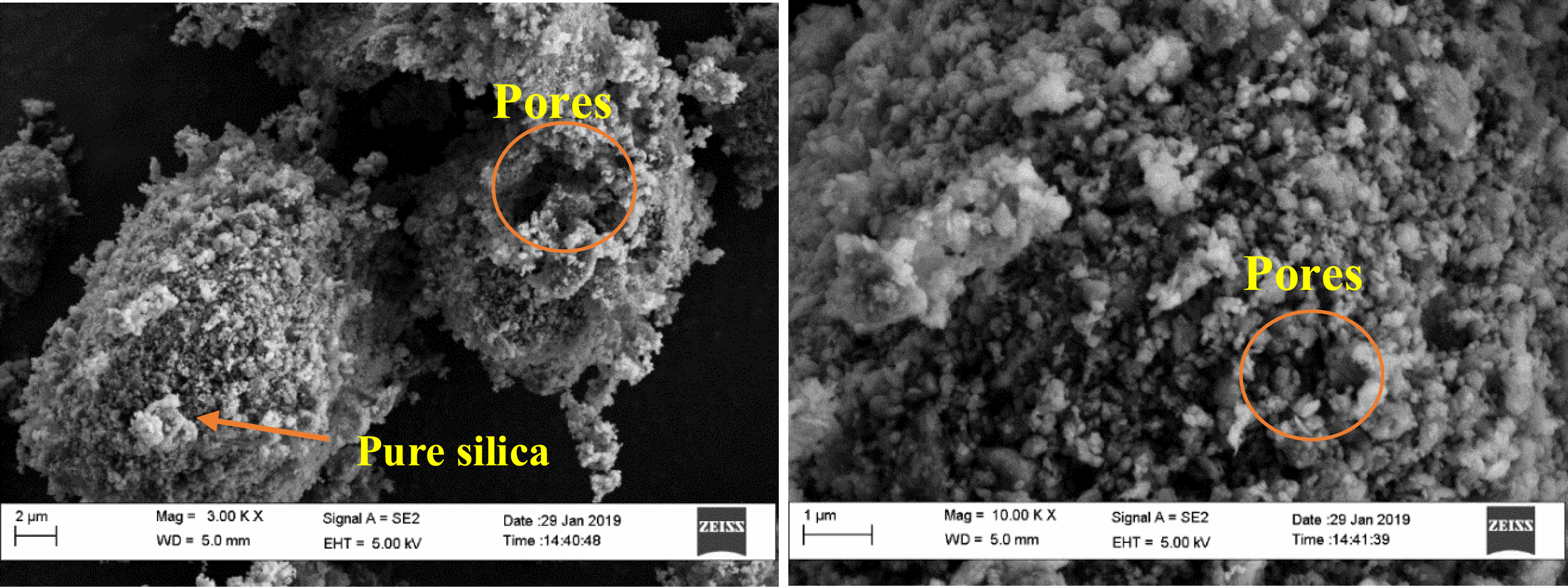
SEM images of natural zeolite.
Results and Discussion
Leachate characteristic
The major compositions of the leachate used in this study and the acceptable limits for discharge are given in Table 1. The temperature and pH fall within the acceptable values; furthermore, the pH complies with matured leachate range (pH >7.5 for landfill age >10 years) because of the depletion of volatile fatty acid in leachate that leads to the increase in pH value (Aziz et al., 2010). Leachate color is highly dependent on pH, increasing the pH consequently increases the color concentration, which is 16,200 Pt-Co as measured. The presence of high concentrate color is mostly contributed by the presence of nondegraded dissolved organics; these organic compounds may present in the form of recalcitrant material of humic acid (Bhalla et al., 2012). COD is found to be 2,500 mg/L, which indicates that APLS is in the methanogenic phase that has COD range between 500 and 5,000 mg/L (Mohamad Zailani and Zin, 2018). During the methanogenic phase, the bacteria reduce the organic strength of the leachate, which results in BOD5/COD ratio of <0.1. As can be seen in the table, the ratio is 0.016, signifying its low biodegradability. For ammoniacal nitrogen, the average is ∼1,100 mg/L, exceeding the Malaysia Environmental Quality Act (MEQA) 1974 limit of 5 mg/L, but is slightly lower compared with the data in the year 2017 (Farhana Zakaria and Abdul Aziz, 2018). The decrease in the ammonia concentration is probably because of the lack in the organic matter.
Characteristics of Leachate Sample
Environmental Quality (Control of Pollution From Solid Waste Transfer Station and Landfill) Regulation 2009 under the Laws of Malaysia Environmental Quality Act (MEQA) 1974.
COD, chemical oxygen demand.
Adsorption
Zeolite characteristic
The physical and chemical properties of natural zeolite were determined using the BET test before starting the experiments. The specific surface area and pore diameters were 11.19 m2/g and 2.8 nm, respectively, which falls under mesoporous size distribution adsorbents (2.0–50.0 nm) as adopted by the International Union of Pure and Applied Chemistry. Mesoporous materials are known to be excellent host supports because of large, uniform pore diameters and a high surface area (Ramesh et al., 2014). The shape and size of the zeolite crystals were elucidated using SEM images. Figure 2 shows a nanostructural zeolite material with extensive structural damage and spherical particles on the surface, which indicate the presence of pure unreacted silica (Pereira et al., 2019). This result supports the XRF analysis that indicates the presence of Si, Al, and O in the aggregated zeolite materials. The silicon oxide content is 74.17%, whereas the aluminum oxide content is 13.42% by weight. SiO2 and AlO2 are fundamental units sharing oxygen ions in the zeolite. Given that silicon ion has +4 and aluminum has +3 charges, the cationic charge of metal or hydrogen ion in water balances the negative charge on the aluminosilicate framework. The chemical compositions were also supplemented with potassium, calcium, and iron oxides with percentages of 2.51%, 4.14%, and 2.24%, respectively.
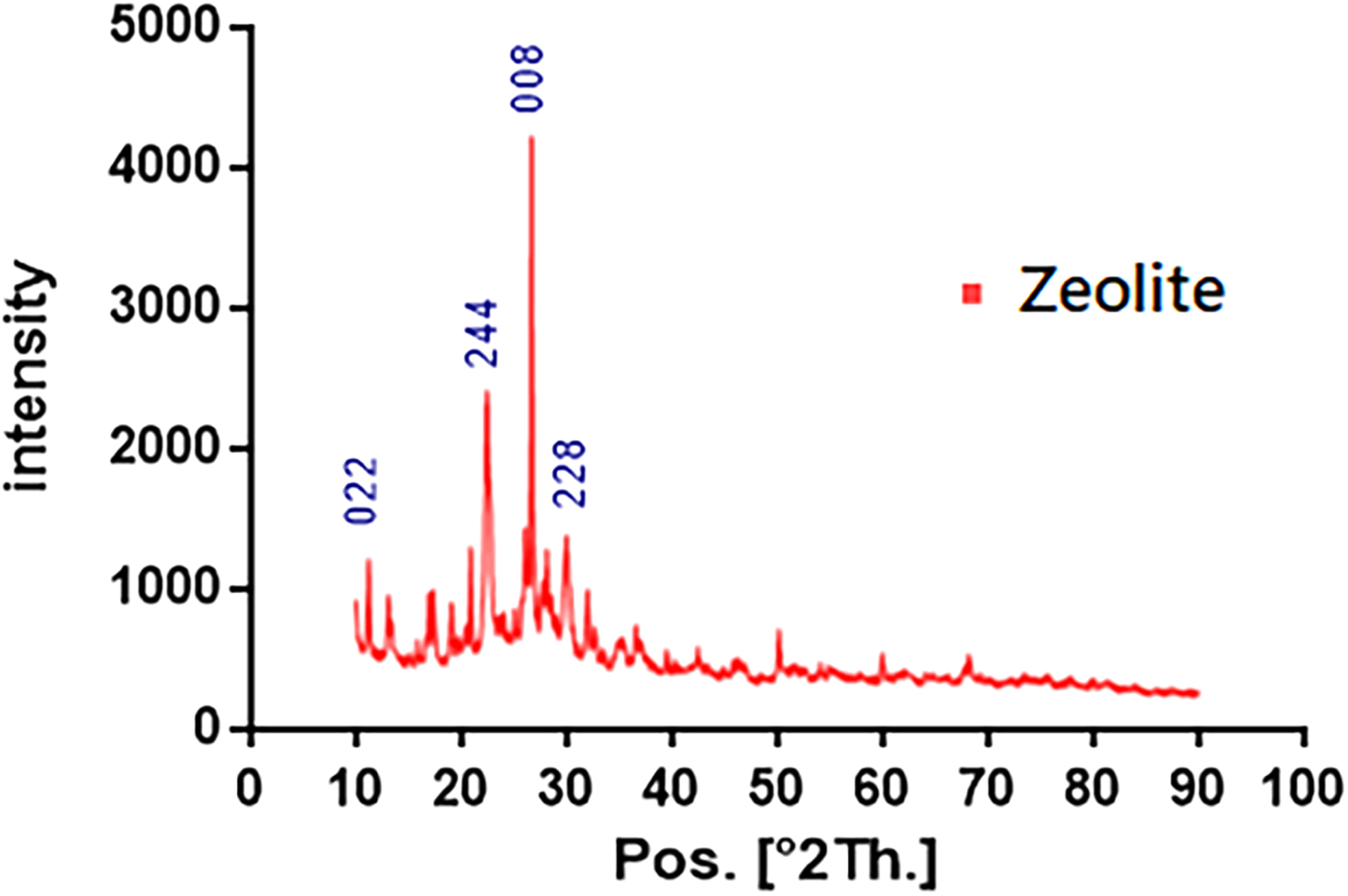
X-ray diffraction pattern of the zeolite sample.
The XRD results are consistent with the XRF analysis that confirmed the presence of potassium, aluminum, and silicates according to the chemical formula (Al54.7 K54.7 O384 Si137.3). XRD in Fig. 3 shows sharp peaks indicating the high crystalline nature of zeolite. Results indicate typical profiles of a Faujasite zeolite framework (Treacy and Higgins, 2007).
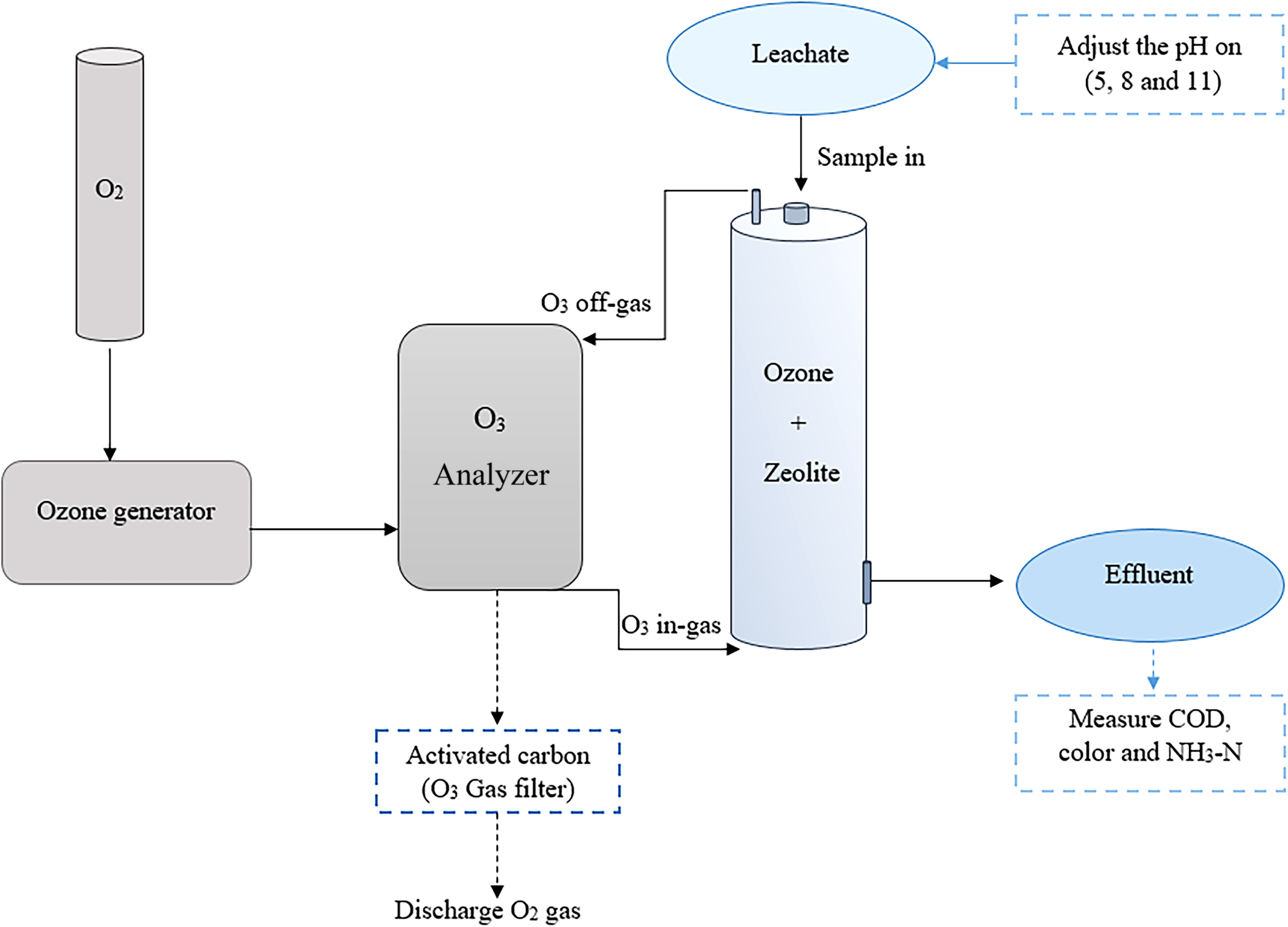
Schematic diagram for catalytic ozonation treatment with zeolite.
Batch adsorption studies
The potential of Faujasite in removing ammonia, COD, and color from leachate was evaluated through batch adsorption experiments. The effect of dosage and contact time was examined, and the results are summarized in Fig. 4.
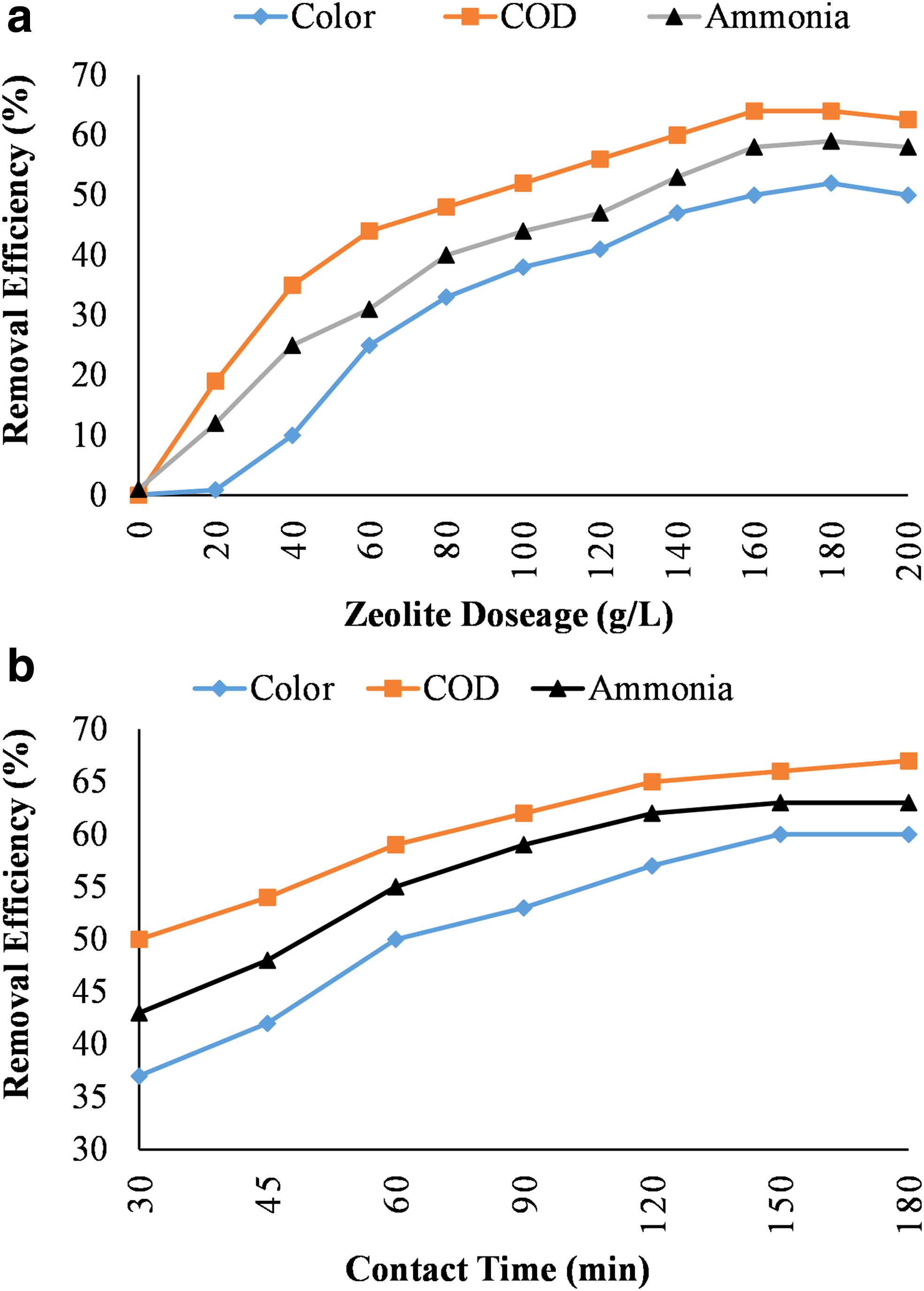
Removal efficiencies at:
Figure 4a shows that when the amount of zeolite increased from 0 to 160 g/L, the removal efficiency with dosage also increased. The reduction in COD, color, and NH3-N reached 62%, 50%, and 58%, respectively. This increase provides a greater surface area and, therefore, possible access to more interchangeable binding sites on the zeolite surface (Zwain et al., 2018). However, the removal only improved marginally when the adsorbent was further increased to 180 and 200 g/L. This result is because of the partial accumulation of adsorbent particles when overdoses cause fewer unsaturated adsorption sites (Mahdavi et al., 2018). Based on the findings, 160 g/L was chosen as an optimum dosage for the subsequent experiments.
Figure 4b shows that the adsorption of pollutants improved significantly by increasing the contact time from 30 to 120 min. The removal reached 66%, 57%, and 62% for COD, color, and NH3-N, respectively, at 120 min with the same operating conditions. This was attributed to the availability of vacant and unsaturated sites that were initially available for the adsorbate (Foo et al., 2013). After a few minutes, the number of involved sites increased, and fewer empty destinations opened up for the adsorbate. Therefore, the removal almost flattened when the contact time increased beyond 120 min. At this point, the molecules began to disperse through the inner surface of the adsorbent, a commonly gradual and slow occurrence (Rashid et al., 2016). This finding is consistent with those of Saltali et al. (2007) who obtained almost similar results.
Isotherm and kinetics
Table 2 lists the adsorption isotherm results at equilibrium conditions for all parameters. The color notably follows the Langmuir isotherm with a correlation factor (r2 = 0.91) higher than that of the Freundlich. Consequently, the adsorption of refractory organics that causes the leachate color exhibited a monolayer behavior with a maximum adsorption capacity of 24.5 mg/g. The linear plot of isotherm models for NH3-N and COD showed that the Freundlich model fitted better with the experimental data for both parameters with a value of r2 = 0.98 for NH3-N and r2 = 0.99 for COD. These results indicate that the adsorption occurs on heterogeneous surfaces, where the exponential spread of the active sites and the adsorption energy changes logarithmically (Zwain et al., 2018). The surface heterogeneity can be expressed by the slope (1/n), which ranges from 0 to 1; as the value approaches 0, heterogeneity increases (Bashir et al., 2010). The 1/n values were 0.78 and 0.9 for ammonia and COD, respectively. Hence, the Faujasite surface is less heterogeneous, which may reduce the adsorption strength.
Langmuir and Freundlich Isotherm Correlation Coefficients and Constants
Table 3 shows the results of kinetic calculations. The pseudo second-order model demonstrates a better match with the empiric values for all parameters. The correlation coefficient moves toward unity in all cases, with strong cooperation between the adsorption capacities calculated (qe) and those recorded during the experiment. All the adsorption frameworks compiled with the pseudo second-order kinetic model, and the controlling mechanism is the ion exchange or chemisorption (de Sousa et al., 2018).
Pseudo First-Order and Pseudo Second-Order Models Calculated Values
Ozonation
In this study, the highest O3 dosage that can be obtained by the instrument was 27 g/Nm3. This value was used for all the experiments given reports of better removal of various parameters at higher O3. At this dosage, the effects of pH and reaction time were examined.
Figure 5a shows the results, indicating that the color, COD, and NH3-N removal increased to 87%, 36%, and 22%, respectively, as the pH value of the solution changed from acidic to alkaline conditions (pH 3 to pH 9). Generally, ozone is an unstable gas that partially decomposes after interactions with water, free hydroxide radicals (OH•), which have redox potential and unselective nature that react with complex nonbiodegradable organic compounds more efficiently compared with the potential of direct ozone oxidation (Cortez et al., 2010). At alkaline conditions, more hydroxide ions (OH−) are available in water, serving as a motivator for ozone decomposition and creating more radicals that result in better removal, as shown in the following reactions (Leszczyński and Maria, 2018):
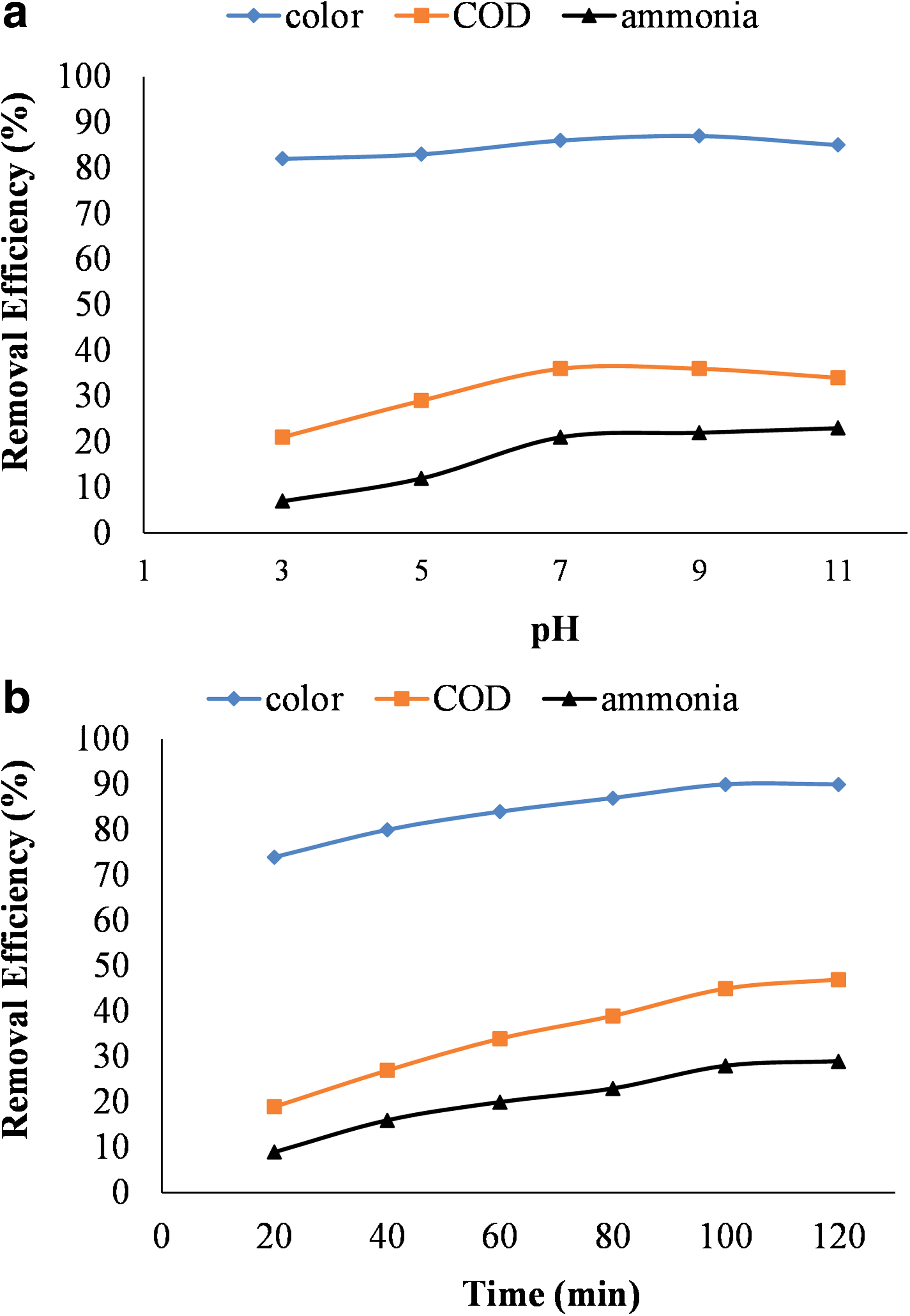
Ozonation removal efficiencies at
Table 4 shows the off-gas results of the reduction in O3 off-gas at high pH. These findings support the mechanism of ozone decay to hydroxide radicals at this pH range. However, increasing the solution beyond pH 9 shows the adverse effect of decreasing removal percentage, credited to bicarbonate particles in water that changes into carbonate particles at pH >9. Carbonate particles represent obstacles for HO• and hinder the oxidation reaction (Cui et al., 2014). However, increasing the pH of the solution beyond 9 causes an adverse effect; although the OC remains high at pH = 11, removal efficiency had no notable improvement. This result is credited to bicarbonate particles in water that can be transformed into carbonate particles at pH >9, thereby represent obstacles for OH• and hinder the oxidation reaction (Cui et al., 2014). Thus, the possibility of by-products or existence of scavengers that affect the oxidation reaction increases.
pH Effect on Ozone Consumption (In-Gas Ozone 27 g/Nm3).
The second set of batch ozonation experiment was conducted at pH = 9. Figure 5b shows the rapid depletion in the concentration of color, COD, and NH3-N at the early stage of the reaction because of the availability of easily oxidizable compounds, which are represented by the aromatic acids (Cortez et al., 2010). After 60 min, the removal was 84%, 34%, and 20% for color, COD, and NH3-N, respectively, in line with the high O3 consumption (Table 5). Over time, the reaction becomes gradual as the molecular O3 rapidly breaks the rings of the aromatic shapes and creates limited by-products in their interaction with O3 (Singh et al., 2014). The COD, color, and ammonia removal almost reached equilibrium after 100 min, with 45%, 90%, and 28% reductions, respectively.
Ozone Consumption with Time (In-Gas Ozone 27 g/Nm3)
Ozone can effectively oxidize hydrophobic and micromolecular organics with low aromatic and humidification levels, which are present in large quantities in mature leachate. This decomposition causes a significant decrease in the color concentration by the ozone reaction. However, the reaction is less convincing in the mineralization of the compounds framed after the ring-opening reaction of humic substances, such as aliphatic acids (Wang et al., 2019). Accordingly, ozone can easily damage organic materials with high molecular weight, whereas the general organic removal has been very troublesome. This result demonstrates better color removal compared with COD (Chen et al., 2019). On the contrary, ammonia in water is present in two forms, unionized NH3 and ionized as
Heterogeneous catalytic ozonation with Faujasite
Faujasite was added inside the ozone reactor at a dosage of 80 g/500 mL (16 g/100 mL as obtained from batch adsorption study). Three experiments were conducted under different pH conditions (5, 8, and 11), all with 27 g O3/Nm3 and run for 100 min. Figure 6 provides the outputs.
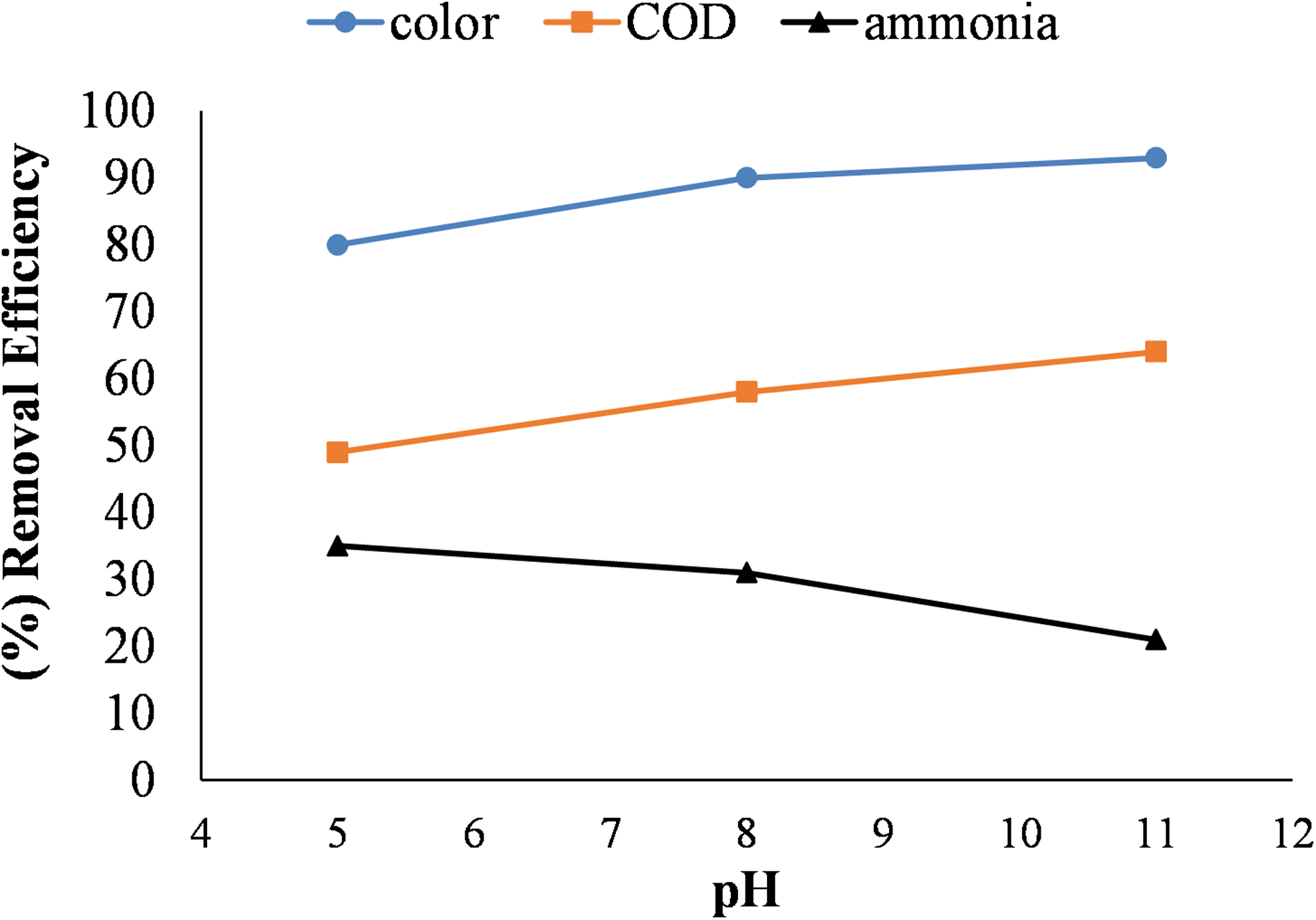
Removal efficiencies at different pH using heterogeneous catalytic ozonation with Faujasite.
The results indicate better removal of ammonia ions (35%) by catalytic ozonation at lower pH (pH 5) than that at pH 11. The main reason is the influence of OH− at a basic solution that results in a fully populated catalyst surface and decreases the adsorption capacity of the adsorbent (Ikhlaq et al., 2012). In acidic conditions, the solution has less OH− concentration, and thus the aqueous ozone is more stable. The Faujasite at this condition acts as a positive charge because the pH of the solution is less than its own pH (zeolite pH 6.5–7.5) (Valdés et al., 2009). Accordingly, Faujasite works well as a reactive surface that adsorbs ozone and ammonia ions and motivates their reaction on its surface. This indicates that Faujasite in acidic conditions works as a reactive surface for ozone with ammonia ions more than a catalyst to improve the reaction, which causes the removal. This assumption is supported by the off-gas ozone concentration recorded in this experiment (21.2 g/Nm3) and the OC (5.8 g/Nm3), which indicates that most of the inlet ozone was used in its original form and was not decomposed. Despite the improvement compared with that of single ozonation, the removal results for NH3-N is less than those of Kurniawan et al. (2006) who recorded up to 90% ammonia removal by heterogeneous catalyst ozonation with activated carbon.
However, higher pH notably exhibited better reductions for COD and color with 64% and 93% reduction at pH 11, respectively. High pH supports the degradation of macromolecular organic compounds in leachate more than the surface adsorption on zeolite (Amin et al., 2010). The negatively charged zeolites repel with alkaline surroundings, causing a surface buildup of H+ ions that limits the number of inhabitants in the adsorbed OH−. Thus, all the available OH− ions in the solution react with ozone and increase its decomposition to produce OH•, which has greater potential to degrade contaminants. Given that most of the in-gas ozone decomposed to OH• at these conditions, the off-gas ozone recorded was low (9.8 g/Nm3), whereas the OC was high (17.2 g/Nm3). These results are consistent with those of Leszczyński and Maria (2018), who obtained a 64% reduction in COD using catalytic ozonation with hydrogen peroxide. However, this study showed better results than those of Zakaria et al. (2015) who recorded 33% and 70% removal for COD and color, respectively, with ozone catalyzed with zirconium tetrachloride ZrCl4. Valdés et al. (2009) reported an increase in ozone decay rates in water, especially at high pH value, prompting more free radicals formation. The proficiency of ozone decay depends on the pH and on the surface charge of the catalyst.
The heterogeneous catalytic ozonation with Faujasite in this study showed a comparable reduction in color compared with that of single ozone treatment. However, the reductions in COD and ammonia were higher than those using ozone alone. These results could be further improved in a future study using different types of zeolite within the reaction chamber.
Biodegradability (BOD5/COD) ratio
Mature or old leachate solution already experienced long-term anaerobic conditions. During this period, the anaerobic microorganisms biodegraded numerous biodegradable organics and transformed them into strong aromatic structure residuals with the same form for benzene ring, hydrophobicity, and higher molecular weight. These subsequent results are quite difficult to biodegrade, and thus the biodegradability of mature landfill leachate used in this study is very low (0.016).
As the leachate is treated using ozone, the fundamental reaction depends on the degradation of these aromatic substances by the reaction of these structures with the radicals created by ozone decomposition. This reaction is precarious and can be a step by step breakdown, which destroys the benzene rings and mineralizing the resulting intermediate substances to H2O and CO2 (Cui et al., 2014). This procedure modifies the subatomic structure of refractory organic creating compounds that can degrade biologically, thereby increasing the BOD5 after the treatment, as given in Table 6. After treatment by heterogeneous catalytic ozonation with natural zeolite (Faujasite), the main expected mechanism is the enhancement in the production of radicals for the improved biodegradability of the leachate sample to 0.1.
Effect of Treatments on Biodegradability of Leachate
Conclusion
Three treatment methods were applied to treat stabilized landfill leachate. Firstly, adsorption on zeolite showed 62%, 66%, and 57% removal for ammonia, COD, and color, respectively. The second treatment was solo ozonation that exhibited 90%, 45%, and 28% color, COD, and ammonia reductions, respectively, after 100 min of reaction at pH 9. Finally, catalytic ozonation treatment with Faujasite revealed that changing the pH of the solution exhibited different removal mechanisms and affected the catalyst performance. At low pH, Faujasite acts as a reactive surface that adsorbs the pollutants and the ozone gas, providing a good surface for the reaction. The ammonia removal improved to 35%, which is higher than that of ozone alone. For COD and color, higher removal was achieved at alkaline conditions where the surface of zeolite enhances the ozone decomposition and the formation of hydroxyl radical. The biodegradability of leachate improved from 0.016 to 0.1 in terms of the BOD5/COD ratio, resulting from the elimination of a small nonbiodegradable organic molecules that decreases COD. Thus, Faujasite augmented in the ozonation enhances the removal of pollutants in stabilized leachate. These results could be further improved in a future study using different types of zeolite. Determination of the by-products after treatment is also recommended.
Footnotes
Acknowledgments
The authors thank Universiti Sains Malaysia (USM) for the facilities accorded to the study. The authors also acknowledge the support given by the School of Materials and Mineral Resources Engineering, USM for access to the use of special equipment.
Author Disclosure Statement
No competing financial interests exist.
