




Abstract
Photocatalyst is a key factor to affect the photoreduction performance. However, the cost of preparing catalysts is relatively high and can be reduced by using waste-based materials. In this study, waste printed circuit boards (PCBs) were used as copper sources to prepare waste-based Cu2O photocatalyst for photocatalytic reduction of Cr(VI) by chemical precipitation method. Under visible light, the influence factors of photocatalytic reduction activity, such as light intensity, pH, and catalyst dosage, were investigated. Then, the effects of photocatalytic reduction of Cr(VI) by pure Cu2O, purified Cu2O and waste-based Cu2O photocatalysts were compared. The result indicated that the photocatalytic reduction of pure Cu2O and purified Cu2O were similar, higher than that of waste-based Cu2O. X-ray diffraction (XRD) analysis indicates that no new phases were formed in the three catalysts, but their morphologies observed by scanning electron microscope energy-dispersive X-ray spectroscopy (SEM-EDS) was found that the pure Cu2O and purified Cu2O are cubic, whereas the waste-based Cu2O is spherical and contains impurity Sn. It is considered that morphologies and impurity of the catalysts are the key factors for photocatalytic reduction efficiency. Finally, the electron transfer rate and the photocurrent response performance verified that the photocatalytic effect of pure Cu2O and purified Cu2O were better than that of waste-based Cu2O. It is believed that the copper from waste PCBs can be used as high value-added copper material catalysts by an effective preparation process.
Introduction
Chromium and its compounds are widely used in metallurgy, paint, dyes, and other industries, so the wastewater that contains a large number of chromium ions was discharged. Cr(VI) ions are the most toxic in the wastewater containing chromium. It can take rainwater, rivers, and other carriers to penetrate into the surrounding ecological environment, which leads to the pollution of the water resources (Cheng et al., 2015).
There are many methods to treat the wastewater containing chromium ions, such as adsorption, ion exchange, membrane separation, bioremediation, chemical precipitation, and photoreduction (Cai et al., 2017; Etemadi et al., 2017; Lu et al., 2017; Wang et al., 2017; Yogeshwaran and Priya, 2017). But photocatalytic reactions are considered as an attractive, efficient, and clean method to convert toxic Cr(VI) into the less harmful Cr(III) (Li et al., 2018; Geioushy et al., 2020). TiO2 has highly active photocatalytic properties so widely applied for environmental purification as a well-known photocatalyst (Duan et al., 2018; Wu et al., 2018). However, TiO2 only absorbs <5% of the UV light in the solar spectrum due to its wide bandgap of 3.0–3.2 eV, which limits its photocatalytic efficiency and practical application (Wei et al., 2016; Dai et al., 2018). Some researchers have attempted to reduce the bandgap energy of TiO2 by doping anions (e.g., N) or cations (e.g., Ho, Sm) (Yuan et al., 2006; Shi et al., 2008, 2009). However, the rare earth metals doped with TiO2 are expensive, and the fast recombination of conduction band electrons and holes limited the effectiveness of these methods (Daghrir et al., 2013).
Some researchers are looking for semiconductor materials that are cheap and use sunlight directly. Cuprous oxide (Cu2O) is a common p-type semiconductor with 2.0–2.2 eV, and nontoxicity, low cost, and high environmental ability. Because of its narrower bandgap, higher visible light absorption and better electron hole separation than that of TiO2, and synthetic material copper is cheap. Cu2O is promising applications in solar energy conversion, photocatalytic degradation of organic pollutants and water decomposing into O2 and H2 under visible light (Le et al., 2018). R.A. Geioushy synthesized GN/Cu2O and GN/ZnO/Cu2O catalysts, and coated them on copper foil to make high-efficiency electrode for selective conversion of CO2 into ethanol and n-propanol, respectively (Geioushy et al., 2017a,b). A natural green of guava fruit juice and Fehling's solution and simple chemical precipitation method was used to prepare octahedral shape of Cu2O NPs, which treated with visible light the degradation efficiency of methylene blue for 60 min 91.76% (Muthukumaran et al., 2019). In addition, adjusting the concentration of EDA and NaOH could obtain different morphologies of Cu2O such as spherical and octahedral, which demonstrated different photocatalytic activities for two dyes (methyl orange and Congo red), which was hollow octahedral morphology > hollow sphere morphology > solid octahedral morphology (Feng et al., 2012).
However, Cu2O crystals of diverse shapes were found to have only 40% the reduction efficiencies of Cr(VI) in 3 h under visible light (Qin et al., 2015). In the acidic medium, Debabrata Pradhan achieved Cu2O cubes to reduce 99% Cr(VI) without light irradiation in a short span of 4 min (Mishra and Pradhan, 2016).
At present, the use of waste-based preparation of photocatalysts to further reduce costs is a new research focus. Electronic waste has been widely concerned as a waste-based resource, and printed circuit boards (PCBs) are an indispensable and important part of it. Waste PCBs contains about 20 wt.% copper as metal component (Zeng et al., 2017). Therefore, it is of great significance to recycle these copper resources from waste PCBs and use it. Xiu and Zhang, 2009, prepared the Cu2O/TiO2 photocatalyst from waste PCBs by electrokinetic process, and applied it to the photocatalytic degradation of methylene blue. The highest photocatalyst activity could be obtained by 4.53 wt.% Cu2O deposited amount, which was prepared by 6 h electrokinetic treatment. Moreover, size-controlled preparation of Cu2O nanoparticles was also researched in the same process (Xiu and Zhang, 2009, 2012). Up to now, there have been few studies of waste-based Cu2O prepared photocatalyst from waste PCBs by simple chemical precipitation method and used for photocatalytic reduction of Cr(VI).
In this article, waste PCBs were used as raw materials to prepare waste-based Cu2O photocatalyst by simple chemical precipitation method. The effects of waste-based Cu2O at different light intensity, pH, catalyst dosage, and initial Cr(VI) concentration on the photocatalytic reduction of Cr(VI) were investigated. And the pure Cu2O, purified Cu2O and waste-based Cu2O were compared for photocatalytic reduction of Cr(VI) under visible light illumination. To analyze the reasons for the differences in photocatalytic reduction effects of the three catalysts, various techniques such as a scanning electron microscope energy-dispersive X-ray spectroscopy (SEM-EDS), X-ray diffraction (XRD), electrochemical impedance spectroscopy (EIS), and photocurrent response performance were performed to characterize the morphologies, crystalline phase, and electron transfer rate of those catalysts.
Experimental Section
Materials
The waste PCBs powders were obtained by a local solid-waste treatment factory. There were 93.68% (wt.%) metal and 6.32% (wt.%) nonmetal. The content of metal powders was determined by Inductively Coupled Plasma Atomic Emission Spectrometer (ICP-AES, Prodigy, LEEMAN Company), and shown in Table 1. All reagents were analytical grade and obtained from Sinopharm Chemical Reagent Co. Ltd., China. Nitrogen was obtained from Shanghai Purification Gas Co. Ltd., China, and its concentration can reach 99.99%.
The Element Composition and Content in Metal Powder
Methods
Three hundred milliliters of H2SO4 (20%, v/v%) and 10 mL of H2O2 (30%) were added into 50 g waste metal powders with magnetic stirring for 2 h to obtain solution A (Table 2). 6.25 g CuSO4·5H2O of analytical grade was dissolved in 50 mL deionized water to obtain solution B (Table 3). Two hundred milliliters solution A recrystallization obtained crystal copper sulfate, and 6.34 g of it was dissolved in 50 mL deionized water to obtain solution C (Table 4).
The Element Composition and Content in Waste-Based Copper Sulfate Solution
The Element Composition and Content in Pure Copper Sulfate Solution
The Element Composition and Content in Waste-Based Copper Sulfate Solution After Recrystallization
One hundred milliliters of NaOH aqueous solution (1.5 M) was added into solution A, solution B, and solution C in the 500 mL beaker, respectively. After stirring for 30 min, 10 mL ascorbic acid aqueous solution (1 M) was added into the aforementioned solution and stirred for 30 min, respectively (Muthukumaran et al., 2019). The products from the beaker were collected by centrifugation and washed at least three times with anhydrous ethanol and deionized water, then dried in a vacuum oven at 60°C for 8 h, marked as waste-based Cu2O, pure Cu2O, and purified Cu2O, respectively.
Characterization of Cu2O photocatalyst
The phase structure of the samples was analyzed by XRD (D/MAX2500V+/PC, Science Electric Co., Ltd., Japan) with Cu Kα (λ = 1.5406 Å) radiation at 18 kV. The microstructures were investigated by a SEM-EDS (JSM-6700F, Royal Dutch Philips Electronics Ltd., Eindhoven, Netherlands) at an accelerating voltage of 20 kV. The photocurrent-time curves were measured using the standard three-electrode configuration of the CHI660E electrochemical workstation at a frequency of 10 s for switching on and off lights. The detailed information of test method was obtained from the reference (Wei et al., 2018).
Photocatalytic degradation of Cr(VI) by waste-based Cu2O
The photocatalytic activities were evaluated by the photoreduction of potassium dichromate (K2Cr2O7) aqueous solution under the visible light illumination at about 20°C. Nitrogen was pumped into the K2Cr2O7 solution at a rate of 300 mL/min for 30 min. The photodegradation reactions were conducted in a quartz reactor equipped with a 300 W Xe lamp (or 0, 100, 200, 500 W) with a UV cut filter (λ > 420 nm). One hundred twenty-five milligrams (or 25, 75, 175, 225 mg) of photocatalyst was added into 250 mL potassium dichromate (K2Cr2O7) aqueous solution (50 mg/L; or 20, 35, 65, 80 mg/L); then the solution was adjusted pH to 5 (or 2, 3, 4, 6) with dilute sulfuric acid and sodium hydroxide, and magnetically stirred in the dark for 60 min. Under 3 h Xenon lamp irradiation, 3 mL suspension was taken at every 30 min intervals, centrifuged and analyzed with a spectrophotometer (U3010, TECHCOMP Ltd., Japan) to test the concentration of Cr(VI). The photocatalytic reduction efficiency of Cr(VI) was calculated as follows:

In Equation (1), A0 is the initial absorption value of Cr(VI) solution at the maximum absorption peak, and At is the absorption value of the Cr(VI) solution at the maximum absorption peak at a certain moment of illumination.
After the first photocatalytic reduction of K2Cr2O7 solution for 3 h by waste-based Cu2O, the waste-based Cu2O was filtered through a sand core funnel, then washed with deionized water for five times, and dried in a vacuum oven at 60°C for 24 h. The dried catalyst was used in five cycles of experiments under the same conditions as the previous reaction.
Results and Discussion
The effects of different factors on photocatalytic reduction of Cr(VI) in waste-based Cu2O
The efficiency of photocatalytic reduction of Cr(VI) is affected by different factors such as light intensity, solution pH, catalyst dosage, and initial substrate concentration. Then, these factors on photocatalytic reduction of Cr(VI) in waste-based Cu2O were discussed.
Effect of dissolved oxygen
Generally, the photogenerated electrons in the reaction system can be absorbed by dissolved oxygen and reduced to superoxide radicals, which will consume the photogenerated electrons in the system and compete with the processed metal ions, thereby it will reduce the photocatalytic reduction efficiency (Xi et al., 2019).
Figure 1a shows that the nitrogen system has no obvious promotion effect for improving the photocatalytic reduction reaction. To further investigate the role of O2, the photoreduction efficiency of Cr(VI) as a function of time with p-benzoquinone (BQ) by Cu2O catalyst was done in Fig. 1b. It was found that photocatalytic reduction efficiency of Cr(VI) has improved slightly with the addition of BQ (the superoxide anion radical (·O2−) scavenger). So the content of ·O2− in the reaction solution was too low to affect on the photocatalytic reduction of Cr(VI) by waste-based Cu2O.
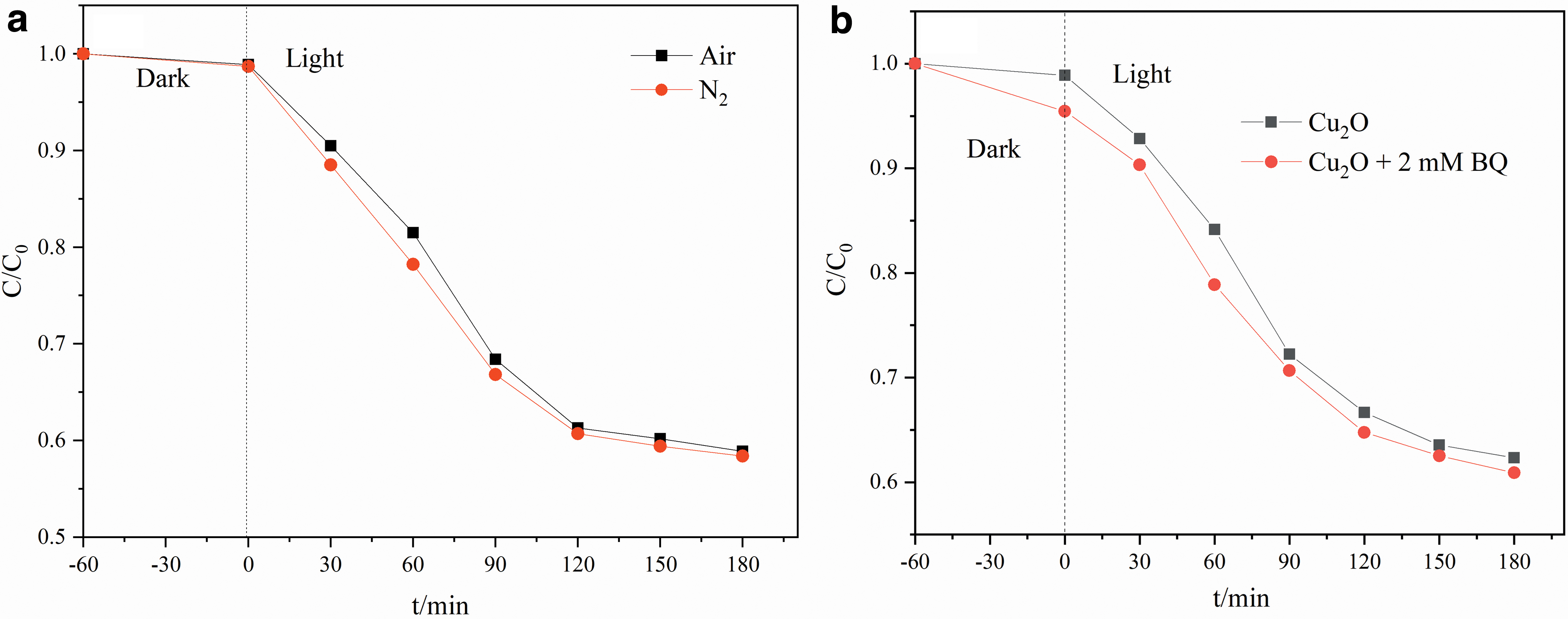
Effect of dissolved oxygen on photocatalytic reduction of Cr(VI)
Effect of light intensity
The photocatalytic reduction reaction uses light energy to excite reduced electrons on the surface of the semiconductor catalyst and can deal with heavy metal ions. So the intensity of light can affect the photocatalytic reduction effect (Dai et al., 2018).
Figure 2 shows that the effect is enhanced with the increase of light intensity. This is because light can stimulate the generation of electron-hole pairs on the photocatalyst surface. With the increase of light intensity, there will be more and more electron-hole pairs in the system, thus improving the photocatalytic performance. When the light intensity is 300 W, the photocatalytic reduction rate of Cr(VI) reached 39.1%. After that, the light intensity continued to increase, but the photocatalytic reduction effect changes little, which was due to the limited pairs of excited electron holes on the catalyst surface (Pu et al., 2017). So when the light intensity increased from 300 to 500 W, the reduction rate of Cr(VI) changed by 1.8%, and the catalytic reduction effect of Cr(VI) reached 40.91% in 500 W.
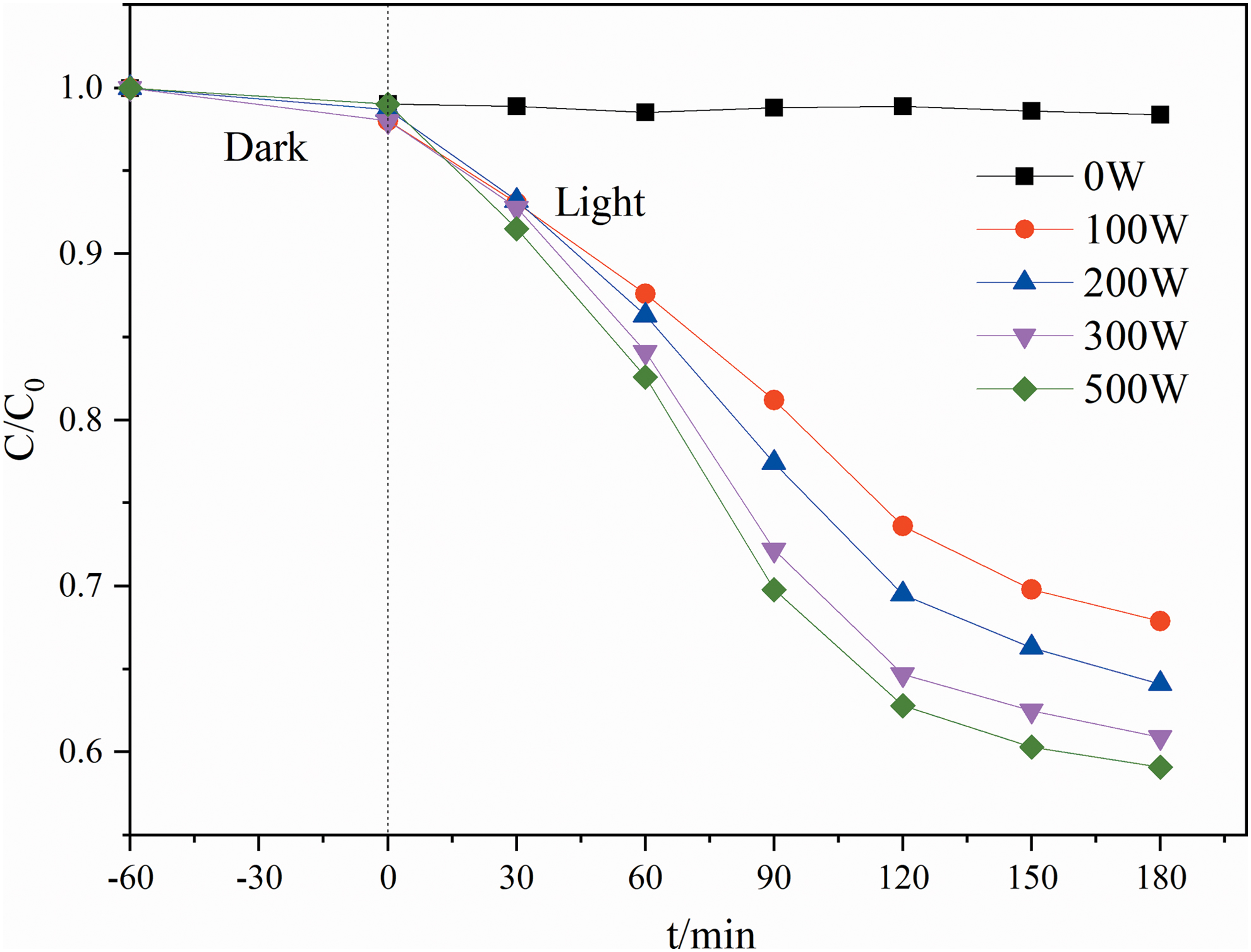
Effect of light intensity on photocatalytic reduction of Cr(VI).
Effect of pH
The solution pH not only affects the surface charge and energy band position of Cu2O, but also affects the form of Cr(VI), which in turn affects the efficiency of Cu2O photocatalytic reduction of Cr(VI) (Li et al., 2017a).
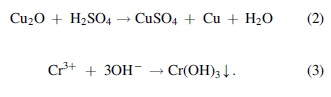
In acidic solution, waste-based Cu2O may be subjected to acid corrosion and photoetching, and even disproportionation. Figure 3 shows that when pH = 2, waste-based Cu2O occurs disproportionation reaction [Eq. (2)] to generate CuSO4 and Cu, which makes the catalyst lose its photocatalytic function (Meng et al., 1988). Therefore, the photocatalytic reduction efficiency of Cr(VI) was very low, which only reached 7.1%. With the increase of pH, and under the combined effect of Cr(VI) adsorption capacity, energy band position and waste-based Cu2O acid corrosion strength change, the photocatalytic reduction effect of Cr(VI) reached best when the pH is 5. When pH >5, the Cr(OH)3 precipitation [Eq. (3)] will be generated by photocatalytic reduction of Cr6+ to Cr3+ in solution, and the precipitated Cr(OH)3 will cover the active center of the catalyst, resulting in low photoreduction rate of Cr(VI) (Hua et al., 2011). This is because the initial concentration of Cr2O72− in the solution (6.8 × 10⁻⁴ M) was higher than 5.4 × 10⁻⁴ M, which is the concentration of Cr3+ ion in the solution when pH = 5 according to the solubility product of Cr(OH)3. The condition of the Cr3+ ion concentration forming Cr(OH)3 precipitation was reached in the solution.
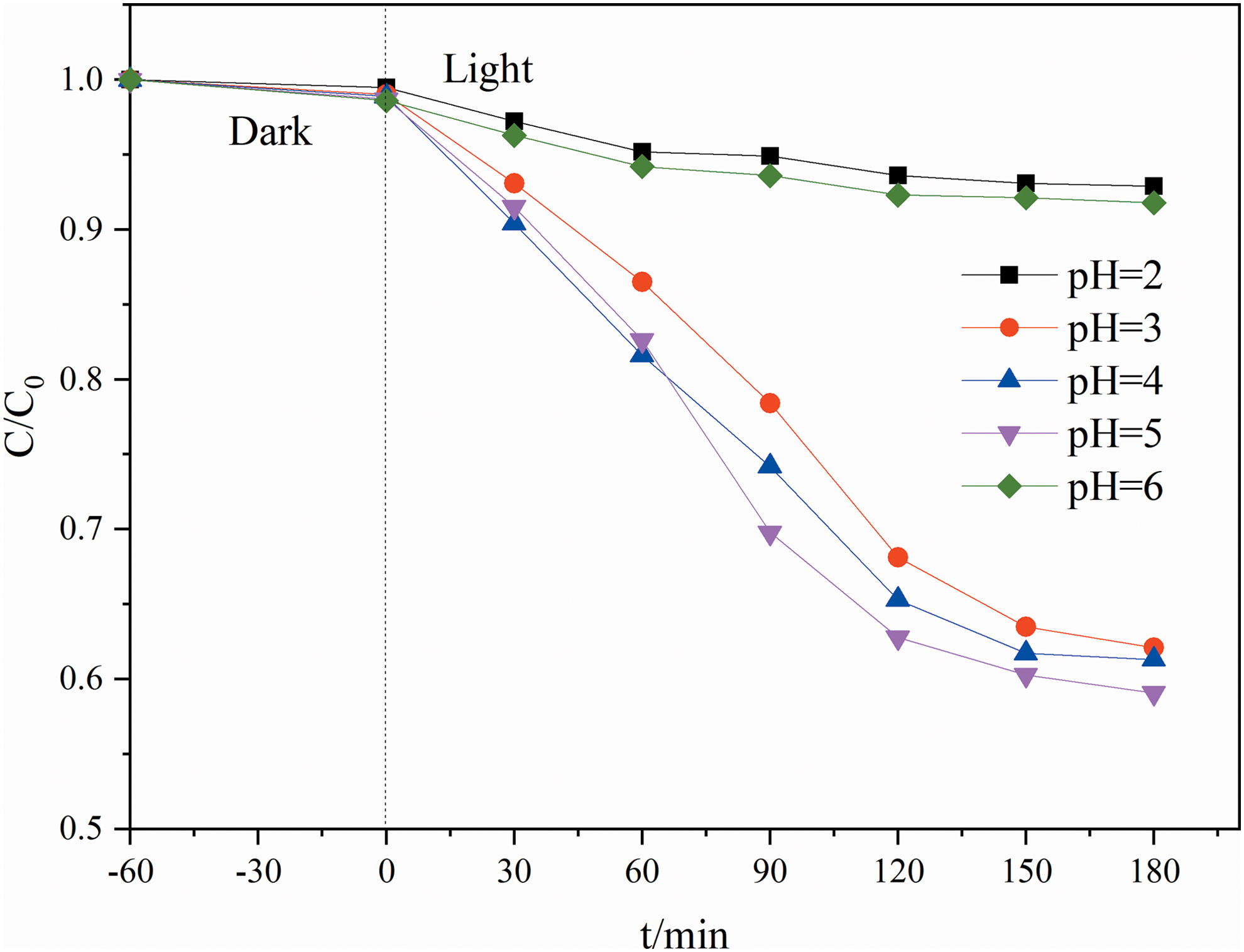
Effect of pH on the photocatalytic reduction of Cr(VI).
Effect of dosage
In the photocatalytic reduction of Cr(VI), the photocatalytic effect of waste-based Cu2O will be affected by the dosage of the catalyst (Sun et al., 2017). Therefore, an appropriate dosage should be selected.
When the dosage of waste-based Cu2O is <0.5 g/L, Fig. 4 shows that the catalytic activity increases with the increase of the dosage of catalyst, and when the dosage of waste-based Cu2O is 0.5 g/L, the photocatalytic reduction effect is the best. When the dosage of waste-based Cu2O exceeds 0.5 g/L, the catalytic activity decreased with the increase of the dosage of catalyst. It is possible that when the dosage of catalyst exceeds a certain amount, a part of the catalyst may polymerize, so that the catalytic active site on its surface will be reduced, resulting in the decrease of the catalytic activity (Zhou et al., 2017).
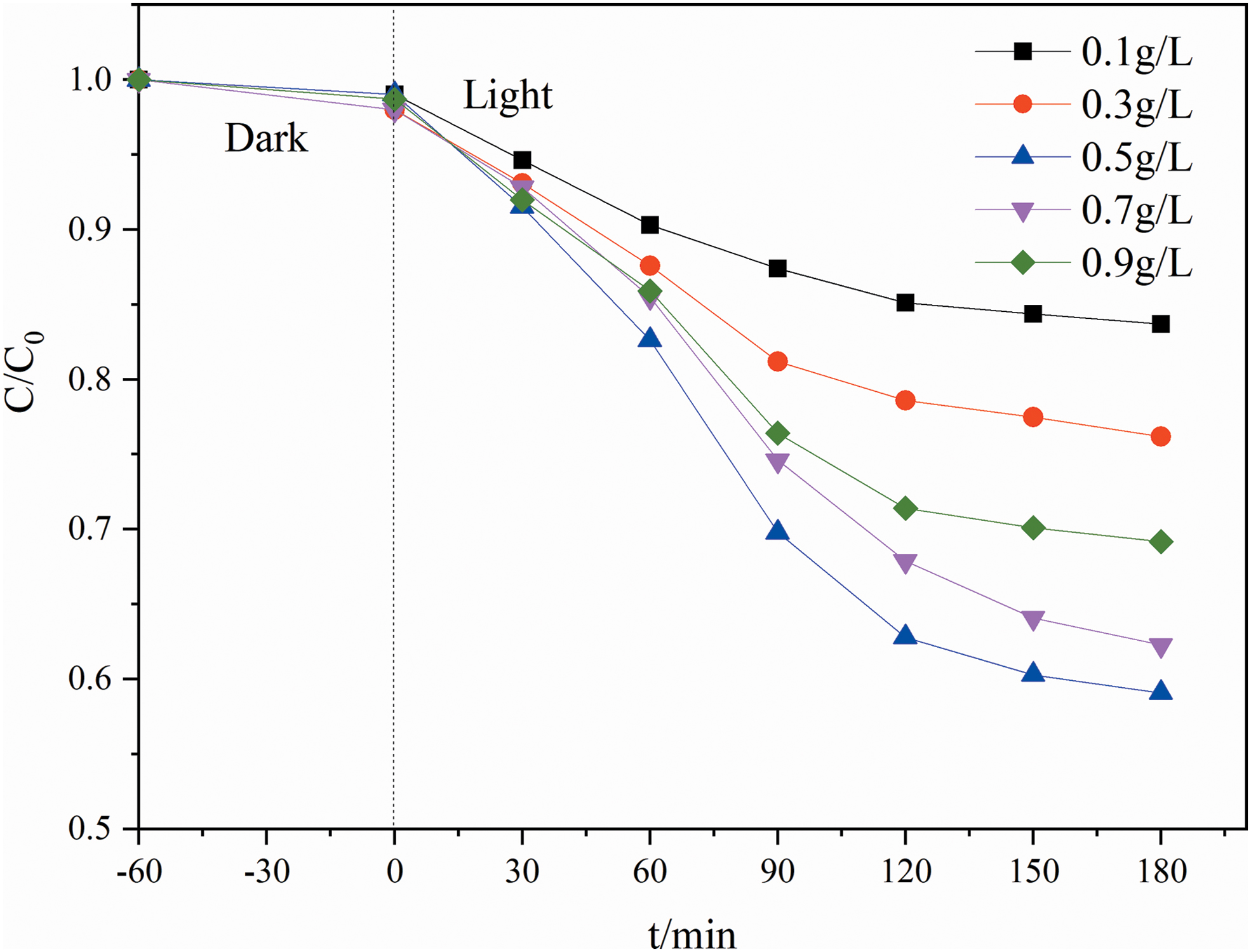
Effect of dosage of waste-based Cu2O on the photocatalytic reduction of Cr(VI).
Effect of Cr(VI) concentration
Figure 5 shows that when the concentration of Cr(VI) is <50 mg/L, the effect of waste-based Cu2O on photocatalytic reduction of Cr(VI) was enhanced with the increase of Cr(VI) concentration. The peak value was reached when the concentration of Cr(VI) was 50 mg/L. Then, when the concentration of Cr(VI) further increases, the reduction rate decreases. This is because the color of the K2Cr2O7 solution becomes darker and thicker with the increase of its concentration, which hinders the scattering of light (Cheng et al., 2015). It reduces the light source involved in the photocatalytic reduction reaction, resulting in a rapid decrease in reduction rate.
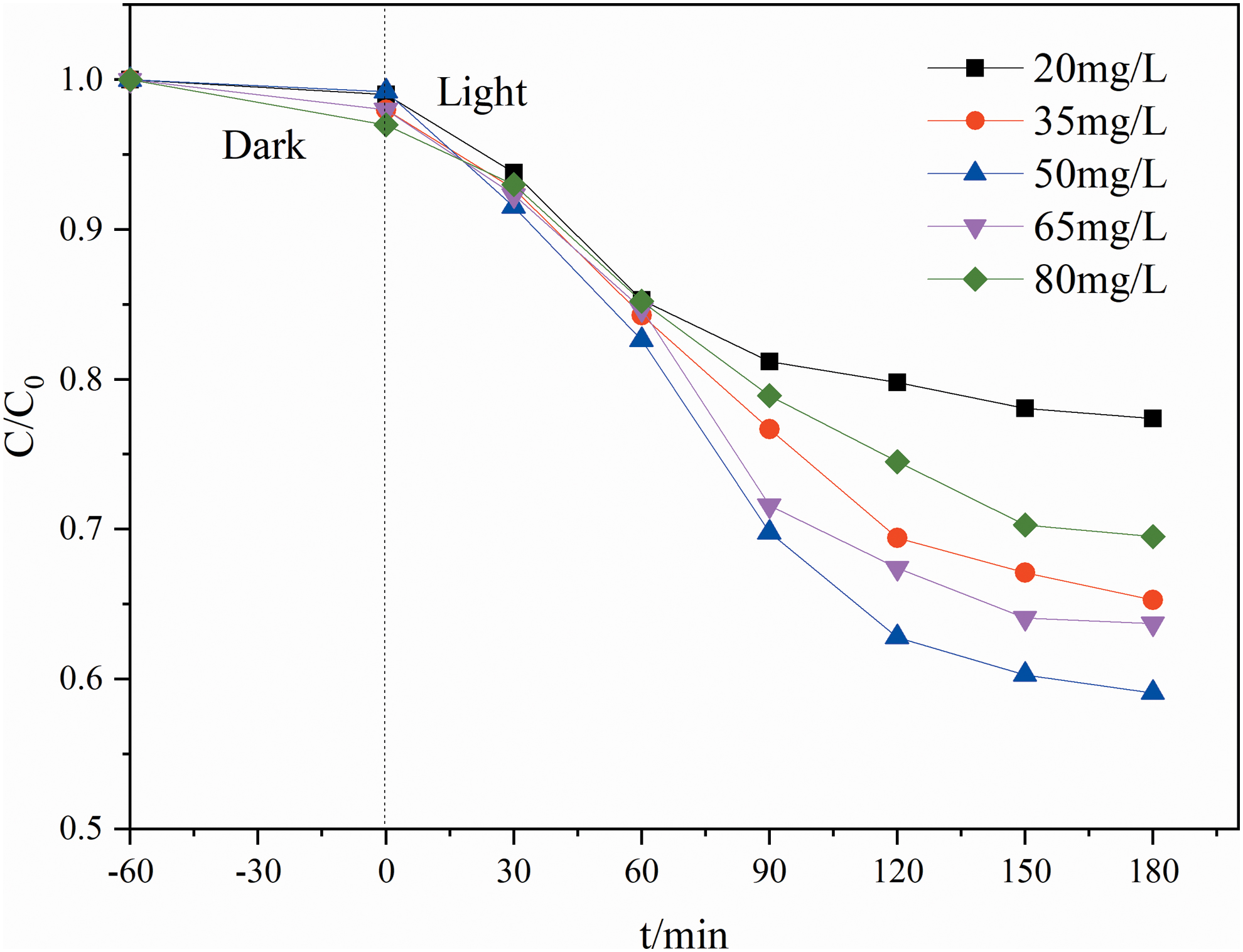
Effect of concentration of hexavalent chromium on the photocatalytic reduction of Cr(VI).
In summary, waste-based Cu2O catalyst has photocatalytic reduction effect on Cr(VI). Its catalytic mechanism can be represented by Fig. 6 and Equations (4)–(7).
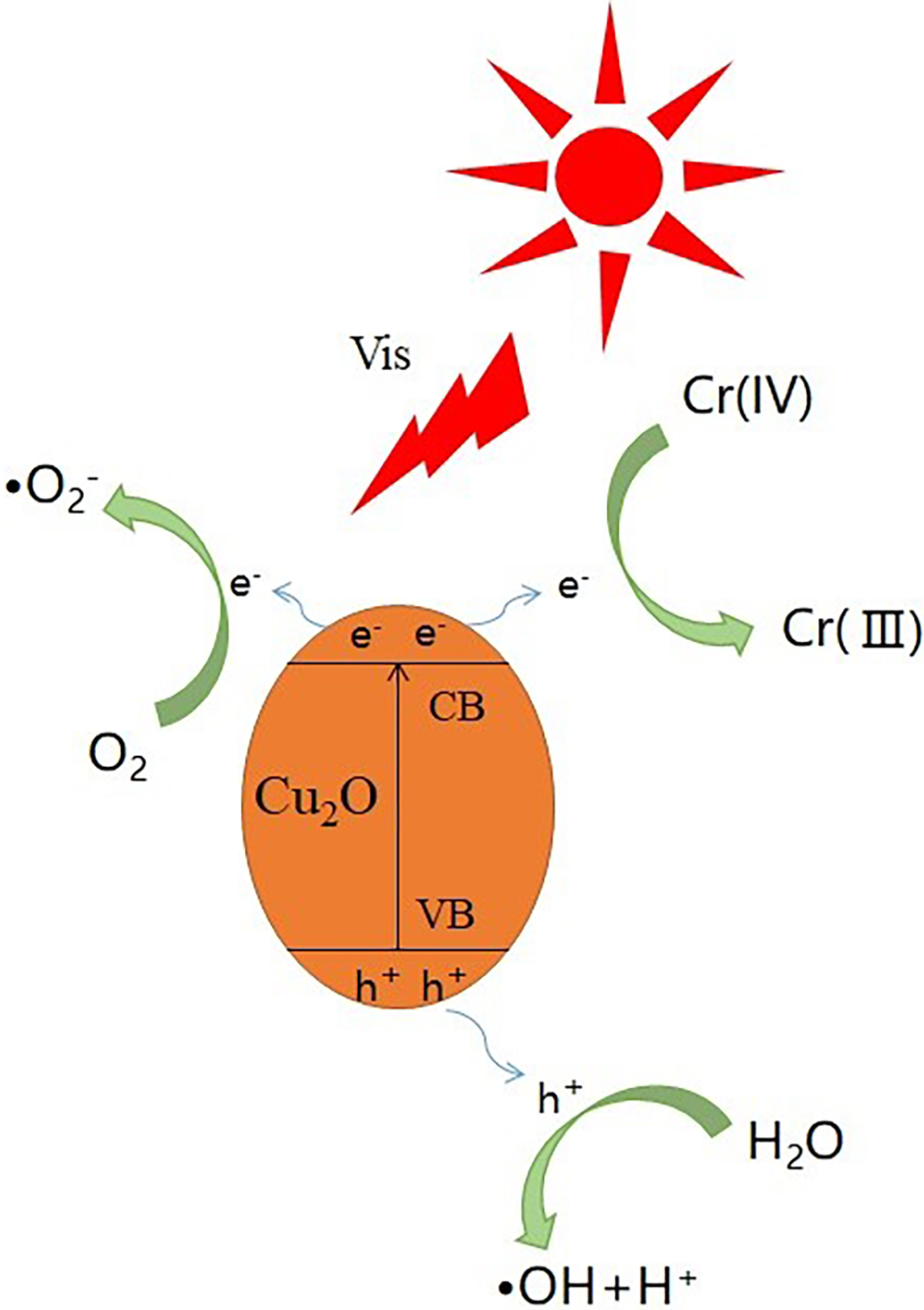
A schematic diagram of photocatalytic reduction mechanism of Cr(VI) over waste-based Cu2O under visible light irradiation.
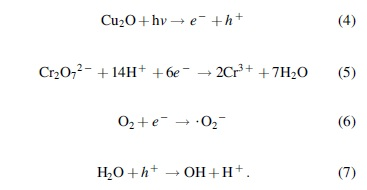
The waste-based Cu2O produced e−/h+ pairs under visible light. Cr2O72− was adsorbed on the Cu2O surface by simple electrostatic attraction. In the presence of electron donating acids, Cr(VI) was reduced into Cr(III), dissolved oxygen gas in reaction solution was reduced into·O2− by e−, and H2O captured h+ to occur OH (Mishra and Pradhan, 2016; Geioushy et al., 2020).
Photocatalytic cycle experiment of waste-based Cu2O
The reusability of the photocatalyst is a very important parameter in practical applications. Reuse can reduce the cost of industrial processing and save energy. At present, most of the research reports on photocatalysts have the problems that the photocatalysts have a low utilization rate of solar energy, and has been used many times to reduce the catalytic activity, which greatly restricts the practical application of the catalyst (Xu et al., 2020). Hence, it is very necessary to study the recycling of waste-based Cu2O.
Figure 7a shows that after five cycles of experiments, the photocatalytic performance of waste-based Cu2O gradually decreased from 40.91% to 31.35%, decreasing by 9.56%. There are two possible reasons. On the one hand, in the process of centrifugal washing, a small amount of waste-based Cu2O was lost. On the other hand, waste-based Cu2O is unstable. Figure 7b shows that the waste-based Cu2O was oxidized to CuO after five cycles. According to the JCPDS standard card (No. 48-1548), the diffraction peaks of (110), (002), (111), (−202), (202), (−311), and (220) exist at 33.85°, 35.11°, 37.56°, 46.78°, 52.46°, 57.24°, 65.06°, and 66.47°, respectively, which conform to the corresponding characteristic peaks of CuO. Therefore, the degradation of photocatalytic activity of waste-based Cu2O after five cycles is indeed caused by the oxidation of partial some waste-based Cu2O to CuO. It is inferred that in air environment, Equation (6) produced ·O2−, which has strong oxidizing property and oxidized Cu2O catalyst into CuO in acid environment [shown in Eq. (8)]. But the reaction was slow because of low content of ·O2− according to Figure 1b. Therefore, waste-based Cu2O catalyst failed gradually with the increase of cycle numbers. Finally, waste-based Cu2O catalyst failed gradually with the increase of cycle times. Therefore, the N2 environment may be more conducive to photocatalytic reduction of Cr(VI) of waste-based Cu2O catalyst, which needs further study in future.
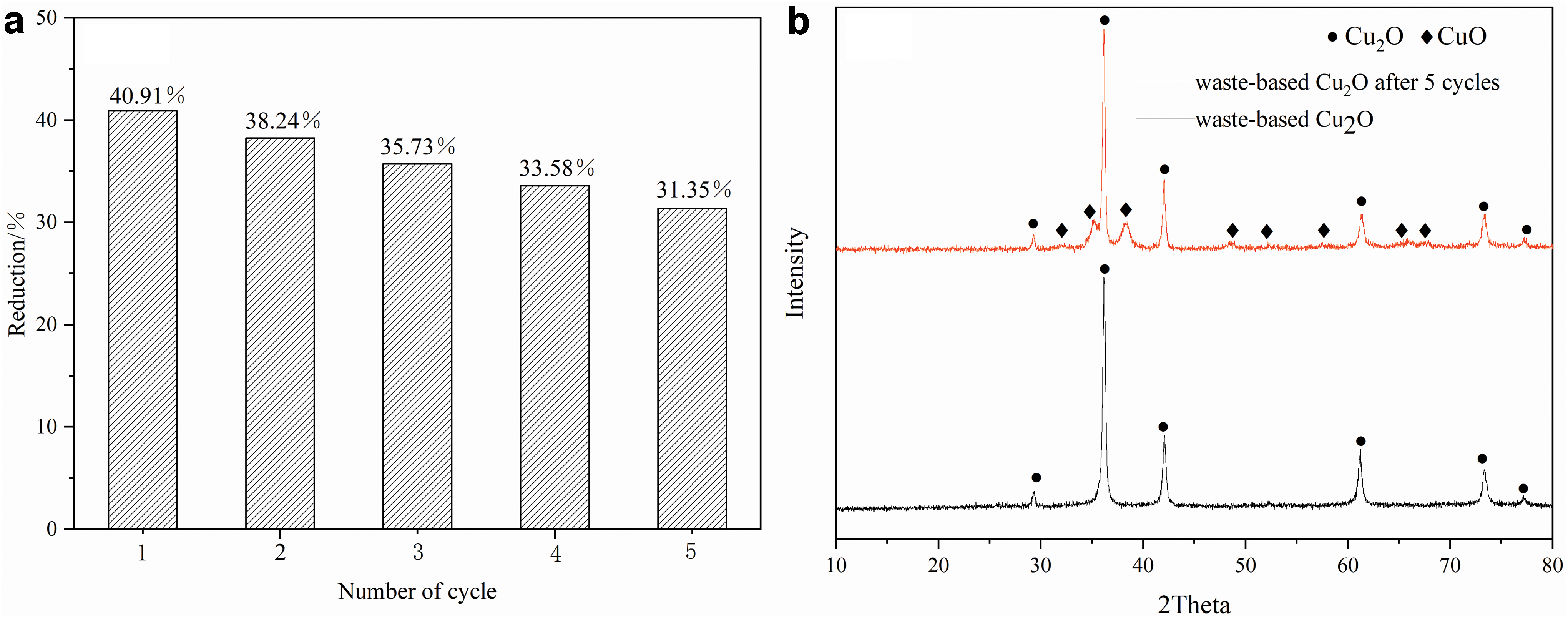
Cyclic reusability of waste-based Cu2O

Comparison of photocatalytic efficiency of catalysts prepared by different preparation methods
To explore the practicality of waste-based Cu2O catalyst, its photocatalytic effect was compared with that of pure Cu2O catalyst. However, the copper sources for the preparing of pure Cu2O and waste-based Cu2O are different, which are copper sulfate pentahydrate crystal and copper sulfate solution containing impurities, respectively. For the consistency of the experimental comparison, the waste-based copper sulfate solution was recrystallized to prepare purified Cu2O, and the photocatalytic effects of the Cu2O obtained by three different preparation methods were compared.
Figure 8 shows that after the recrystallization treatment of waste copper sulfate solution, the photocatalytic efficiency of the purified Cu2O and pure Cu2O is basically the same, respectively, 44.41% and 45.23%, which were both higher than that of waste-based Cu2O (40.91%). The photocatalytic efficiency values are similar to those in reference (Qin et al., 2015). The reasons are analyzed and explained later.

Photocatalytic reduction effect of Cr(VI) on different catalysts.
XRD analysis
According to Tables 2–4, there are not only copper ions but also other impurity ions in waste-based copper sulfate solution. To determine whether impurities affect the photocatalytic efficiency of the three catalysts, XRD was performed to characterize their crystalline phase. Figure 9 shows that for the three catalysts, six primary diffraction peaks are indexed at 29.61°, 36.50°, 42.41°, 61.53°, 74.68°, and 77.55°, which are attributed to the (110), (111), (200), (220), (311), and (222) planes of the Cu2O (JCPDS No. 78-2076). There are not impurity peaks in the XRD spectra of these three catalysts.

XRD patterns of waste-based Cu2O, pure Cu2O, and purified Cu2O.
SEM-EDS analysis
Relevant literatures show that the morphology and impurity of the catalyst will affect its photocatalytic efficiency (Feng et al., 2012; Xiang et al., 2014; Qin et al., 2015; Yuan et al., 2020). Hence, SEM-EDS was performed to characterize those catalysts. Figure 10b shows that after recrystallization treatment of waste copper sulfate solution, the morphology of purified Cu2O is cube, which is the same as pure Cu2O (Fig. 10a). But the morphology of waste-based Cu2O is spherical and contains impurity Sn (Fig. 10c). It shows that the photocatalytic reduction effect of Cu2O obtained by these three different preparation methods is different because of the morphology and impurity of the catalysts. During the synthesis of Cu2O, the alkaline environment in the reaction system will affect the morphology of the catalyst. The waste-based copper sulfate solution is more acidic, and under the same conditions of preparing Cu2O, it will consume a part of sodium hydroxide, making the alkaline environment of the reaction system and the Cu2O crystal growth were insufficient, so the morphology of waste-based Cu2O is spherical (Ding et al., 2013; Chu et al., 2017). In addition, the existence of impurities in the solution can change the binding relationship between solute and surface mesh, which affects the surface energy of different surface nets, and also changes their relative growth rate, and finally changes the Cu2O crystal morphology, leading to the effect of photocatalytic reduction base on the reduction of waste-based Cu2O (Xiang et al., 2014; Yuan et al., 2020). After recrystallization treatment of the waste-based copper sulfate solution, the impurities were removed and copper sulfate pentahydrate crystals are obtained. The purified and pure Cu2O was prepared under the same conditions, so it has the same morphology as pure Cu2O, and the photocatalytic reduction effect is also similar.

SEM-EDS images of pure Cu2O, waste-based Cu2O, and purified Cu2O. SEM-EDS, scanning electron microscope energy-dispersive X-ray spectroscopy.
EIS and photocurrent response performance analysis
The electron transfer rate of the three catalysts was tested by EIS. Figure 11a shows that the semicircle of purified Cu2O electrode is similar to that of the pure Cu2O, and both are much smaller than that of the waste-based Cu2O, indicating that the separation of the photocarriers is more effective in the purified Cu2O and pure Cu2O than waste-based Cu2O (Liang and Zhu, 2016; Wysmulek et al., 2017; Li et al., 2017b). It was also verified that the purified Cu2O and pure Cu2O had the same photocatalytic efficiency and both were higher than the waste-based Cu2O. Furthermore, a photocurrent response of the pure Cu2O, waste-based Cu2O, and purified Cu2O composites is shown in Fig. 11b. It can be observed that the resulting photocurrents are still stable and renewable after seven cycles. The photocurrent density of pure Cu2O (0.52 μA·cm−2) is the highest in three samples, the photocurrent density of purified Cu2O (0.49 μA·cm−2) is very close to that of pure Cu2O, and the photocurrent density of waste-based Cu2O (0.31 μA·cm−2) is the lowest. These results further illustrate that the photocarrier separation efficiency is pure Cu2O ≥ purified Cu2O > waste-based Cu2O.
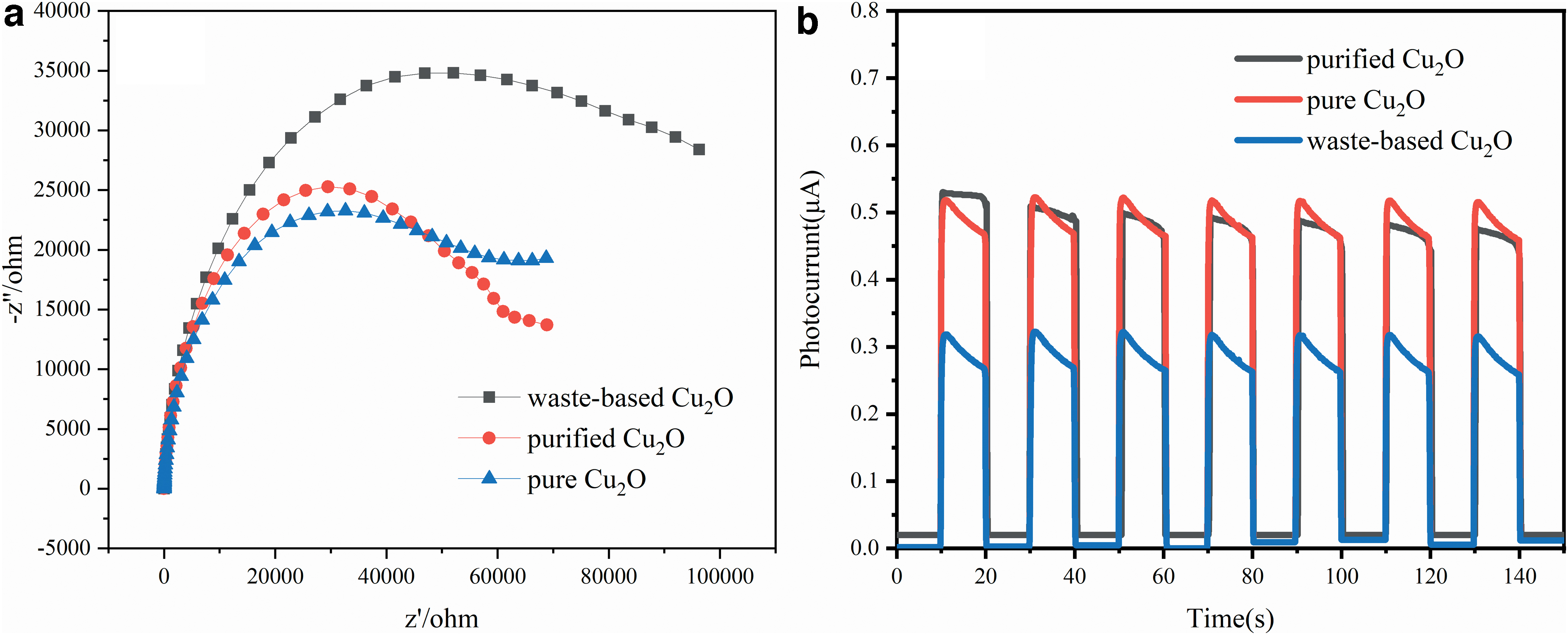
EIS and photocurrent response performance of the waste-based Cu2O, pure Cu2O, and purified Cu2O under visible light irradiation. EIS, electrochemical impedance spectroscopy.
However, the cost of the purified Cu2O prepared by the copper from WPCBs was different from that of the pure Cu2O prepared by CuSO4·5H2O of analytical grade. The price of >90% copper powders from WPCBs is about 3 WRMB/t. According to the data of this study, the cost of preparing 6.34 g CuSO4·5H2O by the copper powders is about 0.087 RMB, and the cost of 6.25 g CuSO4·5H2O of analytical grade is about 0.187 RMB. It can be seen that the cost can be saved by more than two times by the copper powders from WPCBs preparing Cu2O catalyst.
Conclusion
This study successfully used waste PCBs as copper source to prepare waste-based Cu2O photocatalyst by chemical precipitation method. Under the experimental condition that the light source is a 500 W xenon lamp, the waste-based Cu2O dosage is 0.5 g/L, the initial Cr(VI) concentration is 50 mg·L−1, the pH of the reaction solution is 5, and the reaction time is 3 h, the photocatalytic reduction efficiency of Cr(VI) by waste-based Cu2O is the best, which was 40.91%. And after five photocatalytic cycles experiments, its effect decreased from 40.91% to 31.35% because of Cu2O oxidation. Comparing the photocatalytic effects of Cu2O catalysts by different preparation methods, it was found that the photocatalytic efficiency of the purified Cu2O and pure Cu2O is basically the same, respectively, 44.41% and 45.23%, which were both higher than that of waste-based Cu2O (40.91%). There are not impurity peaks in the XRD spectra of these three catalysts. But their morphologies observed by SEM-EDS found that the pure Cu2O and purified Cu2O are cubic, whereas the waste-based Cu2O is spherical and contains impurity Sn. So it is confirmed that the morphology of the catalyst containing impurities can affect the photocatalytic reduction efficiency. EIS and photocurrent response performance analysis illustrate that the photocarrier separation efficiency is pure Cu2O ≥ purified Cu2O > waste-based Cu2O. This study provides a method of preparing a low-cost Cu2O catalyst by copper in waste PCBs. Through the recycling experiment of waste-based Cu2O, the stability of photocatalytic effect of Cu2O will be researched further in future.
Footnotes
Author Disclosure Statement
No competing financial interests exist.
Funding Information
The authors are grateful for support of National Key R&D Program of China (No. 2019YFC0408204), and National Key R&D Program of China (Nos. 2018YFC1903201 and 2018YFC0213605).