




Abstract
The generation of anthropogenic wastes, such as household human feces and kitchen waste, has resulted in a severe environmental impact. Sustainable management approaches to address disposal challenges and harness potential nutrient and energy values are urgently needed. This investigation assessed the anaerobic co-digestion of food waste and black water to identify the biochemical methane potential. The household kitchen waste showed improved performance at a dilution ratio of 50% with biochemical methane potential of 265 mL CH4/g volatile solid (VS), and that of the black water was 220 mL CH4/g VS without dilution. This trend indicates their easy biodegradation/digestibility and potential for energy recovery. The kitchen waste equal mix ratio of 50% v/v with the black water had the highest biochemical methane potential of 295.13 mL CH4/g VS when co-digested. High performance was due to the comparative balance in substrate concentrations that offered robust methanogenic activities without inhibitions. The effluent total chemical oxygen demand reduction of ∼90% and other physicochemical parameters showed that the codigestion treatment (kitchen waste and black water 50:50% v/v) was efficient. The codigestion route could offer a decentralized wastewater management system for energy recovery.
Introduction
The current global population has exceeded 7.6 billion and is projected to further increase to more than 9.2 billion people by 2020 (United Nations, 2017; Kim et al., 2019). The continuous population increase has resulted in the severe environmental impact associated with the generation of anthropogenic wastes, such as human feces and food waste. The amounts of these wastes in wet weight in human feces 350 g and that of food waste 400 g vary based on composition and diet customs (Colón et al., 2015; Wang et al., 2018). The collection, treatment, and holistic utilization of food waste remain limited, and feces are mainly flushed directly into the sewers of centralized sewage management plants (Kim et al., 2019). These wastes' severe environmental impact should be mitigated, and their inherent resources and the subsequent application in upstream wastewater treatment facilities should be harnessed without negative consequences. Zeeman et al. (2001) recommended decentralization or the source separation concept owing to the challenges of wastewater treatment plant management and highlighted three different types of waste stream sources for separation: gray water, black water, and domestic solid wastes.
From the energy and resource recovery viewpoint, anaerobic digestion (AD) is applied to treat black water and recover energy for methane from the generated biogas (Lettinga et al., 2001). Various consortia of microorganisms are responsible for individual degradation steps, which partially represent syntrophic interrelation and exhibit variable necessities in the environment (Angelidaki et al., 2018). AD has been extensively applied in the separate biodegradation of organic waste, such as food wastes (Giwa et al., 2019b) and black water substrates (Zhang et al., 2019). The decentralized anaerobic treatment presents the benefits of the energy balance of 200 MJ/person/year over a conventional system. In contrast to hydro, wind, and solar energy, the energy from decentralized anaerobic is entirely carbon-neutral and does not require transportation or complex external infrastructure for production.
Moreover, energy production is not susceptible to external factors and would not fluctuate because of price instability (Gell, 2008). In Northern Germany in Lübeck at a housing country estate called Flintenbreite with about 400 inhabitants, the source separation of domestic wastewater (black water, gray water, rainwater) at source was investigated. The shredding of kitchen refuse in a grinder to a maximum 2 mm was initially conducted. Kitchen refuse and black water were mixed in a feeding tank, and the mixture was pasteurized in a vessel before being fed into the anaerobic digester (Wendland et al., 2007). The biogas produced was utilized in a combined power and heat unit. The digested effluent was stored in a tank, and farmers could utilize it as liquid fertilizer in agriculture.
Despite the efficacy of AD in treatment and resource recovery, it faces the challenges of organic acid accumulation, ammonia inhibition, and process instability (Fagbohungbe et al., 2017; Capson-Tojo et al., 2019; Giwa et al., 2019c). Codigestion would offer an effective method to improve methane generation and balance the black water chemical oxygen demand (COD):N ratio with kitchen wastes (Zamanzadeh et al., 2016; Ros et al., 2017). High-strength black water contains high levels of nutrients (80–95%) and organic matter (above 50%) (Noutsopoulos et al., 2018). Wastewater resource maximization with nutrient, water, and energy recovery can be achieved via the decentralization of wastewater treatment with the source separation of gray and black water (Poortvliet et al., 2018). Although gray water is an excellent resource for water production, black water has high levels of nitrogen and phosphorous, and domestic solid wastes have high-level COD. If digested together, these sources are a beneficial resource for energy and nutrient production. Kujawa-Roeleveld and Zeeman (2006), Luostarinen and Rintala (2007), and Wendland et al. (2007) reported the benefits associated with the codigestion of domestic wastes and black water.
Various studies have focused on the treatment and removal of COD, generally owing to kitchen wastes and black water from “source separation” (Wendland et al., 2007; Lavagnolo et al., 2017), as well as on the effect of feedstock ratio, which reflects the biotreatment performance (Ros et al., 2017; Zhang et al., 2019). Meanwhile, studies are limited to evaluate the impact of the biochemical methane potential production of kitchen wastes codigested with black water collected from “community pit toilet” and the mixing ratios as a crucial index in the design of a decentralized waste management system.
The present study first examined the waste stream physicochemical properties (i.e., kitchen wastes and black water). The individual biochemical methane potential and codigestion at different mixing ratios were further investigated. Finally, the effluent compositions and characteristic performance were also studied. The current research would offer essential basic information for the operation and design of bioprocess (i.e., AD) energy recovery intensification from the waste streams of kitchen wastes and black water.
Materials and Methods
Waste stream (black water, kitchen waste, and inoculum) collection
The characteristics and daily loads of black water from a dry pit toilet were sourced. Dry feces, urine, and toilet papers were excavated from a community pit toilet and further mixed with a suitable proportion of water. The scheme of the black water collection from the community dry pit toilet is presented in the Supplementary Data (Supplementary Fig. S1). The characteristics of the black water used in this study are shown in Table 1. Mixing 138 g of dry feces (with some toilet papers mix) and 1 L of urine with 6 L of flush water provided black water with the desired characteristics for the feedstock in this research. Based on the different physicochemical characteristcs of black water obtained from different sources, a wide range of parameters was observed. It can be deduced that some of the physicochemical properties, notably the (COD) of the black water from community pit toilet in this study, were almost similar to the black water from the vacumm toilet (Kujawa-Roeleveld and Zeeman, 2006), and raw black water (Knerr et al., 2007) that was previously reported.
Summary of Studies on the Physicochemical Characteristics of Black Water with a Few Additions a and the Characteristics of Black Water Used in This Study
Wendland et al. (2007).
COD, chemical oxygen demand; N, nitrogen; P, phosphorus; TOC, total organic carbon; TS, total suspended solid; VFA, volatile fatty acids; VS, volatile solid.
Kitchen wastes were collected from a Zijing restaurant at Tsinghua University (Beijing, China; 40° 00′ 38.1′′ N; 116° 19′ 21.1′′ E). These wastes mainly contained vegetable and fruit wastes, rice, and beans with low amounts of fish, bone, and meat. A food waste disposer was utilized to shred the garbage to produce a homogeneous mixture, which was characterized thereafter (Table 2). After that, the kitchen wastes and black water were mixed at various ratios for the biochemical methane potential test.
Characteristics of the Kitchen Wastes After Crushing with the Use of a Food Waste Disposer
Inoculum sludge was taken from a mesophilic continuous stirred sludge tank reactor digester at 35°C in the water (wastewater) division research laboratory of the school of Environment, Tsinghua University. The sludge pH, COD, total suspended solids (TS), and volatile solid (VS) were measured before performing batch tests to determine the stability and specific methanogenic activity of the sludge. The digester was operated at hydraulic retention time of 30 days, and the specific methanogenic activity of the sludge was evaluated in accordance with the protocol of Angelidaki et al. (2009). The total chemical oxygen demand (TCOD), soluble chemical oxygen demand (SCOD), TS, VS, total nitrogen (TN), total phosphorus (TP), and ammonium–nitrogen (NH4+-N) of the substrates (black water and kitchen waste) were determined.
Inoculum-specific methanogenic test
The sludge used to determine the biochemical methane potential was subjected to a specific methanogenic test to identify its ability to evade endogenous reaction from residual organic matter and to assess its suitability for biogas production. The TS and VS concentration for the sample sludge to be analyzed was determined 12 h in advance before commencing the test. A mineral stock solution was mixed with the sludge in the reactor for the specific methanogenic analysis. The composition of the mineral stock solution is presented in the Supplementary Data (Supplementary Table S1). Sodium hydroxide (NaOH) was added to adjust the pH of the reactor content to 6.8–7.0, and the reactor content temperature was maintained at 35 ± 0.5°C. Before the start of the test, the reactors were flushed with nitrogen gas for 10 min at 5–10 psi. Afterward, the motor was switched on, and the gas production was measured per day for the methane volume produced as mL CH4/g VS.
Biomethane potential test for the codigested kitchen wastes and black water
The analytical procedure for the biochemical methane potential test for the substrate (kitchen waste and black water codigestion) is as follows. (1) A total of 120 mL of sludge was added to a 500 mL glass vial. (2) The AD media was added at different proportions (i.e., 2, 0.4, and 0.2 mL), and 0.1 g of cysteine hydrochloride was added. (3) NaHCO3 (0.52 g), Na2S · 9H2O (0.05 g), was used to adjust the pH to 6.8–7.0 in each vial. (4) Nitrogen gas was used for flushing the bottles for 10 min. After that, each bottle was kept in a water bath at their respective temperatures. (5) After 2 days, 80 mL of household kitchen wastes and black water were prepared at the following VS mixing ratios (i.e., 50:50, 70:30, 30:70, % v/v) for the biochemical methane potential test. (6) The pH was further adjusted to 6.8–7.0. Different pH values of 6.0–7.0, and 6.5–7.5 are satisfactory for AD hydrolysis, acetogenesis, and methanogenesis, respectively (Pramanik et al., 2019; Giwa et al., 2020). Based on these previous studies, the pH of 6.8–7.0 was adopted for the bioprocess. The bottles were flushed once again with nitrogen gas for 10 min, and the data software was restarted. The experiment on the samples and substrates were performed in triplicates with blanks. The anaerobic biodegradability test of the substrate was conducted by using the automatic methane potential test system (AMPTS II) Bioprocess, Sweden (Fig. 1). Further details on the AMPTS II bioprocess operations can be found in the Supplementary Data (Supplementary Fig. S2).
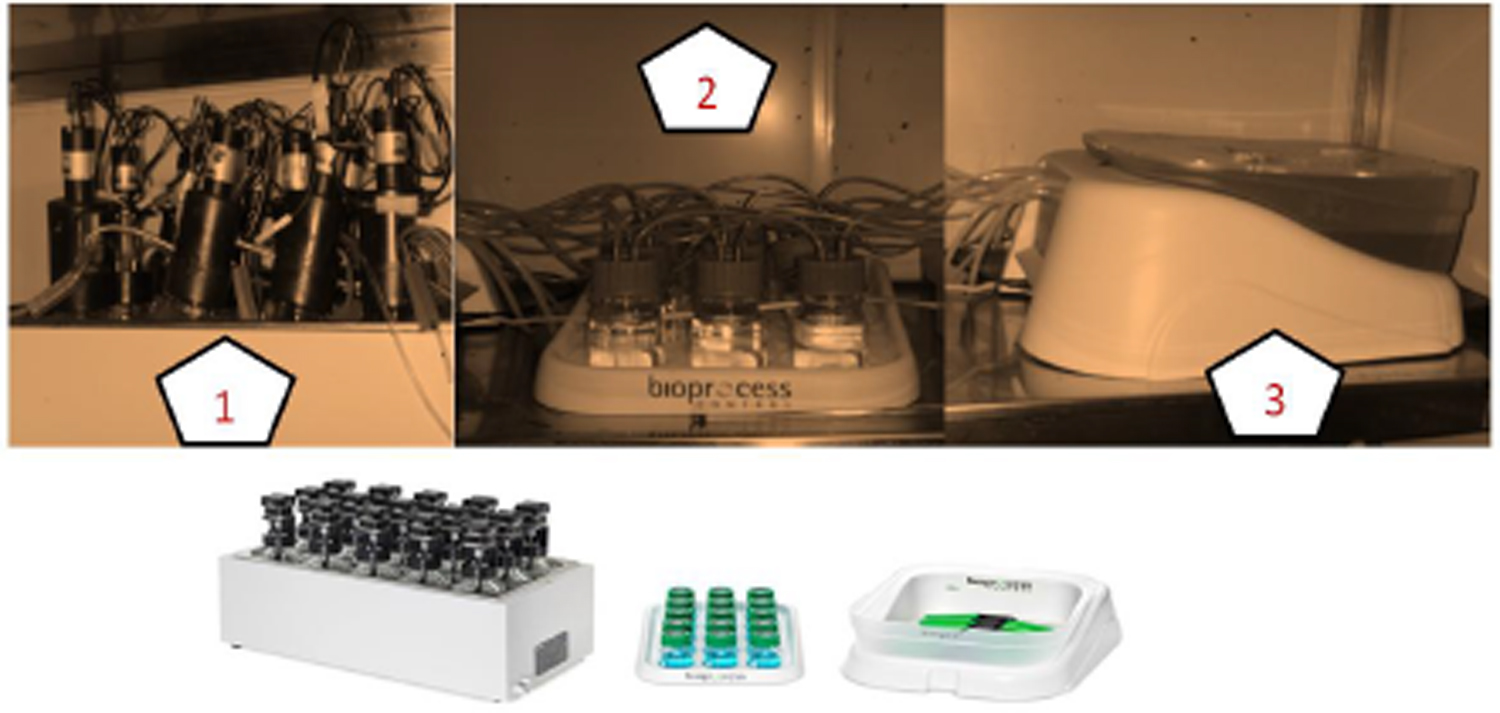
Biochemical methane potential reactor setup.
Physicochemical analytical procedure
Digestion kits containing diols and dichromate (Hach; LCK 514) were used to determine the COD. Spectrophotometry (DR6000; HACH Company, Germany) was conducted after oxidation for 2 h at 150°C with a cuvette at 620 nm wavelength. A rotor-stator was initially used to homogenize the crushed kitchen waste, which was centrifuged at 15,000 rpm for 20 min. The kitchen waste sample was diluted 100 times and homogenized for TCOD analysis. The COD particulate fraction was analyzed by deducting the SCOD from the TCOD. The TCOD concentration of the samples was filtered by using a 0.45 μm cellulose acetate membrane. SCOD and TCOD analyses conducted were consistent with previously described analytical techniques (Kim et al., 2015; Fagbohungbe et al., 2016; Giwa et al., 2019a). TN and TP were analyzed via the photometrical method by using a cuvette in HACH DR 5000. The TP was digested with persulfate to oxidize the phosphorus, whereas the 0.45 μm soluble filtered fraction was used to determine NH4+-N. The NH4+-N was further analyzed by using spectrophotometry (DR-5000; Hach) after the addition of hypochlorite and salicylate to generate monochloramine, and it was conducted according to the method (APHA/WEF/AWWA, 1989).
A small sample volume of the crushed kitchen waste was stored in a weighed crucible and was heated for 24 h at 105°C until the moisture evaporated. The sample was weighed again after cooling down in a desiccator. The differences in sample weight before and after evaporation and the crucible reflected the TS value. For the determination of VS, the sample was further burnt in an oven at 550°C for 2 h. The sample was weighed again after cooling down in a desiccator. The difference between the weight of the sample before and after burning and the crucible denoted the VS value. Such a difference was determined in accordance with a previously described method (APHA, 1995; Giwa et al., 2019a).
Results and Discussion
Specific methanogenic activity
The specific methanogenic activity test would provide suitable conditions for bioprocess stability or inhibition operations and its methanogenic activities. The methane generation efficacy and methanogenic capability of sludge for specific substrate utilization are evaluated via the specific methanogenic test (Hussain and Dubey, 2017). The specific methanogenic activity test in the current study was conducted before the start-up of the digester. The standard curve for the specific methanogenic test is presented in Table 3.
Results of the Specific Methanogenic Activity Test Standard Curve
SMA, specific methanogenic activity.
The purpose was to ensure that no endogenous biogas production from any residual organic matter interfered with the feedstock utilization, given that its methane potential was also understood. In addition, the changes in the specific methanogenic performance of the sludge indicated whether its degradability was reduced or hindered by nonbiodegradable organic matters. The experimental results in duplicate for the specific sludge methanogenic activity in the biochemical methane production are shown in Fig. 2.
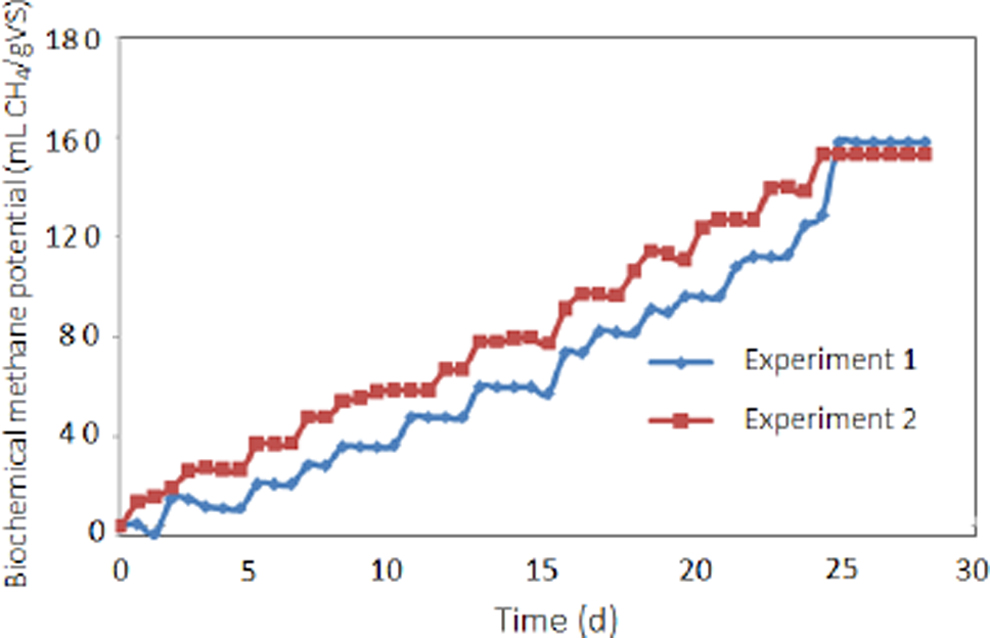
Duplicate representation of the potential biochemical methane production during the inoculum-specific methanogenic activity test.
Ince et al. (1995) determined a suitable specific methanogenic activity test for the start-up phase of the organic loading rate that is most appropriate for the digesters of municipal wastewater treatment plants. In their study, the specific methanogenic test neither decreased nor increased with the organic loading rate of the sludge to achieve stable conditions and improve system performance. The result is a reduction in COD of organic matter by 98% over 1 kg COD/m3 · day organic loading rate, thereby signifying the relevance of the specific methanogenic test. These results from the specific methanogenic activity test standard curve was high, thus representing the suitability for the biochemical methane potential test of kitchen waste and black water.
Potential biochemical methane performance of the individual kitchen wastes and black water
The potential methane performances of the kitchen wastes and black water at different individual dilution ratios showed variable methane generation trends during the experimental period, notably after the first week of incubation. The methane production was directly measured online by employing liquid displacement and buoyancy technique; it was conducted in line with calculation methods for determination of biomethane potential of feedstocks (Jingura and Kamusoko, 2017; Zhang et al., 2019). The biochemical methane potential of kitchen waste at various dilution is represented in Fig. 3. The methane production volume peaked within a short period of 15 days. This trend indicated that kitchen wastes are readily biodegradable and undergo biodegradation rapidly within a short period (Giwa et al., 2019b; Zhang et al., 2019).
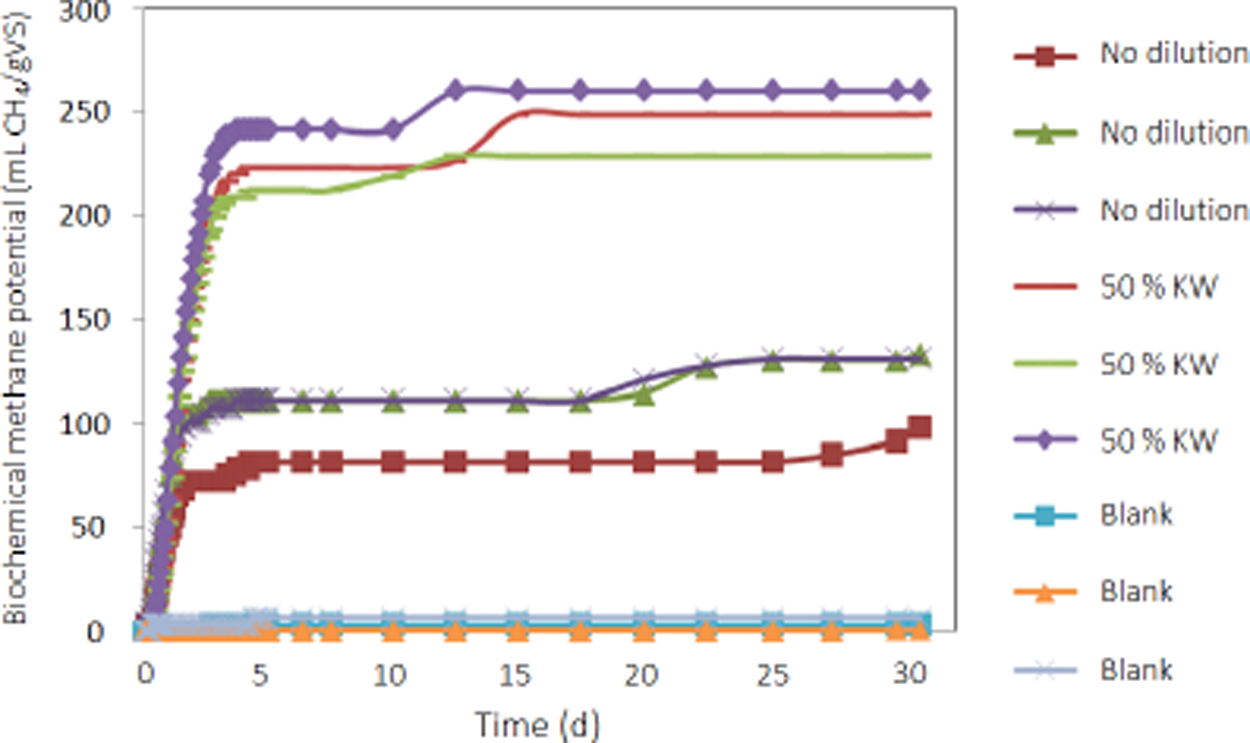
Biochemical methane potential of the different dilution ratios of household kitchen waste.
However, the biochemical methane potential for different dilution ratios of the individual waste had an enormous difference. Without the dilution of the household kitchen wastes (100%), the average biochemical methane potential was 135 mL CH4/g VS; by contrast, when the household kitchen waste dilution rate was 50%, the methane value was 265 mL CH4/g VS. Although household kitchen wastes can be easily biodegraded, their biochemical methane potential increased if it was diluted (50%). These variations may be attributed to the microbial dynamics for the substrate degradation that was not impaired with inhibition from volatile fatty acids (VFA) accumulation, and ammonium nitrogen accumulation in the (50%) household kitchen waste dilution.
The pH value as an environmental and process indicator decreased in the 100% kitchen waste from 6.9 to 5.5, whereas the 50% dilution pH trend was from 6.8 to 7.2. This phenomenon influenced the rate of biogas production in the respective reactors. The impact of pH in methanogenic and acidogenic microbial dynamics was further reported by Wu et al. (2016) and Giwa et al. (2019a). The highest methane rate determined in the food waste (265 mL CH4/g VS) was within the several ranges of previously reported food waste in the anaerobic-mono digestion (Kim et al., 2019; Pramanik et al., 2019).
The methane production volume of the black water peaked within 20 days (Fig. 4). This result indicated that black water can be anaerobically biodegradable but not as promptly biodegraded as the household kitchen waste. The trend reflected on the fact that the tissue paper in the mixture of black water is mainly composed of cellulose fibers that are slowly biodegradable. Kim et al. (2019) and Naroznova et al. (2016) reported low methane yield from tissue paper and paper waste compared with kitchen tissue waste in a previous study. In this study, the synergistic effect of tissue paper in the blackwater waste was not investigated, and further research is suggested in this direction. A jump was observed on day 18 of the experiment, this reflected that something changed in all the reactors innoculum that sufficiently maintained the performance and stability of the process. Operational procedure and further investigations to ascertain the specific biogas microbial consortium in the innoculum at variable process conditions and long-time operations are suggested. However, the black water biochemical methane potential exhibited vast differences with different dilution ratios (Fig. 4).

Biochemical methane potential of the different dilution ratios of black water.
During the utilization of black water (100%), the average biochemical methane potential was 220 mL CH4/g VS, and that of the one-time dilution (50%) of black water reached 170 mL CH4/g VS. The reasons that the diluted black water provides higher methane production per gram of VS might be probably due to a reduction in the cellulosic contents after dilution (though this was not measured in the study). Variations in substrate mixing ratio of the black water were further depicted in the biochemical methane production; both concentrations witnessed no inhibition from ammonia and bioprocess imbalance. This trend indicated the possibility of energy recovery from waste, and that AD of black water can offer nutrients and high energy recovery (Yee et al., 2019).
Biochemical methane performance of the codigested kitchen wastes and black water
Biochemical methane potential showed significant differences during the codigestion of household kitchen waste and black water at different mix ratios (50:50, 70:30, 30:70, % v/v) (Table 4). The mix ratio of kitchen wastes:black water (30:70) generated the lowest biochemical methane potential of 205.10 mL CH4/g VS. Subsequently, slightly improved performance in the mixed ratio of kitchen wastes:black water (70:30) biochemical methane potential of 240.30 mL CH4/g VS was attained. Codigestion with equal concentrations of black water (50% v/v) to kitchen waste (50% v/v) generated a biochemical methane potential of 295.13 mL CH4/g VS (Table 4). Other factors that might have induced the input and output of these performance can be attributed to the pH and VFA production.
Biochemical Methane Potential of the Different Codigestion Mix Ratios of Kitchen Wastes and Black Water at 35°C
BMP, biochemical methane potential.
The effluent pH values (70:30, 30:70, % v/v) and their respective VFA's concentrations (1,401 and 1,495 mg/L) compared with mix ratio (50:50, % vv) may suggest acidogenic bacteria inhibition, resulting in their slightly lower biogas production. Different pH ranges are needed for AD bacteria growth, whereas a pH methanogenic growth limiting range of 6.5–7.2 is favorable (Wu et al., 2016); at the same time, organic acids and VFA's accumulation can cause high aromatic interference with AD metabolic compounds (Giwa et al., 2020). The relative balance enabled robust methanogenic activities and withstood inhibitions. The current study did not examine the microbial methanogenic communities when the different substrate mix ratios were compared, and further investigation in this direction is recommended.
The codigestion mixing ratio phenomenon had substantial synergistic effects on the anaerobic digestibility for methane yield. The trend is contrary to reports that food waste, human feces, and tissue papers could be digested in a mixture at any mixing ratio without substantial synergistic codigestion effects (Kim et al., 2019); however, this was reported in a continnuos scale investigation. A further in-depth investigation of the antagonistic effects of the mixing ratios via kinetic modeling and experimentation is suggested.
The anaerobic bioprocess codigestion of human feces, food waste, and other organic wastes provides advantages that enhance the robust and stable performance of this process (Kim et al., 2019). Zhang et al.(2019) reported that increasing the ratio of kitchen waste to black water during codigestion at a high organic concentration hindered the biochemical methane potential. As such, it would be considered an economical technique to balance the nutrients, carbon:nitrogen ratio, dilute toxic substances in the bioprocess, and improve the buffering capacity (Mata-Alvarez et al., 2011). Materials with a high proportion of nitrogen content must be used with caution to avoid problems from the formation of excessive ammonium build-up, which could negatively affect AD (Rodríguez et al., 2017). The kitchen wastes-to-black water mix ratio of 50:50 offered a baseline for optimal biochemical methane potential generations, codigestion operation, and applications for the on-site management of a decentralized system for black water and food waste streams.
Physicochemical performance of the codigestion of kitchen wastes and black water
The codigestion of kitchen wastes and black water (50:50% v/v) physicochemical performance was considered appropriate for investigation because of the optimal biochemical methane potential yield compared with the other mix ratios. Evaluation of the effluent reduction rate in the pH, VFA's, COD, and NH4+-N, levels is crucial. These indices were measured at the beginning and end of the experiment to avoid aerobic conditions and improve the anaerobic operating environment of the bioprocess reactor. The effluent pH level (7.01 ± 0.1) of the kitchen wastes and black water (50:50% v/v) was alkaline and slightly higher compared with 70:30% v/v and 30:70% v/v, respectively (Table 5). Whenever a decrease in pH is observed, the occurrence might be hindering most acidogenic and methanogenic bacteria (Wu et al., 2016; Giwa et al., 2019a). Tannock and Clarke (2016) reported similar phenomena in the membrane bioreactor treatment of black water and food wastes, and they attributed the pH-stable alkaline performance to the production of alkalinity from denitrification.
Physicochemical Characteristics of the Codigested Kitchen Wastes and Black Water at the Start and End of the Biochemical Methane Potential Experiment
TCOD, total chemical oxygen demand; TN, total nitrogen; TP, total phosphorus.
Blackwater is characterized by high NH4+-N concentration (∼981.00 ± 48.00 mg/L), and its codigestion with the kitchen waste reduced influent concentration levels to 810 ± 0.02 mg/L. The NH4+-N concentration of the codigested substrate further increased to 1,010 ± 0.3 without any observable inhibition. The relevance of ammonia as an essential nutrient for metabolism and microbial growth has been previously elucidated. However, caution must be taken in the presence of high concentrations (1,700–5,000 mg/L) during the anaerobic bioprocess, most notably with organic fractions of the municipal solid waste and complex substrates, such as manure (Yenigün and Demirel, 2013; Lavagnolo et al., 2017; Giwa et al., 2019b). Wendland et al. (2007) reported that the degradation of ammonia, carbonates, and urea in high concentrations of black water promoted the buffer efficiency of bioprocesses.
The effluent TCOD of codigestion was substantially reduced (i.e., ∼90%) relative to the influent TCOD. Notably, reduction of the TCOD was accomplished during the codigestion experiment for the kitchen waste:black water (50:50% v/v), with the highest biochemical methane potential of 295.13 mL CH4/g VS. Considering the TCOD removal efficiency and practical feasibility, the bioprocess was reliable, but the situation was different for the TP and TN reduction efficiency. The TP and TN for the kitchen waste:black water from influents to effluents in all mix ratios witnessed no significant associated differences. The high hydrolysis efficiency of the kitchen wastes:black water (50:50% v/v) easily bioconverted the organic acids, thereby limiting the VFA accumulation and retaining favorable anaerobic reactor pH levels and methane production (Table 5). The performance further promoted the practical application of the bioprocess for the TCOD removal of black water and food waste.
The TS and VS indices, which represented almost similar removal performance rates for organic solids, were strongly related to the organic matter in the TCOD of the operation (Table 5). The codigestion VS % removal efficiency from this study was closely in agreement with the black water and kitchen waste previously reported in a continuous experiment (Zhang et al., 2019; Gao et al., 2020). The drastic reduction in the effluent physicochemical parameters (COD, VS, and the VFA's) reflected the efficiency of the codigestion treatment of kitchen wastes and black water (50:50% v/v) that can adequately be efficient for organic reductions. Further investigations on the realistic application of the mix ratio and physicochemical properties in a continuous study are suggested.
Conclusions
This study investigated the effects of the codigestion of household kitchen wastes with black water on biochemical methane potential and mixing ratios. The digestibility of the individual substrate demonstrated high methane generation, offering consideration for performance evaluation with different mix ratios. The individual biochemical methane potential 265 mL CH4/g VS of household kitchen waste performance improved at a dilution ratio of 50% and the black water 220 mL CH4/g VS without dilution, reflecting their accessible degradability features. Codigestion with equal concentrations of black water (50% v/v) to kitchen waste (50% v/v) generated the highest biochemical methane potential of 295.13 mL CH4/g VS because of the comparative balance in substrate concentrations that offered robust bioprocess stability and withstood inhibitions. These findings suggested a practicable basis for the management of household organic wastes (black water and kitchen waste) through on-site codigestion to enable energy recovery and avert the challenges associated with the disposal of individual waste.
Footnotes
Acknowledgments
The Lab 913 of the School of Environment, Tsinghua University is highly acknowledged.
Author Disclosure Statement
No competing financial interests exist.
Funding Information
This work was supported by the Major Science and Technology Program for Water Pollution Control and Treatment of China (Grant No. 2017ZX07102-004). The Biomass and Waste Water Pollution Control grant (No. 01160056) of the Green Intelligence Environmental School, Yangtze Normal University.

References
Supplementary Material
Please find the following supplemental material available below.
For Open Access articles published under a Creative Commons License, all supplemental material carries the same license as the article it is associated with.
For non-Open Access articles published, all supplemental material carries a non-exclusive license, and permission requests for re-use of supplemental material or any part of supplemental material shall be sent directly to the copyright owner as specified in the copyright notice associated with the article.
