




Abstract
It has been observed that 2,4-dichlorophenol (2,4-DCP) possesses great environmental concern for its high ecotoxicity and ubiquitousness. Adsorption is one of the simplest methods to remove the 2,4-DCP from the aqueous solutions. We conducted the synthesis of zeolite imidazolate framework-8 (ZIF-8) via a classic and facile approach as an adsorbent to remove the 2,4-DCP, while considering the superior stability and high surface area of ZIF material. The synthesized ZIF-8 material was characterized by powder X-ray diffraction, field emission-scanning electron microscope, thermal gravimetric analyses, derivative thermogravimetry, and N2 adsorption–desorption isotherms. The optimal pH conditions, adsorption kinetics, and adsorption isotherms were determined via batch adsorption equilibrium experiments. The results showed that the difference of adsorption capacity under different pH conditions could be explained via the electrostatic interaction and electrostatic repulsion between ZIF-8 and 2,4-DCP, and the optimal adsorption condition was obtained in the solution with pH 9. In addition, the Langmuir model and pseudo-second-order equation could best describe the adsorption isotherm and kinetic data, respectively. The maximum adsorption capacity was 107.07 mg/g with 50 mg/L of 2,4-DCP initial concentration at 323 K, which was comparable to some previous work. In short, it is a promising method to remove 2,4-DCP with ZIF-8 from aqueous solutions.

Introduction
2,4-
Zeolitic imidazolate frameworks-8 [ZIF-8, Zn(mIm)2, Zn2+ is linked by 2-methylimidazole (2-MIm) ligands (Salis et al., 2010)], as a common and widely investigated metal organic frameworks, which is a class of high surface area and porous materials, easy to prepare, possesses excellent thermal and chemical stability (Phan et al., 2010). Therefore, ZIF-8 has been applied in many fields, such as gas storage (DeSantis et al., 2017), gas separation (Li et al., 2011), enzyme immobilization (Majewski et al., 2017), heterogeneous catalysis (Luz et al., 2010), drug delivery (Czaja et al., 2009), etc. Due to its huge specific surface and pore size, many studies have also used it to remove pollutants for the purpose of application in the environmental field. Qiang et al. (2017) indicated that D101@ZIF-8 is a promising adsorbent for the 1-naphthol and 2-naphthol. Luebbers et al. (2010) investigated the adsorption behavior of organic vapors on ZIF-8, and the results showed that the surface energies and thermodynamic values were reduced for the adsorption of n-alkanes on ZIF-8. Ortiz-Martínez et al. (2016) prepared a novel magnetic porous carbon derived by introducing Co into ZIF-8, and they found that the prepared sample had an outstanding adsorption capability for the chlorophenols. There are also some studies (Zhao et al., 2015; Zhu et al., 2017; Huang et al., 2018; Bahmani et al., 2019; Liu et al., 2019; Wang et al., 2019) reporting that ZIF-8 possesses excellent adsorption properties for heavy metals, such as Cr6+, Hg2+, Cu2+, Ni2+, Co2+, etc. However, to the best of our knowledge, the adsorption of 2,4-DCP from aqueous solutions with ZIF-8 has not been reported.
In this study, we explored the optimal pH conditions for the adsorption of 2,4-DCP via ZIF-8 in the aqueous solutions, and we then studied the adsorption kinetics and adsorption isotherms. Finally, we evaluated the adsorption performance of the ZIF-8 on 2,4-DCP.
Experimental
Materials
The 2,4-DCP, absolute alcohol, Zn(NO3)2·6H2O (97%), 2-MIm (99%), glacial acetic acid, hydrochloric acid, and sodium hydroxide were purchased from Sinopharm Chemical Reagent Co., Ltd. All reagents were of analytical grade without further purification.
2,4-Dichlorophenol
The 2,4-DCP of analytical reagent grade was used as an adsorbate in this study. Five hundred milligrams of 2,4-DCP was dissolved in absolute alcohol, and it was then volumed to 500 mL with ultrapure water to obtain a 2,4-DCP stock solution (1 mg/mL). The required concentration can be obtained by diluting with ultrapure water. An ultraviolet absorption peak appeared in the range of 200–400 nm, and the maximum absorption peak was located at 286 nm (Baker et al., 1980; Li et al., 2010). At this wavelength, the absorbance and concentration of the 2,4-DCP solution conformed to Beer-Lambert law (Swinehart, 1962) within a certain range, and the UV-VIs analysis method for 2,4-DCP was obtained based on this. By measuring the absorbance change of the 2,4-DCP blank sample solution at different temperatures and pH for 24 h, we found that the pH and temperature of the solution almost had no effect on the results. The concentration of 2,4-DCP sample solution was estimated spectrophotometrically by recording the absorbance via a UV–VIs spectrophotometer.
Preparation of ZIF-8
The ZIF-8 composite was carried out according to previously described methods (Pan et al., 2011), with a molar ratio of Zn2+: 2-MIm: H2O = 1: 70: 1238. Briefly, a mass of 5.747 g of 2-MIm was dissolved in 20 mL of ultrapure water. Then, a mass of 297.5 mg Zn(NO3)2·6H2O was dissolved in 2.3 mL of ultrapure water and mixed with the 2-MIm solutions. After stirring for about 10 min at room temperature, a white precipitate was collected by centrifugation at 4,000 rpm for 15 min. Excessive 2-MIm and pore-occluded water were contained in the as-synthesized white product; therefore, to obtain a stable and clean product, the activation process needed to be completed first via the following procedure. The pore-occluded water and 2-MIm were removed via sonification in ultrapure water for 2 h, and they were then washed thrice with ultrapure water (10 mL per time). Finally, the product was dried at 65°C overnight to remove the solvents in the pores, and the resulting sample was called as activated sample (Scheme 1). Based on the amount of zinc, the yield of ZIF-8 was 245.3 mg (82.5%) (Pan et al., 2011).
Characterization
Powder X-ray diffraction (PXRD) analysis was performed through a Bruker D8 Advance x-ray diffractometer by using Cu-Kα radiation at 2θ from 5° to 45°. Field emission-scanning electron microscope studies at various magnifications were carried out in a GeminiSEM 300; the energy-dispersive X-ray (EDX) results was obtained from an Oxford X-MAX EDS analysis. Thermal gravimetric analyses (TGA) and derivative thermogravimetry (DTG) were performed on a TGA55 thermoanalyzer; 3.695 mg of sample was heated in a continuous flow of N2 from 24°C up to 800°C with 15°C/min. N2 adsorption–desorption isotherms were measured on an ASAP 2020 PLUS surface area and porosity analyzer at 77 K.
Selection of optimal pH conditions
Before experiments, the ZIF-8 sample was dried at 65°C and kept in a desiccator. The pH of 2,4-DCP solution was adjusted with 0.1 M HCl and/or 0.1 M NaOH aqueous solution and measured by using a pH meter.
Nine groups of experiments were designed to investigate the effects of pH on the 2,4-DCP adsorption to ZIF-8; the pH range of 2,4-DCP solution was set to 4–12. Five milligrams of ZIF-8 was added to 100 mL-Erlenmeyer flasks; then, 50 mL of 2,4-DCP solution (50 mg/L) was added, and the glass stopper was tightened to reduce the volatilization of 2,4-DCP. The resultant suspension was placed in a temperature-controllable orbital shaker (303 K) at 200 rpm for 10 h. The 2,4-DCP concentration was determined with the absorbance of the solution after adsorption for a predetermined time via a UV–Vis spectrophotometer at 286 nm, and the solution was separated from ZIF-8 with a syringe filter (0.45 mm, PTFE, hydrophobic). All experiments (including the following experiments) were repeated thrice to reduce errors.
The amount adsorbed at time and equilibrium (qt and qe, mg/g) was calculated by the following equations:
where c0 and ce (mg/L) are the concentrations of 2,4-DCP at initial and equilibrium, respectively. V (L) is the volume of the 2,4-DCP solutions, and the M (g) is the mass of the ZIF-8.
Batch adsorption equilibrium experiments
Similarly, an equal mass of ZIF-8 (5 mg) was added in a set of 100 mL-Erlenmeyer flasks where 50 mL of 2,4-DCP solutions (the optimal pH of the solution was selected through previous experiments and kept original without any adjustment) with various initial concentrations (10–50 mg/L) were placed; each flask was kept in an isothermal shaker (303, 313, 323 K) at 200 rpm to reach equilibrium.
Results and Discussion
Samples' characterization
As shown in Fig. 1, the synthesized ZIF-8 materials were characterized by PXRD. Compared with published simulated ZIF-8 structure data, the PXRD pattern did not show any significant difference (Karagiaridi et al., 2012), which indicated that the ZIF-8 crystal was well developed and free of impurities. The formation of nanocrystals can also be seen from the PXRD pattern.
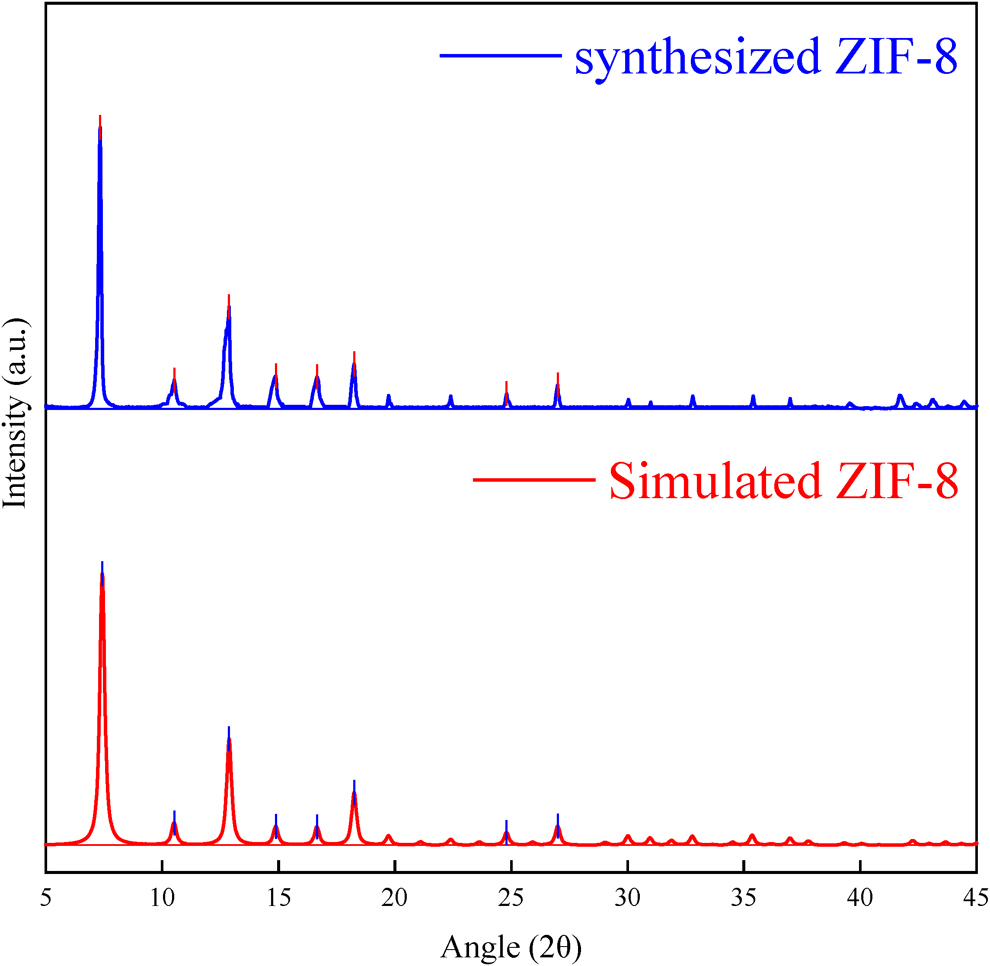
Powder X-ray diffraction patterns of synthesized ZIF-8 and simulated ZIF-8 [from the published structure data (Karagiaridi et al., 2012)].

Schematic representation and photograph of the synthesis of the pure ZIF-8.
As shown in Fig. 2, the field-emission SEM images revealed the morphology and size of synthesized ZIF-8 materials; the shape of the particles was that of hexagonal facet nanocrystals. Moreover, the EDX results were obtained from SEM analysis; the presence of Zn in ZIF-8 could be clearly observed (other element peaks are not marked).
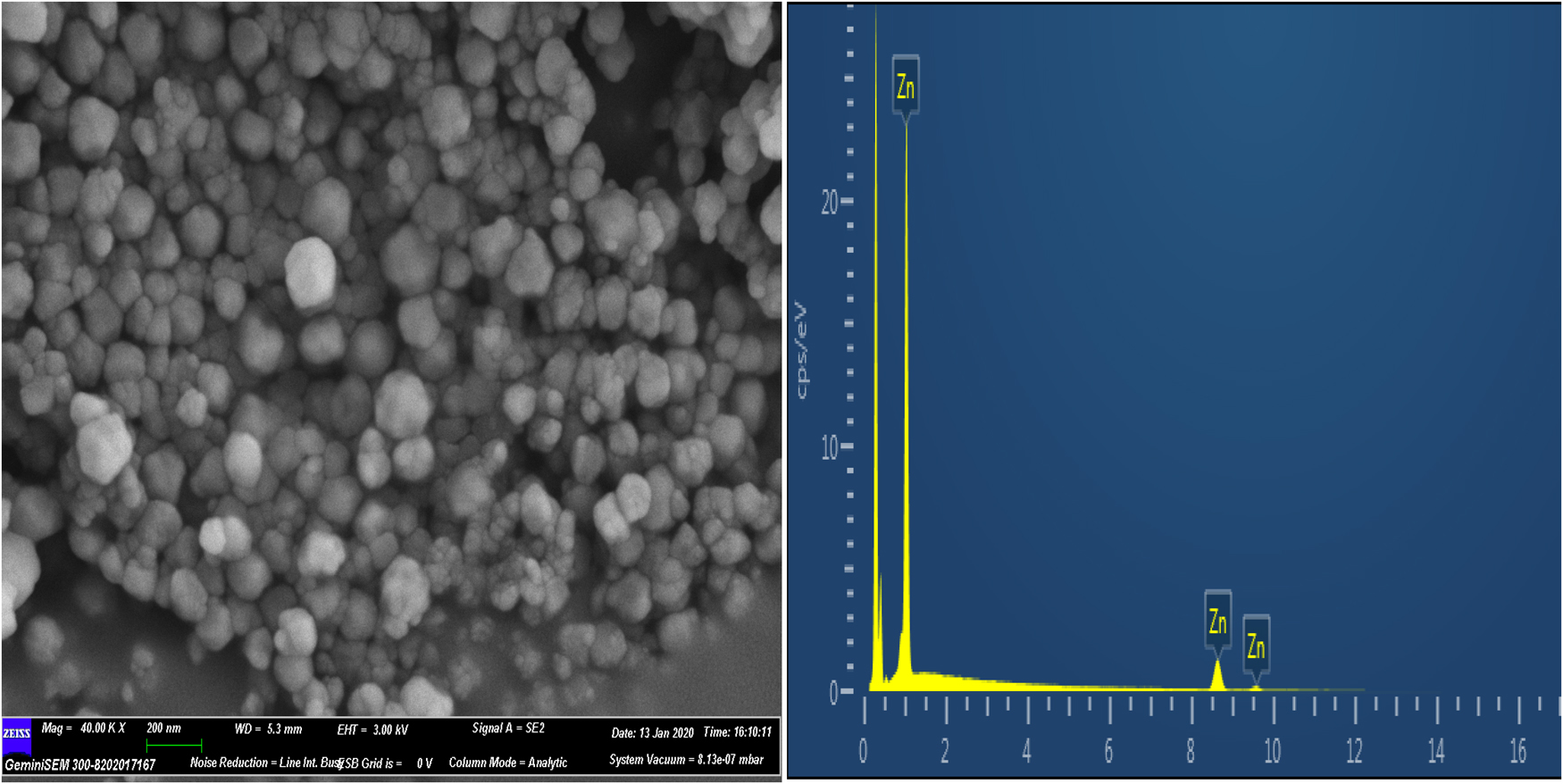
Typical field emission-scanning electron microscope images and the energy-dispersive X-ray spectrum of synthesized ZIF-8.
TGA and derivative thermogravimetry analysis (DTG) curves of the synthesized ZIF-8 material were performed in Fig. 3. Two types of weight loss occurred at temperatures from 100°C to 200°C and from 500°C to 600°C, corresponding to the removal of guest molecules such as structural water and the pyrolysis of ZIF-8, respectively. There was about 25% of weight loss for the first stage and about 40% of weight loss for the second stage. In the temperature range of 200–500°C, the curve can reflect a longer plateau period, which clearly demonstrated a good thermal stability of the adsorbent up to 500°C in an N2 atmosphere. A similar curve was reported for the ZIF-8 crystals conducted in an N2 atmosphere (Pan et al., 2011).
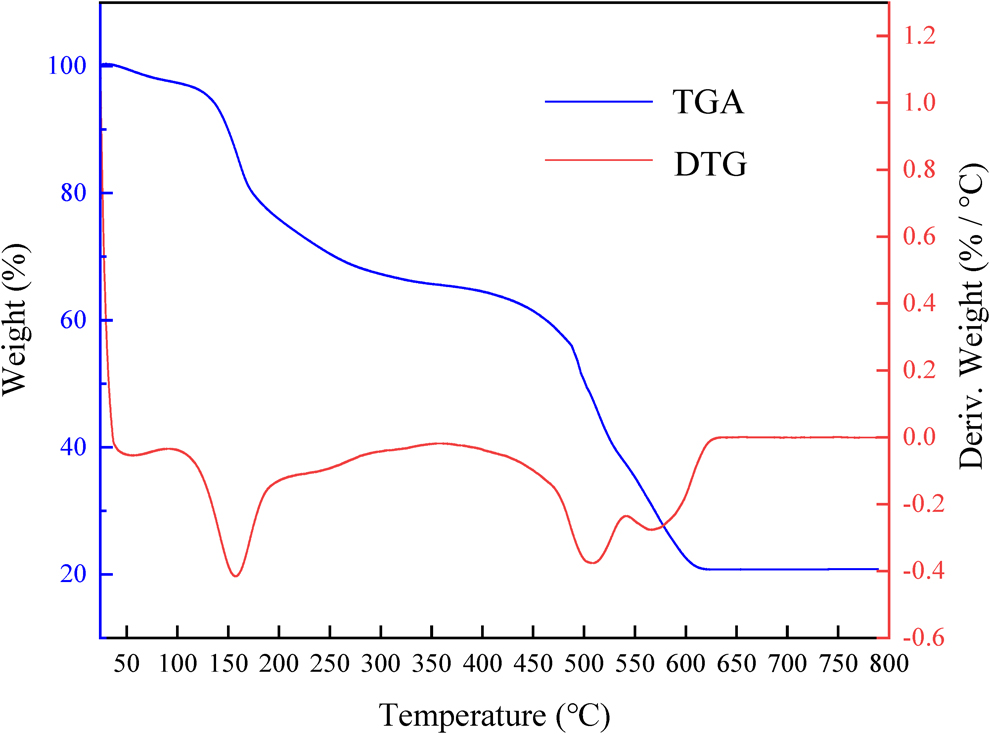
TGA and DTG curves of ZIF-8. DTG, derivative thermogravimetry; TGA, thermal gravimetric analyses.
As shown in Fig. 4, the surface area and porosity of the ZIF-8 were determined from the N2 adsorption–desorption isotherm. The BET surface areas, the t-Plot microporous volume, the BJH desorption average pore diameter, and average particle size were 1,058 m2/g, 0.504 cm3/g, 10.346, and 5.673 nm, respectively. The BET surface area is primarily dependent on the preparation method, and the common surface area of ZIF-8 is around 1,000–1,700 m2/g. This work is very close to the values reported in the literature (Esken et al., 2011; Pan et al., 2011; Zhang et al., 2011; Karagiaridi et al., 2012).

N2 adsorption–desorption isotherms of synthesized ZIF-8 on an ASAP 2020 PLUS surface area and porosity analyzer at 77 K.
Selection of optimal pH conditions
The pH of solution affects the surface charge of the adsorbent strongly as well as the ionization degree of the adsorbate (de Sá et al., 2013), and it should be an important factor that must be considered in the adsorption process. The pH value will directly affect the surface charge of ZIF-8 and the dissociation degree of 2,4-DCP in solution. Moreover, the framework structure of ZIF-8 would be attacked by H3O+, resulting in the release of Zn2+ ions into water via exchanging with H+ ions under extremely acidic conditions (pH <4) (Wu et al., 2015). For these reasons, the effect of pH on the adsorption of 2,4-DCP was studied to obtain the optimal pH condition (over a pH range of 4–12). As shown in Fig. 5a, the amount adsorbed of 2,4-DCP increased with the increase of pH, yet the qe of 2,4-DCP was low under acidic conditions; then, an increase in the solution pH led to a decrease in qe after pH >10. For the results just cited, the adsorption tendency can be explained via the electrostatic interaction (van der Waals force) between 2,4-DCP and ZIF-8.
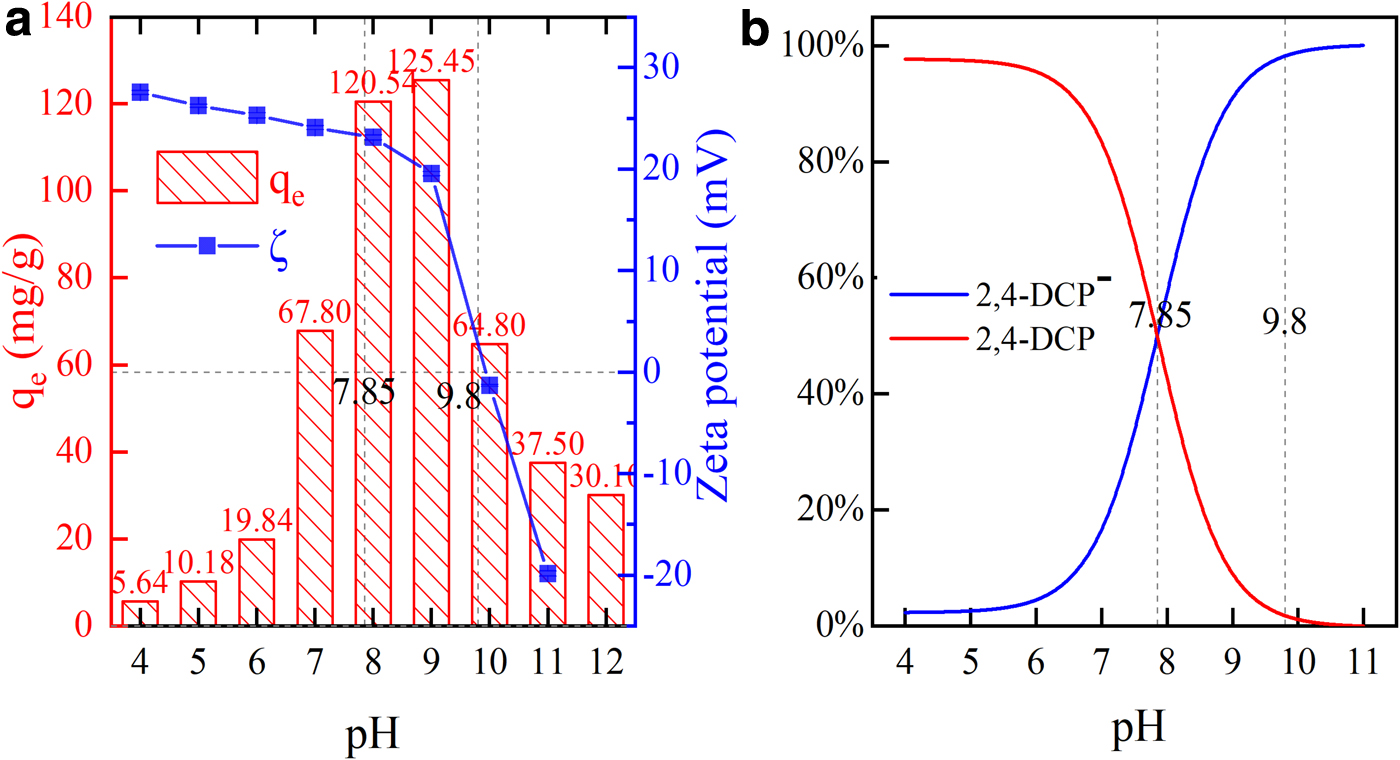
On the one hand, as shown in Fig. 5a, the pHzpc value of ZIF-8 was about 9.8 [consistent with the reported data (Li et al., 2014; Wu et al., 2015)], which means that the surface charge of adsorbent was positive when pH <9.8, whereas the surface charge was negative when pH >9.8. On the other hand, 2,4-DCP is mainly in molecular form when pH < pKa and in ionic form when pH > pKa [as shown in Fig. 5b, pKa of 2,4-DCP is 7.85 (Han et al., 2010)]. For these reasons, in a low pH condition (pH <6), the electrostatic interaction between 2,4-DCP molecular and positively charged ZIF-8 was weak, which explained the poor adsorption capacity of ZIF-8. However, the qe of 2,4-DCP remained at a relatively high level when 6 < pH <7.85, and it turned out that there should be other modes such as π-π stacking interaction although electrostatic interaction was the most important adsorption method (Yan et al., 2017; Batool et al., 2019). As the pH increased in a range of 7.85–9.8, negatively charged 2,4-DCP− also increased and the surface charge of ZIF-8 was positive, which meant that the electrostatic interaction was enhanced, reflected in the gradual increase of qe, and the highest qe was achieved at a pH around 9. However, a steep drop in 2,4-DCP absorption resulted in a further increase in the pH of the solution (pH >10). This was because the 2,4-DCP was mainly present as a negatively charged 2,4-DCP− in the solution, and the electrostatic repulsion would occur between the 2,4-DCP− and ZIF-8 (with negatively charged surface).
Therefore, as shown in Fig. 6, the relationship between zeta potential of ZIF-8, pKa of 2,4-DCP, and pH can explain the difference of adsorption capacity with 2,4-DCP under different pH conditions, and the optimal adsorption condition was obtained in the solution with pH 9.
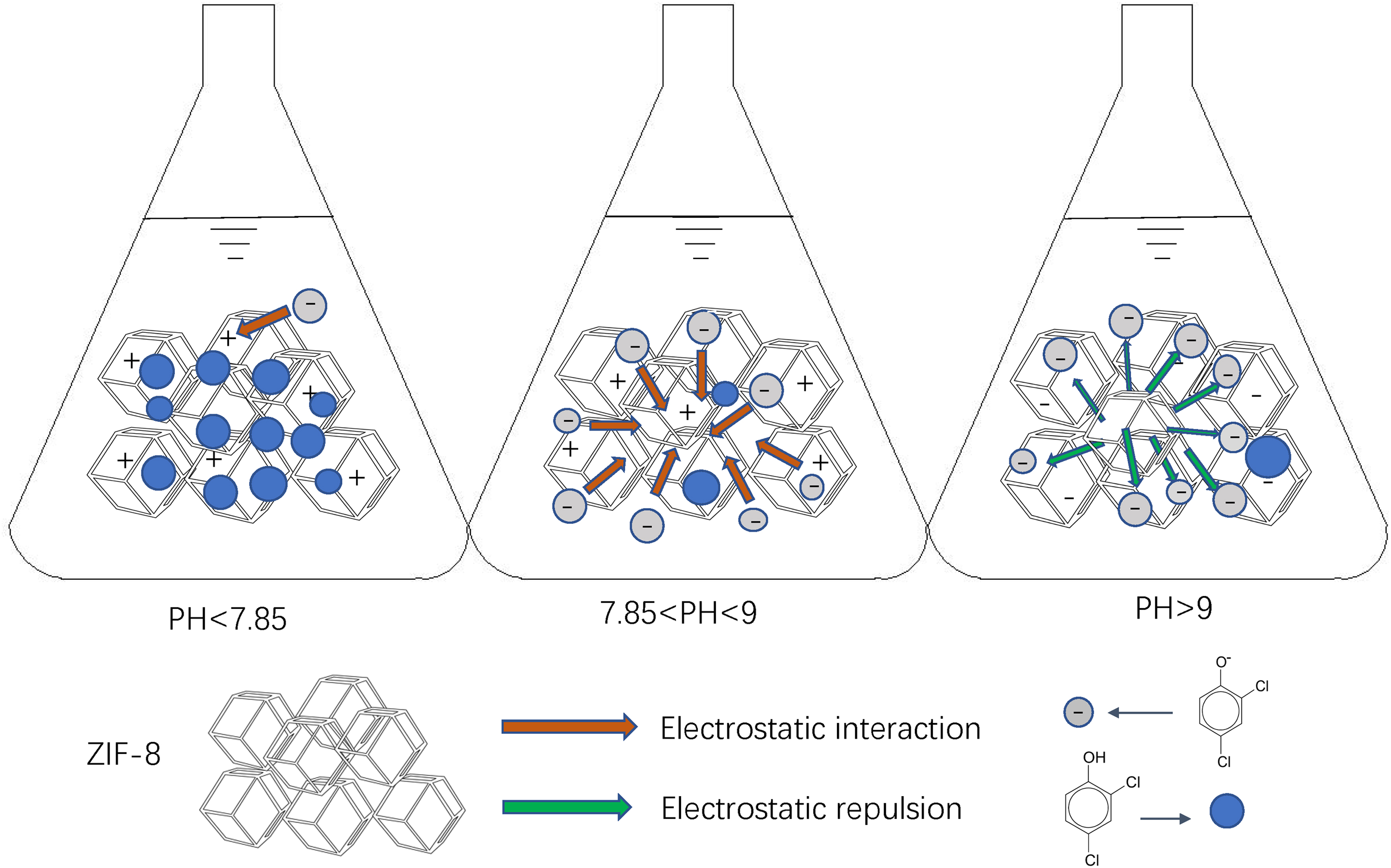
Adsorption mechanism schematic diagram under different pH conditions.
Adsorption kinetics
The pseudo-first-order model (Lagergren, 1898) and the pseudo-second-order equation (Ho and McKay, 1998) were described as follows:
In addition, we defined the standard deviation value (S) to illustrate the dispersion of data distribution and the suitability of the model (Ho and McKay, 1999a, 1999b; Pan et al., 2016). The equation is shown as follows:
where k1 (1/h) and k2 (g/mg·h) are the equilibrium rate constant of the pseudo-first-order sorption and the pseudo-second-order sorption, respectively. qe0 (mg/g) is the calculated adsorption amount obtained by equation (3) (4), and n is the number of data points.
It is well known that adsorption kinetics is an important consideration for the adsorption; the adsorption kinetic study is shown in Fig. 7 (pH 9). Overall, the adsorption time was very short, and all adsorption reached equilibrium within 4 h. Specifically, adsorption was almost completed within 2 h at 10 mg/L of 2,4-DCP, 3 h at 20, 30 mg/L, and 4 h at 40, 50 mg/L, respectively. With the increase of 2,4-DCP, the adsorption equilibrium time was extended to a certain degree.
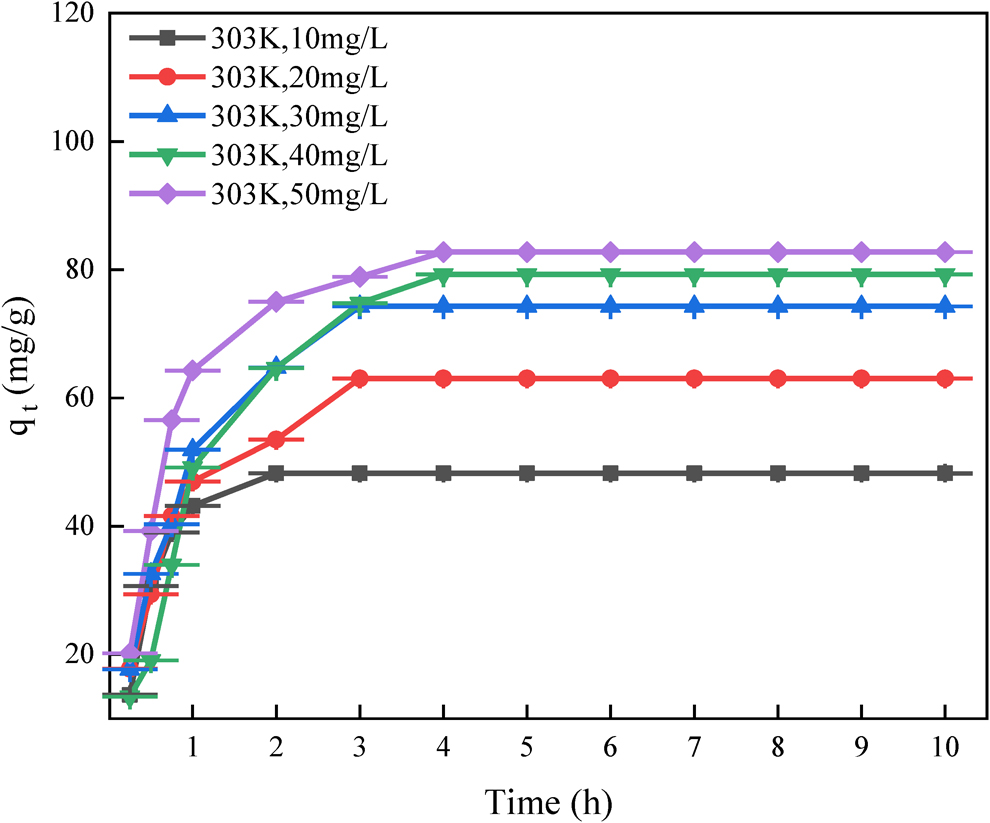
The adsorption kinetics of 2,4-DCP on ZIF-8 (different initial 2,4-DCP concentrations, 303 K, pH 9).
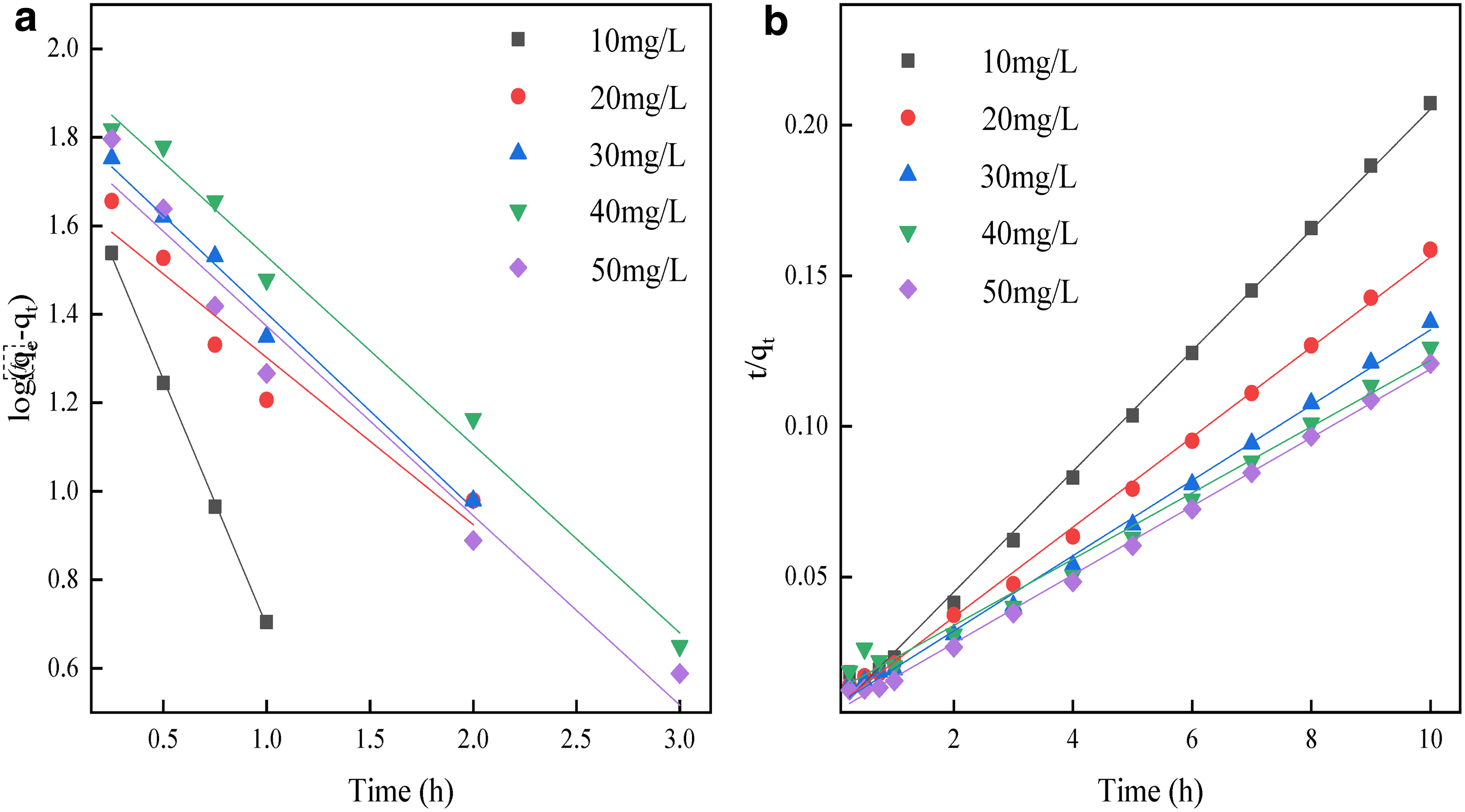
The pseudo-first-order and pseudo-second-order fitting equations are shown in Fig. 8, and the kinetic parameters could be seen from Table 1. The results revealed that compared with the pseudo-first-order equation, the pseudo-second-order equation fitted better. Because the correlation coefficient (R2) of the pseudo-second-order equation was very close to 1, the value of qe0 was almost equal to the actual experiment data (qe). In addition, a lower S value was yielded from the pseudo-second-order kinetic model, which meant that the better the model fitted. These results can, undoubtedly, prove that the pseudo-second-order kinetic model could explain the adsorption of 2,4-DCP on the ZIF-8 and the adsorption behavior is related to both the surface properties of ZIF-8 and the concentration of 2,4-DCP. In addition, the results of the S value (Table 1) indicate that the pseudo-secondary adsorption mechanism is the main mechanism, and the total rate of the 2,4-DCP adsorption process seems to be controlled by the chemical adsorption process. A similar phenomenon was observed in the adsorption of phenol on ZIF-67 (Pan et al., 2016).
Kinetic Parameters of 2,4-DCP on ZIF-8 at 303 K, pH 9
2,4-DCP, 2,4-dichlorophenol; ZIF-8, zeolitic imidazolate frameworks-8.
Adsorption isotherms
The Freundlich isotherm equation (Freundlich, 1906) and Langmuir isotherm equation (Langmuir, 1916) were described as follows:
where KF (mg/g(L/mg)1/n) and n are the Freundlich constants, and Ce (mg/L) is the equilibrium concentration. qmax (mg/g) and KL (L/mg) are the Langmuir constants related to the maximum monolayer adsorption capacity and free energy or net enthalpy of adsorption, respectively.
The adsorption capacity of various 2,4-DCP concentrations at 303, 313, and 323 K is shown in Fig. 9 (pH 9). When temperature was increased from 303 K to 323 K, the qe of ZIF-8 increased for all samples. Moreover, the qe was increased from 82.7 to 95.8 mg/g at temperature from 303 to 323 K. For this phenomenon, it is known that high temperature will reduce the viscosity of the solution; the diffusion rate of the molecules could be increased due to the decrease in the viscosity of the solution. Therefore, these molecules are more likely to interact with active sites on the surface due to the increase in the number of molecules. Besides, ZIF-8 demonstrated high thermal stability, permanent porosity, and remarkable chemical resistance (Park et al., 2006). High temperatures may change the adsorbent equilibrium capacity of ZIF-8 (Almeida et al., 2009) without destroying the internal structure of ZIF-8.
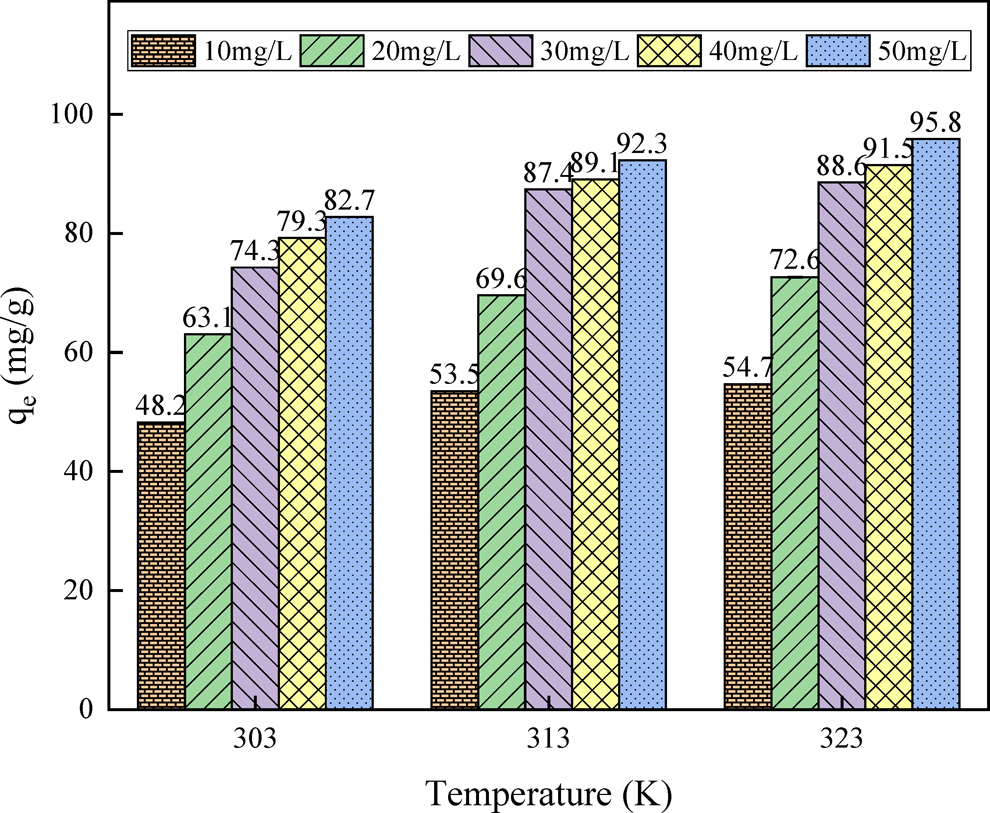
The adsorption capacity of 2,4-DCP on ZIF-8 at various initial concentrations and temperature (pH 9).
The Freundlich and Langmuir isotherm fitting equations are shown in Fig. 10, and the thermodynamic constants could be seen from Table 2. It can be clearly observed that the adsorption of 2,4-DCP on ZIF-8 followed the Langmuir isotherm model, because the correlation coefficient (R2) was almost equal to 1. Although the R2 of Freundlich isotherm was less than 0.97. the n value obtained from the Freundlich isotherm model was less than 1, which also specified that the Langmuir isotherm was normal. Therefore, it is reasonable to infer that the 2,4-DCP molecule existed as uniform monolayer coverage at the outer surfaces of ZIF-8. Some reports (Shaarani and Hameed, 2011; Kuśmierek et al., 2016; Bentaleb et al., 2017) on the adsorption of 2,4-DCP also show the same trend in recent years, that is, the data are more suitable for the Langmuir isotherm model than the Freundlich isotherm model; this may be due to the uniform distribution of ZIF-8 surface active sites. Table 3 lists the comparison of the 2,4-DCP (with different initial concentration) maximum adsorption capacities at various temperatures of various adsorbents. ZIF-8 possess a relatively high adsorption capacity for 2,4-DCP with an initial concentration of 50 mg/L, which is comparable to some previous work. It is worth noting that the comparison of the adsorption capacity for different initial 2,4-DCP concentrations and temperatures cannot just focus on the values, because the initial concentration and temperature will affect the adsorption performance. Generally, higher initial concentration and temperature can achieve higher adsorption capacity. It can be seen that the prepared ZIF-8 is more effective in this respect.

Thermodynamic Constants of Freundlich and Langmuir Isotherm Model for the Removal of 2,4-DCP by ZIF-8
Comparison of the 2,4-DCP (with Different Initial Concentration) Maximum Adsorption Capacities at Various Temperatures of Various Adsorbents
Conclusion
In conclusion, we have conducted the synthesis of ZIF-8 via a classic and facile approach, and the optimal pH conditions for the adsorption of 2,4-DCP, adsorption kinetics, and adsorption isotherms were studied by batch adsorption equilibrium experiments. The results showed that the difference of adsorption capacity with 2,4-DCP under different pH conditions could be explained via the relationship between zeta potential of ZIF-8, pKa of 2,4-DCP, and pH, that is, the electrostatic interaction and electrostatic repulsion between ZIF-8 and 2,4-DCP. In addition, the Langmuir model and pseudo-second-order equation could best describe the adsorption isotherm and kinetic data, respectively. The optimal adsorption condition was 50 mg/L of initial 2,4-DCP solution, pH 9, and 323 K. The maximum adsorption capacity was 107.07 mg/g, which was comparable to some previous work such as Paper sludge/wheat husks biochar, SnO2@GPC nanocomposite, Maize cob carbon, etc. In short, it is a promising method to remove 2,4-DCP with ZIF-8 from aqueous solutions.
Footnotes
Author Disclosure Statement
No competing financial interests exist.
Funding Information
This work was supported by the National Natural Science Foundation of China (Grant No. 41571306), the Project of Excellent Fund in Hubei (Grant No. 2018CFA067), the Major Project of Science and Technology research Program of the Hubei Provincial Department of Education (Grant No. D20181101), the National Natural Science Foundation of China (Grant No. 41501537), and Hubei Key Laboratory for Efficient Utilization and Agglomeration of Metallurgic Mineral Resources (Grant No. 2017zy003).