




Abstract
Environmental friendly and effective bio-augmentation is a very promising technology in the aniline wastewater treatment field. In this study, an aniline degradation bacterial strain was isolated from activated sludge, designated AD4. It was proved to be capable of removing aniline effectively in the concentration range between 200 and 800 mg/L within 72 h and could tolerate 1,400 mg/L of aniline, which was identified as Delftia tsuruhatensis. The influence of environmental factors containing initial aniline concentration, initial pH, temperature, shaker speed, salinity, and inoculum amount on the growth and degradation of strain AD4 were investigated. The results showed that AD4 had a wide range of suitable pH (5–8) and higher efficiency in a weak acidic environment than in weak base. The aniline concentration, pH, and temperature were used as independent parameters to optimize the aniline degradation by strain AD4, and a statistically significant (R2 = 0.9817, p < 0.001) quadratic polynomial mathematical model was built. Meanwhile, a simulated reactor was designed to test the aniline-degradation ability of strain AD4 during the aeration stage. The degradation rate in 600 mg/L of aniline solution reached 51.5% after 8 h.
Introduction
Aniline is used as an intermediate in many different producing processes, such as the production of rubber processing chemicals, agricultural chemicals, dyes, pigments, and pharmaceuticals (Sihtmäe et al., 2010). The amount of aniline production over the world surpassed 5.6 million tons in 2016 (Wang et al., 2016). These compounds may be released to the surface water and stay for a long time, which has negative impacts on the environment (Zhu et al., 2012). The toxicity and carcinogenicity of aniline to humans and animals have been documented, including the damage to liver, spleen, and red blood cells, and the effects on male reproductive function (Wang et al., 2010, 2016; Fan et al., 2011; Zhou et al., 2014). Meanwhile, aniline leakage and explosion accidents occur frequently in large-scale production processes (Chen et al., 2014), which challenges current treatment techniques of industrial water. Previous studies have reported the methods of adsorption (Fakhri, 2017), ozonation (Tekle-Röttering et al., 2016), electrolysis (Li et al., 2016), and photocatalysis (Pirsaheb et al., 2017) to realize effective aniline removal, but these techniques are limited by the disadvantages of high cost and secondary pollution.
The biological method is a low-cost and environmentally friendly technique (Zhang et al., 2021); however, different concentrations of aniline have different effects on microorganisms, such as the disruption of osmotic pressure balance, the inhibition of enzyme activity, and even cell death (Zhang et al., 2020). The traditional activated sludge process is not effective in treating aniline, so that the residual aniline in the system has a significant inhibitory effect on the subsequent biological reactions (Gheewala et al., 2004). So the biological treatment that utilizes a dominant aniline-degrading strain would be a promising method (Duan et al., 2015), and there have been many reports on microorganisms that can degrade aniline (Table 1). Efficient aniline-degrading bacterium is the key of enhanced biological aniline removal; however, most bacteria previously reported can only degrade aniline in low concentrations and lack an in-depth exploration about the characteristics of bacteria, limiting the spread of bio-augmentation technique in high-concentration aniline wastewater treatment. Therefore, it is urgent to study the microorganisms that can tolerate high concentrations of aniline and effectively degrade it. Meanwhile, the study on the optimal culture condition and working environment of the bacteria is of great significance for the practical application of industrial water treatment.
Reported Microorganisms of Degrading Aniline
Specifically, the aims of this study were to: (1) obtain an efficient aniline-degrading bacterium with stable ability and high resistance, study its biological identification as well as the physiological–biochemical features; (2) investigate the adaptability of the bacteria under the influence of different environmental factors and define the optimal aniline-degrading conditions; and (3) explore the practical application value of the bacteria by a simulated reactor.
Materials and Methods
Chemicals and media
Standards of aniline (C6H5NH2, 98% purity) were purchased from National Group Chemical Pharmaceutical Co., Ltd. (Shanghai, China). All of the other chemicals and reagents used were of pure analytical grade and available commercially.
The inorganic salt medium contained NaH2PO4 0.2 g/L, Na2HPO4 0.4 g/L, (NH4)2SO4 2.0 g/L, MgSO4 0.1 g/L, KCl 0.2 g/L, and Fe(NO3)3 0.08 g/L; aniline was added as needed; and 18 g/L agar was supplied into the solid medium, pH 7.0 (Li et al., 2020).
The Luria-Bertani (LB) medium contained glucose 0.5 g/L, typtone 0.3 g/L, and yeast extract 0.3 g/L. Both media were sterilized at 121°C for 20 min.
Isolation of aniline-degrading bacteria
The activated sludge sample used for enrichment was obtained from an aerobic tank in the chemical plant (Wuhan, China) containing aniline wastewater. Ten grams of activated sludge was added to a flask containing 90 mL distilled water with several glass beads and homogenized in a shaker for 24 h. Ten milliliters of supernatant was transferred into an inorganic salt medium containing 200 mg/L aniline; the culture was incubated at 28°C for 72 h at 160 rpm. Then, the supernatant in the previous step was injected into an inorganic salt medium with 200, 400, 600, 800, and 1,000 mg/L aniline successively to enrich bacteria to fit the fluctuation range of average aniline concentration in actual industrial wastewater (Dvořák et al., 2014). The final enriched supernatant was diluted with dilution multiples of 10−4–10−7 respectively and added into the LB culture plate, which contained 600 mg/L aniline according to the result of enrichment (Supplementary Fig. S1). The inoculated plates were cultured at 28°C for 72 h in a biochemical incubator. The colonies with different morphologies were chosen and purified by the plate streaking method. Each experiment was conducted in triplicated. Finally, a pure isolate was selected for further study with the highest degradation of aniline and was named AD4.
Identification of strain AD4
Genomic DNA of the strain AD4 was extracted according to the manufacturer's instructions (Shanghai Majorbio Bio-Pharm Technology Co., Ltd.) after cultivation in LB medium with 600 mg/L aniline for 72 h. The amplification of 16S rRNA was performed by polymerase chain reaction (PCR) with universal primers: 27F:5′-AGAGTTTGATCCTGGCTCAG-3′, 1492R:5′-GGTTACCTTGTTACGACTT-3′. The conditions of PCR were as follows: 95°C pre-denaturation for 5 min; 95°C denaturation for 40 s; 56°C annealing for 30 s; 72°C extension for 90 s; 25 cycles; and 72°C extension for 10 min. PCR products were sequenced by Majorbio Bio-Pharm Technology Co., Ltd (Shanghai, China), and sequence similarity analysis was carried out by blasting the obtained 16S rRNA sequence against the GenBank database. Closely related sequences were retrieved from the National Center for Biotechnology Information (NCBI), and a phylogenetic tree was inferred by using MEGA 5.0 version.
Growth characteristics of aniline-degrading strain AD4
The cell and aniline concentrations were measured to analyze the growth and degradation characteristics of AD4. The strain was cultured in an inorganic salt medium with 600 mg/L aniline to logarithmic growth phase as seed liquid. Then, 5% seed liquid was inoculated into the same new medium. The bacteria OD600 value and changes of both aniline and NH4+-N concentrations values were measured once per 2 h. Meanwhile, the dry cell weight (DCW) was measured to obtain the relationship between OD600 and DCW, which could make OD600 reflect the amount of bacteria more intuitively. The seed liquid was diluted appropriately to obtain five samples (the OD600 values were 0.41, 0.50, 0.58,0.65, and 0.74, respectively) and took 5 mL of each sample for the determination of DCW.
Effect of environmental factors on cell growth and aniline degradation
Considering the pH, temperature, and salinity fluctuation in industrial wastewater in which aniline occurs (O'Neill et al., 2000; Jiang et al., 2019), the effect of environmental factors on strain AD4 should be investigated. Strain AD4 was inoculated into inorganic salt medium (50 mL) to study the culturing factors containing initial aniline, initial pH, temperature, salinity, inoculum amounts, and shaker speed (SHZ-82; Guo Hua, China). The following parameters were used as standard: 600 mg/L of aniline, pH 7, 28°C, 0% salinity, 160 rpm, and 5% inoculum amounts. The variable-controlling approach was adopted to explore the influence of environmental factors. The effect of initial aniline concentration was conducted by adjusting an aniline concentration of medium between 200 and 1,400 mg/L with increments of 200 mg/L. The effect of initial pH was conducted by adjusting the pH of an inorganic salt medium to 5, 6, 7, 8, and 9; The effect of temperature was conducted by adjusting the temperature of the shaker between 13°C and 38°C at 5°C intervals. The effect of salinity was conducted by adjusting an NaCl concentration of inorganic salt medium to 0%, 0.2%, 0.4%, 0.6%, 0.8%, and 1% (w/v). The effect of inoculum amount was conducted by adjusting the inoculum amount between 1% and 9% at 2% intervals. The effect of shaker speed was conducted by adjusting the speed to 100, 120, 140, 160, 180, and 200 rpm. All experiments were carried out in triplicate.
Response surface methodology (RSM) design
Box-Behnken Design (BBD) was a commonly used method to optimize process conditions in the response surface method. It could optimize the influence of test parameters and the interaction between factors on the response value (Tak et al., 2015). The earlier cited single-factor test reflected that the most significant factors were pH, temperature, and aniline concentration for strain AD4. On this basis, a three-factor three-level test was designed. Aniline degradation rate was assessed after 24 h of culture. Results were analyzed by using Design-Expert 8.0. software.
Simulated reactor test
A device simulated the operating conditions of the aerobic phase in biological treatment so as to explore the potential effect of strain AD4 on aniline degradation independently in the biochemical pool. The reaction vessel was a 500 mL flask loaded with 300 mL of inorganic salt medium with 600 mg/L aniline. The strain AD4 seed liquid was pre-grown to the logarithmic growth phase for 24 h in the rotary shaker. The reactor operated at 28°C with the initial pH of 7, which was aerated by an air pump, and the aeration volume was set to 400 mL/min. The bacteria OD600 value and changes of both aniline and NH4+-N concentrations values were measured once per 1 h for 8 h.
Analytical methods
The bacterial growth was quantitatively measured by the optical density (OD) at 600 nm using a spectrophotometer (UV-1100; Mapada, China), and pH was measured by a pH meter (STARTER 3100; Ohous). The DCW (mg/L) was determined by the weight of cell pellet after being dried in an oven at 100°C until the weight no longer changed, and the cell pellet was collected by centrifuging a 5 mL sample at 8,000 rpm for 7 min (Duan et al., 2015). The concentrations of aniline and NH4+-N were measured by a spectrophotometer according to the standard method (American Public Health Association, 2012), and samples should be filtered before determination. NH4+-N was determined by the method of Nessler's reagent spectrophotometery; aniline was measured by the N-(1-naphthalene)-ethylenediamine photometry method. The specific data were calculated by comparison to a standard curve. Each experiment was conducted in triplicate.
Results and Discussion
Isolation and identification of strain AD4
Sixteen purified aniline degrading bacteria were obtained, and the strain AD4 with the highest degradation rate and growth performance was selected for further study. Figure 1 showed that the individual bacterium was ellipsoid. The surface of the colony was white, opaque, wet, and slabby on the agar plate. The oxidase reaction and catalytic reaction were positive; whereas the Gram test, sugar fermentation tests, gelatin liquefaction, starch hydrolysis test, methyl-red test, and Voges-Proskauer test were all negative according to the physiological and biochemical identification results of strain AD4. Supplementary Fig. S2 showed the electrophoretic result of 1,441 bp fragment of 16S rRNA obtained by PCR amplification, which was clear and bright. It suggested that the concentration and purity of the DNA extracted from strain AD4 met the requirements of subsequent tests. The phylogenetic analysis of the 16SrRNA sequences (Fig. 2) revealed that strain AD4 had the highest homology with Delftia tsuruhatensis (99%), and numerous studies have shown that the strain could degrade aniline (Tao et al., 2008; Geng et al., 2009; Xiao et al., 2009; Zhang et al., 2010). The 16S rRNA gene sequence is deposited at GenBank with NCBI No. MK336721.
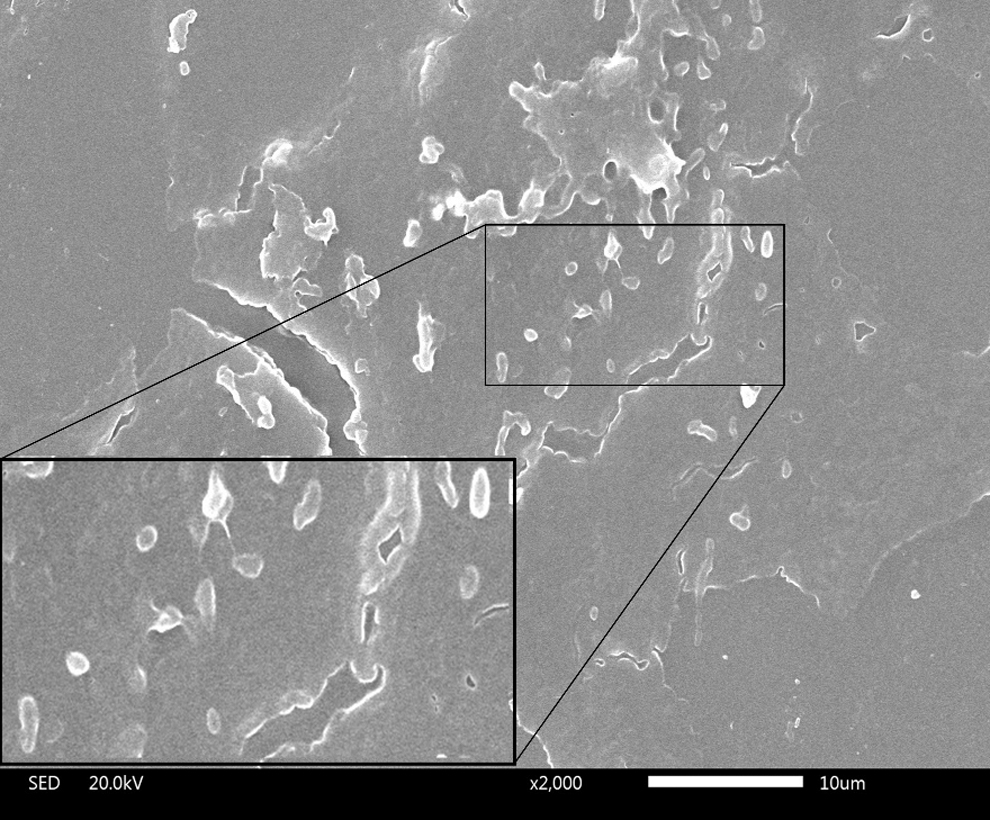
The scanning electron microscopy analysis for strain AD4.

16S rRNA sequence phylogenetic tree of strain AD4.
Growth characteristics of aniline-degrading strain AD4
Figure 3a showed that the lag phase of strain AD4 was relatively short, only about 4 h. The OD600 of strain AD4 increased from 0.09 to 0.83 during the logarithmic growth phase, which was up to 6–46 h. Then, the OD600 fluctuated around 0.8 during the stationary phase (46–72 h), and it began to enter the death phase. Strain AD4 could degrade aniline and it released NH4+-N into the environment when it grew in an aniline environment, just as shown in Fig. 3a. However, aerobic microorganisms can release NH4+-N through catechol 1,2-dioxygenase catalyst (the ortho-cleavage pathway) (Murakami et al., 2014) or catechol 2,3-dioxygenase catalyst (the meta-cleavage pathway) (Xiao et al., 2009) with the decomposition of the benzene ring from aniline (He and Spain, 1997). In particular, the concentration of NH4+-N decreased during the logarithmic growth phase (22–30 h). This phenomenon suggested that a large amount of nitrogen was used for self-growth, and multiplication of the strain AD4 resulting in the utilization rate of nitrogen source was higher than the degradation rate of aniline-releasing NH4+-N. Meanwhile, some studies (Zhang et al., 2011; Li et al., 2020) also found that in the process of aniline degradation and ammonia nitrogen release, nitrogen consumption mainly came from microbial utilization, and a small amount of volatilization also contributed. Figure 3b indicated that the DCW was strongly correlated with OD600 within this mass concentration range.

The analysis of growth and degradation of strain AD4.
Effect of environmental factors on cell growth and aniline degradation
Effect of aniline concentration
It can be seen from Fig. 4a and Supplementary Table S1 that the strain AD4 showed high performance when aniline concentration was 200–800 mg/L. The strain AD4 had a high degradation rate of 93% to aniline after 48 h when the concentration of aniline increased to 600 mg/L. The activity of AD4 was greatly restricted as the concentration of aniline exceeded 1,000 mg/L; however, it could still survive and slowly proliferated in the value at the concentration of 1,400 mg/L aniline. Therefore, the excellent aniline resistance of strain AD4 could promote its practical application in aniline wastewater. To study the maximum application value of strain AD4, the initial concentration of aniline for further study chose 600 mg/L.
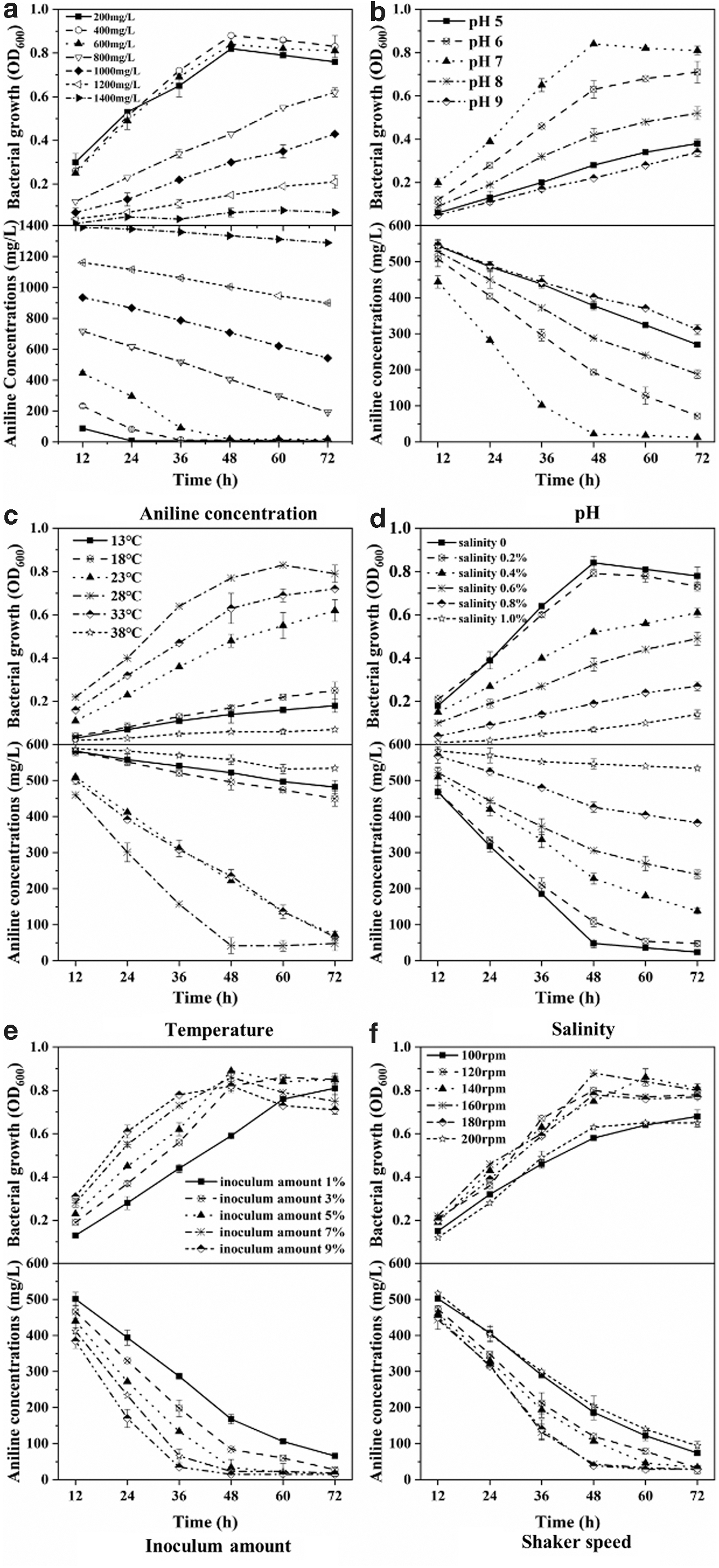
Effect of environmental factors on growth and aniline degradation for AD4.
Effect of initial pH
As could be seen from Fig. 4b, the influence of initial pH value on the growth and degradation of the strain was obvious. Aniline removal efficiency reached the highest (98%) at pH 7 and the bacteria density was also the highest, with OD600 reaching 0.81. However, the degradation rate of aniline and OD600 decreased gradually regardless of the acidity or alkalinity. Specifically, the strain AD4 degraded aniline better in a weak acidic environment than it did in a weak alkaline environment. It was consistent with strain AN-1 (Candida tropicalis) (Wang et al., 2011). At the same time, the degradation rate of AD4 for 600 mg/L aniline within 72 h was more than 50% in the range of pH 5–8, which could better cope with the different pH characteristics of industrial wastewater.
Effect of temperature
Figure 4c indicated that the appropriate temperature range could have a significant impact on strain AD4. The aniline degradation rate of strain AD4 reached the maximum value (94%) at 28°C, whereas OD600 was 0.79. The strain AD4 still had a high aniline degradation rate of 90% to aniline when the temperature increased to 33°C, and the degradation rate of aniline was 88% at 23°C, which was similar to strain XY16 (Delftia sp.) (Xiao et al., 2009). When the temperature dropped to 18°C and 13°C, the degradation efficiency of aniline decreased greatly, suggesting that low temperature could restrict aniline degradation ability of the strain AD4. The aniline degradation rate of AD4 reached the lowest value, only 14%, and OD600 also reached the lowest value when the temperature rose to 38°C. This may because the high temperature affected the enzyme system of bacteria (Wang et al., 2007; Daniel et al., 2008).
Effect of salinity
As shown in Fig. 4d, it could be seen that salinity had a significant negative correlation effect on the growth and degradation performance of the strain AD4. The strain AD4 was initially inhibited at 0.6% salinity, but experiments showed that complete degradation could still be achieved over time. It was completely inhibited when the salinity rose to 1%, because high salinity may cause cell plasmolysis and activity loss of microorganisms (Li et al., 2010). The results cited earlier indicated that the optimum salinity was 0–0.6% for aniline degradation and growth of the strain AD4. It was similar to the strain AN-4a (Pigmentiphaga daeguensis) that was isolated from textile dyeing sludge (Huang et al., 2018).
Effect of shaker speed
Figure 4e showed that the strain AD4 degraded aniline well when the shaker speed was 120–180 rpm. The degradation rate reached 98%, whereas the shaker speed was at the optimal value (160 rpm), and OD600 rose to 0.84. However, a higher rotation rate might have a great impact on the microbial environment and cause damage to bacteria, so the degradation rate of aniline and OD600 decreased at 200 rpm. Meanwhile, the strain AD4 could only achieve 85% degradation because the rotation rate of 100 rpm may not provide sufficient dissolved oxygen (Supplementary Table S2) and may not achieve favorable homogenization between the bacteria and the substrate.
Effect of inoculum amounts
Figure 4f showed that the inoculum amounts had little effect on the final aniline degradation amount and bacterial growth for strain AD4, and it just influenced the duration of growth phases and degradation. This result was similar to the experiment of aniline biodegradation by MC-01 (Ochrobactrum sp.) (Yang et al., 2017) and 2′,6′-methylethyl-2-chloroacetanilide biodegradation by T3–6 (Delftia sp.) (Hou et al., 2014). Therefore, the choice of 5% inoculum quantity is more conducive to practical application, considering the factors of degradation time and operation cost.
Optimization of the aniline-degrading conditions by strain AD4
Supplementary Table S3 was the experimental matrix of aniline degradation rate under various methods of cultivation for the BBD. Through the regression fitting analysis of the data in the Supplementary Table S3 by the Design-Expert 8.0 software, the multiple regression equation of the degradation rate of aniline by strain AD4 for 24 h on the temperature, pH, and the aniline concentration was obtained as follows:
The results of the second-order response surface model fitting in the analysis of variance were given in Table 2. It showed that the model was significant (F value = 95.56, p < 0.0001), the lack of fit was not significant (p = 0.0755 > 0.05), indicating that the regression model was well fitted in the regression area under study. The determination coefficient (R2 = 96.58%) showed that the model could be used to interpret the experimental results, and the optimal value of each factor could be obtained according to the software analysis results.
Analysis of Variance of the Fitted Quadratic Polynomial Model for Aniline Degradation by Strain AD4
The software was used to produce the three-dimensional (3D) graph that could reflect the interaction of each influence factor on the degradation of aniline (Fig. 5). The 3D graphs indicated that the curve slope corresponding to pH was more shaky, demonstrating that the influence of pH on the degradation rate of aniline was stronger than that of temperature and aniline concentration within the specified range. For the comparison of the effects of pH and aniline concentrations on microorganisms, the result was contrary to strain AN-1 (Pseudomonas migulae) (Liu et al., 2015). It was obvious that aniline concentration had a similar negative linear correlation with aniline degradation rate. Meanwhile, the inhibitory effect of aniline on strain AD4 was obviously stronger when the concentration of aniline exceeded 600 mg/L. At high aniline concentration, the influence about the change of temperature on aniline degradation rate was stronger than that at a low aniline concentration. Therefore, pH should be given priority to control to ensure better performance of AD4 in the pratical bio-augumentation of industrial wastewater treatment. Based on the RSM results, aniline concentration of 600 mg/L was determined under optimum operation conditions (Table 3). The experimental results were lower than the predicted values, but the reliability and instruction of the model was still proved by three verification experiments.

Three-dimensional response surface for three variables.
Optimum Conditions for Aniline Degradation Found by the Design-Expert Software
Test of strain AD4 in simulated reactor
The performance of the simulated reactor inoculated with enriched strain AD4 solution is depicted in Fig. 6. It could be seen that the lag phase of strain AD4 was passed within 2 h, aniline could be removed steadily and effectively, and NH4+-N could be gradually released in the subsequent operation time. Half of aniline could be degraded after 8 h of aeration, suggesting that the strain AD4 had simple nutritional requirements and there was no restrained expression between cell growth and aniline degradation. The strain AD4 can degrade aniline independently in an aeration environment, indicating that it had the potential to strengthen activated sludge or biofilm of the actual reactor so that the whole system can remove aniline more quickly and thoroughly (Dvořák et al., 2014; Duan et al., 2015). Meanwhile, the result might provide guidance for the practical application of strain AD4 in industrial water treatment.
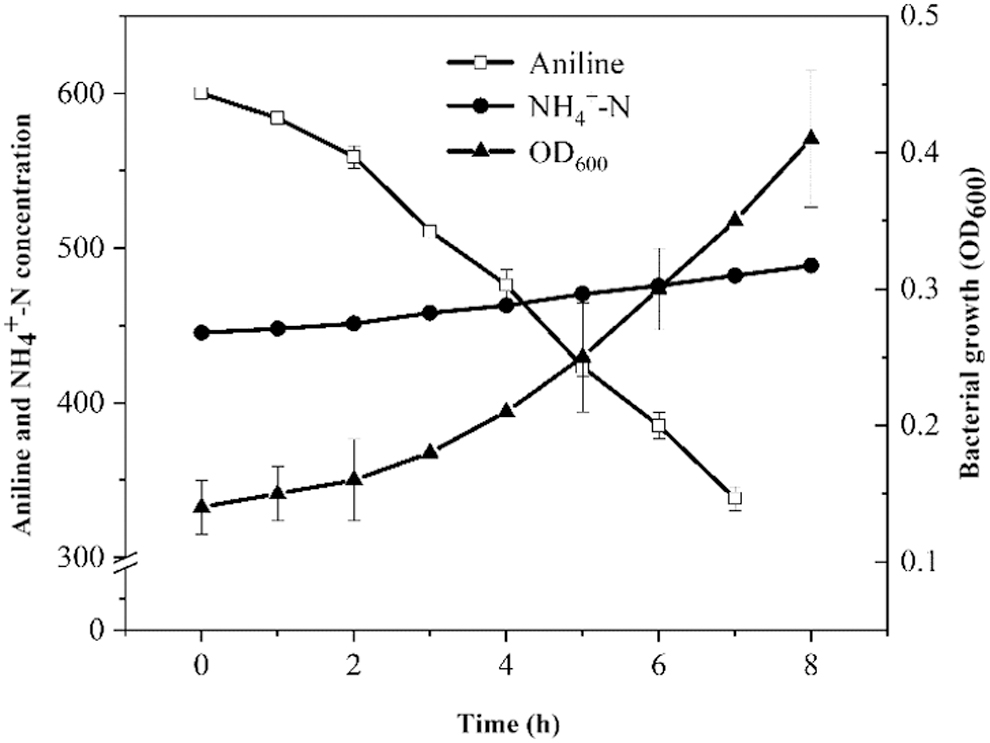
Time curves concentrations of aniline and NH4+-N and growth curve.
Conclusion
In this study, the aniline-degrading bacteria (AD4) were screened from the activated sludge of chemical plants. Strain AD4 can resist high-concentration aniline and was identified as D. tsuruhatensis. In addition, further experiments were carried out to explore the environmental factors that can influence the strain's growth and aniline-degrading ability. The results showed that AD4 could degrade 200–800 mg/L of aniline effectively and resist 1,400 mg/L of aniline; besides, it had good degradation capability in the pH range of 5–8. Response surface methodology was adopted to optimize the aniline removing conditions of the strain AD4 in 600 mg/L of aniline (pH 6.85, 28.55). Moreover, the strain AD4 could achieve a 51.5% aniline degradation rate after 8 h in the simulated reactor where the nutritional condition was ordinary. This study investigated the aniline biodegradation profile of this strain under various conditions and its practical application potential, laying a foundation for further research on the interaction between the strain AD4 and other microorganisms in the enhanced biological aniline removal systems, especially for nitrifying bacteria. Also, the immobilized modes of bacteria to guarantee AD4 to become the dominant strain in the industrial wastewater treatment are also worth exploring.
Footnotes

References
Supplementary Material
Please find the following supplemental material available below.
For Open Access articles published under a Creative Commons License, all supplemental material carries the same license as the article it is associated with.
For non-Open Access articles published, all supplemental material carries a non-exclusive license, and permission requests for re-use of supplemental material or any part of supplemental material shall be sent directly to the copyright owner as specified in the copyright notice associated with the article.
