




Abstract
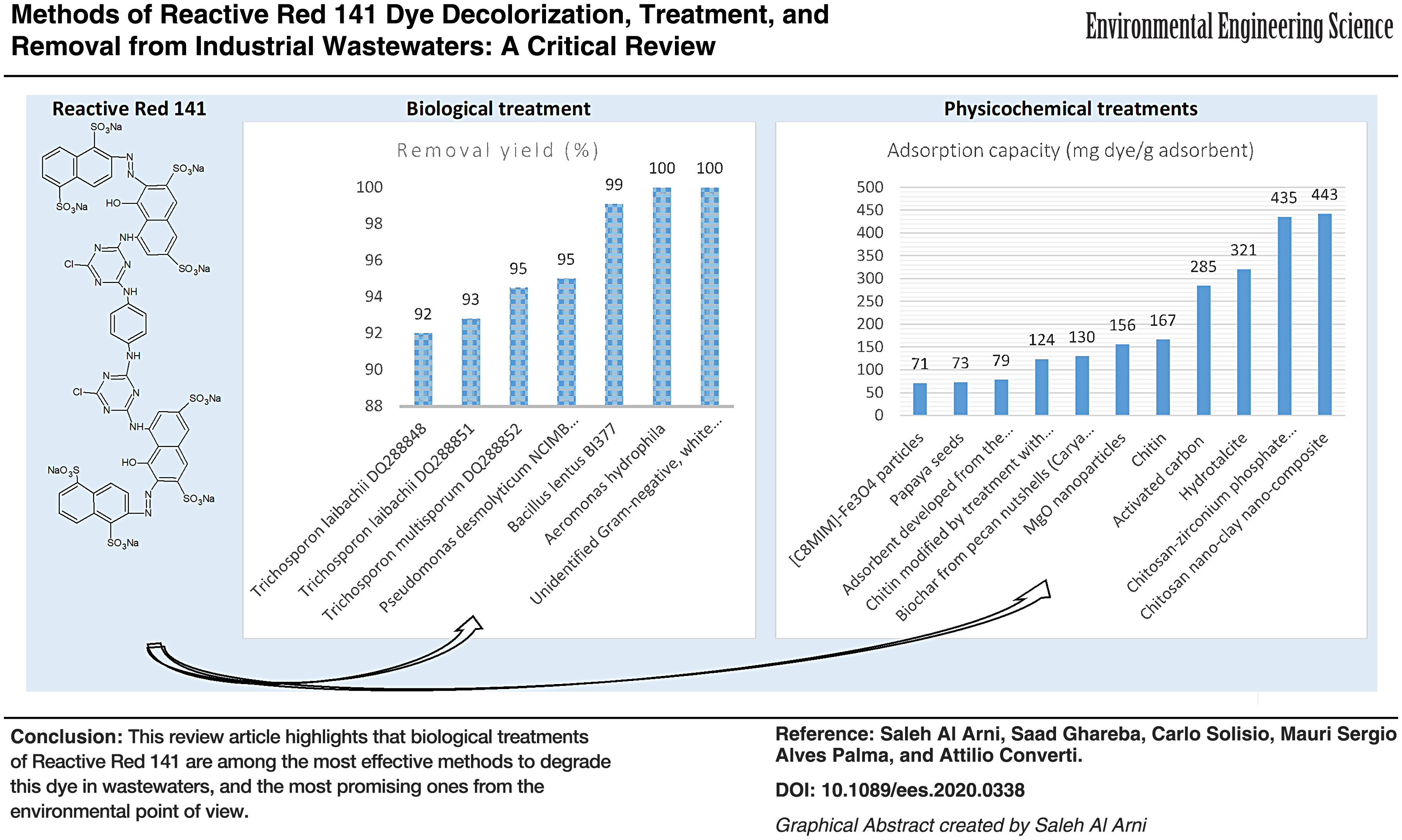
Reactive Red 141 (RR141) is a diazo reactive dye with bright red color, high molecular weight (1,774.15 g/mol), large molecular structure (C52H26Cl2N14Na8O26S8), and several reactive groups. It is a source of water contamination, because of its wide use in industry and potential toxicity. The purpose of this work is to compare different treatment methods applied to industrial water effluents polluted, especially, by this dye. Recently, several research articles have been published on decolorization of RR141 in wastewater effluents. From this survey, nanofiltration membranes prepared through single bilayer polyelectrolyte deposition and electrocoagulation appeared to be the best method, being able to ensure the highest percentage removal (99.9%) of RR141 within an application time of only about 11 min under optimum operating conditions. Nonetheless, other treatments appeared to be quite promising because of their ability to destroy the contaminant rather than simply remove it. Among them, the photo–Fenton reaction was shown to ensure the most effective chemical degradation (98%) of RR141 from aqueous solution within 30 min using CuFeO2 as a catalyst, and Bacillus lentus BI377 its best biodegradation (99.1%) within 6 h. Further development of these methods is expected to allow more effective full-scale applications than the current ones to remove or degrade these contaminants from wastewater in the future, with a focus on RR141.
Introduction
In the textile industry, the production of one kilogram of cloths involves the generation of 40–65 L of wastewater (Chakraborty et al., 2018). These effluents and those coming from other industrial sectors, such as paper, plastic, leather, food, and pharmaceutical industries, contain various types of reactive dyes in concentrations ranging from 10 to 200 mg/L (Hafdi et al., 2020).
Azo dyes are characterized by low degradability; therefore, if left untreated, they eventually end up in the effluent and are a major source of industrial wastewater contamination. According to the recommendations presented in the report of Swedish Chemical Agency (2015), hazardous substances from textile industry effluents still need attention especially on their treatment to reduce their risks for the environment.
The type of dyes used in these industrial activities has a strong influence on wastewater composition and quality in terms of dissolved oxygen level, pH, and contents of organic and inorganic compounds (Sharma et al., 2014). Therefore, their removal from effluents is necessary not only because they are the main water contaminants, but also because of their serious health hazards to life and potential toxicity (Forgacsa et al., 2004; Aksu and Tezer, 2005; Afroze and Sen, 2018; Zazycki et al., 2018; Barathi et al., 2020).
For these reasons, in recent years we can observe a growing interest in research toward the problem of removing these substances from wastewater. In fact, several articles and review articles have been published on this issue (Deive et al., 2010; Abo-State et al., 2017; Rahman et al., 2018; Bhatt et al., 2019; Rodrigues et al., 2019; Schmachtenberg et al., 2019; Tekinalp and Altinkaya, 2019; Hafdi et al., 2020; Theerakarunwong and Boontong, 2020). As illustrated in Fig. 1, dyes can be removed or degraded by chemical, physical, or biological techniques, each of them having its own technical and economic advantages and disadvantages (Robinson et al., 2001; Shaw et al., 2002; Lodha and Choudhari, 2007; Converti et al., 2013; Frade et al., 2017; Mondal et al., 2017; Solisio et al., 2019).
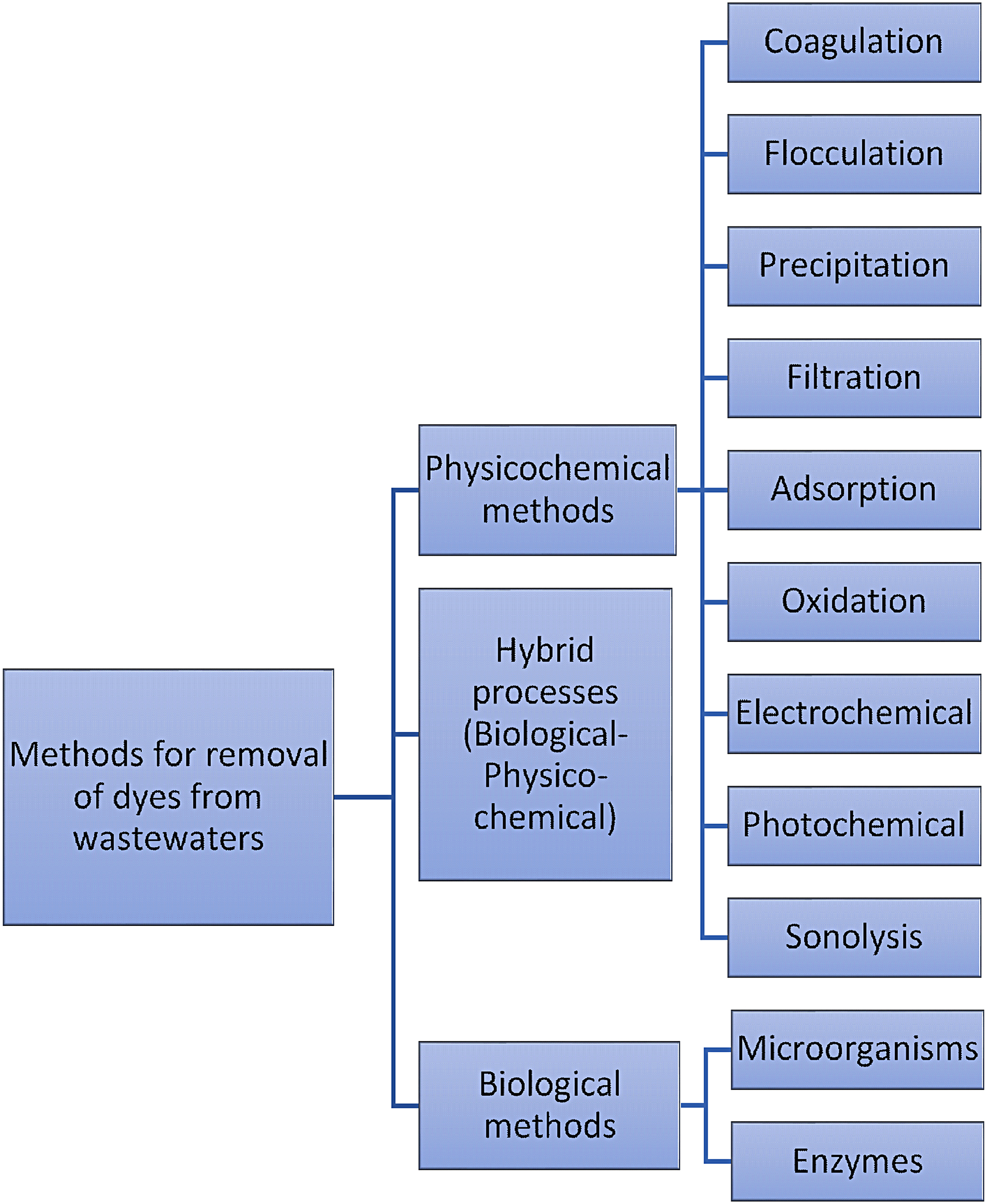
General scheme of methods for removal of dyes from wastewaters.
In this review, attention has been focused on decolorization of Reactive Red 141 (RR141), which has been taken as an example due to its wide use in the textile industry and its potential toxicity (Hafdi et al., 2020; Theerakarunwong and Boontong, 2020). In particular, an attempt was made to provide a summary of the sporadic contributions in literature and to explore the recent technologies applied to treat and remove dyes from industrial wastewater effluents, especially RR 141.15.
Dyes
Dyes are colored substances used to paint materials in several industrial sectors including the textile, paint, paper, plastic, leather, food, pharmaceutical, and so on. When applied to materials such as fibers, they paint them permanently and give them resistance to perspiration, light, water, microbial agents, and many chemicals used in detergents, including oxidizing agents (Rachakornkij et al., 2004; Rai et al., 2005; Nadjafi et al., 2018). These industries use many dyes during their manufacturing processes; therefore, their effluents contain many of them in different concentrations, which are among the major sources of water contamination.
Dyes have different origins, being either natural or synthetic, and have been classified into different categories based on their use, chemical structure, and/or application process (Tyagi and Yadav, 2002; Ghaly et al., 2014; Sharma et al., 2014).
The Society of dyers and colorists (1971) established the color index (CI), a five-digit number used to identify and distinguish colors according to the chemical structure (Sarayu and Sandhya, 2010). The numerical range varies from 10,000 for nitroso dyes to 77,999 for inorganic pigments (Gürses et al., 2016), with the subclass of azo dyes ranging from 11,000 for monoazo to 39,999 for azoic dyes (Society of dyers and colorists, 1971).
Azo dyes
Azo dyes, which have their greatest application in textile processing (Van der Zee and Villaverde, 2005), account for no less than 60–70% of all dyes (Erkurt et al., 2010; Ghaly et al., 2014) and have high-intensity colors compared with the other dyes indexed in the CI (Bardi and Marzona, 2010).
Chemically, they have one or more azo bonds (-N = N-) in their structures and usually bear either alkyl or aryl groups, as in the case of Methyl Red and Methyl Orange (Pankaj et al., 2012).
The reactive azo group (-N = N-), which is the chromophore of these compounds, is often conjugated with aromatic rings (Fig. 2). Depending on the number of azo groups, they are classified as monoazo (only one double bond as Acid Orange 7), diazo (two double bonds as Acid Red 151), triazo (three double bonds as Direct Blue 71), tetraazo, or even polyazo dyes as Direct Red 80 (Garcia-Segura et al., 2011; da Silva et al., 2018). Fig. 3 shows the classification of azo dyes based on the characteristics of the processes in which they are applied. For example, reactive dyes are applied to color cotton, nylon, silk, rayon, and wool.
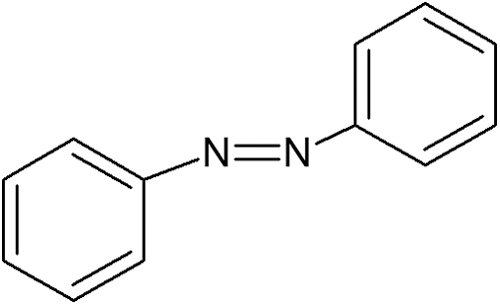
Chemical structure of azo dye chromophore.
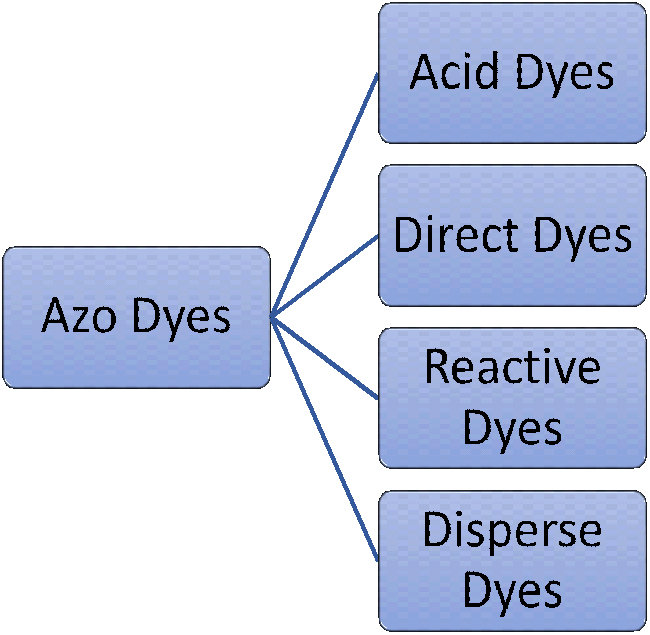
Classification of azo dyes based on the characteristics of the processes in which they are applied.
Losses of azo dyes in wastewaters during the dyeing processes are estimated to be around 15–20% (Khan and Banerjee, 2010) and reach 50% in the case of reactive dyes (Rai et al., 2005), with concentration varying from 5 to 1,500 mg/L (Gottlieb et al., 2003).
Azo dyes are harmful to the environment, suspected carcinogenic agents (Abo-State et al., 2017), and highly toxic to human and aquatic life (Zahrim and Hilal, 2013), especially those with arylamine structure (Brown & De Vito, 1993; Swedish Chemical Agency, 2015); therefore, their removal from wastewaters has received more attention in recent years (Saratale et al., 2011; Singh and Singh, 2017; Jalilnejad et al., 2018), and all the environmental legislations regulate their release into water bodies worldwide. Nonetheless, new techniques with higher removal efficiencies are needed to remove these contaminants from effluents. The methods of azo dye treatment are discussed in Methods for azo dye treatment Section.
Reactive Red 141
RR141, one of the best-known azo dyes, is toxic (Georgin et al., 2018) and poorly degradable (Rodrigues et al., 2019) with traditional wastewater treatment methods. Chemically, it is a reactive diazo dye with bright red color, high molecular weight (1,774.15 g/mol), large molecular structure (C52H26Cl2N14Na8O26S8), and several reactive groups (Fig. 4). Some synonyms of RR141 are also used such as Reactive Red HE7B, Procion Red H-E7B, Brilliant Red KE-7B, Chemictive Red HE7B, and Evercion Red H-E7B. As reported by Guadie et al. (2017), about 10–15% of the dye is released into wastewater during the dyeing process.
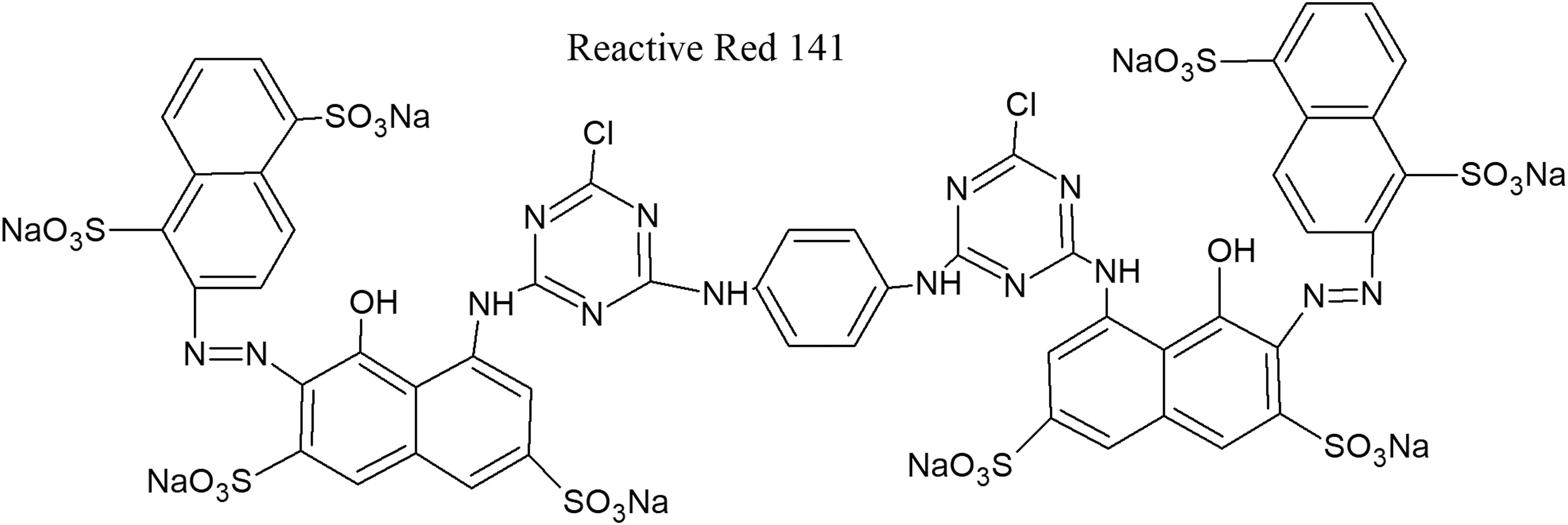
Structure of Reactive Red 141.
RR141 dye can be decolorized by physicochemical or biological methods either alone or in combination. In this review, various methods and their decolorization efficiencies are discussed and compared.
Methods for Azo Dye Treatment
Techniques of dye removal can be divided into (a) nondestructive methods such as adsorption, coagulation, electrocoagulation, filtration, and sedimentation, and (b) destructive methods such as advanced oxidation processes (AOPs) and biodegradation.
Electrocoagulation is an example of nondestructive method that allows for the removal of RR141 using UV-Vis spectrophotometry to monitor the process (Zidane et al., 2008). In turn, destructive methods such as AOPs can be divided into irradiation processes (photolysis and photocatalysis) and nonirradiation processes, including electrical discharges, electrochemical oxidation, Fenton process, ozonation, sonolysis, and wet air oxidation (Hai et al., 2007; Fernández et al., 2010). Recent advances in AOPs to remove industrial wastewater contaminants are presented in the study of Giwa et al. (2021), whereas hybrid combinations of these techniques are illustrated in Fig. 5.
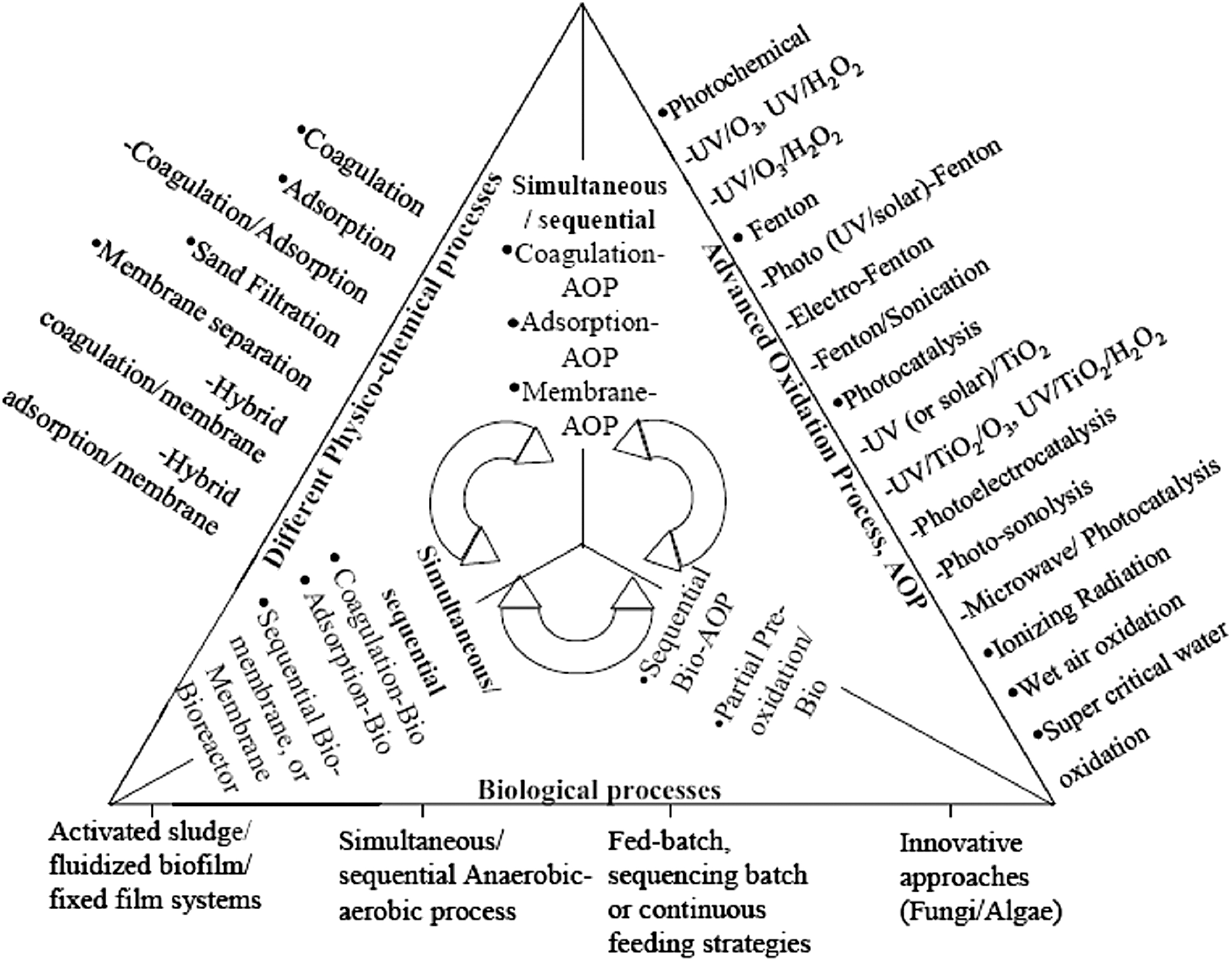
Hybrid combination of techniques for decolorization of dyes (adapted from Hai et al., 2007).
Different techniques and combinations of physicochemical and biological methods have been developed to remove azo dyes (Chacko and Subramaniam, 2011; Saratale et al., 2011). Shah (2014) listed the advantages and disadvantages of each of these techniques as well as their combinations. Even though AOPs have also been proposed to remove these contaminants from wastewater (Robinson et al., 2001; Saratale et al., 2011; Vijayaraghavan et al., 2013; Shah, 2014), they are limited by high cost and low versatility. Nonetheless, their high effectiveness in the treatment of dyes justifies their further development as well as the attention focused on them in this work.
Biological methods
Biological methods, which make use of microorganisms to degrade most types of azodyes (Khalid et al., 2008; Abo-State et al., 2015; Kurade et al., 2016; Mondal et al., 2017; Paz et al., 2017; Barathi et al., 2020), have many advantages over other methods such as lower costs (Ekambaram et al., 2016) and ecofriendliness (Aksu, 2005). Moreover, they can be used in combination with each other, thus allowing for various applications with different efficiencies, but unfortunately also with limitations (Hai et al., 2007).
Several biological processes employing microorganisms (bacteria, actinomycetes, algae, yeasts, fungi, and plants) have been used to treat azo dye-containing wastewaters (Olivieri et al., 2010; Ong et al., 2011; Archna et al., 2012), whose effectiveness or rate depends on different physicochemical and process parameters such as dye structure and concentration, pH, temperature, agitation intensity, dissolved oxygen level, and treatment time, among others.
Chemical structure and concentration of dyes greatly influence their biodegradability and then wastewater decolorization efficiency (Pearce et al., 2003) and rate (Saratale et al., 2009a, 2009b). Another important factor influencing azo dye decolorization is pH, because of its strong effect on microbial metabolism and growth (Chen et al., 2003a). Temperature, which is a paramount parameter in all the processes, plays a special role in the biological ones, because its optimum value is species dependent and strongly influences the rate of dye degradation (Kilic et al., 2007). Agitation, dissolved oxygen level, and residence time in the continuous process or treatment duration in the batch one are other important parameters that impact the dye decolorization efficiency (Chang and Lin, 2001; Chen et al., 2003a; Pearce et al., 2003; Khehra et al., 2006).
Some studies showed the ability of some bacteria isolated from activated sludge from textile industry or contaminated soils, such as Bacillus weihenstephanensis RI12 and Rhizobium radiobacter MTCC 8161, to degrade reactive dyes including Reactive Blue, Reactive Red, Reactive Violet, Reactive Yellow, and Procion Red (Telke et al., 2008; Singh and Singh, 2017; Barathi et al., 2020). For instance, the bacterium Bacillus firmus has proven to be particularly efficient in converting reactive dyes into nontoxic byproducts (Barathi et al., 2020).
However, dye degradation efficiency depends on the type of microorganism. There are several microbial species whose dye degradation ability depends on their adaptability, their metabolism, and type of dye to use as a carbon and energy source. Some studies on dye decolorization successfully used bacterial cultures of Proteus mirabilis, Pseudomonas luteola, Pseudomonas sp., Bacillus cereus, Bacillus subtilis, and Aeromonas hydrophila (Kalyani et al., 2008; Saratale et al., 2011), often isolated from activated sludge or lake sediments (Chen et al., 2003b).
Other studies used fungi such as Aspergillus ochraceus, Aspergillus terreus SA3, Bjerkandera adusta, Phanerochaete chrysosporium, Pleurotus sp., Phlebia sp., Trametes (Coriolus) versicolor (Saratale et al., 2006; Humnabadkar et al., 2008; Andleeb et al., 2010), or yeasts such as Galactomyces geotrichum, Saccharomyces cerevisiae, Debaryomyces polymorphus, Candida tropicalis, Candida sp., Trichosporon beigelii, and Issatchenkia occidentalis (Aksu and Donmez, 2003; Yang et al., 2003; Ramalho et al., 2004; Jadhav and Govindwar, 2006; Jadhav et al., 2007).
Among vegetable materials, some microalgae such as Chlorella vulgaris, Chlorella pyrenoidosa, Cosmarium sp., and Oscillatoria tenuis (Yan and Pan, 2004; Daneshwar et al., 2007), higher plants such as Brassica juncea, Blumea malcommi, Sorghum vulgare, Phaseolus mungo, or hairy root of Tagetes patula L. (Marigold) were successful in decolorizing reactive azo dyes (Ghodake et al., 2009; Kagalkar et al., 2009; Patil et al., 2009). On the other hand, several alternative bioprocesses such as bioremediation, anaerobic and aerobic treatment, biocoagulation, phytoremediation, and biosorption have been applied to degrade and/or remove dyes.
There are several studies in the literature on the mechanisms through which azo dyes are microbially degraded, including the enzymatic (Jadhav et al., 2008), nonenzymatic (Ho et al., 2005), intracellular, or extracellular (Guo et al., 2010) ones.
The mechanisms of enzymatic removal of azo dyes have been clarified for various microorganisms such as Geobacillus stearothermophilus, Pseudomonas KF46, Xenophilus azovorans KF46F, Enterococcus faecalis, Butyrivibrio sp., Sphingomonas sp., Eubacterium sp., and Clostridium sp. (Field and Brady, 2003; Chen et al., 2005a, 2005b; Kalyani et al., 2008; Dawkar et al., 2009; Liu et al., 2009; Bardi and Marzona, 2010; Dias et al., 2010; Khalid et al., 2010; Misal and Gawai, 2018).
On the other hand, the anaerobic–aerobic mechanism of bacterial degradation of azo dyes starts with the reduction of -N = N- nitrogen bond present in the chromophore. This is a two-stage process that requires the preliminary action of the enzyme azoreductase under anaerobic conditions either intracellularly or extracellularly (Guo et al., 2010) (Fig. 6), which is responsible for the reductive cleavage of the dyes' azo bonds. The latter stage is the aerobic degradation of aromatic amines (Lourenço et al., 2001; Van der Zee and Villaverde, 2005; Guo et al., 2010), during which electrons are transferred to dyes that serve as electron acceptors (Chang et al., 2000).
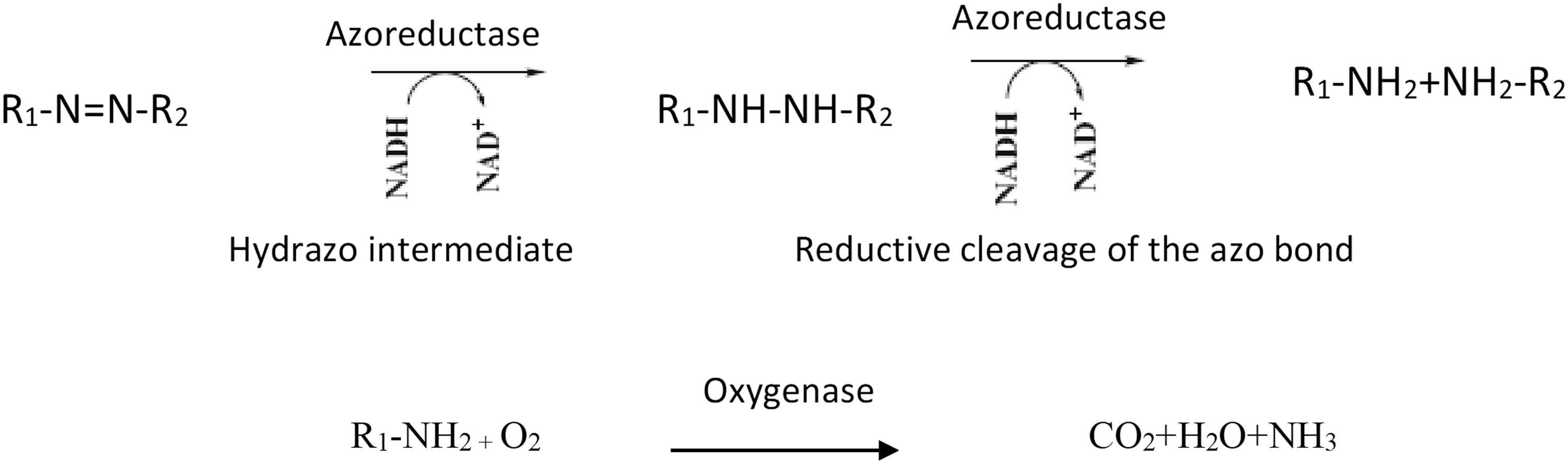
Reaction mechanism of the anaerobic–aerobic sequential process of azo dyes degradation.
An alternative mechanism of anaerobic reduction of azo dyes comprises three different steps, that is, direct enzymatic (azoreductase) reduction, indirect/mediated reduction, and chemical reduction (Guo et al., 2010).
A further mechanism, the aerobic degradation of azo dyes, implies the catalytic action of mono- or dioxygenases, which allows for O2 incorporation into the aromatic ring of organic compounds before their rupture (Sarayu and Sandhya, 2010). However, only some bacteria with specific enzymes for azo dyes' reduction were shown to be able to operate under totally aerobic conditions (Nachiyar and Rajkumar, 2003; Kodam et al., 2005).
Finally, several complex mechanisms are involved in dye biosorption such as adsorption at the cell interface, bioaccumulation, ion exchange, coordination, complexation/chelation, microprecipitation (Crini, 2006), and diffusion through the membrane, whose functional groups include carboxylates, sulfonates, amines, and hydroxyl groups (Srinivasan and Viraraghavan, 2010). However, it is worth remembering that many of these mechanisms allow a simple removal of the pollutant rather than its degradation.
Physicochemical methods
Several physical and chemical methods have been employed mainly in the last decade to remove dyes from industrial wastewaters (Pandit and Basu, 2004; Wang et al., 2009; Ong et al., 2011; Vijayaraghavan et al., 2013; Beyene, 2014). Adsorption stands out among them because it is economically suitable and ecofriendly, has the simplest design and high level of efficiency, and makes use of easily regenerable materials. The adsorption process involves the separation of a substance from a fluid phase by concentration onto the surface of an adsorbent (solid phase). Table 1 shows a summary of advantages and disadvantages of physicochemical methods that are in use to remove dyes from wastewaters.
Advantages and Disadvantages of Chemical and Physical Methods for the Removal of Dyes from Wastewaters
Many studies have focused on biomaterials able to biosorb dyes from wastewaters. Among them are maize cobs, maize stalks, wheat straw, sugarcane bagasse, pine park, rice hulls, wheat bran, peanut shells, orange peel, hardwood sawdust, banana peel, grape stalks wastes, algae, yeast, fungi, peat, chitosan, and bacterial biomass. They have been successful as biosorbents, thanks to their low cost, wide availability, worldwide distribution, and high dye removal efficiency (Aksu, 2005; Aksu and Tezer, 2005; Crini, 2006; Srinivasan and Viraraghavan, 2010; Pankaj et al., 2012; Theerakarunwong and Boontong, 2020).
However, the treatment effectiveness depends not only on the biosorbent and adsorbate properties, but also on the environmental conditions and process variables, among which are temperature, presence of competitive organic or inorganic compounds in the solution and their ionic properties, pH, contact time, and adsorbent concentration (Srinivasan and Viraraghavan, 2010; Bhatt et al., 2019; Tekinalp and Altinkaya, 2019; Hafdi et al., 2020; Theerakarunwong and Boontong, 2020).
Reactive Red 141 Treatment
Biological treatment of Reactive Red 141
RR141 is one of the most investigated dyes in the last years because of its toxicity and poor degradability by traditional wastewater treatment methods. In 1993, Carliell during his M.Sc. Eng. Thesis was able to decolorize this azo dye with a yield in the range 85–90% by an anaerobic microbial process (anaerobic biomass obtained from a sewage sludge digester) with a supplemental carbon source within 4.5 h (Carliell et al., 1994). The authors identified by NMR analysis four different fragments, namely (I) 2-aminonaphthalene-1,5 disulfonic acid, (II) 1,7-diamino-8-naphthol-3,6-disulfonic acid and (III) p-diamino-benzene, whereas the (IV) fourth one (1,3,5-triazine-2,4,6 trioxo) was not identified (Fig. 7) (Carliell et al., 1995).
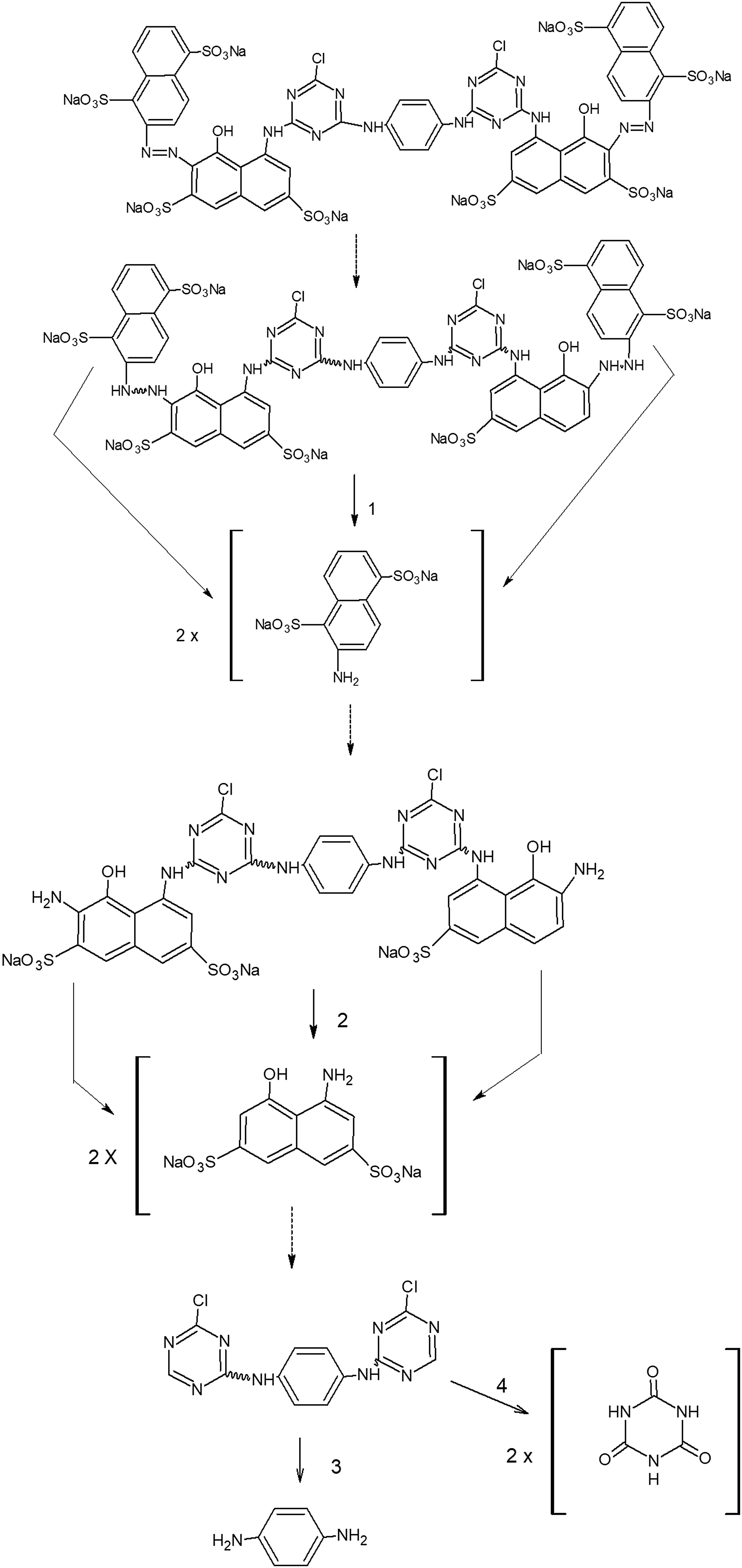
Anaerobic degradation of RR141: (1) 2-aminonaphthalene-1,5 disulfonic acid, (2) 1,7-diamino-8-naphthol-3,6-disulfonic acid, (3) p-diamino-benzene, (4) 1,3,5-triazine, 2,4,6-trioxo (not identified) (adapted from Carliell et al., 1995).
Telke et al. (2008), who studied the kinetics and mechanism of RR141 degradation by Rhizobium radiobacter MTCC 8161 under static anoxic conditions at 30°C and neutral pH, observed an efficiency as high as 90% after 24 h and proposed the biodegradation pathway illustrated in Fig. 8, involving the catalytic action of both oxidative and reductive enzymes along with the formation of several metabolites. A summary of the main microorganisms used for RR141 decolorization is provided in Table 2.
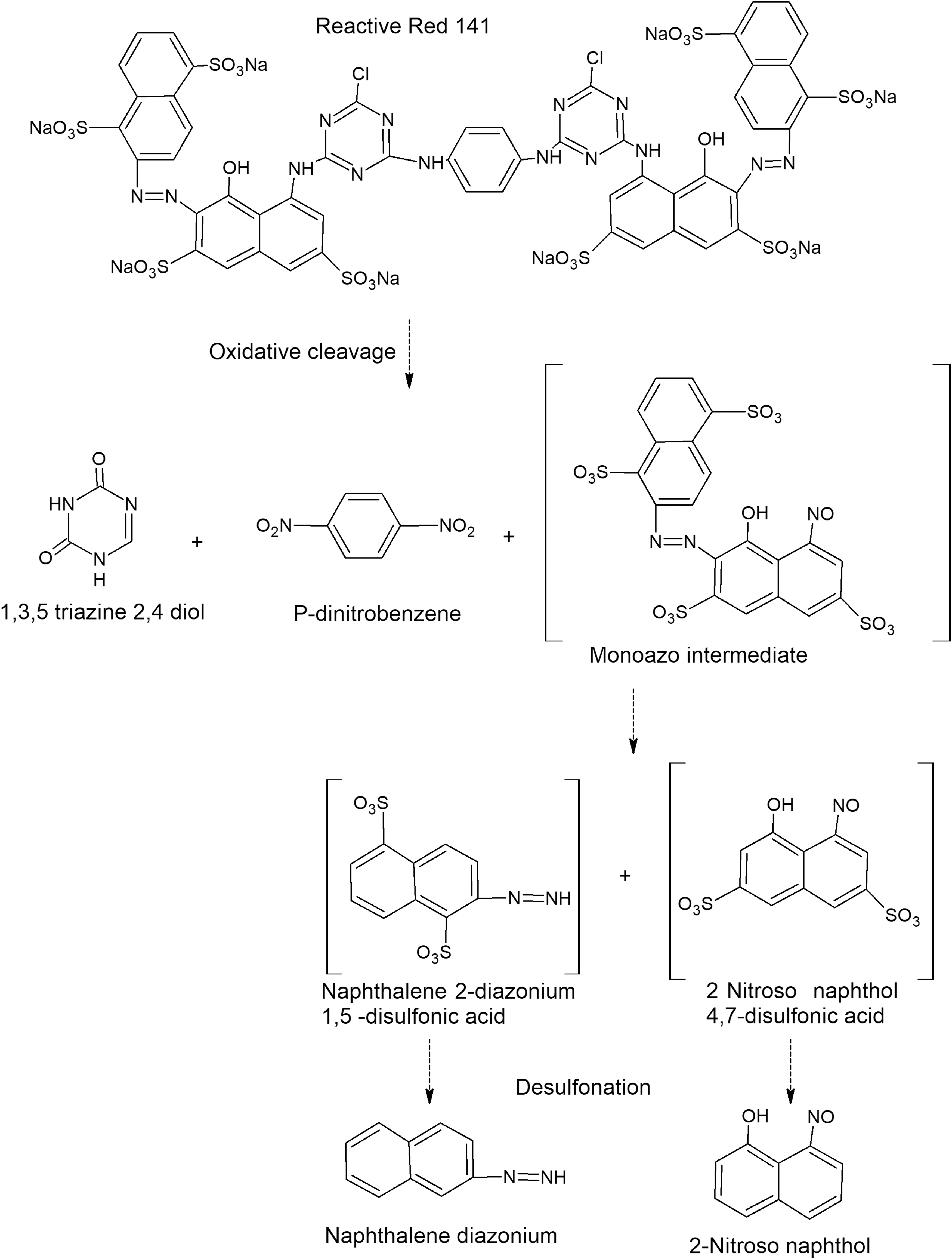
Degradation of RR141 by Rhizobium radiobacter MTCC 8161 (adapted from Telke et al., 2008).
Main Microorganisms Used for Decolorization of RR141 and Related Conditions and Removal Yields
Chen et al. (2003b) investigated the decolorization of azo dyes, including RR141, by six bacterial strains (DEC1 to DEC6) of A. hydrophila, isolated from sludge samples and lake sediments, which grew well under aerobic conditions or agitation, but displayed the best RR141 decolorization in anoxic or anaerobic cultures (Table 2). Among them, DEC1 allowed for the highest removal yield (50–87%) at 30°C and pH 7.0 (Chen et al., 2003b).
Consistently, Van der Zee and Villaverde, (2005) reported in their review maximum RR141 removal yields by sequential anaerobic and aerobic treatments in reactors (upflow anaerobic sludge bed and aerobic tank) of 64% and 11%, respectively. Conversely, Kodam et al. (2005) were able to completely decolorize this azo dye in water at concentrations of 200 and 1000 mg/L within 24 and 30 h, respectively, using an unidentified bacterium (KMK 48) under aerobic conditions at room temperature and neutral pH.
RR141 was effectively decolorized by the Bacillus lentus BI377 strain with a removal yield as high as 99.1% within only 6 h in static culture. Indeed, this degradation has proven to be enzymatic, involving an azoreductase able to cleave the azo bond (Oturkar et al., 2013). The study of Laowansiri (2011) showed that the rate of anaerobic decolorization of RR141 increased with decreasing RR141 concentration, thus confirming the results of Chen et al. (2003a), but with increasing the concentrations of modified starch and polyvinyl alcohol as cosubstrates.
Among the yeasts, Candida rugosa INCQS 71011 stood out being able to remove RR141 with a yield of 75.6% within 24 h and completely within 144 h (do Nascimento et al., 2013).
Physicochemical treatments of Reactive Red 141
According to the literature, there are several treatment methods that could be applied to remove RR141. Dolphen et al. (2007), who investigated the adsorption of RR141 from wastewater onto chitin and chitin modified by treatment with sodium hypochlorite, observed an increase in chitin adsorption capacity from 133 to 167 mg/g when temperature was increased from 30°C to 60°C, but a decrease in that of modified chitin from 124 to only 59 mg/g. These authors suggested some participation of chitin N-acetyl groups in the removal of this azo dye. Likewise, Singhakant et al. (2010), who investigated the ability of treated flute reed by soaking with 0.2 N H2SO4 to adsorb RR141, reported an increase in the adsorption capacity of this material with decreasing particle size and raising contact time or temperature, and classified the process as chemisorption by ion exchange.
Pankaj et al. (2012) studied the removal of RR141 from aqueous solution through adsorption onto TiO2, orange peel, banana peel, and hardwood sawdust with or without sonication. This study demonstrated that sonication favored the adsorption, and the relative adsorbent capacity decreased in the order TiO2 > orange peel > hardwood sawdust > banana peel. Vanaamudan and Sudhakar (2015) investigated the use of a nanobiocomposite (Chitosan and Cloisite 30B) as an adsorbent to remove RR141 from aqueous solution. Their results demonstrated that the nanobiocomposite was an excellent adsorbent for RR141 under acidic conditions, resulting in the highest adsorption capacity reported in the literature for this dye (442.6 mg/g), and that the adsorption process is independent on temperature.
In a subsequent work, Vanaamudan et al. (2016) found a comparable adsorption capacity of hydrotalcite for RR141 (320.5 mg/g) at an optimum pH of 2.0.
Biochar from pecan nutshell also proved to be an efficient low-cost adsorbent for RR141 removal from aqueous solutions, displaying an adsorption capacity at pH 3.0 and 35°C of 130 mg/g (Zazycki et al., 2018) and allowing for a much higher removal yield (85%) compared with raw pecan nutshell (23%). Chitosan nanowires (10 g) showed an 82.7% removal capacity of cationic dyes at concentration of 75 mg/L within 1 h of treatment at pH 4 (Theerakarunwong and Boontong, 2020).
Nano zirconium phosphate (ZrP) and a chitosan bionanocomposite of this material (CZrP) were shown to remove no less than 95% of RR141 dye (Bhatt et al., 2019), while 1% of nickel oxide (NiO) nanoparticles formed on the natural phosphate achieved a RR141 removal capacity of 389.1 mg/g in a contact time of only about 40 min (Hafdi et al., 2020). Rodrigues and coworkers demonstrated, by adsorbing RR141 onto multiwalled carbon nanotubes that the OH or COOH functional groups of the adsorbent are more important than the aromatic rings in the molecules of RR141 (Rodrigues et al., 2019).
The highest removal of RR141 from aqueous solution (99.9%) was obtained by Tekinalp and Altinkaya (2019) using nanofiltration membranes prepared through single bilayer polyelectrolyte deposition at 2 bar transmembrane pressure and pH 8. Table 3 lists the main results found in the literature for RR141 removal using various adsorbing materials, while Table 4 shows the efficiency of different AOPs and membranes in removing Red 141.
Comparison of RR141 Adsorption Capacity of Different Materials
Red 141 Removal Efficiency of Advanced Oxidation Processes and Membranes
Among the alternative methods proposed to remove RR141, it is worth mentioning electrochemical and photochemical degradations, electrocoagulation, and chemical coagulation, most of them performing actual destructive degradation rather than simple pollutant transfer. Schmachtenberg et al. (2019) degraded RR141 dye in aqueous solution with a 98% yield within 30 min using CuFeO2 prepared by microwave irradiation as a catalyst of the photo–Fenton reaction. The lower degradation efficiency of the same catalyst prepared by conventional method (84% within 150 min) confirmed the fundamental role of microwave irradiation in this process. Electrochemical degradation was investigated by Aquino et al. (2010) using a filter-press reactor with a β-PbO2 anode.
Despite promising results, experimental conditions should be optimized in terms of pH and energy consumption reduced to make the process economically feasible. Zidane et al. (2008) compared RR141 removal from wastewaters by chemical coagulation and direct electrocoagulation. Whereas the direct electrochemical treatment lasted 1 h to almost completely remove RR141, the simultaneous use of inorganic coagulants (electrolysis with 10−2 M NaCl) reduced the treatment time to only 10 min. RR141 removal from synthetic wastewater by electrocoagulation was also investigated by Salmani et al. (2015) under various conditions. The removal was nearly complete (99.9%) in just about 11 min under optimum conditions, namely pH 9.68, electrode gap of 1.58 cm (iron electrodes), initial dye concentration of 180 ppm, and current intensity of 22.76 mA/cm2.
As a final remark, we can mention two examples to elucidate possible mechanisms of RR141 dye adsorption. Vasques et al. (2009), who investigated the removal of RR141 by the electrochemical process using a fixed-bed adsorption column, observed that the greater the amount of azodye negative charges, the greater the force of attraction of positive charges of the electric layer on the adsorbent surface. Operating under optimal conditions of temperature (25°C) in the presence of 10% sodium chloride solution, the RR141 percentage removal was as high as 97.2%. Using nanochitin particles as an adsorbent, Boonurapeepinyo et al. (2011) were able to remove no less than 99% of RR141 under neutral conditions (pH 7), probably because the dye reactive azo group (-N = N-) acted as an electron donor and the nanochitin amide group (-CONH2) as an electron acceptor.
Conclusions
Among the results found in the literature to remove the RR141 dye from aqueous solution, the treatment with a chitosan-based nanoclay nanocomposite as a biosorbent ensured the highest adsorption capacity at equilibrium (442.60 mg of dye per g of adsorbent in 6 h), followed by hydrotalcite (320.5 mg/g in 2.5 h) and activated carbon prepared from peanut shells by microwave irradiation followed by pyrolysis (284.5 mg/g in 1 h). Using nanofiltration membranes prepared through single bilayer polyelectrolyte deposition showed the highest RR141 dye removal of 99.9%, whereas the photo–Fenton reaction has proven to be one of the most effective destructive physicochemical methods, being able to degrade no less than 98% of the pollutant within about half an hour.
On the other hand, the best microbial degradation of this dye was obtained using a static culture of B. lentus BI377 that had the additional advantage of almost completely (99.1%) decolorizing it in 6 h, while an unidentified Gram-negative, white coccoid designated as KMK 48 was able to completely remove it at very high concentration (1,000 mg/L) within half an hour under aerobic conditions, room temperature, and neutral pH. These results as a whole confirm, also for the treatment of RR141, the peculiar advantages of bacteria such as rapid growth, adaptation ability, actual degradation rather than simple pollutant transfer, high efficiency, and a high hydraulic retention time, which would allow treating wastewaters even with very high concentrations of this contaminant. Nonetheless, a deep cost analysis is needed to ascertain the economic feasibility of these treatments.
Footnotes
Acknowledgment
The authors would like to gratefully acknowledge the Scientific Research Deanship at the University of Ha'il-Saudi Arabia for its fund to perform this research through the project number RG-191190.
Author Disclosure Statement
No competing financial interests exist.
Funding Information
This work was supported by Scientific Research Deanship (RG-191190) at the University of Ha'il-Saudi Arabia.