




Abstract
The key to reducing the environmental and human health hazards of heavy metals is to choose proper washing agents to remediate heavy metal-contaminated soil. In this study, ferric nitrate and citric acid (CA) were used to remove Cu, Zn, Pb, and Cd from contaminated soil. The effects of concentration, liquid–solid ratio, and time of the washing processes were investigated. Besides, the effects of ferric nitrate or CA on soil fertility and the potential ecological risk of heavy metals after soil washing were also studied. In ferric nitrate remediation, the optimal removal efficiencies of Cu, Zn, Pb, and Cd were 78.68%, 58.96%, 48.53%, and 80.86%, respectively. On the contrary, in CA remediation, the optimal removal efficiencies of Cu, Zn, Pb, and Cd were 66.59%, 43.10%, 37.95%, and 77.48%, respectively. The washing with both ferric nitrate and CA significantly reduced the potential ecological risk of heavy metals in the soil, whereas ferric nitrate showed better performance in lowering the metal risks than CA. Soil properties had been improved to some extent, including invertase activity, acid phosphatase activity, available phosphorus, and available nitrogen. The washing results showed that ferric nitrate exhibited better performance than CA. This study suggests that ferric nitrate can be considered a suitable agent for washing soil contaminated by heavy metals.
Introduction
Heavy metal-contaminated soil is one of the major environmental problems worldwide, mainly caused by the development of the mining industry, irrigation of wastewater, and the unreasonable use of chemical fertilizers and pesticide (Fu et al., 2013; Alikhani and Manceron, 2015; He et al., 2015; Guo et al., 2018; Tortora et al., 2018). In China, to protect the soil environmental quality and control the soil pollution risk, two standards have been formulated as the national environmental quality standards, including “Soil environmental quality Risk control standard for soil contamination of agricultural land” and “Soil environmental quality Risk control standard for soil contamination of development land.”
Unlike organic compounds that biodegrade over time, heavy metals are not biodegradable, which makes them a potential threat to the environment and human health (Suanon et al., 2016). Among many heavy metals, Cu, Zn, Pb, and Cd have attracted widespread attention. Zn and Cu are trace elements that are essential for biological metabolism. However, excessive amounts of Cu and Zn can cause toxic effects on the organism. For example, Cu can cause vomiting, diarrhea, stomach cramps, nausea, and even death (Zare et al., 2018), while high toxicity of Pb and Cd can lead to renal dysfunction, cancer, hypertension, and other diseases (Feng et al., 2020a). Therefore, there is an urgent need for an environmental-friendly, low-cost, and more efficient method to remediate heavy metal-contaminated soil.
Remediation technologies for heavy metal-contaminated soils include chemical, physical, or biological techniques (Khalid et al., 2017). Among these methods, soil washing is considered to be one of the most time-efficient, cost-effective, and permanent techniques to remove heavy metal from the soil (Huang et al., 2020). The heavy metal wastewater after washing can be treated with Ca(OH)2 and biochar. Heavy metals in soil are usually washed by chelators, inorganic washing agents, or surfactants (Feng et al., 2020b).
Among these agents, chelators, surfactants, and strong acids have strong extraction capacity. However, some chelators have been proved to have drawbacks in previous studies. It has been reported that 1, 2, 3, and 6 M HCl can extract 35%, 57%, 79%, and 83% of Pb from contaminated soil, respectively, but the final soil pH dropped below 1 after washing, which has an impact on the soil fertility, plant productivity, revegetation, and microstructure (Yoo et al., 2017). EDTA exhibits refractory behavior toward biodegradation and can cause secondary pollution in the groundwater through soil washing (Beiyuan et al., 2018). Surfactants such as rhamnolipids are capable of removing heavy metals to a moderate degree; however, most surfactants are relatively expensive and thus have not been extensively used.
Ferric nitrate was chosen for the following reasons: (1) ferric nitrate has the advantages of good washing effect, suitable acidity, low secondary pollution, and low price, and has received widespread attention in soil remediation (Yoo et al., 2016). (2) Among the Ca-, Mg-, Na-, K-, and Fe-based salts, ferric iron (Fe(III)) has a low pKa value. Fe(III) can also form ferric (oxy) hydroxide, which is rich in the soil, and can dissociate water molecules (Yoo et al., 2016). (3) Ferric iron (Fe(III)) can generate hydrogen ions during precipitation, and the produced hydrogen ions can decrease the solution pH and enhance the metal extraction. (4) Nitrogen is an essential nutrient for rice growth (Li et al., 2020).
In addition, it has been reported that organic acids can replace strong acids and chelators (Suanon et al., 2016). Following are the reasons why citric acid (CA) was chosen: (1) CA is easily biodegradable in soil suspension. (2) CA is a typical low molecular weight organic acid secreted by plant roots, and has little effect on the environment. (3) CA is cost effective and has little complexing force on alkaline earth metal ions such as Ca, K, and Mg, so it is suitable for extracting heavy metals from the soil (Huang, 2007). (4) CA can complexate a variety of metal ions (Huang, 2007). However, the comparative study on the removal of heavy metals from the soil by ferric nitrate and other chemicals has not been reported.
The contents of available nitrogen, phosphorus, and potassium are important fertility indicators of the soil, and the lack of those contents is one of the main factors limiting the crop yields. It is worth noted that after soil washing, heavy metals may change from stable components to unstable components, which are highly mobile, toxic, and bioavailable to organisms (Beiyuan et al., 2017). Duan et al. (2018) believed that the activity of soil enzyme is one of the most direct responses to microecological conditions. Changes in soil biochemical characteristics are good indicators of soil quality. Therefore, the removal rate, the potential ecological risk of heavy metals, the physicochemical properties, and biochemical characteristics of soil after washing are important indicators for the selection of soil washing agents.
The preliminary discussion on the washing mechanism of ferric nitrate and CA, as well as the postwashing soil properties and the potential ecological risk of heavy metals are worth comparing and studying. Therefore, this study first aimed to investigate the optimal washing conditions of CA and ferric nitrate. Second, the effect of washing procedure on the potential ecological risk of soil was analyzed by chemical forms. Third, the influences of the two types of washing agents on physicochemical properties and biochemical properties were compared. Finally, the washing mechanism of ferric nitrate and CA was investigated by Fourier transform infrared spectra. The results can provide insights into the potential of ferric nitrate as an effective heavy metal washing agent from the soil.
Materials and Methods
Characterization of soil
Heavy metal-contaminated soil samples were collected around a mining area in Hubei province, China. The surface soil samples of 0–20 cm were collected by the quincunx-sampled method. A total of 16 different soil samples were collected with a sampling area of about 80 m2, air-dried, and then passed through a 2 mm sieve. The experimental soil was red loam. The physicochemical properties of soil samples are shown in Table 1. The washing agents, CA and ferric nitrate, were purchased from Sinopharm Chemical Reagent Co., Ltd.
The Physicochemical Properties of the Soil Samples
Soil washing experiments
The effects of agent concentration, washing time, and liquid–solid ratio on heavy metal removal were systematically studied. All washing experiments were conducted in 100 mL conical flasks on a shaker (150 rpm) at room temperature (25°C). The shaken samples were then centrifuged at 4,000 rpm for 20 min. After the centrifugal, the supernatant was drained off. The batch washing experiments were conducted according to the following parameters:
In the concentration experiments, CA and ferric nitrate were prepared at concentrations of 0, 0.01, 0.03, 0.05, 0.1, 0.2, 0.3, 0.4, 0.5, 0.7, and 1 mol/L.
In the liquid–solid ratio experiments, the liquid–solid ratio was set to 3, 5, 7, 9, 11, 13, 15, 17, 20, 25, and 30 v/w.
In the time experiments, the treatment time was set to 5, 30, 90, 150, 180, 240, 300, 360, 720, and 1,440 min.
Then the washed soil was rinsed with distilled water at a soil solution ratio of 1:10 (w/v). The washing process was repeated twice, and the washed soil was air-dried at room temperature for subsequent analysis. All experiments were conducted in parallel, in triplicate, with two blank controls.
Chemical forms
A modified BCR procedure was performed to analyze the distributions of Cu, Zn, Pb, and Cd in original and treated soil (Zhai et al., 2018). The fractions of each metal were determined, including exchangeable and acid-soluble state (F1), reducible state (F2), oxidizable state (F3), and residual state (F4).
Soil analysis
The total metal contents were determined by a flame atomic absorption spectrophotometer after digestion with HF-HNO3-HClO4. Soil pH was measured using a pH meter at the soil/water ratio of 1:2.5. Organic matter content was determined by the potassium dichromate oxidation-heating method. The available nitrogen was determined by the alkali diffusion method. The available phosphorus content was determined by the Mo-Sb antispetrophotography method. The available potassium was determined by the flame photometry method.
This study evaluated the activities of urease, invertase, catalase, and acid phosphatase, and measured the enzyme activity of the soil using a standard method (Guo et al., 2018; Liu et al., 2020). The urease activity was determined by measuring ammonium colorimetrically. The invertase activity was measured by 3,5-dinitrosalicylic acid colorimetric method. The catalase activity in the soil was measured by the KMnO4 titrimetric method. The acid phosphatase was determined by the colorimetric method.
Fourier transfer infrared analysis
Before and after washing, the ferric nitrate or CA solution under optimal conditions was dried in a lyophilizer. Fourier transfer infrared (FTIR) spectra of the samples were obtained by a PerkinElmer 580B using the KBr pellet technique.
Results and Discussion
Soil washing
Effects of CA and ferric nitrate concentrations
The washing experiments confirmed that ferric nitrate or CA was capable of removing Cu, Zn, Pb, and Cd from the soil. In the control treatment without adding CA or ferric nitrate solution, the removal rates of Cu, Zn, Pb, and Cd were very low. In the CA control treatment, the removal rates of Cu, Zn, Pb, and Cd were 1.07%, 0.82%, 0.65%, and 1.14%, respectively. In the ferric nitrate control treatment, the removal rates of Cu, Zn, Pb, and Cd were 0.85%, 0.61%, 0.47%, and 0.87%, respectively. From the results in Figures 1–4, as the concentration of ferric nitrate or CA increased from 0.01 to 1 mol/L, the washing efficiency of Cu, Zn, Pb, and Cd increased accordingly.
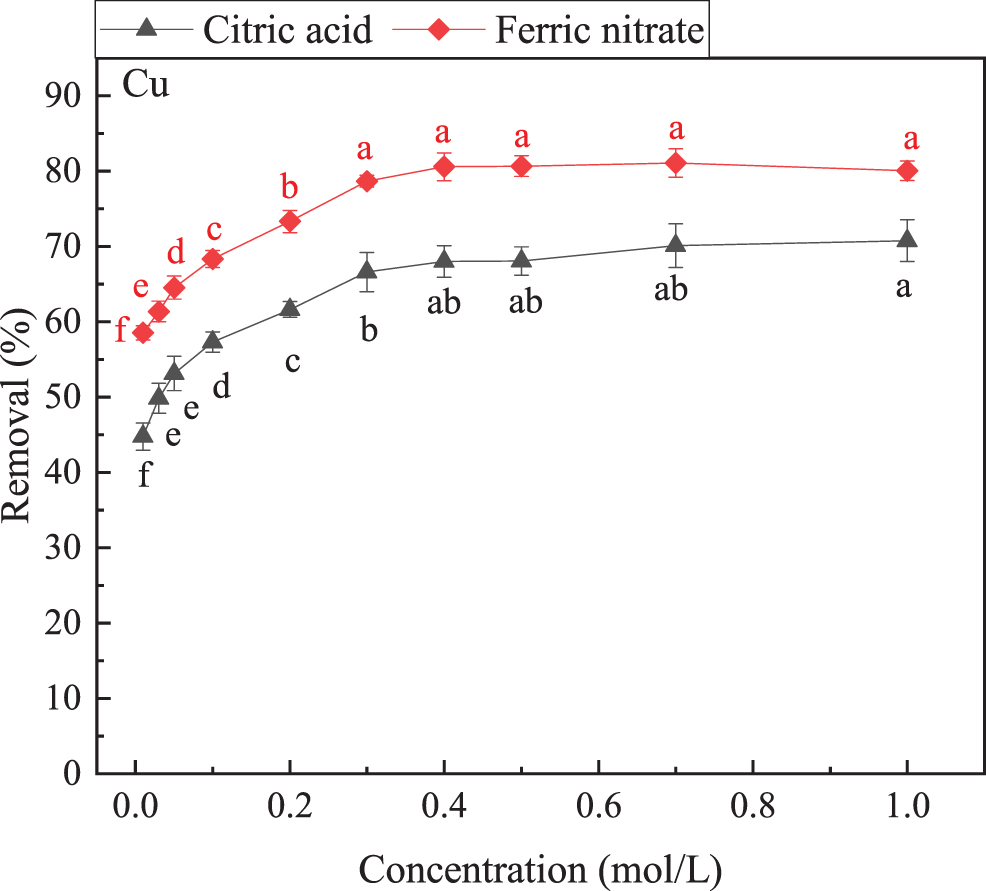
Effects of concentrations of washing agents on soil Cu removal (ferric nitrate and CA). Different lowercase letters in the same line represent significant differences between means according to the Duncan's multiple test (p < 0.05). CA, citric acid.
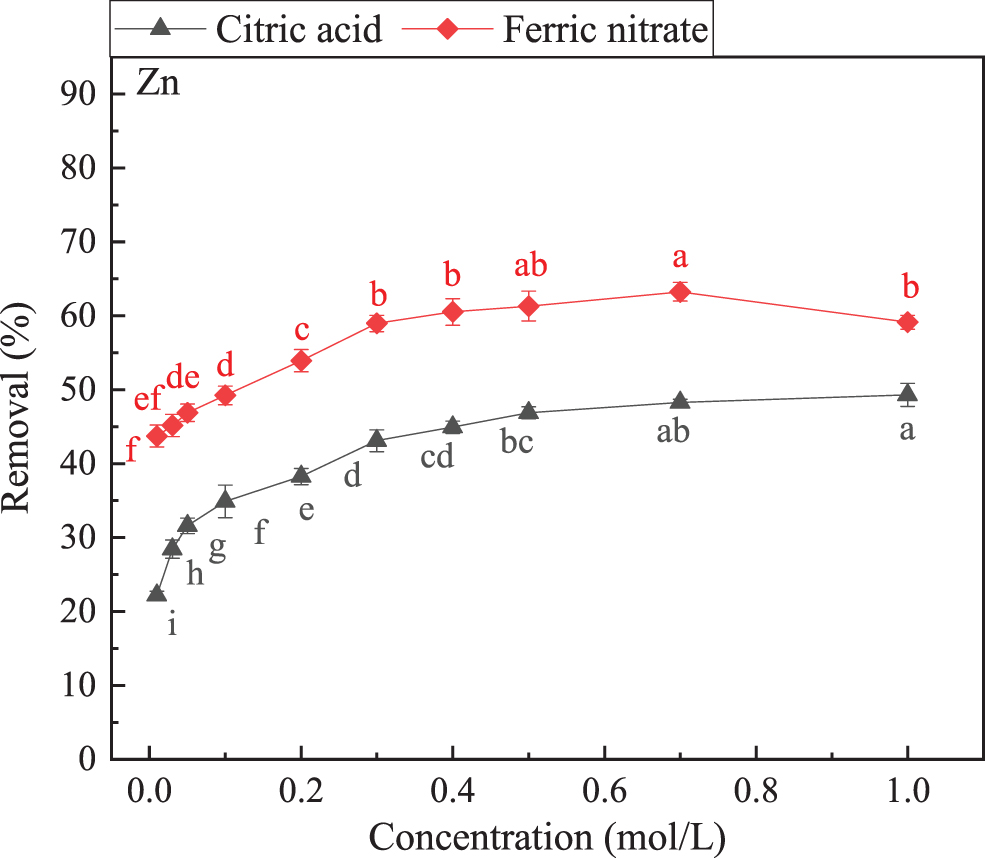
Effects of concentrations of washing agents on soil Zn removal (ferric nitrate and CA). Different lowercase letters in the same line represent significant differences between means according to the Duncan's multiple test (p < 0.05).
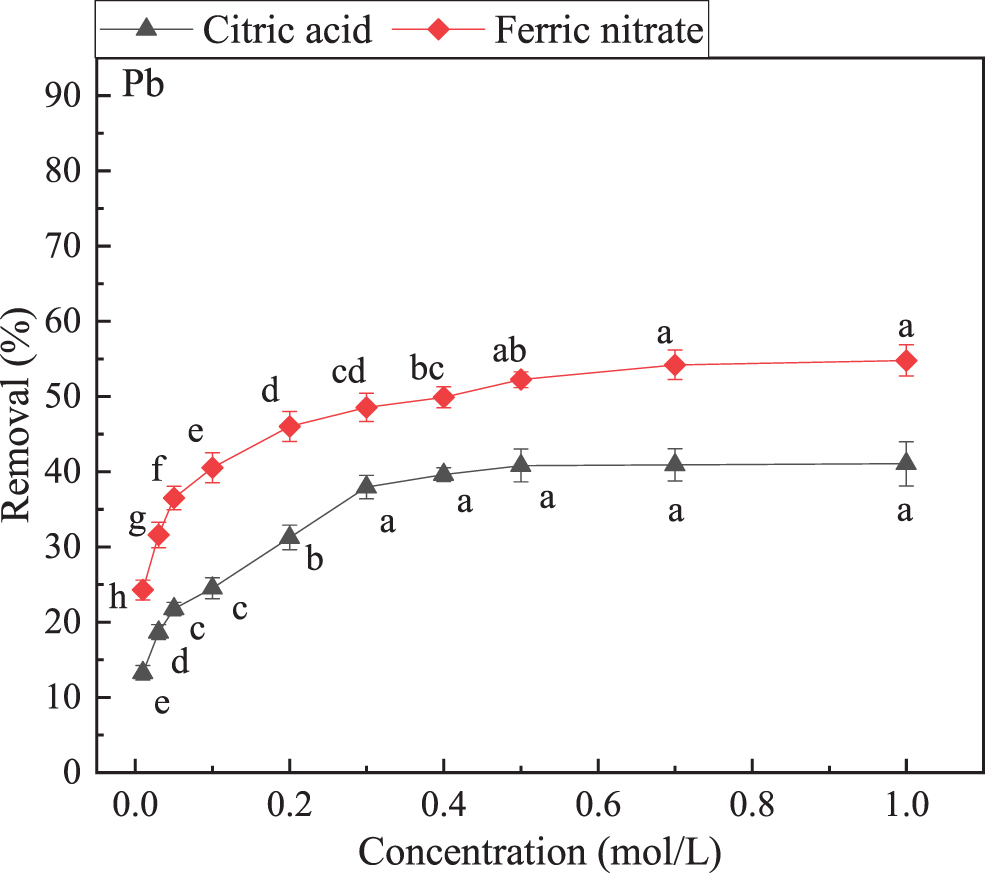
Effects of concentrations of washing agents on soil Pb removal (ferric nitrate and CA). Different lowercase letters in the same line represent significant differences between means according to the Duncan's multiple test (p < 0.05).
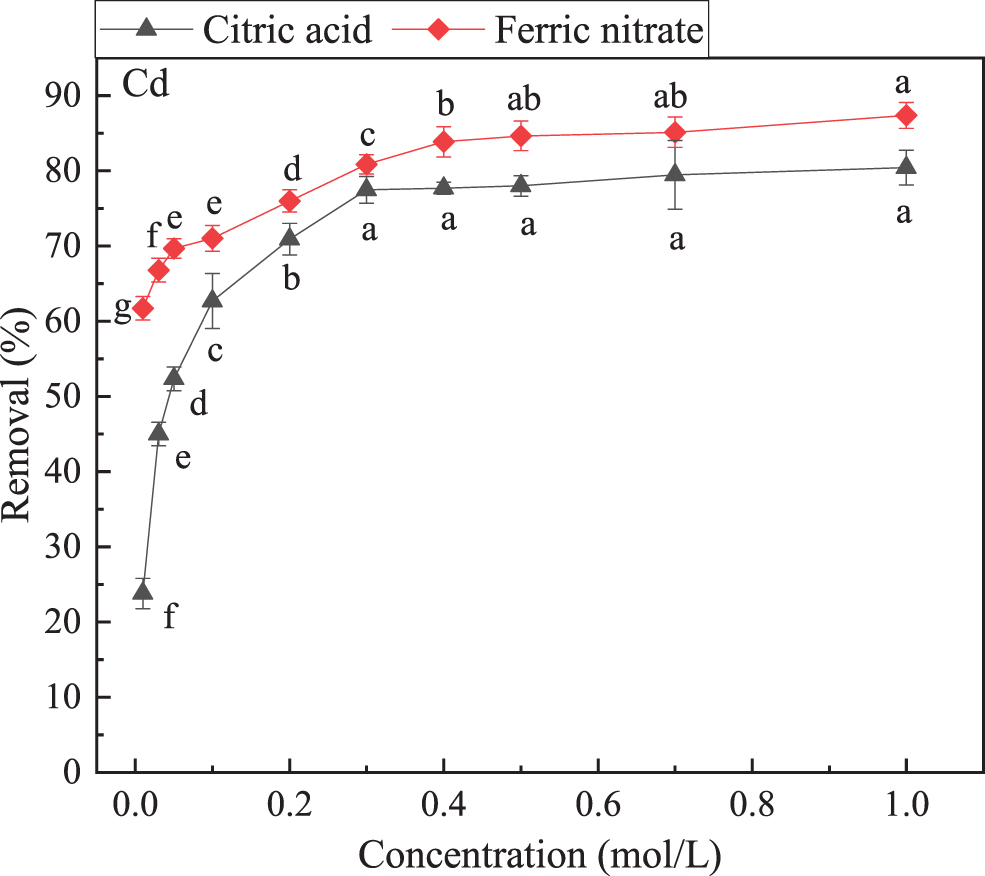
Effects of concentrations of washing agents on soil Cd removal (ferric nitrate and CA). Different lowercase letters in the same line represent significant differences between means according to the Duncan's multiple test (p < 0.05).
When the concentration of CA or ferric nitrate solutions was less than 0.3 mol/L, the removal rates of Cu, Zn, Pb, and Cd were first increased rapidly and then slightly. For CA, the higher the washing agent concentration, the more heavy metal ions it can bind, which directly promotes the metal ion chelation reaction toward the formation of agents (Ke et al., 2020). On the other hand, during the experiment, the number of hydrogen ions increased with the increase of CA concentration, and the hydrogen ions released heavy metal ions from the soil (Tang et al., 2018). In ferric nitrate, Fe(III) replaced metal ions bound to soil adsorption sites, and promoted the dissolution of soil organic matter, releasing metal ions bound to organic matter (Zhai et al., 2018).
In this study, the concentrations of Cu, Zn, Pb, and Cd in the soil were 350, 212.5, 173.9, and 21 mg/kg, respectively. Among them, the concentrations of Cu, Zn, Pb, and Cd were 7, 1.06, 2.48, and 70 times higher than the Soil Environmental quality–Risk Control Standard for soil contamination of agricultural land, respectively (GB15618 2018). Under optimal washing conditions, the removal rates of Cu, Zn, Pb, and Cd by CA were 66.59%, 43.10%, 37.95%, and 77.48%, respectively, and the removal rates of Cu, Zn, Pb, and Cd by ferric nitrate were 78.68%, 58.96%, 48.53%, and 80.86%, respectively.
After washing with CA or ferric nitrate, the concentration of Cu in the soil was within the orchard standard in the Soil Environmental quality–Risk Control Standard for soil contamination of agricultural land (150 mg/kg), and the concentration of Zn in the soil was also within the Soil Environmental quality–Risk Control Standard for soil contamination of agricultural land (200 mg/kg). The high washing efficiency of Cu may be due to the high content and unstable components of Cu in the soil. However, the removal rate of Zn was not high, probably because Zn and Cd have similar chemical properties. Zn can compete with Cd for adsorption sites. In this work, the concentration of Zn in soil was 212.5 mg/kg, which was much higher compared with Cd (21 mg/kg). Therefore, the adsorption ability of soil surfaces for Zn was stronger than that for Cd (Zhai et al., 2018).
Although the Pb content was reduced after washing, it did not meet the Soil Environmental quality–Risk Control Standard for soil contamination of agricultural land. This may be due to the stable form of Pb in the soil, which led to a low removal rate of Pb in the soil (Labanowski et al., 2008). Compared with Pb, Cu, and Zn, Cd had the highest removal rate because Cd had active chemical properties and the weakest adsorption to soil (Shaheen et al., 2013). However, Cd remained at high risk. Therefore, the soil can be washed multiple times to make the Pb and Cd content in the soil meet the Soil Environmental quality-Risk Control Standard for soil contamination of agricultural land. The results showed that ferric nitrate was more effective in washing soil than CA.
The results may be due to the following reasons: after washing with CA and ferric nitrate, the soil pH value changed from 5.2 to 3.11 and 2.7, respectively, in which CA mainly released H+ through –COOH, and ferric nitrate released H+ through hydrolysis. According to the pH value of the soil after washing, ferric nitrate can release more hydrogen ions under optimal conditions. On the other hand, CA is a carboxylic acid with three carboxyl groups and behaves as tetradentate ligand, which can bind to other cations and lead to a lower heavy metal removal efficiency (Liang et al., 2019).
Effect of liquid–solid ratio
The influence of the liquid–solid ratio on the removal rate of heavy metals was investigated. As expected, the removal efficiencies of Cu, Zn, Pb, and Cd were increased with the increase of liquid–solid ratio until it reached a steady state. As shown in Figures 5–8, the optimal liquid–solid ratios of ferric nitrate and CA are 7 and 25, respectively. The removal efficiency of Cu, Zn, Pb, and Cd increased with the increasing liquid–solid ratio; however, there was a trade-off between efficiency and treatment cost. More wastewater will be produced at a higher liquid–solid ratio. Considering the water and energy consumption, the availability of machinery, and the convenience of effluent treatment, the liquid–solid ratio was set to 25 for CA and 7 for ferric nitrate to make the field operation cost-effective.
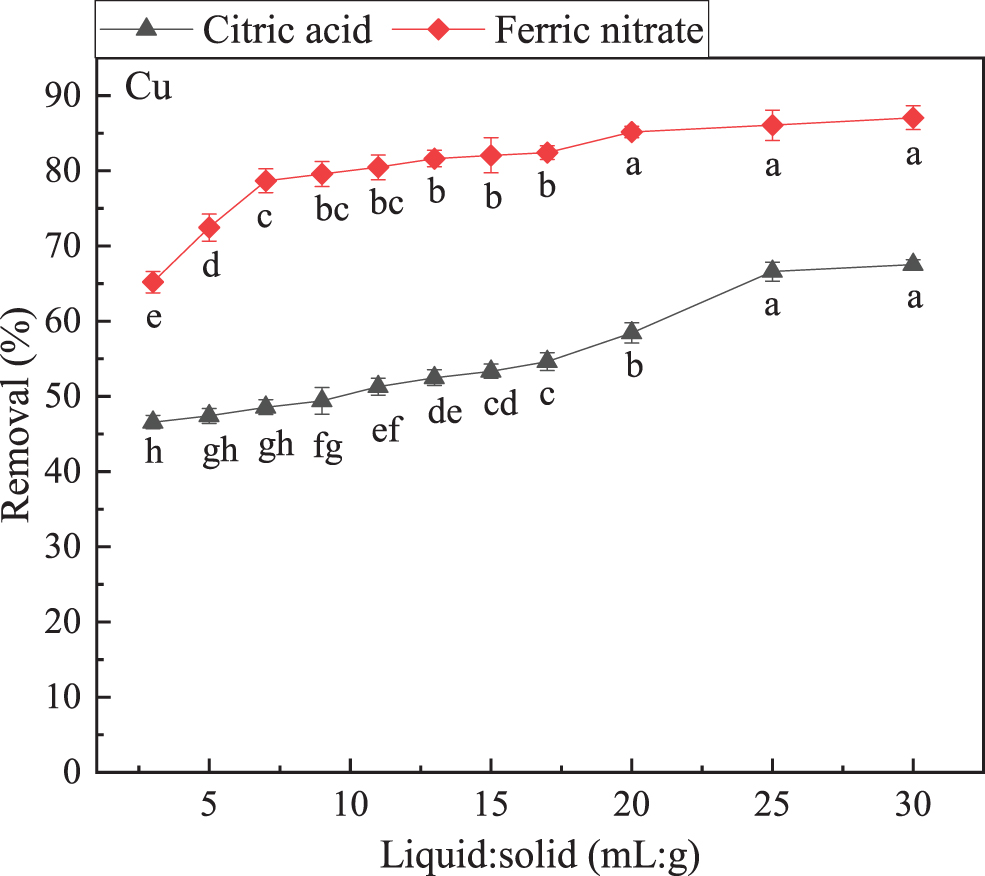
Effects of liquid–solid ratio of washing agents on soil Cu removal (ferric nitrate and CA). Different lowercase letters in the same line represent significant differences between means according to the Duncan's multiple test (p < 0.05).
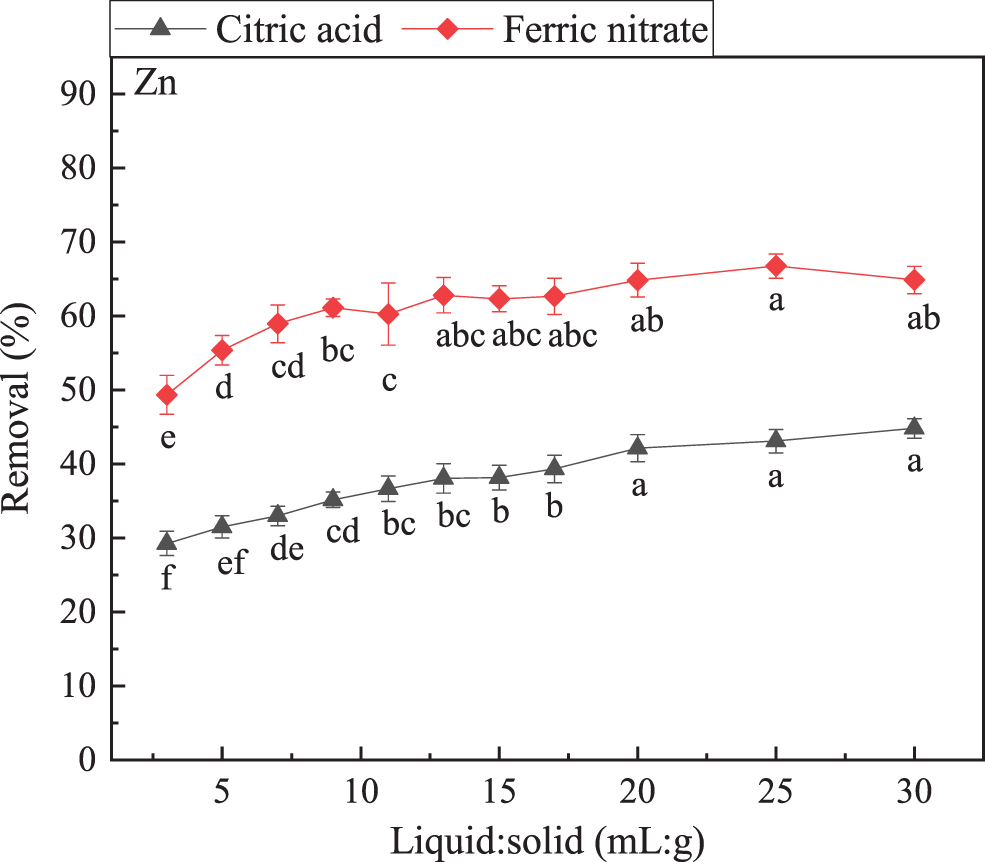
Effects of liquid–solid ratio of washing agents on soil Zn removal (ferric nitrate and CA). Different lowercase letters in the same line represent significant differences between means according to the Duncan's multiple test (p < 0.05).
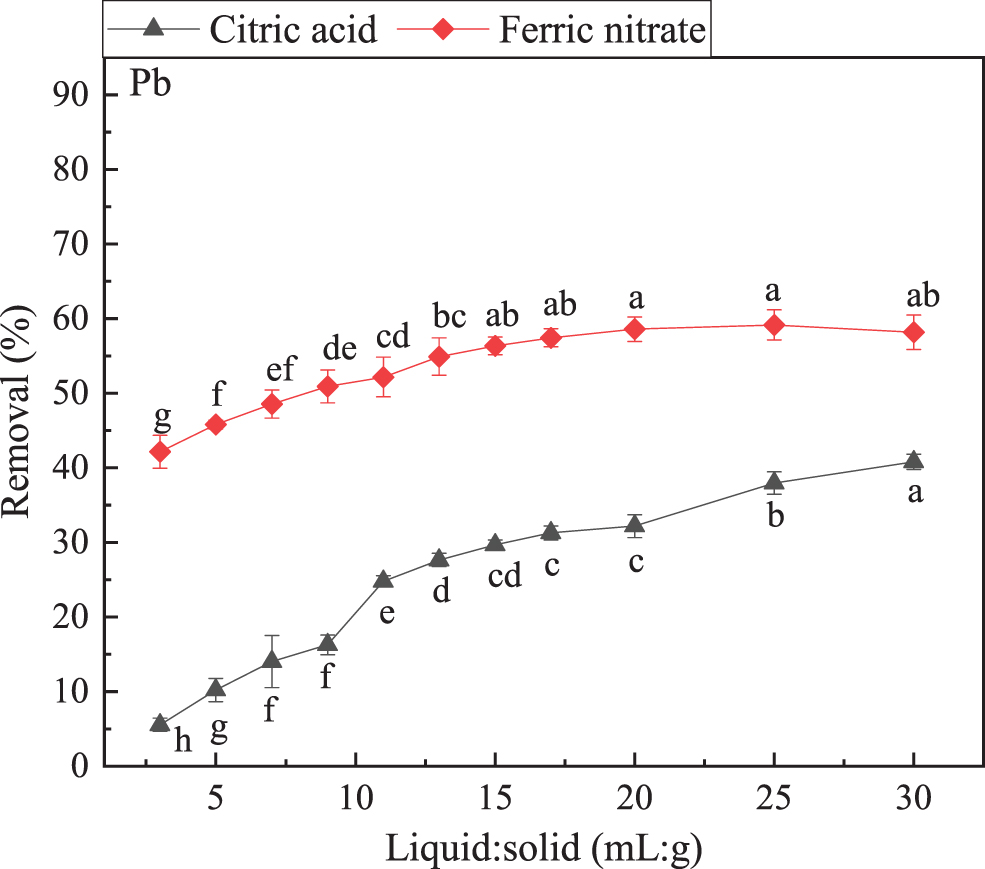
Effects of liquid–solid ratio of washing agents on soil Pb removal (ferric nitrate and CA). Different lowercase letters in the same line represent significant differences between means according to the Duncan's multiple test (p < 0.05).
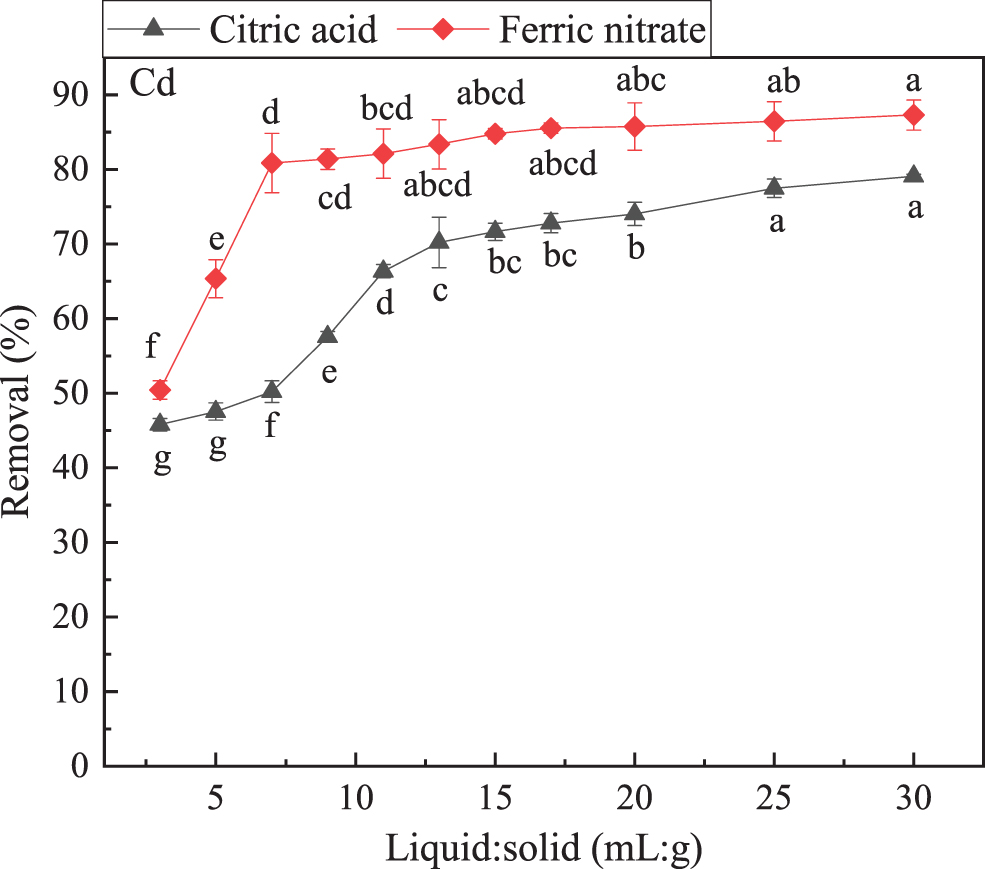
Effects of liquid–solid ratio of washing agents on soil Cd removal (ferric nitrate and CA). Different lowercase letters in the same line represent significant differences between means according to the Duncan's multiple test (p < 0.05).
Effect of time
Based on the optimal concentration and liquid–solid ratio, the effect of washing time on the removal rate was analyzed, as shown in Figures 9–12. For CA, the growth rate of the removal efficiency was significantly increased between 0 and 720 min, and then slowed down as the time extended to 1,440 min. The growth rate of the removal efficiency by ferric nitrate slowed down after 240 min of washing. When the washing time increased from 240 min to 1,440 min, the removal rates of Cu, Zn, Pb, and Cd were only increased by 8.9%, 7%, 3.58%, and 6.04%, respectively.
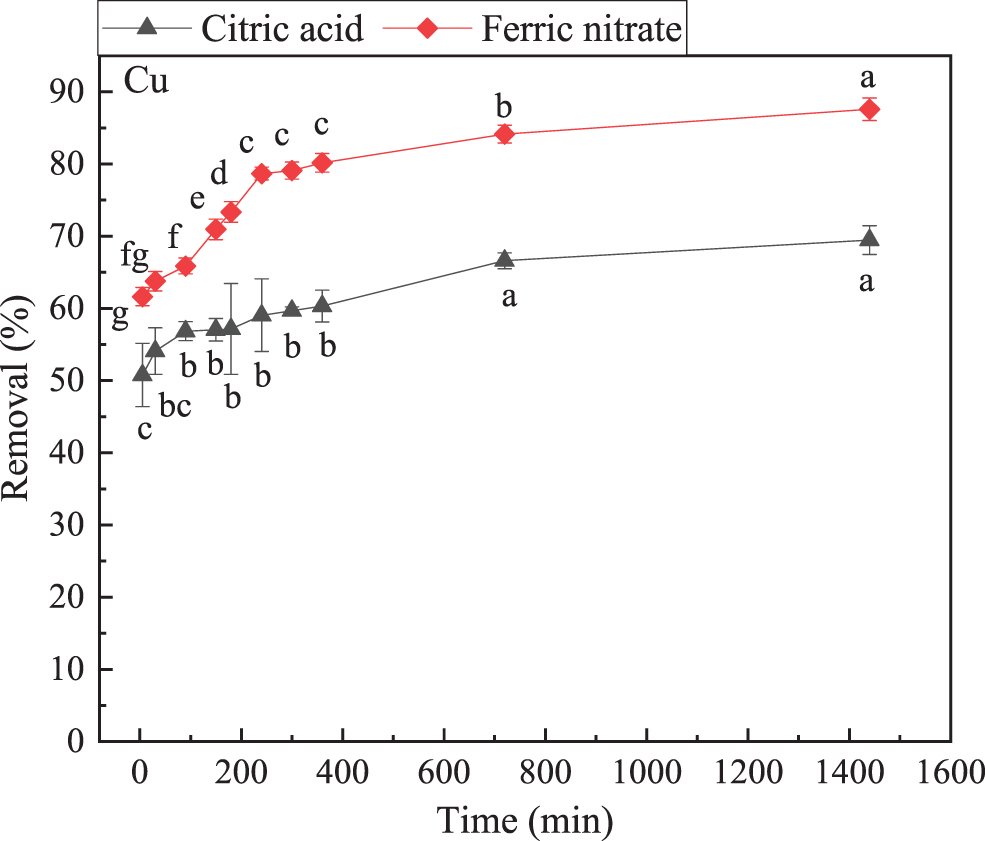
Effects of time of washing agents on soil Cu removal (ferric nitrate and CA). Different lowercase letters in the same line represent significant differences between means according to the Duncan's multiple test (p < 0.05).

Effects of time of washing agents on soil Zn removal (ferric nitrate and CA). Different lowercase letters in the same line represent significant differences between means according to the Duncan's multiple test (p < 0.05).

Effects of time of washing agents on soil Pb removal (ferric nitrate and CA). Different lowercase letters in the same line represent significant differences between means according to the Duncan's multiple test (p < 0.05).

Effects of time of washing agents on soil Cd removal (ferric nitrate and CA). Different lowercase letters in the same line represent significant differences between means according to the Duncan's multiple test (p < 0.05).
The reason for this phenomenon may be the fast desorption of weakly bound heavy metals in the soil in the first stage and the slow release of strongly bound heavy metals in the soil in the second stage. Therefore, considering the practical application of this technology, we recommend the treatment time to be 720 min for CA and 240 min for ferric nitrate.
The distribution and environmental risk of heavy metals in soil
The concentrations, distributions, and ecological risks (
Potential Ecological Risks of Cu, Zn, Pb, and Cd in the Original Soil and Treated Soil by Citric Acid or Ferric Nitrate
Experimental conditions: (1) CA: concentration = 0.3 mol/L, liquid: soil ratio = 25, and time = 720 min; (2) ferric nitrate: concentration = 0.3 mol/L, liquid: soil ratio = 7, and time = 240 min.
CA, citric acid.
where,
In the original soil, Cu and Cd mainly existed in exchangeable and acid-soluble state (F1) and reducible state (F2). The exchangeable and acid-soluble state (F1) and reducible state (F2) are not as stable as the residue state and sensitive to change in environmental conditions, which explains the high removal rate of Cu and Cd in soil. The reason for the low removal rate of Pb and Zn is that most of Pb and Zn exist in the residue state.
In the original soil, according to the
Effect of soil washing on soil properties
Effect of soil washing on physicochemical properties
In the soil washing process, the physicochemical properties of soil are affected by the washing agents. Figures 13–16 shows the changes in the available potassium, available nitrogen, available phosphorus, and organic matter in the soil before and after washing. The content of organic matter only showed slight changes.

Effect of soil washing with different washing solution on available potassium. Experimental conditions: (1) control (Fe(NO3)3): the removal effect of distilled water on available potassium in soil without adding Fe(NO3)3. (2) Control (CA): the removal effect of distilled water on available potassium in soil without adding CA. (3) Ferric nitrate: concentration = 0.3 mol/L, washing time = 240 min, and liquid–solid ratio = 7. (4) CA: concentration = 0.3 mol/L, washing time = 720 min, and liquid–solid ratio = 25. Same letters above the bar indicate that the results were not significantly different according to the Duncan's multiple test (p < 0.05).

Effect of soil washing with different washing solution on available nitrogen. Experimental conditions: (1) control (Fe(NO3)3): the removal effect of distilled water on available nitrogen in soil without adding Fe(NO3)3. (2) Control (CA): the removal effect of distilled water on available nitrogen in soil without adding CA. (3) Ferric nitrate: concentration = 0.3 mol/L, washing time = 240 min, and liquid–solid ratio = 7. (4) CA: concentration = 0.3 mol/L, washing time = 720 min, and liquid–solid ratio = 25. Same letters above the bar indicate that the results were not significantly different according to the Duncan's multiple test (p < 0.05).

Effect of soil washing with different washing solution on available phosphorus. Experimental conditions: (1) control (Fe(NO3)3): the removal effect of distilled water on available phosphorus in soil without adding Fe(NO3)3. (2) Control (CA): the removal effect of distilled water on available phosphorus in soil without adding CA. (3) Ferric nitrate: concentration = 0.3 mol/L, washing time = 240 min, and liquid–solid ratio = 7. (4) CA: concentration = 0.3 mol/L, washing time = 720 min, and liquid–solid ratio = 25. Same letters above the bar indicate that the results were not significantly different according to the Duncan's multiple test (p < 0.05).

Effect of soil washing with different washing solution on organic matter. Experimental conditions: (1) control (Fe(NO3)3): the removal effect of distilled water on organic matter in soil without adding Fe(NO3)3. (2) Control (CA): the removal effect of distilled water on organic matter in soil without adding CA. (3) Ferric nitrate: concentration = 0.3 mol/L, washing time = 240 min, and liquid–solid ratio = 7. (4) CA: concentration = 0.3 mol/L, washing time = 720 min, and liquid–solid ratio = 25. Same letters above the bar indicate that the results were not significantly different according to the Duncan's multiple test (p < 0.05).
After washing with ferric nitrate, the available potassium concentration in the soil decreased from 107.69 to 51.51 mg/kg. After washing with CA, the available potassium concentration in the soil decreased from 107.69 to 84.39 mg/kg. This is because K+ was desorbed from the soil colloid during the washing process, resulting in a decrease in the concentration of available potassium in the soil (Wang et al., 2014). On the contrast, the contents of available nitrogen and available phosphorus in soil increased after washing. This may be due to the decrease in the soil pH value after washing (the pH dropped to 2.7 and 3.11 after washing with ferric nitrate and CA, respectively), resulting in the conversion of unusable nitrogen and phosphorus in the soil into available nitrogen and phosphorus (Ren et al., 2015). Another reason for the increase of available nitrogen after washing is the increase of
Effect of soil washing on soil biochemical properties
Enzyme activity is an important biochemical index. Enzyme activity affects various reactions, such as the decomposition of organic residues and nutrient cycling in soil-plant systems (Guo et al., 2018). The activities of catalase, urease, invertase, and acid phosphatase before and after soil washing were studied, as shown in Figures 17–20. The results indicated that after washing with ferric nitrate or CA, the activities of acid phosphatase and invertase tended to increase. However, after washing with ferric nitrate or CA, the activities of urease and catalase were slightly decreased.

Effect of soil washing with different washing solution on catalase activity. Experimental conditions: (1) control (Fe(NO3)3): the removal effect of distilled water on catalase activity in soil without adding Fe(NO3)3. (2) Control (CA): the removal effect of distilled water on catalase activity in soil without adding CA. (3) Ferric nitrate: concentration = 0.3 mol/L, washing time = 240 min, and liquid–solid ratio = 7. (4) CA: concentration = 0.3 mol/L, washing time = 720 min, and liquid–solid ratio = 25. Same letters above the bar indicate that the results were not significantly different according to the Duncan's multiple test (p < 0.05).

Effect of soil washing with different washing solution on APA. Experimental conditions: (1) control (Fe(NO3)3): the removal effect of distilled water on APA in soil without adding Fe(NO3)3. (2) Control (CA): the removal effect of distilled water on APA in soil without adding CA. (3) Ferric nitrate: concentration = 0.3 mol/L, washing time = 240 min, and liquid–solid ratio = 7. (4) CA: concentration = 0.3 mol/L, washing time = 720 min, and liquid–solid ratio = 25. Same letters above the bar indicate that the results were not significantly different according to the Duncan's multiple test (p < 0.05). APA, acid phosphatase activity.

Effect of soil washing with different washing solution on urease activity. Experimental conditions: (1) control (Fe(NO3)3): the removal effect of distilled water on urease activity in soil without adding Fe(NO3)3. (2) Control (CA): the removal effect of distilled water on urease activity in soil without adding CA. (3) Ferric nitrate: concentration = 0.3 mol/L, washing time = 240 min, and liquid–solid ratio = 7. (4) CA: concentration = 0.3 mol/L, washing time = 720 min, and liquid–solid ratio = 25. Same letters above the bar indicate that the results were not significantly different according to the Duncan's multiple test (p < 0.05).
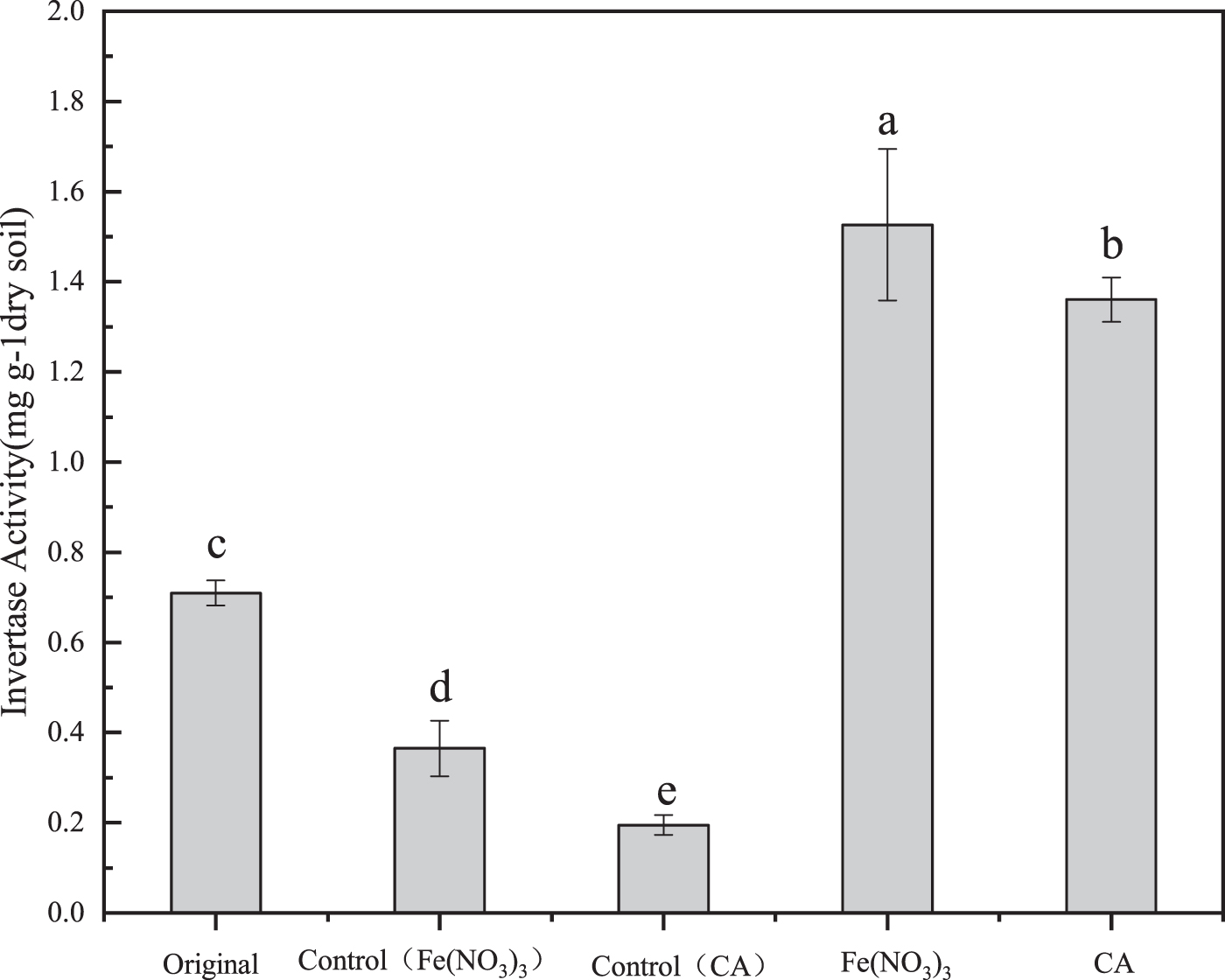
Effect of soil washing with different washing solution on invertase activity. Experimental conditions: (1) control (Fe(NO3)3): the removal effect of distilled water on invertase activity in soil without adding Fe(NO3)3. (2) Control (CA): the removal effect of distilled water on invertase activity in soil without adding CA. (3) Ferric nitrate: concentration = 0.3 mol/L, washing time = 240 min, and liquid–solid ratio = 7. (4) CA: concentration = 0.3 mol/L, washing time = 720 min, and liquid–solid ratio = 25. Same letters above the bar indicate that the results were not significantly different according to the Duncan's multiple test (p < 0.05).
The increase of acid phosphatase activity (APA) was due to the decrease in pH value and the increase of available phosphorus after washing (Wang et al., 2006; Yoo et al., 2018). The reason for the increased invertase activity may be that a certain degree of Cd stress can promote the activity of specific enzymes in soil (Wang et al., 2019). Since the enzyme acts as a relatively stable protein, potentially toxic metal ions can act as auxiliary groups to form coordinate bonds between center of the enzyme and the substrate, thus maintaining a certain obligate structure between the active center of the enzyme and the enzyme molecule, altering the balance between the surface charge of the enzyme protein and the enzymatic reaction, ultimately leading to the increased enzyme activity (Wang et al., 2019).
Washing treatment did not show a significant effect on urease activity. This result may be related to the presence of Pb in the treated soil. As the pH value decreased, catalase activity was decreased, which showed an opposite pattern to APA.
Mechanism of heavy metal removal
The soil washing mechanism of CA mainly includes two aspects. First, during the washing process, the reactive functional groups in CA may bind to heavy metal ions. Alikhani and Manceron (2015) reported that carboxyl may be complexed with metal ions. In addition, hydroxyl could also interact with metal ions through ion exchange (Pladzyk et al., 2011). For ferric nitrate, ferric nitrate is a strong acid and weak base salt, which can release a high number of hydrogen ions in the solution. Furthermore, under low pH conditions, most heavy metal ions are in the cationic state in the solution. The H+ ions can compete with the heavy metal ions for the adsorption sites, affecting the exchange adsorption of heavy metals, and thus promoting the desorption of heavy metal ions in the soil (Zhai et al., 2018).
The FTIR spectra of CA and CA bonding with heavy metal ion are shown in Figure 21. The following features can be observed in the spectra: (1) a strong and broad band is observed at about 3,380 cm−1, which is usually attributed to the O-H stretching; (2) two bands at about 3,280 and 3,160 cm−1 are attributed to aliphatic C–H group stretching; (3) the absorption bands at about 2,680 and 2,560 cm−1 are attributed to C = O stretching in phenolic OH groups; and (4) the bands centered at about 1,730 and 1,530 cm−1 are mainly attributed to C = O stretching in the carboxyl group. The FTIR spectra of ferric nitrate are also showed in Figure 22. A broad peak in ferric nitrate was observed at about 3,600 cm−1, which was attributed to O–H stretching vibration band of chemisorbed water. A band at about 1,400 cm−1 was usually attributed to

FTIR spectra of CA before and after soil washing. FTIR, Fourier transfer infrared.

FTIR spectra of ferric nitrate before and after soil washing.
After washing, the peak of those groups changed to some degree, indicating that heavy metals bind to reactive groups or chemically interact with the agents during the washing process.
Conclusion
In this study, the removal efficiencies of Cu, Zn, Pb, and Cd in soil by ferric nitrate or CA were evaluated. To determine the optimum operating parameters, the effects of the concentration of washing solution, liquid–solid ratio, and washing treatment time were investigated. After washing with ferric nitrate or CA, the potential ecological risk index of heavy metals was significantly reduced due to the removal of labile fractions. Overall, compared with CA, ferric nitrate possessed a better capacity of removing heavy metals from the soil and showed better performance in lowering the metal risks. In terms of soil properties, compared with CA, ferric nitrate had more advantages in improving the invertase activity, APA, available nitrogen, and available phosphorus. Findings from this study suggest that ferric nitrate is an environmentally friendly agent to remove heavy metals from the soil. In future studies, the effects of soil washing on the microbial community should be investigated before reusing the washed soil.
Footnotes
Author Disclosure Statement
No competing financial interests exist.
Funding Information
This project was supported by the Outstanding Young and Middle-aged Scientific and Technological Innovation Team Plan in Hubei Province (Grant No. T2020002) and Hubei's Key Laboratory for Efficient Utilization and Agglomeration of Metallurgical Mineral Resources (Grant No. 2019zy006).