




Abstract
The degradation of azo dyes by pyrite-Fenton system was studied in this work. In the pyrite-Fenton system, Fe2+ comes from the reaction of H2O with pyrite, and then Fe2+ reacts with H2O2 in the solution. The decolorization of the dye was significantly inhibited by the addition of hydroxyl radical scavenger (ethanol), but not by the addition of superoxide ion scavenger (chloroform), indicating that the presence of hydroxyl radical was the main reason for the decolorization of dye. Three azo dyes (acid red G [ARG], methyl orange, and congo red) were degraded by pyrite-Fenton system and showed good decolorization and mineralization efficiency, which proved that the pyrite-Fenton system has a good effect in degradation of azo dyes. The degradation kinetics of the above three dyes in the pyrite-Fenton system are highly consistent with the pseudo-first-order reaction kinetic. This work explored the effects of pH, initial dye concentration, inorganic salt, pyrite, and H2O2 dosage on the degradation efficiency of pyrite-Fenton. The dosage of pyrite and H2O2 was studied by central composite design in response surface method. Under optimized conditions, the ARG decolorization rate reached 99.07% after 60 min. To explore the reusability of pyrite as Fenton reaction catalyst, five cycles of experiments were carried out, which proved that pyrite has high reusability.
Introduction
As the most commonly used dyes, azo dyes (a kind of organic compounds with aryl groups attached to both ends of the azo group [–N = N–]) have been widely used in different industries, including textiles, paper, food, and pharmaceuticals (Benkhaya et al., 2020; Behnajady et al., 2007). Because azo dyes are toxic, mutagenic, and carcinogenic compounds that cause serious ecological problems (Dostanić et al., 2020), it is important to treat azo dyes before they enter the ambient water system. Conventional methods of treating synthetic dye wastewater are inadequate because they cannot completely eliminate synthetic dye wastewater and produce secondary wastewater at the same time (Wang et al., 2020). Therefore, the advantages of using destructive methods to degrade nonbiodegradable substances are far greater than nondestructive methods (Panizza and Cerisola, 2009).
Advanced oxidation process (AOPS), such as electrochemical oxidation, ozone oxidation, sonocatalysis, photocatalysis (Chen et al., 2019a,b), and Fenton oxidation, uses a series of chemical reactions to produce free radicals with strong oxidation ability, which is easy to oxidize and degrade large molecular pollutants into low toxic or nontoxic molecular intermediates, or even directly mineralize to CO2 and H2O (Kantar et al., 2019a). Among them, Fenton method has attracted wide attention in AOPS because of its strong oxidation ability to degrade organic pollutants (Behrouzeh et al., 2020). In the homogeneous Fenton process, the dissolved Fe2+ reacts with H2O2 to form hydroxyl radical (•OH), and the dissolved Fe3+ can also form Fe2+ through the reaction with H2O2. •OH has a high REDOX potential (E° = 2.87 V/SHE) and nonselective (Colades et al., 2020; Haddou et al., 2010).
Although the classic Fenton reaction catalyzed by soluble Fe2+ has strong oxidizing power, there are still some key limitations, such as the rapid precipitation of Fe(OH)3, which produces a large amount of sludge and causes the reaction to terminate as soon as possible (Ozcan and Ozcan, 2018). To overcome these shortcomings of the classical Fenton process, a Fenton system using solid catalysts containing Fe in place of soluble Fe2+ has been developed recently (Zazo et al., 2006). Compared with homogeneous catalysis, heterogeneous catalysis is less affected by pH and has good reusability (Hou et al., 2015).
Among many Fenton catalysts, natural iron ore is a kind of new Fenton catalyst that has great potential for application because of its advantages such as low price, easy availability, good catalytic effect, wide range of applicable pH values, and strong reusability (Labiadh et al., 2015). As a mineral with high iron content, pyrite is one of the most abundant sulfide minerals on earth (Barhoumi et al., 2015). It has shown extremely high catalytic capacity in the oxidative degradation of trichloroethylene (Che et al., 2010), diclofenac (Kantar et al., 2019a), vanillin (Ouiriemmi et al., 2017), and other organic pollutants by heterogeneous Fenton reaction.
Response surface method (RSM) is a mathematical and statistical tool used to assess the impact of operation parameters on output variables (Thanapimmetha et al., 2017). It has the ability to examine the interactions between various factors and determine the optimal area for factor levels. Acid red G (ARG) is a commonly used azo dye (the molecular formula and chemical properties are shown in Table 1), which is one of 11 nonbiodegradable azo dyes with high resistance to conventional wastewater treatment (Murrieta et al., 2020).
Characteristics of Acid Red G, Methyl Orange, and Congo Red
The degradation mechanism of the pyrite-Fenton system to degrade pollutants was studied in this work; the degradation performance of the system was evaluated by degrading three azo dyes, ARG, methyl orange (MO), and congo red (CR). The influence of the operating environment on the degradation efficiency of the pyrite-Fenton system was explored. Among them, the central composite design (CCD) in RSM was used to explore the influence of the dosage of pyrite and H2O2 on the efficiency of dye degradation. Analysis of variance (ANOVA) invented by R.A. Fosisher was used to test the significance of differences between two or more sample means. It was used to analyze the data of CCD and RSM in this work.
Materials and Methods
The materials
The reagents used in the analysis were purchased from Tianli Chemical Reagent Co., Ltd. (Tianjin, China) and are all analytically pure (AR), without further purification. H2O2 (30%) was purchased from Comeo Chemical Reagent Co., Ltd. (Tianjin, China). pH of the solution was adjusted with 0.1 M H2SO4 or NaOH solution, and the water used was deionized water. The pyrite was taken from Shanghai Titan Scientific Co., Ltd. (Shanghai, China), crushed and ground with a mortar, and then passed through 325 mesh. ARG, MO, and CR were purchased from Shanghai Macklin Biochemical Co., Ltd. (Shanghai, China). Table 1 summarizes their physicochemical properties.
Experimental procedure
To remove fine particles and oxidized surface, the powder was first ultrasonic treated with ethanol (≥99.7%) for 5 min, then washed with 1 M HNO3, rinsed with deionized water, dehydrated with 95% ethanol, and finally dried at room temperature (25°C) (Bae et al., 2013).
This experiment was carried out under atmospheric pressure and ambient temperature (25°C). Each group of experiments prepared 200 mL of the required concentration solution and adjusted it to the required pH with 0.1 M NaOH and H2SO4. A certain amount of catalyst and H2O2 was added to the prepared solution and placed on a magnetic stirrer to stir slowly. According to the required time, take 3–4 mL of solution to measure the absorbance and chemical oxygen demand (COD).
To explore the effect of free radicals on degradation in the system, different doses of ethanol and chloroform were added to the pyrite-Fenton system, respectively, so as to distinguish the major free radicals in the degradation process. Different doses of Na2SO4 and NaCl were added to explore the effect of inorganic salt ions on dye decolorization. The influence of catalyst, H2O2, and initial dye concentration on dye decolorization was investigated by changing different doses of pyrite, H2O2, and dyes.
The reusability of natural pyrite was tested by five cycles. After each experiment, the catalyst was collected, rinsed with deionized water, dried at room temperature (25°C), and then used for further experiments.
Analytical procedures
The morphology of the milled pyrite powder was characterized by scanning electron microscope (SEM, Thermo Scientific, inspect S50) and the elemental analysis was characterized by energy dispersive spectrometer (EDS, AMETEK EDAX). The crystal structure and diffraction angle (2−θ) of the pyrite powder were analyzed by X-ray powder diffraction (XRD, Rigaku Ultima IV), for which the scanning range is 20°−90°.
The change in concentration of dye was determined by measuring the absorbance at a fixed wavelength and the corresponding maximum absorption (ARG: 505 nm, MO: 475 nm, and CR: 560 nm) was measured by INESA L5 UV-visible spectrophotometer (Shanghai, China). The following formula is used to calculate the decolorization rate of solution (ηDec):
where A0 is the absorbance of the solution before the degradation of aqueous solution of dye. At is the absorbance of the aqueous solution of dye after degradation treatment at different time. pH is measured by a pH meter (REX, PHS-3C).
Determination of the concentration of Fe2+ was carried out by 1,10-phenanthroline spectrophotometry, Fe2+ can form a stable orange-red complex with 1,10-phenanthroline, this complex has the largest absorbance at 510 nm, the concentration of Fe2+ can be obtained indirectly by measuring the absorbance at 510 nm accorded to the Lambert-Beer law. The total aqueous Fe concentration was determined after the addition of hydroxylamine hydrochloride. Hydroxylamine hydrochloride can reduce Fe3+ to Fe2+; the concentration of total aqueous Fe can be obtained by measuring the concentration of Fe2+ after adding hydroxylamine hydrochloride.
Determination of H2O2 using potassium titanium (IV) was by oxalate spectrophotometry (Sellers, 1980). After adding potassium titanium oxalate to the sample, an orange-yellow complex was formed immediately. The absorbance at 385 nm was measured after the complex was stabilized. The concentration of H2O2 was calculated according to Lambert-Beer law and colorimetric principle.
The COD of the ARG solution was determined using potassium dichromate titration. The COD removal rate (ηCOD) can be calculated by Equation (2):
where COD0 is the initial COD of the ARG solution and COD t is the measured COD at different time.
The Design-Expert.V8.0.6.1 statistical software was used for the experimental design and data analysis. The influence of experimental factors was tested using CCD and RSM, the variables Xi were coded as xi based on the following Equation (3):
wherein Xi is the experimental value of the independent variable, Xi,0 is the center point of the independent variable range, and the δXi is the step change (Bae et al., 2013). The relationship between the response value and the independent variable can be expressed by the following quadratic polynomial:

where Y is the response value,
Variable Levels of Central Composite Design
Results and Discussions
Characterization of pyrite
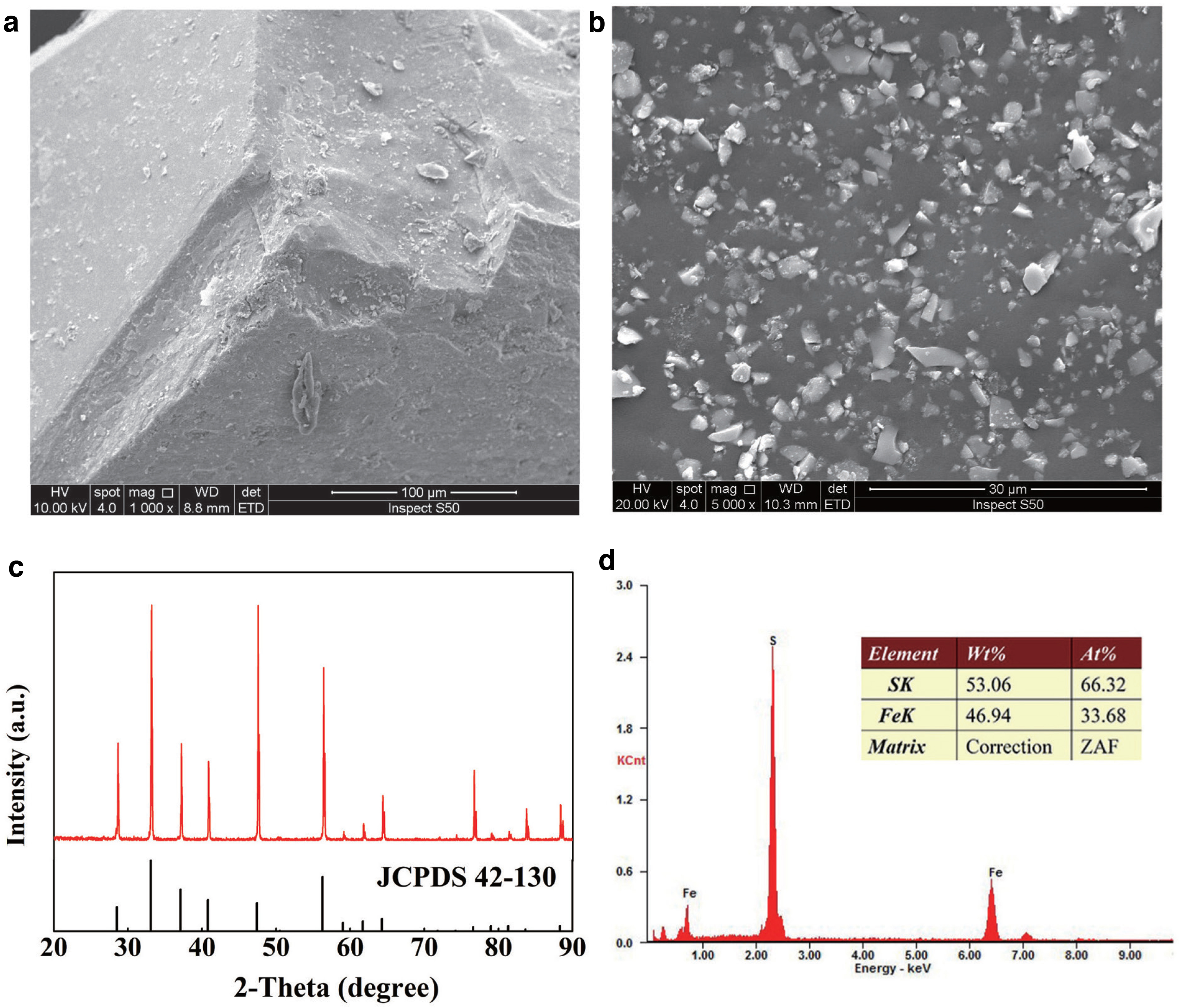
Figure 1a and b show the surface morphology of the pyrite before and after grinding. The surface of natural pyrite was relatively smooth, and the shape of ground pyrite was irregular. Figure 1c is the X-ray diffraction analysis of pyrite powder. It can be seen that there are diffraction peak at 2θ of 28.666, 33.198, 37.227, 40.893, 47.575, 56.415, 61.807, 64.416, 76.715, 79.107, 81.438, 83.782, 84.049, and 88.389, which correspond to the (1 1 1), (2 0 0), (2 1 0), (2 1 1), (2 2 0), (3 1 1), (0 2 3), (3 2 1), (3 3 1), (4 2 0), (1 2 4), (3 3 2), (4 2 2), and (4 3 0) reflection planes of pyrite (JCPDS [42–130]). The main elements and their contents in pyrite are shown in Fig. 1d. As can be seen, pyrite has a high iron content and can be a good catalyst for Fenton-like reaction.
Reaction mechanism of the pyrite-Fenton system
To study the reaction mechanism in pyrite-Fenton system, the changes of some important parameters during the ARG removal process were studied. Figure 2a shows the generated Fe2+ and total aqueous Fe in pyrite and pyrite-Fenton systems. It can be seen that the amounts of generated Fe2+ and total Fe iron in 60 min were only 0.04 and 0.05 mM free from H2O2. The generation of iron ions under this system was due to the reaction of dissolved oxygen and pyrite in solution [reaction (1)] (Che and Lee, 2010). The amount of Fe2+ and total Fe iron was significantly increased in the case of H2O2, and the generated amounts of both were 0.49 and 0.66 mM after 60 min; Fig. 2b shows that H2O2 was gradually consumed during the reaction. At the same time, we found that the pH of the system dropped to 2.58 from pH 3. This was because H2O2 corroded the surface of pyrite and dissolved Fe3+ in the solution [reaction (2)] (Choi et al., 2014); the Fe3+ released by pyrite into the solution reoxidized the pyrite surface, thereby releasing Fe2+ into the solution [reaction (3)] (Ouiriemmi et al., 2017).
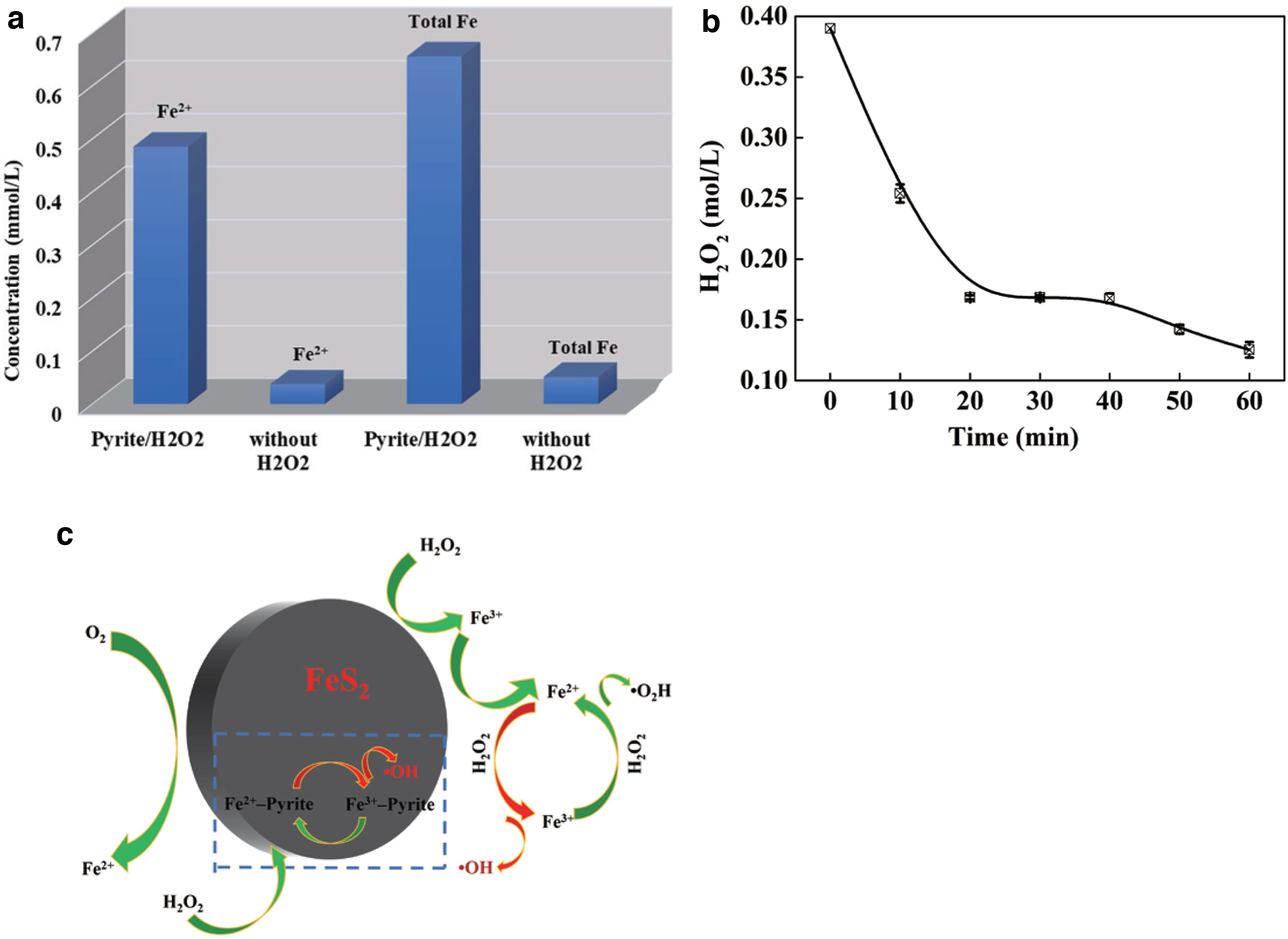
In addition, H2O2 can react with iron sites on the surface of pyrite to form adsorbed •OH and peroxy radicals (•O2H) (Kantar et al., 2019b). Reactions (4)–(9) describe the heterogonous Fenton chain reaction sequence (Fathinia et al., 2014).
Superoxide ion (•O2−) and •OH were all produced in the pyrite-Fenton system [reactions (10) and (11)] (Zeng et al., 2019). Chloroform and ethanol are scavengers of •O2− and •OH, respectively (

The degradation efficiency of the pyrite-Fenton system
Degradation of different azo dyes by pyrite-Fenton system
To evaluate the degradation ability of pyrite-Fenton system for azo dyes, ARG, MO, and CR were degraded under the same experimental conditions (pyrite dosage = 2 g/L, H2O2 dosage = 0.39 M, and the initial concentration of the dye was 0.29 mM). Table 1 shows the physicochemical properties of ARG, MO, and CR, which are all azo dyes. As shown in Fig. 3a, the three dyes were almost completely decolorized after 60 min, and the pyrite-Fenton system had a good mineralization effect on the azo dye solution (the COD removal rate reached 59.52%, 57.89%, and 43.46%, respectively). The kinetics of Fenton reaction can be very complex, because a large number of intermediates were generated during the reaction and involved a large number of steps, these steps were indistinguishable from a macro perspective (Emami et al., 2010).
In this study, pseudo-first-order kinetic and pseudo-second-order kinetic were used to study the reaction kinetics of the pyrite-Fenton system for degradation of different dyes, according to Equations (5) and (6).
wherein C0 and Ct are the concentrations of ARG before and after treatment, respectively. k1 and k2 are the kinetic constants and t is the reaction time. It can be seen from Supplementary Table S1 that the average R2 of pseudo-first-order kinetic (0.9885) was higher compared with pseudo-second-order kinetic (0.8918), which showed that pseudo-first-order kinetic can better fit the degradation process of pyrite-Fenton system. Bae et al. (2013) observed that the degradation of diclofenac by pyrite-catalyzed Fenton oxidation also conformed to pseudo-first-order kinetic.
Pseudo-first-order reaction kinetic of different dye is shown in Fig. 3b; it can be seen that the degradation rate of ARG was the largest. The difference in decolorization rate of dyes may be caused by the structure of dyes. The first step of oxidation is to attack the -C–N- bond by OH (Dostanie et al., 2020). Omura et al. (1992) investigated the effect of the relationship between the sulfonic acid group and the naphthalene ring of the coupling component on the light stability of naphthol coupled dyes. They found that the presence of sulfonic acid groups will produce steric hindrance when free radicals attack molecules, while their electronic effects have little effect on light stability. When the benzene ring connected with –N = N– contains a larger group such as a sulfonic acid group, it prevents the attack of the C–N bond by radicals such as •OH. Since there are no substituents on the benzene ring in the molecular structure of ARG, the steric hindrance was low, which facilitated the electrophilic addition of •OH. In addition, naphthalene-based o-hydroxy or p-hydroxy azo dyes have tautomerism [Eq. (7)]:
 (7)
(7)
Olszewska (1994) calculated the heat of formation of the azo and hydrazone isomers of 1-(4-nitrobenzene) azo-2-naphthol; the difference in heat generation between the two was 1.6 kcal/mol, which proved that the azo tautomer of (phenylazo) naphthalene is more stable than the hydrazino form.
ARG removal by pyrite/H2O2/pyrite-Fenton system
The degradation efficiency of pyrite/H2O2/pyrite-Fenton systems were compared at pH 3; initial concentration of ARG was set to 150 mg/L for the experiments. As shown in Fig. 4, the decolorization rate of ARG in pyrite-Fenton was 91.05%. When the ARG solution was treated with H2O2 only, the decolorization rate after 60 min was only 10.94%, which was due to the oxidation of the dye by H2O2. When pyrite particles were used alone, the decolorization rate was 19.61% after 60 min. Diao et al. (2017) proposed a possible mechanism: pyrite was oxidized by dissolved oxygen in the water to form Fe2+ [reaction (1)] and then the dissolved oxygen can react with the generated Fe2+ to form superoxide radicals (•O22−), which can further react with Fe2+ to form H2O2 [the reactions (12) and (13)].
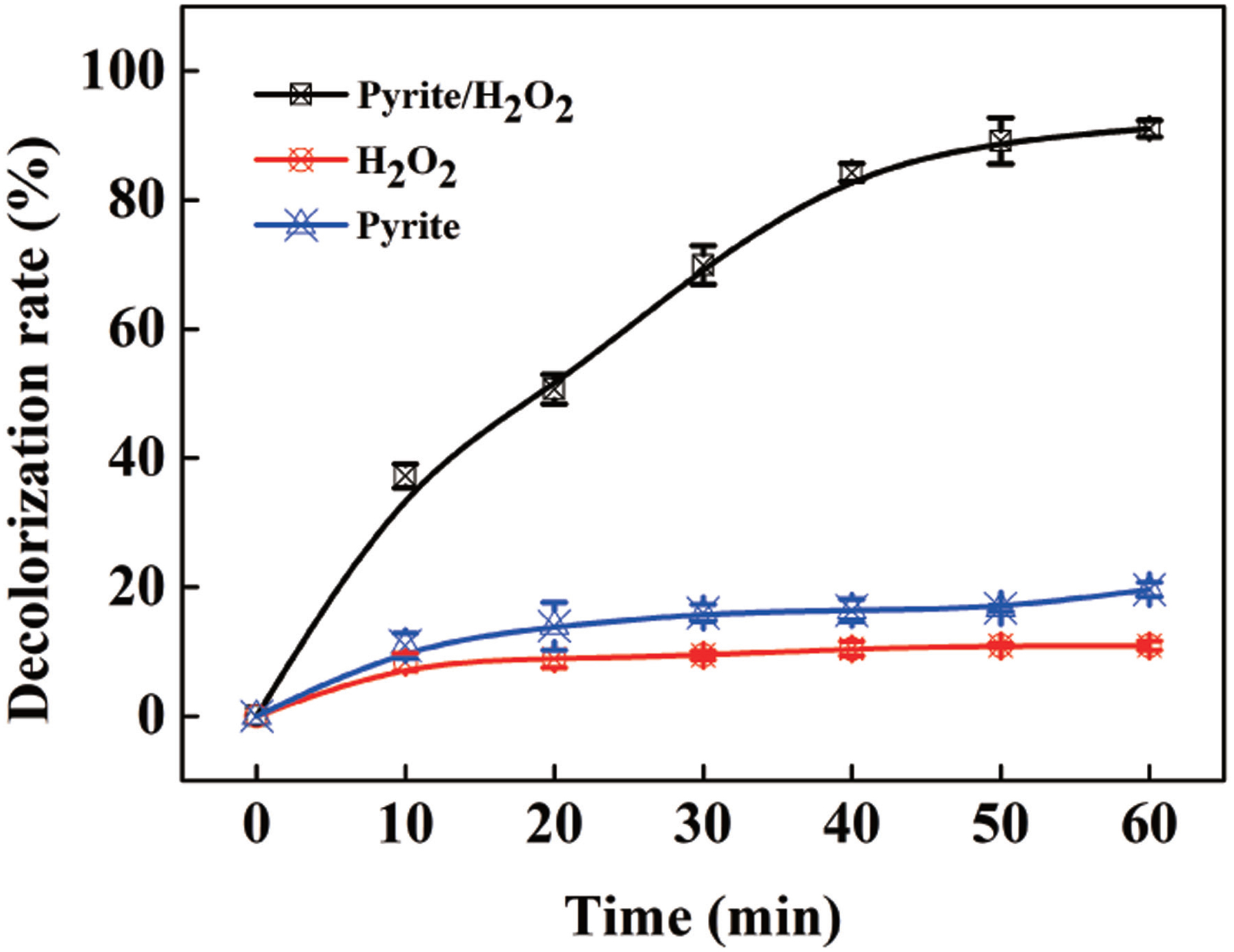
Comparison of the decolorization rate in the various processes. Experimental conditions: ARG = 150 mg/L, pyrite = 2 g/L, and H2O2 = 0.39 M and pH 3.
In addition, the adsorption of dyes by pyrite powder was also the cause of decolorization in the presence of pyrite alone. When dye molecules tended to adsorb to other substrates, their availability and degradation kinetics began to deviate from the first-order kinetic model. To adapt to fixation or adsorption, Bradford et al. (2006) proposed an availability-adjusted first-order kinetic model [Eq. (8)].
wherein a is defined as the availability coefficient and k3 (min−1) is the new rate constant. The degradation data were fit to a pseudo-first-order and availability-adjusted first-order kinetic model, the fitting results are shown in the Supplementary Table S2. The R2 (0.9775) of the availability-adjusted first-order kinetic model was much larger than the first-order kinetic (0.7785), indicating that the decolorization of dye solution was the combination of adsorption of pyrite powder and •OH oxidation when pyrite existed alone. The production of Fe2+ and H2O2 was very small, which made Fenton reaction difficult. The oxidation of dye by H2O2 and adsorption of dye by pyrite powder explained the reason why the degradation of dye cannot be completely inhibited after adding excessive ethanol.
The influence of experimental conditions on dye degradation
Effect of initial pH value of solution on the degradation efficiency of ARG
The traditional Fenton reaction is greatly affected by pH, but the heterogeneous Fenton can maintain reactivity in wider pH range. To study the effect of pH on the decolorization efficiency, the decolorization rate of ARG solution was measured under acidic, neutral/near-neutral, to alkaline conditions. The degradation of ARG is shown in Fig. 5a after changing the pH value. It can be seen that pH had little effect on the decolorization rate of ARG. Without adjusting the pH (6.08) of the ARG solution, a high decolorization rate can still be achieved after 60 min.
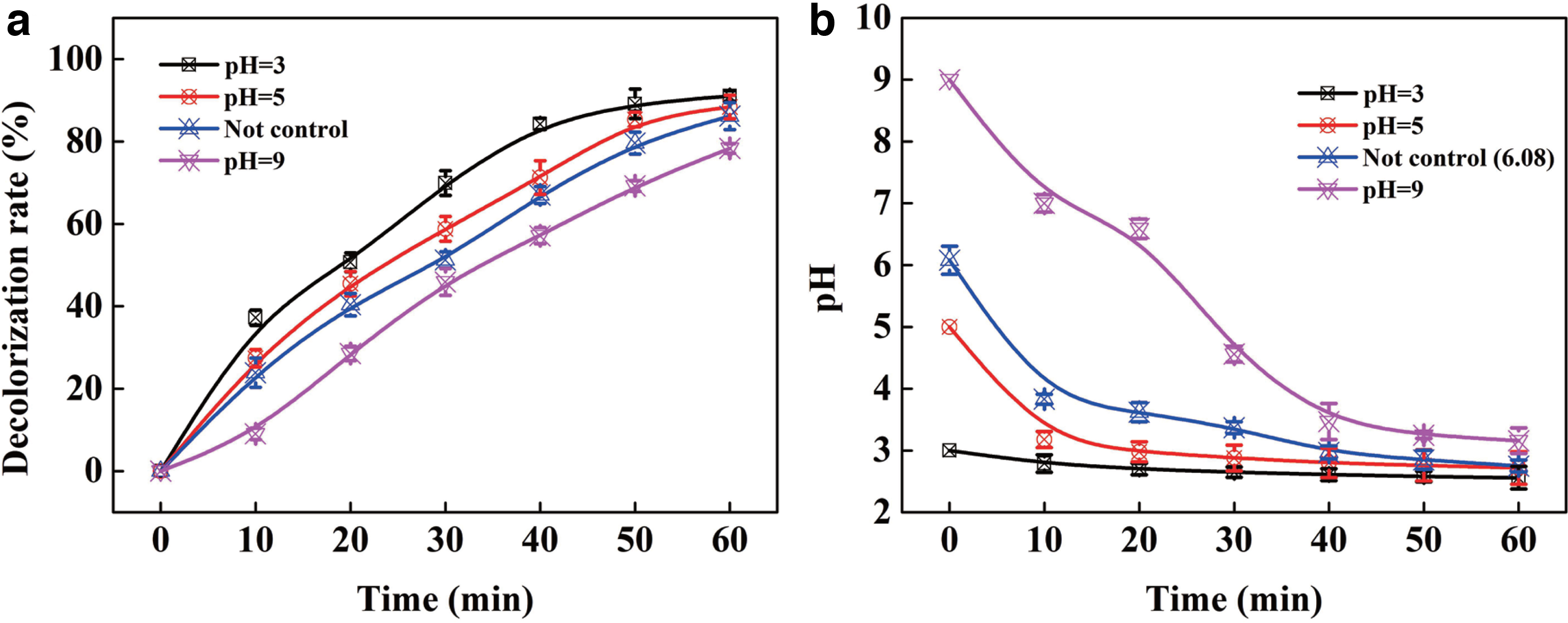
The reason for this phenomenon was that the reactions (1) and (2) made the system spontaneously reach an acidic environment (Fig. 5b), thus providing the optimal pH for the Fenton reaction. This also effectively reduced the formation of iron oxide sludge, which was beneficial to the regeneration of Fe2+ [reaction (14)]. Under the condition of strong alkali, the decolorization efficiency was slightly reduced; at the same time, the pH reduction rate slowed down. This may be attributed to the reduction of iron ion production and the change of the surface properties of pyrite.
Kantar et al. (2019b) found that the Fe solubility of Fe (II) and Fe (III) species decreased as the pH of the solution increased in pyrite-Fenton system, because Fe (III)—(oxygen group)—hydroxide formed by Fenton reaction may accumulate on the upper surface of pyrite. This resulted in a decrease in the concentration of Fe and hindered the production of hydroxyl radicals in the solution phase.
Effect of the initial concentration of dye
Decolorization efficiency is related to the formation of •OH and its reaction with dye molecules. As shown in Fig. 6, the decolorization rate of ARG decreased with the increase of initial concentration. At high dye concentrations, the amount of •OH was insufficient to remove all dye molecules, resulting in a reduction in dye decolorization rate. In addition, the excessively high dye concentration occupied the active sites on the surface of pyrite due to adsorption, inhibiting the occurrence of reaction (4). Kantar et al. (2019b) studied the degradation of chlorophenols by pyrite-Fenton. When the concentration of pollutants was increased, the degradation rate of pollutants was significantly reduced, which is the same as our research.
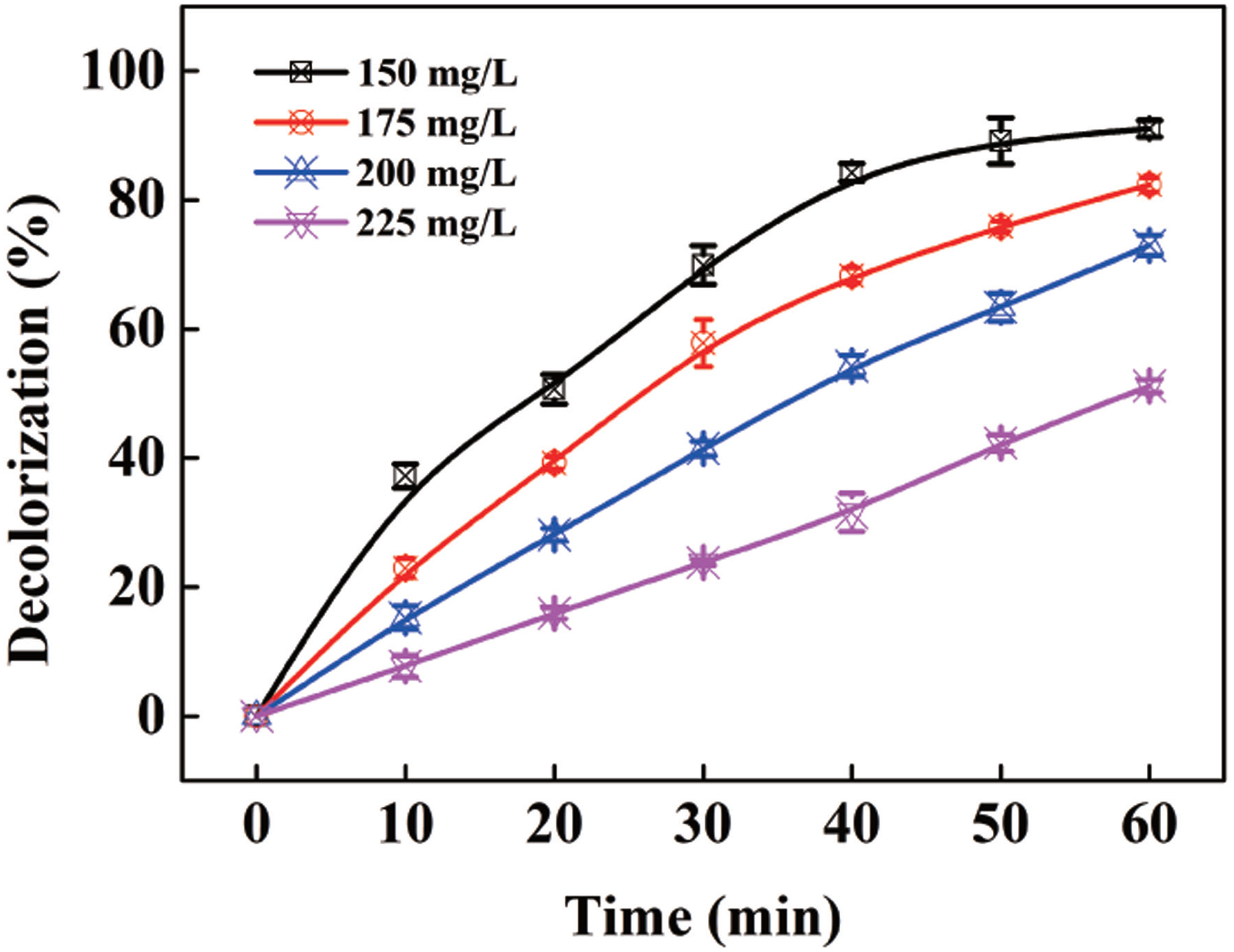
Effect of dye concentration on decolorization efficiency. Experimental conditions: ARG = 150 mg/L, pyrite = 2 g/L, and H2O2 = 0.39 M and pH 3.
In addition, to verify the competition among species and the influence of iron surface sites in the decomposition of these species, Xue et al. (2009) added fluorine ions (F−) into the magnetite–Fenton system at pH 7. F− showed a strong chemical affinity to the surface of iron oxide and was able to form internal and external spherical complexes with the surface of iron oxide. They observed that the decomposition rate of H2O2 and the degradation rate of pollutants both decreased significantly. These observations confirmed that the Fenton-like reaction of iron ore was controlled by the surface mechanism reaction, and the adsorption of H2O2 or pollutants on the surface of magnetite would affect the whole degradation reaction rate.
Effect of salt on decolorization rate
In the dyeing industry, high concentrations of inorganic salts are often used to improve the dyeing performance of dyes, so dissolved inorganic ions are common in industrial wastewater containing dyes. In this work, different dosages of Na2SO4 and NaCl (0.2 M and 0.5 M) were added to evaluate the effect of inorganic salts on the degradation performance of the pyrite-Fenton system. As shown in Fig. 7, both Na2SO4 and NaCl had an inhibitory effect on the degradation of ARG, and this inhibitory effect was significant as the dose of inorganic salt increases. The inhibitory effect of inorganic salt ions on dye degradation was due to its consumption of •OH [reactions (15) and (16)] (Das et al., 2017).
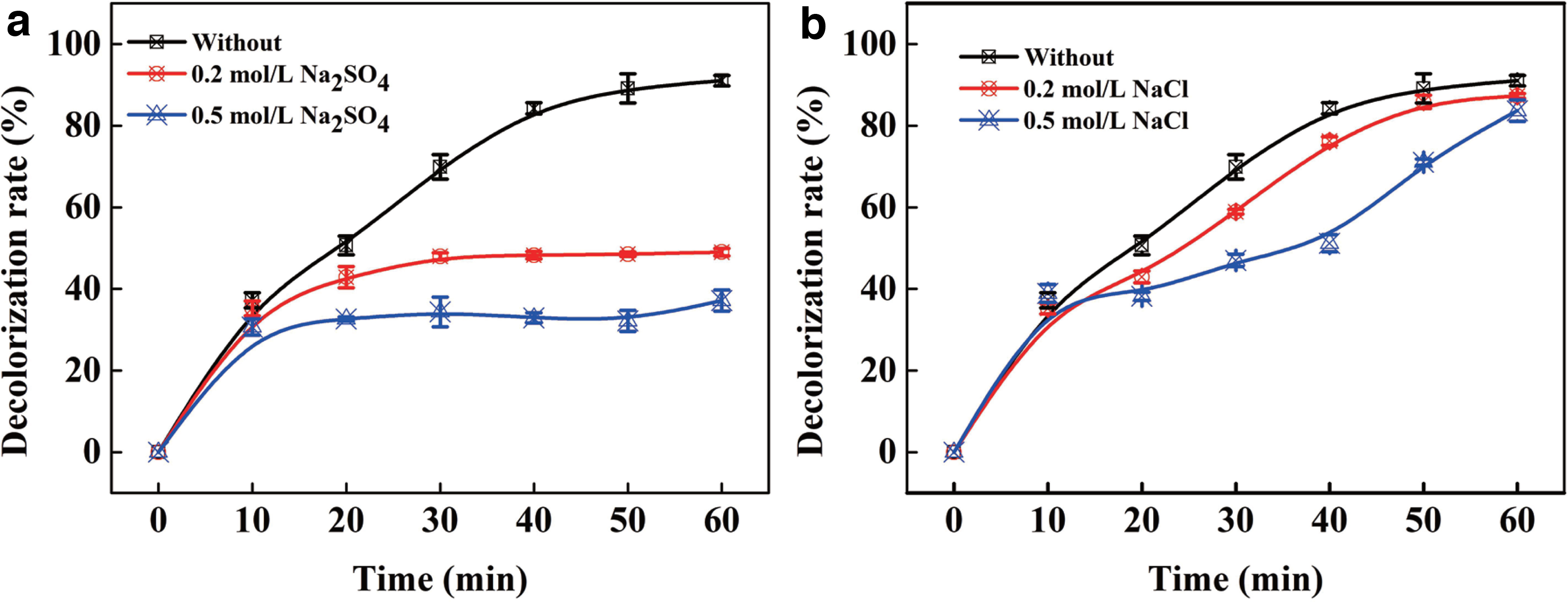
The effect of adding inorganic salt ions on the decolorization of ARG solution.
In addition, the electrostatic repulsion between the dye anions decreased after the addition of inorganic salt, leading to an increase in the tendency of dye aggregation, reducing its dissolution and ionization degree, and reducing the ability to react with •OH (Dong et al., 2007). It can be seen from Fig. 7 that the inhibitory effect of Na2SO4 on dye degradation was more obvious compared with NaCl, because Na2SO4 has a higher ion concentration than NaCl under the same molar concentration, which made the inhibition more significant (Niu and Hao, 2014).
Effect of dosage of pyrite and H2O2 on decolorization rate
The dosage of pyrite and H2O2 and the interaction of these two factors had a very important effect on the decolorization efficiency of the dye, so the CCD with 2 factors and 5 coded levels for all 13 runs was employed to comprehensively analyze the influence of pyrite and H2O2 on the decolorization efficiency of ARG. The experimental and predicted decolorization rate of ARG attained in heterogeneous Fenton experiments are listed in Table 3. Based on the results of Table 3, the relationship between the response value and each factor was established and the following binomials were obtained:
Factor Central Composite Design Matrix and the Value of the Response Function [Y (%)]
where Y is the decolorization rate of ARG solution after 60 min. The positive and negative of the coefficients represent the synergistic and antagonistic effects, respectively. It can be seen that the dosage of pyrite and H2O2 had a positive effect, and the interaction of pyrite and H2O2 had a negative effect, as well as the square of the dosage of pyrite and H2O2. The quadratic coefficients were all negative, indicating that a large amount of pyrite and H2O2 had a negative effect on the decolorization of the dye. Figure 8a shows the relationship between the predicted value and the experimental value. It can be seen that the predicted value and the experimental value were approximately distributed on a straight line (R2 = 0.9863), which proved the accuracy of the model.
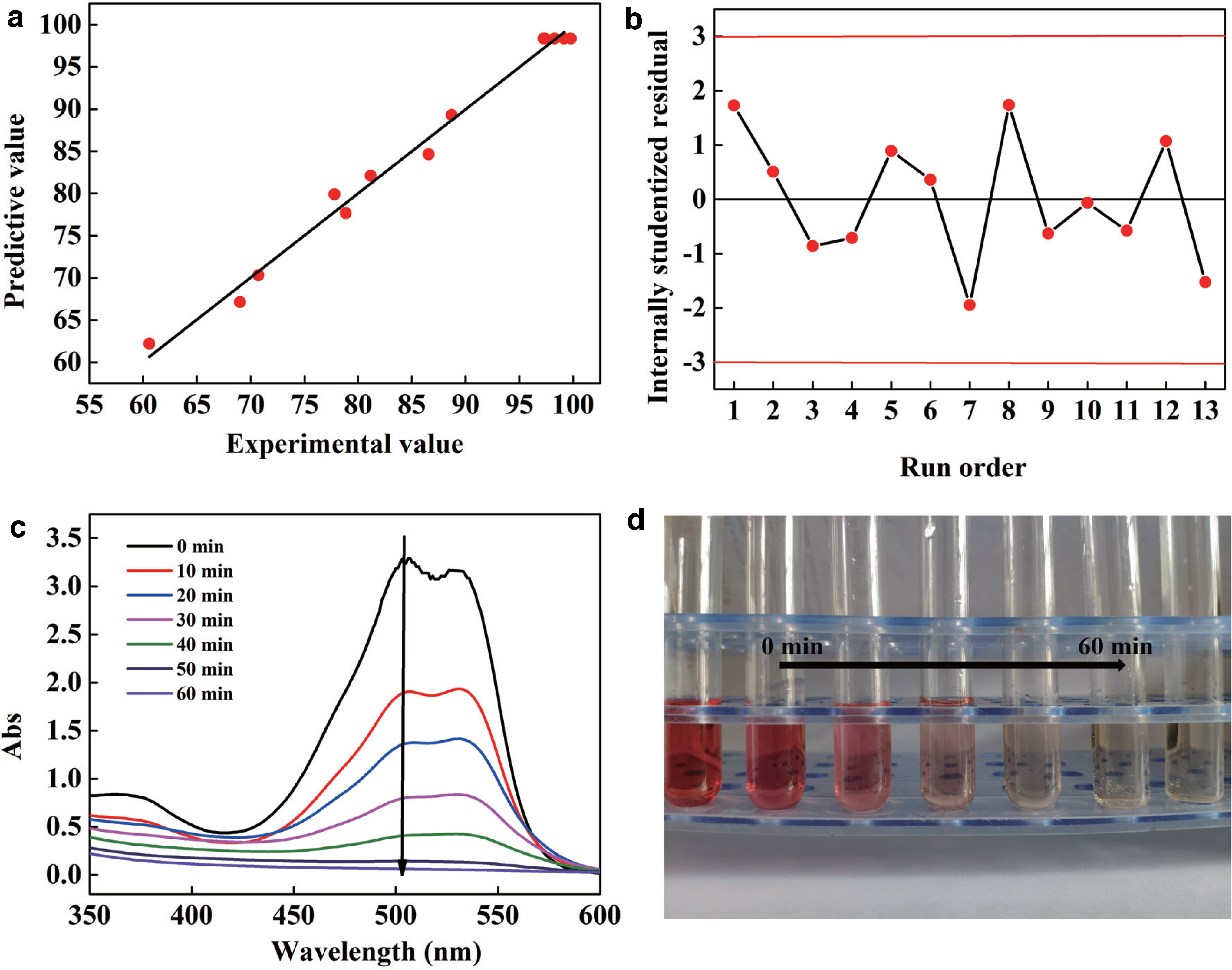
ANOVA analysis was performed on the experimental results by quadratic regression fitting. As shown in Table 4, the F values of the model is 101.12, which were greater than 10 (safety coefficient) times the critical value (5.41) in the F table, indicating that the model had significant significance, and the value of “Prob > F” less than 0.05 indicated that the model item was significant at a 95% confidence level (Bae et al., 2013). The error statistical analysis of the regression equation shows that the model had R2 = 0.9863 and R2adj = 0.9766. The ratio of the two was close to 1, indicating that the model can explain the change in response value. Figure 8b shows the residual distribution; it can be seen that the residual was distributed randomly, which proved the accuracy of the model (Sennaoui et al., 2019). According to the quadratic polynomial model above, the decolorization efficiency of ARG solution (150 mg/L) after 60 min can reach 99.07% when the dosage of pyrite was 2.22 g/L and the dosage of H2O2 was 0.31 M. To verify the accuracy of the optimization results, we conducted three parallel experiments under the optimization experimental conditions. The average decolorization rate of the three experiments was 98.57%, which proved that the accuracy of the model optimization results is very high.
Results of the Analysis of Variance of the Quadratic Polynomial Model (Polynomial Model Square)
The ultraviolet spectrum of ARG measured with an UV-visible spectrophotometer under optimal conditions can be observed in Fig. 8c. The spectrum of the starting solution showed a visible band between 490 and 560 nm. The two strong peaks of this band were located at 505 and 530 nm, respectively. These bands can be related to the two tautomeric forms of ARG. The absorbance of the two peaks was similar, suggesting nearly 50% of each tautomeric form. The color of a kind of azo dye was determined by the azo bond and its associated chromophores and auxochromes (Zhang et al., 2006). With the passage of time, the characteristic peak of the dye decreased continuously, which indicated that the ARG molecules in the solution continued to decompose and the corresponding azo bonds were broken. Figure 8d shows the decolorization of the solution during degradation; it can be seen that the color of the solution gradually faded until it disappeared as the absorption peak of ARG in the visible light region continued to decrease. Murrieta et al. (2020) reported that ARG produced maleic acid and oxalic acid in the process of degradation by Fenton system. It was expected that maleic acid was formed by oxidation and cleavage of azo dye aromatic rings, while oxalic acid is the final by-product of degradation of long-chain aliphatic carboxylic acid. In the presence of iron ions, these acids exist mainly as Fe (III)-carboxylate complexes.
Because pyrite was the only source of iron ions, the amount of pyrite determined the generated amount of Fe iron [reactions (1)–(3)]. As shown in Fig. 9a and b, the decolorization rate increased with the increase of the dosage of pyrite, and reached the peak when the dosage was around 2 g/L; the decolorization rate of ARG solution began to decrease when the dosage of pyrite was further increased. The heterogeneous Fenton reaction process included reactant adsorption, surface chemical reaction, and product desorption (He et al., 2015). The number of active sites available for adsorption of reactants (H2O2) increased as the dose of pyrite increases (Guo et al., 2017), which promoted the reaction between H2O2 and pyrite [reaction (4)], lead to the generation of more hydroxyl radicals, and increased the decolorization efficiency of ARG under the applied operating conditions. The reason for the decrease in the decolorization rate may be that the production of Fe2+ increased when the amount of pyrite was excessive, leading to the waste of •OH [reaction (17)]. Because the high Fe2+ concentration contributed to the reaction rate (k•OH, Fe2+ = 3.2 × 10⁸ M−1 s−1, pH 3) (Duesterberg and Waite, 2006),
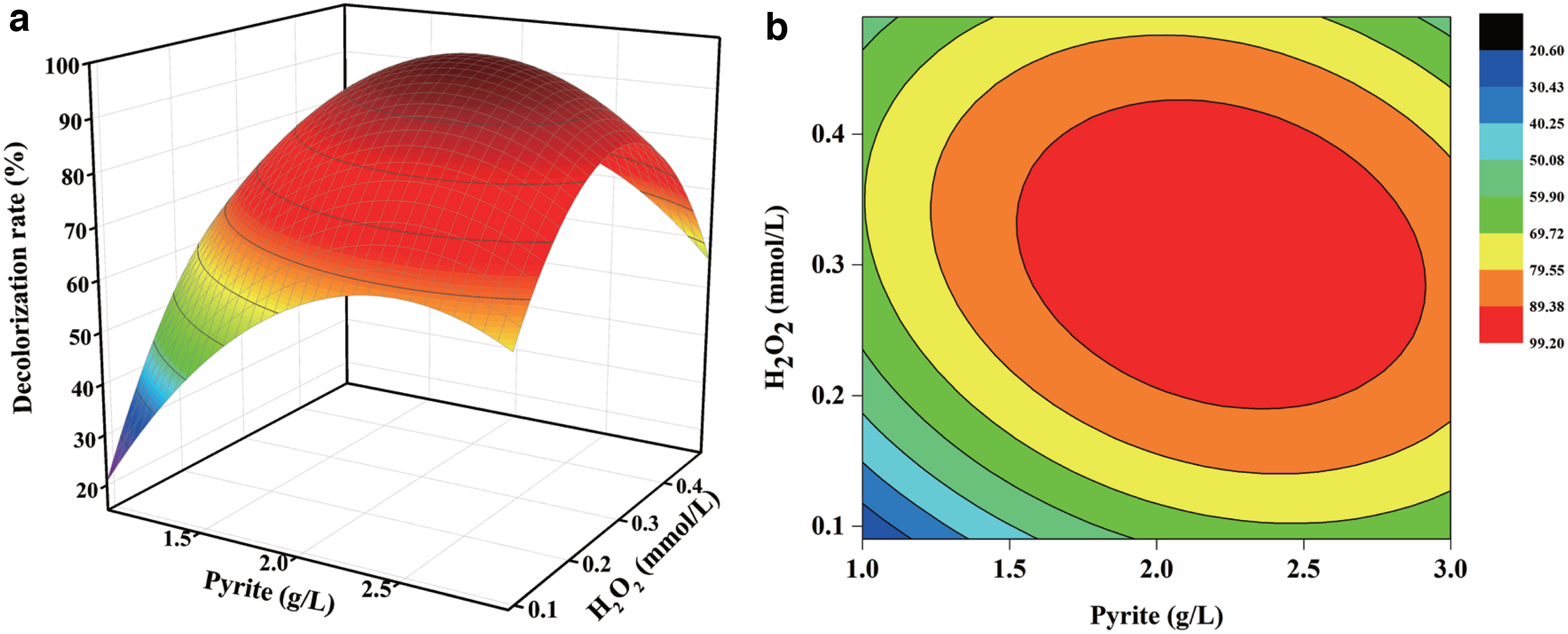
As the only source of hydroxyl radical, the amount of H2O2 had a great influence on the degradation effect of pyrite-Fenton system. As shown in Fig. 9a and b, the decolorization efficiency of ARG increased with the increase of the dosage of H2O2, and reached the peak when the dosage was around 0.3 M. Further increasing the dosage of H2O2, it was observed that the decolorization efficiency of ARG began to decrease. The increase in decolorization efficiency can be attributed to the increase of H2O2 concentration, which helps to promote the Fenton reaction and Fe2+ regeneration [reactions (4) and (14)]. •OH preferentially attacked ARG molecules at low H2O2 concentration, while at high H2O2 concentration, there was a competitive reaction [reaction (11)] between ARG and H2O2. •OH can form •O2H/•O22− with H2O2 (
Reusability of the catalyst
Reusability is an important criterion to measure the performance of a catalyst, because it can save the cost in practical application, leading to the application of catalysts in large-scale reactors (Fathinia et al., 2014). Figure 10 shows the reusability test results of the natural pyrite powder. The five-cycle experiments were conducted under optimized conditions. After each experiment, the catalyst was collected, rinsed with deionized water, dried at room temperature (25°C), and then used for further experiments. It can be seen from Fig. 10 that the pyrite after three cycles still had a high catalytic activity (decolorization rate was 75.36%), which proves that pyrite as a Fenton-like reaction catalyst has good reusability. The reduction of catalytic activity may be due to the loss of pyrite by reactions (1)–(3). Supplementary Fig. S2a and b show SEM images of fresh pyrite and pyrite after five cycles of reaction; obvious pyrite erosion and loss traces can be seen on the surface of 5rd pyrite. Supplementary Fig. S2c is the X-ray diffraction image before and after five consecutive reaction runs, the characteristic peaks of the pyrite became weaker after five cycles.
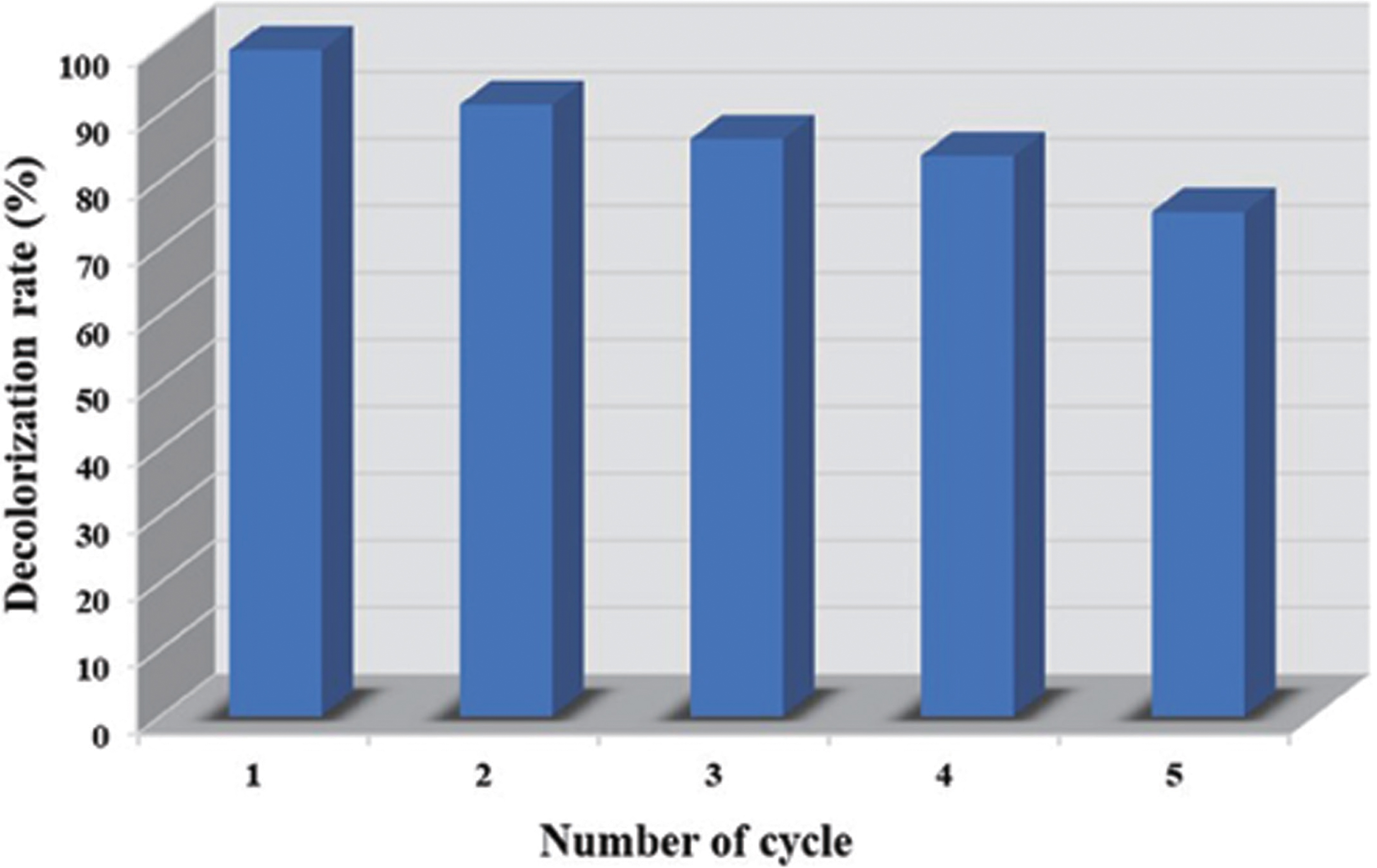
ARG removal rate of five consecutive cycles under optimal degradation condition.
Conclusions
Pyrite-Fenton system was used to degrade ARG, MO, and CR and exhibited excellent degradation and mineralization efficiency. By comparing the amount of Fe2+ and total Fe produced with and without adding H2O2, it can be judged that the main Fe ions in the pyrite-Fenton system are generated from the reaction between H2O2 and pyrite. The decolorization of the dye was significantly inhibited by the addition of hydroxyl radical scavenger (ethanol), but not by the addition of superoxide ion scavenger (chloroform), proving that •OH played a major role in the degradation process. We found that the pseudo-first-order kinetics can better fit the process of degradation by pyrite-Fenton system. Since the reaction of pyrite and H2O2 can reduce the pH of the solution, the decolorization rate of the ARG solution can still maintain a good level when the pH was not adjusted. The CCD in the RSM was used to optimize and explore the dosage of pyrite and H2O2. When the amount of pyrite was 2.22 g/L and the amount of H2O2 was 0.31 M, the ARG decolorization rate predicted by the model was 99.07% after 60 min. The average removal rate of three parallel experiments was 98.57%, which proved that CCD can accurately predict the decolorization rate of ARG. It was proved that pyrite as a catalyst for Fenton reaction has good reusability through five cycles of experiments.
Footnotes

References
Supplementary Material
Please find the following supplemental material available below.
For Open Access articles published under a Creative Commons License, all supplemental material carries the same license as the article it is associated with.
For non-Open Access articles published, all supplemental material carries a non-exclusive license, and permission requests for re-use of supplemental material or any part of supplemental material shall be sent directly to the copyright owner as specified in the copyright notice associated with the article.
