




Abstract
The primary objectives of this study were to identify the effectiveness of hydrazine on partial nitrification in a sequencing batch reactor when treating low-strength ammonia wastewater and to investigate its impact mechanism. Partial nitrification was successfully initiated and maintained by dosing with hydrazine, and the short- and long-term effects of hydrazine on partial nitrification and microbial bioactivity were investigated. The results showed that dosing with a moderate amount of hydrazine improved the nitrite accumulation rate with little effect on the ammonia conversion rate. Both the short- and long-term tests showed the optimum hydrazine dosage was 7.5 mg/L. In the long-term tests, dosing with 7.5 mg/L of hydrazine led to an ammonia conversion rate and nitrite accumulation rate of 99.10% and 93.24%, respectively. The change in the mixed liquid suspended solids (MLSS) and mixed liquid volatile suspended solids (MLVSS) in the long-term tests showed that, although dosing with hydrazine influenced the biochemical activity of the sludge, the MLVSS/MLSS increased after an initial decrease. High-throughput analysis showed that Thauera, Nitrosomonas, and Denitratisoma were the dominant bacteria in the system dosed with 7.5 mg/L of hydrazine, which may explain the high nitrite accumulation. Analysis of the mechanism showed that nitrite-oxidizing bacteria were more inhibited by hydrazine dosing than ammonium-oxidizing bacteria.
Introduction
The rapid development of urban areas and the economy has caused the continued generation of large amounts of nitrogen that must be controlled to prevent eutrophication of closed water systems (Chen et al., 2018; Zheng et al., 2018). Accordingly, nitrogen removal from wastewater is essential to aquatic ecosystems and human health sustainability (Du et al., 2003). The removal of various forms of nitrogen (organic nitrogen, ammonium, nitrite, and nitrate) from water and wastewater has become mandatory in recent years, and is an important goal in wastewater treatment. This goal is generally achieved through a biological process, which is the most viable option for municipal and industrial wastewaters (Gao et al., 2010; Ganesh et al., 2014).
Biological nitrogen removal, as a conventional treatment for nitrogen-contaminated wastewater, consists of two basic steps: nitrification and denitrification (Wang et al., 2007). Nitrification defines the aerobic-mediated step that consists of the transformation of ammonia into nitrite using O2 as the terminal e-acceptor because of the activity of ammonium-oxidizing bacteria (AOB) (Daniel et al., 2009; Jun and Wenfeng, 2009). Depending on the availability of oxygen and some other secondary factors, this step may be followed by nitrite-oxidizing bacteria (NOB), which oxidize nitrite to nitrate. During denitrification, nitrate is converted to nitrite, then to nitrous oxide and nitric oxide, and finally to nitrogen gas (Wang et al., 2007; Chen et al., 2019).
Partial nitrification has recently received increased attention because of its potential cost-effectiveness (Gao et al., 2010). Partial nitrification-denitrification is a novel nitrogen removal process that allows the oxidation of ammonia to nitrite, but no further oxidation to nitrate. This process also reduces nitrite into nitrogen gas directly to achieve nitrogen removal from the system (Fang et al., 2018). Partial nitrification by nitrite has attracted attention because it offers several advantages over conventional biological nitrogen removal by nitrate, such as a 40% reduction in the chemical oxygen demand during denitrification, a 25% oxygen consumption savings (in theory), a 63% higher rate of denitrification, and a much lower biomass yield during anaerobic growth (An et al., 2008; Zhang et al., 2008). Hence, partial nitrification-denitrification offers cost savings with respect to aeration, as well as savings in the form of a lesser need for the addition of organic carbon compared to conventional denitrification. In addition, partial nitrification is a key step in novel nitrogen removal process. As a prerequisite for the anammox reaction, partial nitrification can provide sufficient NO2- −N for subsequent anammox (Liu et al. 2020). Also, simultaneous partial nitrification and denitrification process is also a cost-effective biotechnology (Huang et al. 2018). Achieving partial nitrification would not only be significant for improving nitrogen removal from wastewater treatment plants but also be beneficial for reducing infrastructure expenditure and operation costs (Chua et al. 2019).
The realization of partial nitrification requires the inhibition of nitrite oxidization, which can be accomplished by accumulating AOB and inhibiting or washing out NOB. This process includes many factors, such as the dissolved oxygen (DO) concentration, pH, temperature, sludge retention time (SRT), free ammonia (FA) concentration, and inhibitors (Wang et al., 2017; Fang et al., 2018). Chen et al. (2011) found that real-time aeration duration control could enhance the successful accumulation of AOB and washout of NOB when treated low strength nitrogenous wastewater. The study of Yin et al. (2014) showed that in sequencing batch reactors (SBRs) fed with low ammonium strength synthetic wastewater, partial nitrification established by controlling aeration duration presented better performance with higher nitrite accumulation. Huang et al. (2020) found that ultrasonic treatment can enhance AOB activity and generate a low DO environment that facilitates effective partial nitrification (PN). Bao et al. (2017) found that suddenly switching to a high DO condition could inhibit the activity and abundance of Nitrospira-like bacteria, resulting in partial nitrification. However, stable partial nitrification is difficult to be achieved in continuous processes treating low-strength nitrogenous wastewater, and insufficient FA concentration, low temperature, and low influent load fluctuation are the bottleneck problems of PN process in treating that wastewater (Guo et al., 2009). Studies of the short-term inhibitory effects of hydrazine on the pure culture of nitrifying bacteria strains have shown that the toxicity of hydrazine toward NOB is stronger compared with AOB, which indicates that it is feasible to use hydrazine as an inhibitor to control partial nitrification (Tomlinson et al., 1966). So far, to the best of our knowledge, little has been reported regarding hydrazine as a parameter for partial nitrification for initiation and stable operation.
Therefore, the primary objectives of this study were taking municipal wastewater as target wastewater to (1) investigate the short- and long-term effects of hydrazine on partial nitrification; (2) determine the sludge characteristics under hydrazine; and (3) analyze the impact mechanism of hydrazine effects on partial nitrification.
Materials and Methods
Configuration of the SBR
A bench-scale SBR with an effective volume of 14 L was adopted for this study. A schematic diagram of the SBR used in this study is depicted in Fig. 1. The reactor had double layers, and by using water bath circulation in the interlayer, the temperature could be controlled. Air for the reactor was provided by a blower pump through an aeration diffuser placed at the bottom of the reactor. The variation in air flux was controlled using an air flow meter. The different phases of one operational cycle consisted of feeding (5 min), aeration and stirring (420 min), settling (30 min), and draining (5 min). These phases were controlled using time switches. The temperature, pH, and DO were ∼24–26°C, 7.8–8.1, and 2 mg/L, respectively, throughout the experiment.
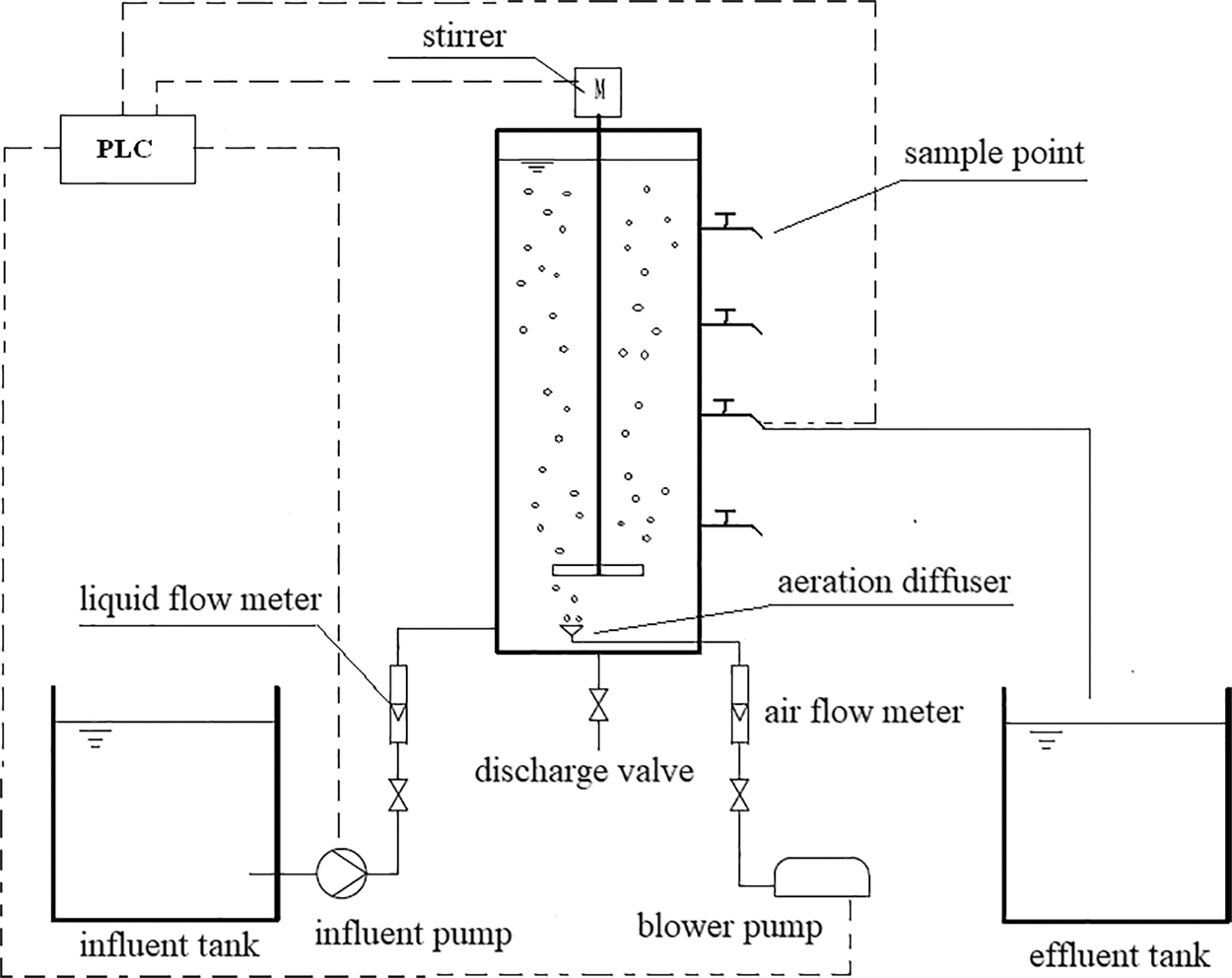
Schematic diagram of the SBR used in this study. SBR, sequencing batch reactor.
The entire experiment consisted of three stages. In stage 1, the reactor was initiated with the full nitrification process. In stage 2, sludge mixed liquor was taken from the reactor and equally divided into five 1,000-mL beakers for the batch experiment to study the short-term effects of hydrazine on partial nitrification. In stage 3, the long-term effects of hydrazine on partial nitrification were investigated in the SBR.
Synthetic wastewater
NH4Cl and glucose were used as the nitrogen and carbon sources, respectively, in the synthetic wastewater, which also contained NaHCO3 (400 mg/L), CaCl2 (4 mg/L), KH2PO4 (40 mg/L), MgSO4·7H2O (40 mg/L), and the following trace elements: FeCl3 (375 mg/L), H3BO3 (37.5 mg/L), CuSO4·5H2O (7.5 mg/L), KI (45 mg/L), MnSO4·H2O (25.69 mg/L), ZnSO4·7H2O (30 mg/L), EDTA (2,500 mg/L), CoCl2·6H2O (50 mg/L), and Na2MoO4·2H2O (20 mg/L) (Wei et al., 2014).
Inoculated sludge characteristics
The inoculated sludge was collected from the Shenyang Southern Sewage Treatment Plant (China). The sludge volume index, mixed liquid suspended solids (MLSS), and mixed liquid volatile suspended solids (MLVSS) of the inoculated sludge were 67.67, 4,610, and 3,385 mg/L, respectively.
Batch test
The sludge mixed liquid obtained from the SBR was equally divided into five equal volume beakers with an effective volume of 1,000 mL. The influent and operational conditions for the five beakers were the same as those of the SBR, with the exception of the amount of hydrazine added to the beakers. The amounts of hydrazine added were 0, 5, 7.5, 10, or 12.5 mg/L, and samples were collected from the beakers each hour during the experiment to analyze the variations in nitrogen.
Analytical methods
The MLSS and MLVSS were determined using the gravimetric method according to the standard protocols of the State Environmental Protection Administration of China (SEPA, 2002). pH was measured using a METTLER TOLEDO pH meter-FE20 (China) and DO was detected using a HACH HQ30d DO meter (USA). Concentrations of the effluent nitrogen compounds were also determined using the SEPA protocol (2002).
During the experiment, the activated sludge samples were collected for high-throughput sequencing analysis, which can obtain the microbial community structure during the different experimental stages. The different community structures were compared to examine the effects of different experimental stages on the activated sludge microbial community. Bacterial 16S rRNA genes were amplified from activated sludge samples by polymerase chain reaction (PCR) using the Trans Gen AP221-02 reaction system (Trans Start Fastpfu DNA Polymerase) with the PCR primers 338F (ACTCCTACGGGAGGCAGCAG) and 806R (GGACTACHVGGGTWTCTAAT) (Dennis et al. 2013). The PCR conditions were as follows: 95°C for 3 min, followed by 27 cycles of 95°C for 30 s, 55°C for 30 s, and 72°C for 45 s, and finally 10 min at 72°C, after which samples were held at 10°C until halted by the user. The activated sludge samples were visualized in a 2% agarose gel after electrophoresis (Biswas et al., 2014; Huang et al., 2014). The products were then purified using a PCR production purification kit. Next, the PCR amplicons were quantitatively checked using QuantiFluor™-ST (Promega) and sequencing was performed using the Illumina Miseq platform by the Majorbio BioPharm Technology Co., Ltd. (Shanghai, China).
The ammonia conversion rate and nitrite accumulation rate were calculated using Eqs. (1) and (2), respectively.
Results and Discussion
Initiation of full nitrification in the SBR
Inoculated sludge was collected from the aeration tank of the Shenyang Southern Sewage Treatment Plant (China), and then incubated for 24 h using the no-effluent aerating method. Next, simulated domestic wastewater was added to the sludge. Data monitoring began after 5 days of continuous operation. The 30-day performance of the SBR is shown in Fig. 2, and no sludge was discharged during the entire experiment. As shown in Fig. 2, the average ammonia conversion rate, effluent nitrite, and nitrate were 99.11%, 0.26 mg/L, and 33.63 mg/L, respectively. The average nitrite accumulation rate was only 0.77%.

Performance of the SBR during the initiation period.
Short-term effect of hydrazine on partial nitrification
After stable operation of full nitrification in the SBR, the short-term effects of hydrazine were investigated. Batch tests were conducted in five beakers that had been dosed with hydrazine concentrations of 0, 5, 7.5, 10, and 12.5 mg/L. Hydrazine was continuously added to the beakers once a day, and the changes in nitrogen during one cycle are shown in Fig. 3 (three parallel experiments were carried out for each concentration, and the average nitrogen values in one cycle [8 h] were made into Fig. 3.). In each beaker dosed with different amounts of hydrazine, the amount of ammonia decreased gradually. In beakers dosed with hydrazine, nitrite increased, and nitrate decreased compared to those without hydrazine during the operational cycle. The ammonia conversion rate and nitrite accumulation rate of each concentration in the 7th hour are shown in Fig. 4. As shown in Fig. 4, in the beakers dosed with 0, 5, and 7.5 mg/L of hydrazine, the ammonia nitrogen removal rates were 98.99%, 98.42%, and 98.65%, respectively, which were not significantly different. In the beakers dosed with 10 and 12.5 mg/L of hydrazine, the ammonia nitrogen removal rates decreased slightly to 95.13% and 92.65%, respectively. As the hydrazine dosage increased, the nitrite accumulation rate first increased and then decreased.
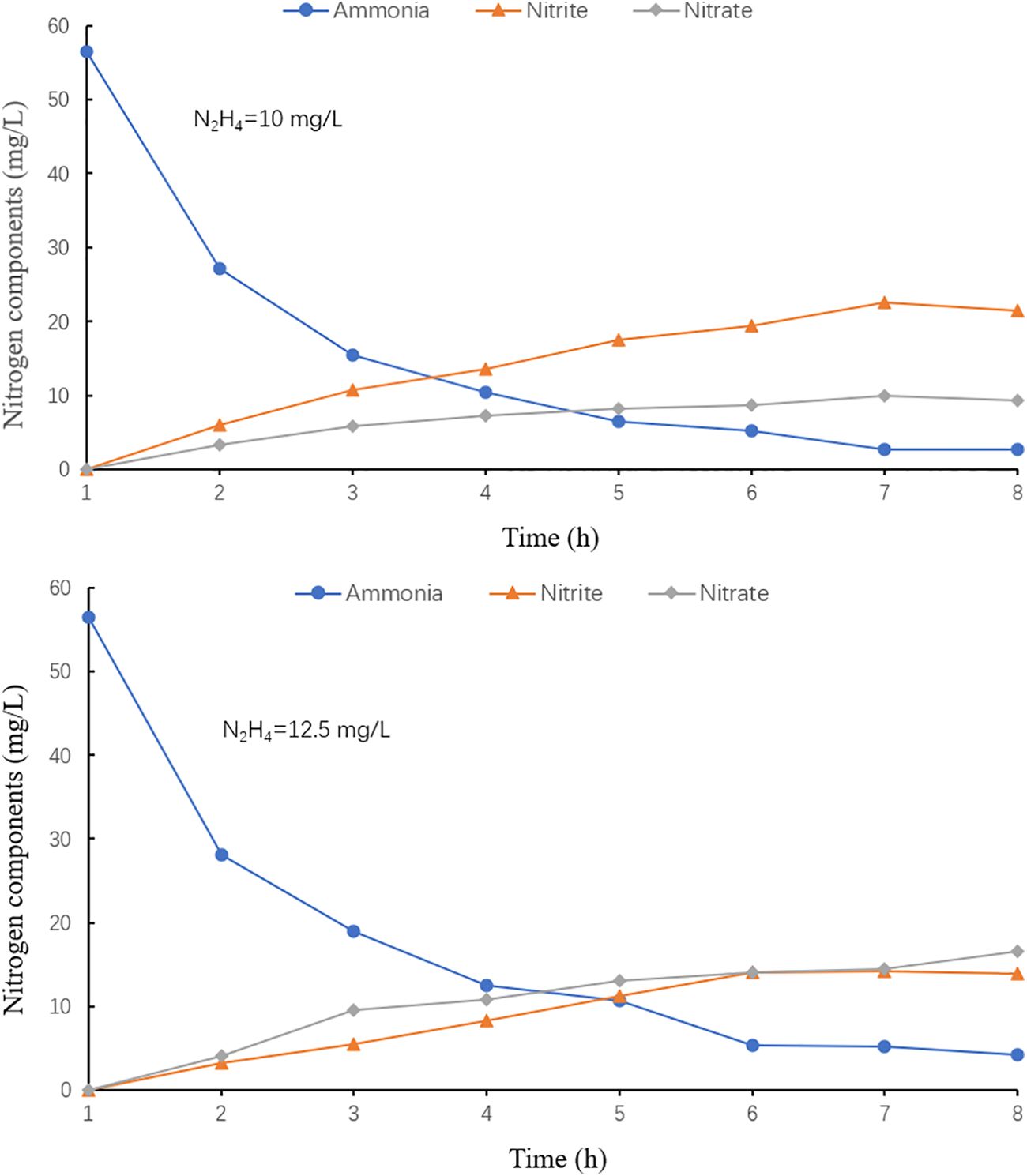
Short-term effects of hydrazine on partial nitrification.
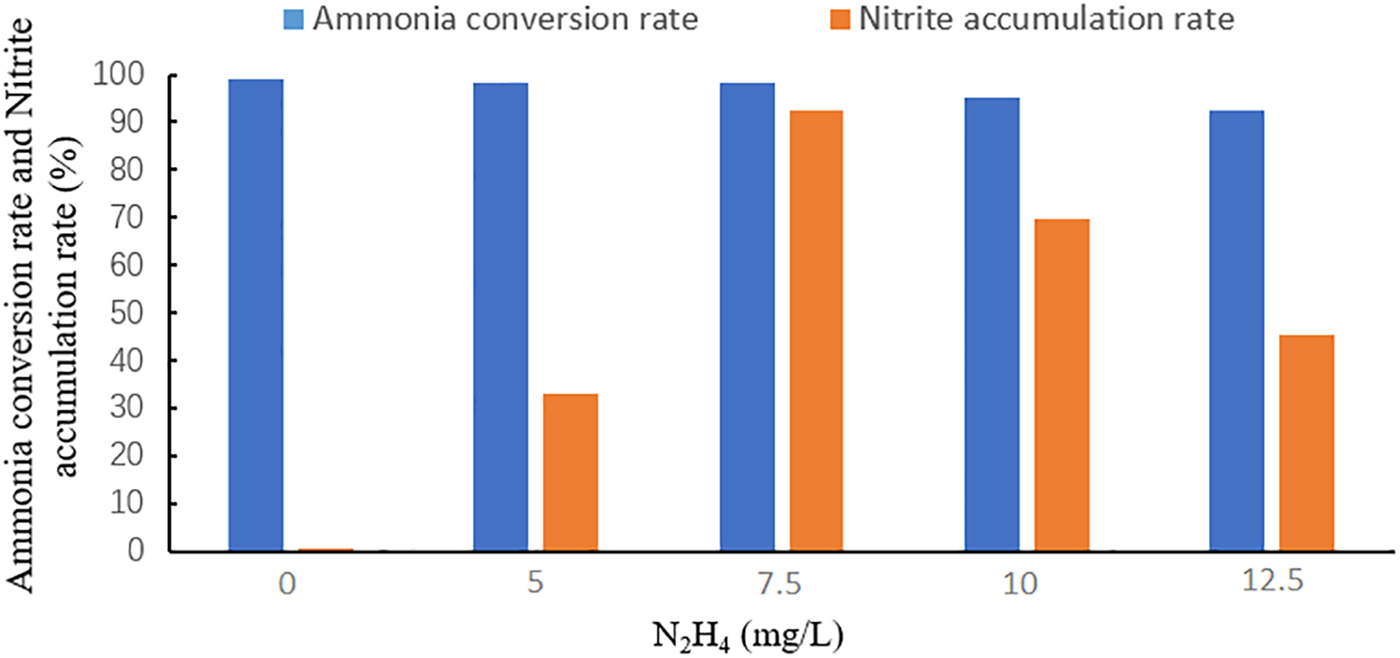
Short-term effects of hydrazine on the ammonia conversion rate and nitrite accumulation rate.
By combining the data of the batch tests, several conclusions could be drawn. Specifically, dosing with hydrazine was found to be beneficial for nitrite accumulation, which was consistent with the result of a previous study conducted in an SBR used to perform complete autotrophic nitrogen removal over nitrite (Xiao et al., 2015). In the short-term tests, 7.5 mg/L of hydrazine had the best effects at promoting AOB and inhibiting NOB without affecting AOB significantly, which was different from the previous study that used 5 mg/L of N2H4 to have the best effects on promoting anaerobic AOB (Xiang and Gao, 2019). These differences may have been due to hydrazine being added to the aerobic ammonia oxidation reactor (this study) and the anaerobic ammonia oxidation process (previous study).
Long-term effects of hydrazine on partial nitrification
After the batch experiments, the sludge from each beaker was returned to the SBR. Following full nitrification, the long-term effects of hydrazine on partial nitrification were investigated. The results of the long-term tests are shown in Fig. 5. During each operation stage with different dosages of hydrazine, the effluent ammonia increased in the beginning, and then gradually decreased, while the effluent ammonia stabilized in approximately 1 week. This was because hydrazine is a strong reducing agent with biological toxicity that leads to partial inhibition of aerobic ammonia oxidation (Xiao et al., 2015). However, as the experiment progressed, AOB adapted to the hydrazine, which led to a decrease in the effluent ammonia. The nitrite accumulation rate first increased, and then decreased as the hydrazine dosage increased. Moreover, the ammonia removal and nitrite accumulation rates of long-term tests were superior to those of short-term tests, which indicated that as the running time increased, the partial nitrification became more stable. The nitrite accumulation rate was the highest when 7.5 mg/L of hydrazine was used, which was consistent with the results of short-term tests. When dosing with 7.5 mg/L of hydrazine, the ammonia conversion rate and nitrite accumulation rate were 99.10% and 93.24%, respectively. Overall, these findings indicate that hydrazine dosing can induce rapid initiation and stable operation of a partial nitrification reactor.

Long-term effects of hydrazine on partial nitrification.
The changes in the MLSS and MLVSS in the long-term tests are shown in Fig. 6. Both the MLSS and MLVSS decreased during the initial stage of dosing with hydrazine, and the addition of more hydrazine led to greater decreases in MLSS and MLVSS. Similar results have been reported by Ganesan and Vadivelu (2019); these results could be attributed to the addition of hydrazine inhibits the growth of bacteria. Afterward, the MLSS and MLVSS both increased slowly or rapidly with stable operation. The value of the MLVSS/MLSS increased from 0.44 to 0.55 in the long-term tests of different hydrazine dosages, which indicated that the reaction system gradually adapted to the hydrazine dosing.

Long-term effects of hydrazine on MLSS and MLVSS. MLSS, mixed liquid suspended solids; MLVSS, mixed liquid volatile suspended solids.
The results of long-term experiments investigating the effects of hydrazine on partial nitrification revealed that hydrazine at moderate concentrations improved the nitrite accumulation rate with little effect on ammonia oxidation. The optimum dosage of hydrazine was 7.5 mg/L in this experiment.
Microbial community analysis
Activated sludge was collected from the reactor dosed with 7.5 mg/L of hydrazine on days 5, 30, and 60 for high-throughput sequencing analysis. The microbial community composition and relative abundance (genus level) of sludge samples are shown in Fig. 7. From the perspective of the main microbial population and abundance of sludge, Saprospiraceae_uncultured and Hydrogenophilaceae_uncultured always dominate in the three sludge samples and the content is increasing. However, with the gradual and stable operation of partial nitrification, the composition of other microbial communities in the reactor system changed greatly. The number of Haliangium, Candidatus_Competibacter, env.OPS_17_norank, Plasticicumulans, Ideonella, Flavobacterium, Comamonadaceae, and Sulfuritalea was gradually reduced and even washed out of the system, indicating that they were not suitable for the partial nitrification environment controlled by hydrazine. Thauera, Nitrosomonas, Denitratisoma, Chitinophagaceae_uncultured, Thiobacillus, Parcubacteria_norank, Bdellovibrio, Chlorobium, Comamonas, Cytophagaceae_uncultured, Simplicispira, Lactococcus, Ferruginibacter, DB1–14_norank, Diaphorobacter, and Hydrogenophaga gradually grew in the reactor and became the new dominant bacteria.

Analysis of microorganism community structure (H5, the activated sludge sample was collected from a reactor dosed with 7.5 mg/L of hydrazine that had been running for 5 days; H30, the activated sludge sample was collected from a reactor dosed with 7.5 mg/L of hydrazine that had been running for 30 days; and H60, the activated sludge sample was collected from a reactor dosed with 7.5 mg/L of hydrazine that had been running for 60 days).
It has been reported that dosing trace hydrazine can strengthen Anammox, but also exhibits a certain inhibiting impact on the activity of NOB (Tomlinson et al., 1966; Yao et al., 2013). In the SBR system, under long-term 7.5 mg/L hydrazine addition, the relative abundance percentages of a majority of the different categories of bacteria were significantly impacted by hydrazine, which resulted in nitrite accumulation (as shown in Fig. 5). In the sludge samples, Thauera, Nitrosomonas, Denitratisoma, Flavobacterium, and Comamonadaceae are all related to nitrogen removal. The genus Nitrosomonas belonging to the Nitrosomonadaceae family was identified as the AOB (Xiang et al., 2020). On the 5th day of system operation, the content of Nitrosomonas in the reactor was very small (the abundance was 0.8%); however, with the stable operation of partial nitrification, its abundance increased to 18.33% on the 60th day. At the same time, it can also be seen from Fig. 5, due to the addition of 7.5 mg/L hydrazine, the nitrite accumulation rate in the system increased from 25.02% to 94.04%, indicating that the ability of partial nitrification was enhanced. Both Thauera and Denitratisoma have aerobic denitrification ability (Mao et al., 2013; Cao et al., 2016). The abundance of Thauera and Denitratisoma in the sludge samples on the 5th day was very low (0.52% and 0.91%, respectively). They both showed an increasing trend with the running of the experiment, and increased to 12.10% and 4.92%, respectively, by the 60th day, which indicated that it is beneficial to enrich Thauera and Denitratisoma in a partial nitrification reactor controlled by hydrazine. Flavobacterium and Comamonadaceae have good denitrification efficiency (Calvó et al., 2004), and their content in the reactor has shown a downward trend, from the initial 1.35% and 2.56% to 0.46% and 0.10%, respectively, indicating that the hydrazine-controlled partial nitrification reactor may not be conducive to its enrichment. The above-mentioned results of the analysis of bacterial community structure showed that although long-term 7.5 mg/L hydrazine addition reduced the relative abundance of some denitrifying bacteria (Flavobacterium and Comamonadaceae), the relative abundance of others (Thauera and Denitratisoma) increased. Thus, the addition of 7.5 mg/L hydrazine can enhance the partial nitrification capacity of the system, and it will not have much impact on the ammonia conversion.
Influence mechanism of hydrazine on AOB and NOB
The oxygen uptake rate (OUR) was calculated according to the following formula:
where OUR is the oxygen utilization per unit of mass sludge in unit time, DO is the DO concentration, t is the measurement time, and X is the concentration of biosolids in the measuring device.
The OUR measured at time t under substrate and DO nonlimiting conditions (OUR [t]) can be expressed using the following equation (Wu et al., 2016):
where OUR0 is the initial OUR. By curve fitting the measured OUR to the simulated OUR and assuming the decay rate, b, to be 5% of μ, μ can be estimated.
Activated sludge was collected from the 7.5 mg/L hydrazine system, and the OUR was calculated using Eq. (3). The OUR measured under a substrate nonlimiting and high food to mass ratio condition used for measurement of μAOB and μNOB is shown in Fig. 8. Figure 8a shows the OUR used for measurement of the maximum specific AOB growth rate (μAOB) under a DO and NH4+ nonlimiting condition, expressed as OURNH. Figure 8b shows the OUR used for measurement of the maximum specific NOB growth rate (μNOB) under a DO and NO2− nonlimiting condition, expressed as OURNO2. After curve fitting the OUR data to Eq. (4), the μAOB and μNOB values were estimated to be 0.78 and 0.45/d, respectively.
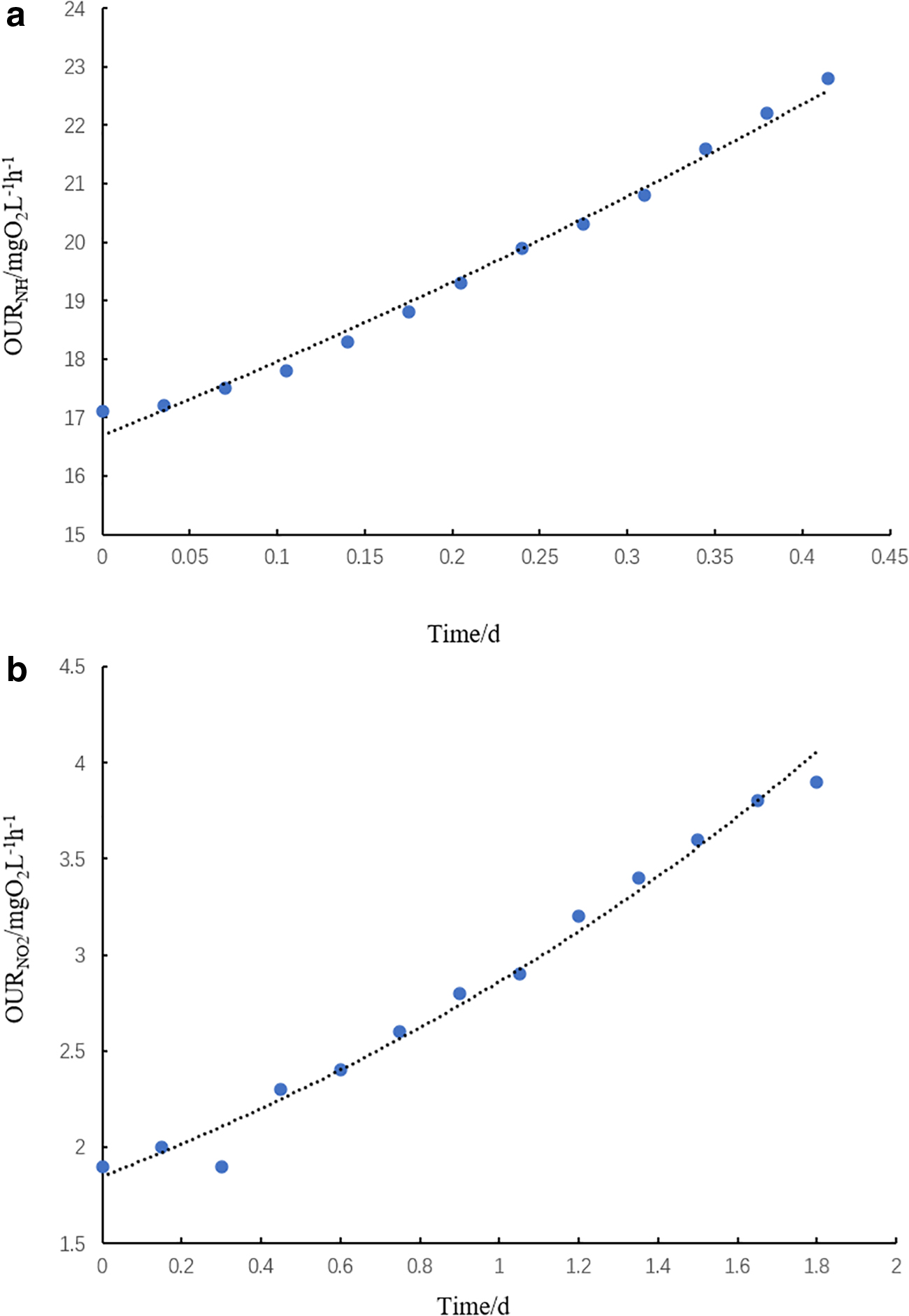
Changed in OUR with time
The growth rates of AOB or NOB were expressed using the “Monod” model as follows:
Equation (6) does not include the hydrazine inhibition of NOB, and Eq. (7) is the model of hydrazine inhibition of NOB. The hydrazine inhibition constant for NOB (KN2H4) was 0.71 mg/L, which was determined from the model calibration. XAOB and XNOB were estimated using the method shown by Bergmann et al. (2011). The model of nitrification kinetics is shown in Table 1. The parameter values were collected from the literature and are shown in Table 2.
Model of Nitrification Kinetics (Wu et al., 2016)
NH is the process of NH4+ oxidation to NO2− under AOB; NO2 is the oxidation of NO2− to NO3− under the action of NOB.
AOB, ammonium-oxidizing bacteria; NOB, nitrite-oxidizing bacteria.
Kinetic Parameters for the Model Simulation (Hou et al., 2008)
COD, chemical oxygen demand.
To quantify the effects of hydrazine inhibition on NOB washout, the models of Eqs. (5)–(7) were fitted under different SRT and DO concentrations, as shown in Fig. 9. The curves of Eqs. (5)–(7) were the fitting curves at different SRT and DO concentrations. The three curves divided the graph into four areas: I, II, III, and IV. I is the NOB proliferation area; II is the NOB washout area with hydrazine inhibition and the partial nitrification area with hydrazine inhibition; III and IV are the NOB washout regions without hydrazine inhibition; III is also the partial nitrification region without hydrazine inhibition; and IV is also the AOB-deficient area. I, II, and III are all AOB abundance areas.
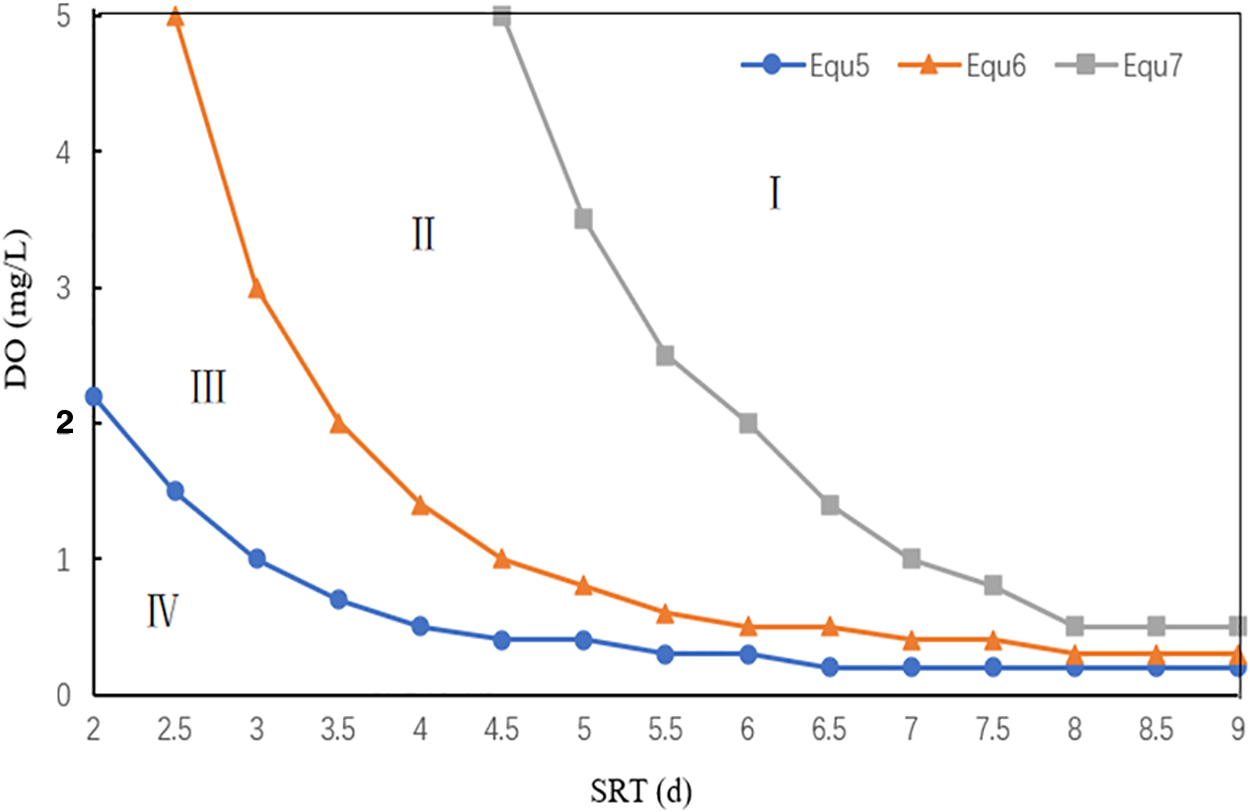
Fitting curves of different SRT and DO concentrations. SRT, sludge retention time.
As shown in Fig. 9, a low DO and SRT generally led to NOB washout. The area of II is greater compared with III, indicating that the partial nitrification area greatly increased due to hydrazine. In addition, the area of II is close to the sum of areas of III and IV, indicating that the presence of hydrazine greatly increased the NOB washout area. The above results indicate that the inhibitory effects of hydrazine on NOB in the system were greater than the promotion effects on AOB. These results were consistent with those of a previous study that demonstrated NOB suffered more significant inhibition from the addition of trace amounts of N2H4 than AOB (Xiao et al., 2015).
Conclusions
In this study, full nitrification by nitrate shift to partial nitrification by nitrite was successfully achieved by dosing hydrazine in an SBR. The results of long-term experiment showed that nitrite accumulation rate was maintained at above 93%, and a high-throughput analysis of activated sludge samples showed when the reactor achieved stable nitrosation Thauera, Nitrosomonas, and Denitratisoma related to nitrogen removal are dominant bacteria, which indicate the enrichment of AOB in the 7.5 mg/L hydrazine system. Therefore, hydrazine was considered to be responsible for the partial nitrification process in this study. By measuring OUR, the activity of AOB and NOB was analyzed, and the results show that the accumulation of nitrite in the hydrazine system was primarily due to the inhibitory effects of hydrazine on NOB.
Footnotes
Acknowledgments

Author Disclosure Statement
No potential conflicts of interest declared.
Funding Information
This work was supported by the Major science and technology projects of Liaoning Province (grant no. 2019JH1/10300001); Shenyang Youth Science and Technology Project (grant no. RC190366); Project of science and Technology Department of Liaoning Province (grant no. 2019-ZD-0483); and Liaoning Provincial Department of Education Project (grant no. LJC201907).