




Abstract
Soils in coal coking plants can contain both polycyclic aromatic hydrocarbons (PAHs) and heavy metals (HMs). In this study, we analyzed PAH-HM pollution of soil in a coking plant in Beijing, China using a risk quotient and Hakanson potential ecological risk assessment to evaluate the ecological risk of PAHs and HMs, respectively. In addition, a magnetic whole-cell bioreporter was used to detect ecological toxicity of soil samples. The ecological risk and ecological toxicity were also compared. We found serious PAH pollution in the samples as evidenced by total PAH values of up to 1,206.99 mg/kg that were mainly 4-ring PAH. Lead and chromium contamination was present at 245.83 and 169.60 mg/kg, respectively, which was higher than concentrations of other HMs, including arsenic, cadmium, and mercury. Most samples had PAH levels that could present a serious ecological risk, whereas nearly half of the samples had HM concentrations that would pose high ecological risks. In a bioreporter assay, the relative bioluminescence response ratio of soil samples ranged from 1.76 to 4.66, indicating that all samples showed ecological toxicity. In this study, we showed that bioreporters can be used to express the combined influence of all hazardous chemicals and demonstrated that bioreporters could be an efficient and rapid approach to assess biological toxicity of soils with co-contamination and provide a full-scale risk assessment of polluted soil combining risk assessment.
Introduction
Polycyclic aromatic hydrocarbons (PAHs) are a class of organic compounds that are carcinogenic, teratogenic, and can induce mutations in organisms (Moore et al., 2015). PAHs are persistent organic pollutants that have attracted substantial attention due to their environmental persistence, bioaccumulation, ability to migrate long distances, and high toxicity (El-Shahawi et al., 2010; Li et al., 2010; Zhou et al., 2020). Heavy metals (HMs) accumulate in the soil due to their poor mobility and resistance to microbial degradation and also present ecological and health risks (Saeedi et al., 2012).
Coking plants produce coal gas, coke, and other coal-based goods. These plants also produce various PAHs such as benzo [a] pyrene (BaP), fluoranthene (Flu), or phenanthrene (Phe), as well as HMs such as arsenic and cadmium, which can all contaminate adjacent soil (Lambert et al., 2011; Diaz-Somoano et al., 2012; Garcia et al., 2012; Hou et al., 2015b; Rachwal et al., 2015). Overall, soils near coking plants can be co-contaminated with organic and inorganic pollutants that represent significant hazards to animal and plant life. The potential risk of these kinds of polluted soil is barely reported.
To evaluate the ecological risk of PAHs, risk quotients (RQs), toxic equivalency factors of BaP, and sediment quality guidelines are typically used (Long et al., 1995; Marques et al., 2017; Gereslassie et al., 2018). Meanwhile, the Nemerow pollution index, geoaccumulation index, and potential ecological risk index are used to assess risk from HMs (Nemerow, 1974; Hakanson, 1980; Loska et al., 1997). For these methods, the ecological risk level of the polluted soil is determined by comparing the actual concentrations of pollutants in soil samples with relevant standards or background levels in the soil.
Whole-cell bioreporters are genetically engineered living microorganisms that can generate detectable signals that can be quantified to assess chemical and/or environmental stresses (Hynninen and Virta, 2010). Specific bioreporters can recognize target chemicals using a specific protein (Branco et al., 2013). Semispecific or nonspecific bioreporters detect chemicals that can activate cell reactions, such as stress responses induced by reactive oxygen species and DNA damage caused by carcinogens (Sorensen et al., 2006). Compared with conventional detection methods, whole-cell bioreporters are widely used because of their small volume, rapid response and reproduction, and low cost (He et al., 2016). In addition, bioreporters can be redesigned, combined, and modified using molecular biology techniques to expand potential applications (Cooper, 2002). The bioavailability of pollutants can be detected using living cells to provide information about toxicity of multiple contaminants that can affect living organisms.
Most studies have focused on one type of pollutant, even though multiple pollutants are frequently present in contaminated soils. Moreover, ecological risk assessments of soils with multiple contaminants are still often separated according to pollutant type, despite the possibility that interactions between different pollutants can affect estimates of the overall risk of contaminated soil. In general, few methods are available to ascertain the comprehensive risk of soils containing multiple contaminants. In this study we collected soil samples from areas in a decommissioned coking plant in Beijing, China and analyzed PAH and HM contaminants in the soil samples. We assessed the ecological risk of PAH and HM contaminants separately before testing the ecological toxicity of the soil samples using a magnetic whole-cell bioreporter. Based on these results, we were able to compare the ecological risk and ecological toxicity.
Materials and Methods
Soil samples
Soil samples from an abandoned coking plant in Beijing that had been subject to pollution for around 48 years were collected. At the time of sampling, most of the sites had been remediated, and some were used for housing construction (Fig. 1). The sample sites were dug out with a shovel to obtain soil profiles. Five sample points were set in a line beginning near the boundary of the factory with 50 m distance separating each sample point. Samples from four depths (0–20, 40–70, 70–100, and 100–120 cm) were collected for every distance point. The first sample point was located north of the factory where the coke chimney stood. The soil samples were stored in a refrigerator at 4°C before testing (Xu et al., 2020).
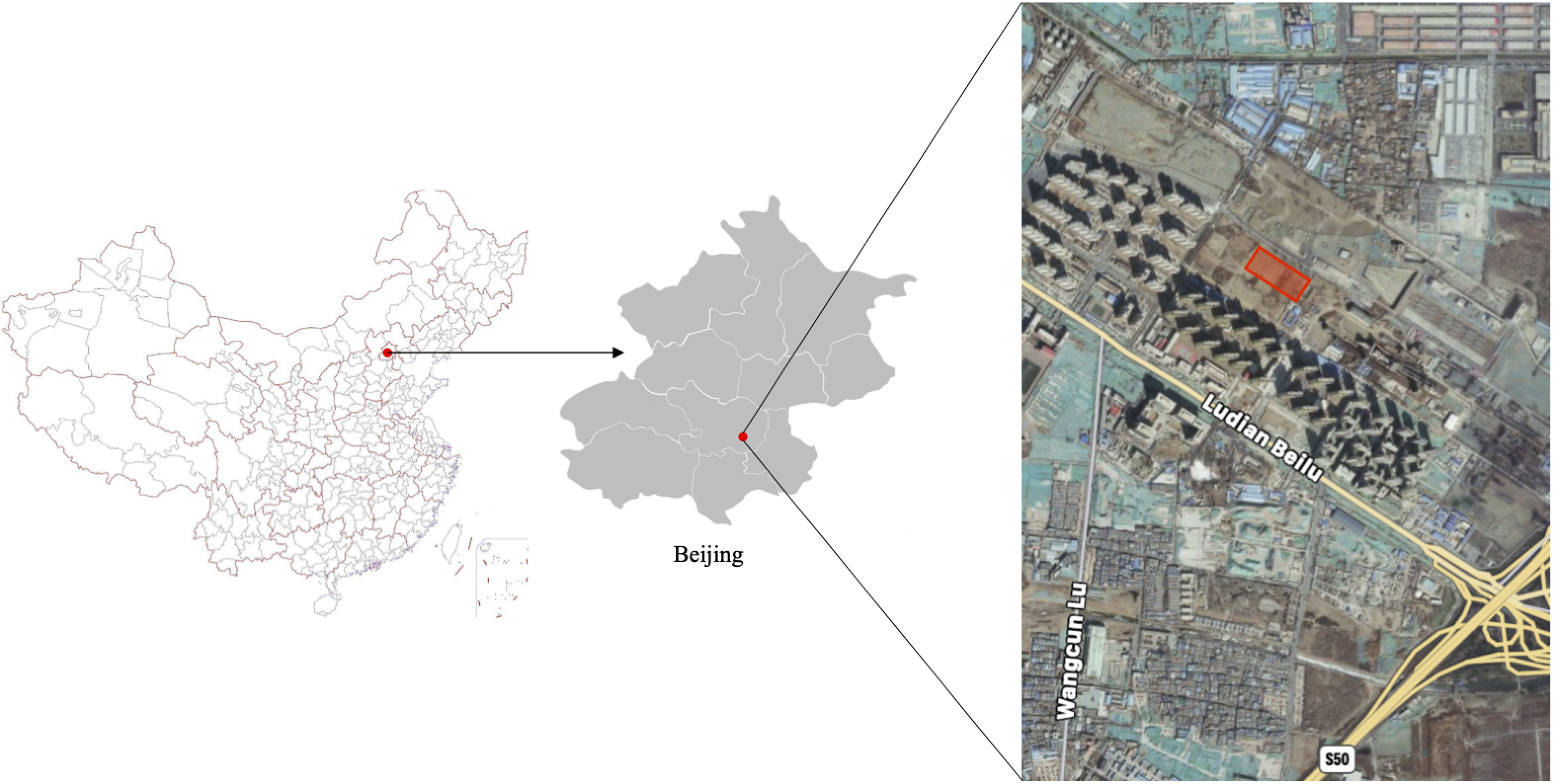
Sampling site location. The site where samples were collected is highlighted with a rectangle in the satellite image.
Chemical analysis
PAH analysis
To determine levels of 16 controlled PAHs designated by the United States Environmental Protection Agency (USEPA), 10 g of freeze-dried and sieved soils (ground with a mortar) were mixed with a surrogate (10 μg chrysene-d10 and perylene-d12) and sealed with filter paper for 24 h (Olawoyin, 2016). The mixed samples were then extracted for 16 h with 220 mL acetone/methanol (1:1, v/v) solvent using a Soxhlet apparatus at 60°C to maintain a backflow of between four and six times per hour. The resulting extracts were dehydrated with anhydrous sodium sulfate and concentrated to 1.5 mL using a rotary evaporator and nitrogen stream. PAHs in 1 μL samples were analyzed using a gas chromatograph-mass spectrometer (GC/MS, 7890A/5975C, Agilent) equipped with a DB-5MS capillary column (30 m × 0.25 mm × 0.25 μm film thickness). Gas chromatography was carried out with an injector temperature of 290°C with nonsplit injection and an oven temperature held at 40°C for 2 min and increased to 290°C at a rate of 5°C/min with 290°C maintained for 4 min. High-purity He carrier gas was delivered at a constant flow rate of 1.0 mL/min, and the solvent was delayed for 5 min. Mass spectrometry with an EI ion source was carried out in selective ion monitoring mode with 70 eV ionization energy and ion source, interface, and 4-pole temperatures of 230°C, 280°C, and 150°C, respectively (Han et al., 2015; Mahfouz et al., 2019). PAH concentrations were calculated based on the dry weight (Lukic et al., 2016).
HM analysis
After sieving, 50 mg of each soil sample was digested for 175 min in 5 mL HF, 2 mL HNO3, and 1 mL H2O2 (Wei et al., 2020) in a CEM microwave digester (MARS 5) using the following temperature program: Stage 1: ramp to 120°C over 8 min and hold for 4 min at 120°C; Stage 2: ramp to 160°C over 8 min and hold for 5 min at 160°C; and Stage 3: ramp to 185°C over 5 min and hold at 185°C for 30 min (Ayyanar and Thatikonda, 2019; Refugio Castañeda-Chávez et al., 2020). An inductively coupled plasma mass spectrometer (ICP-MS, PerkinElmer NexION 300D) was then used to detect HM concentration in the solution. HM concentrations were calculated based on the dry weight.
Ecotoxicity analysis
Acinetobacter baylyi ADPWH_recA functionalized by magnetic nanoparticle (MNP) synthesis was used as a whole-cell bioreporter (Song et al., 2009, 2014; Zhang et al., 2013; Jia et al., 2016). Chemical deposition was adapted to allow magnetic nanoparticle synthesis (Zhang et al., 2011). The MNP-bioreporter (180 μL) was added to a 20 μL soil suspension (200 mg soil suspended in 2 mL deionized water) in a 96-well microplate and incubated for 1 h at 30°C. A magnet was used to separate the bioreporters, and the remaining liquid was discarded. Then, 200 μL fresh medium was added to the plate, and the bioreporters were incubated for 6 h, during which time the bioluminescence and OD600 were recorded every 30 min using a Spectra M5 Plate Reader (Molecular Devices). Soil ecotoxicity was represented by the relative bioluminescence response ratio, which is the specific value of the bioluminescence response of each cell during the period 150–360 min relative to that at time 0.
Quality control and quality assurance
The chemicals used to detect PAHs were at the grade for GC residue analysis. The surrogate and 16 PAHs standard were purchased from ANPEL Laboratory Technologies (Shanghai), Inc., and acetone and methanol were purchased from Beijing Lanyi Chemical Products Co., Ltd. The chemical used to detect HMs were guaranteed reagent and the chemicals used to analyze ecotoxicity were analytical reagent, which were also purchased from Beijing Lanyi Chemical Products Co., Ltd.
The instrument detection limit for 16 PAHs was 0.1–1.33 μg/kg, and the method detection limit for 16 PAHs was 0.08–0.17 mg/kg based on 20 g soil samples and extract concentrated to 1 mL. The instrument detection limit for HMs was 0.05–0.1 mg/kg for lead (Pb), chromium (Cr), arsenic (As), and cadmium (Cd) and 0.02–0.05 mg/kg for mercury (Hg). The method detection limit for HMs was 2 mg/kg for Pb and Cr, 0.4 mg/kg for As, 0.09 mg/kg for Cd, and 0.002 mg/kg for Hg based on 0.10 g soil and digestion solution concentrated to 50 mL. Blank samples were tested after every 20 samples, and the concentration of the target compound was confirmed to be lower than the detection limit.
For testing of soil PAH, chrysene-d10 and perylene-d12 were added as surrogates to assess PAH recovery. In this study, the recovery of chrysene-d10 and perylene-d12 was between 60% and 120%, which meets the requirements of trace analysis. For testing of HMs by ICP-MS, national standard soil was used as a quality control. Samples were analyzed in duplicate, and 2 standard reference samples were analyzed for every 10 samples to assure quality. When the HM concentration was >100, 1–100, and 0.1–1 mg/kg, the recovery should be between 95–105%, 90–110%, and 80–110%, respectively. Recovery of standard reference samples in this study was within the recovery rate range and met the requirements for trace analysis.
Ecological risk assessment
PAH ecological risk assessment
By matching biological and chemical data from numerous models, as well as laboratory and field studies in marine and estuarine sediments, Long et al. (1995) devised effects range-low (ERL) and effects range-median (ERM) as guideline values to evaluate sediment quality and potential risk. These metrics can be used for soil analysis (Buzmakov et al., 2018; Niu et al., 2018). When concentrations of contaminants are below the ERL, the incidence of an effect is usually less than 25%, such that few negative biological effects of the chemicals that are present are expected. For most chemicals, the incidence of effects increases markedly as the concentrations increase. When the concentration exceeds ERM values, the incidence of effects often exceeds 75% and can be as high as 100%. ERL and ERM values for various PAHs reported by Long et al. (1995) are presented in Table 1. We adopted a RQ to evaluate ecological risk of PAHs. RQERL and RQERM values represent the actual concentrations of PAHs in the soil divided by ERL and ERM, respectively.
Effects Range-Low and Effects Range-Median Values for Polycyclic Aromatic Hydrocarbons
ERL, effects range-low; ERM, effects range-median; PAH, polycyclic aromatic hydrocarbon.
Ecological risk assessment of HMs
The potential ecological risk index was adopted to assess the ecological risk of HMs (Hakanson, 1980). In this method, RI is defined as the sum of risk factors for HMs.
where Ei is the individual risk factor of a HM, Ti is the toxic factor for HM I, Cfi is the individual pollution index of a HM, Ci is the concentration of HMs in soils, and Bi is the background value. The toxic coefficients of Pb, Cr, As, Cd, and Hg are 5, 2, 10, 30, and 40, respectively (Hakanson, 1980). Background values for these five HMs are 24.7, 66.7, 9.4, 0.0534, and 0.0576 mg/kg, respectively (Agency, 1990).
Statistical analysis
Characterization of PAH and HM soil contamination and calculations for ecological risk assessment were done using Microsoft Excel. Analysis of Pearson correlation between ecological risk assessment and ecotoxicity was done using SPSS Statistics software (version 25).
Results and Discussion
Pollution and ecological risk of PAHs
The amounts of 16 USEPA PAHs in soil samples taken from an abandoned coking plant in Beijing, China were summed to determine the total concentration of PAHs (TPAHs). The TPAH concentrations in the samples ranged from 799.39 mg/kg to 1,206.99 mg/kg (Table 2). Overall, the TPAH concentration increased first and then decreased with distance increased, with the exception of the 40–70 cm layer, which showed the highest values at the 100 m point of three layers. And the decrease in concentration was seen with depth increase. For each sample point at 0 m and 50 m distance from the plant, the highest concentration was seen in the 40–70 cm layer, and for samples taken 100, 150, and 200 m from the plant, samples from the top layer had the highest TPAH concentration. In terms of type of PAH, 4-ring PAHs were the most frequent in the soil samples, followed by 3- and 5-ring PAHs (Fig. 2). PAHs having three rings are present mainly in a gaseous form due to their low molecular weight and high vapor pressure, as well as other physical and chemical characteristics (Orecchio, 2010). Meanwhile, the amounts of 2- and 6-ring PAHs were relatively low. Overall, most PAHs seen in samples in this study were high molecular weight PAHs, which are slow to degrade and are associated with increased ecological risk. Such high molecular weight PAHs can be largely attributed to fossil fuel combustion, and earlier studies indicated that PAHs having higher molecular weight and compound ring number were more likely to persist in soil, which is consistent with our findings (Park et al., 1990; Wilcke, 2007).

Percentage distribution of 2- to 6-ring PAHs in soil samples. PAH, polycyclic aromatic hydrocarbon.
Total Concentration of Polycyclic Aromatic Hydrocarbon in Soil Samples
The RQ of PAHs was obtained by dividing the actual value of PAHs by the ERL and ERM to determine RQERL and RQERM, respectively (Table 3). RQERL<1 indicates no ecological risk. RQERL>1 and RQERM<1 represent a potential ecological risk, and RQERM>1 indicates serious ecological risk.
Risk Quotient for Polycyclic Aromatic Hydrocarbons in Soil Samples
RQERL<1 indicates no ecological risk, RQERL>1 and RQERM<1 indicate potential ecological risk, and RQERM>1 indicates serious ecological risk.
Among the 12 PAHs in the 20 soil samples, only Fla and Chr in sample 7 (distance 50 m, depth 70–100 cm) and Fla, Chr, and Pyr in sample 8 (distance 50 m, depth 100–120 cm) had no ecological risk. A few PAHs in a small number of samples had potential risk and were seen mostly in the 70–100 cm layer or 100–120 cm layer. In this sample site, PAHs were mostly concentrated in the 0–20 and 40–70 cm layers and were associated with serious ecological risk. In particular, for sample 2 (distance 0 m, depth 40–70 cm) and sample 6 (distance 50 m, depth 40–70 cm), the RQERM of most of the individual PAHs was higher than that for other soil samples. The RQERM of BaA in sample 2 was as much as 1,069.94 and had the highest risk among all the samples. Phe in sample 6 had the most serious ecological risk, which was up to 199.62. The RQERL and RQERM of TPAHs ranged from 2.91 to 1,130.25 and from 0.26 to 101.49, respectively. Except for sample 20 (RQERL>1 and RQERM<1, distance 200 m, depth 100–120 cm), which had potential risk, the other samples had RQERM values >1 that were indicative of serious ecological risk. PAHs in the environment can have various biological effects on living organisms, such as plant leaf injury, decreased biomass production, and altered abundance and composition of the soil microbial community (Zhang et al., 2016).
Pollution and ecological risk of HMs
The concentration of HMs decreased with distance from the plant boundary. The concentration of Pb in topsoil decreased from 245.83 mg/kg to 129.40 mg/kg from 0 m to 200 m, whereas the concentration of Cr in topsoil ranged from 169.60 mg/kg to 82.47 mg/kg over the same distance. The topsoil concentration of As, Cd, and Hg showed a similar trend (19.65–10.74, 0.43–0.31, and 0.18–0.15 mg/kg, respectively). The concentration of HMs was also decreased with increasing sample depth, although the trends varied for the different depths. The concentration decreased sharply in the 40–70 cm layer (Fig. 3), which may be due to human activities that result in predominant HM enrichment at the soil surface (Ruan et al., 2008). In contrast, in some samples, HM concentrations were higher at lower levels, and this finding could be because the soil was disturbed during remediation of other sites.

HM concentration in soil samples taken at different depths. HM, heavy metal.
The Hakanson potential ecological risk assessment was used to evaluate the ecological risk of HMs in soil samples using the soil background value of Beijing as a reference. RI <150 indicates low ecological risk, whereas RI between 150 and 300 is associated with moderate ecological risk. RI between 300 and 600 and >600 indicate considerable and very high ecological risk, respectively (Hakanson, 1980). Samples 1, 2, 5, 6, 9, 13, and 17 had considerable ecological risk (Fig. 4). Samples 1, 5, 9, 13, and 17 were taken from topsoil located 0, 50, 100, 150, and 200 m from the plant boundary. The RI for samples 3, 4, 7, 8, 10, 14, and 18 (where sample 3,4,7,8 was deep layer at 0 and 50 m, sample 10, 14, 18 was 70–100 cm layer at 100, 150, and 200 m) had moderate ecological risk with RI >150. Only samples 15, 16, 19, and 20 (70–100 cm layer, 100–120 cm layer at 150 m, and 70–100 cm and 100–120 cm layers at 200 m) had low risk. Compared with the background soil sample from Beijing, HMs at the test site had been accumulating in the soil for decades to result in a high ecological risk. Among the HM types, Cd had the highest ecological risk, followed by Hg. Even at low concentrations of Cd and Hg in the soil, the toxicity factors are high, which translates to high risk. HMs in soil can negatively affect soil microflora, particularly by decreasing the enzymatic activity of microorganisms that in turn affects soil degradation activity (Lenart-Boro and Boro, 2014).

Ecological risk of HM contamination in soil samples.
Ecological toxicity
Bioreporters allow rapid (within hours) convenient assessment of the ecotoxicity of contaminants in bioavailable fractions and, in particular, can provide information about combined toxicity of multiple pollutants (Ibrahim et al., 2020). To detect the ecological toxicity of soil samples in this study, we used a magnetic whole-cell bioreporter to determine a relative bioluminescence response ratio. A relative bioluminescence response rate >1 in a soil sample indicated ecotoxicity.
The bioluminescence signal of bioreporter ADPWH_recA is regulated by the SOS response system of cells, thus chemical or environmental stress such as that induced by mitomycin C, UV light, H2O2, ethidium bromide, HMs, or PAH compounds can activate DNA damage repair pathways (Song et al., 2009, 2014). Bioreporters can be used to evaluate synergistic toxic effects of all chemical carcinogens in an environmental sample. In this study, the relative bioluminescence response ratio of the 20 soil samples was between 1.76 and 4.66 (Fig. 5), indicating that all samples had ecotoxicity. High levels of ecotoxicity were seen for samples taken at 200 m, and ecotoxicity of samples at 0 m was at low levels, although these values were also >1.5. There was no similar trend between ecotoxicity and sample distance or depth, suggesting that there was no obvious relationship between ecotoxicity and total concentration of pollutants and that the bioavailable fraction of pollutants had environmental risk (Hou et al., 2015a; Zhang et al., 2017).

Ecotoxicity of soil samples.
Comparing ecological risk with ecological toxicity
We conducted a Spearman correlation analysis, the correlation between PAH ecological risk and ecological toxicity was −0.307, and the significance was 0.188. And the correlation and significance between HM ecological risk and ecological toxicity were −0.156 and 0.510, respectively. Results of Spearman correlation calculations showed no apparent relationship between risk associated with PAHs and HMs and ecological toxicity.
Various methods can be used to evaluate the risk soil contamination by different chemicals, but traditional ecological risk assessment methods to characterize soil contamination are typically based on the concentration of each type of pollutant. The risk of soil contamination is often assessed through basic additivity of single chemicals using single species toxicity data. However, such an approach can under- or overestimate the actual risk by not taking into account potential antagonism or synergism between contaminants (Perrodin et al., 2011; Cachada et al., 2016). The chemicals in soil that affect living organisms are those present in the bioavailable portion, which is important for ecological risk assessment (Brandt et al., 2002; Yoon et al., 2016).
When multiple types of pollutants such as PAHs or HMs are present in soil, they may interact either synergistically or antagonistically (Shen et al., 2005). Whole-cell bioreporters can expose the comprehensive toxicity of a mixture of chemicals and possible toxic interactions between chemicals, which can be assimilated by or directly affect living organism (Close et al., 2009). Moreover, bioreporters represent a cost-efficient and rapid approach for evaluation of the ecotoxicity of bioavailable portions of soil contaminants (He et al., 2018), as well as a means to monitor the toxicity of by-products and metabolites of screening pollutants (Sinclair and Boxall, 2003). Results obtained from bioreporters can provide guidance for further risk assessment (Sinclair and Boxall, 2003; Jiang et al., 2020).
In this study we used a semi-specific bioreporter that generates detectable bioluminescence signals when environment stress induces activation of DNA damage repair pathways (Song et al., 2009; Jiang et al., 2020). The whole-cell bioreporter used here was constructed in bacteria and is expressed under the control of promoters that allow consistent and stable gene expression (Park et al., 2013). The bacteria are easily cultured, which simplifies the testing process.
Different methods to evaluate soil pollution can be applied according to different future uses of contaminated sites after remediation. If construction will take place on a polluted site after restoration, an overall assessment can be conducted using ecological risk assessment to guide the restoration, and a human health risk assessment could also be conducted. If the contaminated site will have agricultural or ecological function after restoration, the toxicity of soil contaminants to relevant organisms should be considered. In this case, use of whole-cell biosensors to detect ecological toxicity can better indicate the potential biological effects of contaminated soil. Changes in toxicity can be monitored to guide remediation work and assess the success of the remediation.
In general, chemical analysis provides only a partial picture of the overall ecological risk of soil contamination. Such analyses do not reflect the risk of pollutants in the bioavailable part of the soil nor can it explain combined toxicity of multiple contaminants in the soil or of by-products or metabolites of these compounds (Robbens et al., 2010). The use of a whole-cell bioreporter to evaluate ecological toxicity provides additional, biologically relevant information about the total effect of polluted soil on living organisms, and this information can complement the ecological risk assessment based on chemical analyses. An integrated approach that combines chemical analysis, ecological risk assessment, and ecological toxicity testing can explain in detail the risk of polluted soil.
Conclusions
Samples taken in a former coking plant in China showed contamination with both PAHs and HMs. PAHs having 4, 3, and 5 rings were the most common. For HMs, Pb, Cr, and As were the most common. All but one of the samples had RQERM>1, which indicated serious ecological risk. The Hakanson potential ecological risk of some soil samples exceeded 300, also indicative of considerable ecological risk. Although the concentrations of Cd and Hg were lower than those for Pb and Cr, the higher toxicity factor for these HMs poses a high ecological risk. We also used a magnetic whole-cell bioreporter to detect the ecological toxicity of the soil samples, and the relative bioluminescence response ratio for 20 samples indicated the presence of substantial ecotoxicity.
There was no obvious correlation between ecological risk and ecological toxicity. On the one hand, ecological risk assessment was based on the concentrations of chemicals in soil, whereas the ecological toxicity was based on bioavailable components of the soil. Ecological risk of soil contaminated with multiple pollutants was determined by summing values for individual chemicals, but ecological toxicity can be tested using a bioreporter that can better reflect comprehensive interactions between all pollutants. Taken together, assessment of ecological toxicity using a bioreporter to supplement other methods to evaluate soil contamination can provide a more complete assessment of risk posed by polluted soil.
Footnotes
Author Disclosure Statement
No competing financial interests exist.
Funding Information
This study was supported by the National Natural Science Foundation of China under Grant No. 41601336 and China National Key Research and Development Program No. 2020YFC1806502.