




Abstract
Biological technology has presented a promising application for phosphine (PH3) purification; however, the degradation characteristics and microbial community of PH3 biopurification systems have rarely been reported. This study introduced an activated sludge process to treat PH3 in off-gas. Besides PH3 removal, oxidase activity and other characteristics such as phosphorous transformation and microbial community were investigated. When the PH3 concentration of the inlet gas was <30 mg/m3, the bioreactor achieved a relatively higher rate of PH3 removal, with a maximum rate of 72.9%. The activity of the enzyme superoxide dismutase increased with PH3 concentration; however, the bioreactor with an inlet gas PH3 concentration of 45 mg/m3 maintained lower catalase activity, revealing that high PH3 concentration had an adverse effect on biological process owing to PH3-induced oxidizing stress. Gaseous PH3 can be adsorbed by microbial organisms, but its final removal depends on microbial metabolism. Phosphorus converted from PH3 was eventually assimilated by microbes, and the total phosphorus in the supernatant was usually <1.0 mg/L during the whole operation period. Proteobacteria and Firmicutes were two major phyla in PH3 biopurification systems, and the genera Burkholderia and Methylophilus developed into the dominant microbes in activated sludge bioreactors, and these complex microbial communities may facilitate PH3 biopurification.
Introduction
Phosphine (PH3
At present, researchers have paid lots of attention on the treatment of PH3 off-gas derived from industrial production, and typical technologies include gas incineration, adsorption on carbon-based material (Wang et al., 2009; Li et al., 2016), chemical absorption (Chandrasekaran and Sharma, 1977), and catalytic oxidation (Qu et al., 2017); however, these methods have drawbacks such as high operation costs or catalyst poisoning. Until now, the purification of off-gas with low PH3 concentration has seldom been reported in practical application. In view of the fact that biotechnology has widely been used in the purification of organic waste gas or odorous gas (Mudliar et al., 2010; Yoshikawa et al., 2017), an innovative process, PH3 biopurification, was developed and patented (Liu et al., 2019b). Using this method, PH3 removal in a biotrickling filter system reached up to 76.8%. Bench scale experiments also verified that technical parameters such as composite filler and oxygen content have significant impacts on PH3 removal, and that Sphingomonas, Methylophilus, and Burkholderia are three genera of dominant bacteria found in biotrickling bioreactors (Liu et al., 2018a). Similarly, as rice seedlings were exposed to PH3 atmosphere, alkaline phosphatase activity in the rhizosphere soil increased with the increase of PH3 concentration and exposure time, and the availability of phosphorus also improved (Li et al., 2015), implying that PH3 can be converted to other phosphorus compounds under the environment of microbial activity. Although biological technology has presented a promising application for PH3 purification, the process and characteristics of PH3 bioconversion have rarely been studied, and many questions, such as microbial community composition and the correlation between enzyme activity and the biopurification process, are yet to be investigated systematically.
Aimed to elucidate the multifaceted effects of microorganisms on PH3 biopurification process, this study introduced activated sludge to treat the simulated PH3 off-gas at different levels. Besides PH3 removal, oxidase activity and other characteristics such as phosphorous transformation and microbial community were also discussed, and then the pathway of PH3 biopurification was proposed. The obtained results can provide significant technical and theoretical supports for the biopurification of PH3 off-gas.
Materials and Methods
This work was funded by the National Natural Science Foundation of China, and the experiments were carried out in the personal lab. The PH3 concentrations were lower than 45 mg/m3, and the inlet flow was 100 mL/(min·L) mixture solution, the offgas was treated by KMnO4 solution.
Startup of PH3 biopurification system
Activated sludge was sampled from an aerobic tank of a municipal wastewater treatment plant in Kunming, China, and the sludge was continuously domesticated for 60 days as the simulated off-gas with PH3 concentration of 6–10 mg/m3 was intermittently supplied from domestic systems (Li et al., 2020). Thereafter, 200 mL of mixture was transferred to a 6 L fermenter to proliferate PH3-degrading or PH3-tolerant microorganisms. During the process of domestication and proliferation, glucose was used as a carbon source for the culture medium, and the concentration of chemical oxygen demand (COD) was 1,490 mg/L; in addition, the pH was controlled at 7.0 by automatic feeding 1 mol/L NaOH.
When the biomass of the microorganisms in the fermenter reached ∼1,500–1,800 mg/L, 1.8 L of mixture solution was transferred to a 3 L bioreactor, and comparative tests were carried out in three bioreactors R1, R2, and R3 with differing PH3 concentrations of inlet gas at 15, 30, and 45 mg/m3, respectively (Fig. 1). The inlet flow was 100 mL/(min·L) mixture solution, the reaction temperature was 25°C, and the stirring rate of the shaking bath was 100 revolutions/min. Considering that the carbon source has significant impacts on biochemical metabolic process (Torresi et al., 2017), and that methanol can facilitate microbial growth, glucose was substituted by methanol to act as carbon source according to the requirement of the same COD concentration. Based on previous tentative experiments, the sludge retention time (SRT) was set to 6 days to ensure the stable growth of microorganisms, and 300 mL of mixture solution was discharged from the bioreactor every 24 h, with the same volume of methanol-containing culture medium subsequently added. During the entire comparative experiment, the oxygen content of the inlet gas was ∼20%, the dissolved oxygen in each bioreactor was ∼3.5–4.0 mg/L, and the mixed liquor suspended solids (MLSS) in the three activated sludge bioreactors fluctuated from 1,520 to 1,710 mg/L. The discharged off-gas was absorbed by potassium permanganate solution to eliminate its adverse impact on the environment. In view of the fact that the comparative experiments were not very stable during the early stage of operation, only samples collected from the discharged mixture solution after 15 days were used for subsequent analysis.
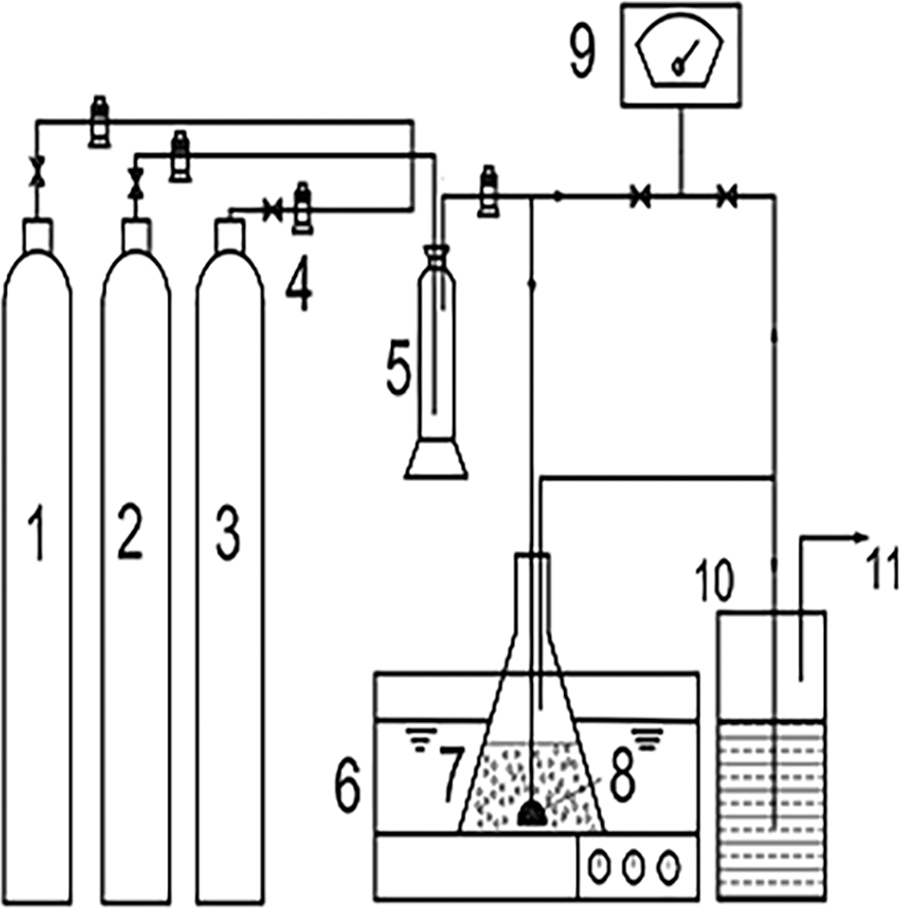
Flow chart of PH3 biopurification system (1—PH3, 2—compressed air, 3—N2 gas, 4—mass flowmeter, 5—buffer apparatus, 6—water bath shaker, 7—absorption apparatus, 8—microporous diffuser, 9—gas chromatography for PH3 determination, 10—offgas absorption device, 11—off-gas). PH3, phosphine.
Two control reactors (R0 and R4) were designed in this study, the airflow was 180 mL/min and the PH3 concentration in the inlet gas was set at 6–10 mg/m3. There were no microbes in R0, the culture medium was regarded as an absorption liquid. For R4, the chemical reagent NaN3, with a dosage of 1.2 g, was added to the absorption system to inhibit microbial activity (Vasiliadou et al., 2013), whereas the other conditions such as culture medium and microbial biomass (MLSS was ∼1,610–1,630 mg/L) were the same as used in R2.
Biochemical analysis
The pH in each bioreactor was measured using a pH meter (pHs-3C; Leici Co., Ltd, Shanghai, China), and the OD600 value in mixture solution was determined using a spectrophotometer (HACH-DR6000). All the parameters in this study were analyzed in triplicate.
The PH3 concentrations of the inlet and outlet gases were analyzed using gas chromatography (GC 9790 plus; Fuli Instruments, Zhejiang, China) with a flame photometric detector and RB-5 chromatographic column (30 m × 0.53 mm × 1.5 μm). N2 was the carrier gas and the temperatures of the column and the detector were 50°C and 230°C, respectively.
The discharged mixture solution was centrifuged for 10 min at 12,000 g, then the supernatant was filtered through a 0.45 μm mixed cellulose ester membrane. The collected supernatant was used to analyze COD, total phosphorus (TP), and orthophosphate (ortho-P), and the sludge mixture solution was also collected to determine total phosphorus (STP). COD was measured according to the standard reflux titrimetric method, both STP and TP were analyzed by the potassium persulfate digestion-ammonium molybdate spectrophotometric method (State Environmental Protection Administration of China, 2002), and ortho-P, hypophosphite, and phosphite in the supernatant was measured by ion chromatography (ICS-3000; Dionex Corp.).
After the sludge mixture solution was centrifuged, the collected sediment was used to determine the activities of superoxide dismutase (SOD) and catalase (CATase). The SOD activity was measured using the Total Superoxide Dismutase Assay Kit with the xanthine oxidase-hydroxylamine method (cat. No. A001-1; Nanjing Jiancheng Bioengineering Institute, China) following the manufacturer's instructions. The CATase activity was measured according to the Chinese National Standard GB/T 23195-2008 (Method for the Determination of Catalase in Bee Pollen-Ultraviolet Spectrophotometry) (Liu et al., 2018b).
Molecular biological analysis
The functional microbes (A15, A30, and A45), respectively, sampled from R1, R2, and R3 at 30 days, were collected to extract genomic DNA according to a previously described method (Ma et al., 2015). The universal primers 515F (5′-GTG CCA GCM GCC GCG GTA A-3′) and 806R (5′-GGA CTA CHV GGG TAT CTA AT-3′) with barcodes were used for the amplification of the V4 region of the bacterial 16S rRNA gene. The purified PCR products were sequenced using the Illumina HiSeq PE2500 platform (Novogene Co., Ltd., Beijing, China). Paired-end reads were merged using fast length adjustment of short reads (FLASH V1.2.7) (Magoc and Salzberg, 2011), and quality filtering of reads was performed according to the QIIME quality-control process (Caporaso et al., 2010). After chimeric sequences were removed, the resulting high-quality sequences were processed to generate operational taxonomic units (OTU) by the UPARSE software package at 97% sequence similarity threshold (Edgar, 2013). The taxonomic assignment was performed with the RDP classifier with a confidence cutoff of 0.5. Alpha diversity and beta diversity were calculated using QIIME software package with multiple indices (such as observed species, Shannon index, and Chao1) and other statistical analyses were performed with Novogene pipeline. The sequences generated by this study have been deposited in the National Center for Biotechnology Information database under accession number SRP124910.
Results and Discussion
Microbial growth and metabolism
The PH3 concentrations of the inlet gases were, respectively, regulated to 15, 30, and 45 mg/m3, and the corresponding bioreactors were R1, R2, and R3. As given in Fig. 2a, the biomass of microbial organisms (presented by OD600) in each bioreactor exhibited moderate increase before 18 days, and were relatively stable after 24 days. Although PH3 is a highly toxic air pollutant and higher PH3 concentrations may cause adverse effects on microbial activity, the OD600 value did not decline after long-term acclimatization. It can be seen that methanol is a favored carbon source for the growth of the PH3-degrading microbes. For bioreactors R1, R2, and R3, their corresponding OD600 values at 30 days were 0.410, 0.318, and 0.299, respectively, revealing that the microbial biomasses in R2 and R3 were similar, but were significantly lower than that in R1. The results were supported by the fact that high PH3 concentration exhibits more obvious inhibition on microbial activity.

Variations of
In the three bioreactors, all COD removals at the early stage of continuous operation were <26.2%, and there was no significant increase before 9 days. As biopurification continued, microbes in the bioreactor began to develop a tolerance to PH3 toxicity, and the metabolism of the carbon source was significantly enhanced after 18 days (Fig. 2b). As the operation time reached 30 days, COD removals in R1, R2, and R3 bioreactors were up to 68.9%, 57.3%, and 53.9%, respectively. It was evident that R1 achieved higher biodegradation efficiency for organic substrates than the other bioreactors, and the COD removal was consistent with the finding that the bioreactor supplied with lower PH3 concentration had much higher biomass.
Variations of phosphorus species
The PH3 concentrations in the inlet gas and outlet gas were determined, and the variations of PH3 removal are given in Fig. 3a. Since the comparative experiments started, PH3 removal in all three bioreactors presented moderate decline; the higher the concentration the lower the PH3 removal. The PH3 concentration in the inlet gas was 6–10 mg/m3 during the domestication process; however, it was, respectively, enhanced to 15, 30, and 45 mg/m3 for the comparative tests. As a result, PH3 removal in the three bioreactors declined before 9 days owing to the adverse effect of PH3 toxicity. As biopurification proceeded, the microbes gradually adapted to the external environment; R1, R2, and R3 stabilized after 18 days; and by 30 days, the PH3 removal rates were up to 70.1%, 72.9%, and 59.8%, respectively. The findings revealed that the activated sludge system achieved efficient PH3 biopurification when the PH3 concentration was <30 mg/m3, but high PH3 concentration had adverse effects on the biological processing system owing to potential biotoxicity.
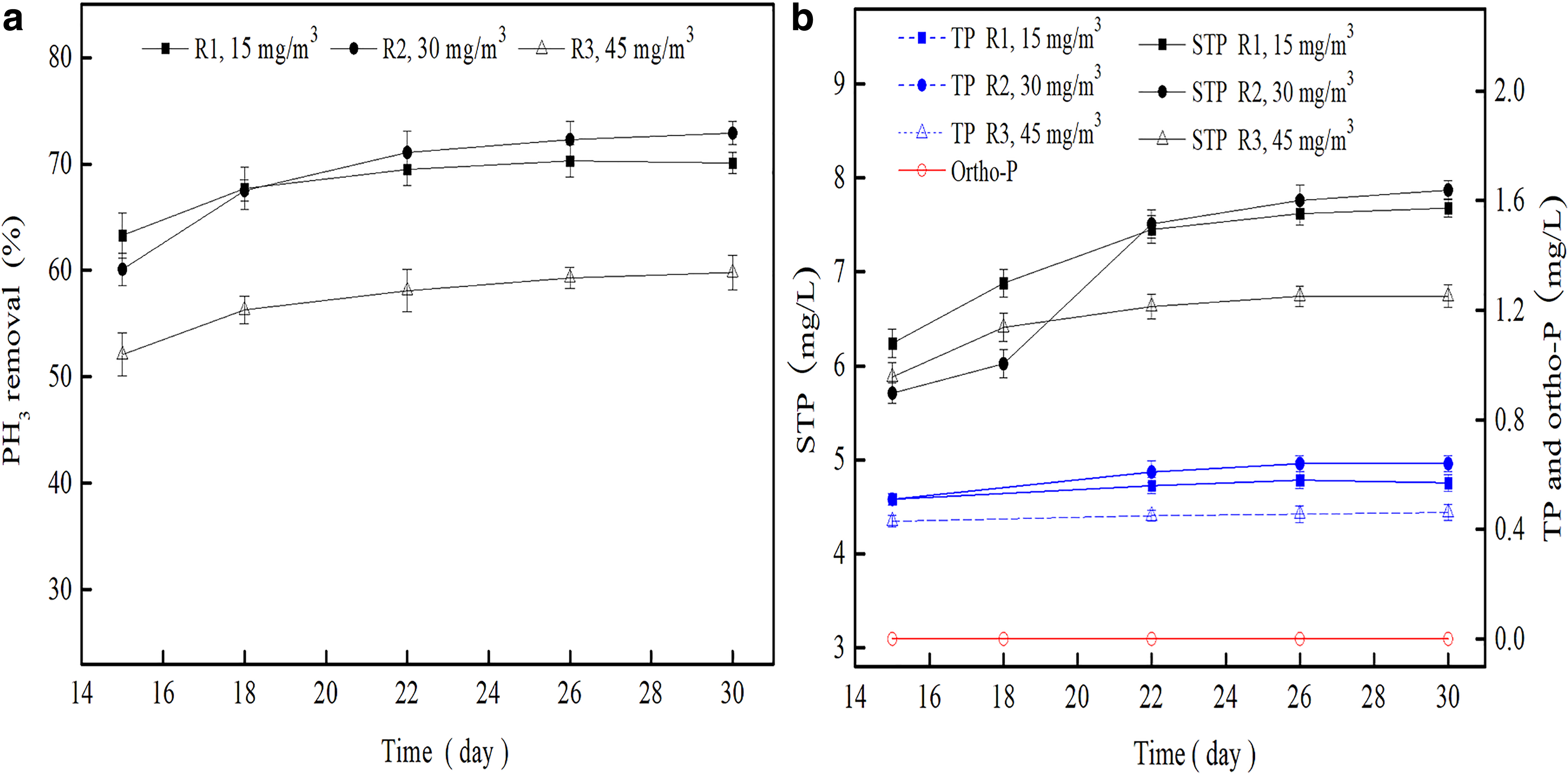
Variations of
The sludge mixture solutions from the three bioreactors were collected to determine STP content, and the supernatant was sampled to investigate the variations of TP and ortho-P. The STP in all bioreactors increased gradually since the start of biopurification. At the end of the experiment, the STP concentrations in R1, R2, and R3 were up to 7.68, 7.87, and 6.74 mg/L, respectively (Fig. 3b). Although R2 had a lower OD600 than R1, both maintained similar STP concentrations at 30 days. STP in the sludge mixture solutions were obviously higher than the phosphorus concentration of culture medium, and this result suggested that some of the TP in the bioreactor were derived from the bioconversion of gaseous PH3. During the whole operation, the TP in the supernatant was always <0.65 mg/L, and whereas ortho-P was too low to be detected, hypophosphite and phosphite were detected under most of conditions, for example, their concentrations in R1 at 30 days were 0.32 and 0.21 mg/L, respectively. The variations of phosphorus species indicated the PH3 biopurification is a complex biochemical process, and most of the converted phosphor shall enter microbial organisms through assimilation.
Oxidase activities
PH3 is a highly toxic chemical, and it shall result in the generation of superoxide radicals (Jeong Oh et al., 2018; Sheng et al., 2019), causing adverse effects on microbial activities. Thus, oxidase activities were determined to investigate the intrinsic correlation between PH3 concentration and biopurification efficacy. In this study, the SRT was 6 days, and three bioreactors were in the adaptive phase at the early stage of operation; therefore, oxidase activities were determined only after 15 days. Figure 4 presents the activities of SOD and CATase in the three activated sludge bioreactors. After the biopurification systems ran for 18 days, the SOD activity in each bioreactor maintained a relatively stable level. The PH3 concentration supplied to R3 was the highest, and R3 also obtained the maximum SOD activity among the three bioreactors, with a value of 0.33–0.36 U/mL during the operation time of 18–30 days. For R1, the PH3 concentration in inlet gas was 15 mg/m3, and the SOD activity fluctuated within the range of 0.15–0.17 U/mL after 18 days. It can be concluded that moderately raising PH3 concentration may result in higher SOD enzyme activity to respond to the potential oxidation stress.

Oxidase activity at different PH3 levels:
After 18 days, the operation parameters in the three bioreactors tended to be stable, and the activity of CATase in each bioreactor presented minor fluctuation (Fig. 4b). SOD activity in R3 was the highest (Fig. 4a), which can be explained by high PH3 concentration and strong PH3-induced oxidizing stress. However, R3 obtained lower CATase activity than the other two bioreactors during the stable operation period, which may cause hydrogen peroxide to accumulate because of insufficient decomposition of H2O2, and may impair cellular defense and eventually destroy the cell integrity (Liu et al., 2018a; Sheng et al., 2019). The variations of oxidase activity were also consistent with the fact that R3 obtained the lowest PH3 removal among three bioreactors.
Biopurification process
Two control reactors (R0 and R4) were designed to investigate the effects of functional microbes on PH3 removal. There were no microbes in R0, the culture medium was regarded as absorption liquid, and the continuous operation showed that the PH3 removal was only at 52.7% after 5 min of operation time, and it rapidly decreased to 0 after 12 min (Fig. 5). For R4, the chemical reagent NaN3 was added to the absorption system to inhibit microbial activity, the PH3 removal in this bioreactor decreased to 66.4% after 30 min, then gradually declined to 42.7% at 120 min, and reached 0 after 180 min, and the PH3 concentration in the outlet gas began to reach the same level as that in the inlet gas. It can be seen that while gaseous PH3 can be adsorbed by microbial organisms, its final conversion depends on microbial metabolism. This finding is also supported by the results of Chen et al. (2017) who found that PH3 can be adsorbed by soils, sediments, or other matrix to form matrix-bounded PH3.
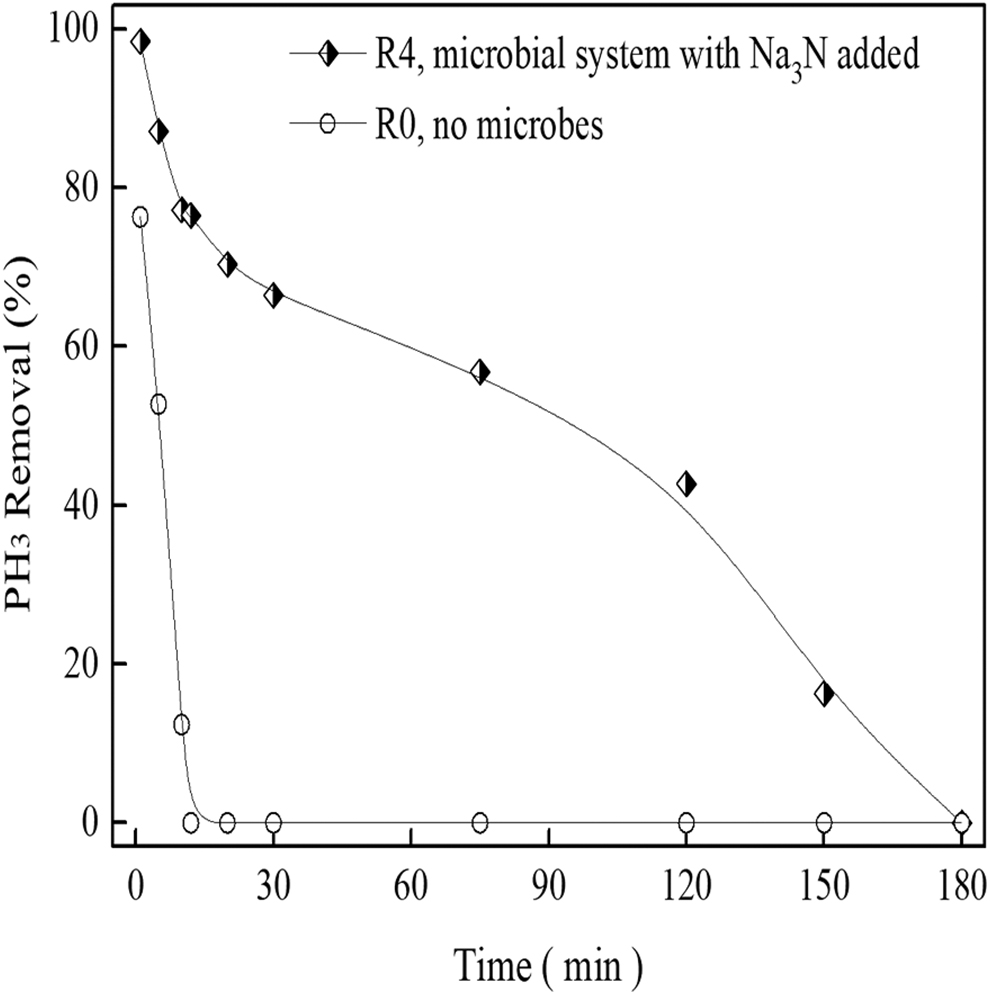
PH3 removals in control systems.
Based on the experiment results mentioned previously, a pathway of PH3 biopurification was proposed here (Fig. 6). When gaseous PH3 enters into activated sludge systems, it may be adsorbed by microbial flocs, and then the molecular PH3 can be oxidized to hypophosphite, phosphite, or phosphate through a series of biochemical processes (Matthew et al., 2014; Li et al., 2020). Only a small number of phosphorous compounds remain in absorption solutions, and most of these may be assimilated by microbes; thus, the TP in the supernatant only showed minor increases during the whole operation, and the STP in the sludge mixture solutions maintained relatively higher levels, for example, the STP in R2 reached 7.87 mg/L at 30 days (Fig. 3b).
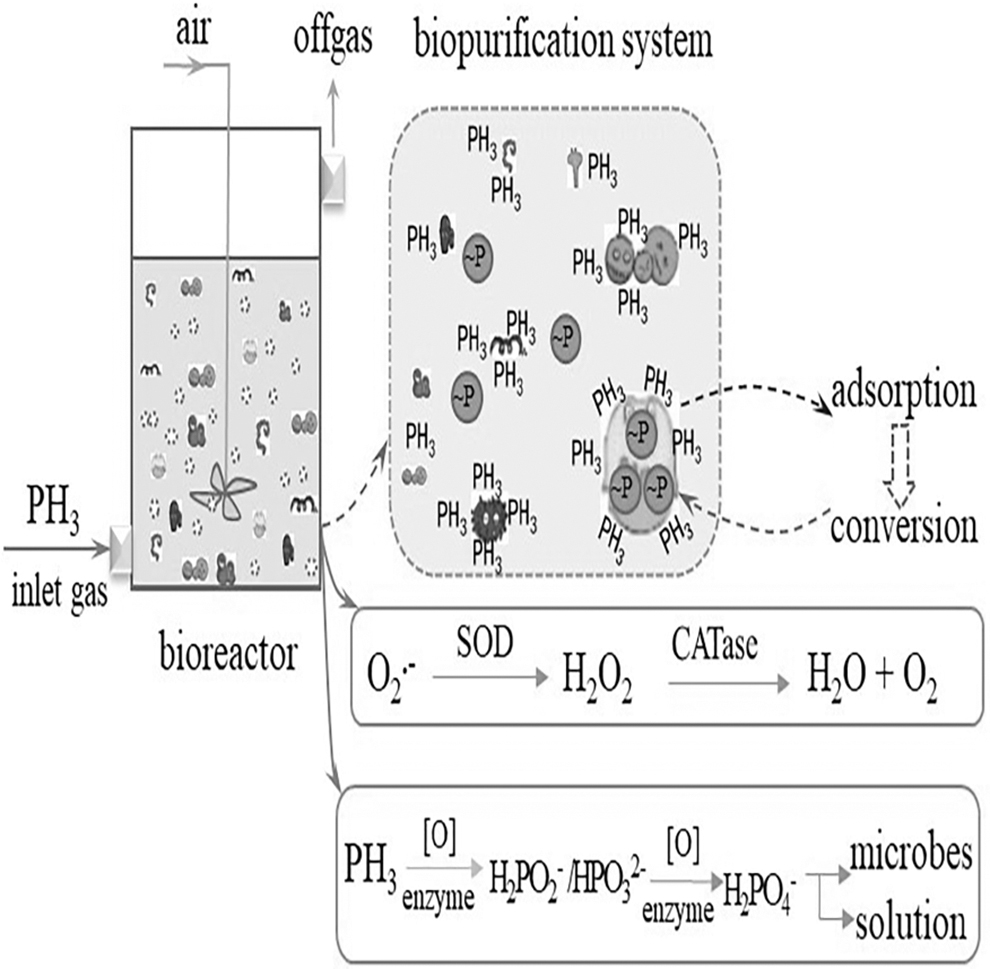
The proposed pathway of PH3 biopurification.
In the PH3 biopurification system, the enzyme oxidase plays a significant role for PH3 bioconversion. PH3 inhibits electron transport in vitro by interacting with cytochrome c oxidase (Jeong Oh et al., 2018), and the presence of PH3 results in the generation of superoxide radicals by interrupting the electron transport chain. At the same time, microbes possess a set of cellular defenses through enzymatic systems, including SOD, CATase, and other enzymes, to avoid oxidative damage by eliminating reactive oxygen and free radicals (Li et al., 2020; Sheng et al., 2019). SOD is an important antioxidant defense in nearly all living cells when exposed to oxygen, and is responsible for converting superoxide radicals into either ordinary molecular oxygen or hydrogen peroxide. On the one hand, the hydrogen peroxide derived from reactive oxygen species (ROS) can be decomposed to water and oxygen by CATase, protecting the cell from oxidative damage (Ni et al., 2015; Ighodaro and Akinloye, 2017), which increases microbial activity and promotes the biological purification for PH3 off-gas. On the other hand, hydrogen peroxide may lead to the generation of hydroxyl radical (
Microbial community
Illumina high-throughput sequencing was used to investigate bacterial diversity, and the primers 515F and 806R were adopted to amplify the hypervariable V4 region of 16S rRNA gene. Sequencing information, diversity index, and estimators of richness are summarized in Table 1. After filtering and removing potential erroneous sequences, the effective tags for samples A15, A30, and A45, derived from R1, R2, and R3 bioreactors, were 73553, 69450, and 72098, respectively. The Shannon index (H) values were in the range of 4.9–5.4, and Chao1 values were 589–642. R1 had higher OTU and Chao1 value than the other two bioreactors, mainly owing to the toxicity of gaseous PH3. As a whole, the observed species, Shannon index, and Chao1 values in three bioreactors R1, R2 and R3 were not very low, indicating that the PH3 biopurification system maintained relatively stable and complex microbial community after long-term domestication.
Sequencing Information in This Study
The samples A15, A30, and A45 were respectively obtained from R1, R2, and R3 bioreactors at the end of continuous operation (i.e., 30 days). The samples A15, A30, and A45 in Fig. 7 and Table 2 have the same meaning as Table 1.
OUT, operational taxonomic units.
Of the total sequences, Proteobacteria was the most abundant phylum for samples A15, A30, and A45 (Fig. 7), accounting for 64.6%, 53.9%, 53.5% of bacteria in each sample, respectively. Generally speaking, Proteobacteria is the largest phylum of bacteria. The genus of Burkholderia belongs to the family of Pseudomonadaceae and the phylum of β-Proteobacteria; Burkholderia is positive for CATase test, and most can oxidize glucose and produce varieties of metabolites such as pyoverdine, monoterpene alkaloids, cepaciamide A. As such, it is commonly used in the decomposition of toxic substances. In fact, the bacterium Burkholderia has been identified in biotrickling filter systems (Liu et al., 2018a). Firmicutes was another major phylum in the three bioreactors, and its abundance was never <12.9%. Firmicutes produces spores that can resist dehydration and allow it to survive in harsh environments; as such its presence in PH3 biopurification systems is not surprising.
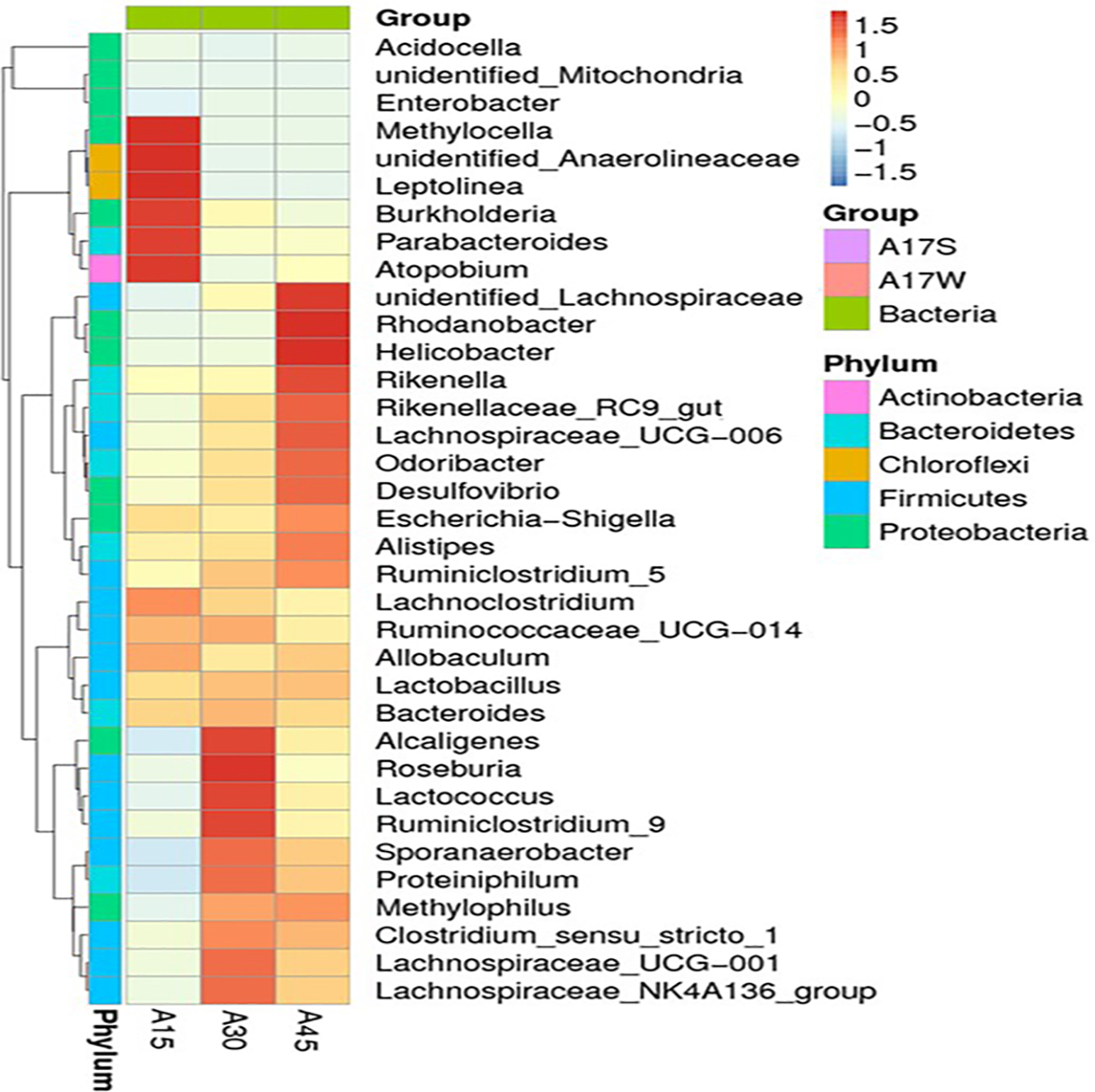
Heatmap of those major bacterial genera in PH3 biopurification systems.
For R1, R2, and R3, the genera Burkholderia and Methylophilus developed into dominant microbes, with a maximum abundance of 46.12% obtained by Burkholderia at A15 (Table 2). When PH3 concentration increased from 15 to 45 mg/m3, the abundance of Burkholderia presented a rapid decrease, whereas the percentage of Methylophilus increased. It can be seen from this that PH3 concentration has significant impacts on microbial community and species richness.
Percentage of the Sequences for Those Major Bacteria in Phosphine Biopurification Systems
From previous studies, it is known that many microbes in wastewater treatment system can remove biological phosphorus, and most of these belong to the genera Pseudomonas, Acinetobacter, Rhodocyclus, Enterobacter, or Bacillus (Cai et al., 2007). Furthermore, as biopurification technology is used to degrade refractory pollutants such as polychlorinated biphenyls, hexachlorocyclohexane, and antibiotics, typical strains, such as Burkholderia spp. (Goris et al., 2004), Rhodanobacter spp. (Gebreil and Abraham, 2016), Enterococcus spp. (Daniel et al., 2015), or Parabacteroides spp. (Nakano et al., 2011) are likely to occur in the microbial flora. Therefore, it is not strange that many kinds of microbes, including Burkholderia, Pseudomonas, Enterobacter, Rhodanobacter, Enterococcus, and Parabacteroides, appeared in the PH3 biopurification system. However, when the PH3 inlet gas was at a concentration of 30 mg/m3, adverse effects on microbial activity presented and resulted in a relatively low OD600 (Fig. 2a), whereas the PH3 removal in the bioreactor was also up to 72.9% (Fig. 3a). It can be concluded that the complex microbial community may facilitate the PH3 biodegradation.
Conclusions
PH3 with a concentration of 30 mg/m3 was continuously supplied to an activated sludge system, and the PH3 removal in this bioreactor reached 72.9%. For activated sludge systems, gaseous PH3 may be adsorbed by microbial flocs. Subsequently, the molecular PH3 can be oxidized to other phosphorous compounds through a series of biochemical processes. The activities of oxidase such as SOD and CATase have significant effects on PH3 bioconversion, and the PH3 removal mainly depends on the biochemical metabolism of aerobic microbes. The total phosphate in the supernatant was <1.0 mg/L, and the discharged wastewater may not bring about secondary phosphorus pollution in water bodies.
The PH3 biopurification system maintained a relatively complex and diverse microbial community composition after long-term acclimation, and those microbes, such as Burkholderia, Rhodanobacter, Pseudomonas, or Parabacteroides presented in the activated sludge system, may facilitate PH3 biodegradation. There are relatively few reports on functional microbes in PH3 biodegradation systems, and subsequent investigations on isolation and identification of PH3-degrading bacteria should be further studied.
Footnotes
Author Disclosure Statement
No competing financial interests exist.
Funding Information
This work was financially supported by the National Natural Science Foundation of China (No. 51868029).