




Abstract
Researches on the removal and regeneration of phosphate from rivers and industrial wastewater have been accelerated gradually due to eutrophication and global phosphorus scarcity. Herein, magnetically recyclable carbon nanofiber (CNF) adsorbents were rationally designed by the coprecipitation method. Based upon preliminary filtering of magnetic CNFs with different Fe-to-CNF mass ratios in the aspect of phosphate sorption capacity, magnetic CNFs with an Fe-to-CNF mass ratio of 2:1 were selected to explore characterization and phosphorous adsorption performance further. Numerous adsorption experiments exhibited that magnetic CNF (Fe3O4-CNF2) adsorbent showed a preferable phosphate uptake capacity of 7.26 mg P/g, a prompt sorption kinetic, strong interference immunity in the presence of low concentrations of anions, and an optimum range of pH (3–6). Furthermore, magnetic CNF (Fe3O4-CNF2) adsorbent exhibited an excellent sorption performance in a secondary wastewater effluent. A 0.5 g/L of this adsorbent could reduce phosphate consistence from 0.95 to 0.05 mg P/L. In addition, exceeding 80% of initial phosphate uptake capacity could be preserved after five continuous regeneration cycles. This consequence showed the outstanding regenerative performance of Fe3O4-CNFs2. Fourier transform infrared spectroscopy, X-ray photoelectron spectroscopy, and X-ray powder diffraction spectroscopy were used to reveal the phosphate adsorption mechanism, including surface precipitation and electrostatic attraction. Those developments are expected to have a far-reaching meaning for urban sewage treatment and eutrophic river.
Introduction
Phosphorous is a fundamental factor affecting the environmental quality of water bodies and an essential element in cellular composition (Hao et al., 2018). Industrial and agricultural runoff is the main source of excess phosphorus in water. Phosphorus pollution needs to be solved urgently because of limited advanced wastewater treatment technologies. There are plenty of conventional methods, such as biological processes, chemical precipitation, and ion-exchange. The biological processes are the most commonly applied because ammonia, phosphorus, and biological oxygen demand can be removed simultaneously by these processes (Kajjumba et al., 2019). Biological methods needed special care and rigid control (e.g., organic extent, nitrate and ammonium, water temperature) (Zheng et al., 2014).
Adsorption has been utilized for phosphate removal in the industrial wastewater according to its advantages of effectiveness and reliability (Loganathan et al., 2014). However, rapid and effective separation was considered a restrictive factor in practical application, such as activated carbon and industrial by-products. It was worth mentioning that magnetic separation might address this issue excellently ascribed to the properties of separating adsorbents effectively and conveniently in wastewater compared with sophisticated membrane filtration. Composites of iron and other carriers were necessarily studied.
Cellulose is one of the best candidates because there is a large amount of cellulose on the Earth, which is safe and a wide range of sources. Some researches indicated that it can function as the adsorbent due to adsorptive properties (Ma et al., 2011; Liu et al., 2015). In recent years, researchers have been working on the preparation of nanosorbents on account of the high surface area of nanomaterials (Abdelrahman and Hegazey, 2019; Abdelrahman et al., 2019). Therefore, nanofiber adsorbent is worthy to be explored in the actual application because of few studies in these aspects.
Consequently, the main objectives of this work are twofold: (1) utilize magnetic carbon nanofibers (Fe3O4-CNFs2) to handle phosphorus-containing wastewater efficiently; and (2) elaborate underlying phosphorus adsorption mechanisms according to the consequences of batch experiments (e.g., influences of pH and coexisting anions), spectroscopic investigations (field emission scanning electron microscopy, energy-dispersive spectroscopy [EDS], energy dispersive X-ray photoelectron spectroscopy [XPS], Fourier transform infrared spectroscopy [FTIR], X-ray powder diffraction spectrometer [XRD]), and vibrating sample magnetometer (VSM). Corresponding results would have a better understanding of CNF materials (such as magnetic CNFs) in the aspect of removing phosphate. These magnetic CNFs would increase the effectiveness of the wastewater treatment.
Materials and Methods
Materials
The purity of Na2CO3, Na2SO4, NaNO3, KH2PO4, FeCl3▪6H2O, FeSO4▪7H2O, and NaOH used in this study was analytical reagent (AR). CNFs were purchased from Chengdu Jiacai Technology Co., Ltd. Distilled water (DW) was used to configure all solutions.
Preparation of the adsorbents of magnetic CNFs (Fe3O4-CNFs)
CNFs were washed by DW and cut into 4 × 2 mm pieces. Then, they were washed with DW several times to remove the impurities. Since Fe2+ is easily oxidized, the molar ratio of Fe3+ to Fe2+ is 1:1. After that, ∼1.1674 g of FeCl3▪6H2O and 1.2007 g of FeSO4▪7H2O (a molar ratio of 1:1) were well dissolved into DW (100 mL). CNFs, 0.5 g, were added to the mixed solution and stirred at 60°C for 30 min. One molar NaOH was used to adjust the mixed solution to pH 11.0 and then 0.25 g trisodium citrate was added to the mixed solution. All samples were incubated at 80°C for 1 h, followed by cooling them to room temperature. Magnetic CNFs were washed several times with DW and ethanol until the filtrate became nearly neutral. Finally, samples were dried at 60°C overnight. The Fe3O4-CNFs with various mass ratios between Fe and CNFs of 0.5:1, 1:1, 2:1, and 5:1 were synthesized and named as Fe3O4-CNFs0.5, Fe3O4-CNFs1, Fe3O4-CNFs2, and Fe3O4-CNFs5, respectively.
Characterization of adsorbents
Scanning electron microscopy (SEM) was taken on an instrument equipped with EDS accessory. The composition of adsorbents was examined by using energy dispersive XPS (Thermo Scientific K-Alpha), all spectra were calibrated using the C1s signal located at 284.80 eV. A VSM (Lake Shore 7404) with external magnetic field intensity of 10,000 Oe was used to inspect the magnetic properties of adsorbents. The functional groups of sorbents were revealed by using an FTIR spectrometer (Thermo Scientific Nicolet iS5) in the range of 4,000–450 cm−1. The crystalline structures of adsorbents were discussed using a XRD (Rigaku Ultima IV) equipped with Cu Kα radiation for 2θ ranging from 5° to 80°. The actual contents of Fe in each sample were determined using an inductively coupled plasma optical emission spectrometer (ICP-OES).
Batch adsorption experiments by magnetic CNFs (Fe3O4-CNFs2)
According to the Chinese National Standard Water Quality Determination of total phosphorus-ammonium molybdate spectrophotometry method (GB 11893-89), 0.2197 ± 0.001 g of anhydrous KH2PO4 was dissolved in DW to obtain 50 mg/L phosphate solution, and then, we could prepare different concentrations of solution by diluting the mother solution. Throughout the test, the concentration of phosphate was determined with the UV-754N spectrophotometer (INESA). All phosphates determined in this work were orthophosphate unless otherwise specified.
Adsorption kinetics
To evaluate the adsorption kinetics, 0.05 g of Fe3O4-CNFs2 was added to 100 mL phosphate solution (2 mg P/L) in a flask. The obtained mixture was shaken in a constant temperature shaker for 8 h at a shaking rate of 230 rpm. Finally, the adsorption capacity at equilibrium time (qe, mg/g) during the phosphate adsorption process was calculated by Equation (1) (Liao et al., 2018):
where C0 and Ce (mg P/L) were the phosphate concentrations at the initial and equilibrium status, respectively. V (L) represented the bulk of the phosphate solution. m (g) was the quantity of adsorbent.
The phosphorus uptake efficiency was taken by the following Equation (2):
The pseudofirst-order [Eq. (3)] and pseudosecond-order [Eq. (4)] kinetic models were applied to fit the curve according to the adsorption experimental data (He et al., 2017; Feng et al., 2020):
where qe and qt (mg/g) were the phosphorus uptake capacity at equilibrium and a specific time t, respectively. The k1 (min−1) and k2 (g/[mg·min]) were the adsorption rate constants of the pseudofirst-order and pseudosecond-order kinetic models, respectively.
Adsorption isotherms
The adsorption isotherm about phosphorus capacity by Fe3O4-CNFs2 can be analyzed by releasing 0.05 g of Fe3O4-CNFs2 in 100 mL phosphate solutions with different primary concentrations (1, 2, 4, 6, and 8 mg P/L) in a flask. Those solutions were shaken at three different temperatures (25°C, 35°C, and 45°C) for 24 h. In addition, the phosphorus adsorption equilibrium data can be indicated by Langmuir [Eq. (5)] and Freundlich [Eq. (6)] isotherm models (Ning et al., 2008; Ozcan et al., 2009), as shown below:
where qm (mg P/g) represented the maximum Langmuir capacity, and KL (L/mg) presented the Langmuir adsorption constant. Ce (mg P/L) was the equilibrium concentration in phosphate solution. Kf (mg/g) was the Freundlich constants associated with uptake capacity, and n was the adsorption intensity in the Freundlich model.
Effects of initial solution pH
Considering the influence of solution pH in the process of phosphate adsorption, 0.05 g of Fe3O4-CNFs2 was added to 100 mL solution within pH ranging from 3.0 to 11.0 at 25°C ± 1°C when the solution concentration was 2 mg P/L. The pH value was altered by dosing 1 mol/L HCl or NaOH. After adsorption, 0.45 μm membrane filters were used in all samples before measurement.
Effects of coexisting anions
The effect of coexisting anions in the course of phosphate adsorption was performed by adding 0.05 g Fe3O4-CNFs2 in 100 mL of 2 mg P/L solution, which contained 0.01 or 0.10 mol/L coexisting anions (CO32−, NO3−, and SO42−).
Adsorbent regeneration
To test phosphate adsorption/desorption cycles of Fe3O4-CNFs2, 0.050 g of Fe3O4-CNFs2 was added into 100 mL of 2 mg P/L solution under the condition of 24-h shake at 25°C ± 1°C. After that, Fe3O4-CNFs2 were collected and then dried at 80°C. In the desorption experiment, 100 mL of 1 mol/L NaOH solution was applied to treat this substance at 85°C ± 1°C for 18 h. We could calculate the desorption efficiency of phosphate through the ratio of the desorbed phosphate to the adsorbed phosphate. After desorption, this adsorbent was washed to neutrality by DW and dried in the oven. After completing the above operations, the adsorbent was applied to the next adsorption. The reusable performance of the regenerated adsorbent was evaluated by performing five continuous adsorption/desorption recycle experiments.
Results and Discussion
Effects of Fe3O4-to-CNF mass ratio on phosphate uptake
The phosphate removal efficiency of CNFs, Fe3O4-CNFs0.5, Fe3O4-CNFs1, Fe3O4-CNFs2, and Fe3O4-CNFs5 is compared in Fig. 1. As shown in Fig. 1, the sorption of phosphate by Fe3O4-CNFs increased distinctly as Fe3O4- to-CNF mass ratio increased from 1:2 to 2:1, then the phosphate removal efficiency decreased. This is likely due to the gradually increasing Fe amounts in the Fe3O4-CNF sorbents and the adsorbent load is not complete when the iron content is too high. The adsorbent phosphate removal efficiency of Fe3O4-CNFsx was all higher than CNFs (6.3%). As can be seen in Fig. 1, the phosphate sorption capacity accelerated continuously when Fe contents in nanocomposites increased gradually, suggesting that the Fe compound functioned as the main active site for phosphate binding. Among the Fe3O4-CNFsx, Fe3O4-CNFs2 had the best phosphate adsorption capacity. Taking adsorption capacity into consideration, Fe3O4-CNFs2 were applied for detailed study in terms of phosphorus removal.
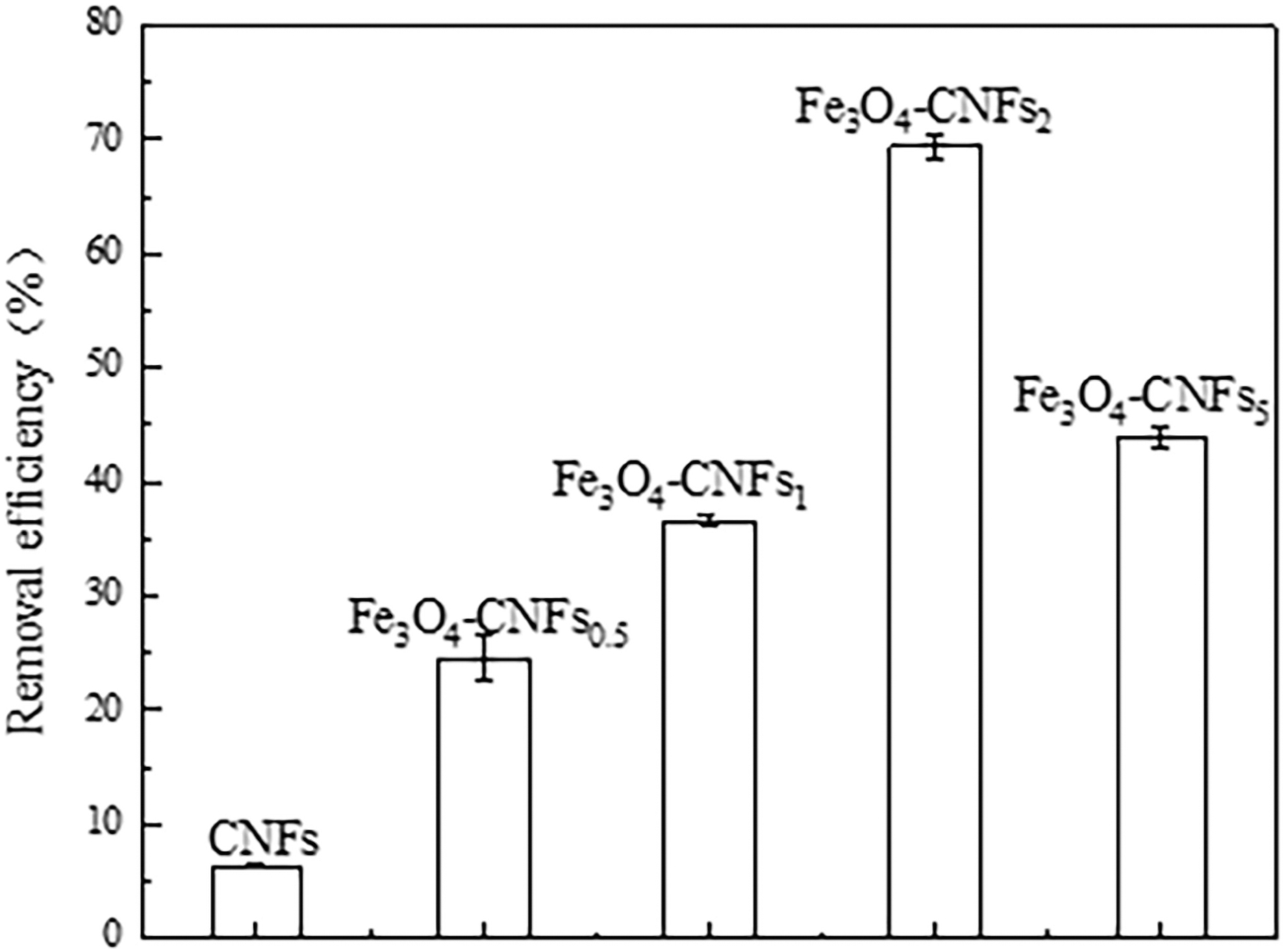
Phosphate removal efficiency for CNFs, Fe3O4-CNFs0.5, Fe3O4-CNFs1, Fe3O4-CNFs2, and Fe3O4-CNFs5 in the solution with an initial phosphate concentration of 2 mg P/L. CNFs, carbon nanofibers.
Characterization of magnetic CNFs (Fe3O4-CNFs)
SEM micrographs in Fig. 2 depicted an extremely regular fibrous channel appearing in CNFs and its surface was smooth. As demonstrated, surfaces of all magnetic CNFs were entirely different from that of original CNFs. Fe3O4 particles were deposed on CNFs homogeneously. The iron oxide loaded on the surface of the carbon fiber can adsorb more phosphorus. Elemental distribution mapping (EDS) (Fig. 3) further confirmed that composites were modified successfully. The representative elements (Fe) of Fe3O4 were clearly observed and were concentrated all over the CNF structure. The corresponding EDS spectra apparently revealed that magnetic CNFs had high peaks for C and O, while additional peaks for Fe were detected for magnetic CNFs.
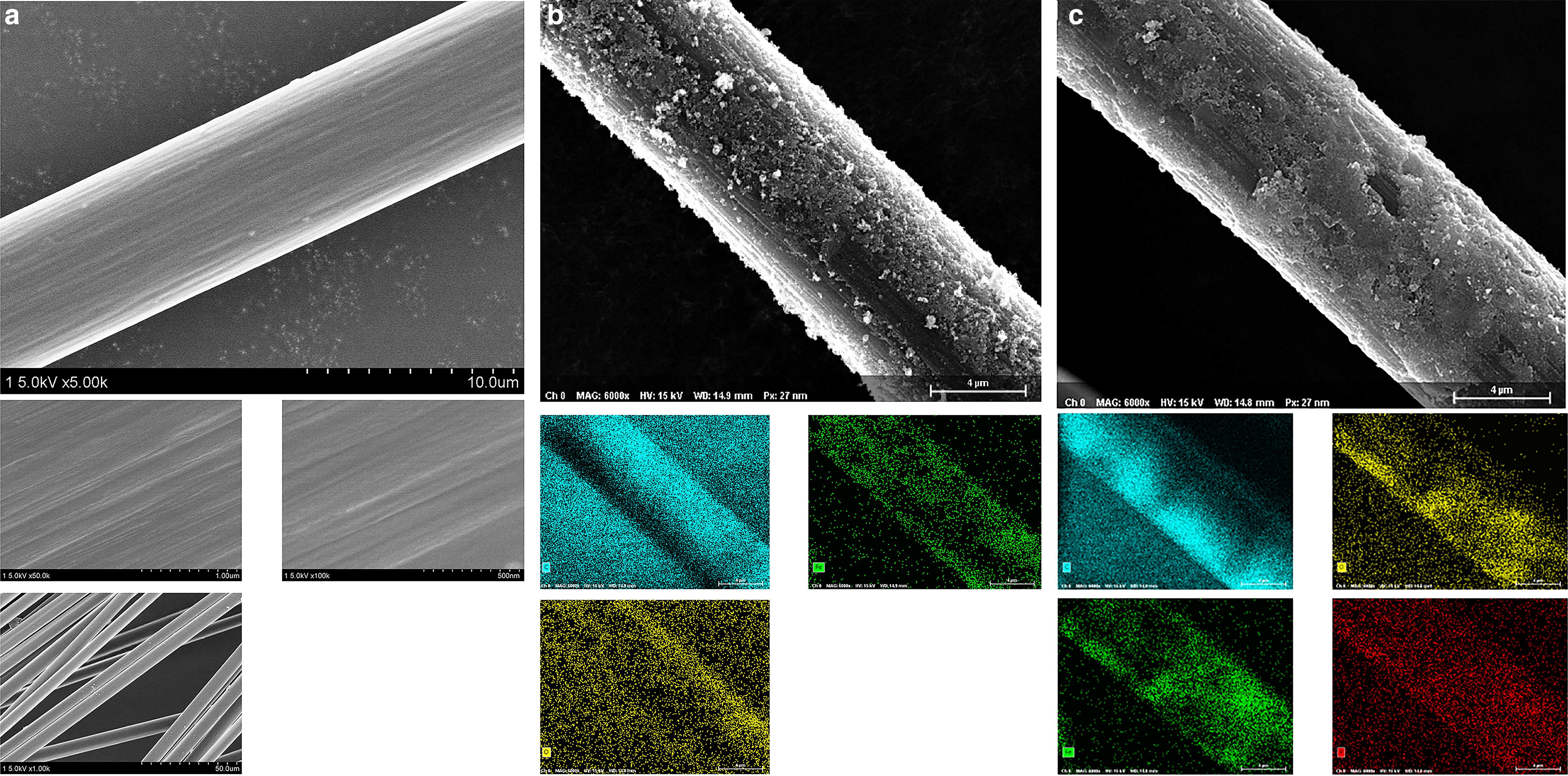
SEM images of
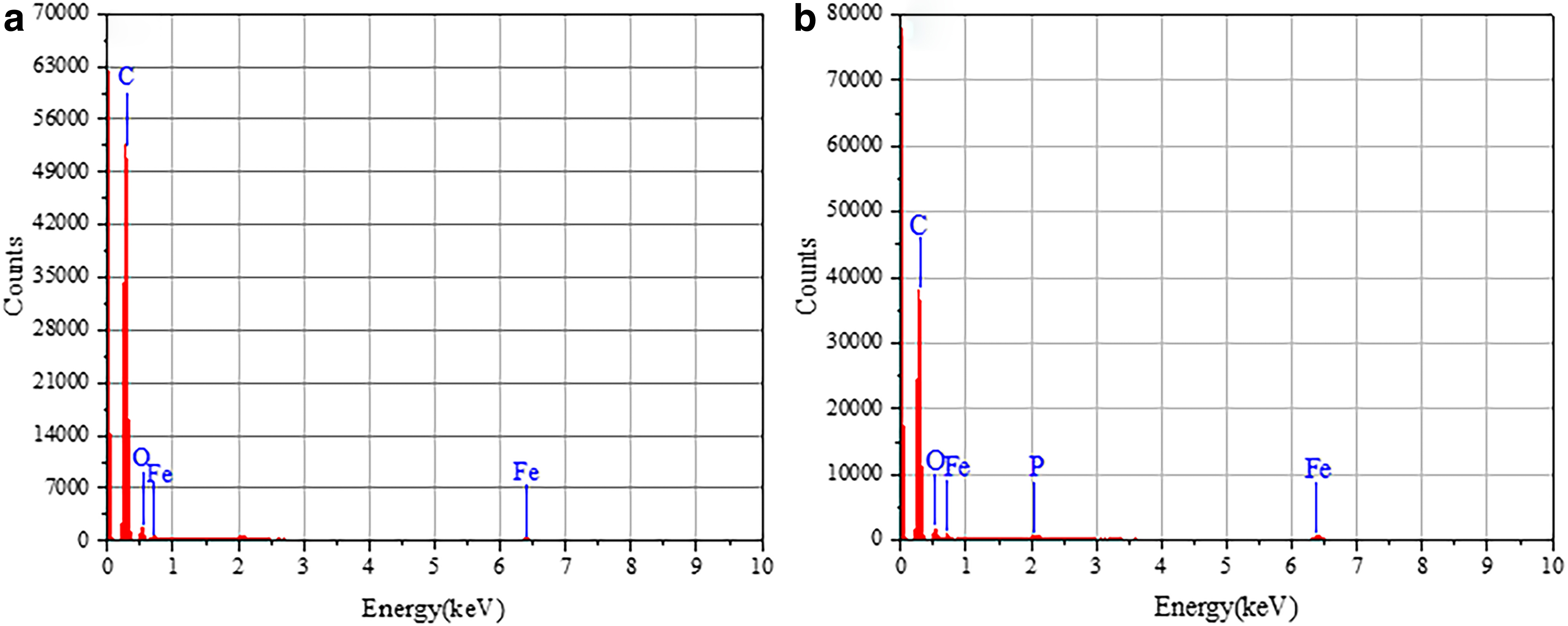
EDS spectra of samples
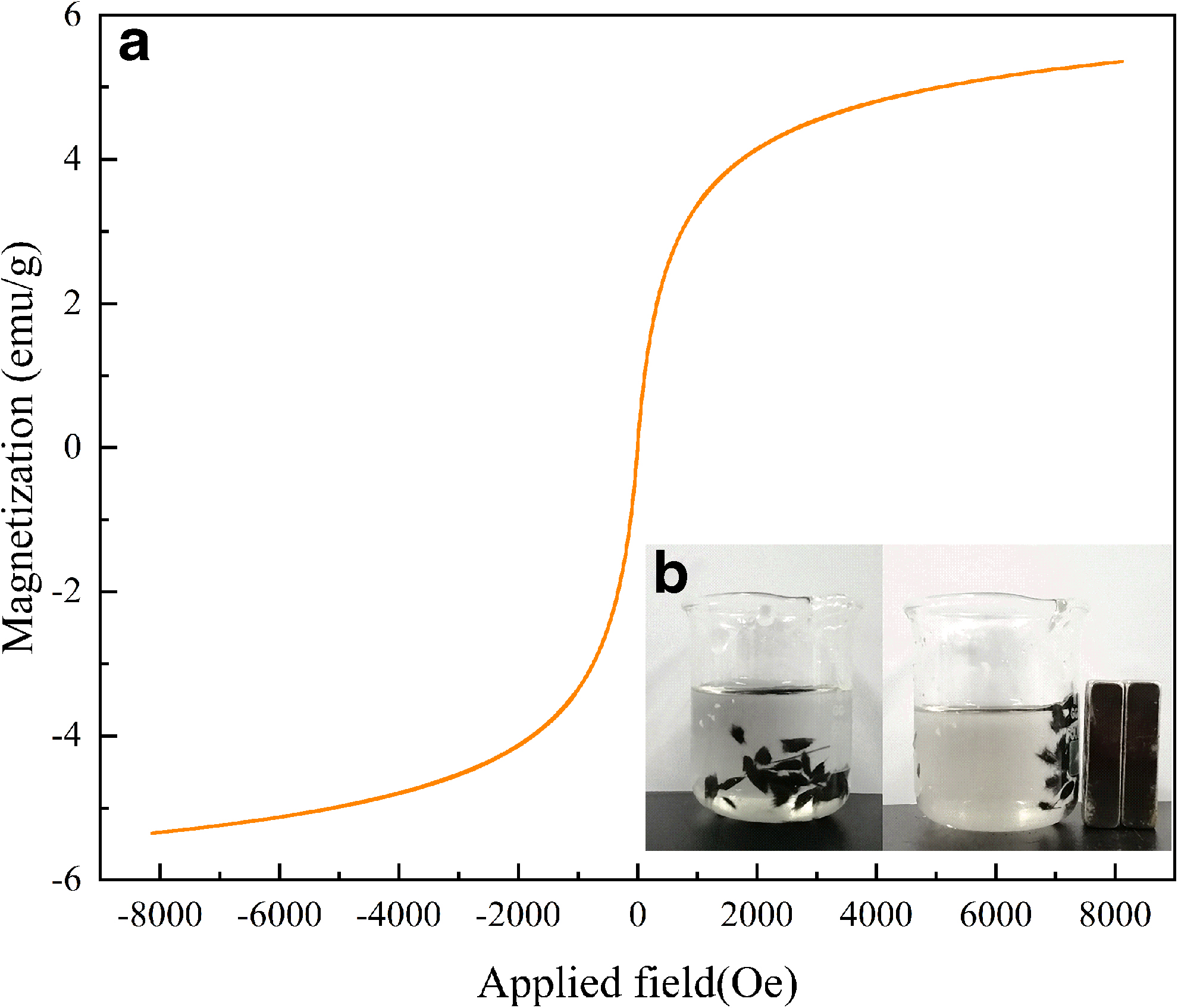
VSM was accustomed to measure the magnetic properties of Fe3O4-CNFs2 at room temperature. Figure 4 shows the magnetic hysteresis loop of Fe3O4-CNFs2. Figure 4a indicates that this substance was a type of super magnetism because the coercivity (Hc) of Fe3O4-CNFs2 was close to zero (Zeng et al., 2009). The magnetization gradually increased with the increase of the external magnetic field and saturation magnetization (Hs) was 5.36 emu/g. Figure 4b shows that the magnetic material gathered around the magnet and could be quickly separated from the solution under the action of an external magnetic field.
Further ICP-OES measurements indicated that the Fe content of Fe3O4-CNFs0.5, Fe3O4-CNFs1, Fe3O4-CNFs2 and Fe3O4-CNFs5 was 20.61%, 30.77%, 35.26%, and 31.25%, respectively. When the initial iron ion concentration was too high during the preparation process, the iron ion could not be completely loaded on the CNFs. This assumption could explain the phosphate sorption capacity of various adsorbents.
Phosphate sorption by magnetic CNFs (Fe3O4-CNFs2)
Adsorption kinetics
The sorption experimental study of time influence was taken to evaluate rates of phosphate sorption of magnetic CNFs (Fe3O4-CNFs2). As shown in Fig. 5, magnetic CNF (Fe3O4-CNF2) adsorbent performed a fast sorption kinetic, the sorption equilibrium could be reached within 300 min, and over 80% of phosphate was removed. Phosphate was difficult to be captured from an aqueous solution to sorbent owing to inadequate active sites with the increase of preliminary concentration. However, contact time was only 5 h when the adsorption reached equilibrium in 2 mg P/L solution by 0.5 g/L sorbent, which is shorter than plenty of previously reported Fe-based sorbents such as Fe(OH)3@CNFs (Luo et al., 2019) (nearly 11 h).

Phosphate adsorption efficiency. Experimental conditions for 2 and 4 mg P/L, 0.5 g/L of sorbent dosage, pH 7.0 ± 0.1, contact time 0–480 min.
The pseudofirst-order and the pseudosecond-order kinetic models were used to fit the adsorption kinetic data, and the major fitting parameters are shown in Table 1. The pseudosecond-order kinetic model (Fig. 6) generated a higher correlation coefficient (R2) of 0.9866 than the pseudofirst-order kinetic model (R2 = 0.9433), suggesting that chemical adsorption could play a significant role in the phosphorus uptake process.

Phosphate adsorption kinetics:
Parameters for the Adsorption Kinetics Model of Magnetic Carbon Nanofibers (Fe3O4-CNFs2)
Adsorption isotherms
In consideration of the possible sorption mechanism and evaluating the maximum phosphate sorption capacity of magnetic CNF (Fe3O4-CNF2) sorbents, adsorption isothermal experiments were performed according to the initial phosphate concentration. To minimize the respective error functions, Langmuir and Freundlich models (Tran et al., 2017) were used to fit the experimental isotherm data.
As displayed obviously in Fig. 7, phosphate adsorption by magnetic CNF (Fe3O4-CNF2) sorbents increased constantly when the initial phosphate concentration was added little by little and then gradually arrived at the maximum adsorption capacity of 7.26 mg P/g, outshining CNFs (Yao et al., 2011). The Freundlich and Langmuir models were used to make the adsorption isotherms data curve with the related parameters, illustrated in Table 2. With regard to R2 values, the Langmuir model (R2 = 0.9496, 0.8911, 0.9970) is more adaptive for describing the phosphorus adsorption mechanism onto magnetic CNF (Fe3O4-CNF2) sorbents than that of the Freundlich model (R2 = 0.9873, 0.7394, 0.9930), implying that the distribution of active sites on magnetic CNF (Fe3O4-CNF2) sorbents was uniform and the phosphate sorption mode was monolayer. Table 3 lists the adsorption capacity of different magnetic adsorbents and it could conclude that Fe3O4-CNFs2 had better adsorption capacity toward phosphate compared with the other modified sorbents when adsorbents tested under the same condition.
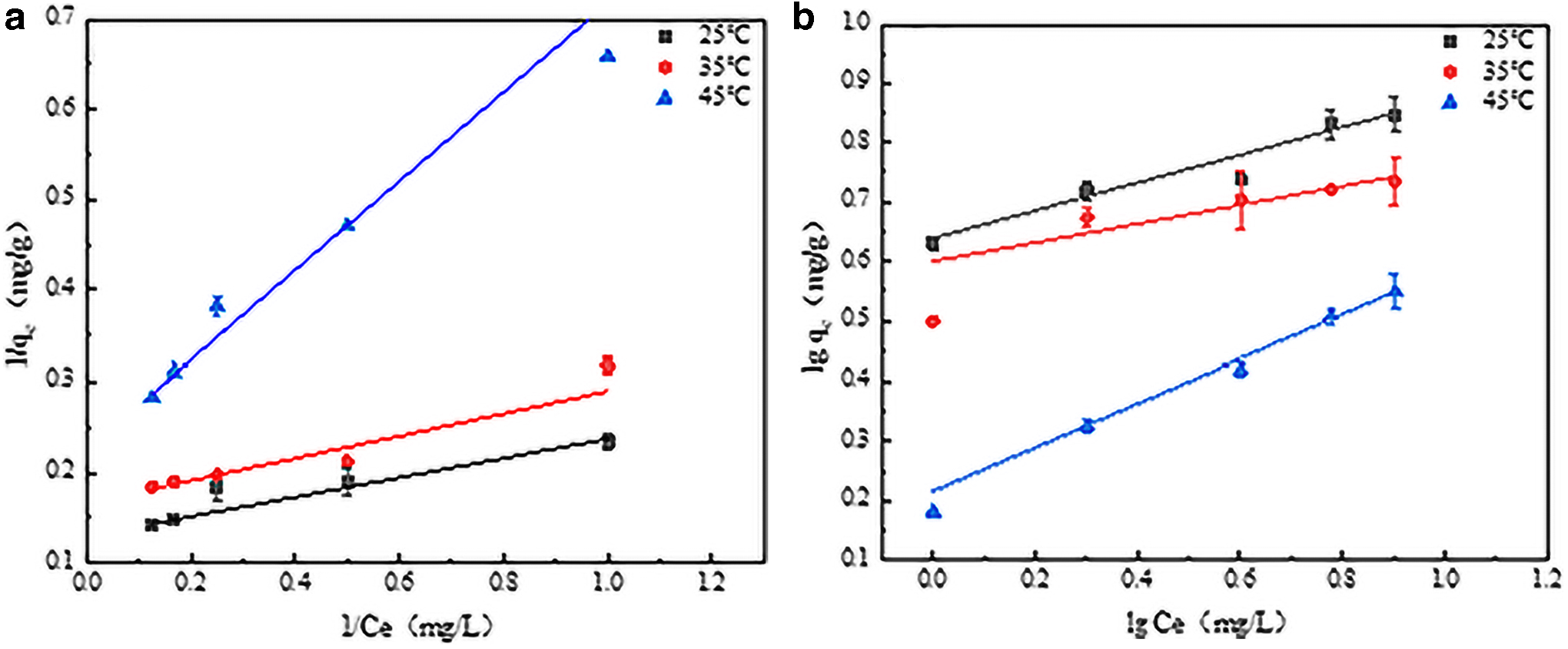
Phosphate adsorption isotherms:
Parameters for the Adsorption Kinetics Model of Magnetic Carbon Nanofibers (Fe3O4-CNFs2)
The Comparison of Phosphate Adsorption Capacity of Different Adsorbents
Effects of initial solution pH
Taking account of factors affected by pH (surface charges of Fe3O4-CNFs2 and existing species of phosphate in different pH solutions), sorption experiments were taken to explore the influence of initial solution pH on phosphorus uptake when the pH ranged from 3.0 to 11.0. In Fig. 8, initial solution pH made evident influence on phosphate sorption by magnetic CNF (Fe3O4-CNF2) sorbents. Specifically, in the acid condition (3.0–5.0), phosphate uptake efficiency by this magnetic nanocomposite enhanced step by step. With a further pH increasing from 5.0 to 11.0, phosphate adsorption by magnetic CNF (Fe3O4-CNF2) sorbents dropped dramatically. In general, pH has an effect on phosphorus adsorption.
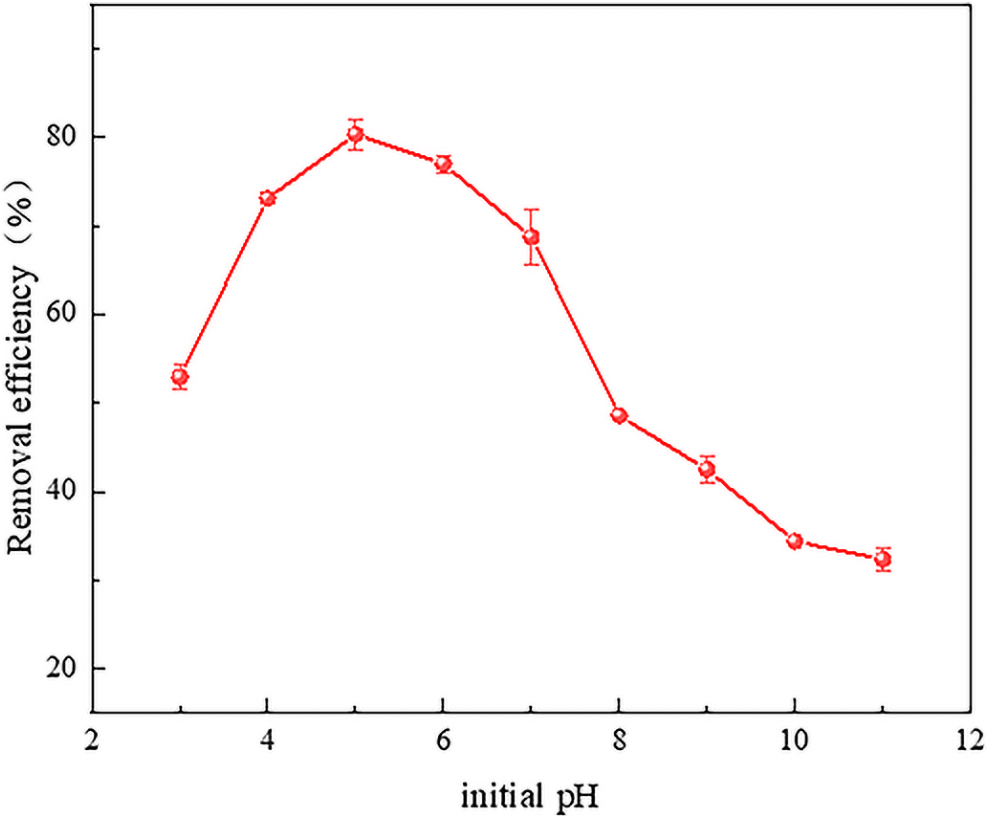
Effects of initial solution pH. Experimental conditions for 2 mg P/L, 0.5 g/L, pH 3.0–11.0, 25°C, 24 h.
This could have been explained by two reasons. One was that pH influenced the surface charge of magnetic CNFs (Fe3O4-CNFs2). The other was that pH had the impact on the ionization state of phosphate in the aqueous solution. The reaction of phosphate dissociation in the aqueous medium could be stated as the following equation (Ajmal et al., 2018):
Under highly acidic condition (pH 3.0), phosphate existed as H3PO4 molecule that was electrically neutral, which rejected the uptake of phosphate through electronic interaction. With the pH ranging from 3.0 to 5.0, monovalent H2PO4− played a dominant role. Magnetic CNF (Fe3O4-CNF2) sorbent surface was positively charged because active groups indicated protonation and facilitated the phosphate uptake quickly through electrostatic attraction. When the solution pH was above 5, we could witness an increasing portion of HPO42−, which was lower sorption affinity. This result illustrated that protonation of sorbent trended to alleviate, resulting that phosphate sorption capacity was a slight decrease.
The experimental statistics in Fig. 9 illustrated that the pHpzc of magnetic CNFs (Fe3O4-CNFs2) was calculated as 7.07 through the pH drift method (Nasiruddin Khan and Sarwar, 2007). When pH is below pHpzc, the surface charge on magnetic CNFs (Fe3O4-CNFs2) would appear positive and H2PO4− (dominant species) was likely to be attracted by Fe3O4-CNFs2 (Harijan and Chandra, 2017). However, the adsorbent would become a negative charge at pH > pHpzc and the electrostatic repulsion between Fe3O4-CNFs2 and phosphate would accelerate (Paltrinieri et al., 2017). Moreover, the presence of excess amount of OH− would occupy the adsorption sites, thereby resulting in a lower phosphate removal efficiency under alkaline conditions.
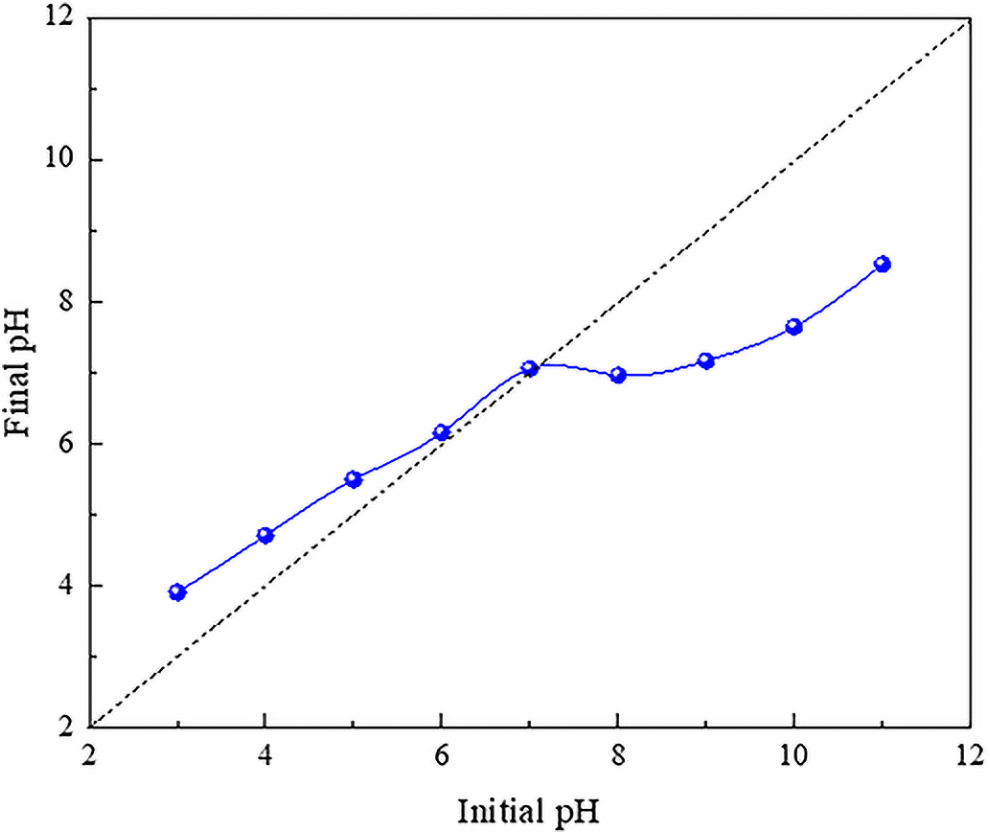
Point of zero charge of magnetic CNF (Fe3O4-CNF2) adsorbents by pH drift method.
Effects of coexisting anions
Considering that natural water bodies and industrial wastewaters exist interfering substances, where plenty of coexisting anions may reduce phosphate adsorption capacity via contending active sites, it is urgent to inspect the selectivity of magnetic CNFs (Fe3O4-CNFs2) for phosphate uptake (Awual, 2019). Hence, three kinds of common anions (i.e., SO42−, NO3−, and CO32−) and two different concentrations of anion were researched in the sorption experiments. As presented in Fig. 10, introducing exogenous anions had no or minimal effect on phosphate uptake by magnetic CNF (Fe3O4-CNF2) sorbents. It may be the main reason for specific selectivity that there is specific binding between Fe and phosphate because of high affinity toward each other. Besides, owing that the increment of coexisting anion concentrations barely affected the process of the phosphate uptake by magnetic CNF (Fe3O4-CNF2) sorbents, it was speculated that inner-sphere complexes formed between phosphate and Fe3O4-CNFs2 via ligand exchange. The influence of phosphate removal efficiency made the difference with the increase in ion strength (Nakarmi et al., 2020). Overall, such a preferable selectivity of the concerned magnetic CNF (Fe3O4-CNF2) sorbent could further favor its practical utilization for urban sewage treatment and eutrophic river.
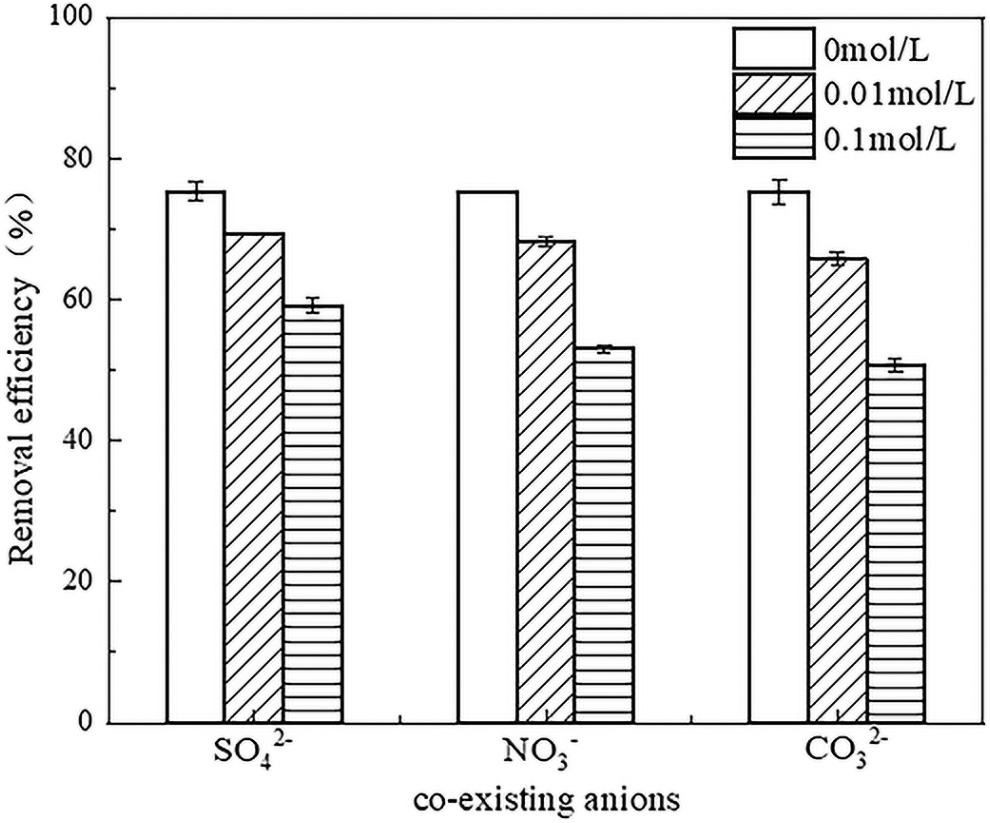
Effects of coexisting anions. Experimental conditions for 2 mg P/L, 0.5 g/L, pH = 7 ± 0.1, 24 h.
Desorption and regeneration of magnetic CNFs (Fe3O4-CNFs2)
From a practical viewpoint, it is of crucial importance for sorbent to determine the lifetime. The duration can be increased by reusing it multiple times. The reusability of magnetic CNF (Fe3O4-CNF2) sorbents can be explored by five successive adsorption cycles. From Fig. 11 it can be seen that, compared with fresh sorbent, nearly 80% of phosphate sorption capacity was still held after five desorption cycles. This consequence showed that this adsorbent had a strong reusability. Some irreversible and useless sorption sites were the main reason for the declining sorption capacity because a strong chemical bond between phosphate and Fe was formed. Nevertheless, the magnetic CNF (Fe3O4-CNF2) sorbent still showed favorable application potential in terms of effective removal and recovery of phosphate in aqueous solution.
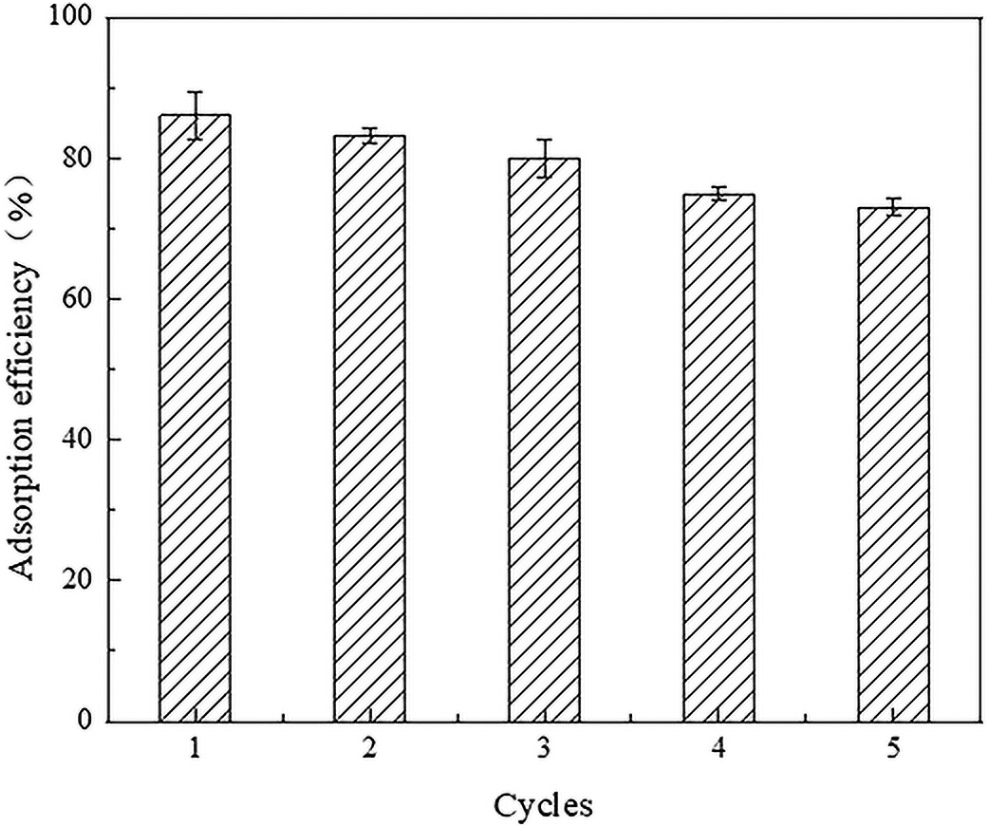
The reusability of magnetic CNF (Fe3O4-CNF2) sorbents under five consecutive sorption cycles.
Application of Fe3O4-CNFs2 in real wastewater
A secondary wastewater effluent with a phosphate concentration of 0.95 mg/L was applied to probe the application of Fe3O4-CNFs2 in real wastewater. At a quantity of 0.5 g/L Fe3O4-CNFs2, the phosphorus removal efficiency reached 90.6% within 100 min and the phosphorus concentration could effectively decrease from 0.95 to 0.05 mg P/L within 150 min, which was far below the emission level stipulated by China (Shepherd et al., 2016).
Mechanism of adsorption
To clarify possible sorption mechanisms in the process of phosphate uptake by magnetic CNF (Fe3O4-CNF2) sorbent, a series of complementary analyses were performed. On the one hand, surface precipitation played a significant role in the adsorption process. The exhausted magnetic CNF (Fe3O4-CNF2) adsorbent was characterized by SEM coupling with EDS spectra. As displayed in Fig. 2c, sorbents after adsorption maintained the original fibrous-like morphology and obvious structural damage was not observed. Instead, the surface of adsorbent was filled with a large number of compact microstructures, making the surface smooth, which might be attributed to mass formation of FePO4. In Fig. 3b, the phosphorus element clearly appeared in the EDS analysis after adsorption. On the other hand, electrostatic attraction was also the adsorption mechanism to dominate the adsorption process. The surface charge on the magnetic CNF (Fe3O4-CNF2) sorbent was positive because pHpzc was 7.06. Given the anionic character of phosphate, dissimilar charges promoted electrostatic attraction of the negatively charged phosphate ion.
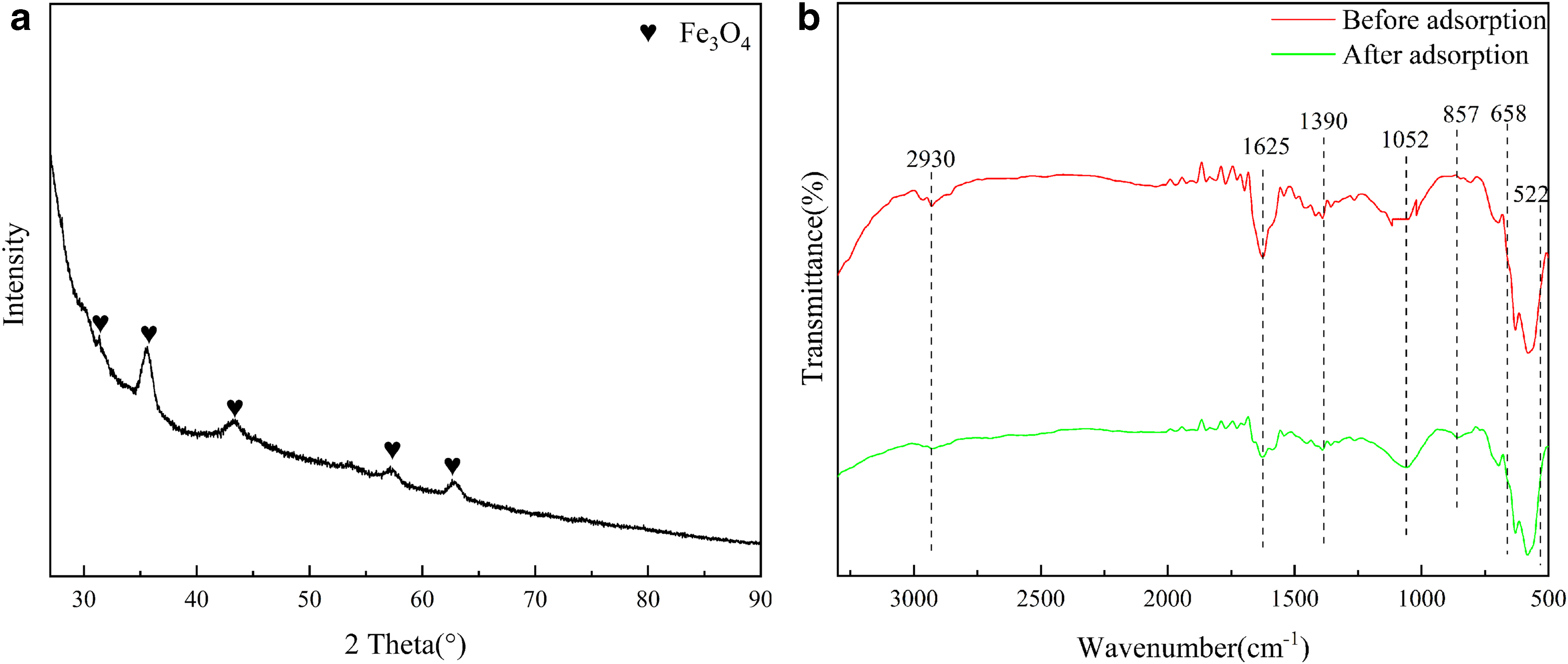
XRD and FTIR analysis of Fe3O4-CNFs2 was carried out to have a deep exploration into the mechanisms during the phosphate uptake process. For Fe3O4-CNF2 adsorbents, almost all the peak positions were consistent with the standard data for Fe3O4 (JCPDS No. 19-0629) (Fig. 12a), indicating that magnetic CNFs were successfully synthesized (Mi et al., 2017). In Fig. 12b, the peak at 2,930 cm−1 was related to the C-H symmetric stretching vibration absorption peak. The peak positioned at 1,625 cm−1 was assigned to C-C vibration. Two new peaks in the region of 522–658 cm−1 represented the Fe-O stretching mode of the Fe3O4 (Lopez et al., 2010). After phosphate sorption, the peak observed at 1,052 cm−1 belonged to the symmetric stretching vibration of P-O in HPO42− or H2PO4− groups.
XPS spectra of Fe3O4-CNFs2 before and after adsorption were applied to analyze the component further, and Fig. 13a presents the full scan spectrum. Figure 13a reveals that C, O, and Fe were the main composition elements of the materials and proved the successful adsorption of phosphate by Fe3O4-CNFs2. High-resolution Fe 2p XPS spectrum in Fig. 13b showed that peaks at 724.2 and 710.4 eV shifted toward higher binding energy to 725.7 and 711.2 eV. This phenomenon illustrated that electron transfer occurred in the bond of Fe 2p, and inner-sphere surface formed Fe-O-P complexation after phosphate uptake (Liu et al., 201). As for P 2p (Fig. 13c), its binding energy (133.28 eV) was different from pure KH2PO4 (134.0 eV), suggesting that strong chemical bonds between phosphate and Fe3O4-CNFs2 existed. High-resolution spectra of C 1s (Fig. 13d) showed its binding energy was nearly 284.58 eV, which was due to the reference carbon of the hydrocarbon (Rodrigues-Filho et al., 1996). O 1s XPS in Fig. 13e showed that two peaks at 530.18 and 532.58 eV were observed in the spectrum of Fe3O4-CNFs2. It is speculated that two specific peaks were attributed to Fe-O-Fe and C-O, respectively.
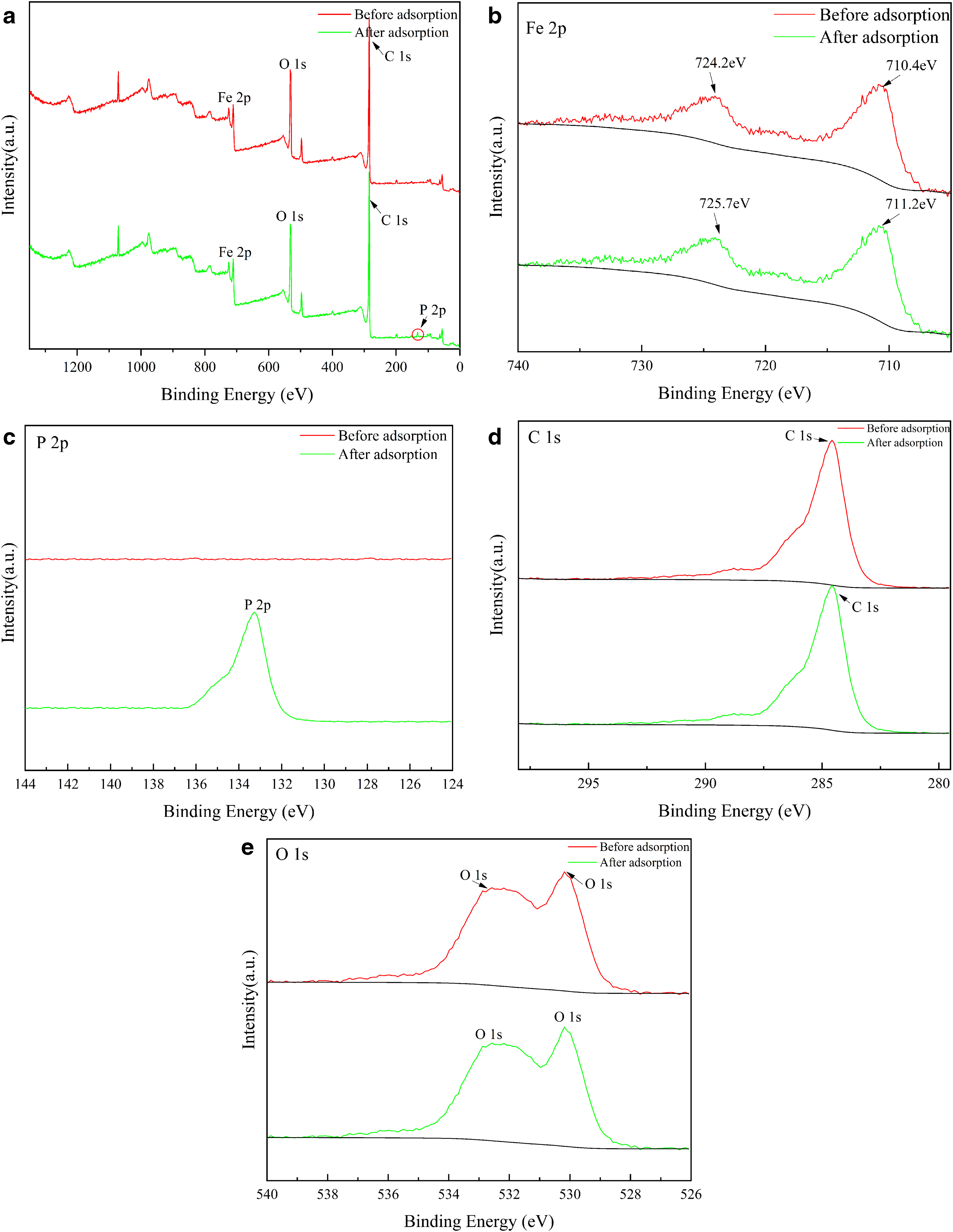
XPS spectra of Fe3O4-CNF2 sorbent before and after phosphate uptake.
Conclusion
In this work, magnetic CNFs (Fe3O4-CNFs2) with various Fe-to-CNF mass ratios were fabricated by the coprecipitation method and calcination process to remove and recover phosphate from wastewater efficiently. Experimental results illustrated that magnetic CNF (Fe3O4-CNF2) adsorbent showed a sorption capacity of 7.26 mg P/g and fast sorption kinetics. Phosphate adsorption could reach equilibrium at 300 min when the initial phosphate concentration was 2 mg P/L and Fe3O4-CNF2 sorbent dosage was 0.5 g/L. Moreover, the concerned sorbent showed a good sorption selectivity when various interfering anions existed and Fe3O4-CNFs2 made a difference efficiently at a wide pH, which ranged from 3 to 6. Fe3O4-CNFs2 owned large amounts of merits, such as high magnetic separation, good reusability, and high economy. Phosphate desorption tests indicated that NaOH under thermal treatment could regenerate exhausted sorbent validly and recovering high amounts of phosphate in eluate was economically viable. Characterization results revealed that phosphate adsorption mechanism by magnetic CNFs (Fe3O4-CNFs2) could be ascribed to surface precipitation and electrostatic attraction. In summary, magnetic CNF (Fe3O4-CNF2) sorbent could be considered a conceivable sorbent for water purifications (i.e., weakening eutrophication and wastewater treatment) and phosphate recovery owing to the benefits of good adsorption performance and easy separation.
Footnotes
Ethical Approval
Compliance with ethical standards. All authors agreed to participate in this experiment. All authors agreed to publish the article.
Data Availability Statement
All data generated or analyzed during this study are included in this published article.
Acknowledgments
Donghua University provided all the experimental conditions. Authors thank for the technical support provided by Fenfen Zhang, the administrator of ICP-AES, Analysis and Testing Center, Donghua University.
Authors' Contributions
T.Z. conducted feasibility analysis, designed the experiments, processed most of the experimental data, drew charts, and was a major contributor in writing the article. Z.Y. provided innovative ideas and reviewed and edited the first draft of the article. W.S. helped prepare the experimental materials and did part of the experiment. Z.X. provided technical support in chart making and helped prepare the experimental materials. All authors read and approved the final article.
Author Disclosure Statement
No competing financial interests exist.
Funding Information
This study was funded by the Shanghai Science and Technology Development Foundation (033919457).