




Abstract
In situ anaerobic treatment is an effective and sustainable method for petroleum hydrocarbon (PHC)-contaminated groundwater remediation. In this study, application of a formerly screened microbial agent with quinone-respiration ability for PHC removal in our previous study on an actual contaminated site has been investigated. The background characterization revealed that bioaugmentation should be applicable taking into consideration the contamination plume, N:P ratio, overall dissolved oxygen, toxic substances, and colony number. In single-well investigation, viable bacteria present in groundwater were not sharply decreased after injection and maintained around 80% on the 28th day. Removal rate of PHCs in groundwater in injection and monitoring wells on the 28th day was 96% and 52%, respectively, while it decreased to 36% with the distance from the injection well increasing to 2 m. In multiwell investigation, removal rate for PHCs (C < 22) in injection wells was 95%, 89%, and 94%, respectively, after 63 days. Addition of nitrate nitrogen slightly improved the removal rate of PHCs, while presence of biological surfactants resulted in a quicker, greater, and more stable PHC removing process. A higher removal rate was found in monitoring wells on the downstream of the groundwater, with a maximum of about 76.5%. Degradation of PHCs in GW1-S3 (3 m from the injection well) reached 76.1%, which was much higher than that in single-well investigation, mainly due to the longer reaction time and groundwater flow. The remediation process in a stable period obeyed pseudo-first-order degradation kinetics. The results document the suitability of application of microbial agent to bioremediate PHC-contaminated sites.
Introduction
Anaerobic degradation is more economical than aerobic degradation due to the fact that not much dissolved oxygen exists in the soil and groundwater in the saturated layer, which is easily consumed by aerobic microorganisms. So anaerobic environment is commonly found in contaminated soil and groundwater (Devi et al., 2011).
Anaerobic biodegradation has received widespread attention since it was found to be effective in chlorinated hydrocarbon contaminant remediation in groundwater. In 1997, scientists successfully obtained a bacterial strain originally called Dehalococcoides ethenogenes 195, which was the first bacteria found to be capable of completely dechlorinating perchloroethylene (PCE) (Maymo-Gatell et al., 1997). Later studies have also found that some similar bacterial strains have the ability to partially or completely dechlorinate PCE in an anaerobic environment, called Dehalococcoides mccartyi (EPA, 2013).
After anaerobic bioremediation technology was successfully applied in practical remediation of priority sites in the United States in early 21st century, more and more countries have attached their attention to anaerobic bioremediation. The Canadian Public Service and Procurement Department announced that besides chlorinated hydrocarbon pollutants, in situ anaerobic bioremediation technology had been used to treat a variety of contaminants, including petroleum hydrocarbons (PHCs), ammonium, nitrate, sulfate, pesticides, explosives, and dioxins.
In situ anaerobic bioremediation technology includes anaerobic oxidation bioremediation and anaerobic reduction bioremediation. The hypoxic environment underground is beneficial to anaerobic bioremediation. Addition of microbial cultures (bioaugmentation) and/or injection of nutrients and other supplementary components to the native microbial population to enhance the degradation and hasten the microbial growth rate (biostimulation) were the most common approaches for in situ bioremediation of contaminated sites worldwide (Tyagi et al., 2011). Geobacter metallireducens strain GS-15 was the first organism in pure culture, which could completely degrade toluene to CO2 with Fe (III) by anaerobic oxidation of toluene (Chakraborty and Coates, 2004).
A relative study isolated a Bacillus cereus strain to degrade benzene. The benzene could be completely biodegraded when the initial benzene concentration was below 150 mg/L under anaerobic nitrate-reducing conditions within 25 days (Dou et al., 2010). It has also been found that Bacillus pumilus (JLB) with the highest degradation potentials could achieve 86.94% of diesel degradation in 2 weeks (Singh and Lin, 2008). In their study, the inoculation with the consortia shows a lower degradation potential than the individual isolate. The biodegradation rate of toluene and xylene is found to be higher under anaerobic biodegradation than aerobic biodegradation within a fractured aquifer system with the presence of multiple electron acceptors and microbes (Valsala and Govindarajan, 2018).
The key to anaerobic oxidation bioremediation is the availability of carbon sources, nutrients, and electron acceptors. The degradation rate is usually restricted by electron acceptors. When oxygen is not present, anaerobic bacteria will use electron acceptors instead of oxygen, preferentially nitrate, followed by manganese (Mn4+), iron (Fe3+), sulfate, and finally carbon dioxide.
In situ anaerobic oxidation bioremediation is suitable for remediation of aromatic hydrocarbons, petroleum fuels, and certain vinyl chlorides. Studies have confirmed that with the addition of sulfate in benzene series (BTEX)-contaminated sites using anaerobic oxidation bioremediation, toluene and xylene are more easily degraded than benzene and ethylbenzene (EPA, 2013). Benzene and ethylbenzene can be degraded in the reducing environment with manganese and iron (Villatoro-Monzón et al., 2003), while removal of naphthalene is also practicable using sulfate-reducing bacteria (Meckenstock et al., 2000).
In addition, other aromatic hydrocarbons that can be degraded anaerobically mainly include phenol, methylphenol, and benzoic acid (Suflita, 1991). Vinyl chloride is usually biodegraded by reductive dechlorination, but it has been reported that 1,1-dichloroethane and vinyl chloride can be degraded by anaerobic oxidation with the addition of iron (Fe3+) reduction and methanogenesis (EPA, 2013). In situ anaerobic enhanced oxidation bioremediation technology (EAOB) (EPA, 2004) was applied mainly for PHC remediation.
In practical remediation projects, to accelerate biodegradation and shorten the processing period, nutrients and electron acceptors that promote bacterial growth are manually added into contaminated areas (aeration or aquifer layer) to enhance oxidation biodegradation. This research focuses on the increase of activity of microorganisms by transmitting electron acceptors, electron shuttles, nutrients, surfactants, and so on, as well as enhancing the bioavailability of pollutants. Meanwhile, biocatalysts are commonly used to accelerate the rate of biodegradation.
Several remediation practices have been performed worldwide, which have been proved to be effective in organic contaminant remediation. Treatment of crude oil sludge by compounding bacterial clusters has been performed in India (Devi et al., 2011); results showed that addition of anaerobic sludge and cow dung enhanced the metabolic function and affected the bioavailability of pollutants. Biological wastewater could be used as a potential co-metabolic substrate. Another project was performed in the former Newark Air Force Base FF-87 in Ohio. Emulsified vegetable oil was injected underground in two stages and the anaerobic biodegradation of chlorinated ethylene and chlorinated ethane in the groundwater was thus stimulated (AFCEE, 2007).
Natural attenuation process of BTEX under anaerobic conditions was evaluated, while results showed that benzene, toluene, ethyl benzene, and xylene were degraded at the same time under anaerobic conditions (Bruce et al., 2010). An emulsified oil substrate (EOS) was used as substrate and surfactant in trichloroethylene-contaminated groundwater remediation at the Tarheel Army Missile Factory in Burlington, North Carolina (ITRC, 2007). The injection and hydraulic cycle process largely promoted the uniform dispersing of EOS agents. Results obtained from the project located at the Seal Beach Naval Weapon Station in southern California (Reinhard et al., 2000) showed that despite nitrate and sulfate not being present, the anaerobic biochemical reaction to produce methane might still exist, although the reaction rate was slow. Addition of electron acceptors increased the degradation rate of ethyl benzene and xylene isomers, but did not have much effect on the removal of benzene.
In summary, currently, not many case studies have focused on PHC remediation in groundwater. Biostimulation through the addition of electron receptors or nutrients is preferentially adopted, while bioaugmentation through the applications of autonomously cultivated bioremediation bacteria in practical remediation engineering was not common. Many affecting factors like background conditions of the site, microbial adaptation, pilot study design, and difference between the laboratory and on-site condition should be considered.
This pilot study is carried out on basis of the denitrifying bacteria with quinone-respiration ability that can simultaneously remove nitrate nitrogen and PHCs screened in laboratory in our previous study (Liu et al., 2020). Characterization of soil and groundwater within the contaminated site, single-well investigation (including microbial adaptation, bioremediation capacity of microbial agent, and influence radius of injection), along with multiwell investigation was performed in sequence. This study performed an exploratory research on in situ anaerobic enhanced degradation of PHCs in groundwater and its influencing factors, which could provide guidance for the whole process of in situ anaerobic remediation from laboratory to practice.
Methods
Brief introduction of background of the contaminated site
The typical contaminated site involved in this study was located in Shanghai, China. It was historically used for manufacturing of measure instruments. According to the satellite map (obtained from Google Earth Pro 7.3.3, website https://www.google.com/earth/), the manufacturing plant existed from 1999 to 2011 and was completely demolished in 2014. The site was abandoned and kept undeveloped since then. A brief pollution characterization was performed in 2016. Results showed that ∼1,888 m2 groundwater was contaminated by PHCs and the plume reached down to 4.0 m below surface. The groundwater flowed from northwest to southeast into a river nearby. The contaminated area was located in the north part, while the site was overgrown with weeds and the soil was exposed directly on the surface. The site extended north to a country road, and east, west, and south to wastelands. The only neighboring sensitive target under pollutant exposure was a river about 150 m away.
Pollution characterization
Groundwater and soil sampling
The grid method (40 × 40 m) was introduced in the preliminary investigation. Soil and groundwater sampling points were set according to the “Technical guidelines for soil environmental investigation and assessment on construction land” issued by the Chinese Ministry of Ecological Environment. More intensive distribution (20 × 20 m) should be carried out for points with excessive pollution of PHCs. Geoprobe-HSA was used for drilling and 15 polyvinyl chloride monitoring wells named W1 to W15 were established afterward. The length of monitoring wells was 6.0 m, while the screening range was 2.0–5.5 m below surface. Four associated wells were also established to reveal the maximum underground contamination depth. The screening range was 5.5–7.5 m and 7.5–9.5 m, respectively.
Groundwater was sampled using a bailers tube in the middle of each well. GeoProbe@7822DT was used for drilling and soil sampling was performed with PETG-Liner tubes. Considering the poor measurement accuracy of small microbial population in the groundwater, S1, S2, and S3 were the three sampling points from surface/middle/deep soil selected in the area with serious groundwater pollution for microbial characterization. The detailed information for each sample is listed in Table 1. S1-1 was not sampled in that as severe disturbance existed in this layer (plants, demolition waste, etc.). The layout of groundwater and soil sampling points is demonstrated in Fig. 1.
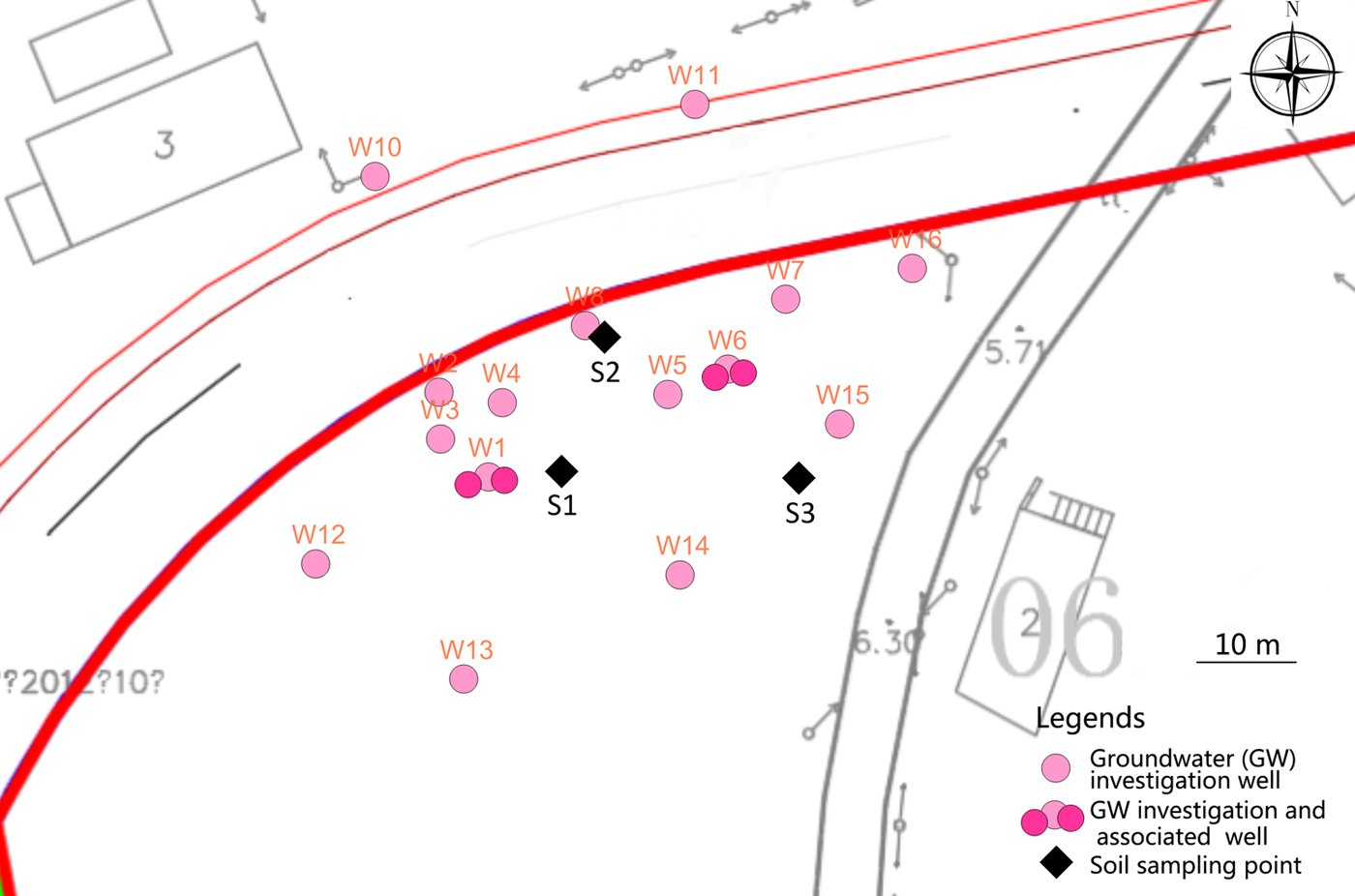
Layout of groundwater and soil sampling points for pollution characterization.
Information of Each Sample for Microbial Characterization in Soil
PHCs, petroleum hydrocarbons.
Determination of physical-chemical and inorganic parameters
Ammonia nitrogen, fluoride, colony number, total dissolved solids, nitrate nitrogen, nitrite nitrogen, total nitrogen, total phosphorus, temperature, and dissolved oxygen were the concerned physical-chemical and inorganic parameters and their determination methods were consulted with current Chinese industry and national standards of authority (detailed information in Supplementary Data S1).
Determination of PHCs in groundwater
Determination of total PHCs (C10-C40) and segmented PHCs (C10-C12, C13-C16, C17-C21 and C22-C40) refer to HJ 894-2017. All the samples were analyzed thrice.
Pretreatment and determination of microorganism
The pretreatment and determination of microorganism in soil samples could be divided into five steps: sample pretreatment, DNA extraction, polymerase chain reaction amplification, DNA purification & recovery, and biological metagenomic sequencing. The detailed procedures for each step are explained in Supplementary Data S1.
Data analysis
The spatial distribution map of PHCs and other inorganic parameters was drawn using Surfer 15.3.307. Hierarchical cluster analysis of microbial characteristic study was performed using the unweighted pairwise average-linkage clustering algorithm with R, using gplot packages.
Design of the pilot-scale study
Anaerobic bioremediation agent
The high-efficiency PHC-degrading bacterium screened in our previous study (Liu et al., 2020) was inoculated into sterilized LB medium (six groups, each consisting of: peptone 10 g, NaCl 10g, yeast powder 5 g, and KNO3 4 g/L, and then add distilled water to 1,000 mL and adjust pH to 7.0) supplemented with nitrate nitrogen for enrichment cultivation. Argon was charged for 3 min, the temperature was set to 30°C, and the rotation speed was 150 rpm. The cultivation was carried out for 10 days so that the carbon source in LB medium would be exhausted. After 10 days of cultivation, about 6 L of anaerobic bioremediation agent with a concentration of 1 g/L was obtained. The colony count was 6.92 × 10¹⁵ cfu/L. The obtained agent was added into plastic drums, sealed in anaerobic condition, and transferred into the anaerobic fermentation tank on the pilot site.
Microbial adaptation, bioremediation capacity, and influence radius
Layout of the investigation of microbial adaptation, bioremediation capacity, and influence radius of agent in groundwater are shown in region A of Fig. 2A. A zoomed layout was demonstrated in Fig. 2B. W5 was the injection well, while W5-E and W5 were both used for microbial adaptation investigation. W5-E and W5-ES were used for bioremediation capacity investigation. W5-E, W5-ES, and W5-ES were also used for influence radius investigation of bioremediation. As was previously revealed, the groundwater flowed from W5 to W5-ES and W5-ES-2, so that the promotion of microbial mobility caused by groundwater could be explored. The recommended influence radius for injection in silty clay layer was 0.75–1.0 m according to the technical specification in Shanghai (Shanghai Municipal Commission of Housing and Urban-rural Development, 2019). Therefore, the distance between two adjacent wells was 1 m in this case.

Design of the pilot-scale bioremediation study.
The structure of the wells would be introduced in Multiwell Groundwater Bioremediation System section. The anaerobic biological agents were injected using a low flow peristaltic pump. One side of the tube was connected with the anaerobic fermentation tank on the site, and the other side was placed about 0.5 m below the water level in the injection well. Two liters of bacterial agent was injected into a single well only once, and the flow rate was controlled within 1.0–1.4 L/min.
A 28-day continuous monitoring was performed after the injection of anaerobic biological agents. Groundwater was sampled and the concentration of PHCs was analyzed every 7 days. In microbial adaptation study, flow cytometry was used to measure the proportion of active bacteria, inactive bacteria, and total bacteria in groundwater.
Multiwell groundwater bioremediation system
Layout of multiwell bioremediation system is demonstrated in Fig. 2C, while its schematic profile is shown in Fig. 2D. Three injection wells (GW1, GW2, and GW3) were established and different initial injection conditions were set to evaluate the effect of anaerobic bioremediation agent, electron acceptors, and biological surfactants. The other wells in Fig. 2C were all monitoring wells. Repeated inoculation (periodic injection) was performed thrice. Groundwater was sampled and PHC concentration was analyzed once every 7 days until 63 days after the first injection. The detailed information of parameters of multiwell pilot test system is listed in Table 2.
Detailed Information of Multiwell Pilot Test System
GW1 injection: anaerobic bioremediation agent, electron acceptors, and biological surfactants; GW2 injection: anaerobic bioremediation agent; GW3 injection: anaerobic bioremediation agent and biological surfactants.
W5 was the background blank monitoring well established outside region B.
Detailed information listed in Anaerobic Bioremediation Agent section.
PVC, polyvinyl chloride.
Institutional Review Board (IRB) approval was not required because this article is an engineering practice (human or animal testing was not involved). The data comes from pilot test and does not require ethical approval.
Results and Discussion
Pollution characterization of the contaminated site
Physical-chemical and inorganic parameters of the groundwater
Ammonia nitrogen, fluoride, colonies number, total dissolved solids, nitrate nitrogen, nitrite nitrogen, total nitrogen, total phosphorus, temperature, and dissolved oxygen were determined in various groundwater samples within this site. To illustrate the distribution range of various indicators in the contaminated groundwater, preliminary simulation was performed through the Kriging interpolation method; results are shown in Fig. 3. The external boundary of the simulation was selected on basis of the spatial distribution of PHCs. Groundwater was relatively heavily contaminated in this boundary (black dotted line in Fig. 4 in Spatial Distribution of PHCs in Groundwater section). Total dissolved solids, fluoride, temperature, and ammonia nitrogen were not simulated. The detailed data are listed in Supplementary Table S1 in Supplementary Data S1.
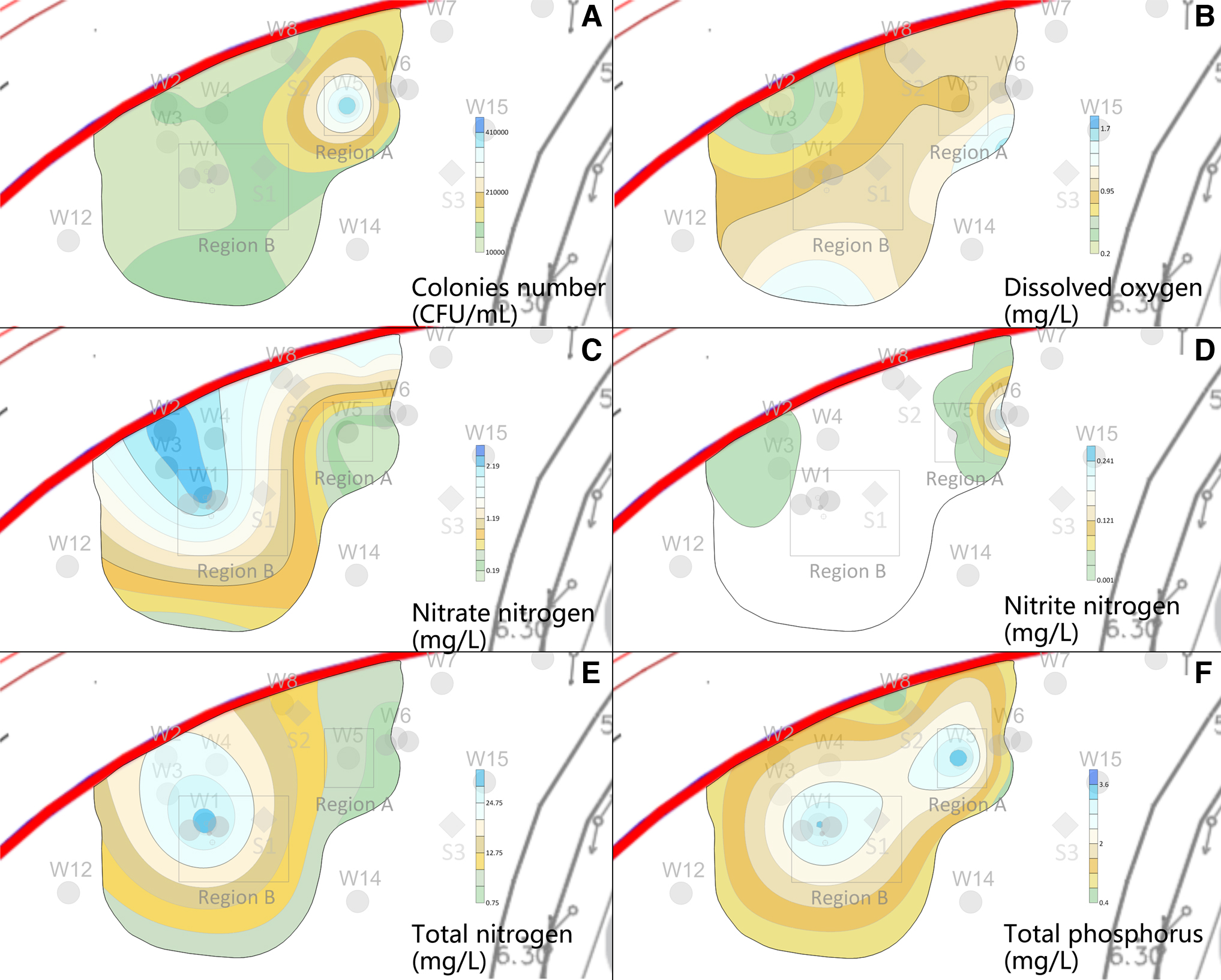
Investigation and simulation results of physical and chemical properties of groundwater.
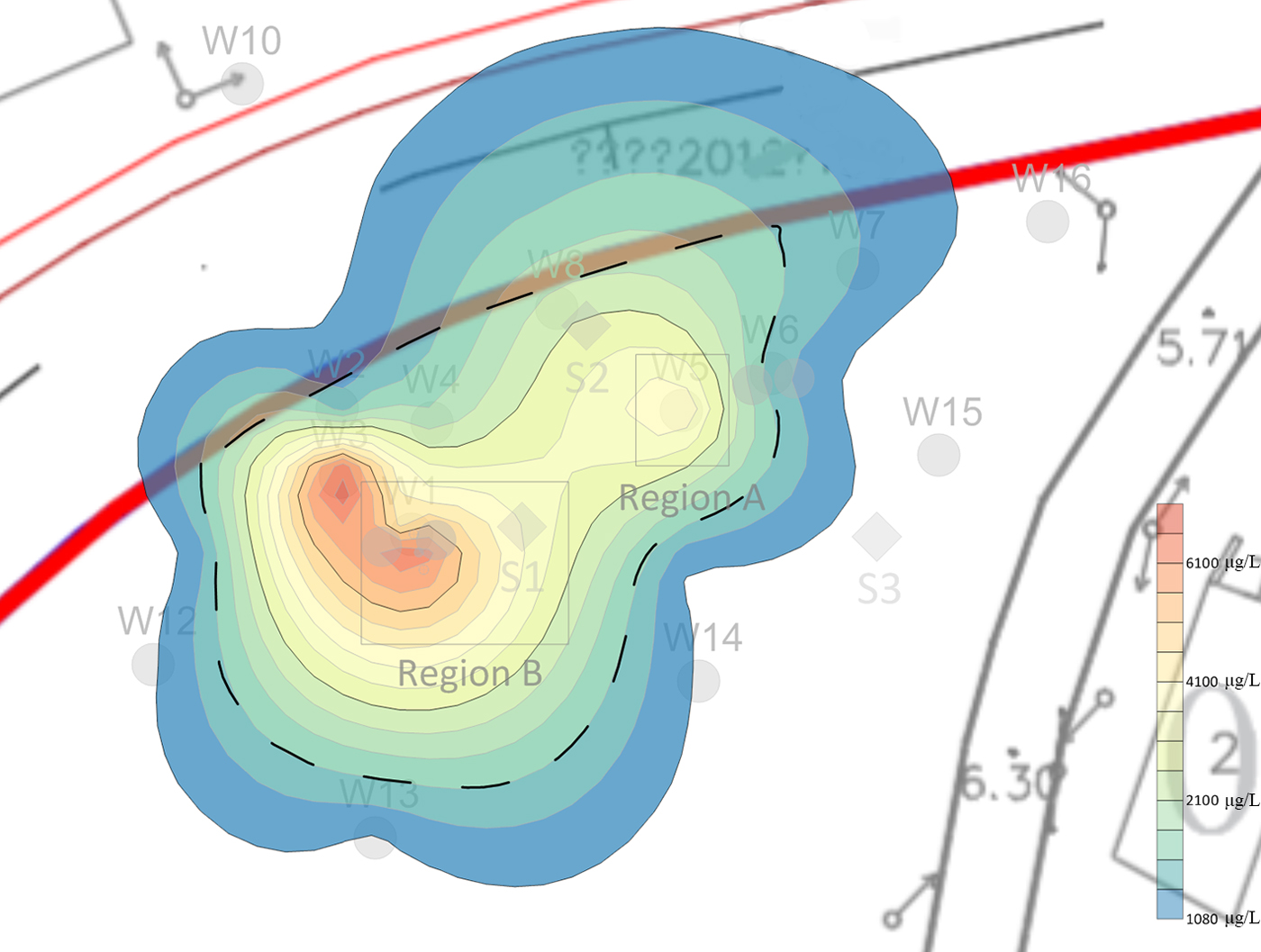
Simulated pollution plume of PHCs in groundwater in this study. PHCs, petroleum hydrocarbons.
A distinct pattern could be found in Fig. 3A that colony number was higher in northeast part of this area than in southwest. Dissolved oxygen in groundwater in this area ranged between 0.24 and 1.76 mg/L. The concentration of dissolved oxygen increased gradually from northwest to southeast (Fig. 3B). Spatial distribution of nitrate nitrogen and nitrite nitrogen is shown in Fig. 3C, D. Nitrate nitrogen, the suitable electron acceptor for microbial agent, mainly existed in groundwater in the northwest part of this area, with a maximum concentration of 2.31 mg/L. Nitrite nitrogen is a kind of substance with microbial toxicity in groundwater, which was found in the east and west boundary of this area. The maximum and average concentration was 0.272 and 0.02 mg/L, respectively.
Carbon, nitrogen, and phosphorus and their proportion are important nutrients for microorganisms; they are also key external factors that affect the adaptation and survival of microorganism in groundwater. The carbon source will be discussed in Spatial Distribution of PHCs in Groundwater section. Total nitrogen and phosphorus were analyzed. High concentration of them was found in the west center of this area (as shown in Fig. 3E and Fig. 3F). However, the highest amount of total phosphorus was found in the eastern area, with a concentration of about 3.55 mg/L. A 10–25 N:P ratio was found in the groundwater of the west-center area.
Spatial distribution of PHCs in groundwater
PHCs were found in groundwater in all monitoring wells established in this study, among which those in groundwater in W1–W8 wells exceeded the risk control value (1,080 μg/L) calculated in the previous site investigation (not published). Concentration of PHCs in groundwater in all the four associated wells was lower than the risk control value; the maximum concentration was 806 μg/L. This means the maximum depth of plume in this area was 5.5 m. The Kriging simulated horizontal pollution plume is indicated in Fig. 4. The black dotted line in this figure is the common area of the pollution plume (PHC concentration ≥1,080 μg/L) and the north boundary of the contaminated site, which was the research emphasis in this study.
Severe contaminated area was found gathering in the northwest part of this area, with a maximum PHC concentration of 7,680 μg/L. The three heaviest contaminated monitoring wells were W1, W3, and W5, which were located in region A and B, respectively. The pollution plume with a PHC concentration of more than 1,000 μg/L covered an area of about 840 m2. Comparing the pollution range revealed in this study with the survey results obtained 3 years ago, it indicated that the horizontal range of the pollution plume is almost unchanged. However, the maximum depth of total PHC pollution in groundwater has increased from 4 to 5.5 m. According to geological analysis, a layer of silt sand existed 4 m below the surface. The high permeability of this layer caused the longitudinal migration of pollution over time.
Microbial characteristics of the soil and groundwater mixtures
The flat dilution curve of each sample indicated that the measured sequence has basically covered all species in the sample (Supplementary Fig. S1, Supplementary Data S1). The heat map of genus investigation in soil samples is demonstrated in Fig. 5. Hierarchical cluster analysis was integrated on the top of Fig. 5; the dendrogram would reveal the correlation among each sample. Except for S3-1, the surface layer 0–30 cm, middle layer 150–200 cm, and deep layer 350–400 cm were mutually clustered or close to. The similarity of the colony structure in soil of the same layer was high, indicating that the bacterial community showed a regular layered distribution.
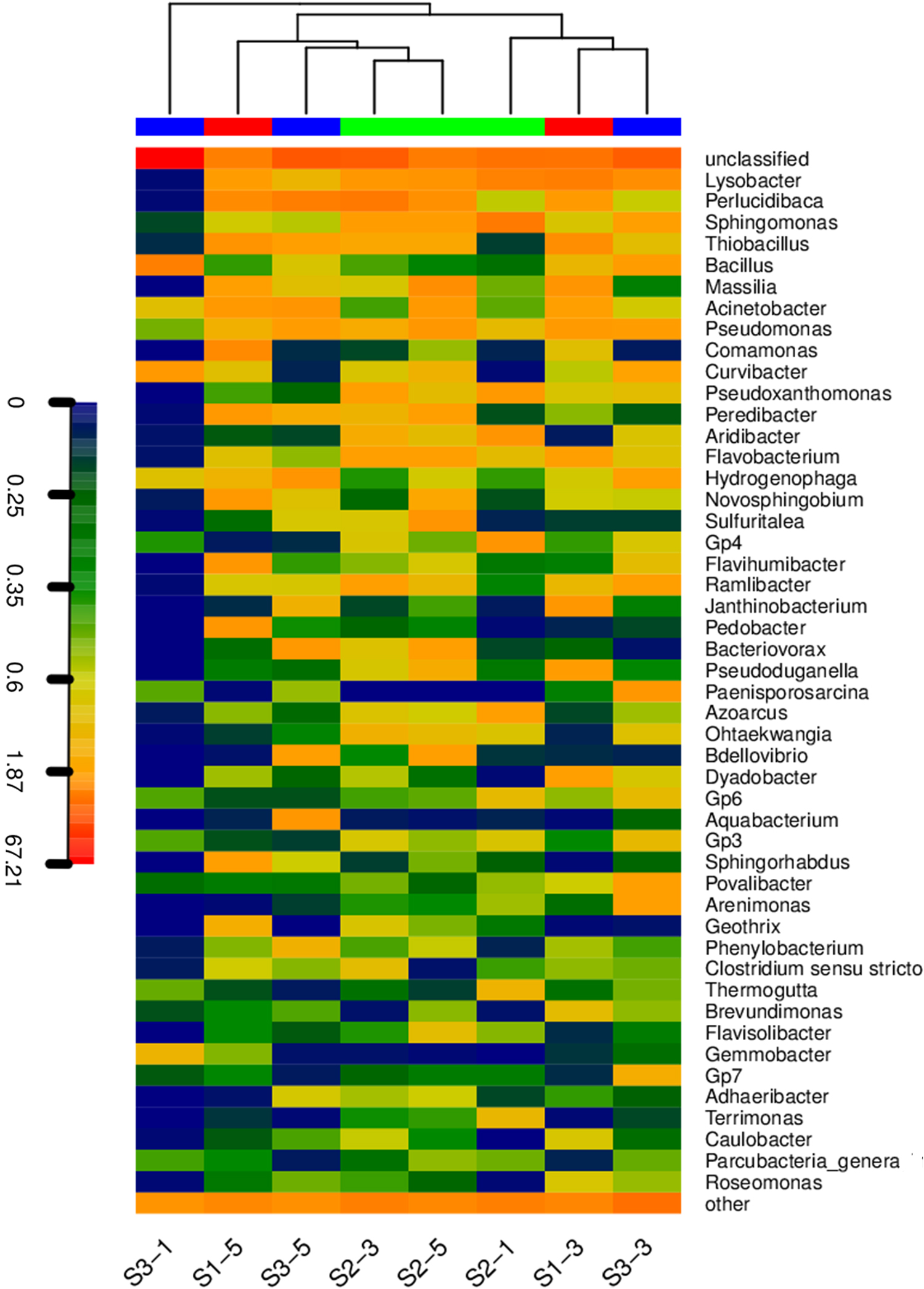
Heat map of genus investigation in soil samples.
Meanwhile, the bacterial community in the middle and deep soil layers had a large difference from that in the surface layer. It was possibly due to that the component and source of topsoil was complex, mixed with demolition or other waste. On the other hand, the existence of oxygen in topsoil was largely affected by the external environment.
The dominant bacterial community in soil samples, except S3-1, was similar. As was shown in the pie chart of S1-3 (a representative sample) in Supplementary Fig. S2 Supplementary Data S1, the three dominant bacterial genera were Lysobacter 15.34%, Thiobacillus 9.23%, and Massilia 6.81%. It has been revealed that in the presence of nitrate and sulfate as electron acceptors, Lysobacter LBF-1-0080 strain had the potential to degrade PHCs (Yetti et al., 2018). Another investigation focused on anaerobic degradation of PHCs in sediments and found that a kind of microorganism belonging to Thiobacillus was dominant in PHC-contaminated soil in the presence of nitrate (Song et al., 2019). It was also found in this study that rhamnolipids had a negative impact on Thiobacillus.
The anaerobic microbial flora in this site and its metabolic type are listed in Table 3. It was indicated that there was a certain, but relatively low amount of microorganisms capable of anaerobic microbial degradation in this site. However, their existence might be related to the PHC pollution characterization in this site. The bacterial distribution in S3-1 was obviously different from other samples (Fig. 5). The major components were Bacilus (Nazina et al., 2001), Curvibacter (Ding and Yokota, 2010), and Gemmobacter, most of which was aerobic or facultative bacteria. Soil around S3-1 was most likely disturbed or loosened, which resulted in an aerobic environment.
Total Rank Reads of Anaerobic Bacteria with Petroleum Hydrocarbon Degradation Capacity in All Samples
A pilot-scale study of bioremediation of PHCs in groundwater
Microbial adaptation in groundwater
A modified stack column of the flow cytometry study results is demonstrated in Fig. 6, the original output scatter diagram is shown in Supplementary Fig. S3, Supplementary Data S1. The presence of high concentration of PHCs might cause negative impacts or be poisonous to the microorganisms, which would ultimately lead to the decrease of viable bacteria in groundwater. Viable bacteria in the injection well W5 decreased after 7 days to 67.81%, but then increased to about 98.05% in the next 7 days and maintained around 88% after 28 days. Viable bacteria in the monitoring well W5-E gradually decreased after the injection of microbial agent, about 78.35% was determined on the 28th day. Proportion of the viable microbial communities in the groundwater samples was overall stable without a sharp decrease. Therefore, it could be preliminarily indicating that the microbial communities had certain adaptation to the involved groundwater environment.

Results of flow cytometry in microbial adaptation study.
Bioremediation capacity of microbial agent and influence radius of injection
Results showed that high amount of PHCs existed in groundwater (Fig. 7). The initial concentration of PHCs in groundwater in W5 and W5-ES was 17,800 and 24,000 μg/L, respectively. The concentration dropped to 7,836 and 14,570 μg/L after 7 days. Although the PHC concentration in W5 increased on the 14th day, a sharp decrease was found on the 21st and 28th day; the determined PHC concentration was 510 and 720 μg/L. PHC concentration in W5-ES largely decreased in the first 14 days, but then slightly increased. PHC concentration in groundwater in both wells on the 28th day tended to be stable and the removal rate was 96% and 52%, respectively.

PHC concentration in W5-E, W5-ES, and W5-ES-2 after 28 days.
Initial PHC concentration in W5-ES-2 was lower than that in W5-ES, both of which declined after the agent injection. The removal rate of PHCs on the 7th and 28th day was 30% and 36%, respectively. The microbial agent would reach a distance of 2 m from the injection well in the direction of the groundwater flow and cause decrease of PHC concentration. The removal rate of PHCs on the 28th day gradually decreased (96% to 36%) with the increasing distance (0 to 2 m) from the injection well.
Bioremediation effect of PHCs in groundwater in multiple wells
An in situ multiple-well anaerobic remediation pilot study was then performed in region B (Fig. 2A), considering the following factors revealed in this study: (1) region B was located in the northwest part of the site, where the groundwater was heavily contaminated; (2) overall dissolved oxygen was lower than 1 mg/L (Fig. 3B) and anaerobic remediation was applicable (Bruce et al., 2010); (3) a low background colony number in groundwater in this region indicated that the competition foreign microorganism after injection might face should be relatively weak; (4) Concentration of nitrate nitrogen, the electron acceptors of microbial agent, was relatively high, while nitrite nitrogen, which was biologically toxic, was not detected. The 10–25 N:P ratio was within the acceptable range of microbial nutrient demands (Gallego et al., 2007).
PHC concentration in groundwater in the injection and monitoring wells within 63 days is demonstrated in Fig. 8. The effect of anaerobic remediation on the removal of PHCs (C ≥ 22 and C < 22) in groundwater was investigated (GW1-GW3). Removal rate for PHCs (C < 22) in groundwater reached around 90% after 7 weeks in all the three injection wells, and maintained at 95%, 89%, and 94% respectively at the end of the pilot study. On the contrary, the removal effect of PHCs (C ≥ 22) was low, especially for GW1 and GW3.

PHC concentration in the injection and monitoring wells in 63 days.
Enzymes involved in biodegradation of PHCs used different PHC contaminants as substrates depending on the chain length, while most of which were alkanes, fatty acids, and cycloalkanes (C ≤ 16) (Das and Chandran, 2011). Presence of biological surfactants in GW1 and GW3 promoted the contact between microbial agents and PHCs (substrates) and resulted in the large decrease of PHCs (C < 22). Compared with GW2, decrease in PHC (C < 22) concentration in GW3 was quicker, greater, and more stable after 63 days. PHCs in GW3-S were also more rapidly decreased compared with that in GW2-S.
The microbial uptake of PHCs mainly relied on surfactant mediation and interface contact (Bouchez Naïtali et al., 1999), while bacterial degradation of PHCs was through the surfactant mediation. The addition of the biological surfactant rhamnolipids increased dissolution of PHCs and effectively promoted the utilization of PHCs by microorganisms (Inakollu et al., 2004). Meanwhile, the addition of electron acceptor significantly accelerated PHC degradation (Cunningham et al., 2001). Results proved that anaerobic bioremediation-enhanced microbial agent was a denitrifying strain using nitrate nitrogen as electron acceptor and surfactant as inducer.
A small flux of PHC concentration detected in W5 indicated that the site was not severely disturbed within the pilot study period. Comparing the monitoring wells in four directions of GW1, the groundwater flow had a significant impact on the effect of PHCs in situ anaerobic remediation. GW1-E and GW1-S1 showed an overall decrease in PHC concentration with reaction time, while PHC concentration in GW1-N and GW1-W slightly increased after 63 days. A lower initial PHC concentration (Olasanmi, 2018) and fewer monitoring wells nearby (which means less disturbance) (Wiesner et al., 1996) might be the two reasons that led to the higher removal rate in GW1-E (76.5%) compared to GW1-S (68.6%). Removal rate of PHCs in GW1-S2 and GW1-S3 was 72.5% and 76.1%, respectively. The contaminated plume could be pushed by the injection pressure and groundwater flow downstream, which caused the abnormal high concentration detected in second and third week in GW1-S3.
Concentration of PHCs (C < 22) largely decreased in the first 14 days and then steadily declined after the last injection carried out at the 28th day. The degradation kinetics was investigated in groundwater in injection wells within the 28–63 days. The results are listed in Table 4. The remediation process obeyed pseudo-first-order degradation kinetics. The removal rate of PHCs after 28 days decreased with the continuous consumption of biological surfactants and nitrate nitrogen. PHC degradation at the end of this period was mainly achieved by microbial agents alone, while the complex site environment might cause the decrease in R2 value of injection wells.
Degradation Kinetics and Calculated Petroleum Hydrocarbon (C < 22) Degradation Rate in Groundwater
Relative researches showed that under the optimal temperature condition, the average natural degradation rate of PHCs in the aquifer layer within 30 years was estimated at around 0.00376 day−1 (Guo et al., 2020). Another 4-year investigation on a contaminated site revealed that the area of PHC contamination plume decreased almost 60%, with the mean point attenuation rate of 0.0015 day−1 (Lv et al., 2018). In GW1, GW2, and GW3, the degradation rate of groundwater after the last injection was 0.0441–0.0596 day−1, and the half-life period was 11.63–15.72 days, indicating that the enhanced PHC degradation effect of anaerobic microorganisms was much stronger compared with natural attenuation.
Discussion
The upstream pollution control, suitable available environment of biological agents, along with sufficient contact between pollutant and anaerobic bacteria should be considered during the anaerobic remediation. First, the PHC concentration in GW1-N and GW1-W, the monitoring wells on the upstream of groundwater flow, was unstable and showed no relation with the remediation. The contamination source should be strictly controlled, while an upstream injection well should be established for each monitoring well.
Second, anaerobic condition was relatively easy to obtain for groundwater remediation under the surface. However, it was necessary to ensure the injected exogenous bacteria is dominant in the remediation area. Effective control of pH, temperature (Gao et al., 2019), salinity, and other indicators was recommended if the microorganism was complex, revealed by background investigation. Electron transfer could be effectively improved by injecting microbial agents and supplementing nitrate nitrogen regularly. For some microbial agent such as that applied in this study, it was not appropriate to enhance bioremediation by adding degradable carbon sources (Liu et al., 2020).
Third, it has already been revealed in our previous study in laboratory that the bioremediation was not significantly improved with the increase of microbial agent concentration, but the surfactants could significantly improve the bioremediation process (Liu et al., 2020). As for surfactant-induced bacteria, biological surfactants with little secondary pollution (such as rhamnolipids, grease, etc.) should also be applied to promote the distribution of PHCs in aquifer so that it could be captured by surfactant-induced bacteria.
Another concern is the possible negative effect of degradation intermediate of PHCs on soil and groundwater. A systematic review has been made on anaerobic degradation pathways of PHCs. As for nitrate-reducing bacteria with a fumarate addition process, benzyl succinate, benzoyl-CoA, 2-methylbenzylsuccinate, 3-methylbenzylsuccinate,4-methylbenzylsuccinate, toluic acid were the main degradation intermediates (Wartell et al., 2021). C-odd/even n-alkanes, C-odd/even cellular fatty acids, benzoyl-CoA (Song et al., 2019; Victor et al., 2020), 1-hydroxy-2-naphthoic acid, naphthoic acid, catechol, salicylic acid (Foght, 2008) could also be generated. The biochemical changes posed on PHCs through bacterial degradation would produce metabolites, which are less toxic and could be used by bacteria, as well as other living organisms in the soil and groundwater for biological activities (Victor et al., 2020).
According to the flow cytometry study performed in this study, the viable bacteria present in groundwater were not sharply decreased after injection and maintained around 80% on the 28th day, possibly indicating that substances of biological toxicity were not dominant. However, a systematic detection of intermediate should still be conveyed in advance if the toxic substances during the remediation process were unclear and were a major concern for an engineering project.
Conclusions
Two regions were selected as the investigation area in this study taking into consideration the N:P ratio, dissolved oxygen, colony number, toxic substances, and PHC concentration determined. The results of the following single and multiple well studies demonstrated that PHCs are readily biodegradable under anaerobic conditions by the microbial agent cultivated previously. The microbial agent injected into the groundwater faced a slight decreasing trend in viable bacteria amount, but maintained around 80% on the 28th day, which was acceptable. The injected agent resulted in a decrease in PHC concentration of about 36% in the monitoring well that was 2 m from the injection well.
It was proved that the bacteria in the groundwater remediation agents were denitrification strains induced by surfactants and nitrate nitrogen as electron acceptors, which was consistent with the conclusions drawn in the laboratory. PHC removal ratio was the highest in the presence of nitrate nitrogen and biological surfactants.
The injection wells established in a pilot study or a whole project should always cover the upstream of the monitoring well if the contamination source was not controlled. The kinetics study revealed that the bioremediation obeyed pseudo-first-order degradation kinetics. The enhanced PHC degradation effect of anaerobic microorganisms was much stronger compared with natural attenuation. Generally, it is possible to conclude that well designed bioaugmentation is a suitable approach to remediate aquifers contaminated by PHCs.
Footnotes
Author Disclosure Statement
No competing financial interests exist.
Funding Information
This research was partially supported by research grants from Science and Technology Commission of Shanghai Municipality (No. 19DZ1205300), Shanghai Sailing Program (19YF1445100 and 20YF1434800), and Shanghai Rising-Star Program (19QB1405300).

References
Supplementary Material
Please find the following supplemental material available below.
For Open Access articles published under a Creative Commons License, all supplemental material carries the same license as the article it is associated with.
For non-Open Access articles published, all supplemental material carries a non-exclusive license, and permission requests for re-use of supplemental material or any part of supplemental material shall be sent directly to the copyright owner as specified in the copyright notice associated with the article.
