




Abstract
One of the main challenges of bottom ash reutilization is heavy metal and salts' leaching potential. The effect of wet treatment on chemical composition and leaching toxicity of bottom ash were investigated in this study to mitigate this leaching potential. Batch leaching and column leaching tests were first conducted to investigate the leaching behavior of the targeted elements (Cu, Zn, Ni, Cl−, and SO42−) from raw bottom ash and treated bottom ash after wet treatment. X-ray fluorescence analysis was used to analyze the chemical composition of bottom ash, and sequential extraction procedure (SEP) operation was done to analyze the chemical species of the heavy metals of bottom ash. The obtained results showed that the wet treatment applied on raw bottom ash posed a slight influence on the concentration of most of the major elements, 5.57–18.18%. SEP results showed the acid extractable Zn that accounted for 22.4–24.5% of the total Zn, and the iron manganese oxide bound Ni was 25.2–28.4%, and the organic matter bound Cu was 21.4–31.7%. The wet treatment reduced the concentrations and leachable amount of the targeted pollutants, which could decrease the leaching concentration of Cu by 77.1%, Zn by 34.7%, Ni by 100%, Cl by 30.1%, and SO42− by 51.4% based on the batch leaching tests under acid condition. The column leaching tests also suggest that wet treatment decreases Cu, Zn, and Cl− leaching concentration in bottom ash. This indicates that wet treatment improves the suitability of municipal solid waste incineration bottom ash for reutilization in China.
Introduction
Incineration is gradually becoming the main method of municipal solid waste (MSW) disposal in China, due to its ability to effectively reduce the volume and mass of MSW (Hjelmar, 1996; Silva et al., 2019). By 2018, the total disposal capacity of MSW incineration (MSWI) in China is 378,000 t/day. One challenge that occurs from the rise of MSWI is the increased production of bottom ash, which is the main by-product of incineration. The bottom ash produced could reach 20 − 25% of the weight of the processed MSW (Huber et al., 2019). Therefore, research into the effective and reasonable treatment way of MSWI bottom ash is of great significance for the promotion of incineration technology.
Various bottom ash reutilization possibilities have been proposed, including metal recovery, cement production, concrete fabrication, alternative aggregates, and land reclamation (Xia et al., 2017; Shen et al., 2020; Yan et al., 2020). In southern China, the combination of wet treatment technologies such as wet eddy current separator, jig, and wet shaker is extensively used to extract metals from bottom ash. Due to the relatively high efficiency of metal recovery with this process, a large number of bottom ash treatment plants are showing up in China. After wet treatment, the treated bottom ash also has a higher value as engineering material. It is usable as cement composite material, concrete aggregates, and road construction to replace the gradually scarce sandstone materials (del Valle-Zermeño et al., 2013; Toraldo et al., 2013; Luo et al., 2017; Ashraf et al., 2019; Yoon et al., 2019). Bottom ash reutilization as concrete aggregate provides a lot of benefits as it could be made to meet the requirement of compressive strength of building materials, as well as not having the drawbacks of conventional concrete such as high-water demand, appearances of longitudinal void, and expansion of concrete (del Valle-Zermeño et al., 2014; Seniunaite and Vasarevicius, 2017; Yin et al., 2018; Luo et al., 2019b; Silva et al., 2019).
Despite its potential, the reutilization of MSWI bottom ash still faces a number of challenges. One of the main challenges is their heavy metal and salts' leaching potential (Zhang et al., 2008; Ahmed et al., 2010; Tang et al., 2015), which would cause environmental exposure and risk. Before its reutilization, the storage and pretreatment of bottom ash would have the opportunity to be in direct contact with rainwater. It was therefore possible to produce new environmental pollution. Leaching behaviors of heavy metal and salts in bottom ash have been extensively characterized. Other than the major elements of bottom ash like Ca, Si, Al, Fe, Mg, Ni, K, and Cl heavy metals such as Cu, Zn, Cr, Cd, Hg, and Pb are also commonly found in MSWI bottom ash (Di Gianfilippo et al., 2016; Linh et al., 2020). It was reported that more than 80% of the initial contents of As, Cr, Cu, and Ni; 74–94% of Zn; and 46–79% of Pb remained in bottom ash after the incineration of MSW (Zhang et al., 2008). The leaching levels of SO42−, Cl−, Cu, Zn, Pb, and other heavy metals often exceeded the relevant environmental regulations (Yang et al., 2012).
Leaching behavior of the polluting elements in bottom ash was also found to be influenced by chemical properties and ash characteristics such as the particle size distribution, ratio of liquid and solid, and pH value (Komonweeraket et al., 2015; Um and Ahn, 2017; Linh et al., 2020). Small particles possess large specific areas, resulting in a higher release of heavy metal and salts (Luo et al., 2017). Higher liquid to solid ratio promotes the dissolution of minerals and accelerates the release of heavy metals (Mizutani et al., 1996). Most of metal species (such as Cu, Zn, Cd, Pb, and Mg) follow a cationic leaching pattern, and the concentrations of leached elements decrease with increasing pH value (Luo et al., 2019a).
So far, there are only few researches on the environmental impact of MSWI bottom ash before and after wet treatment. This article aims to fill that gap by furthering the understanding of the environmental characteristics of MSWI bottom ash before and after wet treatment. Two kinds of different bottom ash, raw bottom ash and the bottom ash treated with wet treatment, were collected from facilities in the south of China and used in this study. The concentration distribution and leaching behaviors of heavy metals Cu, Zn, Ni, as well as dissolved salts Cl− and SO42−, were experimentally investigated and compared. The leaching limit values for landfill of solid waste and the limit values of China's surface water standard were used as standards to assess the environmental risk of bottom ash before and after wet treatment. This is aimed at learning the details of the leaching toxicity of the raw and treated bottom ash, to evaluate and improve the process for an environmentally friendly application.
Materials and Methods
Materials
The raw and the treated bottom ash were sampled from a MSWI plant in Shanghai from April to July 2018. Approximately 700 tons of MSW per day is incinerated, and a wet treatment system was used to recover metals from the raw bottom ash. The wet treatment system consists of washing, sorting, eddy current separation, and magnet separation steps, which in its detailed introduction was reported in a previous study (Hu et al., 2021). It is being used in some large MSWI plants in China. Sampling points of bottom ash were set at eight different locations of each ash pile. The collection time was during the regular operation of the incinerator, and it was not rainy weather. Bottom ash from different collection points was mixed evenly to make the samples representative enough. The raw bottom ash was collected to a total of 200 kg in each plant. Aggregate samples were collected from the same five locations and using the same sampling method.
Before analysis and testing, large bulky pieces of glass, metal slug, and ceramics were removed from collected bottom ash. The raw and the treated bottom ash were then named sample A and B, respectively. The two kinds of bottom ash were then sieved into 0–5 and 5–10 mm particle size ranges, which were named A1, A2, B1, and B2. X-ray fluorescence (XRF) spectrometry is a rapid and convenient method for nondestructive multielemental analysis. The chemical composition of major elements in all the used samples was measured by XRF (Axios Max; PANalytical, Germany) with a high level of precision and accuracy.
Column leaching of bottom ash
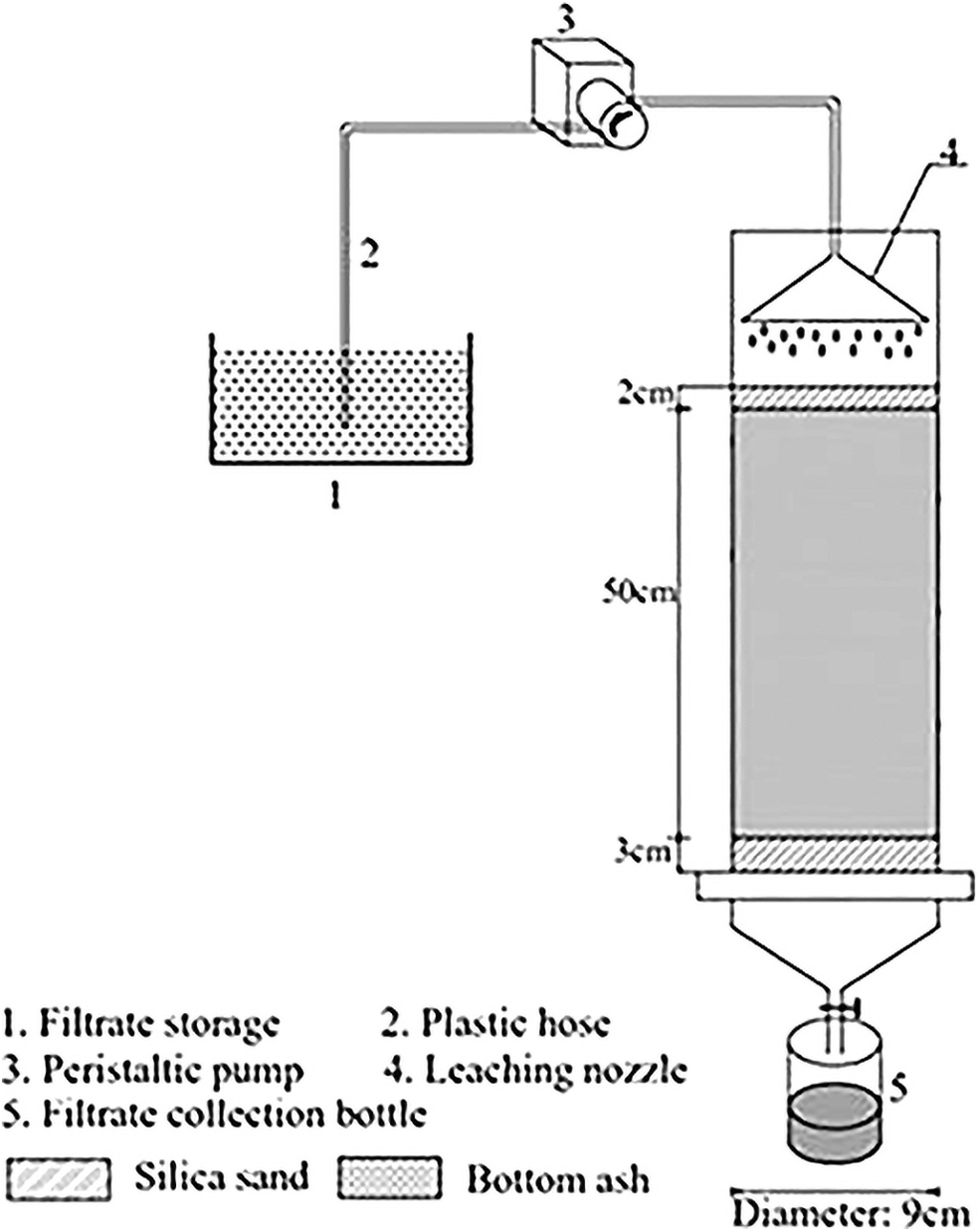
Column leaching tests are preferred due to their appropriate description of leaching in hydraulically dynamic system and ability to follow the leaching behavior over extended periods of time (Roussat et al., 2008; Butera et al., 2015). Therefore, it is selected in this study to simulate the effect of natural rainfall process on the toxic materials releasing from road material made of recycled bottom ash. Figure 1 depicts the experimental setup used in this study, a column leaching system to simulate rainwater washing. The leaching column was made of plexiglass with a length of 75 cm and an inner diameter of 9 cm. The leaching nozzle at the upper end of the soil column was connected to a peristaltic pump, which was used to precisely control the flow rate of the simulated rainwater. The lower end of the leaching column was equipped with a controllable speed valve, and the leaching liquid could be collected through a conical bottle.
Simulated rainwater column leaching device.
In the south of China, it was reported that the maximum amount of 24-h rainfall is 581.3 mm, and the average pH value of normal rain is 5. To better investigate the leaching characterization of harmful elements from bottom ash when reused in road under the precipitation condition, the precipitation intensity of 3.18 mL/min was used as the flow rate. This was determined based on the size of the experimental system and the maximum amount of rainfall. The simulation rainwater was the solution prepared by deionized water and nitric acid with pH of 5. It was considered that the recycling and reutilization of bottom ash often are observed in road paving in China. Referring to JTG F10-2006 technical code for construction of highway subgrade which states that the compactness of the embankment base of class III and IV highway shall not be less than 85%, the compactness of bottom ash in this column leaching test was made to be 85%. The used amount of bottom ash in the column was calculated based on the Equation (1) as follows:
where M is the required mass of bottom ash sample, V is the volume of column, β is the compactness of bottom ash filler, ρ is the maximum dry density of bottom ash sample, and α is the moisture content of bottom ash sample. In this study, the maximum dry density of bottom ash was determined using the Test Method of Soils for Highway Engineering (JTG E40-2007). Table 1 shows the maximum dry density of the treated and raw bottom ash and their moisture content.
Optimum Moisture Contents and Maximum Dry Densities of the Sampled Bottom Ash
The experimental procedure started with the rinsing of the column with acid solution and then deionized water before the loading of bottom ash. Quartz sand was soaked in 1:2 nitric acid solution for 24 h and dried at 110°C before use. A layer of high permeable filter cotton was placed first at the bottom of the column. The filter cotton was paved with 3 cm thick quartz sand as the inverted filter layer. The bottom ash was put on top of the filter layer and compacted according to the unit weight for each 5 cm of filling. After the compaction, its surface was roughened and the next filling would be continued. The total loading height of bottom ash was 50 cm. A 2 cm thick quartz sand was finally laid over the bottom ash column. At the beginning of the column leaching tests, the column was first saturated slowly from top to bottom with simulation liquid, after which the peristaltic pump was started. The leachate was collected at the lower outlet after a certain time interval.
Chemical speciation of heavy metals
The bottom ash samples were digested using the method described by Yamasaki (Yamasaki, 1997). Approximately 0.3 g of air-dried ash was weighed into a Teflon beaker. A mix of 2.5 mL HNO3 and 2.5 mL HClO4 was added to the ash and heated for 2–3 h. After cooling, 5 mL hydrochloric acid and 5 mL hydrofluoric acid were added into the beaker and heated for 15 min. After that, 5 mL hydrofluoric acid was added until the residue became almost dry. The last step would be to dissolve the residue in 5 mL nitric acid and diluted to 100 mL. All samples were digested and analyzed in replicate.
Chemical speciation of heavy metals in the bottom ash samples was determined using sequential extraction procedure (SEP) suggested by Tessier et al. (1979). The procedure classified elements into four fractions: (1) exchangeable fraction (F1), (2) carbonate bound and Fe–Mn oxide bound fraction (F2), (3) organic matter bound fraction (F3), and (4) residual fraction (F4). Among the four fractions, exchangeable fraction and carbonate bound and Fe–Mn oxide bound fraction are unstable and prone to leach out, while organic matter bound fraction and residual fraction are considered to be relatively stable and of low bioavailability. The content of heavy metals in each extraction solution was determined by inductively coupled plasma-atomic emission spectroscopy (ICP-AES, 720ES; Agilent, USA). Three parallel samples and three blank samples were used in each batch of test.
Batch leaching
The batch leaching testing procedure based on HJ/T300-2007 and HJ 557-2010 was designed to gauge the static release of substance from the raw and treated bottom ash. Around 75 g bottom ash with a dried-basis weight was mixed with the extraction agent with the pH of 2.64 ± 0.05 and liquid-solid ratio of 20:1 (L/kg). The extraction agent was prepared by diluting glacial acetic acid with deionized water. The sample bottles were then placed on the inverted vibrating device with rotation speed of 30 r/min and shaken for 18 h; then the resulting leachate was filtered and stored at 4°C for further testing. The eluate was then analyzed using inductively coupled plasma—optical emission spectroscopy (ICP-OES PerkinElmer Optima 8300) or mass spectroscopy (ICP-MS PerkinElmer Elan DRC-e) for its trace element contents. The content of dissolved salts Cl− and SO42− was measured by ion chromatography using the standard HJ 84-2016.
Results and Discussions
The distribution of the main elements in raw and treated bottom ash
Based on XRF analysis results, the major elements found in 0–5 and 5–10 mm of the raw and treated bottom ash were Si, Ca, Al, Fe, Na, Mg, Cl, and K. Heavy metal elements such as Zn, Cu, Cr, Mn, Pb, and Ni were also detected in trace amounts. Table 2 summarized their chemical composition and showed that the major elements contained in bottom ash accounted for 53.4–55.3% of the ash composition. It can be observed that the wet treatment applied on raw bottom ash posed a slight influence on the concentration of Si, Ca, Al, Na, Mg, and K, 5.57–18.18%. It suggests that the washing process has no obvious effect on the concentration of the major elements in bottom ash. However, the total concentrations of the heavy metals were evidently decreased after the wet treatment, with a highest 35% of reduction observed in 0–5 mm bottom ash fraction.
The Main Chemical Composition of Bottom Ash Before and After Wet Treatment
The concentration of Cl also was seen to decrease significantly after wet treatment, up to 34%. The content of Cl in BA is the major challenge for secondary building materials because of their ability to increase the corrosion of the steel reinforcements (Alam et al., 2020). Furthermore, it was noted that Zn and Cu contributed a higher mass content among heavy metals in the tested bottom ash. In addition, leaching toxicity of Ni and SO42− from MSWI bottom ash was always being concerned. In this study, therefore, the targeted heavy metals and dissolved salts are Cu, Zn, Ni, Cl−, and SO42−.
Total contents and chemical species of the targeted heavy metals in the raw and treated bottom ash
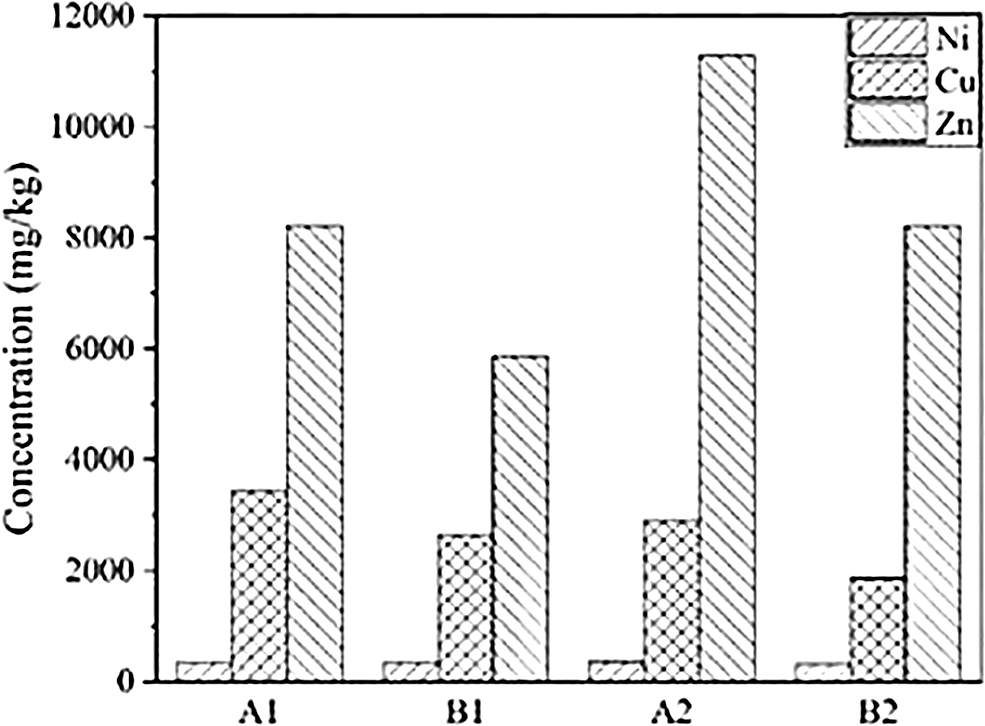
The total contents of the targeted heavy metals (Zn, Cu, and Ni) in the raw and treated bottom ash, detected using acid digestion, are shown in Fig. 2. The content of Zn in all the samples was the highest, up to 11,286 mg/kg. The content of Cu was found to be between 1,860 and 3,424 mg/kg, while the Ni content was 310–360 mg/kg.
Concentration of Ni, Zn, and Cu in bottom ash before and after wet treatment.
The wet treatment significantly decreased the content of Ni, Zn, and Cu in bottom ash with the smaller particle size. The content of the Zn in 0–5 mm bottom ash was decreased by 28.5%, and contents of Cu and Ni were only slightly impacted by wet treatment. This result might be explained by how in the raw bottom ash, various chemical species of Zn-containing soluble salts account for a large fraction of bottom ash. These salts were then released when washed during the wet treatment.
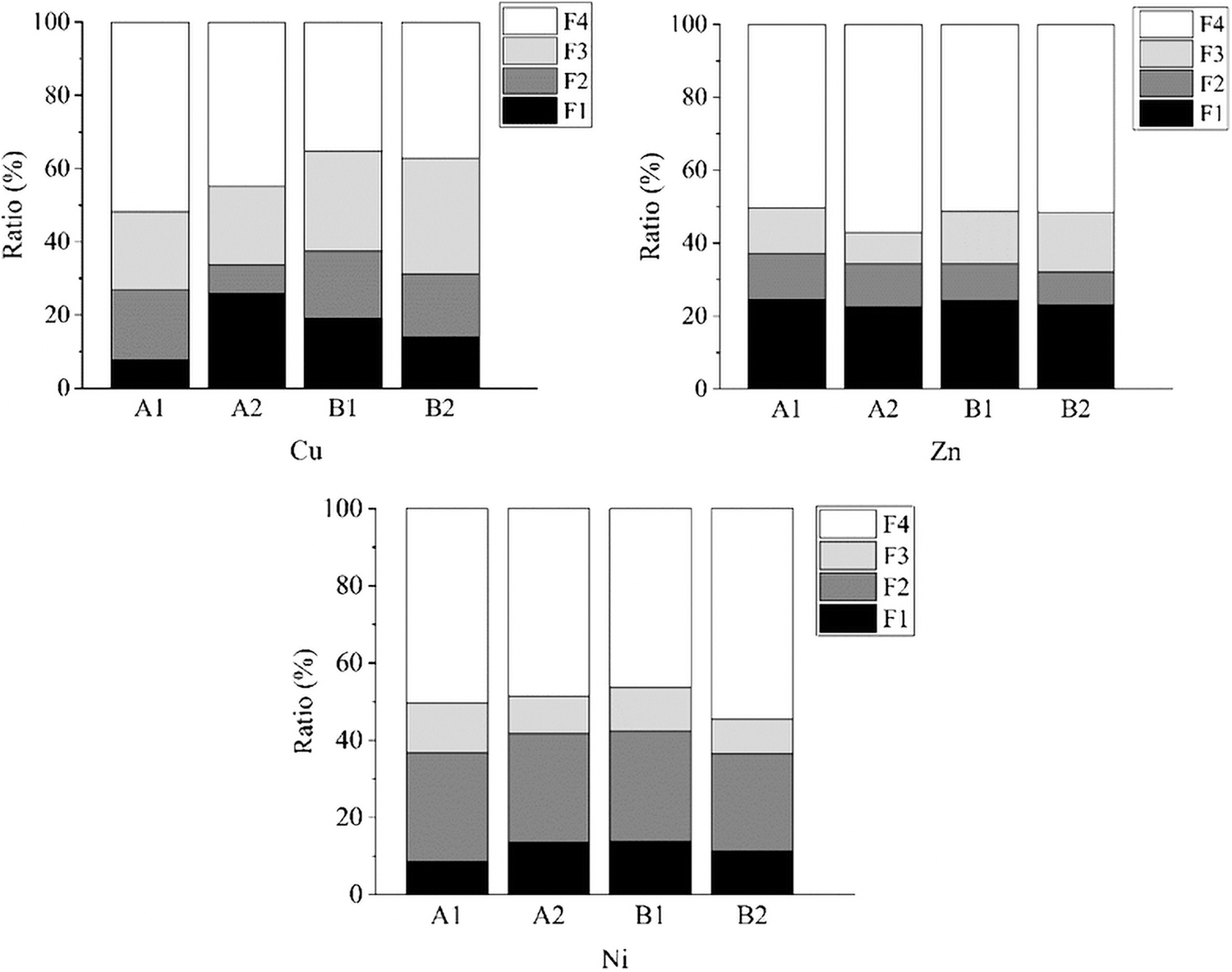
The concentration of Cu, Zn, and Ni in each type of bottom ash sample in this study is listed in Fig. 3. Residual and oxidized heavy metals are relatively stable, while the acid extractable heavy metals and ionic heavy metals are unstable components with potential leaching ability (Tessier et al., 1979; Gleyzes et al., 2002). The residual heavy metals (F4) accounted for 35–57% of all the heavy metals in bottom ash. Other main components of the heavy metal composition include the acid extractable Zn (F1) at 22.4–24.5% of the total Zn and the iron manganese oxide bound Ni (F2) at 25.2–28.4% of mass proportion.
Chemical species of heavy metals in the raw and treated bottom ash.
The content of elements with organic bound state was relatively low, accounting for 8.6–13.9% for Zn and Ni. The mass proportion of Cu in the organic matter bound state was higher, at 21.4–31.7%. The reason for that could be that Cu formed a strong and complex organic ligand such as humid acid and fluorine (Tessier et al., 1979; Van Zomeren and Comans, 2004; Yao et al., 2010). Organic matter may play an important role in the leaching behavior of Cu, which was also verified in the research of others (Olsson et al., 2007; Yao et al., 2010).
It could be seen that the chemical species of heavy metals were not transformed significantly after wet treatment, except for the acid extractable bound fraction of Cu. It could also be observed how bottom ash in the particle size range of 5–10 mm (the A samples) was more affected by wet treatment, which is shown by the significant decrease of unstable bound fraction (F2) of Cu.
Leaching behavior of heavy metals and salts by batch tests
The solid waste-extraction procedure for leaching toxicity-acetic acid buffer solution method (HJ/T300-2007) and the leaching toxicity-horizontal vibration method (HJ557-2010) were selected to be the standards to investigate the leaching behavior and further explain the potential leaching toxicity of heavy metals in the raw and treated bottom ash. The difference between the two kinds of methods was in the pH of the solution used in the procedures.
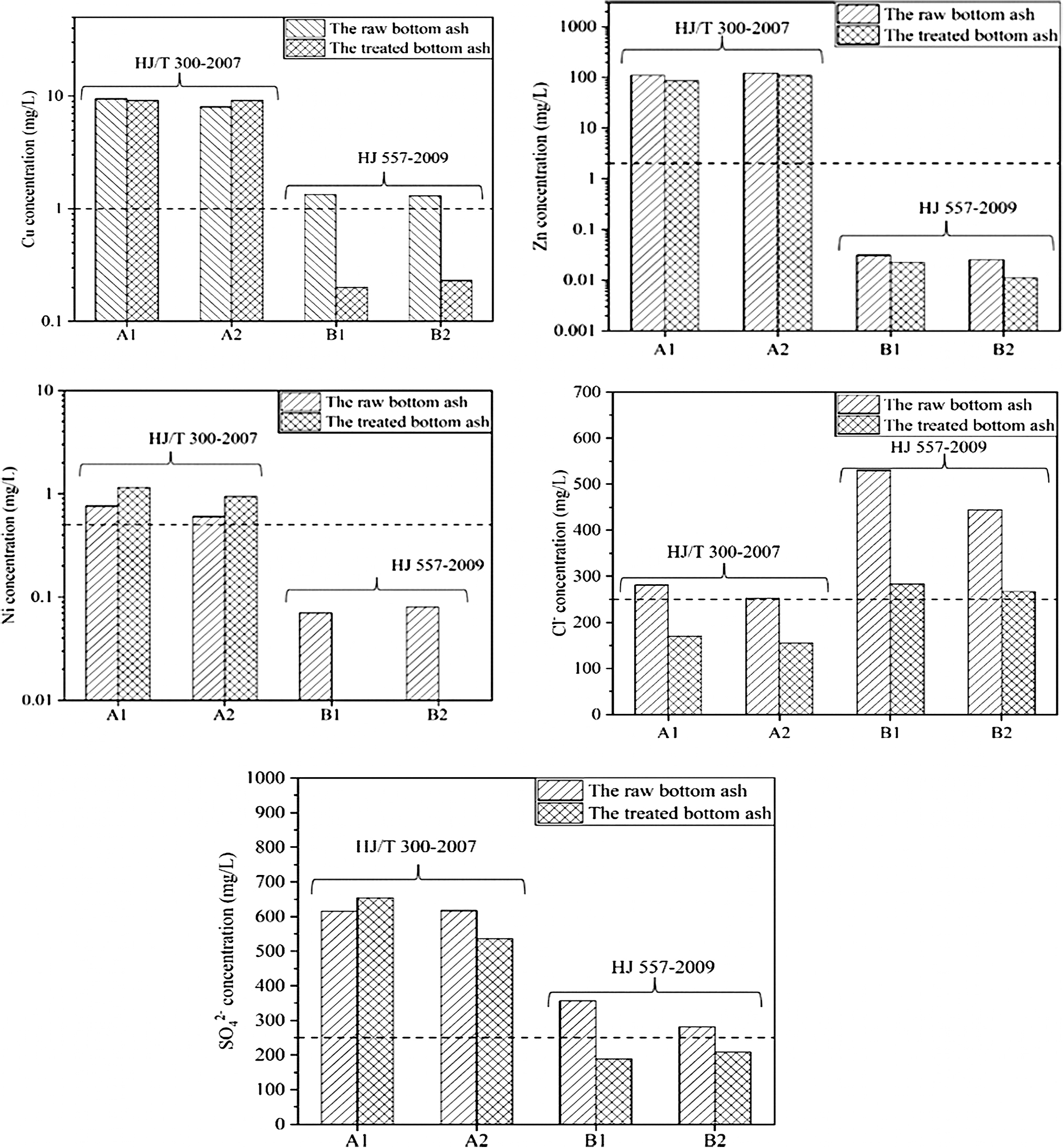
Figure 4 shows the leaching concentration of Cu, Zn, Ni, Cl−, and SO42−. In Fig. 4, the dotted lines represent the limit value of pollutants for class V surface water. In this study, the Chinese criteria of pollutant limits for surface water, specified by GB 3838-2002, were used to compare the environmental quality of the leaching solution derived from the raw and treated bottom ash.
The leaching concentrations of Cu, Zn, Ni, Cl−, and SO42− using HJ/T 300-2007 and HJ 500-2009.
From Fig. 4, it could be seen that the leaching concentration of Zn is the highest, reaching 210 mg/L. It is much higher than 9.42 mg/L for Cu and 1.15 mg/L for Ni. The leaching concentrations of Cl− and SO42− are much higher compared with heavy metals, at 530 and 654 mg/L, respectively. This might indicate that the bottom ash is still enriched in a large number of dissolved salts even after wet treatment. The wet treatment process could be further improved by increasing the amount of circulating water, contact time, and the cleanliness of circulating water during the washing process.
Although the pollution control standard for domestic waste incineration (GB18485-2001) clearly stipulates that the incineration bottom ash should be treated as general solid waste, the obtained leaching results showed that the leaching of Zn is in the range for hazardous waste (>100 mg/L). Furthermore, the leaching levels of Cu, Zn, Ni, Cl−, and SO42− all exceeded the regulated limit values for class V surface water (GB 3838-2002). These findings suggest that better procedures to control the environmental toxicity of reutilized bottom ash are needed.
On both kinds of leaching method examinations, there are significant changes in the leaching concentrations of Cu, Zn, Ni, Cl−, and SO42− for the raw and treated bottom ash. Acidic aqueous solution was used in the toxicity leaching method specified by HJ/T300-2007; much stronger leachability of the targeted heavy metals would be detected compared to HJ 557-2010. This is because HJ/T300-2007 and HJ 557-2010 extraction procedures serve different purposes. The former assesses the leaching risk of inorganic pollutants in solid waste when surface water and groundwater leaching are received, and the later assesses leaching risk of inorganic pollutants in recycling products of solid waste. In this study, both were simultaneously used to conduct a comprehensive investigation for the potential risk of bottom ash reutilization on surrounding environment. For instance, it is necessary to evaluate environmental risk of reutilized bottom ash when exposed to acid rain conditions (pH around 5). Based on the data in Fig. 4, it is shown that the wet treatment process cannot significantly reduce the leaching level of some heavy metals from bottom ash under acidic conditions.
The pH value of the leaching solution could be utilized to characterize and simulate the environmental compatibility of the reutilized bottom ash with its surrounding. Excessive acid can attack the substrate containing heavy metal and induce metal release (Lu et al., 2019). If bottom ash was disposed in a site encountering acid precipitation, the heavy metal leaching may occur when the alkaline constituents in bottom ash are depleted.
Leaching of the targeted heavy metals and Cl
−
using the column leaching method
The spray flow for column leaching was set according to the annual average rainfall intensity in Shanghai, which was 0.5 mm/min. The rainfall intensity was converted to 3.18 mL/min according to the used experimental column setup. Samples A1, A2, B1, and B2 were used for the column leaching tests.
Figure 5 shows the overtime change of leaching concentrations of Cu2+, Zn2+, and Cl−. To conduct the experimental analysis scientifically and reasonably, the number of pollutants was reduced in the column leaching experiment. Only Cu2+, Zn2+, and Cl− were investigated. In Fig. 5, the dotted line is limit value of class V surface water specified by GB 3838-2002. At the early leaching stage from the beginning to the seventh month, the leaching concentration of Cu, Zn, and Cl− kept rapidly decreasing, but parts of leaching values exceeded the limited value. At the middle leaching stage from the 7th to the 13th month, the leaching concentration of Cu, Zn, and Cl− decreased at a lower rate. At the late stage of leaching (from the 13th to the 48th month) is the stable stage for the pollutants leaching, and basically no pollutants are leached. Compared with the raw bottom ash, the leaching levels of the targeted heavy metals and Cl− in the treated bottom ash are relatively low. For instance, the maximum leaching concentration of Zn and Cu from the treated bottom ash was only 0.1 and 2.1 mg/L.
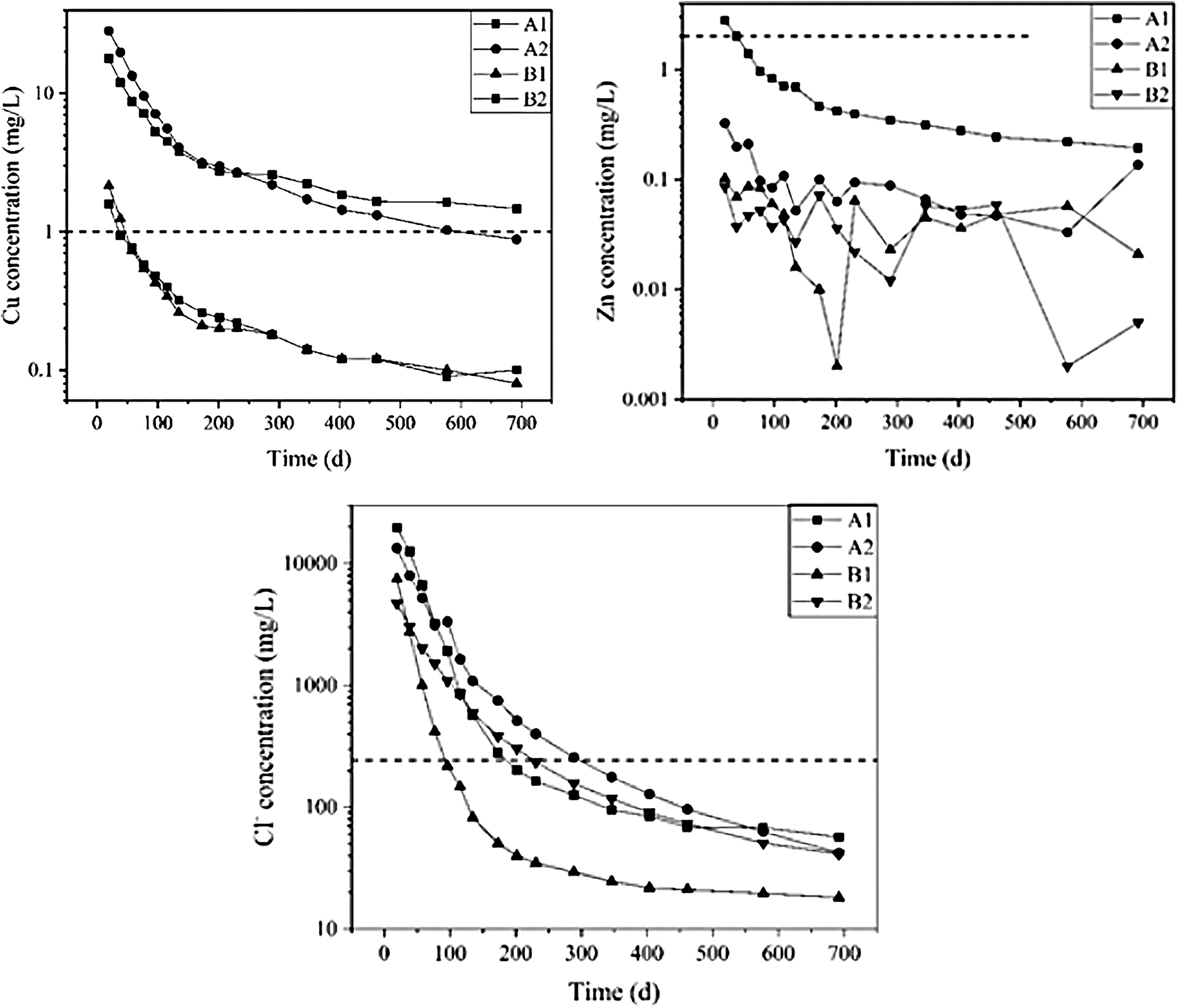
Leaching concentration of Cu, Zn and Cl− as a function of rainfall duration.
For the leaching levels of heavy metals, the tested samples gave an evident tendency from strong to weak: 0–5 mm raw bottom ash (A1), 5–10 mm raw bottom ash (B1), 0–5 mm treated bottom ash (A2), and 5–10 mm treated bottom ash (B2). The results showed that the leaching level of heavy metals from the bottom ash was affected by their size and pretreatment methods. At the experimental rainfall duration, the leaching content of Cu exceeded the standard limitation for surface water at first leaching stage, while Zn showed a leaching level below the standard limitation. The maximum concentration of Cl− was 19,700 mg/L, about 79 times of the limit value. It suggests that while bottom ash is not considered a hazardous waste, more attention must be given to the mitigation of Cu and Cl− leaching in real life applications. Cl− had the highest leaching level, followed by Cu and Zn. However, concentration of Cu in the raw bottom ash is higher than Zn. This could mean that Cu is the most likely to pollute surrounding environment when the ash is exposed to environment of weak acidity.
The results from this study indicate that benefit of wet treatment comes from the concentration decrease of Cu, Zn, and Cl−, especially for Cu2+ and Cl−. For 5–10 mm of raw bottom ash (A1), the leaching level of Zn significantly increased at the last testing stage. It may mean that solid-liquid leaching equilibrium of heavy metals was not achieved during the 2 years of simulated rainfall duration. The results obtained from simulated column leaching verified that the leaching of heavy metals in bottom ash is a very slow process (Zhao and Zhu, 2019), which is affected by contact time, bottom ash type, and particle size.
Conclusion
The wet treatment of MSWI bottom ash is helpful to obtain relatively high efficiency of metal recovery. A large number of bottom ash treatment plants are showing up in China. The leaching characteristics of the targeted pollutants, including Cu, Zn, Ni, Cl−, and SO42−, were investigated by the batch leaching and column leaching tests. The results showed that the major elements contained in bottom ash are Si, Ca, Al, Fe, Na, Mg, Cl, and K, accounting for 53.4–55.3%, while the chemical species of heavy metals, including Zn, Cu, Cr, Mn, Pb, and Ni, accounted for about 0.9–1.5%. The distribution of the major elements is slightly influenced by the wet treatment, except for Cl. The concentration of Cl showed significant decrease after the wet treatment of bottom ash.
SEP results showed that the acid extractable Zn accounted for 22.4–24.5% of the total Zn, the iron manganese oxide bound Ni accounted for 25.2–28.4% of Ni total, and the organic matter bound Cu was relatively high, accounting for 21.4–31.7% of the element's total. It was observed that washing treatment applied on bottom ash reduced the concentrations and leachable amount of the targeted pollutants, but the targeted heavy metals did not experience any significant chemical change. Based on the batch leaching tests, wet treatment could decrease the leaching concentration of Cu by 77.1%, Zn by 34.7%, Ni by 100%, Cl by 30.1%, and SO42− by 51.4%. The acidic aqueous extraction solution contributed a much stronger leachability of the targeted heavy metals than that under ionic water solution conditions. The column leaching tests also proved a significant decrease in Cu, Zn, and Cl− leaching concentration from the treated bottom ash.
Although wet treatment can significantly reduce the leaching concentration of Cu, Zn, and Cl−, their initial leaching concentration still exceeded the limit value of class V surface water specified by GB 3838-2002. It is necessary to take protective measures for the environmental pollution of bottom ash in practical application, especially for the leaching of Cu, Zn, and Cl−.
Footnotes
Author Disclosure Statement
No competing financial interests exist.
Funding Information
The authors want to appreciate the project of the key research and development program of Zhejiang Province (No. 2021C03164), providing financial support for this work.