




Abstract
Embedded pellets obtained by means of embedding activated sludge in polyvinyl alcohol—sodium alginate were successfully adapted in aniline wastewater degradation system. The results of shake flask experiment showed that the combination of sludge and embedded pellets had the best performance in degrading aniline, compared with sludge system and pellet system. Moreover, the application of embedded pellets promoted the toxicity tolerance and operation performance of the reactor. The enhanced reactor could completely degrade aniline and ammonia nitrogen in 150 and 240 min, and the total nitrogen removal rate increased by 26.83%. Meanwhile, high-throughput sequencing results illustrated that the addition of embedded pellets can effectively protect the diversity of functional microbial community. The average relative abundances of main functional genera such as Hydrogenophaga (aromatic amine compounds degradation and heterotrophic nitrification-aerobic denitrification), Norank_f__ Microscillaceae (nitrification), Brevundimonas (heterotrophic nitrification-aerobic denitrification), and Flavobacterium (denitrification) increased by 50.63%, 73.45%, 99.71%, 89.6%, 72.01%, and 95.70%, respectively.
Introduction
As a toxic aromatic amine organic compound, aniline is widely used in many industrial fields (Hidalgo et al., 2014). In 2016, the worldwide production of aniline has exceeded 5.6 million tons (Jin and Yan, 2021). Although there are a large number of physical and chemical methods to remove aniline, they are all faced with high cost and secondary pollution problems. Meanwhile, the toxicity, carcinogenicity, and biological accumulation of aniline determine that its biological treatment is a severe test (Peng et al., 2020). Even so, since the mid-1980s, a number of researchers have found that aniline is biodegradable (O'Neill et al., 2000).
In recent years, some biological methods have been proposed for the degradation of aniline wastewater, aerobic granular sludge reactor was used to enhance aniline wastewater degradation (Jiang et al., 2017). High-efficiency aniline-degrading bacteria were applied in a sequential batch reactor to realize the treatment of high-concentration aniline wastewater (Li et al., 2020a). In particular, aniline, in the presence of aerobic microorganisms, is first converted to catechol and releases ammonia nitrogen (Jiang et al., 2019). However, aniline will damage the enzyme system in microorganisms (Zhang et al., 2020), especially for nitrifying bacteria with long growth cycle and high toxicity sensitivity. Therefore, nitrification and denitrification often become the bottleneck of stable operation in aniline degrading biological system.
As early as 2002, Prieto et al. (2002) had already immobilized Rhodococcus erythropolis UPV-1 for phenol degradation and concluded that immobilization protected cells against phenol. Previously, a scholar has embedded activated sludge in an attempt to enhance the biological nitrogen removal through simultaneous nitrification and denitrification (Zeng et al., 2017). Shao et al. (2016) reported that Burkholderia sp.YX02 with heterotrophic nitrification-aerobic denitrification function was embedded and put into a continuous flow reactor to enhance the microbial diversity. Embedding immobilization technology can not only preserve the dominant species but also desensitize microorganism to environmental stimuli and improve their resistance to environmental shocks (Ali et al., 2015). Therefore, in the face of the pressure of aniline on microorganisms and their limited nitrogen metabolic activity, it is of great significance for the aniline wastewater treatment field to try to enhance the operation of aniline system by using embedded sludge pellets.
In this research, embedded sludge pellets were applied for the reactor to evaluate whether the aniline degradation rate and subsequent nitrification and denitrification capacity of the system are enhanced. Therefore, the purpose of this research is to (1) analyze the physical and chemical properties of the embedded pellets and the sludge; (2) investigate the specific effects of the enhanced sequencing batch reactor (SBR) system on aniline degradation and nitrogen metabolism reactions after embedded sludge pellets were added; and (3) assess the diversity of the microbial community of the activated sludge after adding the embedding pellets and analyze the function changes.
Materials and Methods
Embedded pellets
Embedded pellets (sphere with 3 mm diameter, white, odorless, density of 1.000 g/cm3) were manufactured by methods of embedding activated sludge, as illustrated in previous article (Xu et al., 2017a). The activated sludge was obtained from aerobic tank of a municipal wastewater treatment plant located in Wuhan, China. A polyvinyl alcohol—sodium alginate (PVA-SA) solution was prepared with 10% (w/v) PVA (with a polymerization degree of 1,750 ± 50; Shanghai, China), 0.8% (w/v) SA (Shanghai, China), and activated sludge accounting for 10% of the total volume of the mixed solution.
Physical properties of embedded pellets
The surface and cross sectional morphological characteristics of the embedded pellets and sludge were examined by scanning electron microscopy (SEM) (JSM-IT300; JEOL, Japan) (Dong et al., 2016). Samples of embedded pellets and activated sludge were collected before and after SBR system were enhanced, respectively. After optimum cutting temperature freezing and embedding, the embedded pellets were cut into two parts along the axis of the center. The preparative surfaces and cross sections of the immobilized pellets were sputtered with gold for SEM observations. BET surface area (Brunauer, Emmett and Teller, BET), pore volumes, pore size distributions (Barrett, Joyner and Halenda, BJH method), and average pore sizes of embedded pellets were extracted from the N2 isotherm data by applying respective numerical models (Kim et al., 2014).
Composition of synthetic aniline wastewater
The aniline wastewater utilized for shake flask test experiment contained (per L): KH2PO4, 21.9 mg; K2HPO4, 36.8 mg; trace elements solution, 1 mL; and the content of aniline was 50, 100, and 200 mg, respectively. The synthetic aniline wastewater for the reactor was the same as for the shake flask experiment except for changes in carbon and nitrogen sources. The additional carbon (sodium acetate) and nitrogen sources (ammonium sulfate) were added to ensure the stable start-up of the aniline degradation reactor. Their addition amounts were determined by ensuring that the total nitrogen (TN) (around 30 mg/L) and chemical oxygen demand (COD) (around 450 mg/L) concentrations in the influent are consistent with the 200 mg/L aniline wastewater, and specific data are shown in the Table 1.
The Formulation of Synthetic Aniline Wastewater in the Reactor
Trace elements solution consisted (per L): MgSO4·7H2O, 0.1 g, FeCl3·6H2O, 0.01 g, H3BO3, 0.15 g; CuSO4·5H2O, 0.03 g; KI, 0.18 g; MnCl2·4H2O, 0.12 g; Na2MO4·2H2O, 0.06 g; ZnSO4·7H2O, 0.12 g; COCl2·6H2O, 0.15 g; and EDTA-2Na, 1 g (Jiang et al., 2016).
Shake flask test setup
The shake flask experiments were conducted using synthetic wastewater with different aniline concentrations, in which the concentration of aniline was 50, 100, and 200 mg/L, respectively. Three kinds of shake flask experiments were designed, which were only sludge, only embedded pellet, and embedded pellets mixed with sludge. The working volume of the flasks was 150 mL, the pellets packing ratio (volume ratio) was 50%, and the operation cycle was 12 h. The experiments were run in triplicate, and the arithmetic mean of replicates was used as the final value.
SBR apparatus and experimental conditions
SBR reactor with working volume of 1,000 mL (semidiameter: 75 mm, height 115 mm) was applied, synthetic wastewater was used for SBR experiment. The compositions were illustrated above in 2.2, and the concentration of aniline was 200 mg/L. Air was introduced through stone air diffusers keep the dissolved oxygen in the range of 5–6 mg/L during the aeration phase. The seed sludge was obtained from aerobic tank of a municipal wastewater treatment plant located in Wuhan, China, and the mixed liquor suspended solids was 3,000 mg/L. The operation cycle of the SBR comprised four phases: feeding phase (1 min), aeration phase (330 min), settling phase (25 min), and discharging phase (4 min). SBR only containing sludge was acclimated in synthetic wastewater with aniline concentrations of 50, 100, and 200 mg/L. Part of activated sludge (20%) in the reactor was taken out to make embedded pellets and added to the reactor for further operation when all effluents' parameters were stable. Subsequent experiment was performed for 28 cycles. Aniline, NH4+–N, NO2−–N, NO3−–N, TN, and COD were determined according to the standard methods (APHA, 2012). The experiments were run in triplicate, and the arithmetic mean of replicates was used as the final value.
Microbial diversity analysis by high-throughput sequencing
The sludge samples before enhancement were taken on the 15th day (1-1, 1-2 and 1-3), and sludge samples after enhancement was collected from the 28th cycle (2-1, 2-2 and 2-3) in triplicate. The extraction and amplification of DNA were performed as reported article (Li et al., 2020b) and then the polymerase chain reaction products of six samples were further sequenced on the Illumine MiSeq platform by research and testing laboratory (Lubbock, TX) to investigate the diversity and community structure (Shanghai Majorbio Bio-pharm Technology Co., Ltd). The acquired data were analyzed on Majorbio I-Sanger Cloud Platform.
Result and Discussion
Characteristics of embedded pellets
Figure 1a showed that there were few spherical, rod-shaped, and irregular particles on pellets peripheral surface, while Fig. 1b and c showed that the pellets had a porous structure, which provided pathways for the transfer of oxygen and other substrates into the activated sludge at channels. According to Supplementary Fig. S1, the curve as a whole is in the reverse “S” shape, which is relatively in line with the type VI isotherm defined by International Union of Pure and Applied Chemistry. At low pressure, the adsorption curve rises slowly, indicating that there is less micropore content in the embedded pellets. When P/P0 exceeds 0.8, the adsorption capacity rises rapidly, but there is no adsorption saturation, which indicated that capillary agglomeration occurs during the nitrogen adsorption process, and the embedded pellets contain a certain amount of mesopores and macropores which is consistent with the results in Supplementary Table S1. This is consistent with Fig. 1b in SEM observation. Therefore, the structure characteristics of the pellets were beneficial to the subsequent experiments.

SEM images of the embedded pellets.
Shake flask tests
In the shake flask tests, it can be seen in Fig. 2 that the three systems played an excellent aniline degradation performance and had a certain degree of impact resistance in the concentration of 50 and 100 mg/L aniline wastewater. Meanwhile, it could be found that the adaptability of activated sludge to aniline was better than the other two systems. However, the stability of the three systems was broken when the concentration of aniline raised to 200 mg/L, especially in the activated sludge system where aniline had caused irreversible damage. The embedded pellet system and the mixed system maintained aniline degradation rates of more than 50%, indicating that the embedded pellets increased the toxicity resistance of the system. This proved that embedded pellets have a certain toxicity resistance as reported before (Xu et al., 2017b).
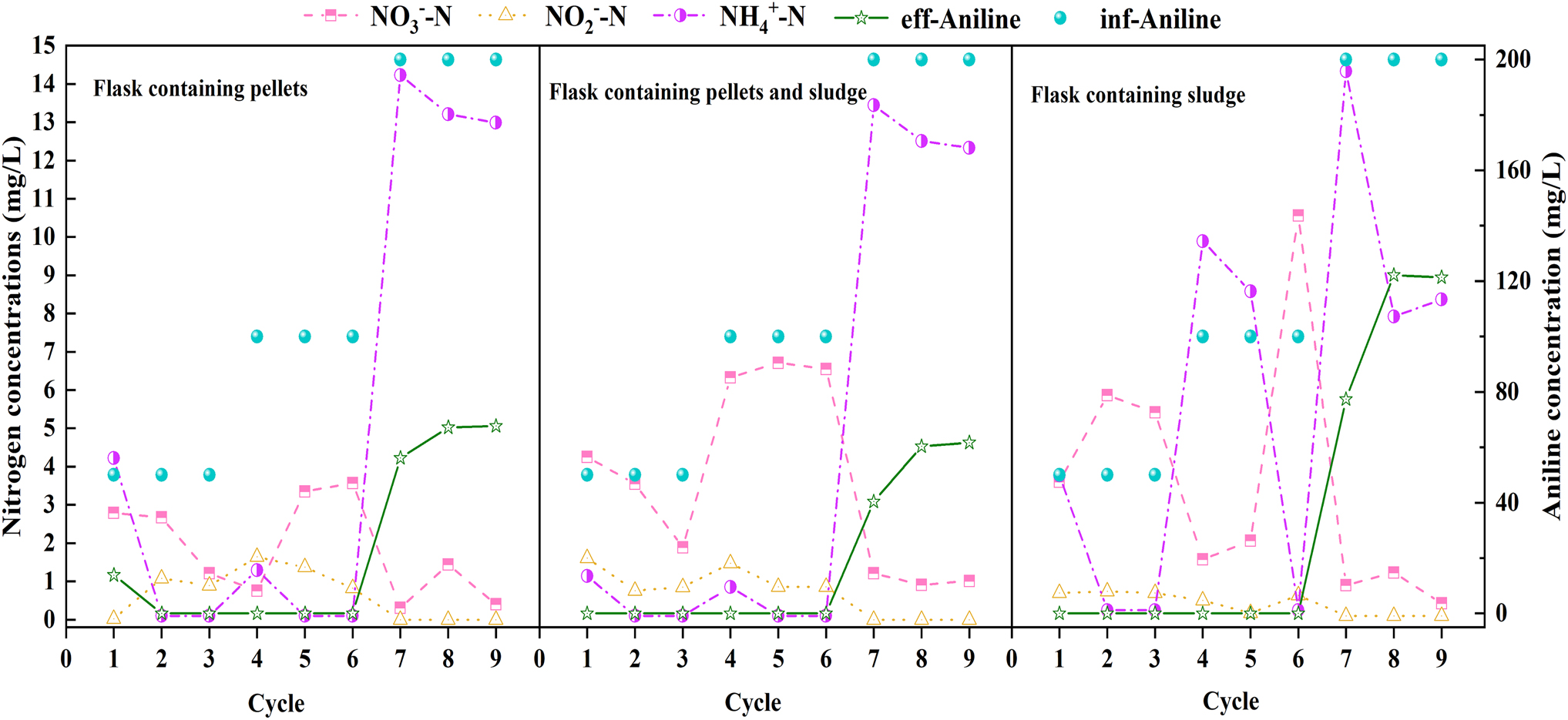
Effluent parameters of shake flask tests.
It can be found that nitrogen metabolism fluctuates with the increase of aniline concentration in three systems. In 100 mg/L aniline synthesis wastewater, the nitrification function of the sludge system fluctuated dramatically. On the contrary, the two systems containing embedded pellets were more stable at relatively low aniline concentrations. This may be because the multispatial structure of the pellets provides more niches, allowing nitrifying bacteria susceptible to aniline to inhabit niches that mitigate aniline impacts. When the concentration of aniline rose to 200 mg/L, the residual aniline that could not be biodegraded in systems would continue to inhibit nitrifiers so that the concentration of ammonia nitrogen increased significantly. Interestingly, it was found that denitrification occurred in all three shake flasks cultured in the totally aerobic environment, and the denitrification efficiency was higher in the shake flasks with embedded pellet. On the one hand, bacteria with aerobic denitrification function exist in the sludge itself, and on the other hand, anoxic zone may be formed inside the pellet, so that the system can carry out denitrification reaction smoothly in the aerobic environment.
In summary, the shake flask experiment proved that embedded sludge pellets can significantly improve the system performance about aniline wastewater degradation.
Nutrient and aniline removal performance in SBR
COD and aniline removal
According to Fig. 3, in the acclimation stage, all the three systems could completely degrade 50 and 100 mg/L of aniline, but when the concentration rose to 200 mg/L, the system appeared disturbance, then gradually stabilized, and finally the degradation rate of aniline reached 95.42%. Embedded pellets were added at the end of the acclimation stage. It could be found that 200 mg/L of aniline was completely degraded in system lasted for 28 cycles, which fully demonstrated the strengthening effect of pellets on SBR. Meanwhile, the changing trend of COD removal rate is basically the same as that of aniline degradation rate, and the COD removal rate also reached 95.6% under the condition of complete degradation of aniline. This indicated that the complete degradation of aniline has been achieved in this system, and almost all of the intermediate products have been utilized by microorganisms. It is worth noting that under the condition of complete degradation of 200 mg/L aniline, the COD value of the effluent is higher than that in the environment with low aniline concentration. This may because the higher concentration of aniline will cause the death of more microorganism individuals, resulting in higher biomass-associated products (Barker and Stuckey, 1999), which will lead to the rise of COD in the effluent.
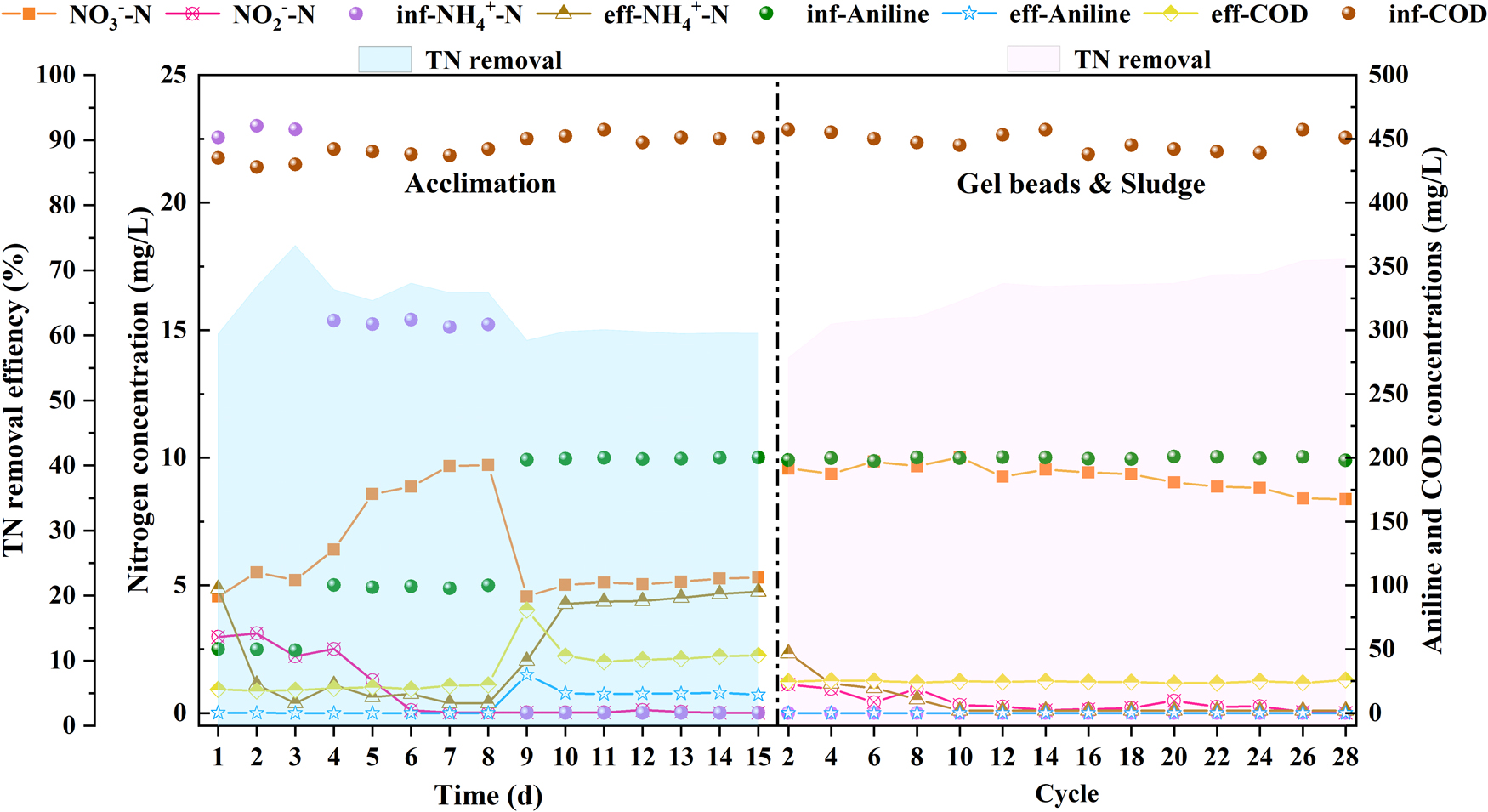
The effluent parameters during acclimation and after adding pellets.
Nitrogen removal performance
Figure 3 showed that the effluent ammonia nitrogen drops to <1 mg/L under the influent aniline conditions of 50 and 100 mg/L, indicating that the system containing only sludge also has a certain impact resistance. However, similar to the results of the shaking flask experiment, nitrification in the system was inhibited when aniline could not be completely degraded, and the effluent ammonia nitrogen concentration eventually stabilized at about 4.5 mg/L. After enhancing the SBR, the nitrification performance of the system was not recovered as quickly as the degradation of aniline, but the system finally achieved nearly 100% nitrification effect after several cycles of adaptation. On the one hand, the pellets enhanced the aniline degradation performance of the system and reduced the aniline inhibition time on nitrifying bacteria during each cycle; on the other hand, the impact resistance of the pellets provides protection for nitrifying bacteria within the pellets. The concentration of nitrate in the final effluent was around 8 mg/L and TN degradation rate of the system reached 71.70% at the condition of 200 mg/L aniline in enhanced reactor. This indicated that the addition of pellets was undoubtedly beneficial to the realization of aerobic denitrification in the reactor. This was because the internal area of the pellet could provide anoxic environment during the aerobic stage (Ji et al., 2015). Meanwhile, the internal pore structure of the pellet can form multiple differentiation of the ecological niche, enabling the harmonious coexistence of aniline degrading bacteria, nitrifying bacteria, and denitrifying bacteria, which is conducive to the nitrogen cycle of the whole system.
SBR effluent study in the typical cycle
Figure 4 showed the aniline degradation and nitrogen metabolism variations during a typical cycle in SBR, which was taken from the last cycle. It can be seen that aniline can be completely degraded in the first 150 min of this cycle, which is different from the fact that the system cannot completely remove aniline in the process of acclimation within 6 h before enhancement. In this process, the residual NO3−–N from the previous cycle was almost completely removed. This suggested that denitrifying bacteria in the system may directly use aniline as carbon source for denitrification. Meanwhile, it was obvious that COD also degraded to the low concentration at the 150th min, indicating that the intermediate products of aniline metabolism can also be rapidly degraded by this system. Then, the nitrification was initiated and completed within 240 min, which showed that the system had effective protection for nitrifying bacteria. In the remaining time of the cycle, the system gradually carried out denitrification reaction with and the nitrate concentration eventually stabilized at about 8 mg/L. In an aerobic environment with limited carbon source, the system still removed about 4 mg/L of nitrate within 90 min, which undoubtedly reflected the active nitrogen metabolism activity of the enhanced system. Meanwhile, finally, the SBR added with pellets achieved 95.6% COD removal rate during the whole cycle.
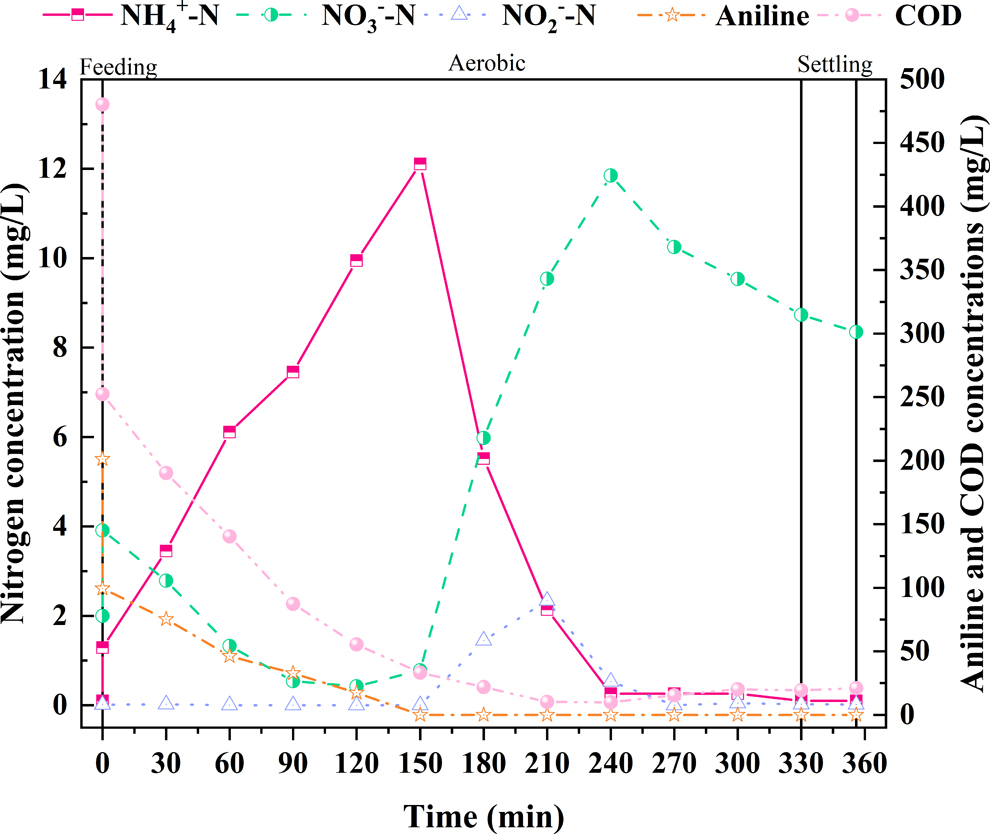
The aniline degradation and nitrification and denitrification in the typical cycle in SBR. SBR, sequencing batch reactor.
Microbial diversity analysis by high-throughput sequencing
Richness and diversity of the microbial community
By performing partial least squares–discriminant analysis on the activated sludge taken from SBR before and after adding embedded pellets, it can be seen from Fig. 5 that there is significant difference between groups, which indicated that the addition of embedded pellets has an obvious impact on the SBR system. The specific analysis will be described later.
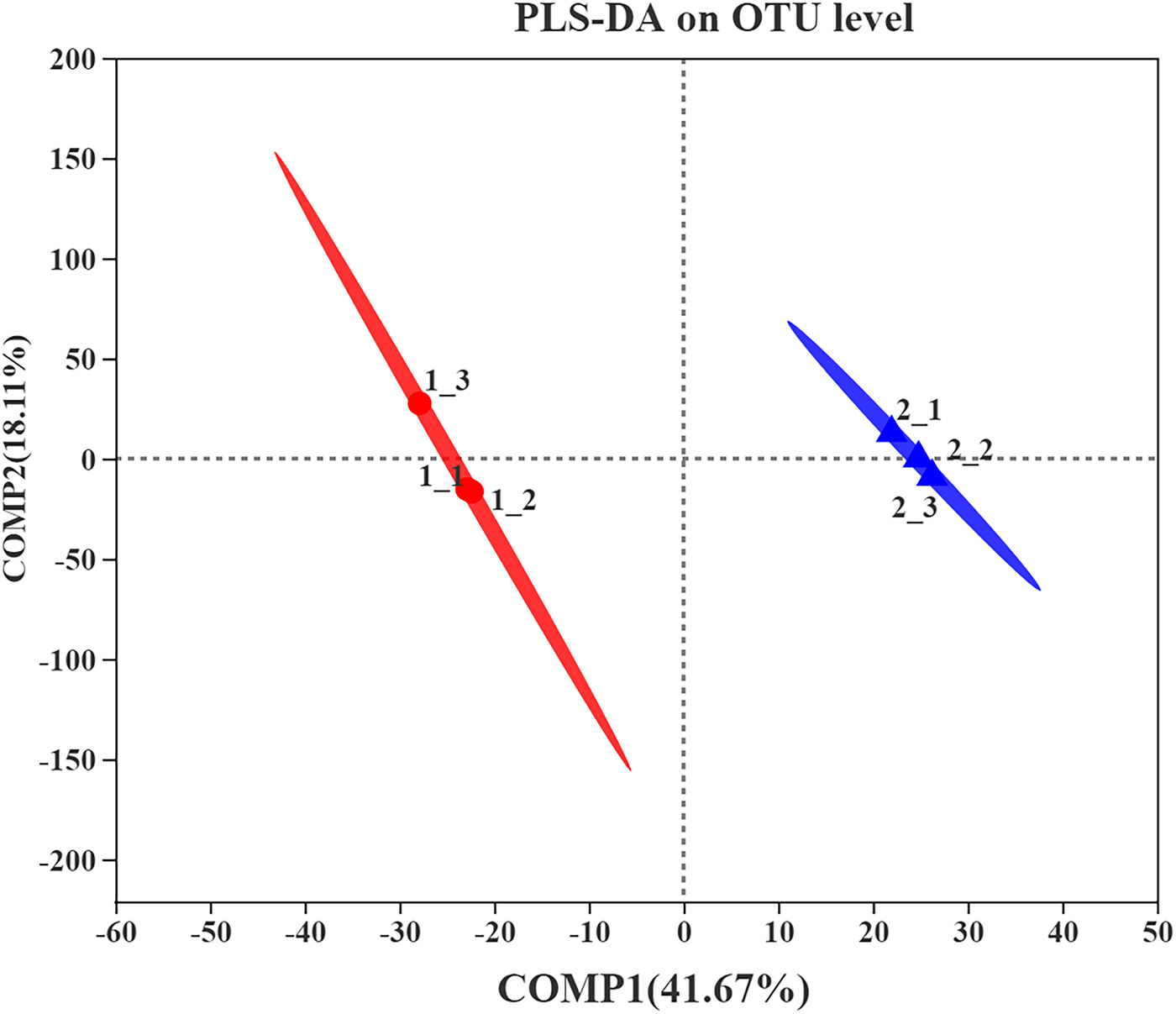
PLS-DA of six samples on OTU level. OTU, operational taxonomic unit; PLS-DA, partial least squares–discriminant analysis.
Species richness and diversity estimators, including operational taxonomic units, Chao, Shannon, Ace and Coverage, are summarized in Supplementary Table S2. The coverage indexes in all six samples were all more than 0.99, which indicated that the sequencing results represent the real condition of the samples. Supplementary Figure S2 showed the OTUs of the six samples were 1,455, 1,425, 1,462, 1,327, 1,336, and 1,224, respectively, illustrating that application of embedded pellets decreased the microbial diversity. Meanwhile, the curves of the three samples declined smoothly before the application of embedded pellets, indicating a high diversity of species in the samples. However, the curves declined rapidly and steeply after the application of embedded pellets, indicating a high proportion of dominant flora in the samples and a relatively low diversity. It can be concluded that the application of embedded pellets could improve the microbial composition in the SBR and increase the number of dominant bacteria in the subsequent cycle, which made it have a better degradation efficiency for aniline wastewater.
Microbial community at phylum, class, and genus level
As shown in Fig. 6a, there was a significant difference in the abundance of bacteria at the phylum level, which demonstrated that the microbial community structure was influenced by embedded pellets in SBR. Distributions of microbial communities at the phylum, class, and genus levels in the SBR system are shown in Fig. 6. Obviously, Proteobacteria, Bacteroidetes, and Chloroflexi were the top phyla in all six samples, these phyla abundance accounted for over 65%. The bacteria of these three phyla are important common populations in treatment systems of wastewater, and they are reported to have the capabilities to degrade complex organic matter and enhance nitrogen removal in SBR systems (Shen et al., 2013; Ye et al., 2018). Among them, Bacteroidetes and Chloroflexi have good denitrification for high concentration nitrate, which was reported in previous study (Yi et al., 2016). The most dominant bacterial classes of the six samples were Bacteroidia, Gammaproteobacteria, and Alphaproteobacteria as is shown in Fig. 6b. Li et al. (2020c) has proved that Bacteroidia has good nitrification capacity and is sensitive to environmental changes. It was reported that Gammaproteobacteria has good denitrification effect in wastewater that has high concentration of nitrite (Yi et al., 2016). From what has been discussed above, the bacteria with the ability of organic degradation and nitrification and denitrification were the most dominant at both phylum level and class level. The majority of them increased significantly in enhanced SBR system, which suggested that SBR system's abilities of COD degradation, nitrification, and denitrification improved greatly with the addition of embedded pellets.
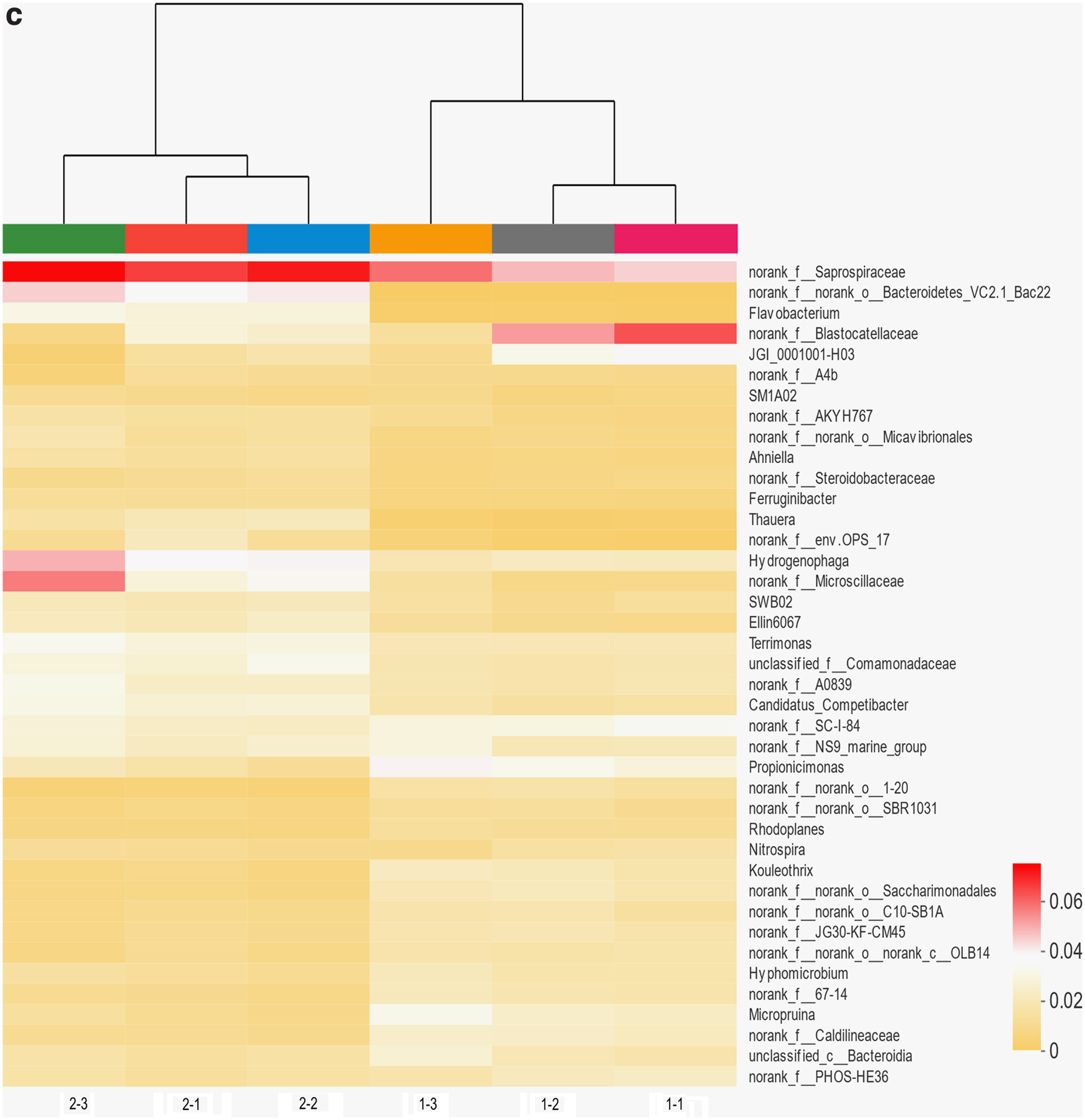
Microbial community profiles for the six periods at
Figure 6c showed that the genus could degrade organic matter and aromatic amines deserved attention. In previous studies, it has been known that Hydrogenophaga and Acinetobacter have the function of removing aromatic amines (Gan et al., 2011; Li et al., 2020b), and norank_f__Saprospiraceae has the function of degrading COD (Xu et al., 2018). Their abundance in this SBR system all increased after enhancement, which indicated that the additional pellets were beneficial to the enrichment of aniline degrading bacteria and COD degrading bacteria. The enhancement of the nitrification performance of the system by the pellets was also reflected in the functional genera, as autotrophic nitrifying bacteria Ellin6067 (Qiu et al., 2020) and SM1A02 (Tian et al., 2017) enriched in the reactor after the addition of pellets. Meanwhile, the abundance of Nitrospira also remained relatively stable in the enhanced system. Generally speaking, autotrophic nitrifying bacteria, due to their own characteristics, are often unable to tolerate the impact of toxic substances (Gu et al., 2018). Therefore, these phenomena suggested that the application of the pellets, sharing the stress of aniline toxicity and the pressure to degrade aniline, allowed the nitrifying bacteria of the whole system to survive better. Moreover, a large number of bacteria related to heterotrophic nitrification and aerobic denitrification function also enriched in the enhanced system. The abundance of Brevundimonas, Hydrogenophaga, Acinetobacter, and Flavobacterium (Yao et al., 2013; Chen et al., 2016; Tan et al., 2020) increased to contribute their own strength for the nitrification function of the enhanced system. Meanwhile, these functional genera also played an important role in the denitrification performance of the system. In addition, the other denitrifying bacteria, Thauera (Pishgar et al., 2019) and Terrimonas (Liu et al., 2020) also significantly enriched in the enhancement system. This echoed the macroscopic phenomenon that the system can remove nitrogen effectively even under aerobic conditions. In conclusion, the enrichment of these functional genera confirmed fully that the embedding pellets had improved the aniline degrading nitrifying and nitrifying environment in the reactor.
Prediction of metabolic function of the microbial communities
To investigate whether the introduction of embedded pellets in the SBR system affected the metabolic functions of the microbial communities, Phylogenetic Investigation of Communities by Reconstruction of Unobserved States (PICRUSt) based on the Cluster of Orthologous Groups (COG) database was used and the description information of each COG and its functional information were analyzed to obtain the functional abundance spectrum. The result is shown in Fig. 7. Among them, the functions related to amino acid transport and metabolism, energy production and conversion, inorganic ion transport and metabolism, cell wall/membrane/envelope biogenesis, and signal transduction mechanisms account for the highest proportion. There was no significant change in average relative abundance after the addition of embedded pellets. The result showed that there was no significant difference in the metabolic function of the microbial communities of enhanced SBR, which indicated that the introduction of embedded pellets did not antagonize the activated sludge in the system, such as competing for the nutrients of the activated sludge, thus decreased the aniline degradation and subsequent nitrification and denitrification of the activated sludge, which made the application of combination of embedded pellets and activated sludge possible.

COG function classification and relative abundance of six samples. COG, cluster of orthologous groups.
Conclusion
This study investigated whether adding PVA-SA pellets embedded sludge could enhance the aniline degradation, nitrification, and denitrification in SBR system. The embedded pellets had porous structure which showed efficient mass transfer ability. After the application of embedded pellets, the SBR system could degrade aniline effectively, realized nearly 100% nitrification, and 71.7% TN removal rate. The average relative abundance of functional bacteria with aromatic amine degradation, nitrification, and denitrification functions increased obviously in enhanced SBR. This was the first time that the embedded activated sludge pellets were applied to the SBR system to enhance the aniline and simultaneous nitrogen removal, which laid a foundation for the application of embedded pellets in the field of aniline wastewater treatment.
Footnotes

References
Supplementary Material
Please find the following supplemental material available below.
For Open Access articles published under a Creative Commons License, all supplemental material carries the same license as the article it is associated with.
For non-Open Access articles published, all supplemental material carries a non-exclusive license, and permission requests for re-use of supplemental material or any part of supplemental material shall be sent directly to the copyright owner as specified in the copyright notice associated with the article.
