




Abstract

William A. Arnold
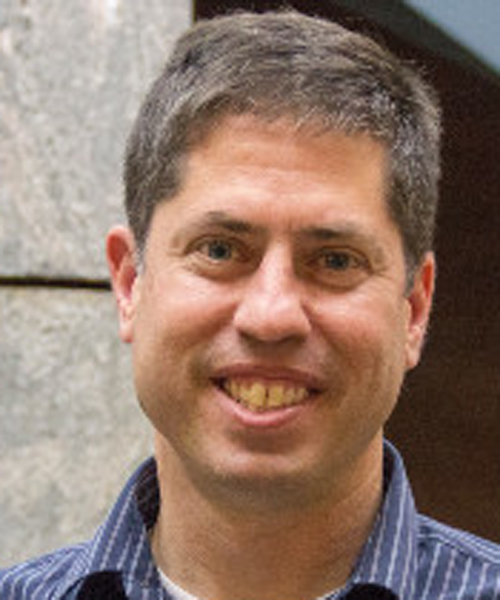
As I am writing this, we are back on campus en masse for the first time since March of 2020. We are all experiencing different scenarios. Some of us are in places where people are required to be vaccinated and wear masks, and others are at institutions where there are no requirements or restrictions. The start to the academic year has been scary, exciting, and stressful. We not only have to worry about preparing lectures and training new researchers, but also how best to manage the safety of our students in laboratories and classrooms with respect to coronavirus disease 2019 (COVID-19) exposure. In addition, we have to consider those we affect who are outside our place of work.
I know the choices of our employers and political leaders have led to many difficult discussions and decisions for all of you, and some of you are feeling more supported than others. I specifically want to acknowledge new assistant professors and new graduate students and postdoctoral researchers who started their positions during the past 18 months. You have faced challenges to which none of your predecessors can fully relate, and I hope you know we are all impressed with your perseverance.
Even with these challenges, I have seen many examples of the AEESP community coming together and providing support to colleagues, friends, family, and the public at large. When someone tweets they are feeling stressed, worried, or frustrated, it is nice to see AEESP colleagues responding with well wishes and support.
Interestingly, the impacts of the pandemic have encouraged the need for me to operationalize the goals of our new AEESP strategic plan. I will admit for me, the words “strategic plan” immediately bring to mind the image of the pointy haired boss from Dilbert. The effort in which we engaged, however, was truly inspirational. The process we used brought together a broad spectrum of our AEESP community. Everyone involved was engaged with and excited by the work, and I feel we were able to gather and highlight key ideas that will drive our organization and community forward.
For our first theme, Academic Career Networks and Skills, we need to continue to build on the connections we have to support each other as we navigate our career cycle. We need to ensure that those entering our ranks have a support network and are able to set goals and work–life balance. We need to enable AEESP members seeking leadership positions within and beyond academia. Many of the communication tools we have used over the past year and a half provide us opportunities to be more connected.
Our second theme, Impact of Members' Scholarship and Creative Expression, is focused on helping AEESP members communicate what they do and the impact of their work. My social media stream has shown me a long list of people demonstrating the importance of environmental engineers during the pandemic. A prime example is people building “Corsi/Rosenthal” boxes for their offices and for classrooms (for their students and their children). Wastewater monitoring for severe acute respiratory syndrome coronavirus 2 (SARS-CoV-2) entered the mainstream, and we have all seen our air/particulate expert colleagues discuss virus transmission and the importance of masks and air exchange rates per hour.
Among all the challenges brought by the pandemic, amazingly the field of environmental engineering and science has received attention. We need to continue to seek opportunities as an organization to highlight the work performed by environmental engineers and scientists within and beyond AEESP, including publications in Environmental Engineering Science. We also need to continue to work to have the experts in our community heard by decision makers at local, national, and global levels. Lastly, we need to make sure that AEESP does what it can do best, and develop and leverage partnerships with other professional organizations.
One of our main goals as faculty is to train and help shape the environmental engineering and science workforce. Our third theme focuses on increasing our reach to ensure we have a diverse and inclusive workforce within and beyond academia. Plans include reinvigorating our partnerships with sustaining members, finding ways to increase the visibility of the profession, and planning for deep discussions about our educational goals and pathways.
Now that we have a strategy in place, how do we embody our organization's vision and mission? The process will certainly span the service of multiple AEESP presidents, but my specific goals for the year have been shaped by our strategic planning discussions and include:
expanding our networking and mentoring infrastructure, finding connections with other professional organizations to leverage opportunities, seeking to broaden membership and continue the work of broadening participation of under-represented groups in environmental engineering and science, highlighting the work done by AEESP and its members, developing a community engagement and outreach taskforce, and reviewing and improving how AEESP, the board of directors, and committees work.
The board of directors has already started the process of identifying objectives that can be accomplished quickly, plotting longer term goals for the organization, and setting an overall vision. As president, my plan is to have the board provide input to the committees and empower them with the flexibility to act so that we can efficiently make progress.
Our goals are big, and it will take time and effort to fulfill them. As an all-volunteer organization, we have to recognize the oncoming and rapid challenges in some areas versus others. Yet, I have seen the dedication of the AEESP members over many years, and I am confident that many of you will step up to the challenges. We will also make mistakes—I know I have made them—and we will not always live up to our ideals. As individuals and as an organization, it is important to learn, enact continuous improvement standards, and keep moving forward to help our members, our organization, and the students, stakeholders, and partners for whom we serve.
I would like to close by saying I am truly honored to be serving as president of AEESP for the 2021–2022 year. It has been a pleasure to work (this past year virtually) with Joel Ducoste, Allison MacKay, Helen Hsu-Kim, Rob Nerenberg, Amy Pruden, Willie Harper, Treavor Boyer, Junko Munakata Marr, and Debora Frigi Rodrigues. We will miss Amy, Helen, and Joel, but I am looking forward to engaging with and hearing the ideas of our new board members, Lee Blaney, Susan Masten, and Mira Olson. My perspective and experience were also shaped by previous board members, and you all have my thanks.
I hope you will enthusiastically support and participate in the AEESP activities and endeavors in the coming year, and I look forward to seeing you all in St. Louis in 2022, and as of yet to be determined conference site in 2023!