




Abstract
Under global climate change and resource crisis, the correlation and restriction between energy, water, and carbon emission are increasingly prominent, which has posed great challenges for the sustainable development of energy systems. This article develops a dual-interval stage-fuzzy credibility-constrained programming model for regional energy system management problems with energy–water nexus (EWN) and carbon emission reduction, in which uncertainties expressed as discrete intervals, probability distributions, and dual-interval fuzzy numbers can be addressed. It can provide a trade-off among economic cost, system risk, and environmental objective. Then, the hybrid programming method is applied to a case of Guangdong Province, China to verify its applicability, where a series of scenarios with respect to water resources and carbon emission constraints are explored and examined. The robust solutions of optimal strategies for electricity generation, capacity expansion, water supply, and carbon capture are investigated and obtained. Results disclose that different scenarios associated with water resource availability and carbon emissions would deeply affect the EWN system planning: (1) Compared with low carbon emission standard, the proportion of renewable power generation under high carbon emission scenario would increase by [1.39, 1.68] %, [1.69, 2.35] %, and [1.49, 1.94] % in periods 1–3, respectively. (2) Scarce water availability scenario would restrict coal-fired power generation and simulate the development of renewable energy. These findings can be useful for decision makers to gain deep insights into energy system management in a sustainable way considering energy structure adjustment, multiple uncertainties, EWN, and carbon emission reduction.
Introduction
The consumption of fossil fuels is increasing rapidly all over the world, which has led to a series of severe issues, such as the imbalance of supply and demand structure, the worsening of resource constraints, the excessive emissions of greenhouse gas, and the deterioration of ecological environment. For example, in China, the coal consumption amount of power industry dominated by thermal power was up to 2.29 billion tons in 2019, which contributed about 42% of the country's total carbon emissions. Faced with global climate change and energy crisis, it is an inevitable choice to carry out scientific and rational energy system management and planning to adjust energy structure and promote green and low-carbon development (Yang et al, 2022). However, while exploring the effective optimal allocation of energy system, the issue of water resource consumption cannot be ignored. In fact, water and energy, as two fundamental resources for economic development and social progress, are closely interrelated and restricted, which has attracted worldwide attentions (Cai et al, 2019; Howells and Rogner, 2014; Gjorgiev and Sansavini, 2018).
Especially, in China, electric power system with high-energy intensity consumes abundant water resources in the whole chain of energy exploitation, processing, power generation, and tail gas treatment. The water consumption in the thermal power industry reached up to 51.75 billion m3 in 2019, occupying 42.5% of total industrial water consumption. Therefore, it is urgent to incorporate water management into the category of energy system optimization to seek for long-term optimal sustainable strategies coupled with carbon emission reduction.
Previously, many studies have been carried out to analyze the correlation between energy and water from different perspectives (Stang et al, 2018; Xu et al, 2021). For example, Larsen and Drews (2019) used a comprehensive analysis approach to estimate the unit water consumption by electricity conversion technologies of European energy system from a static point for larger scale water–energy nexus management. Vaca-Jiménez et al (2019) proposed a water footprint framework to evaluate electricity generation, water availability, and water consumption from temporal and spatial dimensions in Ecuador. Based on long-range energy alternatives planning and water evaluation and planning, Liu et al (2021) developed an integrated energy–water model to investigate different policies and its nexus effect with respect to energy and water saving in Beijing, where 26 scenarios were designed. Wang et al (2022) combined the analysis of energy supply and water consumption with the traditional CHP operation optimization model.
Recently, to combat global climate change, some studies have extended the water–energy nexus concept through considering the relevant carbon emissions (Chhipi-Shrestha et al, 2017). For example, Huang et al (2017) proposed an integrated China TIMES model to forecast the water withdrawal, electricity generation, and carbon emissions about power industry from 2010 to 2050, and assessed the nexus of energy–water–carbon in China's power sector. Ifaei and Yoo (2019) adopted an input–output model to formulate the sectoral nexus of energy generation, water production, and carbon emissions. Zhao et al (2022) simulated the economic and environmental effects of integrated policies on the energy–carbon–water nexus system based on computable general equilibrium model. Generally, the above studies mainly focused on the quantitative analysis of the relationship between energy, water, and carbon based on the deterministic methods or at regional/national scale in terms of planning and policy.
In fact, there are multiple uncertainties and complexities existing in a practical regional energy system planning, except for the issues of water consumption and carbon emission, such as random electricity demand, fluctuate energy cost, uncertain water availabilities, and changed regulatory policies. These uncertainties would affect the feasibility of conventional deterministic methods/models corresponding to the management schemes of energy–water nexus (EWN) system. Therefore, exploring more robust inexact optimization method is highly desired for EWN system planning. Up to now, a number of studies associated with inexact optimization methods are conducted to reflect uncertainties in energy management (Hussien et al, 2018; Liu et al, 2017; Zhang et al, 2020). Among them, as a representative analysis method of scenario-based random, two-stage stochastic programming (TSP) has received extensive attentions due to its capability of tackling uncertainties with known probability distribution and implementing recourse actions when random events happen (Mavromatidis et al, 2018; Tan et al, 2014).
However, when the coefficients or parameters are certainly not known in the model's left-hand side, TSP would be infeasible. Meanwhile, interval-parameter programming (IPP) can address such uncertainties described as interval numbers with known lower and upper bounds in the both sides. Thus, interval two-stage stochastic programming (ITSP) has been developed to handle multiple uncertainties (Fu et al, 2020). In addition, as a measure of reliability in fuzzy environment, fuzzy credibility-constrained programming (FCCP) can effectively address uncertainties identified as fuzzy sets (e.g., triangular and trapezoidal forms) regarding the ambiguity and vagueness of parameters associated with subjective considerations (Ji et al, 2015). It is appropriate to provide a series of optimal solutions for managers to assess the tradeoff between system economy and risk by enlarging the original fuzzy constraints, and has been applied in many real-world practices due to its simplicity and efficiency (Huang and Li, 2021). However, it is invalid in dealing with system information with probabilistic distributions.
Furthermore, due to the limitation of available information, some uncertainties can be expressed as discrete intervals, whose lower and upper bounds are fuzzy characteristic as well; as a result, it will lead to dual uncertainties (e.g., water resource availability in the EWN system) (Liu et al, 2014; Wang et al, 2020). Nonetheless, few researches are employed to integrate above inexact optimization models into one framework to support energy–water–carbon system development associated with those involved uncertainties.
Therefore, the objective of this study is to develop a dual-interval stage fuzzy credibility-constrained programming (DISFCP) model for regional energy system planning coupled with EWN and carbon emission reduction under uncertainties. It integrates the superiority of IPP, TSP, FCCP within one framework. DISFCP can efficaciously reflect multiple uncertainties expressed as discrete intervals, probability distributions, and dual-interval fuzzy numbers. Then, a DISFCP-EWN model is applied to a real case of Guangdong, the largest province in terms of economy with severe energy and water issues in China, where a set of scenarios with respect to the interaction impacts of water resource availability and carbon emissions on the EWN system are jointly analyzed.
In summary, the main contributions of this article are as follows: (1) the proposed approach can strengthen the capability of tackling multiple uncertainties and provide an effective linkage between initial management strategies and the related economic correction; (2) the interval solutions of alternative patterns for electricity supply, capacity expansion, water allocation, and carbon capture are obtained according to decision makers' risk attitude toward different carbon emission targets and water resource availability. The results can gain deep insights into electric power system management in a sustainable way.
This article will be organized as follows: Methodology describes the methodology of DISFCP. Case Study provides a case study of electric power system planning considering water–energy nexus and carbon emission reduction in Guangdong Province, China. Result Analysis and Discussion presents the result analysis and discussion, where three scenarios with carbon emission policies and three
Methodology
TSP has advantages in handling the stochastic uncertainties related to dynamic electricity demand in an energy system through setting a series of scenarios. IPP can capture complexities without known probability distributions, such as uncertain technical and economic parameters, which are presented as interval numbers. An ITSP is generally depicted as (Xie et al, 2013):

subject to:

where the “−” and “+” superscripts denote the lower and upper bounds of interval parameters or variables, respectively;
However, in the optimization model of regional energy system, some parameters are hard to be acquired as stochastic variables or interval numbers due to the lack and impreciseness of available information, but can be described by fuzzy sets. While, FCCP is capable of addressing this sort of uncertainty, which can be formulated as follows (Ji et al, 2015):
subject to:

where xj represents nonfuzzy decision variables;
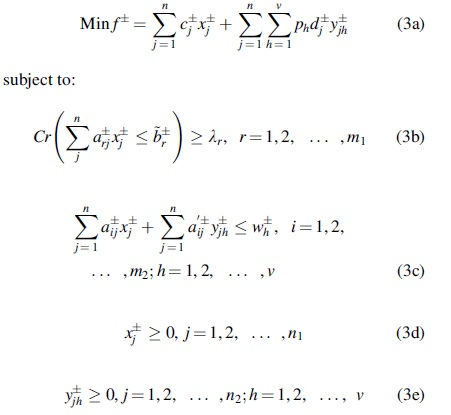
Meanwhile, in many real-world problems, the lower and upper bounds of discrete intervals related to some parameters or coefficients can rarely be achieved as deterministic values, which can lead to dual uncertainties and can be described as interval membership function (IMF) (Maqsood et al, 2005; Zhen et al, 2016). Thus, to address multiple uncertainties, the ITSP, FCCP, and IMF methods can be incorporated into an integrated framework. Then, a DISFCP model can be formulated:
where
Case Study
Overview of the study system
Guangdong Province (20°09′–25°31′N, 109°45′–117°20′E), is located in the southernmost of China's mainland and covers an area of 179,725 km2. It governs 21 prefecture-level cities, as shown in Fig. 1. Guangdong Province has become the largest economy in China, and its gross domestic product reached up to RMB¥ 11076.09 billion in 2020. Besides, the total population was 126.01 million, which ranked first in China as well. Along with the population expansion and rapid economic development, electricity demand maintains a fast growing trend, whose amount rose from 439.90 × 10³ GWh in 2011 to 669.59 × 10³ GWh in 2019. Meanwhile, to alleviate the increasing contradiction between power supply and demand, the development of power industry in Guangdong is accelerating for the past few years, especially nonfossil energy conversion technologies.

The study area.
Guangdong is abundant in new energy and renewable energy resources (e.g., hydroenergy, wind energy, biomass energy). By the end of 2019, the total installed capacity of power generation was 126.49 GW, where coal-fired power was 61.01 GW, natural gas-fired power was 22.17 GW, nuclear power was 16.14 GW, wind power was 3.97 GW, and the reminder was solar power and others.
At present, the proportion of traditional fossil energy in Guangdong's energy consumption is still high, whereas the share of new and renewable energy is too small. For example, in 2019, the share of thermal power, new energy and renewable energy power, and imported electricity in the total electricity supply was 46.8%, 23.3%, and 29.9%, respectively. For quite a long time, Guangdong's energy consumption structure that mainly depends on coal, has led to a mass of carbon and pollutant emissions and brought serious impact to ecological environment and resource protection. In 2020, Chinese Government had proposed a major national strategy of achieving a carbon peak by 2030 and carbon neutrality by 2060, which will undoubtedly bring new challenges to the electric power system.
Moreover, although Guangdong Province is located in south China, which has abundant water resources, there still exists a series of issues, such as serious water pollution, low utilization rate, uneven temporal and spatial distribution, and unbalanced spatial distribution that is to say high quantity but low quality. Faced with the expansion of industrial scale and the growth of electricity demand, there is no doubt that more and more water resources will be consumed by the electric power system mainly for cooling, steam generation, and desulfurization.
In accordance with the above analysis, the issues of water resources and carbon emissions should be integrated into the regional energy system planning to tackle climate change, facilitate energy structure adjustment, and promote regional sustainable development. In addition, decision makers should also consider various uncertainties, such as uncertain electricity demand, fluctuant energy prices, vague water resource availability, and so on, which have significant effects on the related optimal schemes of EWN system. Therefore, this study aims to develop an optimization model to reasonably formulate energy system planning under uncertainties and effectively address the following detail issues: (1) identify optimal schemes corresponding to electricity supply, capacity expansion, water consumption, and carbon capture; (2) analyze the interactions between carbon emission reduction and water resource availability on the electric power system; (3) reconcile the conflict among economic cost, system risk, and environmental protection.
Model formulation
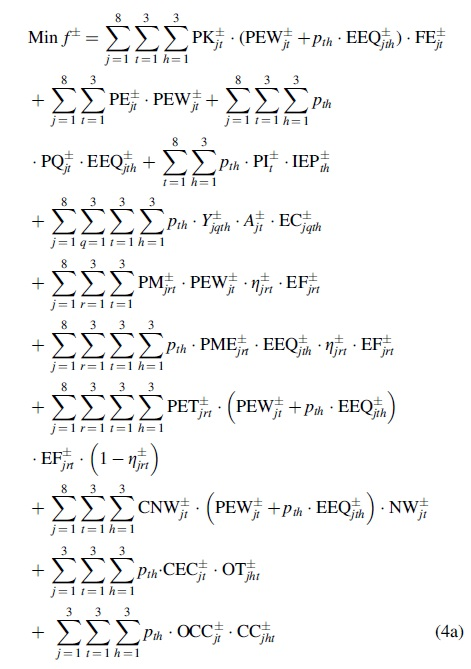
Based on the developed DISFCP method, a provincial-scale DISFCP-EWN model is proposed for supporting regional green and low-carbon development. The joint method can efficiently tackle uncertainties described as interval values, probability distributions, and fuzzy sets. The objective of DISFCP-EWN model is to minimize the total system cost under different scenarios corresponding to carbon emission reduction and water resource availability, including fossil fuel cost, operating cost, imported electricity cost, capacity expansion cost, pollutants' treatment and emission cost, water supply cost, and carbon capture cost. The objective function can be expressed as follows:
subject to:
Constraints for availabilities of energy resources: These constraints are established to ensure that the amount of energy utilization should not exceed the total available energy amounts.
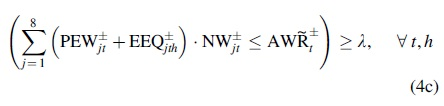
Constraints for water supply: These constraints are established to guarantee the available water resource constraint should be satisfied with the acceptable credibility level.
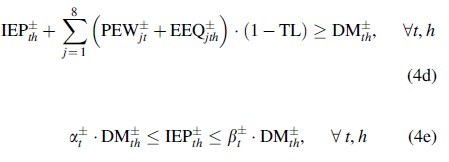
Constraints for electricity balance: The total electricity generated and imported from other power grids should be no less than the electricity demand.
Constraints for capacity limitation: These constraints are established to ensure that the generation capacity should meet the requirement of electricity, and facility expansion would be undertaken when the existing capacity cannot satisfy the electricity demands.
Constraints for pollutant emission: The pollutant emission amounts should be less than the pollutant emission permits.
Constraints for CO2 emission: The CO2 emission should not exceed the allowable emission amounts, and the capacity of CO2 captured should be satisfied by carbon capture and storage (CCS).
Non-negative constraints


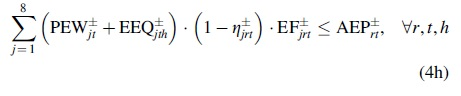
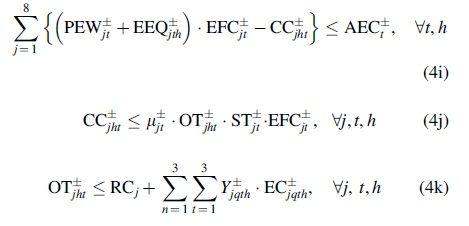
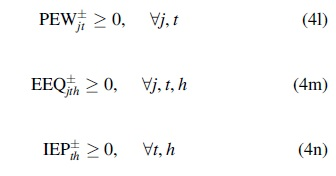
Data collection and scenarios designed
The detailed nomenclatures for variables and parameters are given in Appendix A. The whole planning horizon is 9 years from 2020 to 2028. In the system, among all power conversion technologies, coal-fired power plant, natural gas-fired power plant, and nuclear plant would consume more water compared with the other plants associated with lower water consumption rate (wind power is supposed to be zero water consumption). Meanwhile, in response to the national policy on carbon emission reduction, CCS facilities would be adopted referred to coal-fired power and natural gas-fired power.
Through collecting and analyzing the 14th Five-Year Energy Development Plan of Guangdong Province, Statistic Yearbook of Guangdong Province, published articles, expert consultations, and other interrelated references (Ackerman and Fisher, 2013; Guangdong Government, 2022; Ji et al, 2020; Lv et al, 2018 ), the relevant economic and technical parameters (e.g., energy price, operation cost, pollutants treatment cost, CO2 emission intensity, water consumption rate) are obtained, as shown in Table 1. According to Guangdong Statistics Bureau (2011–2019) with respect to the historical data of power demand and the regional energy development plan, the estimated electricity demand over the planning period is presented in Table 2, which is designed as three electricity demand scenarios by interval values with given probability distributions.
The Relevant Economic and Technical Parameters
Total Amount of Electricity Demand
To evaluate the impacts of resource and environment constraints on EWN system and generate various cost-effective management strategies, a variety of scenarios corresponding to different credibility levels associated with water resource availability and carbon emission reduction are considered. In detail, for carbon emission reduction scenarios: “S1” denotes the system is faced with a normal quantity of carbon emissions during the planning horizon; “S2”and “S3” represent the emission amount is mitigated by 5% and 15% based on scenario S1, respectively. In addition, three credibility levels in connection with water availability scenarios (i.e.,
Result Analysis and Discussion
Electricity supply scheme
Figures 2 and 3 show the optimal electricity generation schemes under different scenarios. Summarily, with the rapid growth of electricity demand, the electricity generation capacity would increase correspondingly over the planning horizon. For example, under the medium level with scenario S1 and
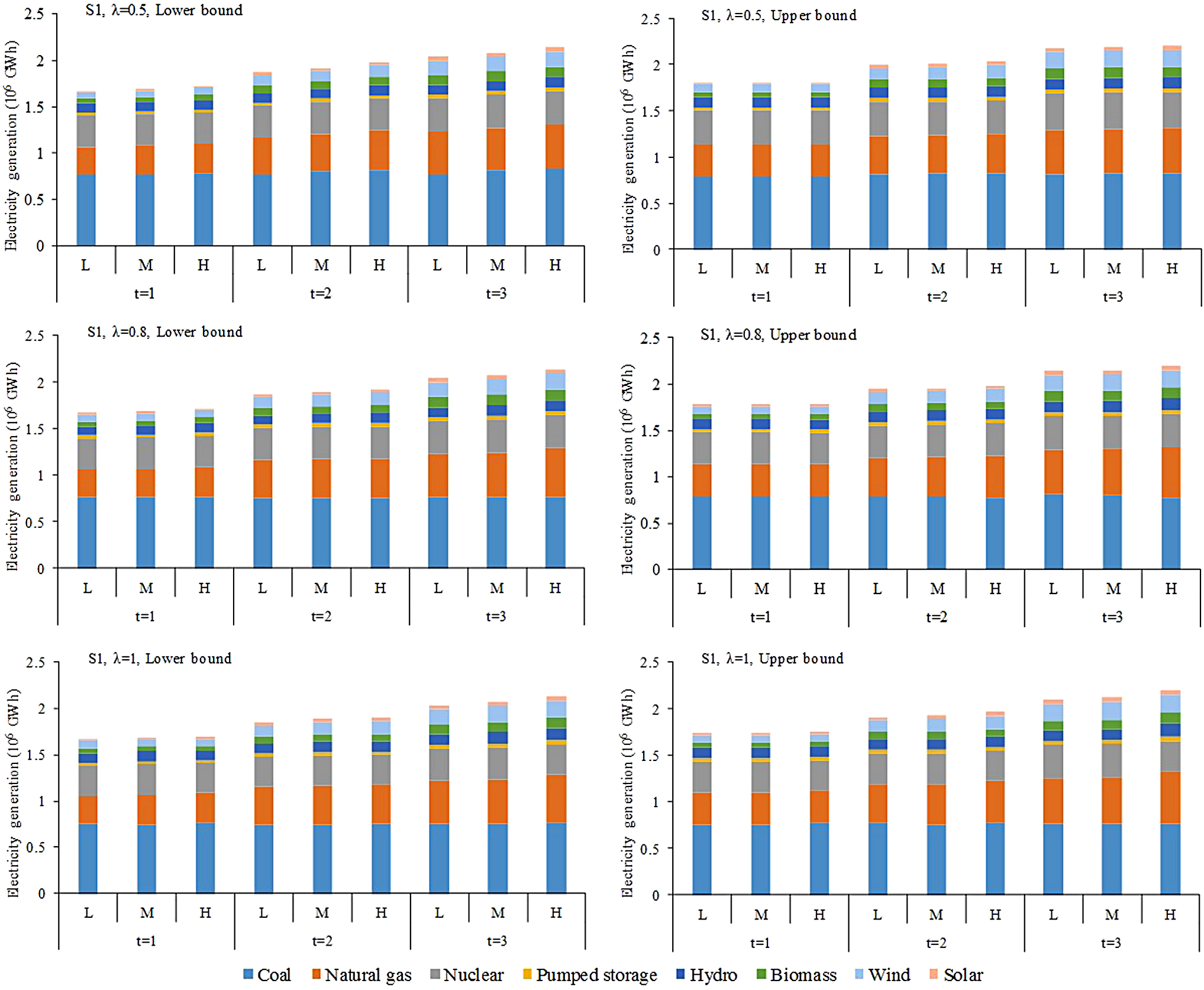
Electricity generation schemes under different
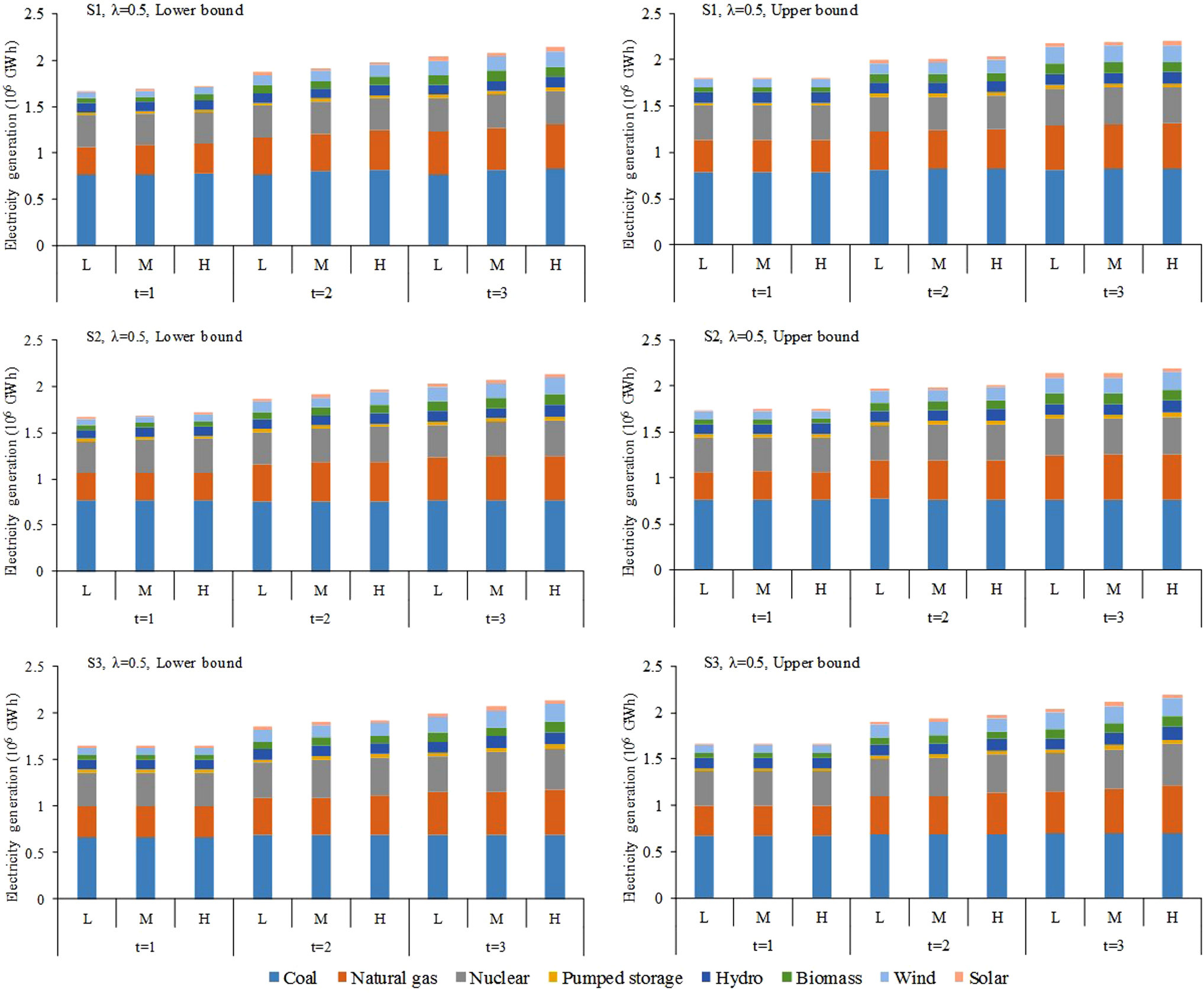
Electricity generation schemes under different carbon emission reduction scenarios with
In contrast, the amount of some renewable energy generation would increase gradually. For instance, under the same circumstance, wind power generation would be [0.11, 0.13] × 106 GWh, [0.12, 0.13] × 106 GWh, and [0.13, 0.14] × 106 GWh when
Furthermore, the regional energy structure would be changing along with time and be transformed into a green and low-carbon way. Specifically, the proportion of coal-fired power generation would decline from [43.71, 45.35] %, [40.81, 42.01] %, and [37.55, 38.98] % under scenario S1 to [40.13, 40.64] %, [35.47, 35.99] %, and [32.82, 33.57] %, under scenario S3 in periods 1–3. Conversely, from scenario 1 to 3, the total share of renewable energy generation (e.g., biomass power, wind power, solar power, and so on) would rise by [1.39, 1.68] %, [1.69, 2.35] %, and [1.49, 1.94] % in periods 1–3, respectively.
Capacity expansion
Figure 4 summarizes the solutions of capacity expansion strategies under different demand levels with scenario S1 and
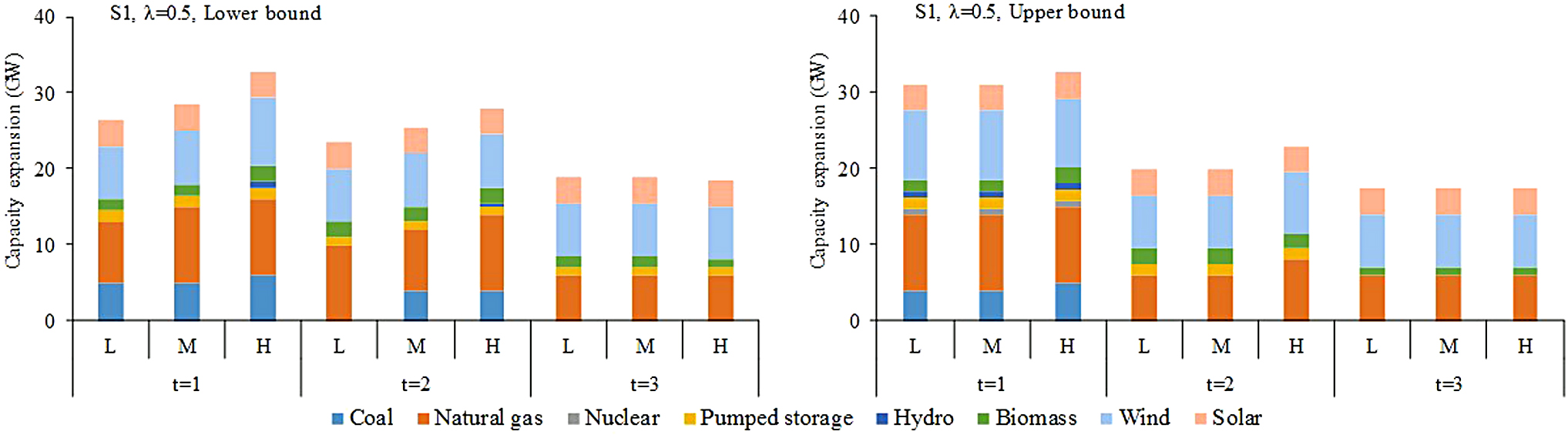
Capacity expansion plans under different demand levels with scenario S1 and
Results indicate that faced with higher and higher requirements for energy–water resource conversation and carbon emission reduction, decision makers would prefer to develop local clean energy technologies rather than coal-fired power in the future, which can improve the stability of local power system and promote regional sustainable development. In addition, with the demand level increasing, the total capacity expansion would show an increasing trend. For example, in period 1, the total capacity expansion would be [26.5, 31.1] GW, [28.5, 31.1] GW, and [32.6, 32.8] GW under three demand levels, respectively.
Water consumption
Figure 5 presents the water supply for different conversion technologies under the medium demand level with scenario S1 and

Water allocation for conversion technologies under the medium demand level with scenario S1 and
With regard to other power plants (i.e., pumped storage power, hydro power, biomass power, and solar power), they would have small contributions to water consumption due to the low water requirement and limited installed capacity. Therefore, it is recommended to vigorously exploit renewable energy to relieve the contradiction among water consumption, electricity supply, and environmental requirement.
Carbon capture
Figure 6 presents the results of CO2 emission captured by CCS in each period. It can be found that carbon capture would mainly occur under scenario S3, and the amount of CO2 emission captured by CCS would be 0 under scenario 1 in periods 1–3. In summary, as the electricity demand increases, the amount of CO2 emission captured would rise up. For example, under

Optimized amount of CO2 captured by CCS under different scenarios. CCS represent carbon capture and storage.
Moreover, results also demonstrate that the amount of CO2 captured would be influenced by the credibility level related to water resource availability. For instance, under scenario S3 and medium demand level, with
Total system cost
The developed DISFCP method can be valuable for providing robust solutions by analyzing the tradeoff between system cost and different scenarios. Regulation policy and uncertainties that existed in the model can both bring about varied system costs. The total system cost under different credibility levels and carbon emission reduction scenarios over the whole planning horizon is presented in Supplementary Fig. S1. In general, strict control strategies would bring about negative influence on system cost. With the improvement of carbon emission reduction level, the total system cost would increase accordingly. For example, when
In addition, stricter carbon emission reduction policy would also lead to lower electricity generation from coal-fired power but more imported electricity, which would also have an effect on the system cost. Results also show that different
Conclusion
In this article, an electric power system planning model associated with EWN through DISFCP is developed to support regional green and low-carbon and development under uncertainties. The proposed model can effectively deal with uncertainties presented as crisp intervals, probability distributions, and dual-interval fuzzy numbers. In addition, it can be helpful for analyzing the tradeoff between several credibility levels with respect to vague water availability and different environmental policies. Then, the proposed model has been applied to the WEN system management of Guangdong Province, China, where the issues of energy structure transformation, resource supply and demand, and carbon emissions are urgently solved. A number of application scenarios corresponding to carbon emissions and water availability constraints are examined. The robust optimal solutions for electricity generation scheme, imported electricity, facility expansion, water supply schedule, pollutants, and carbon emissions, as well as system cost are generated. Based on the results, several findings can be disclosed according to the key questions of the article:
During the planning period, coal-fired power, natural-gas power, and nuclear power would play a significant role in Guangdong's electric power supply, which would consume a vast quantity of water resources.
Different scenarios corresponding to the constraints of water availability and carbon emissions have remarkable impacts on the EWN system, which would lead to the switch of technology portfolio, and then alter the water supply, CO2 emission, and system cost. A higher credibility level and stricter carbon emission target would both result in a higher system cost associated with a higher system feasibility, and the system cost would increase from RMB¥ [2635.00, 3120.44] × 109 under S1 to RMB¥ [2715.18, 3266.92] × 109 under S3.
Carbon emission target would deeply affect the electric power structure. From scenario 1 to 3, the proportion of coal-fired power generation would decrease by [3.58, 4.71] %, [5.34, 6.02] %, and [4.37, 5.41] % in periods 1–3, respectively, while the total share of renewable energy would increase by [1.39, 1.68] %, [1.69, 2.35] %, and [1.49, 1.94] %. In addition, it would limit the development of coal-fired power plants and facilitate the investment on other power plants (e.g., nuclear power, wind power) and CCS devices. As a result, with the variation of carbon emission target, CO2 emission and water consumption would change accordingly.
Scarce water availability scenario would restrict coal-fired power generation and simulate renewable energy development. Results indicate that water resource control policy can promote the shifts from fossil energy to renewable energy and reduce carbon emissions. Meanwhile, it is suggested that exploiting the renewable energy such as wind power, is an effective measure to reduce carbon emission and water consumption. Summarily, different policy makings corresponding to the carbon emission target and water availability would lead to the changes in patterns of electricity supply and water allocation, where the managers should balance the conflict among economic objective, environmental requirement, and system risk.
To optimize energy structure, alleviate resources crisis, and achieve sustainable development, from a global perspective, clearly understanding the nexus in the energy system planning and accurately establishing robust model are of great significance for decision makers to formulate suitable strategies. The developed DISFCP-EWN model is proved to be compatible and effective in the real case, which can be extendable to other regions faced with the problems of energy, water, and carbon-coordinated optimization under uncertainties and can provide important theoretical significance and application value for regional energy–environmental management. In future studies, the water consumption and carbon emission throughout the entire lifecycle could be further considered. In addition, input–output analysis and multiobjective optimization could be incorporated into the coupling system to improve its adaptability.
Footnotes
Acknowledgments
The authors are thankful to the editors and reviewers for their valuable comments and suggestions.
Authors' Contributions
J.Z.: Methodology and Writing—review and editing; Y.Z.: Data curation, Software and Validation; X.L.: Supervision and Formal analysis; G.H.: Supervision; J.L.: Investigation and Resources.
Author Disclosure Statement
No competing financial interests exist.
Funding Information
This research was supported by the National Natural Science Foundation of China (No. 51908025), MOE (Ministry of Education in China) Project of Humanities and Social Sciences (No. 20YJCZH242), and Beijing Municipal Education Commission Science and Technology General Project (No. KM202010016001).

References
Supplementary Material
Please find the following supplemental material available below.
For Open Access articles published under a Creative Commons License, all supplemental material carries the same license as the article it is associated with.
For non-Open Access articles published, all supplemental material carries a non-exclusive license, and permission requests for re-use of supplemental material or any part of supplemental material shall be sent directly to the copyright owner as specified in the copyright notice associated with the article.
