




Abstract
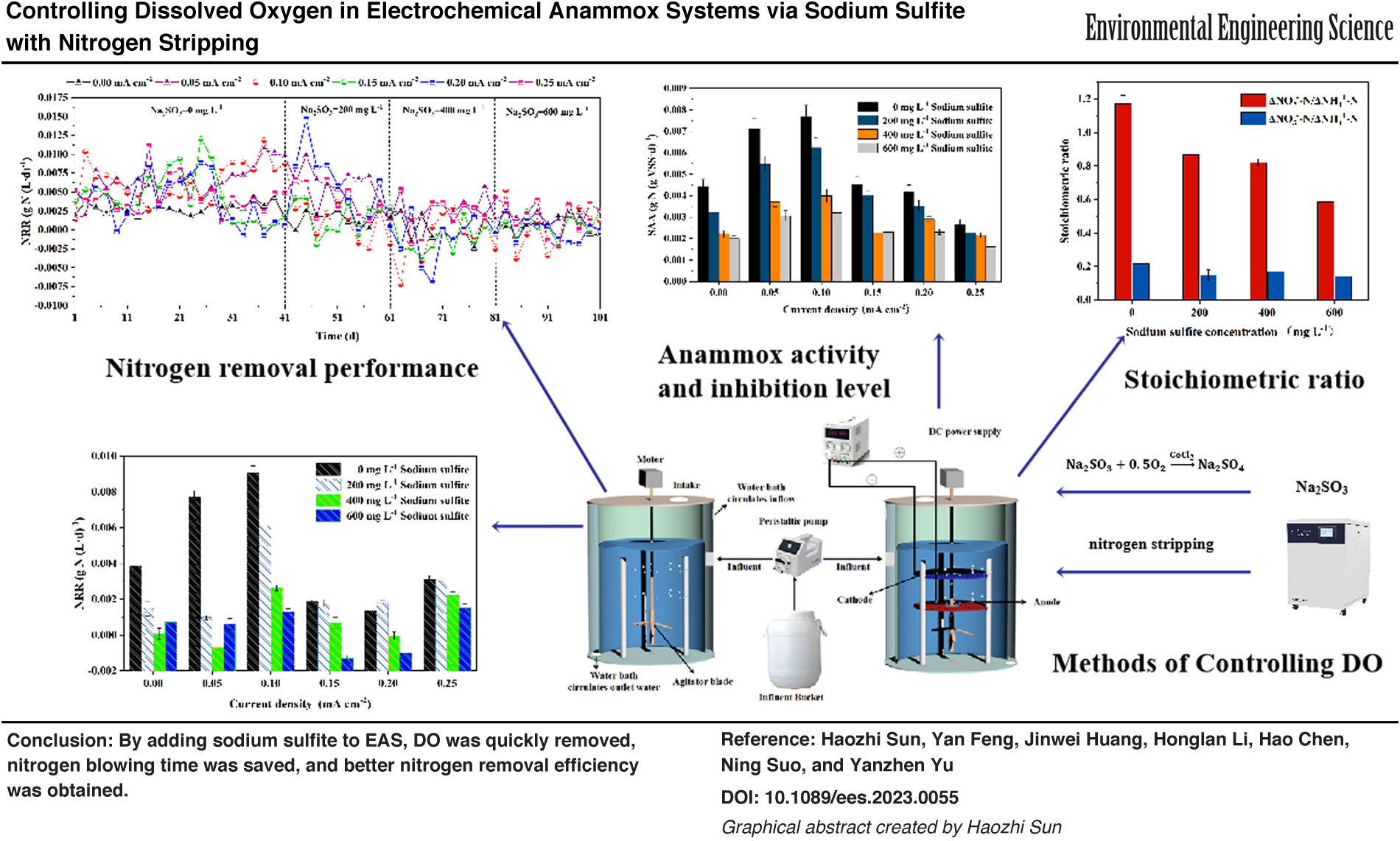
The long-term maintenance of low concentration of dissolved oxygen (DO) is an important condition for the enrichment of anammox bacteria (AnAOB) in the electrochemical anammox system (EAS). In this study, a new method to control DO by the combination of sodium sulfite with nitrogen stripping was attempted, and the influence of sodium sulfite concentration on the nitrogen removal performance was studied. The results show that under the optimal conditions (i.e., sodium sulfite concentration = 200 mg/L, nitrogen stripping time = 40–60 min, nitrogen flow = 350 mL/min), the DO in the water was controlled below 0.3 mg/L, which saves more than half of the time required for removing DO compared with the nitrogen stripping method (120–140 min). However, the total nitrogen removal rate (NRR) at the optimal current density of 0.10 mA/cm2 decreased gradually, and the NRR was 0.0091, 0.0061, 0.0026, and 0.0006 g N/[L∙d] at the sodium sulfite concentration of 0, 200, 400, and 600 mg/L, respectively. Simultaneously the specific anammox activity decreased from 0.0077 g N/[g VSS∙d] to 0.0032 g N/[g VSS∙d]. It is concluded that when the current density was 0.10 mA/cm2 and the concentration of sodium sulfite was 200 mg/L, the optimal operating conditions were both anammox activity and deoxidation. Therefore, the combination of sodium sulfite with nitrogen stripping has great application potential to control DO in the EAS.
Introduction
Anammox, as an important process of global nitrogen cycle in natural environment, has attracted more and more attention since it was first found in the laboratory reactor in 1995 that anammox bacteria (AnAOB) can convert nitrite into nitrogen (Mulder et al., 1995). AnAOB can use NH4+-N as an electron donor to transfer electrons to NO2−-N, generating NO3−-N and N2, the stoichiometric equation is as follows: (Strous et al., 1998)
It has the advantages of low sludge yield, high nitrogen removal efficiency, no additional carbon source for nitrogen removal, and almost no greenhouse gas generation (Lackner et al., 2014; Weralupitiya et al., 2021), so it has been widely used in the treatment of high ammonia nitrogen wastewater (Chi et al., 2018; Zhou et al., 2018). With the exploration of anammox, a variety of process combinations dominated by anammox have been formed (Isaka et al., 2013; Third et al., 2001; Windey et al., 2005; Zhang et al., 2017). Studies have shown that adding an appropriate electric field intensity can stimulate the activity of microorganism, promote their metabolism, and thus accelerate their enrichment (Feng et al., 2020; Wu et al., 2022; Yin et al., 2015). Li et al. (2022a) cultured anammox reactor at 2 V reduced the start-up time of anammox by 30–33% while maintaining the denitrification efficiency of 86–88%. They also found that the use of iron anode can improve the enzyme activity of AnAOB, thus creating favorable conditions for the enrichment of AnAOB.
Therefore, the effective combination of an electric field and anammox process to construct electrochemical anammox system (EAS) can minimize the inhibition of organic matter and ammonia nitrogen on AnAOB, and realize the rapid start of anammox system (Qiao et al., 2014; Zhu et al., 2016). Because the dissolved oxygen (DO) concentration suitable for the growth of AnAOB is equal or lesser than 0.3 mg/L, the electrode materials with high oxygen evolution potential or sacrificial anode can be considered to avoid oxygen evolution at the anode. Some studies used Fe2+ as an intensified condition for the cultivation of AnAOB, and found that Fe2+ has a coagulation effect that can reduce the static elimination among bacteria and help the formation of anammox biofilm. At the same time, Fe2+ is also a constituent element of a variety of protein complexes, such as enhancing the formation of c-type cytochromes in anammox cells (van Niftrik et al., 2008). The physiological activities of AnAOB are highly dependent on iron-binding proteins. In addition, the growth and metabolic activity of microorganisms fed with Fe2+ is stronger (Wang et al., 2021).
In consideration of the effect of AnAOB and economic considerations, iron mesh was chosen as the anode (Liu and Horn, 2012), and chose to use economical and stable stainless steel mesh as the cathode.
Since AnAOB are strictly anaerobic bacteria, the DO in water has a certain inhibitory effect on its growth (Strous et al., 1997), when the DO reaches 0.35 mg/L, the anammox has inhibition effect (Allgeier et al., 1932). Thus the concentration of influent DO is an important parameter for the cultivation of AnAOB (Li et al., 2018a).
However, the main control method of DO at present is gas stripping, which takes a long time and is not economical, so it can only be used in the operation of laboratory anammox process. Sodium sulfite is often used to control DO in boiler water (Kobe and Gooding, 1935). In the EAS, it can be used as both electrolyte and deoxidizer (Pastor et al., 2011; Sun et al., 2014), increasing the conductivity of the system and improving the current efficiency, significantly reducing the energy consumption required to stimulate the activity of AnAOB. Its free sulfite can be combined with the oxygen in the water to generate sulfate. Compared with inert gas stripping to control the concentration of DO in water, using sodium sulfite to remove DO in water is economical, rapid, and applicable to difficult nitrogen-blowing projects (Rashid and Khadom, 2020). However, so far, the effect of sodium sulfite on EAS has been rarely studied.
Based on the above assumptions, we tried a new method to control DO by combining sodium sulfite and nitrogen stripping in EAS, and the influence of sodium sulfite concentration on nitrogen removal performance and tolerance of AnAOB was studied. These results will provide useful information for verifying the feasibility of the strategy and provide a faster operation scheme for controlling DO.
Materials and Methods
Description and operation of the reactor
Experimental reactor
The design diagram of the experimental reaction system is shown in Fig. 1, in which Fig. 1a is the traditional sequencing batch reactor (SBR); Fig. 1b shows the anode and cathode arranged in parallel in the traditional SBR, using PVC material as the branch pipe to support and control the anode and cathode. The two electrode wires are connected to the electric clip pulled by the constant voltage DC power source through the hole in the top cover, thus forming the electrochemical anammox SBR (EASBR).
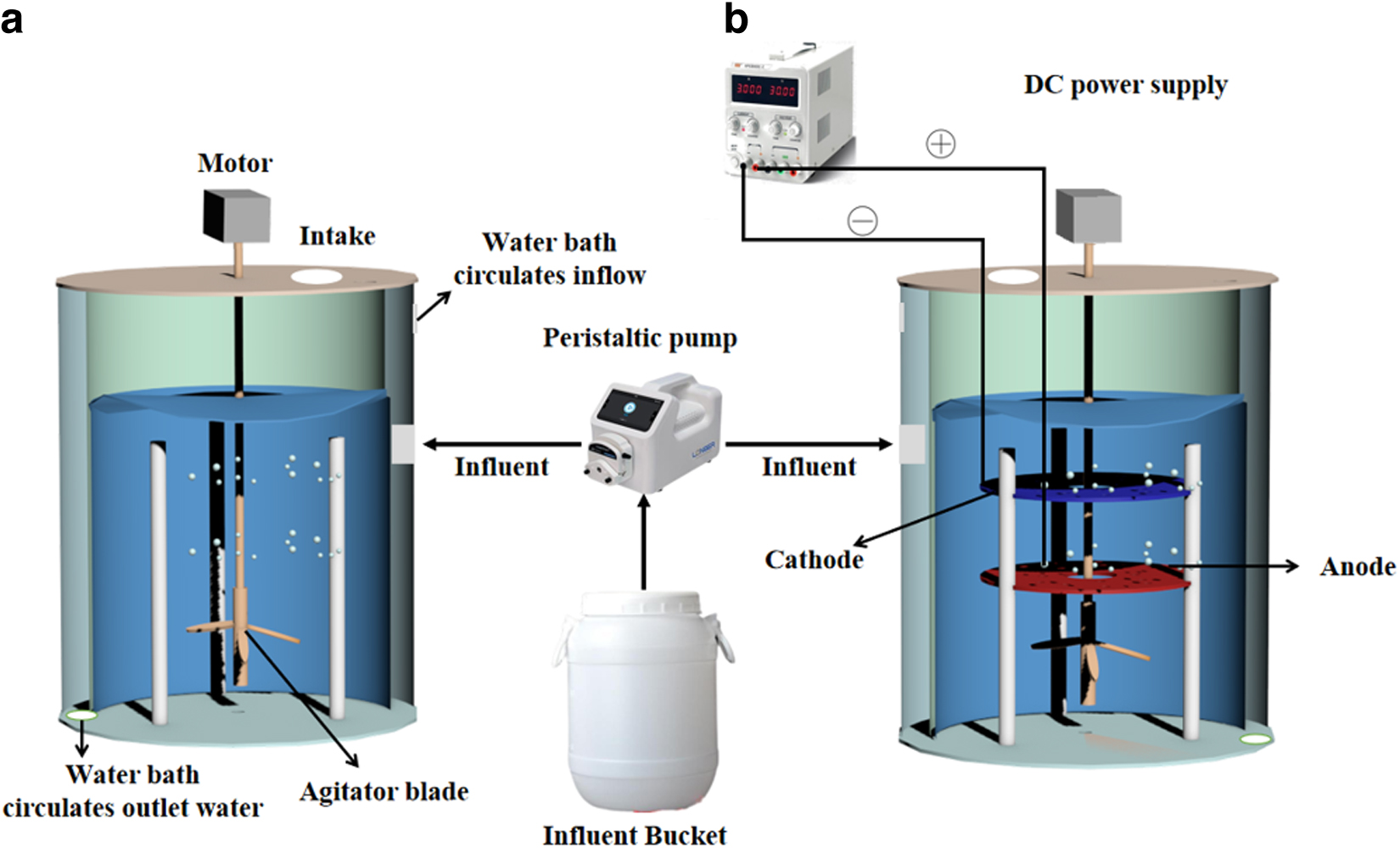
Reaction device design drawing
It is mainly divided into three parts: main reaction area, water bath circulation system, and electrolysis system. The reaction system adopts plexiglass with the wall thickness of 10 mm, the total diameter of 350 mm, and the height of 370 mm. The reaction system adopts a double-layer sleeve design, and the space between the inner and outer walls of the sleeve is a water bath heating layer with the thickness of 25 mm. The water in and out of the water bath is connected to the constant temperature water bath box through a hose to form the entire water bath circulation system. The inner layer is the main reaction zone with an inner diameter of 260 mm, a height of 350 mm, and an effective volume of 15.8 L.
The water inlet of the main reaction zone is set at 50 mm from the top, and the simulated sewage is pumped into the reaction system through a peristaltic pump. At the same time, the sludge can be taken out from a mud drain pipe set at the bottom to observe changes of sludge. A hole is provided at the top of the reaction system to allow the measuring sensor and the suction hose to enter and exit, so as to facilitate the detection of water temperature, pH and drainage by the detection components.
In the EASBR layout, considering the shape of the reaction system and the efficiency of electrical action, this experiment uses circular electrode meshes arranged in parallel, the apertures of the cathode and anode electrode meshes are both 4 mm. The anode iron mesh is placed in the reaction system with a diameter of 16 cm, and an effective area of 200.18 cm2 (the 1 cm diameter hole reserved in the center is removed). The cathode stainless steel mesh is cut the same as anode materials, with a diameter of 16 cm and an effective area of 200.18 cm2. The distance between cathode and anode is 3 cm.
Test water and inoculating sludge
Synthetic sewage was used for the experiment, which mainly contained the following substrates and concentrations: NH4Cl 200.0 mg/L, NaNO2 250.0 mg/L, NaHCO3 1000.0 mg/L, KH2PO4 25.0 mg/L, CaCl2·2H2O 5.6 mg/L, MgSO4·7H2O 200.0 mg/L, FeSO4 5.0 mg/L, Na2SO3, and trace elements solution 2.0 mL/L. The specific composition of the trace element solution could be seen in Supplementary Table S1.
The inoculation sludge came from the anaerobic tank of Weifang grain production base in Shandong Province, China, and its MLSS was 67.762 g/L. To reach the most favorable start-up concentration of the inoculation sludge, about 2.5 L of the original inoculation sludge mixed with mud and water was put into the reaction system, diluting to 10.0 L in the reaction system (Chamchoi and Nitisoravut, 2007; Third et al., 2005). After inoculation, the sludge parameters of the six reaction systems were as follows: MLVSS was 10.797 g/L, MLSS was 16.940 g/L, and MLVSS/MLSS was 0.637.
Test operating condition
To investigate the effect of current density on the anammox system, five EASBR reaction systems and one traditional SBR reaction system, respectively, were set up to cultivate AnAOB. The details are as follows: R1: 0.05 mA/cm2 current density EASBR reaction system; R2: 0.10 mA/cm2 current density EASBR reaction system; R3: 0.15 mA/cm2 current density EASBR reaction system; R4: 0.20 mA/cm2 current density EASBR reaction system; R5: 0.25 mA/cm2 current density EASBR reaction system; and R6: 0.00 mA/cm2 current density SBR reaction system.
Inoculated sludge was injected into six reaction systems and simulated sewage was added to 10 L. After adjusting pH to 7.4–7.6 with 1 M HCl, the temperature was 36℃ ± 1℃, the DO<0.30 mg/L, stirring rate was 30 rpm. The hydraulic retention time (HRT) was 4 days, so the reaction system operated once a cycle for 2 days. The fixed amount of water in and out of each cycle was 5.0 L, and the water exchange ratio was 1/2. The whole operation is divided into 10 min of inlet, 2,820 min of reaction, 40 min of standing, and 10 min of drainage. Water samples were taken in the inlet and standing stages, respectively, to test changes before and after reaction.
Time-consuming test of sodium sulfite controlling DO in influent water
To explore the time consumption of sodium sulfite to control the influent aqueous solution DO less than 0.3 mg/L, the influent was prepared according to the water distribution plan in 2.1.2 by a 5 L plastic bucket as the influent container. When the feed water added with various nutrient solutions was exposed to air at room temperature, the DO in the water was 10.0 mg/L. After adding different amounts of sodium sulfite and controlling the concentration of sodium sulfite in the barrel to be 0, 200, 400, and 600 mg/L, a nitrogen generator was used to blow off at 350 mL/min and start timing. A DO meter was used to measure the DO in the water at regular intervals. Until the DO drops to 0.3 mg/L, the elapsed time was recorded.
Experimental conditions of the influence of sodium sulfite on electrolysis-based anammox system
To explore the influence of sodium sulfite on the anammox system, the experimental conditions are shown in Table 1.
Sodium Sulfite Concentration and Culture Time
In the experiment to investigate the effect of current density on the anammox system, the six reaction systems at different current densities (0.00–0.25 mA/cm2) activated the AnAOB by the nitrogen generator. Therefore, the six reaction systems that started to run stably after the successful operation of the laboratory for more than 100 days were directly used as the conditions of zero concentration of sodium sulfite. In this experiment, the concentration of sodium sulfite in Table 1 was combined with a nitrogen generator to control the DO concentration of the influent water below 0.3 mg/L in the reaction system. The operating conditions of the reaction system were controlled at a temperature of 35°C and a pH of 7.6. Considering that the first 10 days after the change of sodium sulfite concentration was the adaptation period, the data of the stable stage were used for the following analysis.
Determination of specific anammox activity and calculation of inhibition level
Batch analysis of sludge from six reaction systems was performed to determine the specific anammox activity (SAA) of AnAOB.
The anammox sludge was collected from each reaction system and washed three times with phosphate buffer solution (0.14 g/L KH2PO4 and 0.75 g/L K2HPO4, pH = 7.2–7.4). The sludge samples were placed into a 100-mL serum flask, and the concentration of inoculated sludge was controlled to be the same as that of the corresponding reaction system. Around 50 mL of nutrient solution was added with the same concentration as the influent in the enrichment anammox process. The vial was sealed with butyl rubber plug and aluminum cap, and then nitrogen blowing was used to control the DO in the serum bottle liquid below 0.3 mg/L. After blowing off, the pH was controlled at 7.6. The vial was placed in a thermostatic oscillator to control the temperature at 36℃ and the speed at 70 rpm. Water samples were extracted from the vial for chemical analysis every 30 min and collected continuously for 3 hr. The slope was calculated according to the degradation curve of water quality and the activity of AnAOB was calculated (Xing et al., 2017).
Inhibition level (I) was quantified based on the inhibition of anammox activity after exposure to sodium sulfite versus SAA without sodium sulfite (Scaglione et al., 2017). The formula is as follows:
Other analytical methods
The routine detection indexes of inlet and outlet water include NH4+-N, NO2−-N, NO3−-N, and total nitrogen (TN), DO, and pH. All samples were filtered through 0.45 μm filter paper and stored in a refrigerator at 4°C before analysis. The NH4+-N, NO2−-N, NO3−-N, and TN collected from influent and effluent samples were measured according to the standard methods (Apha, 1998). The values of nitrogen concentrations (NH4+-N, NO2−-N, NO3−-N, and TN) were detected by UV–vis spectrophotometer (UV2600). DO was monitored with a DO detector (YSI-5100). The determination of pH was employed with a standard pH meter (PB-10, Germany).
Equations (3)–(5) are the removal rates of NH4+-N, NO2−-N, and TN. Equation (6) is NRR calculation method (Li et al., 2018b):
Results and Discussion
Control of DO by sodium sulfite
Earlier studies have shown that excessive sulfite that exceeds the amount required for oxidation could greatly increase the rate of oxygen removal. In distilled water with initial oxygen concentration of 8.0 mg/L, sulfite equivalent increases from 1 to 2, while oxygen removal rate can increase from 2.5% to 58.0% (Kobe and Gooding, 1935), and cathodic corrosion can be effectively inhibited (Rashid and Khadom, 2020). Ni et al. (2014) found in their study on the SBR system that high nitrogen removal efficiency was achieved at a DO concentration of 0.15–0.30 mg O2/L, and higher or lower concentrations would reduce the nitrogen removal effect.
Therefore, the influent DO is controlled below 0.3 mg/L. The relationship between the concentration of sodium sulfite and the stripping time when the influent DO is less than 0.3 mg/L is shown in Table 2. It can be seen from the Table 2 that the nitrogen stripping time decreased with the increase of sodium sulfite concentration. When the sodium sulfite was 200 mg/L, the nitrogen stripping time was 40–60 min, which saves more than half of the time compared with the method of using only nitrogen stripping. At a sodium sulfite concentration of 600 mg/L, the nitrogen stripping time was only 10–30 min.
Relationship Between Sodium Sulfite Concentration and Nitrogen Stripping Time to Control Dissolved Oxygen <0.3 mg/L
Although the nitrogen stripping time with the addition of sodium sulfite is much less than that without the addition of sodium sulfite, it is still necessary to further study the effect of influent water after adding sodium sulfite on the anammox-based system.
Effect of sodium sulfite concentration on nitrogen removal performance of EAS
The effect of sodium sulfite concentrations on NRR of the reaction system at different current densities is shown in Fig. 2. In this experiment, the stable stage data of 21 days after successful start-up and 10 days after changing the concentration of sodium sulfite were analyzed. From the 1st to the 41st day, the DO in the water was controlled by nitrogen stripping, and the stage after stable operation was taken as the research object.

Effect of sodium sulfite concentration on AES at various current densities:
As shown in Fig. 2b, the NRR was directly related to the current density and sodium sulfite concentration. When the current density was 0.05–0.10 mA/cm2, the NRR was significantly improved, and the average NRR increased from 0.0039 g N/[L∙d] to 0.0078 g N/[L∙d] at the current density of 0.05 mA/cm2. When the current density was 0.10 mA/cm2, the NRR reached the highest, which is 0.0091 g N/[L∙d]. This is because appropriate electric field stimulation can accelerate the growth rate of AnAOB and promote more EPS secretion (Li et al., 2022b). Then, with the increase of the current density, the NRR did not increase but decreased, which may be due to the inhibition of anaerobic ammonia by the increase of the current (Hu et al., 2022).
From the 41st day to the 61st day, 200 mg/L of sodium sulfite was added to the reactor, and the NRR decreased to varying degrees at each current density. Therefore, it is speculated that the addition of sodium sulfite also inhibited the activity of AnAOB, among which the decrease at the current density of 0.05 mA/cm2 was the largest, from 0.0078 g N/[L∙d] to 0.0010 g N/[L∙d], and the NRR was still the highest at 0.10 mA/cm2, while smaller changes were observed at the current density of 0.15, 0.20, and 0.25 mA/cm2. This may be due to the higher current density that can oxidize sodium sulfite more rapidly, thereby reducing its effect on AnAOB. From the 61st day to the 81st day, 400 mg/L sodium sulfite was added. At this time, each current density was greatly reduced to about 0 g N/[L∙d], and even lower than 0 g N/[L∙d], only the NRR at the current density of 0.10 and 0.25 mA/cm2 were still more than 0.0020 g N/[L∙d]. Continuing to increase the concentration of sodium sulfite to 600 mg/L, the NRR of all reaction systems was close to 0, and the inhibitory effect of sodium sulfite was obvious.
In the whole research process, the NRR was the highest when the current density was 0.10 mA/cm2, so 0.10 mA/cm2 was determined as the best current density of the system.
To further illustrate the effect of sodium sulfite concentration on nitrogen conversion in the reaction system, the reaction system under the optimal current density of 0.10 mA/cm2 was explored to investigate the effect of sodium sulfite concentration on three states of nitrogen (Fig. 3).

Effect of sodium sulfite concentration on three states of nitrogen at current densities of 0.10 mA/cm2 in the AES.
As shown in Fig. 3, the first 19 days was the adaptation period of the sludge. By gradually adjusting the concentration of the influent matrix, the sludge was adapted to the new reactor environment. On the 19th day, the concentrations of NH4+-N and NO2−-N in the effluent were 1.59 and 1.28 mg/L, respectively, and the removal effect of NH4+-N and NO2−-N was obvious. Li et al. (2022a) also obtained similar results. Then the next 20 days, the average concentrations of NH4+-N and NO2−-N in the effluent were maintained at 2.50 and 2.10 mg/L, respectively, so it was considered that the reactor was basically stable. After stable operation to the 41st day, 200 mg/L sodium sulfite was added to the reactor, the removal rates of NH4+-N and NO2−-N in effluent immediately decreased significantly, and the concentration of NO3−-N in the effluent began to decrease. It may be that the high salinity inhibited the activity of AnAOB.
At the same time, sulfite with cathode as an electron donor is reduced to S2− by bacteria. A large number of studies have shown that S2− has a toxic effect on AnAOB (Jin et al., 2013), and will directly inhibit its denitrification activity. Geng et al. (2023) analyzed the biodiversity of the anammox system after adding sodium sulfite, and found that the community richness and diversity decreased after adding sodium sulfite. The relative abundance of Candidatus Brocadia decreased from 32.66% to 21.4%, while the relative abundance of Armatimonadetes and Ignavibacteriae increased from less than 2% to about 20%. This is a chemical heterotrophic bacteria with multiple metabolic functions and plays a vital role in the anammox process. Geobacter was also observed to be a desulfurization bacterium that may produce sulfate reduction reactions under its anaerobic respiration, which promote sulfate reduction to toxic hydrogen sulfide. The EPS of microorganisms can resist its toxicity by adsorbing toxic substances, which will also lead to the accumulation of toxic substances in the sludge composed of EPS and sediments (Zhou et al., 2019).
When the concentration of EPS is not enough to resist its toxicity to AnAOB, the activity and nitrogen removal efficiency of AnAOB will be inhibited (Zhang et al., 2021b). But then it began to slowly increase back to the original level, indicating that at this concentration of sodium sulfite, the nitrogen removal performance of the reactor can recover by itself and can gradually adapt to the environment. Wang et al. (2020a) also found similar results in their research. However, after adding sodium sulfite at a concentration of 400 mg/L, the removal rates of NH4+-N and NO2−-N decreased to 68.0% and 78.2%, and the adaptation degree of AnAOB to this concentration decreased. When the dosage increased to 600 mg/L, the removal rates of NH4+-N and NO2−-N decreased greatly, only 21.4% and 21.0%, and the operation of the reactor became unstable.
By gradually increasing the influent concentration of sodium sulfite, it was found that the removal rates of NH4+-N and NO2−-N and the generation of NO3−-N were getting lower and lower, and it is concluded that sodium sulfite has a directly or indirectly restraining effect on anammox. This inhibitory effect was weak at a concentrate of 200 mg/L and very obvious at 600 mg/L.
Effect of sodium sulfite concentration on tolerance of EAS
Anammox activity and inhibition level analysis
The effect of sodium sulfite concentration on the activity of anammox under different current densities in the EAS is shown in Fig. 4.
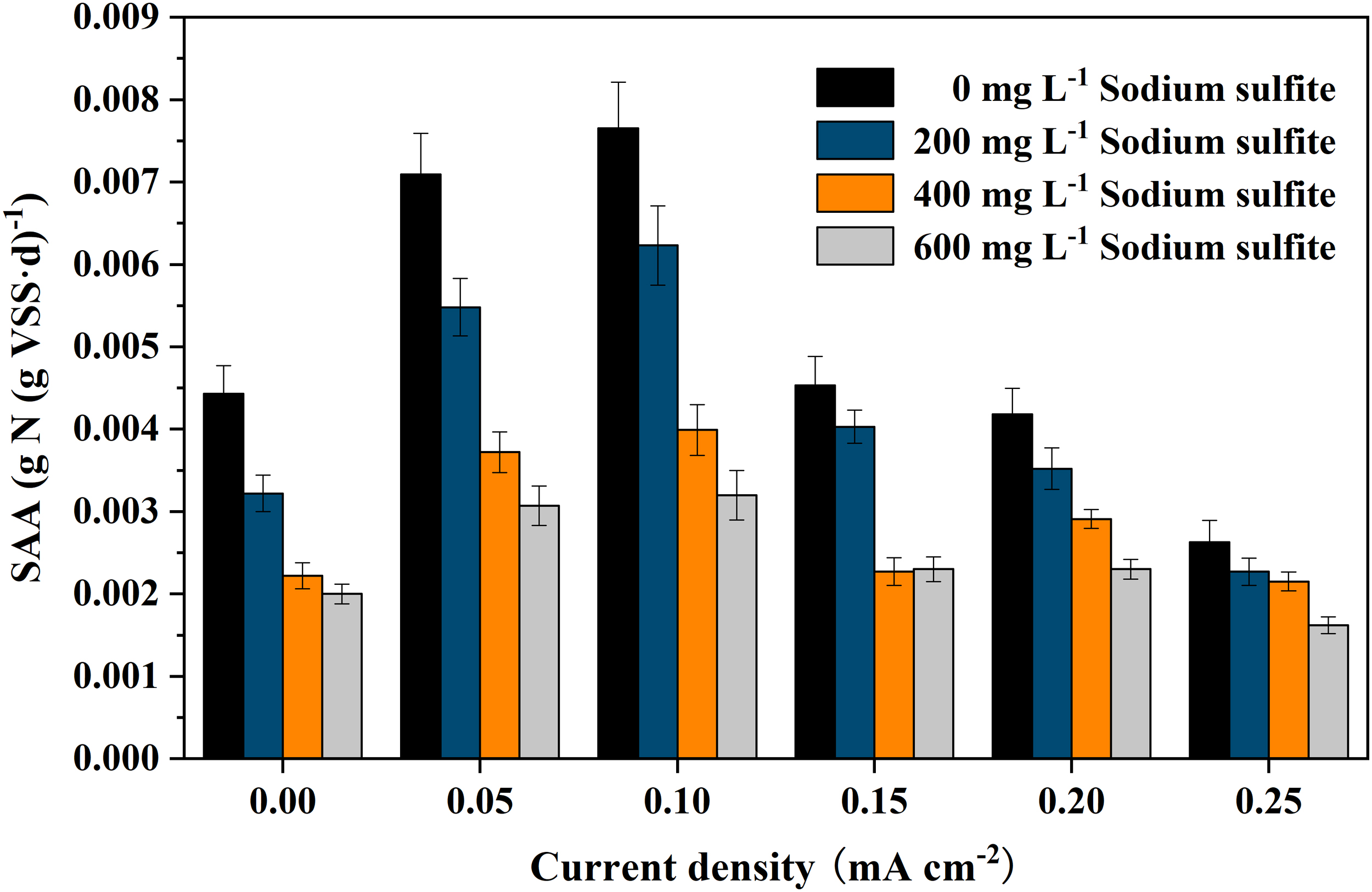
The effect of sodium sulfite on SAA at different densities in the AES of 0.10 mA/cm2 in the AES.
It was found that the SAA decreased significantly with the increase of sodium sulfite dosage at different current densities. This is because the addition of sodium sulfite greatly increases the salinity in EAS and produces substances that are toxic to AnAOB (He et al., 2021). The increase of salinity in the system will stimulate the extracellular polymeric substance (EPS) composition of AnAOB to change, inhibit the production of hydrophobic proteins and hydrophobic functional groups, and reduce the hydrophobicity of the cell surface (Fang et al., 2018). At the same time, high Na+ concentration will hinder the combination between multivalent metal ions and EPS, and hinder the polymerization of sludge (Zhang et al., 2021a). Under the condition of 200 mg/L sodium sulfite added, the SAA (0.0062 g N/[g VSS∙d] was the highest at the current density of 0.10 mA/cm2, whereas the SAA was 0.0023 g N/[g VSS∙d] at 0.25 mA/cm2, only 36.4% of that at 0.10 mA/cm2. When the sodium sulfite concentration was 600 mg/L, the SAA at each current density was lower than 0.0032 g N/[g VSS∙d].
Similar to the effect of sodium sulfite on NRR in Fig. 2b, with the increase of sodium sulfite dosage, the average NRR at different current densities mostly showed a downward trend. When 600 mg/L sodium sulfite was added, the NRR was negative. It can be seen that the activity of AnAOB was seriously lost, more specifically, the tolerance to sodium sulfite was poor. When 600 mg/L sodium sulfite was added, the NRR showed a negative value. It can be seen that too high a concentration of sodium sulfite will seriously lose the activity of AnAOB, or even die (Wang et al., 2020a). Therefore, although the addition of sodium sulfite can save the removal time of DO, too high a concentration will inhibit anammox activity.
The inhibitory effect of sodium sulfite was quantified in Fig. 5. When the dosage of sodium sulfite was 200 mg/L, and the inhibition level was lower at high current density (>0.15 mA/cm2). The inhibition level was the lowest (11.0%) at the current density of 0.15 mA/cm2, which is 16.3% lower than that when there is no current. The inhibitory effect was further enhanced as the dosage of sodium sulfite increased to 400 mg/L. The inhibition level at other current densities was 49.9–47.5%, and the inhibition level at the current density of 0.15 mA/cm2 changed greatly from 11.0% to 49.9%. When the dosage of sodium sulfite was 600 mg/L, except for the 0.7% reduction of the inhibition effect at 0.15 mA/cm2 current density, the inhibition effect of other current densities in the reaction system reaches the maximum. It can be seen that with the increase of the concentration of sodium sulfite, the inhibition level of AnAOB gradually increases, and the increase of current density weakens the inhibitory effect of sodium sulfite on AnAOB.
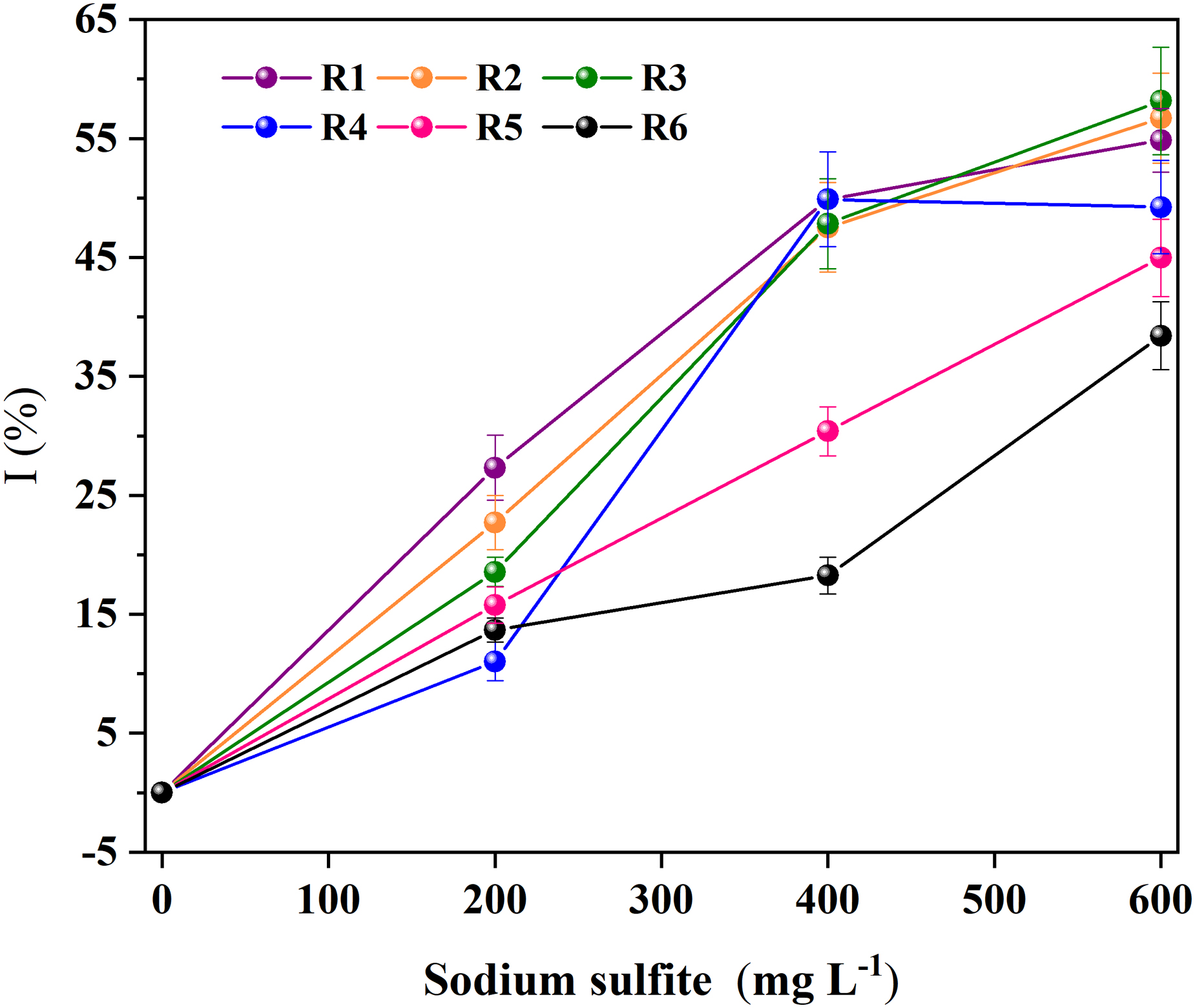
The effect of sodium sulfite on the inhibitory level of AnAOB at different densities in the AES. AnAOB, anammox bacteria.
Combined with the comprehensive analysis in Figs. 4 and 5, it can be seen that different current densities have different inhibitory effects on anammox. In the process of increasing the dosage of sodium sulfite, the inhibition trend of 0.20 and 0.25 mA/cm2 current density was relatively gentle and at a low level. In the reaction system without current application, the inhibitory effect was strongest after adding sodium sulfite, so applying a certain current can reduce the inhibitory effect of sodium sulfite on anammox activity. In this experiment, the minimum dose of sodium sulfite added was 200 mg/L, and the optimal current density was 0.10 mA/cm2, so 200 mg/L sodium sulfite and a current density of 0.10 mA/cm2 were used as the operating system and DO control method for the optimal reaction conditions.
Stoichiometric ratio analysis
Due to the different operating conditions of each process, the removal ratio of NO2−-N/NH4+-N in different anammox reactors also varied greatly, between 0.5 and 4.0. (Ahn et al., 2004). In this study, when the concentration of sodium sulfite is 0, the value of ΔNO2−-N/ΔNH4+-N and ΔNO3−-N/ΔNH4+-N was 1.17 and 0.22, respectively, which was lower than the reported reaction ratio of 1.32 and 0.26 (Fig. 6). It may be that there is a small amount of DO in the water body, forming an oxidized area near the anode, and the phenomenon of excessive oxidation of NH4+-N occurs, thereby reducing the accumulation of NH4+-N, as shown in Equation 7 (Wang et al., 2020b). NO3−-N was reduced to N2 in the electrochemical denitrification process under the condition that the cathode provides electrons, as shown in Equation 8 (Sawayama, 2006). In addition, the anode material iron mesh in the reactor provides an electron donor to reduce NO3−-N to NH4+-N, as shown in Equation 9, and the reduction of NO2−-N removal rate may be due to the incomplete reduction of NO3−N (Li et al., 2015).

Stoichiometric ratio under different sodium sulfite concentrations.
In addition, as the concentration of sodium sulfite increased, the value of ΔNO2−-N/ΔNH4+-N decreased from 1.17 to 0.58, and the value of ΔNO3−-N/ΔNH4+-N dropped from 0.22 to 0.14. As the removal rate of NO2−-N decreased continuously, excessive accumulation of NO2−-N also inhibited the activity of AnAOB and reduced the influence of AnAOB on the concentration of NH4+-N, NO2−-N, and NO3−-N, which will also cause the reduction of ΔNO2−-N/ΔNH4+-N and ΔNO3−-N/ΔNH4+-N ratios.
Conclusions
Our study provides a new technique for the rapid removal of DO by sodium sulfite in EAS, and provides theoretical significance for the effect of sodium sulfite on the anaerobic ammonia oxidation process, the above research results are shown as follows:
The combination of adding 200 mg/L sodium sulfite and nitrogen stripping is the best way to control the DO in the influent, providing an alternative strategy to control DO, which can save more than half of the nitrogen stripping time; The anammox process was greatly improved by applying an electric field. When the current density was 0.10 mA/cm2, the NRR had the greatest improvement compared with no current situation, from 0.0039 g N/[L∙d] to 0.0091 g N/[L∙d], whereas the NRR did not increase but decreased after the current density increased due to the activity of AnAOB inhibited by the increased current; With the gradual increase of the influent concentration of sodium sulfite, the inhibition level of sodium sulfite on AnAOB was also gradually enhanced, which will directly inhibit the nitrogen removal activity. This effect of this effect was minimal at 200 mg/L, and the inhibitory effect was very obvious at 600 mg/L. Therefore, the dosage of sodium sulfite should be appropriately controlled to achieve high nitrogen removal efficiency while efficiently removing dissolved oxygen.
Footnotes
Authors' Contributions
H.S.: Writing—Editing, Writing—Original Draft, Conceptualization, and Methodology; J.H.: Validation and Investigation; Y.F.: Writing—Reviewing, Investigation, Visualization, and Funding acquisition; H.L.: Validation and Visualization; H.C.: Resources and Writing—Reviewing; N.S.: Visualization; Y.Y.: Conceptualization and Methodology.
Author Disclosure Statement
No competing financial interests exist.
Funding Information
This work was funded by a Project of Shandong Province Higher Educational Youth Innovation Science and Technology Program (2020KJG003), the Natural Science Foundation of Shandong Provincial, China (ZR2021ME142). This article also was supported by the PhD Foundation of the University of Jinan (XBS1814).

References
Supplementary Material
Please find the following supplemental material available below.
For Open Access articles published under a Creative Commons License, all supplemental material carries the same license as the article it is associated with.
For non-Open Access articles published, all supplemental material carries a non-exclusive license, and permission requests for re-use of supplemental material or any part of supplemental material shall be sent directly to the copyright owner as specified in the copyright notice associated with the article.
