




Abstract
Microplastics (MPs) pollution has garnered global attention because of its potential risk. The removal efficiencies for MPs in traditional water and wastewater treatment plants are generally low. Coagulation is a widely used process in these facilities. In this study, we investigated the efficiency of three representative coagulation aids, namely, anionic polyacrylamide (PAM), sodium alginate (SA), and active silicic acid (ASA), in facilitating the removal of polystyrene (PS) MPs through the use of polyaluminum ferric chloride (PAFC) coagulation. All three coagulation aids enhanced the removal efficiency of PS MPs. Specifically, ASA demonstrated the highest removal efficiency of 94.28% when used in conjunction with a PAFC concentration of 60 mg/L and a coagulant aid concentration of 10 mg/L. Moreover, the PAFC-ASA system exhibited pH insensitivity, whereas the PAFC-PAM and PAFC-SA systems displayed greater effectiveness under alkaline conditions. The presence of chloride ions (Cl−) had minimal impact on removal efficiency, whereas the presence of sulfate ions (SO42−) hindered coagulation effects in both the PAFC-PAM and PAFC-ASA systems. Furthermore, bicarbonate ions (HCO3−) promoted MPs removal in the PAFC-SA and PAFC-ASA systems but inhibited the effect in the PAFC-PAM system. Based on a comprehensive evaluation of its performance, ASA is suggested as a promising coagulation aid in conjunction with PAFC for the removal of PS MPs.
Introduction
Microplastics (MPs), defined as plastic particles with a diameter smaller than 5 mm, have garnered a significant global attention from various institutions and organizations. Evidence of their presence has been found in monitoring locations worldwide, spanning oceans, fresh water, soil, and even Antarctica (Wang et al., 2021a). In comparison to larger plastics, MPs possess a higher risk of harm because of their diminutive size. They have the potential to enter the food chain, accumulate in the human body, and consequently jeopardize human health (Lee et al., 2023). Besides, their hydrophobic nature and relatively large specific surface area enable MPs to accumulate significant quantities of heavy metals and persistent organic compounds, elevating them to an even more concerning pollutant because of their capacity to transport and disperse these detrimental substances throughout the environment (Wang et al., 2021b).Studies have indicated that MPs possess the ability to accumulate hazardous compounds, including polycyclic aromatic hydrocarbons, organochlorine pesticides, polychlorinated biphenyls, and heavy metals such as chromium, lead, and nickel (Wang et al., 2021c). Moreover, MPs have the capacity to serve as carriers for microorganisms, such as bacteria and viruses, further underscoring the significance of addressing MP pollution (Rubio et al., 2020). Microorganisms are capable of adhering to MPs and subsequently breaching the human epithelial barrier, resulting in the production of oxidative stress, tissue damage, chronic inflammation, and localized immune responses (Cox et al., 2019; Schirinzi et al., 2017). Therefore, it is crucial to take effective measures to mitigate MP pollution.
Studies have shown that wastewater treatment plants (WWTPs) might be an important reservoir of MPs, and the effluent from WWTPs might be a significant source of MPs released into the environment (Sol et al., 2020). The conventional treatment technologies used in WWTPs, encompassing primary treatment methods (such as physical and chemical processes) and secondary treatment methods (such as biochemical processes), exhibit limited efficiency in effectively eliminating MPs. Based on previous research findings, Ziajahromi et al. (2017) reported an MP removal efficiency of 66.7% using the activated sludge process, whereas Yang et al. (2019) achieved a removal efficiency of 54.4% using the anaerobic-anoxic-oxic process. The amount of MPs in the effluent still reached levels as high as 930 ± 71 items/L even after the treatment processes including the coagulation/flocculation, sedimentation, sand filtration and advanced treatment units, and ozonation combined with granular activated carbon filtration (Wang et al., 2020). Researchers have estimated that individuals annually ingest ranges between 11,845 and 193,200 MPs, with tap water being the primary source (Senathirajah et al., 2021). Considering the increasing detection of MPs in freshwater sources, there is an urgent need to develop effective methods to remove MPs in the raw water. Currently, several methods have been developed for the removal of MPs in water and wastewater, including membrane filtration, adsorption, bioremediation, photocatalytic degradation, advanced oxidative processes, coagulation, and electrocoagulation (Lu et al., 2023). However, the efficiency of each technique is influenced by factors such as the size and type of MPs, and some of these technologies are either less efficient or costly (Khan et al., 2023a; Lu et al., 2023). Therefore, it is urgent to develop more effective technologies for the removal of MPs.
Coagulation is a widely used process to eradicate suspended colloidal particles from water and wastewater by using different coagulants. Owing to its simplicity, high efficiency, and cost-effectiveness, coagulation has recently gained significant attention as a promising method for MPs removal. Nevertheless, traditional coagulation techniques using aluminum or iron salts as coagulants exhibit limited efficiency because of the insufficient hydrolysis products of the coagulants as well as the variations in size, density, and shape of MPs (Khan et al., 2023a; Lapointe et al., 2020; Zhou et al., 2021). For instance, previous studies have reported that the removal efficiencies of polyethylene (PE) MPs using ferric chloride hexahydrate (FeCl3·6H2O) and aluminum chloride hexahydrate (AlCl3·6H2O) coagulants were below 12.7% and 36.9%, respectively (Ma et al., 2019b). However, when polyacrylamide (PAM) was added as a coagulant aid to AlCl3·6H2O, the removal efficiency increased to 61% (Ma et al., 2019b). It was observed that larger MPs were more easily removed compared with smaller ones (Lapointe et al., 2020; Na et al., 2021). Specifically, the removal efficiencies for 20, 45, and 90 μm polystyrene (PS) microbeads using AlCl3/FeCl3 ranged from 77.4% to 95.3%, but that for 10 μm PS was only 33.0–41.1% (Na et al., 2021). In addition, environmental factors, such as pH levels and coexisting substances, may further influence the efficiency of conventional coagulation methods (Sillanpää et al., 2018; Xu et al., 2021).
To optimize the effectiveness of coagulation in the removal of MPs, particularly those of smaller sizes, three common coagulation aids were incorporated to promote floc coagulation, strengthen floc structure, and facilitate floc sedimentation. This study focused on the usage of polyaluminum ferric chloride (PAFC) as the coagulant for PS MPs, in conjunction with three representative coagulation aids: anionic PAM, sodium alginate (SA), and active silicic acid (ASA). PS was chosen as the target polymer based on its high prevalence in aquatic environments (Lenaker et al., 2019). PAFC is an inorganic composite polymer coagulant widely used in WWTPs, which has synergistic advantages of polyaluminum and polyferric coagulants, such as a strong adsorption bridging ability and a wide coagulation pH range (Liu et al., 2021). PAM (anionic) is an organic polymer characterized by a significant number of negative charges, whereas SA represents a naturally occurring organic polymer and ASA is an inorganic substance. The main objective of the present study was to examine the efficiency of PAM, SA, and ASA as coagulation aids in augmenting the removal of PS MPs through PAFC-induced coagulation while also elucidating the underlying mechanisms. Furthermore, the influences of coexisting ions were investigated to assess the adaptability of the coagulation systems under various water quality conditions.
Materials and Methods
Chemicals
All chemical reagents used were analytical grade. Anionic PAM was purchased from Tianjin Zhiyuan Chemical Reagent Co., Ltd. (China). PAFC, SA, ASA, hydrochloric acid (HCl), concentrated sulfuric acid (H2SO4), sodium hydroxide (NaOH), sodium chloride (NaCl), sodium sulfate (Na2SO4), sodium bicarbonate (NaHCO3), and humic acid (HA) were purchased from MACKLIN Chemical Reagent Co., Ltd. (China). PS (10 μm) was obtained from Shuangfu Plastics Co., Ltd. (China). Deionized water was used in the experiments to mitigate the influence of water components on the results.
Coagulation experiment with jar tests
Coagulation/sedimentation experiments were conducted using deionized water in 1L beakers using a jar tester (ZR4-6, Zhongrun, China) at 25 ± 1°C. The initial concentration of PS was 100 mg/L. The selected amounts of PAFC were added to the samples. Coagulation aids, that is, PAM, SA, and ASA, were added separately to enhance coagulation performance. The initial pH of the solution was adjusted with NaOH and/or HCl. Each experimental group consisted of three parallel trials, with a control group that did not use any coagulants or coagulant aids. The stirring protocol used in the study was aligned with literature recommendations, involving an initial phase of high-speed agitation ranging from 300 to 600 rpm, followed by a prolonged phase of slow mixing between 40 and 300 rpm (Lapointe et al., 2020; Ma et al., 2019a; Skaf et al., 2020). In this study, a mixing speed of 500 rpm was maintained for 1 min, followed by a decrease to 280 rpm for a duration of 40 min, as it was found to promote the formation of larger flocs. The solution was then allowed to settle for 30 min. Following sedimentation, the supernatant was carefully collected using a 25 mL syringe. The suspended particles within the supernatant were immersed in a solution of 1 mol/L HCl for a duration of 1 h to facilitate the removal of flocs and subsequently filtered using membranes with a pore size of 0.45 μm. Subsequent to this filtration, the PS MPs present on the surface of the membrane were cautiously scraped off and subjected to a drying process in an air-drying oven at 60°C for a period of 12 h. After reaching room temperature, the resulting dried samples were weighed, and the weight was denoted as W, whereas the initial amount of PS MPs added to the beaker was designated as W0. The removal efficiency of PS MPs was calculated using a weighing method, which involves comparing the mass change before and after the coagulation experiment (Ma et al., 2019a; Zhang et al., 2021b). The removal efficiency of PS (%) can be expressed as
Characteristics of microplastics and flocs
Samples were collected from beneath the surface of the suspension using a hollow glass tube for characterization purposes. The precipitate obtained was subjected to morphological analysis using scanning electron microscopy (SEM) (JSM-7600F, Jeol, Japan) after undergoing vacuum drying with a reliable dryer model (DZF-6050MBE, Bongxun, China). In addition, the zeta potential of the precipitate before and after coagulation was measured using a zeta potentiometer (Zetasizer Nano ZS, MalvernPanalytical, UK) in order to gain insights into the aggregation behavior of MPs in water.
Statistical analysis
Statistical analysis was performed using the Statistical Package for the Social Sciences version 16.0 (US) for Windows. To identify significant differences, a one-way analysis of variance was used. Statistical significance was considered when p < 0.05.
Results and Discussion
Coagulation performances of PS microplastics by PAFC
The removal efficiency of PS MPs under various concentrations of PAFC is presented in Figure 1. In the absence of any reagent, approximately 1.42% of PS MPs settled because of their higher density (1.05 g/cm3) compared with water (Sighicelli et al., 2018). As the PAFC concentration increased, the removal efficiency of PS MPs exhibited a significant improvement (p < 0.05). A PAFC dosage of 80 mg/L resulted in a removal efficiency of 92.86% for PS MPs. Further increase in the PAFC concentration yielded only a slight increase in removal efficiency. Significantly, it was observed that PAFC exhibited notable efficacy as a coagulant for the removal of PS MPs from water. This can be attributed to PAFC’s polymeric nature, which facilitates the formation of larger flocs that can be easily eliminated through sedimentation or filtration (Liu et al., 2021). In addition, PAFC possesses a higher charge density and molecular weight, enabling it to bridge between particles and enhance the coagulation process (Zhang et al., 2015).
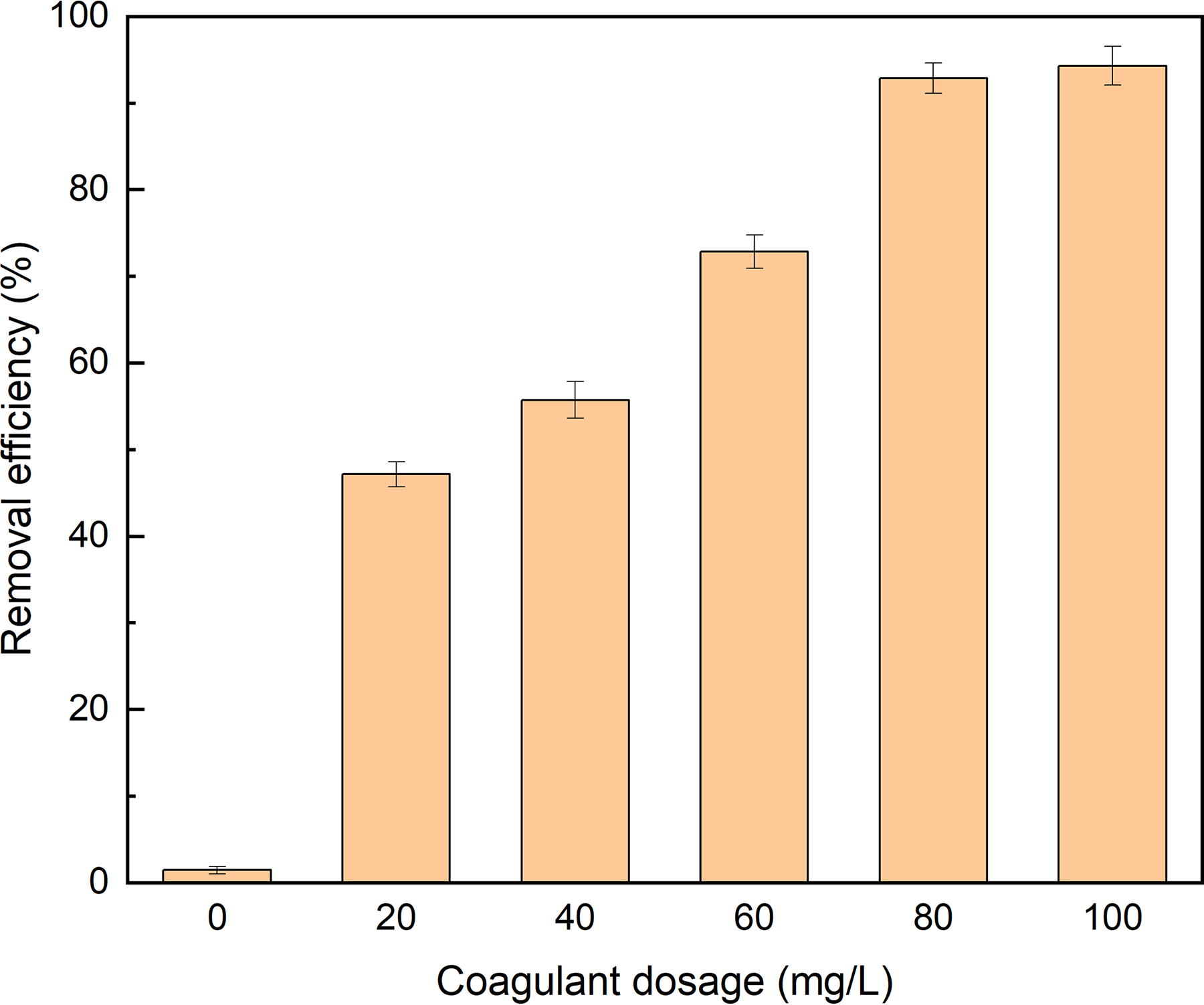
Removal efficiency of PS microplastics under different concentrations of PAFC. PAFC, polyaluminum ferric chloride; PS, polystyrene.
Enhanced coagulation performances of PS microplastics by PAFC under the coexistence of coagulant aids
In order to optimize the removal of PS MPs while minimizing the dosage of PAFC, the use of different coagulant aids, namely, PAM, SA, and ASA, was explored. The impact of these coagulant aids on the removal efficiency of PS MPs was assessed under a fixed PAFC concentration of 60 mg/L. As depicted in Figure 2, it was observed that the addition of three coagulant aids increased the removal efficiency of PS MPs. As the concentration of each coagulant aid increased to 20 mg/L, the removal efficiency of PS MPs exhibited a significant improvement (p < 0.05), with a removal efficiency of 84.29% for PAM, 94.28% for SA, and 97.14% for ASA, respectively. Notably, ASA emerged as the most effective coagulant aid under the same dosage, whereas PAM demonstrated the lowest efficiency. The addition of a mere 5 mg/L of ASA resulted in a removal efficiency of 91.43%. Zhang et al. (2021b) had similar findings in a study on the removal of polyethylene terephthalate (PET) MPs using polyaluminum chloride coagulation. Their research indicated that coagulant aids could effectively promote MPs removal, and ASA removed 54.70% PET MPs at a conventional dosage (5 mg/L), followed by SA and PAM. It seems that these coagulant aids showed higher effectiveness for the removal of PS MPs.

Removal efficiency of PS microplastics in coexistence of different coagulant aids. ASA, active silicic acid; PAM, polyacrylamide; PS, polystyrene; SA, sodium alginate.
These findings highlight the potential of using specific coagulant aids, such as ASA, to enhance the removal efficiency of PS MPs while reducing the required PAFC dosage. Given the increasing concerns regarding MP pollution in aquatic environments, particularly through the discharge of treated effluent from WWTPs, as well as the significant implications of MPs generated from personal protective equipment on aquatic ecosystems (Khan et al., 2023b; Khan et al., 2020), it is imperative to explore feasible approaches for the removal of MPs from water and wastewater. Coagulation using PAFC along with coagulant aids offers a practical solution in this regard.
Mechanisms of coagulation by PAFC in conjunction with coagulant aids
The double-layer compression effect
The principal mechanism of coagulation involves double-layer compression. Upon the introduction of the coagulant agent, copious amounts of positively charged ions are introduced into the colloid diffusion layer and, in certain instances, the adsorption layer, resulting in the reduction of the thickness of the diffusion layer, reduction in zeta potential, and the coalescence of colloidal particles (Liu et al., 2021; Monira et al., 2021).
As depicted in Figure 3, the initial zeta potential of PS MPs was recorded at −41.5 mV prior to the coagulation process. However, with the addition of PAFC, a hydrolysate comprising predominantly aluminum ions (Al3+) and ferrous irons (Fe2+), a positive charge was observed. Consequently, the magnitude of the MPs’ zeta potential declined, indicating the occurrence of double-layer compression. This phenomenon led to a decrease in the thickness of the MPs’ surface double electric layer, resulting in enhanced chances of particle collision and sedimentation (Lu et al., 2018). Consequently, the removal of MPs was facilitated.

Zeta potential of the precipitate in different systems. ASA, active silicic acid; MPs, microplastics; PAFC, polyaluminum ferric chloride; PAM, polyacrylamide; PS, polystyrene; SA, sodium alginate.
However, in the PAFC-PAM system, a significant decrease in zeta potential was observed, which can be attributed to the presence of the anionic polymer PAM. Similarly, for the PAFC-SA and PAFC-ASA systems, the zeta potential after the reaction was measured at −30.1 mV and −22.1 mV, respectively. This reduction in zeta potential can be attributed to the negative charge from the hydroxyl group generated through the hydrolysis of SA and the negative charge of the colloid resulting from the hydrolysis of ASA. Overall, the introduction of both coagulant and coagulant aids resulted in a decrease in the absolute value of the zeta potential of MPs, thereby enhancing the sedimentation of PS MPs.
The adsorption bridging effect
Adsorption bridging is a fundamental mechanism in coagulation, playing a critical role in the formation of flocs. Upon hydrolysis, PAFC produces aluminum hydroxide, ferric hydroxide, and various polyhydroxy ions, which attract neighboring particles and progressively form larger aggregates. Coagulant aids enable the active groups of elongated chain molecules to occupy one or multiple adsorption sites on the surface of colloidal particles, resulting in the formation of a coarse flocculent material resembling a bridge. This bridging effect facilitates the subsequent precipitation process (Rodríguez-Narvaez et al., 2021).
SEM images of the precipitates in different systems are shown in Figure 4. In the PS-PAFC system, few particles were observed on the surface of the flocculent as no polymeric material was generated to effectively bridge the MPs when only PAFC was added (Fig. 4a). In contrast, in the PS-PAFC-PAM, PS-PAFC-SA, and PS-PAFC-ASA systems, a significant number of flocs were observed, and the PS particles were encapsulated within the porous structure between the flocs. Coagulation in conjunction with coagulant aids led to the formation of oligomers and clusters that could adsorb the negatively charged MPs, resulting in the formation of larger flocs while neutralizing the charge. Notably, the flocs formed in the PS-PAFC-PAM system exhibited higher density and smaller volume compared with those in the PS-PAFC-SA and PS-PAFC-ASA systems. The chain-like structures observed in Figure 4b and Figure 4c likely originated from organic polymeric materials such as PAM and SA, whereas the precipitation of polymers shown in Figure 4d can be attributed to the polymeric nature of ASA (Ding et al., 2021).
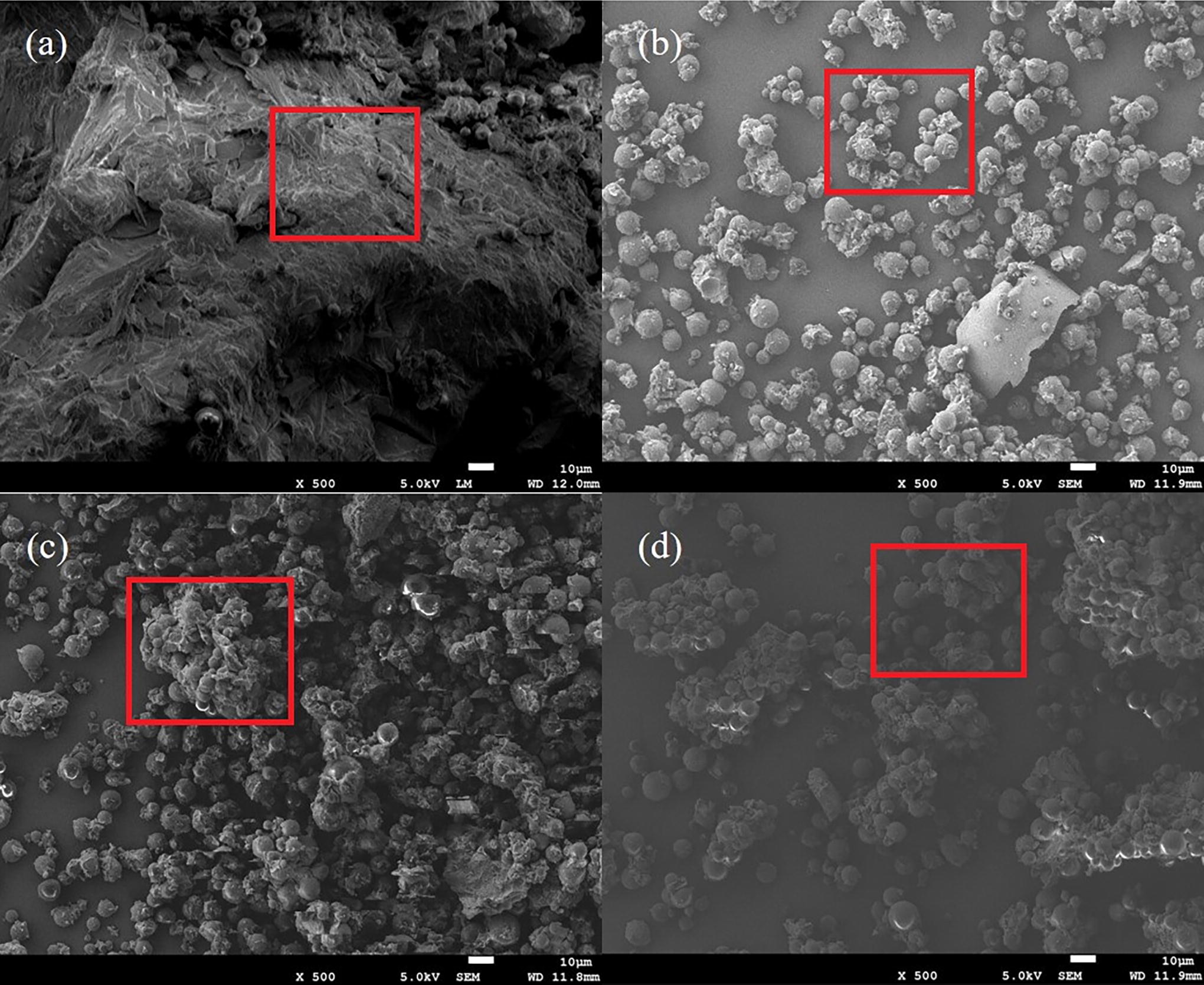
SEM images of precipitates in different coagulation systems. (a) PAFC (b) PAFC-PAM (c) PAFC-SA (d) PAFC-ASA. ASA, active silicic acid; PAFC, polyaluminum ferric chloride; PAM, polyacrylamide; SA, sodium alginate; SEM, scanning electron microscopy.
The sweep-net effect
The flocs formed by the addition of PAFC and coagulant aids are capable of capturing MPs (Wang et al., 2021b). Upon completion of the precipitation process, a visible accumulation of several MP particles at the bottom of the flocs was observed. This process is achieved through the hydrolysis reaction and adsorption of PAFC. It is suggested that the flocs formed during the coagulation process settled to the bottom and entrapped MPs along the way. Besides, it was observed that the flocs formed in the PAFC-SA and PAFC-ASA systems exhibited a smaller and denser structure compared with those formed by PAFC-PAM, which was advantageous for adsorption.
Proposed coagulation mechanism
Initially, PS MPs exhibited stability in water. The introduction of PAFC-induced hydrolysis within the coagulation system. Then, aluminum and iron ions, hydrolyzed from PAFC, compress the double-layer structure of the MPs, reducing the repulsion force between particles (Han et al., 2020). Consequently, particle collisions are enhanced, leading to the destabilization of some MPs and facilitating sedimentation. When coagulant aids were added to the system, they were rapidly mixed with PAFC to achieve homogenous dispersion in water. These coagulant aids are water-soluble polymers with chain or branched molecules, which could promote the formation of flocs through the mechanism of adsorption bridging (Ma et al., 2019b; Zhang et al., 2021b). The flocs formed could adsorb onto MPs either through positively charged regions or by connecting multiple MPs via hydrolyzed long-chain substances. Finally, a 30-minute sedimentation process allowed the settling of unstable MPs and flocs containing MPs. Throughout this stage, flocs and aggregates formed by MPs settled under the action of gravity, resulting in the capture, encapsulation, and precipitation of suspended MPs to the bottom of the water body, which is commonly referred to as trapping, rolling, and sweeping, or mixed with sediment. According to Figure 2, among the three systems under investigation, PAFC-ASA demonstrated the most pronounced effects in terms of adsorption bridging and sweeping. Following PAFC-ASA, the PAFC-SA system displayed relatively weaker effects, whereas the PAFC-PAM system exhibited the lowest performance in this regard.
Influence factors
Initial pH
The influence of pH on the removal efficiency of PS MPs in different systems, namely, PAFC-PAM, PAFC-SA, and PAFC-ASA, was assessed under a fixed PAFC concentration of 60 mg/L and coagulant aid concentration of 10 mg/L. As shown in Figure 5, the removal rates of PS MPs in the PAFC-PAM and PAFC-SA systems were observed to be nearly zero when the initial pH fell below 7.0, which could be attributed to the hindrance in the hydrolysis of Al3+ and Fe2+ in acidic conditions (Kokalj et al., 2018). At an initial pH of 9.0, the maximum removal rates were observed as 78.86% and 90.02% in the PAFC-PAM and PAFC-SA systems, respectively. In contrast, the PAFC-ASA system exhibited a slight sensitivity to pH, with removal rates remaining consistently above 88.6% across the pH range of 3.0 to 11.0, and the maximum removal rate of 97.14% was achieved at pH 8.0. Numerous studies have highlighted the significant impact of solution pH on the removal of MPs through coagulation (Khan et al., 2023a). Generally, higher removal efficiencies of MPs have been observed under alkaline conditions. Moreover, pH also plays a role in influencing the particle size of flocs, with alkaline conditions resulting in larger flocs that are more effective in netting and sweeping than those under acidic conditions (Zhou et al., 2021).
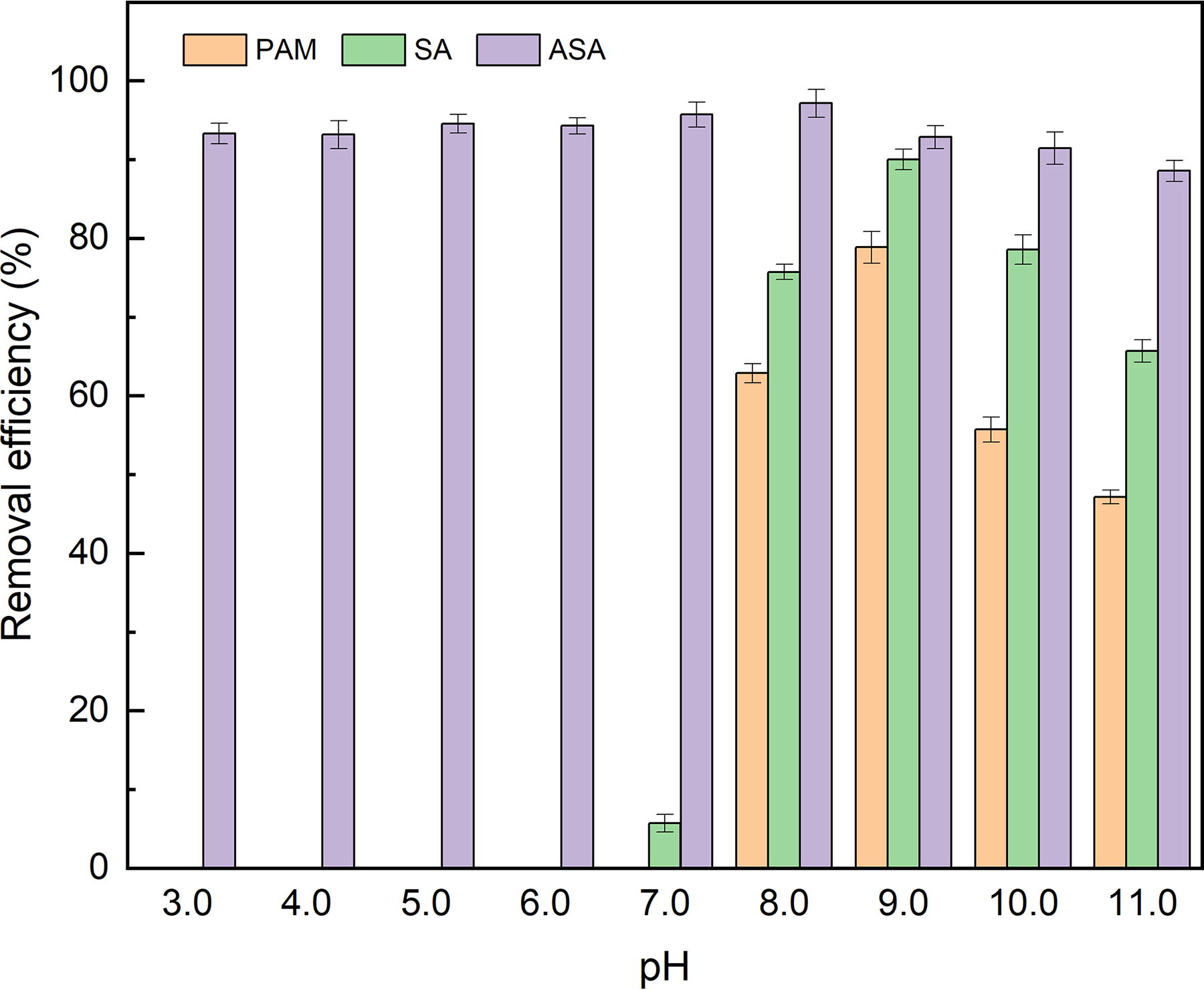
Removal efficiency of PS microplastics under different initial pH levels. ASA, active silicic acid; PAM, polyacrylamide; PS, polystyrene; SA, sodium alginate.
Typical ions
The potential influence of various ions present in practical water sources on the efficiency of MP coagulation should be concerned (Ma et al., 2019b). Table 1 shows the effects of three common ions, namely, chloride ions (Cl−), sulfate ions (SO42−), and bicarbonate ions (HCO3−), on the removal efficiency of PS MPs under a fixed PAFC concentration of 60 mg/L and coagulant aid concentration of 10 mg/L. Cl− was found to have negligible impact on the removal rate in all the three systems, which aligns with the findings of prior research (Duan and Gregory, 2003; Zhou et al., 2021). Conversely, the presence of SO42− exerted an inhibitory effect on MP removal efficiency in both the PAFC-PAM and PAFC-ASA systems but had negligible impact on the PAFC-SA system. SO42− is known to decrease the positive charges of the hydrolysate and destabilize metal coagulants (Duan and Gregory, 2003). This reduction in positive charge hindered the agglomeration of hydrolysates and MPs, thereby inhibiting the removal efficiency of PS in both the PAFC-PAM and the PAFC-ASA systems (Van Wyck and Fayer, 2023). Zhou et al. (2021) also reported the inhibitory effect of SO42− on MP removal efficiency. However, it is reported that SO42− could act as a bridge and enhance MP removal efficiency (Lin et al., 2014), which might result in only a negligible reduction in removal efficiency in the PAFC-SA system. The addition of HCO3− resulted in higher removal efficiency of MPs in both the PAFC-SA and PAFC-ASA systems, primarily because of its role in promoting alkalinity and subsequent hydrolysis of coagulants, forming flocs with a larger volume and surface area that settled better (Zhang et al., 2021a). However, HCO3− was observed to inhibit the effect of the PAFC-PAM system. This inhibition can be attributed to the heightened sensitivity of PAM to pH changes, with increased alkalinity being correlated to the suppression of its hydrolytic activity (Wang and Tang, 2001).
Effects of Typical Ions on the Removal Efficiency of PS Microplastics in Different Coagulation Systems
ASA, active silicic acid; PAFC, polyaluminum ferric chloride; PAM, polyacrylamide; PS, polystyrene; SA, sodium alginate.
Conclusions
Coagulation using PAFC as a coagulant demonstrated effectiveness in the removal of PS MPs from water. The addition of coagulation aids, namely, PAM, SA, and ASA, further enhanced the coagulation efficiency and reduced the dosage of PAFC required. Remarkably, ASA exhibited the highest performance among the tested coagulation aids. At low dosages of coagulant aids, the dominant mechanism involved was double-layer compression. As the dosages of coagulant aids increased, adsorption bridging and sweeping effect became increasingly important. The PAFC-ASA system was not sensitive to pH changes, whereas PAFC-PAM and PAFC-SA systems were more effective under alkaline conditions. Cl− was found to have negligible impact on the removal rate in all the three systems. SO42− exerted an inhibitory effect on MP removal efficiency in both the PAFC-PAM and PAFC-ASA systems while having negligible impact on the removal rate in the PAFC-PAM system. The addition of HCO3− resulted in higher removal efficiency of MPs in both the PAFC-SA and PAFC-ASA systems while inhibiting the effect of PAFC-PAM system. HA was found to enhance the flocculation process of PS MPs. Taking into account the higher efficiency of ASA, it is recommended that ASA can be used as a suitable coagulation aid in PAFC coagulation for the removal of PS MPs. These findings provide valuable insights for future research in the removal of MPs from raw water. However, it should be noted that the findings of this study are specific to virgin PS MPs with a size of 10 μm. Therefore, further investigation is required to explore the effects of different types, sizes, and weathering conditions of MPs on their removal, which will be the focus of our future research.
Footnotes
Authors’ Contributions
K.Y.: Investigation methodology and Writing—original draft preparation. Y.Z.: Data analysis and Curation. S.Y.: Characterization, Software, and Visualization. L.C.: Conceptualization, Writing—reviewing and editing, and Supervision.
Author Disclosure Statement
The authors declare that they have no known competing financial interests or personal relationships that could have appeared to influence the work reported in this article.
Funding Information
This work was supported by the National Natural Science Foundation of China (grant number 42077323).