




Abstract
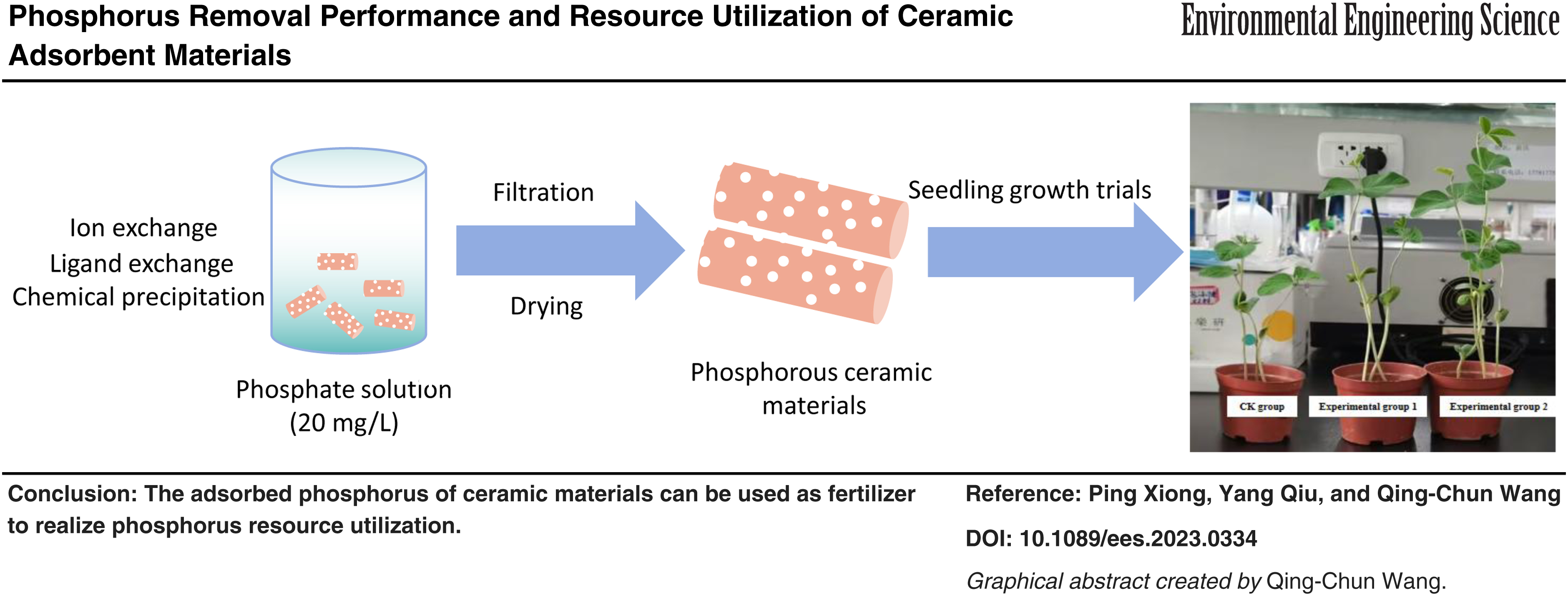
Significant progress has been made in the study of efficient phosphorus adsorption materials. However, more studies need to be on implementing resourceful recycling of materials after adsorption and phosphorus removal. Therefore, this study analyzed ceramic adsorbent materials prepared from clay supplemented with Al2O3, CaCO3, and their use in the treatment of phosphorus-containing wastewater to minimize phosphorus residues, and the feasibility of its direct use as soil. Many adsorption experiments showed that the optimal conditions for removing phosphorus were pH 6, the dosage of 0.15 g/100 mL, and adsorption time of 16 h, and the total phosphorus removal rate reached 96.77%. Meanwhile, ceramic material has good selective phosphate adsorption under the interference of various anions. The phosphorus removal process of ceramic particles was consistent with quasi-secondary kinetics and Langmuir modeling, and it was the monomolecular layer chemisorption with a maximum adsorption capacity of 21.98 mg/g. Phosphorus removal is achieved by ion exchange, ligand exchange, and chemical precipitation between the metal and phosphate in the ceramic material. The phosphate in solution was mainly combined with aluminum and calcium in the ceramics (Al-P: 63.52%, Ca-P: 33.58%), which plants could utilize accounted for 91.68% (Ca2-P, Ca8-P, Al-P, and Fe-P) of the total phosphorus, indicating that the ceramic materials after adsorption of phosphorus had the potential to be used as a phosphate fertilizer. The seedling growth test showed that the adsorbed phosphorus ceramic grain can increase the available phosphorus content of the soil, enhance the activity of alkaline phosphatase, and promote the growth of soybeans, and humic acid can enhance the phosphorus release ability of the ceramic material. It shows that the adsorbed phosphorus of ceramic materials can be used as fertilizer to realize phosphorus resource utilization.
Introduction
Phosphorus is crucial for plant growth but is a major limiting factor for eutrophication, in which exogenous phosphorus pollution is the primary cause of water eutrophication. However, phosphate resources are nonrenewable and limited, and studies indicate that existing reserves will be depleted within 50–100 years (Cordell et al., 2009), and the scarcity of phosphate fertilizer resources will seriously affect global agricultural productivity. Currently, relevant studies have used acidic solutions or high-temperature melting methods to realize phosphorus recovery from municipal sludge, effectively avoiding secondary pollution (Hong et al., 2022; Hosho, 2018). Therefore, using efficient methods to control the eutrophication of water and achieving phosphorus resourcing is significant in sustainable development.
Common phosphorus removal techniques in wastewater mainly include adsorption, ion exchange, chemical precipitation, and biological methods. The effect of biological phosphorus removal is greatly affected by the fluctuation of temperature, pH, water quality, and other factors (Manna et al., 2022), and when the phosphorus concentration in the water is >10 mg/L, it is difficult to satisfy the total phosphorus discharge limit value of wastewater by biological phosphorus removal treatment.
The chemical precipitation method is commonly used to treat high-concentration phosphorus-containing wastewater, but the phosphorus in the residue is difficult to recycle, and the resulting precipitates or complex insoluble matter mixed with sludge will cause secondary pollution (Ting et al., 2020). The ion exchange method has low exchange capacity, short use cycles, and high renewable costs and is difficult to promote in actual engineering applications (Nur et al., 2014).
The adsorption method is a processing technology for adsorbents to rely on Van Dehuali between molecules or to cut phosphate ions in the wastewater through chemical reactions, and achieve phosphorus removal after solid-liquid separation. The adsorption method is widely used to treat low-concentration phosphorus-containing wastewater, which has the advantages of easy resource utilization of adsorption products, a simple phosphorus removal process, and a stable treatment effect.
However, the traditional adsorbing material phosphorus adsorption capacity is low, and there is the problem of the final disposal of the adsorption product after the removal of phosphorus, the adsorption and removal of phosphorus after the material as a soil fertilizer for plant uptake and utilization of less research, which restricts the popularization and application of its.
Presently, the research direction of phosphorus removal of ceramic particles is mainly to improve the adsorption material; most of the research is mainly through high-temperature heat treatment, acid, alkali, and composite reagent modification to change the physicochemical properties of the adsorbent surface to improve the adsorption capacity of the material for phosphorus. Ou used lime mud and fly ash as raw materials to prepare slow-release ceramics by the high-temperature sintering method, and the slow-release ceramics can release a large amount of Ca2+ to form hydroxyapatite under high alkaline conditions, with a total phosphorus removal rate of 97% and adsorption capacity of 0.2425 mg/g (Ou et al., 2023).
Fu used the environmentally friendly functional materials obtained by preparing lanthanum-modified bentonite (La-B) and chitosan co-modified bentonite (La-BC) for phosphate removal from wastewater, with a maximum adsorption capacity of 15.5 mg/g (C0 = 50 mg/L) (Fu et al., 2022). Zhu used a co-precipitation method to obtain magnetic carbon nanofiber adsorbent material (Fe3O4-CNF2) with good adsorption properties and regeneration ability, and phosphate adsorption is attributed to surface precipitation and electrostatic attraction (Zhu et al., 2022). However, adsorbed phosphorus-removing materials as fertilizers for plant uptake and utilization have received widespread attention but mostly focused on biochar (Li and Jin, 2018; Wan et al., 2017).
Biochar powdered adsorbent is easy to clog and difficult to recycle, so in this study, the adsorbent was prepared into columnar ceramic particles, which are easy to recycle. However, the main raw material of clay comes from natural soil that will not dissolve toxic and harmful substances in adsorption and reusing phosphorus, which provides a good prerequisite for the material after adsorption and phosphorus removal as a fertilizer. Al2O3 has a large specific surface area and good adsorption performance, and the form will transform into γ-Al2O3 with higher activity during high-temperature calcination, which improves the adsorption performance of the material (Zhao et al., 2010).
Moreover, Al-P is a slow-acting phosphate fertilizer (secondary available phosphorus source) that is easily absorbed and utilized by plants (Gu and Qin, 1997), and the material after adsorption of phosphorus, can be directly used as soil fertilizer for plants to utilize, thus realizing phosphorus resourcing. Therefore, adding Al2O3 to the raw material improves the phosphorus removal performance of the material and facilitates the subsequent recycling and utilization of subsequent phosphorus resources. The insoluble phosphates produced by chemisorption are usually unfavorable for plant utilization.
A large number of relevant studies have shown that applying exogenous organic acids (humic acid, oxalic acid, etc.) to the soil can activate the insoluble phosphorus in the soil, reduce the fixation of phosphorus so that the effective phosphorus content can be increased by 10–1000 times, thus improving the quality of the crop and yield (Du et al., 2012; Wang et al., 2018). Liu found that adding 5.0–10.0% humic acid significantly increased the effective phosphorus content of the soil from 15 to 90 days after incubation, and the content of the second source of available phosphorus (Al-P, Fe-P) increased at all periods (Liu and Li, 2021).
Wang, in the study on the activation of phosphorus in calcareous soil by low molecular weight organic acids, found that under the application rate of 25 mmol/L, the increase of available phosphorus in activated soil by oxalic acid, citric acid, and lactic acid was 328%, 303%, and 137%, respectively (Wang, 2014). Organic acids in soil reduce phosphorus adsorption by competing adsorption sites with phosphorus through complexation and also provide adsorption sites for phosphorus through the bridging effect of metal ions and interact with phosphorus to form colloidal phosphorus and other complex forms of phosphorus for plant utilization (Debicka et al., 2016).
Therefore, the phosphorus-absorbing material can not only be used as a slow-release phosphate fertilizer to alleviate the shortage of phosphate resources but also can replace the fertilization measurement strategy to reduce the impact of fertilizer application on water quality.
Based on the aforementioned, this study added alumina to the material preparation process and used the material after phosphorus adsorption as fertilizer. The main studies are as follows: (1) the influencing factors of the phosphorus removal performance of ceramide; (2) the mechanism of phosphorus removal; (3) analyzing the phosphorus morphology of the material after the adsorption of phosphorus, the feasibility of implementing its resourcefulness as a fertilizer was analyzed in conjunction with seedling growth tests.
Materials and Methods
Experimental materials
The clay was sourced from Rong County, Zigong, Sichuan Province. And use X-ray Fluorescent Spectrometer to measure the main chemical compositions are silicon dioxide (59.81%), aluminum oxide (23.09%), ferric oxide (4.43%), potassium oxide (2.40%), magnesium oxide (0.90%), and calcium oxide (0.38%).
Preparation of ceramic materials
The dried clay was crushed and sieving 100 mesh. The previous single-factor experiment determined the best raw material ratio was weighed in different proportions of alumina (40%), calcium carbonate (30%), sodium silicate (5%), and ceramic clay for the ingredients after shaking to make the mixture homogeneous, through the control of the solid–liquid volume ratio of 5:2, the deionized water was added to the mixture to form a paste, the use of molds to make the length of the 3–5 mm columnar ceramic particles. After 12 h of air-drying, the particles were preheated at 105°C for 1 h, then calcined in the muffle furnace at 1,017°C for 1.10 h, and then naturally cooled to obtain the ceramic adsorbent material. Alumina, calcium carbonate, and sodium silicate are sourced from Chengdu Kelong Chemical Reagent Factory.
Material characterization
The ceramic material's morphological and elements composition were examined using scanning electron microscope (SEM; ZEISS Sigma 300, Germany). The phase composition and crystalline structure were analyzed by X-ray diffraction (XRD) with Cu as the target and Kα as the radiation source, scanning from 2θ = 5° to 80° at a rate of 5°/min (RIGAKUZS XPriums, Netherlands). Specific surface area and porosity of the ceramsite were determined using an Automatic Specific Surface Area Analyzer (BET) (ASAP2460). The changes in functional groups on the ceramic material's surface were analyzed using Fourier transform infrared spectroscopy (FTIR) (Nicolet 670).
Seedling growth experiments
Phosphorus-absorbing ceramic particles are used as fertilizer in the potted seedling growth experiment. The basic physical and chemical properties of the tested soil were as follows: pH 6.23, water content 21.38%, available phosphorus 23.15 mg/kg, organic mass 36.30 g/kg, and cation exchange capacity 7.40 cmol+/kg. Select the soybean seed (Zhonghuang 13 soybean), which is more sensitive to soil phosphorus content.
Three groups of soybean seeds were used for comparison: phosphorus-absorbing ceramsite (experimental group 1) and humic acid-activated ceramsite (experimental group 2) were added to each pot at the rate of 1 g/kg and were evenly mixed with 250 g of air-dried soil through a 10-mesh screen, and a group of pots with 250 g of soil as CK group, and which set up three parallel samples for each group.
The soils of the CK and experimental groups were derived from the soil of the natural forest land of Southwest Petroleum University without any added fertilizers. Five soybean seeds were uniformly seeded in the aforementioned soil samples. Depending on the humidity and temperature of the air, watering was controlled every 2 days to maintain the soil moisture at about 22% and other experimental parameters were kept constant. According to the growth cycle of soybeans, the soybean germination to the branching period is about 20–35 days, and the branching period is the strong period of soybean growth.
Therefore, the test cycle is chosen to be 45 days. A soil sampler was used to take root samples 2 cm from the plant and 3 cm below the topsoil, and soil samples were taken every 15 days. Relevant indexes (available phosphorus content and alkaline phosphatase activity) were measured, and the growth of soybean was used to evaluate the pottery after adsorbing phosphorus as the feasibility of phosphate fertilizer.
Batch adsorption experiments
Measure 100 mL of 20 mg/L phosphorus solution into a 250 mL conical bottle, assess the effects of Ph (3 ∼ 12), dosage (0.05 ∼ 0.40 g), adsorption time (0 ∼ 36 h), and co-existing ions (Cl−, NO3−, SO42−, HCO3−) on the phosphorus removal effect of the material. After reacting in a water bath thermostatic shaker (30°C) for a certain time, and measure residual phosphorus concentration of the solution after filtration by 0.45 μm filter membrane.
The total phosphorus removal rate (
where C0 (mg/L) and Ce (mg/L) are the initial and equilibrium phosphorus concentrations, respectively, V (L) is the volume of phosphorus solution, and m (g) is the weight of ceramic materials.
To study phosphorus adsorption kinetics by ceramides, add 0.15 g ceramic particles into 100 mL phosphorus solution (20 mg/L) after adsorption for different times (0, 1.0, 2.0, 4.0, 6.0, 8.0, 12.0, 16.0, 24.0, and 36.0 h) in a water bath thermostatic shaker (30°C, 130 rpm), and filter with a 0.45 μm membrane to determine phosphorus concentration. Quasi-primary and quasi-secondary kinetic models are used for fitting phosphate adsorption kinetics (Ho and Mckay, 1999; Lagergren, 1998).
Quasi-primary kinetic model:
Quasi-secondary kinetic model:
where qt (mg/g) and qe (mg/L) are phosphorus adsorption at time and equilibrium, K1 (1/h) and K2 ([g/mg]/h) are the quasi-primary and quasi-secondary kinetic rate constants, respectively, t (h) is the adsorption time.
To study the relationship between ceramide phosphorus adsorption capacity and phosphorus concentration. The 0.15 g ceramic particles are added into 100 mL phosphorus solutions (5, 10, 15, 20, 25, 30, 35, 40, and 50 mg/L) and reacted with a water bath constant temperature shaker (30°C, 130 rpm) for 16.0 h, and filtered with a 0.45 μm membrane. The Langmuir model and the Freundlich model are used to fit the experimental data (Jung et al., 2013; Sohn and Kim, 2005).
Langmuir model:
Freundlich model:
where qm (mg/g) is saturated adsorption capacity, b (L/mg) and K (mg/g) are Langmuir and Freundlich equilibrium constants, respectively, and n is the Freundlich intensity constant.
To study the thermodynamic characteristics of phosphorus absorption of ceramic particles, phosphorus solutions with different concentrations (5, 10, 15, 20, 25, 30, 35, 40, and 50 mg/L) are treated at different temperatures (20°C, 30°C, and 40°C) at 0.15 g/100 mL, and phosphorus concentration is measured after 16.0 h in a water bath constant temperature shaker.
Results and Discussion
Phosphorus removal performance research
Effect of solution pH
The trend of pH on the effect of adsorption and phosphorus removal by ceramic material is shown in Fig. 1a and b. The total phosphorus removal rate increased with the increase in pH value. The pH not only changes the charging properties of the material surface but also affects the morphology of the phosphate present. When the pH is low (0 ∼ 2), the phosphate in the solution mainly exists in the form of H3PO4 with a more stable morphology, which is not conducive to chemical adsorption, and the presence of numerous H+ prevents the interaction between Ca and Al in the material with phosphorus in solution to form a complex, which affects the material's phosphorus adsorption capacity.

Research on phosphorus removal performance of ceramide materials.
When the pH is >7, the concentration of HPO42− and OH− in the solution increases, which will compete with PO43− for the active adsorption sites on the surface of the ceramic material and reduce the adsorption of phosphorus by the material. And the negatively charged phosphate ions increase the electrostatic repulsion on the surface of the ceramic grains against them, which leads to a decrease in the phosphate adsorption by the material with an increase in pH.
The ceramic adsorbent material has a good phosphorus removal effect when pH is 5 ∼ 7. When the pH is 6, phosphorus removal is the best, and the total phosphorus removal rate is 96.77%. In this condition (pH = 6), Al3+ in the material can react with HnPO4(3-n) to produce aluminum phosphate precipitation, the solubility of aluminum phosphate is minimal, and the effect of phosphorus removal is high.
Selection of the dosage
The trend of ceramic material dosage's effect on phosphorus removal is shown in Fig. 1c and d. The total phosphorus removal rate increases with the increase of ceramic granule dosage, and at the dosage of 0.15 g/100 mL, the total phosphorus removal rate reaches 97.69%, and further increase of the adsorbent dosage has very little effect on the phosphorus removal rate, which is consistent with the trend of general adsorption experiments (Erdemoglu et al., 2008; Gągol et al., 2020).
Because increasing the dosage of ceramic material increases the active adsorption sites of the material in contact with phosphate, and the electrostatic effect between functional groups in the process of chemical adsorption will be enhanced, thus effectively reducing the total phosphorus concentration of the solution. The phosphorus adsorption capacity of the ceramsite under this condition is 16.03 mg/g, whereas the phosphorus adsorption capacity decreases to 6.82 mg/g when the dosage of the ceramic increases to 0.3 g/100 mL.
This is because excessive dosage will lead to a decrease in the effective utilization of the material's active sites and the decrease of the material's effective adsorption-specific surface area, leading to a decrease in the amount of phosphorus adsorption by the material. The increase of phosphorus adsorption capacity with the increase of ceramic dosing in the first stage is because with the increase of dosing, it can provide more cations (e.g., Al3+ and Ca2+) and the surface of the ceramic material has formed the cation supersaturation and the adsorption of phosphate reaches the maximum at 0.15 g/100 mL.
In addition, excessive ceramic materials will also increase the number of alkaline metal oxides (e.g., CaO) dissolved in the material, increasing the OH− concentration in the solution and the pH of the solution. Comprehensive considerations determined the optimum dosage of 0.15 g/100 mL.
Adsorption time
The trend of the effect of adsorption time on phosphorus removal is shown in Fig. 1e. Total phosphorus removal increased from 4.61% to 96.77% as adsorption time extended from 0.5 to 16 h, reaching adsorption equilibrium at 16 h. This is because the ceramic particles have longer contact time with the phosphorus solution and more interactions between the adsorbent and the phosphate (Waliullah et al., 2023a). The first 8 h for the rapid adsorption stage due to numerous active adsorption sites on the material's surface during initial adsorption, and the phosphate concentration in the wastewater is high, the difference between the phosphate concentration on the surface of the material and in the liquid phase is large, and the mass transfer impetus is large.
As adsorption time increases, the concentration difference between the surface of the ceramic material and the phosphate in solution decreases, abundance of anions gradually occupies the active adsorption sites on the surface of the material, the Coulomb repulsion between anions increases, and the adsorption rate decreases and gradually tends to zero, and ultimately reaches saturation. This adsorption behavior aligns with that of most adsorption materials (Deng et al., 2019; Waliullah et al., 2023b).
Solution coexisting ions
Various anions coexist in actual-phosphorus production wastewater, primarily Cl−, NO3−, SO42−, and HCO3−. In the case of the coexistence of these anions, competition for phosphate adsorption occurs, so it is necessary to consider the effects of the type and concentration of coexisting ions on the effectiveness of adsorbent materials for phosphorus removal. With no interfering ions as the control group, the interfering ion concentrations were set to 0.01, 0.1, 0.5, and 1.0 mol/L, and the trends of the effects of different anions on the phosphorus removal effect of the materials are shown in Fig. 1f.
Different anions on the ceramic adsorption of phosphorus removal effect are some interference; the interference strength of the order is HCO3−> SO42−> NO3−> Cl−. Adsorption of phosphate by adsorbents is adversely affected due to electrostatic interactions, ion exchange, and surface complexation, and divalent anions are usually more readily adsorbed than monovalent anions based on charge selectivity (Awual et al., 2008). The disturbance effect of HCO3− on phosphorus removal from the material at 0.01 mol/L is small, and the total phosphorus removal rate is still 93.16%.
When the concentration of HCO3− increased to 1 mol/L, the total phosphorus removal rate decreased to 10.61%, which is due to the hydrolysis of HCO3− to increase the solution pH, and due to the deprotonation effect, the positive charge on the surface of the material became negative, which enhanced the interaction between the phosphate and material, the electrostatic repulsion force between phosphate and material. Meanwhile, HCO3− will be ionized into CO32− in water, whereas CO32− has a strong binding capacity with metal ions, occupying the active adsorption site of phosphate root, thereby reducing the amount of phosphate adsorption.
The interference effect of SO42− is stronger than NO3− because the interference strength of coexisting ions is mainly related to the ionic potential of each anion, and in general, the smaller the ionic radius and the higher the charge, the greater the effect (Koilraj and Sasaki, 2016). SO42− has a high ionic charge and provides greater competition for phosphates in adsorbents by enhancing electrostatic interactions (Awual and Jyo, 2011), and high concentrations of SO42− affect the surface potential of the ceramic material, resulting in a stronger competitive effect than NO3−.
The effect of Cl− on the adsorption of the material to remove phosphorus is very small, and the removal rate of total phosphorus can be stabilized at >93.16%. Therefore, the prepared ceramic adsorbent material has good selective adsorption of phosphate, which is of great significance for application in real water environments.
Phosphorus removal mechanism analysis
Adsorption kinetics
The ceramic adsorption kinetic model fitting and the fitting results are shown in Fig. 2a and Table 1. Compared with the quasi-primary kinetic model, the quasi-secondary kinetic model can better describe the adsorption process of the phosphorus material of the ceramic materials (R2 = 0.9631), which shows that the phosphorus removal process of the ceramics is mainly controlled by chemical reaction, granular diffusion, and liquid film diffusion (Chang and Juang, 2004). Phosphate in the liquid phase diffuses to the surface and pores of the material, is adsorbed and fixed, and reacts with active ingredients in the material to generate phosphate precipitation.

Fitting of phosphorus removal model by adsorption of ceramic materials.
Results of Fitting Kinetic Equations
The chemical reaction rate mainly controls the reaction rate of the phosphorus removal process. However, the actual adsorption amount (qt) measured experimentally is smaller than the theoretical equilibrium adsorption amount (qe). This may be because as the reaction proceeded, some metal ions in the material leached out (e.g., Ca2+), and the precipitation generated by the chemical precipitation reaction with phosphate covers the material's surface, making the material difficult to continue adsorption.
Adsorption isotherm
The adsorption isotherm model fit and parameters for phosphate adsorption by ceramic grains are shown in Fig. 2b and c and Table 2. The adsorption process of phosphorus adsorption by ceramic particles fits well with both Langmuir and Freundlich models, among which the Langmuir model has a higher fitting degree (R2 = 0.9901), and the maximum adsorption capacity of up to 21.98 mg/g. It indicates that the process of adsorption of phosphorus by ceramic grains belongs to the monomolecular layer adsorption (Yang et al., 2013), which is mainly the metal cations released from the surface of the ceramic grains react chemically with phosphate, that is, the ceramic particles have a better effect on phosphate adsorption.
Parameters Fitted to the Isothermal Equation for Pottery Adsorption
In the Freundlich adsorbing model, the larger K and the smaller 1/n, the greater the adsorption capacity of the material for phosphorus. The equilibrium constant K of the ceramic adsorbent material is 13.58 mg/g, and 1/n is 0.1894 (<1), which means that the material has a strong adsorption capacity for phosphate.
Adsorption thermodynamics
Linear regression was used to obtain the thermodynamic equation fits and related thermodynamic parameters, as shown in Fig. 2d and Table 3. The Gibbs free energy change ΔG0 is less than zero at different temperatures, indicating that the adsorption process of phosphorus removal by ceramic grains is spontaneous. The absolute value of ΔG0 increases with the increasing temperature, which is conducive to the adsorption reaction (Yoon et al., 2014).
Adsorption Thermodynamic Parameters
ΔH0 is positive, the process of phosphorus removal by adsorption is endothermic, and increasing temperature is conducive to the adsorption process. When ΔS0 is positive, the process of adsorption and phosphorus removal is irreversible, the chaos in the system increases, and the affinity between adsorbent and adsorbate is enhanced (Yoon et al., 2014). The activation energies (Ea) are all >42 KJ/mol, indicating that the phosphorus removal process of ceramides is chemically controlled, consistent with the fitting results of the adsorption kinetics model.
XRD analysis
The changes in the composition of the physical phase before and after the adsorption and removal of phosphorus by the ceramic material are shown in Fig. 3a. The plots after adsorption of phosphorus, respectively, show characteristic diffraction peaks of AlPO4–2H2O, Mg3(PO4)2, FePO4, AlH2(PO4)3, AlPO4, Ca5(PO4)3OH CaHPO4 at 2θ of 20.79°, 23.12°, 25.26°, 26.41°, 29.39°, 31.43°, 32.78°, and 67.38°, indicating that ceramic adsorption for phosphorus removal is mainly the reaction of metal ions such as Al3+, Ca2+, Fe2+, and Mg2+ in the material with phosphate in wastewater, producing metal-phosphate precipitation.
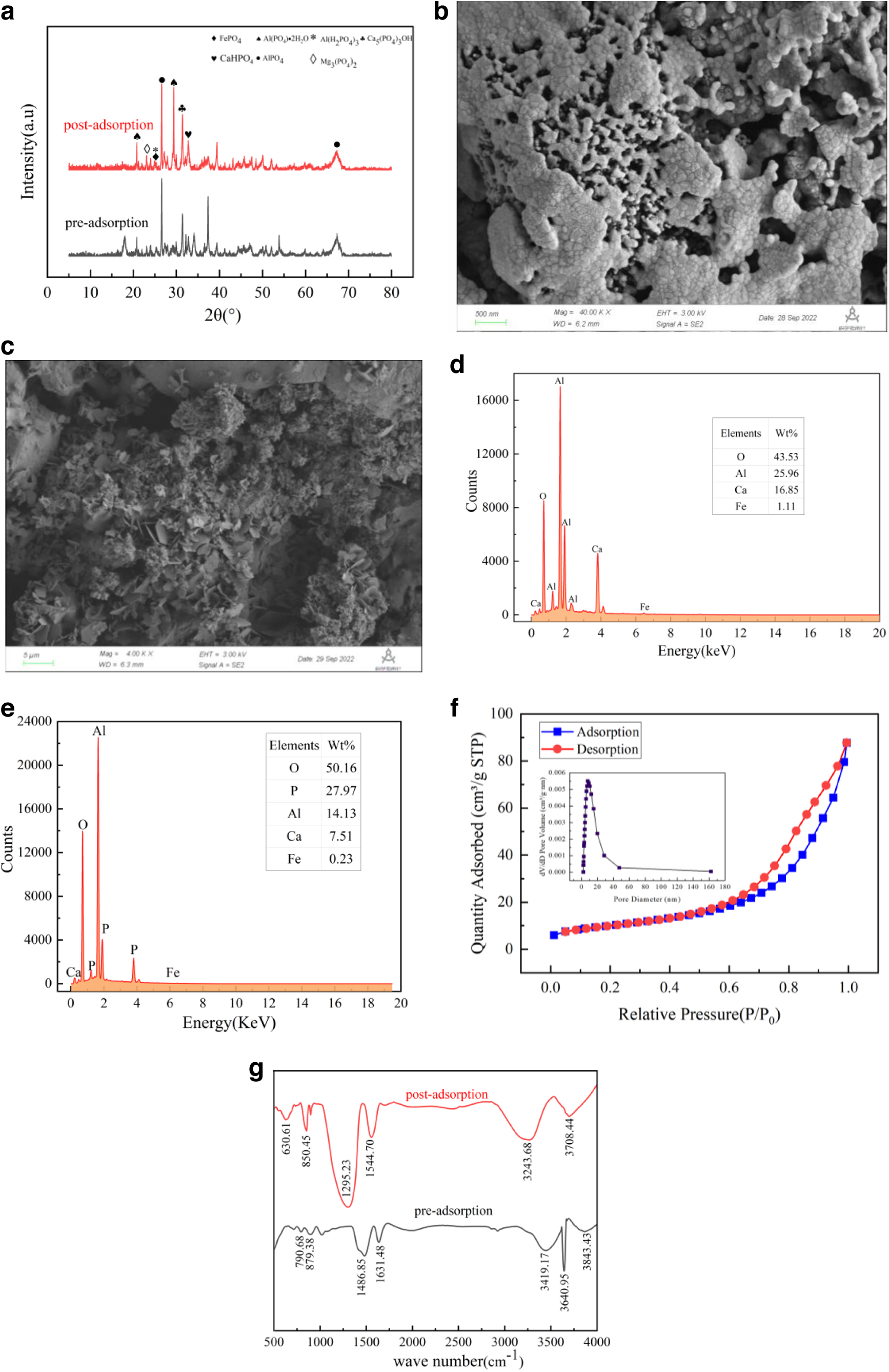
Characterization of ceramides before and after phosphorus removal.
The metal combines with the ligand water on the material's surface to form hydroxides and hydrated metal oxides, which are then ion-exchanged with phosphate to form precipitates. Moreover, metal oxides further improved the phosphorus removal efficiency through complexation and metal hydroxide precipitation flocculation (Jung et al., 2017). The specific chemical reactions are in Eqs (7)–(10).

SEM-energy dispersive spectrometer analysis
The morphological and elemental changes of the ceramic material before and after phosphorus removal are shown in Fig. 3b–e. From Fig. 3b and c, the surface of the non-phosphorus adsorbed ceramics is rough, with many pores distributed, whereas the surface and pore structure of the materials after the adsorption of phosphorus are filled, and many coverings appeared. Because the phosphate in the solution is bound to many adsorption active sites on the surface of the ceramic particle, it is adsorbed on the material's surface.
It can also form precipitation with the metal oxides on the material's surface to block the material's porosity, decreasing the effective adsorption active sites and quickly reaching adsorption saturation. From Fig. 3d and e, after phosphorus adsorption, phosphorus appeared in the energy dispersive spectrometer (EDS) spectrum, and the content of Al, Ca, and Fe decreased, indicating that the chemical reaction reacted with metal oxides in the material, and the phosphate precipitates are attached to the surface of the ceramic.
BET analysis
From Fig. 3f, with the increase in pressure, the force between the ceramic material and N2 is heightened, gradually increasing gas adsorption. At a relative pressure of P/P0 from 0.6 to 1.0, a hysteresis loop appears due to the presence of a mesoporous structure, resulting in a capillary coalescence phenomenon, which indicates that the ceramic material has a lamellar particle stacking and slit-like pore structure (Huang et al., 2014). The pore sizes of the ceramic material are mainly concentrated in the range of 2.0729–28.3271 nm, indicating the presence of small pore mesoporous materials.
The specific surface area of the ceramic material before adsorption was 49.4028 m2/g, the pore volume was 0.1506 cm3/g, and the pore diameter was 16.0793 nm. However, the specific surface area, the pore volume, and the pore diameter of the material decreased to 36.2161 m2/g, 0.1063 cm3/g, and 14.9935 nm after adsorption. This suggests that the surface of the material and the pore space were coated with reaction products or adsorption attachments, which is consistent with the results of SEM-EDS analysis.
FTIR analysis
The changes in surface functional groups before and after phosphorus removal are shown in Fig. 3g. Before the removal of phosphorus, ceramic particles exhibited absorption peaks at wave numbers of 3,419.17 and 3,640.95 cm−1, which corresponded to broader absorption peaks generated by O-H stretching vibration, and the intensity of the absorption peaks decreased after the removal of phosphorus, indicating that metal ions in the material and water hydroxyl groups underwent ligand exchange during the phosphorus adsorption process.
In other words, the XRD analysis confirmed that phosphates replaced hydroxyl groups on the material's surface (Xu et al., 2017). The bending vibration peak of the water molecule at a wave number of 1,544.70 cm−1 corresponds to an aluminum hydroxyl complex (Li et al., 2014), and the bending vibration in the Al-OH plane generates a wave number of 1,486.85 cm−1.
The wave numbers at 790.68 and 879.39 cm−1 correspond to the metal–oxygen bond stretching vibration peaks of Al-O, Ca-O, and Fe-O in the material (Hussain et al., 2015), whereas the intensity of the corresponding absorption peaks weakened after the adsorption of phosphorus, indicating that metal oxides such as Al2O3, CaO, and Fe2O3 decreased in a chemical reaction during the process of phosphorus adsorption and removal, which results in the material functional groups changed. In summary, removing phosphorus through ceramic adsorption is primarily achieved through ligand exchange, ion exchange, and chemical precipitation.
Feasibility analysis of ceramide as fertilizer after phosphorus absorption
Phosphorus morphology analysis
The inorganic phosphorus grading method of calcareous soil was used to analyze the morphology and content of phosphorus in the ceramic material after adsorption of phosphorus (Jiang and Gu, 1989), which examined the proportion of phosphorus in different binding states in the total phosphorus adsorbed by the material in ceramic adsorption phosphorus removal material, and clarified the role of metal oxides, such as Al2O3, CaO, and Fe2O3, in the process of phosphorus removal, as shown in Fig. 4a.
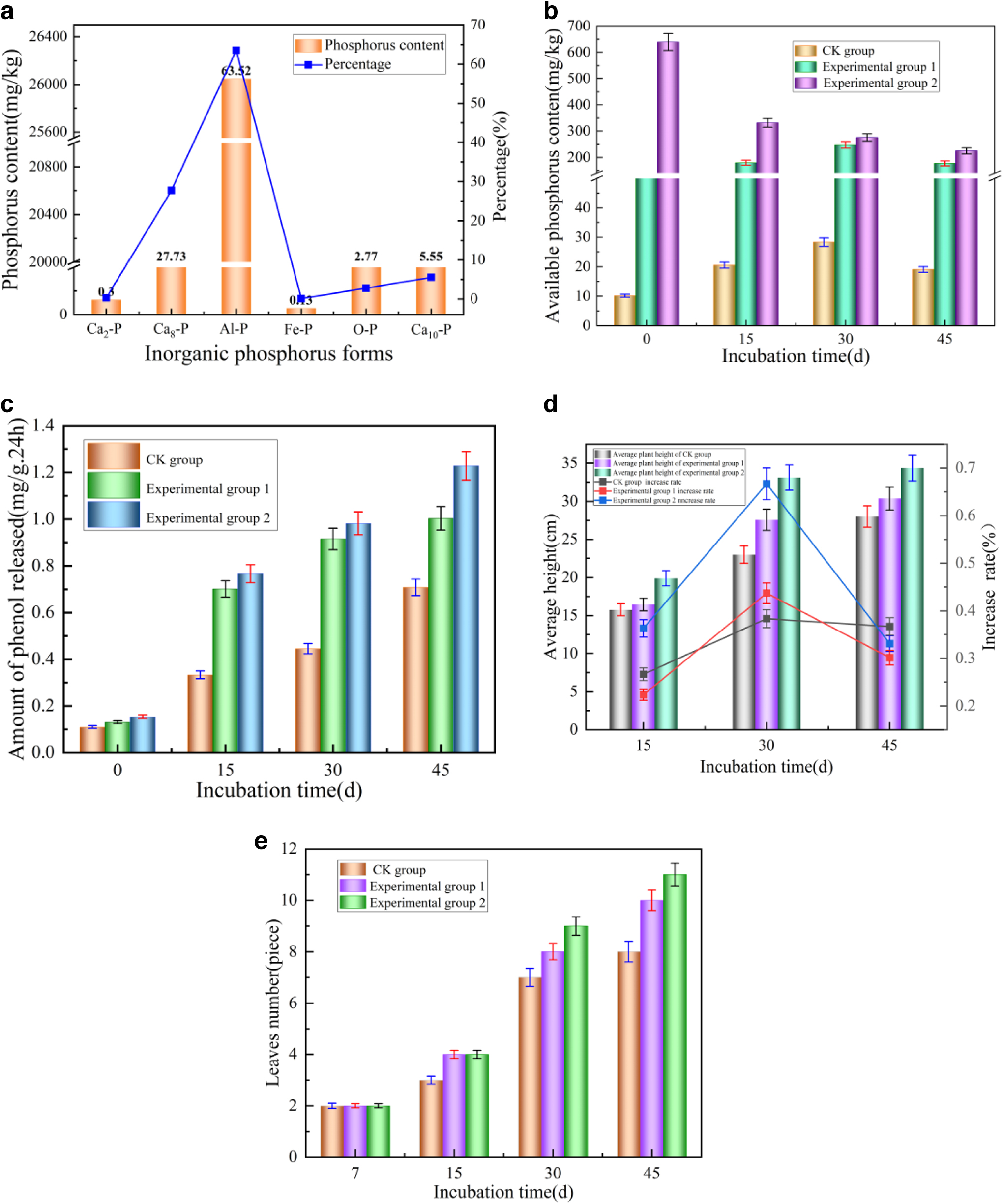
Effect of phosphorus absorption ceramics on soil and soybean growth.
As far as phosphorus fertilizers are concerned, Ca2-P is the primary effective phosphorus source that is most easily absorbed and effectively utilized by plants, Ca8-P, Al-P, and Fe-P belong to the slow-acting phosphorus fertilizers (the secondary effective phosphorus sources), whereas O-P and Ca10-P belong to the delayed-acting phosphorus sources (Gu and Qin, 1997), which are difficult to be absorbed and utilized by plants. The content of inorganic phosphorus in different phosphorus is shown in Table 4. The total phosphorus adsorbed by the ceramic material has the highest proportion of Al-P, which reaches 63.52%, Ca-P accounts for 33.58%, and the content of Fe-P and O-P is relatively small.
Content of Inorganic Phosphorus in Different Phosphorus Forms
Therefore, the bound phosphorus (Ca2-P, Ca8-P, Al-P, and Fe-P) that can be effectively utilized by plants in the adsorption and phosphorus removal ceramic material accounted for 91.68% of the total phosphorus, indicating that the adsorption and phosphorus removal ceramic material has the potential to be utilized as a phosphorus fertilizer to achieve resource utilization.
Effect on the growth of soybean seedlings
Effect of ceramsite on available phosphorus in soil
Phosphorus is an essential element for the growth of plants, and the available phosphorus in the soil is the phosphorus that is directly available to the plants. Figure 4b shows the changes in soil effective phosphorus content in the three experimental groups during the incubation cycle. The available phosphorus content of the soil increased and then decreased with the prolongation of incubation time for both the CK group and experimental group 1, whereas experimental group 2 demonstrated a gradual decrease over time.
Different training cycles change with available phosphorus content in the soil as shown in Table 5. Throughout the incubation cycle, the available phosphorus content of the CK and experimental group 1 changed less. It may be because the co-mineralization of soil microorganisms and the soybean root system can increase the available phosphorus content of the soil, but at the same time, it will also consume part of the original available phosphorus in the soil. Experimental group 2 increased the available phosphorus content of the soil because humic acid can replace the same crystal through its strong negative electrical properties and replace the adsorbed phosphate ions from soil minerals (Li et al., 1999).
Different Cultivation Cycles Changes in the Active Phosphorus Content and Alkaline Enzyme Activity in the Soil
These processes are also accompanied by the formation of soluble chelates between humic acid and phosphate ions, which reduces the fixation of phosphorus by the soil and promotes the release of phosphorus, thus increasing the utilization rate of phosphorus. The content of available phosphorus in the soil in experimental group 2 is much higher than that of the CK group and experimental group 1, because under the conditions of environmental coercion, organic acid can compete with anions for the adsorption of active sites through complexation to reduce the immobilization of phosphorus in the soil and increase the available phosphorus.
Meanwhile, humic acid can increase the water-soluble phosphorus content, delay the formation of closed-storage phosphorus, and improve available phosphorus by promoting phosphorus migration in the soil (Du et al., 2012). Moreover, plant roots also secrete large amounts of organic acids under natural conditions, which can promote the release of phosphorus from insoluble phosphates for plant uptake and utilization (Zhao et al., 2016).
The elevated available phosphorus levels in soil promote the development of soybean rhizobacteria, enhance the propagation of inter-root microorganisms, and contribute to the creation of soil aggregates, which foster an ideal environment for microbial reproduction (Zhang et al., 2008). Therefore, the humic acid-activated ceramic material has a greater ability to release phosphorus, which can increase the amount of available phosphorus in the soil and make the soil more fertile.
Effect of ceramsite on soil alkaline phosphatase activity
The level of alkaline phosphatase activity in soil is a crucial indicator of soil fertility. From Fig. 4c, the alkaline phosphatase activity in the soil of the three experimental groups is subsequently enhanced with the extension of the incubation time. This is because the abundance of soil microorganisms that solubilize phosphorus, combined with the growth of the soybean root system over time, results in significant amounts of alkaline phosphatase.
Different cultivation cycles change the alkaline phosphatase activity in the soil, as shown in Table 5. The amount of alkaline phosphatase activity produced is ranked as experimental group 2 > experimental group 1 > CK group because organic acid is a crucial carbon and energy source for microbial reproduction; they can directly impact not only the quantity and activity of microorganisms in the soil but also the adsorption of soil enzymes on soil colloids and minerals, ultimately affecting their biological activity (Hallama et al., 2021).
In experimental group 2, humic acid chelated with phosphate-bound cations, changed soil pH, promoted soil microbial reproduction and soybean root growth, increased alkaline phosphatase activity, and competed for phosphorus adsorption sites to dissolve inorganic phosphate under the action of phosphorus solubilizing bacteria to reduce phosphorus immobilization and improve soil fertility level.
Soybean growth conditions
Plant height is one of the direct indexes of soybean growth. From Fig. 4d, the height of soybean plants in the three experimental groups increased with incubation time, and experimental group 2 > experimental group 1 > CK group. The changes in the height of the soybean plant during different cultivation cycles are shown in Table 6. During the whole cultivation cycle, soybean growth was faster in the first 30 days. At 45 days, the plant height of experimental group 2 was 34.36 cm, much higher than that of the CK group (26.0 cm) and experimental group 1 (30.36 cm).
Changes of Soybean Plant Height in Different Cultivation Cycles
This was attributed to the fact that phosphorus adsorption promoted the activation of insoluble phosphorus and morphological transformation of phosphorus in the grains under the action of humic acid activation and phosphorus-dissolving microorganisms' proliferation, which led to an increase in the content of effective phosphorus and thus promoted the growth of soybean seedlings. Moreover, humic acid has the function of activation, which can enhance the activity of oxidizing enzymes and metabolic activities in plants and promote plant growth and development (Canellas et al., 2012).
From Fig. 4e, the number of leaves of soybean plants in the three experimental groups gradually increased with the extension of incubation time, and the number of soybean leaves in the experimental groups was more than that of the CK group, which indicates that the ceramic after adsorption of phosphorus can promote soybean growth. In summary, the adsorbed phosphorus can be used as fertilizer to realize resource utilization. The growth graphs of soybeans at different incubation periods are shown in Fig. 5.
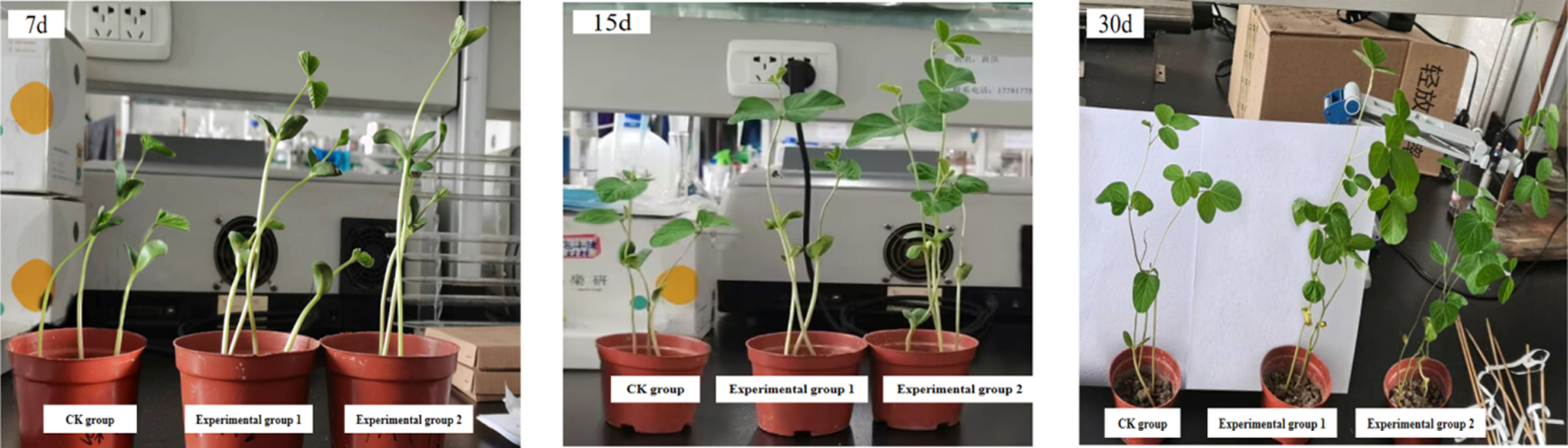
Growth of soybean during the incubation cycle.
Conclusion
The main raw materials of the ceramic granule produced in this research come from natural soil. Adding Al2O3 to the raw materials improves the phosphorus removal performance of the material, and the material can be directly used as a soil fertilizer for plants after the phosphorus adsorption. The optimal phosphorus removal conditions for the ceramic material are pH 6, dosage of 0.15 g/100 mL, and adsorption time of 16 h. Under these conditions, the total phosphorus removal rate was 96.77%.
Meanwhile, ceramic material has good selective phosphate adsorption under the interference of various anions. The ceramic adsorption process for phosphorus removal conformed to the quasi-secondary kinetics and Langmuir model, and is a monomolecular layer chemisorption with a maximum adsorption capacity of 21.98 mg/g. The metal in material and phosphate in the water through ion exchange, ligand exchange, and chemical precipitation to achieve phosphorus removal.
The phosphate in solution is mainly combined with aluminum and calcium in the ceramic grains, of which the bound phosphorus (Ca2-P, Ca8-P, Al-P, and Fe-P) that the plant could utilize accounted for 91.68% of the total phosphorus, indicating that the ceramics after adsorption of phosphorus can be used as phosphorus fertilizer. In the soybean seedling growth test, after adsorption of phosphorus, the material increases the available phosphorus content of the soil and enhances the activity of alkaline phosphatase, thus promoting the growth of soybeans.
Humic acid can activate the ceramic material after the phosphorus adsorption so that the stabilized phosphate in it is transformed into the activated state, enhancing the material's phosphorus-releasing ability. That is, the ceramic material after adsorbing phosphorus can be used as fertilizer to realize the use of phosphorus resourceization. This study provides new ways to recycle phosphorus for adsorption phosphorus, which provides new ways for the resource utilization of phosphorus adsorption materials and is significance in sustainable development. Future studies should be conducted in actual planting conditions to assess the impact of phosphorus-rich ceramic material on plant biomass and soil microbial diversity and the mechanism of phosphorus release.
Footnotes
Authors' Contributions
Conceptualization, methodology, formal analysis, and writing—review and editing (equal) by P.X. Methodology, formal analysis, investigation, writing—original draft, and writing—review and editing (equal) by Y.Q. Formal analysis, writing—original draft (supporting), and writing—review and editing (equal) by Q.C.W.
Author Disclosure Statement
No competing financial interests exist.
Funding Information
The authors appreciate the financial support from the Major Science and Technology Special Project of Sichuan Province (2018SZDZX0020).