




Abstract
Sulfamethoxazole (SMZ), a sulfonamide antibiotic, has been used in large quantities and is frequently detected in the secondary effluent of wastewater treatment plants. This poses a risk for the reuse of reclaimed water, making it necessary to implement a deep treatment process after secondary effluent in order to reduce the concentration of SMZ. In this article, we investigated the efficacy and mechanisms of the biofilm slow filtration–nanofiltration (NF) combined process for the removal of pollutants in secondary effluent. We explored the effects of different pH values on the removal of SMZ by this combined process and analyzed the interfacial mechanisms of pollutants with different surface properties and the surface of the NF membrane. The experimental results showed that at pH 8, the combined process exhibited the best removal efficiency for SMZ, achieving a maximum removal rate of 96.9%. The biofilm on the surface of slow filtration was composed of a relatively high proportion of beneficial microorganisms, including Ascomycetes, Acidobacteria, Mycobacterium, narrow-feeding Aeromonas, Dokdo, and Nitro spiraea, which play a positive role in the degradation of SMZ. During the NF membrane filtration process, both early and late stages of filtration indicated that a lower influent pH resulted in more severe membrane fouling. Conversely, higher influent pH values correlated with lighter membrane contamination.
Introduction
At present, global water resources face challenges such as uneven distribution, severe pollution, and low utilization efficiency. Reclaimed water reuse has emerged as an effective solution worldwide, with successful implementations in countries like China, India, and the United States. However, when it comes to reclaimed water reuse for drinking, pharmaceutical, and personal care products are frequently detected at high levels in the secondary effluent of sewage plants. This poses significant risks for reclaimed water reuse, particularly sulfonamide antibiotics, which have garnered priority attention due to their widespread use and high mobility in water (Evgenidou et al., 2015). Sulfamethoxazole (SMZ) is a typical sulfonamide antibiotic frequently found in secondary effluent from wastewater treatment plants (WWTPs) at high concentrations (Sun et al., 2012). The mean concentrations of antibiotics in the influent and effluent of municipal WWTPs in China were measured at 786.2 and 311.2 ng/L, respectively. Among the detected antibiotics, SMZ exhibited moderate to high ecological risks within wastewater systems, with detectable concentrations ranging from 0 to 400 ng/L in WWTP influent and 0–100 ng/L in effluent. SMZ is highly persistent in the environment (Caruncho-Pérez et al., 2025), difficult to biodegrade, and potentially toxic (Zhao et al., 2024). In real-world environments, SMZ concentrations typically range from 0.1 to 10 µg/L, and secondary effluent from WWTPs can contain SMZ at concentrations of 1–5 µg/L. Additionally, due to wastewater discharge and agricultural runoff, SMZ levels in surface waters have been observed to range from 0.1 to 1 µg/L (Yang et al., 2025). To mitigate risks to human health, the World Health Organization recommends that antibiotic concentrations in drinking water be maintained as low as possible, ideally approaching undetectable levels.
Membrane technology, characterized by high efficiency, no phase change, and high selectivity, is an effective method for removing antibiotics from aqueous environments. Its application in the deep treatment of wastewater is becoming increasingly common. Membrane technologies include microfiltration, ultrafiltration, nanofiltration (NF), and reverse osmosis, with antibiotic removal closely correlating with the membrane’s pore size. The molecular weight cutoff for NF membranes typically ranges from 200 to 1,000 Da, making them suitable for retaining antibiotics, most of which fall within this molecular weight range. Zhao (Zhao, 2022) tested NF90 and NF270 membranes to retain antibiotics in raw water, finding an average removal rate of around 85% for most antibiotics, with the NF90 membrane performing better than the NF270. Yoon (Yoon et al., 2006) studied the removal efficiency of NF for eight antibiotics (including SMZ) and achieved removal rates exceeding 90%. Zhang (Zhang, 2020) applied negatively charged NF membranes in the deep treatment of secondary effluent from five sewage plants in Hangzhou City, finding that the NF process effectively retained amoxicillin, SMZ, and methotrexate, with retention rates of 78%, 80%, and 93%, respectively.
In recent years, numerous studies have demonstrated that slow filtration can efficiently remove pollutants such as organic matter, turbidity, pathogenic microorganisms, and heavy metals from secondary effluent. Ding (Ding, 2021) found that aerobic heterotrophic biofilm slow filtration could effectively remove antibiotic resistance genes (ARGs) from secondary effluent, achieving a removal rate of over 85%. Various microorganisms that actively contribute to the removal of ARGs were detected in the biofilm. Therefore, employing biofilm slow filtration as a pretreatment for NF can improve the influent water quality and alleviate NF membrane fouling issues. Currently, few studies (Trommetter et al., 2024) have explored the removal of SMZs from secondary effluent using a combined slow filtration–NF process. Previous research demonstrated that the integrated slow filtration and low-pressure NF system (Liu et al., 2025) could achieve approximately 90% removal efficiency for ARGs and dissolved organic carbon (DOC) in secondary effluents (Sun et al., 2022). This system was successfully extended to address the emerging contaminant SMZ by systematically examining several critical aspects, including the pH-dependent membrane fouling mechanisms during the removal of SMZ, the microbial contributions to its degradation, and the fouling characteristics of the NF membrane in relation to SMZ’s physicochemical properties.
In this study, we investigated the removal efficacy and mechanisms of pollutants in secondary effluent via the combined biofilm slow filtration–NF process for the deep treatment of secondary effluent. We explored the effect of pH on SMZ removal in secondary effluent using the combined process and analyzed the interfacial mechanisms between pollutants and the surface of the NF membrane, aiming to provide a theoretical basis for controlling organic micropollutants in reclaimed water reuse.
Materials and Methods
Because the concentration of SMZ in actual secondary effluent is not stable, the secondary effluent used in this test is simulated secondary effluent that has been artificially formulated based on the quality of secondary effluent from municipal sewage plants.
Specific preparation methods are as follows: Tap water is placed in a tank and allowed to stand for one to two days to remove residual chlorine. Reagents, as shown in Table 1, are then added to the tap water. The water quality parameters of the test water are as follows: temperature 21.2–25.8°C, pH 7.0–7.1, CODcr 60.2–60.8 mg/L, DOC 6.62–9.2 mg/L, BOD5 32–35 mg/L, ammonia nitrogen concentration 2.81–6.17 mg/L, and SMZ concentration 526.33–563.67 ng/L.
Simulated Secondary Effluent Preparation Table
SMZ, sulfamethoxazole.
The digestion reagents for dichromate oxidizability (CODcr) and ammonium nitrogen (NH4+-N) were all purchased from Beijing Kalihua Yuan Technology Co., Ltd. (Beijing, China) with measuring ranges of 3–150 and 0–50 mg/L, respectively.
The slow filter material used comprised quartz sand and gravel, with particle sizes of 0.6 and 2.0 mm, respectively, purchased from Baisheng Taike Trading Co., Ltd. (Beijing, China).
The polyamide NF membrane used was the NF270 model, which has a diameter of 80 mm and a molecular weight cutoff of 300 Da, purchased from Jinan Bonal Biotechnology Co., Ltd. (Jinan, China).
Experimental equipment
The slow filtration device consists of a filter column, both 65 cm in height and 4 cm in diameter. The filter media consisted of gravel and quartz sand, with depths of 5 and 45 cm, respectively. The filtration rate during the tests was maintained at 5 cm/h. Aerobic heterotrophic biofilms were cultivated in the slow filtration columns. NF was performed using a low-pressure flat plate staggered flow filtration system (TYLG-18, China) with an operating pressure of 0.4 MPa during the tests. The effluent was collected using a beaker placed on an electronic balance, and the mass was recorded by a computer every 5 min.
Experimental methods
Slow filtration biofilm culture
This study investigates the biofilm maturation process in slow filtration using artificial membrane inoculation. A fixed amount of activated sludge was introduced into the upper section of the slow filtration column, followed by the sequential injection of simulated secondary effluent. Both inflow and outflow rates were meticulously regulated at 5 cm/h (Ding, 2021). An intermittent water flow system was employed for operation. On the 15th day, the CODcr concentration in the inlet and outlet water of the slow filtration column was detected. The CODcr removal efficiency was used to assess biofilm maturity. CODcr removal efficiency indicated the biofilm’s degradation ability, which represented the biofilm’s maturity. The biofilm culture was considered mature when the removal rate in the column stabilized (Sun et al., 2023).
Methodologically, the water sample was analyzed using a Hash water quality detector (DR-6000, USA). A 2 mL water sample was added to the digestion vessel, thoroughly mixed, and placed in a digestion reactor at 165°C for 25 min. After cooling to room temperature, the sample was analyzed on the machine. Ionized water was used as a blank control. When the CODcr removal efficiency variation within one week was ≤5%, it was considered stable, indicating biofilm maturity.
Detection of SMZ concentration
The analytical instrument used was a high-performance liquid chromatography system (ExionLC, USA) coupled with a triple quadrupole mass spectrometer (QTRAP6500+, USA). The samples were pretreated by activating the Prime HLB extraction column with 6 mL of methanol and pure water to ensure that the column tip was adequately wetted. Subsequently, 50 mL of the water sample to be tested was accurately measured, the pH was adjusted to 3.0, and the filtrate was filtered through filter paper, passed through the extraction column, and then rinsed with 6 mL of pure water, followed by drying the column. Afterward, the sample was eluted with 5 mL of methanol, and the eluent was collected. The sample was then evaporated to dryness under a nitrogen stream at 40°C, and 1 mL of the mobile phase (0.1% formic acid (A) and acetonitrile (B)) was added for redissolution. The solution was filtered through a 0.22 µm membrane before analysis.
High-throughput sequencing
After collecting the biofilm samples, they were stored in a refrigerator at a constant temperature of 4°C to maintain their activity. The DNA on the membrane was extracted using a DNA extraction kit (OMEGA, M5635-02) and PCR amplification was performed using universal primers, and the PCR reaction conditions are shown in Table 2.
PCR Reaction Conditions
The primer sequences 341F and 805R were used to amplify the V3–V4 targeting region in the 16SrDNA gene of the sample. The primer sequence is:
805R(5′ → 3′): GGACTACNVGGGWTCTAAT
341F(5′ → 3′): CCTAYGGGRBCASAG
Finally, the amplified genes were analyzed using a high-throughput sequencing platform (Illumina, USA, Nova-seq 6000 platform with a depth of 100 million reads.) and compared with the DNA database.
Contact angle
An optical contact angle meter (LSA-100, Germany) was used to determine the contact angle after membrane contamination. Three different reagents were used in the testing process: pure water, glycerol, and diiodomethane. For each of the three test reagents, three parallel measurements were performed for each membrane.
XDLVO theory
The theory of extended DLVO (XDLVO) was used to calculate the surface tension of the contaminants in the NF feed water, and the interfacial interaction energies between the contaminant–NF membrane and the contaminant–contaminant were further calculated and analyzed to quantitatively describe the interfacial interactions between the substances (van Oss, 1993).
Results and Discussion
Removal effect of combined process on pollutants in secondary effluent water
Effect of pH on SMZ removal
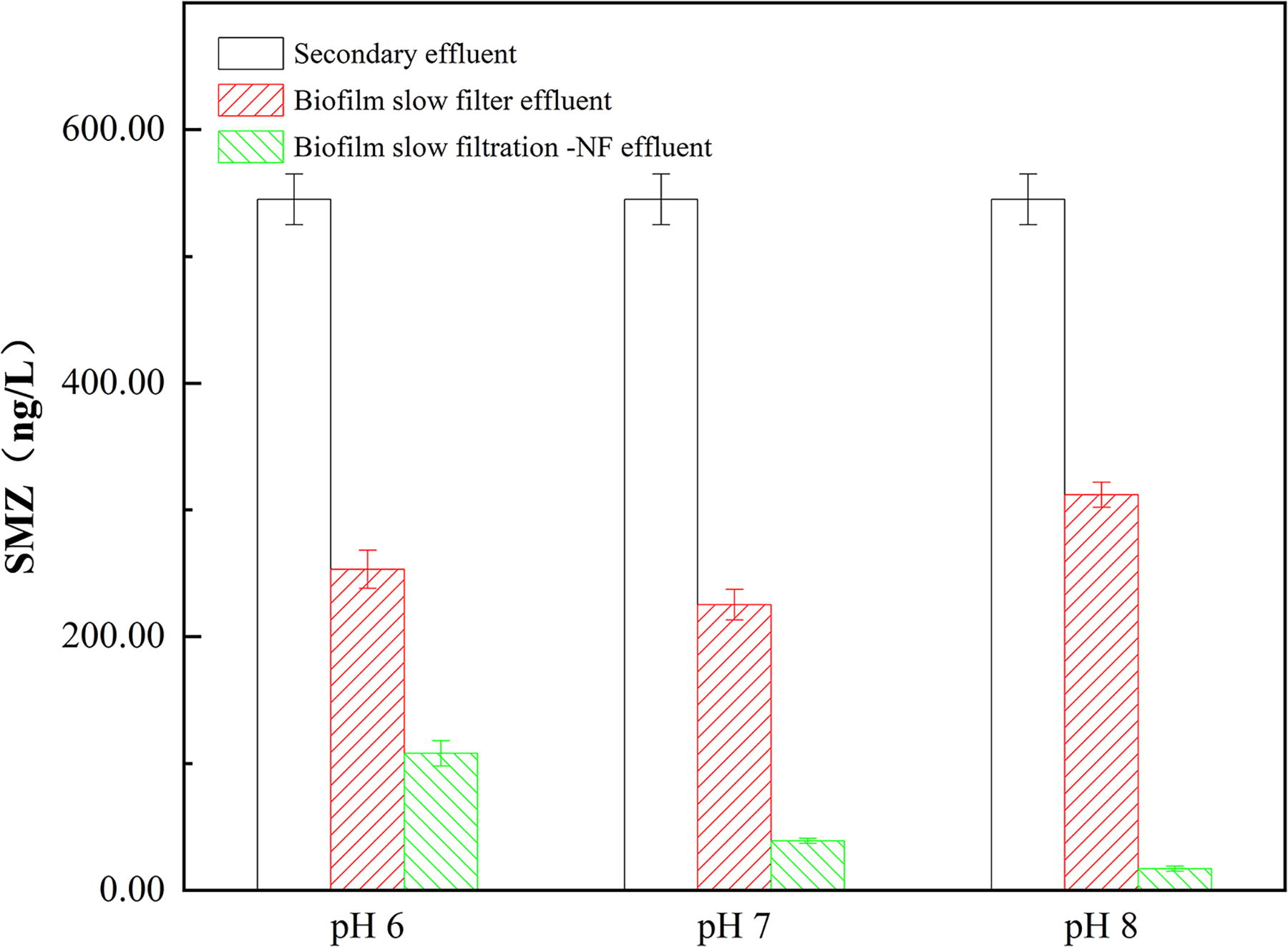
To investigate the effect of the combined process on the control of SMZ in water under different influent pH conditions, this experiment adjusted the pH of the secondary effluent to 6.0, 7.0, and 8.0 using 0.01 mol/L NaOH and HCl solutions, under conditions of 600 ng/L SMZ, 40 mg/L CODcr, and 2 mmol/L Ca2+. The effect of pH on the removal of SMZ by the combined process with biofilm and NF is shown in Figure 1.
The effect of pH on the removal of SMZ by the combination process. SMZ, sulfamethoxazole.
As seen in Figure 1, as the pH increases from 6 to 8, the concentration of SMZ in the biofilm slow filter effluent initially declines and then subsequently increases. At pH 7.0, the SMZ concentration was the lowest at 225.21 ng/L, resulting in a removal rate of 58.7%. This is attributed to the formation of biofilm on the surface layer of the slow filtration, which reduces the gaps between the filter media particles, enhancing the retention effect of the slow filtration. The formation of bacterial colloids in the biofilm promoted the adhesion of the filter media to the pollutants, allowing the pollutants in the influent water to adhere to the biofilm. Concurrently, the microorganisms on the biofilm were able to adsorb and degrade SMZ (Vu and Wu, 2022).
When the pH value is 6 or 8, the concentration of SMZ in the biofilm slow filtration effluent increases, and the removal rate decreases. This is due to the fact that most microorganisms in the biofilm grow and reproduce optimally at a pH of 6.5–7.5. Conditions that are too acidic or alkaline (pH 6.0 or 8.0) inhibit biological growth, metabolism, and enzyme activity, thereby reducing the efficiency of SMZ degradation.
As can be seen from Figure 1, after NF treatment, the removal effect of biofilm slow filtration–NF combination process on SMZ is better, and with the increase of pH value removal rate increases, when the pH value of 8, the combination process of SMZ removal effect is the best, the NF effluent concentration of 16.82 ng/L, the removal rate of the highest 96.9%. The main reason for this phenomenon is that pH has a significant effect on the zeta potential of the membrane surface and solution, which affects the electrostatic repulsion between the NF membrane and the SMZ in solution (van Oss, 1993). NF has a high retention effect for organic micropollutants with a relative molecular mass of 100–1000, and the relative molecular mass of the SMZ, which is 253, is right in between. In addition, considering the experimental value of the second ionization constant (i.e., pKa2 = 5.6), SMZ may exist in the form of uncharged molecules and negatively charged molecules, which are electrostatically repulsed by the negatively charged NF membrane. Therefore, the high removal rate of SMZ by NF is a result of the combined effect of spatial site resistance and electrostatic repulsion between the contaminant and the membrane.
As can be seen from Figures 2 and 3, the zeta potential of both the membrane surface and NF feed water decreased to different degrees with the increase in pH. The lowest zeta potential is reached at pH 8, which is −56.09 mv for the membrane surface and −14.6 mv for the NF feed water. The lower the zeta potential is, the stronger the negative electronegativity. This phenomenon can be attributed to the fact that in lower pH environments, an increased concentration of hydrogen ions (H+) neutralizes the negative charge on the membrane surface, which leads to weaker electrostatic repulsion between the membrane and the contaminants. This effect is supported by (Luo and Wan, 2013), who demonstrated that lower pH levels significantly reduce zeta potential, which makes the removal rate of SMZ in acidic environments lower than in alkaline environments.

Effect of pH on zeta potential of membrane surface.
Analysis of microbial population structure on the surface of filter media
During biodegradation, sulfonamide antibiotics (such as SMZ, sulfamethoxazole) can be transformed into biologically active compounds through microbial metabolic processes. Effective components typically refer to compounds that exhibit biological activity or efficacy in specific biological or chemical activities(Chen and Xie, 2018). For instance, studies have shown that biodegradation products of sulfonamide antibiotics include amino acids, phenols, and their derivatives, which can activate specific microbial populations in the ecosystem or possess certain inhibitory or promoting effects in the environment (Zhou, 2022). In the test, the microorganisms on the biofilm of the slow filtration surface were analyzed for the population at the phylum level and genus level, with the results presented in Tables 3 and 4.
Microbial Types and Proportion of Slow Filtration Biofilm at the Phylum Level
As summarized in Table 3, at the phylum level, the dominant species mainly included Proteobacteria (33.90%), Bacteroidetes (21.48%), Acidobacteria (8.62%), Chloroflexi (6.30%), and Floxomycetes (5.16%). Planctomycetes also accounted for 5.16%. These dominant phyla may possess specific metabolic pathways that enable them to adapt to the water quality conditions of the slow filtration process and effectively decompose and transform SMZ in the secondary effluent.
Ascomycetes and the Anaplasma phylum are the two most common groups of microorganisms found in wastewater treatment systems. Ascomycetes, the largest phylum of fungi, exhibit diverse nutritional modes, obtaining energy through chemoautotrophic means or synthesizing organic matter for their growth using inorganic carbon. Notably, 81% of reported strains capable of degrading sulfonamide antibiotics belong to Ascomycetes (Wang, 2021). The Anaplasma phylum is particularly well-adapted to sulfonamide antibiotics, with most resistance gene carriers identified within this group (Li, 2022). Additionally, the Green Bend phylum is capable of degrading carbohydrates and cellular material and converting various sugars into acetate and short-chain fatty acids (Huang et al., 2023). It has been shown (Liu, 2022) that sulfonamide antibiotics are positively correlated with the Green Bend phylum. The relative abundance of both Acidobacteria and Floxomycetes was associated with the degradation and transformation of SMZ, and an increase in their numbers favored the removal of SMZ.
Table 4 presents the data on microbial types and proportion of slow filtration biofilm at the genus level. As can be seen from Table 4, the main dominant bacterial taxa at the genus level include Stenotrophobacter spp. (5.92%), Dokdonella spp. (3.51%), and Nitrospira spp. All of these dominant genera can positively contribute to the degradation of SMZ in the secondary effluent, thereby improving the removal efficiency of pollutants through biofilm slow filtration. Studies have indicated (Che, 2021) that narrow-feeding Aeromonas spp. are tolerant and resistant to antibiotics, capable of utilizing glucose oxidative fermentation to produce acid, and possess the ability to degrade antibiotics and organic compounds; however, their degradation ability decreases with increasing antibiotic concentration. Nitrospiraea spp. also exhibit some resistance to SMZ. Furthermore, it has been shown (Lai and Liu, 2022) that Dictyostelium spp. and Nitrospiraea spp. play a positive role in the biodegradation of antibiotics and demonstrate a certain degradation capacity for glucose (Yang, 2020).
Microbial Types and Proportion of Slow Filtration Biofilm at the Genus Level
Effect of pH on membrane contamination
Effect of pH on surface physicochemical properties and surface tension of contaminants
The surface physicochemical properties of a substance can be characterized using contact angle and zeta potential. Contact angle measurements were performed to characterize the hydrophilicity of the membrane surface by using three test solvents with known surface tension components—specifically, pure water, propanediol, and diiodomethane. These measurements focused on the contact angles formed between the liquid droplets and the membrane surface, aligning with standard practices in contact angle analysis. The contact angles and zeta potentials of the contaminants in the NF feed water under different pH conditions are shown in Table 5, while surface tension values are presented in Table 6.
Surface Physicochemical Properties of Pollutants in NF Influent Under Different pH Conditions
NF, nanofiltration.
Under Different pH, the Surface Tension of Pollutants in NF Influent
As can be seen from Table 5, with increasing pH, the contact angles of the pollutants in the NF influent water for both pure water and propanediol exhibited a decreasing trend, while the contact angle for diiodomethane showed an increasing trend. This indicates that the hydrophilicity of the pollutants gradually increased, while their hydrophobicity weakened. Simultaneously, the NF influent pollutant zeta potential is negative, and decreases with the increase of pH, indicating that the pollutant surface of the negative charge increases.
This phenomenon may be attributed to the higher pH, leading to greater adsorption of hydroxide ions (OH−) onto the pollutants. On the one hand, this results in a decrease in the zeta potential; on the other hand, it increases the number of hydrogen bonding sites formed between the pollutants and water molecules. The greater the hydrogen bonding, the stronger the hydrophilicity of the pollutant surface, resulting in a smaller contact angle with pure water.
γLW mainly characterizes the nonpolar features of the pollutant surface, γAB mainly characterizes the polar features of the pollutant surface, and the magnitude of its value is mainly determined by γ− and γ+. The γ− of the pollutant increases with the increase of pH and is always significantly larger than γ+, presenting an obvious electron donor, while γ− also reflects the ability of the pollutant surface to form hydrogen bonds with water molecules, and has a strong correlation with the contact angle of pure water (Zhao et al, 2015).
From the results in Table 6, it can be observed that the surface tension γLW of the contaminants in the membrane feed water gradually decreases with increasing pH. Notably, γLW reaches its minimum value of 25.99 mJ/m2 at a pH of 8, indicating that the pollutants exhibit the weakest nonpolarity at this pH. At pH 8, γ− is at its maximum value of 76.19 mJ/m2, indicating a strong electron-donating capacity and an increased ability to form hydrogen bonds with water molecules. This strong hydrophilicity explains why the pollutant exhibits a smaller contact angle with pure water at a pH of 8.
Influence of pH value on interfacial interaction energy
The interfacial interaction energy reflects the potential for contamination between particulate pollutants and the interaction surface. Analyzing this energy can provide insights into the membrane contamination process and help predict the trend of membrane fouling involving particulate matter and the NF membrane. The interfacial interaction energies between the pollutants in the membrane influent water and the NF membrane, as well as between the pollutants in the influent water and those on the membrane surface under varying pH conditions, are detailed in Table 7. The trend of total interfacial interaction energy with interfacial spacing is illustrated in Figures 4 and 5.
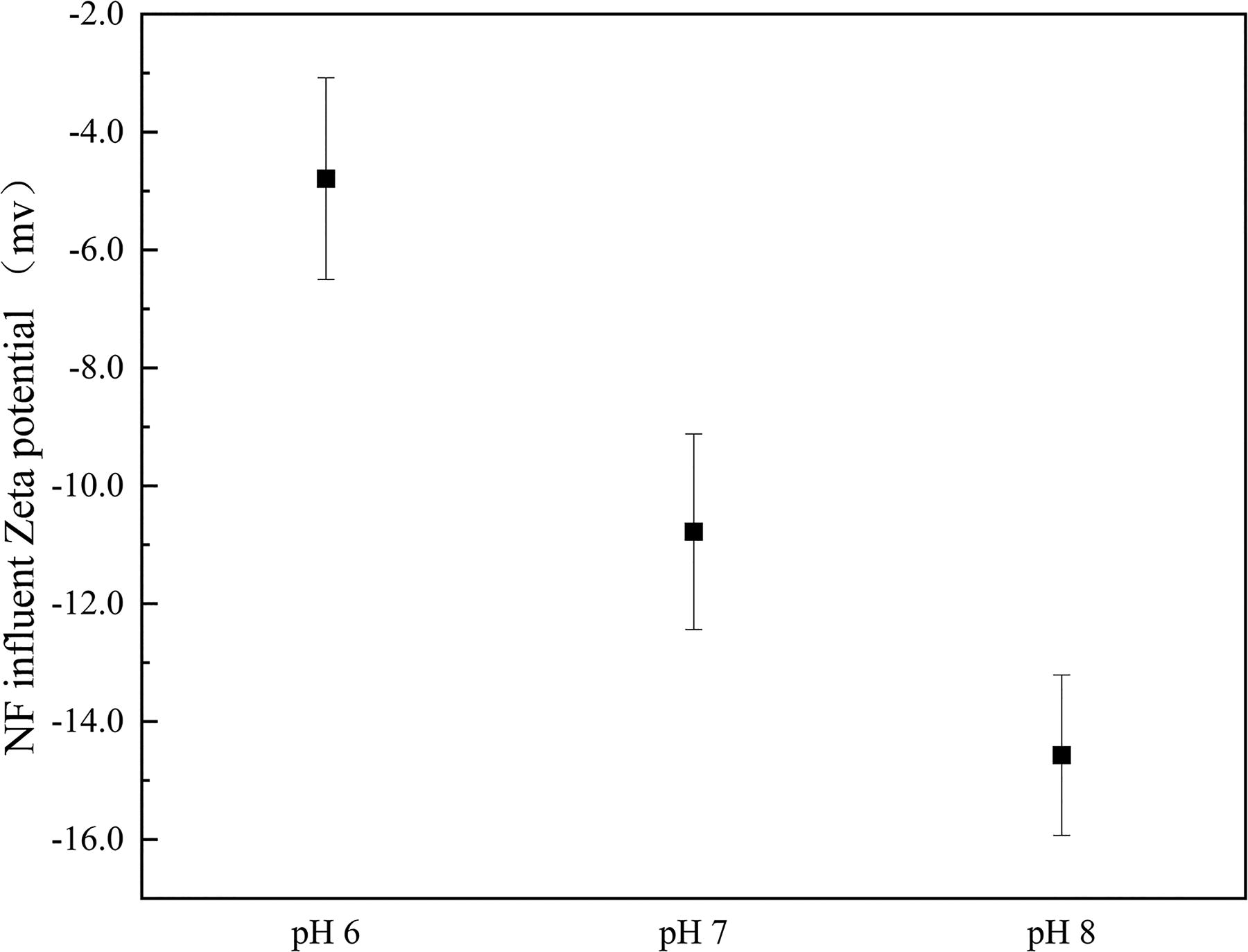
Effect of pH on zeta potential of NF inlet water. NF, nanofiltration.
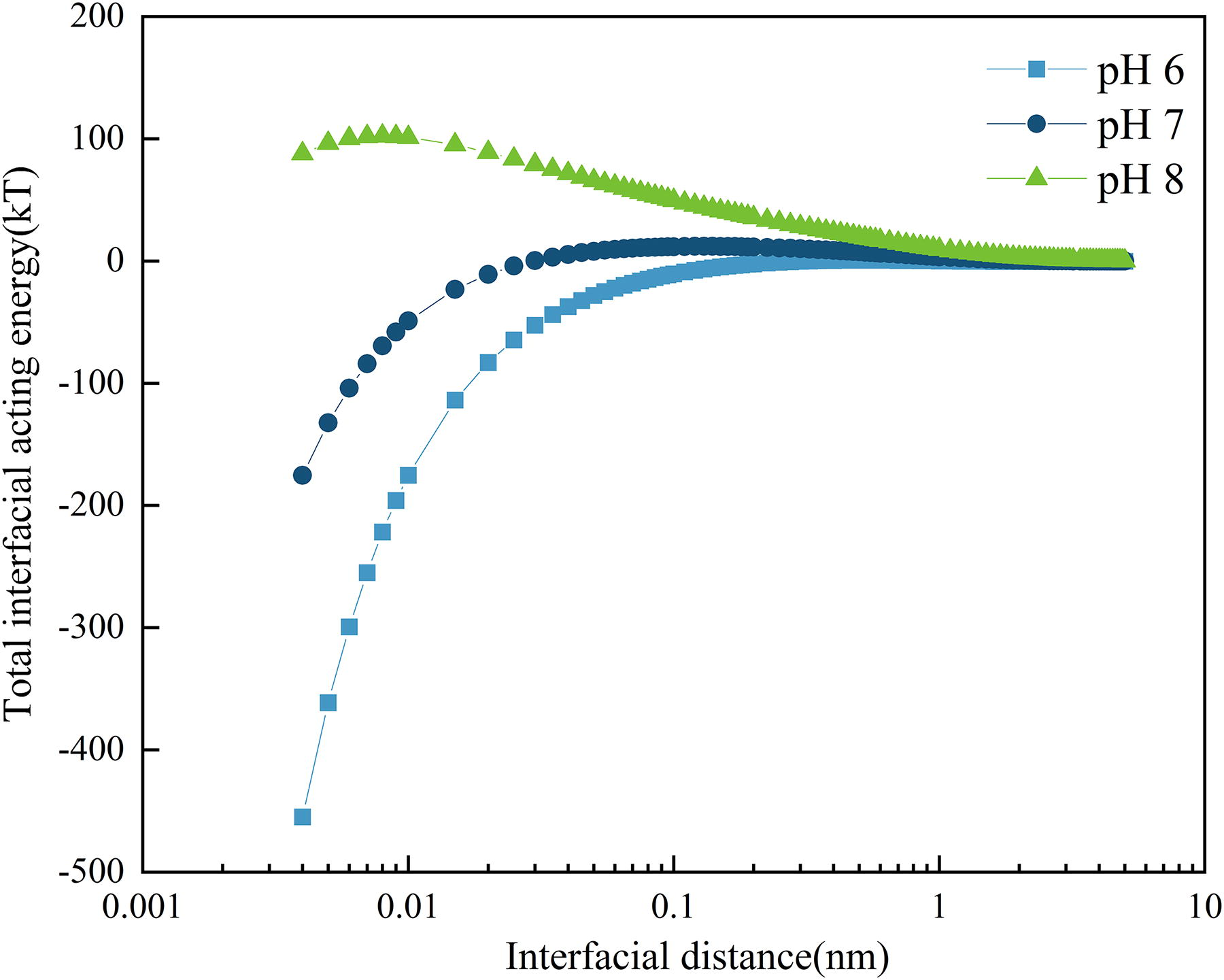
Trend of total interfacial interaction energy of pollutant–NF membrane with distance under different pH conditions.
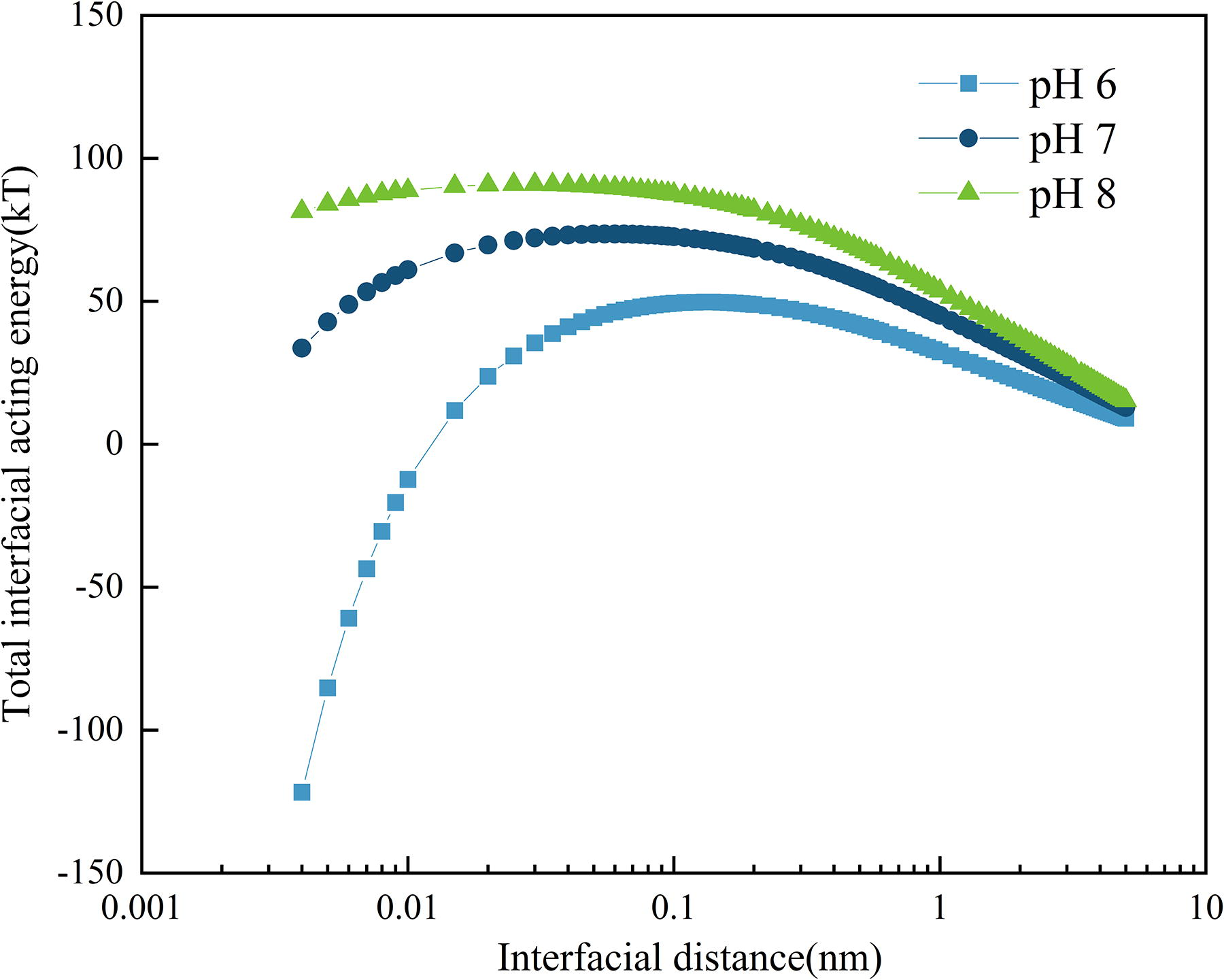
Trend of total interfacial interaction energy of pollutant–pollutant membrane with distance under different pH conditions.
Interface Interaction Energy Between Pollutant–NF Membrane and Pollutant–Pollutant Under Different pH Conditions (kT)
As shown in Table 7, the van der Waals energy between the contaminants and the NF membrane is negative, while the polarity and electrostatic energies are positive across different pH values. When the pH increases from 6 to 8, the absolute value of the van der Waals energy decreases by 8.88 kT, the polarity energy increases by 15.35 kT, and the electrostatic energy rises by 18.65 kT. Consequently, the total interfacial energy transitions from a negative to a positive value. The van der Waals energy is indicative of an attractive force, while polarity and electrostatic energies represent repulsive forces. The results indicate that as the pH value increases, the increase in electrostatic energy is more significant than that of van der Waals and polarity energies. This shift transforms the total interfacial energy from an attractive to a repulsive force, making it more difficult for pollutants to adsorb onto the membrane surface and thereby slowing down membrane contamination. Thus, at pH 8, the degree of membrane contamination in the initial stage of filtration is minimized.
From the data in Table 7, it is evident that, under varying pH conditions, the van der Waals energy between the contaminants in the membrane feed water and those on the membrane surface remains negative, indicating an attractive force. In contrast, the polar and electrostatic energies are positive, indicating repulsive forces. As the pH value increases from 6 to 8, the van der Waals action energy decreases by 4.25 kT, while polar action energy increases by 7.11 kT and electrostatic action energy rises by 24.11 kT. Consequently, the total interfacial action energy increases by 34.52 kT. These results indicate that the electrostatic action energy has both a greater magnitude and a wider range of variation compared to van der Waals and polar action energies, establishing its dominant role in total interfacial action energy. The results show that the value and the magnitude of change of the electrostatic interaction energy are larger compared with the van der Waals and polarity interaction energies, so the electrostatic interaction energy plays a dominant role in the total interfacial interaction energy.
The magnitude of the electrostatic interaction energy is positively correlated with the square of the pollutant’s zeta potential. Due to the negative electronegativity of SMZ, the pollutant’s zeta potential is positively correlated with the square of the zeta potential at pH 8. At this pH, the absolute value of the contaminant’s zeta potential is larger, resulting in higher electrostatic energy and making the total interfacial energy at this point the highest. This results in stronger repulsion between the contaminants in the membrane feed water and those on the membrane surface, leading to the least membrane contamination in the later stages of filtration.
As illustrated in Figure 4, as the interfacial distance decreases, the total interfacial interaction energy gradually increases, reaching a maximum positive value that represents a repulsive force known as the repulsive energy barrier (Ma, 2023). Pollutants can adhere to the membrane surface only after overcoming this barrier. As the interfacial distance continues to shrink, the pollutants can break through the repulsive energy barrier, causing the total interfacial interaction energy to decrease until it becomes attractive, which exacerbates membrane contamination. With increasing solution pH, the repulsive energy barrier between the contaminants in the membrane feed water and the NF membrane increases. Specifically, when the pH rises from 6 to 8, the repulsive energy barrier increases by 101.73 kT. This indicates that, with rising pH, contaminants close to the membrane surface must overcome an increased total interfacial energy, making it less likely for them to block the membrane pores in the early stages of filtration, thus slowing down initial membrane contamination. Therefore, at a pH of 8, the degree of membrane contamination during the early stages of filtration is minimal.
Figure 5 further illustrates that the total interfacial interaction energy between the pollutants in the membrane feed water and those on the membrane surface also exhibits a clear repulsive energy barrier. This barrier increases with the pH of the solution; specifically, it rises by 41.15 kT when the pH increases from 6 to 8. This suggests that, as the pH increases, the total interfacial interaction energy that pollutants in the NF feed water must overcome to adsorb onto the membrane surface also increases, making it more difficult for contaminants to adsorb onto each other. This effect helps slow down the contamination of the filter cake layer, leading to the lightest degree of membrane contamination in the later stages of filtration when the pH is 8.
In summary, throughout the NF membrane filtration process, both in the early and late stages, a higher pH value in the membrane feed water correlates with a reduced likelihood of membrane contamination and a lighter degree of fouling.
Conclusion
Under varying influent pH conditions, the combined biofilm slow filtration and NF process demonstrated an increasing removal rate of SMZ as pH levels rose, achieving optimal performance at pH 8. This enhancement is primarily attributed to increased electrostatic repulsion. At the phylum level, Ascomycetes, Acidobacteria, and Flexibacter were predominant in the biofilms and played significant roles in facilitating SMZ degradation. At the genus level, Aeromonas, Dokdo, and Nitrospiraea were notably effective contributors to SMZ degradation due to their high abundance in the biofilm communities. Moreover, under different pH conditions, pollutants exhibited increased hydrophilicity and reduced hydrophobicity, alongside a significant rise in absolute zeta potential values. Elevated pH levels correlated with a reduction in membrane fouling severity by enhancing the total interfacial interaction energy between the contaminants and the NF membrane. This effect was predominantly driven by increased electrostatic repulsion, which elevated the repulsive energy barrier and subsequently mitigated membrane fouling.
Footnotes
Authors’ Contributions
R.L.: Conceptualization (lead), writing—original draft (lead), formal analysis (lead), and writing—review and editing (equal). L.S.: Conceptualization, funding acquisition, resources, supervision, and writing—review and editing. M.Z.: Software (lead) and writing—review and editing (equal). Y.Z.: Methodology (lead) and writing—review and editing (equal). K.Z.: Conceptualization (supporting), writing—original draft (supporting), and writing—review and editing (equal).
Disclaimer
The authors declare that this article is original, has not been published before, and is not currently being considered for publication elsewhere. The authors confirm that the article has been read and approved by all named authors and that there are no other persons who satisfied the criteria for authorship but are not listed. The authors further confirm that the order of authors listed in the article has been approved by all of them.
Author Disclosure Statement
The authors have read and understood the journal’s policies, and the authors believe that neither the article nor the study violates any of these policies. There are no conflicts of interest to declare.
Funding Information
The project was supported by the National Natural Science Foundation of China (52370004 and 52070011).