




Abstract
Background and Purpose:
Intracorporeal lithotripsy is an important modality used for stone pulverization. To improve the pulverization properties of intracorporeal lithotriptors, a novel intracorporeal “spearheaded lithotriptor” was designed by our institute. It was compared in vitro with the conventional lithotriptor.
Materials and Methods:
The pulverization and propulsion dynamics were evaluated at various pressure settings on an in vitro bench arrangement with phantom stones. Lateral displacement during pulverization was also compared.
Results:
The spearheaded lithotriptor had a better first hit (P<0.001) and follow-up hit dynamics (P<0.01). Stone propulsion and lateral displacement were low for the spearheaded lithotriptor at all pressure settings (P<0.05).
Conclusion:
The spearheaded lithotriptor improved stone pulverization without increasing the risk of stone migration. Further clinical evaluation of this novel probe is necessary.
Introduction
Materials and Methods
The spearheaded lithotriptor probe has a 3-mm diameter with a pointed tip (Fig 1.) as against the conventional probe, which has a 3-mm diameter but a flat disklike tip. The impact dynamics of both the probes were evaluated and compared under standardized conditions using a hands-free in vitro bench arrangement with round stone phantoms of calcium sulphate dihydrate (2 cm diameter and 29 gms). For evaluation the impact dynamics were classified into pulverisation and propulsion dynamics.
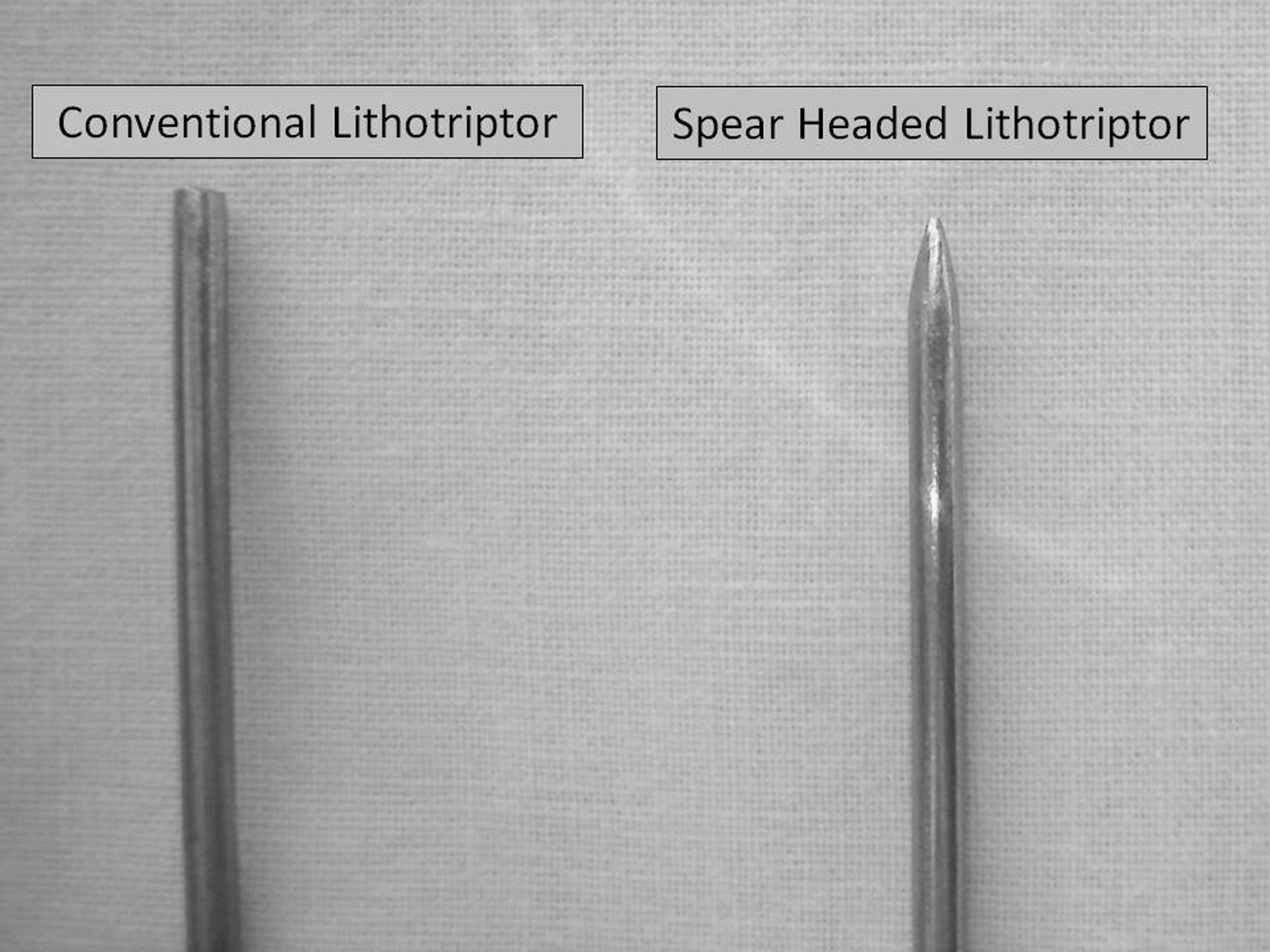
Conventional along with spearheaded lithotriptor.
Study of the pulverization dynamics
A laboratory bench arrangement similar to the one previously published, 3 was devised (Fig. 2). The lithotriptor hand piece was clamped vertically to the scaffolding. A stabilizer held the lower end of the probe in position. A platform with good recoil properties was placed below the probe, just touching it. The stone was then sandwiched between the probe and the platform over a rubber carrier.
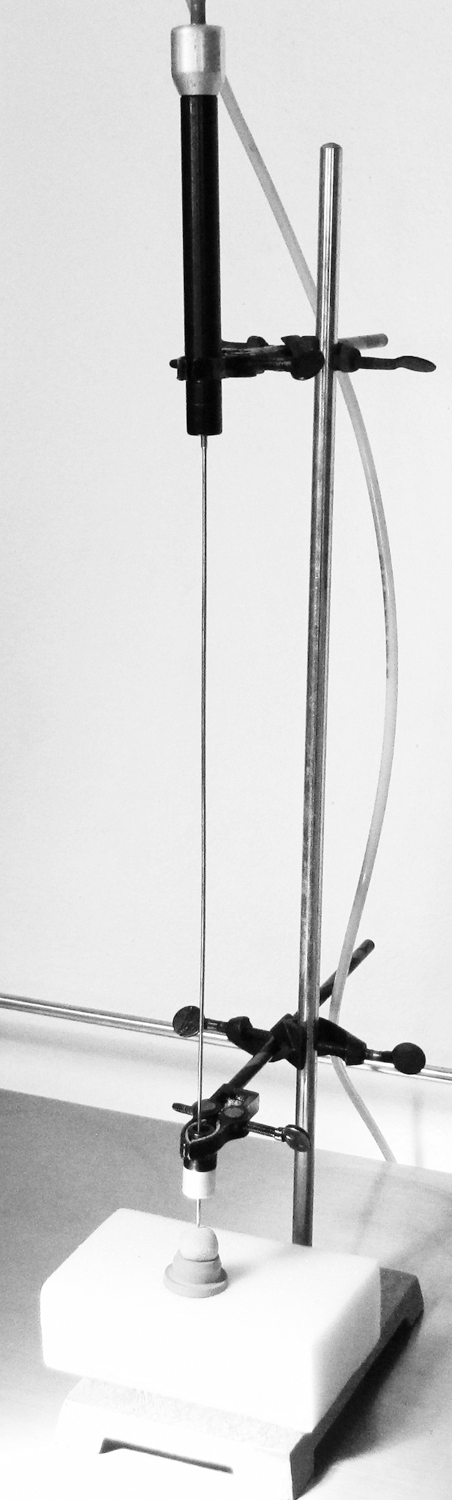
In vitro bench arrangement for pulverization.
All sides of the stone were kept free, preventing any extraneous pressures on the stone. The assembly was operated from the front of the apparatus with eye protection goggles used. A standard medical grade pneumatic energy generator was used. The two probes were attached to the same hand piece alternately, and the study was conducted at impact settings of 2, 3, and 4 bars of a medical grade pneumatic pressure generator. All the strokes were delivered at the rate of approximately 1 per second in the continuous shock mode, and the strokes were counted manually. Twenty stone phantoms were used for each group.
Three predetermined end points were used to evaluate pulverization dynamics signifying different stages of the impact, as follows: (1) The number of impacts needed to create the first dent in the stone (first hit effect); (2) the number of impacts needed to break a chip off the stone (subsequent hits); and (3) the number of impacts needed to bivalve/break the stone into two hemispheres. The proportion (percentage) of stones bivalved (out of 20) by each probe (using a maximum of 200 strokes) and the number of times the stone was readjusted into the original position in the carrier (the lateral displacement during pulverization) were recorded.
Study of the propulsion dynamics
The lithotriptor hand piece was clamped at 45 degrees with the horizontal to a scaffolding at the laboratory bench (Fig. 3). A transparent acrylic tube with diameter more than that of the stone (to allow observation of the propulsion) was placed in line at the tip of the probe. The phantom stone was placed in the tube just touching the probe tip. One stroke was delivered at a time. The maximum distance that the stone traveled away from the probe was recorded (using the attached scale) as the distance of stone propulsion. Once the stone rolled back to the probe, the subsequent impact was delivered.
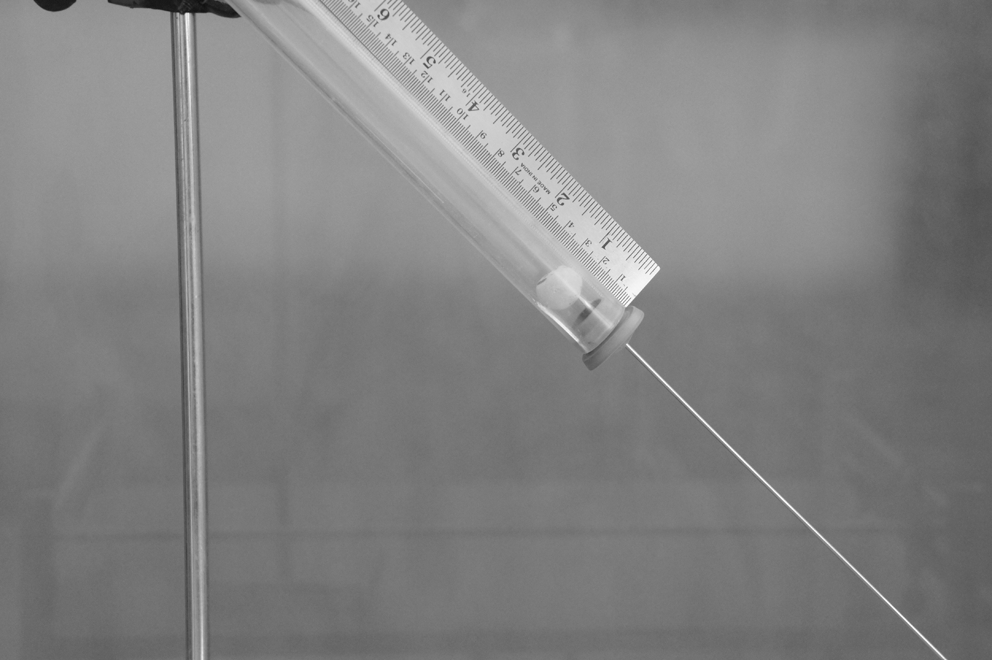
In vitro bench arrangement for propulsion.
Twenty impacts of each probe were delivered at 2, 3, and 4 bar settings, and data were recorded.
Statistical analysis
The data were divided into three subgroups according to the pneumatic energy used—namely, 2-bar, 3-bar, and 4-bar. In each subgroup, the number of strokes needed to cause the first dent, to break a chip, and to bivalve the stone using the two types of lithotriptor heads were compared with each other using the Mann-Whitney U test. Lateral displacement because of the probe and stone propulsion were also compared using the Mann-Whitney
Results
The number of strokes needed to cause the first dent was significantly less with the spearheaded lithotriptor compared with the conventional lithotripter at all pressure settings (P<0.001 for 2, 3, and 4 bars) (Table 1).
Median (interquartile range).
The number of strokes needed to cause sector fracture was significantly less with the spearheaded lithotriptor compared with the conventional lithotriptor at all pressure settings (P<0.01 for 2, 3, and 4 bars).
At 2 bars, the number of strokes needed to bivalve the stone was the same for both lithotriptors (P=0.65) while the spearheaded lithotriptor was associated with significantly fewer strokes at the higher pressure settings: (P=0.001 for 3 bars and P=0.007 for 4 bars).
There was no significant difference between the two lithotriptor heads in the proportion of stones bivalved or sector fractured at any of the pneumatic energy levels. In logistic regression, the lithotriptor head was not associated with the proportion of stones bivalved when controlled for pneumatic energy level. Four-bars was associated with a significantly higher proportion of stones bivalved, compared with 2 and 3 bars (P=0.34 for 2 bars, 0.51 for 3 bars, and 0.45 for 4 bars).
Lateral displacement tended to be higher for the conventional lithotriptor head than the spearheaded lithotriptor for all pressure settings (P=0.07, P=0.008, and P=0.07 for 2, 3, and 4 bars).
Stone propulsion was significantly less for the spearheaded lithotriptor compared with the conventional lithotripter at all pressure settings. (P<0.001 at all bars).
No malfunction was seen with either device.
Role in Endourology
Although conventional probes are excellent for stone fragmentation, they are not universally fast and efficient, especially in the setting of hard urinary stones. Another disadvantage in some clinical scenarios is stone chipping. Occasionally, tangential probe slippage makes it difficult to pin down the stone. This results in involuntary application of excessive axial pressure on the probe with the possible potential of renal trauma. To overcome these drawbacks we changed the probe shape and evaluated it in vitro.
Impact dynamics of the probes
The impact pressure generated at the tip of the probe is directly proportional to the pressure transferred along the shaft of the probe from the lithotriptor hand piece and inversely proportional to the area of the tip of the probe. At the generator settings of 4 bars, the probe tip impact pressure is 16 bars with the probe tip diameter of 3 mm (conventional probe). On reducing the tip diameter to 0.5 mm (spearheaded lithotriptor), the probe tip impact pressure increases to 575 bars (derived using the formula: force=pressure/area) (Fig. 4). Thus, at the first hit (ie, on point contact of the probe with the stone), a highly focused impact force (Fig. 5) is generated. In the present study, this was indicated by the stage of first dent/pit formation in the stone.
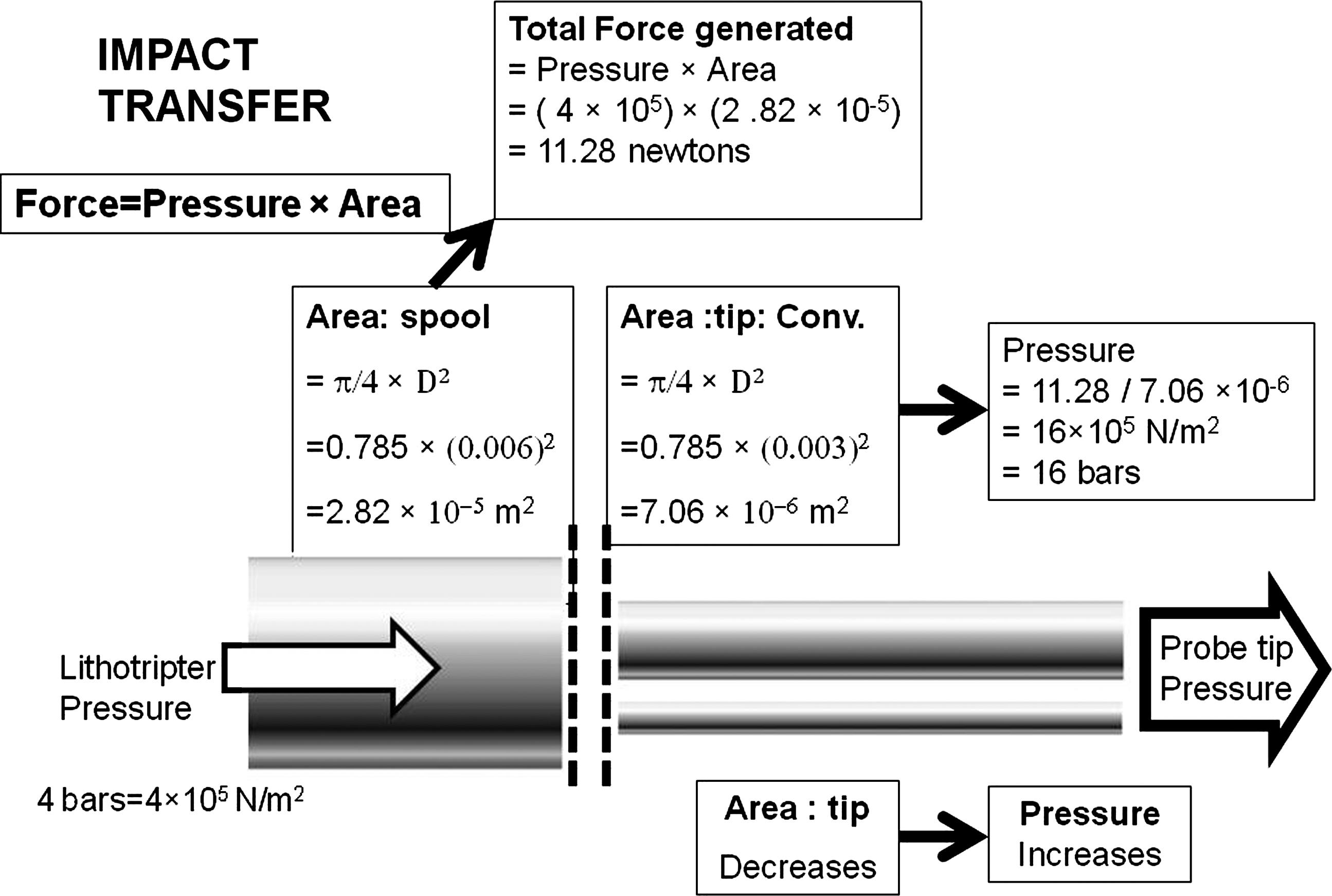
Impact transfer for pneumatic lithotriptor probes.

First hit difference.
During the follow-up hits (as fragmentation progresses), the pit allows the slanting edges of the probe to come into contact with the stone (at the pit walls) (Fig. 6). This, in turn, generates lateral vectors of force that augment stone fragmentation and separation, which is represented by sector fracture and bivalving of the stone. Also, as the contact area of the probe with the stone increases, it causes a drop in the tip impact pressure. This creates the graduated tip impact force (Fig. 7).

Follow-up hit dynamics.
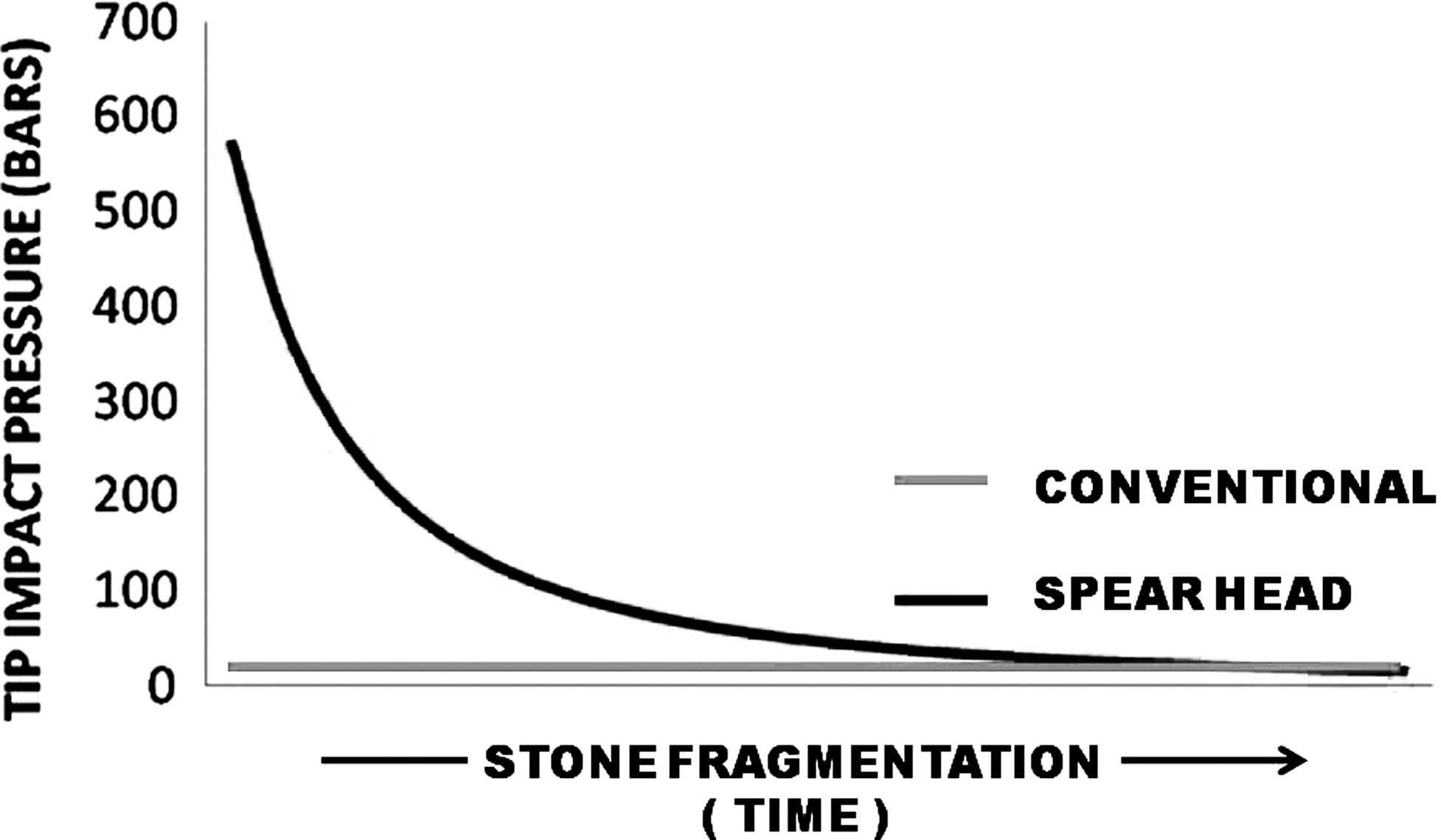
Spearheaded lithotriptor: Graduated tip impact force.
The in vitro data suggested a statistically better efficiency of the spearhead to cause the first dent at all pressure settings, quantifying the highly focused impact pressure at the first hit. The spearhead has a statistically significant advantage in bivalving the stones at higher pressure settings, indicating the property of mechanical separation.
Lateral displacement with the spearhead is quite low. The first dent, once created, acts as an anchor pit for the probe, preventing its lateral displacement.
Stone propulsion was low in the spearhead group, which appeared to be a paradox. The spearhead creates a high impact force at the first hit, causing pulverization at the contact point. The point of contact acts as a “crumple zone,” causing dissipation of energy and less propulsion.
The safety profile of the spearheaded lithotriptor is likely to be similar to that of other pneumatic devices. As a universal precaution, it should be used only under direct vision, keeping away from the mucosa. One should judge the depth of the stone to avoid injuries caused by the tip boring through the distant end of the stone. It should be fairly easy to learn and master. It may be difficult to pin down a stone at the contact hit (ie, before the creation of the first dent).
There are inherent limitations of in vitro studies. In vivo stone pulverization depends on the stone size, dimensions (thickness), composition, angle of incidence of the probe on the stone, pressure settings of the generator, etc. Hence, in vivo, large sample studies to determine the reproducibility of the in vitro observations, safety, and efficacy of the spearheaded lithotriptor are warranted. In our opinion, modifications in the probe tip head would open a new avenue for enhancement of the properties of intracorporeal pneumatic lithotripsy.
Conclusions
The spearheaded lithotriptor appears to improve the stone pulverization without increasing the risk of stone migration. The technical advantages are creation of highly focused impact force, graduated impact force, centrifugal vectors of force, augmented mechanical separation of the fragments, decreased lateral displacement of the probe, and reduced generator pressure settings. It breaks the calculus into larger fragments compared with the chipping with the conventional probe.
Further clinical evaluation of this novel probe is necessary. We think that study of the tip designs and the physics involved with their impact dynamics is a novel avenue to increase the efficiency of intracorporeal lithotriptors.
Footnotes
Disclosure Statement
No competing financial interests exist.