




Abstract

Croes Council
Chairman
Jean de la Rosette, M.D.
Amsterdam (The Netherlands)
Adrian Joyce, M.S.
Leeds (UK)
Stavros Gravas, M.D.
Larissa (Greece)
Margaret Pearle, M.D.
Dallas, TX (USA)
Dean Assimos, M.D.
Wake Forest, NC (USA)
Ying-Hao Sun, M.D.
Shanghai (China)
Tadashi Matsuda, M.D.
Osaka (Japan)
Treasurer
John Denstedt, M.D.
London (Canada)
Executive Director
Sonja van Rees Vellinga
Amsterdam (The Netherlands)
Mission
Through worldwide collaboration, CROES seeks to assess, using evidence based scientific methodology, the various aspects of clinical endourology.
Vision
By applying rigorous scientific evaluation to the field of clinical endourology, CROES will enable all urologic surgeons to bring to their patients the most effective and efficient care possible.
Projects
• Global PCNL study
• Global URS study
• Global Greenlight Laser study
• Global Renal Mass study
• Global NBI study
Contact
For more information please contact Sonja van Rees Vellinga (
Global Renal Mass Study: An Inside Look at the Current Top Recruiters
Sonja van Rees Vellinga, Stavros Gravas, and Jean de la Rosette
We are proud to confirm that the response from many of you participating in the Clinical Research Office of the Endourological Society (CROES) projects is full of enthusiasm. We have been realizing in the past years that becoming a member of the global endourology platform called CROES is highly appreciated. At the end of each study, participating centers will receive a certificate signed by the Chairman of CROES, the Secretary General, and the President of the Endourological Society. This certificate, in recognition of a minimum number of cases contributed to a given study, will certify the valuable participation of each center in the specific project and will recognize its contribution to international clinical research in the field of endourology.
The CROES Council thought that there was a need to further bring into light the centers that work hard and spearheaded the recruitment race in every ongoing study. For this reason, the top three centers from all projects were invited to present themselves and share with us their opinion and experience from CROES. This will give to the involved departments the exposure they deserve and to all of us the opportunity to know about the centers that represent the core of the CROES network.
In the previous newsletter, we have already introduced the top recruiters of the Ureteroscopy and GreenLight™ Laser studies. In this newsletter, we would like to focus on the Global Renal Mass study that was closed for initiating new sites in January 2011. In this prospective study, we aim to assess on a global basis the indications, treatment modality, and outcomes of surgical treatment for renal masses including (open/laparoscopic/robot-assisted) radical or partial nephrectomy and (percutaneous/laparoscopic assisted) tumor ablation using cryotherapy or radiofrequency. Each center that is participating in this project will include during a 1-year period all the patients who were treated at their site with a diagnosis of a renal mass. Furthermore, in the frame of a prospective evaluation, the centers will commit themselves to provide follow-up data for a minimum of 5 years after inclusion. The study design and the objectives have been presented. 1
Dr. S. Pahernik (Heidelberg University Medical Center, Heidelberg, Germany), Prof. G. Gueglio (Hospital Italiano de Buenos Aires, Buenos Aires, Argentina), and Prof. M. Hora (University Hospital Pilsen, Pilsen, Czech Republik) will offer us an inside look at the current top recruiting centers:
Dr. Pahernik and his team.
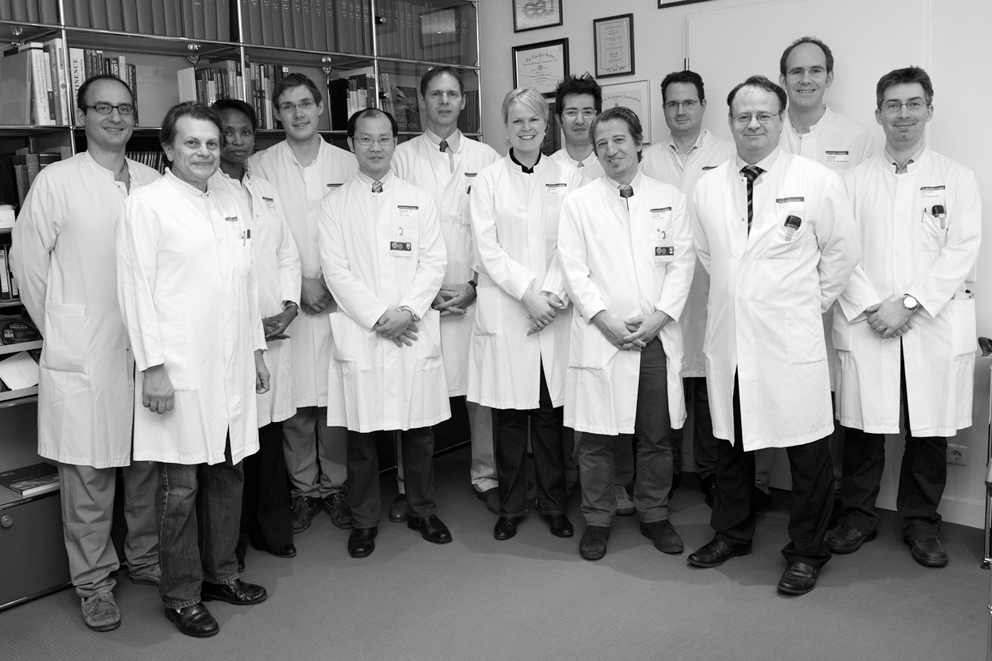
Dr. S. Pahernik
“The Department of Urology of the Heidelberg University Medical Center addresses all the contemporary clinical challenges, treating overall 16,000 patients annually. Prof. Markus Hohenfellner, Chair of the Department of Urology, heads the Renal Tumor Center that integrates related disciplines (in particular urology, nephrology, clinical oncology, and diagnostic and interventional radiology) within the comprehensive cancer center (National Center for Tumor Diseases – NCT) combining competence and focusing synergies to improve and individualize patient care.
Dr. Pahernik in the operating room.
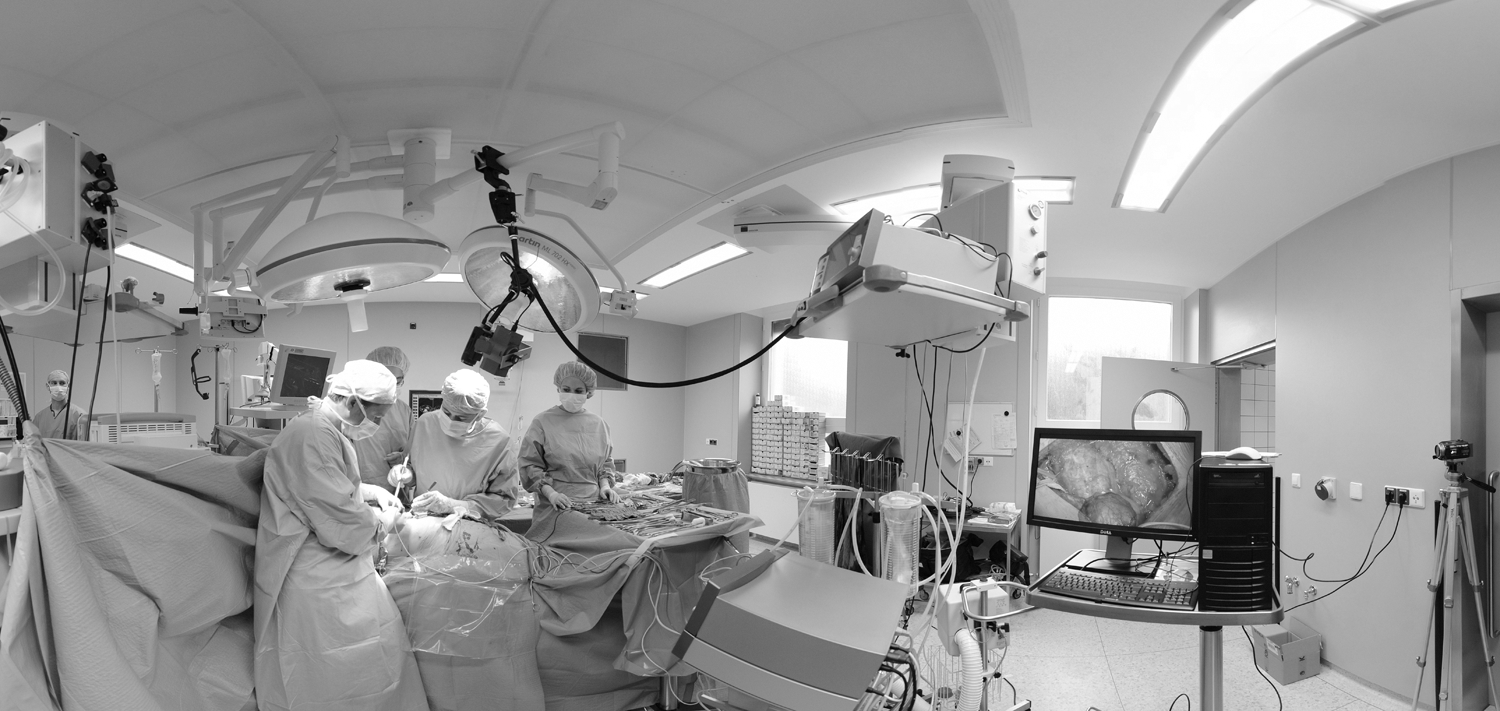
“One main focus of activity represents urooncology. The Department offers all contemporary aspects of modern surgical management of renal-cell carcinoma encompassing conservative management, such as laparoscopic cryoablation, laparoscopic as well as robot-assisted partial and radical nephrectomy, open surgery for advanced renal-cell carcinoma including multivisceral resection and resection of vena cava thrombus and metastases resection. In addition, several monocentric and multicentric studies that address systemic therapy of renal-cell carcinoma are being performed at the Department of Urology, among them studies investigating the impact of neodajuvant treatment of renal-cell carinoma or treatment-related immunologic changes of renal-cell carcinoma.
Clinical research is supported by a prospectively conducted renal data bank since 1990, including, at present, approximately 2000 patients with renal-cell carcinoma. Since 1998, the data bank has been accompanied by a renal tissue bank that encompasses material, including tissue microarrays of about 800 patients, which is now integrated into the comprehensive cancer center.
“The scientific translational efforts are now performed by the Section of Molecular Oncology, which focuses on translational, molecular analysis of development and progression of renal-cell carcinoma and elaborates on innovative approaches for prevention, early detection, and therapy of renal-cell carcinoma.
“There is also tight cooperation with the German Cancer Research Center conducting basic research on renal-cell carcinoma, among which are stem-cell–related studies. One major focus of the cooperation represents all aspects of surgical navigation and virtual imaging for renal tumors.
“The Department of Urology is participating in the multi-institutional, prospective Global Renal Mass study and has included during the 1-year period approximately 200 patients with renal tumors. The establishment of this unique prospective and multicenter database using a standardized protocol is of paramount interest to analzse current indications and modern treatment options for patients with renal-cell carcinoma. Clinical important research aspects are outcome analysis with special attention to comorbidities, because a substantial number of patients with renal-cell carcinoma have comorbidities, such as diabetes, renal insufficiency, hypertension, and cardiovascular disease. The database containing more than 5000 patients is an ideal tool to increase the knowledge of patient orientated and health service research, and thus improve patient's care.”
Dr. Gueglio and his team.
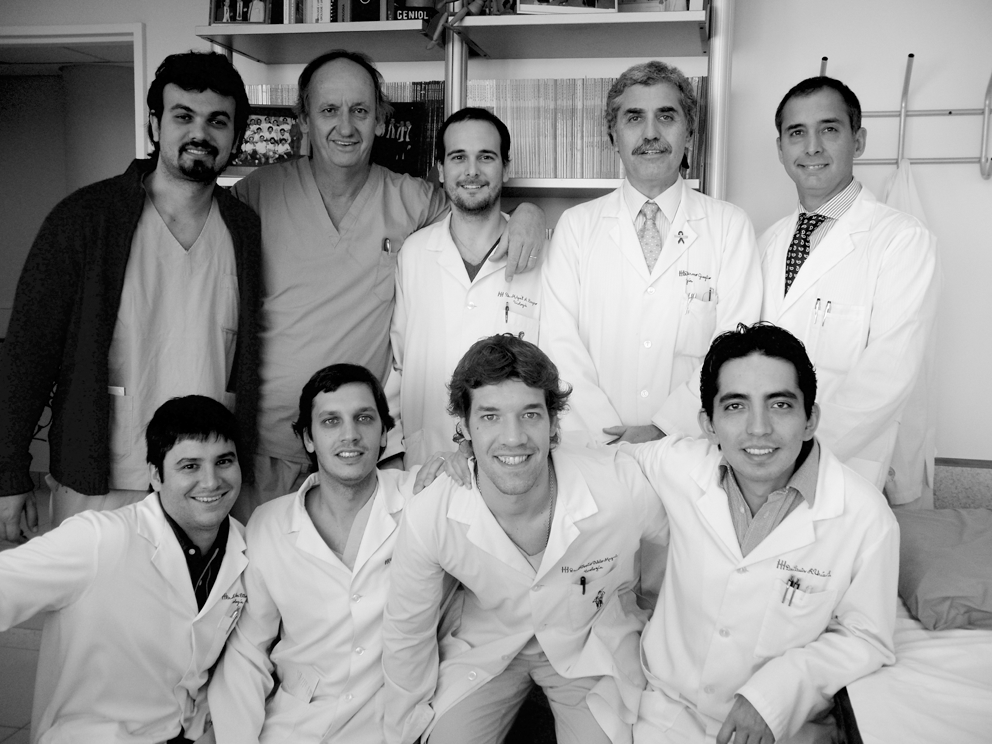
Prof. G. Gueglio
“Hospital Italiano de Buenos Aires, with has more than 700 beds, is considered the #1 hospital of Argentina and the third one in Latin America. It also has a University School of Medicine and a very well-known Institute of Basic Research. The Urology Department has 11 staff members, 12 residents, and 3 fellows.
Dr. Gueglio in the operating room.

“Dr. Guillermo Gueglio is Professor of Urology at the Buenos Aires National University and at the Hospital Italiano de Buenos Aires. He is a member of a large number of scientific societies and is an active contributor to the CROES Renal Mass Study. Prof Gueglio has been involved with the project since its beginning in January 2010 and has so far contributed to the study with more than 180 cases of renal masses.
“The Renal Mass study was an amazing experience. At least in our case, it showed that there are no surgical techniques written in stone but different patients who may need different surgical approaches.”
Prof. M. Hora
“The Department of Urology is part of the University Hospital and Charles University in Prague, Faculty of Medicine in Pilsen. It is in the city of Pilsen (in Czech, Plzeň), which has 170,000 inhabitants and is located 80 km southwest of Prague, capital of the Czech Republic (CZ). The department has 52 adult and 4 pediatric beds, 17 full-time urologists (including 8 residents), and 5 office urologists working part-time. The department has more than 2700 admissions per year, about 2200 operations, more than 300 shockwave lithotripsies, and more than 33,000 visits in the outpatient department. The department is the only urologic department in the region of Pilsen with 571,000 f inhabitants. All urologic diseases are treated, from circumcisions to cystectomies. The department specialized in the diagnosis and treatment of kidney tumors (210 surgeries for kidney tumors in 2010), surgical treatment of benign prostatic hyperplasia (300 cases per year, half of them photoselective vaporization), and laparoscopy (240 in 2010).
Prof. Hora and his team.
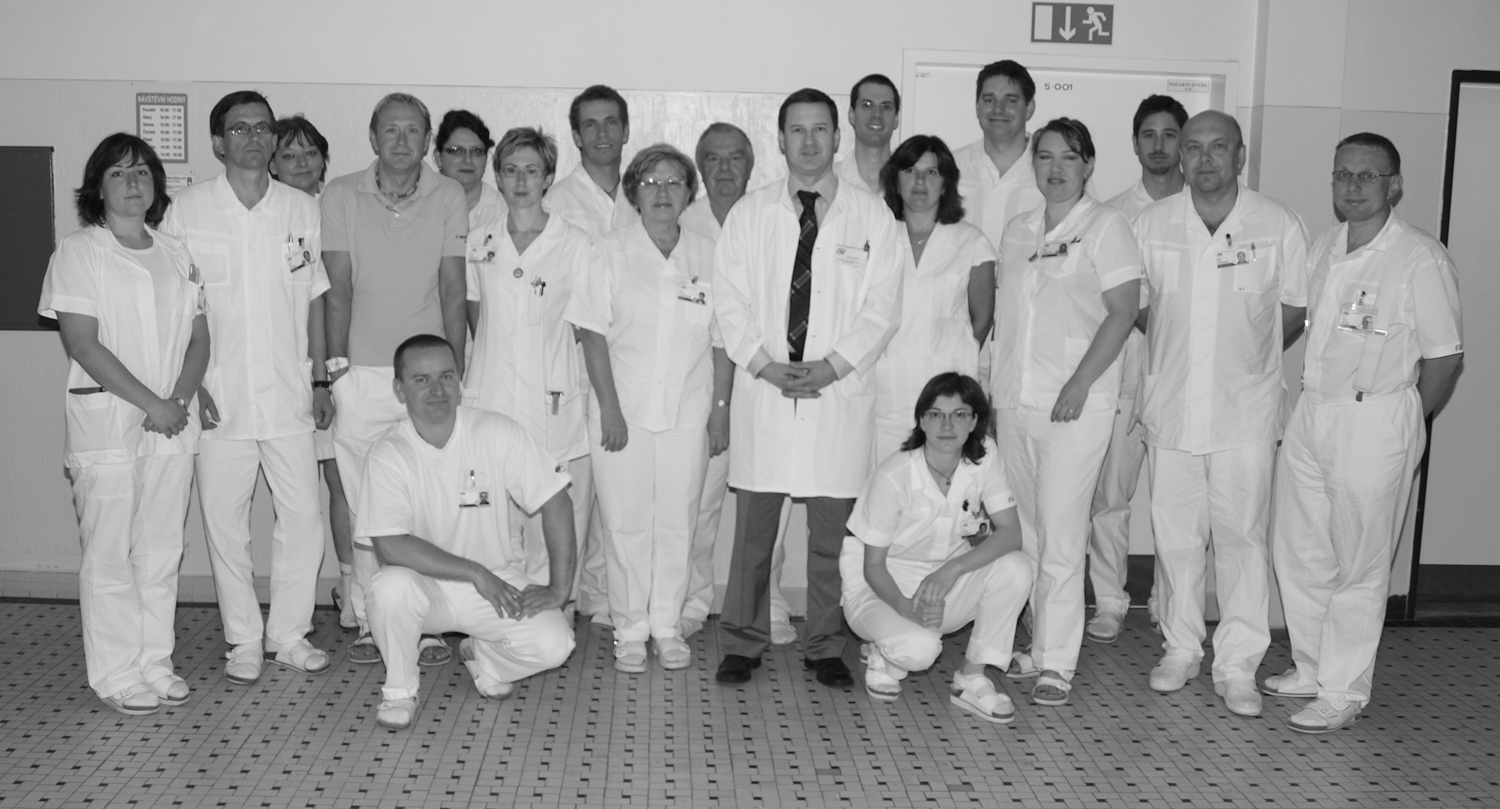
Prof. Hora.
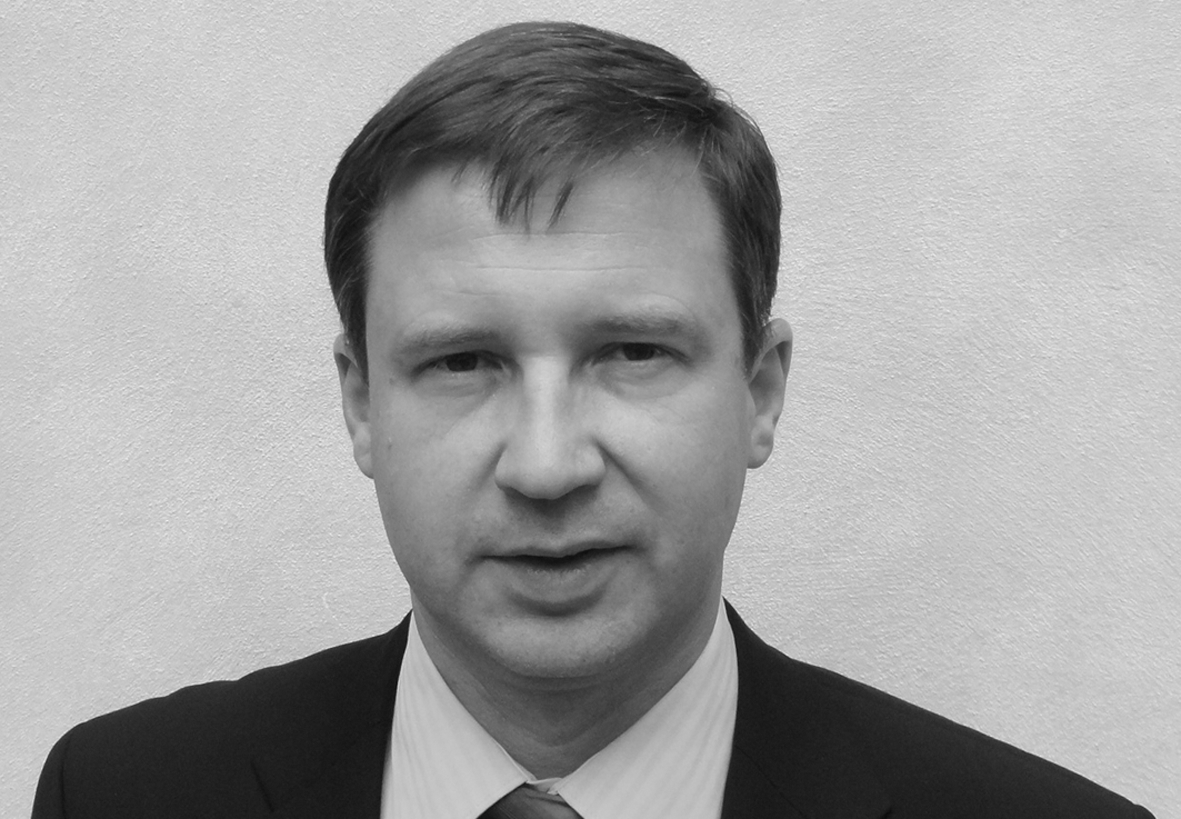
“The incidence of kidney tumors in CZ is the highest in the world. In CZ, the incidence is the highest in the Pilsen region. We have not yet an explanation for such a high incidence. The main topics for research are kidney tumors (diagnosis, laparoscopy, histopathology, molecular biology) and tumor markers. Dr. Milan Hora is a member of the European Association of Urology Working Group on Kidney Cancer.
“In the hospital, all subspecialties cooperating with urology are present, including radiology (topical projects are focused on 3T magnetic resonance imaging and [18F]-fluorodeoxyglucose positron emission tomography/computed tomography), and pathology superspecialized for kidney tumors including genetics, laboratories performing research in tumor markers, etc. The department collaborates closely with pathology colleagues, mainly with Prof. Ondřej Hes, M.D., Ph.D., who is specialized in urologic pathology, especially in kidney tumors. The department is also a Certified Training Center of the European Board of Urology.
“The department cooperates with CROES on two projects: the Renal Mass study (Tomáš Ürge, M.D., Ph.D.) and the GreenLight Laser study (Jiří Klečka, M.D., Ph.D.). We know that only having enough cases will give a chance to prepare high quality studies about renal tumor and answer many questions. We are focused on less common types of renal tumors, and we hope we will find relatively high numbers of these rare types (eg, papillary renal-cell carcinoma, tumors in end-stage kidney, etc.) in the CROES database.”