




Abstract

Croes Council
Chairman
Jean de la Rosette, M.D.
Amsterdam (The Netherlands)
Adrian Joyce, M.S.
Leeds (UK)
Stavros Gravas, M.D.
Larissa (Greece)
Margaret Pearle, M.D.
Dallas, TX (USA)
Dean Assimos, M.D.
Wake Forest, NC (USA)
Ying-Hao Sun, M.D.
Shanghai (China)
Tadashi Matsuda, M.D.
Osaka (Japan)
Treasurer
John Denstedt, M.D.
London (Canada)
Executive Director
Sonja van Rees Vellinga
Amsterdam (The Netherlands)
Mission
Through worldwide collaboration, CROES seeks to assess, using evidence based scientific methodology, the various aspects of clinical endourology.
Vision
By applying rigorous scientific evaluation to the field of clinical endourology, CROES will enable all urologic surgeons to bring to their patients the most effective and efficient care possible.
Projects
• Global PCNL study
• Global URS study
• Global GreenLight Laser study
• Global Renal Mass study
• Global NBI study
Contact
For more information please contact Sonja van Rees Vellinga (
Partnership with Industry: Boston Scientific's View on CROES Projects
Dave Dyer and Evan Brasington
Background
Boston Scientific is a worldwide leader in the development of innovative medical devices and routinely collaborates with the scientific community. The conducting by the Clinical Research Office of the Endourological Society (CROES) of the Global Ureteroscopy (URS) Study is an example of this collaboration.
CROES offers a unique opportunity to access a global network of physicians and collect large amounts of data, under the guidance and management of the CROES team, providing insights into many clinical questions that are unanswered by other studies with smaller cohorts. The output of such studies helps guide future product innovation and clinical practice alike.
URS Study
During the past years, there has been an increased interest in flexible and semirigid URS as primary treatment for patients with ureteral stones and smaller sized renal stones. URS is truly on the rise, most probably because of technical refinements of the (flexible) endoscopic equipment and because of more realism about the efficacy of the shockwave lithotripsy (SWL) therapy. There are some fundamental (institutional) differences, however, concerning indication for surgery, equipment, used and maybe outcomes. Moreover, specific patient and technical factors may influence treatment-related morbidity. For these reasons, the Endourological Society has conducted the Global URS Study.
The URS study was initiated in January 2010 and closed at the beginning of this year. The study is currently being audited, and the data will be ready for analysis on October 1, 2012.
The aim of this prospective study is to assess on a global basis the indications and outcomes of both flexible and semirigid URS. Each center or site participating in this project are to enter data on all patients with stones who undergo URS during the study period of 1 year at their site.
Study objectives
Primary
1. To assess the current indications for URS and the treatment outcomes in terms of the stone-free rate.
Secondary
1. To assess the perioperative morbidity (30 days), including serious adverse events and translate them in the Clavien score.
2. To define risk factors for the development of perioperative morbidity after URS.
In addition the following variables will be included to correlate in a logistic regression and unimultivariate analysis: 1. The use of antibiotics and incidence of infections. 2. The type of ureteral access used (balloon dilation, access sheet) and the possible differences in morbidity. 3. Specific medical conditions (age, body mass index, diabetes mellitus, anticoagulants, and cardiovascular disease) vs outcome and morbidity. 4. The success of URS treatment after previous failed SWL. 5. Outcomes in complicated cases (monokidney, renal congenital anomalies, and neurogenic problems). 6. To study preferences in intraoperative technique (device for fragmentation, use of ureteral stents, and device to avoid intraoperative stone migration). 7. To study differences between lower and higher volume sites.
Outcome
The present CROES Global URS Study is the largest prospective database of patients treated with URS to be reported to date. The results reflect the routine clinical treatment of patients with a variety of indications for URS, and thus represent the use of this technique in a “real-life” scenario. Use of a central reporting system not only allowed the study to have affordable global coverage, but also facilitated rapid and standardized reporting from a wide variety of clinical centers within the collaborative CROES network.
The study has recruited more than 15,000 patient data sets from 134 centers in 36 different countries since January 2010, and the early analysis of outcomes is already being performed on the rich clinical database. We are eagerly anticipating the first of what we are sure will be many clinical articles and podium presentations resulting from this ground-breaking study. The URS Study is particularly relevant to Boston Scientific because we have a long history of providing medical devices to physicians for rigid, semirigid, and now flexible URS. Early products, such as our Bagley and Segura™ and Mardis, and some of our more recent developments, such as the Backstop™ Antiretropulsion Device, would not have been possible without the important development input from our clinical advisors.
Mission
As an organization, we are committed to innovation in the field of endourology, and we have a long and close working relationship with the Society. We have been lucky enough to have three members of our company recognized by the Society for their contribution on behalf of industry. John Abele, our cofounder, in 2001; Evan Brasington, our Global Vice President of Marketing, in 2005; and Kirsten Wyzanski, our Director of Communications and Programs, in 2009. This recognition is deeply appreciated, because we firmly believe that this collaborative approach between industry and the clinical community supports the advancement of improved clinical outcomes, which are at the core of our mission statement.
Initiatives such as the URS Study and other recent clinical projects, managed through partnership between industry and CROES, are important if we are to continue to advance the treatment of patients with urinary tract stones and other challenging disease states.
Boston Scientific's mission is to improve the quality of patient care and the productivity of healthcare delivery through the development and advocacy of less-invasive medical devices and procedures. This is accomplished through the continuing refinement of existing products and procedures and the investigation and development of new technologies that can reduce risk, trauma, cost, procedure time, and the need for aftercare.

Bagley Stone Retrieval Basket.
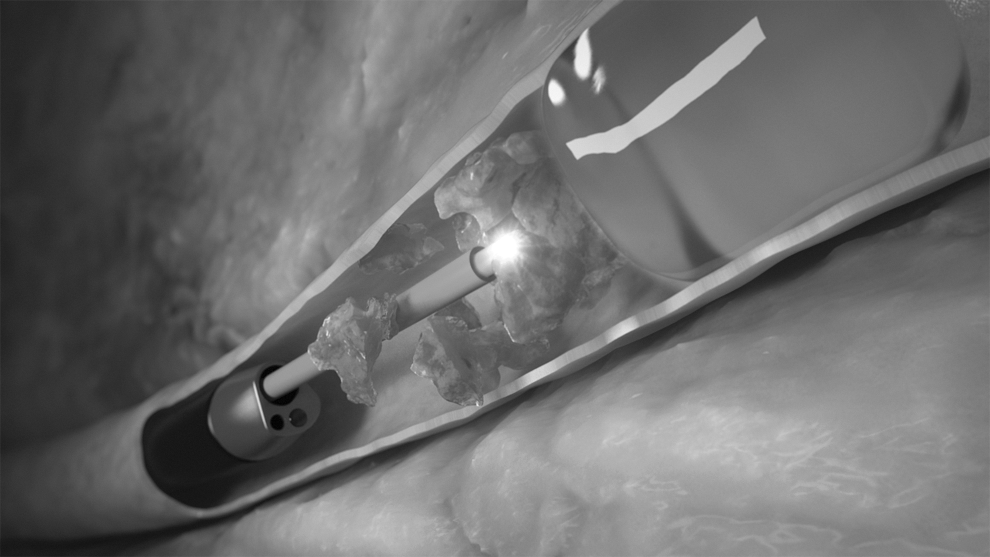
Backstop™ Antiretropulsion Device.
• The global PCNL observational study was closed in December 2009.
• The Global Ureteroscopy Study and the Global Renal Mass Study were closed for initiating new sites in January 2011. The Global Greenlight Laser study was closed for initiating new sites in April 2011.
• On-going project: the randomized study on Narrow Band Imaging vs White Light Imaging.
• For further information please visit: