




Abstract
Purpose:
Contemporary rates of postoperative hemorrhage after partial nephrectomy (PN) are low. Commercially available hemostatic agents are commonly used during this surgery to reduce this risk despite a paucity of data supporting the practice. We assessed the impact of fibrin sealant hemostatic agents, a costly addition to surgeries, during robot-assisted partial nephrectomy (RAPN).
Patients and Methods:
Between 2007 and 2011, 114 consecutive patients underwent RAPN by a single surgeon (MEA). Evicel fibrin sealant was used in the first 74 patients during renorraphy. The last 40 patients had renorraphy performed without the use of any hemostatic agents. Clinicopathologic, operative, and complication data were compared between groups. Multivariate and univariate logistic regression analysis was performed to test the association between the use of fibrin sealants and operative outcomes.
Results:
Patient demographic data and clinical tumor characteristics were similar between groups. The use of fibrin sealant did not increase operative time (166.3 vs 176.1 minutes, P=0.28), warm ischemia time (WIT) (14.4 vs 16.1 minutes, P=0.18), or length of hospital stay (2.6 vs 2.4 days, P=0.35). The omission of these agents did not increase estimated blood loss (116.6 vs 176.1 mL, P=0.8) or postoperative blood transfusion (0% vs 2.5%, P=0.17). Univariate analysis demonstrated no association between use of fibrin sealants and increased complications (P>0.05). Multivariable logistic regression showed no statistically significant predictive value of omission of hemostatic agents for perioperative outcomes (P>0.05).
Conclusion:
Perioperative hemorrhage and other major complications after contemporary RAPN are rare in experienced hands. In our study, the use of fibrin sealants during RAPN does not decrease the rate of complications, blood loss, or hospital stay. Furthermore, no impact is seen on operative time, WIT, or other negative outcomes. Omitting these agents during RAPN could be a safe, effective, cost-saving measure.
Introduction
The role for hemostatic agents specifically in robot-assisted PN (RAPN) is even more uncertain, because evolution of surgical technique as well as improved dexterity conferred by the robot could be responsible for the improved outcomes between RAPN and laparoscopic PN (LPN) and obviate the need for these agents. 5 As the cost of healthcare and implemented technology has become increasingly important, we present an analysis of the effectiveness of using particular hemostatic agents in RAPN by a single high-volume surgeon.
Patients and Methods
Our institution's minimally invasive surgical database was retrospectively queried for patients undergoing RAPN by a single, experienced minimally invasive urologic surgeon (MEA). Cases were identified where a single particular hemostatic agent (Evicel fibrin sealant; Ethicon, NJ) (Fig. 1) was used and compared with a control group in which no sealant or any other hemostatic agent was used during the same period (to minimize impact of surgeon experience). Pertinent demographic, preoperative, and perioperative outcome data were collected and analyzed between groups. Surgeon experience was further controlled for by including the period (first or second half of surgeon's experience) as a variable.
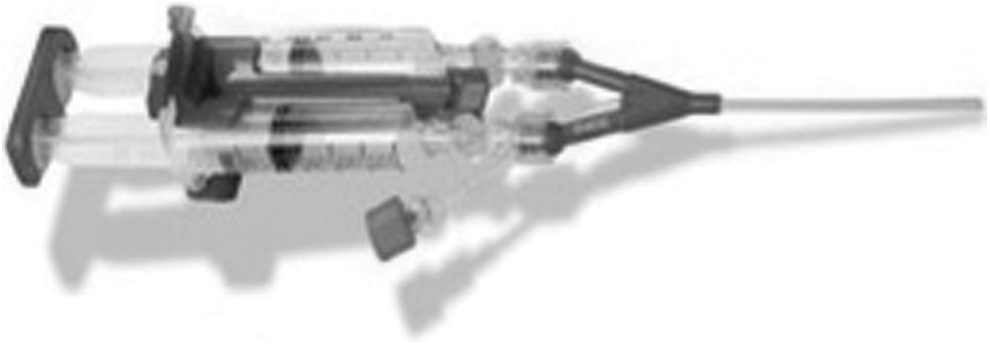
Evicel fibrin sealant.
In the fibrin sealant group, after tumor excision and before completion of the renorrhaphy, Evicel (5 mL) was dripped into the defect. A formal renorrhaphy was then completed using the previously described sliding clip technique. 6 No bolsters or any other hemostatic agents were used in either group. Univariate logistic regression analysis was performed to test the association between the use of fibrin sealant and operative outcomes. Multivariable logistic regression was performed to determine the predictive value of omission of fibrin sealants during RAPN.
Results
A total of 114 patients underwent RAPN by a single surgeon from 2007 to 2011. Of these, 40 and 74 underwent RAPN without and with fibrin sealants, respectively. There was no significant difference in patient demographics or American Society of Anesthesiologists classification between groups. Median tumor size, nephrometry scores, and proportion of patients undergoing an off-clamp technique were similar in each study group (Table 1).
BMI=body mass index; ASA=American Society of Anesthesiologists; OR=operating room; EBL=estimated blood loss; WIT=warm ischemia time.
The use of a fibrin sealant did not show a statistically significant difference in operative time (166.3 vs 176.1 minutes, P=0.28), warm ischemia time (WIT) (15.4 vs 16.9 minutes, P=0.18), or estimated blood loss (EBL) (116.67 vs 121.63 mL, P=0.80). Furthermore, overall complications (14.9% vs 17.5%, P=0.71), high grade complications (Clavien >/3) (5.4% vs 2.5%, P=0.31), urologic complications (urine leak, urinary tract infection) (5.4% vs 7.5%, P=0.66), or hematologic complications (2.7% vs 5%, P=0.53) did not differ between groups (Table 1). Univariate logistic analysis demonstrated no statistically significant association between omission of fibrin sealants and increased overall complications (odds ratio=1.21 (0.43–3.4), P=0.72), urology specific complications (odds ratio=1.42 (0.30–6.68), P=0.66) or hematologic complications (odds ratio=1.89 (0.26–13.99), P=0.53).
Multivariate logistic regression showed omission of fibrin sealants was not a significant predictor of prolonged operative time (>160 minutes) (odds ratio=2.51 (0.61–10.33), P=0.20), blood loss greater than 100 mL (odds ratio=6.57 (0.72–59.84), P=0.10), and WIT>15 minutes (odds ratio=2.08 (0.38–11.38), P=0.40) (Table 2). BMI was found to be a statistically significant predictor of WIT being greater than 15 minutes (P<0.05) (Table 2).
Omission of hemostatic agents not associated with any outcome on univariate (not shown) or multivariable analysis.
Variable predicts outcome perfectly.
OR=operating room; EBL=estimated blood loss; WIT=warm ischemia time; CI=confidence interval; AA=African-American; BMI=body mass index.
Discussion
The routine use of hemostatic agents during RAPN has been adopted from the experience with LPN, where its use was quite common. 2 These agents include a wide range of components; however, most series have focused on fibrin sealants (Tisseel,® Hemaseel,™ Evicel) and matrix hemostats (FloSeal,® Surgiflo™). 7 Evicel is an all-human fibrin sealant solution of concentrated fibrinogen and factor XIII mixed with thrombin and calcium to form a coagulum, simulating the final stage of the clotting cascade. Small, single-surgeon series supported the use of these agents during LPN, but these data have not been reproducible nor consistently shown a clinical benefit. 3
Our results show no significant difference in perioperative outcomes with or without fibrin sealants, and furthermore, omitting these agents was not a significant predictor of negative outcomes. Although not statistically significant, in our series, overall, urologic, and hematologic complications occurred slightly more frequently in the group without fibrin sealants, although high-grade complications (Clavien >/III) favored the sealant group. Our study represents the first analyzing of the perioperative impact of fibrin sealants in the age of RAPN. Even with these data, it is difficult to make any resounding conclusions about their use, because most surgeons seem to continue to use these agents anecdotally or for “reassurance” after a hemostatic suture closure.
Suture renorrhaphy during LPN is tedious and requires a steep learning curve to efficiently perform under warm ischemia. Recent studies, however, have suggested the RAPN learning curve may be more manageable, especially for the already experienced laparoscopic surgeon. 8,9 This factor, along with the familiarity of robotic technology because of the emergence of robot-assisted radical prostatectomy, has driven the popularity of RAPN. With greater economy of motion and improved visualization during the renorrhaphy, we believe RAPN allows sutures to be more accurately placed as well as tensioned in a more controlled, reliable manner using the sliding clip technique previously described. 6 These technical improvements can improve the quality of hemostasis and parenchymal closure, potentially obviating the need for these agents. Although we attempted to control for surgeon experience, patients undergoing RAPN later in this particular surgeon's series may have benefitted from a learning curve effect that must be accounted for when interpreting these results.
RAPN has been shown to be more expensive compared with LPN, largely because of equipment and operative supply costs. 10,11 Omitting the routine use of hemostatic agents may allow RAPN to become a more cost-effective treatment strategy, especially as the indications and overall use of the procedure continue to grow. Larger, prospective trials would be helpful in elucidating the utility of these agents, because our study is limited in sample size as well as its single-surgeon and retrospective nature.
Conclusion
Perioperative hemorrhage and significant complications after contemporary RAPN are rare. We observed no difference in complication rates using fibrin sealants compared with those without. The use of fibrin sealants during RAPN does not impact negative outcomes (complications, blood loss, WIT, etc), and we suggest omitting these agents during RAPN could be a safe and effective cost-saving measure.
Footnotes
Disclosure Statement
No competing financial interests exist.