




Abstract

Chairman
Jean de la Rosette, M.D.
Amsterdam (The Netherlands)
Adrian Joyce, M.S.
Leeds (UK)
Stavros Gravas, M.D.
Larissa (Greece)
Jorge Gutierrez-Aceves, M.D.
Winston Salem (USA)
Dean Assimos, M.D.
Birmingham (USA)
Ying-Hao Sun, M.D.
Shanghai (China)
Tadashi Matsuda, M.D.
Osaka (Japan)
John Denstedt, M.D.
London (Canada)
Sonja van Rees Vellinga
Amsterdam (The Netherlands)
JOIN THE PREMIER RESEARCH OFFICE IN THE FIELD OF ENDOUROLOGY
Take part in publications and presentations that offer exposure to your institution
Become a member of the global research network of Endourologists
Be recognized as a centre of excellence in the field of Endourology
UPDATE ON CROES AT THE WCE MEETING IN LONDON
CROES aims to increase our insight in the field of endourology and to connect urologists from the entire world through research. Once a year, there is an investigators meeting to update the contributors on the ongoing projects and to receive feedback on how the investigators perceive the collaboration with CROES. At the World Congress of Endourology (WCE) in London, all those who are participating in CROES studies were invited to join the investigators meeting at the Crowne Plaza. We thank all participants for joining the reception and present a short summary for those who could not attend.
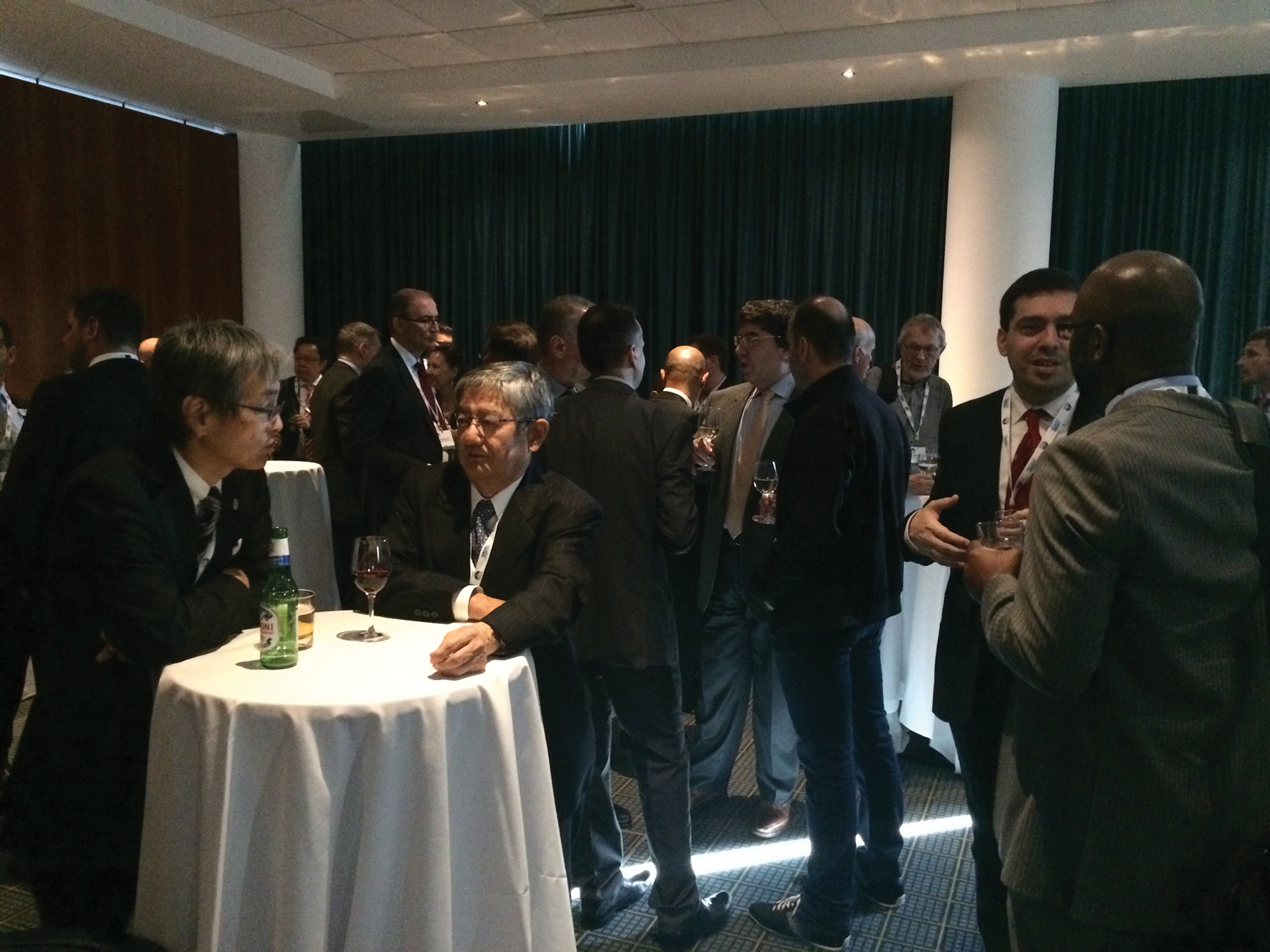
CROES investigators meeting.
The global percutaneous nephrolithotomy study is the first CROES project and can be considered a great success, with data from 5803 patients treated in 96 centers. The dataset provides significant insight into academic and community practice and covers all spectrums from high to more restricted volume centers. 1 In total, 27 articles have been published in the Journal of Endourology, Journal of Urology, BJUI, European Urology, Urology, CUAJ, SJUN, Urologia Internationalis, and World Journal of Urology.
Three other CROES projects are currently under analysis. The ureteroscopy (URS) Global Study 2 is the largest prospective database of patients treated with URS to be reported to date. The results reflect the routine clinical treatment of patients with a variety of indications for URS, and thus represent the use of this technique in a “real life” scenario. The first eight articles have been accepted for publication. These articles provide us with insight into, for example, the role of case volume, postoperative infection rates, and the use of an access sheath. There were four posters presented at the WCE meeting on the CROES URS study. We would like to thank Dr. Rioja, Dr. Kandasami, Prof. Traxer, and Prof. Martov for presenting the results of this study. Presently, we are working on future articles on postoperative stenting, complications, and ureteroscopy in children.
The Renal Mass study 3 includes data from 4485 cases in 98 centers. In this prospective study, we aim to assess on a global basis the indications, treatment modality, and outcomes of instrumental treatment for renal masses, including radical or partial nephrectomy and ablative treatments.
The first article on current patterns of presentation and treatment of renal masses has been published in the Journal of Endourology. The second article on prediction of renal mass aggressiveness has been accepted for publication in BJUI. The third article will focus on reassigning tumor stage according to TNM 2009 and will be submitted soon. Also, there are articles on preparation on gender disparities and cT1a vs >cT1a.
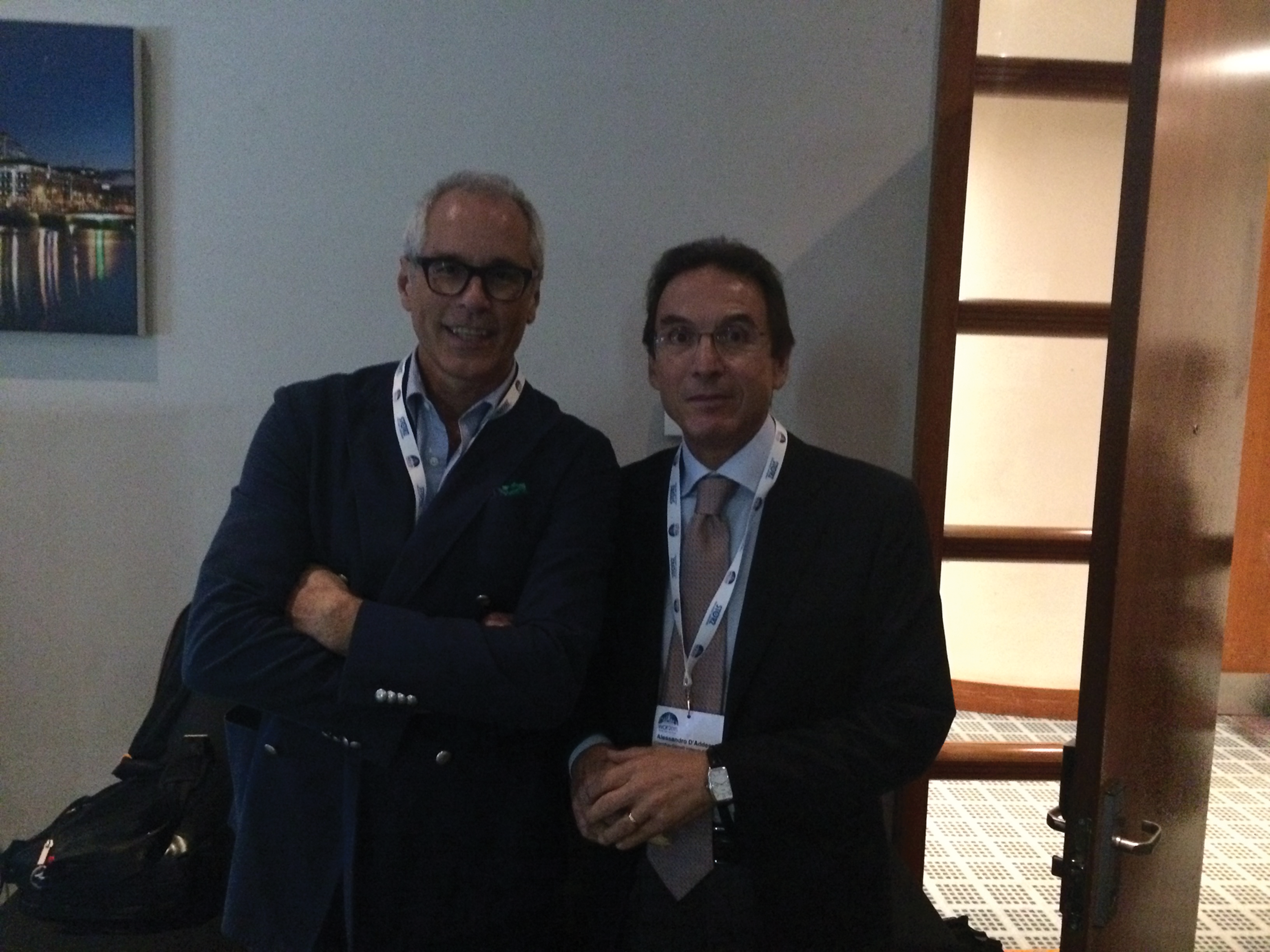
CROES investigators meeting.
In the Global HPS study, 4 the indications and outcomes of HPS green light laser treatment for benign prostatic hyperplasia are studied. This study was closed in April 2012 and 25 centers have included more than 713 patients. The first article “The Clinical Research Office of the Endourological Society (CROES) Global GreenLight Laser Study: Baseline Characteristics in a Contemporary Series of 713 Patients” has been accepted for publication in the International Journal of Urology. We are currently preparing a second article on the differences between green light laser and transurethral resection of the prostate, and the lessons that can be learnt from this study.
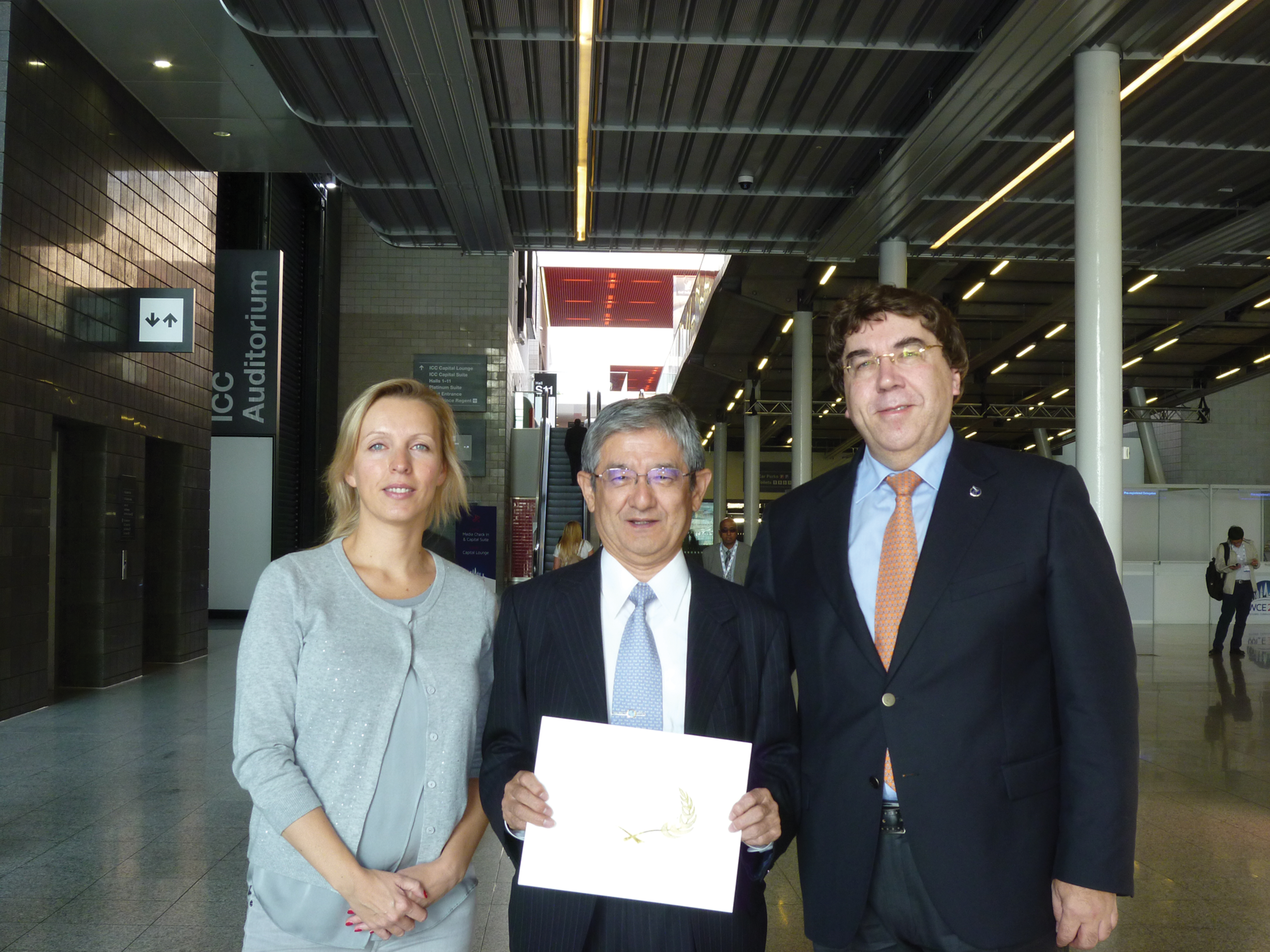
Award for best article CROES NBI Study. NBI, narrow band imaging.
The first randomized study, comparing the use of narrow band imaging (NBI) in addition to white light cystoscopy in the treatment of nonmuscle invasive bladder cancer, 5 is completed with a1-year follow-up. There are 26 centers worldwide that have participated in this project and they have included 965 patients. This large, prospective, multicenter, randomized clinical trial (RCT) conducted in nonmuscle-invasive bladder cancer (NMIBC) included only patients with primary tumors, in contrast to earlier studies that included patients with primary NIMBC as well as those with recurrent disease. The first article on the trial protocol and the 1-year results has been submitted. We observed no overall difference in tumor recurrence at 12 months. However, a clear benefit of decreased tumor recurrence at 12 months was observed in patients with low-risk NMIBC (pTa, Grade 1, <30 mm, and no CIS) who underwent NBI-assisted transurethral resection of bladder tumor (TURBT) compared with those treated by the current standard approach. The poster on this study presented at the WCE by Prof. Naito has been granted with an Olympus award for the best article, which we feel is a great achievement.
CROES has initiated four new projects this year. We have started with an RCT on IRE entitled “A Multi-Center Randomized Single-Blind Two Arm Intervention Study Evaluating Irreversible Electroporation for the Ablation of Prostate Cancer.” 6 With this phase II clinical trial, hemiablation will be compared to total ablation with IRE in patients with unilateral low- to intermediate-risk prostate cancer. The RCT is a phase II study assessing the safety and efficacy of IRE. The first patient has been included in this RCT on July 13. Eight European centers are participating to reach the sufficient sample size of 200 patients.
Second, a registry on IRE has been launched. The registry aims to cover all prostate cases treated by IRE on a global basis. CROES welcomes colleges to join the IRE registry and thus collect real-life data on IRE treatments. With their help, we will be able to obtain insight into indications and outcomes and learn from that. Moreover, those colleges will be able to receive feedback from their outcomes compared to performances from other colleagues.
A second RCT has been initiated this year, “The Spies Non-Muscle-Invasive Bladder Cancer Study—A Multicenter Randomized Controlled Study.” 7 This study is a multicenter randomized controlled trial, in which the recurrence rates of bladder carcinoma between Storz Professional Image Enhancement System (SPIES)-assisted and White Light Imaging (WLI)-assisted transurethral resection of the bladder (TURB) are compared. Short- and long-term follow-up will be recorded to evaluate the health gains for patients over a longer period. Perioperative (30 days) complications will be compared between the two treatment arms to evaluate the safety of SPIES. We currently have 15 centers that are joining this study, and the first patient was included in April 2015. Each center willing to participate should have enough experience and be familiar with SPIES. A center is considered to have enough experience when a minimum of 10 to 20 procedures have already been done with SPIES before including patients in this study.
The fourth new project is the “Croes Registry For Treatment Of Upper Urinary Tract Tumours—A Multi-Center, International Registry to evaluate the treatment of Upper Tract Urothelial Cancer: Incidence, Indications, Treatment types and Outcomes.” 8 Candidates for this study include those patients treated by open, laparoscopic, robotic nephroureterectomy or segmental resection of ureter tumors. We currently have about 200 centers that have expressed their interest, and we welcome everybody to join us in this endeavor. According to the CROES methodology, all participating centers worldwide are expected to include all patients they treat for urinary tract transitional-cell carcinoma (UT-TCC) over a 5-year period and to provide follow-up data up to 5 years; the caseload is not a participation criteria as it is felt to be a potential source for further clinical information.
We would like to emphasize that everybody is invited to bring in new ideas. These can be on subjects for analysis, on newsletters, or on new projects. We invite all members of the CROES network to actively work with us and let us know their thoughts. You can always contact us through
Last but not least, at the CROES investigators meeting we have announced the new chair of CROES. After 8 years, the term of Jean de la Rosette will end in 2016 and we are very proud to introduce Olivier Traxer to succeed him. Jean de la Rosette would like to thank everybody involved for their support, especially the Endourological society, the CROES council, all members of the steering committees, and the editors of the Journal of Endourology for making CROES a success. Most of all, he would like to thank all investigators for without their support and altruism, this would not have been possible. We are confident that an attractive network is created, in which every urologist is welcome to participate and in which it has created an easy way to take part in multicenter studies.