




Abstract
Background and Purpose:
Modern flexible ureteroscopes (fURSs) have good deflection, but despite this, approaching an acute angled calix can still be difficult. The goals of our in vitro study were to assess the ability of the available modern fURSs to effectively access the sharp angled calices and to compare the end-tip deflection of the various fiber-optic and digital fURSs.
Materials and Methods:
Using a bench-training model for FURS (K-Box, Porgès-Coloplast), we tried to access an acute angled calix with nine different fURSs (BOA vision, COBRA vision, R.Wolf; FLEX X2, FLEX Xc,
Results:
While all fiber-optic fURSs (except URF-P6) were able to access the sharp angled calix, none of the digital fURSs (except FLEX Xc) reached the difficult angled calix. Similarly, all fiber-optic fURSs had better end-tip deflection compared with the digital fURSs, except FLEX Xc, which was as deflectable as the fiber-optic fURSs. The fURSs showed an end-tip deflection (median difference of almost 21°) in favor of fiber-optic fURSs. Based on the scoring, the highest ranked fURS (best deflection) was FLEX X2 and the lowest ranked fURS (worst deflection) was URF-V2.
Conclusions:
Digital fURSs were less effective in accessing the sharp angled calix and they had lesser end-tip deflection compared with the fiber-optic counterparts. When approaching a difficult lower pole calix, it might be better to use a fiber-optic fURS.
Introduction
D
The miniaturization of the image sensors (CCD or CMOS) led the way for the digital fURSs. Although initially their shafts had larger diameters than the fiber-optic counterparts, currently digital and fiber-optic fURSs have relatively similar shaft sizes, with a small advantage in favor of fiber-optic ones.
Integration of the light source and chip on the tip camera technology made digital fURSs lighter and easier to handle, as they do not require a separate light cord or a camera head. They also provide better image quality in conjunction with zooming capabilities and integrated image processing systems, such as S-Technologies/SPIES (Karl Storz) and NBI (Olympus).
These developments led to a decrease in usage of fiber-optic fURSs, since their main advantage remains perhaps just the acquisition and repair cost. Nevertheless, due to their slightly smaller shaft size, other benefits of the fiber-optic fURSs, especially when ureteral access sheaths (UASs) are not used, are considered to be an easier access through narrow ureters and maybe slightly lower intrarenal pressure. 6
Despite their excellent capabilities, in our clinical practice we identified a potential disadvantage of some digital fURSs. In cases with sharp angled lower pole calices, sometimes access was not possible using digital fURSs due to the limited deflection of the distal few centimeters (cm), which we defined as end-tip deflection. When the same calix was approached with a fiber-optic fURS, the access was effective in most cases. 5 The size of the digital fURS camera chip seems to have an impact on end-tip deflection. Currently, there are no available data in the literature about this issue. With this in mind, the primary goal of our study was to assess the ability of the available modern fURSs to effectively access the sharp angled calices. Our secondary endpoint was to compare the deflection of the last 4 cm of the fURS tip and to define the fURSs that had better end-tip deflection.
Materials and Methods
Nine contemporary fURSs were used for the study. Of those, three were fiber-optic (FLEX X2; Karl Storz, URF-P5, URF-P6; Olympus) and six were digital (BOA vision, COBRA vision; Richard Wolf, FLEX Xc; Karl Storz, LithoVue; Boston Scientific, URF-V, URF-V2; Olympus). All the fURSs were reusable, except the novel single-use LithoVue. 7 Although the fURSs were not new, they were in good condition, without any deflection loss. The main characteristics of the fURSs are presented in Table 1.
fURS = flexible ureteroscope.
K-Box (Coloplast), a validated FURS training model, 8,9 was used for the primary goal of the study. The inanimate model consists of four boxes made of acrylic base and polycarbonate plastic removable cover (Fig. 1). Each of them contains different tracks and cavities, which partially resemble the urinary tract, designed for teaching purposes with the aim of practicing the entire spectrum of FURS maneuvers.
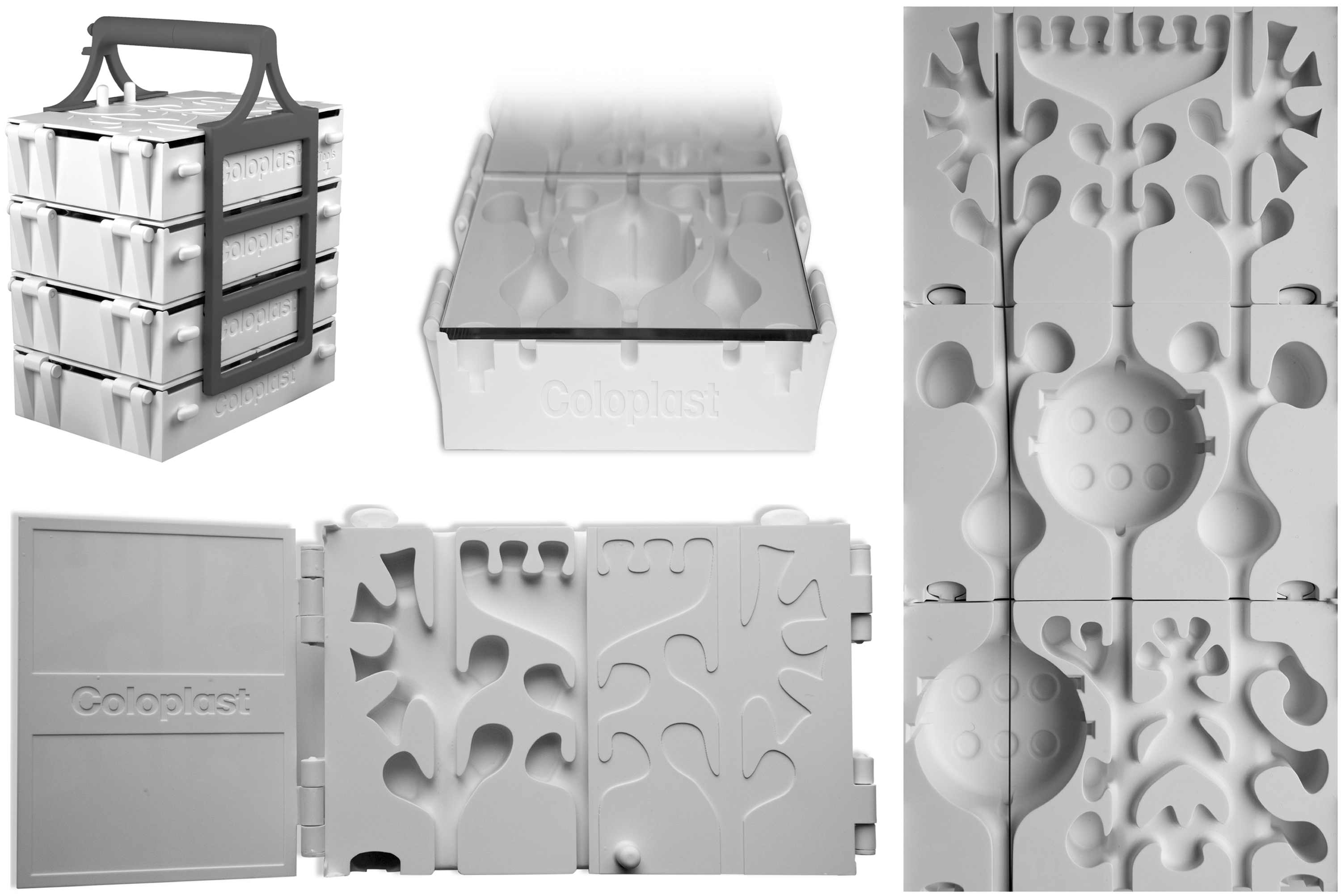
The K-Box, inanimate training model for FURS.
To assess the ability of each fURS to reach a sharp angled calix, we identified an acute angled cavity in the K-Box and we attempted to access it with all available fURSs. All attempts were performed by a single surgeon (fellowship trained in FURS). When access was not effective, a more experienced endourologist was asked to repeat the procedure.
Our secondary goal, the end-tip deflection comparison, was evaluated by passing each fURS through a 10/12F UAS, ReTrace (Coloplast). The maximum end-tip deflection for every fURS was measured with the tip extended out from the UAS at 1-, 2-, 3-, and 4-cm intervals. Due to its larger shaft caliber, for the COBRA vision a 12/14F UAS (ReTrace, Coloplast) was used. Measurements were performed using a ruler and a 180° protractor.
We tried to report a hierarchy of the fURSs regarding the end-tip deflection. Besides the simple assessment based on the ability to access the difficult lower pole on K-Box trainer, we designed two scoring systems. The first ranking method relied on scoring these nine fURSs from one to nine for each of the distal 4 cm, in which the sum total of all scores (at point 1, 2, 3, and 4 cm) was added to give a final score (Supplementary Table S1; Supplementary Data are available online at
Results
All fiber-optic fURSs (URF-P5, FLEX X2) except the URF-P6 were able to access the sharp angled calix (Fig. 2). On the contrary, none of the digital fURSs reached the specific calix, except for the FLEX Xc (Fig. 3). All fiber-optic fURSs had better end-tip deflection compared with the digital ones with the exception of FLEX Xc, which had end-tip deflection similar to the fiber-optic fURSs (Table 2).
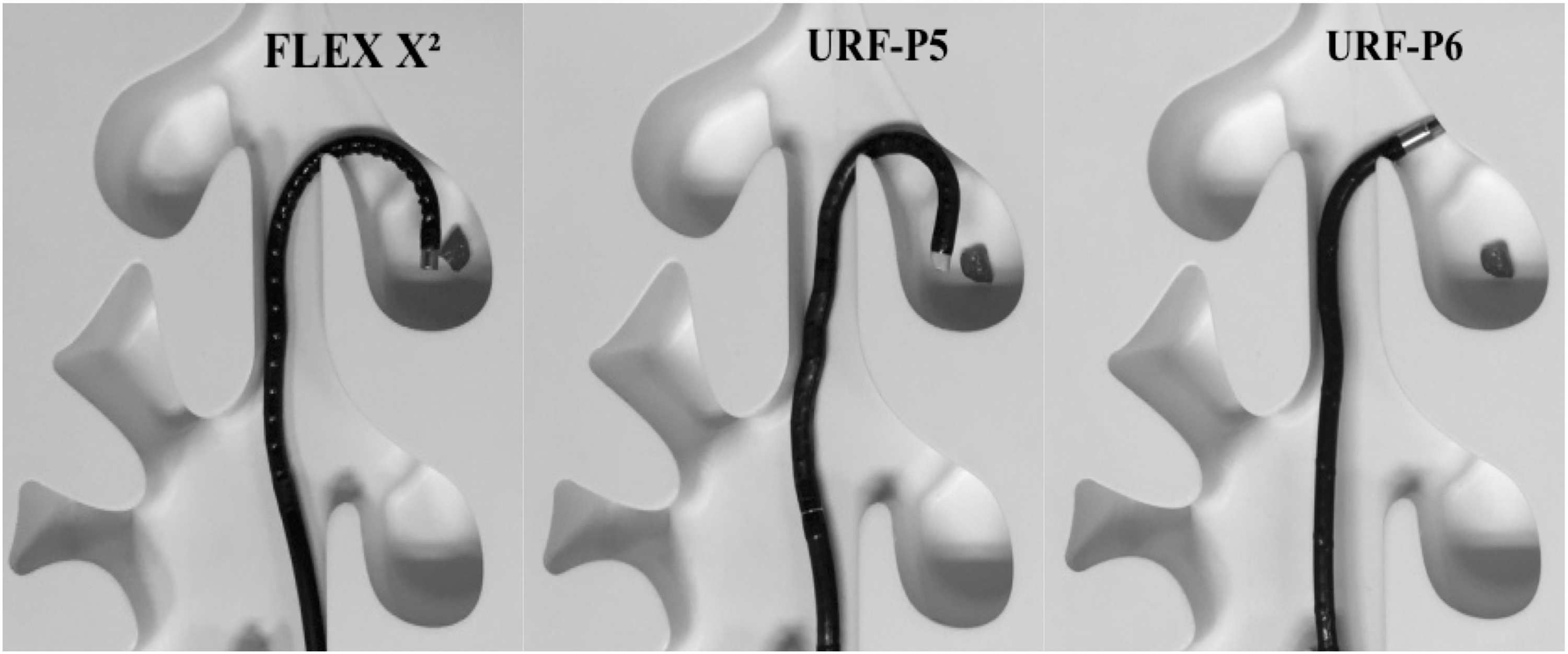
Fiber-optic fURSs in the K-Box.

Digital fURSs in the K-Box.
The results cannot be statistically interpreted due to the low number of fURSs that were available for comparison and the large standard deviation. Nevertheless, regarding the end-tip deflection, a constant difference of ∼21° (median difference 21.04° ± 2.58°) was present in favor of the fiber-optic fURSs, all along the first 4 cm from the tip of the ureteroscopes (Table 3 and Fig. 4). The highest end-tip deflection was always achieved by a fiber-optic fURS, in which during the first 3 cm FLEX X2 had continuously the highest deflection, while on the 4th cm URF-P5 was better (Fig. 5 and Table 2). The lowest end-tip deflection was observed on digital fURSs at all times, in which during the first 3 cm URF-V2 had always the lowest deflection, while on the 4th cm URF-V had the lowest deflection (Fig. 5 and Table 2). The degree of difference between the fiber-optic and digital fURSs was greatest at points 2 and 3 cm from the tip, whereas this was lowest at 1 and 4 cm from the tip (Fig. 6).
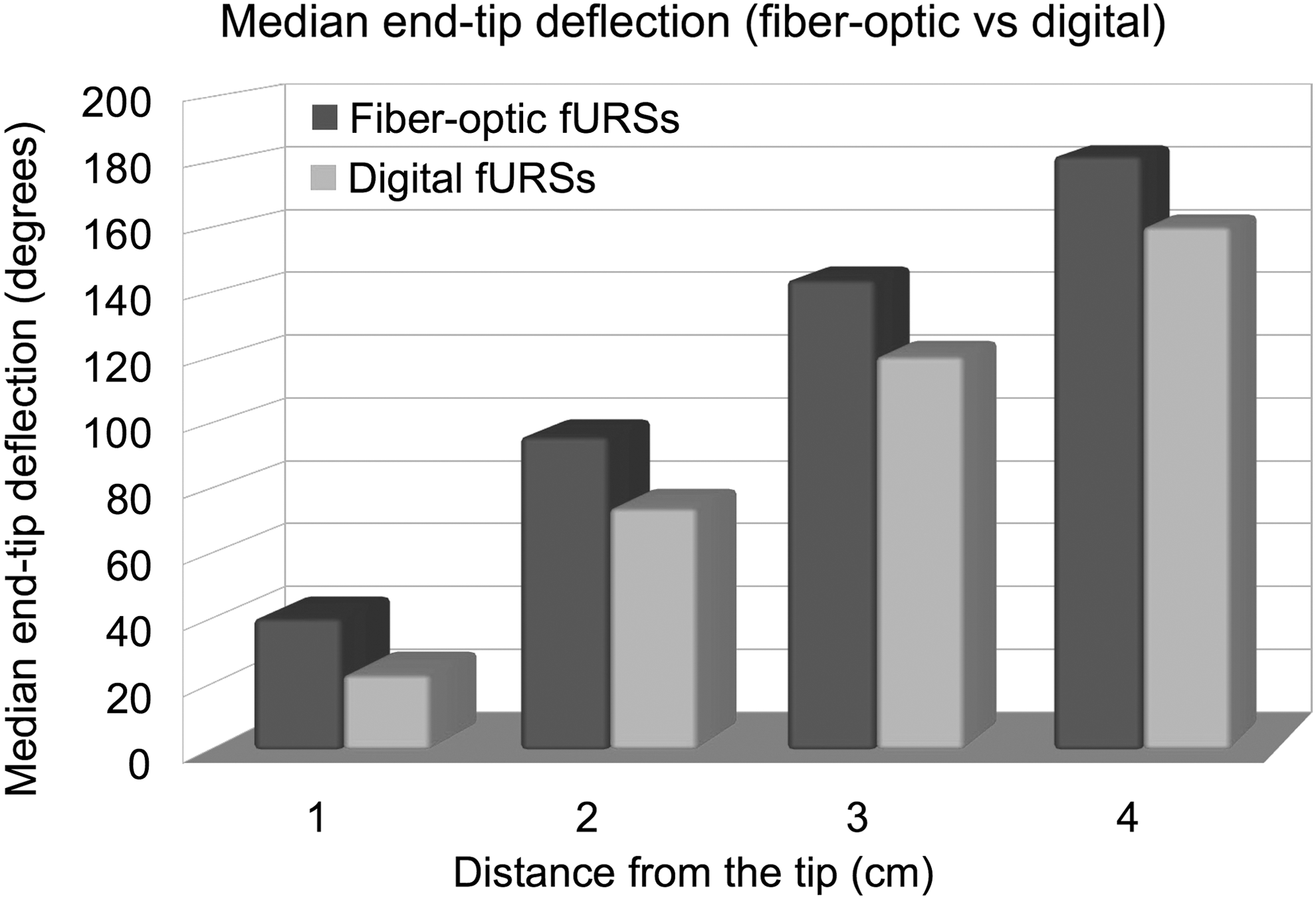
Fiber-optic versus digital fURSs. Comparison of median end-tip deflection.

Highest versus lowest end-tip deflection; all fURSs.
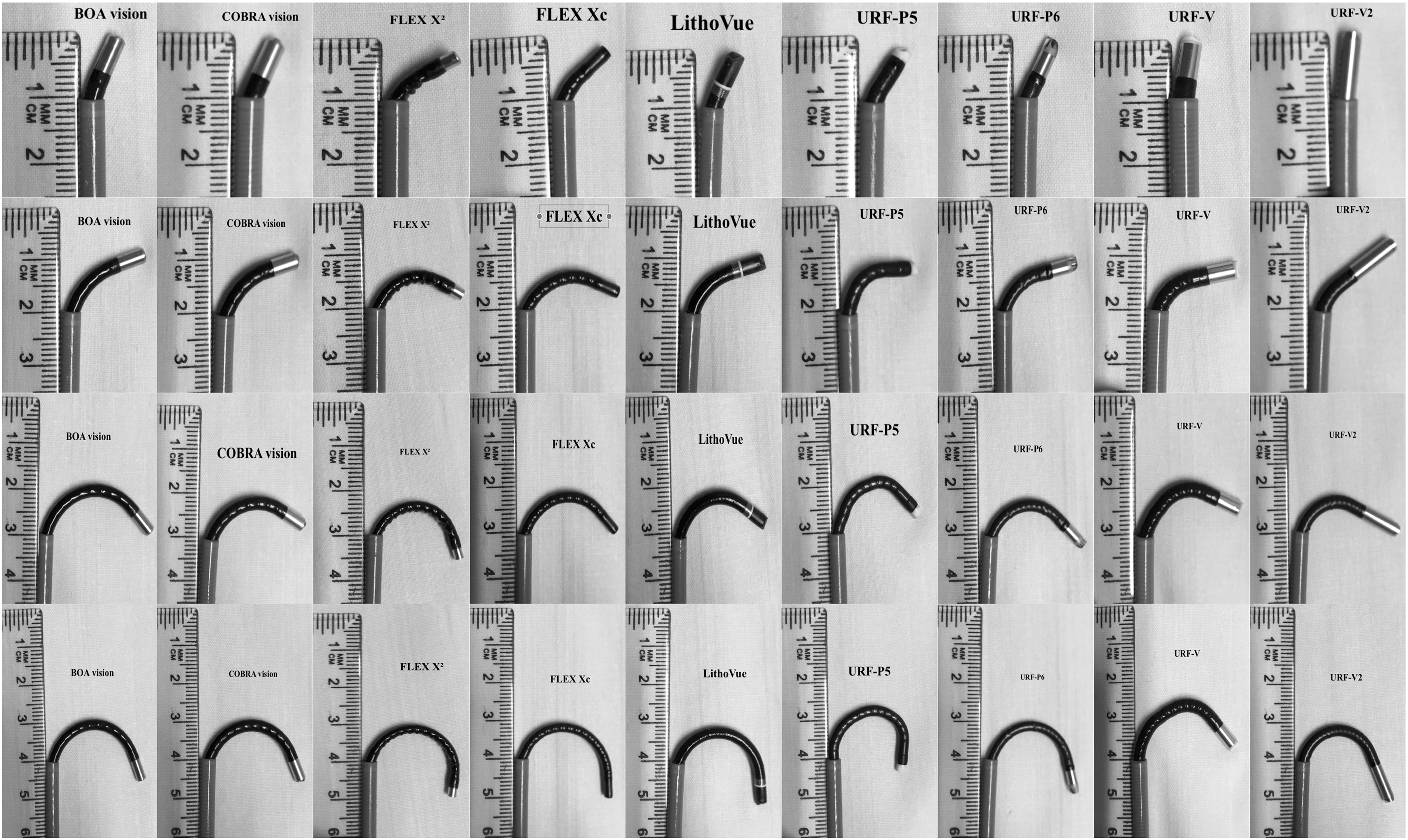
The maximum end-tip deflection; fURSs with the tip extended out from the UAS at 1-, 2-, 3-, and 4-cm intervals; all fURSs.
The fURSs hierarchy regarding the end-tip deflection capabilities was reported using both scoring systems (Figs. 8 and 9). While five fURSs had exactly the same ranking based on the scores achieved, four other fURSs were ranked slightly differently with the difference being a maximum of one rank only. While FLEX X2, URF-P6, COBRA vision, URF-V, and URF-V2 ranked first, fourth, seventh, eighth, and ninth, respectively, in both scoring systems, FLEX Xc and URF-P5 ranked second/third and third/second, respectively, based on the scoring systems; BOA vision and LithoVue ranked fifth/sixth and sixth/fifth, respectively, based on the scoring systems (Supplementary Table S3).
Regarding end-tip deflection, highest ranked scope was FLEX X2 and lowest URF-V2, irrespective of the scoring method (Figs. 8 and 9).
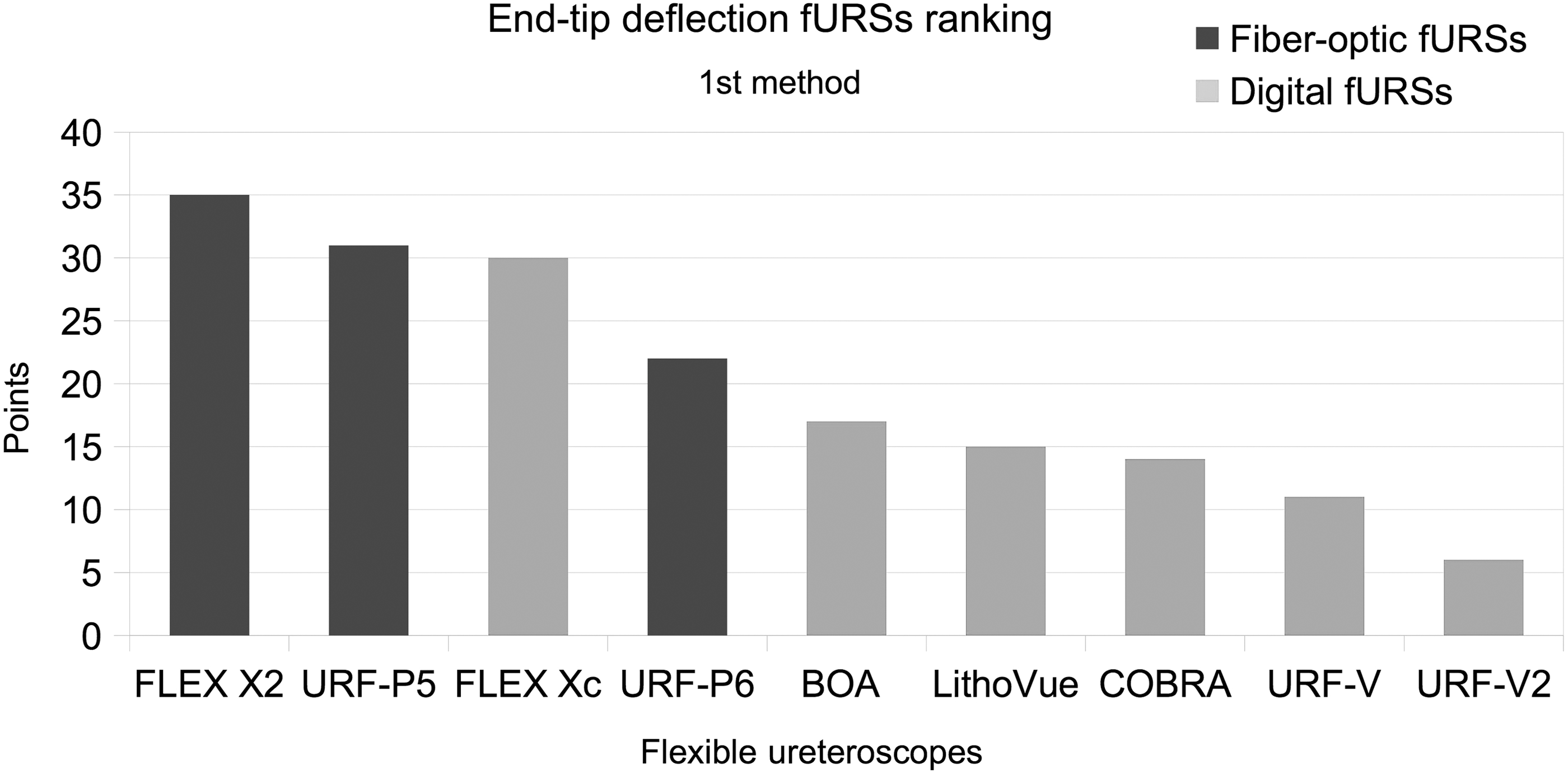
First ranking method (scoring system to rank end-tip deflection of fURSs).
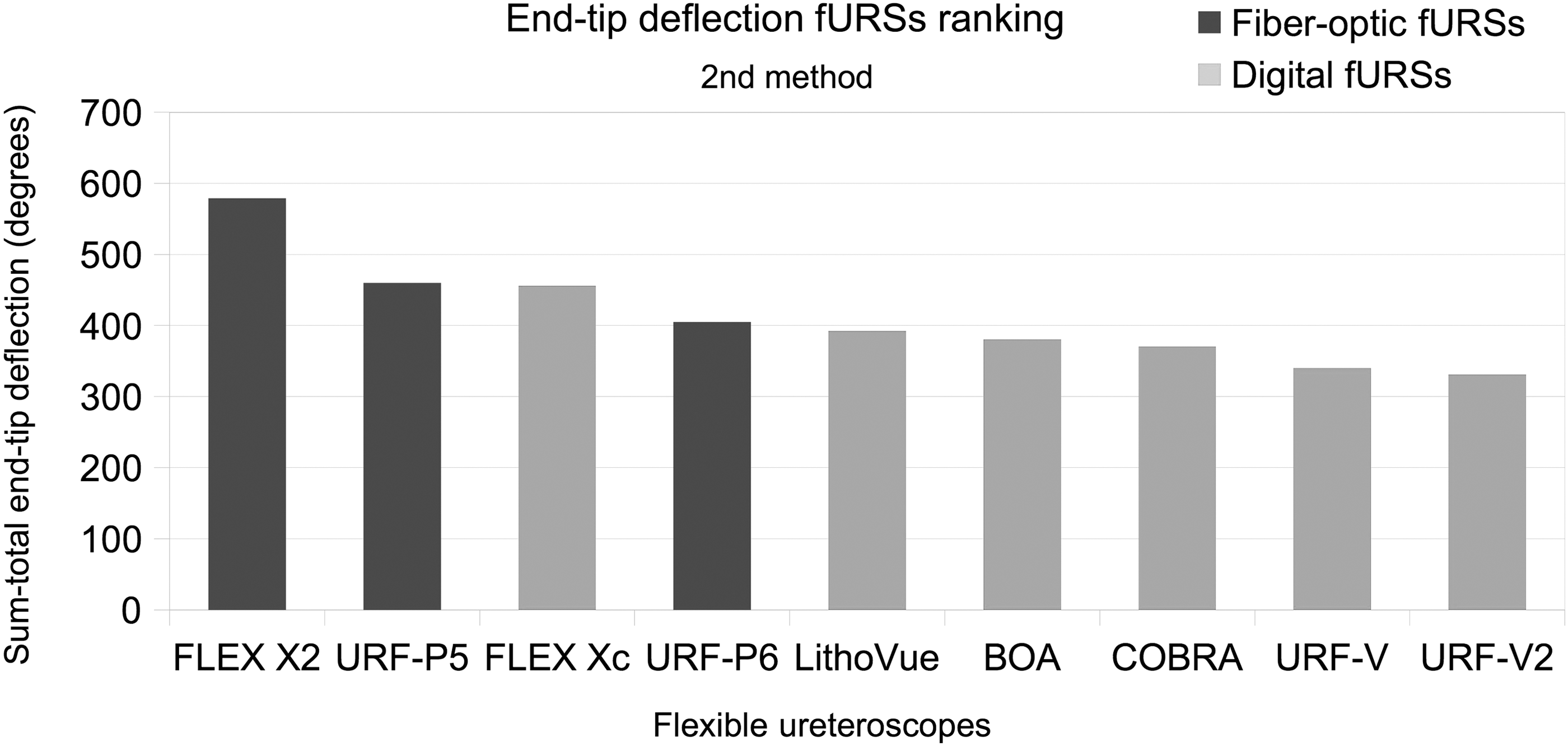
Second ranking method (scoring system to rank end-tip deflection of fURSs).
Discussion
The endourologists must be well aware of the properties and capabilities of the fURSs to ensure effective procedures. Nowadays, a wide variety of fiber-optic and digital fURSs are available, with different properties, cost, and durability. The multitude of factors impacting the fURS usability, such as tip and shaft diameter and shape, tip configuration, shaft rigidity, active and passive deflection capabilities, were thoroughly evaluated. A vast amount of studies were published on these issues. For the first time, the fURS ability to reach a sharp angled calix was tested on the validated K-Box bench model, 8 reducing the element of procedural bias.
Our study showed that fiber-optic fURSs have better end-tip deflection than digital ones. The association between better end-tip deflection and effective calix access was obvious. While most fiber-optic fURSs (except URF-P6) were able to access the sharp angled calix, only one digital fURS (FLEX Xc) was able to access it. The fURSs showed a constant end-tip deflection median difference of almost 21° in favor of fiber-optic ones along the distal 4 cm, and this was seen at all points (1, 2, 3, and 4 cm). This is important and should guide the fURS choice for endourologists when dealing with a difficult angled calix.
A previous prospective comparison of fiber-optic and digital fURSs revealed a higher failure rate of access in the lower pole calix when comparing the Olympus fiber-optic URF-P5 and the digital URF-V counterpart from the same manufacturer. 5 Both fURSs have comparable deflection properties although the diameter of scope is understandably higher for the digital fURS due to the chip on the tip technology. However, the same study also showed that digital fURSs offered significant reduction in the operative times for matched patient cohorts.
Lately, disposable single- or multiple-use fURSs have emerged as a viable option. 10 PolyScope (Lumenis) offers a 265° deflection, which is unidirectional. SemiFlex Scope (Maxiflex) is a disposable multiple-use fURS that offers 270° bidirectional deflection, with sterilization needed for decontamination. 7 The new LithoVue digital single-use disposable fURS offers 270°bidirectional deflection with visibility and overall characteristics broadly comparable to the conventional fURSs. 11,12 The cost of the disposable fURSs will need to be balanced with the cost of sterilization, scope breakages, risks of potential contamination and infections. 13 Similarly, refurbished fURSs with a higher potential for further breakages might be less attractive than a new disposable digital quality fURS, although no data are available in the literature.
The superior ability of a fiber-optic fURS, compared with a digital one, to access difficult lower pole calices and subsequently the importance of end-tip deflection was shown in a study that evaluated LithoVue, URF-P5, and URF-V in human cadaveric models. 11 Although it was not the endpoint of the study, it was noted that access of the lower pole calix with the reusable digital fURS was not possible in two cases, without the UAS.
It seems reasonable to assume that the main factors which might influence the end-tip deflection are the size (especially the length) of the camera chip and the shaft rigidity. The length of the undeflectable end-tip segment depends also on the distal assembly holding the camera chip. Nevertheless, other not yet identified elements may play a role. Interestingly, we observed that increased shaft rigidity was not always associated with inferior end-tip deflection capabilities. Although this is not a quantitative measure, as it can be easily observed in the images (Fig. 7), the single-use LithoVue has the most rigid shaft. Despite this, from all the compared digital fURSs, its end-tip deflection was only clearly surpassed by FLEX Xc. LithoVue achieved better deflection than COBRA vision, URF-V, or URF-V2 and reached almost the same deflection as BOA vision for the first 3 cm, but it was superior to BOA vision in the final 4th cm (Table 2).
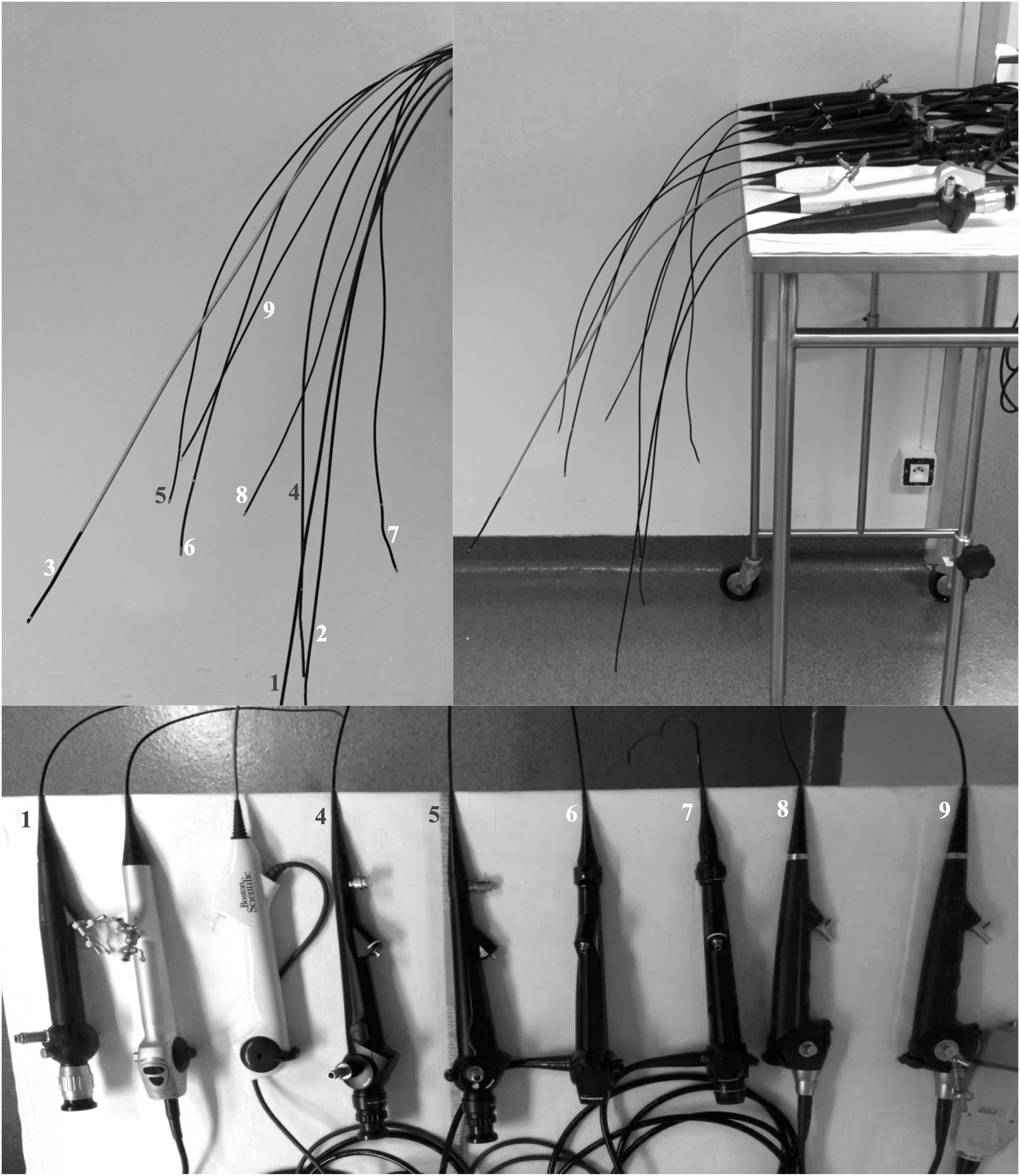
Shaft rigidity. All fURSs were aligned on the edge of the table, placed at the point where the shaft emerges from the handle. fURS numbers: 1, FLEX X2; 2, FLEX Xc; 3, LithoVue; 4, URF-P5; 5, URF-P6; 6, URF-V2; 7, URF-V; 8, BOA vision; 9, COBRA vision.
Regarding the size of the camera chip, we were not able to properly evaluate its impact on the end-tip deflection since the fURS manufacturers did not provide us the exact dimensions of the chip and the distal assembly holding the camera chip. It seems that, at least for the moment, they are not keen to share this information.
The angle of deflection and the irrigant flow rate are also influenced by instrumentation used through the fURS working channel. A previous study conducted more than a decade ago comparing five different fURSs showed that the best tip deflection and light output was achieved with ACMI and Karl Storz fURSs. 14 A more recent study evaluating 200 μm laser fibers from various companies showed that fURS deflection was different when using laser fibers of same diameter from different manufactures, 15 suggesting that in clinical practice the characteristics of the ancillary equipment used through the working channel of the fURS play a significant role. One interesting study showed that despite manufacturers report similar laser fiber size, in reality the overall size of the fiber is different. 16 Another article reporting on different varieties of 200 μm and 273 μm laser fibers across eight different fURSs concluded that deflection was least affected by sheath-coated fibers and most by the 273 μm laser fiber. 17
The tip deflection is an important property of fURSs, but other useful considerations include diameter of the shaft, channel size, secondary deflection, angle and field of view, depth of field, and zoom capabilities. 18 Last but not least, an equally important factor is the cost of purchase and scope repairs associated with the usage, which can have significant cost implications for performing these procedures and the selection of the fURSs.
Limitations and areas of future research
This was an in vitro study of different fURSs conducted on a bench trainer model. Our study does not take into account the cost of fURS purchase and repair, visual characteristics, or other capabilities such as zoom in features. To measure these features accurately, prospective multicentric studies (ideally randomized) using a larger cohort of patients will need to be conducted in future. This will ensure that fURSs with most flexibility and user friendliness both in terms of their performance and cost will evolve and gain clinical acceptability.
As a continuation of our study, it would be of clinical value to further evaluate the fURS end-tip deflection and the ability to reach sharp angled calices when the working channel is occupied with different tools, such as laser fibers, stone retrieval baskets, or biopsy devices.
A better way of assessing the fURS capacity to access sharp angled calices, especially difficult lower pole ones, might be to perform studies on human cadaveric models.
Methods for using the end-tip deflection values as a tool for preassessing the capacity of the fURSs to access specific calices might be developed in the future, but further studies are required. It would be relevant to see if fURSs with good end-tip deflection perform better when approaching a caliceal diverticulum or a horseshoe kidney where the ureteropelvic junction insertion is higher than in a normal kidney.
Other parameters, such as the bending radius of the tip, might be correlated with the fURS ability to reach sharp angled calices. It might be the case that a smaller bending radius can be associated with a more effective approach of the difficult calices. Future studies might be helpful.
The correlation between the size of the camera chip and the end-tip deflection could be a subject for an interesting evaluation in the future, if manufacturers will choose to communicate the necessary data. Nevertheless, developing a more precise measurement method to assess the length of the undeflectable end-tip segment, including the distal assembly that holds the camera chip, might provide useful information.
Conclusions
Digital fURSs were less effective accessing the sharp angled cavity on K-Box and their tip was less flexible on the last few centimeters, compared with the fiber-optic counterparts. Causes of these differences require further investigations. When approaching a difficult, sharp angled lower pole calix, it might be better to use a fiber-optic fURS. The novel concept of end-tip deflection may have an impact on the future development of fURSs. It might have a predicting value for effective access of sharp angled calices, but more studies are needed.
Footnotes
Author Disclosure Statement
Laurian B. Dragos, Emre T. Sener, Salvatore Butticè, Silvia Proietti, Achilles Ploumidis, Catalin T. Iacoboaie and Steeve Doizi: nothing to disclose. Bhaskar Somani: Consultant for Isiris system (Coloplast). Olivier Traxer: Consultant for Coloplast, Rocamed, Olympus, Lumenis, Boston Scientific, Biohealth, EMS.
Abbreviations Used
References
Supplementary Material
Please find the following supplemental material available below.
For Open Access articles published under a Creative Commons License, all supplemental material carries the same license as the article it is associated with.
For non-Open Access articles published, all supplemental material carries a non-exclusive license, and permission requests for re-use of supplemental material or any part of supplemental material shall be sent directly to the copyright owner as specified in the copyright notice associated with the article.
