




Abstract
Introduction:
Single-use ureteroscopes have been gaining popularity in recent years. We compare the optics, deflection, and irrigation flow of two novel single-use flexible ureteroscopes—the YC-FR-A and the NeoFlex—with contemporary reusable and single-use flexible ureteroscopes.
Methods:
Five flexible ureteroscopes, YC-FR-A (YouCare Tech, China), NeoFlex (Neoscope, Inc., USA), LithoVue (Boston Scientific, USA), Flex-Xc (Karl Storz, Germany), and Cobra (Richard Wolf, Germany), were assessed in vitro for image resolution, distortion, field of view, depth of field, color representation, and grayscale imaging. Ureteroscope deflection and irrigation were also compared.
Results:
The YC-FR-A showed a resolution of 5.04 lines/mm and 4.3% image distortion. NeoFlex showed a resolution of 17.9 lines/mm and 14.0% image distortion. No substantial difference was demonstrated regarding the other optic characteristics between the two. Across all tested ureteroscopes, single-use or reusable, the digital scopes performed best with regard to optics. The YC-FR-A had the greatest deflection at baseline, but lacks two-way deflection. The NeoFlex had comparable deflection at baseline to reusable devices. Both ureteroscopes had substantial loss of deflection with instruments in the working channel. The YC-FR-A had the greatest irrigation rate. The NeoFlex has comparable irrigation to contemporary ureteroscopes.
Conclusions:
The YouCare single-use fiberoptic flexible ureteroscope and NeoFlex single-use digital flexible ureteroscope perform comparably to current reusable ureteroscopes, possibly making each a viable alternative in the future. Newer YouCare single-use flexible ureteroscopes with a digital platform and two-way deflection may be more competitive, while the NeoFlex devices are undergoing rapid improvement as well. Further testing is necessary to validate the clinical performance and utility of these ureteroscopes, given the wide variety of single-use devices under development.
Introduction
F
Two novel single-use flexible ureteroscopes, which have been recently developed, include the YC-FR-A (YouCare Tech, China) and the NeoFlex (Neoscope, Inc.). The YC-FR-A is a newly released single-use flexible ureteroscope with a reusable fiberoptic core, while the NeoFlex is a single-use digital flexible ureteroscope currently under development. To provide the practicing urologist an evaluation of these two novel instruments, we compare the optical and technical performance of the YC-FR-A and NeoFlex to current-generation reusable and single-use flexible ureteroscopes.
Materials and Methods
Two novel single-use flexible ureteroscopes—YC-FR-A (YouCare Tech) and NeoFlex (Neoscope, Inc.) (Fig. 1)—were compared with three unused contemporary flexible ureteroscopes—LithoVue (Boston Scientific), Flex-Xc (Karl Storz, Germany), and Cobra (Richard Wolf, Germany). Technical specifications of the tested ureteroscopes are outlined in Table 1. The five ureteroscopes were assessed by a single investigator with assistance from listed colleagues; these were tested in vitro for image resolution, image distortion, depth of field, field of view, and color and grayscale representation. For each criterion, a single measurement was performed with each ureteroscope, and only one ureteroscope of each model was used for data acquisition. All visual data were acquired using a Storz imaging tower or the proprietary imaging platform of the individual single-use devices. Ureteroscopes were also assessed for deflection and irrigation flow rate with and without instruments in the working channel.
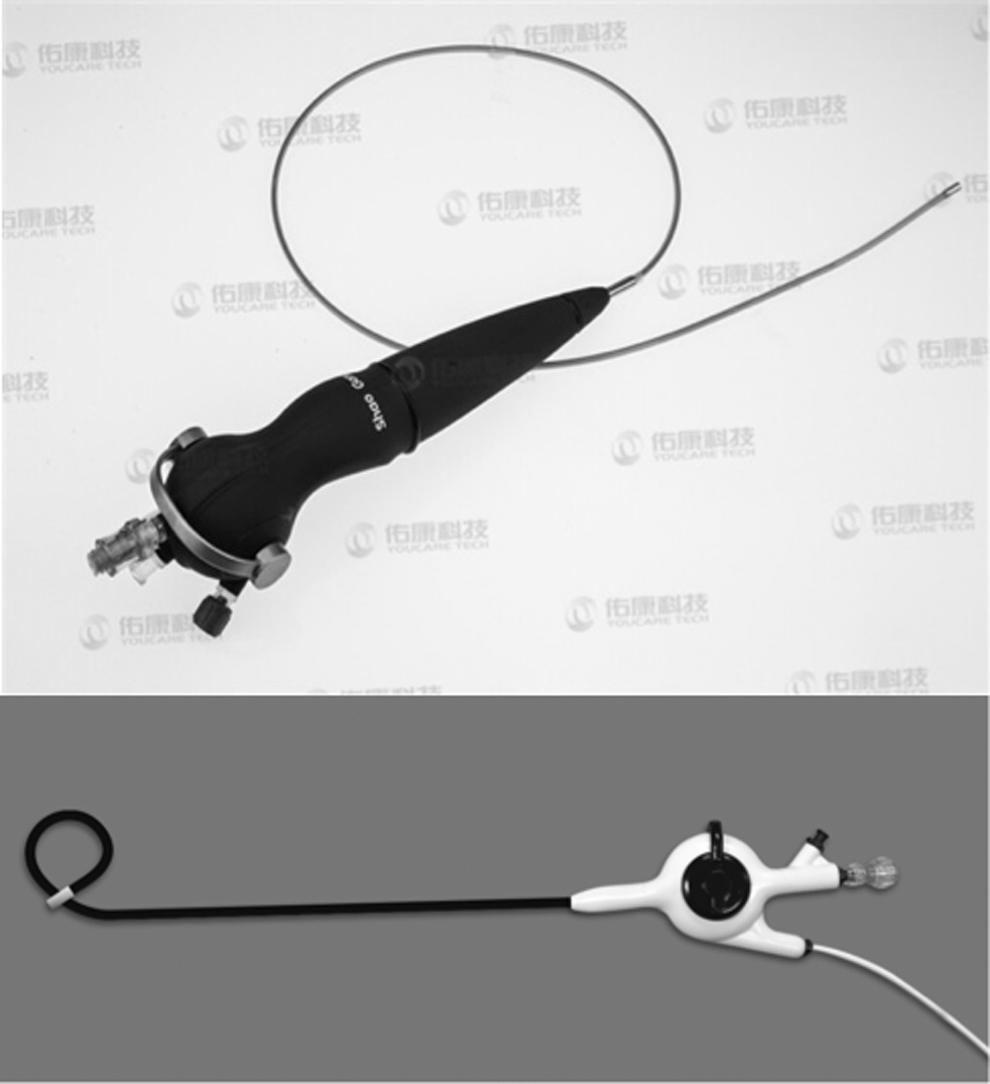
YouCare YC-FR-A (top) and NeoFlex (bottom).
Optic characteristics
Image resolution was determined by viewing a 1951 USAF Test Pattern Card at a distance of 3, 5, 10, and 20 mm with each ureteroscope. Resolution was recorded in line pairs per millimeter (line pairs/mm) and determined using a reference chart associated with the test target for the 10 mm distance. Distortion was determined by using a multifrequency grid distortion target and was calculated using the difference between the actual and theoretical dot location utilizing the following equation:
Depth of field was determined using the Edmund Optics depth of field test target. Field of view was determined using a multifrequency grid target. Color representation was determined using a Gretag Macbeth Color Checker target for light flash and red. Grayscale representation was determined using an ISO-14524 Camera Contrast Chart.
Deflection
Ureteroscope deflection was tested with an empty channel followed by placement of a 200 μm laser fiber and a 1.9F wire basket. Three deflections were measured with each ureteroscope with a neutral position reached between each measurement. The angle of deflection was determined by SolidWorks angle measuring software (Dassault Systèmes, France).
Irrigation flow rate
Irrigation flow rate was measured using physiologic saline at a height of 100 cm through an empty channel, channel with 200 μm laser fiber, and channel with 1.9F basket. Three trials were performed for each ureteroscope in each setting.
Statistical analysis
Measurements between the YC-FR-A and NeoFlex were compared using Student's T-test.
Results
Optical characteristics
The optical and functional characteristics of the five ureteroscopes are summarized in Table 2. The YC-FR-A showed a resolution of 5.04 lines/mm and 4.3% image distortion (Figs. 2 and 3). The NeoFlex showed the sharpest resolution of 10.1 lines/mm and an image distortion of 14.0%. Depth of field was comparable across the tested ureteroscopes. Field of view was similar across all tested ureteroscopes, except for a slightly smaller field of view for the Flex-Xc. No substantial difference was demonstrated in color reproducibility or in the discernment of grayscales between ureteroscopes (Fig. 4).
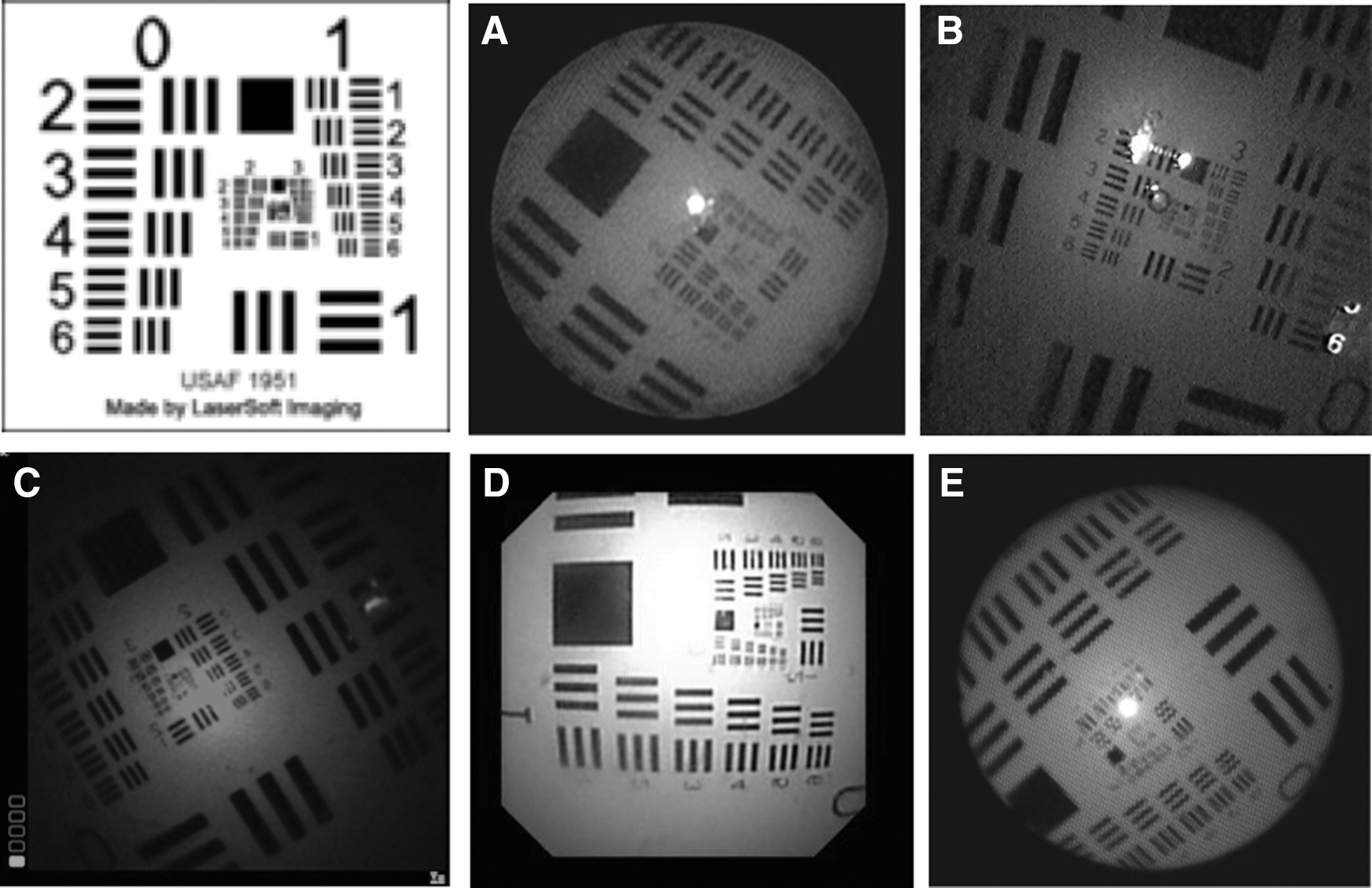
Image resolution at 10 mm using 1951 USAF Test Pattern Card.
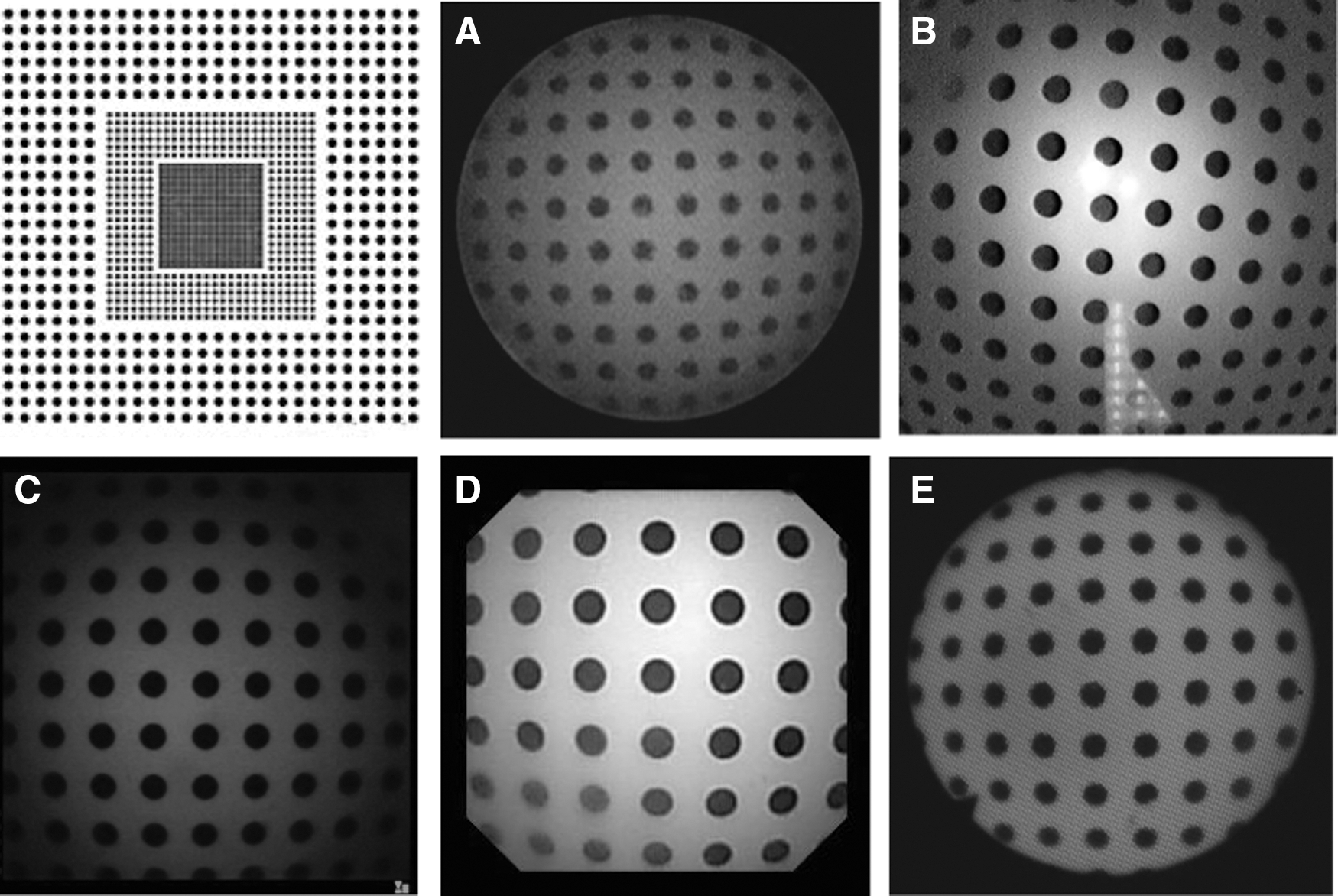
Image distortion measured using a multifrequency grid distortion target.
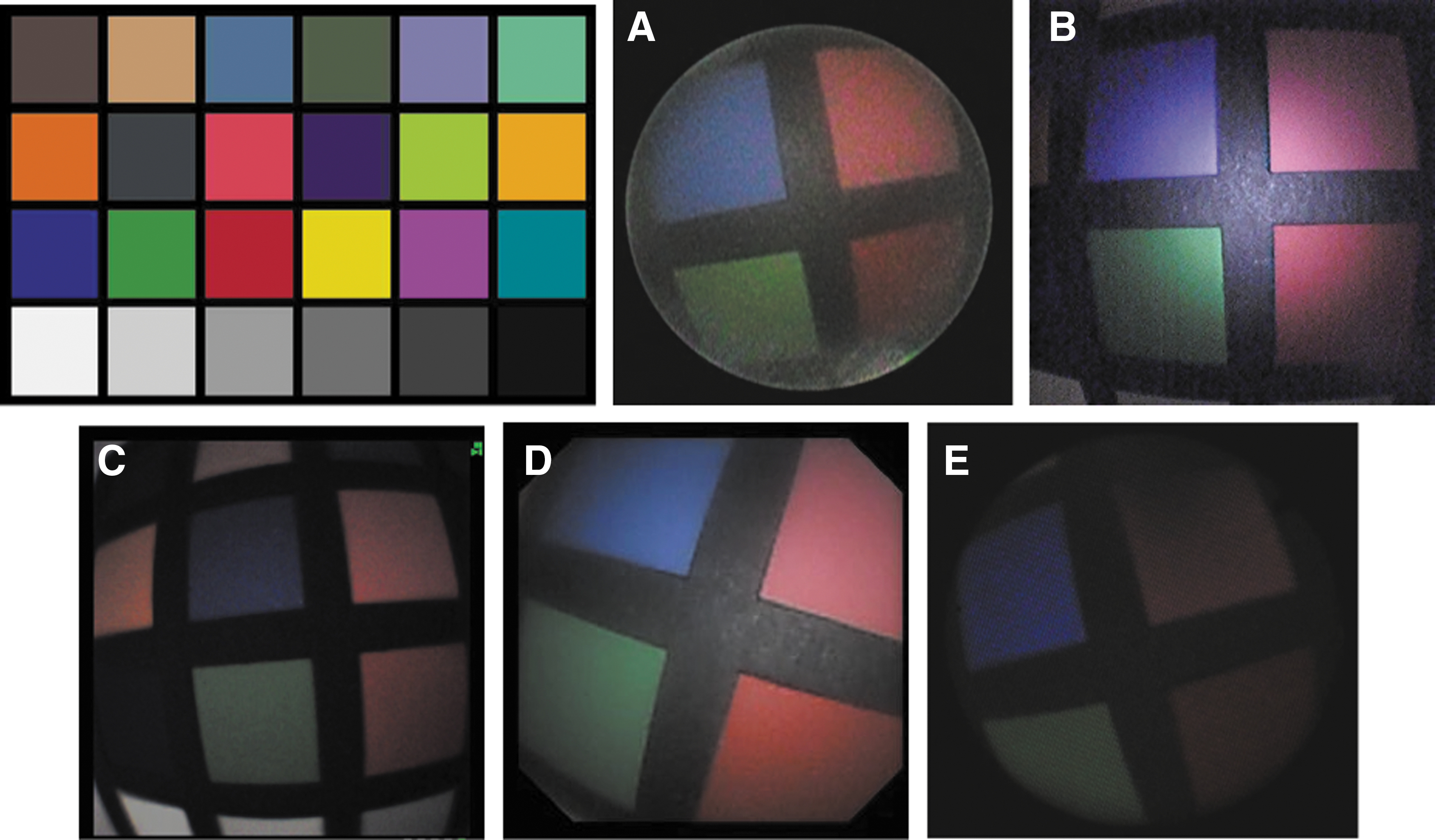
Color reproducibility using Gretag Macbeth Color Checker target.
Different from all other devices, p < 0.01.
Deflection
Deflection results are summarized in Table 3. The YC-FR-A had a one-way deflection of 339° at baseline, but lacks two-way deflection capability. With the introduction of a 200 micron laser or 1.9F basket in the working channel, there was a loss of deflection ranging from 17.7° to 31.3°. The NeoFlex features two-way deflection capability with a baseline upward deflection of 204° and downward deflection of 247°. With the addition of instruments in the working channel, there was an average loss of upward deflection ranging from 12° to 28°, but minimal change in downward deflection.
Different from all other devices, p < 0.01.
Different from all other devices, p < 0.05.
Irrigation flow rate
With an empty channel, the YC-FR-A showed a maximum flow rate of 59 mL/min, decreased to 28.7 and 16.7 mL/min with 200 micron laser fiber and a 1.9F basket in the working channel, respectively. With an empty channel, the NeoFlex showed a maximum flow rate of 40 mL/min, which decreased to 16 and 8 mL/min with the laser fiber and basket in the working channel, respectively. The YC-FR-A has a significantly higher flow rate than the NeoFlex for all tested conditions (p = 0.009, p = 0.0004, p = 0.0036, respectively). When compared with prior findings, 5 the YC-FR-A features the highest irrigation flow rate of contemporary reusable and single-use ureteroscopes, while the NeoFlex has a similar flow rate. Results are summarized in Figure 5.
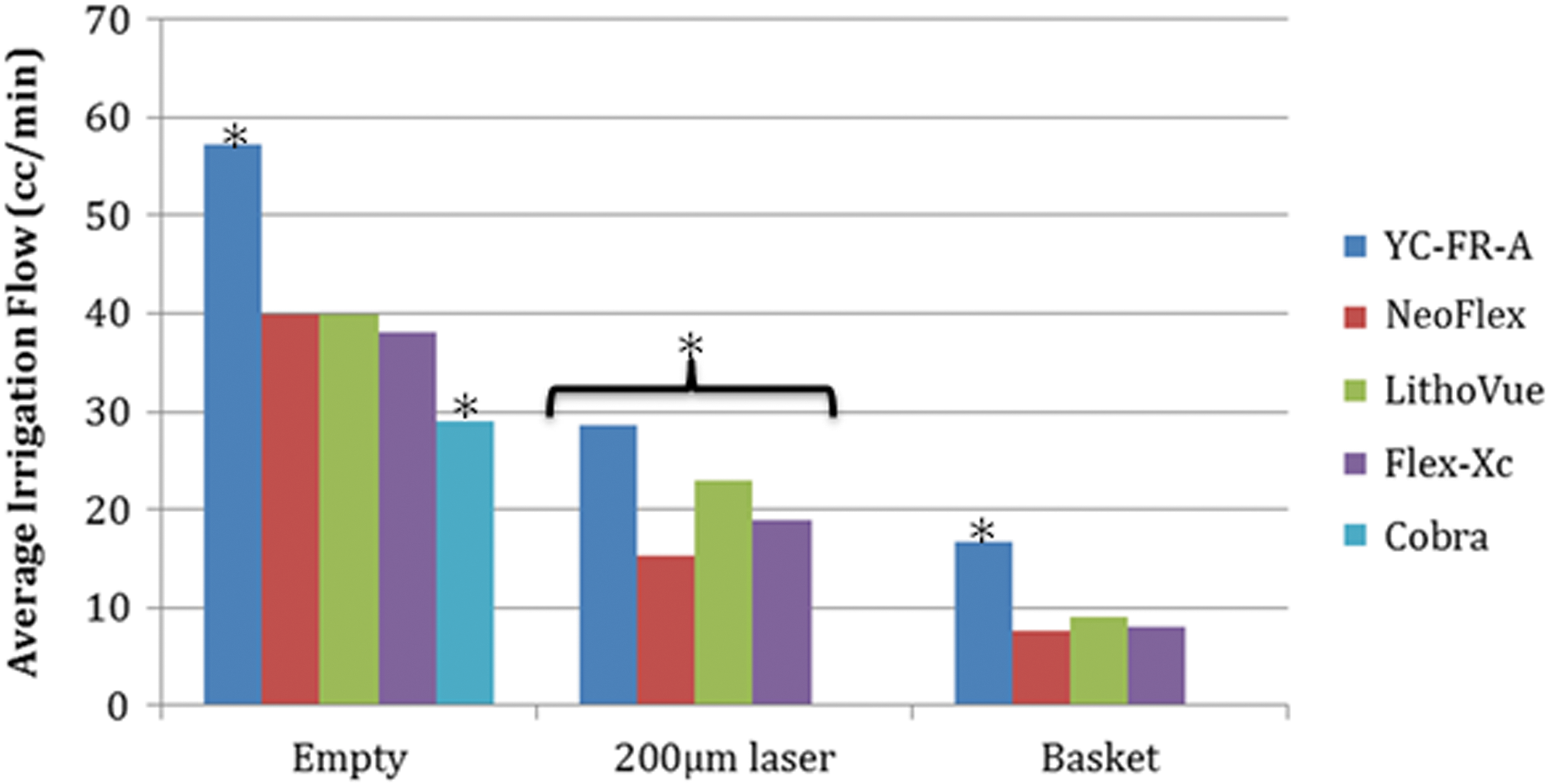
Irrigation flow rate measured at 100 cm of water with empty channel and instruments within the working channel. *Different from all other devices, p < 0.01 [Note: the Cobra was not tested with instruments in the working channel given its dual-channel setup].
Discussion
Flexible ureteroscopy has changed significantly since its introduction in the 1960s. 6 Design improvements have led to active tip deflection, improved light transmission, and the introduction of a working channel for small-caliber instruments and fluid irrigation. 7 With the advent of digital sensors in the past decade, digital flexible ureteroscopes have been introduced, offering better image quality, improved maneuverability, and shorter operative times with similar stone-free rates when compared with fiberoptic ureteroscopes. 8 –10
Despite significant advancements in ureteroscope technology, there remains ongoing concern regarding the durability, longevity, possible contamination, and potential high cost of reusable ureteroscopes. We report performance characteristics on two novel single-use flexible ureteroscopes with the hope to address some of these concerns. Overall, we found both the YC-FR-A and NeoFlex single-use flexible ureteroscopes perform comparably to current reusable flexible ureteroscopes.
The concerns associated with reusable ureteroscopes are numerous, including cost, ureteroscope damage, and loss-of-function over time. Tosoian and colleagues found that in a 1-year period in which 190 cases were performed, flexible fiberoptic ureteroscope repair was required 20 times, costing an average of $5,750 per repair or $605 per case. 11 Carey and associates additionally found that after repair, the life span of new fiberoptic flexible ureteroscopes decreases substantially from 40 to 48 uses before repair to 11.1 uses after repair. 12 Further studies have shown that the average digital ureteroscope is used 21 times before requiring repair, while the average fiberoptic ureteroscope is only used 6 to 15 times before requiring repair. 13,14 The most common reason for repair is due to surgeon handling from laser burn, instrument passage, or extreme deflection with instruments in the working channel. 12,15,16 Sterile processing also contributes to damage, as a result of overcurling, closing the storage case on the shaft, or improper cleaning or sterilization. 12,13 With regard to longevity, reusable ureteroscopes also suffer from loss of deflection after repeated use. Multescu and colleagues showed that, after 30 cases, the Flex-Xc and the Cobra lost 9% (24°) and 10% (27°) of deflection, respectively. 17
There is also growing public concern regarding the contamination of medical scopes from recent studies and lay press stories on contaminated endoscopes. 18,19 While there are no formal studies comparing infection risk between reusable and single-use ureteroscopes, one study in France reports that acute pyelonephritis is a rare complication of ureteroscopy (2.4%). 20
To circumvent these concerns, there is renewed interest in single-use flexible ureteroscopes. The LithoVue is the first single-use digital flexible ureteroscope to demonstrate comparable deflection, irrigation, optics, maneuverability, and clinical outcomes compared with contemporary reusable ureteroscopes. 4,5,21 With the success of the LithoVue, additional single-use flexible ureteroscopes have been under development, prompting the need for comprehensive evaluation.
Our study is the first in vitro evaluation of two novel single-use flexible ureteroscopes—YC-FR-A and NeoFlex—as well as the first comparison across multiple single-use flexible ureteroscopes.
In this study, we objectively demonstrate that the YC-FR-A offers comparable resolution to the Cobra, but not to current-generation digital flexible ureteroscopes. The YC-FR-A has the greatest degree of deflection of the tested ureteroscopes, although it lacks two-way deflection capability. The YC-FR-A has the widest working channel and the highest irrigation flow rate among the tested ureteroscopes, likely due to the lack of a dual-direction deflection system. Of note, the device weight is minimal, more consistent with that of the LithoVue than the reusable ureteroscopes. Based on this in vitro testing, it appears that the YC-FR-A is a viable alternative to currently used reusable and single-use ureteroscopes. Newer models of YouCare flexible ureteroscopes, which feature digital resolution and two-deflection, are in development and therefore may be more competitive. Still, with dual deflection and a digital platform, this ureteroscope may sacrifice its large working channel and associated flow rates.
The NeoFlex offers the sharpest resolution of the tested ureteroscopes with comparable optics in other categories among all digital platforms. The NeoFlex offers two-way deflection with similar deflection and irrigation to current-generation reusable ureteroscopes. However, the NeoFlex had the greatest decrease in deflection after the introduction of instruments in the working channel among single-use ureteroscopes, but only in upward deflection. The NeoFlex is similar in weight to the YC-FR-A, although slightly lighter. The NeoFlex may soon offer a comparative alternative to current instruments, although ongoing design improvements, including increased deflection capability, may make this a more useful platform in the future.
We acknowledge that all tests were performed in vitro, and as such the results may vary from clinical results. In addition, single-use products may have significant variability between individual devices, and this may be an additional issue with regard to eventual clinical use of single-use platforms. Nevertheless, technical evaluation of new instruments can inform the improvement of this equipment and assist in decision-making regarding its clinical use. While each improvement in newer ureteroscopes appears to be a small change technically, we would suggest that small mechanical improvements may in turn lead to larger clinical advances. Further in vivo evaluation of these new single-use scopes is required to validate whether these technical improvements will lead to reduced operative times, improved or similar stone-free rates, and decreased infection risk and cost.
Conclusion
The YouCare single-use fiberoptic flexible ureteroscope and NeoFlex single-use digital flexible ureteroscope are viable alternatives to the contemporary single-use and reusable flexible ureteroscopes. Future YouCare single-use flexible ureteroscopes with a digital platform and two-way deflection may be more competitive, while the NeoFlex devices are undergoing rapid improvement as well. Further testing is necessary to validate the clinical performance and utility of these ureteroscopes.
Footnotes
Author Disclosure Statement
No competing financial interests exist.