




Abstract
With the rising incidence of urinary stone disease, web searches for stone treatments are increasing. Google Trends (GT) data for a 10-year period and during the coronavirus disease 2019 (COVID-19) pandemic were used to investigate the trend variations for the most popular minimally invasive stone therapies based on time and region. GT can create a line graph that shows how interest in various territories has risen or decreased over time. Search terms were generated for extracorporeal shockwave lithotripsy (SWL), percutaneous nephrolithotomy (PCNL), retrograde intrarenal surgery (RIRS), ureterorenoscopy (URS), and laparoscopic pyelolithotomy/ureterolithotomy. Using the “global” inquiry category, the data were included “worldwide” from January 1, 2009 to December 31, 2021. In recent years, Google and YouTube searches for total minimally invasive stone treatments have increased. RIRS, URS, and PCNL trends revealed a substantial rise in the regression analysis (p < 0.05), but SWL trends showed a significant reduction (p < 0.05). RIRS was the main intervention with interest growing most over time. Web searches for stone treatments decreased in the first period of the COVID-19 pandemic. To a rising degree of involvement, patients and physicians from all over the world utilize the internet to search for minimally invasive stone operations. RIRS, URS, and PCNL are becoming more popular in web trends and SWL still has the highest trend despite the decline in popularity recently. The number of trustworthy web-based tools about stone treatments should be increased, and patients and physicians should be directed to these sources.
Introduction
Urinary stones are becoming more common around the world as a result of dietary habits and sedentary lifestyle. 1 In the United States, the prevalence of nephrolithiasis was 10.1% in 2016. 2 In addition to advancements in medical therapies, minimally invasive interventions such as percutaneous nephrolithotomy (PCNL), retrograde intrarenal surgery (RIRS), ureterorenoscopy (URS), extracorporeal shockwave lithotripsy (SWL), and laparoscopic stone surgery have become the primary line of therapy for stone diseases because of recent technical breakthroughs. 3
According to the American Urological Association (AUA) 4 and the European Association of Urology (EAU) guidelines, renal stones >2 cm should be treated with PCNL as the first treatment option, whereas renal stones <2 cm can be treated with SWL, RIRS, or PCNL. 5 SWL and URS are also treatment options for ureteral stones. 5 If these treatment modalities are not feasible, laparoscopic, robotic, or open techniques are further options. 5,6 Minimally invasive interventions are predicted to become more common as technology improves. More complicated cases have begun to be treated with minimally invasive techniques because of training and experience. However, although the processes that are used most frequently in daily practice are known, the most popular processes found on the web are not known. 7
The coronavirus disease 2019 (COVID-19) pandemic was declared by the World Health Organization on March 11, 2020. Many medical experts, as well as urologists, were involved in the treatment of COVID-19 patients. With the exception of obstructing stones, infections and other stone-related emergencies, it was recommended by the AUA that endourologic stone surgeries should be delayed. 8 The Canadian Endourology Group also recommended deferring nonessential treatment when possible. 4 As a result, decrease in the number of minimally invasive stone treatments performed and interest in minimally invasive stone procedures were predicted during the COVID-19 pandemic.
Google Trends (GT) gives worldwide statistics about the popularity of searched topics over time. As a result, marketing professionals are increasingly using GT to acquire information about potential customer interest, as well as variances in that interest based on geographic location and time. GT was applied in the medical field to identify patient and physician interest in surgical interventions and medicinal therapies. 9
As a consequence, we used GT data to analyze the trend variations for the most common minimally invasive stone surgeries throughout time, including during the COVID-19 pandemic. An attempt was also made to figure out what may be creating the trend variations.
Materials and Methods
Since 2004, GT has provided global search traffic data, including time period and category patterns for a given query in Google and YouTube. GT can create a “line-graph” that shows how interest has risen or decreased over time in various territories. The relative search volume (RSV), which is displayed on a scale of 0 to 100, is used to index the search values for specific phrases. The highest search trends are represented by RSV 100, whereas half of the searches are represented by RSV 50. However, a value of 0 indicates that there were insufficient data for the phrase.
SWL, PCNL-percutaneous renal stone surgery-PCNL, RIRS, URS-ureteroscopy-URS, and laparoscopic pyelolithotomy-ureterolithotomy were used as targeted keywords in five main categories. Using the “global” inquiry category, the data were included “worldwide” from January 1, 2009, to December 31, 2021. The top five nations with the most significant trends in each category were found and tabulated. Furthermore, international patterns for each treatment modality were researched and displayed in a separate table. Microsoft Excel v.16.0 (Redmond, WA) and SPSS v.24.0 were used to conduct all trend and statistical analyses (SPSS Inc., Chicago, IL). Polynomial trend lines were used to illustrate data from search keywords. Linear regression analysis was performed for each polynomial trend line. The total YouTube trends for these terms was investigated and the obtained curve was then subjected to regression analysis. A p-value <0.05 was considered significant. Since this study only includes web data, it does not involve human subjects. Informed consent was not required
Results
Iran, Spain, Canada, United States, and United Arab Emirates were the leading countries for PCNL, RIRS, URS, laparoscopy, and SWL searches. Table 1 shows the highest trend zones for each treatment modality.
Top Five Highest Trending Countries for Each Operation Based on Relative Search Volume
The numbers in parentheses show the relative search volume for each country.
PCNL = percutaneous nephrolithotomy; RIRS = retrograde intrarenal surgery; SWL = extracorporeal shockwave lithotripsy; URS = ureterorenoscopy.
In recent years, Google searches for total minimally invasive stone treatments have increased. Given the rise in RIRS, URS, and PCNL searches for the past decade, SWL was on the decline. On Google, the most popular minimally invasive stone treatment procedure is currently SWL, despite a significant decline in its popularity. Searches for laparoscopic stone treatment were not popular (Fig. 1). The regression analysis for RIRS, URS, and PCNL trends showed a significant increase (p < 0.05), whereas SWL trends showed a significant decrease (p < 0.05) (Table 2). RIRS was found to be the main treatment that increased most over time, according to linear regression analysis.

Google Trends RSV for each urinary stone surgery by month, January 2009 to December 2021. PCNL = percutaneous nephrolithotomy; RIRS = retrograde intrarenal surgery; RSV = relative search volume; SWL = extracorporeal shockwave lithotripsy; URS = ureterorenoscopy.
Linear Regression Analysis for Google Trends About Minimally Invasive Stone Treatments
For all YouTube searches for minimally invasive stone treatment methods, there was an upward trend in the previous 10 years and this was confirmed by regression analysis (p < 0.05) (Fig. 2).
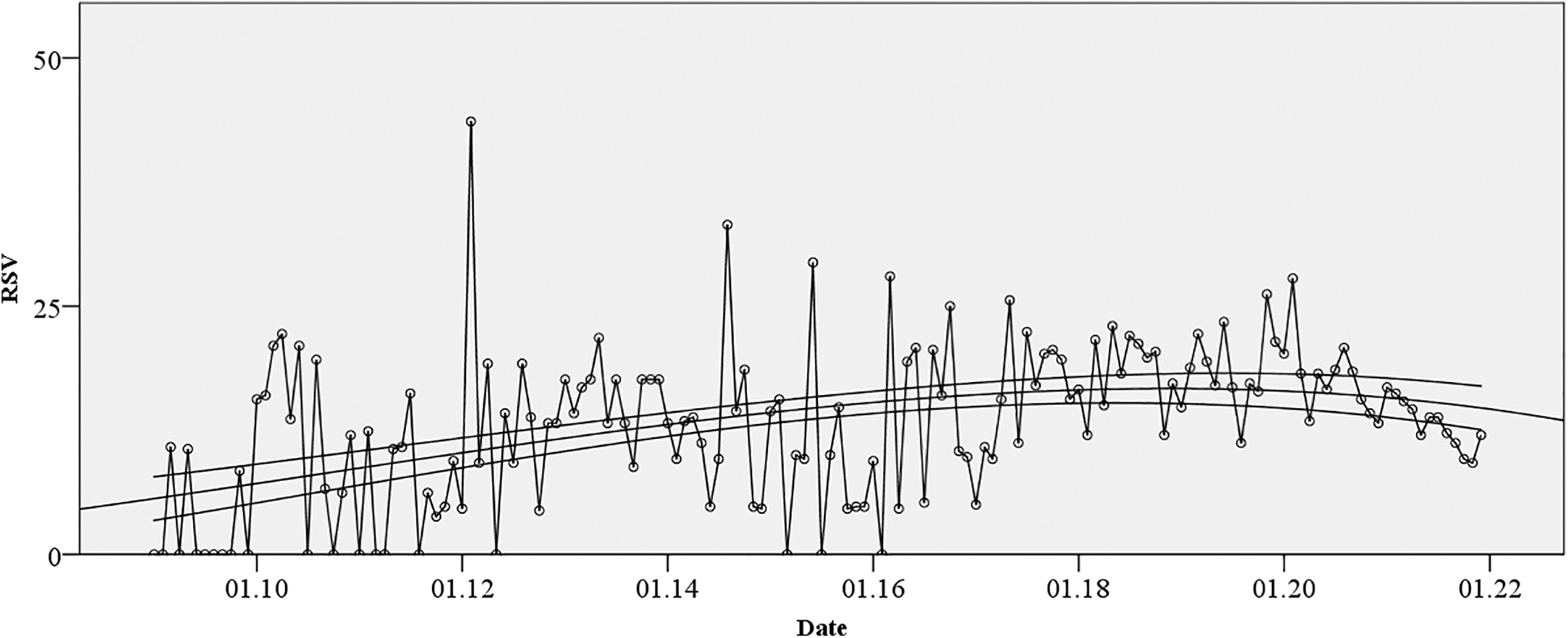
You Tube RSV for all urinary stone surgeries by month, January 2009 to December 2021.
Interest in all minimally invasive stone therapies declined significantly on GT and YouTube searches since February to March 2020, when the COVID-19 pandemic broke out. After 1 month, the trends increased to previous levels.
Discussion
This is the first research showing the Google and YouTube trends about minimally invasive treatment for urinary stone disease around the world in the recent decade, including during the COVID-19 pandemic. All interest in web trends about minimally invasive stone therapy is increasing as shown by the trends. Both patients and physicians obtain information about minimally invasive treatment methods on Google and even watch surgery videos on YouTube, leading to this increase in treatment trends on the web. Because of shorter hospital stay, less morbidity, and faster recovery, minimally invasive procedures have recently attracted the attention of both patients and doctors. We intended to see which of these techniques was more popular throughout the world. Although SWL is still the treatment with the highest trend, the most significant increase was observed for RIRS.
Our findings suggest that nations with the highest stone treatment searches are usually those with higher advanced socioeconomic status and warmer climate. When the literature on the subject is examined, more searches about stone disease were performed in the warmer parts of the United States. 10 According to another study, the highest level of internet search activity corresponded to higher prevalence of stone events during the summer season. 11 With our study, it was verified that the web trends for urinary stone surgeries are higher in regions with hot climates. Furthermore, the increased internet usage in developed nations is a major explanation for the higher trends in these countries.
SWL is still favored over URS in England, similar to our research, but they predicted that URS will overtake SWL in future years. 12 Between 2005 and 2016, the most significant rise was found for RIRS, according to German trends. Although PCNL and URS for ureteral stones increased, SWL for renal stones dropped dramatically. 13 In the United States, there is a growing trend for RIRS and a declining trend for SWL when it comes to surgical therapies for nephrolithiasis. 7 Another study from the United States found that SWL had the largest search volume and that all modalities stayed nearly stable, with the exception of URS, which had a continuous rise from 2011 to 2017 on GT. 14
According to a review of publications regarding surgical stone treatments published from 1996 to 2016, overall ureteroscopy rates increased from 1996 to 2016; however, PCNL remained steady and SWL declined. 15 So, we can see a correlation between web trends and the actual numbers of procedures apart from PCNL. Furthermore, research conducted in the United States in 2020 revealed that the number of publications about URS and PCNL published in PubMed in recent years was also increasing. 16 As a result, past studies, as well as our own findings, show that RIRS, URS, and PCNL outperform SWL for the treatment of urinary stones.
It is necessary to consider the positive and negative characteristics of all therapies to better interpret these outcomes. Despite the decline, SWL maintains a high level of interest because of the fact that it is less invasive and usually does not require anesthesia. 17 SWL is linked to a shorter hospital stay and avoidance of stent insertion. 18 However, it is related to worse lower pole stone clearance and lower stone-free rate. 17 According to meta analyses, RIRS had better stone-free rate and lower re-treatment rate for 1 to 2 cm renal stones and also SWL was not better than RIRS in terms of complication rates. 19 For intrarenal stones <1.5 cm, RIRS was formerly suggested as a second-line technique after SWL; however, it is now recommended as a first-line treatment according to EAU guidelines. 15
Children, pregnant women, and even patients with a solitary kidney can undergo URS. 15 In terms of pediatric nephrolithiasis treatment trends in the United States, SWL was the most commonly utilized therapy, RIRS was on the rise, and PCNL was on the decline. 20 All of these considerations, as well as holmium laser lithotripsy and new generation flexible ureterorenoscopes, have increased the popularity of URS among urologists and patients. 19 The disadvantages of RIRS include delayed learning curve, access, fragmentation, and manipulation difficulties. 10
The benefit of PCNL is that treatment achieves the best stone-free rates, but it is more invasive than SWL and RIRS. 17 PCNL remains the treatment of choice for pelvic and upper caliceal stones >2 cm, as well as lower pole stones >1.5 cm. In the recent decade, the popularity of PCNL has grown in the United States. 21 According to Carlsson and colleagues, the overall cost of PCNL is higher than the cost of SWL in treated patients. 22 RIRS was the cheapest treatment option in another study that revealed the costs of these treatment methods. 7
The web trends about laparoscopic urinary stone surgeries were low in our analysis, with just a slight rising trend in recent years. Our result is consistent with a review about laparoscopic stone surgery. 23 The restricted indications for laparoscopy in the treatment of urinary stones explain why it is not commonly performed. Laparoscopy can also be used when access to the renal pelvis by PCNL is not possible or when there is an impacted ureteral stone and URS is not an option.
When our findings are evaluated with the literature, it is clear that SWL is still popular for stone treatment although it is on the decline. With new technological breakthroughs such as high-frequency shock waves and burst-SWL, SWL may undergo an upward trend in the future. Furthermore, robot-assisted flexible URS is predicted to be important in the future for urinary stone surgery. 24
Previous research showed that interest in web trends about medical terms correlates with interest in daily routines. 25 Similarly, we discovered in our research that the online trends for minimally invasive stone surgery were correlated to the percentages of these procedures performed on a daily basis. The fact that the web trends are mostly decided by patient searches does not indicate that scientists must follow them. On the contrary, endourology is formed based on scientific research. We attempted to present an alternative perspective with our research. Our finding emphasizes the need for including web trends in health care for both patients and the health care providers.
Health organizers should also inform patients through the internet, with videos, and detailed explanations. YouTube, in addition to search engines, is a significant source of information for patients concerning urinary stone therapies. On YouTube, there was considerable increase in interest in stone treatment, according to our research. However, the majority of videos about surgical treatment of urinary stones have poor quality and may be influenced by market forces, whereas medical associations, such as the AUA and EAU, provide videos with a better standard of quality. 26 Therefore, patients and physicians should be made aware of this issue.
With the beginning of the COVID-19 pandemic, most urologists began to perform temporary treatments such as Double-J stent implantation or percutaneous nephrostomy instead of stone removal surgeries such as PCNL and URS. According to the research, only 10.6% of urologists continued to perform stone removal operations. 27 Urinary stone surgeries decreased by 72.8% during the pandemic, according to the national analysis. 28 Medical expulsive therapy and chemolysis became more important to prevent surgical intervention. 4 Furthermore, telemedicine was effectively used in select individuals with uncomplicated urinary stones, according to the current research. 29
This decline in therapeutic interventions during the pandemic can also be observed in GT and YouTube Trends, according to our research. It is predicted that the COVID-19 pandemic caused serious injury to some patients, resulting in stone treatment delays. For instance, the rate of complex ureteral stones increased dramatically throughout the pandemic restriction. 30 However, the pandemic impacted different parts of the world at different times and at varying rates. In total, there was a decline in both stone surgery and web trends, as patients postponed their curative treatments and surgeons could not provide these treatments sufficiently because of the pandemic.
Our research is limited to a single web search engine, Google, and was conducted only in English. Statistics for older people may be restricted because of the internet's popularity among young individuals. As GT data are anonymous, the analysis of subpopulation groups is not feasible. Probably, people in more sedentary jobs are in a better socioeconomic class and have increased internet connection, adding to the distribution of stone trends on the web. In addition, the distinction between URS and RIRS is sometimes unclear, and the results should be interpreted in this light. Despite these limitations, we believe that our research is a significant indicator of current urinary stone surgery trends.
Conclusions
People from all over the world use the web to research minimally invasive stone surgeries with an increased level of interest. The amount of reliable web-based tools should be increased, and patients should be guided to these resources. Because of technological advancements, the most substantial trend increases were seen for RIRS, PCNL, and URS, in that order. The COVID-19 pandemic lowered the number of stone surgeries and the interest in these operations on the web. Large-scale studies are required to analyze diverse geographical patterns in depth.
Footnotes
Authors' Contributions
All authors contributed to the study conception and design. Material preparation, data collection, and analysis were performed by S.M., M.D.D., and T.A. The first draft of the article was written by S.M. and all authors commented on previous versions of the article. All authors read and approved the final article.
Author Disclosure Statement
The authors declare that they have no competing interests.
Funding Information
No funding was received.