




Abstract
Purpose:
To analyze the bibliometric publication trend on the application of “Artificial Intelligence (AI) and its subsets (Machine Learning–ML, Virtual reality–VR, Radiomics) in Urolithiasis” over 3 decades. We looked at the publication trends associated with AI and stone disease, including both clinical and surgical applications, and training in endourology.
Methods:
Through a MeshTerms research on PubMed, we performed a comprehensive review from 1994–2023 for all published articles on “AI, ML, VR, and Radiomics.” Articles were then divided into three categories as follows: A-Clinical (Nonsurgical), B-Clinical (Surgical), and C-Training articles, and articles were then assigned to following three periods: Period-1 (1994–2003), Period-2 (2004–2013), and Period-3 (2014–2023).
Results:
A total of 343 articles were noted (Groups A-129, B-163, and C-51), and trends increased from Period-1 to Period-2 at 123% (p = 0.009) and to period-3 at 453% (p = 0.003). This increase from Period-2 to Period-3 for groups A, B, and C was 476% (p = 0.019), 616% (0.001), and 185% (p < 0.001), respectively.
Group A articles included rise in articles on “stone characteristics” (+2100%; p = 0.011), “renal function” (p = 0.002), “stone diagnosis” (+192%), “prediction of stone passage” (+400%), and “quality of life” (+1000%).
Group B articles included rise in articles on “URS” (+2650%, p = 0.008), “PCNL”(+600%, p = 0.001), and “SWL” (+650%, p = 0.018). Articles on “Targeting” (+453%, p < 0.001), “Outcomes” (+850%, p = 0.013), and “Technological Innovation” (p = 0.0311) had rising trends.
Group C articles included rise in articles on “PCNL” (+300%, p = 0.039) and “URS” (+188%, p = 0.003).
Conclusion:
Publications on AI and its subset areas for urolithiasis have seen an exponential increase over the last decade, with an increase in surgical and nonsurgical clinical areas, as well as in training. Future AI related growth in the field of endourology and urolithiasis is likely to improve training, patient centered decision-making, and clinical outcomes.
Introduction
In the past decades, urologists have shown an increasing interest in how technological improvements could play a role in daily practice, with clinical interest and financial investments following this trend. Two major subjects have seen growing research of technological application in urolithiasis: (1) Computed driven analysis of clinical features to diagnose stones, create patient centered models, and predict treatment outcomes; and (2) Simulation-based device that can help urologists overcome difficult anatomical situations, as well as helping in simulation training. 1
Artificial intelligence (AI) has proven itself as a reliable system to help physicians in diagnosis, decision-making process, and treatment. In health care, AI refers to all algorithms, devices, and applications based on computer system and big data. 2 Its applications in the field of endourology are numerous, from early diagnosis and personalized treatment to prediction of outcomes and complications. The most common example of this is how AI can easily and precisely identify stone dimension and composition from ultrasound and computed tomography images. Moreover, it has also been proposed to predict spontaneous stone passage and outcomes of endourologic procedures. 3 Machine learning (ML) is a subtype of AI that is used in urolithiasis for both diagnosis and treatment planning, 4 relying on computer analysis for decision-making process, as well as other techniques, including deep learning (DL), artificial neural networks (ANN), and natural language processing. 5
ANN, DL, and ML have already been incorporated in radiomics-driven learning models that surpass the human ability to detect images and hidden data. Radiomics is in fact a quantitative method that improves precision medicine by extracting extensive data from radiographical images and analyzing them through AI software. Radiomics has been recently used in urolithiasis to predict preoperative stone-free rate for shockwave lithotripsy (SWL) and also postprocedural complications, and it shows a great potential in optimizing disease management. 6
Alongside these computational systems, another field of technological research is making its great impact in endourology simulation training as follows: virtual reality (VR), augmented reality (AR), and mixed reality (MR) are systems that can be equipped with medical tools to simulate endourologic intervention in a realistic setting, such as ureteroscopy (URS) and percutaneous nephrolithotomy (PCNL). The potential advantage of artificial intelligence in PCNL is related to remote access, reduced number of needle punctures, and less radiation exposure during renal access. Residents and students but also trained urologists can benefit with these devices to improve their skills or even simulate patient-specific anatomical features and plan a personalized intervention. 7 For simulation-based training, urology residents have found three-dimensional (3D) printed models with another useful tool that can help them gain the surgical skills required in endourology. 3D printing is a relatively new technology and has only partially been applied in urolithiasis. Since the first 3D-printed models in the 80s, surgeons started using these models for preoperative planning and practice only in the 21st century, with a rapid expansion when customized medical devices became a focus. It has enormous potential in building patient-specific models for surgical planning, patient counseling, and training residents to perform high-risk procedures such as PCNL, overcoming their initial experience barrier. 8
Technological innovations and improvements in management of urolithiasis are ever increasing, hand in hand with urologists’ attention for devices that can help them through the diagnostic and therapeutic processes. 9 An increasing number of publications reflects this interest over the last decades, whereas a formal evaluation of such a bibliographic trend has remained under-reported. For this purpose, we conducted this study looking at the publication trends associated with the application of AI, ML, VR, 3D printing, and radiomics in urolithiasis.
Materials and Methods
A review of the literature was conducted using MeSH terms, title words, and key words in PubMed over the last 30 years, from January 1994 to February 2023 for all published articles on “Urolithiasis”.
Search strategy and study selection
This study was performed according to Cochrane methodology. A search protocol was developed by the author team. All relevant abstracts regarding specific topics were identified through search on online database PubMed year by year from 1994 to 2023. Keywords used for searching included the following: “Urolithiasis,” “Kidney calculi,” and “Stones.” MESH terms used in this screening process were as follows: “Artificial Intelligence,,” “Machine Learning,’’ “Deep Learning,” “Artificial Neural Network,” “natural Language Processing,” “Radiomic,” “Virtual Reality,” “Augmented Reality,” “Mixed Reality,” “URS Simulation,” “PCNL Simulation,” “3D Model,” “Robotic URS,” “Flexible ureteroscopy,” “PCNL Automated Targeting,” and “PCNL Needle Targeting” (Fig. 1). No language restrictions were applied, and all English and non-English full-length articles with abstracts were included in the study. Reviews, case reports, and case series were all included. Studies without a published abstract and animal studies were excluded.
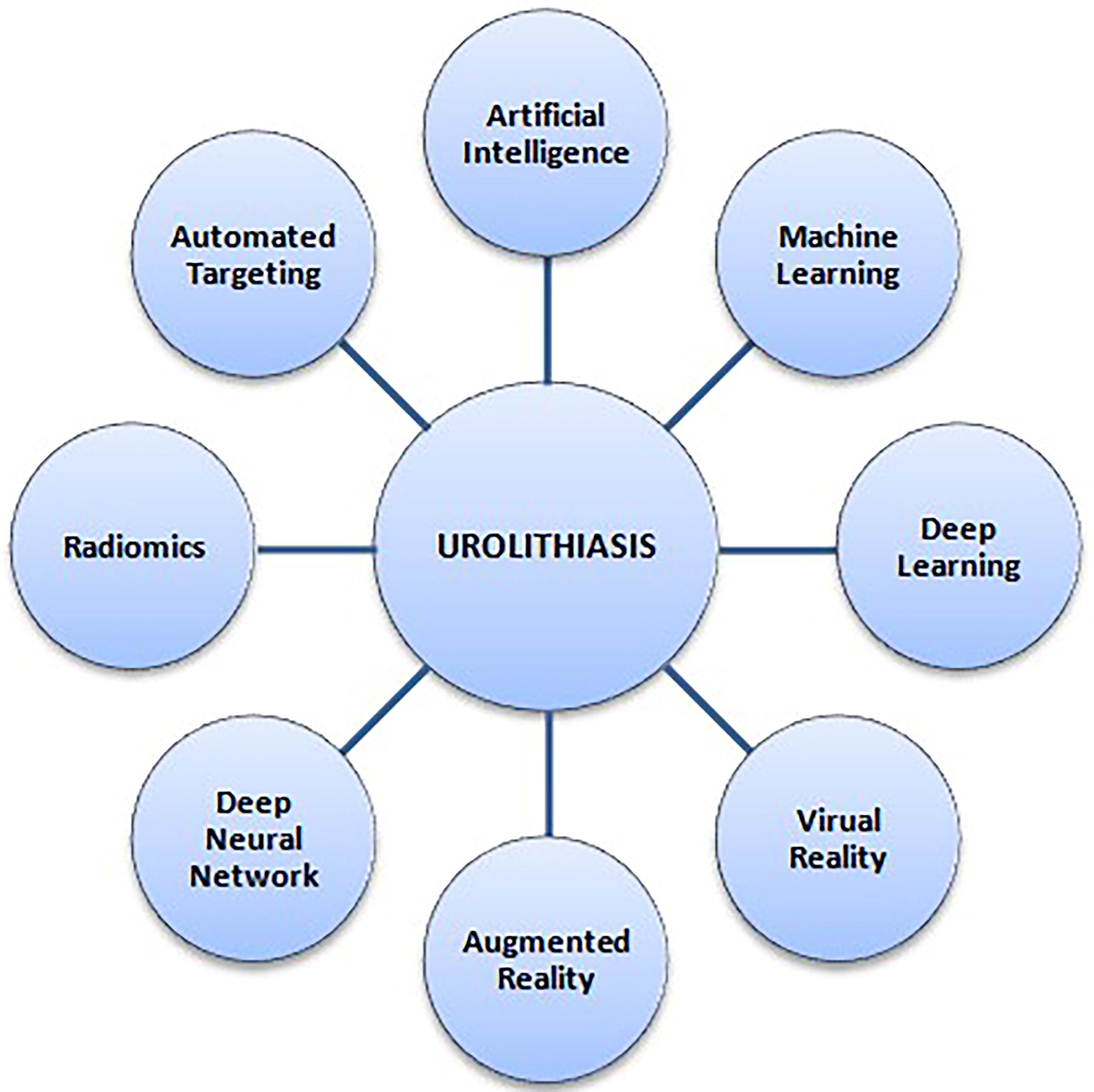
Mesh terms used in database searching.
Evidence acquisition: criteria for including studies for this review
Inclusion criteria were as follows:
All full-length English language studies
All non-English studies with abstracts written in the English language
Studies reporting on artificial intelligence, machine learning, virtual reality, and radiomics in urolithiasis as follows: Diagnosis, stone characteristic, clinical management Treatment and interventions—open surgery, laparoscopic surgery, pyelolithotomy, SWL, PCNL, and URS Training and simulation in urolithiasis intervention
Exclusion criteria were as follows: Studies for nonurolithiasis conditions Animal studies
Two authors (C.N. and C.C.) independently performed a literature search to identify studies, and discrepancies were resolved after input and discussion with the senior author (BKS). Extracted articles were then divided into following three subgroups according to field of interest: 1-Clinical (Nonsurgical) or Clinical setting, 2-Clinical (Surgical) or Surgical procedures, and 3-Training (Fig. 2). Each subgroup was then divided into three 10-year time periods to compare and identify the contrast of different decades: period-1 (1994–2003), period-2 (2004–2013), and period-3 (2014–2023).
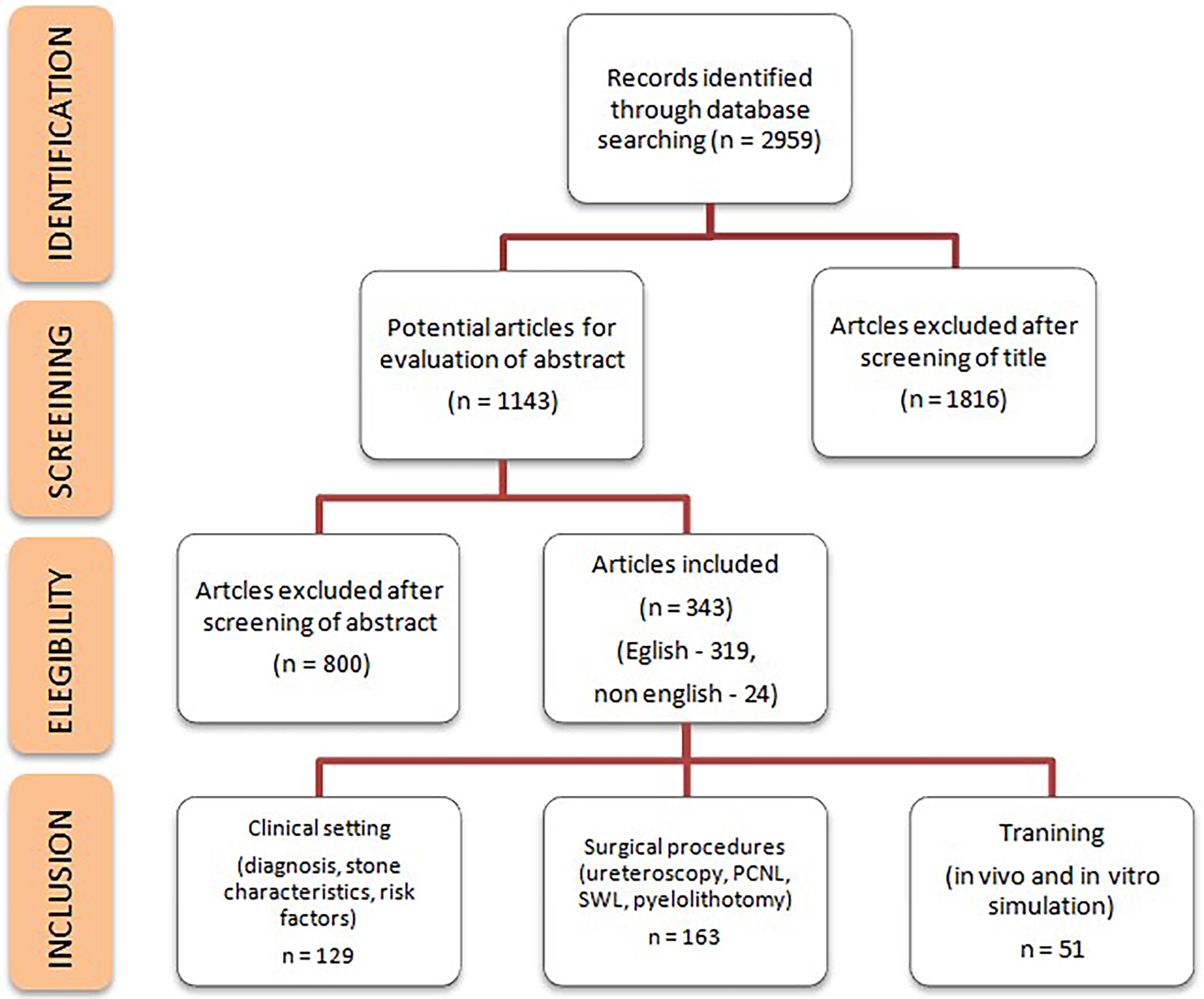
PRISMA flowchart for identification of the studies.
Statistical analysis of the extracted data was performed through the independent t test, with a significant threshold level at p < 0.05, ruling out possible difference in the data collected from period-1 vs period-2 and period-2 vs period-3.
Results
Overall number of articles on AI in urolithiasis
Over the past three decades, 343 articles have been published on application of AI, ML, DL, VR, and radiomics in urolithiasis (nonsurgical, n = 129; surgical, n = 163; training, n = 51) (Fig. 3). A total of 319 English articles were found and of 24 non-English articles with English abstracts, 6 were written in Chinese, 9 in Russian, 3 in French, 3 in German, and 1 each in Italian, Polish, and Spanish (Table 1).

Trend of publications in different fields (nonsurgical, surgical, and training settings).
Number of Publications in Different Fields (Clinical, Surgical, Training) over Three Time Periods
For nonsurgical management, articles included renal function and anatomical features (n = 6), stone diagnosis (n = 63), stone volume (n = 9), stone composition (n = 24), prediction of risk of infection (n = 9), treatment planning (n = 10), prediction of spontaneous passage (n = 7), and impact on quality of life (n = 1).
Surgical management articles were analyzed for both procedure and type of surgical application. Surgical procedures included URS (n = 61), PCNL (n = 107), SWL (n = 56), ureteral stent insertion (n = 2), and pyelolithotomy (n = 2). Surgical application articles included the following: technological improvements (n = 8), improving surgical outcomes (n = 67), and targeting/surgical planning (n = 88). For training in endourology, articles included URS simulation (n = 31), PCNL simulation (n = 30), and diagnostic training (n = 1).
Overall number of articles written in period-2 were significantly higher than in period-1, with an increase of 123% (p = 0.009), but this trend appears even steeper in the last decade, with a notable increase from period-2 to period-3 of 453% (p = 0.003). Furthermore, a significant rise in number of articles was found in each subgroup from period-2 to period-3 as follows (Fig. 4): clinical nonsurgical articles increased by 476% (p = 0.019), surgical articles by 616% (p = 0.001), and training articles by 185% (p < 0.001). A summary of statistical results comparing period-2 vs period-3 articles is presented in Table 2.
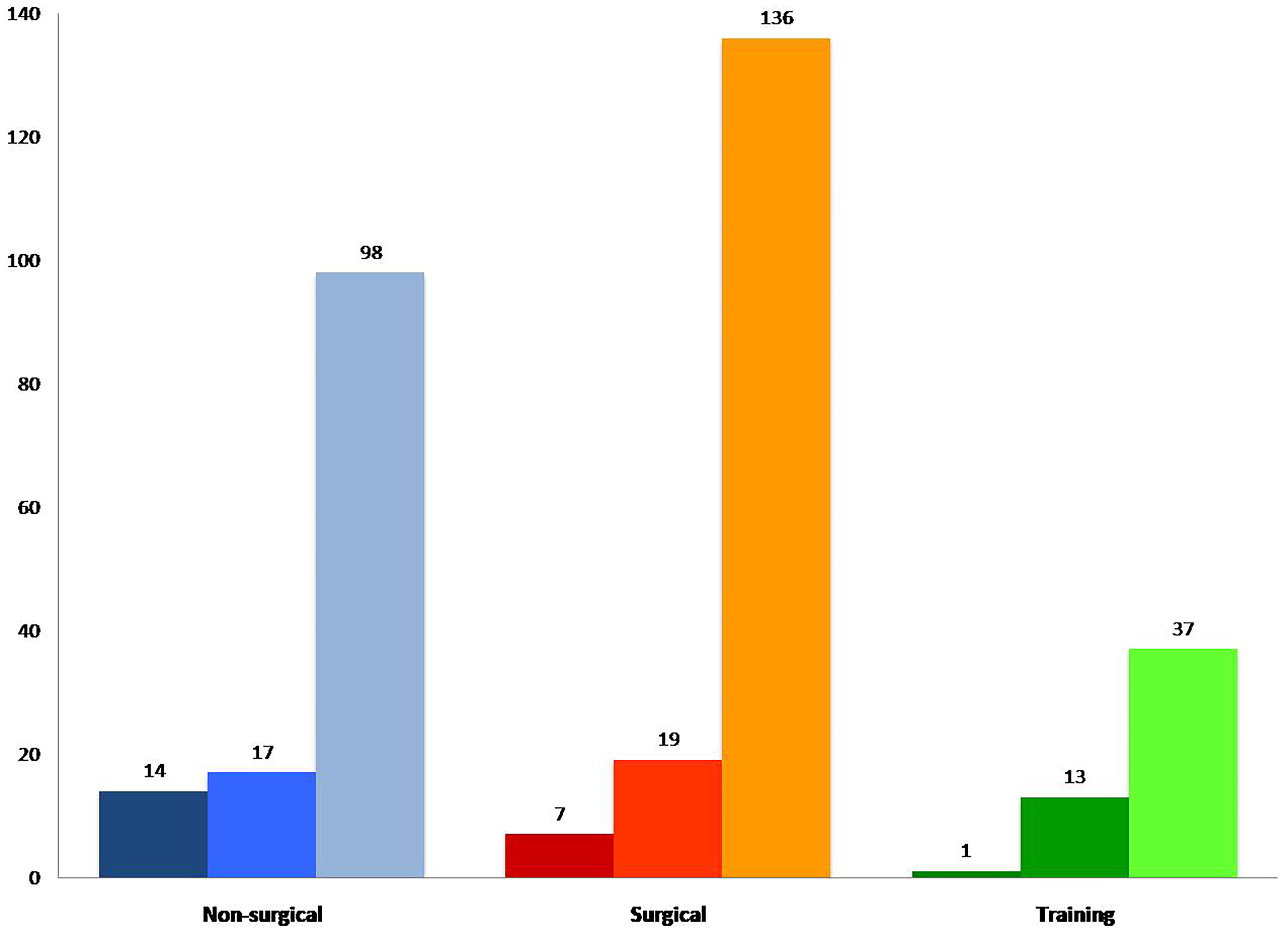
Trend of publications in different fields (nonsurgical, surgical, training) over three time periods (period 1: 1994–2003, period 2: 2004–2013, period 3: 2014–2023).
Summary of Trends Analysis over the Last Two Time Periods (Period 2: 2004–2013 and Period 3: 2014–2023)
Statistically significant values are highlighted in bold.
ESWL = extracorporeal shock wave lithotripsy; PCNL = percutaneous nephrolithotomy; URS = ureteroscopy.
A further analysis investigated short-term changes in the last decade. The number of articles published in 2014–2016 were compared with that in 2017–2019, and in turn, the latter was compared with 2020–2022. An overall increase was by 155% in the first 3-year time and by 114% in the most recent period. The positive increase was reflected by all the subanalyses (clinical nonsurgical articles increased by 174%, surgical articles by 103%, and training articles by 38%). Statistical analysis retrieved a significant change in the number of publications for overall number of publications and number of articles with a surgical setting (p = 0.006 and p = 0.007, respectively).
Clinical (nonsurgical) articles
From 1996, a total of 129 articles have been published on applications of AI in urolithiasis (Table 3). Comparing periods, there were 14 articles in period-1 and 17 articles in period-2, while period-3 had more than five-time as many articles, with 98 published articles. A significant rise in publication was noted from period-2 to period-3 (+476%; p = 0.019).
Distribution of Articles About Clinical and Preoperatory Setting on Different Subjects (Renal Features, Diagnosis of Lithiasis, Stone Volume and Composition, Prediction of Infection, Surgical Outcomes, Spontaneous Passage, and Quality of Life)
QoL = quality of life.
The increase from periods 2 and 3 was significant for “stone characteristics” (p = 0.011), “stone volume” (p = 0.010), “stone composition” (p = 0.040), and “renal function” (p = 0.002). “Stone diagnosis” with the use of AI retrieved 63 articles (12 period-1, 13 period-2, and 38 period-3, p = 0.123). “Risk of infection” (p = 0.166), “treatment planning” (p = 0.137), “prediction of stone passage” (p = 0.232), and “quality of life” (p = 0.331) all rose in number of publications, although it was not statistically significant. Figure 5 shows the different trend of publication on each topic in the different periods.
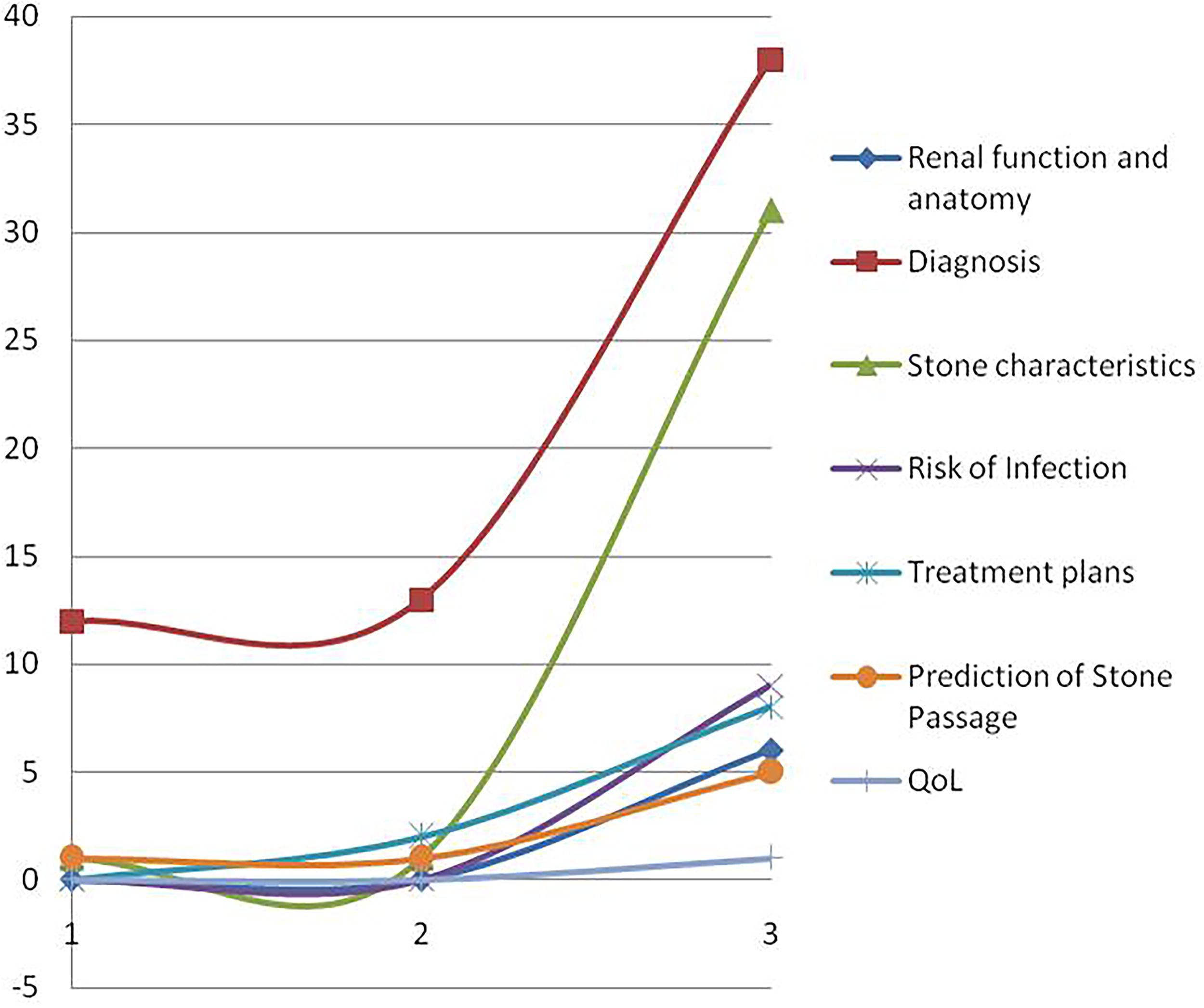
Increasing trend of publication regarding the use of artificial intelligence and similarities in a clinical urolithiasis setting, divided according to field of interest over the three time periods.
During the last decade, 38 of 98 articles (38.8%) have been published on “stone diagnosis” and 31 (31.6%) on “stone characteristics,” accounting for more than 70% of the total number of publications.
Surgical articles
A total of 163 articles have been published in the last 30 years on the role of AI in the surgical management of urolithiasis (Table 4). Of these, periods 1, 2, and 3 had 7, 19, and 137 articles, respectively, and there was a rise of 621% (p = 0.001) between periods 2 and 3.
Distribution of Articles About Surgical Management on Different Subjects (Ureteroscopy, Percutaneous Lithotripsy, Pyelolithotomy, Shock Wave Lithotripsy, and Ureteral Stent)
ESWL = extracorporeal shock wave lithotripsy; PCNL = percutaneous nephrolithotomy; URS = ureteroscopy.
As shown in Figure 6, overall, “PCNL” dominated with periods 1, 2, and 3 having 3, 13, and 91 publications, respectively. There was a rise of 600% (p = 0.001) between periods 2 and 3. Regarding “URS,” periods 1, 2, and 3 had 4, 2, and 55 articles, respectively, with an increase by 2650% (p = 0.008) between periods 2 and 3. Similarly, “SWL” in periods 1, 2, and 3 had 5, 6, and 45 articles, respectively, and there was a rise of 650% (p = 0.018) between periods 2 and 3. Articles on the role of AI in “Ureteral Stenting” and “Pyelolithotomy” have only been published in the last decade, with only two articles found in our research on each topic.
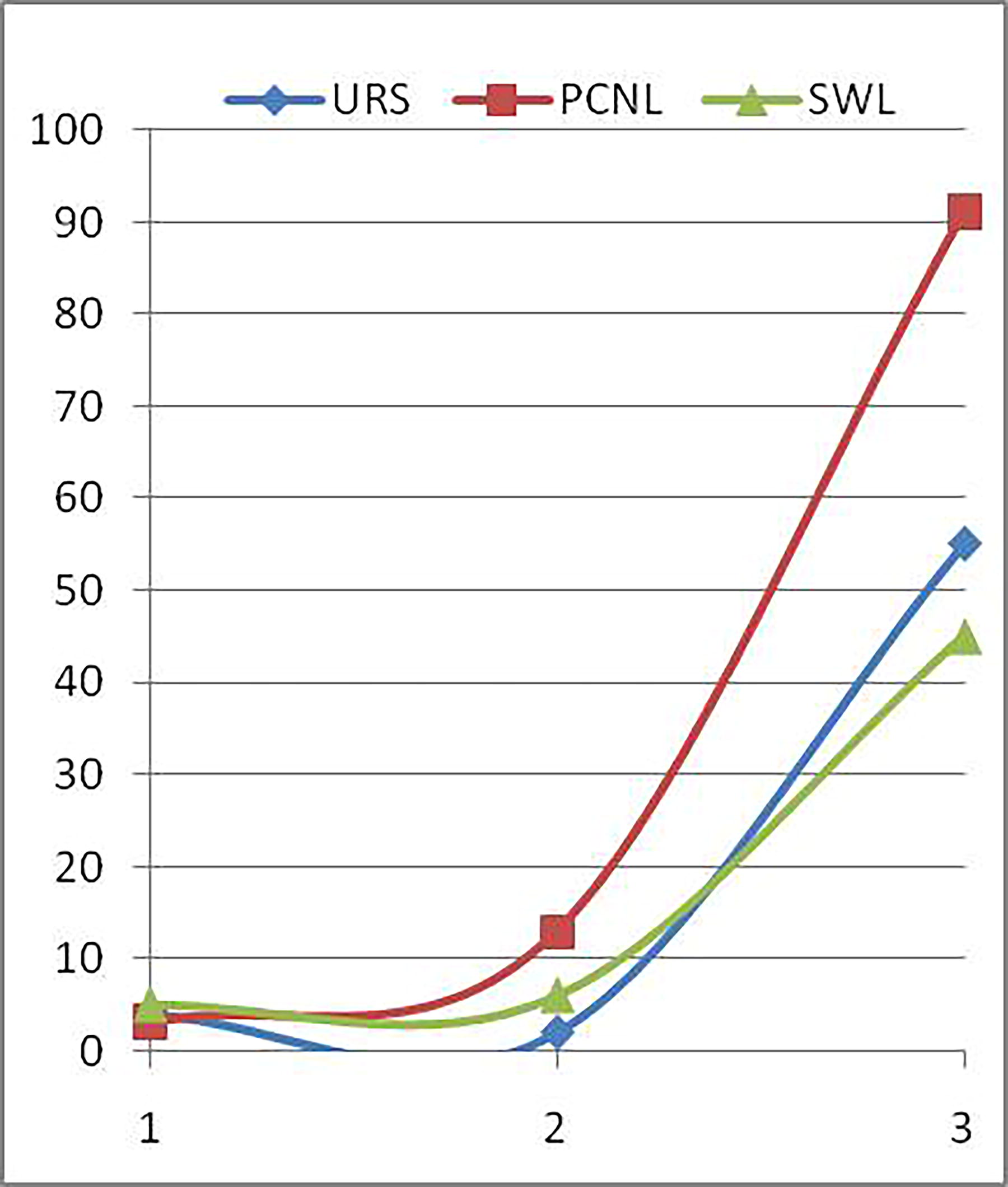
Trend of publications on surgical management with different surgical techniques (URS, PCNL, and ESWL) over the three time periods. PCNL, percutaneous nephrolithotomy; URS, ureteroscopy.
Over the last decade there has been a steep rise in the articles on “Outcomes” (850%, p = 0.013), “Targeting” (453%, p < 0.001), and “Technological Innovation” (p = 0.0311) with 57, 72, and 8 articles published, respectively, in period-3 (Fig. 7). As a result, the main field of interest in the last 10 years has been represented by studies on automatic targeting in PCNL (n = 46), which accounts for a third of all articles.
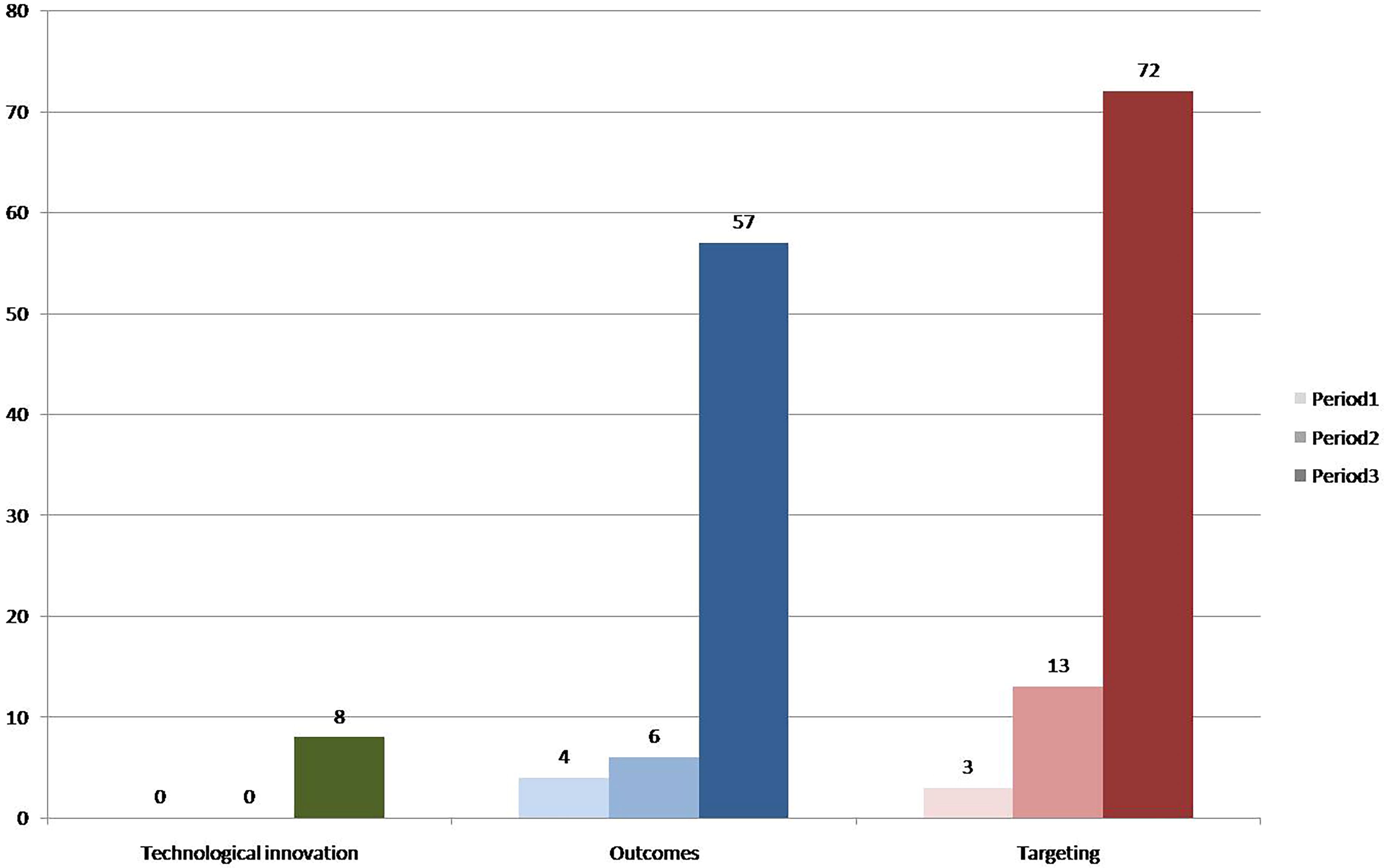
Trend of publications on surgical management with different focus (technological innovation, surgical outcomes, surgical targeting) over the three time periods.
Training articles
Articles regarding the application of VR and AI in endourology training have been published only from 2002 to 2022 (Table 5). In this timeline, 51 articles were published with a significant increase from period-2 to period-3 (p < 0.001). Of these, 50 are about surgical training (“URS”: n = 20, “PCNL”: n = 19, both procedures: n = 11) and one about “Diagnostic Training” in radiology. Figure 8 shows the increasing trend of publication on URS- and PCNL-training over the years.
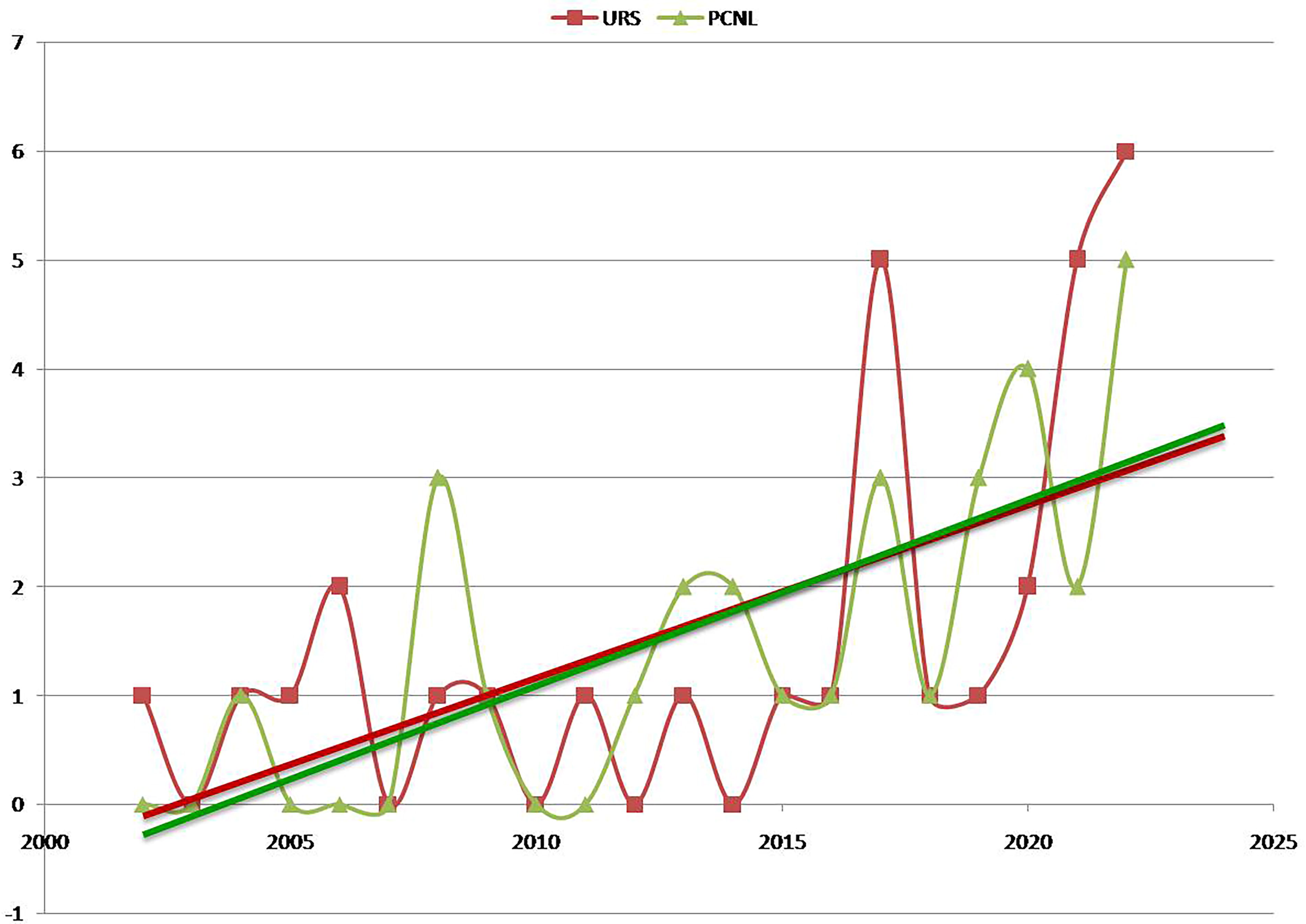
Trend of publications on training in two different surgical techniques (URS and PCNL) with corresponding linear trend lines. PCNL, percutaneous nephrolithotomy; URS, ureteroscopy.
Distribution of Articles About Training in Different Fields (URS, PCNL, and Diagnostic Examinations)
PCNL = percutaneous nephrolithotomy; URS = ureteroscopy.
In the last decade, a rise in publication is pointed out by 23 articles on “URS training” (increase: 188%, p = 0.003) and 24 on “PCNL training” (increase: 300%, p = 0.039).
Technology in AI
An analysis of representation of different AI technology was performed (Table 6).
Analysis of Publication on Different AI-Technologies among the Three Time Periods
Statistically significant values are highlighted in bold.
AR = augmented reality; DL = deep learning; ML = machine learning; VR = virtual reality.
During period-1, no article on ML, Radiomics, or Robotic application in urolithiasis was found. 3D-modeling accounted for the most of publications in period-1, with 13 articles found. This number increased by 46% in period-2 with 19 publications (p = 0.0167) and by 400% in period-3, with 95 articles (p = 0.001).
Eight articles on DL in urolithiasis were published in period-1, 14 in period-2 (increase: 75%, p = 0.2406), and 35 in period-3 (increase: 150%, p = 0.0093). Only one article on AR/VR was found in period-1, whereas 14 were identified in period-2 and 42 in period-3, with an increase between both time lines (increase: 1300%, p = 0.1716 in period-1 vs −2; increase: 200%, p = 0.039).
Publications on robotics applications of AI rose by 600% (p < 0.0001) from period-2 (n = 2) to period-3 (n = 14). ML accounted for 56 articles, all published in period-3 (p = 0.0185). Similarly, 10 radiomics-related publications were found in period-3 (p = 0.0030).
The remaining 20 articles, all published in period-3, did not discuss a single AI-related technology and were hence not better classified.
Discussion
This is one of the first comprehensive trend studies in the field of AI and its subsets in urolithiasis, looking at publication trends over the last 30 years (1994–2023). With the development of new technologies and their applications in endourology, the number of articles published on this subject has witnessed a dramatic surge.
From the first introduction in health care in 1970, AI applications in the medical field increased progressively, reaching a “boom” of production with the Fourth Technological Revolution. Even if there was not a specific “breakthrough” that was widely recognized as a game changer for urolithiasis, AI has been making strides in medical imaging and diagnostics, which has large applications in urolithiasis detection and treatment. In the last decade, bibliographic research shows how the interest in AI, ML, and VR has increased exponentially, with more and more studies that validate its application in the management of urolithiasis. 10 As can be seen from the global trends of interventions in our analysis, these increasing tendencies were seen in nonsurgical and surgical management, as well as training applications of AI. These have made a greater footprint on surgical management of stone disease. 11
As a reflection of the modern breakthroughs in automated systems such as radiomics and ML, alongside their applications first in medical field and then urology, the interest in publications on the matter has increased in the last decade. ANN and ML have been at the focus of this research, especially in a clinical setting, with the aim to develop automated systems that could precisely diagnose the presence and make-up of stones, predict risk of sepsis and stone recurrence, and even the probability of spontaneous passage. 1 New technologies have been developed and more are to come, with the goal to refine ML algorithms for automated stone recognition and determination of volume, surface, and even chemical composition. 12 All these AI-obtained information would play an important role in both pharmacologic and surgical management of patients with stone disease, leading to a more accurate stone-related treatment plan. 13
The most recent applications of AI in endourology are aimed at improving patient-specific treatment and at precise automatic stone targeting during operation. 14 With AI technologies and the precise understanding of a patient’s anatomy, surgeons are allowed to plan a patient-specific treatment that adapts to the patient’s particularities, thus reducing failure and complication risks. This is indeed one of the main focuses in modern medicine that includes both clinical and surgical strategies.
Performing the trend analysis, PCNL appeared to be by far the procedure that has attracted the highest number of surgical publications, especially in the last 5 years. The particular interest in the application of AI subsets for PCNL procedure can probably be referred to the introduction of automated systems for renal puncture in PCNL, such as robotic devices or VR simulation systems. 15 As renal puncture has always been the challenging point of PCNL, the tools given by AI represent a game changer, minimizing the need for multiple attempts alongside the complication risks.
Applications of AI can also be found in a preoperative setting as shown by the number of publications in surgical planning over the last decade. The interest in precise planning ranges from 3D models that can help understand the specific anatomy of one patient, renal puncture, to the application of AI in determining the most appropriate laser setting for a specific stone fragmentation. 16 Initially used for implants and prosthetics, 3D-modeling application expanded in the health care industry and hence in the urology field. Since the 2010s, 3D printing was allowed for the production of complex shapes and structures that were difficult or impossible to achieve with traditional manufacturing methods. Current investigations on 3D-models are focused on accurate surgical planning, rapid prototyping, and iterative design of medical devices, enabling faster development and innovation. 17
In addition, 3D models are playing an important role in endourologic training, alongside VR, AR, and MR. 18 Simulator training allows trainees to practice on high-fidelity models in a low-stress environment, acquiring the fundamental skills needed for difficult endoscopic procedures such as renal puncture. Different simulators have been proposed for teaching purpose, from bench models and 3D printing to the most recent high-fidelity fully-immersive simulators. 19 All these devices have proven themselves to help residents through the most difficult steps of PCNL and URS, thereby improving their skills in a virtual setting. Indeed, the benefits given to both patients and trainees are remarkable.
If the impact of AI in the treatment of urolithiasis is a focus of research, the extent of its adoption may differ worldwide. The economic barrier represents an undeniable limit for the inclusion of AI in medical practice, with high cost associated to the development and maintenance. In contrast, there is still an absence of awareness and acceptance, both from medical staff and patients, that creates a delay in introduction of AI in daily practice. The increase in global deployment of a resource that can implement health services may still be slowed down as a result. 20 Yet, the increasing trend of publications reflects the growing interest of urologists toward the applications of AI in daily practice. If image analysis and diagnosis have been deeply investigated and ML software refined, there are several fields that could still witness important innovations. Further technological developments could help predicting the likelihood of recurrence for patients with history of kidney stones and creating personalized preventive strategies. AI will probably also obtain larger consensus regarding its application in the surgical settings, with real-time assistance and guidance during the endoscopic treatments. Finally, remote monitoring with AI-powered wearable devices could increase the possibilities for patient’s tracking, whereas chatbots and virtual assistant could provide information and enhance patient engagement.
The role of AI has been explored in several clinical areas of endourology, including automated kidney stone detection, surgical simulation and training, risk assessment, image guided navigation, and predictive model for outcome prediction. 4,21 –23 However, the day-to-day adoption of this in the routine clinical practice is still absent.
Strengths and weakness of bibliometric trend analysis
With this review, we aimed to present a comprehensive report of trends of publication on AI applications in endourology. To our knowledge, this is the first review to evaluate the increasing trend of publications on this subject in the last 30 years.
In order to perform a true mirror of the publication trend and to make it more inclusive, we included articles both in English and in a Non-English language, as long as they had a published English-written abstract. Our research was limited to the PubMed database, and as a consequence, some articles published in nonindex journals may have been missed. This limitation to our study is supported by the fact that authors feel confident that bibliographic patterns are accurately captured by use of PubMed alone. 24,25 Finally, this review covers different kinds of application of intelligent systems in urolithiasis, ranging from a clinical (nonsurgical) and preoperative setting to the procedure itself and postoperative outcomes and follow-up. Future studies analyzing the citation index or nomograms and use of multiple databases might be useful for a more comprehensive study. 26
Conclusion
Published articles on the role of AI and its subsets in the management of stone disease have risen over the last 30 years, with the largest volume of research published in the last decade. In particular, applications in surgical training and treatment have driven significant attention due to an interest in gaining skills and fluency in operative procedures. While the overall number of clinical studies has risen, the main focus seems to be targeted to surgical management of urolithiasis. It seems that technological innovation is still not at its apex, and a steep increase in clinical work and related publications is to be expected in future together with its full introduction into daily clinical practice.
Footnotes
Authors’ Contributions
C.N.: Data collection and article writing. C.C.: Data collection. V.J.: Data collection. A.P.: Article editing. A.B.G.: Article editing. D.C.: Article editing. B.K.S.: Conception, editing, and supervision.
Author Disclosure Statement
None of the authors has any conflict of interest or disclosure.
Funding Information
No funding was received for this work.