




Abstract
Abstract
Arsenic contamination has affected the groundwater of the Ganges, Indus, and Mekong basins, afflicting millions of people with arsenicosis. In the Ganges basin, 20% of deaths are related to arsenic-contaminated drinking water. Site visitations to and surveys of surface water resources at the affected sites have identified land use and land cover changes as anthropogenic factors that have contributed to this disaster in the river basins. It was also found that due to the construction of dams and barrages upstream of the affected sites, the downstream water supply has been affected by water piracy and has consequently been reduced drastically to about 60%, with surface water resources, such as distributaries, flood plains, ponds, etc., becoming dry. The source of the arsenic contamination is attributed to alluvium-mixed arsenopyrites that are inactive under water but, as the groundwater table sinks following the continued absence of recharging water, form water-soluble compounds of arsenic after contact with atmospheric oxygen. Every season, the contamination is exacerbated because of the scarcity of fresh recharging water with dissolved oxygen that would help to remove arsenic from the groundwater. This is enhanced further when groundwater is overextracted to meet water needs, which exposes more arsenopyrites to atmospheric oxygen. In addition, the movement of groundwater in different spatial and temporal scales spreads contamination to unaffected areas. To help solve this problem, naturally established virgin stream channels should be preserved, and the demolition of dams and barrages is required to restore depleted channels by redistributing water where it had previously been abundant. Finally, upstream water piracy should be minimized in order to preserve the downstream ecosystem.
Introduction

Images of arsenic patients living near the Ganges basin.
Hotspots of Arsenic Contamination
West Bengal, India
In India, damming subtributaries, tributaries, and main rivers for building upstream water reservoirs has caused the basins of stream channels to run dry, which has led to arsenic contamination of the groundwater.5 Figure 2 shows the tributary- and subtributary-rich Hooghly River. All of the tributaries and most of the subtributaries of the Hooghly have been dammed to develop water reservoirs, which has obstructed the natural flows to the Hooghly.6
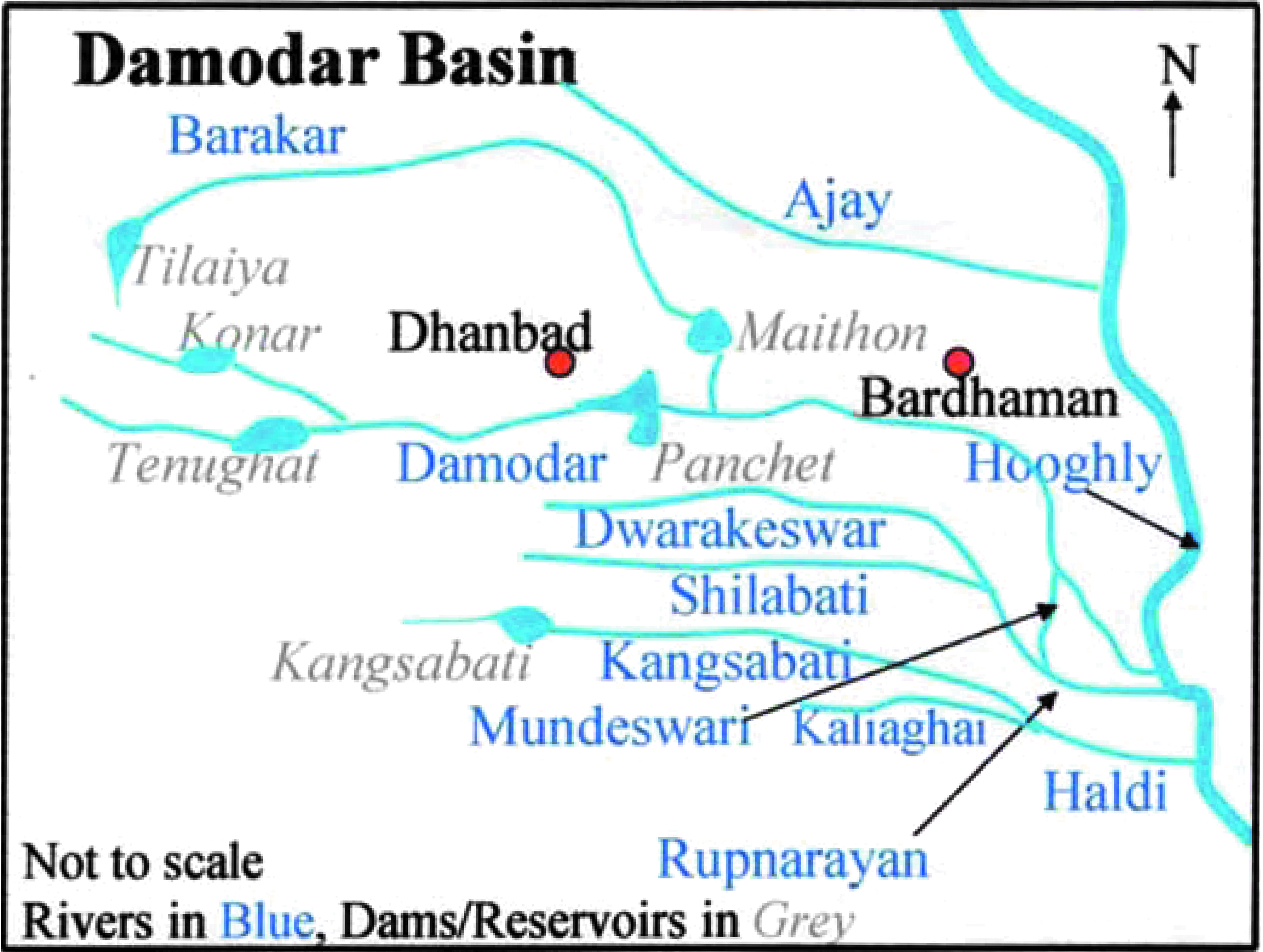
The tributary-rich Hooghly River.
Obstruction of the tributary discharges in the Hooghly has reduced its water supply in the adjoining areas. In addition, farmers have extracted so much groundwater annually that the flood season has not been able to recharge the basin.7 This has caused the groundwater table to sink, and the basin has become contaminated with arsenic. The arsenic-contaminated area of the Hooghly basin, which lies to the east side of the river where it meets no major tributary, is shown in Figure 3.8
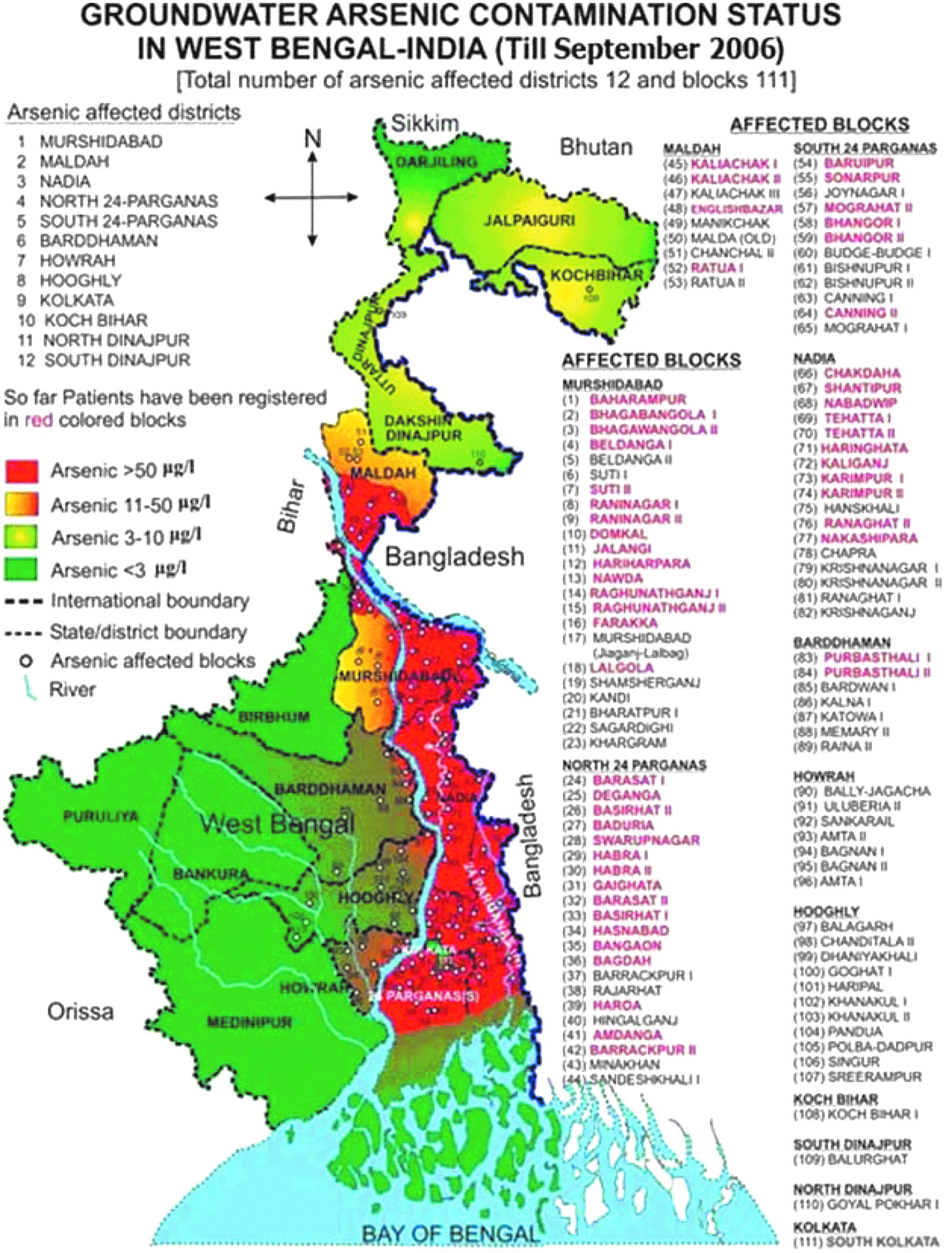
Arsenic-affected areas in West Bengal, India.
Bangladesh
In Bangladesh, upstream human activities have created downstream water shortages. Figure 4 shows the ring of dams and barrages around the border of Bangladesh.1 All international rivers marked in red face one or more dams at their upstream in India. Traversing the map in the anticlockwise direction from the left side, the greatest incidence of water piracy takes place near the Farakka Barrage on the Ganges (#4 in the map), followed by the Tista Barrage on the Tista River (#22 in the map).

The ring of dams around the Bangladesh border.
The Bhairab River, shown in Figure 5, was previously supplied with water from the Ganges,9 but water piracy from the Ganges and the Jalangi has dried up the river. Consequently, it now fails to supply trillions of gallons of water to its distributary's basins. Figure 6 shows a dead distributary of the Bhairab flowing by the Samanta village, where arsenic-contaminated water was first detected.10 Ever since these rivers have dried out, flood season water, which supplies all the needed water, has ceased to replenish them.
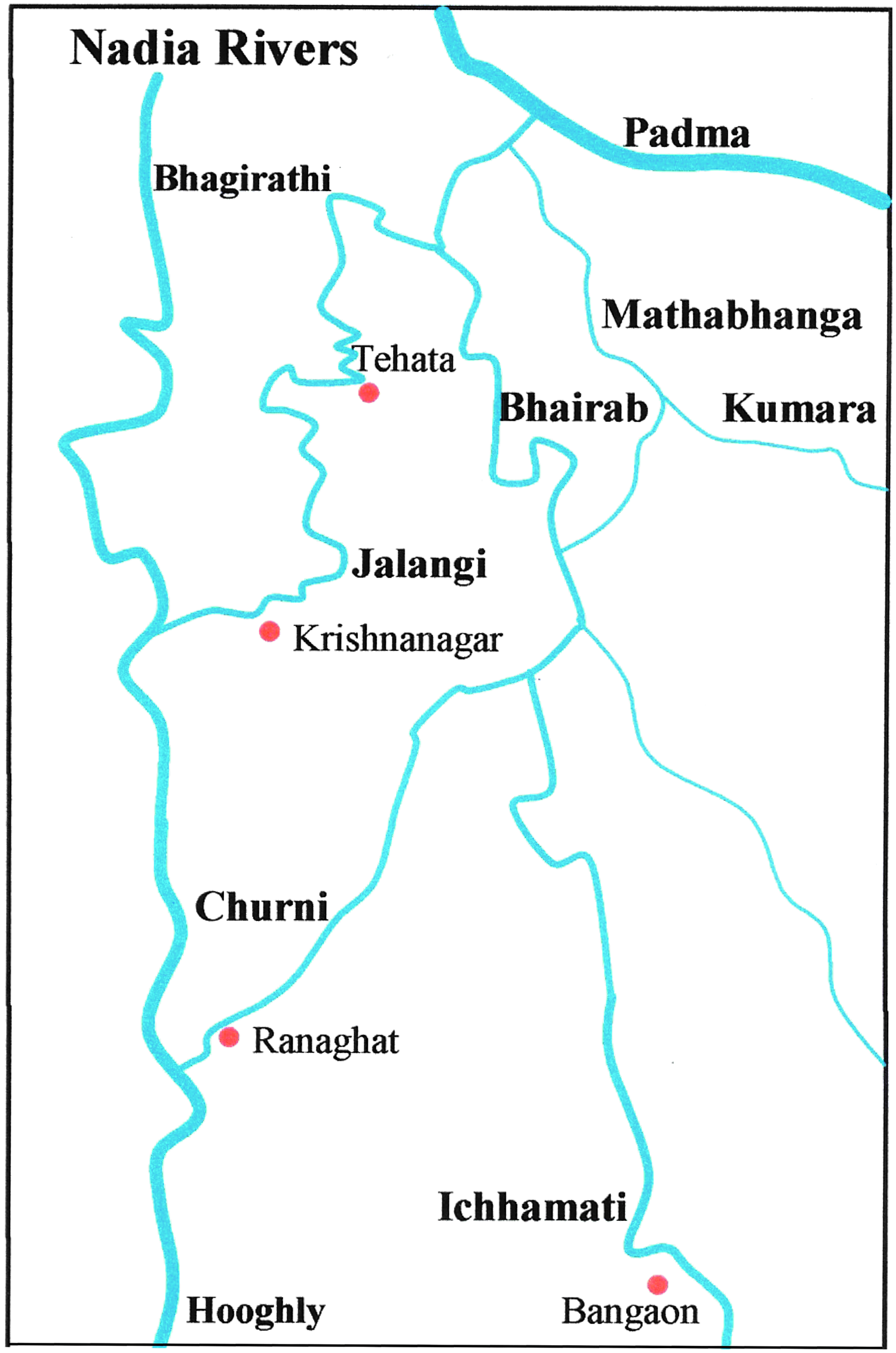
The Bhairab River was previously supplied with water from the Ganges and the Jalangi.
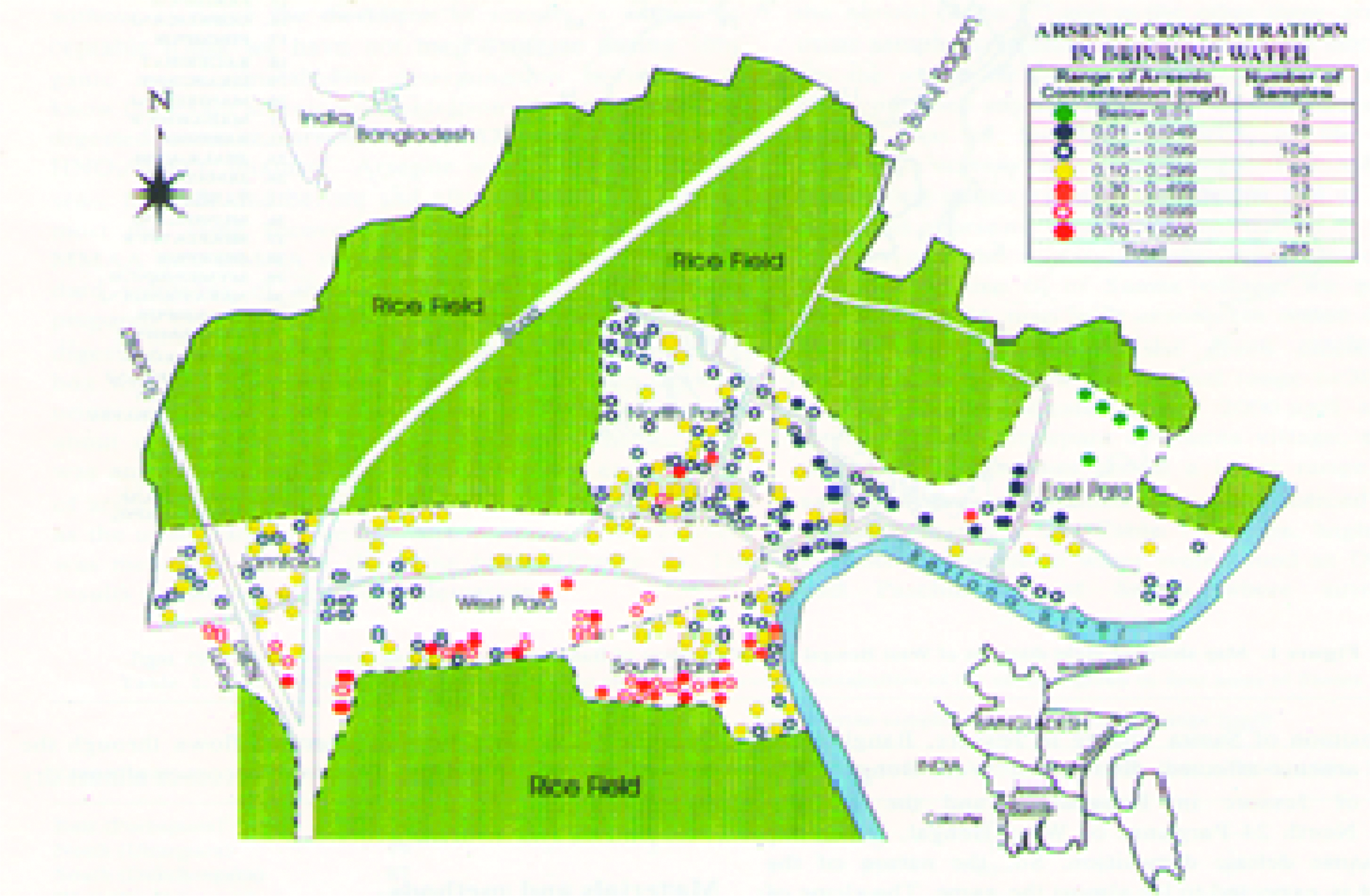
Arsenic-affected Samanta Village in Bangladesh located near the basin of a dead distributary of the Bhairab River.
Figure 7 shows a number of scenarios.11 The left-side top illustrates the level of water piracy since 1975. The right-side top shows the fissured Ganges bed in the mid-nineties as water piracy continued. The left-side bottom illustrates the condition of the first distributary Baral of the Ganges in Bangladesh. The middle part illustrates the origin of the subdistributary Musa Khan River, and the right-side bottom illustrates where the Musa Khan originates from the Baral.
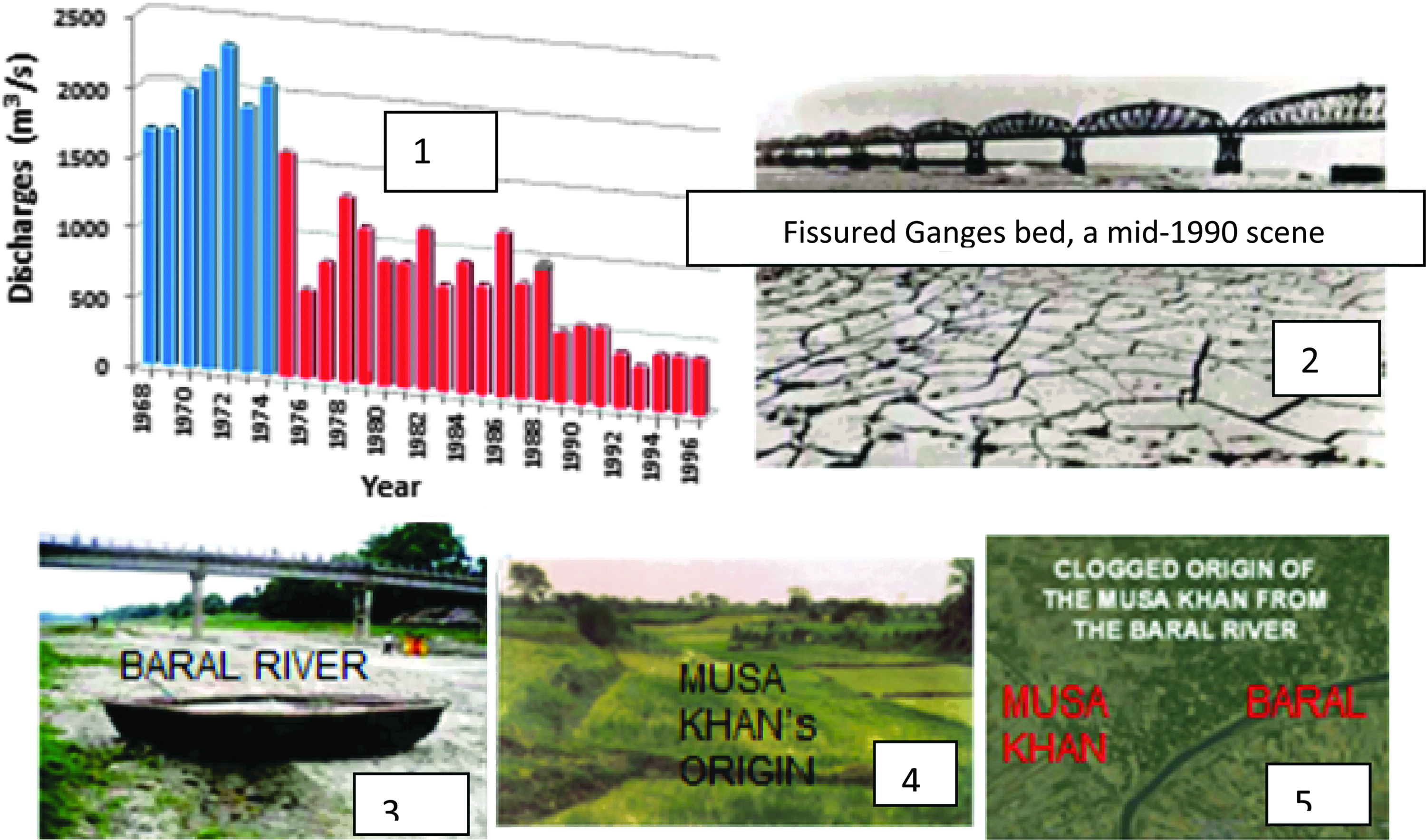
(1) Continued pirating of 60% of the Bangladesh Ganges ecosystem water; (2) the resulting condition of the world's eighth largest river; (3) dry bed of the Baral, the first distributary of the Ganges in Bangladesh; (4) the obliterated origin of the Baral's distributary Musa Khan; (5) branching off of the Musa Khan from the Baral. Adel, M. M. 2013a. Treeteo Jibjagat (in Bengali, in press), Dibbo Prakash, 32/2 Khan Bangla Bazar, Dhaka 1100, Bangladesh, and the references therein.
Figure 8 shows a number of activities in the Musa Khan River, including boat racing (inset 1), rice production in the basin flood plain with groundwater (inset 2), fishing in boats in rice fields (inset 3), part of the Musa Khan's dry bed (inset 4), children jumping in the water (inset 5), fishing in flood plains using bamboo-made fishing weapons (inset 6), dolphins in the flooded Musa Khan (inset 7), minority Hindus plunging statues of their deities (inset 8), fishing in the rice-producing flood plains (inset 9), and fishing in a flooded canal with nets (inset 10).11 More than two decades ago the natural resource supporting the activities and scenes like the ones shown in insets 1, 3, 5, 6, 7, 8, 9, and 10 that are very common in any riverine ecology was totally depleted from the Musa Khan basin.
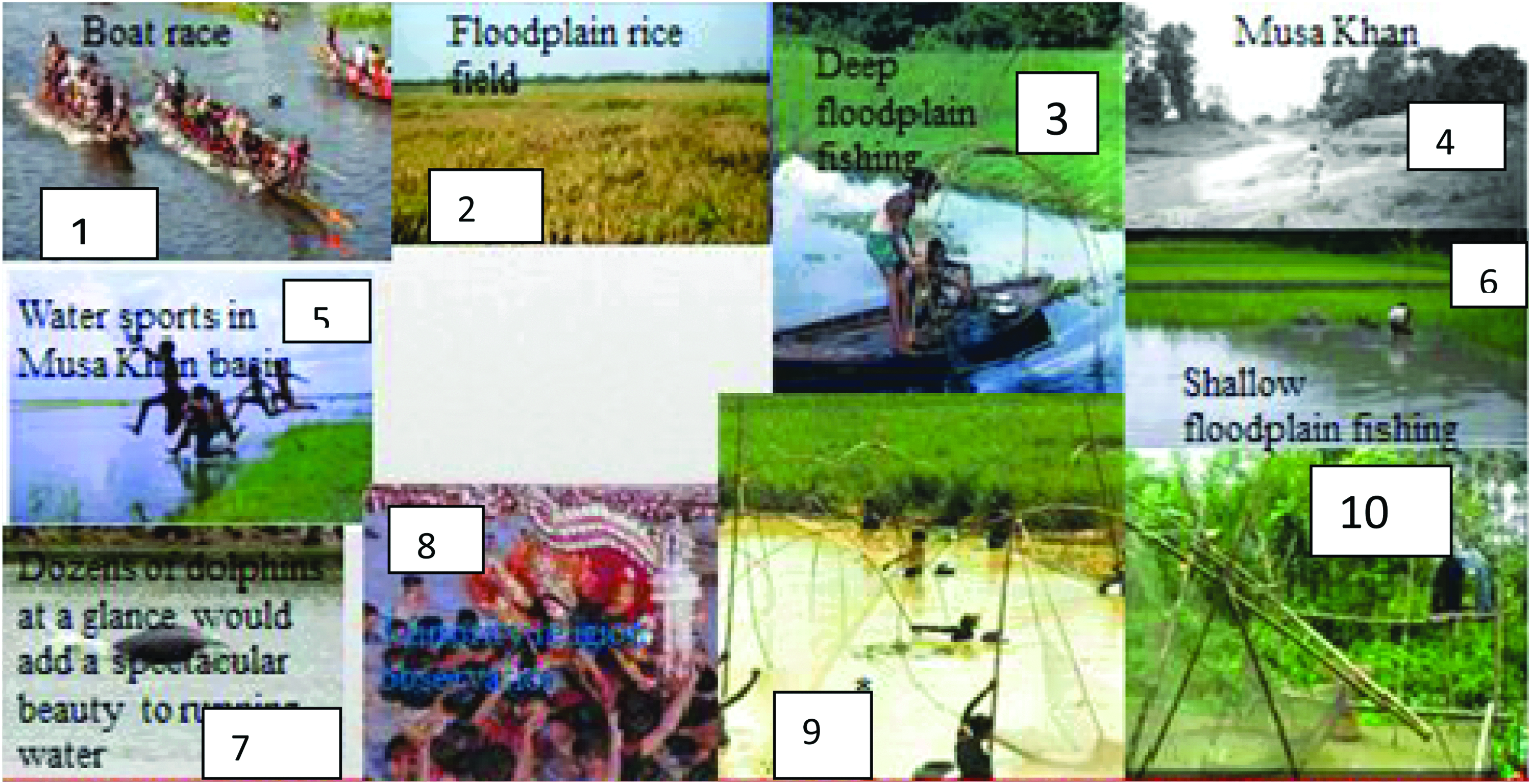
The lost wetland ecosystem of the Musa Khan River, a subtributary of the Ganges, before the Ganges water piracy started in 1975 by the Farakka Barrage. The illustration has been made by presenting some similar pictures from elsewhere in the country. (courtesy of the photographers and photograph providers.)
All the tube wells near the Musa Khan bank extract arsenic-contaminated water, which were not contaminated when the river was flooding every year. The middle inset in Figure 9 is the water-stagnant course of the Musa Khan. The left and right sides show the abandoned tube wells.11
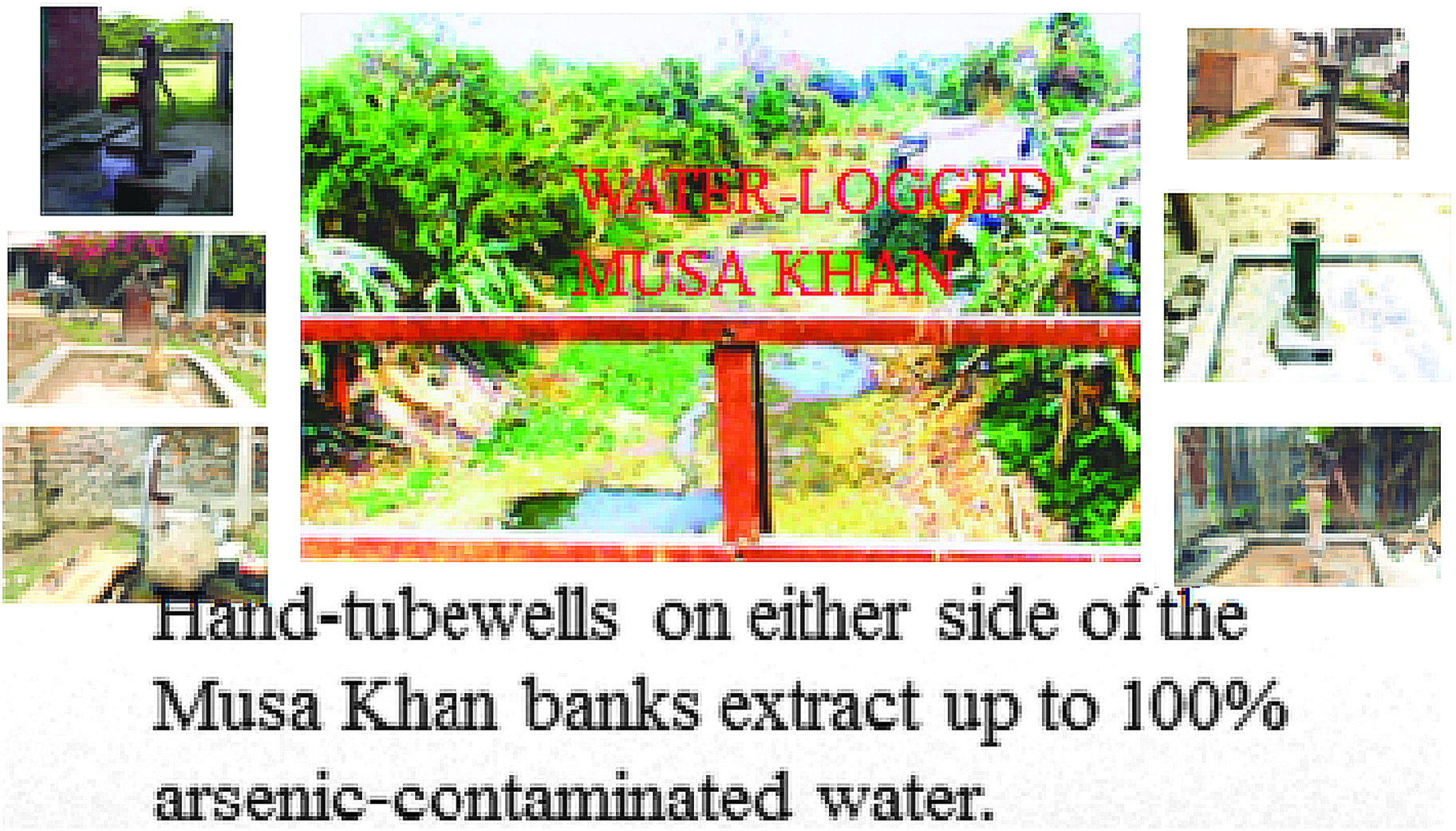
Musa Khan with shallow stagnant water. All tube wells by the Musa Khan basin extract arsenic-contaminated water. No arsenic was found when the river was alive.
The Bangladesh arsenic contamination map1 is shown in Figure 10. Because of the countrywide occurrence of this problem, Bangladesh's arsenic standard in drinking water has been increased to 50 μg/l, five times more than the level in the United States.

Arsenic-contaminated areas in Bangladesh.
Upper Ganges
Figure 11 shows operating, under-construction, and planned dams and barrages on the upper Ganges. Among the tributaries and subtributaries of the Ganges, the Yamuna's Chambal tributary has three, the Indus has one, the Betwa has three, the Son has one, the Son's Ryhand tributary one, the Ramganga has one, the Gondok has one, the Karnali or the Ghagra has two in Nepal and one in India, on top of the Ganga Canal, the Ganga Barrage, and the Farakka Barrage upon the Ganges itself. These dams and barrages have reduced the downstream virgin water supply, clogging many distributary channels and resulting in local overdependence on groundwater, which has caused the groundwater table to sink.12,13 Figure 12 shows the arsenic-affected areas along the entire Ganges basin.14
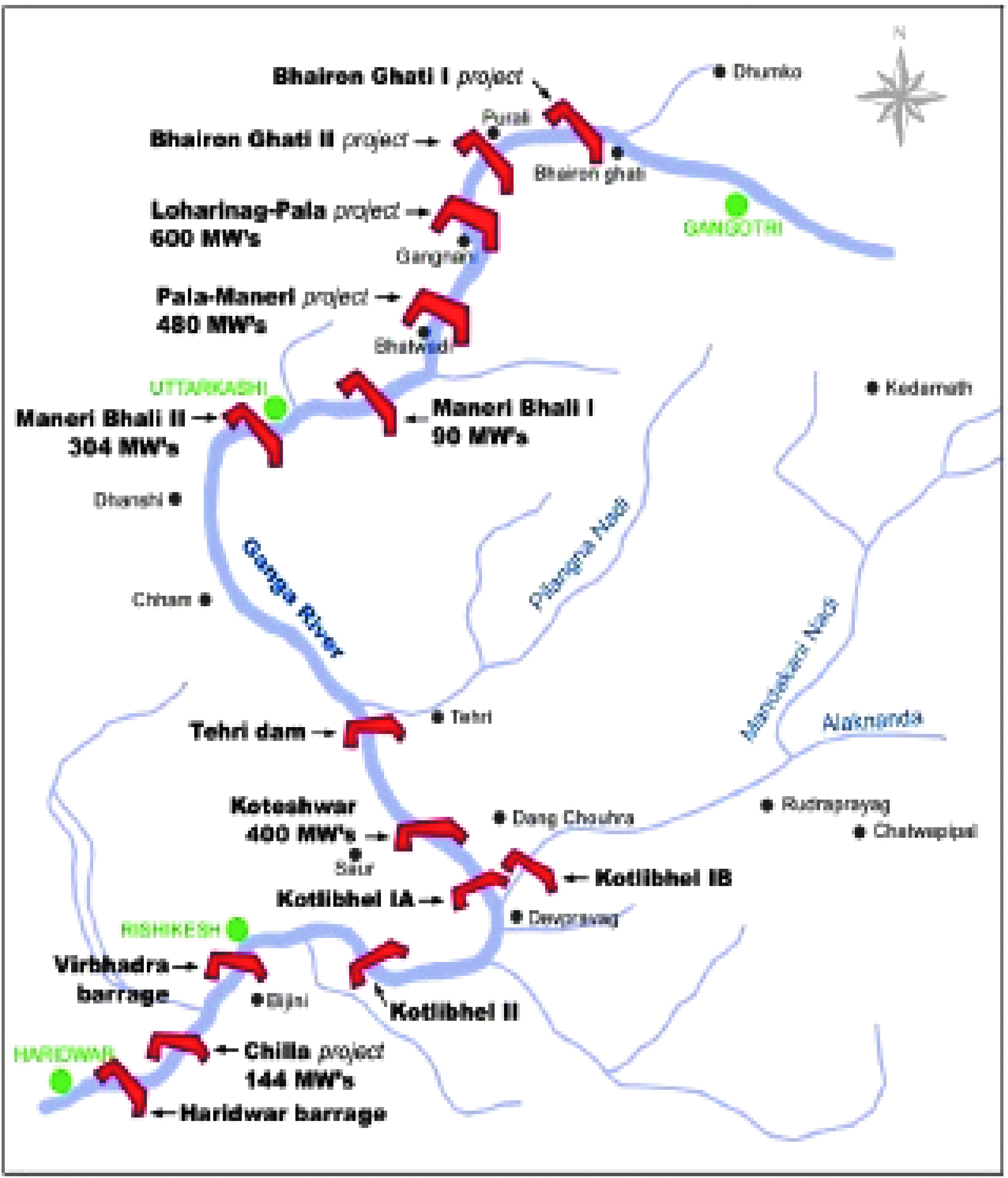
Dams on the Ganges and its tributaries.

Spread of arsenic contamination in groundwater along the basins of the tributaries of the Ganges, which have more than 20 dams and barrages.
The Indus Basin
Like Bangladesh, all Pakistani rivers originate in India (Figure 13). Due to the Indian construction of a dam over the Kishenganga River (Figures 14 and 15), its dry season flow is expected to be one-third of its average. However, India has not cooperated with Pakistan to resolve this problem.15
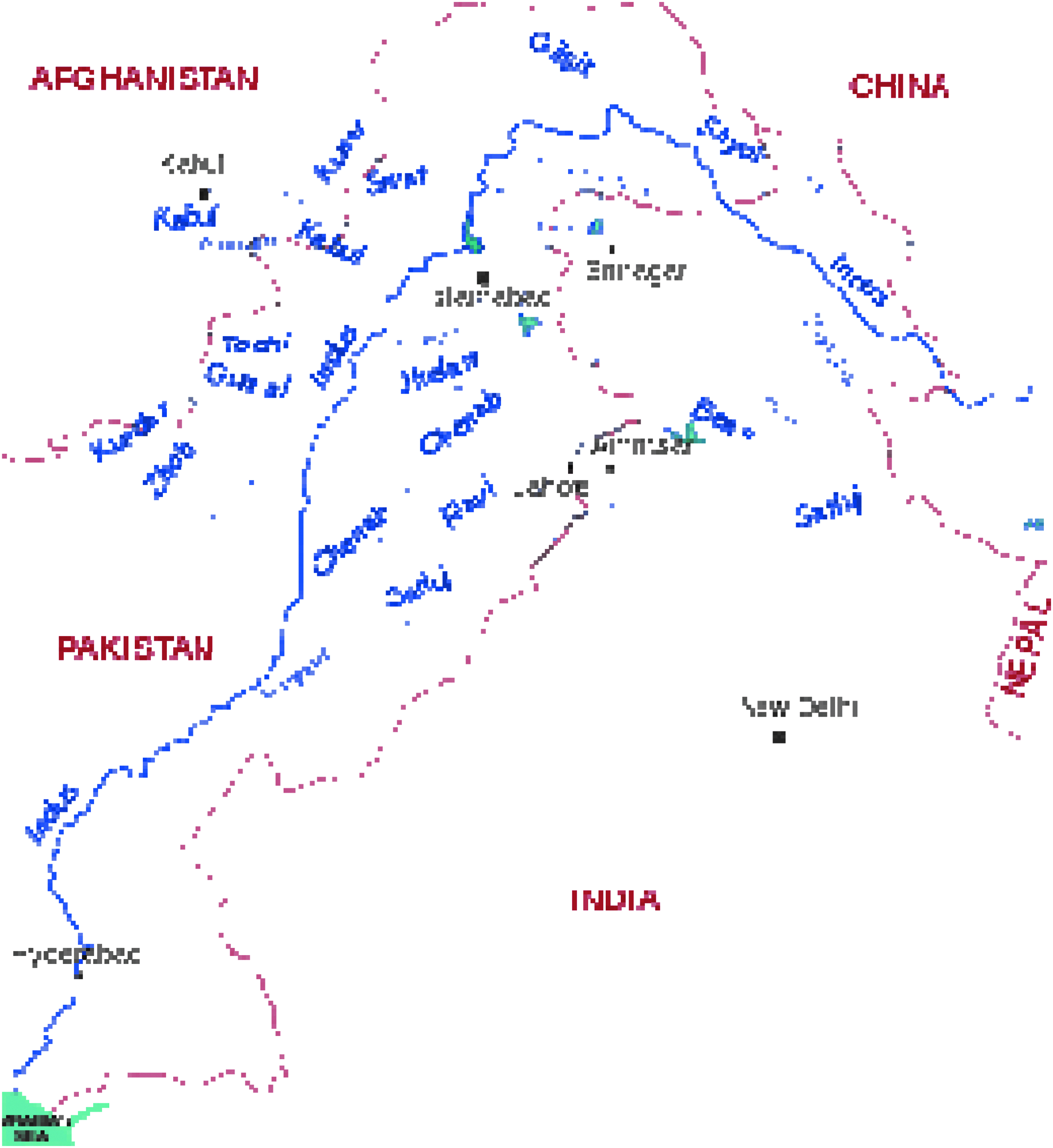
Like Bangladesh, all Pakistani rivers originate from India.
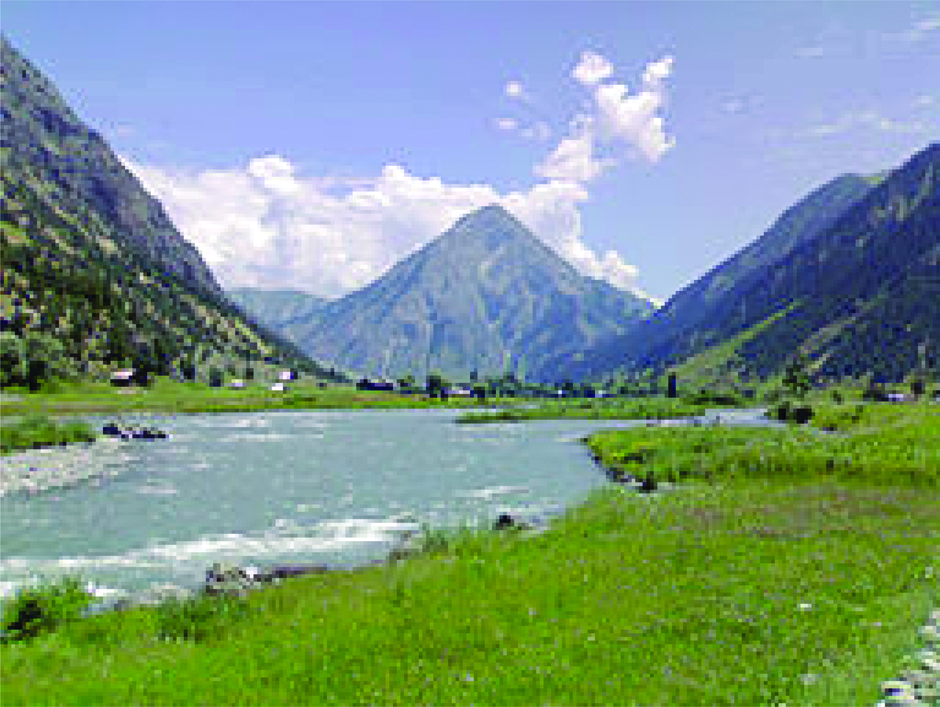
Kishenganga River.

Indian Kishenganga Project.
In the Sutlej basin (Figures 16 and 17), there are a total of 30 dams, including those that are operating, under construction, and planned.16 In accordance with the Indus Water Treaty, Pakistan is supplied with water from the Jhilam, Chenub, and Indus Rivers, and India is supplied with water from the Ravi and Sutlej Rivers. However, Indian dams in Kashmir pirate water from the Jhilam and the Chenub Rivers, and the Reas and the Sutlej Rivers in Pakistan are now almost dry,17 depriving the downstream ecosystem of trillions of gallons of water annually.
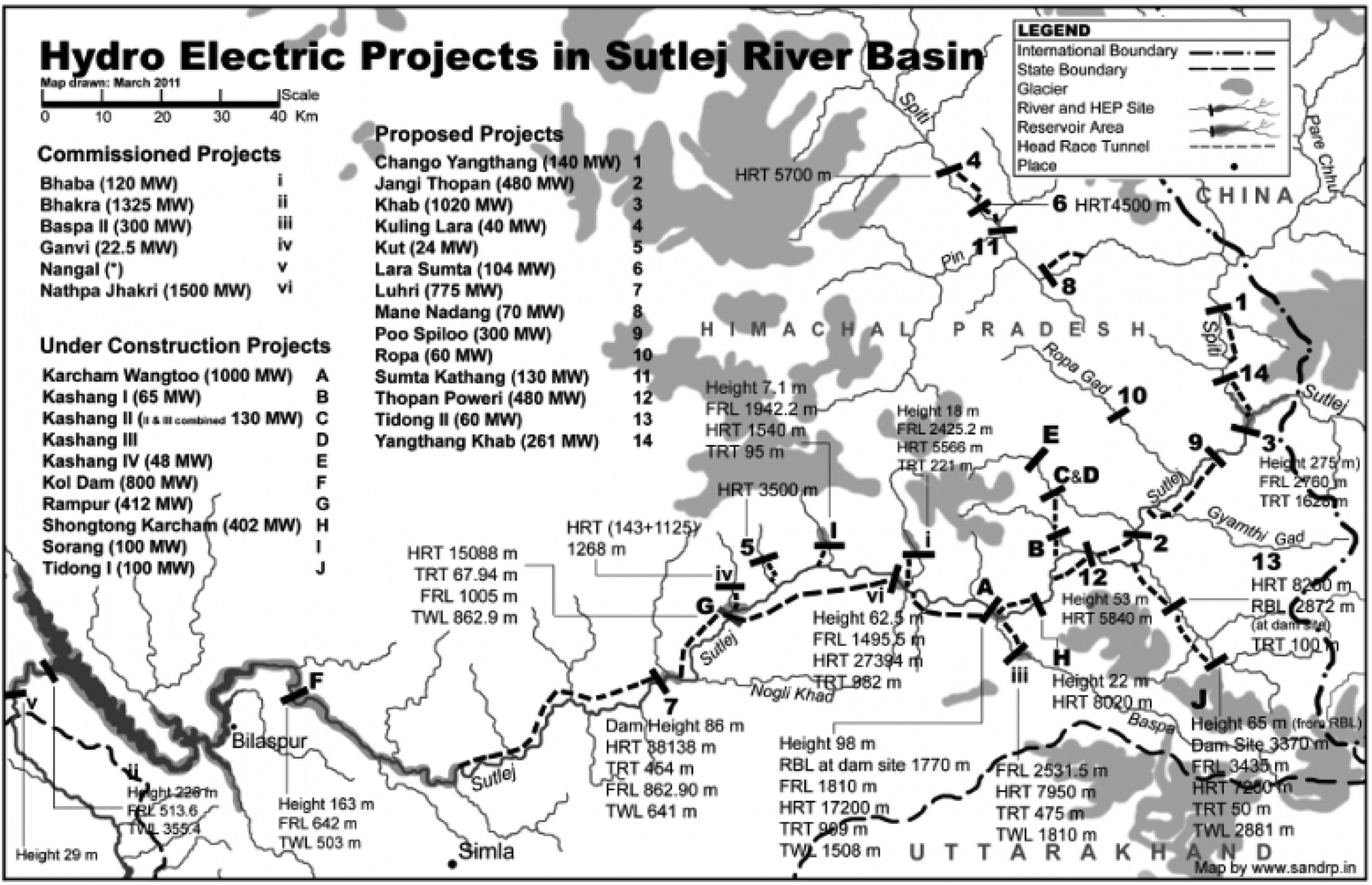
Indian dams on the Sutlej River, a tributary of Pakistan's Indus River.
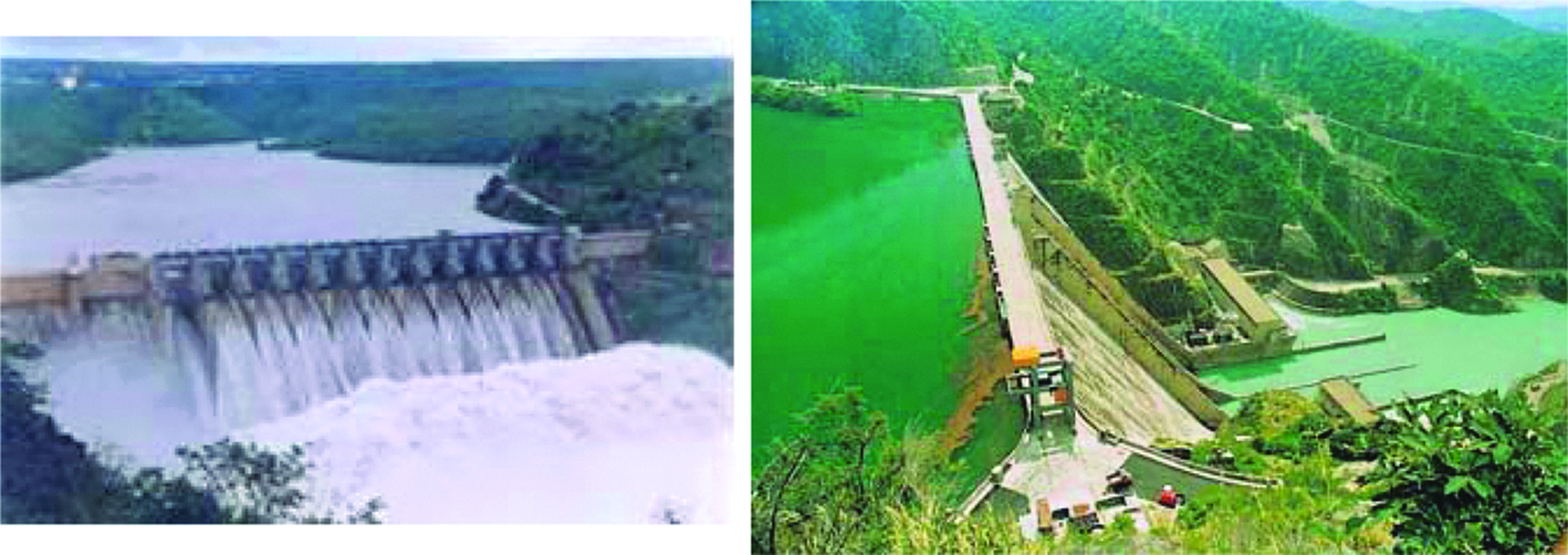
The Sutlej River and the Bhakra Dam upon it.
The barrages in the Indus are the Chashma, Guddu, Jinnah, Kotri, Sukkur, and Taunsa (Figure 18).18 Other barrages are the Sidhanai, Rasul, Qadirabad, and Marala. The total design withdrawal for canals is 3350 m3/s, a very large diversion from the natural water course. Between 1999 and 2000, groundwater extraction amounted to more than 51 billion m3, and Punjab obtained about 82% of the total amount.
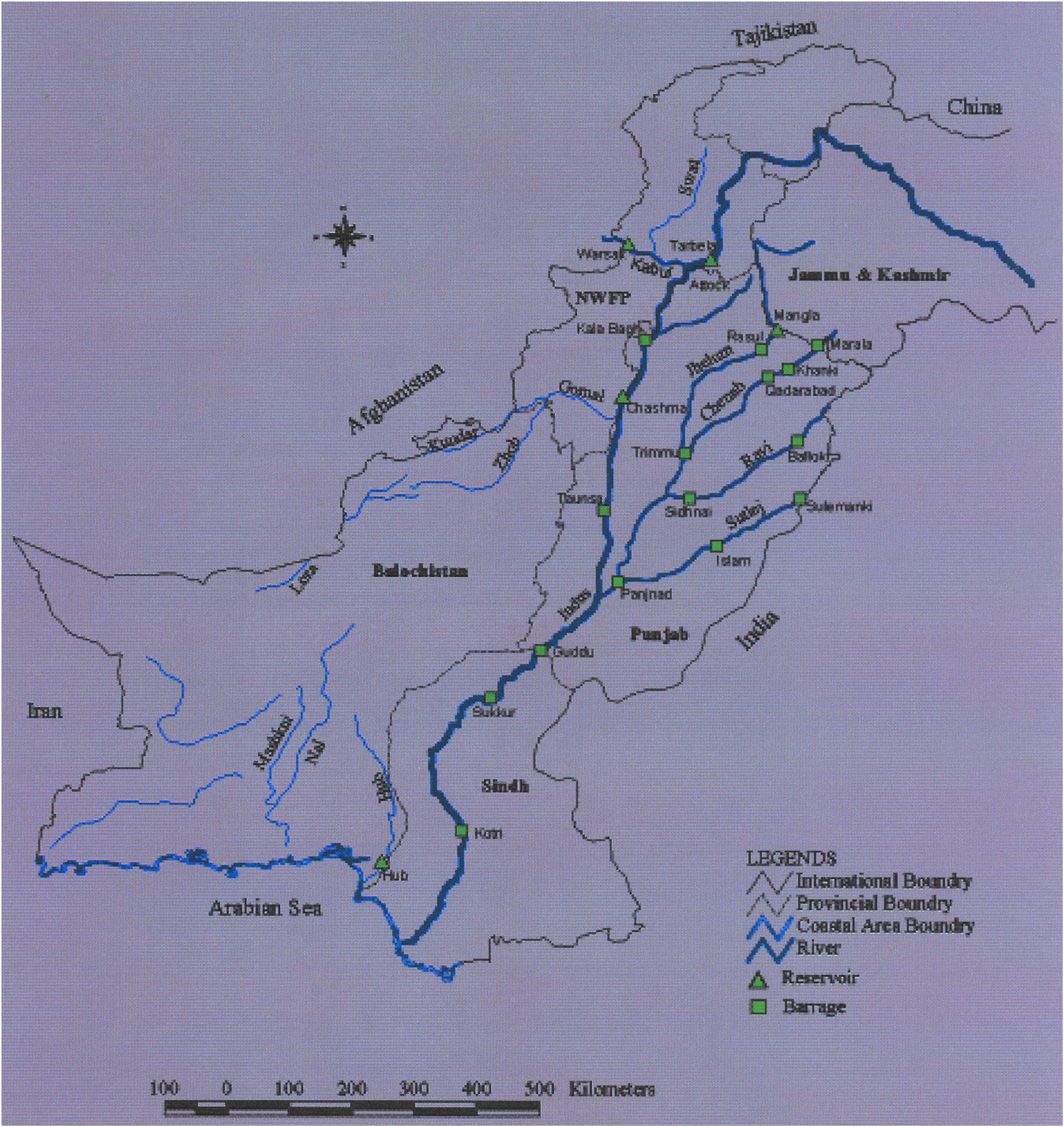
Dams in Pakistan. <
The groundwater over a large area in southern Pakistan covering the districts of Multan, Bahwalpur, and Rahim Yar Khan; the central Sindh areas of Khairpu, Mirs, and Dadu; and most of Punjab is contaminated with up to 906 μg/l of arsenic, which is about nine times greater than the WHO's recommended level of 10 μg/l.19,20 As a result, over a million people in these parts suffer from arsenic poisoning.
The Mekong Basin
In the Mekong basin21 (Figures 19 and 20), the seven completed and projected hydropower dams in Yunnan Province in China are the Manwan, Dachaoshan, Jinghong, Xiaowan, Nuozhadu, Mengsong, and Gonguoqiao. The total gross and active water storage in them are 40.68 and 3.20 billion m3, respectively. Landlocked Laos has planned 60 dams in about 35% of the Mekong basin. Shinkai et al.22 reported high levels of arsenic in the groundwater in Tien Giang Province and Dong Thap Province, and arsenic concentrations in the drinking water range from 0.90 to 32 μg/l. Twenty-seven percent of the shallow tube wells were found to exceed the WHO's provisional guideline of 10 μg/l, and Inoue et al.23 reported even higher concentrations in Cambodia. In Cambodia and Vietnam, the arsenic concentration in contaminated groundwater is in the range of 10 to 30 μg/l in shallow and deep aquifers up to a depth of about 130 m and 600 μg/l in organic-matter-rich flood plains.
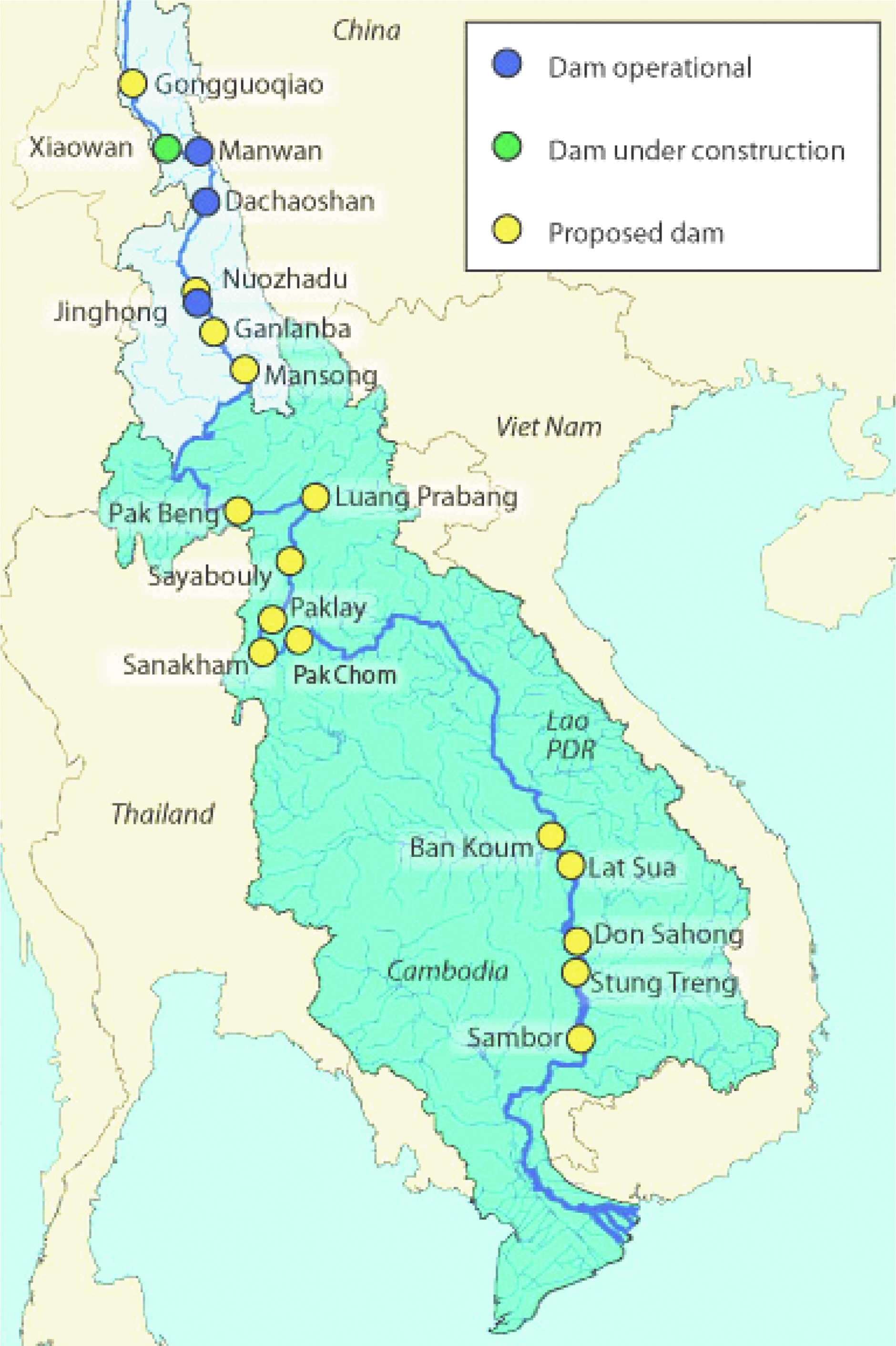
Operating, under-construction, and planned dams in the Mekong basin. <
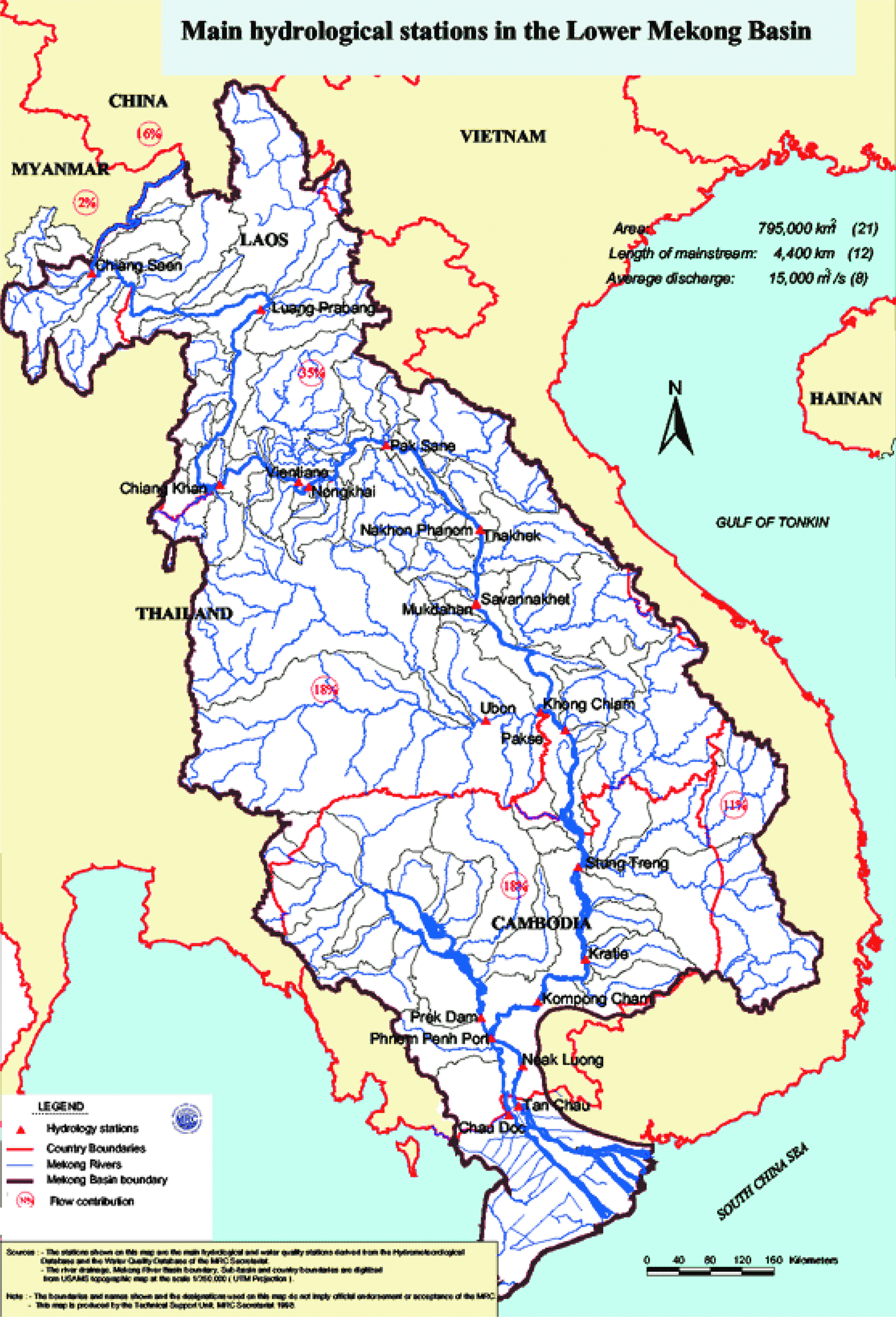
The Mekong basin.
Discussion
River particulates greater than 0.45 μm in size carry 33–67% of the total arsenic load of rivers such as the Ganges and the Mekong.24 The Ganges water sediment of 4.5 kg/m3 (0.28 lb/ft3) is proportionately responsible for depositing the arsenic load in its alluvium. As long as these alluvium-mixed arsenopyrites are under water, they are inactive. However, when the groundwater table sinks, they are exposed to atmospheric oxygen and produce water-soluble compounds of arsenic, which can contaminate groundwater via infiltration with inadequate levels of recharging water. The break-up reaction of pyrite can be represented as
Molecular oxygen oxidizes Fe (II) and S2 (-II) to form stable ferrihydrite Fe(OH)3 and dissolves sulfate S(VI) and H ions. In acidic solutions, the release of H and sulfate anions results, forming compounds of sulfate, unless reactions occur to neutralize the cations.
The top reaction takes place in the following four steps:
Wide and relatively uniform aeration of alluvium-mixed arsenopyrites comes from the vadose zone as a result of the sinking groundwater table. Air also enters through fissures in the ground, as shown in Figure 7 in the Ganges bed and in Figure 21. These fissures are quite wide, large, and deep. Such macroscopic and other microscopic fissures in the ground are also common features in the deltaic soil in Bangladesh as the water level evaporates from the surface and the groundwater table lowers.

Flood plains do not get river water. The cracked ground contributes to the oxidation of alluvium-buried arsenopyrites, resulting in conversion to water-soluble arsenic that contaminates the groundwater.
Water's Self-Purification Property
Iron can purify water contaminated with arsenic in the presence of oxygen,24 and this property is used in arsenic filters. The self-purification reaction is as follows:
The precipitated ferric arsenate later undergoes other transformations.
The alluvium in clay and sand has an average porosity of 0.40 and a specific yield of 0.14.25 For a 10 m depletion of groundwater in the 47,000 m2 Ganges basin in Bangladesh, an estimate of aeration is as follows:
aeration=volume of water that could be stored – volume of water that could be removed=porosity×alluvium volume in a land mass – specific yield×alluvium volume in the same land mass
=1.88×10¹¹ m3 – 2.63×10¹⁰ m3=1.62×10¹¹ m3.
This shows that there is abundant oxygen to oxidize arsenopyrites. If in reality it becomes one-thousandth less effective (1.62×10⁸), still more than 100 million m3 air, with an oxygen content of more than 30 million m3, can infiltrate.
The basins of dead streams, abandoned channels, water-deprived areas, etc., such as the Hooghly, Ganges, Indus, and Mekong basins, are more prone to arsenic contamination for the reasons illustrated above. Therefore, before the water levels of any area of a river basin are reduced, river basin geochemistry must be studied, and the presence of arsenopyrites should be determined. Since groundwater may also contaminate previously safe tube wells (see Figure 22), groundwater movement should also be studied.
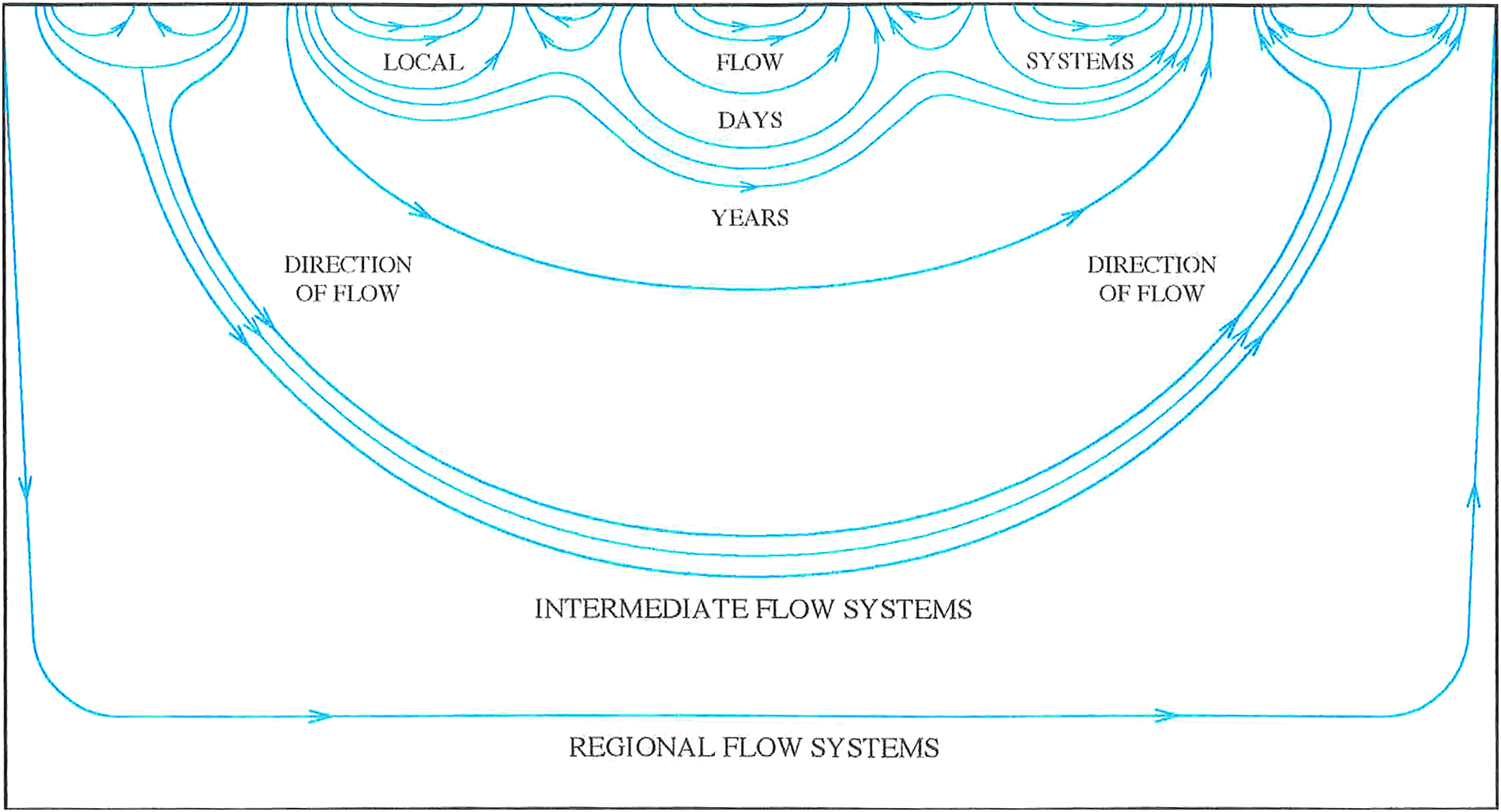
Groundwater movement on different spatial and temporal scales. Winter, T. C., W. Harvey, O. L. Fanke, and W. M. Alley, W. M. 1998. Groundwater and Surface Water a Single Resource. U. S. Geological Survey Circular 1139, Denver, Colorado.
Conclusion
Upstream water piracy of river basins deprives the downstream ecosystem of the water required to maintain its function. River-particulate-carried arsenic mineral buried under the alluvium becomes exposed to air in the vadose zone and fresh air through ground fissures, forming water-soluble compounds of arsenic. These compounds can infiltrate the groundwater and contaminate it with arsenic. The contaminated water can also affect previously uncontaminated sites. Purification of arsenic-contaminated groundwater is not efficient because it is not supplied with adequate oxygen to react with iron. This picture of arsenic contamination describes well the downstream waterless sites. In the future, it is very important to study the river basin hydrogeochemistry before any water diversion construction or groundwater exploitation project is begun.
Footnotes
1
Adel, M. M., 2001. Effects on Water Resources from Upstream Water Diversion in the Ganges Basin, Journal of Environmental Quality 30:356–368.
2
Adel, M. M. 2012a. Downstream Ecosystem Sustainability Challenge from International River Water Plunderage, in S. Rab (ed.) Proceedings of the 3rd America Bangladesh Canada Convention 2012, at 58–66.
3
Adel, M. M. 2012b. “Downstream ecocide from upstream water piracy,” Am. J. Environ. Sci., 8:528–548. DOI: 10.3844/ajessp.2012.528.548.
4
<
5
Acharyya, S. K., and A. H. Babar. 2007. Arsenic-contaminated Groundwater from Parts of Damodar Fan-delta and West of Bhagirathi River, West Bengal, India: Influence of Fluvial Geomorphology and Quaternary Morphostratigraphy, Environmental Geology 52:489–501.
6
<
7
Subramaniam, K. S., and M. J. Kosnett. 1998. Human Exposure to Arsenic from Consumption of Well Water in West Bengal, India. International Journal of Occupational and Environmental Health 4:217–230.
8
<
9
<
10
Courtesy of Chokroborty.
11
Adel, M. M. 2013a. Treeteo Jibjagat (in Bengali, in press), Dibbo Prakash, 32/2 Khan Bangla Bazar, Dhaka 1100, Bangladesh, and the references therein. Courtesy of
12
Adel, M. M. 2013b. Jaladasyupana (in Bengali), Dibbo Prakash, 32/2 Khan Bangla Bazar, Dhaka 1100, Bangladesh.
13
<
14
<
15
<
16
<
17
<
18
<
19
<
20
Nickson, R., J. M. McArthur, B. Shrestha, T. O. Kyaw-Myint, and D. Lowery, D. 2005. Arsenic and Other Drinking Water Quality Issues, Muzaffargarh District, Pakistan. Applied Geochemistry, 20:55–68.
21
<
22
Shinkai, Y., D. V. Truc, D. Sumi, Canh, Doan, and Y. Kumagai. 2007. Arsenic and Other Metal Contamination of Groundwater in the Mekong River Delta, Vietnam. Journal of Health Science, 53(3):344–346.
23
Inoue, S., T. Agusa, T. Minh, N. Tu, B. Tuyen, C. Chamnan, T. Tana, H., Iwata, and Tabab. 2005. Contamination of Arsenic in Groundwater from Lower Mekong Basin. <
24
Hindmarsh, J. T., and R. F. McCurdy. 1986. Clinical and Environmental Effects of Arsenic Toxicity, in CRC Critical Reviews in Clinical Laboratory Sciences, CRC Press, Vol. 23, at 315–347.
25
Linsley, R. K., M. A. Kohler, and J. L. H. Pauilhus, 1992. Hydrology for Engineers, 3rd ed., McGraw-Hill, New York.