




Abstract
Abstract
Lead contamination was introduced into U.S. surface soils at high concentrations during the last century, mainly as a result of lead-based paints and leaded gasoline products. Although these products have not been available or used since the 1995 ban on lead additives in gasoline for automobiles, lead continues to remain in the surface soils of inner cities. Lead (Pb) is a neurotoxin that has been linked to violence and reduced intelligence in children from long-term exposure to contaminated soils. Philadelphia is a city with a history of industrialization and provided a home to several Pb smelters, which extracted Pb from minerals and recycled Pb-waste to use in manufacturing these commercial products. Soils were analyzed in former industrial and non-industrial locations within Philadelphia. Overall, Pb concentrations were found to be higher at locations near former lead smelters than residential sites. Pb concentrations were also elevated in a soil sample adjacent to an old home with visibly weathering paint. One soil sample was further analyzed for its mineralogical composition and was found to contain Pb mostly in the form of an organic compound similar to the tetraethyl-lead compound in leaded gasoline. This study suggests that gasoline was an important source for Pb in surface soils, and that Pb contamination in Philadelphia soils may be quite widespread and not limited to former lead smelter sites and areas adjacent to buildings that contain lead-paint. Further analyses are necessary in order to create a more detailed perspective of existing trends in Pb contamination in Philadelphia soils.
Introduction
I
Generally, Pb contamination in the environment is a result of anthropogenic activity. In fact, recent studies suggest that humans have been using Pb for at least 6,000 years (Hernberg 2000; Wynant, Siemiatycki, Parent, and Rousseau 2013). However, researchers also suggest that exposure to Pb can negatively affect the nervous system (ATSDR 2007; Cory-Slechta 1996). Elevated blood lead levels have been found to be inversely correlated with intelligence tests (IQ), even when other factors were considered (Lanphear et al. 2005). In children under six there is an even greater risk for Pb poisoning because of their blood's ability to retain greater amounts of Pb and the probability that children of this age will ingest Pb by contact between hands and mouth (Chen, Dietrich, Ware, Radcliffe, and Rogan 2005; Lanphear et al. 2005; Rothman, Lourie, and Gaugan 2002). Pb has also been linked to violence (Mielke and Zahran 2012) and reduced intelligence in children from long-term exposure to contaminated (Zahran, Mielke, Weiler, Berry, and Gonzales 2009; Zahran et al. 2012).
Lead smelters were producing Pb for its use in lead-based paint pigments, as well as plumbing pipes and cable wires (Rabinowitz 2005). Leaded gasoline also served as a major source of the toxic heavy metal. A study was conducted to determine the effects of the anthropogenic use of Pb additives on urbanized areas in the United States (Mielke, Laidlaw, and Gonzales 2011). By comparing various records, the amount of Pb additives used and the consequent Pb aerosols released were calculated for 90 different areas. The study suggested that in the past 100 years alone, the anthropogenic use of Pb as a paint and gasoline additive in the United States has contributed significantly to its overall global industrial production. Both of these products have been removed from the current market in the U.S., with lead-based paints banned in 1978 (Korfmacher and Hanley 2013) and leaded gasoline for automobile use banned in 1995 (Miranda, Anthopolos, and Hastings 2011), leaving aviation gasoline as one of few current inputs of lead into surface soils. Anthropogenic Pb still, however, has the potential to collect in soils where it becomes bioavailable and toxic. While natural Pb also exists in soils, the concentrations are very low (16.5 ppm) and considered safe (Datko-Williams, Wilkie, and Richmond-Bryant 2014). In addition, the study showed that Pb levels within soils tend to be greater in the inner-city as compared to surrounding areas (Mielke et al. 2011).
Although the Mielke et al. 2011 study focused primarily on lead fuel additives, it did show the correlation between Pb additives in general and soil contamination. Given the history of lead smelting and paint production in Philadelphia, the main area of focus of the current study is Pb contamination resulting from lead smelters. The objectives of this article are two-fold: First, determine if greater amounts of Pb are found in soils in areas near former lead smelters within the city of Philadelphia as opposed to those areas with a non-industrial background. There has been increased attention on study sites throughout the United States that have an industrial background, particularly in areas of former lead smelters, with respect to lead contamination in urban soils. Within Philadelphia, these neighborhoods have become the primary focus of popular media coverage and these stories have revealed soil Pb concentrations that greatly exceed Environmental Protection Agency (EPA) soil screening levels (Young 2012). However, 40% of the homes in Philadelphia were constructed before 1939, while 85% were built before 1970 (Census 2012), thereby increasing the risk of soil Pb contamination from historical use of leaded paints in the vast majority of residential soils in Philadelphia, based on the likelihood that houses built before 1978 will contain some traces of leaded paint (Center for Disease Control and Prevention). While we hypothesize that the soils found in areas of former Pb smelters will have higher concentrations of Pb, it is suspected that substantial Pb contamination exists throughout the city, posing a widespread public health concern for all residents of Philadelphia. Second, this study aims to determine whether the species of Pb found near the smelters reflect a chemical signature associated with leaded paints, leaded gasoline and/or leaded ores.
Methods
Sampling locations
Six sites were analyzed for Pb using x-ray fluorescence. Of the six sites, two were located in former industrial areas within Philadelphia, specifically near former lead smelters. Using a handful of Philadelphia maps found on
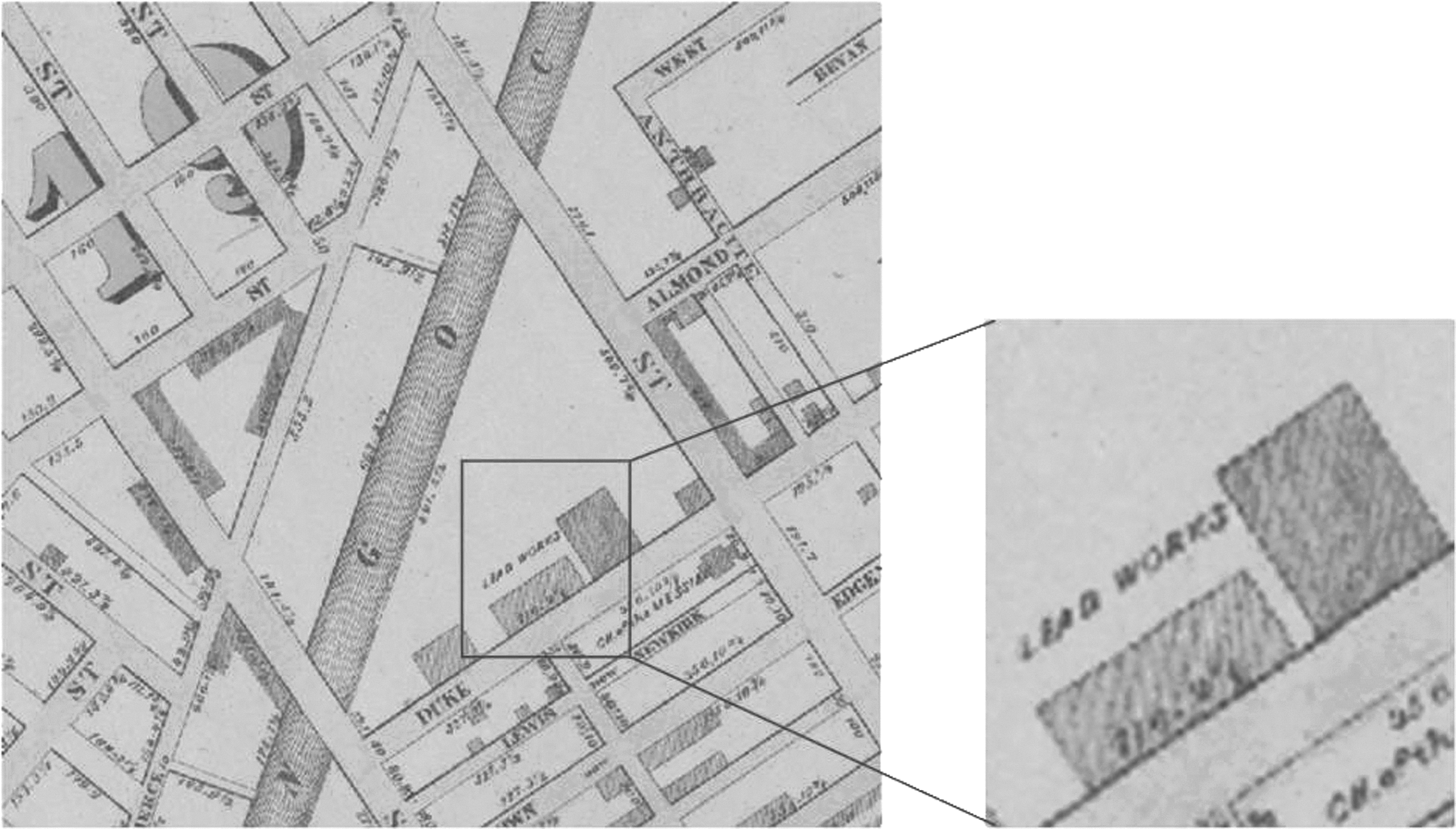
1862 Philadelphia Atlas.
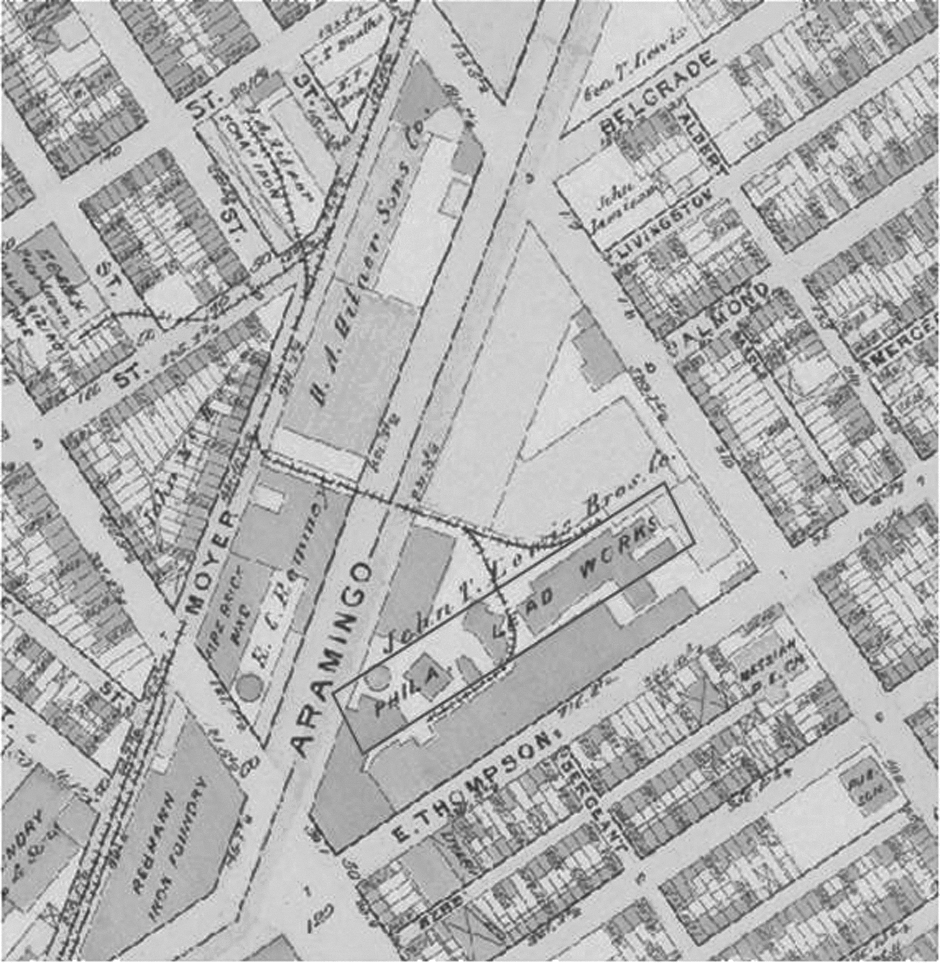
1910 Philadelphia Atlas.
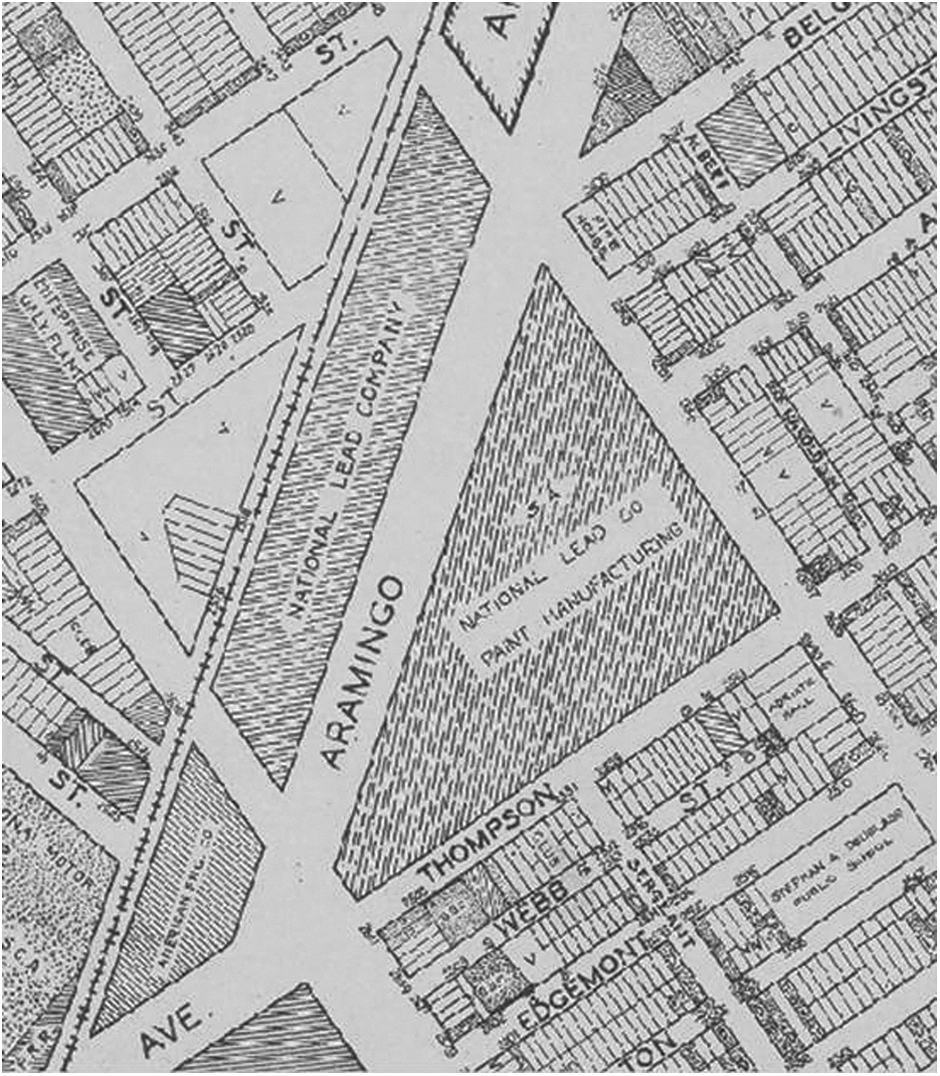
1942 Land Use Map.
The remaining samples were taken in areas with no history of industrial activity. All four of these samples were collected at residential locations. The Overbrook samples (Figure 4,) were taken at the same location, one right next to the house (<1 m away from the house) and one further away from the house (located in the garden, ∼10 m away from the house). The Nedro and Wingohocking samples (Figure 4) were taken away from the house in garden soils (3 m and 5 m, respectively). Figure 4 and corresponding Table 1 give an overview of Philadelphia with the six sampling locations marked and labeled.
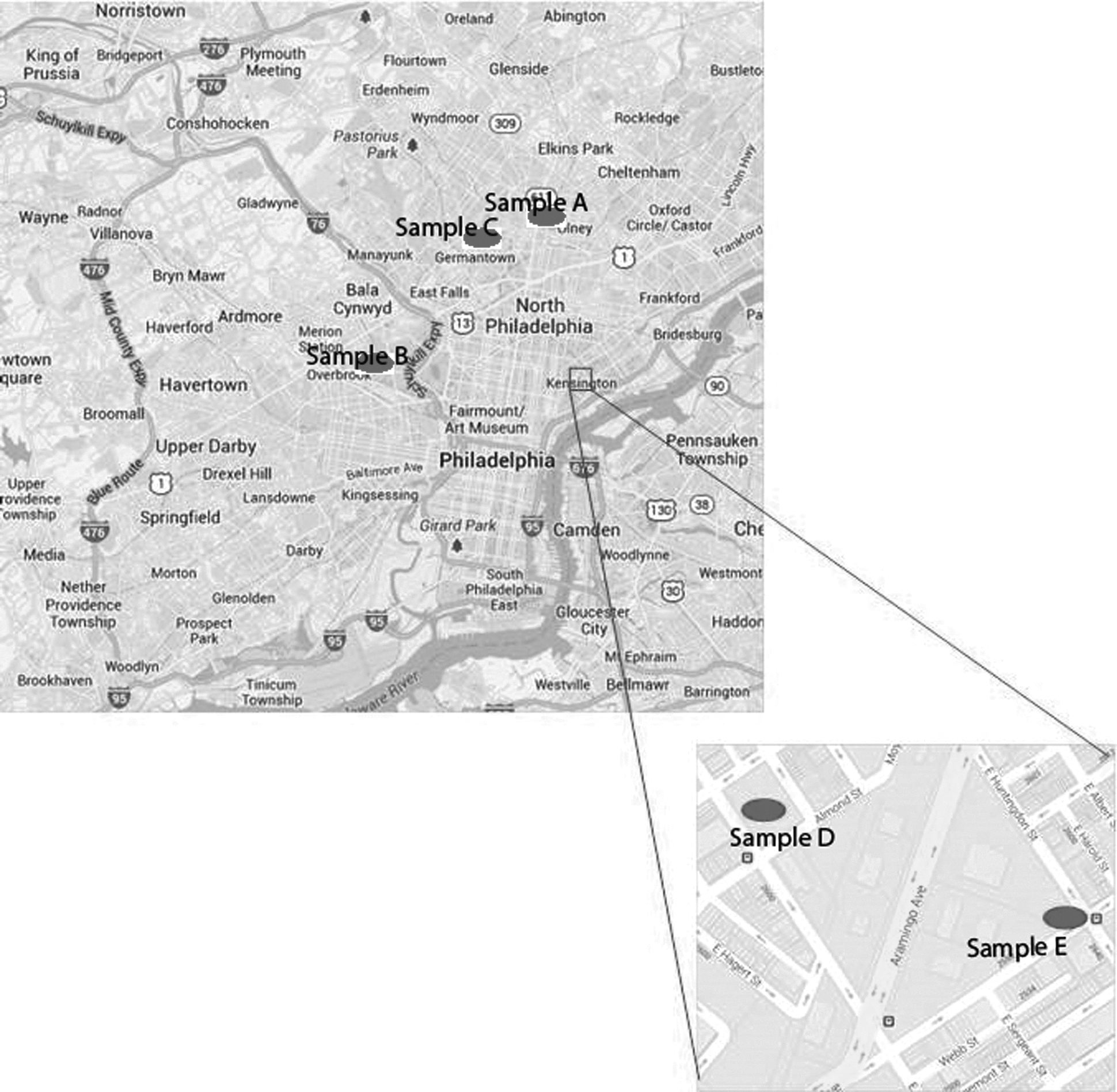
Current locations. Samples D and E marked on inset map.
Indicates those samples taken in areas with history of industrial activity.
Portable x-ray fluorescence analyses
Soils were analyzed in the field using a portable x-ray fluorescence (PXRF) analyzer. The analyzer, which is handheld and portable, is used to identify heavy metals and requires minimal preparation of samples. In addition, it is able to provide instantaneous results on-site (Driscoll, Marshall, Wood, and Spittler 1991). In fact, “the U.S. EPA has recommended a portable x-ray fluorescence…analyzer as the instrument of choice for the remedial investigations and feasibility studies…for on-site analysis of metals in soil at hazardous waste sites” (Driscoll et al. 1991). The elemental composition of the collected soil samples can be determined (Pyle et al. 1995) and in particular, the ability of the PXRF to clearly distinguish Pb from the adjacent elements of nickel, copper, and zinc and its ease of use in the field make it particularly useful for our purposes (Driscoll et al. 1991). Although soil analysis can be determined in 20 seconds using the PXRF analyzer, additional time improves the accuracy of the results. Each sample was analyzed for 60 seconds in duplicate or triplicate analysis, and an average of the results was taken for each sample.
All soil sampling was done by direct contact between the PXRF and the soil surface. There was no soil preparation or consequent soil disruption. Field-based measurements have been shown to underestimate actual elemental concentrations (Hu, Huang, Weindorf, and Chen 2014; Weindorf et al. 2014). The current study was a part of a pilot project on the use of community-based workshops to educate the public about soil health and was also used as a means to identify sample locations based on the needs of community members and stakeholders (Hall, Easley, Howard, and Halfhide 2013). Data was collected as a part of the workshop at the residential sites. The data collected on the industrial sites were performed during a summer, field-based research experience for an undergraduate student (J. Reiners). The data reported here is used to compare the types of sites (industrial versus non-industrial) and to identify areas with remarkably high concentrations of Pb. The use of the PXRF for field-based measurements has been documented by other researchers when conducting surveys that may yield large number of samples (Carr, Zhang, Moles, and Harder 2008; Kalnicky and Singhvi 2001; Radu et al. 2013). The data should, therefore, be considered more qualitative than quantitative, for the sake of comparison.
X-ray diffraction
X-ray diffraction analyses was performed in order to obtain information on the solid-state, crystalline compounds containing Pb in the soil, which may yield information on the source of the Pb and its solubility (Barrett, Taylor, Hudson-Edwards, and Charnock 2010; Olson and Skogerboe 1975). Using an automated shaker, the soil samples (Tables 1 and 2) were separated into the different size fractions of 2 mm, 32 μm, 250 μm, and 500 μm. The 32 μm fraction was then further analyzed using an x-ray diffractometer (XRD). XRD analyses were performed for at least 30 minutes in order to identify the minerals, organics, and compounds found within the target sample. Doing this, and using these reflected wavelengths, we were able to determine what elements and compounds were present in the soil samples.
Results
Table 2 shows the average lead (Pb) concentrations by PXRF analyses in parts per million (ppm) for the various sampling locations. Samples A, B1, B2, and C are those locations with no history of industrial activity, whereas samples D and E are those locations near the former Pb smelters. Samples D and E have significantly higher concentrations of Pb than samples A, B1, and C. However, sample B2 has concentrations closer to those of D and E, despite its location outside of the historical industrial zone. The highest concentration of Pb was found near the former lead smelters (D and E), which peaked at 3,300 ppm. Concentrations in this area were consistently around 2,000 ppm. It should be noted that because this was a field based research experience, and all sampling was done in the field by direct contact, the results likely yielded concentrations of Pb lower than expected if sample preparation techniques were utilized (see Methods).
Indicates those samples taken in areas with history of industrial activity.
X-ray fluorescence, XRF; lead, Pb; parts per million, ppm.
Figure 5 shows the XRD spectrum for the 32 μm size fraction of the soil located from location E. The main components of the Pb-bearing compounds within the sample were: 59.36% quartz (default), 30.76% tetramethylheptane, 9.24% fourmarierite, and 0.64% lead gadolinium carbide. The quartz should be ignored and the organic compound tetramethylheptane should be considered to dominate the sample, which suggests that the majority of the Pb in this size fraction is derived from an organic source. Examination of these components can be found in the Discussion and Conclusions portion of this article. The lead compounds we detected are considered insoluble; however, these larger diameter particles would be susceptible to atmospheric dust formation and could be further ingested through dust inhalation.
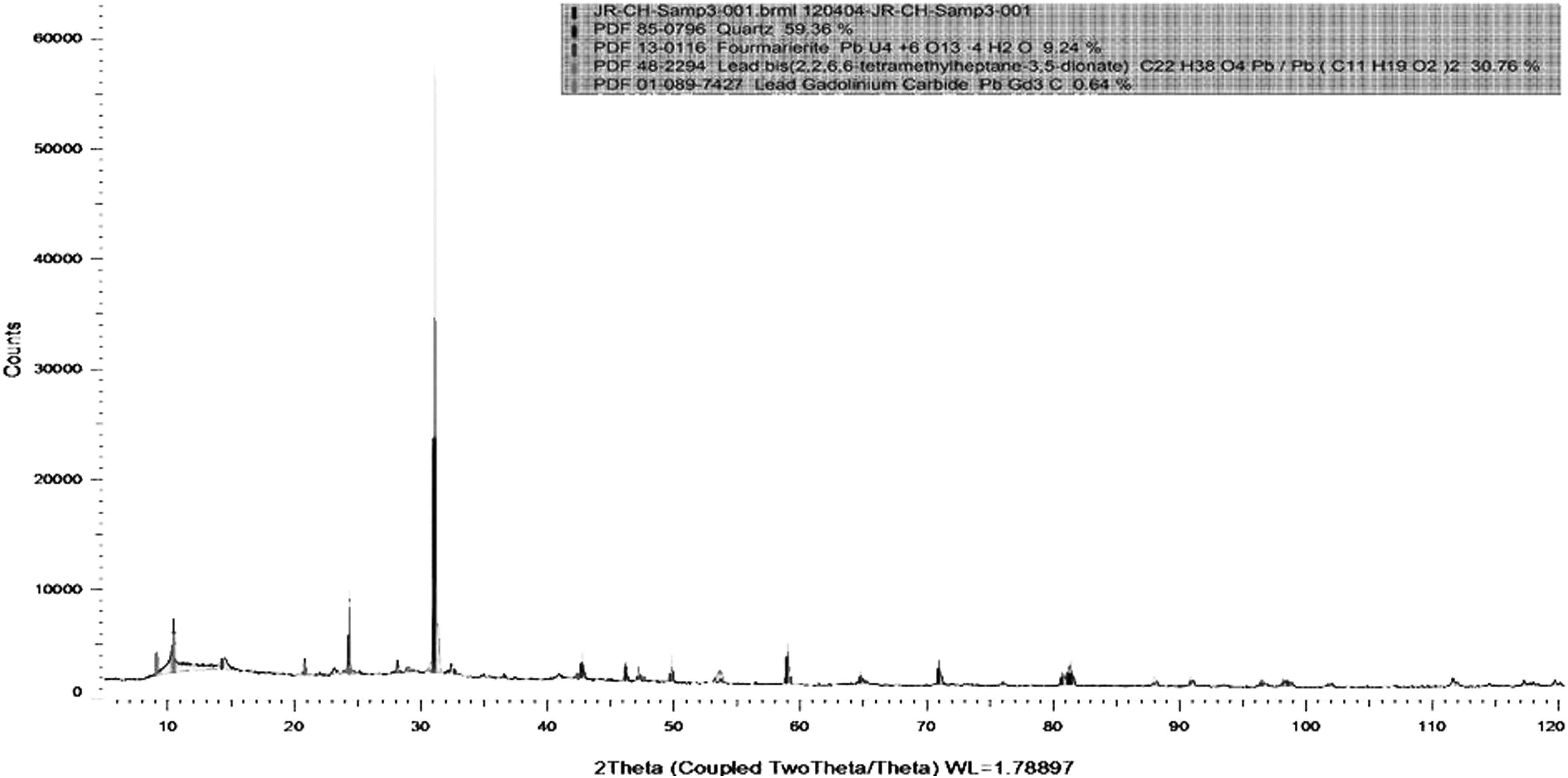
X-ray diffractometer (XRD) spectrum.
Discussion and Conclusions
The first purpose of this study is to determine if Philadelphia soils located in areas with a history of industrial activity, specifically lead smelting, contain greater amounts of Pb than those areas with no history of industrial activity. Using the PXRF to test the soils, we found this to be mostly true. The sites with a history of industrial background (D and E) yielded concentrations of Pb well above those found in areas with no history of industrial activity. In fact, comparing the average lead concentrations of samples A (no history of industrial activity) and E, sample E contains over twenty times the amount of lead than sample A. Our interpretation is that the proximity of the sites (D and E) to the former lead smelter was the cause of the contamination.
The areas where soils were tested with no history of industrial activity (A, B1, B2, and C) were adjacent to residential homes. Samples A, B1, and C all yielded results that were significantly lower than those of samples D and E. Our one outlier was sample B2 which yielded results consistent with those of D and E, with concentrations above 1,000 ppm. As Table 2 indicates, samples B1 and B2 were taken from the same location, the difference was that B1 was taken away from the house and B2 was taken close to the house. We believe the high lead concentration at site B2 is a direct result of its proximity to the house. The house was built in 1925 and is an old colonial style home. There was visual evidence of the old paint that is chipping away from physical weathering. The other two residential structures were built in the same time period (1925 for Nedro and 1930 for Wingohocking) but did not exhibit signs of obvious weathering. The high concentrations of Pb found within the soils close to the Overbrook home (sample B2) are likely a by-product of the paint used on the home when it was first built.
Forty percent of the homes in Philadelphia were constructed before 1939 and 85% were constructed before 1970 (Census 2012). The age of the home does not appear to directly correlate to the concentration of Pb measured in the soil as much as the condition of the exterior of the home. These results may be consistent with the findings that suggest that poverty and race appear to correlate with proximity to industrial hazards within the entire metropolitan area of Philadelphia, including Pennsylvania and New Jersey suburbs (Sicotte and Swanson 2007). Homes and structures that have not been re-painted and/or renovated, which one may assume to be more prevalent in poor neighborhoods, are at an increased risk for depositing lead-based paint into the adjacent soil, thereby serving as a constant source for Pb exposure.
The second purpose of this study is to determine whether the lead found within those areas with a history of industrial activity is in fact anthropogenic industrial Pb from leaded paints, leaded gasoline, and lead ores. Our preliminary study indicates that the highest lead component in one of the two industrial samples is lead tetramethylheptane, which is an organic compound similar to the leaded compound used in leaded gasoline, tetra-ethyl lead. The second most abundant Pb component in the sample is fourmarierite. Fourmarierite is a naturally occurring lead uranium compound that may have originated from Leipers Quarry in Swarthmore, PA. Leipers Quarry has a history of mining lead uranium and is therefore a possible source of Pb for the primary smelters at that location. The proximity of the sample site to Leipers Quarry (20 miles) is a plausible explanation for the persistent of the fourmarierite compound in the soil sample. The component making up the smallest portion of the sample is lead gadolinium carbide, but its percentage composition is small (0.64%) and considered negligible.
More in depth analysis is still required on the 2 mm, 250 μm, and 500 μm size fractions using the XRD to see if the results from the different size fractions vary. Lastly, we can separate, or pre-concentrate, the lead from the soil sample in order to obtain more precise data on the lead compounds found within the contaminated sample by essentially removing the quartz (Barrett et al. 2010; Olson and Skogerboe 1975), which dominated the results (Figure 5).
According to the EPA, the smelting and refining of lead has increased Pb concentrations in soils near those sites where these activities historically occurred. Dust can also carry these Pb compounds where they can eventually be re-deposited in soils. And finally, rain can move Pb from the soils and deposit it in ground water systems (Environmental Protection Agency 2013). Today, a pharmacy, convenient market, and chain restaurant all sit east of Aramingo Ave. in the same location as the former “National Lead Co Paint Manufacturing” (Greater Philadelphia GeoHistory Network 2013) site found in Figure 3. West of Aramingo Ave., where the “National Lead Company” (Greater Philadelphia GeoHistory Network 2013) was located, according to Figure 3, there are also other retail shops and restaurants. In addition, these two areas are now in close proximity to residential housing. The concern is that the high concentrations of lead found within these areas could be affecting the surrounding residential areas. The Pb concentrations reported here are consistent with measurements made in this Philadelphia neighborhood by other researchers (548–2,550 ppm, [Eckel et al. 2001]; 2,000–3,000 ppm, [Young and Eisler 2012]).
The U.S. standard for lead concentrations in residential soils is 400 ppm within bare soils in areas where children play and 1,200 ppm in other areas (Mielke et al. 2011). Since it was found that the soils near these former areas of lead smelting are highly contaminated with lead, additional research should be conducted in order to determine if the presence of these sites are directly affecting the soil lead concentrations in the residential areas located within close proximity. Further XRD analyses of the soils (residential and former industrial soils) should be performed in order to definitively determine the types of lead compounds found within these soils. Although the highest concentrations of Pb were found near former Pb smelters and adjacent to an old house containing lead-based paint, the XRD data suggests that leaded gasoline has been deposited throughout the city and persists in surface soils. These findings support more extensive studies (Datko-Williams 2014; Mielke 2011) in suggesting that Philadelphia, along with every other major city in the U.S., may, therefore, contain a background level of Pb in surface soils that poses a danger to all urban dwellers, regardless of class or neighborhood. To exacerbate the matter even further, there is evidence that current industrial activity in Philadelphia, including chemical companies and hospitals, is responsible for further increases in Pb deposition onto surface soils (Sicotte and Swanson 2007).
Because Pb poses such a health concern, PXRF analyses of soils within close proximity of former lead smelting sites as well as those adjacent to lead-paint containing buildings are paramount. If these soils are consistent with this study's findings and exceed the U.S. standards for lead concentration, remediation efforts must become a priority, especially in residential areas. As Rothman et al. (2002) points out, the medical considerations and increased risk of high-school dropouts, both associated with lead poisoning, take a toll on society as a whole. This makes Pb-contamination in urban soils everyone's problem.
Footnotes
Ackowledgments
We would like to acknowledge Dr. Frederick Monson, technical director for the Center for Microanalysis and Imaging (CMIRT) at West Chester University, for his assistance with the x-ray diffraction analyses. We would also like to thank Dr. LeeAnn Srogi for her continued support.
Author Disclosure Statement
Mr. Lusby, Dr. Hall, and Mr. Reiners have no conflicts of interest or financial ties to disclose.