




Abstract
Abstract
Buzzard Point in Washington, DC, is a neighborhood facing the brunt of urban environmental injustice. Through pollution from multiple sources and a lack of environmental amenities, residents have been exploited and drowned out to make way for further development. This project used Photovoice, a community-engaged research method, to give residents a voice in identifying the health hazards in their communities. The method highlighted in this article was modified for a classroom project, but still yielded important themes of abandonment and hopelessness. These findings mirror other works with Photovoice, which have been used in both urban and rural settings to identify cumulative health hazards and harmful elements of the built environment. This Photovoice project serves as a first step in empowering residents, bringing attention to lawmakers of their plight, and initiating a dialogue on the reforms the city can adopt to improve physical and environmental health in the community.
Introduction
B
The presence of existing hazards and the prospect of new hazards in Buzzard Point are a violation of environmental justice, “those institutional policies, decisions, and cultural behaviors that support sustainable development, that support living conditions in which people can have confidence that their environment is safe, nurturing, and productive, and that support communities where distributive justice prevails.” 2 Environmental injustice results from power disparities, which leave the poor and people of color at a structural and institutional disadvantage in receiving adequate exposure to and distribution of the benefits of environmental amenities. 3
The sociodemographic composition of Buzzard Point illustrates the vulnerability of the community to its many hazards. The neighborhood is majority people of color: 47.3% African American and 5.7% Hispanic/Latino. 4 By age, nearly one-fifth of Buzzard Point is particularly vulnerable to environmental health hazards, with 3.5% younger than the age of 5 and 15.5% older than the age of 65.4 In addition, while average income in DC's Sixth Ward is $78,449, the average income in Buzzard Point is only $20,321. Sixty-four percent of residents also do not own a home, another indicator of low socioeconomic status. 5 , 6 , 7
Finally, Buzzard Point faces clear issue of inequitable zoning, which reflects broader patterns of racial and class-based discrimination. Research has shown that “poor and minority neighborhoods are often under-resourced with health promoting facilities such as supermarkets and recreational outlets” and “over-resourced with health-restricting facilities.” 8 This seems to hold true for Buzzard Point, which has been described as “an isolated peninsula of industrial uses and infrastructure, poorly defined streets and public space, limited green space … limited storm water drains [to] catch water runoff from streets and other paved surfaces, and few trees.” 9 This is the cumulative result of clustering hazards and crowding out environmental amenities, and this hampers the promotion of physical and psychosocial health for residents in desperate need of it.
Hazards in the Buzzard Point Community
Table 1 presents a summary of selected hazards faced by residents in Buzzard Point. The community faces substantial physical and institutional barriers to good health. A study of cement processing in Ravena, New York, for example, found that cement and concrete manufacturing processes can release particulates (PM), hazardous air pollutants (HAPs), methanol, sulfuric acid, lead, dust, and mercury. 10 These substances can cause cancer: eye, skin, and respiratory problems and even burns during the manufacturing process, 11 , 12 suggesting the presence of residential and occupational health threats.
New York State Department of Health, US Department of Health and Human Services. Summary of Environmental Data and Exposure Pathway Evaluation; Health Risk Assessments; and Health Outcome Data. (Albany, NY: New York State Department of Health, 2013). <
Brownfield redevelopment, which includes the construction of the DC United soccer stadium, also threatens communities; while not necessarily a source of poor health outcomes, it can represent failure to engage surrounding residents. The American Planning Association, for example, has issued guidelines and recommendations for ensuring that communities are included in all steps of the redevelopment process. 13
The presence of all of these hazards may also indicate an inordinate amount of truck traffic, exhaust from which can contain benzene, arsenic, formaldehyde, and nitrous oxides (NOx) that cause cancer, asthma attacks, and premature death. 14 The California Office of Environmental Health Hazard Assessment noted that “about 70% of the cancer risk that the average Californian faces from breathing toxic air pollutants stems from diesel exhaust particles.” 15 In high-trafficked communities such as Buzzard Point, this proportion of cancer risk from diesel exhaust may be even higher.
Previous environmental justice research has shown that other communities of color and lower socioeconomic status are overburdened by environmental hazards such as those in Buzzard Point. In Charleston, South Carolina, for example, toxic release inventory (TRI) facilities, Superfund sites, and leaking underground storage tanks have been concentrated in areas with greater numbers of people of color and lower income people. 16 , 17 , 18 , 19 In Maryland, Wilson et al. found TRI facilities were concentrated in areas of the state with high clusters of people of color. 20 Morello-Frosch and Jesdale also found that cancer risks in racially segregated metropolitan areas such as Buzzard Point tend to be higher and due, in large part, to mobile air pollution sources. 21 Such pollution, and its consequent health impacts, could be exacerbated by the DC United Stadium, which, if posited, would require major developments in transportation and accessibility through Buzzard Point. 22
In this article, we will highlight how residents feel about environmental justice and quality-of-life issues in Buzzard Point using a modified version of Photovoice.
Methods
Photovoice and environmental justice
Photovoice is a community-engaged research approach that uses “a combination of photography and critical group discussions as a way to engage participants in identifying their own views of the research topic, and as a tool for social change.” 23 Typically, Photovoice is an intensive process of training community members to use cameras, giving community members opportunities to photograph aspects of their community, facilitating discussion around the photographs taken, identifying key themes in photographs collected by residents, and presenting those photographs to decision makers to highlight community members' concerns. 24
While Photovoice usually involves giving residents cameras to allow them to tell their own stories, the researchers here modified the Photovoice process due to budget and time constraints. Instead of having participants document their own lives, the researchers decided to interview them about their experiences and use footage from those conversations to inform the final project. Researchers also photographed hazards identified by residents in these discussions.
To set up the interviews, the researchers contacted a local community activist. The original plan was to visit Buzzard Point twice and interview willing participants recruited by Rhonda. The plan was to interview 6 people and take 10 photos per interview.
To ensure safety during interview times, the researchers made certain to travel in groups, only visit Buzzard Point during the day, maintain awareness, and carry a working, charged cell phone. Researchers also prepared a list of interview questions. The first section of the questions asked demographic questions about age, race/ethnicity, highest level of education, and length of time spent living in the Buzzard Point area. The second section of questions determined residents' involvement within the community. The third section of questions asked about the community's environmental hazards and observed or perceived health impacts.
Results
Interviews took place in Buzzard Point on March 26, 2016 (Fig. 1). All five researchers traveled from College Park to Buzzard Point to meet the recruited participants. Instead of having individual interviews, however, the researchers decided to conduct one large group discussion on deciding that the atmosphere lent itself to such a format. Eight interviewees (seven women and one man) were recruited. All interviewees signed a waiver consenting to being recorded. They also directed the research team to several environmental hazards that the researchers were able to photograph as evidence of environmental injustice. In total, about 30 photographs were taken of hazards in the neighborhood, along with over 30 minutes of footage.

Map of the Buzzard Point neighborhood (Courtesy of Google Maps).
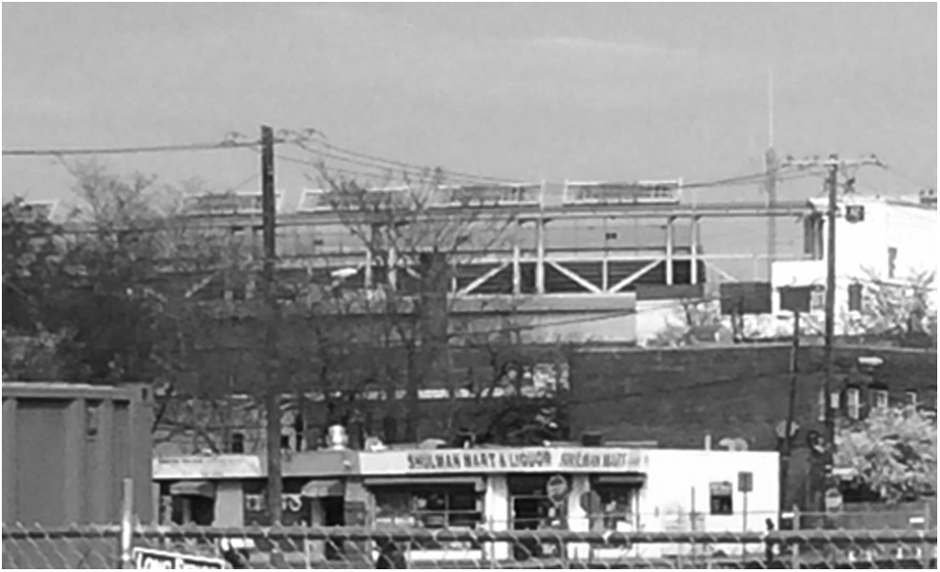
Table 2 shows the major themes that emerged from the interviews with residents in Buzzard Point, identified as stagnancy, invisibility, anonymity, dirtiness, powerlessness, and nostalgia. The interconnectedness among many of these themes is worth noting. These themes fit into an overarching issue of disenfranchisement that residents described. Their invisibility remains acute even as the Nationals Stadium promised, and as the DC United Stadium promises, to bring attention to the neighborhood. Residents expressed feelings of disdain for the current stadium, pictured in Figure 2.
Anonymity.
This invisibility expressed by the residents was woven with their memories of insularity. The residents convened were older and drew upon memories of Buzzard Point to contrast the neighborhood's current decay with its past cohesiveness. The opening that has come with the accumulation of hazards has brought with it, these residents perceive, a lower quality of life. As Figure 3 shows below, this new reality of a lower quality of life manifests itself both symbolically, with the presence of U-Hauls indicating transience, and physically, with health hazards associated with truck traffic.

Pollution.
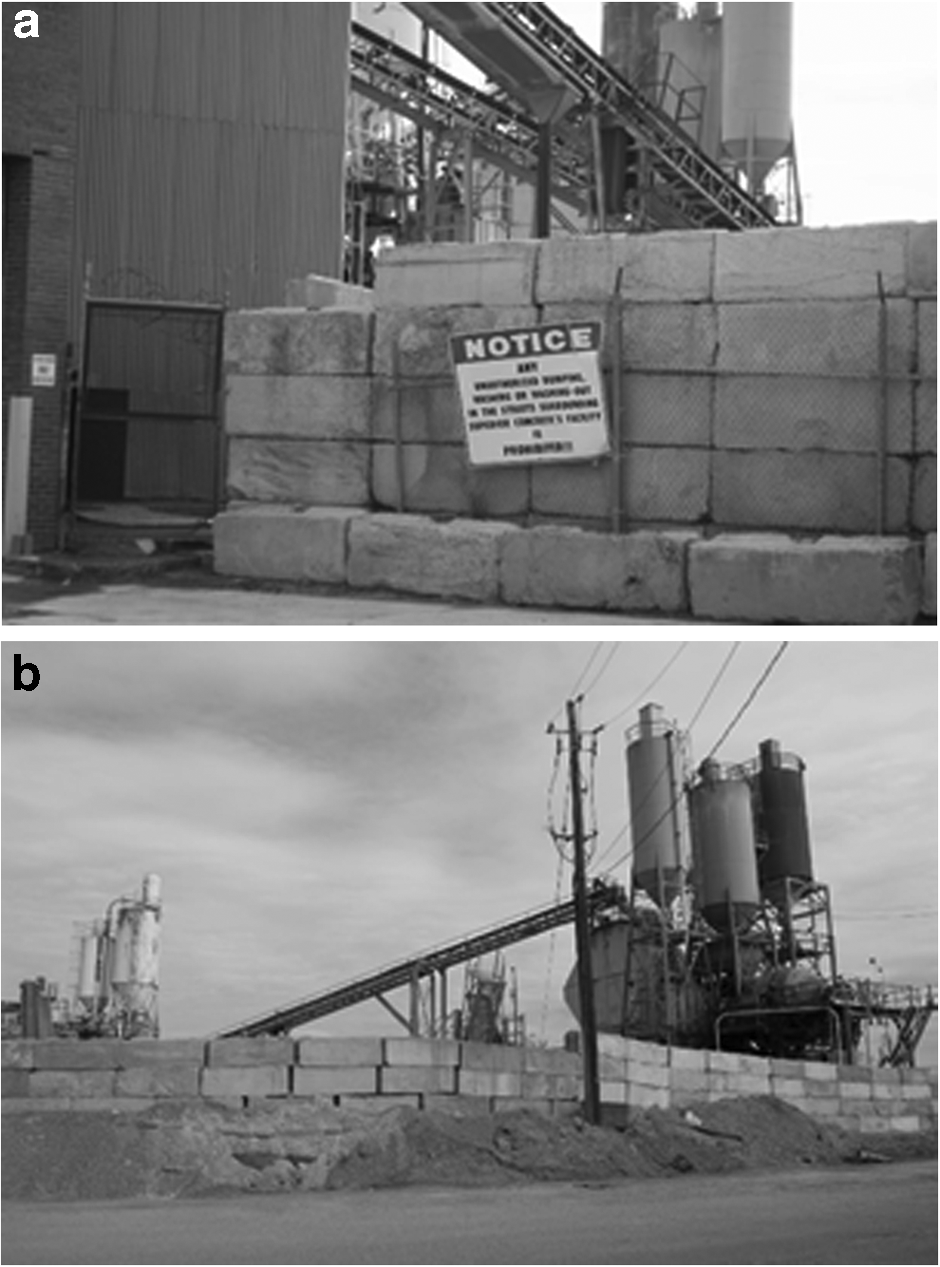
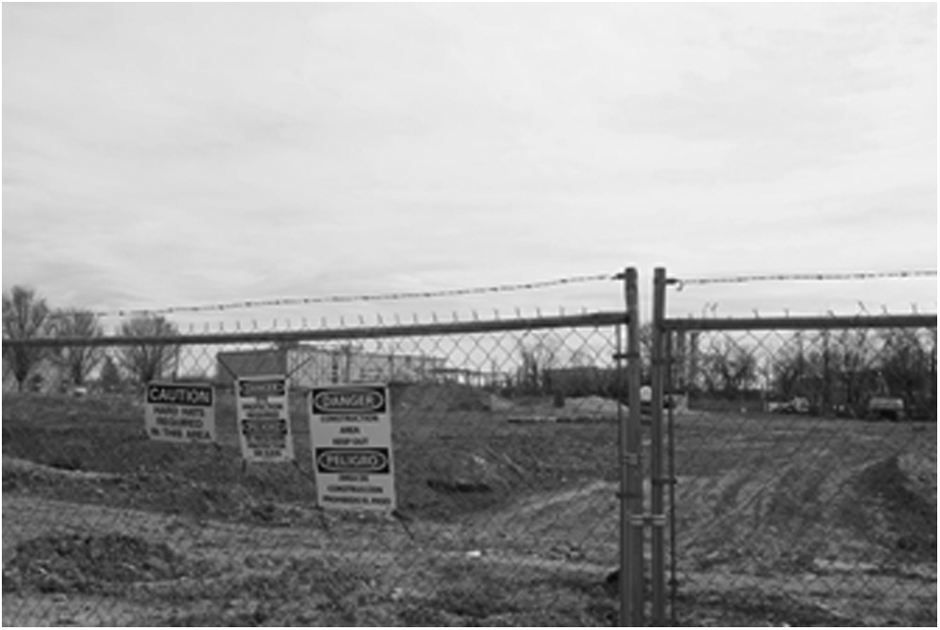
A selected display of the hazards residents identified is presented in Figures 4–6. Figures 4 and 5 depict the trash and industry commonplace in the community, while Figure 6 points to the absence of green space, which could serve to facilitate health. This lack of green space leaves no clean or safe place for children to play or residents to escape the fumes, sounds, and sights encountered by the researchers during their brief time in the community.
Construction and air pollution.

Where's the green?
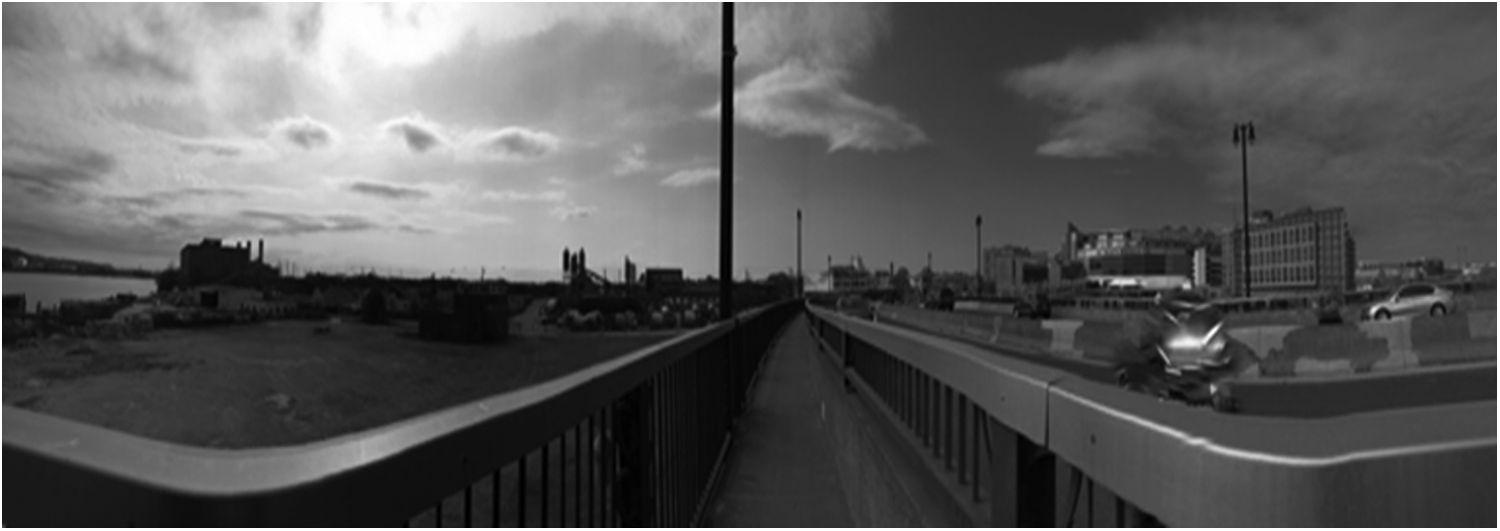
Most noticeable from the researchers was the contrast illustrated in Figure 7 between Buzzard Point and its surrounding area. This panorama encapsulates the full spectrum of concerns from the residents. Their feelings of invisibility and disenfranchisement, as well as their lack of environmental amenities, are laid bare by the well-kept landscape surrounding the Washington Nationals Stadium and the barren grounds around Buzzard Point's many waterside industries.
There are really two DCs.
Discussion
This Photovoice project has the power to reframe the issues in Buzzard Point because it depends on residents' oral histories and perceptions of their built environment. Residents expressed a noticeable decline in health, safety, and quality of life over time. They explained their experience with the DC city government as negligent and ineffective, and identified water pollution, pest infestation, air pollution, and discriminatory zoning as their primary concerns. The proposed soccer stadium and Pepco substation may exacerbate Buzzard Point's cycle of human exploitation and environmental degradation.
Comparison with previous research
These results are comparable with those in similar Photovoice studies and reflect previous findings on how Photovoice can be used to improve community well-being. In New Orleans, for example, researchers found that both research and action were improved by building trusting relationships through Photovoice. These researchers further found that Photovoice offers tools to communities for enhancing residents' leadership and action. 25 The Buzzard Point Photovoice project described here also aims to build a strong community–university partnership to bring justice and change to the community.
The findings also mirror work with Photovoice in Atlanta. The researchers here found that the built environment can impact both physical and mental health, as described through the perceptions of African Americans in the city. The researchers further identified through their Photovoice pathways to negative health outcomes through poor neighborhood conditions. 26 The findings in Buzzard Point also reveal a strong link between the built environment and health; as many residents noted, the lack of green space and the excessive presence of industry are enough to not only create clear physical issues but may also influence psychosocial health. The participants in Buzzard Point noted asthma among children and cancer among the elderly as two possible links with the proliferation of environmental hazards in the area. One resident even wondered whether the effects of these hazards have created a psychosocial state of inaction among the community that has inhibited residents from taking stronger action against the placement of hazards in the neighborhood.
Previous research has also shown that Photovoice can be used as part of a broader effort to do both study the cumulative impacts of hazards, as this study set out to do, and to be part of a long-term community–university partnership. For example, researchers formulating community-informed GIS software added features to the program that allow the community to integrate mapping and Photovoice. 27 Researchers in Seattle also used Photovoice as part of a broader effort to encourage physical activity. 28 These studies show that Photovoice should supplement, rather than be the primary vehicle of, any efforts to improve the lives of residents in Buzzard Point. Mapping, surveys, and other community-informed research projects would help create a clearer and more holistic picture of the environmental injustice that residents face. Such projects would also build the capacity necessary for the community to tackle these problems effectively.
Best practices and lessons learned
Photovoice makes it possible for underserved and excluded communities to have a voice. The small group setting used in this project facilitated intimate participant discussion concerning the adverse health impacts of being disproportionately exposed to toxic pollutants as they host multiple environmental hazards. It also allowed the researchers to discern which issues brought up were concerns shared by multiple residents or were isolated to one or two individuals. The only downside was that certain individuals tended to dominate the conversation, while others barely spoke at all. Future efforts should focus on ensuring that all members have equal opportunity to participate so that all concerns and views are heard. Future efforts should also ensure that a wider array of residents are included, such as those of different age cohorts, to gain as broad a perspective as possible.
Another benefit of this method of Photovoice was the combined use of video and pictures to better tell residents' stories. Community members were in fact so excited by the opportunity this project presents that they urged researchers to use it as part of media outreach. While media is certainly a viable option, it remains to be seen what part this Photovoice will play in disseminating the concerns of Buzzard Point's residents.
One shortcoming of the study was the difficulty in integrating residents' suggestions into the final project due to its limited scope. Residents suggested, for example, that the researchers look at zoning and DC municipal policy. This, however, underscores the interdisciplinary nature of environmental justice and provides an opportunity for future research and advocacy.
Recommendations and next steps
The intersection of high pollution exposure and health challenges observed in Buzzard Point is the result of a lack of access to resources such as grocery stores, green space, and a greater voice in local environmental decision making. A deeper investigation into how to improve access to resources is needed for these residents. This Photovoice should serve as a starting point for more intense community-based participatory research, that includes community-driven research and collection of environmental health data.
In the long run, the researchers believe that increased green space and better use of land in Buzzard Point would solve many of the health issues faced by its residents. For example, much of the current space being devoted to industry could instead be used to promote the sale of produce or other goods. This would help create access to jobs, goods, and healthy foods. A more critical look at the city's zoning laws is also needed to understand why the community has become a dumping ground. Reforms to zoning are needed to improve the neighborhood's environmental quality and public health.
Conclusion
It is imperative to understand the perspectives of residents in communities impacted by environmental injustice. Photovoice, as a community-engaged research approach, is a valuable approach to initiating dialogue and helping give disenfranchised residents a voice. The residents of Buzzard Point continue to experience negative long-term effects from the burden of industry, stadiums, and degradation, and it must be residents who address these issues through community-driven and community-informed solutions. Photovoice is useful because it gives community members a way to express themselves, identify their most urgent problems, and discuss steps toward solving those issues.
Buzzard Point is ultimately suffering from the toxic legacy of contamination. Seen through the lens of environmental injustice, this toxic legacy becomes an issue of race, class, and discrimination. This Photovoice project can help residents' voices be heard as they continue to advocate for a better quality of life. Future work in the community needs to build on the findings of this project; no difference will be made if the engagement ends here.
Footnotes
Author Disclosure Statement
No competing financial interests exist.