




Abstract
Abstract
This article engages the tensions of gentrification and the challenge of urban development through a study of the Makoko area of Lagos State, Nigeria. Makoko is an urban waterfront slum where the residents' precarious existence is complicated by a complete lack of active governmental mechanisms to protect their socioeconomic and housing rights. The article investigates recurrent experiences of displacement to understand the political and policy actions that affect marginalized citizens in an otherwise economically buoyant city such as Lagos. It expands the study of urban slums through a descriptive analysis of Makoko and by interrogating some critical assumptions in urban engineering and development policy. The research utilizes the concept of a rights-based approach (RBA) to development as a method of capturing the wide gap between the perspectives and goals of the Makoko lagoon dwellers and the real estate developers, urban development specialists, and policymakers who assume that their idea of development is the focal mission of a developing country. The article reveals a disconnect between urban development policies and urban reality in Lagos State, most especially in the Makoko area, and it argues that this has intensified socioeconomic inequalities in the state. Successive political administrations and affiliated partner agencies in Nigeria will need to embrace a consistent RBA to development if they wish to generate substantive changes such as equitable housing distribution and economic vibrancy for low-income and informal settlements.
Introduction
Urban slums present diverse challenges in every global region, especially in developing countries. While they are the only context of survival for millions of people, they also generate a wide range of environmental hazards, increased potential for natural disasters, public health crises, and the diverse debilitating effects of a crippling cycle of poverty and violence. In the Lagos context in Nigeria, the most critical environmental components of land, water, and air that provide the support systems needed for healthy living are polluted daily within its slum settlements. To clear or curb the spread of informal settlements, the Lagos State government uses forceful evictions for urban regeneration, and this further complicates the existing challenges. Principally, these forceful evictions are planned by the state and carried out without regard for the law or fundamental human rights of the affected population. 1
Makoko is regarded as an eyesore in an emerging megacity such as Lagos; a settlement where most inhabitants live in unhygienic and blighted conditions. The majority of Makoko residents, often described as informal settlers, engage in informal economic activities within the low-income bracket. Their principal occupations are fishing, trading, sand mining, and low-rank civil service employment. 2 , 3 While many urban slums comprise desperate migrants from various rural villages, the majority of the inhabitants of Makoko are ethnically indigenous people from the creek regions of Nigeria. This squatter settlement provides shelter for thousands of the most impoverished city dwellers in the Lagos metropolis who have created vibrant forms of social organization, functional governing structures, and limited but inventive economic activities that provide them with the only resources for survival in their waterfront residences.
Unfortunately, the state government does not recognize or seek to enhance the varied forms of entrepreneurial organization within the low-income lagoon settlements. Instead, it has continuously harassed and threatened to evict residents from the spaces they regard as their abode without establishing proper procedures for their resettlement, appropriate compensation or guarantees of access to alternative means of generating income, community, and viable enterprises. Thus, in its eagerness to solve the problem of slum settlements that are deemed to constitute an esthetic blight on the emergent Lagos megacity, the government's policy of displacement merely generates new and worsening development problems. 4 , 5
For instance, on the 16th of July, 2012, the Lagos State government had issued an eviction notice stating that the residences at Makoko waterfront violated the designs of its megacity project. It noted that the residents have continued to develop and occupy unwholesome structures on the waterfront without authority, thereby constituting an environmental nuisance, security risks, and impediments to economic development and gainful utilization of the harbor for navigation, entertainment, and recreation. The eviction notice ordered the residents to vacate their community within 3 days. 6
A simple observation of the social and economic characteristics of Makoko waterfront residents and the quality and type of the buildings they inhabit clearly indicates that they have little or no economic power to alleviate their present situation and meet the standards the government envisions as suitable for its megacity designs. Clearly, the Lagos government has had the power and resources to transform the lagoon front over the past few decades and grant Makoko residents access to wholesome structures and public sanitation, but like many governments faced with addressing the needs of their low-income population, it has opted for an eviction policy that merely erases the poor from sight.
Thus, a critical dimension to these forced evictions is the logic of gentrification, which underlies the crises of development and housing equity across the world. Gentrification suggests a vision of the urban city, in which an upwardly mobile elite moves into spaces previously occupied by the erstwhile residents, the poor slum dwellers. Unfortunately, gentrification has become so deeply intertwined with popular and political visions of development that it negates citizen opposition to the forced removals of the urban poor. When slums such as Makoko are replaced with skyscrapers and new suburban housing estates, it is assumed that development has happened successfully. Few people question the fact that an entirely different population and social class now utilize the residences, businesses, and public services that were promised to the poor by political leaders and organizations who undertook the project of development. 7
Consequently, by looking at the process of gentrification and public policy development regarding Makoko and other such slums, we can better question the vision, goals, and outcomes of development processes and effectively engage issues of human rights, human dignity, and social equity. 8 Along these lines, recent scholarship on gentrification has called for policy progress beyond the current debates in the realm of causality. Such a charge makes it imperative for further scholarly investigation of the mechanisms through which gentrification proceeds, as well as its repercussions.
Conceptual Framework: a Rights-Based Approach to Development
The rights-based approach (RBA) to development emerged as a new paradigm toward the end of the twentieth century. Today, professional advisors and policy experts are improving and popularizing the paradigm through project evaluations, training workshops, and reports, making sure that rights-based policies on development challenges will continue to grow and flourish in years to come. 9 Darrow and Tomas note that the RBA to development was first articulated in Western development circles when two previously distinct strands of foreign assistance and global policy—human rights and development—began to merge, combining the principles of internationally recognized human rights with those of poverty reduction. 10
Rights-based development specialists started encouraging development professionals to assess human rights conditions before drafting their policies and programs through diverse approaches. These include identifying rights holders and duty-bearers in prospective projects; ensuring grassroots participation in project planning and implementation; creating and strengthening mechanisms of citizen–government accountability; reducing discrimination against marginalized groups; focusing on development processes, in addition to outcomes; and most importantly, engaging in grassroots and international advocacy efforts to promote the rights of the less privileged. Although the rights-based development principle has numerous variations, most of them share these core principles, well explicated over a decade ago by Frankovits and Appleyard among other scholars. 11 , 12
Indeed, according to the United Nations Common Understanding, all United Nations development initiatives from the year 2003 were to be framed to advance laws codified in the Universal Declaration of Human Rights and its related principles. 13 As a result, the Common Understanding's principal values are hinged on the interdependence of all rights, indivisibility, and universality, along with principles of the rule of law, accountability, inclusion, popular participation, and nondiscrimination. 14 The Common Understanding also mandates United Nations agents to use human rights standards when planning, monitoring, and evaluating their development activities, to boost the ability of duty-bearers to meet their obligations, and to strengthen the capacity of rights holders to claim their due. 15
By using a rights-based conceptualization of development, this study seeks to challenge some of the dominant and problematic assumptions of the irrationality of residents of urban slums, while examining the degree of their participation in policy processes that affect them, and the extent of inclusion of their interests and needs in urban development policies. The RBA framework also enables this study to zero in on the repercussions of the Lagos State government's policy of gentrification that uses forced eviction as a tool of urban development to effectively eradicate informal settlements within the state. In the absence of appropriate procedures and options for viable resettlement, displacement merely creates serial informal settlements. The cycle of gentrifying visions, repercussions, and emergent development challenges are illustrated above in Figure 1.

Cycle of gentrification and displacement in Makoko, Lagos State, Nigeria.
Methodology
Study design
A descriptive survey design was employed for this study using Anol Bhattacherjee's statistics of sampling parameters. 16 One thousand copies of the questionnaire were administered in 2017. Of the 1000 copies distributed, 963 were filled correctly and collated. The research was carried out with the help of two research assistants to ensure coverage of the target population community and a high return rate of questionnaires within the scheduled time frame. Research assistants were guided carefully on the process of data collection and assistive methods for securing feedback from respondents with inadequate reading capacities.
Data analysis
Data were analyzed using descriptive statistics such as frequencies, percentages, and graphs from the Statistical Package for the Social Sciences (SPSS 23) software. Frequency distribution and cross tabulation were used to validate research propositions presented with the use of charts and graphs.
Study location
The fieldwork was conducted in Makoko area of Lagos State, Nigeria, as part of the research for an unpublished doctoral dissertation. Makoko is an informal and low-income community that has existed since the eighteenth century as a fishing village, and its estimated population grew from 113,740 in 2006 to 234,420 in 2016. A large part of the area rests on structures constructed on stilts above the Lagos lagoon, while the other part of the community constitutes the hinterland.
Ethical issues
Informed consent was obtained from respondents after informing them about the aim and purpose of the investigation and interview; appropriate measures were taken to ensure confidentiality of respondents where applicable and to apply information received to the purposes for which it was obtained. 17 In this regard, the research protocol was subjected to a full committee review and approved by the Covenant University Health Research Ethics Committee.
Gentrification and the Challenge of Development in the Makoko Area of Lagos State, Nigeria
The sustainable development goal (SDG) focusing on improving lives of slum dwellers is arguably a significant and worthy global objective. However, as Meth systematically depicts, its intentions may have unintended consequences as they may unwittingly justify state-sponsored evictions of urban slum dwellers from their settlements. In Meth's estimation, the urban poor often find it difficult to express the esthetic values that elites usually celebrate and herein lies the problem with the esthetic visions of SDGs. The urban poor living in informal settlements are, through this esthetic, criminalized and judged and the struggles of their daily lives are extended to defending their home space, shelter, and livelihood since it is believed that slums cause or contribute substantially to urban poverty and are also bad for business. 18
As Meth's findings affirm, the urban esthetic aspirations of cleanliness, orderliness, and decency are evident through the policy desires of most governments, which make use of the law to, in effect, specify their ideal urban community. This urban vision usually discriminates against the very poor and uses legal measures to render slums worthy of eradication. Eradication then becomes the focus of this esthetic vision rather than any other development policy practice, such as poverty alleviation and the provision of infrastructure and social services for the benefit of residents. There is little concern about the location and suitability of new settlements for the displaced poor, neither are there guarantees for the provision of appropriate services. 19
Shelter is a basic human need and it remains a significant problem in megacities such as Lagos. Land is highly priced in the city, and the majority of urban dwellers do not have access to land ownership. Slums and squatter settlements are typically found on urban margins or in strategic areas, mostly on public land but also less frequently on private property. They can also be found in swampy areas, areas prone to flooding, and other wastelands. Such settlements may be as a result of an organized encroachment or gradual occupation that responds to the needs of an expanding elite class for low-income workers in domestic service, construction, agriculture, and other sectors. Consequently, slums and squatter settlements are distinctive features of other cities in Nigeria. Kehinde argues that the dominant policy adopted by the Lagos State government is to respond with demolition and slum clearance after its erstwhile inhabitants have been evicted. 20 However, it is important to note that preceding such demolitions, the emerging informal settlements are typically tolerated (and, in some cases, encouraged by rent-seeking public officers) until they are deemed to be enough of an eyesore or until the political or socioeconomic elite require the land they occupy.
The government often claims that its efforts are primarily undertaken to improve the city's international image or are necessary for health reasons and maintenance of public standards. A typical example of slum demolition occurred in the former Maroko community in Lagos State, Nigeria, in July 1990 and the neighborhood was later converted into a complex of buildings, which is now known as Oniru Private Housing Estate, priced well beyond the reach of its former residents, the urban poor. 21
In like manner, the Lagos State government had planned to embark on an eviction/demolition exercise in the Makoko area of Lagos State, resulting in its 72-hour eviction notice to the residents of Makoko on July 16, 2012. It was only due to public protests, outcries, and the tragic loss of lives that the exercise was halted at that time. 22 The manner in which the Lagos State government manages the conflicts of interest represented by its demolition exercises provides a classic case study of the politicization of development. Just as in the case of Maroko, where about 300,000 inhabitants were suddenly rendered homeless, the Lagos State government failed to provide alternative accommodation and basic amenities beforehand to those in Makoko who were to be affected by its proposed policy of gentrification and displacement. 23
The dilemma of development and rights is embedded in the conflicted nature of the state. As Nwanna explains, the economy of Lagos State is market driven, thereby making land allocation inequitable as formal markets use their rules to prevent the majority of the urban poor from having access to land. Most people who migrate to Lagos in search of employment opportunities, which are often not available, engage in irregular low-income employment, which further impoverishes them, and this ultimately makes conventional housing unaffordable to them. 24
Makoko's location, which is within the heart of Lagos, makes it attractive for property development. Consequently, successive administrations in the state have made several attempts to evict and demolish the community without considering the impending crisis of human insecurity that will accompany such actions that may accompany such actions. In its 2010 analysis of the state of African cities, UN-Habitat affirms that several governments, working in conjunction with private developers, harass low-income communities into leaving their communities to gentrify them for high profits. 25 Slum clearance is justified by the government and its development agencies, in market terms, particularly when a settlement such as that of Makoko is located on prime development land. 26
However, when the urban poor are evicted from their original or occasionally ancestral neighborhoods and their residences are demolished for gentrification purposes, it further impoverishes and drives them into a lower quality of life. In fact, the government must realize that in as much as there are the push factors (such as poverty, high unemployment, and low investments) in the rural areas and other parts of the country, people will continue to respond to the pull factors (better infrastructure, job opportunities, and so on) that prosperous locations such as Lagos State offer. As such, many of these migrants are likely to move toward low-income neighborhoods in the state such as Makoko.
Over the years, the Lagos State government has claimed that its primary concern is to create a sustainable place to accommodate the indigenous people on the lagoon. However, while it has proposed to use the Makoko waterfront as part of the megacity project, it has still not designed any meaningful plans for ensuring economic growth, social well-being, and equitable support of Makoko residents, neither has it provided alternative or appropriate shelter and basic amenities for those who would be affected by its slum clearance plans. As has always been the case in situations such as this, affected households are usually reluctant to relocate due to the perceived socioeconomic effects on their livelihoods and culture, leading to public protests, which often spiral into other forms of societal conflict. 27
Data analysis
In the 2017 field survey conducted in Makoko, survey questions were framed around the rights-based understanding that the urban poor are rational individuals who make calculated choices designed to enhance their access to opportunities, even when that choice is to remain in slums. The survey results indicate that while almost 90% of residents were willing to move out of Makoko if a better living situation was available, a majority (88.8%) of Makoko residents live there mainly for socioeconomic reasons based on their careful estimation that they have no viable alternative. Despite the problems of overcrowding hazardous housing, vulnerability of life and property through the activities of local hoodlums, exposure to disease, and lack of public infrastructure, respondents indicated that living in Makoko was central to their survival in Lagos.
The reasons for this were well explicated; primarily, it offers affordable housing with proximity to their place of business such as fishing, the availability of an internal customer base for their varied occupations, and overall social, economic, or community support. The last factor is rarely understood by development experts and policymakers who ignore the self-designed forms of sociopolitical organization that anchor the community internally. The survey respondents drew on their actual experiences and interpretation of state interests to authenticate their conclusions. Almost 70% of the residents had lived in the settlement for over 5 years, with 51.8% in residence for well over a decade. The survey found that 83.7% of Makoko residents demonstrated a coherent understanding of the government's 2012 proposal for upgrading the settlement and interpreted it as a barely veiled gentrification plan. The Makoko residents responding to the survey emphasized that if they were guaranteed rights of occupancy and the right to remain, they would welcome governmental initiatives to develop and improve the settlement. In the absence of such a right to stay, the overwhelming majority of residents remained obdurately opposed to development projects for the settlement, which they regarded as displacement projects.
As evident in Figure 2, in their perception of the gentrification plan, 85.4% of the respondents. In their perception of the gentrification plan, 85.4% of the respondents perceived the government's plan to renovate and transform the area as essentially rendering them homeless, 4.5% of respondents insisted that the government could not be serious about the threat, while only 9.4% of respondents perceived the proposal as an opportunity to move to a better area. 28
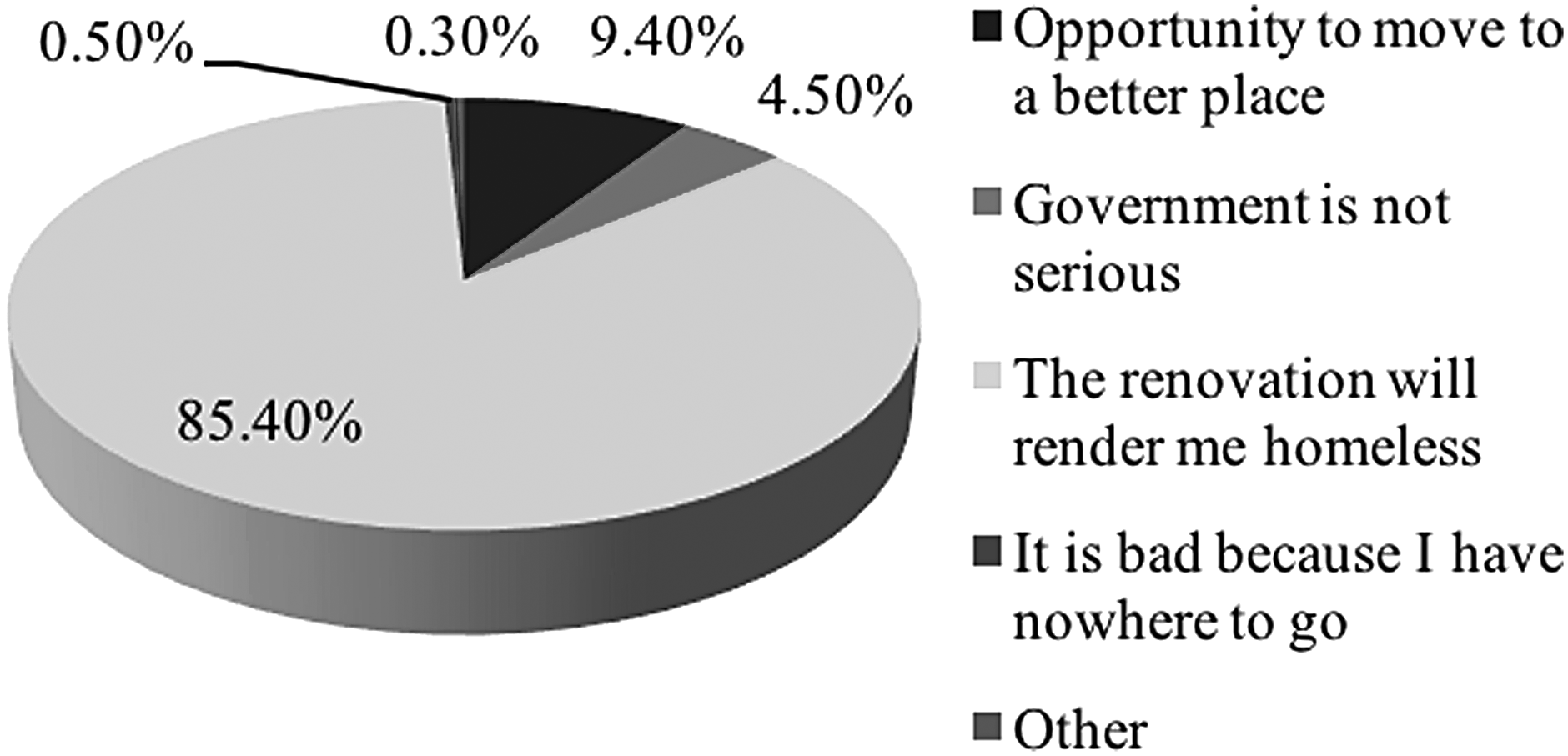
Respondents' perception of the gentrification plan.
Figure 3 highlights the fact that most Makoko residents do not believe the government's proposed renovation of the settlement is designed for the benefit of ts low-income settlers. Consequently, when asked if they would welcome the renovation and transformation of Makoko by the Lagos State government, 92% of residents made it emphatically clear that they would not welcome the development. Only 6.6% reported that they would embrace it. 29 Thus, it is clear that the majority of Makoko respondents oppose the government's plans for renovation or beautification of the settlement because they perceive as synonymous with eviction and gentrification.
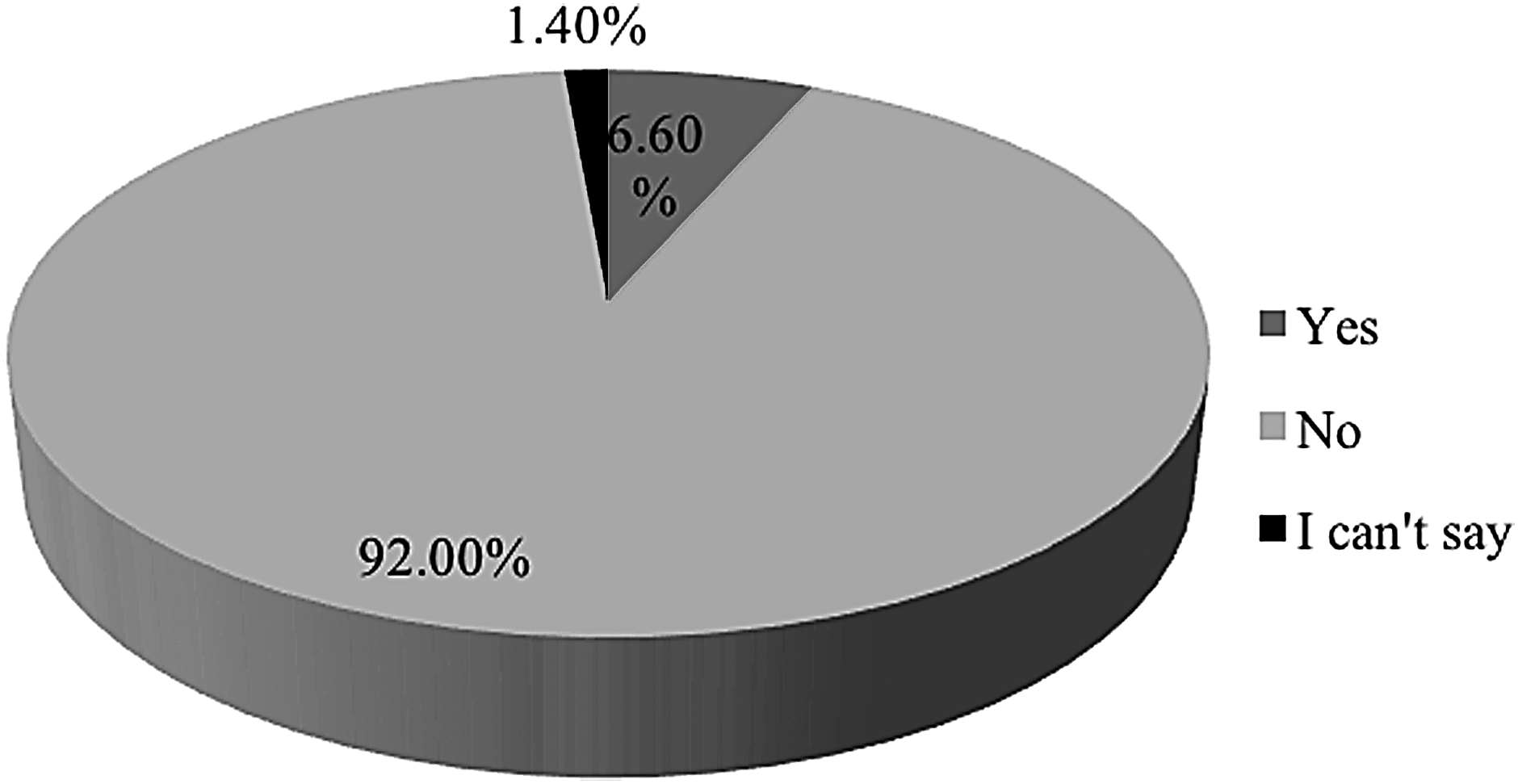
Respondents' response to the question of whether they would welcome the renovation and transformation of Makoko by the Lagos State government.
In a careful calculation of their options, over 60% of respondents acknowledged that they would leave the settlement if they were confronted with violent eviction by the state. However, a considerable number of respondents (19%) insisted that they would refuse to move even if the government attempted to forcefully eject them from the community, while a significant number of respondents despairingly stated that they would not know how to respond if faced with physical eviction typically implemented by heavily armed military or police detachments. It is a telling statement on the low value of human rights doctrines that only 0.4% of respondents even threatened that they would seek a court order to restrain the government if the state violently displaced their community.
Discussion of Findings
This article highlights the yawning gulf between urban development policies and urban reality in Lagos State, most especially in Makoko area. This gap has resulted in severe socioeconomic inequalities and injustices in the state and heightened sociopolitical tensions between the government and residents of desperately poor settlements. 30 This study also highlights the much-ignored reality that Makoko residents do not have access to the economic or administrative means of securing land and housing in the formal sector. It is within the slum settlement that they can counter these barriers by seizing the opportunity to acquire land and build houses according to their means and acquire access to the formalized, although unlawful, system of housing acquisition within the area. Residents generally lack security of tenure because they do not possess official certificates of occupancy. However, many Makoko residents hold deemed rights of occupancy, having acquired those lands from legitimate land-holding families and communities.
The survey findings further reveal that Makoko residents have a strong sense of their rights and grievances and a strong awareness that these rights are unlikely to be respected by the state, nor upheld by any legal proceedings. Despite the recurrent threat of forceful eviction, a significant proportion of Makoko households remain extremely reluctant to relocate due to the potentially devastating negative impact on their livelihoods, social networks, and indigenous culture. Since the government is heavily invested in the megacity vision and convinced that gentrification is equivalent to development, these divergent interests might well intensify tensions within the community and lead to public protests and spiraling conflict. Apart from the physical, psychological, socioeconomic, and cultural disruptions that would be brought upon the residents, evicting Makoko residents through the use of physical force and without adequate notice, alternative affordable housing arrangements, economic rehabilitation, and compensation would only lead to the emergence of new slums or the complex expansion of existing ones. 31
Conclusion
This article concludes that the Lagos State government is yet to adopt an RBA to the design and implementation of its urban architecture and development planning. Such a policy omission contravenes the United Nations' conceptualization of development as a process in which human security, human rights, and development are inter-related processes that foreground the protections of all individuals, irrespective of their income, race, ethnicity, gender, and other indicators of identity and relative social influence. Indeed, the United Nations insists that human rights considerations should be mainstreamed throughout all UN agencies and world governments. 32 , 33 , 34 This is more difficult than it might seem. As Soyinka-Airewele has argued, policymaking for development in Nigeria must grapple with the underlying philosophies of power and hierarchization, as well as the popular visions of urban development that together shape the emergent anarchy and erasure of lives in various locations in the country. 35
Unfortunately, some United Nations agencies have also been guilty of recommending the demolition of slums (as occurred in Nairobi, Kenya) based on the naïve assumption that the erstwhile residents will be permitted to resume occupancy after the construction of a new settlement that meets higher standards for esthetic value, safety, sanitation, and other such values. Such assumptions are quite mistaken as the new constructions have consistently been allocated to an entirely new middle- and high-income gentrifying population. In like manner, the Lagos State government's approach to progress through its gentrifying megacity vision caters to a Western corporatist vision of development embodied in skyscrapers and multinational business. It prioritizes the elite and allows profit considerations rather than the human needs of each member of the society to determine how resources are used. This process of maldevelopment flouts the efforts of the state to break the cycle of poverty and civil unrest in a sustainable manner and expand the base of economic vibrancy, self-sufficiency, and growth of its population.
Such problems are not unique to Nigeria. Edozie and Soyinka-Airewele have drawn attention to how postcolonial societies share similar characteristics of uneven underdevelopment, well captured by Pal Ahluwalia, as well as features of collapse, which Williams depicts as perverted by-products of colonial nation building. 36 Thus, any analysis of the growth of slums in growing megacities cannot sidestep the critical issues facing postcolonial societies. In the summation by Edozie and Soyinka-Aireweles, these include the problem of inequality and inappropriate development visions impacted by the control of the International Monetary Fund, the World Bank, and allied organizations, which together wield economic, political, and cultural control over the continent's future, while blurring the local power relationships and hegemonic biases inherent in national development projects. 37
Consequently, we argue that in the pursuit of its beguiling mega and smart city project, the Lagos State government in Nigeria must foreground the need for social justice in the choices, design, and process of implementation of its urban projects. It will need to proceed by recognizing that specific values are vital to generating an overall improvement in the quality of life in the state and the emergence of a truly viable and sustainable megacity. These include equitable distribution of land and rights to own land (security of tenure), access to public housing, inclusion of representative populations in its planning processes, and protection of their rights to public infrastructure, education, employment training, small-scale enterprise, and social welfare nets.
Footnotes
Acknowledgments
The authors wish to acknowledge the management of Ithaca College and Covenant University for providing support for aspects of this research work.
Author Disclosure Statement
No competing financial interests exist.