




Abstract
Abstract
Large Dams being the symbol of development and progress have been regarded one of the impressive conquests of human intelligence in maneuvering over nature in terms of using the natural resources. The ideology of development and progress has kept the continuance of the construction of dams, never questioning the irreversible harmful impacts of dams or evaluating whether the promised benefits of dams have actually been realized. The dams on the Indus River have been constructed without getting the consensus of lower riparian Sindh, a federating unit of Pakistan, also the home of Indus Delta. This study focused on dam-induced environmental injustice befallen on deltaic people of Indus Delta and used existing documents, research questionnaires, interviews, and focus group discussions to derive the data. This study found that the water of Indus River was being diverted through dams, canals, and other water diverting mechanisms by upper riparian, Punjab, another federating unit of Pakistan, resulting in social and ecological disaster in Indus Delta and its communities. The deltaic communities of Indus River, who have historical and traditional rights on the Indus River, paid the huge price of dams in terms of irreparable damages to their livelihood along with other impacts, including physical, cultural, and spiritual well-being. The affected deltaic communities demanded that water diverting mechanisms built in upper riparian, Punjab, without the consensus of lower riparian, Sindh, must be dismantled and a water accord signed by both riparian parties must be implemented by the government of Pakistan.
Introduction
The development policies of the global South are generally formulated on the basis of explicit or implicit assumption that a model of good life prevails in the developed countries of the global North. The question concerning the attainment of this good life by the poor people is answered in terms of a “catching-up development” path. That is, those who have an aspiration to attain the “good life” must follow the path of industrialization, technological progress, and capital accumulation taken by developed countries.
Large dams being the symbol of development and progress have been regarded as the conquest of humans over nature. The ideology of development and progress has kept continuing the construction of dams, never questioning the irreversible harmful impacts of dams or evaluating whether the promised benefits of dams have actually been realized. The steadily mounting evidence and research studies revealed that dams have not achieved the targets for which they were made. Instead, development agencies and governments are exaggerating the benefits of dams and grossly underestimating the social and ecological impacts of dams. The World Commission on Dams (WCD) reveals that on average, dams fail to achieve their promised targets. Rather than achieving promised targets, dams have badly impacted both nature and society, resulting in livelihood insecurity for the “ecosystem people.” It also found that “Pervasive and systematic failure to assess the range of potential negative impacts and implement adequate mitigation, resettlement, and development programs for the displaced, and the failure to account for the consequences of large dams for downstream livelihoods have led to the impoverishment and suffering of millions, giving rise to growing opposition to dams by affected communities worldwide.” 1
Richter et al. argue that studies such as WCD put focus on the impacts incurred on people living near the dam construction site. However, these studies mainly ignore the severe impacts of dams befallen on downstream populations in the wake of alteration in river flow, which causes the degradation of freshwater ecosystem providing them livelihood and food security. 2 With the degradation of the freshwater ecosystem, the “ecosystem people” undergo severe loss of livelihood and food security along with other impacts, including physical, cultural, and spiritual well-being.
In Pakistan, the dams on Indus River have been constructed by the upper riparian, Punjab, without getting the consensus of the lower riparian, Sindh, blatantly violating the accord signed by both parties before being the part of the federation of Pakistan. The dams and other water diverting mechanisms built in Punjab have massively reduced the flow of freshwater of Indus River into lower riparian Sindh—the home of Indus Delta—resulting in irreversible and irreparable damage to the people of Sindh and specifically the communities living in the deltaic region. This research was conducted to gauge the social and environmental impacts of dams on the Indus Delta and deltaic communities residing in the subdistricts Kharo Chan and Keti Bandar, which are parts of the district Thatta, Sindh, Pakistan.
This study aimed to lift the curtain on the contradictory nature of development and progress ideology, which justifies the construction of dams and overlooks negative socioenvironmental impacts of large dams. It also focused on dam-induced environmental injustice befallen on deltaic people living in subdistricts Kharo Chan and Keti Bandar of district Thatta. The objectives of this study were as follows: (1) to assess the perception of deltaic people regarding dams built on Indus River; (2) to know whether deltaic communities are informed and consulted before the construction of dams; and (3) to provide information regarding who gets the benefits and who pays the price of the dams.
Methodology Used in This Study
This study comprised both primary and secondary data; the secondary data were derived from existing documents, official statistical data, published materials, reports, and Internet sources. The primary data were obtained through research questionnaires, interviews, and focus group discussions (FGDs). After getting a representative sample from the research area by using a stratified cluster sampling technique, a research questionnaire was administered to 311 local residents, including the heads of villages. In addition, to spot in detail the difference and similarities in the approach of local people and communities regarding dams, interviews with key informants and FGDs with local people were conducted.
Environmental Justice Perspective
The environmental justice movement started in the United States against the disproportionate distribution of environmental hazards among people of color. However, outside the United States, the term environmental justice has been broadly used to include the poor, powerless groups, indigenous communities, and ethnic minorities. Environmental justice struggle moves beyond the struggle against the disproportionate distribution of environmental hazards. It could include the conflict surrounding the use of carbon sinks, conflicts of displacements from large dams, the struggle of ecosystem people and indigenous communities to protect their natural sources of livelihood, and many other cases around the world. Currently, both environmental justice and human rights movements are fighting for social transformation and democratization by challenging socially and ecologically deteriorating policies of state and multinational corporations concerning the construction of large dams, mineral extraction, and unsustainable human development projects. Environmental justice principles outline three main concepts such as no community should bear an unequal burden of environmental pollution nor should it be deprived of environmental benefits, and a transparent decision-making process is needed where the voice of communities is included. 3
The question at the center of environmental justice is who pays the cost and who get the benefits from megadevelopment projects and policies oriented toward economic development? The advocates of environmental justice argue that environmental injustice incurs on people of color, ethnic minorities, indigenous people, and powerless and vulnerable groups since they experience unequal exposure to environmental hazards, injustice, unfairness, and inequality in the environmental decision-making procedure, inadequate environmental enforcement, and social injustice coming out of these above injustices. 4
Gurr, Homer-Dixon, and Renner argue that postcolonial governments and postrevolutionary states abuse their absolute power to repress and assimilate communal groups and usurp their resources. Similarly, the dominant ethnic group in any country considers the natural rights of indigenous people, and ethnic minorities as expendable in the pursuit of economic development. 5 , 6 , 7 Local people, indigenous communities, and ethnic minorities do not sit idle regarding the injustice incurred by them. To protect their identity, survival, and livelihood, the ecosystem people and indigenous communities oppose imprudent development projects and fight for environmental justice.
Among these megaprojects, large dams have raised serious environmental justice concerns all around the world since dams bring economic benefits for some people at the cost of other vulnerable, powerless communities and ethnic minorities. Many research studies have found that the huge cost of large dams is borne by the poor, marginalized, and vulnerable people of society, whereas the benefits of dams go to the people who are already well-off. WCD findings reveal that the disproportionate share of social and environmental costs of dams is borne by poor people, powerless groups, and future generation without getting a due share of economic benefits. Hence, poor people, powerless groups, and indigenous communities experience environmental injustice by paying the huge price of large dams. 8
Interprovincial Water Conflict in Pakistan
Pakistan is not a country composed of only one nation but is a conglomeration of sociocultural differing nationalities—Punjabi, Sindhi, Baluch, and Pashtuns. The Pakistani State was created by putting together ethnic groups that had never before been united in the same polity before British rule. However, British imperialists decided to divide India for strategic reasons and purposely set out to create a new state called Pakistan—a federation—which is run by a dominant province Punjab, since Punjab controls armed forces and key political institutions. 9
The River Indus with its five tributaries and the agriculture based on this river system have been the mainstay of economy of the former northwestern Indian territories, now constituting Pakistan. The genesis of the water dispute historically lies between two main riparians (cosharers and beneficiaries), the British annexed states of Sindh and Punjab, much before they became provinces of Pakistan. Punjabi soldiers and officers in the service of the British military were rewarded for their role in subduing the indigenous rebellion against the British in 1857 in India with grants of agricultural land. To irrigate this land, British engineers began to divert the water from the tributaries of the Indus in 1859 without seeking the consent of Sindh, whose rights were perceived to be already established under international and subcontinental laws, which safeguard the rights of the lower riparian.
Due to their obvious imperialist bias in favor of Punjab, the British did not view the grave injustice being done to Sindh. In 1934, when Punjab started demanding the construction of the Bhakra Dam on the tributary of the Indus, Sindh opposed it vehemently. Having noticed the opposition, the British brought both the Sindh and Punjab parties to the table for negotiations. These negotiation documents contain the agreement reached finally in 1945 known as the Sindh-Punjab Water Agreement. The treaty allocated 75% of the waters of the main stem Indus River to Sindh, with the remainder going to Punjab. The treaty further allocated 94% of the water from the five eastern tributaries of the Indus River to Punjab, with the residual water going to Sindh. 10 In addition, the treaty provides that in the future, Punjab cannot construct any dam on the River Indus or on any of its tributaries without the consent of Sindh. However, the blatant violation of this water accord started since the creation of Pakistan.
With the creation of Pakistan in 1947, Punjab was divided between India and Pakistan. The partition of Punjab cut across the rivers and canals of the Indus Basin irrigation system, making Indian Punjab the upper most cosharer (riparian) of Indus tributaries, Ravi, Bias, and Sutlej. Similarly, the Pakistani provinces of Punjab and Sindh are cosharers numbered 2 and 3, respectively. To make arrangements for the division of water of Indus River basin with Indian Punjab, the federal government of Pakistan appointed ministers and officials of West Punjab. It was injustice to Sindh. In Pakistan, Punjab, due to its dominant and dominating positions in politics, economy and the military were in charge of decision making in relation to water management and distribution. Without the knowledge of Sindh, they illegally and wrongfully entered into a colossal, undeclared, secret, and surreptitious collusive deal with Eastern Punjab, inhabitants of former undivided Punjab. At last, as a result of that secret deal, the authorities of the Indian Punjab illegally and unjustly got three entire rivers of the Indus system for very little money. All these decisions were done without the knowledge of Sindh. 11 It was totally a blatant violation of the Sindh-Punjab water accord.
Before the creation of Pakistan, there was only one barrage built on the River Indus. Since the creation of Pakistan, 19 barrages, 43 canal systems, and 38 take-offs have been constructed along with 3 major storage dams and 12 link canals. A vast majority of these water projects have either been built in the upper riparian Punjab or for the benefit of its agriculture. The large dams on Indus River have reduced the flow of freshwater into lower riparian (Sindh) the home of Indus Delta. Before the creation of Pakistan, the Indus Delta received 94 million acre feet of water and now the situation is so devastating that the Indus River dries up hundreds of miles before reaching the delta, causing disaster to Indus Delta and its inhabitants.
Research Area
This study was conducted in the Indus Delta region, located in the district of Thatta, Sindh (Figs. 1 and 2).

Map of Pakistan and map of Sindh (province of Pakistan).
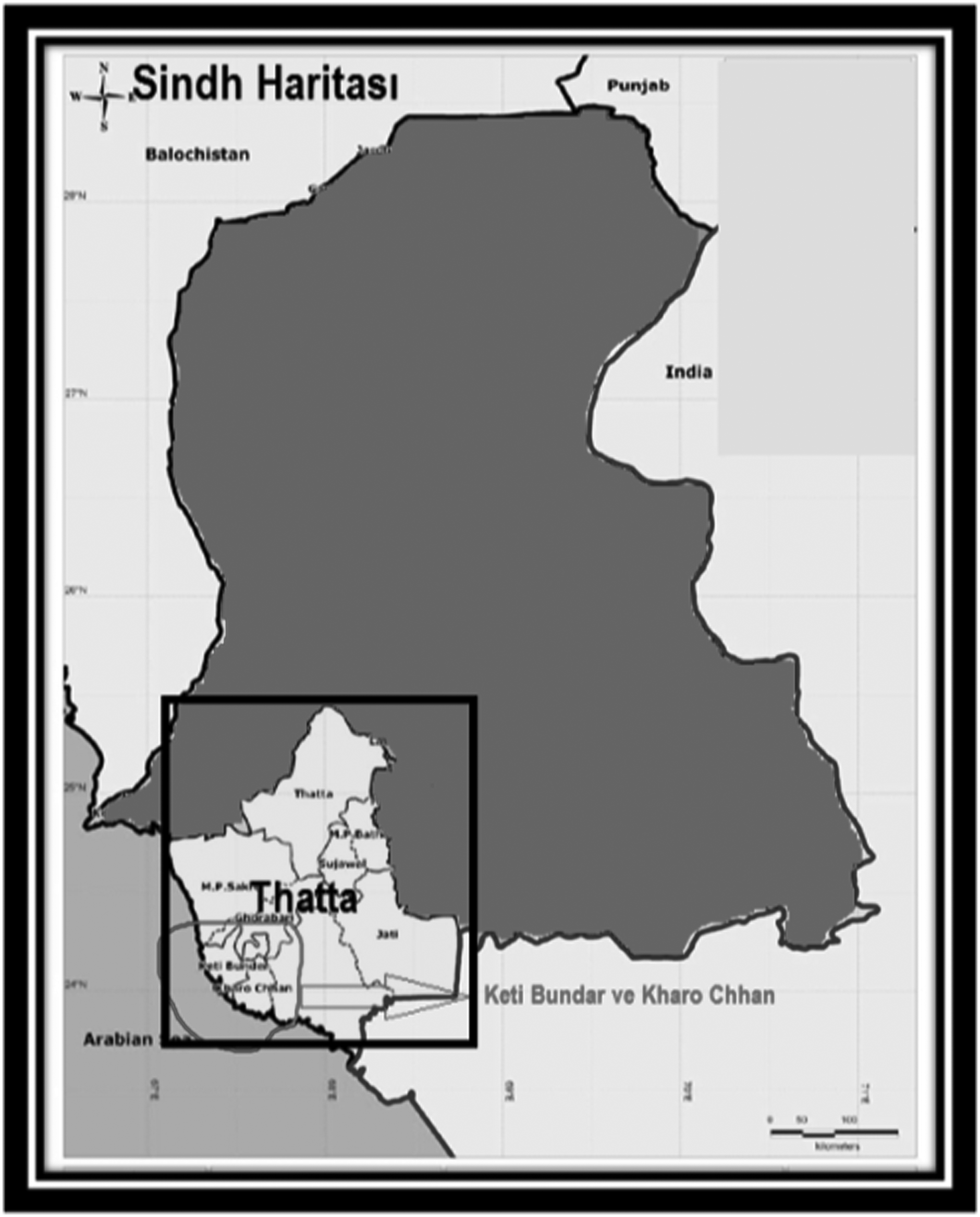
Research area Keti Bandar and Kharo Chan, District Thatta, Sindh.
There are four subdistricts of Thatta falling on the coastline, namely Kharo Chan, Keti Bandar, Ghorabari, and Mirpur Sakro. However, Keti Bandar and Kharo Chan subdistricts, being in close proximity to the Arabian Sea, have been the worst affected due to virtual stoppage of Indus freshwater flow resulting in the encroachment of sea, which has devoured hundreds of villages so far in these subdistricts alone. This study collected data from the two subdistricts, namely Keti Bandar and Kharo Chan, aiming to find out the impact of dams on communities living in this region.
Kharo Chan and Keti Bandar (the Two Subdistricts of Thatta District, Sindh)
Kharo Chan and Keti Bandar, subdistricts of Thatta, lie along Sindh Province's coastline of ∼350 km, a significant part of which comprises the delta of River Indus. Kharo Chan has 1 union council, 41 revenue villages, and 4385 households. 12 Whereas Keti Bandar consists of 43 dehs [cluster of villages]. The estimated 2011 population of both Keti Bandar and Kharo Chan was 63,824. 13
In Kharo Chan subdistrict, at least 117,823 ha of land was lost due to sea erosion, of which 81% fell in the category of “totally eroded by sea.” A similar extent of land was eroded and encroached by the sea. 14 As a result, people lost their homes and their livelihoods, including the marginal grazing lands they possessed and the small plots of cultivable land. The lost land includes healthy mangrove forests and inhabited creeks, reducing the stock of fuel wood and energy supplies that local communities rely on. Fishing, the single most important source of income for many families, has become highly unreliable.
The destruction of the delta and loss of livelihood have caused an out-migration from the coastal areas in general and from Kharo Chan and Keti Bandar in particular. The World Bank survey of two coastal districts Badin and Thatta found that during the years 2000–2004, nearly 27% of the households indicated out-migration from among their families in coastal areas. The whole family moved out in 57% of the cases of out-migration; only part of the family moved out in 31% of cases. 15
Findings
Demographic characteristics and socioeconomic conditions of respondents
This study sample consisted of 81% male and 19% female (Fig. 3). The fewer ratios of female participants in this study were due to the sociocultural norms that precluded women exposing themselves before stranger men.
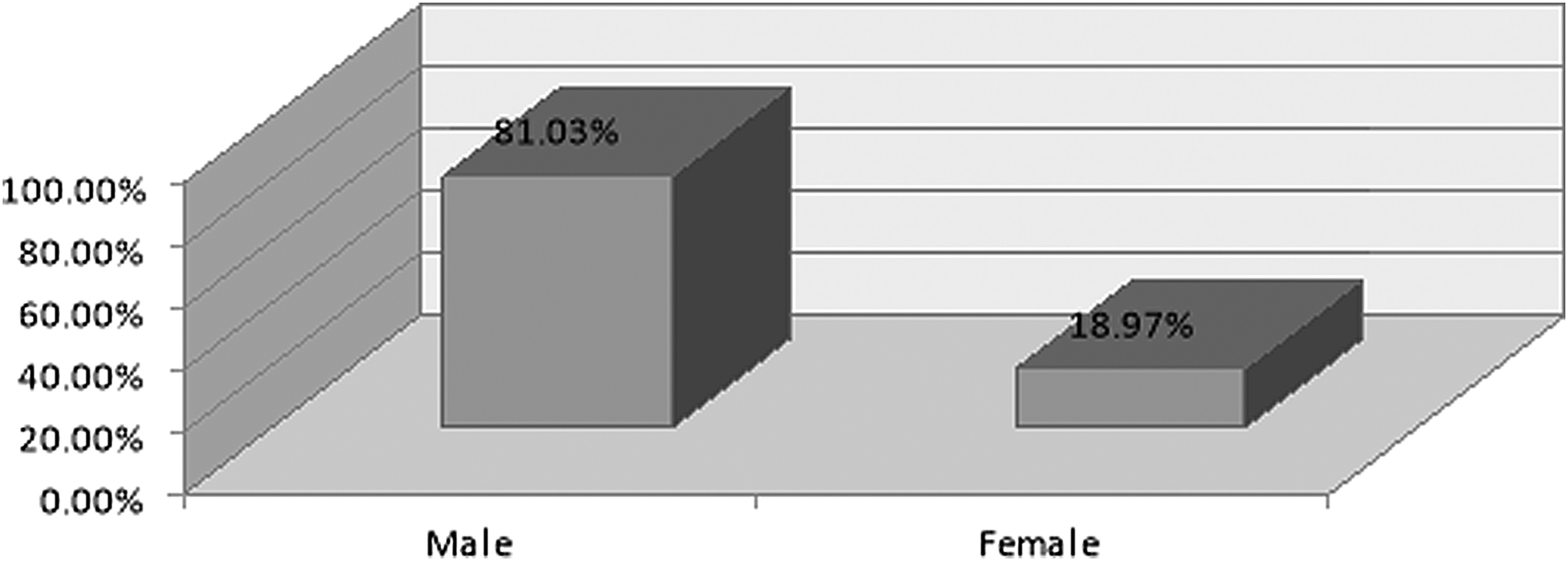
Sample of the study.
Considering the human development indicators, people of this area were deprived of many basic amenities. Owing to poverty and lack of educational facilities, more than 60% of the study sample were illiterate, whereas only 1% completed their graduation (Fig. 4). Almost 66% of respondents (Fig. 5) depended on fishing as their main source of livelihood, whereas less than 1% of respondents worked in the public sector. The majority of local people getting their livelihood from fishing and farming indicate their dependency on natural resources and these resources are under serious threat due to lack of freshwater flow from the river.
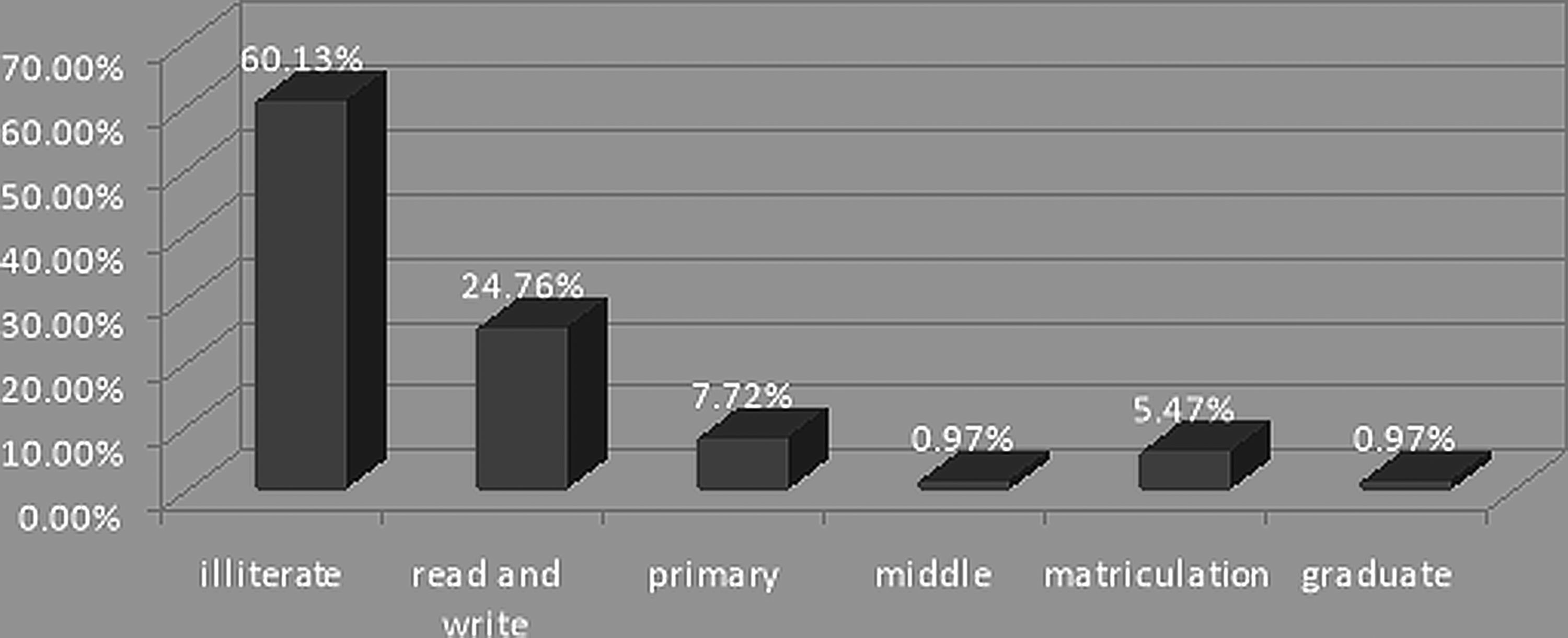
The level of education of respondents.

The source of income of respondents.
In terms of this head count index, between 1981 and 2005, the proportion of Pakistanis living below USD 1.25 declined from 73% to 23%. 16 However, the proportion of Sindhis living below USD 1.25 increased. This study found that nearly 80% of the households lived below the poverty line in the deltaic region. Poverty can be noticed by seeing the household's annual income in Figure 6. Respondents' annual income, 63.34% of them, was between 501 and 1000 USD, and there was almost 8% of respondents who lived less than 500 USD annually.

Annual income of respondents.
Social and environmental impacts of the dams on the Indus deltaic communities
The socioeconomic conditions of people indicate the adverse impacts of dams on deltaic people. The degradation of delta and the miserable lives of people witnessed how far the deltaic people paid the price of these dams. Dams have inflicted irreparable damages to their livelihood and deltaic ecosystem. Neither were they informed nor consulted about the dams. They did/do not have any say in the decision-making process. When inquired about the positive impacts of dams from people, they stated that there were no positive impacts. Rather, dams benefited upper riparian especially its big farmers at the cost/expense of Sindh. This has raised the question of environmental justice, that is, who pays the price and who gets the benefits.
Impacts on family relationship
People affected by dams in rural areas have close ties with the land. As a result of imprudent development projects, these people experience hardships and are badly impacted. Yet, among these communities, vulnerable groups such as women are the worst hit. Imprudent development projects change production relationships and exacerbate power inequalities among genders and push women further to confine them within their homes. For example, in Brazil, the construction of dams exacerbated unequal relationships between men and women. Impoverishment and destructuring of families in the wake of forced displacement resulted in increased domestic violence. 17 Hence, these projects not only engineer a physical infrastructure but also a masculine social order.
The Indus deltaic families, having lost their livelihood due to the decrease in freshwater flow, are facing deep social, economic, and psychological effects. They live in poverty and despair. Nobody can expect happiness and peace within a family living such a miserable life. This study found that the loss of livelihood badly affected family relationships. Yet, it did not increase domestic violence. It can be seen in Figures 7 and 8 that, in contrast to 27% respondents, 70% respondents viewed that dams deteriorated gender relationships within the households, compared with nearly 80% of respondents who stated that there was no increase in physical violence.
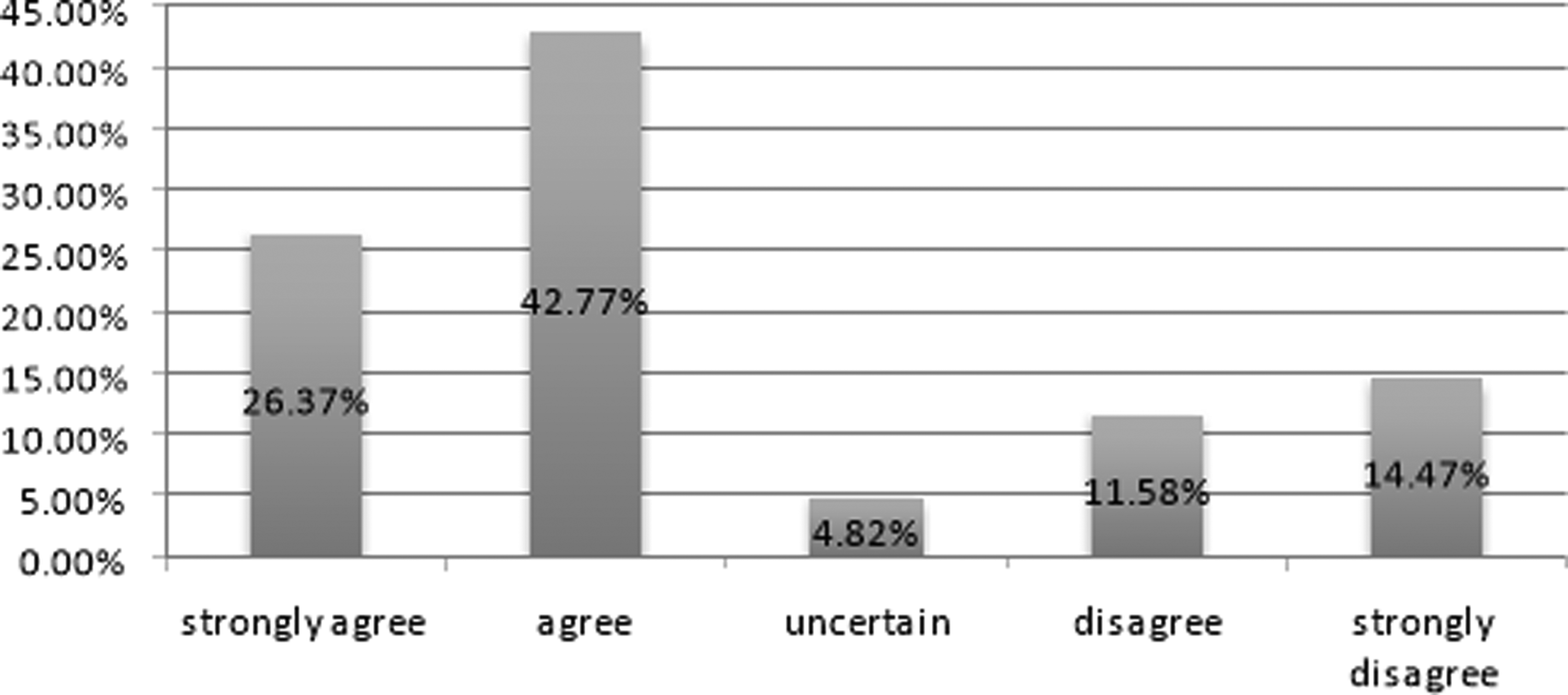
Impacts on family relationships. Deterioration of gender relationships.

Impacts on family relationships. Increase in domestic violence.
Psychological impacts
Disruption of delicate ecological balance in the Indus deltaic region has resulted in the loss of livelihood. People protest and demonstrate against the construction of dams, but their voice is unheard. Instead, many other dams are either under construction or being planned. This nondemocratic attitude of state has led people to feel marginalized and is pushing a significant number of people to consume drugs to reduce their stress and pain. It can be seen in Figures 9–11 that between 71% and 82% respondents said that upstream dams had negative psychological effects on them. Upstream dams increased stress and feeling of marginalization among them, and their aspiration about the future was lost. The imprudent development projects of dams have made them feel that their rights are being robbed on the pretext of national development.
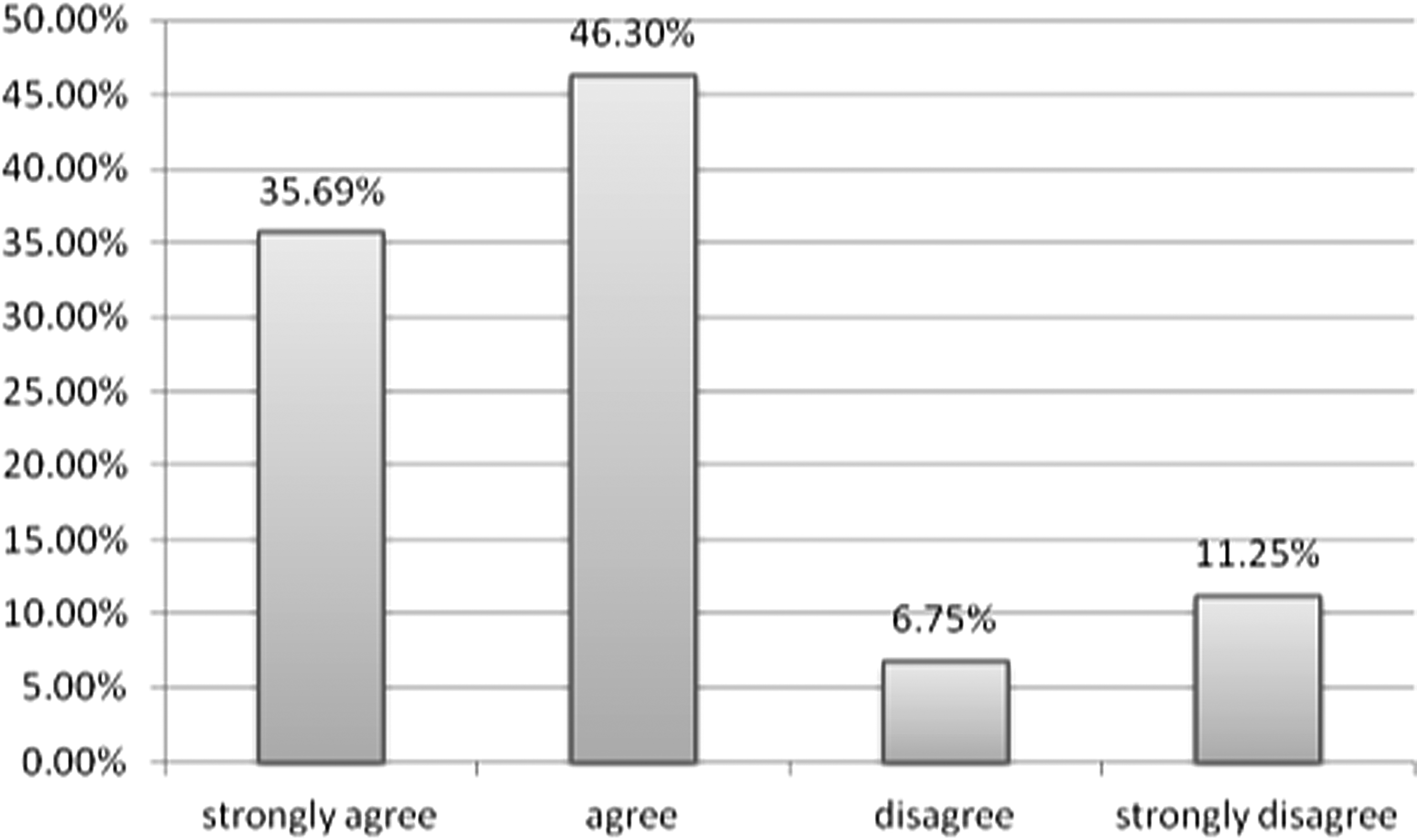
Psychological impacts. Increased stress.
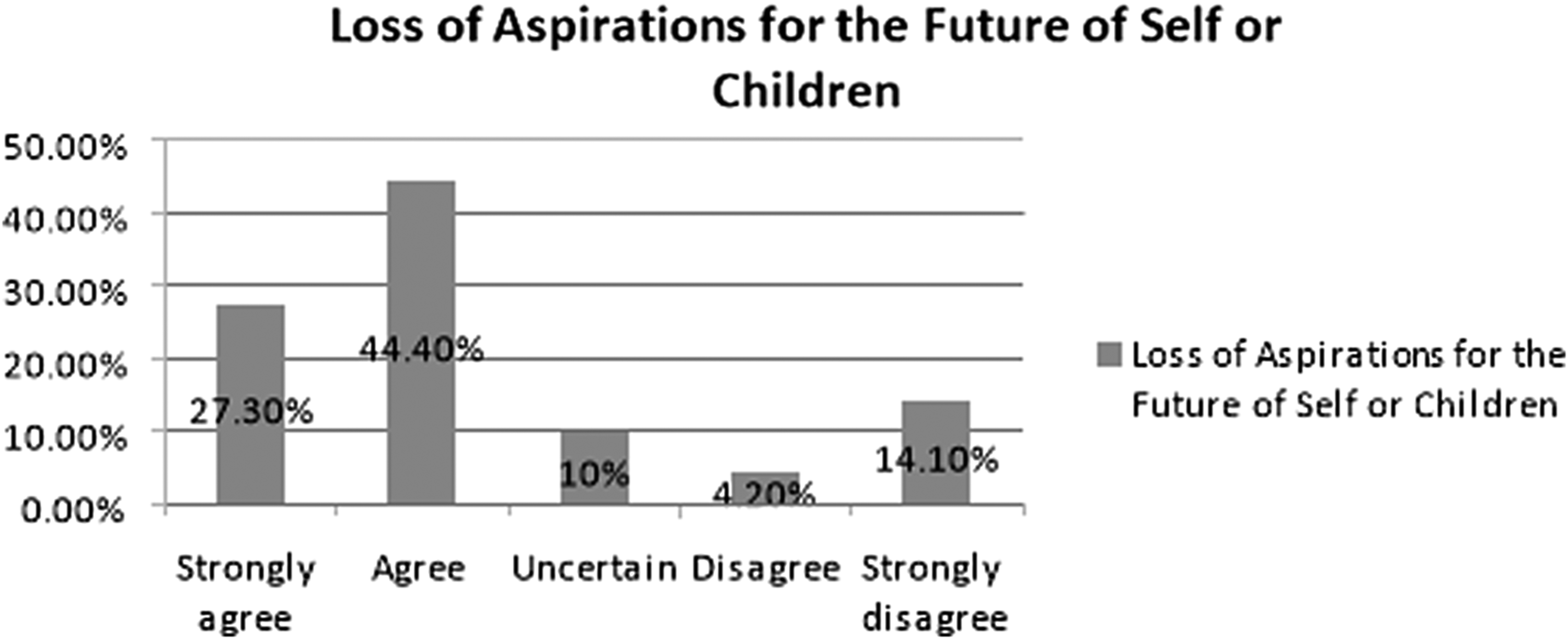
Psychological impacts. Loss of aspirations about the future for self or children.
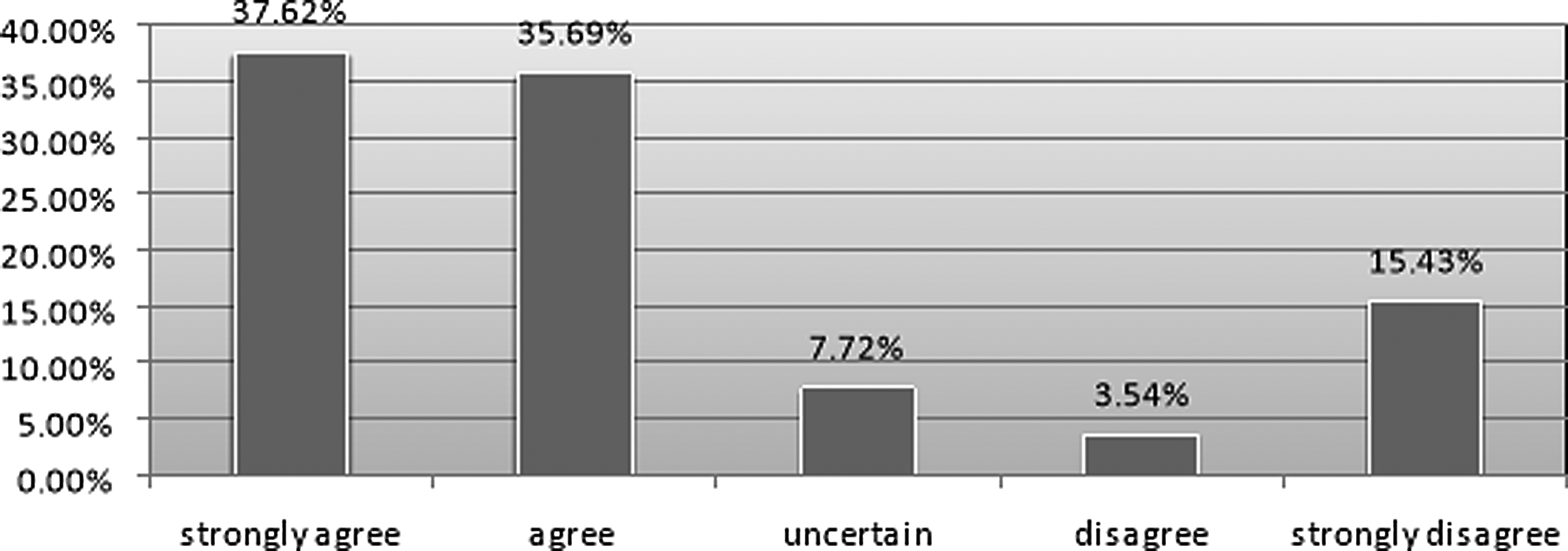
Psychological impacts. Feeling marginalized.
The people feel their living conditions were miserable and pathetic. There were increasing stress and tension among the local people. Their dismal living condition was reflected in the statement of an old woman who said that they were filthy because they had no water for bathing; they drank contaminated water and suffered from diseases. On top of that, she said they could survive hunger, but needed water and embankment to stop sea encroachment; otherwise, they would get inundated.
Their sense of hopelessness and helplessness manifested during FGDs where FGD participants revealed that “We did protests, demonstrations, and hunger strikes but all this was an exercise in futility. Sindh is a small province so the voice of Sindhi people is not heard by power corridors; in the eyes of the Federation and Punjab, we are antidevelopment; but the truth is, in the name of development our resources are exploited and used by the big province (Punjab). There is no one who can listen to our grievances. Politicians hoodwinked us at the time of election and go into hibernation for five years till the next election time approaches.” Their sense of frustration and marginalization was also evident in the words of a woman social activist, whose words resonated imminent worries: “We depend on freshwater, so dams must be decommissioned for our survival. We are struggling against upstream dams. If we need to sacrifice our lives for the revival of Indus River, we will not be reluctant to do so; we are already dead, at least our children will get benefits from our struggle.” Likewise, an old man interviewee argued that they had better cultivable lands than Punjab, without freshwater they are barren. He added “we cannot do anything. Upper riparian stops our water to fill dams. When they get inundated, they let water flow to us. If they do not get inundated, we will be deprived of water, which we get now for a month or two.” Losses of livelihood and economic pressures result in many psychological issues. Incidents of suicide are on the rise, especially among young people and women. 18
Social and cultural impacts
The Indus Civilization was one of the world's earliest civilizations. The demise of this earliest known civilization assumed to be due to shifting of the mighty Indus River is once again in danger due to imprudent development policies, which led to the construction of many large dams. The construction of dams on the Indus River has caused the reduction of freshwater flow at downstream resulting in environmental degradation at the Indus Delta and social disruption in the lives of fisherfolk (Mohanas) living in the deltaic region. Unbearable living conditions force these fisherfolk to move away from their villages in search of alternative means of livelihood. This search brought harm to the cultural diversity of the soil of Sindh. With migration, women often being socially secluded in typical Pakistani society lose social relationships.
As seen in Figure 12, 72% of respondents agreed that their social ties were lost due to upstream dams. During FGDs, the majority of participants stated that dams disrupted their social life and damaged social ties. It forced many of their relatives and friends to out-migrate and made them too poor to visit and meet them. During one interview, an old woman disclosed that social ties were disrupted due to huge numbers of out-migration, and remaining people were fighting with each other on petty issues.
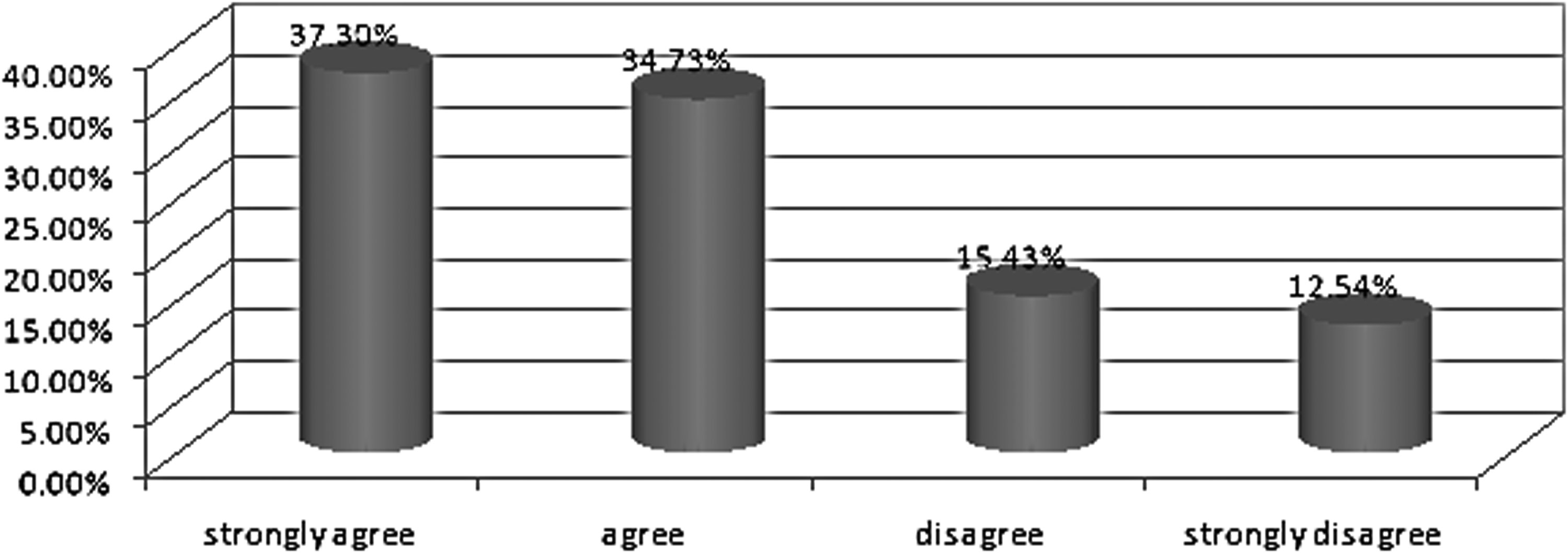
Impacts on social life. Social ties lost.
Dams badly damaged the cultural life of local communities. When asked about the upstream dam's impact on their social life, Figure 13 indicates that 73.63% of respondents talked about the impoverishment of their culture. An old man during one interview narrated that people of this region were very prosperous and lived a happy life. Cultural festivals such as Mela and Malakhra were arranged and celebrated, but things changed after the construction of dams since these cultural festivals were no longer affordable due to prevailing poverty.
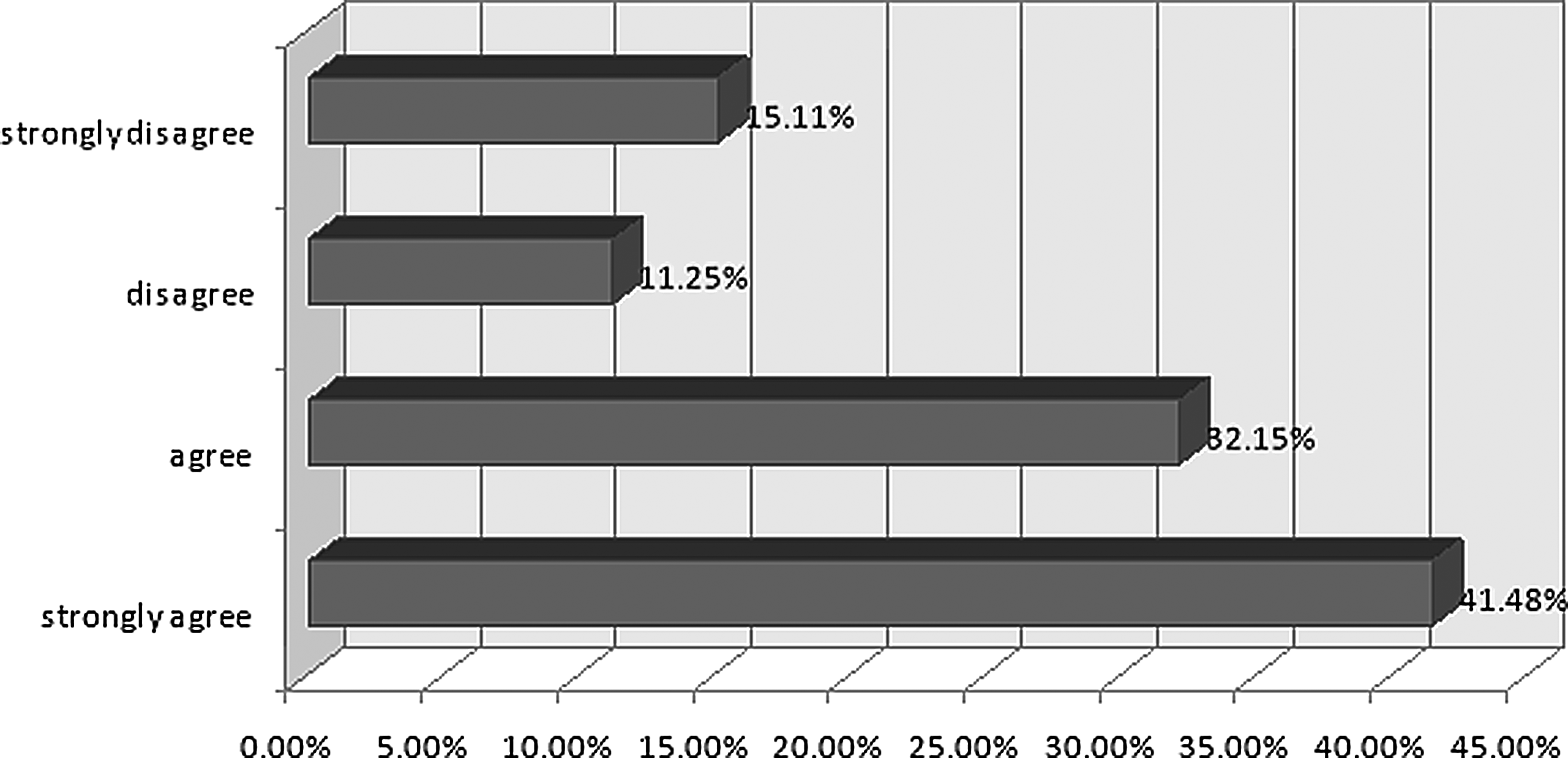
Impacts on cultural life. Culture impoverished.
Economic impacts
Dams have caused adverse economic impacts on marginalized people across the world. The construction of Kariba and Cahora Bassa dams has altered the flow of Zambezi River. As a result, marginalized people and wildlife of the Zambezi have been badly affected. The Volta River Project has adversely affected the downstream communities. They experienced profound environmental and socioeconomic impacts and major disruptions in their predam livelihood sources and patterns. 19 In Pakistan, people living in the downstream, especially deltaic communities, have been adversely affected due to the Mangla and Tarbela Dams. 20
The flow of Indus water stops seawater from intruding much into the surface and subsurface water resources inland. With the reduction in freshwater flow and encroachment of the sea, deltaic ecosystem and ecosystem people have suffered a huge loss. Fertile and cultivable lands of this area have been converted into seabed and brought economic devastation to the local people. Hundreds of villages have been devoured by sea, thousands of people were forced to abandon their homes and lands, and their other properties have been lost. The Government of Sindh has conducted a survey in Thatta and Badin Districts and revealed that more than 486,000 hectares of land were eroded or lost to the seawater in both these districts, dislocating a quarter million people. Other estimates put the figure at 567,000 hectares of the land lost to the sea. 21 It is estimated that up to 0.5 million hectares of fertile land in Thatta and adjoining areas 22 or about 12% of the total cultivated area in the entire province is now affected by seawater intrusion. 23 Degradation of fertile lands forces agricultural communities to switch over their livelihood to fisheries, but fishing, the single most valuable source of livelihood for many families, has become highly unreliable. The impact of resource degradation and unreliable source of livelihood has impoverished communities that were once happy and prosper. Despite the fact that the poverty profile of Pakistan has increased manifold, people of rural Sindh and especially deltaic communities have been pushed to abject poverty, finding it very hard to make their ends meet. As shown in Figures 14 and 15, 84% of respondents said that upstream dams adversely affected their living standard and 98% of respondents expressed that the level of income decreased.
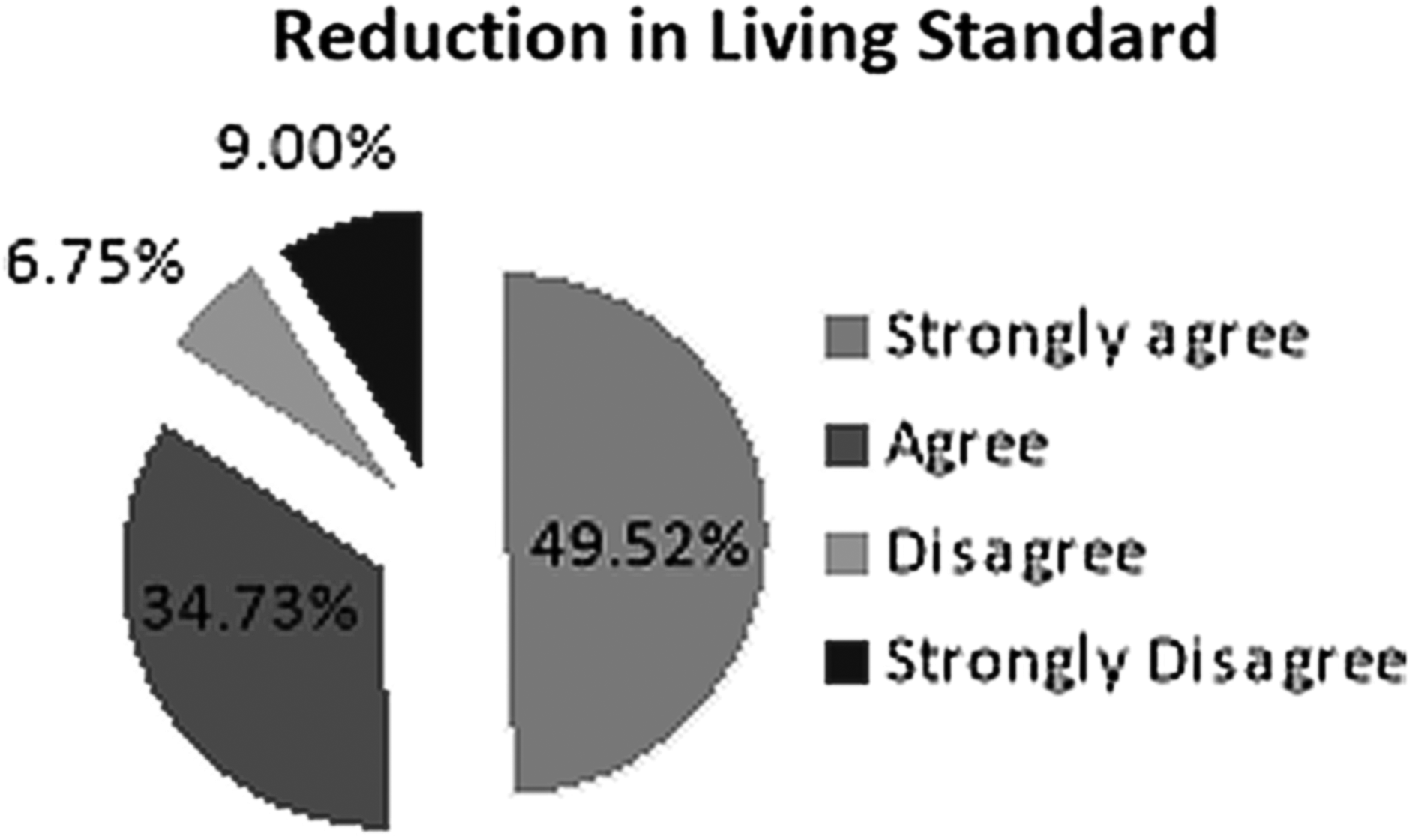
Economic impacts. Reduction in living standard.
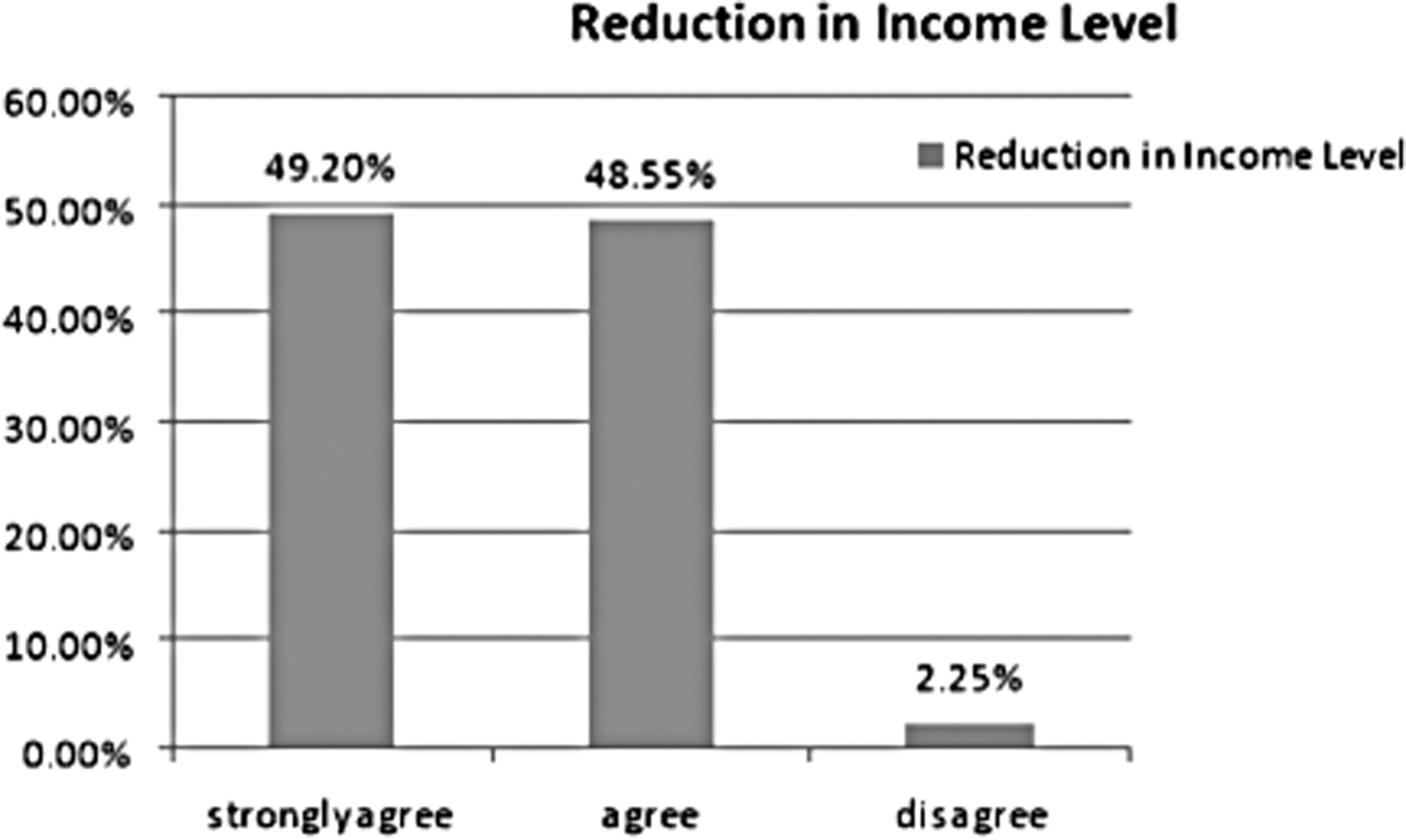
Economic impacts. Reduction in annual income.
The reduction in Indus water flow has caused severe economic downturn among the people of rural Sindh. Being unable to cultivate their fertile lands, people are abandoning cultivation altogether since it is no more profitable. According to the Government of Pakistan, during 1972–1990, there was a reduction of a total of 9.03% cultivated area in Sindh. 24 A survey research carried out in five districts of Sindh indicated the growing poverty in Sindh. According to findings, nearly 70% of the household live below the poverty line in these districts. Also, it revealed that the most deprived districts of Sindh are the two deltaic districts, namely Thatta and Badin.
In FGDs, when participants were asked about the life of deltaic people before and after the construction of upstream dams such as the Tarbela Dam, they said that their lands had been fertile, and crops such as rice had been grown. They would tend to animals, everyone had a reasonable possession of livestock, and fodder was easily available. However, when dams started to be built upstream, their livelihood opportunities dwindled as thousand acres of agriculture land were encroached by the sea. This situation forced them to shift from agriculture to fishing. However, fish catch declined.
Dams have badly impacted the sources of livelihood of local communities. A female interviewee said, “Our men go fishing, sometimes they come back without a catch of fish, that day we remain hungry because we have nothing to eat.” An old woman activist said “We used to get freshwater nearby our homes, now we buy water for drinking, which is unhygienic and causing many water-borne diseases.” A young male interviewee said that he heard from his parents that before the shortage of water, prosperity prevailed, they used to be happy, but things changed, they live miserable lives. Even they had no access to hygienic drinking water causing water-borne diseases.
Environmental impacts
The stoppage of Indus River water to flow to Sindh has created an ecological disaster in Indus Delta. The Indus Delta along with another seven of South Asia's river deltas is on the verge of disaster and being sunk faster. 25 Historically, before the construction of dams on Indus River, freshwater flows to the Indus Delta have been about 150 million acre feet. That flow brings along with it nutrient-rich silt, which enriched the soil and increased the fertility of areas along the banks. Furthermore, the discharge of Indus flow to the sea does not let the sea encroach the inlands. After the reduction in freshwater flow, the saltwater has been intruded up to 100 km north of the sea. 26 Saltwater intrusion has badly damaged the mangrove system of Indus Delta. 27 , 28 It is estimated that the area has shrunk to only 160,000 to 200,000 hectares 29 out of 345,000 hectares along the entire coastal area of Sindh. Some estimates indicate that today it is reduced to nearly 70,000 hectares in area.
As seen in Figure 16, between 87% and 99% of respondents said that reduced environmental flow adversely impacted the ecosystem of the Indus Delta. The resilience of the ecosystem has dwindled; sea level has risen; the sea has been encroaching; and mangroves have been damaged. Lack of environmental flow caused storm surges and cyclones. During FGDs, participants narrated that dams obstructed the flow of freshwater, which is the lifeline of an ecosystem resulting in the destruction of mangroves and surge of storms and cyclones.
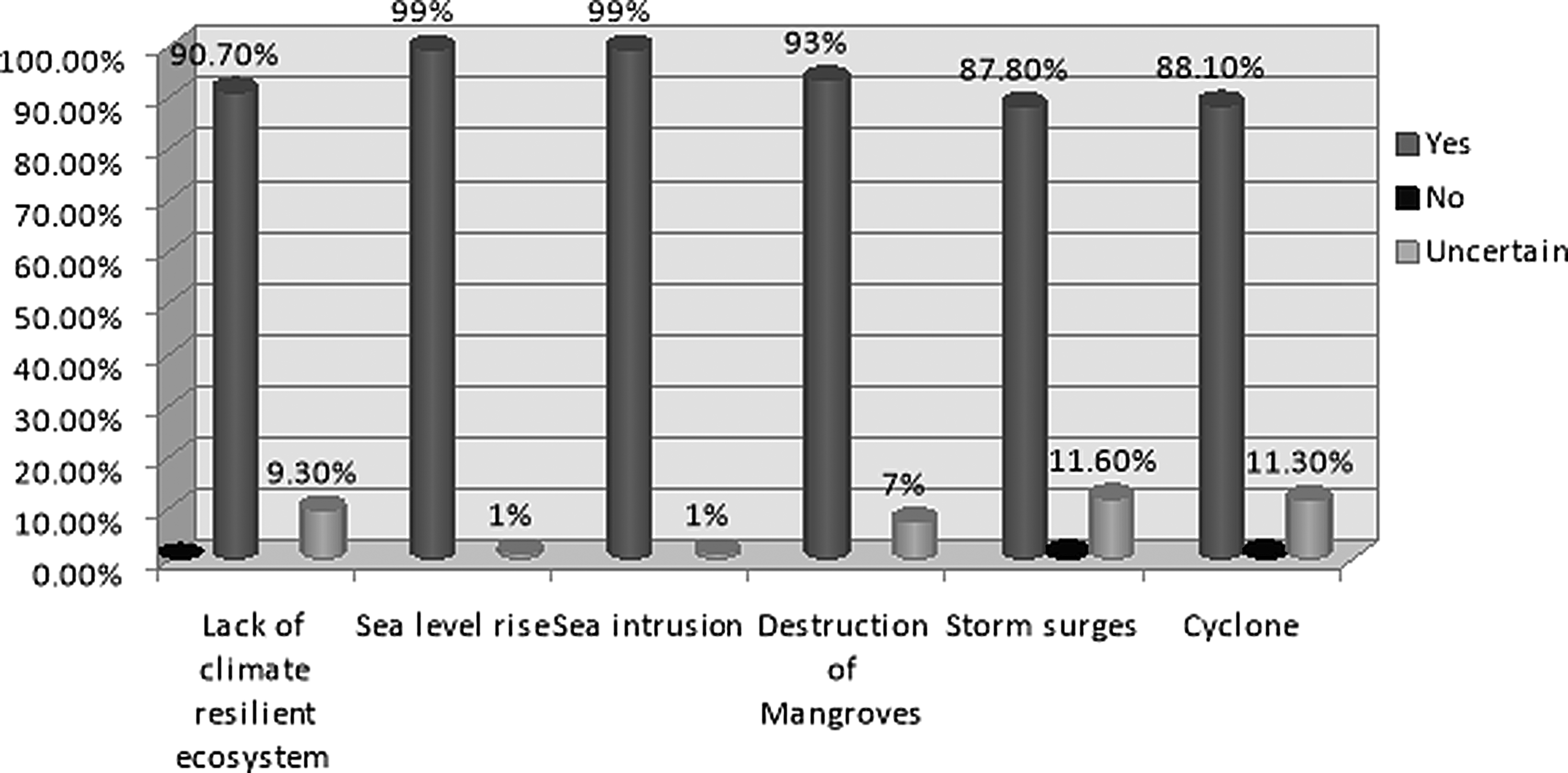
Environmental impacts.
Dam beneficiaries
Patrick McCullay states that the domination of rivers indicates the clearest connection between the control of both nature and people. 30 A vast majority of dams, barrages, and canals have either been built in the Punjab or benefited the agriculture sector of Punjab. Hence, Punjab has been stealing the water of Sindh to irrigate its barren lands. As a result, the fertile and cultivable lands of Sindh turned into barren lands and barren lands of Punjab turned fertile. Punjab has been blatantly violating the Sindh-Punjab water accord signed by both parties in 1945 and stealing Sindh's water at greater scale on different pretexts.
As shown in Figure 17, 60.77% of respondents said that Punjab (upper riparian) benefited from dams, whereas nearly 1% said that the army was the beneficiary of the dams. An overwhelming majority of the deltaic people were of the opinion that dams built on the Indus River benefited Punjab, whereas costs of dams were being borne by Sindh.
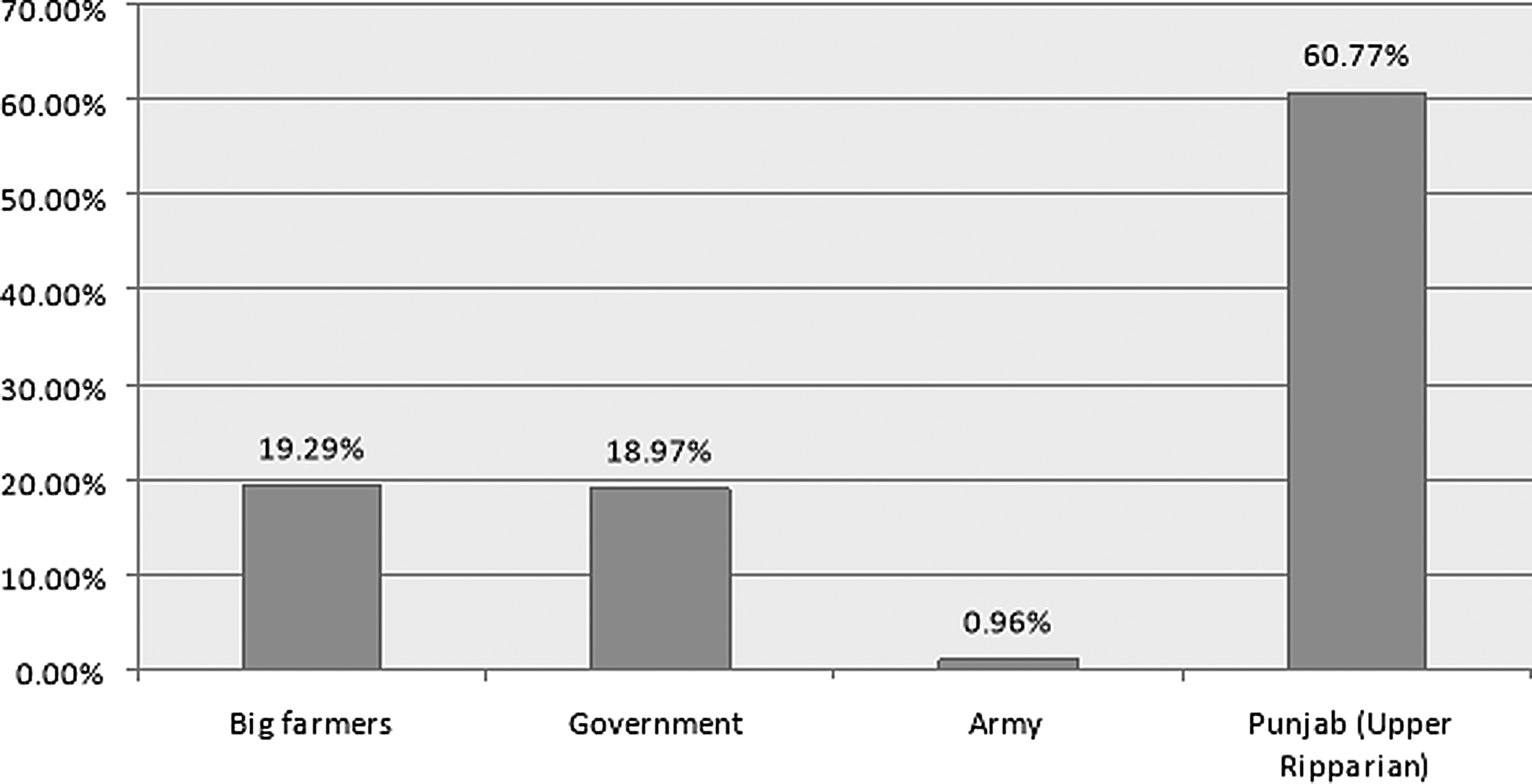
Beneficiaries of the dams.
Discussion
The Indus Civilization is one of the world's earliest civilizations. The demise of this earliest known civilization assumed to be due to shifting of the mighty Indus River is once again in danger due to imprudent development policies, which led to the construction of many large dams. The ideology of development and progress in Pakistan has kept the continuance of the construction of dams, without the consent of lower riparian Sindh, ever questioning the irreversible harmful impacts of dams on Sindh. The steadily mounting evidence and research studies demonstrated the damaging destructive impacts of dams and this study corroborates these findings and research studies.
Punjab's violation of the Sindh-Punjab water accord signed by both parties has wreaked havoc on Sindh. Before the creation of Pakistan there was only one barrage, but now many dams, barrages, and link canals have been constructed. A vast majority of these have either been built in Punjab or benefited the industries and agriculture located in Punjab. As a result, the share of Sindh, the home of Indus Delta, from Indus water has been drastically reduced. The Indus Delta received 94 million-acre feet of water, before the creation of Pakistan, but now the Indus River dries up hundreds of miles before reaching the delta, causing disaster to the Indus Delta and its inhabitants. The destruction of the deltaic ecosystem has resulted in the abject poverty in this region.
People of Sindh, specifically the deltaic communities facing environmental injustice, demand environmental justice. It includes that the Sindh-Punjab water accord signed by both parties before the creation of Pakistan must be implemented; dams, canals, and other water diverting mechanisms built without the consensus of Sindh must be decommissioned. Sindh must be given its due share of water to bring back prosperity and happiness in Sindh, especially to the deltaic communities.
Conclusion
The inequitable distribution of water in Pakistan has wreaked havoc on Sindh. Before the creation of Pakistan, there was only one barrage, but now many dams, barrages, and link canals have been constructed. A vast majority of these have either been built in Punjab or benefited the industries and agriculture located in Punjab.
Despite the fact that the poverty profile of Pakistan increased, deltaic communities pushed to abject poverty find it very hard to make their ends meet. This study found that the majority of people in this region lived off on natural resources, which were also under serious threat due to lack of freshwater flow from the Indus River. The deltaic communities who have historical and traditional rights on the Indus are paying the price of dams in terms of irreparable damages to their livelihood and food security along with other impacts, including physical, cultural, and spiritual well-being. This study found that an overwhelming majority of people perceived that dams were being constructed to benefit the lands and industries of upper riparian Punjab at the expense of Sindh. Environmental injustice is perceived by people as they regarded that Punjab was stealing the water of Sindh to irrigate its barren lands. As a result, the barren lands of Punjab turned fertile, whereas the fertile and cultivable lands of Sindh turned barren.
With the reduction in freshwater flow and encroachment of the sea, deltaic ecosystem and ecosystem people suffered a huge loss. Hundreds of villages have been devoured by sea, and fertile and cultivable lands of deltaic region have been converted into seabed, bringing economic devastation to the local people and resulting in the out-migration of thousands of people.
This study also corroborated previous studies regarding the environmental impacts of dams. This study reveals that the resiliency of the ecosystem dwindled; sea level was rising; the sea was encroaching; and mangroves were being damaged. Lack of environmental flow caused storm surges and cyclones. The aforementioned adverse impacts faced by lower riparian due to construction of dams indicate that lower riparian Sindh is paying the price of dams.
The irony is that deltaic communities were/are neither informed nor consulted about dams. They learned about the dams either through print or electronic media. On top of that, deltaic communities are not regarded as dams' affectees and, in turn, are not viewed as eligible to get compensation. In these circumstances, thousands of people feel compelled to out-migrate in search of livelihood. Those who are still residing in this region are not sitting idle on the injustice incurred on them. To protect their identity, survival, and livelihood, they oppose the imprudent development projects and fight for environmental justice, but so far, their grievances have not been addressed; this has generated a feeling of powerlessness and marginalization and many people started consuming drugs to alleviate stress caused by poverty and feeling of helplessness and hopelessness. Their environmental justice demanded that dams, canals, and other water diverting mechanisms built without the consensus of Sindh must be decommissioned. They demanded that the losses incurred by deltaic people must be compensated. Sindh must be given its due share of water to bring back prosperity and happiness in Sindh, especially deltaic communities.
Footnotes
Author Disclosure Statement
No competing financial interests exist.