




Abstract
Abstract
In 1987, large-scale open pit mountaintop gold mining was initiated in the outskirts of the Paracatu town, Minas Gerais, Brazil. The mine hard rocks contain low-grade gold ore (average 0.4 g gold/ton ore) and abnormally high amounts of arsenopyrite (FeAsS; average 1000 g/ton ore). Since 2005, the mine has been operated solely by Canadian Kinross Gold Corporation (KGC-NYSE, K-TSX) through its local subsidiary. The poorly controlled mining activities release FeAsS and its weathering products from the rocks as particulate matter, gas, and solutes that contaminate the air, soils, surface water and ground water. As of 2016, the cumulative inorganic arsenic throughput of the mine was estimated at 735,000 ton. In this article, we present the first series of sentinel cases of chronic arsenic intoxication (CAsI) in Paracatu. Despite mounting evidence for wanton widespread environmental degradation, large-scale environmental contamination, chronic mass intoxication, and persistent human rights abuse, a number of public and private lawsuits failed to halt Kinross' activities in Paracatu. The ongoing environmental and humanitarian disaster and unlawful abuses in Paracatu that degrade the environment and victimize thousands of people have prospered unchallenged and cannot be stopped locally due to officials' collusion with large economic interests, powerful political interferences, facilitation payments, willful blindness, and toxicological greenwashing.
Introduction
In 1987,
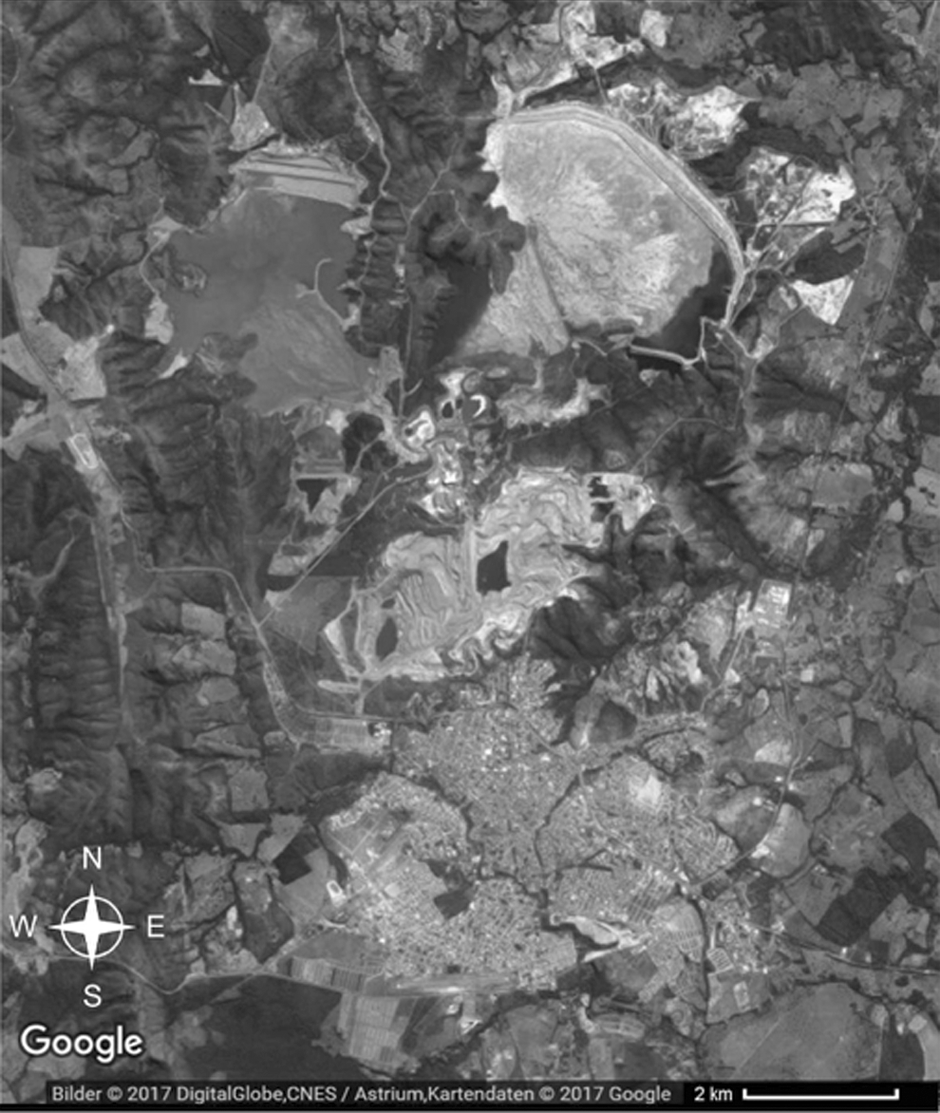
The Paracatu town (bottom of the picture) and the Kinross gold mine facilities (middle and upper part of the picture) are a geographical unit. The first tailings pond at the upper right part of the picture shows up with its surface dried up in this January, 2017, satellite image from Google Maps. For a video of the dust emanating from this tailings pond, the reader is referred to (
Objectives
This article aims at reviewing the ongoing damage to the environment and human health from open pit mountaintop gold mining in the outskirts of Paracatu, Minas Gerais, Brazil, after three decades of uninterrupted mining activity, in light of geological, environmental, medical, and juridical evidence. We present evidence of crimes against humanity including geocide and ecocide with genocidal type outcomes from large-scale open pit mountaintop gold mining during the past three decades in Paracatu, in our capacity of attending physicians (S.U.D. and C.R.G.M.), geologist (M.J.S.), doctor of law (L.T.), and criminologist (P.M.S.N.).
Methods
The case milestones are reported in chronological order, supported by documented evidence. To estimate the amount of iAs released by the mining activity in Paracatu, we used the mine output data reported by Kinross Gold Corporation in their annual reports. From November 2015 to February 2017, we conducted sentinel surveillance of chronic arsenic intoxication (CAsI) in Paracatu. We present the first series of sentinel CAsI cases in Paracatu. For confirmation of CAsI, the diagnostic patient specimens were sent to regional laboratories for analyses or to European laboratories. The analysis of total iAs in the human compartment was performed by inductively coupled plasma mass spectrometry (ICP-MS) and/or inductively coupled plasma-sector field mass spectrometry (ICP-SFMS) (EN ISO 17294-1,2 and Environmental Protection Agency [EPA] method 200.8), atomic absorption spectrometry (AAS), and/or Merckoquant® Arsenic Test Strips (Merck, Darmstadt, Germany) in two consecutive urine samples, and calculations were performed as elsewhere reported. 4 To estimate the patient's skeleton dry weight (eSW), the equation eSW (g) = 0.07 × (BW) × 1000 was used, where ideal body weight (BW) was established based on a body frame-corrected body mass index varying between 21 and 25 kg/m 2 , and the fraction of BW was based on Heymsfield et al. 5 To establish the iAs:phosphorus ratio (iAs:P), we estimated the skeleton P content (eSP) as eSP (g) = eSW × 0.7 × 0.185, considering 70% bone mineral matrix and a 18.5% P content thereof. To clinically confirm the CAsI in our sentinel cases, we applied the CAsIDS—chronic arsenic intoxication diagnostic score. 6
Chronology
Gold production at Paracatu commenced in October, 1987, by the mine operator Rio Paracatu Mineração (RPM) treating oxidized and highly weathered ore. The first gold bar was poured in December 1987. The following year, the mine throughput reached the design capacity of 6.1 million tonnes per annum (Mtpa). After start up, the throughput rate was progressively increased to 13 Mtpa. Throughput at Paracatu was increased again to 16 Mtpa in 1997 after completion of Expansion Project I. Expansion Project II (1999) increased the mill throughput to 20 Mtpa. Owing to an increase in ore hardness, throughput has progressively fallen to the 18 Mtpa level. 7 In 2004, the mine operator began blasting harder portions of the deposit exposed in certain areas of the mine.
The mining activities release FeAsS from the hard rocks as finely ground particles, and the industrial processes employed to obtain gold from the ore further release a number of iAs compounds from FeAsS. In addition, the bare mine surface and the tailings resulting from the mining processes are subject to weathering that further releases iAs in the form of fine particulate matter, gas, and solutes, into the environment. Figure 2 shows the amount of iAs released from the hard rock since 1987, based on the reported ore throughput multiplied by the reported ore average iAs content. A 2002 analysis performed by the mine operator and CETEM (a Brazilian governmental research institute) has shown that <30% of the iAs released from the mine rocks can be recovered and appropriately dumped by the mine operator in the so called specific tanks, which are reportedly lined with an impermeable layer. 8 The rest of the iAs—the largest part of it, anyway—is dumped in large tailing ponds.
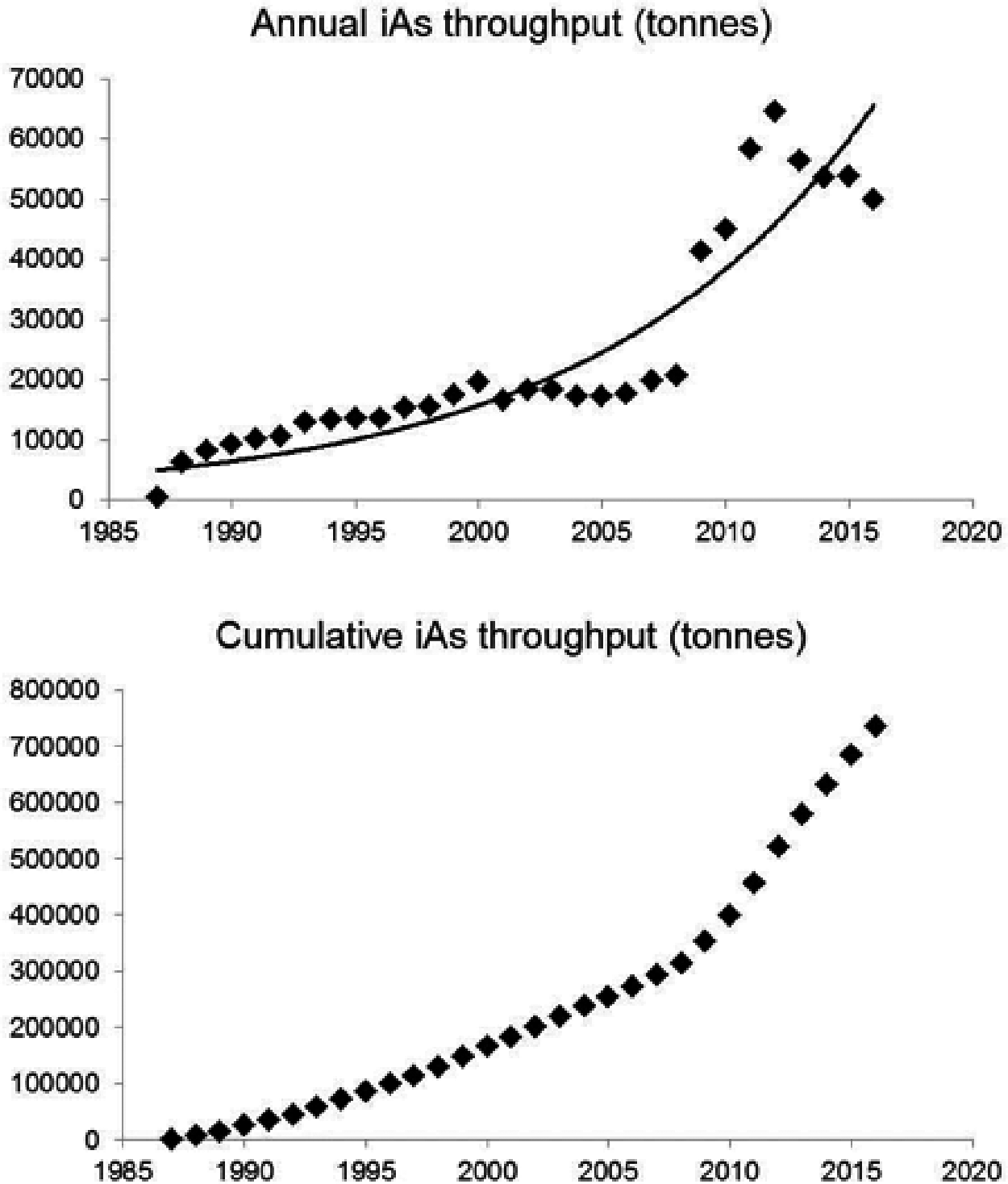
Annual and cumulative iAs throughput at the Paracatu open pit gold mine since its start up in 1987 until 2016. The data are based on the average 0.1% iAs content of the actual mine ore throughput as reported by Kinross Gold Corporation in its annual technical reports.
On January 31, 2003, the mine operator Kinross Gold Corporation acquired a 49% ownership interest in the Paracatu open pit mine, in the acquisition of TVX Gold, Inc./Echo Bay Mines Ltd. on December 31, 2004, Kinross completed the purchase of the mine from British–Australian multinational Rio Tinto Plc, and launched the Expansion Project III aiming to triple the ore throughput to the design capacity of 61 Mtpa. 9 The corresponding iAs throughput, estimated on the basis of the 0.1% iAs content of the ore, as reported by the mine operator, tripled to 61,000 ton iAs per year. In fact, the ore throughput has increased exponentially from 2007 and the cumulative iAs throughput of the mine reached estimated 735,000 ton as of December 2016. 10 , 11 , 12 , 13 , 14
FeAsS, the main source of iAs in the Paracatu gold mine, is inherently toxic 15 , 16 and can be gradually converted into other toxic arsenic compounds through weathering under normal environmental conditions, and at infinitely increased rates under mining conditions that increase both iAs mobilization in the environment and iAs bioavailability upon ingestion, skin contact, or inhalation. 17 , 18 Metabolic studies of FeAsS showed that it is converted to products such as arsenous acid, arsenic acid, methyl arsenate, and dimethyl arsenate, which are identical to those generated from As2O3. Although these metabolic products are formed at a lower rate in normal conditions, they nonetheless show that FeAsS should be considered a carcinogen. 19
Arsenic is the single most potent naturally occurring persistent widespread environmental toxic agent acting upon exposed populations worldwide, 20 , 21 , 22 and humans are more susceptible to the toxic effects of arsenic than any other mammal so far studied. 23 Despite FeAsS and its weathering products being toxic and environmentally persistent, the Brazilian environmental authorities do not conduct or publish any regular environmental monitoring or report of the mining activities in Paracatu, leaving this task to the mine operator itself and its contractors.
According to the Workers' Union of the Mineral Extraction Industry in Paracatu, only after a requirement made by the Workers' Union in 2001 did the mine operator recognize the iAs exposure in its Paracatu mine as an occupational risk. 24 The first published estimates of the amounts of iAs released by the mining operations and transported through windblown dust to Paracatu were provided by the mine operator, Rio Tinto/RPM, in its 2003 “Sustainable Development Report.” 25 These were rough estimates based on total suspended particulate (TSP) matter monitoring results obtained from high volume samplers (PM10) installed and maintained by the mine operator at different points in the town of Paracatu. According to the said report, the amounts of iAs contained in the TSP (PM10) in Paracatu would have increased from 3.42 kg in 2001 to 5.79 kg in 2002 to 6.10 kg in 2003.
After completion of the purchase of the mine in 2004, Kinross no longer reported the amounts of iAs recorded by the air samplers in their annual “Sustainable Development Reports.” Also, as of April 2017, we are unaware of any results of urinary arsenic (uAs) monitoring in Kinross' employees that had been ever published. Results of TSP (PM10) analyses carried out by the mine operator during the years 1992–2005 revealed estimated concentrations of iAs of 50–75 ng/m 3 (50 μg PM/m 3 × 1–1.5 ng As/μg PM). 26 As for comparison, we cite the 2008 study by Yoshikawa et al. 27 who found a significantly increased standardized mortality ratio for lung cancer in areas with concentrations of iAs in air equal to or higher than 1.77 ng/m 3 .
The mine operator apparently disregarded evidence provided by at least one study from 1987 showing that arsenic is much more potent as a carcinogen than indicated by previous studies, demonstrating the distinction between airborne arsenic and the bioavailability of arsenic, and stressing the importance of this distinction for risk assessment. 28 In the said study, it has been shown that when a dose–response relation is based on airborne concentrations of arsenic, it is clearly concave downward, but when based on urine concentrations, it is linear. We are unaware of any epidemiological studies on urinary iAs conducted by the mine operator in Paracatu, since none has been published. In 2008, the Federal Labor Public Prosecution Office in Patos de Minas, MG, established a civil survey that deals with the possible risk of arsenic contamination of thousands of employees hired by Kinross and its service providers in Paracatu, 29 but as of the present date, no clinical protocol had yet been developed.
The Canadian mine operator Kinross apparently disregarded the well-known impact of gold mining in FeAsS hosted ore, including permanent arsenic seepage from tailings into the environment in virtually all gold mining sites all over the World including Canadian sites. 30 , 31 , 32
The Kinross Expansion Project III in Paracatu was fiercely opposed by a substantial part of the >80,000 inhabitants of Paracatu and by the medical and scientific community who alerted the local, state, and federal authorities about the foreseeable impacts of the poorly controlled mining activities on the environment and health. In addition, Kinross Expansion Project III advanced over traditional Quilombola communities. The Quilombolas are Afro-Brazilians living in rural settlements (quilombos), formed by descendants of enslaved Africans, who live for the most part from subsistence agriculture in land donated, bought, or occupied for a long time. The Paracatu Quilombolas already held legal ownership rights over their lands, being formally recognized by the federal government as Quilombolas, and being engaged in a land claim process to secure collective title to their territories, when Kinross assumed ownership of the mine in 2004. 33 Despite all these circumstances, the Brazilian and Canadian governmental authorities strongly supported the licensing and financing of the project, respectively.
In 2008, a group of Paracatu citizens including physicians, lawyers, engineers, a geologist, and a politician teamed up to elaborate the “Waters Law Proposal” that, if approved by the City Hall, could have impeded Kinross to install its second tailings pond, the so called Eustaquio tailings facility that would destroy and pollute the important springs of potable water of the Machadinho Valley in Paracatu. In response to the people's pressure against the Expansion Project III, the Board of Directors of Kinross Gold Corporation announced the appointment of the former Minas Gerais State Secretary Wilson Nelio Brumer as a Board Director in Canada, effective immediately on April 23, 2008. 34 , 35 Between 2003 and 2007—then acting in his capacity as Minas Gerais State Secretary of Economic Development—Brumer had actively supported the Kinross Gold Corporation unwarranted expansion of the large-scale open pit gold mine in Paracatu, backed by the Minas Gerais State government itself and a World Bank loan. 36 During the same period, Kinross initiated a number of environmental surveys and intensified its mediatic campaigns to convey the message that the Expansion Project III did not represent any risk for the environment or the health of the population. 37 The Waters Law Proposal was eventually dismissed by some politicians close to Kinross and its contractors. 38
In contrast, a number of independent surveys invariably pointed to a large-scale environmental and health impact of Kinross mining activities. The analyses carried out on sediment samples from the brooks and rivers surrounding the Paracatu gold mine showed concentrations of iAs ranging from 2 (in pristine brooks and rivers) to 1000 mg/kg (in brooks and rivers impacted by the large-scale mining activity). 39 , 40 At various sampling points, the concentrations of iAs largely exceeded the Brazilian legal reference values. In addition, the iAs concentrations in the brooks and rivers increased inversely in relation to the distance from the gold mine, so that the gold mine could unequivocally be identified as the source of the environmental pollution.
In Mai, 2009, the Federal Public Attorney (FPA) in Brazil filed a public lawsuit against the Brazilian government licensing and monitoring authorities and Kinross relating to the rights of Quilombola peoples in connection with their traditional lands being used by Kinross to install its second tailings impoundment in the Machadinho Valley. 41 As part of the lawsuit, the FPA had applied for an injunction seeking to enjoin the issuance by the state authority of the permit to operate the Eustaquio tailings facility, a large earth tailings dam. 42 In March 2010, the FPA's injunction was denied by a member of the Brazilian Higher Court, judge Cesar Asfor Rocha, for whom “the risks of severe damage to the economy (of not issuing a permit to Kinross) were adequately characterized (by Kinross).” As a result, the permit to operate was issued, and the Eustaquio tailings facility has been operating since July 2012. In December 2013, and January 2014, the trial court judge issued decisions denying the FPA's claim. In the fourth quarter of 2014, the FPA filed appeals challenging the decisions of the trial court. Kinross also informs that it has filed its response to the appeals and will continue to vigorously oppose the public lawsuit.
In September 2009, Acangau Foundation, a private foundation in Paracatu, filed a precautionary civil action against the mine operator RPM-Kinross and the Paracatu municipal government to force them to perform a clinical–epidemiological study of the environmental contamination and chronic intoxication of the population of Paracatu by arsenic and other contaminants and, eventually, interrupt mining operations and immediately initiate the necessary environmental sanitation and health care of the affected persons. 43 The consequences of the possible failure of a large tailings impoundment held by an earth dam was also approached in this civil action. Kinross and local, state, and federal government officials opposed this public action, denying any evidence of environmental contamination in the first place. 44
In 2011, the municipal government of Paracatu, then represented by Mr. Vasco Praça Filho, hired CETEM, an institute of the Brazilian government for mining research, to conduct a survey in Paracatu. CETEM was a long-time provider of services to the mine operator and had no experience in medical matters. In March 2014, CETEM presented its “Final Report” 45 during a public hearing at Paracatu City Hall, a very unusual way to present scientific work. According to CETEM, 778 urine samples from people aged 40 years or older in two different districts in Paracatu presented arsenic concentrations varying from 0.02 to 27.15 μg/g creatinine (mean ± standard deviation ranging from 2.15 ± 2.72 μg/g creatinine in people living far from the mine, up to 3.55 ± 3.46 μg/g creatinine in people living near the gold mine, this difference being reported by the CETEM team as “non-significant,” despite a p < 0.001). The erroneous conclusion of the CETEM report was that the population of Paracatu did not present any risk of chronic intoxication by iAs. The Paracatu authorities, including the mayor of Paracatu (Mr. Olavo Condé), a public prosecutor (Mr. Paulo Campos Chaves), and some representatives of the Paracatu Prefecture supported the CETEM report and its conclusions. 46 The independent analysis of the Acangau Foundation of the CETEM report submitted in 2014 to the Public Prosecutor's Office and the first instance judge in the context of the Acangau Public Civil Action revealed that the CETEM report was full of gross methodological errors on almost every page; it presented poor inconsistent results and invalid conclusions. 47 The reaction of the Public Prosecutor in Paracatu was to order a general review of the report by the CETEM team, as well as conducting a phase II survey by the same team.
In 2016, the CETEM team unofficially withdrew the results of urine measurements reported in their 2013 report on equipment error claims and presented corrected results showing 13 samples with uAs concentrations >50 μg/g creatinine as well as 3 samples with concentrations of uAs >100 μg/g creatinine. 48 The mean corrected uAs concentration, 15 μg As/L, was four to seven times higher than that originally reported by the same CETEM team.
By that time, Kinross hired a nonmedical research team led by chemist Virginia Ciminelli of the Federal University of Minas Gerais (UFMG) and director of the INCT-Acqua organization who claimed no risk of intoxication of the population of Paracatu by iAs. 49 Measurements of iAs in the air from Paracatu conducted on behalf of Kinross by the Ciminelli group between the years 2010 and 2012 resulted in an average concentration of iAs of 38.12 ng/m 3 , a value that was then corrected by them to 1.3 ng As/m 3 by multiplying the mean value of arsenic in air by the BAC (BAC refers to the fraction of a compound that is soluble in the gastrointestinal tract and, therefore, available for absorption) as obtained in gastrointestinal trials. 50 , 51 This misleading correction placed the arsenic value at the lower end of what was reported for total arsenic by the World Health Organization (WHO) for air in rural and remote areas, 0.02–4 ng As/m 3 . 52 The maximum concentration of iAs in the wind-borne dust of the Paracatu mine, collected in different parts of the city, was 2980 mg/kg, as reported for 2008 by independent teams, 53 , 54 compared with 313 mg/kg as reported in 2016 by a team funded by Kinross. 55
In claiming that there is no arsenic contamination at levels not tolerable by humans due to open pit gold mining in Paracatu, Kinross and some of its hired scientists and technicians, including some technicians and officials of the Brazilian government, 56 purposely neglect scientific reports published in academic theses, congresses, and journals of international circulation with editorial boards that clearly demonstrate the opposite of these allegations. Kinross seeks support on surveys that are full of gross methodological errors and are conducted by researchers without any medical qualifications in clear conflict of interest since they have been funded by the mining company.
The gross errors of other surveys commissioned by Kinross were also denounced by independent scientists. Steven H. Emerman 57 comments on a memorandum to the Center for Business Resources and Human Rights, in which Kinross repeated his earlier statement: “Two independent, detailed and separate clinical studies clearly show that the arsenic of our operations is not a public health concern for the people of Paracatu and that the concentrations of arsenic in food, water and dust in Paracatu are normal.” 58 No response from Kinross acknowledged the existence of a series of studies showing the contrary, although they were brought to its attention by the Acangau civil action 59 , 60 and the Above Ground and Justiça Global report. 61
Several studies invariably point to a large-scale negative impact of gold mining activities in Paracatu on the environment, public health, and the economy. iAs and its compounds released into the environment from Kinross activities in and around Paracatu are potent and persistent environmental poisons with genotoxic, mutagenic, teratogenic, and carcinogenic effects. 62 , 63 , 64 Chronic exposure to arsenic has been associated mainly with the increased risk of various types of cancer, but also cutaneous, respiratory, hematological, cardiovascular, gastrointestinal, hepatic, metabolic, renal, neurological, and immunological diseases. 65 Associations between uAs above certain thresholds and increased morbidity and mortality have been described for various diseases. In a study, the threshold for diabetes was 12 μg/g creatinine, 66 whereas the threshold for cardiovascular disease was reported at 7 μg/g creatinine. 67 For several types of cancer, including lung, prostate, and pancreatic cancers, the associations between uAs and morbidity and mortality have been described as dose dependent, without threshold. 68 The conclusion that can be drawn from these studies is that there is no safe concentration for a carcinogen such as arsenic. Sustained cancer risk, long periods of latency, and neuropathies are hallmarks of chronic intoxication by iAs. Exposure through the osteoresorptive pathway can sustain a former environmental arsenic exposure for decades after the environmental arsenic emission has subsided or even ceased. 69
The total amount of iAs released from the rocks at the Paracatu mine was estimated 735,000 ton in December 2016, according to reports from the mining company Kinross itself. 70 This amount is probably the largest mass of iAs reported for a single mining operation within an urban environment. 71 For comparison purposes only, the human LD50 (lethal dose 50%) for arsenate is 1 mg/kg (i.e., 1 μg/g or 1 part per million, 1 ppm), 72 , 73 meaning that 735,000 ton of iAs would represent a lethal dose for up to 5,250,000,000,000 (>5 trillion) people of 70 kg BW each, an astonishing lethal potential, even if only a small fraction of bioavailable arsenic is considered. There is thus enough reason to believe that even a minimal fraction of this enormous amount of iAs gives rise to a serious chronic exposure risk.
Arsenic exposure is the sum of exposure through known routes, including inhalation, ingestion, and dermal contact. The mine operator performed TSP (PM10) monitoring in Paracatu using high-volume appliances installed in different parts of the city. However, we are not aware of any environmental monitoring performed by the mine operator who takes into account the total dust volume, rather than simply TSP sampling, or any monitoring of iAs in the most dangerous ultrafine, nanoparticle, and gaseous forms. Several studies have reported that particulate matter is, as a rule, high in mining communities compared with other nonmining communities, and that it is elevated mainly in the ultrafine range. According to Michael Hendryx, a researcher at Indiana University, “the smaller the particles, the more dangerous they are, because with small particles, almost all of them are surface. So, whatever the material, it will come in contact with the biological tissue. Moreover, because they are very small, these particles can penetrate deeply into the lung tissue and can even pass through the lungs and enter the vascular system and then literally enter into any part of the body.” 74
We are unaware of any bioavailability assay of iAs in the respiratory tract reported for Paracatu. A 4% bioavailability of noncommercial ore in the gastrointestinal tract was postulated by a research team financially supported by Kinross. 75 Interestingly, in this same report, the authors found 67% of iAs gastrointestinal bioavailability for the commercial ore of the Paracatu mine deposited in the tailings dams but preferred to use the 4% result obtained with the noncommercial ore in their risk estimates. 76 However, these results cannot be applied to the respiratory tract, since the half-life of arsenic compounds in the lungs is considerably higher than in the gastrointestinal tract. 77 Certain arsenic compounds may remain in the lungs for several years, even after exposure to environmental iAs has ceased. 78 Although particles deposited in the upper airways and swallowed after mucociliary clearance result in absorption of the gastrointestinal tract, smaller particles are deposited more deeply into the respiratory tract, and the absorbed fraction of inhaled arsenic is believed to be between 60% and 90%, 79 , 80 therefore, in significantly higher proportions than those found in the gastrointestinal assays. In addition, neither gastrointestinal nor dermal bioavailability assays 81 reflect the bioavailability of the highly bioavailable nanoparticles 82 or gaseous forms, such as arsines that are primarily or secondarily absorbed by inhalation. 83
It is concluded that the TSP monitoring results (PM10) reported by Kinross or on its behalf and Kinross's repeated statements that arsenic is present in Paracatu at “normal” levels that “pose no risk to the population” are misleading and false because they consider neither the highly bioavailable ultrafine or nanoparticles, nor the volatile (gaseous) forms.
In 2015, extended environmental analyses by Rezende et al. 84 showed that the iAs released by Kinross's gold mining activities in Paracatu had already entered the food chain. In several places, the concentration of iAs was well above the quality standards adopted by national and international organizations. The total concentration of iAs in the sampled surface waters ranged from 0.35 to 110 μg/L, that is, up to 11 times the reference value of 10 μg/L. In the riverine sediments, the total concentration of iAs ranged from 738 to 2750 mg/kg, that is, 125–466 times greater than the reference values adopted by the Brazilian legislation. Also, the concentration of iAs in the sediments was inversely related to the distance from the Kinross mining facility. The concentration of iAs in water and sediments correlated with that of samples of different plant species that are consumed as food in Paracatu. According to the authors, the mining activities are the most important source of environmental iAs. They report that acid leachate from the gold mine and tailings dams increases the solubility and dispersion of arsenic in the region's watercourses and that dust is the main transport agent for iAs emissions into the atmosphere. The arsenic-laced dust particles that are scattered by the wind precipitate onto soils and end up in the water.
Between 2004 and 2006, thus almost two decades after the start of mining activities in Paracatu, Ferreira et al. discovered skin lesions in 43.6% of 7450 children tested for leprosy in Paracatu. 85 , 86 The authors diagnosed leprosy in 68 children, but most skin lesions, such as dyschromia and other dermatoses, could not be attributed to leprosy, leaving room for the differential diagnosis of CAsI with cutaneous manifestations in this susceptible population subgroup. However, the authors did not consider this differential diagnosis in their original publication.
As early as 2005, Enríquez pointed out in her doctoral thesis that the percentage of hospitalizations due to different types of cancer was increased in mining communities including Paracatu in comparison with control communities. 87 Since there are no public or private oncology clinics in Paracatu, many patients are seeking cancer care in at least eight different hospitals outside the county, causing a systematic failure to detect cancer in Paracatu. One of the patients' preferred oncology service is a philanthropic hospital, the Barretos Cancer Hospital/Pio XII Foundation, a well-known cancer reference center located in Barretos, State of São Paulo, ∼520 km south from Paracatu. Since 2007, when the first patient with cancer from Paracatu was hospitalized for treatment in Barretos, the number of cases of cancer from Paracatu treated in this center increased exponentially. 88 These findings are in line with governmental epidemiological data indicating that spontaneous abortion and cancer rates increased in Paracatu compared with neighboring communities. 89 , 90 This increase was observed in Paracatu after a typical latency period of decades between the onset of chronic exposure to iAs and the manifestation of iAs-induced diseases, similar to what happened in other parts of the world where environmental contamination by anthropogenic arsenic was verified. 91 , 92 , 93 , 94 , 95 , 96 , 97 , 98
In 2016, a survey of uAs of children and adults living in the Santa Rita Valley, downstream of the Kinross tailings dams in Paracatu, revealed abnormally high concentrations of uAs. 99 uAs concentrations ranged from 4 μg/g creatinine to 32.5 μg/g creatinine, with 70.3% of patients presenting uAs concentrations above the WHO reference value of 10 μg/g creatinine. In the same study, a geochemical survey of ground and surface water used by these individuals revealed concentrations of arsenic ranging from 12 to 16 and 15 to 26 μg/L, respectively, whereas the arsenic concentrations in those waters before mine operations in 1987 were <2 μg/L, according to the EIA-RIMA of the former operator of the Paracatu mine. 100 The tailings were identified as the cause of persistent and progressive contamination of the environment and human compartment by iAs in the Santa Rita river basin because the rocks in this area were originally virtually free of arsenic. The aloctonus and anthropogenic dispersion of arsenic can be explained by the flow of contaminated water from the tailings that seep through the drains of the dams and the subsoil. This survey also showed a uAs concentration gradient between urine samples that was inversely related to the distance between the patients' residence location and the gold mining facilities.
Although the chronic arsenic intoxication of people living in the city of Paracatu and its surroundings was long known or suspected, it was only in August 2017 that it became more visible to the international community through the publication of a new method called CAsIDS. 101 In this publication, chronic arsenic poisoning is diagnosed with a high degree of certainty in a patient from Paracatu who had been chronically exposed to iAs from Kinross mining activities.
During medical consultations carried out in Paracatu between November 2015 and February 2017, we had the opportunity to examine several patients with typical signs and symptoms of chronic arsenic poisoning. To overcome the uncertainties of iAs toxicity risk assessment due to the high arsenic clearance rates of most body compartments except bone, we based our risk assessment on estimates of inorganic bone content of arsenic in our patients. Because bones are the most important iAs compartment in the body, an increase in osteoresorption rates may temporarily disrupt the stable balance of iAs in the body, leading to chronic arsenic exposure and osteoresorptive arsenic intoxication (ORAI). Thus, we introduced the ORAI as a criterion for inorganic chronic exposure risk assessment in Paracatu. The estimated iAs load/skeletal weight (BAsL/SW) results obtained with this model are comparable with the BAsL/SW of the first ORAI case report. 102 The BAsL indices were related to the severity of clinical manifestations of CAsI in Paracatu. Table 1 shows the characteristics of our patients with complete clinical and laboratory test records, including their body arsenic load estimates. In all but one young patient, the concentration of arsenic in the bone compartment estimated by the BAsL/SW quotient was more than the LD50 reported for arsenate, 1 mg/kg. There was a clear increase in BAsL with age, distance from the patient's home to the gold mine, and occupational exposure.
Characteristics of Paracatu Patients Examined Between 2015 and 2017 Including Estimates of Bone Arsenic Load
Elemental analyses were performed by AAS, ICP-SFMS (EN ISO 17294-1,2 and EPA method 200.8) or ICP-MS.
ΔuAs, difference in arsenic concentration between two consecutive urine samples (morning and evening urine); ΔuP, difference in phosphorus concentration between two consecutive urine samples (morning and evening urine); AAS, atomic absorption spectrometry; BAsL, estimated bone arsenic load, that is, total arsenic in skeleton; BAsL/eSW, estimated arsenic concentration in the bone compartment; BH, body height; BMI, body mass index; BW, body weight; eAs:P, estimated As:P ratio in the bone compartment; eBP, estimated bone phosphorus content (mineral matrix composed of 70% hydroxyapatite with 18.5% phosphorus); EPA, Environmental Protection Agency; eSW, estimated skeletal weight (6%–7% of adult BW [Heymsfield et al. 2005]); ICP-MS, inductively coupled plasma mass spectrometry; ICP-SFMS, inductively coupled plasma-sector field mass spectrometry.
Median of the results of analyses performed by different methods: AAS, ICP-MS, bioluminescence, and MerckoQuant®.
Table 2 shows data from different control populations worldwide for comparison purposes. 103 , 104 , 105 The concentration of arsenic in the human compartment in Paracatu (Table 1) is increased by an average of 22 times, and in some patients up to 1000 times, compared with control populations in other parts of the world.
Bone Arsenic Load (BasL/SW) in Different Control Populations
BAsL (bone arsenic load), total arsenic load in the bone compartment; BAsL/SW, arsenic concentration in the bone compartment, measured by ICP-MS.
In 2009, Paracatu was included in the official map of conflicts involving environmental injustice and health. 106 This map was elaborated by the Oswaldo Cruz Foundation (Fiocruz) and the Socio-Educational Assistance Foundation (FASE) with support from the Brazilian Ministry of Health. Paracatu has been included in this map in recognition of the serious consequences of open pit gold mining activities within the urban environment including severe and persistent environmental pollution, chronic exposure to arsenic and other toxic substances, destruction of drinking water sources, and eviction of traditional communities, among other injustices.
In December 2017, a report simultaneously released in Brazil and Canada by the Brazilian nongovernmental organization Justiça Global and Canadian Above Ground documented the human rights abuse linked to the Paracatu gold mine operated by the wholly owned subsidiary of Canadian miner Kinross Gold Corporation. 107
Geocide and Ecocide With Genocidal Type Outcomes
The geological damage or geocide 108 caused by Kinross Gold Corporation on the outskirts of Paracatu led to massive degradation of soil and water resources, progressive environmental contamination, and CAsI of ecocidal stature. As pointed out by Elihu D. Richter et al., 109 such ecotoxic risks become Malthusian pressures by destroying carrying capacity and sustainability, and thereby reducing resource/population ratios. These pressures have genocidal effects by creating a concentration camp represented by the state of exception. 110
One of the serious aspects of the geocide and ecocide perpetrated by large-scale gold mining in Paracatu resides in that the Precautionary Principle in relation to the suspected iAs chronic intoxication has been repeatedly disregarded, since the beginning of the mining operations in 1987, and even more since 2004. This disregard is in disagreement with the Brazilian Federal Constitution and with the rules and guidelines established by the Brazilian sanitary authorities that list the environmental pollutants among the main causes of morbidity. 111 The Brazilian Federal Constitution was drafted in 1987 and promulgated in 1988, at the same time that the gold mine of Paracatu was beginning operation. The Brazilian Federal Constitution guarantees the right to an ecologically balanced environment for present and future generations, as a fundamental human right, since it is the basis of life and health. 112 Thus nothing justifies the omission and neglect of such a fundamental guarantee for the inviolability of life.
Another serious aspect is the greenwashing of the geological and ecological damages by Kinross and its consultants, especially some consultants who engage in “toxicological greenwashing.” As noted by Richter et al., 113 “such consultants sometimes profess a false ignorance concerning the presence of exposures producing these effects, or equate absence of evidence with evidence of absence, or manufacture doubt concerning the validity of the scientific evidence for the effects of these exposures.” 114 , 115
One of the most prestigious research groups on anthropogenic environmental pollution causing intoxication of population is the group of Elihu D. Richter at the Hebrew University Hadassah School of Community Medicine and Public Health, Injury Prevention Center in Jerusalem who overview and perform human biomonitoring studies in Israel since the 1970s. 116 They stressed that “ecocide—the large-scale destruction, depletion, or contamination of natural ecosystems—can result in widespread damage to health, survival, fertility, reproduction, and sustenance, and forced flight. International early warning and effective response systems are needed to deter or prevent political decisions to carry out genocide. Such systems must include long-term measures to resolve zero-sum conflicts over environmental resources and to prevent toxic risks to vulnerable populations and destruction of habitat by deliberate or wanton ecologic abuse (…).” 117
Geocide and ecocide, as well as the genocidal type outcomes of the large-scale gold mining activities in Paracatu that have been carried out during last three decades—despite mounting evidence for wanton widespread environmental degradation and contamination, chronic mass intoxication, and persistent human rights abuse—have been possible largely thanks to facilitation (or “facilitating”) payments to local government officials 118 and production of fraudulent reports by certain scientists and technicians hired by the mining operators to execute their strategy of toxicological greenwashing and knowledge or willful blindness. According to Westra, 119 knowledge or willful blindness, that is, knowingly producing or exporting dangerous products, if it subjects to risks shown to exist elsewhere, should be considered a crime against humanity. These crimes must be investigated and the responsible must be punished.
Conclusion
Sentinel surveillance allowed for the detection of CAsI in Paracatu and played a major role in CAsI diagnostics. Therefore, mandatory CAsI surveillance must be established in Paracatu. Since it is clear that the only efficient way of reducing chronic iAs exposure and avoiding further human losses is the inactivation of the source of anthropogenic iAs, there must be no priority of compensation over return to the status quo ante by closing the mine, inactivating and immobilizing the iAs to reduce the contamination and intoxication risks, and safely disposing of the tailings, for example, by pit filling to eliminate earth dam failure risks.
Also, any current or future mining of FeAsS ores must not be permitted, unless it is absolutely guaranteed that (1) the ore and the tailings are completely immobilized in the solid state, in real time, simultaneous, coordinated mining and restoration actions; (2) simultaneous transparent monitoring of the total environment is continuously performed by qualified independent professionals and; (3) simultaneous continuous health monitoring and health care of the affected peoples are performed by qualified independent medical experts.
Footnotes
Acknowledgments
The patients have given consent for their case report to be published. We thank Prof. Jan Roelof van der Meer (Department of Fundamental Microbiology, University of Lausanne, Switzerland) for valuable help with arsenic bioluminescence assays, PD Dr. Martin Volkmann (MVZ Labor PD Dr. Volkmann and Kollegen, Karlsruhe, Germany) for arsenic AAS assays, and Prof. Dr. Wolfgang Korte (Kantonsspital St. Gallen) for urine assays. We thank Dr. Werner C. Albrich (Division of Infectious Diseases and Hospital Epidemiology, St. Gallen Cantonal Hospital, Switzerland), Prof. Jörg Feldmann (College of Physical Sciences—Chemistry Trace Element Speciation Laboratory [TESLA], University of Aberdeen, Scotland, United Kingdom), Prof. Karin Broberg and Prof. Marie Vahter (Institute of Environmental Medicine, Karolinska Institute, Sweden) for valuable comments on previous versions of the article. We thank Hanna Nery Ferraz Martins, Fabio Henrique Santana, Gerhard Franz Walter, and James Yap for valuable comments on the article. We gratefully acknowledge the support of Prof. Thomas Cerny (Department of Medical Oncology and Hematology, St. Gallen Cantonal Hospital, Switzerland). We mourn with great sorrow the death of our beloved colleague and friend Paulo Maurício Serrano Neves, who passed away on 14th January 2019.
Author Disclosure Statement
The authors are employees of their respective institutions and declare no actual or potential competing financial interests related to the work presented. S.U.D., M.J.S., P.M.S.N. (in memoriam), and L.T. are supporters of the Acangau Foundation/Medawar Institute, a private science foundation according to Brazilian law. The authors further certify that their freedom to design, conduct, interpret, and publish research is not compromised by any controlling sponsor.