




Abstract
Background:
This article approaches how the urban climate has become a risk factor for the homeless population.
Methods:
The empirical investigation draws on Rio de Janeiro, Brazil, considering the impacts of cold, heat, and rainfall events on these individuals. Precipitation and surface temperature analyses were performed to identify the urban climate processes to which the homeless are exposed.
Results:
Results indicate that these individuals tend to prioritize commercial areas for settling down, overlooking their susceptibility to extreme weather events.
Conclusion:
Downtown Rio de Janeiro concentrates the highest temperature and precipitation thresholds, increasing homeless exposure to urban climate effects as the group is also concentrated in the area. Their exposure intensifies morbidities and comorbidities and will likely be aggravated by increased extreme events due to climate change.
INTRODUCTION
The homeless represent a key social group in environmental studies, given their high levels of exposure to multiple natural hazards. 1 This group has been expanding in cities throughout the years, along with their vulnerability to extreme weather events. 2 Concurrently, urban heat islands, thermal discomfort, and poor air quality occur in urban areas, 3 , 4 , 5 , 6 making the urban climate a risk to the health and well-being of those exposed. 7 Increasing trends in homelessness discovered for the past decade 8 highlight the importance of researching this issue in the Global South.
Therefore, the guiding question of this article is: What are the effects of the urban climate on the homeless population? To address this relationship, the impacts and protection strategies used to mitigate these effects were analyzed. This study was conducted through the case of Rio de Janeiro, where the homeless population is inserted in both individual and structural contexts that increase vulnerability: alcoholism, family conflicts, drug use, and unemployment. 9 Data were collected from the Municipal Homeless Population Census of 2020. Given that only rough sleepers and sheltered individuals are considered homeless according to national legislation, their strategies presumably differ from other countries where other categories of homelessness are contemplated, such as people living in cars.
The Brazilian homeless are classified as a group that experiences extreme poverty, broken or weakened family ties, and a lack of regular conventional housing, according to Decree No. 7053 of December 23, 2009, 10 which establishes the National Policy for the Homeless Population (PNPSR, in Portuguese). These individuals use public places and degraded areas as living spaces and livelihoods, temporarily or permanently, as well as public shelters for overnight stays or as temporary housing.
Results show that these individuals acknowledge heat events as the most impactful, which tends to worsen due to climate change, according to the United Nations Intergovernmental Panel on Climate Change (IPCC) Sixth Assessment Report. 11 Mitigation strategies related to urban climate effects were considered precarious and ineffective, such as sleeping overnight in open spaces due to heat and the use of recyclables as covers. Given that these materials are poorly resistant to rain and do not retain heat, they are found unsuitable as a means of protection.
Thus, this article is structured into four more sections. In the next section, the existing literature on homelessness is discussed, followed by a detailed description of the selected methodology. Subsequently, the results section is subdivided into the discussion regarding the urban climate in Rio de Janeiro, the results concerning the homeless and their relationship with atmospheric phenomena. Finally, in the conclusion section, the highlighted arguments will be elaborated, totaling five major sections.
HOMELESSNESS: EXISTING LITERATURE OVERVIEW
Homeless invisibility is reproduced as an empirical phenomenon and through publications. There is a worldwide shortage of public data sets and studies concerning the social group and its relationship with the natural environment. Investigations are mainly conducted in high-income countries, especially the United States1, 12 , 13 , 14 , 15 and Europe,9, 16 with the lack of studies based on low- and middle-income countries. 17
Some topics are recurrent in analyzing the relationship between homelessness, weather, and climate. Initially, articles present the impacts of extreme events associated with climate change in heavily populated cities. As gentrification processes intensify alongside climate extremes, this association plays a significant role in housing affordability and loss.1,16 However, although this can be found more recently in the Global North, this scenario is definitely not new considering the Latin American context. Aside from gentrification, the role of local government in imposing control and discipline on the homeless also has the potential to undermine their protection from weather and increase their exposure. 18 , 19 , 20
Another topic of investigation is homeless vulnerability, given that impacts triggered by extreme events are mainly explained by the group's exposure.14,17 The analyzed climate effects are primarily related to air pollution 21 , 22 and low temperatures, as most of the literature refers to temperate climate countries. In this context, research on the relationship between homelessness, heat, and heavy rainfall is limited in Europe, North America, and the Global South.
Recently, the homeless' exposure to climate and weather-related hazards is being analyzed through a complex lens. Goodling 23 sheds light on how environmental justice can provide a supporting frame for the relationship between hazards and criminalization, guided by an intersectional approach to the nexus of homelessness and hazards. The living legacy of colonialism has been shaping environmental injustices, 24 , 25 , 26 , 27 particularly regarding the consequences of the distribution of wealth and the impacts of adverse weather.
In Brazil, despite expanding the homeless population, 28 the scientific literature on the group remains limited. Articles mainly adopt São Paulo and southern states as study areas, expanding the investigations on the impacts of cold events on the homeless. 29 , 30 , 31 , 32 In addressing that, studies employ methodological procedures that focus on producing primary qualitative data, such as interviews and literature reviews, demonstrating a lack of quantitative data about the social group in the country.
Although there has been an increase in publications in the past two decades, some topics demand further investigation. One of these is an examination of the effects of urban climate on the homeless population in tropical cities, particularly the heat in the Global South. Considering the summer months comprise part of the rainy season, the effects of heat may be associated with high humidity. Second, because most studies are conducted in the context of public health, the effects of urban climate on group spatial distribution are not documented in the literature. In this context, the particularities of the exposure to energy exchange processes related to land use and land cover in urban areas are still not covered. These aspects are prominent in Rio de Janeiro, making the city a relevant research area.
METHODS
This research project was approved on Plataforma Brasil under the number 37042020.1.0000.5582.
The spatial concentration of homeless individuals in Downtown Rio de Janeiro makes it a representative study area. 33 The neighborhood currently concentrates 19.8% of the city's homeless population and, considering its adjacent neighborhoods, this statistic reaches 31.8%. 34 This perimeter is located in Planning Area 1, an administrative division that corresponds to <8% of the city's area, evidencing the unequal distribution of the social group. That concentration promotes an understanding of the practices of the homeless in densely populated urban areas.
To address the specific climate impacts faced in these spaces, mixed-methods techniques were used. Regarding land-surface temperature, the data were obtained through remote sensing through the Thermal Infra-Red Sensor onboard Landsat 8 satellite (Band 10). Two representative days were selected considering seasonality, one summer and one winter event. The maps were processed in the ArcGIS Pro software.
Precipitation data were obtained from the AlertaRio automatic rain gauges network. This system includes 34 rain gauges recording precipitation every 15 minutes at different locations in the city. After importing the data into R software, annual average rainfall and the Concentration Index (CI) were calculated using the precintcon package. 35 , 36 , 37 CI consists of the daily precipitation's weight on the total annual rainfall values, similar to the Gini Index. The output value ranges from 0 to 1, with 0 indicating the least precipitation concentration and 1 indicating the greatest precipitation concentration. Maps were generated through ArcGIS Pro using the Spline with Barriers tool.
Regarding the homeless, the information collected from the Municipal Homeless Population Census included quantitative and geospatial data, such as the group's main concentration areas, morbidities, and profile. Subsequently, semistructured interviews were conducted through video conferences to provide context to the quantitative aspects of the findings. The interviews were conducted with three members of the Projeto RUAS 38 and the RIO Invisível 39 NGO projects. By adapting the questions, an interview was also conducted with a former homeless person who lived in Rio de Janeiro. These interviewees were selected due to their familiarity with the subject and the projects' areas of activity. The questions addressed: (a) the perception of shelters and the relationship the homeless have with these places, (b) the profile of the social group, and (c) strategies adopted by the group to protect itself from the impacts of the urban climate.
These methodological procedures were carried out in an adapted context, considering the impossibility of conducting fieldwork due to the aggravation of the COVID-19 pandemic in Brazil. Regardless, the reduced number of interviewees was a limitation in conducting this study, as well as the lack of data concerning the Brazilian homeless. In this scenario, primary data production is intended to acquire structural and individual factors regarding homelessness. 40
RESULTS AND DISCUSSION
Vulnerability: who are the homeless?
Some aspects of homelessness are observed globally. One of those is the group's concentration in commercial areas with intense pedestrian circulation. These spaces offer informal work opportunities, shelter availability, and contact with different social classes, facilitating the begging practice. 32 This practice is carried out to guarantee means of subsistence and/or the maintenance of drug and alcohol addictions, as food and money are the main donations made by civil society.
Parallel to this, the overrepresentation of black and brown people in the homeless population in the United States, the greater susceptibility to homelessness for these racial groups in England, and the greater absolute number of these people among the homeless in Brazil 41 demonstrate the high vulnerability of racial minorities. However, the consequences of colonialism, such as structural racism 42 and gender and class inequalities, sustain and exacerbate these individuals' vulnerability in Latin American countries.
Officially, there are currently 7272 people experiencing homelessness in Rio de Janeiro: 75.2% sleep rough, whereas 24.8% are sheltered. The population profile mainly comprises men (80.7%) and Afro-Brazilian people (79.6%). As found in the census, family conflicts, alcoholism, drug use, and unemployment stand out as the main reasons for homelessness. Other aspects must be considered, such as poverty and a lack of affordable housing: in 2014, the residential sale price per square meter in Downtown Rio de Janeiro was U$1586, 43 whereas the minimum wage per month was U$136 in the current conversion.
This context coincides with Brazil's highest unemployment in the past decade. 44 Females are particularly affected by this statistic because they have superior levels of education but also experience higher unemployment rates when compared with males, 34 leading to an increase in female participation in NGO activities during the COVID-19 pandemic. According to the Projeto RUAS interviewee, “the number of assisted individuals increased during the pandemic. There was also a change in their profile, from a majority of adult black men to more women with children. These women generally own a house but cannot afford enough food for their families”. 45
As seen, people experiencing homelessness face structural and individual challenges. A significant number of census interviewees have physical traumas (6%), and mobility difficulties (9.2%), conditions that interfere with the group's spatial distribution as accessibility devices, protection infrastructures, and the proximity to shelters and hospitals become essential. Other significant morbidities are cardiac (8%) and respiratory (4%) diseases, which are highly influenced by weather and climate.13,14, 46
Exposure: where and why?
When experiencing homelessness, places to settle are countless, but safe spaces are few. In this scenario, it is relevant to understand these individuals' relationship with public areas and, more importantly, with shelters, as they are managed by the public administration and can be improved. Regarding spatial distribution, Downtown and its fourteen adjacent neighborhoods gather 31.8% of the total homeless population, as seen in Figure 1. Downtown solely represents 19.8% of this amount, with 1442 people.
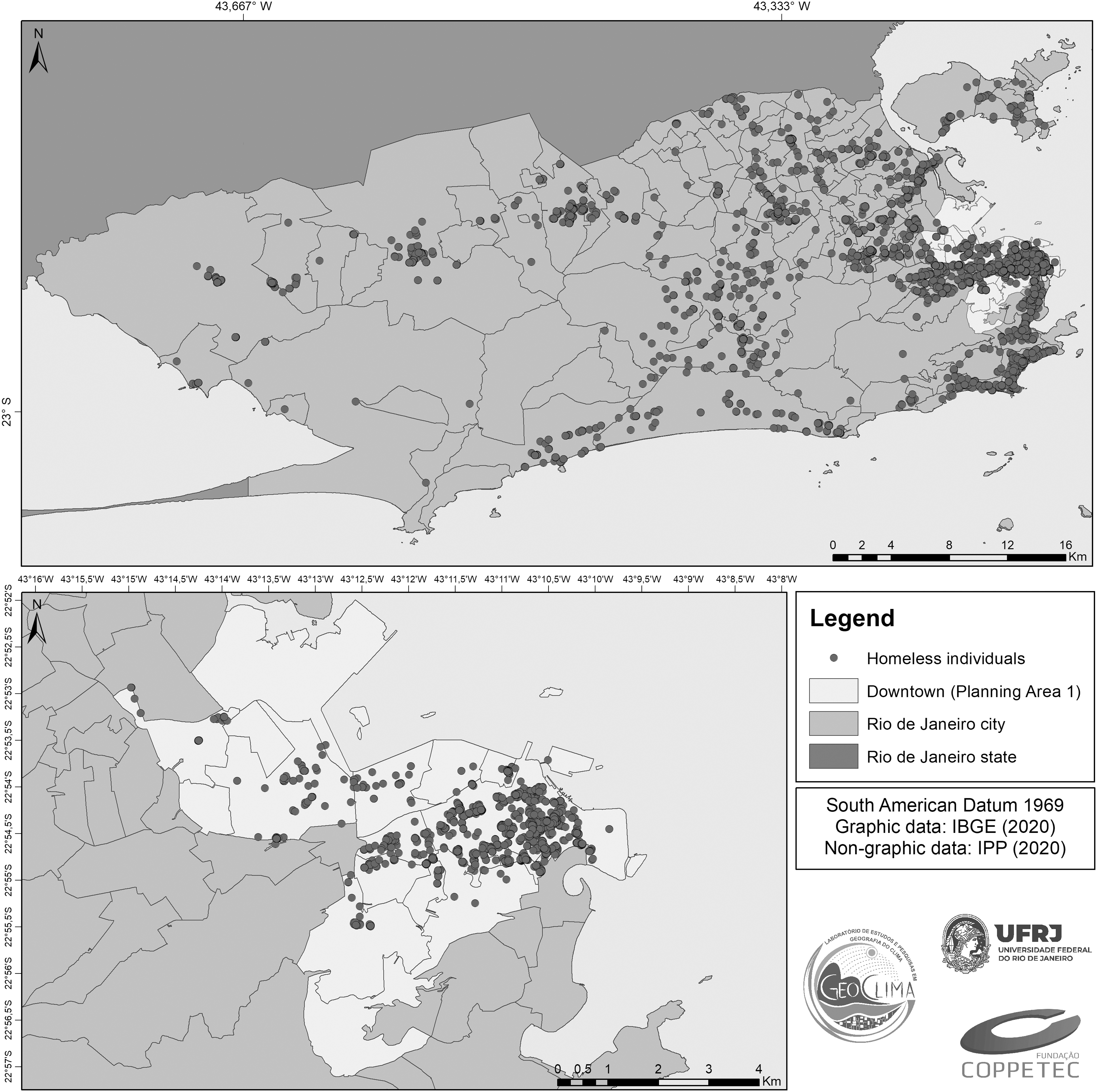
Spatial distribution of the homeless population in Rio de Janeiro city.
Most individuals settle near commercial establishments, transport terminals, hospitals, and universities (Fig. 2). During the day, these spaces of intense pedestrian circulation enable the homeless to survive through begging, meals donated by storekeepers, and the acquisition of recyclables for sale. In opposition, when commercial establishments close for the night, the reduced movement of people promotes the group's safety. 32

Land use and management in Downtown Rio de Janeiro (Planning Area 1).
In this high-exposure context, public shelters should be the primary means of protection from different forms of violence and urban climate effects. However, in Brazil, these spaces are not socially or climatically safe. Insect-infested beds, assaults, and stale food are recurring issues sheltered individuals face due to the historical defunding of social assistance policies. According to the RIO Invisível interviewee: “many homeless people complain about the shelters, especially regarding the few vacancies and precarious structure. There is no ventilation, and the water supply is scarce. There are also security issues, particularly for women—theft, assault, and sexual violence are recurrent problems”. 47 The association between the city's high temperatures and the poor ventilation of public shelters creates an indoor environment of extreme heat, which explains the high evasion rate. Therefore, both sleeping rough and entering shelters represent danger for these individuals.
In contrast, interviewees reported that the religious character of most community shelters in the city drives out individuals due to a lack of freedom, disbelief, or other related reasons that were not previously identified. Regarding public shelters, other alienating factors are the distance from Downtown, requiring an impractical mobility ability, 15 as well as the bureaucratic requirements to enter these shelters, making the group unavailable to practice income-generating activities.
The Projeto RUAS interviewee declared that “the homeless population is very resistant to shelters due to their location, as they are very far from the Downtown [...]. In addition, the registration process is really bureaucratic, demanding time and frequent displacements. The biggest shelter in the city, located in Paciência [a neighborhood], has terrible sanitary conditions, and, because it is close to an area dominated by drug trafficking, armed conflicts are frequent. There are also cases of people being taken by force, which reinforces disengagement”. 45 Therefore, this context promotes homelessness reproduction in Downtown Rio de Janeiro, increasing the group's vulnerability to urban climate effects.
Impacts: urban climate in Rio de Janeiro, RJ
Urban climate derives from the local climate, morphology, and built environment.3,4,5 Given that the effects of daily climate dynamics disproportionately affect different groups, 48 Rio de Janeiro has a unique set of characteristics. The city has expanded into a complex topographical landscape between mountains and lowlands, with the latter concentrating most of the construction. In Downtown Rio de Janeiro, wide avenues intersect narrow streets, and granite-gneissic block buildings exist among skyscrapers that obstruct the incidence of direct solar radiation. 49
Impermeable asphalt surfaces divide densely built blocks and group an intense flux of vehicles. 50 , 51 , 52 Vegetation is scarce and concentrated primarily in public squares and boulevards. Combined with the high incidence of solar radiation due to the city's latitudinal position, these aspects intensify extreme temperature events. 53 This dynamic can be perceived through surface temperature, a variable that indicates the participation of land use and land cover in the local temperature. 54 , 55 High-temperature nuclei are closely related to built-up areas compared with vegetated and unbuilt perimeters.
Owing to the concentration of buildings, Downtown and its surroundings present the highest surface temperature values in the city. In both summer and winter scenes, land surface temperatures presented a similar spatial pattern. Winter temperatures ranged from 15°C (59°F) in vegetated areas to 37°C (98.6°F) in built-up areas, whereas summer temperatures ranged from 64°C (147.2°F) to 87°C (188.6°F) (Fig. 3a, b). As the average air temperature in the city is 24°C (75.2°F), 56 extremes are considered risks to the thermal comfort and health of the homeless.

Land-surface temperatures.
As for precipitation, Rio de Janeiro presents a fall/winter period with reduced rainfall. Rain events and exceptionalities are primarily influenced by frontal systems and the South Atlantic Convergence Zone (SACZ). 57 Owing to the weakening of the Atlantic polar mass, these conditions are reversed in the summer/spring period. The expansion of built-up areas has also impacted rainfall patterns over the years, mainly due to the intensification of convective rainfall. 58 With its short duration, high intensity, and small spatial coverage, this type of rain intensifies the vulnerability of unhoused individuals to extreme episodes.
Thus, the output values of the CI followed the topographic characteristics. The high topographical zones present the highest concentration values, between 0.660 and 0.670, whereas flat zones indicate values of 0.630. Precipitation in the area is generated by frontal systems, SACZ, and other synoptic scale systems that move in a quasi-parallel direction to the coastal zone of the city. When in contact with higher altimetry levels, these systems are subjected to an orographic effect that increases precipitation concentration (Fig. 4).
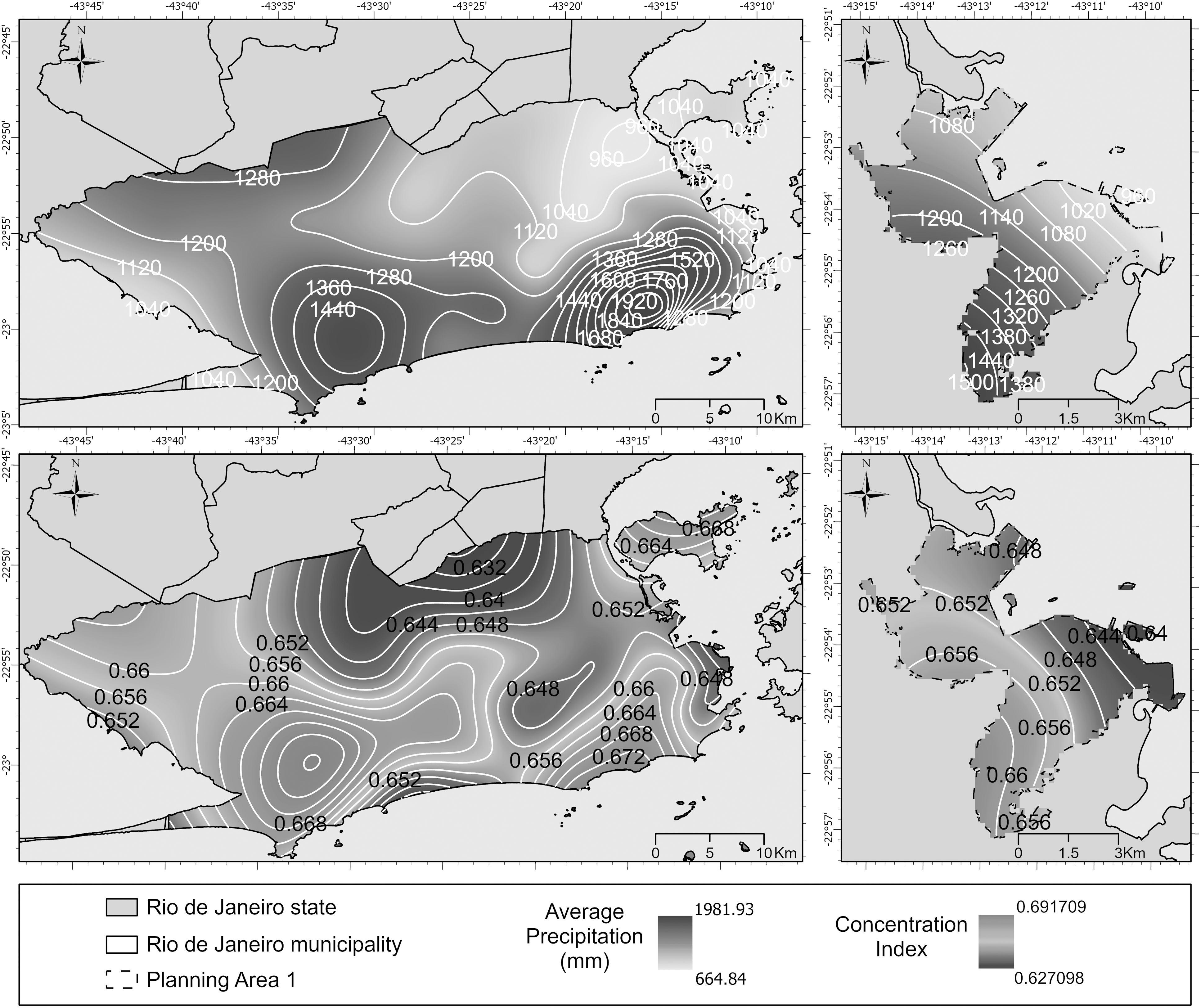
Average precipitation and CI. CI, Concentration Index.
Given that the two most important topographic compartments are granitic-gneiss massifs with shallow soils, the water runs toward the lowlands, where most activities are carried out. Runoff is accelerated by impermeable surfaces, and with an inefficient drainage system, this scenario leads to increased flooding and other hydrometeorological impacts. Thus, Downtown is susceptible to extreme episodes, particularly during the end of the rainy season in March and April.
Strategies: means of protection
Difficulties in obtaining protection mark the challenges related to lower temperatures and rainfall. Besides alcohol consumption to keep warm, these strategies include using plastic trash bags and cardboard as covers. As paper materials usually melt during rainfall events, unhoused individuals spend the night under marquees, benches, and other public structures to preserve them.
Climate impacts during cold events are manifested through the higher incidence of illnesses related to and intensified by low temperatures, such as pneumonia and tuberculosis. Associated with the rapid decline of temperature during the night in urban areas, both morbidities have long-term effects and require medical care. The occurrence of these diseases is also influenced by precarious living conditions and the lack of housing. 59 This is evidenced by the fact that the homeless have up to 85 times the rate of tuberculosis infections as the general population. 60 Cold events can also cause hypothermia episodes in subtropical regions, situations in which the homeless tend to move around to improve blood circulation. 12
The few options for safe and protected places are limited by the expansion of exclusion architecture (or hostile architecture), which is observed worldwide. 61 Whether through public administration or individual initiatives, preventive devices to prevent unhoused people from staying overnight in public structures are recurrently implemented in urban spaces. In this context, territorial conflicts become evident, making cold and rainy nights unsafe for those seeking to resist urban climate impacts.
In Rio de Janeiro city, however, the most aggravating issues are related to heat. The main one concerns dehydration, which is intensified by sweating, inadequate nutrition, and insufficient access to water. 13 These conditions can lead to fainting, heat stroke, and death when associated with cardiac and respiratory diseases, 62 which are common types of morbidities among people experiencing homelessness. Furthermore, heat-related illnesses make individuals too tired to participate in social actions promoted by NGOs, undermining their nutrition and hydration. 13
Heat is also considered more dangerous for being immediate and causing other disorders, such as the appearance of wounds caused by sweat and movement friction. In these cases, the homeless sleep on beaches and other open spaces, whereas water access remains limited. The former homeless person who was interviewed addressed these dynamics: “When it is cold outside, unhoused people use plastic trash bags to keep warm. The spaces below the marquees are more disputed, requiring caution, so some people go into shelters. But these people really find the heat worse, because they can not shower, they do not have access to water and food and become dehydrated. Sweat and movement also generate wounds that are difficult to treat”. 63
People experiencing homelessness frequently spend entire days without any form of hydration, as reported by interviewees and found in literature, 13 due to rejection by pedestrians and storekeepers or a lack of public freshwater spots. Although legislation for the installation of public drinking fountains in the city has been proposed, 64 these have not been found to date. As a result, people turn to urban streams and public ornamental fountains to consume and use contaminated water. With temperature increases in South America due to climate change, heat waves will likely intensify the impacts of urban water insecurity.13, 65
Atmospheric conditions also interfere with the admission of unhoused people to shelters. These are continuously avoided during heat events due to inadequate ventilation, only being an option in the absence of other means of protection during rainfall events. Rainfall and cold also promote a lower circulation of pedestrians, affecting the begging practice and making it more likely for the homeless to enter shelters. Nonetheless, the incidence of extreme weather events and episodes presents minimal interference with the spatial distribution of the group in the city, which is mostly related to the presence of economic activities and resource availability.
This context reinforces the group's reliance on community projects during extreme weather events. Because people experiencing homelessness tend to inhabit frequently flooded neighborhoods, this growing population tends to lose the few material items in their possession.
CONCLUSIONS
The homeless in Brazil demonstrate some unique characteristics. First, their spatial distribution: as shelters are the last resource due to their precariousness, restrictiveness, or religiousness, the rough sleepers find other ways to organize themselves. The concentration of income-generating opportunities and establishments that provide food and water are predominant factors for their migration and permanence, regardless of the impacts of the urban climate phenomena. This context elevates the group's exposure and vulnerability.
Another aggravating aspect of Brazilian homelessness is the lack of social assistance due to its national definition. As it includes exclusively rough sleepers and sheltered individuals, data collection and the few existing policies are directed at a specific group. In this context, people experiencing homelessness form a larger group than is officially presented. It is recommended that other categories be considered in the homelessness definition, such as people who live in cars or practice couch surfing, that is, individuals who do not have a permanent place of residence. We understand these groups are as vulnerable as rough sleepers and the sheltered.
Regarding the impacts of the urban climate, it was found that Brazilians experiencing homelessness tend to demonstrate it through long-, medium-, and short-term effects. Urban climate effects are structurally manifested in health, requiring continuous monitoring to treat diseases, particularly tuberculosis. However, weather effects are immediate, as observed by thermal discomfort, dehydration, and secondary factors such as undermining the begging practice due to reduced pedestrian circulation during rainfall events. It is noted that extreme weather episodes can also have an impact on health, especially through waterborne diseases during flooding.
The presented findings are expected to improve understanding of the relationship between homelessness and urban climate. We found that the socioeconomic vulnerability of homelessness can channel and concentrate unhoused individuals into some of the hottest and most flood-prone areas of cities. This represents an increase in their physical vulnerability to heat stroke, dehydration, waterborne pathogens, and other health risks.
In this sense, these discoveries must stimulate the formulation of public policies. The structural factors that create homelessness must be considered alongside individual aspects 40 : policies should include race, gender, and class vulnerabilities. That means creating or expanding affirmative action programs, that is, policies aimed at guaranteeing rights historically denied to minority groups. Among other aspects, providing employment and affordable housing opportunities to these disadvantaged groups proves essential. New studies concerning this subject are encouraged, especially the production of primary data.
Footnotes
ACKNOWLEDGMENTS
The authors are grateful to the four voluntary anonymous interviewees who contributed to this research.
AUTHORs' CONTRIBUTIONS
Conceptualization, methodology, formal analysis, investigation, writing, and visualization by G.T.J.F. Conceptualization, methodology, formal analysis, investigation, resources, data curation, writing, visualization, supervision, project administration, and funding acquisition by N.B.A.
AUTHOR DISCLOSURE STATEMENT
No competing financial interests exist.
FUNDING INFORMATION
This research was funded by COPPETEC—Projects, Research and Technological Studies Foundation of the Federal University of Rio de Janeiro, Brazil (Grant number: 23719).