




Abstract
Background:
Climate models predict that hurricane frequency and intensity will increase over the next several decades, severely impacting the coastal regions of the United States. Hurricanes can cause a variety of immediate and lasting environmental health problems. Residential mold growth is a common concern after hurricanes. This case study describes a community-engaged project to inform a local, community-level solution for mold treatment and prevention.
Methods:
University researchers partnered with the Robeson County Disaster Recovery Coalition. Focus groups, interviews, and surveys were conducted to understand eastern North Carolina residents’ concerns and experiences after Hurricane Florence. The findings from each were used to conceptualize local solutions for mold education and to pilot a tool-lending library with materials for mold treatment and prevention.
Results:
Hurricane survivors repeatedly expressed concerns about mold-related respiratory issues, stress related to continually cleaning mold in their homes, and the lack of appropriate tools needed to clean their homes. Many residents were not aware that they should wear protective equipment while treating mold. Community leaders noted the importance of distributing financial and material aid and information during every phase of a natural disaster.
Conclusions:
Given the high cost and limited availability of professional remediation services following a hurricane, it is likely that many impacted residents will attempt to perform mold cleanup themselves. Thus, state agencies and community organizations should increase access to educational, material, and financial resources for residents to safely and effectively perform mold abatement until professional services are available. Providing such resources will likely reduce mold-related respiratory issues and improve residents’ confidence in their work.
INTRODUCTION
Hurricane Florence was the wettest hurricane recorded in North Carolina (NC), dropping 8 trillion gallons of water in 1 week. 1 This Category 4 hurricane struck NC as a Category 1 hurricane on September 14, 2018.2,3 Eastern NC was particularly affected, with some areas receiving up to 36 inches (91 cm) of rain. There are a range of direct and indirect public health effects of hurricanes including injuries, increase in vector-borne diseases, undernutrition, and mental health problems.4,5,6,7,8 The wind surge and flooding can also cause damage to buildings and infrastructure, causing many environmental health issues, such as water contamination and release of hazardous chemicals from industrial sites.9,10 Notably, flood events are an important contributor to indoor mold exposure. 11 Mold exposure is linked to coughing and wheezing, 12 as well as increased risk of childhood asthma. 13 Chronic mold exposure can lead to neurological issues. 14 People who are immunocompromised or already have asthma are especially susceptible to adverse health outcomes from mold exposure, such as infections or exacerbations of their asthma symptoms. 15 Mold in homes can be incredibly costly to clean up and may lead to expensive additional healthcare costs. 16 Additionally, living with mold in one’s home is uncomfortable and may impact mental health and social well-being, with problems such as stress, malodor, and not wanting to be in one’s home. 17
Throughout the United States, there are racial and social inequities in hurricane and flood impact, evacuation capability, and access to aid, making mold exposure more likely in low-income and low-education households and communities of color. 18 Regarding flooding impact, communities of color have historically been relegated to low-lying alluvial land in the southeast or flood-prone regions in urban areas. 19 Evacuation often requires one to have access to a car, which is less common in lower-income families. Additionally, the cost of flood insurance makes it prohibitive to low-income households, and the knowledge to navigate the Federal Emergency Management Agency (FEMA) and state agency aid programs may be challenging for households with limited education and financial resources.20,21,22,23,24
FEMA is the organization responsible for distributing federal resources and support after an emergency is declared. This support can come in the form of temporary distribution centers, evacuation and emergency sheltering assistance, and individual- or organizational-level assistance (including basic home repairs). After hurricanes, FEMA may provide Home Repair Assistance awards to U.S. citizen homeowners for mold remediation; however, applying for FEMA aid can take time, and mold growth begins within 24 hours if standing water is not removed in a home. 25 Ideally, mold remediation is performed by a certified professional, may require removal of damaged property and chemical treatment depending on the severity of the mold, and includes follow-up to ensure that the mold has been abated. 26 However, professional remediation can be cost-prohibitive, which can prevent some people from seeking any kind of professional remediation at all. This, in combination with limited access to expensive tools and cleaning products, can lead to the worsening of mold in households awaiting assistance or professional remediation.
This article describes a multipronged, community-engaged research project in Robeson County, NC that aimed to (1) assess NC residents’ concerns about post-hurricane environmental health issues and (2) create a community-level solution to increase knowledge and resources for abating post-hurricane residential mold exposure. During Hurricane Florence, >400 homes in Robeson County were inundated with flood water, and Florence occurred just 2 years after powerful Hurricane Matthew caused immense damage across the county. 27 Following Hurricanes Matthew (2016) and Florence (2018), Robeson County received $150.9 million and $58.1 million, respectively, for hurricane relief. 28 For this work, university researchers partnered with staff and community organizers from nonprofit organizations focused on disaster recovery and environmental justice to conduct focus groups, surveys, and interviews to learn about community concerns. The results were iteratively used to inform the next steps in this project. The team also centered local knowledge to devise a pilot project for mold remediation. The objective of this article is to describe the iterative process of forming an academic–community partnership, using a range of methods to assess community member’s needs, and creating a resource to assist with mold cleanup following future floods and hurricanes (implemented in tandem with current response and assistance programs). This article seeks to describe the lived experiences reported by people who were impacted by Hurricane Florence in Robeson County, NC.
METHODS
This project included three phases. The first phase involved gathering information and identifying overall community concerns. In the second phase, the intervention focus was narrowed, and a community partner was identified. In the last phase, the intervention was developed. A large part of the team’s praxis was a commitment to community-engaged research principles. This approach is based on the values of social and environmental justice and emphasizes collaborating with communities that have been pushed to the margins and reducing barriers to more equitably co-produced knowledge. 29
Phase 1: Information gathering and identifying community concerns in a Post-disaster context
Geography and population
Robeson County, located in eastern North Carolina, is the largest county in the state by land area, with a population of approximately 116,000 residents and a high density of swamps.30,31 Robeson is North Carolina’s most racially diverse county with 38% of the population identifying as Native American, 22% White, 22% Black, and 10% Hispanic. Among the eight state-recognized tribes, the Lumbee are the largest in population and have a documented history in Robeson County and the surrounding region for over 12,000 years. The Lumbee are considered people of the dark waters and the Lumber River, the primary river basin in which Robeson County is located, are sacred waters. Hurricane Florence flooded the Lumber River to 29 feet, the highest in recorded history, and over 500 Robeson County residents were expelled from their homes in the aftermath of Florence (Fig. 1).32,33 In recent decades, Robeson County has struggled economically, and it is classified by the state as the lowest ranking county for health outcomes and health factors. 34

Map of North Carolina, with Robeson County and the Hurricane Florence flood extent indicated (flood extent from the North Carolina Department of Public Safety).
Initial community engagement and recruitment
In the months following Hurricane Florence, residents expressed a range of environmental health concerns. As the majority of the academic team was university researchers living in a part of North Carolina that was less severely affected than other areas of the state during Hurricane Florence, it was critical to gather first-hand information on people’s experiences and concerns after the hurricane. To learn about the major environmental health concerns of Hurricane Florence survivors, our academic team conducted focus groups and administered surveys at a large meeting for NC hurricane survivors in January 2019 where information and resources on hurricane recovery were shared (Fig. 2). Our team was invited to this meeting because of our existing relationship with the North Carolina Environmental Justice Network; the Network encouraged us to conduct focus groups and surveys at this event. After the focus groups and surveys were completed, the academic team also presented at the meeting to increase awareness of environmental health issues related to hurricane flooding, including a discussion on well water contamination and how flooded industries can impact pollution and health.
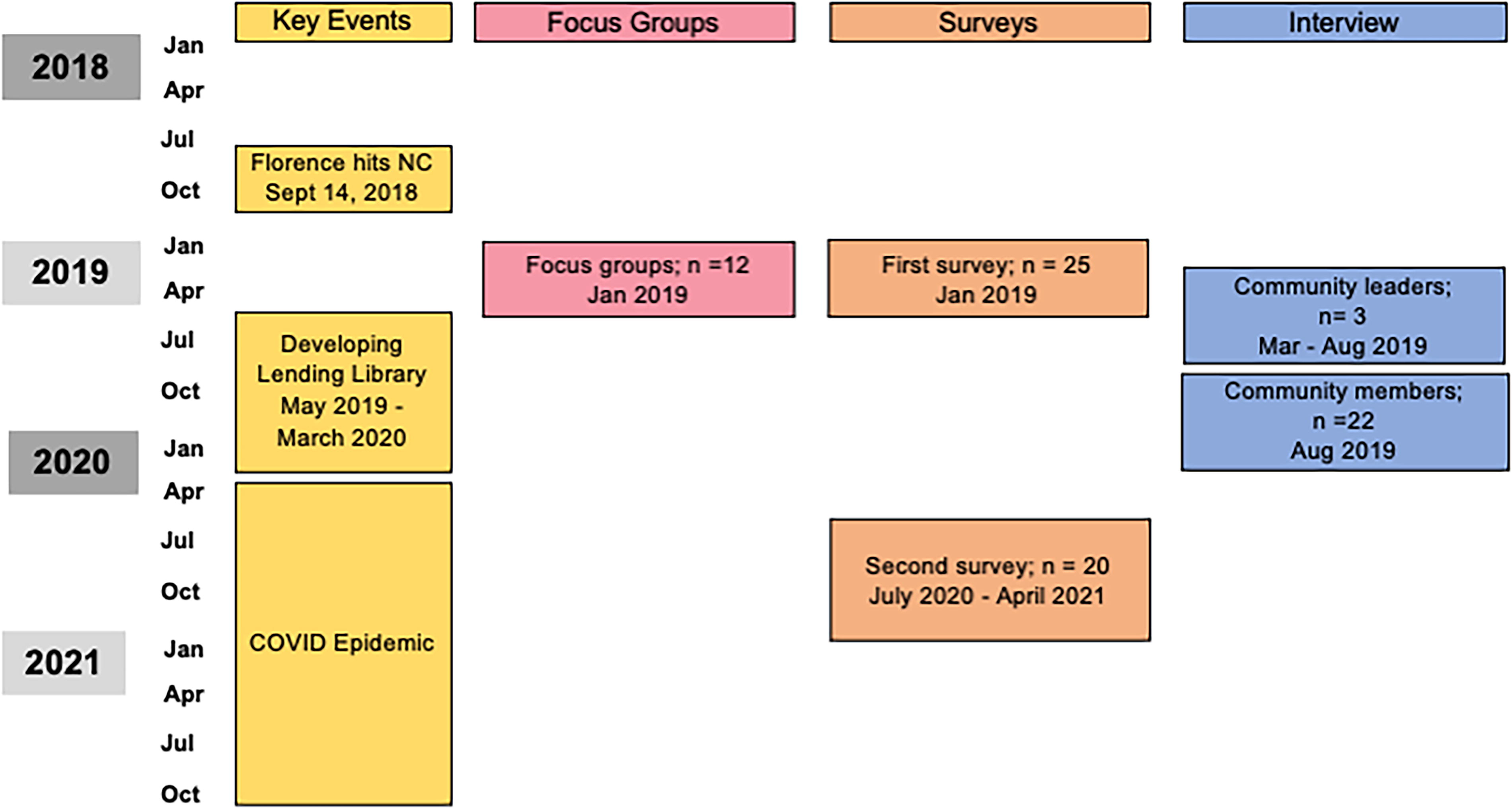
Project timeline.
Focus groups and surveys
The academic team developed a focus group guide to lead discussions on the main environmental hazards that concerned participants inside and outside their homes and throughout their community in the aftermath of the hurricane (see Supplementary Data S1). The team conducted two focus groups, each with 5–6 participants. Participants were adults residing in areas of NC heavily affected by Hurricane Florence. Focus groups were audio-recorded, transcribed, and analyzed in Dedoose. Two research analysts independently developed codes inductively by reading through the transcripts and identifying common codes that persisted across discussions. The analysts discussed initial codes to create a codebook and then identified themes. Analysts met multiple times to discuss themes, determine codes, finalize codes, and then discuss and resolve differences after individually coding the focus groups.
Brief surveys were also conducted during this meeting of hurricane survivors by approaching meeting attendees and discussing this research. Surveys were completed by participants in English on paper, tablets, or on participants’ smartphones. These surveys included questions about how participants’ homes were affected by Hurricane Florence, how concerns about environmental hazards changed before and after the hurricane, and what health symptoms people experienced in the aftermath of the hurricane. The survey was informed by the resources from the National Institute of Environmental Health Sciences’ Disaster Research Response (DR2) Program. 35 Descriptive statistics from the surveys were analyzed using frequency tables of survey responses in SAS 9.3. All parts of this study were approved by the University of North Carolina Institutional Review Board. All participants were adults and consented to participate in a focus group and/or survey for research purposes before the sessions began (people could participate in both; see Table 1).
Data Collection Details and Rationale by Method
Phase 2: Narrowing intervention focus and identifying a community partnership
From the focus groups conducted during phase 1, mold and respiratory issues were identified as a major concern that hurricane survivors felt was not being adequately addressed. These themes prompted the scope of our work to focus on reducing exposure to mold in homes. In early spring 2019, the academic team partnered with a disaster recovery nonprofit working in the affected area in eastern North Carolina on hurricane recovery and mold-related issues in their community. Together, the team decided to create and pilot a mold resource center and tool-lending library. The community partners include a leader of a nonprofit and a prominent volunteer who has lived in the study area for at least 3 decades. The academic team is a group of graduate students and faculty across a range of disciplines, including epidemiology, environmental health, and human ecology. The team of women is racially diverse, with some members having experience living and working in rural settings similar to the area of study.
Key informant interviews
To increase understanding of how communities were handling mold and what resources were most needed, the academic team conducted three, 30-minute semi-structured interviews with key informants in Robeson County in late spring 2019. Key informants were identified by the work they had done in the community and their reputations as spokespersons for different segments of the community. Interview guides for these meetings were constructed using knowledge gained and gaps identified during the focus groups in order to garner a deeper understanding of the issues residents discussed during the focus group sessions. For example, in the interviews, the academic team asked what, in their opinion, were the biggest hurricane-related issues in Robeson County, how they saw residents and communities in the county handling mold issues, whether they thought a tool-lending library would be useful, what resources would be helpful, and where these resources should be housed.
Phase 3: Intervention development from the beginning phases to project evaluation
The community partner and the academic team developed a pilot mold tool-lending library in Robeson County in the summer and fall of 2019. While this lending library was not designed to provide the extensive mold remediation that many residents required, the idea was to provide information, tools, and personal protective equipment so residents could reduce their mold exposure while they awaited professional mold remediation. The tools available to rent included wet/dry vacuums, industrial dehumidifiers, industrial fans, and respirators. N95 masks, goggles, Tyvek suits, and gloves were also available to protect residents while they worked to reduce mold exposure. User manuals were identified or developed and refined in order to inform participants about safe and effective handling of each tool; these were made available in English and Spanish at the library. Loan release forms, rental contracts, and liability waivers were developed and provided to the community organization. A website was developed with information on tools available and a checkout form. The library was promoted through community events.
Short interviews
To learn more about how community members experienced mold and what barriers they may have encountered dealing with mold in their homes, the academic team conducted 22 short, survey-style interviews at a hurricane preparedness community expo in Robeson County in August 2019. The community partner recommended that the academic team attend this event that they organized. At this expo, the academic team had a table where we described our plan to create a mold tool-lending library, and we sought input by talking with residents at the expo about the library and interviewing people. When residents stopped at the table to ask questions about the tool-lending library, our academic team briefly (five minutes or less) interviewed them. Interviewees were asked about their race/ethnicity, if/how their home had been damaged during Hurricanes Matthew and/or Florence, if/when they started noticing mold, and about their attempts to remove the mold and their experience with assistance from FEMA. No identifiable information was collected aside from the ZIP code. Interviews were audio-recorded and transcribed. Analysis of the interviews was conducted using an integrated matrix of each participant with all quantitative and qualitative data to examine intra- and interparticipant patterns.
The COVID-19 pandemic began just as the tool-lending library was gaining users and greater awareness from residents. To reduce in-person interactions, learn how COVID influenced environmental health concerns, and supplement the small sample size of survey responses we got during phase 1, the academic team added additional questions to the survey and switched administration to telephone. The telephone survey, administered by one of the community partners, included questions about hurricane damage, experience with mold, recent health issues, COVID-19 concerns, and demographics. Participants were recruited at various community events in Robeson County and through connection with the community partner.
RESULTS
Results from focus group
The academic team identified themes from the focus groups (Fig. 3) and created a summary of these themes that were sent to participants (see Supplementary Data S1 for results report-back document). These themes include: (1) mold exposure as a major stressor, (2) existing health issues worsened during/after the storm, (3) respiratory issues as a major health concern, and (4) racial inequity during storm cleanup. While hurricane survivors were also concerned about flooded industries and contaminated drinking water, mold exposure was the major stressor for focus group participants (Theme 1). Respondents talked about mold growing rapidly on their walls, carpet, and furniture. One participant mentioned staying up many nights after work to clean the mold so the children in the home would not get sick, especially because one child had severe asthma, allergies, and pneumonia after Hurricane Florence and had to be hospitalized (Table 2). Participants mentioned that they were often unsure how to get rid of the mold and did not know they should have worn protective equipment while cleaning the mold. Study participants explained that they did not have the tools and resources to deal with mold in their homes and that they were continually being denied FEMA assistance. Specifically, participants mentioned that they wish they had a wet/dry vacuum pump to remove standing water in their homes, and they would have liked to have been given information and masks to reduce the effects of mold on their health. Participants expressed hopelessness, as they knew the mold in their homes was making them sick, but they did not have anywhere else to go.
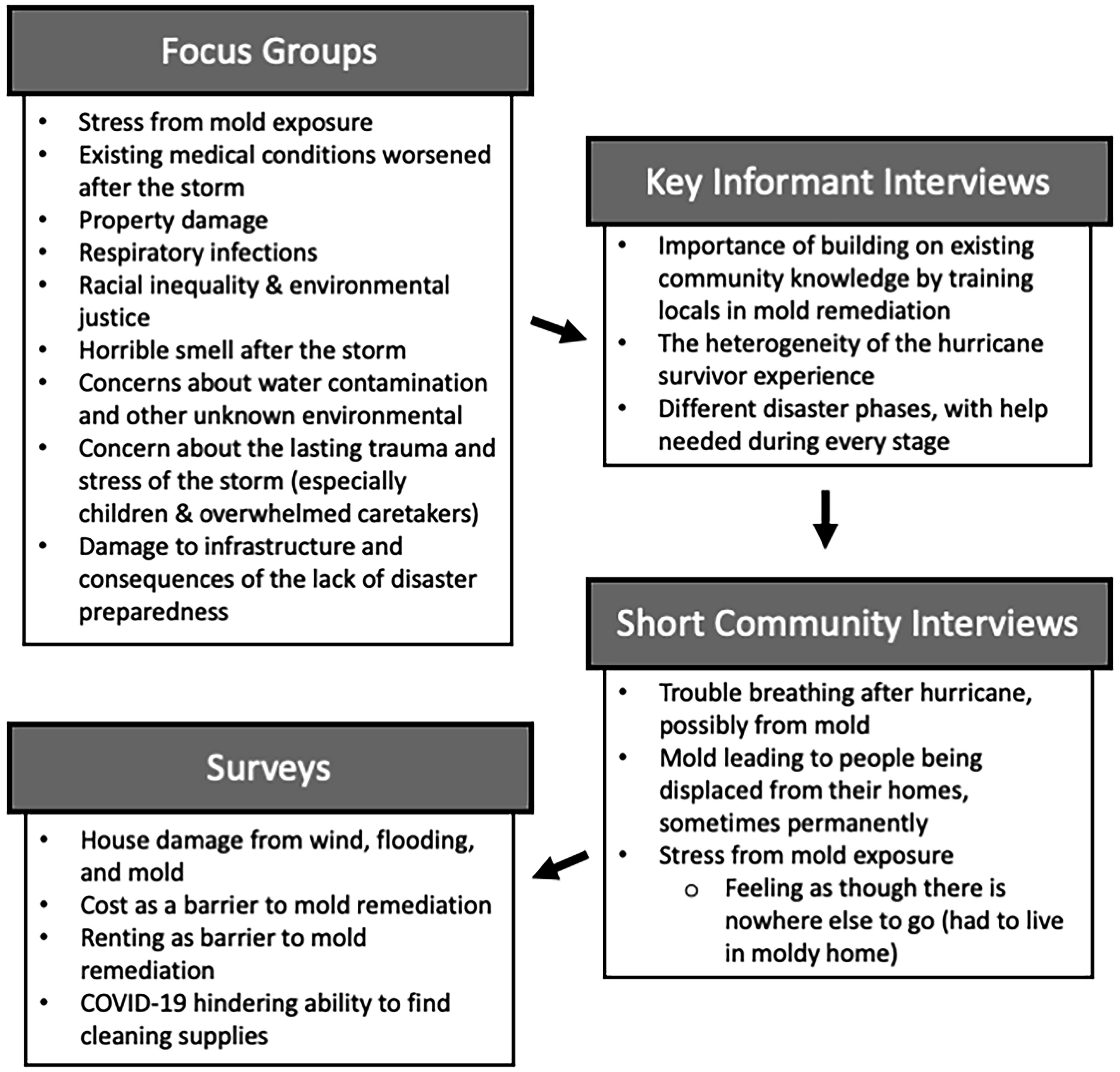
Themes from focus groups, key informant interviews, short community interviews, and surveys.
Selected Quotes from Focus Groups
Participants also noted that many of their existing medical conditions worsened after the storm, and that the storm increased difficulty for participants and their family members to treat those conditions (Theme 2; Table 2). People mentioned that their pre-existing asthma and sinus problems became more severe as mold began to grow in their homes. Power outages and drug store closures from the hurricane also prohibited people from obtaining and properly storing their needed prescriptions, like insulin. Additionally, participants voiced concerns specifically about respiratory symptoms resulting from the hurricane (Theme 3). Participants also reported concerns for family members with respiratory problems, leading to significant stress as they rebuilt after the storm (Table 2).
A fourth theme of the focus groups was racial inequity during hurricane cleanup. Several residents discussed how the water infrastructure and cleanup priorities disproportionately helped White residents and sometimes harmed Black residents. For example, one participant explained that moldy, hurricane-damaged trash was picked up months sooner when the recent hurricane hit the white side of town, compared to the several months the hurricane trash sat on the street when the previous hurricane struck the Black side of town (Table 2).
Results from initial survey
Twenty-five participants completed the majority of the environmental health hazards survey at the hurricane meeting (see Supplementary Data S1 for the results report-back document). These participants lived in 10 counties across eastern North Carolina. Almost 80% of the participants were African American and female. About 70% of respondents lost power and continued living in their homes after the hurricane; however, half of respondents reported damage from wind, flooding, and mold. The most commonly self-reported health symptoms after the hurricane were mental health issues, allergies, and hypertension.
Results from key informant interviews
Key informants were Black and Native American leaders in the community, identified by their work or through other key informants. Three main themes were identified from the interviews with these key informants. Theme 1: Community leaders were eager to build on existing community knowledge by training local residents in mold remediation. They were concerned that residents would find it difficult to trust outsiders brought in to help with mold remediation. The key informants had positive things to say about the respected church groups in the county that have helped many people with renovations after hurricanes. Theme 2: Community leaders also spoke about the heterogeneity of the hurricane survivor experience, especially among different communities, neighborhoods, races, and socioeconomic classes. Theme 3: The key informants discussed the different disaster phases and the need for tools and information to be distributed at every phase. Nonprofits often rush to help in the immediate aftermath of a hurricane but do not remain long enough to help with long-term issues, including mold. FEMA aid did not reach residents for many months or years after the disaster and most residents in the impacted county found the aid to be inadequate and untimely. Overall, the key informants interviewed were interested in a tool-lending library and believed it would be a useful resource if it distributed needed resources during all phases of the disaster, if the lending library was adequately advertised throughout the community, and if the organization(s) housing the lending library were held accountable for equitable access.
Results from short interviews
Participants who completed the short, structured interviews lived throughout Robeson County and were aged 29–76 years old. Half of the participants identified as Black, with about 20% identifying as White and 10% identifying as Native American. These interviewees described their experiences and barriers they encountered as they dealt with mold in their homes and requested remediation assistance. Many interviewees experienced mold issues caused by roof damage, indoor flooding, and flooding under the house. Some people mentioned they had experienced similar flooding and mold issues during Hurricane Matthew, and one person indicated that a cracked ceiling from Hurricane Matthew made the indoor flooding worse with Hurricane Florence. Half of the participants mentioned health concerns they believe to be related to mold growth in their homes. Multiple people discussed trouble breathing; one participant noted, “I just can’t hardly breathe sometimes. I have that problem anyway, but it got worse.” Another participant noticed worsened allergies and a cough in the weeks after Hurricane Florence.
The mold often led to people being displaced from their homes, sometimes permanently. One interviewee said they had to get rid of their entire mobile home because it became overwhelmed by mold. Some participants described that mold was found, “all over the walls, the ceiling, everywhere” in their homes. Some people mentioned that professional remediation removed the mold only temporarily. One participant noted that a few days after the flooding,
“[the mold] was starting to run along my walls and stuff. And then it had caused my ceiling to break loose, and then it rained in and caused the mold to form in behind my walls and stuff. So I had to have quite a few walls torn out and replaced because we didn’t have power for a couple weeks, so all that heat and stuff just caused [the mold] to come up faster.”
Most people tried to treat the mold themselves with bleach or vinegar. A few people had experienced church groups or professionals remediating the mold. Two-thirds of interviewed residents applied for FEMA assistance (n = 12), and about half of those who applied had negative experiences with FEMA (n = 6). One person was relocated immediately but their home had still not been renovated a year later and they continued to live in a temporary home. Another participant explained they received a $500 check from FEMA, which did not cover the $5000 roof replacement. People who received assistance for all the damages had a positive experience with FEMA. Multiple participants explained that they applied for FEMA assistance and were refused, and they do not know why. One participant described,
“FEMA wouldn’t help because they said we had no disaster because we were still living in our houses. We had nowhere to go. And that I don’t understand. And I’ve been applying for other things to get some help because my house is falling down on me.”
This theme was apparent throughout this research; hurricane survivors often lived in unhealthy homes because they “had nowhere to go.”
Results from surveys conducted at the hurricane survivor summit and in the community
Twenty-five people completed surveys about their experiences during and after the hurricane in January 2019 at the large hurricane survivor meeting and 20 people completed surveys in summer 2020 on their experiences around COVID-19 and continuing mold problems. Among those 45 people who participated in this survey, 71% were female, 62% were Black, 24% were White, and 14% were Native American. Regarding Hurricane Florence, among the 45 respondents, 27 (60%) reported having damage from wind and damage from flooding to their home and 19 (42%) reported damage from mold. Regarding barriers to getting the help they needed to get their home back to its condition before Hurricane Florence, eight people reported cost as a barrier, two participants reported access to cleaning supplies as a barrier, and two people reported renting as a barrier. Additionally, 18 respondents of the 20 participants surveyed during COVID-19 reported that it has been more difficult to find supplies for cleaning mold since the start of the COVID-19 pandemic, highlighting the issues of compounding disasters.
DISCUSSION
In this article, a combination of focus groups, interviews, and surveys were leveraged to understand eastern NC residents’ concerns and experiences regarding posthurricane environmental health issues. This information was iteratively used, alongside insights and guidance from community partners to conceptualize local solutions. Hurricane survivors repeatedly expressed concerns about mold-related respiratory issues, stress related to continually cleaning mold in their homes, and the lack of tools needed to clean their homes. Residents dealing with extensive mold often felt that they had “nowhere to go” and felt stuck living in their unhealthy homes. Community leaders expressed the importance of centering local knowledge and working with existing local organizations, including church groups, to improve disaster aid during all disaster phases. These findings are reflected in other post-disaster research that emphasizes the importance of building on the strengths and resources that already exist within the community. 36
Although the academic team members expected well water contamination and industrial pollution to be the biggest issues after the hurricane, residents were most concerned about mold, demonstrating that scientists’ views on the most pressing issue post-disaster may not reflect a community’s reality. Additionally, residents are likely to raise concerns about issues that are most apparent to them, and mold can be especially visible after flooding. Based on the themes from the focus groups and interviews and the needs identified from community leaders and residents, a tool-lending library was codesigned by an academic team and a local disaster recovery nonprofit organization. The community partners named the lending library the Mold Education and Resource Center (MERC). Environmental health safety professionals and mold specialists were consulted as the list of resources to include in MERC was finalized. Following Hurricane Florence, the state of North Carolina provided communications about mold cleanup and local health departments assisted in conducting mold assessments of homes; however, many hurricane survivors were unaware of or unable to access these resources. Shortly after Hurricane Florence, the community partner started holding local community events to train residents on how to treat mold. These workshops were focused on building community capacity and knowledge in preparation of future hurricanes. Through funds the academic team received from small university grants, needs were assessed and tools were provided to launch MERC to complement existing community mold trainings. The academic and community team members discussed residents’ likely experience with tools, helpful tool trainings, project sustainability, and the eventual evaluation of the project.
This article has outlined an example of one academic team entering a historically underserved community with a social justice lens focused on academic humility. 37 Many times, the reflexive research process needed for community-engaged research projects is one that is dynamic and continuous—two characteristics that do not often fit well within an academic timeline. The multipronged research methods this team employed were completed over the course of about 3 years, ensuring there was adequate time to collect different types of data and to build relationships with community members. These relationships enriched the data; they provided the context necessary for a richer analysis and allowed the academic team to experience the community in a deeper relational way. The use of multiple types of data and an academic–community partnership were the main strengths of this study. However, this research is limited by its use of convenience sampling and small sample sizes. This study is also subject to selection bias, as many people eager to participate were especially frustrated with their experiences, although several participants reported positive experiences with FEMA. While the results may not be generalizable across all communities affected by hurricanes, the stories and experiences of these participants highlight that some communities may benefit from community-level resources. The results highlight issues hurricane survivors face that have been identified in other studies, including being displaced and feeling they have nowhere to go, financial hardship, and frustration with government and FEMA.38,39
Many community members reported issues with applying for and receiving aid from FEMA; however, this limited sample lacks the ability to systematically examine structural barriers to receiving timely aid from FEMA after a disaster. Previous FEMA reports have found that due to the arduous process of applying for FEMA aid and the assessment of homes that is done to determine the amount of aid people should receive, in many cases, FEMA aid assists wealthy households with becoming more wealthy and fails to help lower-income households repair their homes. 40 Previous studies have also found that people living in neighborhoods with higher proportion of White residents had a higher chance of receiving aid from FEMA than similar people in more racially diverse neighborhoods.20 While this article does not have the ability to examine issues with FEMA in detail, the responses from participants support previous findings on inequality in FEMA aid and point to the need for more research on mechanisms that lead to disparities in FEMA aid.
Recommendations and lessons learned
Building partnerships and trust before disasters occur is highly recommended, as disasters are a very busy and stressful time to build new connections. Additionally, disaster research, especially the project development stage can be overly extractive. Conducting surveys, interviews, focus groups, and obtaining community input can take many months and can be exhausting for the community. Additionally, delays in disaster research can allow time for additional disasters to occur, compounding the effects of the initial disaster. In this case, the COVID-19 pandemic began just as the mold tool-lending library was fully stocked and the community partner had found a local resident to run the library. The fear and urgency of a new disaster (COVID-19) drew community attention away from hurricane recovery and mold issues, as it is difficult to deal with and prepare for multiple disasters simultaneously. Community leaders, residents, nonprofits, and researchers should work together to build community resilience for all types of disasters. Some disaster projects may need to go dormant when other disasters strike, but resource storehouses and libraries that give and lend tools that are helpful in multiple disasters may prove especially useful. For example, this team had purchased hundreds of N95 masks in 2019 for MERC, and the community partners handed these masks out to community members in March and April 2020, when it was difficult to find N95s. Several other resources from MERC, including N95 masks, respirators, goggles, Tyvek suits, and disinfectant wipes, were also useful during the early stages of the COVID-19 pandemic when many of these items were difficult to purchase.
Although this project included several phases before implementing MERC, the focus groups, interviews, and surveys conducted before implementing MERC enabled the team to understand mold as the main concern, which was not initially obvious. The interviews also allowed the team to incorporate opinions and experiences from residents in different areas of Robeson County into the implementation of this program. Feedback from the community partners, who were responsible for managing the rentals, included concern that expensive tools may not be returned. They preferred to rent the more costly tools to established groups in the community and to purchase more items and less expensive tools that could be given away to residents. The original vision for MERC was for residents to complete brief questionnaires before and after using the tools to help us evaluate the effectiveness of MERC in meeting community needs. However, many residents expressed that they saw these questionnaires as a barrier that hindered them from using MERC, which ultimately limited our ability to collect data on exactly what equipment was borrowed and hindered us from getting adequate feedback that could have been used to improve and expand MERC.
Conclusion
Models project that North Carolina will continue to see an increase of heavy precipitation events. 41 Understanding the extent of mold issues caused by hurricanes is essential as climate change intensifies. Working alongside community members, this project aimed to provide research that may be beneficial to policy and decision-makers on the need for faster mold remediation services as well as potential measures communities can take during disaster recovery to allow residents to live healthy and productive lives. Increasing community capacity, resources, and education around mold prevention and treatment has the potential to reduce mold-related respiratory issues, especially because many participants noted that they attempted to treat mold in their homes themselves but that they did not have adequate tools, information, and personal protective equipment. This article illustrates that a combination of methods can be used to assess needs and priorities, as well as to refine a community solution approach.
Footnotes
AUTHORS’ CONTRIBUTIONS
A.J.L.Q.: Conceptualization, methodology, formal analysis, and writing—original draft. D.E.H.: Conceptualization, methodology, formal analysis, and writing—original draft. K.N.C.: Formal analysis and writing—original draft. C.C.: Conceptualization, supervision, and writing—review and editing. P.M.: Project administration and writing—review and editing. A.W.: Conceptualization, validation, formal analysis, and writing—review and editing. C. G.W.: Conceptualization, supervision, and writing—review and editing.
AUTHOR DISCLOSURE STATEMENT
The authors declare that they have no known competing financial interests or personal relationships that could have appeared to influence the work reported in this article.
FUNDING INFORMATION
We received the following small internal grants from UNC to fund this project: Carolina Center for Public Service Disaster Recovery Project Grant Carolina Center for Public Service Disaster Recovery/Rural COVID-19 Response Grant North Carolina Translational and Clinical Sciences Stakeholder Engagement Voucher.