




Abstract
Problem:
From time immemorial, the Penobscot Indian Nation (PIN) has relied on the Penobscot River for sustenance. However, since the industrial era, chemicals have contaminated the flora and fauna of the watershed, creating an environmental injustice and a food insecurity crisis.
Purpose of Article:
To discuss Tribal-focused participatory research studies funded by the Environmental Protection Agency (EPA) and how the results of these studies have informed the Tribal citizenry on safe fish consumption through outreach and education, while having the potential to inform future environmental policy, water quality regulations, protective permitting actions, and address environmental justice inequities associated with food insecurity.
Key Points:
Tribal food insecurity poses a major public health concern for Tribal communities. This Tribal-focused participatory science was conducted over time under three distinct but related projects, in partnership between EPA and PIN, among other partners. These projects, representing initial steps on addressing PIN’s environmental justice and food security concerns, involved measuring contaminant levels in fish, plants, and animals.
Conclusion:
(1) The findings of these EPA-funded scientific studies have furthered PIN’s goal of addressing food insecurity by revealing existing levels of contamination and associated human health impacts. (2) The studies revealed that many freshwater fish and wildlife and all studied anadromous fish species are not safe for consumption. The results nonetheless have equipped PIN with information that will both protect Tribal citizens and spur further environmental studies to determine sources of contamination. (3) Evidence from Tribal-focused studies revealing the extent of contamination in species in the Penobscot River will empower PIN to advocate for lasting change in environmental protection. (4) The participatory nature of the studies conducted, wherein PIN collected and prepared samples for analysis and contributed to the analysis of the results, is consistent with the federal government’s trust responsibility to and government-to-government relationship with Tribal Nations.
INTRODUCTION
Environmental injustices can take various forms in underserved communities. For Native Americans, food insecurity 1 has been a forefront issue exacerbated by the disproportionate effects of climate change,2,3 decreasing access to traditional foods, 4 and persistent chemical contamination of sources with cultural and nutritional significance. 5 Indigenous food systems that once sustained Tribal populations have been disrupted by current and past industrial activities. 6 In many Tribal communities, including the Penobscot Indian Nation (PIN), Tribal citizens either continue to consume traditional foods at unsuppressed rates despite the presence of consumption advisories that warn of potential contamination or consume a suppressed traditional diet while seeking nontraditional sources of protein and other foods elsewhere.
The Environmental Protection Agency (EPA) assists federally recognized Tribal Nations in developing their own environmental programs. The agency began its environmental justice program in 1992 and, in July 2014, issued its Policy on Environmental Justice for Working with Federally Recognized Tribes and Indigenous Peoples 7 accompanied by the Administrator’s memo. 8 This policy explains how EPA works with Tribes and other indigenous groups and members to address disproportionate environmental health effects in Indian country. In the spirit of this policy and in support of advancing Tribal food sovereignty, 9 EPA began partnering with PIN in 2008 to conduct research on environmental contaminants in the Penobscot River and their potential impact on human health and wildlife, incorporating active participation by PIN in conducting the research.
See Figure 1 for a graphical representation of contaminants studied in Penobscot River fish.
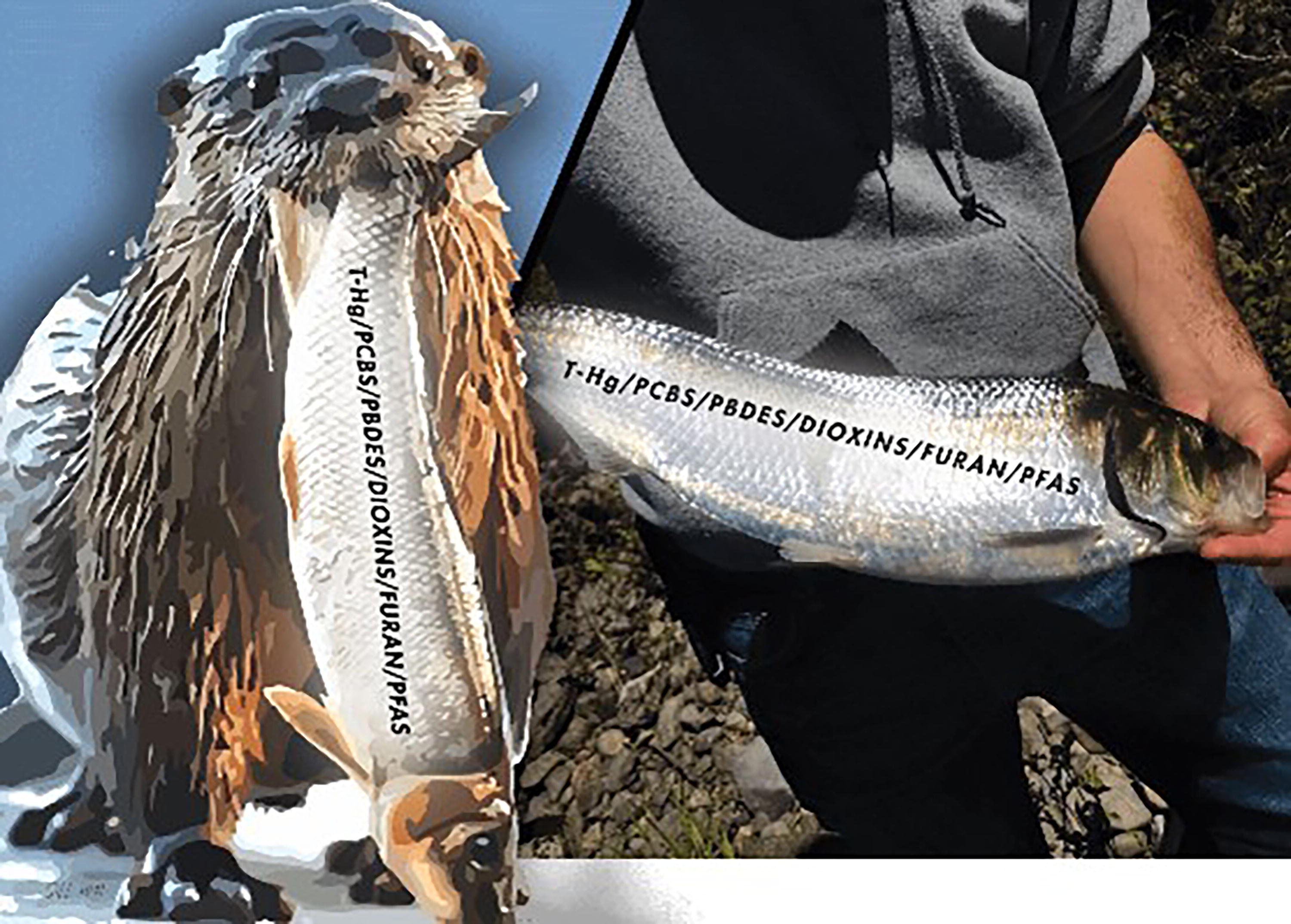
Graphical representation portraying toxins studied in fish of the Penobscot River.
BACKGROUND
The PIN (2398 enrolled citizens per a 2020 Tribal census 10 ) is one of five nations of the Wabanaki Confederacy in Maine and has traditionally relied upon its namesake, the Penobscot River, and its watershed, including land-and water-based plant and animal species, for cultural and nutritional sustenance since time immemorial (see Fig. 2). However, owing to the deleterious use of the river watershed’s natural resources by way of the logging, power generation, and pulp and paper industries beginning in the 18th century, environmental injustice in the form of food insecurity has impacted the Penobscot people for generations—specifically, reduced access to a sustaining population of clean, healthy aquatic and land-based flora and fauna that the Tribal community relies upon.11,12 Despite decades of presumed contamination from industrial discharges in the Penobscot River, as outlined in Figure 3, the presence of the first discovered contaminant, dioxin, was only confirmed in the river in 1987. Subsequent confirmation of mercury in the waters of Maine, determined to be largely from air deposition, led to a widespread state advisory notice in 1994. Concurrent discovery of polychlorinated biphenyls (PCBs) that behave like dioxin in the Penobscot and other rivers was added to the state advisory in 1995. A 2002 court decision found that HoltraChem Manufacturing Company in Orrington, Maine, downstream of the PIN reservation, discharged mercury into the Penobscot River.
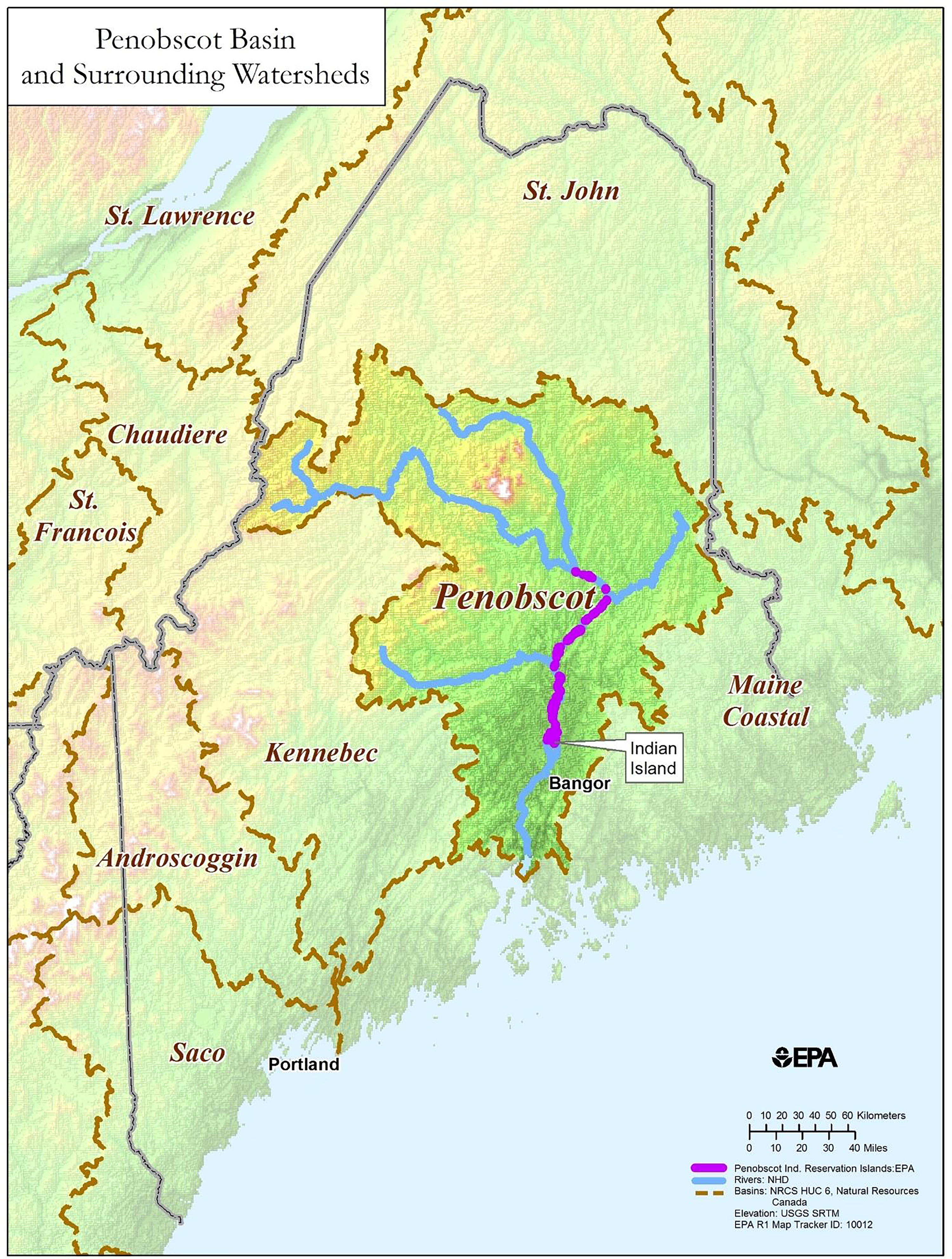
Map of Penobscot River watershed where studies took place.
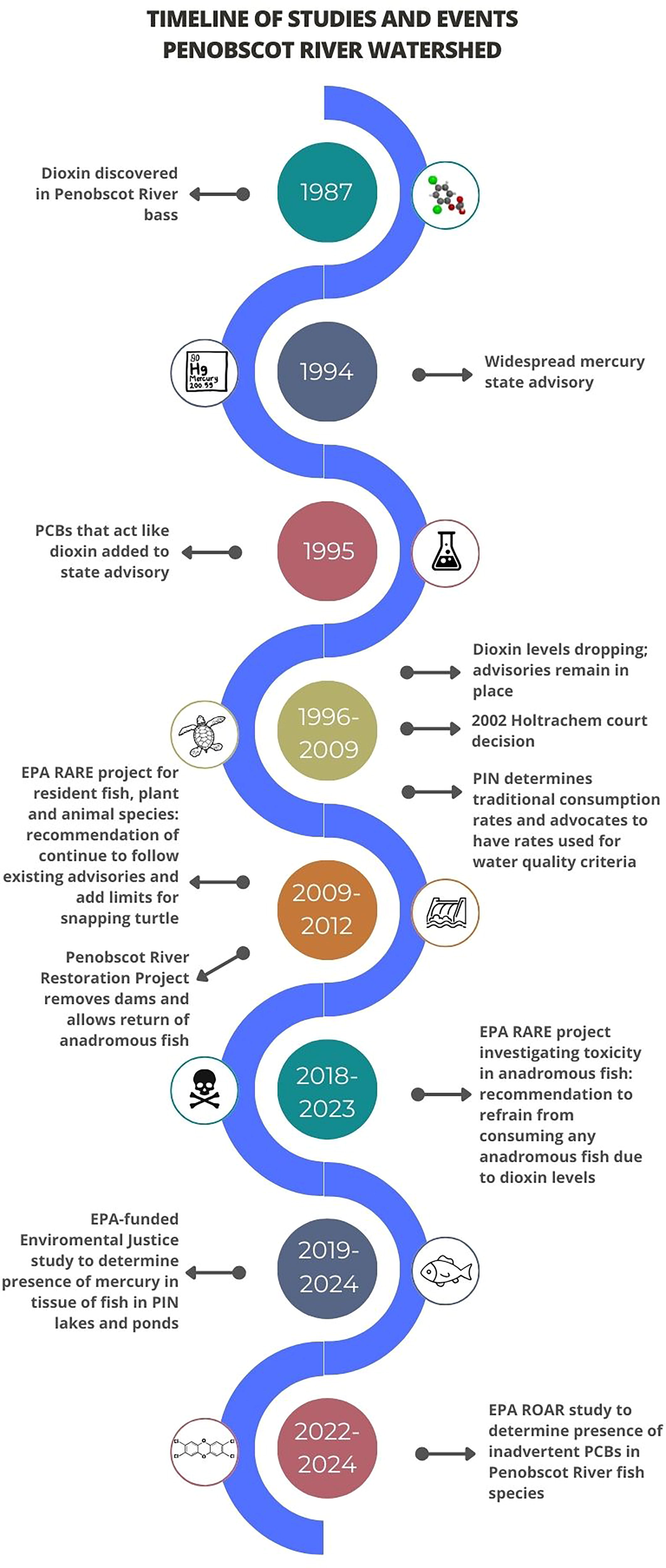
Timeline of studies and events in the Penobscot River watershed.
These concerning developments prompted the Wabanaki Tribal Nations in Maine, including PIN, to embark on a study to develop Maine Tribal consumption rates to inform the development of protective water quality criteria for sensitive populations as required by the Clean Water Act, section 104. This endeavor resulted in an EPA-funded Direct Implementation Tribal Cooperative Agreement with the Maine Wabanaki Tribal Nations, resulting in a study and a report titled Wabanaki Traditional Cultural Lifeways Exposure Scenario (“Wabanaki Study”), completed in 2009. 13
With the knowledge of certain chemicals confirmed to be in the river waterways, PIN leadership grew increasingly concerned about the health effects these contaminants were having on the Tribal population, particularly because PIN cancer mortality rates, historically, have been significantly higher than the surrounding population.2,14
To address these concerns, PIN Department of Natural Resources (PINDNR) began to investigate these challenges by initiating a water quality monitoring program in 1989. In addition, as culturally significant anadromous fish were eliminated from PIN’s waters for over 200 years because of the presence of dams along the Penobscot River, and Tribal citizens had access to only resident fish in the river, PIN along with other parties formed a trust in 1999 to restore the Penobscot River. 15 In June 2004, the Penobscot River Restoration Trust signed an agreement to embark on a public–private effort to continue to provide hydropower while restoring anadromous fish species in the Penobscot River and its tributaries.16,17
Beginning in 2008 and continuing to the present time, PINDNR began collaborating with EPA, the Agency for Toxic Substances and Disease Registry (ATSDR), and other partners to measure and analyze contaminant levels in fish, plants, and animals. Once the studies were completed, PINDNR, along with EPA, ATSDR, and other participating research partners, presented the findings to the PIN Tribal Chief and Council and discussed how the findings translated into recommended food consumption advisories.
This Tribal-focused participatory science, conducted under three distinct research efforts, represents initial steps on addressing environmental justice and food security concerns of the PIN community.
FIRST RESEARCH STUDY—RESIDENT FISH AND OTHER FOOD SOURCES
To further understand the risks of consuming fish and other foods in the Penobscot River watershed, EPA and PINDNR initiated an EPA-funded Regionally Applied Research Effort (RARE) project in 2007, titled The Penobscot River and Environmental Contaminants: Assessment of Tribal Exposure through Sustenance Lifeways, 18 in collaboration with the U.S. Geological Survey (USGS), the ATSDR, the Bureau of Indian Affairs, and the U.S. Fish and Wildlife Service.
The objective of this study was to determine the level of contaminant exposure that PIN Tribal citizens face when engaging in sustenance fishing and traditional cultural practices associated with use of the Penobscot River and its natural resources. This study evaluated the environmental health of the riverine system by focusing on specific cultural practices and using western science to conduct a preliminary assessment of contaminant exposure of the flora and fauna of the Penobscot River ecosystem. The study was designed to determine if contaminant concentrations in resident fish, American eel, snapping turtle, wood ducks, sediments, and plants in regions of the Penobscot River relevant to where PIN Tribal citizens hunt, fish and gather plants were high enough to be a health concern.
Natural resource utilization patterns and exposure pathways were identified based on discussions with the Tribal elders, and PIN applied the Inland Non-Anadromous diet from the “Wabanaki Study” for assessing the risks from the contaminant exposure. Identification of Tribal exposure factors (exposure pathways and contaminant concentrations) was essential for accurately assessing potential long-term PIN citizens’ exposure.
The report on the study, released in 2014, provided consumption recommendations for Tribal citizens based on consumption rates. The report concluded that PIN citizens who consume resident fish and snapping turtle at the ingestion levels suggested in the “Wabanaki Study” cited earlier may be exposed to harmful levels of mercury, dioxins/furans, dioxin-like PCBs, and other PCBs. Based on this study, mercury in fish and snapping turtle taken from the Penobscot River was found to be of highest concern.
Consistent with an accompanying ATSDR public health assessment published in 2014,
19
the report provided the following guidelines regarding consumption of fish and wildlife:
The report concurred with PINDNR’s recommendation that children under 8 years of age, women who are breastfeeding, and women who are pregnant or who may become pregnant should not eat fish from the Penobscot River. The report recommended that the general population of PIN consume only one to two resident (non-anadromous) fish meals per month from the Penobscot River and limit their consumption of snapping turtle to two to three meals per month. If Penobscot River fish and turtle are both consumed, the report recommended that PIN citizens consume no more than some combination of one to two 10-ounce (oz) servings of fish or two to three 8-oz servings of turtle per month. Penobscot Tribal citizens who consume wood duck, fiddlehead fern, or medicinal roots at the ingestion rates suggested in the “Wabanaki Study” from the areas where the samples were collected will likely not be exposed to harmful levels of mercury, PCBs, dioxins/furans, or dioxin-like PCBs.
As a result of this initial study, PINDNR issued fish consumption advisories as well as a “Wild Foods” brochure to provide guidance to PIN citizens on the safe consumption of traditional foods.
PENOBSCOT RIVER RESTORATION PROJECT
In 2016, two years after the release of the report on this initial RARE study of toxins in the Penobscot River, the Penobscot River Restoration Project was completed, involving the removal of two mainstem dams and the addition of fish passage at two other dams, vastly improving access for Atlantic salmon, river herring, American shad, rainbow smelt, sea lamprey, and other anadromous fish to nearly 2000 miles of the Penobscot River and tributaries. This effort has resulted in an abundant return of several anadromous fish species to the Penobscot waters.
As the initial RARE study recommended severely limiting consumption of resident fish to levels well below traditional sustenance consumption levels, the return of anadromous fish species engendered PIN with hope that a major traditional protein component of the Penobscot traditional diet in the form of potentially less contaminated fish could be restored. However, PIN wisely deemed it necessary to conduct a study to analyze contaminant levels in these returning fish to provide timely, accurate, and culturally appropriate guidance to its Tribal population who continued to rely upon fish consumption for sustenance.
SECOND RESEARCH STUDY—ANADROMOUS FISH SPECIES
In 2015, PIN sought assistance from EPA to conduct a second RARE study to determine the levels of toxicity in the returning anadromous fish. The project was approved in 2016 and commenced in 2017.
This project involved the collection of 40 composite samples of six types of anadromous fish species (American shad—both filet and roe, blueback herring, alewife, striped bass, rainbow smelt, and sea lamprey) from the Penobscot River during the spawning migration when they are available for PIN citizens to catch (late April to late July). Atlantic salmon were not harvested and sampled as they are protected under the Endangered Species Act. The edible tissues of each of the fish types were analyzed for the same contaminants tested in the previous RARE project, including dioxins, furans, PCBs, and mercury. During the course of the study, testing for certain per- and polyfluoroalkyl substances (PFAS) and polybrominated diphenyl ethers (PBDEs) was added to the regime. The risk associated with consuming these fish was evaluated using the Inland-Anadromous diet described in the “Wabanaki Study.” This RARE study was completed in 2021, accompanied by an ATSDR Health Consultation released to PIN in May 2021, 20 an ATSDR review, 21 and two publications identifying risks from mercury found in fish tissue 22 and an assessment of persistent organic compounds and PFAS. 23 In support of more holistic understandings championed by Tribal Nations in what is currently referred to as a “One Health” approach 24 (an integrated, unifying approach to balance and optimize the health of people, animals, and the environment), tissue concentrations were also evaluated from a wildlife consumption risk. Values from literature were used to convert fillet amounts to whole fish. Then those concentrations were compared with existing wildlife values. Species such as mink and kestrels were used to evaluate the risk to wildlife.
For this study, PINDNR collected fish samples, EPA provided support for the testing of contaminants, and ATSDR provided a human health assessment based on consumption of anadromous fish at three intake rates—5 ounces daily/child or 10 ounces (oz) daily/adult (traditional consumption rate), 10 oz weekly, and 10 oz monthly. (For comparison, one can of tuna is ∼5–7 oz.) A photo of fish tissue sample preparation is provided in Figure 4.
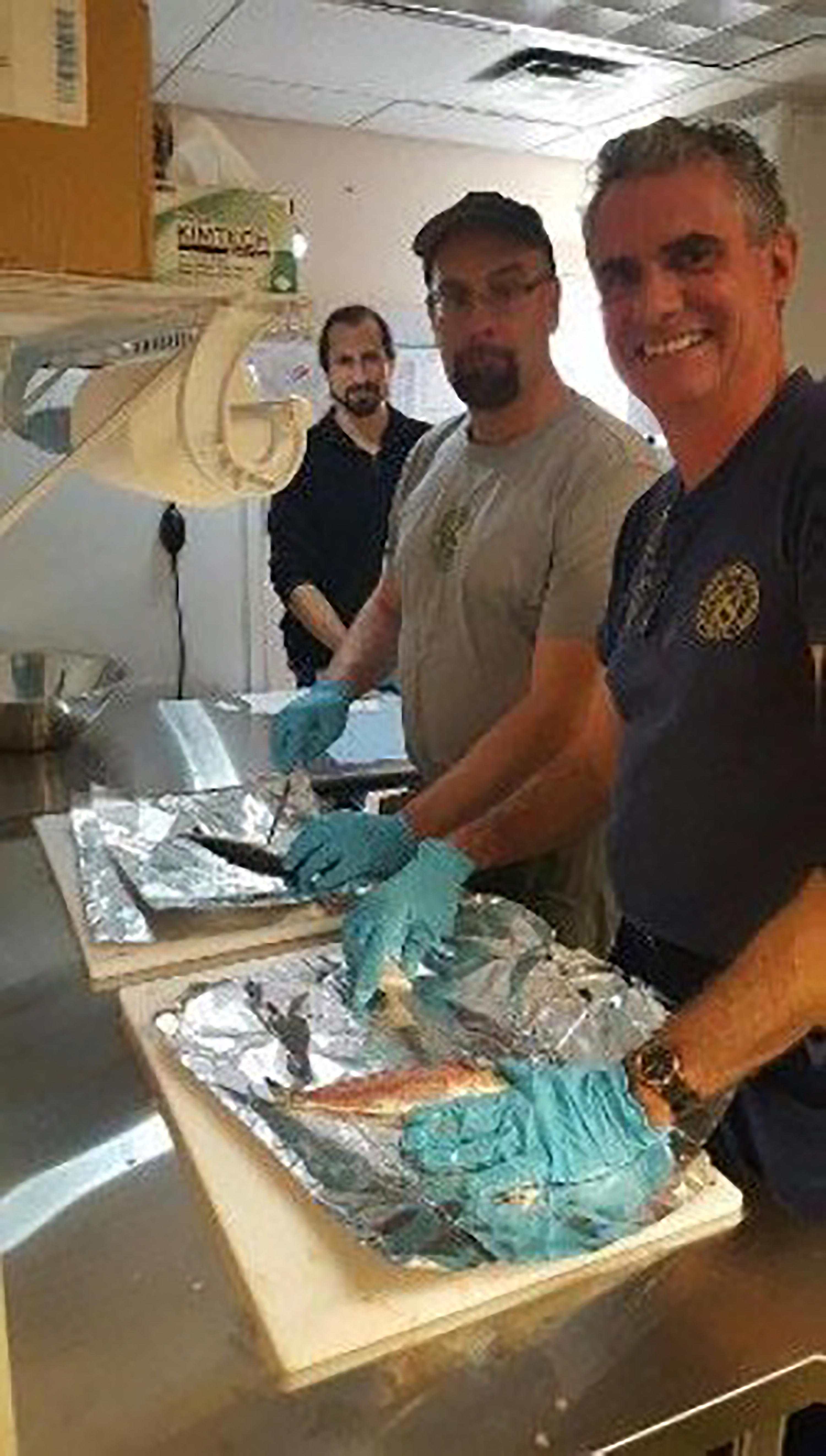
Fish tissue sample preparation by Tribal and the Environmental Protection Agency’s staff.
The results from this second research effort were discouraging. The findings revealed that if PIN citizens (children and adults) eat anadromous fish at the three rates described previously, the levels of dioxins, chlorinated dibenzofurans, dioxin-like PCBs, mercury, PBDEs, and PFAS in those fish have the potential to produce harmful effects, including a significantly increased risk for liver cancer. Boys who consume anadromous fish could experience reproductive problems later in life. Pregnant women could expose their developing fetus to dioxins that could result in developmental problems in newborns and young infants and might experience complications during their pregnancy. With dioxin and dioxin-like PCBs as the overriding contaminants of concern with the most acute health impacts, and the associated risks due to dioxin exceeding EPA’s target risk range, the study discouraged consumption of anadromous fish at the current PIN fish advisory level. Therefore, the return of anadromous fish to the Penobscot River did not provide a less toxic supply of protein for sustenance than the resident fish species and, in fact, should be avoided. The findings also revealed that consumption of rainbow smelt, striped bass, or sea lamprey poses a risk to mink; striped bass and sea lamprey pose a risk to otter; and sea lamprey poses a risk to eagle.
THIRD RESEARCH STUDY—MERCURY CONTAMINATION IN PENOBSCOT TERRITORY LAKES AND PONDS
PIN was awarded an EPA EJ grant in 2019 to study levels of mercury in ponds and lakes in Tribal territories to determine if resident fish in these remote water bodies that were not subject to industrial or municipal discharges were contaminated. While this project is still underway, the data collection and statistical analysis thus far reveal that elevated levels of methylmercury are present in the fish tissue inevitably because of mercury air deposition, as there are no discharge-based local sources, posing a threat to pregnant women and children.
This study, conducted in collaboration with the University of Maine Orono (UMO), used citizen participatory science, as PIN formed a mercury advisory committee among its citizenship to determine which waterbodies and fish species were to be targeted for sampling and analysis and also organized and trained Tribal citizens to assist PINDNR staff with sample collection. PINDNR staff increased technical capacity by receiving training to conduct the mercury analysis of fish tissue at the Sawyer Environmental Research Laboratory at UMO.
HOW THE STUDY RESULTS INFORM DECISION MAKING
These studies afforded PIN with results that identified cultural food sources that could not be safely consumed at traditional subsistence levels. The studies have informed Tribal decision making in its public outreach, early childhood education, policy development, and advocacy, as shown in Figure 5.
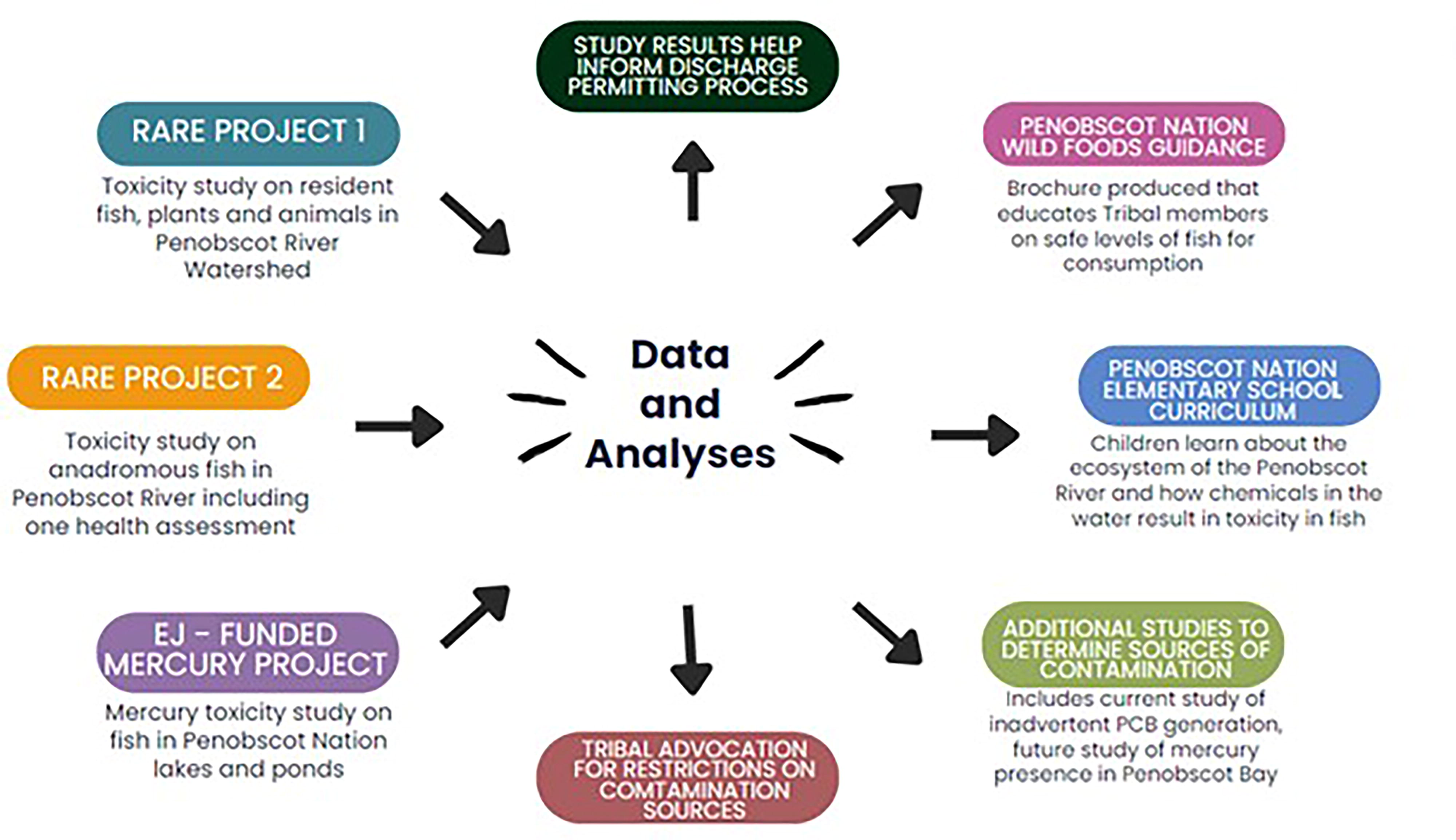
An illustration of the project studies that can inform decision making, education, and stronger permitting actions.
The results of the first RARE study presented an educational opportunity for PIN to inform its citizens of what traditional foods could be consumed safely at specified consumption rates/levels. PINDNR developed its Wild Foods brochure and poster series with Penobscot-centric photos and images that clearly explain safe levels of consumption, using common household objects such as a deck of playing cards and a spool of fishing line as a comparative size tool that is easily understandable. PIN has made the brochure readily accessible to the Tribal community, both online and in hard copy, publicly available at the PINDNR. PIN is currently in the process of updating this brochure to reflect the findings of contamination in anadromous fish.
PIN also used the results of both RARE studies to develop educational curriculum as part of its Native Studies program for the Indian Island school students to learn about safe consumption of fish. The curriculum incorporated games using goldfish crackers to identify different species of fish and toxins, different levels of consumption, and how water quality standards use this information to protect human health. These lessons have also been used for outreach to other schools throughout the Penobscot watershed and Maine. Through this educational tool, PIN seeks to cultivate informed decision making as the students emerge into adulthood to lead healthier lives and a longer life expectancy and to become future leaders in environmental protection and natural resource restoration.
The findings of the initial study, coupled with the traditional consumption rates determined through the “Wabanaki Study,” served to inform the development of protective Tribal water quality standards that PIN ratified as a matter of Tribal law in 2014 to prevent further degradation of its waters and to seek comparable protective standards from the EPA and the state of Maine. These Tribal-ratified standards reflected the sustenance lifeways of Tribal citizens fully consuming the fish in the Penobscot River as if unsuppressed by present-day environmental conditions.
These standards, in turn, informed EPA’s development and promulgation of federal water quality standards for these waters that were in place from 2015 to 2020 and were also useful to PIN in negotiating more protective water quality standards with the state of Maine in waters where Tribal citizens fish for sustenance and to protect PIN treaty fishing rights. These state-promulgated and EPA-approved standards that went into effect starting in June 2020 and continue to be in place to the present day 25 inform present effluent discharge permitting.
The findings from all three studies will undoubtedly continue to inform future EPA decision making in protecting Tribal-designated uses when reviewing and approving future submissions of water quality standards. These include numerical representation of uses and exposure pathways of traditional sustenance lifeways.
Furthermore, the inclusion of the analysis of PFAS in anadromous fish represented the first known study of PFAS contamination of andromous fish. The discovery of PFAS in anadromous fish in the Penobscot River has emboldened PIN to advocate for the curbing of potential PFAS sources that enter the river waters. Specifically, PIN has participated in the state legislative public process in addressing PFAS concerns related to the Dolby Landfill that borders the West Branch Penobscot River in East Millinocket, Maine, and the presence of PFAS in the leachate of Juniper Ridge landfill in Old Town, Maine, which is sent to the Nine Dragons pulp and paper mill wastewater treatment facility, also in Old Town, Maine. The facility does not treat for PFAS, and the PFAS-containing effluent is discharged to the Penobscot River. 26 Currently, PFAS in landfill leachate and wastewater effluent is not yet regulated in Maine, but these findings have helped PIN advocate to require testing and to study technologies for removal of PFAS from landfill leachate. Having documented PFAS results in fish tissue provides PIN with a stronger position when advocating for keeping PFAS out of the Penobscot River and when advocating for the establishment of a protective fish tissue action limit. These results can also support addressing the food security disparity in demonstrating how PFAS contamination exacerbates PIN food insecurity.
The results of the second RARE study have also been beneficial to the National Oceanic and Atmospheric Administration (NOAA) through collaboration with PIN, in that PIN’s sharing of the results has informed NOAA permitting and restoration activities in Maine. PIN and NOAA (Northeast Atlantic Fisheries Science Center in Woods Hole, MA) have also recently collaborated to compare the ecotoxicity effects of contamination on the health and reproduction of anadromous river herring in two Maine rivers and four rivers in the New York/New Jersey region.
The findings of these studies have also provided an opportunity for PIN to collaborate with Sunlight Media Collective to educate the general public in Maine on PIN’s relationship with the river and the environmental threats associated with PFAS and other persistent compounds in the environment. 27 This educational outreach has strengthened certain citizenry of Maine to be advocates for the River’s health and allies of the efforts of PIN and others to restore Tribal food sovereignty and the ecosystem of the river and its watershed.
Empowered by these findings, the studies have also afforded to PIN the opportunity to provide national and international exposure and education regarding the cultural importance of the river and how the studies conducted help further PIN’s efforts to restore food sovereignty to its people. These included presentations and participation at international conferences and meetings.
The findings of all three studies have also informed the development of future research efforts. These include the following:
A current EPA Regional/Office of Research and Development Applied Research (ROAR) project titled Determining the Impact of Inadvertently Generated PCBs from Pulp and Paper Mills to the Waterways Adjacent to Tribal Land in EPA Regions 1 and 10. The above PIN projects were instrumental in identifying locations of potential inadvertent PCB contamination from current pulp and paper industry operations. A current dragonfly mercury study involving the National Park Service and USGS in collaboration with PIN wherein PIN citizens conduct dragonfly larvae sampling at the same waterbodies that were studied under PIN’s EJ mercury study discussed earlier, using kits supplied by USGS. In this project, PIN will study dragonflies in their larval stage of life as a sentinel species of mercury contamination, as the dragonfly in both life forms is a primary protein source for the diet of the fish species studied. Through a recent settlement involving mercury contamination in Penobscot Bay by HoltraChem,
28
PIN has applied for settlement funds to conduct a beneficial environmental project in collaboration with the Maine Sea Grant involving telemetry studies of striped bass and smelt to determine fish migration patterns and locations of mercury exposure. The results of this study will help better differentiate depositional mercury contamination in the fish species present in Penobscot Bay from point source contamination exposure from HoltraChem.
NEXT STEPS
With the overarching goal of eliminating all contamination and fully restoring the Penobscot River and its watershed in mind, PIN recognizes that persistent chemical contamination and the resultant food insecurity may persist for many years. In the meantime, certain questions linger that call for further research collaborations. Can any remedial work be conducted to reduce the legacy contamination concentration within the sediments and water column? How long will it take for the contaminated sediments of the Penobscot River to be flushed out of the river system and replaced by cleaner sediment resulting in improved water quality? How can permit limits be strengthened to reduce or eliminate contamination from effluent discharges? Given the current understanding of the risks associated with consuming traditional foods from the Penobscot River to sustain a traditional subsistence lifeway, how can PIN provide an alternative source(s) of protein and other nutritional needs to supplement the Penobscot traditional diet, such as aquaculture and agriculture development?
These looming questions also present opportunities for PIN and supporting partners to expand the body of knowledge surrounding environmental contamination and restoration and further educate and raise awareness within the scientific community, the Tribal citizenship, and the public as a whole.
CONCLUSION
These collaborative research efforts are in complete alignment with the EPA’s Policy for the Administration of Environmental Programs on Indian Reservations 29 Principle #2, as well as the 2007 United Nations Declaration on the Rights of Indigenous Peoples. 30 The participatory nature of the research, wherein the PIN collected and prepared samples for analysis and jointly analyzed the results with the EPA and other agencies, underscores the value of co-partnership with Tribal Nations, of conducting research with the Tribal community rather than for the community. 31 This collaborative approach enhances the EPA’s government-to-government relationship with and supports EPA’s trust responsibility to PIN. 32
Although the three research projects discussed earlier do not alleviate PIN’s present food insecurity burdens, the collection of data and analysis of findings serve to educate PIN’s citizens and the larger community and will inform current and future studies in furthering the understanding of the breadth of contamination and the risks associated with consumption of contaminated species within the Penobscot River watershed. Although the end goal of restoration of a healthy ecosystem that can sustain PIN’s traditional lifeways may be decades away, these initial investments of time and resources by PIN and collaborating partners form a trajectory that has and will continue to create opportunities for informed decision- and policy-making and lasting change in the health and wellness of the Tribal community. These efforts, supported by Tribal-focused participatory research, serve as a model for best practices to address similar environmental justice issues elsewhere in Indian country and throughout the nation. The objectives, approach, and findings of this PIN-focused research have the potential to empower other Tribal and EJ communities burdened by environmental injustice and food insecurity to take affirmative action to better understand the degree of contamination of their natural food sources and take steps to protect their environment, educate their communities, and advocate for change.
Footnotes
ACKNOWLEDGEMENTS
The authors wish to thank Penobscot Nation Tribal leadership and management, and respective federal agency leadership, management, policy advisors and reviewers who supported this study for their insights and contributions to the projects and this manuscript.
AUTHORS’ CONTRIBUTIONS
M.A.S.: Conceptualization, visualization, and writing—original draft preparation. D.H.K.: Conceptualization, validation, and writing—reviewing and editing. L.J.M.: Writing—reviewing and editing. J.M.L.: Writing—reviewing and editing. G.D.P.: Writing—reviewing and editing. J.L.: Writing—reviewing and editing.
AUTHOR DISCLOSURE STATEMENT
No competing financial interests exist.
DISCLAIMER
The views expressed in this article are those of the author[s] and do not necessarily reflect the views or policies of the
FUNDING INFORMATION
The EPA, through its Office of Research and Development, funded and managed part of the research through Regionally Applied Resesarch Effort (RARE) Project EPA-901-R-15-002, RARE Project 1808 and Environmental Justice Grant EQ00A00656.