




Abstract
While residents of Flint face persistent health and socioeconomic disparities, Flint’s residents have been working to rescue, uplift, and empower themselves for decades. The Flint Public Health Youth Academy (FPHYA) has established a transferable model for advancing just social change through leveraging community leadership in science. In this article, we describe the development of FPHYA from Flint’s strong foundation in community based participatory research, where community science has served as a mechanism of fostering collective consciousness. We describe FPHYA’s historical foundation and illustrate its efforts and impacts through three examples of its youth programming over three years of summer camps. Through these examples—a Photovoice exploration of the safety of parks, a Photovoice exploration of potential impacts of an asphalt plant, and a dialogues process around gun violence—it is possible to see the cumulative process of youth generated environmental health knowledge that connects complex and broad local environmental justice concerns. Through community science, FPHYA advances the understanding of shared concerns across urban, rural, racial, and ethnic groups. It is working to advance environmental justice through effecting transformative changes by expanding the expertise of Flint residents to other communities in the state and across the country to work collectively as one unified voice from the perspective of a public health national youth group.
INTRODUCTION
With national media coverage igniting at the end of 2015, the Flint water crisis drew attention to environmental injustices unfolding in real time for residents of the city of Flint, Michigan. The experiences of Flint residents raised the national consciousness of the public and scientific community as to the complex interplay between the household, environmental resource management, and health outcomes. As a result of the notoriety of the water crisis, the public health community has reinvigorated lead in drinking water as a health concern and policy makers have platformed on significant investments in public infrastructure. Nationally, the discussion of environmental justice has changed as a direct result of the water crisis, but for Flint residents, the water crisis endures past its tenth year.
Flint is a community that simultaneously experiences abandonment and hyper-surveillance, with insufficient resources to fully replace municipal and household plumbing infrastructure while also being inundated by a glut of “investigators” (from armchair onlookers, journalists, activists, to academics), who sought to insert themselves into Flint’s story. 1 That insertion displaced and deflected the narrative of residents, frequently shifting from community concerns to outsider priorities. 2 What residents understand is the complex interplay between historically racialized political disinvestment, crumbling public and private infrastructure, and a fiercely defiant community that has fought for itself throughout.
In this article, we describe development of the Flint Public Health Youth Academy (FPHYA) where community science has served as a mechanism of fostering collective consciousness about community-wide disparities, resources, rights, and opportunities for addressing community environmental justice concerns through collective inquiry. Within a scholarly and local tradition of action research, FPHYA’s approach has provided pathways for fostering collectiveness and pride among Flint youth through connecting the products of community science to mobilization toward social and policy changes. Further, the growth of community science in Flint has provided a mechanism for disrupting feelings of powerlessness by working toward structural changes addressing drivers of environmental injustices and health disparities by promoting pathways for education, workforce opportunities, and ultimately financial growth. FPHYA contributes to multiple efforts within Flint to establish a transferable model for advancing just social change through leveraging community leadership in science.
RELEVANT LITERATURE
The environmental justice movement is frequently framed as having developed relatively recently from insights derived in observations about the siting of municipal landfills in Houston, Texas (1979) and a prospective polychlorinated biphenyl (PCB) landfill in Warren County, North Carolina (1982). This corresponds with a scholarly emphasis on investigating disparate impacts of hazardous exposures for marginalized communities in the pursuit of distributive justice. Enriching this legacy, Dorceta Taylor documented how environmental justice thinking has deep roots, dating back throughout the history of the United States.3,4
Recently, scholars have shifted to advancing environmental justice as an interpretive lens for broadly analyzing social inequalities. 5 Drawing from the foundational sociological contributions of W.E.B. Du Bois, ‘environment’ is broadly conceived of as the total physical and social environment that one occupies, consistent with later declarations by environmental justice activists that the environment is the places we live, work, and play. 6 Within Du Bois’ total environment, all of one’s living conditions, including work, housing, and social context (e.g., connections, disconnections, and violence), are connected to embodied outcomes (e.g., physical and mental health).
Initially, Du Bois hoped science could be a productive tool for revealing social inequalities and, in a moral society, would lead to collective adjustment to rectify those inequalities. In classical texts like The Philadelphia Negro, Du Bois painstakingly documented environmental health disparities, but he found that mere documentation of disparities did not result in social transformation. In Black Reconstruction Du Bois detailed how inequalities are produced structurally through a deeply racialized political economy. Disillusioned that privileged white populations would work to undo racial oppression, it was his hope that oppressed groups could mobilize locally through community cooperatives to advance their well-being.
Similarly, Paulo Freire argued that social transformation must come from oppressed groups themselves through processes that encourage their collective consciousness of the mechanisms of their oppression. 7 Participatory action research (PAR) methodologies recognize the importance of power and align researchers with community members working toward positive, meaningful, and impactful actions to undo oppression. Core to this work is fostering co-learning and sense of collective consciousness about intertwined structures of harm. 8 As a discipline focused on the promotion of positive social change through improving population health, public health scholars have adapted PAR principles to public health interventions through the development of community based participatory research (CBPR) methods.9,10
For marginalized communities that frequently have their stories told by outsiders, Photovoice is a powerful technique for generating knowledge about the issues within a specific context by the affected population. 11 Grounded in Freire’s problem-posing approach to developing collective consciousness, “conscientization,” among oppressed groups, Photovoice uses photos taken by disadvantaged groups to generate knowledge about the issues that affect them as prioritized and interpreted by those groups.11 Photovoice aims to allow affected groups to identify their communities' strengths and challenges, encourage critical discussion and knowledge creation around community challenges, and use that information to influence policymakers to effect change in struggling communities.11 This article details a case study that interweaves processes designed to facilitate collective consciousness among Flint youth in order to understand the impacts of the water crisis, within its antecedent historical context, and the broader ongoing implications of the interplay of health and environment for Flint.
CASE STUDY: FLINT PUBLIC HEALTH YOUTH ACADEMY
Foundation of FPHYA
In the early 1990s, Flint was one of the original communities that took part in efforts to develop CBPR research practices 12 and participating residents went on to form Flint’s Community Based Organization Partners (CBOP) in 1994.1 CBOP is a coalition of organizations and affiliate members who work to foster resident participation in and leadership of scientific studies focusing on the health and well-being of Flint residents. Since its formation, CBOP partnerships include investigations of stroke, health effects of the water crisis, trust in government, stress, maternal health, and racialized health disparities. Members are connected to more than 100 peer-reviewed manuscripts, publications, and scientific conference presentations. In 2009 CBOP member Kent Key established the Community Ethics Review Board (CBOP-CERB). The CBOP-CERB evaluates and oversees research studies submitted to it for ethical concerns and potential risks from the perspective of the community. 13
During his doctoral dissertation, Key identified that one important motivation for African Americans to pursue a public health profession is the desire to help one’s” community” (defined as other African Americans), but frequently young people are not exposed to public health fields until late in their studies (if at all); racial prejudice and isolation are significant barriers.14,15 He concluded that development of identity- and community-focused mentoring communities may serve as an important reinforcement for a workforce pipeline to support African American public health professionals. Further, Key knew from his experience in CBOP that participation in research leadership around public health sciences could spur feelings of self- and collective-efficacy that may counter a sense of hopelessness many Flint residents saw emerging for Flint’s youth because of potential neurological damage from lead exposure during the water crisis.16,17,18,19,20
Along with the support of CBOP member Rev. Sarah Bailey, Key officially launched FPHYA in 2019. Since its inception, FPHYA has developed programming spread across summer camps, quarterly, and semester sessions. FPYHA is organized with five staff members (including Key and Bailey), along with a team of mentors (such as Melissa Mays) who include medical students, public health professionals, lawyers, PhDs, and community activists, community advocates (such as Nayyirah Shariff), youth interns and ambassadors (who have completed the program and go on to serve in a leadership role with FPHYA), and youth participants.
FPHYA does not turn anyone who is interested away and participants have been as young as nine up to age 25. Although prioritizing issues salient for minoritized communities, FPYHA is not limited to minoritized youth. Its efforts instead focus on community originated questions that build from a community science model understanding racism as a public health priority. FPHYA provides early exposure and an early introduction to careers in public health by showing what public health is in action using “hot topics” which are real life, current scenarios that they are dealing with present day. Through doing community assessments, such as looking at concerns about air quality associated with the recent development of the Ajax asphalt facility, public health gives them a lens and actionable steps by which to address hot topic issues
Throughout the year, FPHYA youth participate in weekly sessions, held mostly virtually on Thursday evenings at 6 pm. Youth receive a $150-based stipend monthly for participation and help to plan activities including facilitation and implementation actions. In its first 5 years, FPHYA
In what follows, we detail three illustrative examples of youth-led inquiries across three iterations of the program. These three examples, although taking place over three separate years, show the progression of environmental health consciousness among the youth through their participatory inquiry process carried out in two Photovoice investigations (2019 and 2022) and then in dialogues (2023). Because of the design of the program, which uses youth alumni as peer mentors/ambassadors for new participants and community members as mentors, this process of inquiry and knowledge generation is cumulative and allows for the connection of seemingly disparate community concerns.
Parks and recreation
FPHYA summer camps expand public health didactic curriculum to a larger number of youth than are able to commit to engagement throughout the year. Camp provides an introduction to public health topics, careers, and research in order to promote interest in public health, research, and medical professionals. During camp, youth select activities to focus on including engaging in a Photovoice project. For the summer 2019, 25 Flint area youth participated in camp and nine selected the Photovoice project. After learning about the Photovoice technique, the youth decided to explore physical activity, obesity, and the safety and accessibility of local parks.
Youth went to local parks and recreational areas to take pictures. Afterwards, they were asked to provide a title and write a description of what they saw happening in each picture. To support their summaries through critical dialogue, FPHYA used the SHOWeD method which prompts the questions, “What do we See here?”, “What is really Happening here?”, “How does this relate to Our lives?”, “Why does this situation, concern, or strength exist?”, and “What can we Do about it?” 22
Theme 1: Trash
Multiple participants took pictures of trash in the parks (Fig. 1), discarded garments, and overflowing trash cans. Picture titles included, “Trash, trash, and more trash!”, “Unkept!”, “Dangerous and Dirty!”, “The Dirty Corner”, and “Not the PLACE for This!”. Several youths who photographed trash in various places stated that seeing the overflowing trash indicated to them that Flint residents did not take care of their park spaces but needed to. One youth (F13) noted, “The trashcans are overflowing, and some trash is even blowing away…No one wants to live in a dirty environment. It’s happening because the people in this area, don’t really care about their community.” All of the youth associated the presence of trash with increased danger, making the parks unsafe to use. One (F14) stated, “This must change because the trash can be dangerous and used as a weapon to hurt or kill someone.” Another (M14) said, “The situation concerns me because not only does the pollution make the park unsafe, it discourages people from going outside and getting the proper amounts of exercise.” A different youth (F14) described how having overflowing trash in parks made it so that they could not “have safe places where people can go do positive things.”
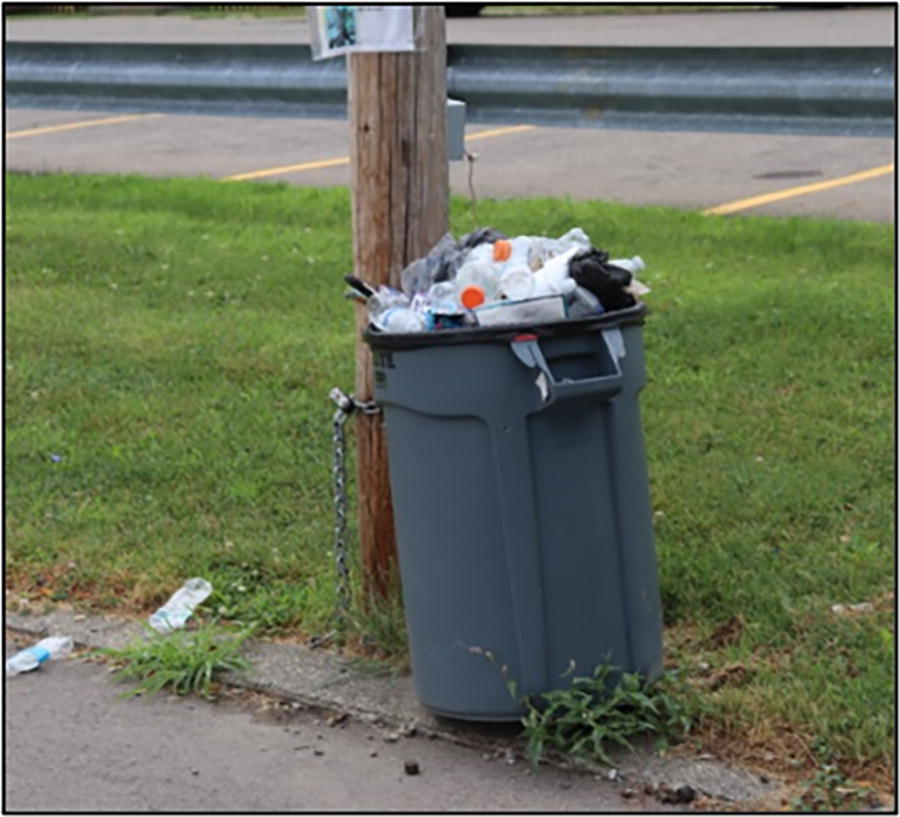
Overflowing trash can in a Flint park.
Theme 2: Open space
One youth (F13) photographed an open green space (Fig. 2) but still found the space inaccessible for play. She said, “nobody will go over there…there aren’t people throwing their trash in the open space, but there is no landscaping or keeping the grass short…I think they should have benches in open areas so adults can watch their kids.” While she did not see the open space filled with trash, it was not an inviting place because the landscaping was not tended to make it accessible for play.
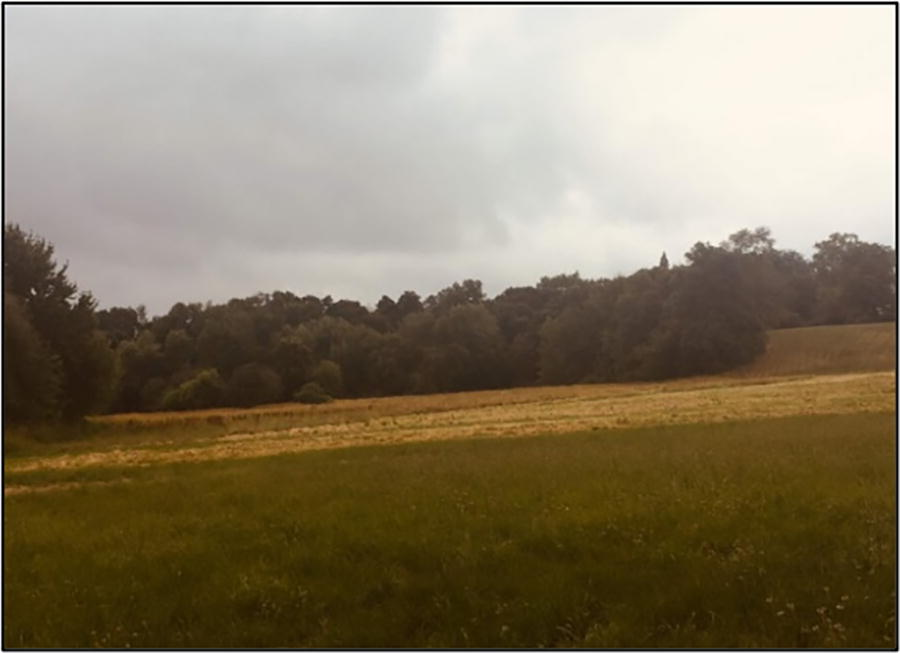
Open green space in Flint.
Overall, the youth found that the recreational spaces in Flint were not maintained in a way that made them accessible for use, either through lack of landscaping maintenance or through excessive trash. It is interesting to note that the youth identified the residents as the problem in producing trash but not the city as being responsible for picking up the trash or maintaining landscaping. Seeing the presence of trash and lack of public investment in the parks indicated to the youth that the residents were at fault for being “lazy” and not caring about their community. The lack of well-maintained recreational spaces made the youth feel that these spaces were dangerous and people using them could be hurt or even killed. As a result of dangerous recreational spaces, the youth concluded that residents were not getting enough exercise, which contributed to high rates of obesity.
The youth presented their findings and recommendations to city officials including Flint Mayor Karen Weaver. They recommended that Flint 1) provide summer employment for youth to keep the parks clean and safe, 2) hire night security to patrol parks, and 3) install surveillance cameras in the parks.
AJAX asphalt plant
In summer 2022, an asphalt company, AJAX, had applied for a facility permit (issued in December 2022), and residents were concerned about potential air quality impacts. During the 2022 summer camp, 15 FPHYA youth explored potential health impacts for the community. The youth rode a bus to the location of the planned facility (Fig. 3). They noted 14 dumping sites, four liquor stores, two trailer parks, a propane gas plant, a railroad crossing, and an interstate highway near a large government housing complex across the street from the facility.
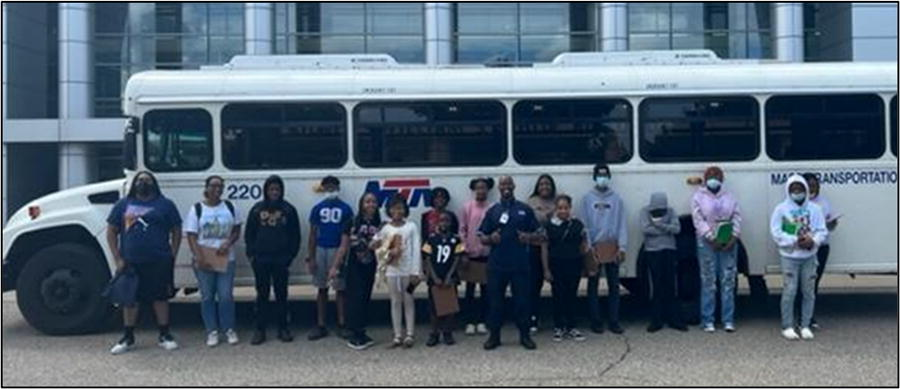
FPHYA participants ready to ride the bus to the asphalt plant.
The housing complex is home to hundreds of children (Fig. 4). One of the youths (M16) said, “We have a failing playground near a company that may be polluting the air, which can affect the children in those apartments and units who may breathe in toxic air. The deterioration of one neighborhood is inevitable to affect all neighborhoods. This exists because government has failed communities economically and has disregarded the effects of the environment.” Observing two young men talking at a playground, another youth (M13) observed, “They don’t know that the air they are breathing could be toxic. An Asphalt plant is opening right across the street. This relates to our everyday lives because kids play at the park every day. Going to the park should be safe.”
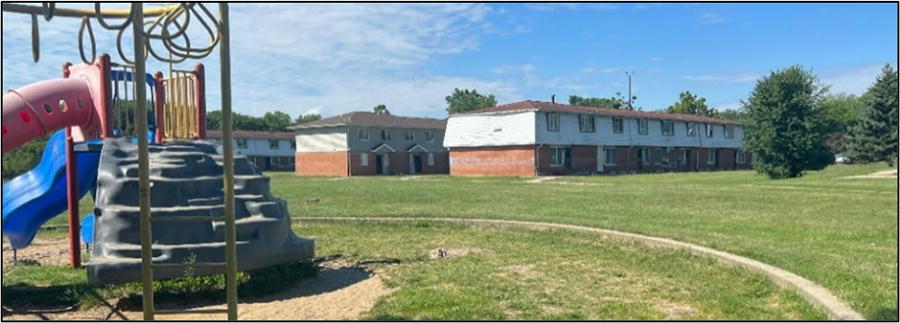
Public housing complex across from planned asphalt facility.
At the plant location (Fig. 5), one of the youths (F11) described, “I see people working in an industrial area with tanks and trucks. They may not be aware that they are potentially exposing families and kids to bad air. Bad air is not good for your body. It causes asthma and other breathing sicknesses. This happens because people put more bad companies in Black communities that pollutes the air.”
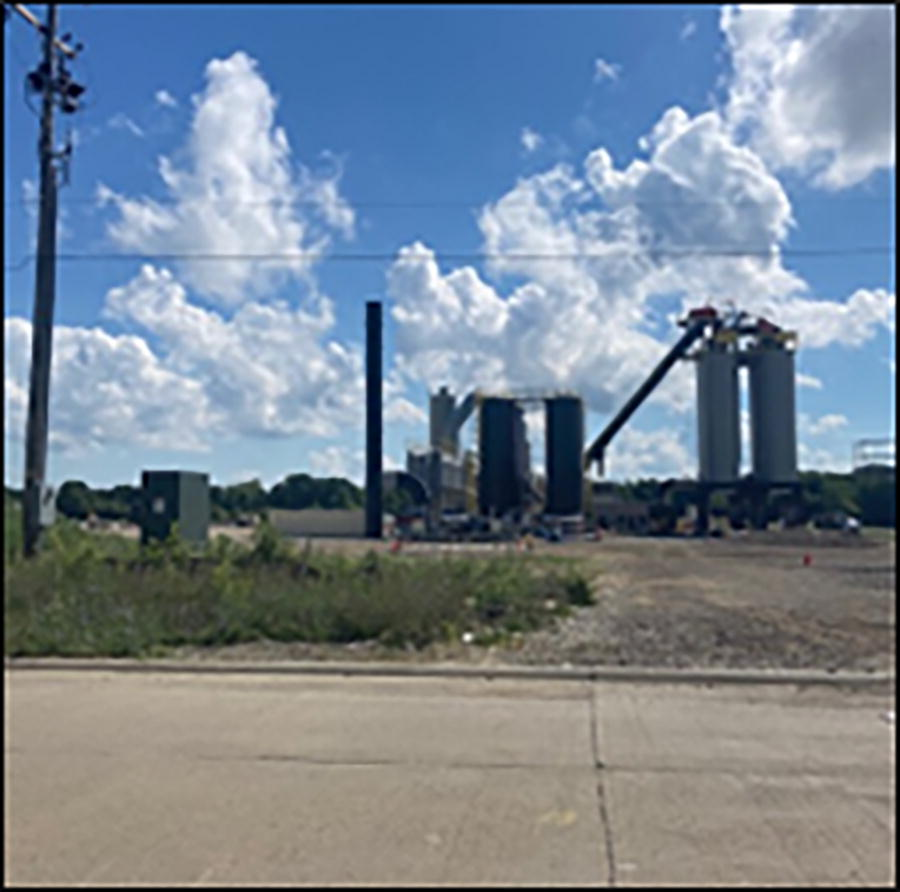
Site of planned asphalt facility.
Through the PhotoVoice project, FPHYA youth documented their neighborhood and concerns and then took their recommendations to city officials. They wanted elected officials to change zoning requirements that allowed the asphalt plant to be constructed across from the housing complex to be changed. It is important to note the shift in responsibility between the 2019 and 2022 projects. Where participants’ language about parks attributed blame to residents, language in 2022 focused on the responsibility of government to care for the community.
Through its activities FPHYA members are not just hearing about public health; they are seeing it in action and they are coordinating action themselves. Additionally, they are constructing new knowledge and frames for understanding what counts as health. FPHYA youth interns work administratively to prepare programming each year for youth. Their weekly planning meetings provide space and time to create an itinerary for their “Youth Perspectives” virtual talk show, outline key topics of discussion for yearly youth dialogues, and build and expand their curriculum. In one meeting, FPHYA interns voiced the need to be able to define health in such a way that embodies their slogan, Public Health is Everything and Everything is Public Health! Furthermore, they wanted to present it in a visual given their past engagements with youth denoting that visuals were more impactful. They created the health diamond (Fig. 6) to illustrate to other youth that health is more than physical; it is multidimensional. They argued that health is not just the absence of disease or injury, but includes mental well-being, social connections, finances, oral, and physical health, which all arise from a broader foundation including community health, environmental context, emotional well-being, and cultural support. As a precious resource, health has clear value like a diamond.
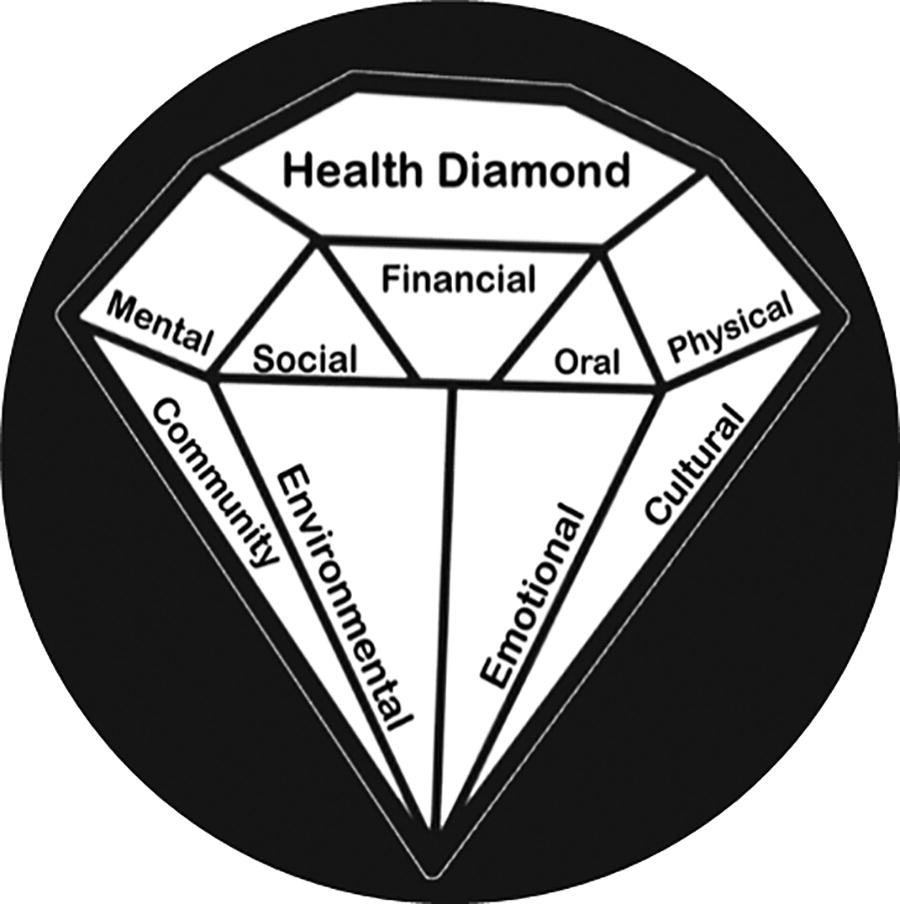
FPHYA intern-created health diamond.
Gun violence
Over the previous summer camps, Flint youths connected degraded environments to community violence. They observed the lack of clean parks and maintained open spaces as unsafe and dangerous for recreation. With the 2022 summer camp, several youths (F14, F13, F13, and M15) came across a spent bullet casing on the ground (Fig. 7). One of them described the scene, “What we see here is a bullet shell on the ground in front of an abandoned school. What is happening here, is all the pollution shoots out like a bullet shooting in the air. This relates to our everyday life like gun violence being one of the most dangerous things in our life. This situation is concerning because it is in front of a school, and it could be kids around. This is a metaphor for environmental health, just like a bullet is deadly, breathing toxic air is just as deadly and could cause many health issues.” Also preceding the next FPHYA summer camp, in February 2023, nearby Michigan State University (MSU) experienced a mass shooting that resulted in the death of three MSU students. For Flint youth, gun violence is an environmental health problem.
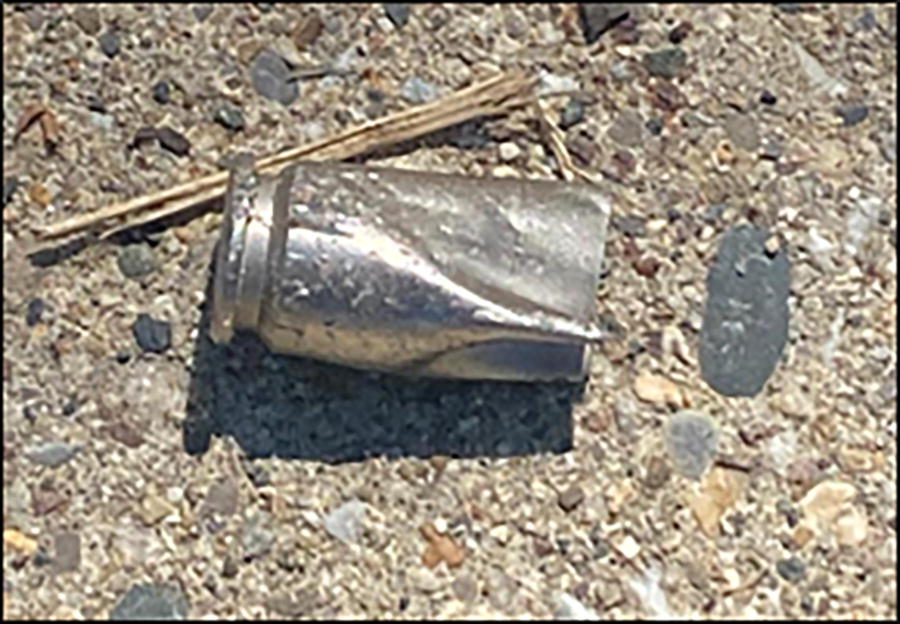
Spent bullet casing in front of an abandoned school.
In 2023, FPHYA regular session youth did a health campaign on gun violence. They created the virtual billboards, which are advertisements that go on their social media platforms, looking at educating the public around gun violence, prevention, and mass shootings. During the 2023 FPHYA summer camp, more than 30 Flint youths participated in discussions about understanding and preventing gun violence, attended by MSU Interim President Theresa Woodruff. With President Woodruff’s attendance, the summer camp received significant news coverage. ABC 12 News asked Key and one of the FPHYA interns to do a Newsmaker segment with them, which entailed a 30-minute interview about the project. 23 From the Newsmaker segment, Key described, “at the end of that we couldn’t even get out of the newsroom and the producers were coming down from upstairs saying, hey, this was so crazy and so powerful. We can’t stop right here. We need to pitch this to the general manager of the station and we need to do a town hall on gun violence.” The 90-minute recording of the town hall aired three times in November 2023. 24
IMPACTS
Youth
Although not all FPHYA alumni go on to careers in public health, medicine and research, several have, with Director Key noting that one FPHYA alum attended Morehouse School of Medicine. Another alum, who participated with FPHYA programming since eighth grade, attends MSU. Key says, “So being exposed to Flint water did not keep him from pursuing academic pursuits, because he was incubated with a group that continued to present things in a manner to where it was real for him.”
In their own words, some of the youths have described the impact of FPYHA on them. “Everything within a community is an issue of public health…The main point is that the community has to speak up about their issues in order for public health to work for the greater good of everybody…There has to be some sort of research within the community that can be used to benefit it rather than making choices based only on the thoughts of policy makers” said Asia Donald. 25 Tomás Tello said that he had learned, “for example, racism, that’s a public health crisis. It is. People’s lives are at stake, generations of hate, that twisted mentality inside of you. Racism is a mental health issue.”25
Community
Participation in FPYHA goes well beyond just affecting the trajectories of the youth participants. Alumni may be asked to sit at tables to advocate for youth programming, participate in numerous interviews, and engage in many public facing aspects of FPHYA’s work. Youth are seeing not only their own impact. They are also seeing the role public health plays in educating and prevention, but also in getting the eyes and the ears of media and elected officials. These actions inspire other youth who see them on television and ask, ‘Hey, how can I be a part of that program, too?’ For Flint residents, the community is able to see their children—their neighbors—doing public health work. This contrasts from when residents only saw people that did not look like them coming in to Flint doing the research. As more youth, who are predominantly urban and of color, advance in public health research careers, it is hoped that this may help to rectify some of the historic mistrust for engaging with health professionals and in research processes.
Local organizations
Through FPHYA’s messaging and campaigns, other organizations doing community engaged science work are also leaning into the youth academy as a mechanism to create effective messaging. FPHYA has engaged with over 3,000 Flint and Genesee County youth through partnering with schools and community groups including Westwood Heights School District, Flint Schools, Flint Youth Quest, Black Millennials for Flint, Big Brothers Big Sisters, Freedom School, fraternity and sorority youth mentoring groups and local church youth groups. FPHYA interns create, facilitate and administer public health content to young people with these programs.
FUTURE DIRECTIONS
Established in Flint in the context of environmental justice and health disparities struggles, FPHYA’s approach and messaging is broadly salient. Director Key says, “I think that communities that are disenfranchised or marginalized or experience inequities, whether it’s white poor, rural communities, or urban inner city, or communities, I think coalescing around those inequities and the need to fight for justice, I think is a unifying thing.” FPHYA is transferable to other communities through understanding shared concerns. FPHYA is working to launch a national program and host a national conference in the near future. Currently, FPHYA has three pending chapters in Brooklyn, Chicago, and Mississippi as well as four other locations that have inquired about setting up chapters. At the national level, FPHYA will aim to support youth developing understanding of commonalities with other youth from different demographics and different regions. Through these commonalities FPHYA hopes youth will make connections to work collectively as one unified voice from the perspective of a public health national youth group.
Footnotes
AUTHORS’ CONTRIBUTIONS
Conceptualization of the article was taken care by K.K. and J.C. Project administration was carried out by K.K., S.B., M.M., and N.S. Supervision was carried out by K.K. Original draft preparation was taken care by K.K. and J.C. Writing—review and editing was carried out by K.K., J.C., S.B., M.M., and N.S.
AUTHOR DISCLOSURE STATEMENT
No competing financial interests exist.
FUNDING INFORMATION
No funding was received for this article.