




Abstract
Lead is one of the best characterized toxicants known, with multiorgan toxicities that can result in acute or chronic adverse health outcomes. Historically, the diverse uses of lead have resulted in somewhat ubiquitous exposures to humans through individual-use products such as cookware and pottery and through infrastructure and wide-use applications such as gasoline and plumbing. These health effects have extended to the broader population, although elderly adults and children may be disproportionately affected due to impacts on bone and neurodevelopment. Although the poisoning of households and especially children in the city of Flint, Michigan, gained national attention, it is not a rare occurrence. For example, only 70 miles away in a much larger urban center, there have been documented high blood lead levels among children living in Detroit, Michigan. During industrialization, Detroit was one of the wealthier cities in the United States, with rapid population growth and development. Throughout the past century, more affluent Detroit residents moved to the newer suburbs, and this sprawl has created socioeconomic disparities as households with lower incomes typically remained in Detroit. With continued population decline and increasing disparities between the city and suburbs, much of the city’s infrastructure is older and has not always received funding for modernization. This has resulted in the original lead-based construction materials still persisting throughout much of Detroit, resulting in lead contamination over twice the rate of the State of Michigan. Our commentary provides a review of the literature on the history and persistence of lead in Detroit, Michigan, and comments on some of the social determinants and health disparities resulting from this issue. We end by giving recommendations and highlighting organizations that offer solutions and services to this complex problem.
INTRODUCTION
Environmental justice is an ongoing effort to ensure that people in society are given fair treatment with respect to environmental laws regardless of race, economic status, gender identity, sexual orientation, or ability status, among other identities. 1 While efforts to achieve justice have been successful on some levels, data and case studies are still limited, and the movement is just beginning to grow and gain recognition. 2 Despite the progress on this topic over the past few decades, the United States still has significant issues with environmental injustice that have yet to be resolved, particularly concerning areas of environmental racism.
Environmental racism, often considered to be a subtopic of social justice, is a term used to describe when a disproportionate amount of pollution-emitting facilities are placed near a population where a large proportion of residents are people of color (POC). 3 It can also occur when POC do not receive the appropriate resources to deal with environmental hazards or when less media attention is directed toward POC when they are forced to deal with pollution issues where they live. Dr. Robert Bullard, who is considered to be the father of environmental justice by many, observed in the 1970s that landfills and garbage incinerators in Houston, TX, were more likely to be located in neighborhoods who were predominately POC than white neighborhoods. 4 This raised alarm, since Houston’s black population was around 25% of the total population. This discovery caused Bullard to devote his life’s work to important environmental justice causes.4
One example of environmental racism involves the residential exposure to lead in older neighborhoods of Detroit. The population of Detroit has been declining since the 1960s, due primarily to a history of social conflict, the downturn of the manufacturing industry, and poor economic circumstances. Those who had the economic means, or those who had the privilege and choice to move outside of the city and into the suburbs, very often did so; those who could not stayed. 5 Known to be a postindustrial city, Detroit has many older structures, especially in areas that have not yet experienced recent development efforts (Fig. 1). Because older structures are more likely to contain lead, it is no surprise that a higher proportion of local children living in these areas have tested for higher blood lead levels (BLLs). Using lead was the standard practice during initial construction, with little financial capital put into plumbing due to financial issues.
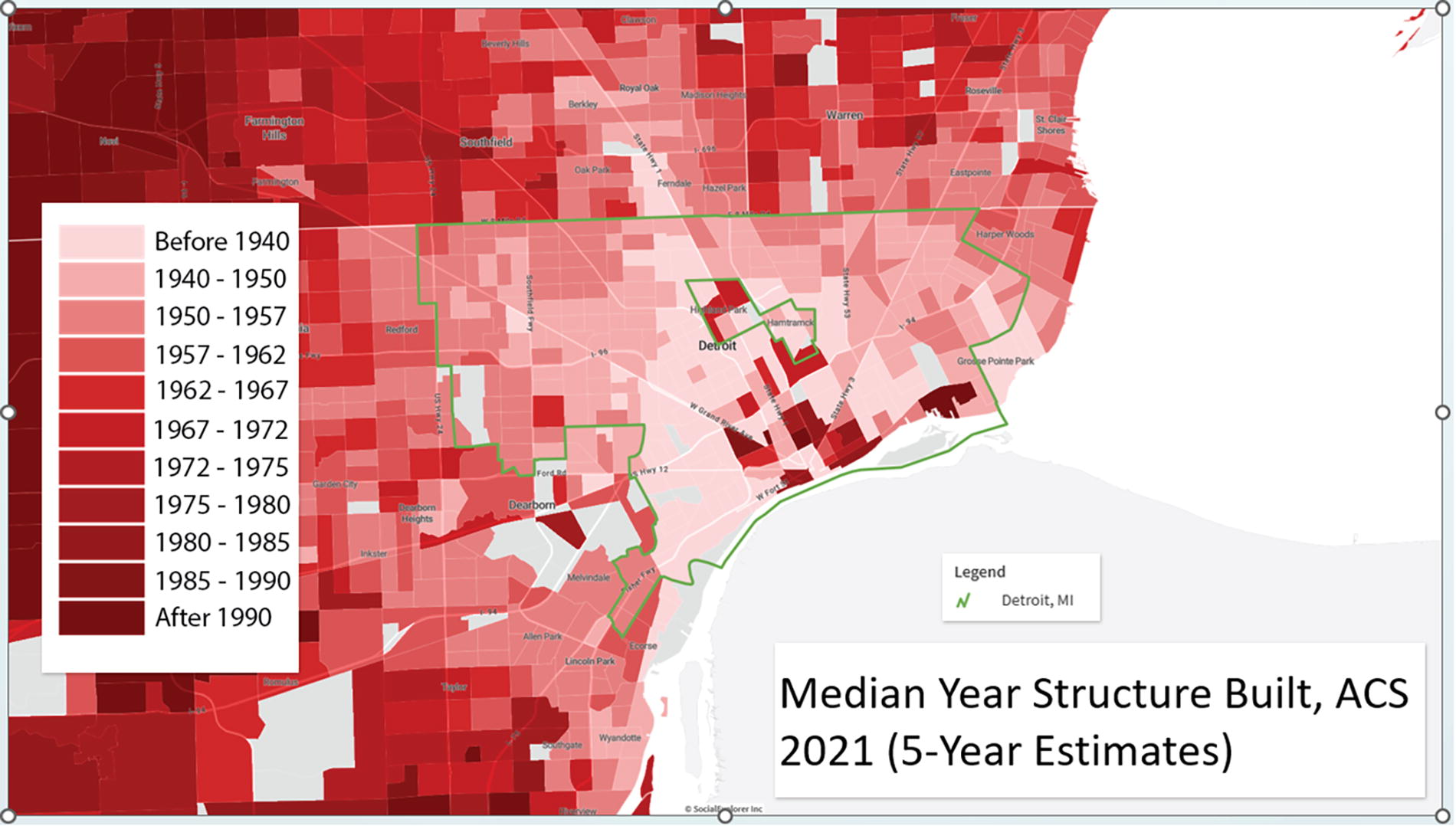
Spatial assessment of median housing age in Detroit, MI. This map was created using Social Explorer,a drawing upon data from the American Community Survey.b
Lead is known environmental health hazard. While it has been removed from products, including gasoline and paints to protect public health, it is often prevalent in areas that contain various older structures, through either leaded paint, pipes, or even the air and soil outside.6,7 Gasoline remnants near busy roadways have also likely caused lead to be concentrated in soils in the City of Detroit. 8 In order to gain an idea of who has been most affected by lead, the Centers for Disease Control and Prevention (CDC) has set thresholds for BLLs, particularly with a focus on children who have been exposed. In 1991, the threshold was set at 10 micrograms per deciliter (µg/dL) to identify children who had lead levels of concern. 9 The threshold was lowered to 5 µg/dL in 2012 and again lowered to 3.5 µg/dL in 2021. In 2012, the 5 µg/dL number was developed based on the 97.5th percentile for children’s lead levels.9 Although the level as of 2021 was lowered again to 3.5 ug/dL, it is known that there is no concentration of lead in the human body that is considered safe.10,11
While BLLs are greater in the City of Detroit compared with outlying areas and the rest of the state of Michigan, 12 relatively little has been done to truly quantify the dangers involved for the public living there. The city of Flint, Michigan, received national attention for its childhood lead poisoning, driving recent improvements in testing and mitigation strategies in the state of Michigan. However, Detroit, as Michigan’s largest city, still remains one of the most impacted communities for lead poisoning. In this commentary, we aim to give a summary of the current lead situation in Detroit, as well as an outlook of the various harmful effects caused by lead within the city limits. We will conclude with what the next steps should be taken and effective approaches and recommendations for combating this important public health issue.
HOUSING AS A SOURCE OF LEAD IN DETROIT
Due to its abundance, pliability, and durability, lead has been widely used as a building material for infrastructure since ancient times, with documented accounts from ancient Rome. Within the United States, lead has been used from the late 1800s through the late 1970s. Lead was used as a primary construction material in pipes (plumbing) until 1930. Even beyond 1930, the installation of lead pipes continued. 13 Before it was outlawed, lead was allowed in paint until 1978 and taken out of gasoline starting in 1986. 14 Many of the structures built before these dates were built in populous industrial areas, and many still stand today.
Prevalence of lead-based service lines in Detroit residences
As previously stated, Detroit has tens of thousands of homes that are still serviced by lead lines.6 In 2024, the City of Detroit created a publicly accessible, interactive map of Detroit sewerage lines, with both the verified and assumed status of line materials, including copper, lead, and galvanized iron. 15 This resource is provided on a parcel level, showing individual residences and businesses that may be impacted. It is important to note that many of the “assumed” properties are in areas where there is low housing turnover, and they are more likely to be made of older materials such as lead. In 2018, the City of Detroit estimated that 80,000 residences were actively serviced by lead lines. 16 Although remediation plans are underway and have received $90 million in support, the mitigation plans are not estimated to reach 100% completion until 2040. Until remediation is completed, this means that a substantial portion of Detroit’s 633,000 residents are exposed at home through known means of lead poisoning.
Housing age and lead
With over 90% of the housing stock built before 1978,17 58% built prior to the year of 1950, 18 and 32.8% of the housing stock built before 1939, 19 Detroit contains a large amount of older housing. One particular study showed a strong correlation between housing age and BLLs for children in Detroit, with older housing leading to an increase in BLL. 20 This has led to a major disparity in the state of Michigan, where the rate of childhood elevated BLLs (EBLLs) in Detroit (in 2010, 2016, and 2019 using the >5 ug/dL) is at least twice as high as the state average.21,22,23 This alone suggests lead poisoning is a particularly urgent environmental justice and environmental health issue, particularly in Detroit.
Within the City of Detroit itself, the innermost and outermost parts of Detroit have a newer median housing age. The innermost part of Detroit has been undergoing substantial redevelopment, financial investment, and resulting gentrification over the past decade. 24 As a result, the incidence of EBLLs has been decreasing in this central region; however, this creates a different issue of longtime residents being unable to afford the new price of living. 25 These neighborhoods benefit from being part of the newly developed city while being away from the core region of the contamination. In the long term, however, continued reinvestment into the city and resulting infrastructure upgrades may provide relief to residents in surrounding areas as well.
The City of Detroit has a large share of older housing functioning as rental properties, and often these properties lack modernization and renovations to infrastructure. Despite the current revival and commitment to reurbanization, many neighborhoods within Detroit are still composed of original buildings or lots without updated infrastructure. In these neighborhoods in particular, residents are often living at or below the federal poverty level or within the working class, meaning that they usually rent their housing and/or do not have the permissions or resources to upgrade it—even when health factors are at stake. This exacerbates the issue, as low rent costs in the area result in some landlords lacking the funds to fix or upgrade the housing.17 Many other landlords with resources have historically not invested in their infrastructure, nor do they plan to as they are seeking a quick surplus. 26 This causes lead exposure to be common in Detroit relative to the rest of Michigan. 27
Other housing factors affecting lead exposures
Demolitions of these older structures leading to EBLLs have also been a cause of concern. The literature has been a bit mixed regarding this topic. Bezold et al. looked at associations between the EBLL of children under the age of 6 and demolition activity. 28 The authors found no correlation between these variables in 2018, leading to a conclusion that the demolitions can be carried out safely in the city. Another study by Eisenberg et al. examined lead exposure in Detroit’s single-family rental market and found that there was an increase in the percentage of children with EBLLs near demolition sites. 29 Specifically, 13% of children near two or more sites had EBLLs compared with 8% of children not living near any demolitions. Although the results from the two studies differed, both sets of authors acknowledged the severity of lead exposure for Detroit residents.
A major environmental challenge for Detroit has to do with the interstate highway system. Due to urban renewal policies of the 1960s, these roadways were built and cut directly through inner city neighborhoods, displacing residents. This often took place in predominantly black neighborhoods.5 An example is Interstate 94 which takes a more direct route from suburban areas to the city center rather than going around what were already established neighborhoods. 30 Leaded gasoline was a primary source of airborne lead throughout the nineteenth century. 31 Over time, lead has accumulated in the soil and therefore caused harm to residents who live next to busy roadways in Detroit. 32 While there was success on the front of lead being taken out of gasoline, highway systems still cut through inner city neighborhoods in Detroit, 33 and accumulated and unmitigated lead negatively impacts air quality. 34
In addition, urban soils in Detroit have received study as well. A study by Howard and Olszewska assessed how time affected pedogenesis and heavy metal sequestration where artifacts were present. 35 The authors found that “the 12-year-old soil shows accelerated weathering of iron (e.g., nails) and cement artifacts attributed to corrosion by excess soluble salts of uncertain origin.”27 It is worth noting that another study written by Howard et al. in 2013 stated that the 2011 study underestimated the amount of labile lead that is within the soil.7 Ultimately, these factors demonstrate high lead contamination in Detroit soils and that anthropogenic sources of lead still confirm spatial fingerprints of contamination.
BLLS AND DISPARITIES IN EXPOSURES WITHIN DETROIT
The abundance, pliability, and durability of lead have made it a cheap option for many of these people to use in construction, even with the knowledge of the negative health effects. While many of these harmful effects have been known for quite some time, lead is still present in paint, pipes, dust, and infrastructure in many areas throughout the world. Most often in the United States, higher concentrations of lead in blood are disproportionately seen in places with a higher proportion of POC and a lower socioeconomic status.13,36 This is attributed to more POC living in low-quality housing and being subjected to live in areas that contain higher concentrations of environmental toxicants, including lead.26,30,37
Monitoring of BLLs in Detroit
Children’s BLLs are routinely monitored in Detroit via the Childhood Lead Poisoning Prevention Program. The 2016 and 2019 Data Reports on Childhood Lead Testing and Elevated Levels: Michigan included specific details about BLL for the City of Detroit alone, as well as information for the broader Wayne County.33,34 BLL testing rates in Detroit are much higher than the remainder of encompassing Wayne County, let alone the state of Michigan. Detroit was one of nine target communities from the state of Michigan that was observed in the study. Hamtramck and Highland Park, independent municipalities which are both completely surrounded by the City of Detroit, were two of the other communities (out of the nine total) to be on the list. Spatial distributions of confirmed EBLLs are shown in Figure 2.
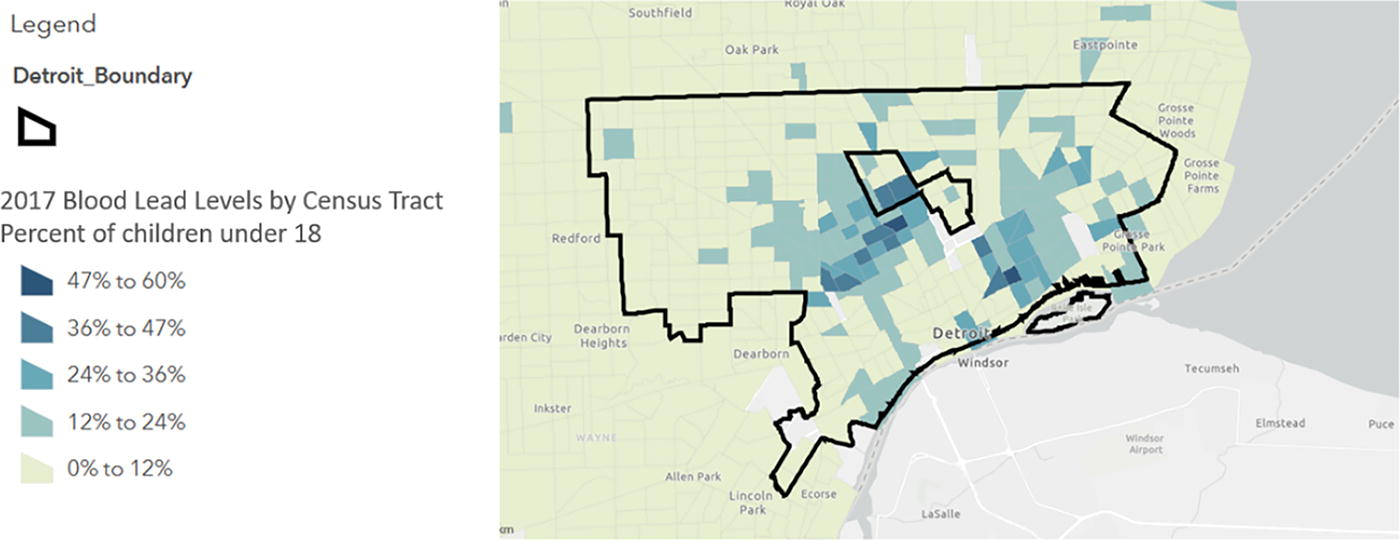
Spatial assessment of elevated blood lead levels in Detroit, MI in 2017. Map was created using ArcGIS (ESRI) with a shapefile from data-driven Detroit using data from the Michigan Department of Health and Human Services.a
According to the 2019 report, 33% of children under the age of 6 years were tested for EBLLs, compared with 22.9% of the surrounding Wayne County.38 Surrounded communities Highland Park and Hamtramck also had testing rates of 41.1% and 47.3% of children, respectively. Of those tested in the 2019 report, 6.7% (Detroit), 12.4% (Highland Park), and 5.1% (Hamtramck) of the tests conducted were above the CDC BLL threshold of 5 µg/dL. This incidence rate was greater than double the incidence for the state of Michigan, which had an elevated BLL incidence of 2.7% during the same period. This disparity is especially alarming given that Detroit is the largest population center in Michigan and is likely skewing the statewide average. This suggests that most other communities in the state of Michigan have lower exposures to lead. Interestingly, and perhaps hopeful in nature, the percentage of children within Detroit, Highland Park, and Hamtramck with EBLLs has decreased since 2016. Although the reason for this decrease is unknown, it does correspond with the onset of Detroit’s replacement of lead lines.6
Spatial relationships between EBLLs, income, education, and race
To spatially assess relationships between median housing price, income, race, and educational attainment, we examined the demographics of Detroit on the census tract level (Fig. 3). The bottom right corner map shows the median home value for each census tract. In general, Detroit has homes with less value compared with the surrounding area. The map in the upper right shows the percentage of residents who identify as white and non-Hispanic. In general, Detroit has a large non-white population compared with the outlying suburbs, with the downtown area having some exceptions. Another city, Hamtramck, which is completely surrounded by Detroit, is predominantly white and non-Hispanic, although this area has a high percentage of individuals from Southwest Asian and North African (SWANA) descent.
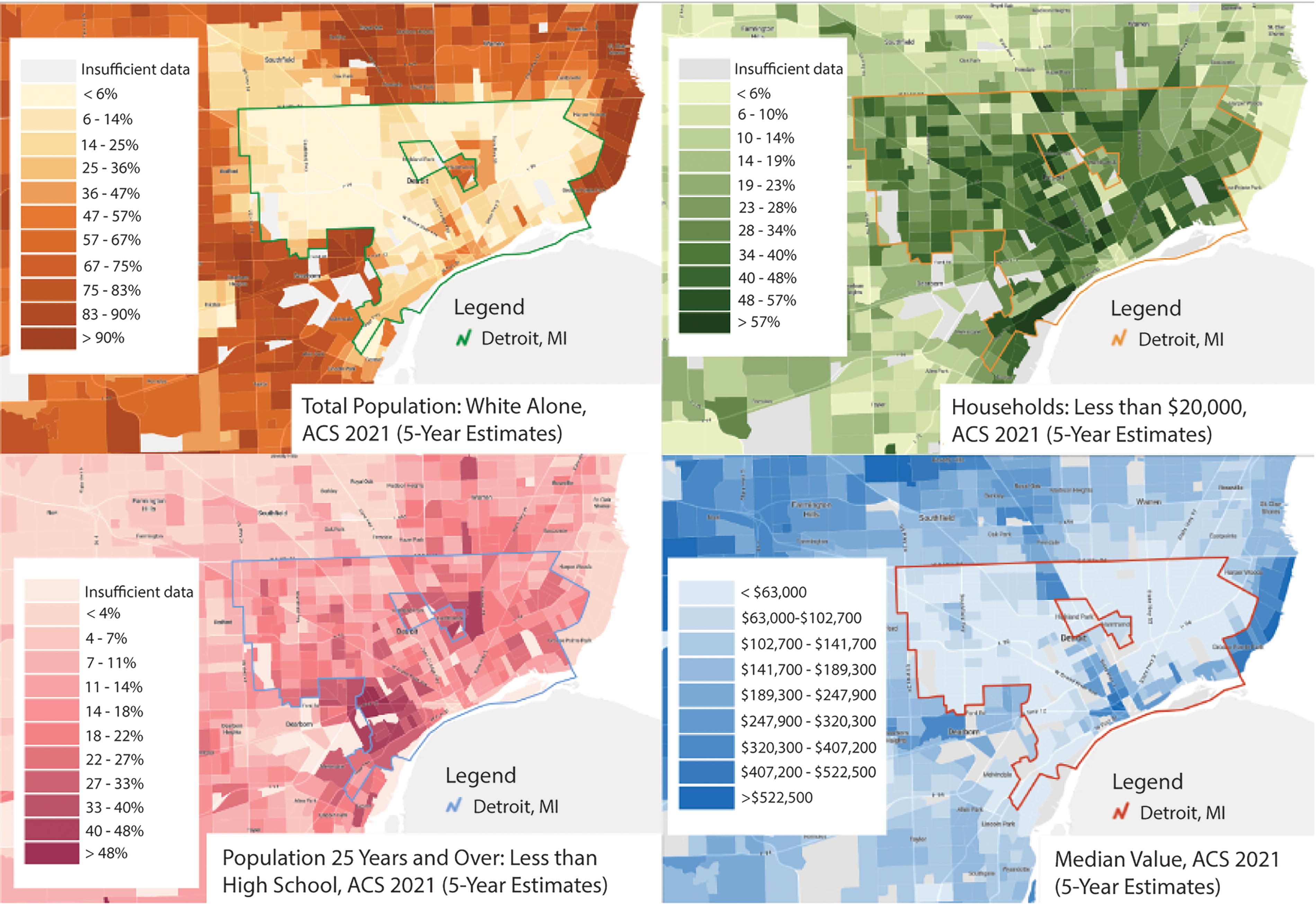
Spatial assessment of race, income, educational attainment, and median housing prices in Detroit, MI. Maps were created using Social Explorer,a drawing upon data from the American Community Survey.b
Educational attainment and income are two important metrics of socioeconomic status and economic mobility. The map in the upper-right corner shows the percentage of households who earn <$20,000 per year in household income, an index used to assess poverty. In general, Detroit has a higher percentage of low-income households than the surrounding suburban area. The map in the bottom left corner shows the percentage of people who are above 25 years of age and have an educational attainment level of less than a high school education. Detroit has a larger percentage of people without a high school education than the suburbs. Unfortunately, the different demographic aspects shown in these maps seem to follow a pattern. Due to lower property taxes and decades of population decline, Detroit Public Schools have received less money to educate future generations of the city. 39 To make matters worse, water in 19 out of 62 of the city’s elementary schools was found to have elevated levels of lead in 2016, despite the municipal water meeting federal safety laws. 40 Despite more recent improvements in student performance, Detroit is annually one of the lowest-performing urban school districts in the United States. Although educational attainment is a complex, multifactorial issue, lower high school graduation rates often mean reduced job opportunities for residents and decreased socioeconomic mobility in Detroit.38,41,42 The district’s racial and minority enrollment (percent of non-white students) is 97.5%, 84.3% of the students are eligible for free and/or reduced lunch, and 62.1% of the students are economically disadvantaged, creating additional disparities for residents and barriers to equitable student success. 43
It is plain to see that areas in Detroit that are racially diverse, economically disadvantaged, and with lower educational attainment are the same areas with older housing structures and more EBLLs (Figs 1–3). Although these relationships are not necessarily causal, these associations demonstrate that housing age may be an often overlooked social determinant of health that would affect BLLs and potentially other disease burden. Although Detroit is one of the largest cities in the United States, Detroit’s financial decline in the late twentieth and early twenty-first centuries may have lasting public health consequences due to lacking infrastructure and public services. Recent population and economic growth in Detroit, therefore, may change these associations in coming years.
NEGATIVE HEALTH IMPACTS OF LEAD EXPOSURE
The health effects associated with lead exposures have been well-documented in the environmental health community, as extensively reviewed.44,45,46,47,48,49 Lead is a heavy metal, with a long half-life and high persistence in the environment. Lead as a cation (Pb2+) is able to replace other cations in the human body,46,50,51 including calcium (Ca2+), magnesium (Mg2+), iron (Fe2+), and sodium (Na+). Lead can replace these elements in reservoirs such as blood and bone, disrupting processes such as cell communication, protein folding, and neurotransmission due to lead’s ability to cross the blood–brain barrier. Once absorbed, lead does not have any known functional benefit, but it has been known to cause adverse health outcomes, including problems with behavior and toxicities of the nervous, renal, endocrine, skeletal, and cardiovascular systems.16,52
The effects of lead on the human body are numerous and systemic. For children, it is considered toxic even at low concentrations, with no safe level of exposure.30,53,54 Major target organs include the kidney, cardiovascular system, and nervous system. Lead is a well-known renal toxicant, and lead nephrotoxicity is associated with decreased glomerular filtration and increased inflammation.55,56,57 Within the cardiovascular system, even low lead concentrations have been shown to increase hypertension and heart disease.58,59,60,61,62
Lead poisoning greatly alters the functioning of the nervous system. Mason et al. review how lead poisoning affects the development of the nervous system in children.16 Impacts of lead exposure on neurons are well-characterized, with widespread impacts such as neuronopathy, demyelination, and impaired neurotransmission.63,64 Children who have heightened exposure to lead have been shown to develop brains with smaller volume as adults. 65 Wani et al review how lead poisoning affects the nervous system in adults, altering neurotransmitter discharge, halting N-methyl-D-aspartate (NMDA)-ion channels during the neonatal period, and interrupting cellular energy metabolism through inhibition of sodium–potassium adenosine triphosphate (ATP)ase.47 Lead also may disrupt mitochondrial function in the nervous system, with or without changes in calcium concentrations, leading to a host of problems, including the formation of reactive oxygen species, mitochondrial self-destruction, and cytotoxicity.66,67,68
Lead poisoning and EBLLs can also cause behavioral and neurodevelopmental disorders in children, including attention deficit/hyperactivity disorder and reduced intelligence quotient (IQ).69,70,71,72,73,74,75 In Detroit, Moody et al. found that estimated lead exposure predicted a decrease in children’s IQ by 1–3 points.30 Zhang et al. found that EBLLs before the age of 6 caused deficient academic performance in grades 3, 5, and 8 within the Detroit Public School system. 76 Overall, lead has diffuse and chronic adverse effects on human health, many of which are irreversible.
RECOMMENDATIONS
Although the negative health effects of lead have been universally known for decades, mitigation of exposures has proven difficult. Although amelioration of lead exposures in public places and educational programs targeting lead removal have proven effective at lowering exposures at specific venues, exposures are still common. Once of the greatest challenges has been mitigation of lead on private properties, including in the home. Homes built before 1978, for example, often still have legacy lead-based paint, which has a sweet taste and is easily ingested by young children. For this reason, public health strategies to decrease exposures have focused largely on routine blood testing and personal responsibility for mitigation.
Biomonitoring
Because child exposures to lead are rarely obvious, the CDC recommends that all children receive a blood lead test. As previously stated, 40.4% of children in the City of Detroit under the age of 6 were tested for lead as of 2016, which could be increased to provide better surveillance. The City of Detroit’s Health Department recommends that all children under 6, and especially those living in older homes, should be tested annually for lead by their primary care provider. 77 Also, children who have guardians who work with or are exposed to lead should undergo regular testing to ensure that they are safe.47 Improving testing frequency in school-age children would reduce the duration and potentially the frequency of exposure to the most vulnerable members of the community.
Compliance
Another factor potentially creating disparities in exposures to lead is the issue of housing compliance. Buildings, including living spaces and corporations that deal with lead, should be inspected to ensure that environmental health standards are followed—regardless of ownership transfer. For example, Detroit implemented a stricter inspection regimen for rental properties built before 1978 for lead testing, and noncompliance can lead to fines or criminal charges if child tenants have EBLLs. A newer, stringent rental property testing program has been implemented in 2025, with increased testing for lead and steeper fines for violations. 78 While this new ordinance originally included dust testing for lead in higher-risk homes, this was deemed unsustainable and excluded from future testing requirements. 79 Eisenberg et al. looked at BLLs of young children who lived in rental properties owned by landlords who obtained property through a foreclosure auction.26 The study found that these children were more likely to experience EBLLs compared with children in other living arrangements. Specifically, in the SWANA community, children who come to Detroit from outside of the United States often deal with housing structures that are older and have undergone neglect.14 Eisenberg et al. recommend that strict enforcement of compliance standards for the tax foreclosure sale properties should be carried out to prevent damage from lead poisoning.26 Mechanisms such as inspections of existing infrastructure and enforcement of measures that protect public health could drastically reduce exposures.
Location
Occupational and industrial lead exposure is another potential challenge to mitigation and environmental justice. Although there are numerous industrial standards for disposal of lead-containing wastes, corporations that use (or have used) lead in Detroit are disproportionately located within black and SWANA communities. These communities also experience higher rates of poverty, reducing the ability to perform costly mitigations on one’s own. Because these removal industries are also located within these communities, it stands to reason that members within these communities may also be more likely to work at these local businesses and therefore have higher risk for occupational exposures. Zoning and permitting surrounding the installation of these businesses should be examined from an environmental justice lens.
SOLUTIONS AND RESOURCES
Public sources
Despite this enormous challenge, there are resources to help Detroit residents reduce lead exposure risks related to housing. The Detroit Water and Sewerage Department (DWSD) has been working to comply with Michigan’s lead and copper rule, which lowered its lead limit in water to 12 ppb in January 2025.6 Over the next 40 years, they will be replacing lead water lines with copper in housing with the permission of the residents living there, with a legal requirement to replace all lead lines in Detroit by 2040—contingent on funding. Between implementation in 2018 and March 31, 2025, the City of Detroit has already replaced 13,387 of the 80,000 lead service lines.
Likewise, the City of Detroit has created more rigorous communication standards and testing protocols for residents. More stringent reporting requirements established in 2018 demand communications be sent to any households that are serviced by lead lines. In November 2024, letters were sent from local water departments to residents across metropolitan Detroit, informing households whether they were being serviced by active lead lines. We recommend that when given the opportunity, Detroit residents should allow the DWSD to replace their lead water service lines with copper, as this will reduce or prevent further issues from lead contamination in drinking water. The City of Detroit also offers free testing for lead in the water of homes if a lead service line is present, with a step-by-step guide to check if a home has a lead service line.77
Beyond water lines, Detroit also has several agencies that are dedicated to lead abatement and health services for poisoned children. Michigan Department of Health and Human Services (MDHHS) Lead Services division champions the MI Lead Safe Home program, which aids in the identification of lead sources in the home and connection with abatement services—and fees for these services may be reduced or eliminated for individuals in need. 80 The MDHHS Childhood Lead Poisoning Prevention Program connects children with EBLLs or at high risk for EBLLs with medical testing and counseling to reduce poisoning. Together, these utility, abatement, and health care resources provide low-cost support to Detroit residents who are most at risk for lead poisoning.
Community and nonprofit organizations
are also community and nonprofit organizations that are working on issues concerning housing and human health with regard to lead poisoning, with just a few mentioned here. For households who do not qualify for the MDHHS MI Lead Safe Home program, the community organization MichiganSaves has created the Lead Poisoning Prevention Fund to help defray abatement costs. 81 Children’s Hospital of Michigan, part of the Detroit Medical Center, stewards the Lead Pediatric Clinic, which provides diagnosis, counseling, and treatment for lead poisoning in children. 82 Keep Growing Detroit, an urban farming organization, offers soil testing to people who are looking to start or maintain a garden on their property. 83 By joining the garden resource program, residents of Detroit, Hamtramck, and Highland Park can know what is in their soil and gain a community of fellow gardeners. The Detroit Lead Advocacy Parent Group (DLEAD) is a group of parents, educators, and community members who aim to end lead poisoning in children living in Detroit. 84 The organization spreads knowledge about the issue and provides education and prevention methods to families who have a child with high BLLs. The program is run through Detroit’s AmeriCorps Urban Safety Program.
ClearCorps Detroit focuses exclusively on reducing the percentage of Detroit Children experiencing lead contamination.85,86 Since 1999, this organization has provided educational resources and training to help reduce the risks associated with lead. They carry this out by connecting people to each other to provide materials and/or labor for home repairs, providing easier access to lead testing for children, directly educating parents about risks, advancing policy solutions, and helping families relocate when necessary. Through their website, people who own their homes can apply for grants for home repairs through the City of Detroit and look through an entire page of information about lead poisoning. ClearCorps Detroit also has been a voice for environmental health in the media and on social media and has been demonstrative in providing commentary on lead regulations and enforcement. Although many groups have been involved in lead exposures in Michigan, ClearCorps Detroit has lead prevention and mitigation as its mission.
CONCLUSION
Lead contamination in Detroit is a major issue that has received relatively little attention for the magnitude of the situation. This abundant material was used in building numerous structures throughout the 1800s and 1900s within industrial cities. Research has consistently shown that lead has negative, long-lasting, irreversible effects on people who are exposed, including but not limited to cardiovascular system damage, nervous system damage, lowering of IQ, and kidney issues. Detroit is considered to be a highly segregated metropolitan area due to past policy and action. Our maps created from spatial data highlight that the issue of segregation persists by showcasing stark visual differences between the City of Detroit and the surrounding metropolitan areas. Numerous studies have demonstrated that lead exposure is greater for people who are of minoritized racial and ethnic groups and/or economically disadvantaged, populations who are more likely to be found in the city limits of Detroit compared with the outlying suburban areas or the state of Michigan as a whole. Although the deleterious effects of lead have been known for more than half a century, little has been done to quickly and effectively solve this large issue. This leads us to concur with previous research in showing that this is an important environmental racism issue. Further ongoing and swift action is a necessity to improve public health outcomes, specifically for people who have had limited access to these services.
A large source of the problem is due to an older share of housing within city limits, leading to housing structures that need to be addressed such as lead pipes or paint. Some people do not have the funds to fix housing and need resources to combat the problem. We recommend people allow the DWSD to replace their lead service lines with copper. We also recommend that residents utilize city services, such as free lead testing through the city, as well as the MDHHS MI Lead Safe Home Program or MichiganSaves, which are both dedicated to defraying lead abatement costs. We offer additional avenues for helping to combat problems associated with high lead level exposure through the nonprofit organizations listed. Additionally, the housing foreclosure auction allows landlords to purchase housing, charge rent, and not keep properties up to date. Similar to Eisenberg et al., we recommend more strict oversight of this tax foreclosure sale process in order to prevent children from living in poorly maintained housing that could cause chronic diseases and declining health span due to lead exposure. Other issues, such as dust from demolition or soil from highways, have also caused an increase in the number of children with high BLLs. We therefore recommend that all children under 6 get tested for lead annually. Despite the large-scale problem of higher lead exposure in Detroit, the good news is that these problems can be solved, and some governmental and nonprofit programs are well underway to help solve this complex issue.
Footnotes
AUTHORS’ CONTRIBUTIONS
N.M.: Conceptualization, data curation, investigation, writing—original draft, writing—review and editing, and visualization. K.E.S.: Conceptualization, writing—original draft, writing—review and editing, and supervision. L.C.: Conceptualization, writing—original draft, writing—review and editing, and supervision.
AUTHOR DISCLOSURE STATEMENT
The authors have no interests to disclose.
FUNDING INFORMATION
No funding was received for this article.