




Abstract
Ecklonia cava is a brown alga (Laminariales, Phaeophyta) growing on the subtidal rocky shores of Korea. It has antioxidant, antidiarrhea, and anticoagulant effects. In this study, the antimicrobial activity of E. cava EtOH extract and its fractions (n-hexane, CH2Cl2, EtOAc, n-BuOH, and H2O) were investigated against methicillin-resistant Staphylococcus aureus and Salmonella spp. The E. cava EtOAc fraction showed good antibacterial activity against all bacteria. Eckol isolated from E. cava EtOAc fraction showed antimicrobial activity against all the tested strains. The minimum inhibitory concentration of eckol against S. aureus strains ranged from 125 to 250 μg/mL and 125 to 250 μg/mL for Salmonella strains. The fraction inhibitory concentration index of eckol in combination with ampicillin ranged from 0.31 to 0.5, indicating remarkable synergism against S. aureus. However, against Salmonella gallinarum ATCC 9184 and Salmonella typhimurium, it ranges from 0.75 to 1.0. The combinations of eckol + ampicillin exhibited improved inhibition of S. aureus and Salmonella with synergy or additive effect. We suggest that eckol ingredients of the E. cava against S. aureus and Salmonella have antibacterial activity.
Introduction
S
Salmonella is a Gram-negative, facultative anaerobic, flagellated bacterium. It is the pathogenic agent of salmonellosis, a major cause of enteric illness and typhoid fever, leading to many hospitalizations and a few rare deaths if no antibiotics are administered (Gorman and Adley, 2004). Salmonella enterica serovar Typhimurium is a clinically important intracellular bacterial pathogen that causes food poisoning and gastroenteritis in millions of people worldwide each year (Grassl et al., 2008). A high incidence of Salmonella strains resistant to commonly prescribed antibiotics has recently been reported in Korea and other countries (Choi et al., 2005; Stevenson et al., 2007), and the increased appearance of antibiotic-resistant strains of Salmonella further exacerbates this problem (Bhan et al., 2005). The rise in antibiotic-resistant pathogens has led to the development of new therapeutic agents that are effective against these bacteria. Recently, there has been considerable interest in the use of plant materials as an alternative method to control pathogenic microorganisms (Aqil et al., 2005), and many compounds of plant products have been shown to be specifically targeted against resistant pathogenic bacteria (Nostro et al., 2006). Consequently there has been an increasing interest in the use of inhibitors of antibiotic resistance for combination therapy (Gaind et al., 2006).
Ecklonia cava is an edible brown alga (Laminariales) that is present in the subtidal regions of Jeju island and the south coast of Korea. E. cava is used to produce food ingredients, animal feed, fertilizers, and folk medicine in gynecopathy (Jung et al., 2009). E. cava is a polyphenolic compound of brown seaweeds called phlorotannins, and those of E. cava are the phenolic secondary metabolites eckol, 6,6′-bieckol, dieckol, phlorofucofuroeckol, and triphlorethol-A, all with biological activities (Shin et al., 2006; Ahn et al., 2008). Ecklonia species have been used extensively as a traditional medicine in countries for the treatment of goiter, scrofula, urinary diseases, stomach ailments, hemorrhoids, boils, laxative, and tonic for lying-in women (Zeng et al., 1984). E. cava also act as antioxidants in vitro, anticancer agents, anticoagulants, and matrix metalloproteinase inhibitors (Heo et al., 2003; Athukorala et al., 2006; Kim et al., 2006). Eckol is a phlorotannin, which can be found in Ecklonia species (Joe et al., 2006). It is well known that eckol (Fig. 1) has antioxidative, antihyperlipidemic, antiallergic, anti-HIV, and antiplasmin activities (Fukuyama et al., 1989; Ahn et al., 2004; Kang et al., 2004; Li et al., 2008; Yoon et al., 2008).
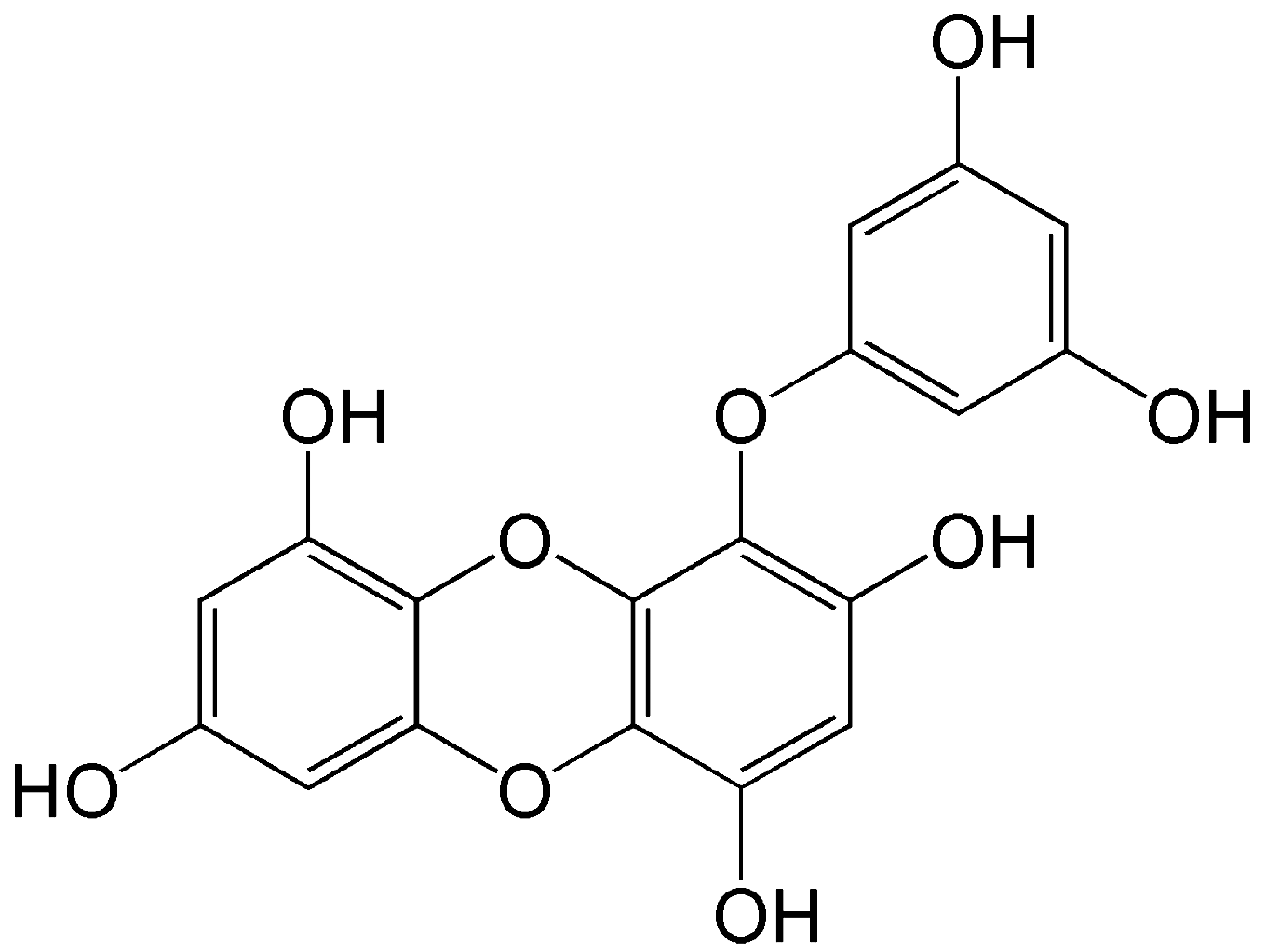
Chemical structure of eckol.
This study was performed to assess the effects of the combined activity of ampicillin and eckol against methicillin-resistant Staphylococcus aureus (MRSA) and Salmonella isolates that are both unresponsive to antibiotics and showed high minimum inhibitory concentrations (MICs) in vitro. Eckol alone and in combination with inhibitors for disturbing drug penetration against clinical isolates were investigated, and a way to overcome discrepancies in the activity of eckol was examined. Thus, this study promotes the effects of eckol as a therapeutic agent regarding its activity toward MRSA and Salmonella strains.
Materials and Methods
Plant materials
E. cava, collected on the rocky shore at Jeongjado (34°27′ N, 126°56′ E), Wando, Korea, in October 2007, was authenticated by Dr. H.G. Choi. A voucher specimen (no. 07-32) was deposited in the Laboratory of Herbalogy, College of Pharmacy, Wonkwang University, Iksan, Korea.
Isolation of eckol
E. cava (1.2 kg) was dried and refluxed with EtOH for 3 h, three times. The EtOH extract (185 g) was then partitioned with organic solvents of different polarities to yield n-hexane (15 g), CH2Cl2 (10 g), EtOAc (43 g), n-BuOH (10 g), and H2O (18 g) fractions, in sequence. In our screening system, the EtOAc fraction of E. cava was found to have biological activity against MRSA and Salmonella. The EtOAc fraction of each plant was subjected to silica gel column chromatography with CH2Cl2-EtOAc–MeOH (lower layers, 30:2:1 → 5:5:1) as the solvents to yield eckol from E. cava. Eckol was purified by high performance liquid chromatography (HPLC) (YMC ODS; 10 × 250 mm, MeOH-H2O, 30:70). The structure of the compound was determined by its comparison of UV, MS, 1H-NMR, and 13C-NMR data which were in agreement with those reported in the literature (Joe et al., 2006).
Bacterial strains
Salmonella typhi (ATCC 19943), Salmonella dublin (ATCC 39184), Salmonella derby (ATCC 6960), Salmonella choleraesuis (ATCC 7001), and Salmonella gallinarum (ATCC 9184) were used in this study. In addition, this study included local isolates of Salmonella enteritidis, Salmonella typhimurium, S. gallinarum, and Salmonella paratyphi A. These bacteria were sampled from humans, cattle, pigs, and chicken feces. The isolation and confirmation process was done as described (Ewing, 1986) by the National Veterinary Research and Quarantine Service, Republic of Korea. S. aureus strains used in this study, 15 clinical isolates (MRSA), were obtained from 15 different patients at the Wonkwang University Hospital (Iksan, South Korea). All MRSA isolates were confirmed by polymerase chain reaction for detection of the mec A gene, as previously described (Lee et al., 2008). The other two strains were S. aureus ATCC 33591 (methicillin-resistant strain) and S. aureus ATCC 25923 (methicillin-susceptible strain). ATCC 25923 (American Type Culture Collection, Manassas, VA) and ATCC 33591 were commercially purchased. Before use, all bacteria were stored in 30% glycerol and frozen at −70°C. The bacteria were cultured in Mueller–Hinton broth (MHB) and Mueller–Hinton agar (MHA) (Difco Laboratories, Baltimore, MD) and incubated at 37°C for 20 h.
Determination of the MICs
The MIC values were determined for the microorganisms founded to be sensitive to E. cava EtOH extract and fractions and eckol during the disk-diffusion assay. A preparation of the microorganism inocula was done on 12-h broth cultures, and the suspensions were adjusted to a 0.5 McFarland standard turbidity. Susceptibility tests were carried out by the standard broth microdilution method in accordance with the Clinical and Laboratory Standard Institute (CLSI, 2000) guidelines in MHB with an inoculum of approximately 1 × 10⁵ cfu/mL. The MHB was supplemented with serial ampicillin concentrations ranging from 0.06 to 1000 μg/mL, and E. cava EtOH extract and fractions and eckol at concentrations from 0.97 to 4000 μg/mL. The data were reported as MICs, the lowest concentration of ampicillin and E. cava EtOH extract and fractions and eckol inhibiting visible growth after 24 h of incubation at 37°C. The MICs of ampicillin were also determined, and similarly defined as the lowest antibiotic concentration at which no visible bacterial growth was observed.
The checkerboard dilution test
The antibacterial effects that resulted from combining the two antimicrobial agents were assessed by the checkerboard test. The antimicrobial combination we assayed included eckol plus ampicillin. The serial dilutions of the two different agents were mixed in cation-supplemented MHB. The inocula were prepared from colonies that had been grown on the MHA overnight. The final bacterial concentration after inoculation was 1 × 10⁵ cfu/mL. The MIC was determined after 24 h of incubation at 37°C. Each experiment was repeated three times. The fractional inhibitory concentration (FIC) index was determined by the following formula:
where [A] is the concentration of drug A, MIC A its MIC, and FIC A the FIC of drug A for the organism, while [B], MIC B, and FIC B are defined in the same fashion for drug B. The FIC index thus obtained was interpreted as follows: <0.5, synergy; 0.5 to 0.75, partial synergy; 0.76 to 1.0, additive effect; >1.0 to 4.0, indifference; and >4.0, antagonism (Timurkaynak et al., 2006).
Time–kill assay
S. aureus and Salmonella incubated in MHB for 15 h at 37°C were diluted with fresh MHB to approximately 105 cfu/mL, and the diluted cultures were preincubated for 2 h. The antibacterial component was added to the culture at concentrations of 1/2, 1, and 2 MICs. Aliquots (0.1 mL) of the culture were removed at 0, 4, 12, and 24 h of incubation, and serial 10-fold dilutions were prepared in saline as needed. The numbers of viable cells were determined on a drug-free MHA plate after 24-h incubation. Colony counts were performed on plates, yielding 30–300 colonies. The lower limit of sensitivity of colony counts was 100 cfu/mL. Antimicrobials were considered a bactericidal at the lowest concentration that reduced the original inoculum by 3 log10 cfu/mL (99.9%) at each of the time periods and bacteriostatic if the inoculum was reduced by 0–3 log10 cfu/mL. The time–kill for all the experiments were performed at least thrice for confirmation of the result; the data presented are mean ± standard deviation.
Results
The MICs
EtOH extract and n-hexane, CH2Cl2, EtOAc, n-BuOH, and H2O fractions and of E. cava were investigated for exhibited antimicrobial activities against three MRSA strains and three Salmonella strains. Among them, the EtOAc fraction showed the strongest antibacterial activity, which was even higher than that of the EtOH extract (Table 1). Other fractions did not show antibacterial activity against MRSA and Salmonella strains. Bioassay-guided fractionation and isolation of the EtOAc fraction from E. cava led to the characterization of eckol. The eckol showed antimicrobial activity against all the tested strains. The MICs of eckol against Salmonella strains ranged from 125 to 250 μg/mL (Table 2), and S. aureus strain ranged from 125 to 250 μg/mL (Table 3).
EC, Ecklonia cava; MIC, minimum inhibitory concentration; AC, ampicillin; ND, not detected.
MSSA, methicillin-susceptible Staphylococcus aureus; MRSA, methicillin-resistant Staphylococcus aureus.
The time–kill assay
The time–kill kinetics was evaluated for the three S. aureus and two Salmonella strains for which an activity was observed. The activity of the eckol is concentration dependent, resulting in a reduction of colony-forming units. All concentrations exhibited antibacterial activity over time, with most concentrations achieving at least a 4 log10 reduction in bacterial count after 4 h (Figs. 2 –6). Eckol concentrations of 125, 250, and 500 μg/mL indicated bacteriostatic activity with an initial decrease in viable cell counts against S. aureus. After 24 h of Eckol concentration of 125 μg/mL, the presence of Salmonella was steady. On the other hand, the concentrations of 250 and 500 μg/mL inhibit the growth of Salmonella after 24-h period. The 500 μg/mL eckol achieved complete bactericidal activity after 4 h. Regrowth of MRSA and Salmonella did not occur at 250 and 500 μg/mL concentrations, being investigated within the 24-h test period.
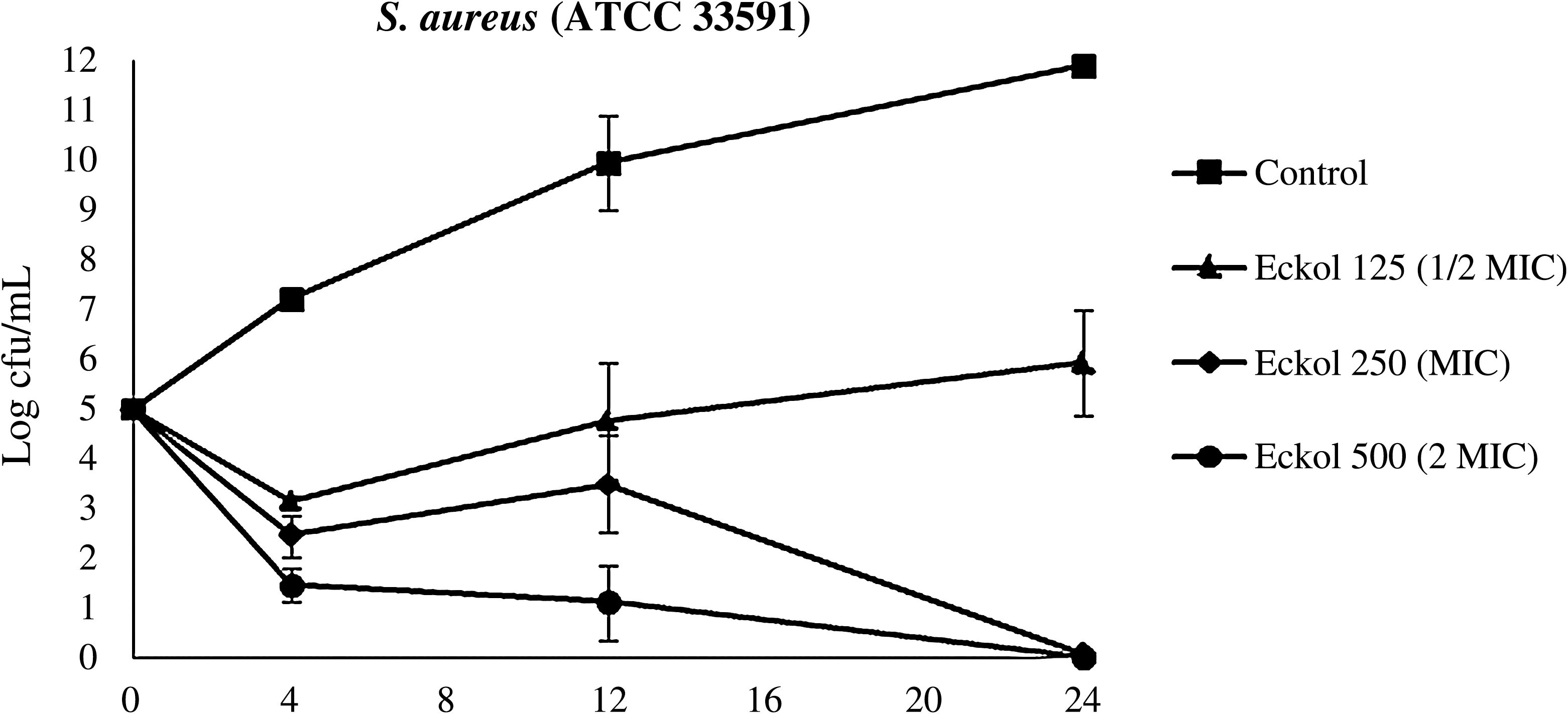
Time–kill curves of Staphylococcus aureus (ATCC 33591) using eckol.

Time–kill curves of Staphylococcus aureus (ATCC 25923) using eckol.
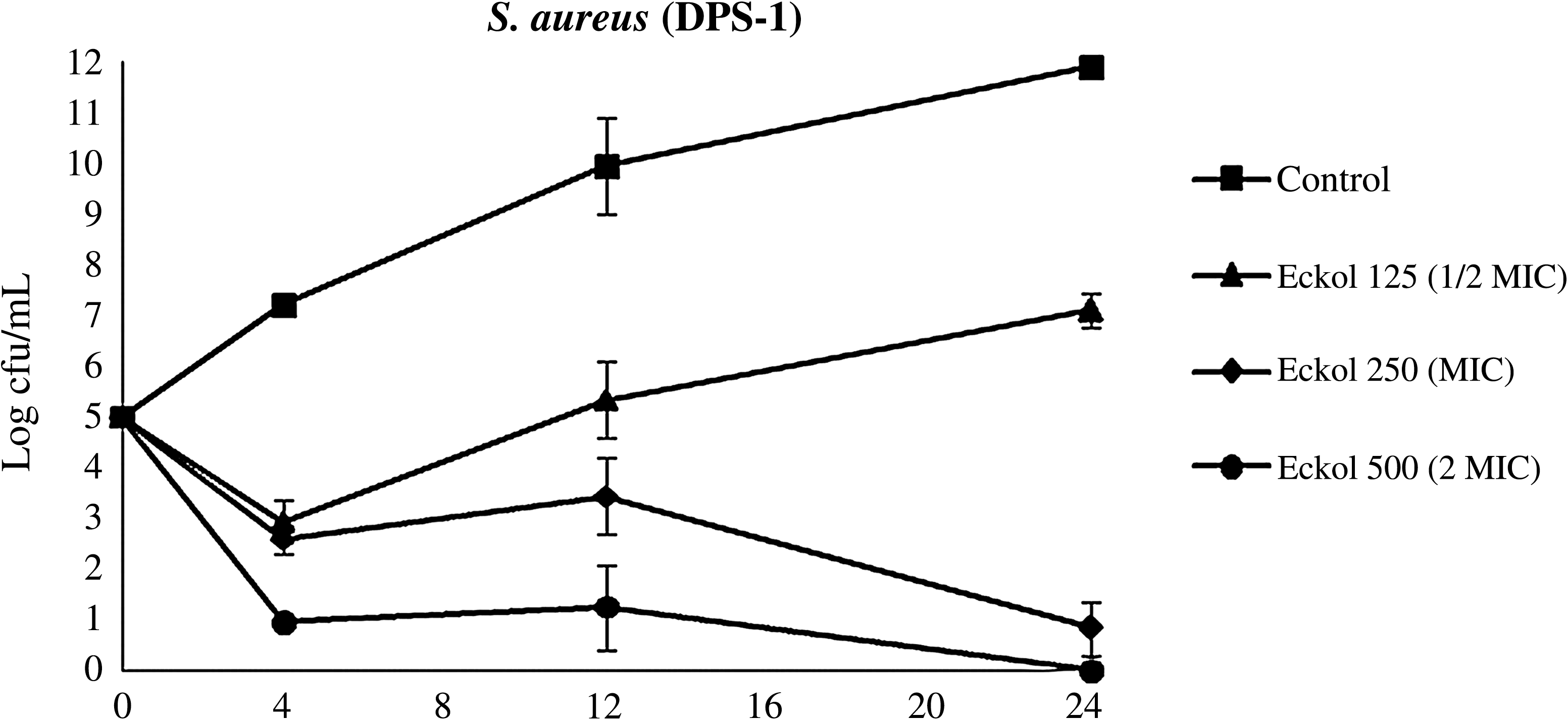
Time–kill curves of Staphylococcus aureus (DPS-1) using eckol.
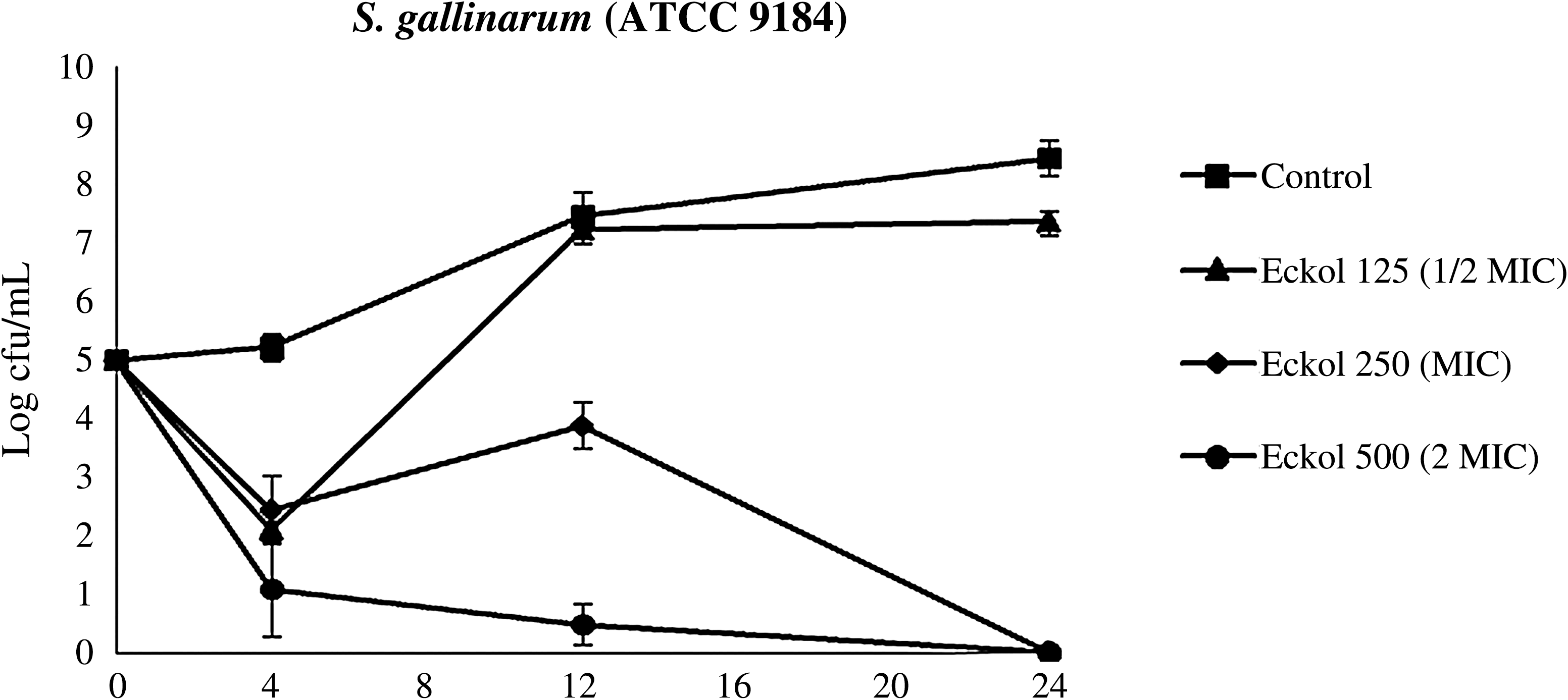
Time–kill curves of Salmonella gallinarum (ATCC 9184) using eckol.
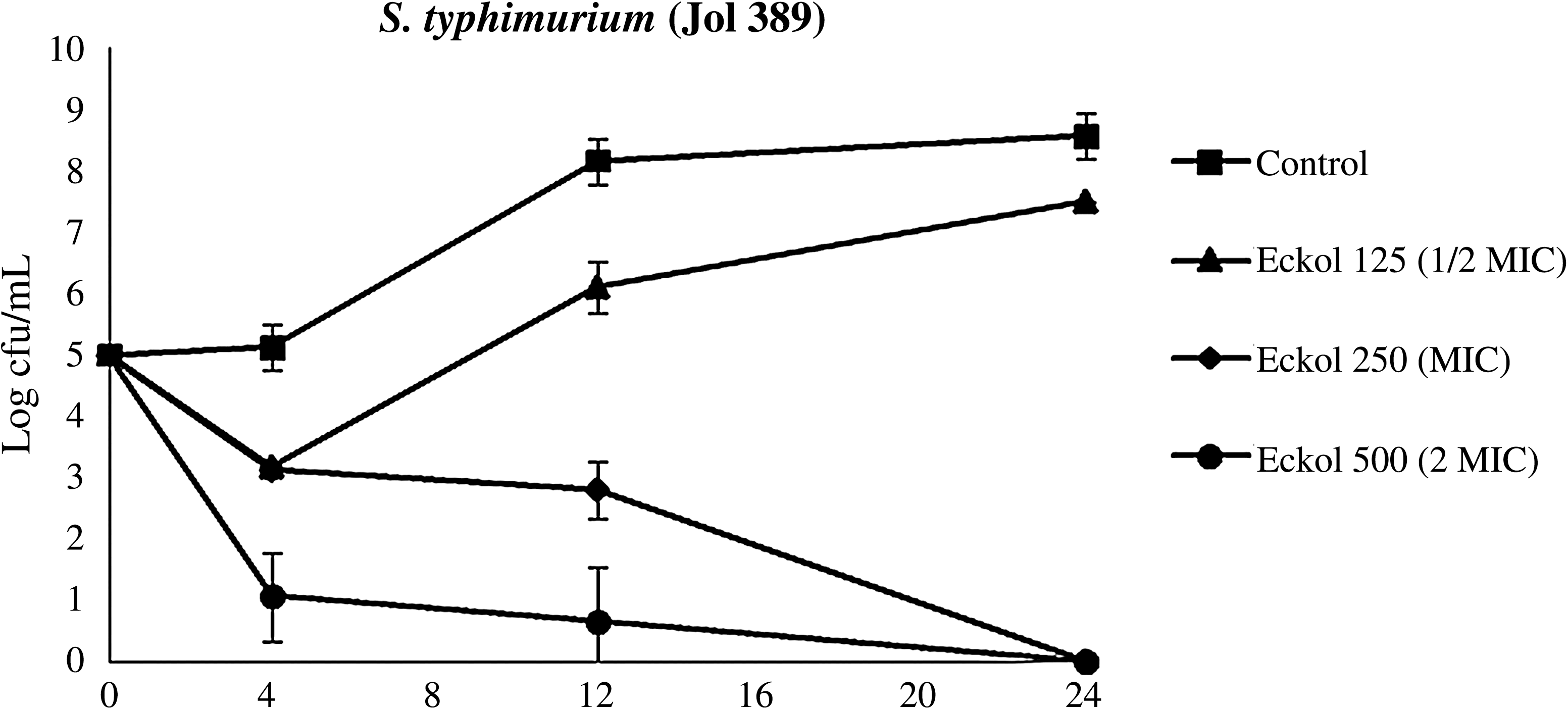
Time–kill curves of Salmonella typhimurium (Jol 389) using eckol.
The FIC index of eckol in combination with ampicillin
For the determination of in vitro combination test, a clinical MRSA isolate, the standard MRSA strain, and ampicillin-resistant strains of Salmonella (S. typhimurium, S. gallinarum ATCC 9184) were selected. The FIC index of eckol in combination with ampicillin ranged from 0.31 to 0.5, indicating remarkable synergism against S. aureus. However, the eckol +ampicillin against S. gallinarum ATCC 9184 was 0.75 and for S. typhimurium was 1.0 (Table 4). The results showed that the combinations of eckol + ampicillin exhibited improved inhibition of S. aureus and Salmonella with synergy or additive effect.
FICI, fractional inhibitory concentration index.
Discussion
Due to the recent appearance of MRSA and the “Super Bacteria” of Salmonella DT 104 showing the resistance to multiple antibiotics, the development of new antibiotics is urgently required, which is even tendered as a social issue. The most effective method is to develop antibiotics from the natural products without having any toxic or side effects and develop substances showing synergistic effect by the combined application with conventional antibiotics. Therefore, there is a need to develop alternative antimicrobial drugs for the treatment of infectious diseases (Ahmad et al., 1998; Berahou et al., 2007).
Ecklonia species have been reported to show antibacterial activity against several Gram-positive and Gram-negative bacteria (Nagayama et al., 2002). This study was conducted to evaluate the antimicrobial activity of the extract of E. cava in vitro. This is the first study describing the antibacterial activity of E. cava against MRSA and Salmonella. The antimicrobial activity-guided fractionation by bioautography of the EtOAc fractionation of E. cava led to the isolation of eckol. Eckol was the most active compound by its inhibition of the growth of all the test microorganisms except MRSA and Salmonella. This is a good indication in light of its broad-spectrum antimicrobial activity.
To our knowledge, this is the first report showing that eckol can lower the MICs of β-lactam antibiotics. Others have reported that β-lactam antibiotics inhibit bacterial cell wall biosynthesis (Kotra and Mobashery, 1998). In this study, eckol exhibited antimicrobial activity and lowered the MICs of β-lactam antibiotics against MRSA and Salmonella strains. Eckol agent also showed synergistic activity with ampicillin against MRSA. But the present results obtained here cannot be applied currently in clinical treatment. However, the combination treatment of eckol isolated with ampicillin will prove to be helpful to treat MRSA and Salmonella. Further medicinal, clinical, and mechanism studies are needed to verify how eckol enhances the antibacterial activity.
In conclusion, the EtOH extract of E. cava has potent antibacterial activity against Gram-positive (S. aureus, MRSA) and Gram-negative bacteria (Salmonella). Because E. cava has been used as a nutritious food in Korea, the extract of E. cava as well as its active components could have great potential for the control of Gram-positive and Gram-negative bacteria. Eckol markedly lowered the MICs of ampicillin against the MRSA and Salmonella. Namely, the results of this study are promising and may enhance the use of natural products instead of antibiotics.
Footnotes
Acknowledgment
This work was supported by Grant No. RTI 05-03-02 from the Regional Technology Innovation Program of the Ministry of Commerce, Industry and Energy (MOCIE), Republic of Korea.
Disclosure Statement
No competing financial interests exist.