




Abstract
The objectives of this study were to report an outbreak of highly drug-resistant Salmonella enterica serotype Oranienburg in dairy calves, and conduct an epidemiological investigation of Oranienburg identified on a dairy herd during a study to determine whether discontinuing feeding medicated milk replacer to preweaned dairy calves resulted in increased antimicrobial susceptibility in enteric bacteria. Calf fecal samples and swabs of calf and maternity pens were collected monthly over 18 months. Samples were streaked onto XLT-4 agar and characteristic colonies were subjected to biochemical tests to confirm Salmonella. Strain relatedness was examined by Xbal and BlnI pulsed-field gel electrophoresis analysis on 62 randomly selected isolates. Antimicrobial susceptibility testing, using automated microbroth dilution, was conducted using a panel containing tetracycline, amikacin, amoxicillin-clavulanic acid, ampicillin, ceftiofur, ceftriaxone, cephalothin, chloramphenicol, ciprofloxacin, cefoxitin, gentamicin, kanamycin, nalidixic acid, streptomycin, sulfamethoxazole, and trimethoprim-sulfamethoxazole. A total of 190 Salmonella spp. were isolated from 604 calf and 36 pen samples, of which 86% were Oranienburg and 97% were resistant to at least 9 agents. Environmental isolates had lower levels of resistance than fecal isolates. Pulsed-field gel electrophoresis analysis identified three strains: the most common strain was consistently present before the outbreak and at its peak. One strain was exclusively an environmental isolate, with little antimicrobial resistance. Multiresistant isolates with resistance to ciprofloxacin appeared early in the outbreak, and were replaced by multiresistant isolates with resistance to cephalothin. The differences in strains and resistance patterns suggest that the strains of Oranienburg found in fecal isolates may have different origins from environmental isolates.
Introduction
Oranienburg is an uncommonly reported Salmonella serotype in animals, only being among the top 20 nonclinical Salmonella in nonhumans in 2001, 2002, 2003, and 2005 since 1995, and top 20 clinical nonhumans in 2003 and 2005 (CDC, 2004, 2005, 2007, 2008). Several studies have investigated Salmonella spp. in food animals (Campos and Hofer, 1989; Dargatz et al., 2000, 2003, 2005; Beach et al., 2002; Edrington et al., 2004a, 2004b, 2008; Blau et al., 2005; Branham et al., 2005; Callaway et al., 2005; Adhikari et al., 2009a, 2009b), but few studies have identified Oranienburg in animals (Edrington et al., 2004a, 2004b, 2008; Blau et al., 2005; Dargatz et al., 2005; Alam et al., 2009). The greatest numbers of Oranienburg reported to CDC/FSIS from cattle were 50 clinical cases in 2002, and 86 nonclinical cases in 2006 (CDC, 2004, 2005, 2007, 2008). Other animal species from which Oranienburg was isolated include laboratory mice (Lentsch et al., 1983), white-tailed deer (Branham et al., 2005), baby quail (Edwards, 1936), and orphaned wildlife in a wildlife rehabilitation center (Jijon et al., 2007). Oranienburg has also been found in samples from water (river water, slaughterhouse water, and sewage), foods of animal origin (poultry, horsemeat, and beef ), and animal feeds (soybean meal, fish, meat, and bone meal) in Brazil (Campos and Hofer, 1989).
Antimicrobial resistance, or the lack of efficacy of a drug for treatment of a disease agent for which the drug was previously effective, has been recognized for decades, and drug resistance in pathogenic Salmonella is a great concern for public health (Angulo et al., 2004; Young et al., 2009). Once resistance develops in nonpathogenic bacteria, it can be transferred to pathogenic organisms (Marsik and Parisi, 1975; Levy, 1986), and the most important mechanisms of spread are horizontal transfer of resistance genes (plasmids, cassettes, and transposons), or clonal spread of resistant strains (Alcaine et al., 2007). Multidrug resistance is commonly found in some S. enterica serotypes, such as serotype Typhimurium (Busani et al., 2004).
Reports of multidrug resistance in Oranienburg have been mixed. Studies have reported little or no resistance (Campos and Hofer, 1989; Dargatz et al., 2000; Jijon et al., 2007; Adhikari et al., 2009a, 2009b; Alam et al., 2009), or resistance to only a few antimicrobial agents (Ethelberg, 2002; Katsuno et al., 2003; Fisher and Threlfall, 2005; Med-Vet-Net, 2009). However, in a study of Oranienburg isolates from the European Union (Med-Vet-Net, 2009), 27 of ∼500,000 Oranienburg isolates of human origin carried the armA (aminoglycoside resistance methylase) genes that conferred high-level aminoglycoside resistance (amikacin, ampicillin, gentamicin, kanamycin, and streptomycin), and were also resistant to nonaminoglycosides (sulfonamides, trimethoprim, cefalexin, cephradine, cefuroxime, ceftriaxone, cefotaxime, and tetracycline). However, the same study found no evidence of armA in over 500,000 Oranienburg isolates from animals (Med-Vet-Net, 2009).
Since cattle have been implicated as sources of antimicrobial-resistant Salmonella to humans (Besser et al., 2000; Arshad et al., 2007; Oloya et al., 2007), researchers have investigated different approaches to reduce levels of resistant bacteria on the farm in an effort to reduce this public health problem (Kaneene et al., 2008). A study was conducted to determine whether discontinuing feeding of milk replacer medicated with oxytetracycline and neomycin to preweaned calves resulted in increased antimicrobial susceptibility in enteric bacteria (Salmonella, Campylobacter, and Escherichia coli) isolated from calves and the environment of dairy farms in Michigan and New York (Kaneene et al., 2009). The effect of the intervention was measured by comparing multidrug resistance each month after the intervention started (15 months) with resistance in the preintervention period (3 months). During the course of the study, which ran from October 2003 to March 2005, samples from one Michigan dairy herd had unexpectedly high recovery of S. enterica serotype Oranienburg isolates with very high prevalence of multidrug resistance. Given these findings, a descriptive epidemiological study was conducted on this apparent outbreak of highly drug-resistant S. enterica serotype Oranienburg in a Michigan dairy herd from October 2003 to March 2005.
Materials and Methods
Details on the study design, methods, and results of the aforementioned study of an intervention to reduce drug resistance on dairy farms have been previously reported (Kaneene et al., 2008, 2009). The study population consisted of preweaned calves from eight dairy herds in Michigan and New York State with enteric bacteria with known tetracycline resistance.
The dairy herd in this study was conventionally managed (not certified organic). The herd expanded over the course of the study: the herd milked 445 cows at the beginning of the study, and was milking 616 cows by the end of the study. A total of 38 preweaned calves, 109 weaned calves/heifers, and 24 dairy cows were introduced to the herd from sources outside the farm. Preweaned calves were introduced in months 2 (20 calves), 7 (12), and 8 (6); weaned calves/heifers in months 5 (30 head), 6 (30), 8 (36), and 9 (13); and cows in months 2 (12), 5 (6), and 6 (6). Separate housing was maintained for lactating cows, calves, and heifers, and separate facilities were used for sick cattle.
Sample collection
Calf fecal and farm environmental samples were collected monthly before and after half of the herds discontinued feeding medicated milk replacer. Preweaned female dairy calves were systematically randomly selected from the rows of outdoor calf hutches at the day of visit, and samples were collected by placing approximately 10 g of fecal material obtained by rectal retrieval into Whirl-Pak® bags. If any sick calves were selected for sampling, the healthy calves were sampled before calves with signs of illness (e.g., diarrhea and respiratory disease), and a separate glove was used for each sample. Separate environmental calf pen and maternity pen composite samples were collected by combining individual swabs (10 × 10 cm gauze pads soaked in 30 mL sterile double-strength skim milk) from at least four locations at each visit (four separate calf hutches, and four areas in the maternity pen) and placed in Whirl-Pak bags labeled with farm identification number, sampling date, and sample location, and shipped to the project laboratory at Michigan State University.
Laboratory methods
Detailed descriptions of bacterial isolation and identification methods for this study have been reported (Kaneene et al., 2008).
Antimicrobial susceptibility testing
Commercially prepared microbroth dilution antimicrobial panels (CMV7CNCD; Trek Diagnostics, Inc.), with a prepared range of concentrations for tetracycline and other antimicrobial agents, were used for antimicrobial susceptibility testing. Quality control tests, using E. coli ATCC 25922 for all panels, were all within acceptable limits. The National Antimicrobial Resistant Monitoring System (NARMS) antimicrobial panel (CMV7CNCD) contained a prepared range of concentrations for tetracycline, amikacin, amoxicillin-clavulanic acid, ampicillin, ceftiofur, ceftriaxone, cephalothin, chloramphenicol, ciprofloxacin, cefoxitin, gentamicin, kanamycin, nalidixic acid, streptomycin, sulfamethoxazole, and trimethoprim-sulfamethoxazole. Antimicrobial agents in the panel were those approved for human or veterinary use, and include those considered to be critically important (amikacin, ampicillin, amoxicllin-clavulanic acid, ciprofloxacin, nalidixic acid, and streptomycin) or highly important (kanamycin, chloramphenicol, cephalothin, cefoxitin, sulfamethoxazole, trimethoprim-sulfamethoxazole, and tetracycline) by the World Health Organization (WHO) (Collignon et al., 2009).
Samples of Salmonella were streaked directly from TSA slants to Mueller Hinton agar and incubated for 18–24 hours at 37°C, and testing was performed according to the instructions from the manufacturer of the automated microbroth dilution system (Trek Diagnostics, Inc.). Panels were read with an autoreader. Breakpoints used to classify isolates as susceptible, intermediate, or resistant were those recommended by the Clinical and Laboratory Standards Institute (CLSI) (CLSI, 2006a, 2006b). No CLSI interpretive criteria were available for ceftiofur or streptomycin, so breakpoints presented in the NARMS 2000 Annual Report were used for these antimicrobial agents (CDC-NARMS, 2002). Isolates that were classified as intermediate or resistant were considered to be resistant for the purposes of analysis. Once the susceptibility of an isolate to all antimicrobial agents tested was classified by breakpoints, the number of antimicrobial agents to which the isolate was resistant (nR) was calculated.
Pulsed-field gel electrophoresis analysis
Sixty-two Oranienburg isolates were subjected to Xbal and BlnI pulsed-field gel electrophoresis (PFGE) analysis to describe the relatedness of isolates over the course of the study period, and between fecal and environmental source isolates. All environmental Oranienburg isolates were included, and a weighted random sample of fecal isolates were selected (sampling more heavily from the beginning of the outbreak), to capture the appearance of different genetic patterns as the outbreak progressed. If a pair of randomly selected isolates were collected from a single sample and were phenotypically identical (demonstrated same pattern of antimicrobial resistance), only one of the pair was included for PFGE analysis. PFGE analyses were conducted at the Diagnostic Center for Population and Animal Health at Michigan State University. PFGE patterns were generated by BioNumerics (Version 4.6) following standardized protocols established for PulseNet by the CDC (Ribot et al., 2006).
Data analysis
Differences in prevalences (bacterial prevalence, resistance to specific agents or multidrug resistance patterns, and herd-level rates of preweaned calf diarrhea) were assessed using the nonparametric Kruskall–Wallis χ 2 statistic, given the non-Gaussian distribution of prevalences found in this study. Associations between results of PFGE classification and Oranienburg isolate characteristics (source of isolate, low- or high-nR, and temporal occurrence of specific strains) were evaluated using Fisher's exact test with a significance level of p < 0.05. Spearman correlation coefficients were generated to describe the relative direction and magnitude of the association between herd-level rates of calf diarrhea and the prevalences of Salmonella and Oranienburg.
Results
Prevalence of Salmonella and serotype Oranienburg
A total of 168 of 604 calves sampled from the outbreak herd over the study period yielded Salmonella, giving a herd prevalence of 27.8% (Table 1). There was a spike in the prevalence of Salmonella in month 5, when 5 of 18 samples collected yielded Salmonella. Then, the prevalence of Salmonella rose dramatically at visit 9, from 3.9% in the period from visits 1 to 8 to 35.5% from visits 9 to 15, and remained above 50% until visit 15, when prevalence began to decline (Fig. 1). The prevalence of Salmonella in the other herds in the previous study was 1.9% from 1121 calves sampled over the 15 visit period. None of the preweaned calves sampled during the course of the study were reported having diarrhea at the time the sample was collected, or having diarrhea in the 30 days before sample collection.

Calf-level prevalence of Salmonella enterica serotype Oranienburg in the outbreak herd and all other herds under observation.
Of all Salmonella isolated in the previous study, Oranienburg was only isolated from the herd reported in this study. The prevalence of Oranienburg was 25.3% from fecal samples (91.1% of Salmonella isolated from fecal samples), 22.2% from maternity pen samples (40% of maternity pen Salmonella), and 33.3% of calf pen samples (100% of all calf pen Salmonella). Oranienburg was first isolated from a maternity pen sample on visit 3, next from calf fecal samples and a calf pen sample on visits 5 and 6. All fecal Salmonella isolated from samples after visit 6 were Oranienburg. In addition to Oranienburg, other serotypes were recovered: two isolates of serotype Mbandaka were recovered from maternity pens in months 14 and 15 (both resistant to only ceftiofur and ciprofloxacin), and Enteritidis (resistant to amoxicillin, ampicillin, ceftiofur, gentamicin, kanamycin, streptomycin, sulfamethoxazole, and tetracycline) was recovered from one calf fecal sample in visit 16. There were no significant associations between the prevalence of Oranienburg and changes in the preweaned calf population.
Patterns of antimicrobial resistance
Resistance to 15 of the 16 antimicrobial agents tested was found in fecal and environmental Oranienburg isolates (Table 2). An overwhelming majority of fecal isolates (95%) demonstrated high nR (>9 agents), whereas only 50% of environmental isolates showed comparable nR. Of the Oranienburg isolates from fecal samples, 96% shared resistance to ampicillin, chloramphenicol, kanamycin, streptomycin, sulfamethoxazole, and tetracycline (R-ACKSSuT resistance), and one isolate demonstrated R-AKSSuT resistance (R-ACKSSuT without chloramphenicol resistance together with a variable number of additional resistances) (Table 3). There were two groups of resistance patterns seen: ACKSSuT with ampicillin, ceftiofur, and cephalothin (R-13), and ACKSSuT with ampicillin ceftiofur and ciprofloxacin (R-12). Oranienburg isolates from environmental samples were resistant to ciprofloxacin: four of the five isolates collected before the peak of the outbreak (before visit 9) were only resistant to ciprofloxacin, whereas one isolate was also resistant to ceftiofur. Environmental isolates with higher numbers of resistances (n > 10) appeared later in the outbreak (visits 10, 11, and 14).
No CLSI breakpoints were available for these two drugs. NARMS conventions used.
CLSI, Clinical and Laboratory Standards Institute; NARMS, National Antimicrobial Resistant Monitoring System.
Visit 1 month after introduction of 20 calves on visit 2.
Visit same month as introduction of 12 calves on visit 7.
Visit 1 month after introduction of 6 calves on visit 8.
ACKSSuT, ampicillin, chloramphenicol, kanamycin, streptomycin, sulfamethoxazole, and tetracycline; AKSSuT, same as ACKSSuT without chloramphenicol; AMC, amoxicillin-clavulanic acid; CEF, cephalothin; CFT, ceftiofur; CIP, ciprofloxacin; CRO, ceftriaxone; FOX, cefoxitin; GEN, gentamicin, NAL, nalidixic acid; SXT, trimethoprim-sulfamethoxazole; PFGE, pulsed-field gel electrophoresis.
When looking at isolates over time (Fig. 2), all fecal isolates demonstrated the same pattern of resistance (R-ACKSSuT with amoxicillin-clavulanic acid, ceftiofur, ciprofloxacin, and trimethoprim-sulfamethoxazole; R-2) until visit 9, when isolates exhibited this same pattern of resistance plus resistance to cephalothin and gentamicin (R-4). Pattern 312 was only found until visit 14, when other multiresistant (MDR) patterns emerged (R-5, R-6, R-7, R-8, R-9, R-10, and R-11). Levels of MDR pattern R-2 declined dramatically in visit 14 and became extinct by visit 16, whereas the MDR pattern R-4 was not found after visit 13. The highest numbers of resistances (n = 11) were found at the peak of the outbreak (visits 9–15), and resistance patterns with nR of 9 (R-12 and R-13) emerged near the end of the study (visit 15).
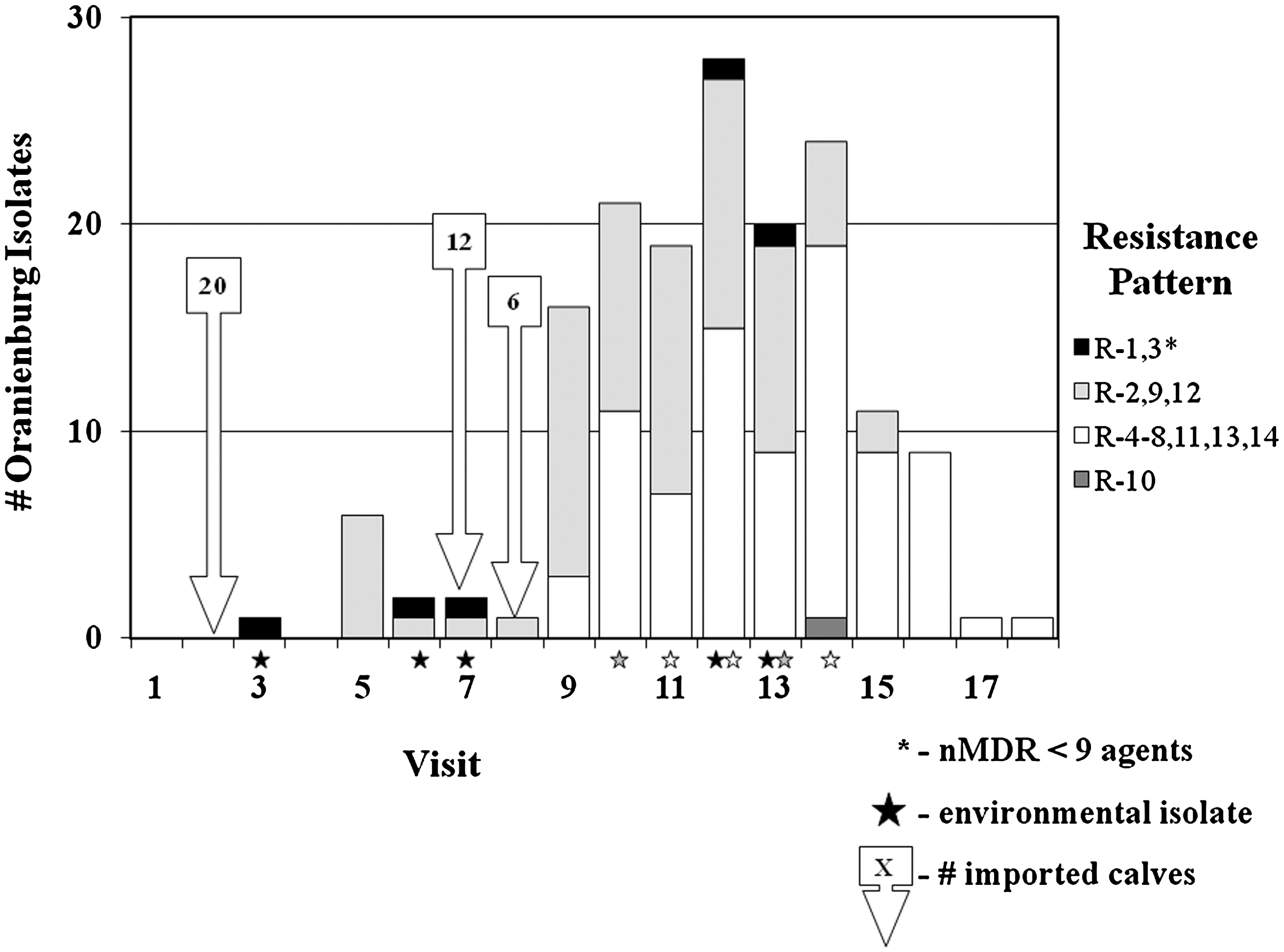
Patterns of antimicrobial resistance of Oranienburg isolates over time (see Table 3 for resistance pattern key).
PFGE analysis of Oranienburg isolates
A total of 62 Oranienburg isolates (52 fecal and 10 environmental) were subjected to PFGE analysis, using Xbal and BlnI separately and together for differentiation of genetic strains (Fig. 3). When examined together, the combined Xbal and BlnI PFGE generated 10 strain patterns at 99% similarity and three strain patterns at 97% similarity (Fig. 4). When comparing strains with isolate source (fecal versus environmental) at 97% similarity, one strain from combined Xbal-BlnI PFGE (H) were exclusively from environmental isolates (3 of the 10 isolates) and had nR of 2 (Fig. 4), whereas the other environmental isolates with higher nR levels were identified as strain A. The five environmental isolates resistant to only one or two agents were identified as strains X1-B1 (one isolate), X1-B2 (two isolates), and X2-B1 (two isolates), whereas the high-nR environmental isolates were identified as strains X2-B5 (4 isolates) and X7-B4 (1 isolate).
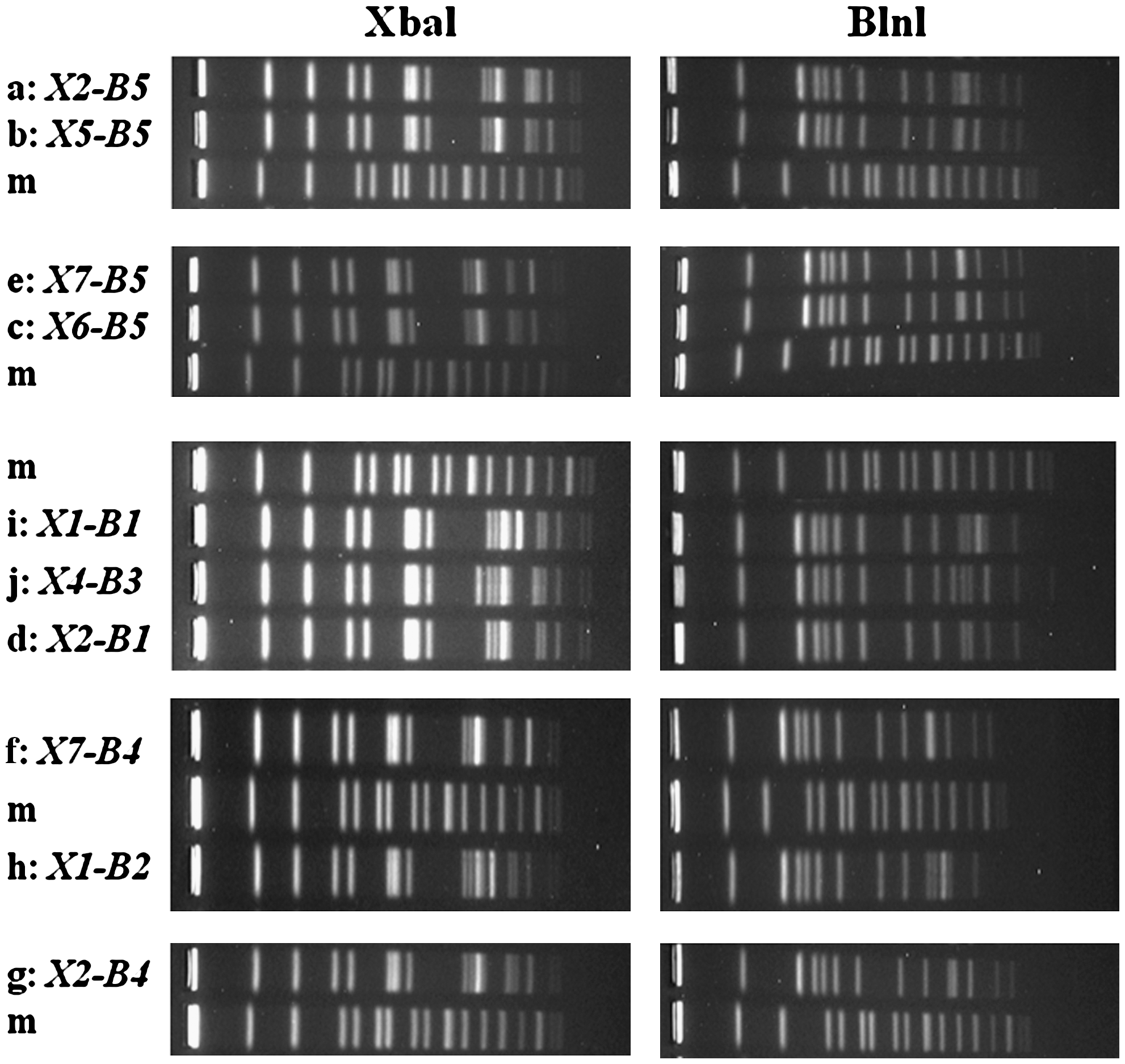
Examples of composite Xbal and BlnI pulsed-field gel electrophoresis typing of Oranienburg isolates, showing different strain patterns at 99% similarity (a–j, m indicates marker lanes).
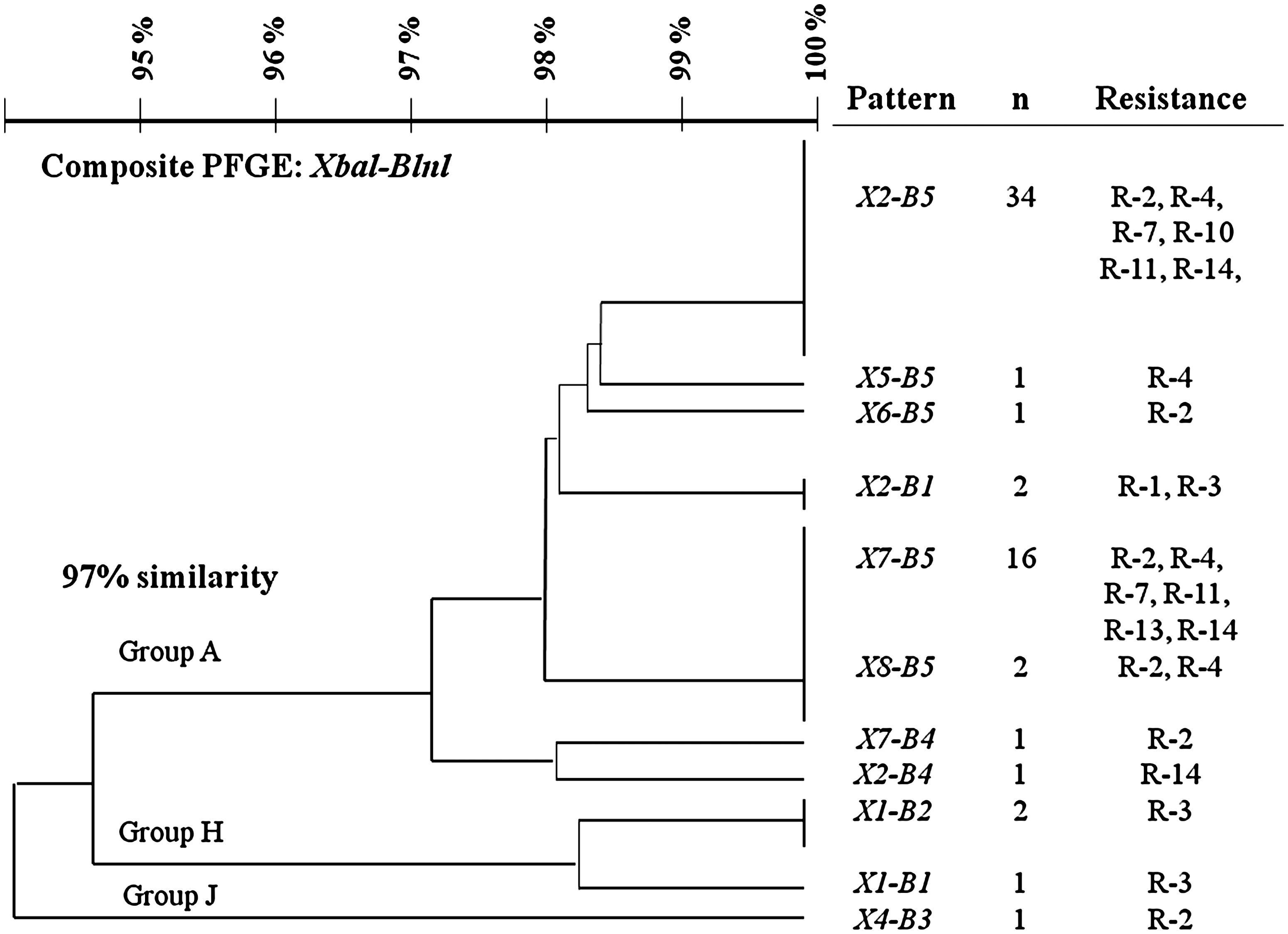
Dendrograms for classification of 62 Oranienburg isolates, by pulsed-field gel electrophoresis method (composite Xbal and BlnI), including strain identification at 97% (A, H, and J) and 99%.
Changes were seen in the resistance of strain A isolates over time, with the most susceptible isolates (resistance patterns R-1 and R-3) appearing before visit 9. In visit 4, a new pattern of resistance (ACKSSuT + AMC, CFT, and CIP resistance) emerged in strain A isolates and persisted visit 13: a second pattern (ACKSSuT + AMC, CFT, and CEF resistance) was first detected in untyped isolates from visit 9 and strain A in visit 11, and persisted until the end of the study. Interestingly, the most common patterns of resistance seen in the beginning of the outbreak (R-1, R-3, and R-12) all demonstrated ciprofloxacin resistance. Strain A showed more phenotypic diversity than strains H and J, which expressed only R-3 and R-12 resistance, respectively (Fig. 4).
Patterns of multidrug resistance changed over time in the most commonly identified Oranienburg strains. Strain X2-B5, initially detected in visit 5, demonstrated only resistance pattern R-2 (Table 3) until visit 11, when R-4 resistance (addition of resistance to cephalothin) was seen. This continued in visits 12 and 13, and then both patterns were not detected, but patterns R-7, R-10, and R-11 were found in visit 14, and pattern R-14 was found in visit 18. Strain X7-B5 showed no dominant resistance pattern: the most common pattern seen was R-14, which appeared in two and three isolates from visits 15 and 16, respectively. Pattern 312 was seen in three isolates in visit 12, R-2 was seen in two and one isolates from visits 12 and 13, R-13 was seen in two and one isolates from visits 15 and 16, and 2 X7-B5 isolates with R-7 resistance were identified in visit 14.
Discussion
The outbreak of S. enterica serotype Oranienburg in calves on a Michigan dairy farm was detected in one herd unexpectedly during the course of an 18-month intervention study measuring the impact of removing medicated milk replacers from dairy calves on antimicrobial resistance in enteric E. coli, Salmonella spp., and Campylobacter spp. The herds in the intervention study were selected based on participation in an earlier study (Warnick et al., 2003; Zwald et al., 2004; Fossler et al., 2005; Halbert et al., 2006; Ray et al., 2007), which followed 128 herds on a quarterly basis from August 2000 to October 2001. Consequently, the eight herds in the intervention study were monitored for a total of 32 months: 14 months in the earlier study, and 18 months (October 2003 to March 2005) in the intervention study. This provided a unique opportunity for the epidemiological analysis to access long-term surveillance data from years earlier.
The prevalence of Salmonella from calf fecal samples in one herd was unexpectedly high (prevalence > 30%) given the history of Salmonella isolation on the study farm, and these high prevalences persisted from June 2004 to October 2004. No Salmonella had been isolated from any samples collected from this herd in the earlier study, and there was little change in sample collection and Salmonella isolation and identification protocols between the two studies. There was an increase in sampling between the two studies, from quarterly sampling in the earlier study to monthly sampling in the intervention study, but if similar patterns of Salmonella prevalence had occurred during the earlier study, quarterly sampling would have been able to detect Salmonella during the 6-month peak in prevalence. This would suggest an introduction of a novel strain of Salmonella to the farm either before or during the early months of the intervention study. Strain X2-B5, exhibiting R-2 resistance, was the first multiresistant strain to appear in fecal specimens, and its introduction could have occurred through the importation of infected cattle, or from cattle acquiring Oranienburg from infected humans. The study did not attempt to collect samples or health histories from farm workers during the course of the study, which could have provided information as to whether humans posed infection risk for the cattle populations.
The finding of a large number of S. enterica serotype Oranienburg isolates in dairy calves was unexpected, as were the levels of antimicrobial drug resistance in Oranienburg isolates recovered in this study. Of the 604 calves sampled, none were reported having diarrhea at the time the sample was collected, or having diarrhea in the 30 days before sample collection. We were unable to find reports of the prevalence of this serotype in apparently healthy dairy calves, but the prevalence of Oranienburg in adult cattle has been reported to be around 20% (Dargatz et al., 2000; Alam et al., 2009). The R-ACKSSuT (ampicillin, kanamycin, streptomycin, sulfamethoxazole, and tetracycline) resistance pattern was found in 93% of Oranienburg isolates in this herd: this has been reported in other Salmonella serotypes in both humans and animals (Cobet et al., 1981; Ezell et al., 2001; Gebreyes et al., 2004; Wedel et al., 2005), but researchers have reported little or no antimicrobial resistance in Oranienburg isolates from cattle (Dargatz et al., 2000; Edrington et al., 2004b; Blau et al., 2005; Adhikari et al., 2009a, 2009b; Alam et al., 2009).
Results of PFGE analysis indicated that all isolates of Oranienburg in this study were closely related, but some variation in genetic strain patterns were detectable. Composite PFGE strain A was ubiquitous throughout outbreak and were the first PFGE patterns seen, and the timing of the appearance of other strains of Oranienburg (H, J) did not directly implicate any source as the initial point where Oranienburg entered the herd. The first Oranienburg isolated was from a maternity pen, which might implicate either periparturient cows or farm workers handling cows during parturition as a possible source of this serotype on the farm. The environmental isolates demonstrated different patterns of antimicrobial resistance (R-1 and R-3) and half were from different strains than isolates from fecal samples (strain H), which might indicate another source of Oranienburg for the calves themselves. Unfortunately, no samples were collected from adult cattle during the intervention study, as the focus of this study was on changes in resistance in calf enteric bacteria, and it is not possible to determine whether or not adult cattle were the source of Oranienburg in these calves.
When, where, and how these Oranienburg isolates acquired this broad-spectrum resistance is not clear. Studies have identified herd management factors associated with the acquisition of multidrug-resistant Salmonella, including increasing herd size (Berge et al., 2006; Adhikari et al., 2009b), introduction of cattle from outside sources or commingling heifers with cattle from other farms (Berge et al., 2006; Adhikari et al., 2009b), and the use of milk replacers with antimicrobial drugs (Berge et al., 2006). This farm had a history of increasing herd size, purchasing heifers and calves from outside sources, and using medicated milk replacers for feeding calves. However, the timing of the increase in the prevalence and nR of Oranienburg was not directly associated with these factors: herd size increased throughout the study even after the prevalence of Oranienburg began to decline, calves were added to the farm well before the first isolation of Oranienburg and after the Oranienburg prevalence began its rapid climb, and the farm had a history of using medicated milk replacers for over 5 years. Commonly reported drugs used on the farm included florfenicol, penicillin, lincomyin in combination with spectinomycin (LS-50), tilmicosin, and gentamicin in calves, and ampicillin, florfenicol, penicillin, oxytetracycline, and cephalosporins in cows. The use of medicated milk replacers and other uses of antimicrobial agents may have contributed to the development of a pool of multidrug-resistant Oranienburg by allowing resistant strains to out-compete susceptible strains (Glynn et al., 2004). Given the numbers of changes seen in patterns of resistance within specific strains of Oranienburg during the 18 months of this study, it is difficult to connect changes in resistance with specific herd management practices.
Conclusions
This study was an epidemiological investigation of an outbreak of S. enterica serotype Oranienburg shedding in preweaned calves from a dairy herd without any concomitant increase in disease. The outbreak of fecal shedding lasted for over 6 months, during which Salmonella were recovered at unusually high levels. Given the lack of any increase in reported morbidity or mortality on this farm, this was an apparently silent outbreak—the outbreak would have gone unnoticed if researchers had not been present to collect fecal samples from this farm at this specific time. While this does not indicate any global increase in Oranienburg in dairy cattle throughout the United States, it does suggest that it is possible that there are other silent outbreaks of nonpathogenic Salmonella in cattle that may pose a threat to human and animal health, either through direct contamination of foods of animal origin, or by serving as a reservoir of resistance factors for other bacteria.
The majority of Oranienburg isolated were resistant to a large number of antimicrobial agents, and isolates from environmental samples demonstrated lower levels of resistance than fecal sample isolates. Results of PFGE analysis indicated that all strains of Oranienburg recovered were highly related, but there were strain divergences between isolates from fecal samples and those from environmental samples. The emergence and recession of specific genetic strains through the course of the study suggests that the genetic profiles of Oranienburg populations are dynamic, and that estimates of the prevalence of specific strains must take this into consideration. Additional research to determine the rate at which genetic strain differentiation occurs in Oranienburg would provide valuable information in determining when the initial introduction of Oranienburg occurred, which would in turn make identifying the original source of Oranienburg possible.
This study was the result of a unique opportunity discovered at the conclusion of an intervention study focused on the impact of the removal of medicated milk replacers on antimicrobial susceptibility in Salmonella, Campylobacter, and E. coli on dairy farms. Unfortunately, the study was unable to determine the source of Oranienburg on this farm since data and samples that would have been useful in identifying the initial source of Oranienburg (e.g., adult cattle fecal samples, samples from humans coming into contact with calves, and feed samples) were beyond the scope of the original study and were not collected. Additional studies could provide information that could help investigators identify sources of highly resistant but nonpathogenic Salmonella on cattle farms, and provide data to be used to reduce levels of antimicrobial drug resistance in U.S. livestock.
Footnotes
Acknowledgment
This work was supported by USDA-IREEGCP 2002-5110-01980 from the United States Department of Agriculture Research, Education, and Extension Competitive Grants Program.
Disclosure Statement
No competing financial interests exist.