




Abstract
In the United States, products from chickens that were not administered antimicrobial medications during growout can contain labels stating “no antibiotics added.” Here we compared microbial profiles of chicken products labeled as coming from birds raised without antimicrobial medications (N=201; NON) with chicken products carrying conventional labels (N=201; CONV). There were no differences in percentages of samples positive for Enterococcus spp. (CONV: 17.4%; NON: 21.3%) or Escherichia coli (CONV: 25.9%; NON: 22.3%). The number of samples positive for Salmonella was low in both groups, but statistically higher in the NON samples (5.0%) versus CONV samples (1.5%; p<0.05). Conversely, CONV samples contained higher concentrations of coliforms (CONV: 3.0 log10CFU/mL; NON: 2.5 log10CFU/mL; p<0.05). E. coli (N=190) and Enterococcus spp. isolates (N=113) were tested for resistance to common antimicrobials. E. coli isolates from CONV samples were more frequently resistant to at least one antimicrobial (CONV: 61.3%; NON: 41.2%; p<0.05). Enterococcus spp. isolates from both groups were equally likely to be resistant to at least one antimicrobial, but Enterococcus spp. isolates from CONV samples were more likely to be resistant to erythromycin, kanamycin, and gentamicin (p<0.05). Taken together, these data suggest that NON samples may more frequently carry Salmonella; however, E. coli and Enterococcus spp. found on CONV are more likely to be resistant to some antimicrobials.
Introduction
In the United States, chicken products may contain labels indicating that the birds were raised without the use of antibiotic and antimicrobial medications if the process can be sufficiently verified (e.g., “no antibiotics added”; USDA-FSIS, 2006). These products are often marketed as safer alternatives to products from conventionally raised chickens as they could potentially carry fewer antibiotic-resistant bacteria.
Removing antimicrobials from feed often results in decreases in the levels of antimicrobial-resistant bacteria carried in the intestine and shed in the feces (McDermott et al., 2005; Price et al., 2007). The microbial population on finished meat products, however, is also heavily influenced by processing (i.e., events from live bird to carcass). Thus, effective on-farm management practices designed to improve food safety must be very effective or their effects can be masked by contamination or improper handling during processing. Our objective here was to determine whether the exclusion of antibiotic and antimicrobial medications in poultry production results in changes in the microbial characteristics of finished products such as overall contamination, foodborne pathogen carriage, and antimicrobial resistance.
Materials and Methods
Sample collection
Chicken products containing labels indicating that the chickens were not administered antibiotic or antimicrobial medications (“no antibiotics added”; NON; n=201) and chicken products carrying conventional labels (CONV; n=201) were collected monthly from large retail food outlets throughout the state of Indiana from September 2009 to August 2010. The samples were purchased and maintained at 4°C until processed. Ten brands of chicken products were represented in the sample sets. Both sample sets included various cuts such as breasts, drumsticks, wings, wingettes, and thighs. Label information indicated that each sample within brand was processed on a different day.
Bacterial isolation
Each sample (∼100 g) was examined for the presence of total coliforms, generic Escherichia coli, Salmonella, and Enterococcus spp. Sample processing followed previously described protocols (Zhang et al., 2010). Samples were processed as-is (e.g., skin was not removed from samples if present). Isolation of E. coli, Enterococcus spp., and coliforms followed previously described protocols (USFDA, 2006; Zhang et al., 2010). Isolation of Salmonella followed a previously described protocol (Wall et al., 2010).
Antimicrobial resistance testing
Enterococcus spp. (n=113), E. coli (n=190), and Salmonella (n=26) isolates from CONV and NON chicken samples were chosen at random (∼2 isolates from each Enterococcus, spp., E. coli, or Salmonella-positive sample) for antimicrobial resistance testing by micro-broth dilution according to protocols of National Antimicrobial Resistance Monitoring System and the Clinical and Laboratory Standards Institute (CLSI, 2006; USFDA, 2006). E. coli and Salmonella isolates were tested using the CMV1AGNF panel (Trek Diagnostics, Cleveland, OH). Enterococcus spp. isolates were examined using the CMV2AGPF panel (Trek Diagnostics). Minimum inhibitory concentrations (MICs) were recorded as the minimum concentration of each antimicrobial that completely inhibited bacterial growth. Breakpoint levels (i.e., resistant vs. susceptible) were based on those used by the Clinical and Laboratory Standards Institute (CLSI, 2006).
Statistical analysis
A two-sample Wilcoxon rank-sum test was used to compare the concentrations of coliforms between the two types of chicken. A Chi-square test was used to compare the contamination percentages of Enterococcus spp., E. coli, and Salmonella as well as percentages of antimicrobial-resistant Enterococcus spp. and E. coli between the two groups. Data were analyzed using the mixed procedure of SAS (version 9.01; Cary, NC). Two-sample Wilcoxon rank-sum test and Chi-square test were performed using the FREQ procedure. Individual chicken samples served as the experimental unit.
Results
Over 400 chicken samples were collected from retail outlets throughout Indiana. Contamination rates were compared between conventional chicken products (CONV) and products labeled as coming from birds not treated with antibiotic or antimicrobial medications (NON). Each sample was screened for the presence of coliforms, E. coli, Enterococcus spp., and Salmonella. CONV chicken samples contained higher concentrations of coliforms than NON chicken samples (CONV: 3.0 log10CFU/mL; NON: 2.5 log10CFU/mL; Fig. 1; p<0.05). The percentages of samples containing Enterococcus spp. did not differ between the two groups (CONV: 17.4%; NON: 21.3%; Fig. 2). Similarly, CONV and NON chicken samples were equally likely to be contaminated with E. coli (CONV: 25.9%; NON: 22.3%; Fig. 2). Salmonella contamination rates were low in both groups, but statistically higher in NON products versus CONV products (NON: 5.0%; p<0.05; CONV: 1.5%; Fig. 2). Salmonella-positive samples included breasts, thighs, drumsticks, and wings.
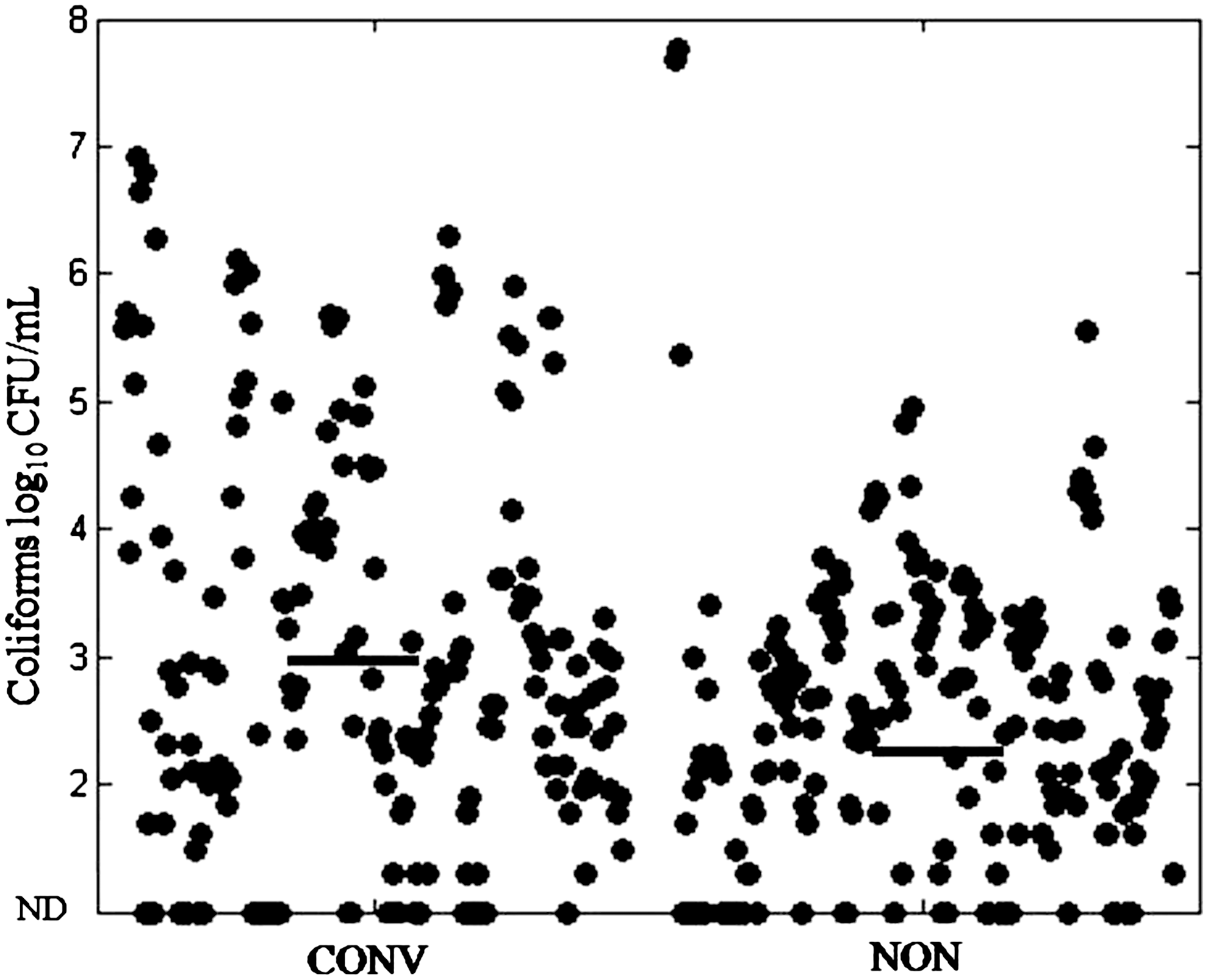
Coliform concentration on CONV (n=201) and NON (n=201) chicken samples. Each circle represents one sample. Means indicated by solid lines. ND=none detected (detection limit=10 CFU/mL). ND values were added as zero for statistical analysis. CONV, chicken products carrying conventional labels; NON, products labeled as coming from birds not treated with antibiotic or antimicrobial medications.
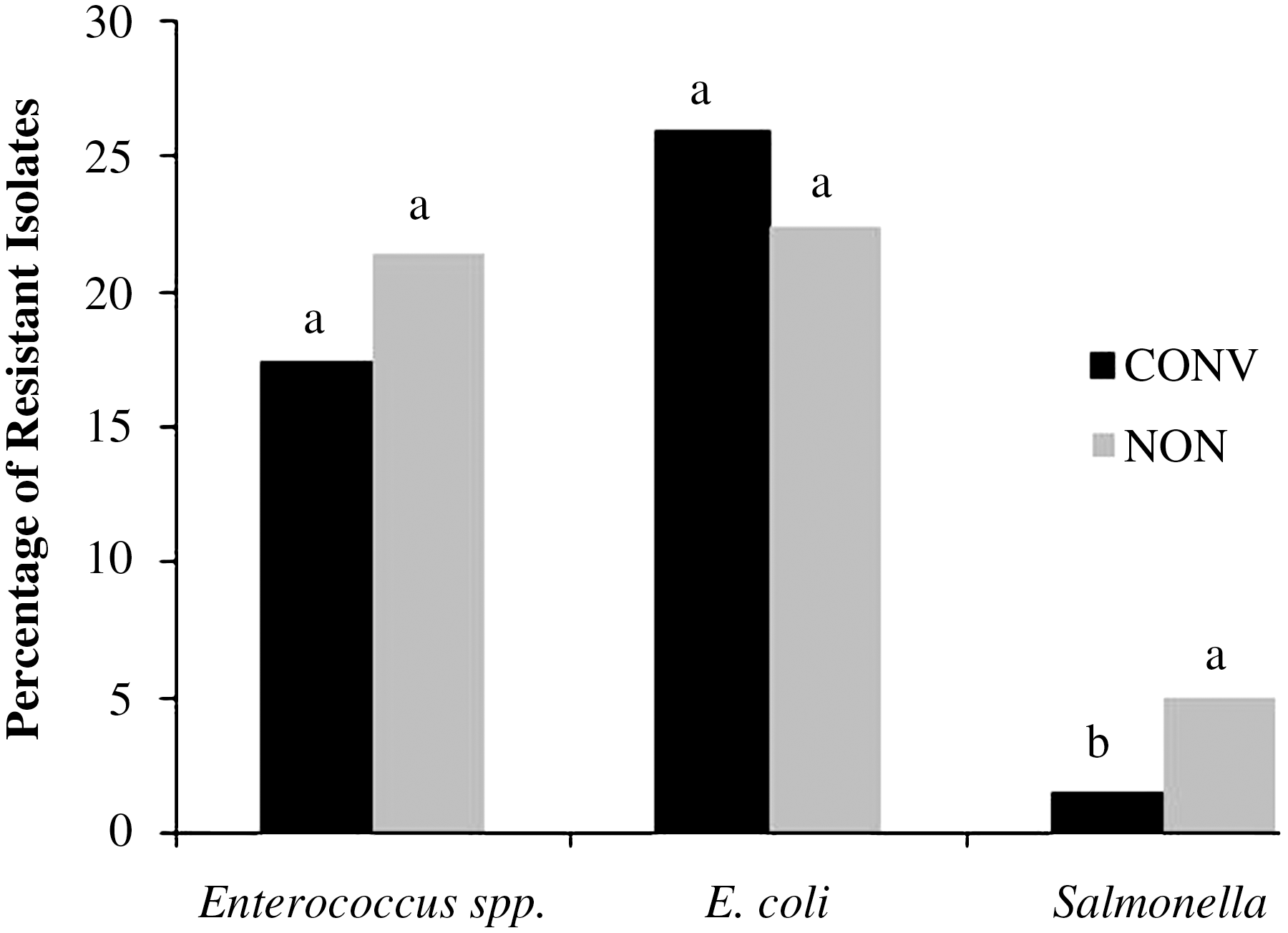
Percentages of CONV and NON samples positive for Enterococcus spp., Escherichia coli, or Salmonella. Bars with different letters are statistically different at p<0.05. Each group contained 201 samples.
Enterococcus spp. and E. coli isolates from both CONV and NON products were further analyzed for resistance to a set of antimicrobials commonly used in veterinary medicine, human medicine, or both. E. coli isolates from CONV products were more likely to be resistant to at least one antimicrobial (CONV: 61.3%; NON: 41.2%; p<0.05; Fig. 3) compared with E. coli isolates from NON products. Similarly, E. coli from CONV products were more frequently resistant to sulfasoxazole compared with E. coli isolates from NON products (CONV: 44.1%; NON: 23.7%; p<0.05; Fig. 4). MIC50 and MIC90 values for each antimicrobial were also calculated for E. coli isolates from both groups, but no significant differences were detected (data not shown).
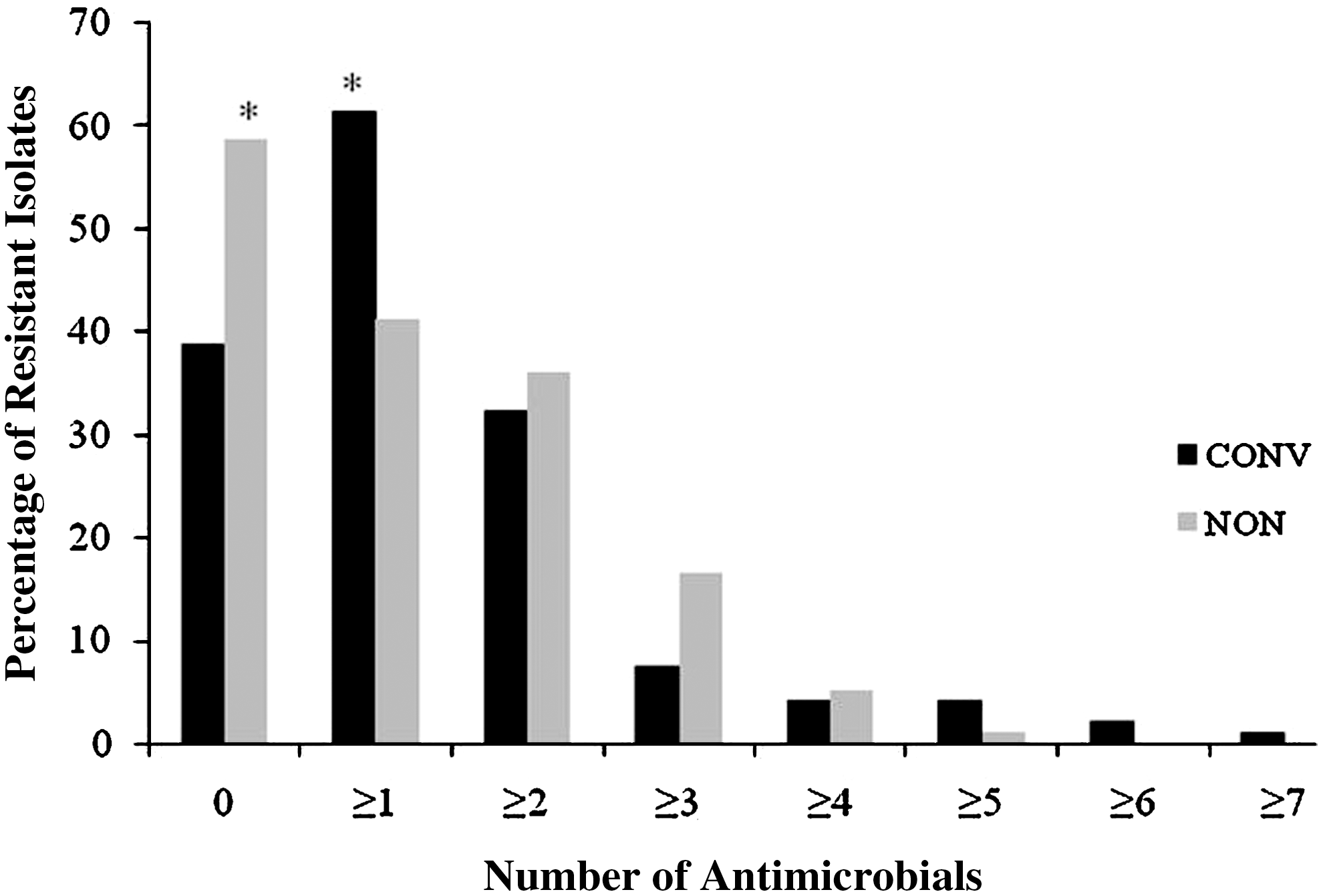
Multidrug resistance in E. coli isolates obtained from CONV (n=93 isolates) and NON (n=97 isolates) chicken samples. Bars represent the percentage of isolates resistant to 0 to ≥7 antimicrobials. *Significantly different at p<0.05. Comparisons are within number of antimicrobials.
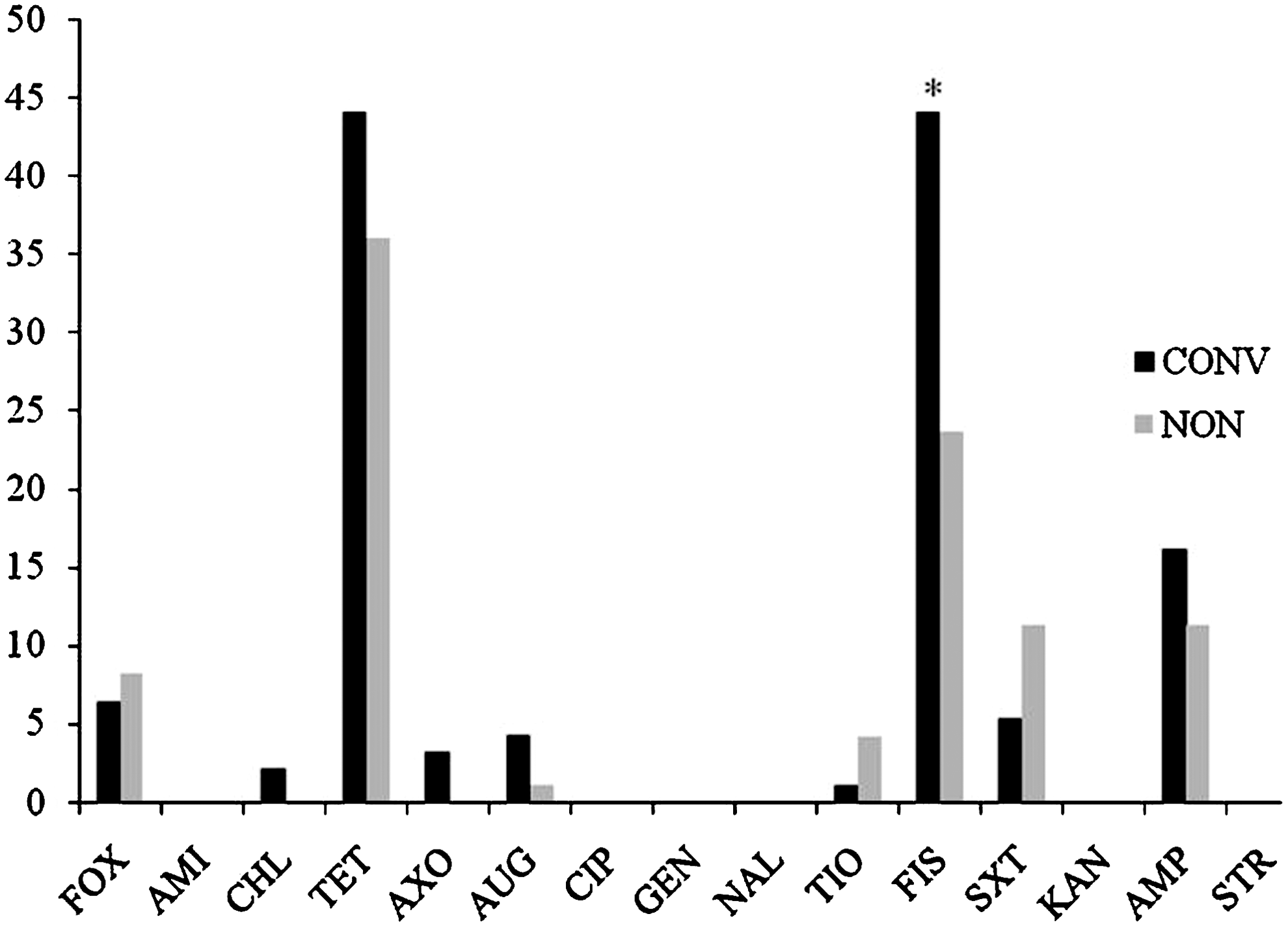
Antimicrobial resistance in E. coli (n=190 isolates) from CONV (n=93 isolates) and NON (n=97 isolates) chicken samples. *Significant differences at p<0.05. FOX, cefoxitin; AMI, amikacin; CHL, chloramphenicol; TET, tetracycline; AXO, ceftriaxone; AUG, amoxicillin/clavulanic acid; CIP, ciprofloxacin; GEN, gentamicin; NAL, nalidixic acid; TIO, ceftiofur; FIS, sulfasoxazole; SXT, trimethoprim/sulfamethoxazole; KAN, kanamycin; AMP, ampicillin; STR, streptomycin.
Enterococcus spp. isolates from both groups were equally likely to be resistant to at least one antimicrobial (CONV: 75.6%; NON: 77.8%; Fig. 5). Similarly, equal percentages of Enterococcus spp. isolates from CONV samples were resistant to two or more and three or more antimicrobials (Fig. 5). Enterococcus spp. isolates from CONV products were more frequently resistant to erythromycin (CONV: 44.4%; NON: 20.6%; p<0.05), kanamycin (CONV: 24.4%; NON: 4.4%; p<0.05), and gentamicin (CONV: 35.6%; NON: 19.1%; p<0.05) compared with similar isolates from NON products (Fig. 6). Enterococcus spp. isolates from NON products, however, were more frequently resistant to chloramphenicol (CONV: 2.2%; NON: 11.8%; p<0.05; Fig. 6). MIC50 and MIC90 values were calculated for Enterococcus spp. isolates from both groups, but no significant differences were detected (data not shown).
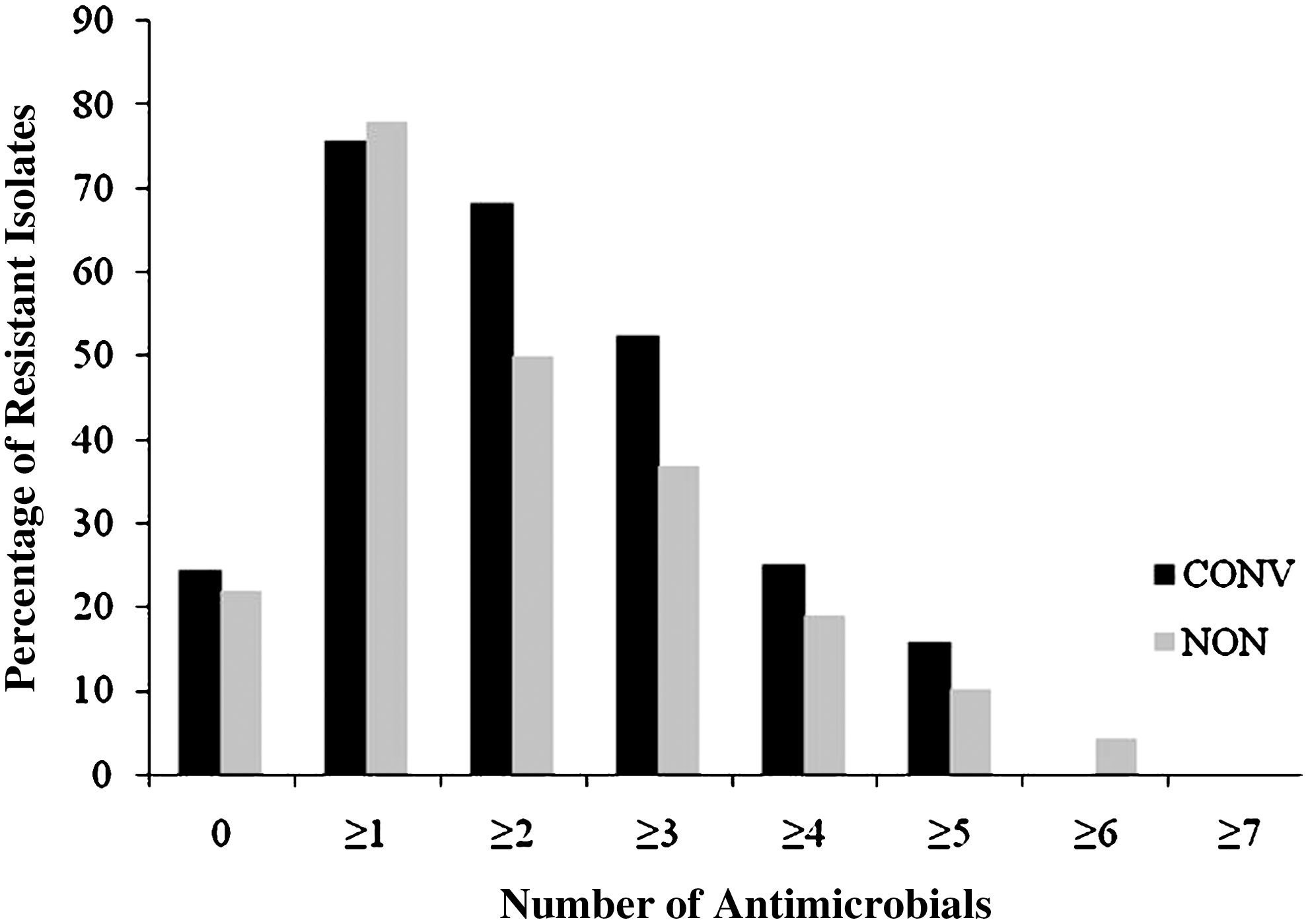
Multidrug resistance in Enterococcus spp. isolates obtained from CONV (n=45 isolates) and NON (n=68 isolates) chicken samples. Bars represent the percentage of isolates resistant to 0 to ≥7 antimicrobials. Comparisons are within number of antimicrobials.
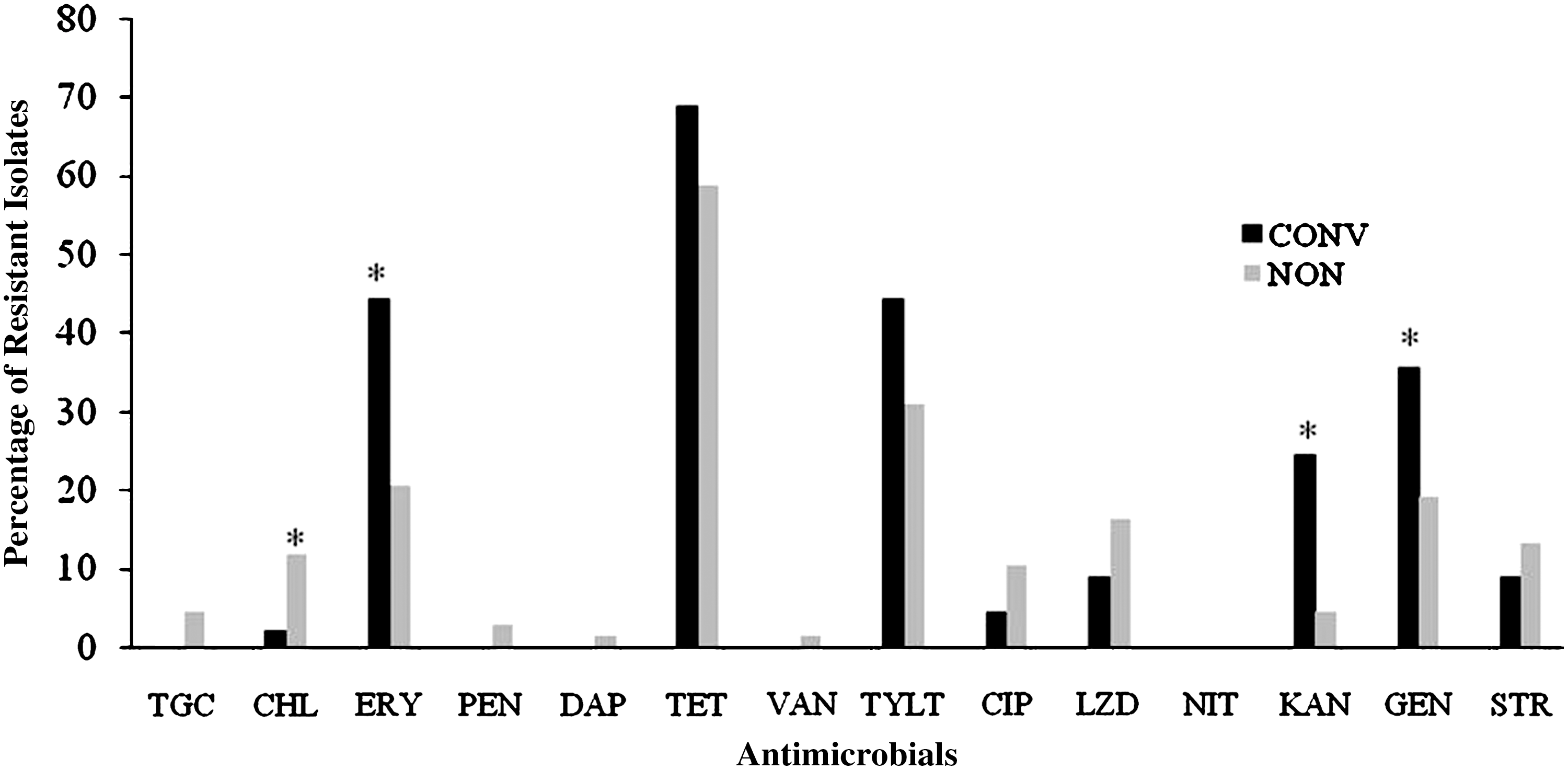
Antimicrobial resistance in Enterococcus spp. isolated from CONV (n=45 isolates) and NON (n=68 isolates) chicken samples. *Significant differences at p<0.05. TGC, tigecycline; ERY, erythromycin; PEN, penicillin; DAP, daptomycin; VAN, vancomycin; TYLT, tylosin tartrate; LZD, linezolid; NIT, nitrofurantoin.
Four multidrug resistance patterns appeared twice or more in E. coli isolates obtained from both CONV and NON products. The most common pattern in both groups was tetracycline, sulfasoxazole followed by tetracycline, sulfasoxazole, trimethoprim/sulfamethoxazole, and tetracycline and ampicillin (Table 1). Five multidrug resistance patterns were detected twice or more in Enterococcus spp. isolates from CONV products, whereas two multidrug resistance patterns were detected in Enterococcus spp. isolates from NON products. In both groups the most common pattern was erythromycin, tetracycline, and tylosin tartrate (Table 1).
TET, tetracycline; FIS, sulfasoxazole; SXT, trimethoprim/sulfamethoxazole; AMP, ampicillin; ERY, erythromycin; GEN, gentamicin; KAN, kanamycin; CONV, chicken products carrying conventional labels; NON, products labeled as coming from birds not treated with antibiotic or antimicrobial medications.
Discussion
In the United States, antibiotic and antimicrobial medications are used in livestock and poultry production in two basic manners: (1) at therapeutic levels to treat specific infections; (2) at subtherapeutic levels, often direct-fed, to prevent diseases in general or to improve growth efficiency. Most concerns over the use of antimicrobials in food animal production center on the development of antimicrobial resistance, which occurs in direct response to antimicrobial therapy in both human and veterinary medicine (Mathew et al., 2007). Antimicrobial resistance that develops on the farm could impact human health mainly through contamination of finished products, although reports of transmission through handling of live birds and the environment are available (Price et al., 2007).
While the ecology of antimicrobial resistance is complex, it is clear that removing antibiotic and antimicrobial medications, in some cases, reduces the levels of antimicrobial-resistant bacteria shed by the animal (McDermott et al., 2005; Price et al., 2005; DANMAP, 2009). Simple cause-and-effect relationships are few, however, as the genes conferring resistance to unrelated antimicrobials are often clustered together, which can result in cross-resistance and the maintenance of high levels of antimicrobial resistance even if the drug is no longer used (Schwarz et al., 2006). Further, while the practice of direct feeding antimicrobials to food animals is often maligned, antimicrobial resistance develops in a similar manner when the drugs are used to treat specific diseases in livestock (Mathew et al., 2007).
Several studies have looked at the impact of excluding antibiotic and antimicrobial medications in poultry production. Alali et al. (2010) reported that feed and fecal samples taken from an organic poultry farm, where antibiotic use is prohibited, contained fewer Salmonella than similar samples collected from a conventional farm. The same study showed that Salmonella isolates from a conventional farm were more likely to be resistant to one or more antimicrobials. Similar results were reported by Luangtongkum et al. (2006) working with Campylobacter. Other groups have shown higher isolations rates for various foodborne pathogens on organic versus conventional farms (Van Overbeke et al., 2006). A meta-analysis by Young et al. (2009) concluded that organically raised broilers had a higher prevalence of Campylobacter at slaughter compared with conventionally raised broilers.
Contamination of finished products, however, is also a function of the post-farm processing environment as evidenced by the impact that hazard analysis and critical control points (HACCP) implementation has had on reducing the contamination levels and frequencies of several different foodborne pathogens (USDA-FSIS, 2000). There are fewer studies that have determined the extent to which reductions in the concentration of antimicrobial-resistant bacteria on the farm translate to reductions in the concentrations of antimicrobial-resistant bacteria on finished products. In a preliminary study, Lestari et al. (2009) showed that Salmonella isolates from organic poultry products were frequently resistant to several antimicrobials, but often at different rates compared with conventional products. Cui et al. reported similar results in 2005 (Cui et al., 2005). Finally, Price et al. (2005) showed that fluoroquinolone resistance in Campylobacter isolated from chicken samples decreased when the drug was no longer used in broiler production.
In our study, we found some differences between contamination rates and types in conventional chicken products (CONV) versus chicken products from birds that were not treated with antimicrobials (NON). Coliforms, Enterococcus spp., and E. coli were chosen as indicators of fecal contamination. Our results showed that although there were no differences in the percentages of samples containing Enterococcus spp. or E. coli, CONV products contained higher concentrations of coliforms compared with NON products. The NON samples were also more likely to contain Salmonella, yet the overall Salmonella contamination rates in both groups were very low, which should temper implications of those results. For example, the previously mentioned study by Lestari et al. (2009) isolated Salmonella from 22.0% and 20.8% of retail conventional and organic chicken products, respectively. Cui and co-workers reported higher Salmonella contamination rates in both retail organic chicken (61%) and conventional chicken (44%).
As expected, there were some differences in the prevalence of antimicrobial resistance in isolates from the different types of chicken products, but less than originally hypothesized. Of 14 individual antimicrobials tested, Enterococcus spp. isolates from CONV samples were more likely to be resistant to erythromycin, kanamycin, and gentamicin. Erythromycin (macrolide) is approved for use in U.S. poultry production. Kanamycin (aminoglycoside) is not approved. Cross-resistance between kanamycin and gentamicin is common (Culebras and Martinez, 1999), and eight of nine kanamycin-resistant isolates in our sample set were also resistant to gentamcin (aminoglycoside). While gentamicin is approved for use in U.S. poultry production, it is used primarily as an in ovo prophylaxis treatment. The process verification for organic and similar alternative poultry production systems only requires that antibiotic medications are prohibited starting from the second day of life. Therefore, both NON and CONV producers can and often do source the same hatcheries for chicks, so it is likely that both NON and CONV chickens were exposed to gentamicin in ovo. Apramycin, however, is a feed-grade aminoglycoside that is used widely in broiler production in the United States, and other groups have shown a correlation between apramycin use and gentamicin resistance (Jensen et al., 2006). Therefore, kanamycin resistance may be driven by apramycin or a combination of gentamicin and apramycin.
More difficult to explain is the increased chloramphenicol resistance in Enterococcus spp. isolates obtained from NON samples, as the use of chloramphenicol in food animals is prohibited in the United States. Chloramphenicol-resistant isolates were not restricted to a single brand or type of NON chicken (wings, breasts, etc.; data not shown). Genes conferring resistance to chloramphenicol are often associated with class I integrons (Ebner et al., 2004), so it is likely that chloramphenicol resistance is maintained due to its being linked to resistance to other more frequently used antimicrobials. The chloramphenicol isolates in our sample set were all multidrug resistant, with tetracycline or tylosin tartrate co-resistance being most common. Both tetracyclines and tylosin tartrate are approved for use in U.S. poultry production (USFDA, 2011). While this could explain the appearance or maintenance of chloramphenicol resistance in CONV samples, as of yet we cannot satisfactorily explain why chloramphenicol resistance was higher in the NON samples.
Antimicrobial resistance was also measured in Salmonella isolates, but comparisons were not meaningful given the low number of overall isolates (CONV: 6 isolates; NON: 13 isolates). The majority of Salmonella isolates from both groups were resistant to tetracycline, sulfasoxazole, or both. Resistance to other antimicrobials was rare (data not shown).
The sample sets in our study were obtained from carcasses that most likely were processed under different conditions that could have influenced the final product contamination. The goal of this study, however, was to determine whether excluding antimicrobials as a management practice in poultry production translates to reduced concentrations of antimicrobial-resistant bacteria regardless of how the products are processed. Our data indicate that NON samples may more frequently carry Salmonella; however, bacteria found on CONV products are more likely to be resistant to some antimicrobials. As important, these data indicate that on-farm production practices can influence the types and rates of contamination of finished products and illustrate a benefit of coupling preharvest and postharvest intervention strategies to improve meat and poultry safety.
Footnotes
Disclosure Statement
No competing financial interests exist.