




Abstract
Nine plant extracts were evaluated as biopreservatives to decontaminate and maintain the quality of meat steaks. Most of the extracts exhibited a remarkable antibacterial activity against antibiotic resistant strains from Salmonella Typhimurium and Staphylococcus aureus. The pomegranate peel extract (PPE), cinnamon bark extract (CBE), and lemon grass leaves extract (LGE) were the most effective as bactericides, with minimal inhibitory concentrations (MIC) of 250, 350, and 550 μg/mL, respectively. The most effective treatments, for decontaminating meat steak surfaces, were the application of combined PPE, CBE, and LGE at their MIC values and the treatment with double MIC from PPE; these treatments resulted in complete bacterial inhibitions during the first 2 days of storage period for 7 days. The sensory evaluation of treated steaks revealed that these two treatments had the highest panelist overall scores. The highest scores, for individual attributes, were observed in the treated steaks with double MIC from PPE. Application of plant extracts could be impressively recommended for comprehensive meat decontamination and quality attributes enhancement.
Introduction
Although there has been remarkable motivation for research on new preservation systems based on a combination of physical treatments with the action of a natural preserving compound, often a regular food ingredient, the available preservation techniques for practical use are, unfortunately, still relatively limited (Brul et al., 2003).
The immediate contamination of carcass with Salmonella after hide removal and prior to any antimicrobial interventions has been reported to be in the range of 3–24.9% over the course of a year for fed beef (Barkocy-Gallagher et al., 2003). Also, Rivera-Betancourt et al. (2004) reported a high prevalence of Salmonella with a range of 50.3–91.8% in fed beef cattle skin.
Staphylococcus aureus is one of the most frequently isolated pathogens in clinical specimens. Regarding public health concern, S. aureus was considered the most common cause of foodborne infections among hospitalized patients (Archer, 1998). It causes a variety of serious diseases worldwide associated with a high mortality, especially the methicillin-resistant S. aureus (MRSA) strains (Voss and Doebbeling, 1995).
While many decontamination strategies are currently applied to reduce both pathogen and spoilage microorganism loads in meat products, it will be advantageous to apply a decontamination technique near the end of the production line to supply a product with increased shelf-life and decreased or no risk for foodborne illnesses (Pohlman et al., 2007). Therefore, the purpose of this study was to provide effective and natural biopreservative agents, from plant origin, to be applied for eliminating the pathogenic microorganisms on meat steaks surface and enhancing the sensory attributes of the products during storage.
Methods
Bacterial inoculums
All of the media used in this study were obtained from Difco Laboratories, Detroit, MI (unless another source is mentioned) and prepared according to the producer's instructions.
A nalidixic acid–resistant (NALr) spontaneous mutant from Salmonella enterica subsp. enterica serovar Typhimurium (deposited as Salmonella Typhimurium), i.e., Salmonella Typhimurium ATCC-13311 and a MRSA strain, i.e., Staphylococcus aureus ATCC-700788, were used in this study.
The bacterial strains were grown in nutrient agar (NA) or nutrient broth (NB), for Salmonella Typhimurium, and in tryptic soy agar (TSA) and tryptic soy broth (TSB), for S. aureus, at 37°C under aerobic condition.
For inoculum preparation, bacterial cells were inoculated in 1500 mL from NB and TSB (for Salmonella Typhimurium and S. aureus, respectively), were incubated under shaking at 37°C and rotation speed of 230×g for 24 h, and were then harvested by centrifugation at 3540×g for 20 min and resuspended in buffered peptone water (BPW) to have a final concentration of 107 colony-forming unit (CFU)/mL.
Preparation of plant extracts
The plants evaluated for their antibacterial activity were obtained from Agricultural Research Centre, Cairo, Egypt. The common and scientific names of each plant and the part used are given in Table 1.
Dried plant parts were powdered using a mixing grinder to get approximately 60-mesh size. The powder (200 g/trial) was mixed with 1000 mL of 70% ethanol and agitated using a rotary shaker (230×g) at 25°C for 8 h. Extracts were filtered in a Buchner funnel through filter paper (Whatman no. 41) for removing plant particles. The residues were re-extracted with 100 mL of solvent and filtered, and the extracts were pooled and evaporated at reduced pressure in a flash evaporator (Büchi, Flavil, Switzerland) at 40°C to omit almost 90% of solvent. It was further dried in a desiccator under vacuum until constant weight. The final dry extract weights were recorded, and then dry matter was powdered and resuspended in distilled water to a final concentration of 10% (w/v). The extracts obtained were sterilized using a 22-μm syringe filter and kept in sterile dark bottles at 4°C until use.
Antibacterial activity assessment
The disk diffusion assay, as a qualitative method, and the determination of the minimal inhibitory concentration (MIC), as a quantitative method, from each plant extract against examined bacterial strains were carried out according to Tayel et al. (2010). Broth microdilution method was applied for MIC determination, using ρ-iodonitro-tetrazolium violet (INT) as an indicator of bacterial growth. For confirmation, 50 μL from each well, containing serial concentrations from plant extracts, were spread on NA and TSA plates for Salmonella Typhimurium and S. aureus, respectively, and incubated at 37°C for 24 h. Growth-free plates confirmed that the concentration used inhibited bacterial growth.
Treatment of meat steaks
The inoculation and treatment of meat steaks with plant extracts were carried out according to Pohlman et al. (2002a,b). Boneless beef steaks (100 steaks each of 100 g weight, 2.5 cm thick, and ∼10% fat content) were obtained from different top sirloin butts, then a cooled bacterial culture cocktail (combination of 1500 mL of log 107 CFU/mL from both Salmonella Typhimurium and S. aureus in BPW, 4°C) were hand mixed with cooled steaks, in a sterile bag by vigorous shaking, and allowed to attach for 1 h. The steaks were then drained, divided into separated batches, and placed in a 4°C cooler for 12–14 h to allow further microbial attachment. For antimicrobial application, each beef steak batch (10 pieces) was placed into a Lyco meat tumbler (model 4Q; Lyco Inc., Janesville, WI) with 100 mL of the selected plant extracts and tumbled for 3 min (75 rpm). Likewise, each antimicrobial treatment was repeated three times with intervals of 90 min. Next, treated steaks were packaged on Styrofoam trays with absorbent pads. The trays were overwrapped by polyvinyl chloride film with an oxygen transmission rate of 1400 cc/m2/24 h/L atm (Borden Inc., Dallas, TX). Trays from each treatment were stored at 4°C to enable independent examination for bacterial count, sensory color, and odor analysis on display sampling intervals (days 0, 1, 2, 3, and 7).
Microbiological analysis
The microbial examination for each steak was carried out, on each day of display sampling intervals, by aseptically removing 25 g from the steak surface using a sterile scalpel and forceps as described by Venturini et al. (2006). Steak samples from each antimicrobial treatment were separately placed in sterile whirlpack bags along with 225 mL of 0.1% BPW and homogenized for 2 min in a stomacher (model 400 Lab Stomacher; Seward, London, UK). Subsequently, serial dilutions from homogenized samples were spread plated in triplicate (Pohlman et al., 2007).
Salmonella Typhimurium cells were counted on Salmonella Shigella Agar containing 100 mmol of nalidixic acid, whereas S. aureus CFUs were counted using CHROMagar S. aureus medium (CSA; CHROMagar Microbiology, Paris, France) after the addition of oxacillin at 4.0 mg/L as specified by the manufacturer and Merlino et al. (2000).
Sensory characteristics evaluation
A sensory panel, from 10 trained members, was employed to evaluate sensory color and odor characteristics of treated steaks samples at the end of the display period. Panelists were trained by an experienced panel leader according to the American Meat Science Association guidelines (AMSA, 1978; Hunt et al., 1991). On the seventh day of simulated retail display, sensory panelists evaluated overall color, worst point color, percentage surface discoloration, beef odor, and off odor characteristics as suggested by Pohlman et al. (2002a); color scores ranged from 1 (brown) to 5 (bright purple red), percentage discoloration ranged from 1 (total discoloration) to 7 (no discoloration), beef odor score ranged from 1 (extreme non-beef like) to 8 (extreme beef like), and off odor score ranged from 1 (extreme off odor) to 5 (no off odor). The means of panelist scores were then calculated for each topic.
Statistical analysis
Standard deviations and mean value were calculated using Microsoft Excel spreadsheet package (version 5.0; Microsoft Corp., Redmond, WA). The significance of differences between group means was calculated using t-test (MedCalc software, version 9.3.9.0; MedCalc, Mariakerke, Belgium) with confidence intervals of 95% (p<0.05).
Results and Discussion
Antibacterial activity of plant extracts
Generally, a contradictory relationship could be observed between the MIC value of plant extracts and the diameter of growth inhibition zones against examined bacterial strains (Table 2). Pomegranate peel extract (PPE) was significantly the most effective antibacterial agent that exhibited the lowest MIC and the widest zone of growth inhibition toward both examined bacterial strains. Cinnamon bark extract (CBE) was the next most effective bactericidal agent, and the third active extract was lemon grass extract (LGE). On the other hand, extracts of thyme and senna showed a weak antibacterial activity, whereas camphor, rosemary, sage, and oregano extracts could be characterized as moderate antibacterial agents. Salmonella Typhimurium was significantly more resistant to plant extracts than S. aureus, as proved by the higher MICs required from each extract and the narrower inhibition zones after extracts assay (Table 2).
ZOI diameters are means of triplicates±standard deviation. ZOI include the diameter of assay disc (6 mm). Values with different superscript letters in the same column are significantly different (p<0.05).
Plant derivatives were always the ideal candidates for drug discovery according to their high safety levels and their frequent usage by humans. More than 1300 plant species are already identified to be potential sources of antimicrobial compounds (Cowan, 1999). The selected plants for this study were recurrently used for treating many gastrointestinal disorders, especially in Arabic and Islamic regions. Thus, the biosafety of these plants for humans could be warranted, regarding their ethno-pharmacological applications for more than 1400 years (Ahmad et al., 2009).
Meat protection from contaminant pathogens was always a critical target for researchers and industry regulators (Pohlman et al., 2002a). However, in this study, we have innovatively introduced an efficient and safe solution to deal with this chronic problem.
Both Salmonella Typhimurium and S. aureus were chosen as models for Gram-negative and Gram-positive bacteria because they are widespread serious foodborne pathogens in all food industry sectors and they pose increasing risks as by public health overseers (Archer, 1998; Bell and Kyriakides, 2002; Blackburn and McClure, 2002).
The usage of antimicrobial resistant strains was suggested in our study because this provides more reliability and validity about the efficiency of examined antimicrobial agents and, furthermore, facilitates the isolation and counting of bacterial strains by supplementing their growth media with antibiotics which prevent the growth of other existing microorganisms as recommended by Brul et al. (2003). The relatively high inoculation rates from the bacterial strains were applied on meat steak surface (initial bacterial count log were 4.82 and 4.74 for Salmonella Typhimurium and S. aureus, respectively), which verified the efficiency and competence of the examined plant extracts as antibacterial agents. The current results are highly supported by our previously reported date (Tayel and El-Tras, 2012) concerning the application of biopreservatives from plant sources for Salmonella Typhimurium control and quality enhancement in ground beef.
Although the recorded MICs from both rosemary and sage extracts against Salmonella Typhimurium were the same (775 μg/mL), the diameters of growth inhibition differed from the two extracts, i.e., 9.2 and 8.8 mm, respectively. This could be explained as the MIC expressing the bactericidal action of the extracts, whereas the inhibition zone diameter is an indicator for the extract's bacteriostatic effect. Therefore, rosemary extract could be considered a more effective agent to hinder Salmonella Typhimurium growth than sage extract.
The main active constituents in pomegranate extract are tannins and alkaloids, which possess strong antimicrobial and antioxidant potentialities (Seeram et al., 2006); peels of Punica granatum L. contain a wide variety of phytochemical compounds (e.g., gallotannins, ellagic acid derivatives, catechins, procyanidins, and flavonols) (Nawwar and Hussein, 1994; Mavlyanov et al., 1997). The antimicrobial and antioxidant activity of PPE has been reported by many researchers (Jayaprakasha et al., 2006; Tayel and El-Tras, 2009a, 2012; Tayel et al., 2009).
The major compounds identified in Cymbopogon citratus mainly belong to terpenes, alcohols, ketones, aldehyde, and esters (Matouschek and Stahl, 1991). Some of the reported phyto-constituents in lemon grass are essential oils that contain citral A, citral B, nerol, geraniol, citronellal, terpinolene, geranyl acetate, myrecene, and terpinol methylheptenone (Schaneberg and Khan, 2002; Shah et al., 2011). The antibacterial activity of LGE and essential oils has been demonstrated against a wide variety of Gram-positive and Gram-negative bacterial strains (Onawunmia et al., 1984; Tayel and El-Tras, 2009b).
Regarding CBE, the antibacterial effect could be predominantly attributed to eugenol and cinnamaldehyde, the principal active compounds of cinnamon (Zaika, 1988; Cowan, 1999; Sofia et al., 2007; Tayel and El-Tras, 2009b).
Application of plant extracts for meat decontamination
As shown in Table 3, the bacterial counts for both Salmonella Typhimurium and S. aureus significantly increased with the prolongation of the storage period in the extract-free samples. In contrast, all meat steak treatments with plant extracts, and their combinations, led to continuing decreases in bacterial cell number from the beginning of experiments to the end of the display time. The most effective treatment for decontaminating meat steak surfaces was the application of combined PPE, CBE, and LGE at their MIC values; this treatment resulted in a complete bacterial inhibition after only 1 day of storage, and no grown cells could be detected subsequent to this time. The same results, of complete bacterial inhibition, were recorded by the treatment of meat steaks with double MIC from PPE (after 2 days of storage) and by the treatment with combined MIC from each of PPE and CBE (in the third day of display). The bacterial counts for S. aureus, on steaks surface, were significantly lower than those of Salmonella Typhimurium, after the same plant extract treatments, but the opposite was detected in extract-free samples (Table 3).
Results are the means of triplicates±standard deviation. MIC of PPE=250 μg/mL. MIC of CBE=350 μg/mL. MIC of LGE=550 μg/mL.
MIC, minimal inhibitory concentration; PPE, pomegranate peel extract; CBE, cinnamon bark extract; LGE, lemon grass extract; ND, bacterial growth was not detected.
The combined application of the MICs from PPE, CBE, and LGE may have a relative advantage because more antibacterial substances will present, from the three extracts, and this is very desirable for broadening their antimicrobial spectrum, especially in the case of the presence of antibiotic resistant strains.
It was reported that the synergism between many antimicrobial substances, from natural origins, is more beneficial in the protection of foodstuffs, because no pathogen would easily generate resistance against several antimicrobial agents (Tripathi and Dubey, 2004).
Sensory attributes of treated meat steaks with plant extracts
Regarding the sensory attributes of treated meat steaks with plant extracts (Fig. 1), the highest scores of the panelists, for the individual attributes, could be generally observed in the treated steaks with double MIC from PPE. Moreover, the highest overall scores were recorded for the treatment with combined MICs from PPE + CBE + LGE (82%) and with 2×MIC from PPE (81%), comparing with untreated control samples (22%). The treatments with LGE, individually or in combinations, resulted in significant reduction of beef odor scores. PPE was, significantly, the most desirable extract to maintain beef color and prevent surface discoloration in meat steaks (Fig. 2).
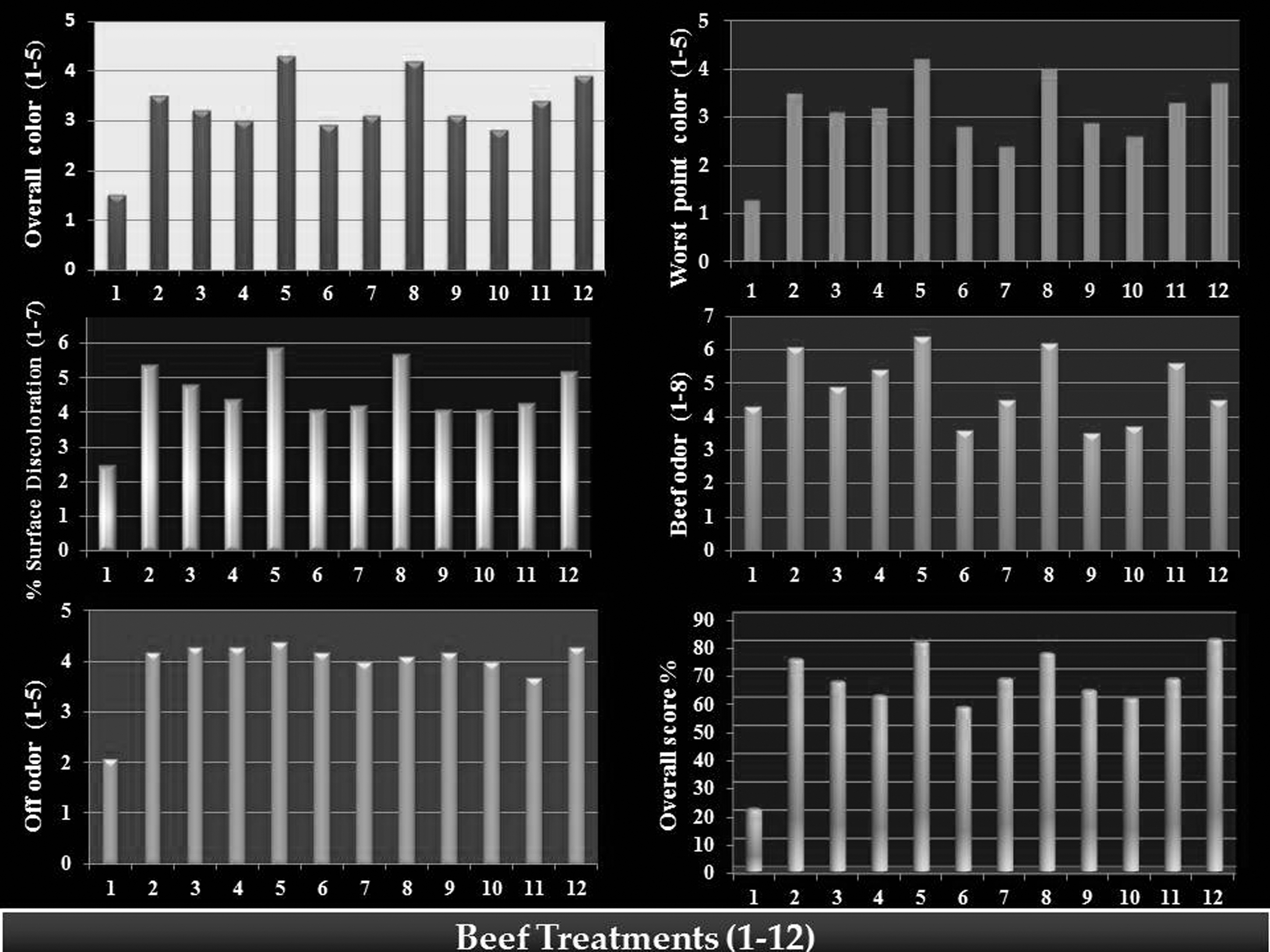
Sensory attributes score after different treatments of meat steaks with plant extracts. Meat steaks were treated with: 1, control (unsupplemented); 2, PPE (MIC); 3, CBE (MIC); 4, LGE (MIC); 5, PPE (2×MIC); 6, CBE (2×MIC); 7, LGE (2×MIC); 8, PPE (MIC) + CBE (MIC); 9, PPE (MIC) + LGE (MIC); 10, CBE (MIC) + LGE (MIC); 11, PPE (0.5 MIC) + CBE (0.5 MIC) + LGE (0.5 MIC); 12, PPE (MIC) + CBE (MIC) + LGE (MIC). MIC of PPE=250 μg/mL. MIC of CBE=350 μg/mL. MIC of LGE=550 μg/mL. Scores are means of 10 panelist scores. MIC, minimal inhibitory concentration; PPE, pomegranate peel extract; CBE, cinnamon bark extract; LGE, lemon grass extract.
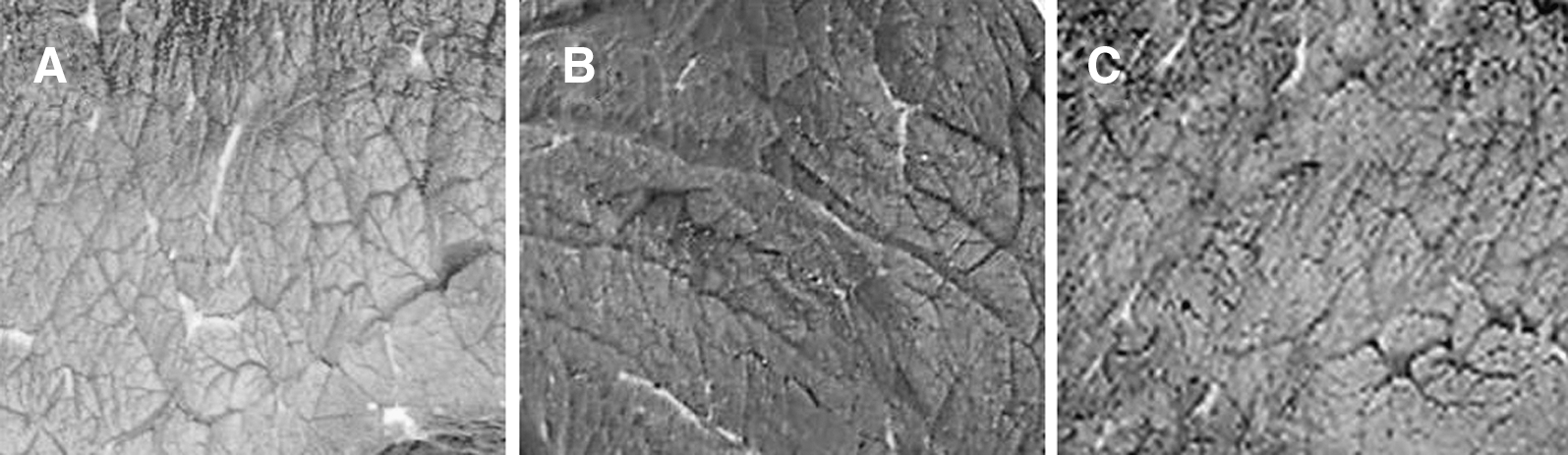
Appearance of meat steaks after different treatments with pomegranate peel extract (PPE) after 7 days of storage period.
Panelist scores for untreated (control) samples were the lowest for most of the evaluated attributes except for the beef odor characteristic, where treatment with combined MICs from CBE and LGE had the lowest score, which was described as “moderately non-beef like.”
The treatment with 2×MIC from PPE was the best to maintain the desirable sensory attributes for the treated steaks, whereas the other treatments did not have the same effect. This could be attributed to the antioxidant agents contained in PPE, which led to minimum odor and color alterations.
A very important concern, in addition to any antimicrobial treatment effectiveness, is the impact this treatment may have on meat quality characteristics such as odor and color. It has been demonstrated that many decontaminants caused undesirable effects on the color or odor of beef trimmings (Bell et al., 1986; Gill and Bandoni, 1997), whereas treatment with plant extracts resulted in the enhancement of sensory quality in treated ground beef (Tayel and El-Tras, 2012). Many investigators (Raccach, 1984; Zheng and Wang, 2001; Djenane et al., 2002; Pokorný, 2003) reported that the application of natural antioxidants and antimicrobials, such as plant extracts, is greatly recommended to prevent oxidation and resulting color loss and odor loss, as well as lowering microbial contamination in packaged red meat.
Our results indicated that, although they remarkably changed the “beef odor” of treated steaks, the fragrance constituents in CBE and LGE positively protected meat steaks from the appearance of the “off-odor,” as both cinnamon and lemon grass have many volatile oils, with pleasant odor, in their extracts.
The main cause of red meat discoloration and oxidative rancidity or other off-odor or off-flavor compounds is the oxidation of myoglobin and the autoxidation of fat (Montgomery et al., 2003). With the reduction of the lipid oxidation rate, a reduced color deterioration of red meat could be expected because these reactions are linked (Chan et al., 1997). It was also demonstrated that the high oxygen demand of aerobic bacteria in their logarithmic growth phase results in the oxidation of myoglobin to metmyoglobin in contaminated meat (Seideman et al., 1984). Thus, the antimicrobial activity of the examined plant extracts could result in the prevention of oxidative stress caused by existing microorganisms.
Pathogen control and decontamination measures significantly increase production costs. Moreover, contamination of food products with bacterial pathogens can seriously reduce consumer demand and affect producer profits (Pohlman et al., 2002b). The biopreservative agents introduced in this study were extracted from byproducts and inexpensive plant materials and provided meat with tremendous biological and sensual properties; this has economic importance for both producers and consumers.
Conclusion
Regarding the continuing threat of meat contamination with pathogenic bacteria, the application of plant extracts as alternative safe, natural, and effectual biopreservatives can be recommended to solve this problem. The treatment of meat steaks with plant extracts resulted in elevated biological quality and good sensory attributes of the product. From the viewpoints of health, quality, and economics, the biopreservation of meat products using plant extracts could be proposed as the perfect approach to meet regulations and preferences of food overseers.
Footnotes
Acknowledgments
Always and foremost, thanks are indebted to our God ALLAH forever for his mercy, guide, and help.
Disclosure Statement
No competing financial interests exist.