




Abstract
Cronobacter spp., formerly Enterobacter sakazakii, are human pathogens. They are the etiological agent of life-threating bacterial infections in infants. In this study, the survival behavior of C. sakazakii Bioresources Collection and Research Center (BCRC) 13988 in the presence of various ethanol concentrations was first examined. Besides, the test organism was subjected to treatment with 5% ethanol for 60 min (ethanol shock). The effect of ethanol shock on the resistance of C. sakazakii to lethal stresses, including high ethanol concentration (15%), low temperature (4°C and −20°C), high temperature (51°C) and high acidity (pH 3.3), was investigated. Results revealed that 4–5% ethanol is the maximum concentration that will allow C. sakazakii BCRC 13988 to grow in trypticase soy broth (TSB). Etthanol at 6% and 7% or more, respectively, exerted bacteriostatic and bactericidal effects, respectively, on the test organism. Although ethanol shock did not affect the resistance of C. sakazakii to a refrigerated temperature (4°C), the ethanol-shocked C. sakazakii survived better under other lethal stress conditions. After 50 min of exposure to 15% ethanol, the ethanol-shocked C. sakazakii showed a survival percentage of 16.11%, which was a 6400-fold increase over the control cells (<0.01%). On the other hand, the ethanol-shocked C. sakazakii exhibited a 45-fold higher survival after 120-min exposure to 51°C. At the end of the 7-day storage at −20°C, the ethanol-shocked cells exhibited a survival percentage of 0.25% which was significantly (p<0.05) higher than that (less than 0.01%) of the control. Additionally, the ethanol-shocked cells showed a survival percentage of 13.80% compared to only 1.60% noted with the control cells after exposure to pH 3.3 for 60 min.
Introduction
F
In food processing plants, hospitals, and homes, ethanol is commonly used as an antiseptic agent to reduce or remove microorganisms from the surface of utensils and equipment, thus promoting a hygienic environment. Beyond sanitization, ethanol is commonly used as a food preservative (Jay et al., 2005). However, it has been observed that the characteristics of microorganisms might alter after exposure to a treatment with a sub-lethal dose of ethanol (ethanol shock) (Lou and Yousef, 1997; Chiang et al., 2006; Chiang and Chou, 2008). For example, Bacillus cereus exhibited an enhanced resistance to heat (49°C), pH 4.6, and 12% ethanol, after prior exposure to 2.5% ethanol (Lou and Yousef, 1997). Vibrio parahaemolyticus exhibited an increased resistance to subsequent lethal challenges at 47°C and 8% ethanol, while this pathogen showed a reduced survival rate at −18°C if the test organism received a prior ethanol shock treatment at 5% ethanol for 30 min (Chiang et al., 2006). Furthermore, ethanol shock has also been found to change the expression of catalase, thermostable direct hemolysin, and superoxide dismutase in cells of V. parahaemolyticus (Chiang and Chou, 2008). So far, literature concerning the ethanol shock response of C. sakazakii is still limited. To collect information essential to developing adequate control measures for C. sakazakii, the present study examined the effect of ethanol shock on the response of C. sakazakii to subsequent lethal stresses including high ethanol content, high acidity, and low and high temperatures.
Materials and Methods
Microorganisms and the preparation of inoculum
In the present study, C. sakazakii BCRC 13988 was used as the test organism. This test organism is a clinically isolated strain originally isolated from the throat of an infant patient (Farmer et al., 1980) and was obtained from the Bioresources Collection and Research Center (BCRC), Hsinchu, Taiwan.
After two successive transfers in tryptic soy broth (TSB; Acumedia Manufactures, Lansing, MI) at 37°C for 24 h, the activated cultures were then inoculated into TSB and incubated at 37°C for 6 h to the late log phase when the population was approximately 108 CFU/mL. The culture was then used to prepare the control cells (non-ethanol-shocked) and the ethanol-shocked cells.
Studies on the susceptibility of C. sakazakii to ethanol
In the present study, viability of C. sakazakii in TSB containing various conentrations of ethanol was first investigated. The active culture of the non-shocked C. sakazakii (0.1 mL) as mentioned above was inoculated into 9.9 mL of TSB containing various amounts of ethanol (0.0, 2.0, 3.0, 4.0, 5.0, 6.0, 7.0, or 8.0%, v/v) (Merck, Darmstadt, Germany) at an initial population of approximately 106 CFU/mL. The samples were incubated at room temperature (25°C) for a period of 250 min. The viability of the test organism at specific intervals (0, 50, 100, 150, 200, and 250 min) during the incubation period was measured.
Ethanol shock treatment
Based on results obtained from susceptibility study, 4% and 5.0% (v/v) ethanol was selected as the sub-lethal dosage level for the ethanol shock treatment of the test organism.
To prepare the ethanol-shocked cells of the test organism, the active cultures of C. sakazakii were first harvested by centrifugation (8,000×g, 10 min), washed, and resuspended in 5 mL of TSB. One milliliter of the cell suspension was mixed with 9.0 mL of TSB with or without 4% or 5% ethanol. The culture held at room temperature without ethanol served as control.
Challenge studies
In the present study, the resistance of ethanol-shocked and control cells of C. sakazakii to lethal stresses (including 15% ethanol; temperatures of 4°C, −20°C, and 51°C; and high acidity, i.e., pH 3.3) was examined.
To examine the effect of ethanol shock on the survival of C. sakazakii when exposed to lethal doses of ethanol, 0.1 mL of the 4% or 5% ethanol-shocked and control cells, which was properly diluted with TSB, was inoculated into 9.9 mL of TSB in a culture tube containing 15.0% (v/v) ethanol at an initial population of approximately 106 CFU/mL.
To determine tolerance at refrigerated temperature (4°C), 0.1 mL of the properly diluted 5% ethanol-shocked or control cells was inoculated into 9.9 mL of TSB (precooled at 4°C) at an initial population of approximately 106 CFU/mL and incubated at 4°C for a period of 7 days.
To investigate the tolerance during storage at a freezing temperature, the method described by Broadbent and Lin (1999) was followed. The test organism (1.0 mL), with a population of 108 CFU/mL, was placed in a microtube that was precooled in an ice water bath. It was then incubated at −20°C for 7 days. During the low temperature storage period, microtubes containing the culture were taken at various time intervals to determine the viability of the cells. Before testing for viability, the frozen samples were thawed in a water bath at 37°C for 5 min.
To determine the thermal tolerance of the test organism, 0.1 mL of the properly diluted 5% ethanol-shocked cells, and control cells, was inoculated into 9.9 mL of TSB (pre-tempered at 51°C) at an initial population of approximately 106 CFU/mL, and submerged in a preheated circulating water bath at 51°C with shaking (150 rpm) for 120 min. Samples were taken after incubation at different time intervals (0, 20, 40, 60, 80, 100, 120 min), and the survival of the cells was subsequently determined.
To test tolerance at high acidity, the test organism was combined with TSB that had its pH adjusted to 3.3 with 1 N HCl. These were then incubated at room temperature for 60 min. The viability of the cells was determined after various incubation periods.
Enumeration of viable C. sakazakii
For the determination of the viable population of C. sakazakii, samples were serially diluted in PBS containing 0.1% peptone and the viable counts made by surface plating (0.1 mL) on tryptic soy agar (TSA; Acumedia). Colonies were counted after 18 h of incubation at 37°C.
Statistical analysis
The mean values and the standard deviation were calculated from the data obtained with at least triplicate trials. Data were subjected to analysis of variance, and Duncan's test was utilized to compare the differences among the treatment means (SAS, 2001).
Results and Discussion
Viability of C. sakazakii in the presence of various ethanol concentrations
Ethanol may dissolve lipids and denature protein, which leads to membrane destruction and the injury or death of a microorganism (Ingram and Buttke, 1984). However, microorganisms vary in their susceptibility to ethanol (Ingram, 1990; Chiang et al., 2006).
To identify the susceptibility of the test organism to ethanol, C. sakazakii BCRC 13988 was inoculated in TSB containing various amounts (0–8%) of ethanol at room temperature for 250 min. As shown in Figure 1, C. sakazakii exhibited the maximum growth rate in TSB containing 0% ethanol. As the ethanol concentration in TSB increased, the growth rate of C. sakazakii decreased. In TSB containing 4–5% ethanol, the test organism showed minor growth. The growth of the test organism was completely inhibited as the ethanol concentration increased to 6%. Furthermore, ethanol at a concentration of 7% or 8% exerted a bactericidal effect on the test organism. These results suggested that 4–5% is the maximum ethanol concentration that will allow C. sakazakii to grow in TSB. Therefore, 4% and 5% ethanol were selected as the dosage levels to perform ethanol shock treatment on C. sakazakii.
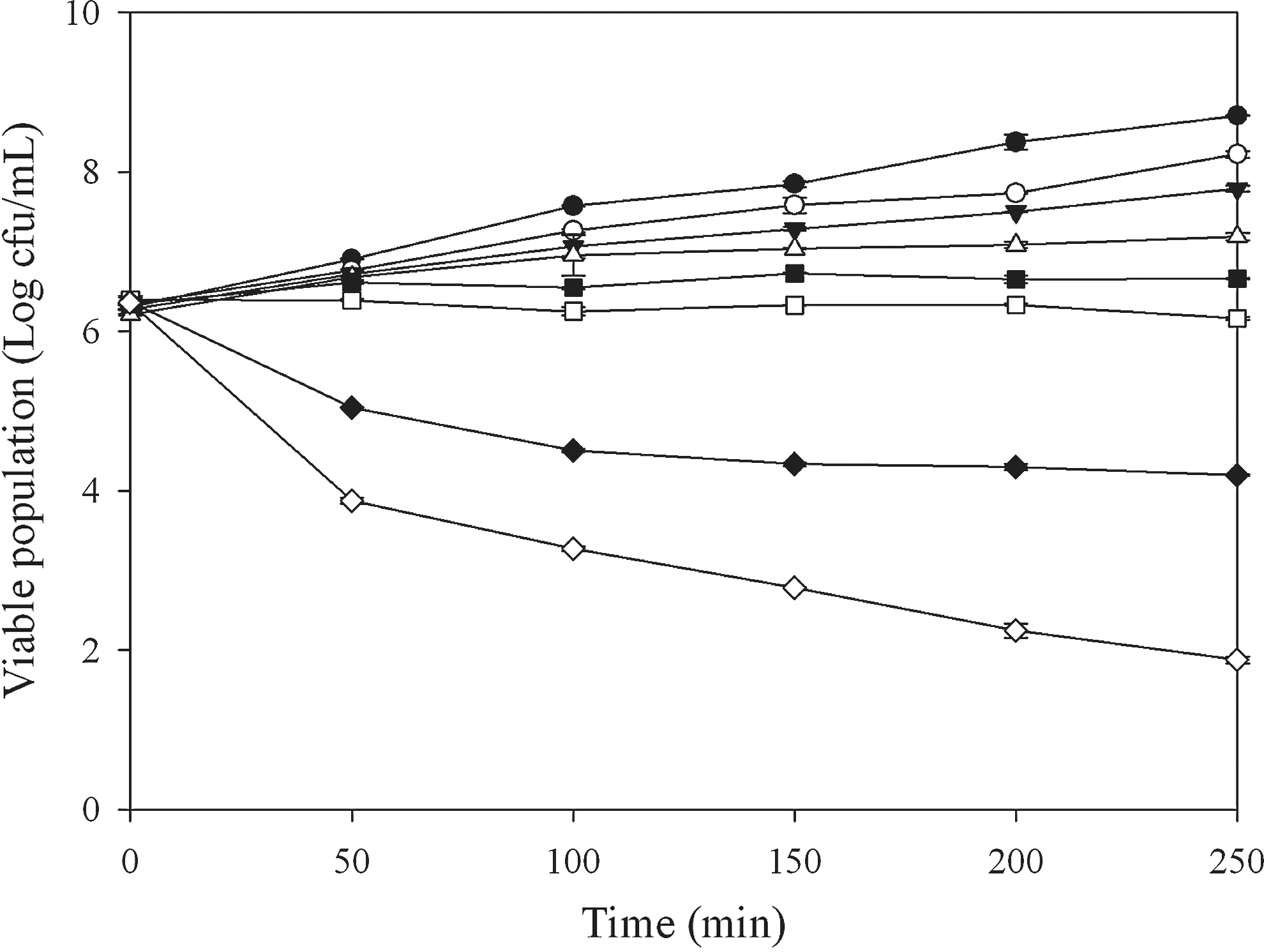
Viability of Cronobacter sakazakii in tryptic soy broth containing various amounts of ethanol. ●, 0%; ○, 2%; ▼, 3%; ▽, 4%; ■, 5%; □, 6%; ♦, 7%; ⋄, 8%.
Ethanol shock affects the resistance of C. sakazakii to high ethanol concentration stress
Figure 2 shows the survival of the control, and the 4% and 5% ethanol-shocked C. sakazakii in TSB containing 15% ethanol. It was noted that cells of the control C. sakazakii exhibited a more rapid decline in viability than the ethanol-shocked C. sakazakii cells, regardless of the ethanol concentration employed in shock treatments. After 40 min of exposure to 15% ethanol, the control cells showed a survival percentage of less than 0.01%, with no viable cell detected after exposure for 50 min. Viability of the ethanol-shocked C. sakazakii was significantly (p>0.05) greater than the control cells as the exposure period was extended to 20 min or logner. After 40 min of exposure, the 5% ethanol-shocked C. sakazakii showed a survival percentage of 16.11%, which was an approximately 6,400-fold increase over the control cells. In comparison, the 4% ethanol-shocked C. sakazakii exhibited a survival percentage of 7.29%. These data demonstrated that ethanol shock enhances the resistance of C. sakazakii to 15% ethanol. Furthermore, cells shocked with 5% ethanol showed greater resistance than those shocked with 4% ethanol. The observed increased resistance of C. sakazakii to the lethal dose of ethanol after prior ethanol shock treatment is consistent with reports on Listeria monocytogenes (Lou and Yousef, 1997) and V. parahaemolyticus (Chiang et al., 2006). It has been suggested that the alteration of the cellular fatty acid profile and the expression of stress proteins induced by ethanol shock are related to the enhanced resistance of ethanol-shocked microorganisms (Chiang et al., 2008). Whether this is the case with C. sakazakii merits further investigation.
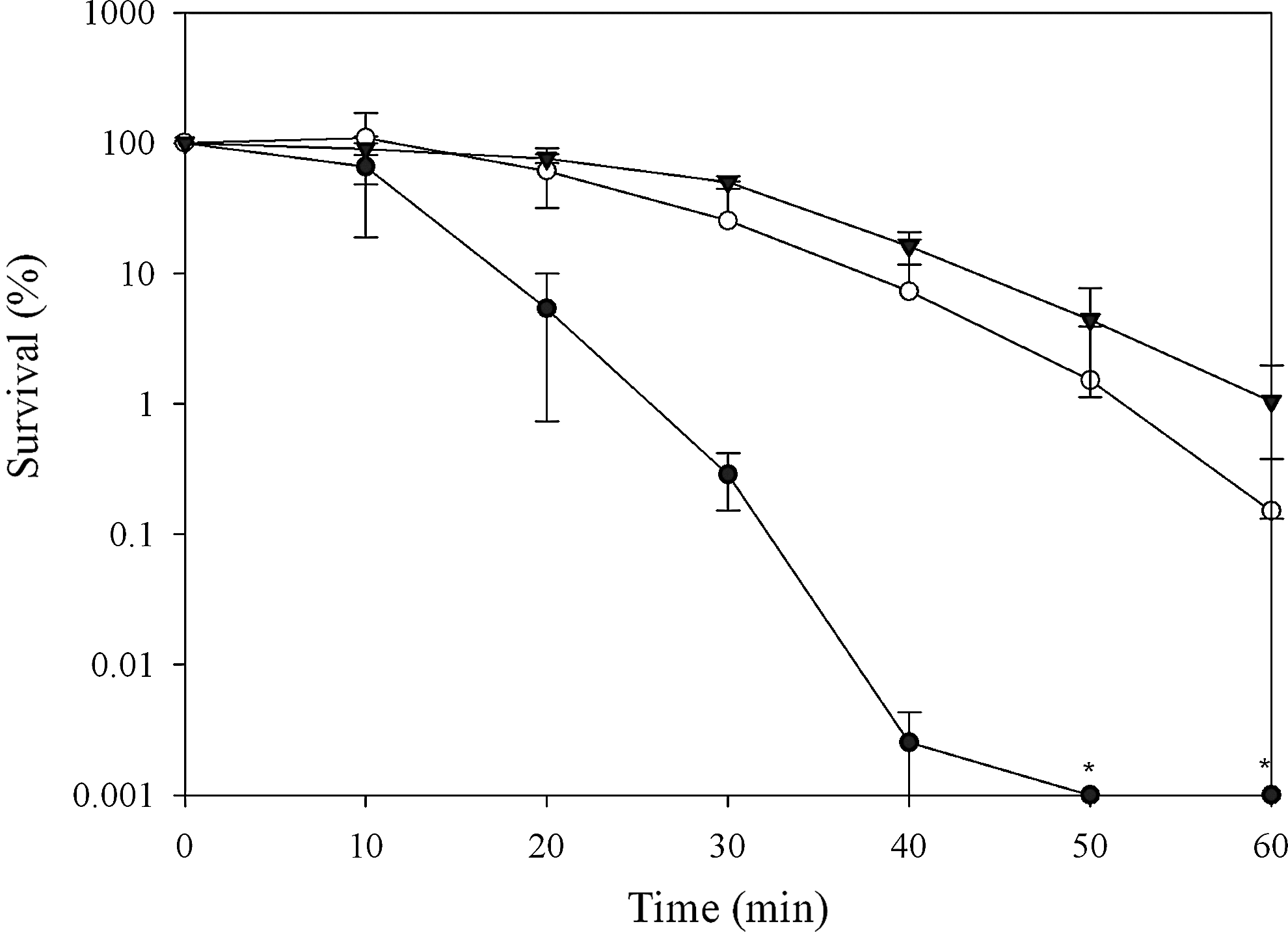
Effect of pre-exposure to sub-lethal concentration of ethanol on the survival of Cronobacter sakazakii Bioresources Collection and Research Center (BCRC) 13988 in 15% ethanol. ●, Control cells; ○, 4% ethanol-shocked cells; ▼, 5% ethanol-shocked cells; *, none detectable. Survival (%) was obtained by dividing surviving population with initial population which corresponds to 100%. The initial population of the control and ethanol-shocked C. sakazakii was 106 CFU/mL.
Ethanol shock affects the tolerance of C. sakazakii to low temperatures
C. sakazakii showed optimal growth at 37°C (Iversen and Forsythe, 2003) with its maximum and minimum growth temperature at 45–47°C (Chang et al., 2009) and 5.5–8.0°C (Nazarowec-White and Farber, 1997), respectively. Figure 3 shows the survival of the control and the 5% ethanol-shocked cells of C. sakazakii exposed to 4°C. During the 7 days of exposure, the survival of both control and ethanol-shocked C. sakazakii did not show marked change. Furthermore, the survival percentage of the control and ethanol-shocked C. sakazakii determined at similar exposure intervals showed no significant difference (p>0.05). This demonstrated that ethanol shock treatment in the present study did not alter the susceptibility of C. sakazakii at 4°C.
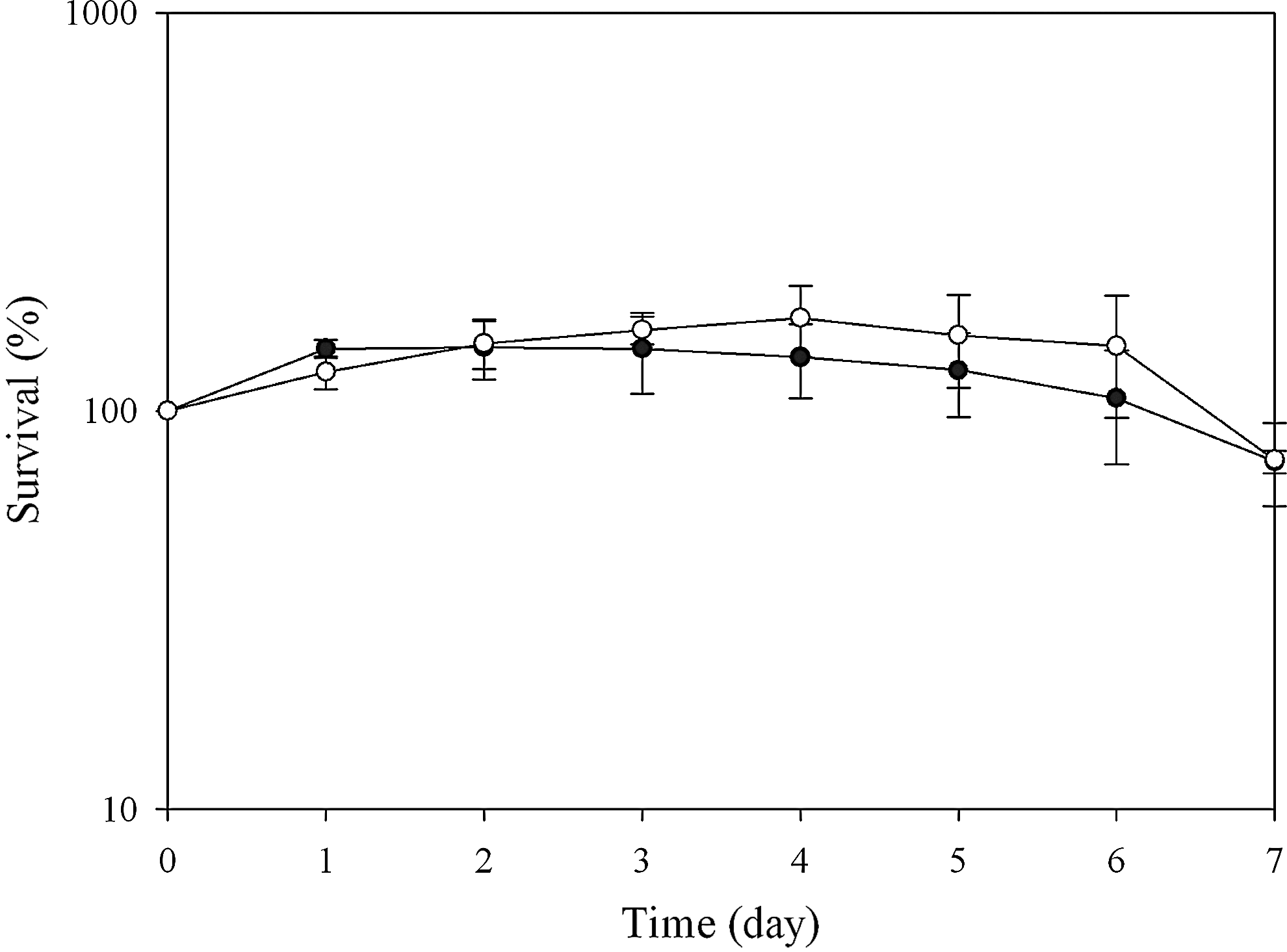
Effect of ethanol shock on the survival of Cronobacter sakazakii Bioresources Collection and Research Center (BCRC) 13988 at 4°C. ●, Control cells; ○, 5% ethanol-shocked cells. Survival (%) was obtained by dividing surviving population with initial population which corresponds to 100%. The initial population of the control and ethanol-shocked C. sakazakii was 106 CFU/mL.
In contrast to observations during storage at a refrigerated temperature (Fig. 3), a marked reduction in the survival of both control and ethanol-shocked cells of C. sakazakii was noted during frozen storage at −20°C (Fig. 4). During this experiment, cells of ethanol-shocked and control C. sakazakii were exposed to stresses such as freeze-thawing, oxidative, and somatic stresses. Control cells showed a greater reduction in viability than the ethanol-shocked cells during storage. At the end of the 7-day storage period, the ethanol-shocked cells showed a survival percentage of 0.25%, while the control cells showed a significantly lower (p<0.05) survival percentage of less than 0.01%. In contrast to refrigerated storage at 4°C, frozen storage at −20°C causes the formation of ice crystals, and a solute concentration effect occurs. This process is detrimental to microorganisms (Marth, 1973; Davis and Obafemi, 1985) and may have led to the relatively marked reduction in the viability of both ethanol-shocked and non-shocked C. sakazakii during frozen storage. And yet, the higher survival rate of ethanol-shocked C. sakazakii versus the control cells observed during frozen storage (Fig. 4) suggested that ethanol shock made C. sakazakii more resistant to these detrimental effects and thus resulted in the enhanced survival of the ethanol-shocked cells.
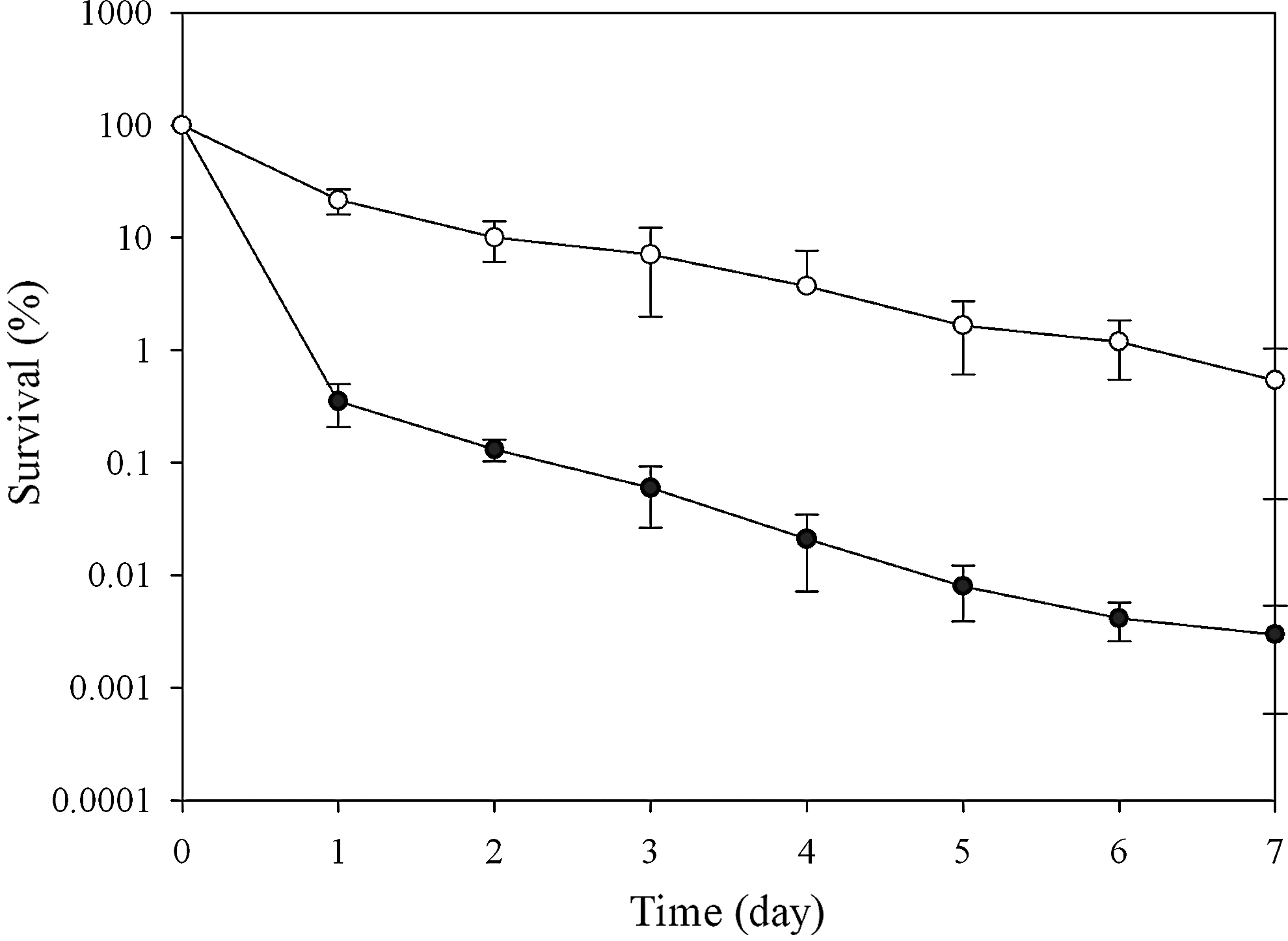
Effect of ethanol shock on the survival of Cronobacter sakazakii Bioresources Collection and Research Center (BCRC) 13988 at −20°C. ●, Control cells; ○, 5% ethanol-shocked cells. Survival (%) was obtained by dividing surviving population with initial population, which corresponds to 100%. The initial population of the control and ethanol-shocked C. sakazakii was 108 CFU/mL.
Ethanol shock affects the resistance of C. sakazakii to high temperature
Pre-exposure to a sub-lethal dose of ethanol has been reported to enhance or reduce the thermal tolerance of microorganisms (Lou and Yousef, 1996; Periago et al., 2002a,b; Chiang et al., 2008; Osaili et al., 2008). It was suggested that the thermal tolerance may vary with the test organisms and conditions of ethanol shock treatment.
In the present study, the survivals of control and ethanol-shocked C. sakazakii exposed to 51°C during a period of 120 min were compared. As shown in Figure 5, control C. sakazakii cells exhibited lower survival rates than the ethanol-shocked cells, although the survival of both declined during the exposure period. A marked decline in the survival rate of both ethanol-shocked and control cells was noted during the first 40 min of exposure at 51°C. Thereafter, no marked change in the survival rate of test organism was observed. At the end of the 120 min-exposure period, the ethanol-shocked C. sakazakii showed a survival percentage of 6.67%, while a significantly lower (p<0.05) survival percentage of only 0.15% was observed with the control cells. This demonstrated that the ethanol shock that we examined enhanced the survival of C. sakazakii at 51°C.

Effect of ethanol shock on the survival of Cronobacter sakazakii Bioresources Collection and Research Center (BCRC) 13988 at 51°C. ●, Control cells; ○, 5% ethanol-shocked cells. Survival (%) was obtained by dividing surviving population with initial population, which corresponds to 100%. The initial population of the control and ethanol-shocked C. sakazakii was 106 CFU/mL.
Ethanol shock affects the resistance of C. sakazakii to high acidity (pH 3.3)
It was reported that resistance of L. monocytogenes and Bacillus cereus to acidic conditions was enhanced after exposure to a sub-lethal ethanol stress (Lou and Yousef, 1997; Browne and Dowds, 2002). In accordance with these reports, ethanol shocks observed in the present study increased the subsequent survival of C. sakazakii BCRC 13988 when exposed to acidic conditions with a pH of 3.3 (Fig. 6). As shown in Figure 6, the survival of both the control and ethanol-shocked C. sakazakii decreased as the exposure period increased. However, the survival percentage of the ethanol-shocked cells was higher than that of the control cells. After the 60-min exposure period, the ethanol-shocked C. sakazakii showed a survival percentage of 13.8% compared to only 0.6% noted in the control cells. So, survival percentage of the ethanol-shocked C. sakazakii was approximately 45-fold that of the control cells.
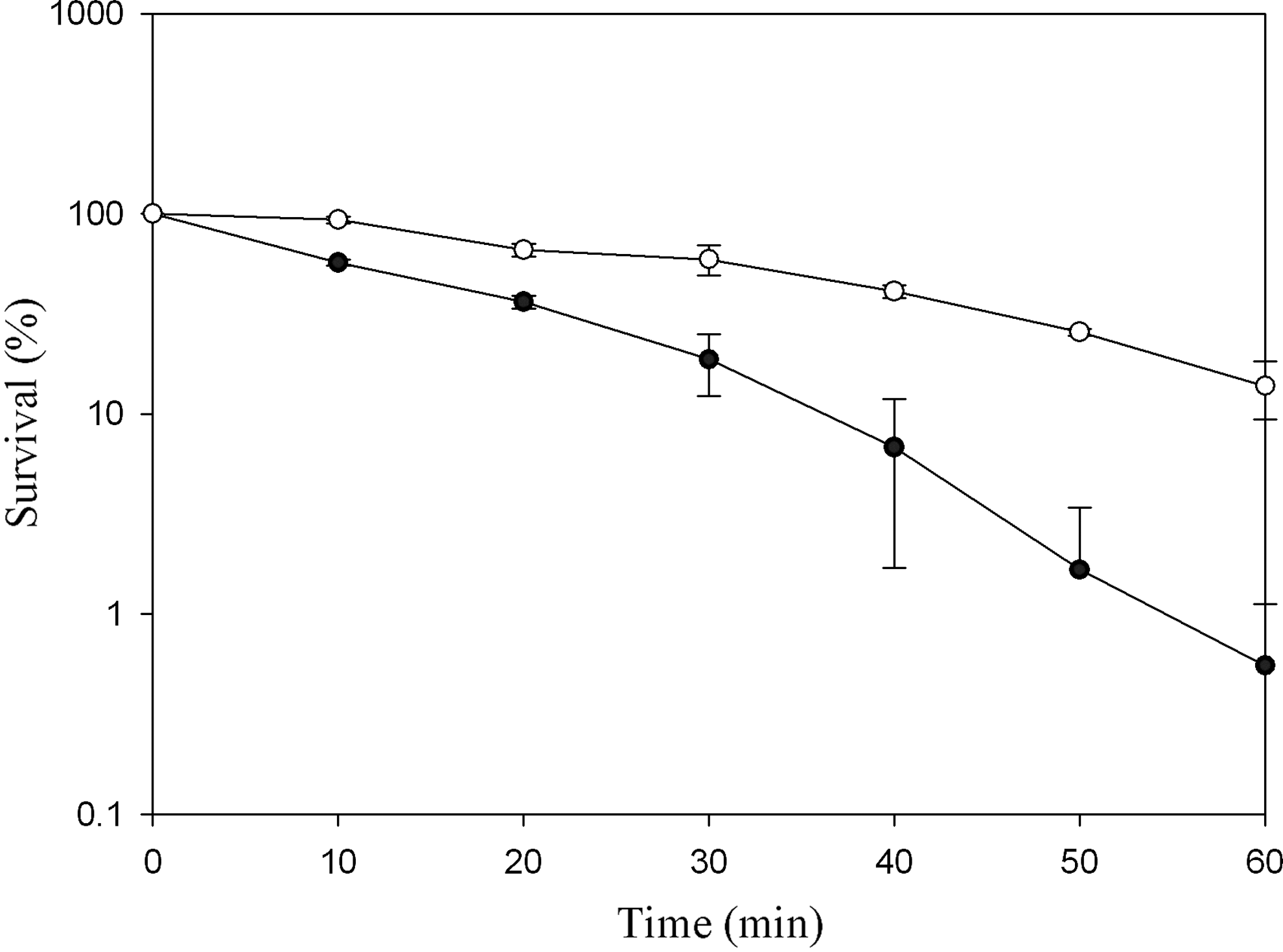
Effect of ethanol shock on the survival of Cronobacter sakazakii Bioresources Collection and Research Center (BCRC) 13988 in acidified tryptic soy broth (pH 3.3). ●, Control cells; ○, 5% ethanol-shocked cells. Survival (%) was obtained by dividing surviving population with initial population which corresponds to 100%. The initial population of the control and ethanol-shocked C. sakazakii was 106 CFU/mL.
Acidity is one of the important parameters that affects the growth and survival of microorganisms (Smith, 2003). It has been suggested that C. sakazakii survives better in the stomach of newborns and premature babies because they have lower acidity levels than adults. This is considered an important factor that enables this pathogen to serve as the etiological agent of bacterial infection in infants but not adults (Widstorm et al., 1988; Pagotto et al., 2008). The enhanced acid tolerance of the ethanol-shocked C. sakazakii observed in the present study, undoubtedly, increases the risk of C. sakazakii infection. Therefore, sanitizing bottles and related materials during the preparation and reconstitution of infant formula in such a manner that induces the ethanol shock response of C. sakazakii should be avoided.
Conclusion
This study demonstrated that ethanol shock in the presence of 5.0% ethanol for 60 min made the cells of C. sakazakii BCRC 13988 become more tolerant to subsequent lethal stresses such as extremes in temperature, acidic conditions, and high concentrations of ethanol. Results obtained suggest the need for future study of the ethanol shock response of C. sakazakii. They also raise the possibility that the risk of C. sakazakii contamination resulting from ethanol shock has been underestimated. This stress-hardening phenomenon that is induced by a sub-lethal dose of ethanol must be taken into account in recommending guidelines for the preparation of food products susceptible to this pathogen. In this way, adequate sanitization measures against C. sakazakii can be established, and the risk of infection that has led to serious illness and death in infants can be reduced if not eliminated.
Footnotes
Acknowledgments
This research was financially supported by the National Science Council, Taiwan, ROC (NSC 98-2313-B-002-037-MY3).
Disclosure Statement
No competing financial interests exist.