




Abstract
The production of cheeses from unpasteurized milk is still widespread in Brazil, even with a legal ban imposed on its marketing. The manufacture of this cheese is a public health problem, due to the use of raw milk and the poor hygienic conditions throughout the supply chain process. Contamination may occur from several sources and involve several different pathogenic microorganisms, such as Escherichia coli. The latter can cause different clinical manifestations depending on the pathotype involved. Furthermore, some isolates manifest antimicrobial resistance and may be a risk for public health. The purpose of the current study was to investigate the presence of potentially pathogenic E. coli in raw-milk cheese in Brazil and their possible risk to public health. A total of 83 cheeses were collected from three different cities and 169 E. coli isolates were characterized for the presence of enteropathogenic E. coli, Shigatoxigenic E. coli, enterotoxigenic E. coli, extraintestinal pathogenic E. coli (ExPEC) virulence genes, phylogenetic type, antimicrobial resistance, O serogroup, and pulsed-field gel electrophoresis. The number of samples positive for E. coli was highest in Aracaju (90.32%, 28/31). The prevalence of samples positive for potential ExPEC genes was similar for Uberaba and Aracaju (23.07%); the most prevalent ExPEC virulence genes were tsh, iucD, and papC. Isolates from Uberaba had a higher prevalence of resistance to tetracycline (38.46%), amoxicillin/clavulanic acid (58.85%), and ampicillin (61.54%) than the other cities. Overall, antimicrobial resistance genes tetB, blaTEM , and blaCMY-2 were the most prevalent genes (26.32%, 15.79%, and 28.95%, respectively) and the most prevalent serotypes were O4 (8%), 018 (12%), and O23 (8%). Clones originating from the same regions and from different regions were observed. These results emphasize the presence of a potential danger for humans in the consumption of raw-milk cheeses in three cities in Brazil due to the presence of antimicrobial resistance, which should be monitored.
Introduction
C
Various pathogenic bacteria may be transmitted by dairy products. Carvalho et al. (2007) identified Listeria monocytogenes, coagulase-positive staphylococci, and fecal coliforms in 93 raw-milk cheeses. Lima et al. (2013) found Staphylococcus aureus in cheeses in the State of Rio Grande do Sul, Southern Brazil. In addition, Escherichia coli infection outbreaks have been associated with the consumption of cheese. For example, in 2002, hemorrhagic colitis due to E. coli O157:H7 was associated with consumption of unpasteurized Gouda cheese (Honish et al., 2005). Uncooked meat or unpasteurized milk products may frequently be common sources of serious foodborne outbreaks due to enterohemorrhagic serogroup O157 or other non-O157 serogroups like O26, O111, O103, and O145 (European Food Safety Authority [EFSA], 2013; European Food Safety Authority [EFSA]; and European Centre for Disease Prevention, Control [ECDC], 2014).
E. coli usually reside harmlessly in the intestinal lumen of humans and animals. However, in the debilitated or immunosuppressed host, or when gastrointestinal barriers are violated, opportunistic strains can cause infection. Infection with inherently pathogenic E. coli strains may result in urinary tract infection, sepsis/meningitis, or enteric/diarrheal disease. E. coli strains can cause extraintestinal pathogenic (ExPEC) or enteric/diarrhogenic infections in humans. Enteric E. coli infections are classically divided into six pathotypes, which are based on their pathogenicity profiles (virulence factors, clinical disease, and phylogenetic background). The pathotypes are as follows: enteropathogenic E. coli (EPEC), enteroaggregative E. coli (EAEC), enterotoxigenic E. coli (ETEC), enteroinvasive E. coli (EIEC), diffusely adherent E. coli (DAEC), and Shigatoxigenic E. coli (STEC). A subset of STEC is enterohemorrhagic E. coli (EHEC), including strain serotype O157:H7 (Kaper et al. 2004).
E. coli may be used as an indicator to assess inadequate pasteurization, poor hygienic conditions during processing (especially when carried out by hand), or postprocessing contamination (Kornacki and Johnson, 2001). In addition, the level of antimicrobial resistance in E. coli is considered to be a good indicator of the selection pressure exerted by the use of antimicrobials (Lei et al., 2010) and of potential antimicrobial resistance problems in bacterial infectious diseases (Álvarez-Fernándes et al., 2013). The importance of these aspects in raw-milk cheeses in Brazil is not well known. The purpose of the current study was to investigate the presence of potentially pathogenic E. coli strains in raw-milk cheeses and document potential risk to public health in Brazil.
Materials and Methods
Sampling and initial procedures
Cheeses were collected from cities in three different provinces in Brazil where raw-milk cheeses are commonly produced (Fig. 1). These were selected for ease of transport of samples to the laboratory. In addition, Minas Gerais was selected as, at the time of sampling, only this province permitted production of raw-milk cheeses. At each site, cheeses were randomly selected to represent the cheeses available to the public, comprising ∼20% of the total number of cheeses offered at each store. All selected cheeses were purchased. In Uberaba, 30 cheeses were collected on the same day, at one market. In Ribeirao Preto, 22 cheeses were collected on the same day. They were collected from 11 different stores at the municipal market. In Aracaju, 31 cheeses were collected on the same day from seven different markets or street sellers. All cheeses originated from various farms, although the precise farm of origin could not be verified. Sampling was performed during February 2010.
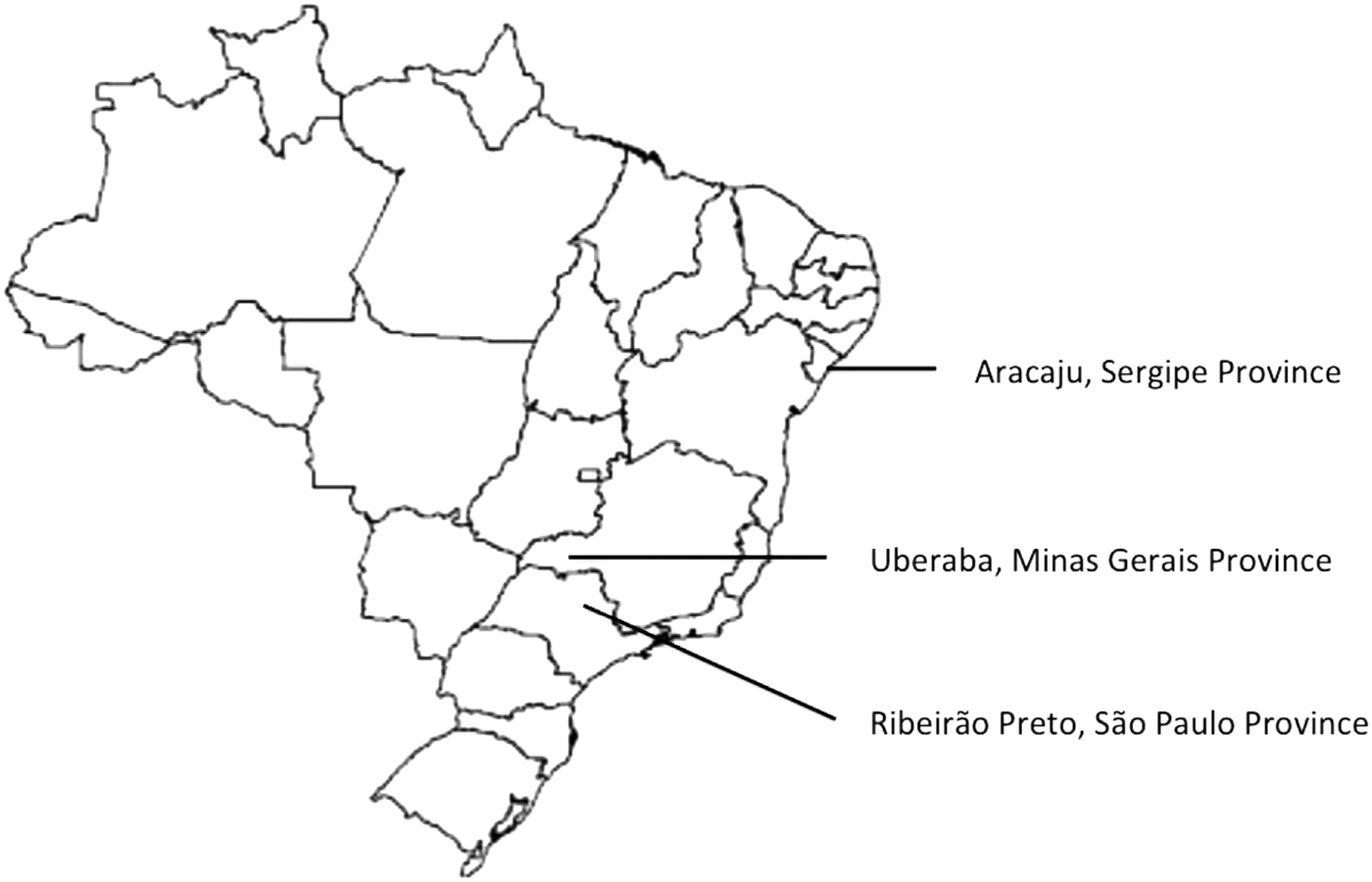
Map of Brazil indicating all states and showing the three regions where cheeses were collected. For the sampling, 30 cheeses were collected in Uberaba from one market and a total of 51 Escherichia coli isolates selected. In Ribeirao Preto, 22 cheeses were collected from 22 different stores in the municipal market and a total of 25 E. coli isolates selected. In Aracaju, 31 cheeses were collected from eight different markets or street sellers and a total of 93 E. coli isolates selected.
For E. coli isolation, 25 g of each cheese was enriched in Lauryl Tryptose Broth (Difco), streaked onto eosin methylene blue agar (EMB; Difco), and incubated at 37°C for 24 h (Apha, 2001). Thereafter, in each cheese analyzed, 5–10 typical E. coli colonies were randomly selected and identified biochemically by the IMViC tests (indole production, methyl red, Voges–Proskauer, and citrate) (Koneman et al., 2001). A total of 169 E. coli isolates, 51, 25, and 93 from Uberaba, Ribeirao Preto, and Aracaju, respectively, that is, one to two representative isolates from each positive sample, were retained and sent to the Reference Laboratory for E. coli, Faculté de médecine vétérinaire, Université de Montréal.
Polymerase chain reaction for determination of the pathotype of isolates
Colonies were plated onto MacConkey agar (MA; Oxoid). A loop from the confluent growth or individual colonies on MA plates was inoculated into 5 mL Luria Bertani (Luria-Bertani–LB; Difco) broth and enriched overnight at 37°C. DNA templates were prepared from the processed samples by boiled cell lysis for examination by polymerase chain reaction (PCR) for the presence of the virulence genes, which define the E. coli pathotypes commonly found in animals, as described previously by Maluta et al. (2014) and in the animal pathogenic zoonotic E. coli website (
PCR for determination of the phylogenetic group
Phylogenetic grouping was carried out for the 169 selected E. coli isolates using a multiplex PCR-based assay as described by Clermont et al. (2000). Based on the presence or absence of two genes (chuA and yjaA) and a noncoding DNA fragment (TSPE4.C2), isolates were classified into four main E. coli phylogenetic groups (A, B1, B2, or D).
Antimicrobial resistance testing
A total of 95 isolates, including those positive for virulence genes and some randomly selected isolates, thus being representative of possible pathogenic and commensal isolates, were examined for resistance to the 15 antimicrobials used for testing generic E. coli in the Canadian Integrated Program for Antimicrobial Resistance Surveillance (CIPARS) (Government of Canada), by the disk-diffusion (Kirby–Bauer) method. The following disks (BD BBL™ Sensi-Disc™ Antimicrobial Susceptibility Test Discs) were used: amoxicillin + clavulanic acid (20 + 10 μg), ceftiofur (30 μg), ceftriaxone (30 μg), ciprofloxacin (5 μg), amikacin (30 μg), ampicillin (10 μg), cefoxitin (30 μg), gentamicin (10 μg), kanamycin (30 μg), nalidixic acid (30 μg), streptomycin (10 μg), tetracycline (30 μg), chloramphenicol (30 μg), sulfisoxazole (0.25 mg), and trimethoprim + sulfamethoxazole (1.25 + 23.75 μg). Breakpoints were those recommended by the Clinical Laboratory Standards Institute (CLSI, 2008). Isolates nonsusceptible to three or more classes of antimicrobial agents were considered to be multidrug resistant (Magiorakos et al., 2012).
Serotyping and PCR for determination of O type
Fifty-two (30.8%) of the 169 isolates, including 11 isolates (6.50%) possessing tested virulence genes and 32 isolates (18.9%) resistant to one or more antimicrobials (one isolate per antimicrobial resistance pattern was selected for each cheese), and eight randomly selected isolates were examined for determination of the O serogroups described at
PCR for O4, O18, and O141 was performed with the standard protocol. All PCRs were carried out using negative control strain ECL3463 and the appropriate positive control strains (Supplementary Table S1; Supplementary Data are available online at
PCR for determination of presence of antimicrobial resistance genes
The 52 selected isolates were examined for the presence of five β-lactamase resistance genes (blaSHV , blaTEM , blaCMY , blaOXA , blaCTX-M ) and tetracycline genes (tetA and tetB) by multiplex PCR. The protocol was provided by the National Microbiology Laboratory of the Public Health Agency of Canada and used with some adjustments. The primers, annealing temperatures, and controls are described in Supplementary Table S1. The cycling conditions consisted of an initial step at 95°C for 5 min, followed by 30 cycles, each consisting of denaturation at 94°C for 30 s, annealing 63°C for 90 s, and extension at 72°C for 90 s. The final extension was at 72°C for 7 min (Mataseje et al., 2012).
Pulsed-field gel electrophoresis
The 52 selected isolates were subtyped by the standardized rapid pulsed-field gel electrophoresis (PFGE) protocol used by laboratories in PulseNet, as described previously (RIBOT et al., 2006). Chromosomal DNA was digested with XbaI. Electrophoresis conditions comprised an initial time of 2.2 s, final time of 54.2 s at a gradient of 6 V·cm−1, and an included angle of 120°. The gels were electrophoresed for 18 h. The similarities of fragments were compared using a Dice coefficient at 1% tolerance and 0.5% optimization, and a dendrogram was constructed with the UPGMA clustering method using the software BioNumerics (Applied Maths). Clusters were established by the cutoff value by BioNumerics. Subclusters were determined empirically, and the isolates were considered similar with at least 60% of similarity.
Results
Prevalence of E. coli in raw-milk cheese samples
The prevalence of samples positive for E. coli (90.32%) and the prevalence of samples with E. coli possessing at least one ExPEC gene (32.14%) were highest in Aracaju (Table 1). In contrast, among samples positive for E. coli, Uberaba had a higher frequency of isolates (92.30%) resistant to one or more antimicrobials compared to other districts and the highest prevalence of tested O serotypes was in Ribeirao Preto (45.45%).
Antimicrobial-resistant E. coli: E. coli isolates resistant to one or more of the tested antimicrobials.
Presence of ExPEC genes (cnf1/2, tsh, papC, and iucD) as determined by PCR.
ExPEC, extraintestinal pathogenic E. coli; PCR, polymerase chain reaction.
E. coli isolates in raw-milk cheese were mostly of phylogenetic groups A and B1 and some were potential ExPEC
Overall, 17 of 169 E. coli isolates (10.6%) were potential ExPEC: being of virotypes tsh, iucD, papC, tsh:iucD, or tsh:papC. These potential ExPEC genes were from Uberaba (4/7.84%) and Aracaju (13/13.97%) (Table 2). We did not find genes for STEC (stx1 and stx2), EPEC (eae), and ETEC (STa, STb, LT, and F4).
1 iucD, 4 tsh.
1 iucD and tsh, 1 papC, 7 tsh.
3 tsh.
Overall, isolates most commonly belonged to phylogenetic group A; most of the potential ExPEC isolates belonging to phylogenetic group B1 (Table 2). Interestingly, isolates most commonly belonged to phylogenetic group B1 in Uberaba and Ribeirao Preto and to group A in Aracaju. Group B2 and D isolates were only found in the latter region.
The most common serogroups observed were O4, O18, and O23. O4 and O18 isolates belonged to phylogenetic group B1 and mostly found in Uberaba. Two isolates of O4 and two isolates of O18 possessed tsh gene. In Ribeirao Preto, one O18 and three O23 isolates were found, none of these isolates possessing virulence genes. Each of the O4, O18, and O23 isolates was from a different cheese.
Antimicrobial resistance was high in Uberaba and blaCMY-2 was the most commonly found β-lactamase resistance gene
In Uberaba, E. coli samples were more frequently resistant to ampicillin, amoxicillin/clavulanic acid, and tetracycline (Table 3). In contrast, the frequency of antimicrobial resistance was low in Aracaju, although one isolate was resistant to ciprofloxacin. Multidrug resistance (nonsusceptibility to three or more classes of antimicrobial agents as defined by Magiorakos et al., 2012) was more frequently observed in isolates from Uberaba, resistance being up to six classes (Fig. 2). In contrast, most isolates from Aracaju were non-MDR. All 95 tested isolates were susceptible to ceftriaxone, amikacin, gentamicin, and chloramphenicol.
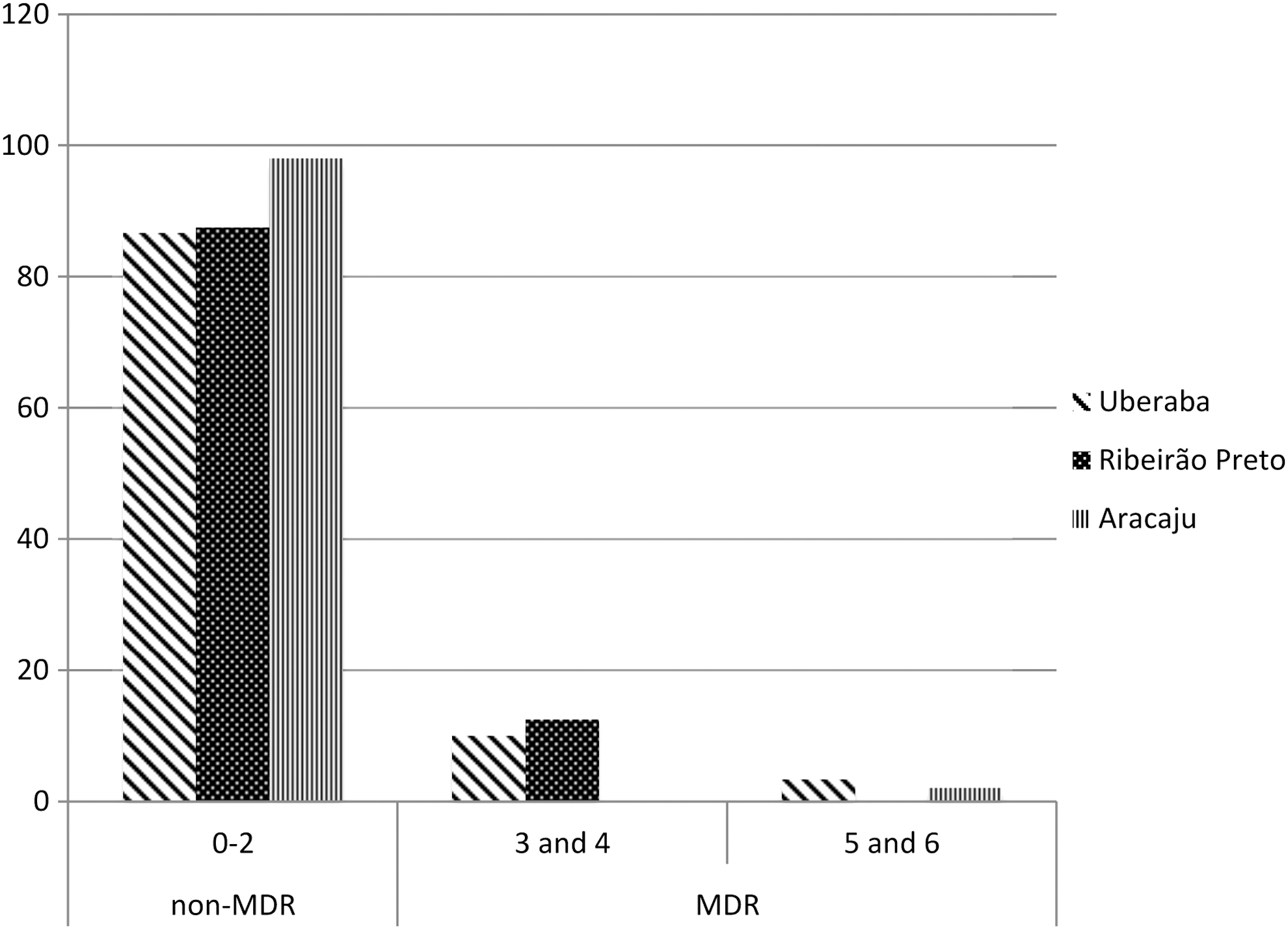
Multidrug resistance in E. coli isolates from raw-milk cheese in three areas of Brazil. According to definition of Magiorakos et al. (2012), multidrug resistance (MDR): nonsusceptible to at least one antimicrobial for three or more antimicrobial classes.
Category of human antimicrobial importance: (I) very high importance, (II) high importance, and (III) moderate importance.
Antimicrobial classes: FLQ, fluoroquinolones; PEN/I, Penicillin+ β-lactamases inhibitors; CPS, cephalosporins; PEN, Penicillin; CPM, cephamycin; AMG, aminoglycosides; FOL, folate; PHE, phenicols; TET, tetracycline.
Antimicrobials: NAL, nalidixic acid; CIP, ciprofloxacin; AMC, amoxicillin/clavulanic acid; TIO, ceftiofur; CRO, ceftriaxone; AMP, ampicillin; FOX, cefoxitin; GEN, gentamicin; KAN, kanamycin; STR, streptomycin; SXT, trimethoprim-sulfamethoxazole; FIS, sulfisoxazole; CHL, chloramphenicol; TET, tetracycline.
The presence of gene encoding resistance to ampicillin, tetracycline, and the third-generation cephalosporin ceftiofur was examined in the 52 selected isolates. In Uberaba, 9 (36%) isolates possessed one or more resistance genes (1 blaTEM and tetB; 1 tetA and 4 blaCMY-2 ; 1 aadA, tetB, and blaCMY-2 ; 1 tetB, 1 tetB, and blaCMY-2 ). This city had the highest prevalence of β-lactamase gene blaCMY-2 , but low for blaTEM . Although Aracaju demonstrated the lowest overall antimicrobial resistance, 57.93% isolates possessed one or more resistance genes (2 tetB, 2 blaTEM , and blaCMY-2 , 1 tetA, 1 blaTEM , and tetB; 3 blaCMY-2 ; 2 blaTEM , blaCMY-2 , and tetB). In contrast, only 4 (50%) isolates from Ribeirao Preto were resistance gene positive (3 tetB and 1 tetA), no β-lactamase resistance genes being detected.
Most of the isolates possessing the blaCMY-2 gene were resistant to amoxicillin/clavulanic acid and most blaTEM -positive isolates were resistant to ampicillin (Table 4). In contrast, 6 (11.54%) isolates possessing blaCMY-2 or blaCMY-2:blaTEM did not demonstrate β-lactamase antimicrobial resistance.
Clones were found in the isolates from different cities, different cheeses, and from the same cheeses
Certain isolates from the same city demonstrated a high level of similarity. Clones (isolates with the same PFGE profile) were observed in the same cheese (isolates 71 and 72, 18 and 21), in different cheeses (isolates 29 and 77, 53 and 54A, 18 and 19B) from the same city, and unexpectedly, two identical isolates from different cities were observed (Fig. 3).
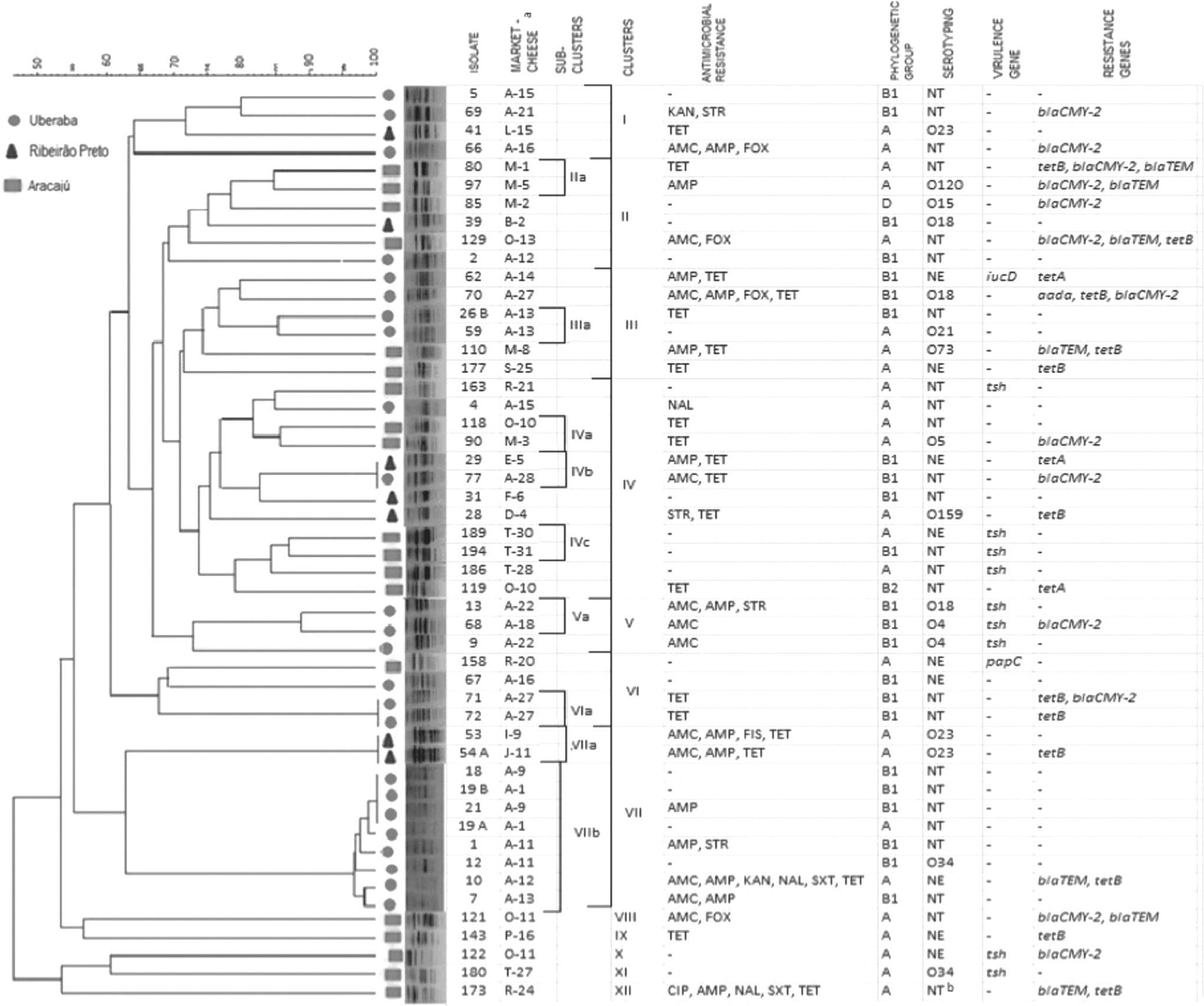
Results of cluster among some isolates from cheese in three different regions. Clustering was performed to illustrate similarities between the prevalence of the genes examined, antimicrobial resistance, phylogenetic group, resistant gene, and serotype. a Market-cheese markets are identified by letter and cheeses by numbers (For example, A-15 is from market A, cheese 15). bNT, nontypeable; NE, nonspecific.
One predominant clone (18, 19B, and 21 in subcluster VIIb of Fig. 3) was found in five different cheeses. All of these cheeses were from the same market and probably from the same farm, but it is not known if they are from the same animal. There were two clones from the same city, but from different markets, one of them being resistant to sulfisoxazole and the other possessing a resistance gene for tetracycline (tetB). In addition, the likelihood that these originated from the same farm is low. No predominant clone possessing the blaCMY-2 gene was observed. Surprisingly, two isolates of the same clone originated from different cities although they demonstrated differences in antimicrobial resistance and presence of resistance genes. Nevertheless, many isolates from the same cheese demonstrated a high level of variability on PFGE, having less than 60% of similarity. This can be seen in isolates 121 and 122 or in isolates 118 and 119, which originated from the same cheeses in Aracaju.
Discussion
Raw-milk cheese is a product consumed in Brazil, for which there is as yet little regulatory control, and thus, the potential to transmit zoonotic disease has become a focus of current research. The aim of this study was to evaluate the possible risk of raw-milk cheese for the human population, with respect to E. coli. The overall prevalence of cheeses positive for E. coli was 62.65% in the three examined regions, being highest in Uberaba (92.30%). Similarly, in comparison, in a previous study at Campinas, Sao Paulo, Brazil, of 31 cheeses produced in a similar way to that described in the present study, only 64.5% were contaminated with E. coli (Carvalho et al., 2007).
Although most E. coli are commensal and, thus, not harmful, some E. coli possessing virulence factors are potentially pathogenic and, hence, a public health risk. In the present study, only a low proportion of isolates were potentially pathogenic, possessing the ExPEC virulence-associated genes tsh, iucD, and/or papC, although not in combinations usually associated with severe disease.
Furthermore, only one isolate belonged to the phylogenetic group B2, the group most frequently associated with ExPEC isolates causing disease in humans. This group is important because Johnson et al. (2001) found that isolates from phylogroups B2 and D possessed more ExPEC virulence factors than isolates from the phylogroups A and B1. In contrast, the present study showed that the isolates were mostly classified as A (prevalent in cheeses from Aracaju city) and B1 (prevalent in cheeses from Uberaba and Ribeirao Preto city). This difference could be explained by the presence of rearing systems involving other animal species in each city or different sources of contamination although these data were not available to us. Indeed, Carlos et al. (2010) showed that group A isolates were most commonly found in humans, whereas group B1 isolates were most commonly found in cattle.
Another important factor that represents a public health danger is antimicrobial resistance. The prevalence of antimicrobial resistance has increased worldwide. In this study, we found high levels of resistance to such antimicrobials as ampicillin and amoxicillin/clavulanic acid in Uberaba and Ribeirao Preto and resistance to ciprofloxacin in Aracaju. These results may be explained by the findings of a previous study conducted in Brazil showing that the group of β-lactams is the most commonly used antimicrobials to treat infections in dairy cattle, representing 38.22% of all antimicrobials, followed by aminoglycosides (25.19%) and tetracycline (15.41%) (Netto et al., 2005). A study in carcasses of beef cattle in Brazil (Rigobelo et al., 2006) also found high prevalence of resistance to ampicillin and amoxicillin/clavulanic acid in E. coli. This carcass contamination probably originates from feces, as in the present study, probably reflecting the use of antimicrobials in dairy farms and resistance elements in the environment.
In Uberaba and Ribeirao Preto cities, antimicrobial resistance and multidrug resistance were more common, possibly being explained by the antimicrobial usage patterns on farms in these cities. Indeed, Uberaba and Ribeirao Preto are located in the region of Brazil where agriculture is most developed, in other words, larger more progressive farms. Nevertheless, the variation of frequency of resistance to antimicrobials between regions observed in the present study underlines the importance of monitoring antimicrobial resistance in E. coli isolates from raw-milk cheese to ascertain the potential danger of eating such products originating from each particular region.
As in the present study, Nagy et al. (2015) in a study of E. coli isolates from foods of animal origin illegally imported to the EU by airline passengers showed a high frequency of resistance to ampicillin, tetracycline (100%), streptomycin (86%), and to sulfonamide compounds (93%) with less frequent resistance to chloramphenicol, florfenicol, and sulfamethoxazole/trimethoprim (50% each).
The presence of blaCMY-2 in isolates in Uberaba and Aracaju most likely reflects the use of ceftiofur in the cattle and could represent a public health problem. Decreased susceptibility to ceftiofur, ceftriaxone, and other cephalosporins has been previously linked to the presence of plasmid-borne cephamycinase blaCMY-2 genes (Zhao et al., 2001). The presence of this gene in raw-milk cheeses may be due to the circulation of either plasmid-mediated ceftiofur resistance among E. coli or of resistant clones, which may occur between farms, markets, cities, and humans. Our results suggest the former, as no predominant blaCMY-2 -positive clones were observed.
In conclusion, we have demonstrated in raw-milk cheeses from three cities in Brazil contamination with E. coli, which, although not demonstrating a high pathogenic potential, showed antimicrobial resistance and possessed genes conferring resistance to clinically important antimicrobials in humans, which varied depending on the region of origin of the cheeses. As these cheeses are consumed without pasteurization to remove such bacteria, these results thus emphasize the presence of a potential danger for humans, which should be monitored.
Footnotes
Acknowledgments
The authors thank Clarisse Desautels and Ghyslaine Vanier for technical assistance. L.F.R. held a Master's degree scholarship (process number 2011/04451-1) from Fundação de Amparo à Pesquisa do Estado de São Paulo (FAPESP).
Disclosure Statement
No competing financial interests exist.
References
Supplementary Material
Please find the following supplemental material available below.
For Open Access articles published under a Creative Commons License, all supplemental material carries the same license as the article it is associated with.
For non-Open Access articles published, all supplemental material carries a non-exclusive license, and permission requests for re-use of supplemental material or any part of supplemental material shall be sent directly to the copyright owner as specified in the copyright notice associated with the article.
