




Abstract
Salmonella enterica serovars Enteritidis and Typhimurium are the most common causative agents of human nontyphoidal salmonellosis. The rapid detection and timely treatment of salmonellosis are important to increase the curative ratio and prevent spreading of the disease. In this study, we developed a rapid multiplex convection polymerase chain reaction (PCR) method to detect Salmonella spp. and differentiate Salmonella Enteritidis and Salmonella Typhimurium. We used the invA gene for Salmonella spp. detection. Salmonella Enteritidis-specific primers and Salmonella Typhimurium-specific primers were designed using the insertion element (IE) and spy genes, respectively. The primer set for Salmonella spp. detection clearly detected both Salmonella Enteritidis and Salmonella Typhimurium after a 21-min amplification reaction. Serovar-specific primer sets for Salmonella Enteritidis and Salmonella Typhimurium specifically detected each target species in a 21-min amplification reaction. We were able to detect Salmonella spp. at a single copy level in the singleplex mode. The limits of detection for Salmonella Enteritidis and Salmonella Typhimurium were 30 copies in both the singleplex and multiplex modes. The PCR run time could be reduced to 10.5 min/15 cycles. The multiplex convection PCR method developed in this study could detect the Salmonella spp. Salmonella Enteritidis and Salmonella Typhimurium in artificially contaminated milk with as few as 100 colony-forming unit/mL after 4-h enrichment. The PCR assay developed in this study provides a rapid, specific, and sensitive method for the detection of Salmonella spp. and the differentiation of Salmonella Enteritidis and Salmonella Typhimurium.
Introduction
S
Recently, PCR methods have become important in microbial diagnostics because of their speed and higher accuracy compared to traditional serology-based microbial serotyping (Liu et al., 2012). Several multiplex PCR methods have been developed for the detection and identification of Salmonella spp. (Park et al., 2009; Liu et al., 2012; He et al., 2016). Rapid molecular detection of infectious diseases, including salmonellosis, has recently attracted attention (Fan et al., 2015; Stamm, 2015; Chin et al., 2017; Hyeon and Deng, 2017). In this study, we employed a new technology: convection PCR that uses three heating plates for denaturation, annealing, and polymerization to generate convection in the PCR tube. This method does not require ramping between temperatures as in conventional thermocyclers. Hence, the PCR run time is therefore dramatically reduced in convection PCR (Hwang et al., 2009; Hwang, 2011). In this study, we introduce a rapid, simple, and economical method for the detection of Salmonella spp. and the differentiation of Salmonella Enteritidis and Salmonella Typhimurium in singleplex and multiplex modes using convection PCR.
Materials and Methods
Bacterial strains and growth conditions
The bacterial strains used in this study were Salmonella Enteritidis (NCCP Nos. 14554 and 14771), Salmonella Typhimurium (NCCP Nos. 12219 and 14760), and Escherichia coli O157:H7 (NCCP No. 15739) from the National Culture Collection for Pathogens at Korea Centers for Disease Control and Prevention (Cheongju, Korea). The bacteria were treated as instructed by the provider. They were streaked on Luria Bertani (LB; Duchefa, Netherland) agar plates and incubated overnight at 37°C. For DNA purification, the bacteria were grown in LB broth (Duchefa) at 37°C with shaking overnight.
DNA samples for PCR analysis
Genomic DNA from all strains was extracted using a commercial DNeasy Blood and Tissue Kit (Qiagen, Germany) according to the manufacturer's instructions. After extraction, the DNA concentration was measured using a NanoDrop spectrophotometer (Thermo Scientific). DNA samples were serially diluted to prepare samples with designated DNA concentrations. Mixed DNA samples were prepared by combining equal amounts of the individually prepared genomic DNA samples from each Salmonella strain. Copy numbers of the genomic DNA in the samples were calculated from 1 ng of DNA based on the molecular weight of double-stranded DNA and chromosomal DNA size (
Serovar-specific primer design and PCR
The primers used in this study are listed in Table 1. The specific invasion protein A (invA) of Salmonella was used to design Salmonella spp.-specific primers (Spp). To design serovar-specific primers, the insertion element (IE) gene (GenBank accession number Z83734) and the periplasmic protein (spy) gene (GenBank accession number AE008757.1) were used for Salmonella Enteritidis and Salmonella Typhimurium, respectively.
The PCR reaction mixture (20 μL) contained 1 × PalmTaq HS buffer (including 1.5 mM MgCl2), 0.2 mM dNTPs, 0.4 U PalmTaq High-speed DNA polymerase (Ahram Biosystems, Inc., Korea), and primers for either single or multiple PCR detection. For singleplex detection, 10 μM of primers were used. For multiplex detection, 10 μM of Spps, 8 μM of Salmonella Enteritidis-specific E primers, and/or 10 μM of Salmonella Typhimurium-specific T primers were used. Any deviations are stated in the text. Generally, 1.6 ng of genomic DNA was used as a template.
PCR was performed with a convection thermal cycler Palm PCR device (G2-12; Ahram Biosystems, Inc., Korea). The speed level was set to T1, and the annealing temperature was set to 56°C. PCR reactions were run for 30 cycles in 21 min unless stated otherwise. For conventional PCR, PCR amplification was performed at Verti 96 well thermal cycler (Applied Biosystems) with an initial denaturation of 95°C for 5 min, followed by 30 cycles of 95°C for 30 s, 56°C for 30 s, and 72°C for 30 s, and then a final extension at 72°C for 5 min. Upon completion, an aliquot of the PCR mixture was analyzed by 1.5% agarose gel electrophoresis for 30 min at 100 V. PCR products were visualized with an imaging system by fluorescence after ethidium bromide staining (Ultra-Lum Imaging System). All experiments were performed at least in triplicate.
Preparation of artificially contaminated milk and PCR
Fresh milk was purchased from the local market. Ten milliliters of milk was artificially inoculated with 1 mL of different concentrations of Salmonella Enteritidis or Salmonella Typhimurium viable cells (4.5 × 10⁴–4.5 × 100 colony-forming unit [CFU]/mL). The culture was diluted with 9 mL of buffered peptone water (Oxoid, United Kingdom) and incubated at 37°C for 4 h in a shaking incubator (Vision Scientific, Korea). One milliliter of culture was taken for DNA purification, which was performed as described above. One microliter of DNA eluate was used as a template, and convection PCR was performed as described above. As an internal control, primers for beef Cyt b gene, which generate 274 bp amplicons, were used (Song et al., 2017).
Results
Specificity and the limits of detection for ultra-fast convection PCR in singleplex mode
The primers used in this study were designed to detect Salmonella spp. (Spps, forward and reverse), which were designed to detect both Salmonella Enteritidis and Typhimurium. Serovar-specific primers, Salmonella Enteritidis-specific primers (E primers, forward and reverse), and Salmonella Typhimurium-specific primers (T primers, forward and reverse) were designed to specifically detect Salmonella Enteritidis and Salmonella Typhimurium, respectively. Among various primers we designed for specific detections of designated targets, the primers that showed best amplification with the ultra-fast convection PCR were selected and used in this study. The primer information is shown in Table 1.
Convection PCR reactions were performed for 30 cycles (21 min) with genomic DNA isolated from Salmonella Enteritidis and Salmonella Typhimurium. As shown in Figure 1A, strong DNA amplification was detected with Salmonella spp. detection primers (Spp) and the tested genomic DNA purified from both Salmonella Enteritidis and Salmonella Typhimurium (241 bp bands in lanes 1 and 4, respectively, in Fig. 1A). Clear DNA amplification was detected with serovar-specific primers and corresponding genomic DNA purified from either Salmonella Enteritidis or Salmonella Typhimurium (321 bp band in lane 2 and 409 band in lane 6, respectively, in Fig. 1A). These serovar-specific primers did not amplify DNA from the other Salmonella serovars (lanes 3 and 5 in Fig. 1A). These results suggested that the convection PCR method used is serovar specific. No DNA amplification was evident in the no template control sample Salmonella. One of the members of Enterobacteriaceae, E. coli O157:H7, showed no amplification with the primers used in this study (Fig. 1A, lanes 7–9). With the primers used for Salmonella detection, clear amplifications were detected by using the conventional ramping temperature PCR. The time period taken for the conventional PCR amplification was ∼2 h (Fig. 1B). The primers were also quantified using two different strains in the same serotype (Fig. 1C). These data demonstrate that the convection PCR method effectively amplified DNA from each Salmonella species tested and serovar-specific primers can be used to specifically detect specific Salmonella serovars using ultra-fast 21-min convection PCR amplification.
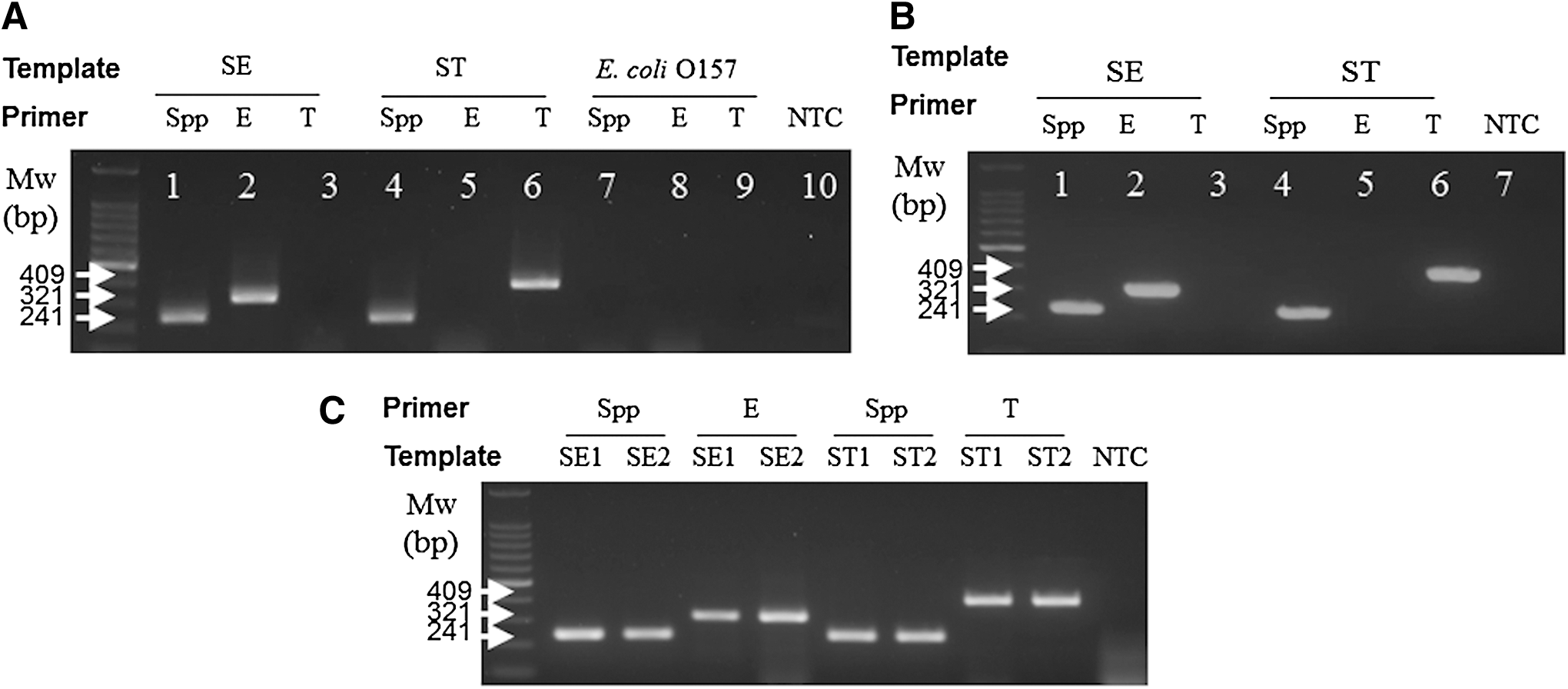
Detection of Salmonella species with Spps.
To determine the Salmonella genomic DNA detection limit for the developed PCR method, genomic DNA from the Salmonella species tested was diluted from 3 × 10⁵ copies (1.6 ng) to 3 × 100 (1.6 × 10⁻⁵ ng) and singleplex (i.e., with one pair of serovar-Spps) convection PCR was performed (Fig. 2). For Salmonella Enteritidis with the Salmonella spp. primers, Spp, a single copy level could be detected (Fig. 2A). The Salmonella Enteritidis-specific primers could detect Salmonella Enteritidis a copy level of 10 (Fig. 2B). For Salmonella Typhimurium, the Spps could detect a copy level of 10 (Fig. 2C). The Salmonella Typhimurium-specific primers could also detect Salmonella Typhimurium a copy level of 10 (Fig. 2D). These data were obtained with 30 cycles in a 21-min operation mode.
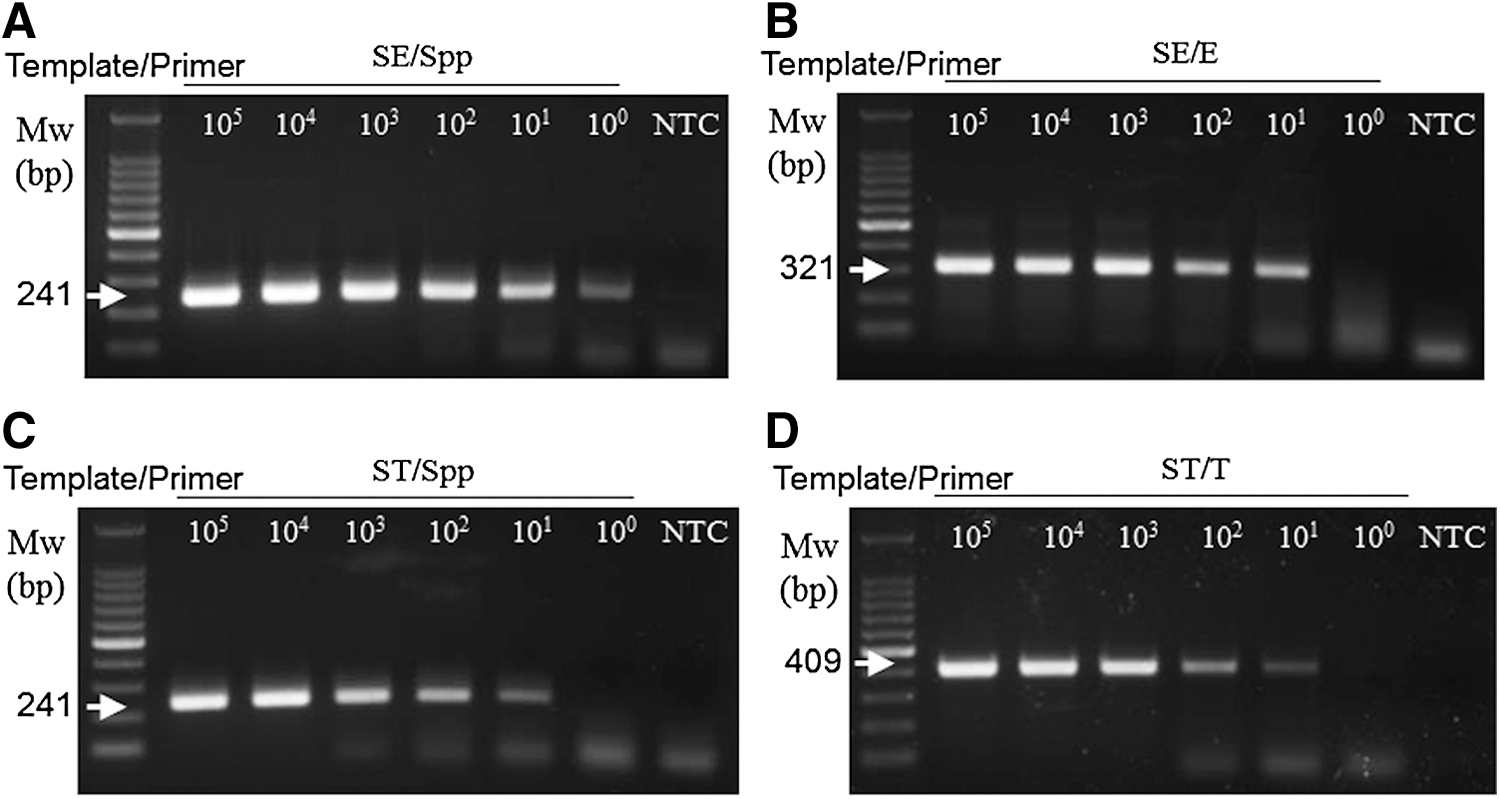
Determination of the genomic DNA detection limits of Salmonella in singleplex convection PCR. Template and primer sets used were SE and Spp primer set
Specificity and the limits of detection for ultra-fast convection PCR in multiplex mode
Next, multiplex detection of Salmonella species by convection PCR was tested. The Salmonella spp. primers, Spp, and the serovar-specific primers for Salmonella Enteritidis and Salmonella Typhimurium were mixed together and used for rapid PCR identification of Salmonella species. In this experiment, mixtures of the same amounts of the two genomic DNA samples were prepared. Each individual genomic DNA sample (Lanes 1–8 in Fig. 3) and a combination of genomic DNA from the two different species (lanes 9–12 in Fig. 3) were used as templates for convection PCR amplification. As anticipated, amplified DNA bands for Salmonella spp. detection at 241 bp and Salmonella Enteritidis detection at 321 bp were observed when Salmonella Enteritidis genomic DNA was used as a template. No amplification of the DNA band at 409 bp, which is specific for Salmonella Typhimurium, was observed (Fig. 3, lanes 1–4). Similar results were obtained for DNA amplification of Salmonella Typhimurium genomic DNA with the primer mixtures (Fig. 3, lanes 5–8). Amplified DNA bands for Salmonella spp. detection at 241 bp and Salmonella Typhimurium detection at 409 bp were observed when Salmonella Typhimurium genomic DNA was used as a template. No amplification of the DNA band at 321 bp, which is specific for Salmonella Enteritidis, was observed. When convection PCR was performed with a mixture of template (genomic DNA of both Salmonella Enteritidis and Salmonella Typhimurium) with the primer mixtures, duplicate and triplicate DNA amplification bands with the expected sizes, depending on the mixture of primers used, were successfully amplified (Fig. 3, lanes 9–12).
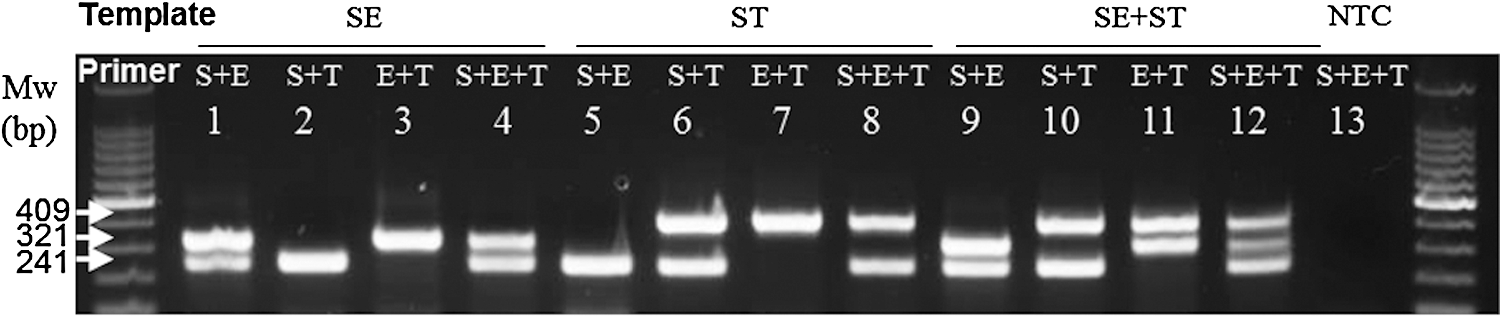
Multiplex identification and differentiation of Salmonella spp., SE and ST. Convection PCR was performed with genomic DNA samples from SE (lanes 1–4) and ST (lanes 5–8), and a 1:1 mixture of the two genomic DNA samples (lanes 9–12). The Spp set and the SE- and ST-specific primer sets (S, E or T) were mixed and used in multiplex convection PCR. DNA amplicons of expected sizes were detected.
The limits of detection were determined for multiplex convection PCR. Genomic DNAs were mixed and diluted from 3 × 10⁵ copies (1.6 ng) to 3 × 100 (1.6 × 10⁻⁵ ng) copies, and multiplex convection PCR was performed (Fig. 4). DNA amplification was clearly visible up to 3 × 10² copies and faintly visible at 3 × 101 copies (1.6 × 10⁻⁴ ng). We would like to emphasize that ∼30 genome equivalents, subpicogram quantities, were detected in the multiplex mode using the convection PCR method. These data were obtained with 30 cycles in a 21-min operation mode.
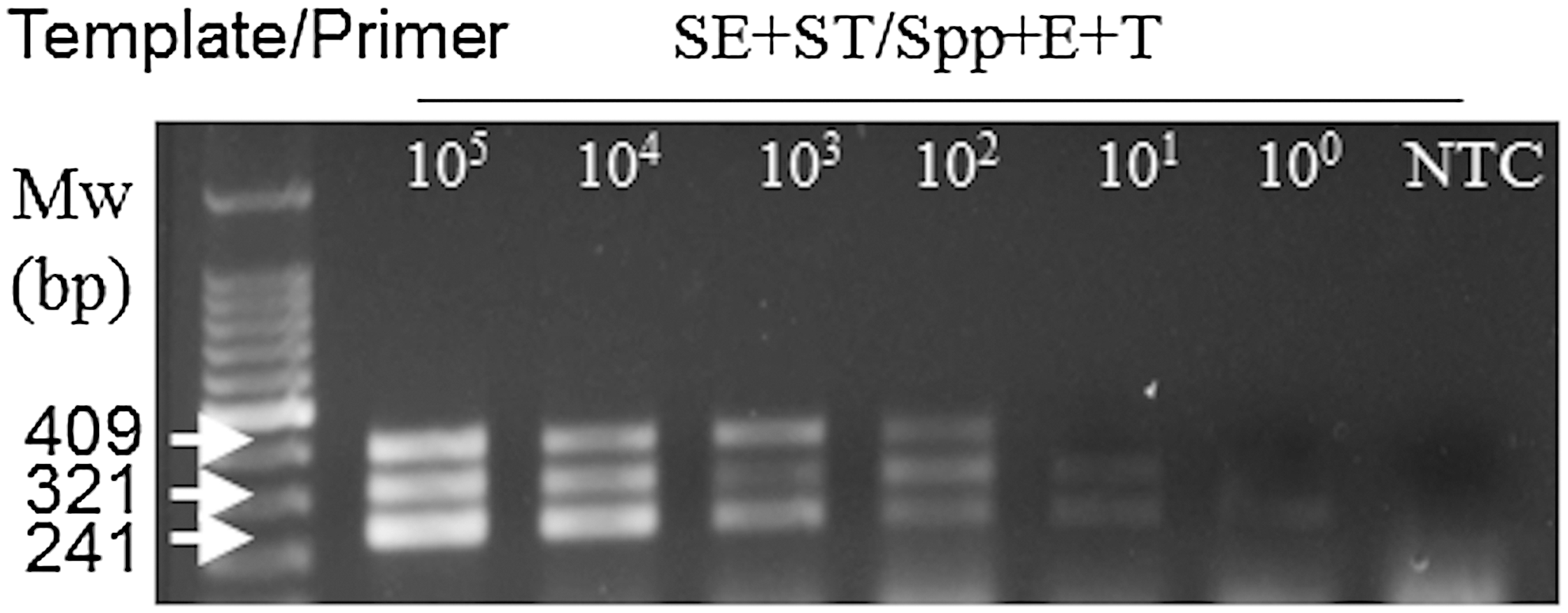
Determination of the genomic DNA detection limits of Salmonella in multiplex convection PCR. Genomic DNA samples isolated from SE and ST were mixed in a 1:1 ratio, serially diluted, and used as template. A mixture of the Spp set and the SE- and ST-specific primer sets (E or T) was used in multiplex convection PCR.
Rapid detection and differentiation of Salmonella species with convection PCR
Next, we tested the minimal time required for the convection PCR to proceed without losing detection sensitivity (Fig. 5). First, we changed the speed setting of convection PCR from T1 (30 cycles in 21 min) to T2 (30 cycles in 18 min). In both speed settings, clear detection of the three multiplex amplification DNA bands was observed (Fig. 5A). Second, convection PCR speed was set to T1, and the PCR operation time (or the number of PCR cycles) was gradually reduced. As shown in Figure 5B, each individual target in the multiplex approach, Salmonella spp. detection and the Salmonella Enteritidis-specific and Salmonella Typhimurium-specific bands, was clearly detected after 10.5-min PCR operation time, which is equivalent to 15 PCR cycles.
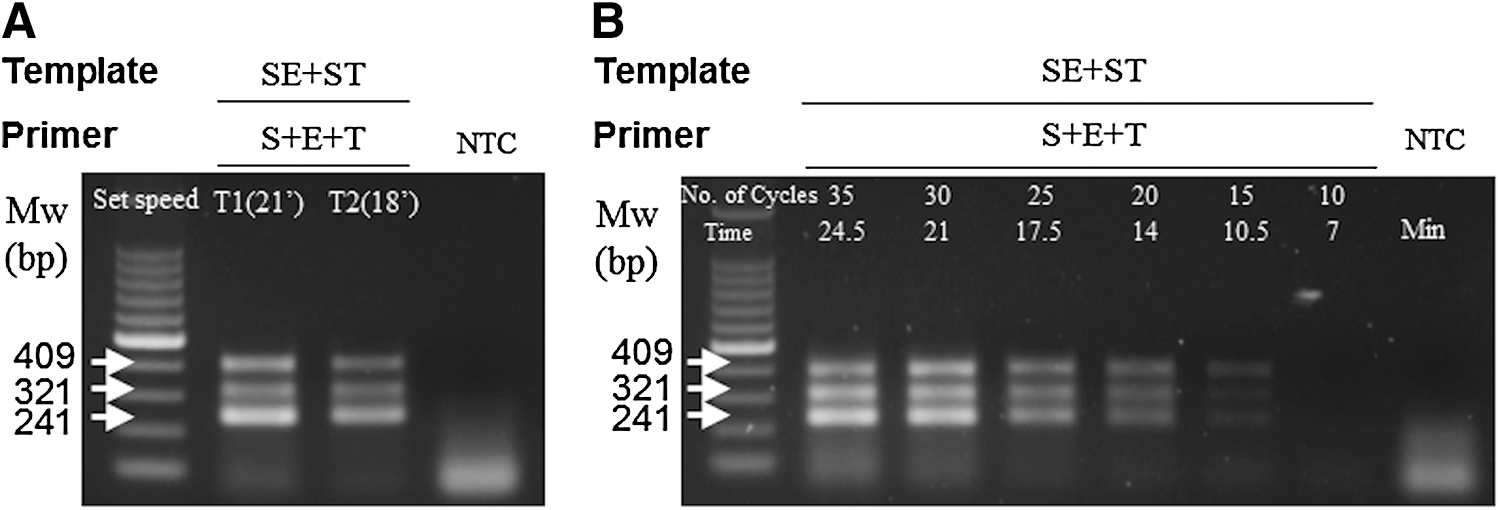
Rapid detection of Salmonella spp., SE and ST, with convection PCR. The reaction speed was changed
Convection PCR with artificially contaminated milk samples
To validate the application of the assay developed in this study, we attempted to detect Salmonella spp., Salmonella Enteritidis and Salmonella Typhimurium, in artificially contaminated milk samples. Fresh milk was inoculated with both Salmonella Enteritidis and Salmonella Typhimurium at an inoculum level of 4.5 × 10⁴–4.5 × 100 CFU/mL and enriched for 4 h. As shown in Figure 6A, three bands for Salmonella spp., Salmonella Enteritidis and Salmonella Typhimurium, were clearly detected. No amplification was observed in the samples with no inoculum. The Salmonella detection limit for contaminated milk was determined to be 4.5 × 100 CFU/mL after a 4-h enrichment. As an internal control, we used beef cytochrome B gene (Song et al., 2017). The internal control bands of 274 bp were clearly detected in the samples tested, including no-inoculated sample (Fig. 6B).
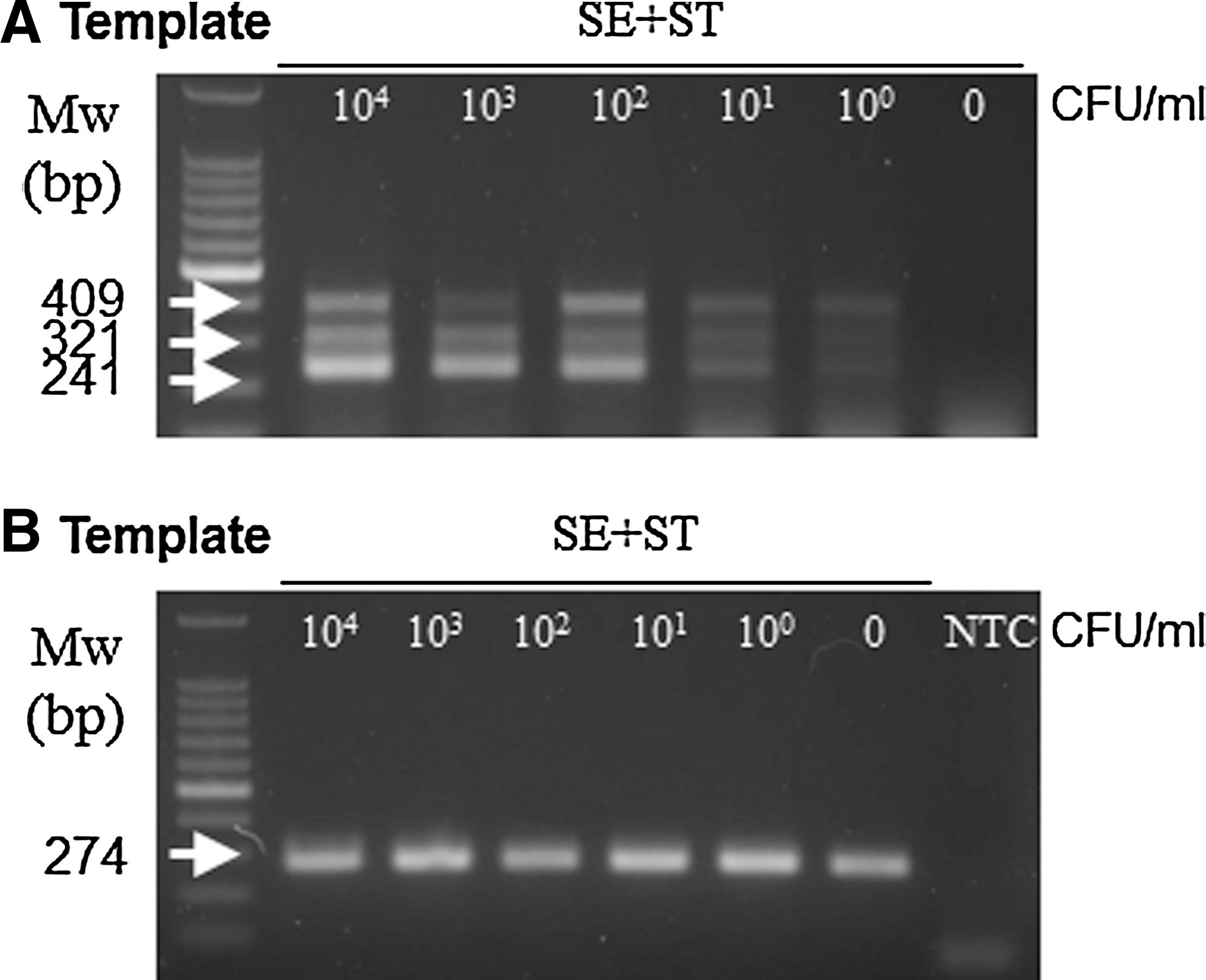
Detection of Salmonella spp., SE and ST, in artificially contaminated milk.
Discussion
Molecular-based detection methods using PCR technology have become an important tool in microbial diagnostics because of their high specificity and sensitivity. To detect and differentiate Salmonella Enteritidis and Salmonella Typhimurium, various gene loci have been used as targets, including fliC, IE, sdf, sefA, spy, and STM4495 (de Freitas et al., 2010; Zhang et al., 2010; Liu et al., 2012; Paião et al., 2013; He et al., 2016; Chin et al., 2017). For Salmonella spp. detection, invA, ompC, and oriC genes are most commonly used (Germini et al., 2009; McCarthy et al., 2009; de Freitas et al., 2010; Saeki et al., 2013). In this study, we used Salmonella spp. detection primer sets targeting the invA gene, which is widely spread in Salmonella spp. The IE and spy genes were used for the detection and differentiation of Salmonella Enteritidis and Salmonella Typhimurium, respectively. We found that these genes were not present in Heidelberg and Newport serovars by Blast search. These serobars are reported to cover 7% and 10% of outbreaks from 2007 to 2011 in the United States (Andino and Hanning, 2015). However, IE and spy genes are found in Gallinarum and Saintpaul serovars, respectively. To detect other Salmonella serotypes with the method developed in this study, each Salmonella serotype specific primer set needed to be developed. To make the gel patterns distinguishable with the current gel electrophoresis technology, the number of Salmonella serotypes to be tested may be limited. In this case, the method developed in this study can be used with the combination of the sequence-based technology.
Our multiplex PCR reaction was completed in 21 min (30 cycles), making it an ultra-fast method for the detection of Salmonella. The PCR running time could be reduced to 10.5 min without losing sensitivity. This method is the fastest time period reported to date for Salmonella detection and differentiation using PCR technology. In most cases, between 1.5 and 2.5 h of PCR operation time is required.
Our data suggest that the ultra-fast convection PCR method is highly sensitive. We could detect 3–30 copies (equivalent to 16–160 fg) of Salmonella Enteritidis and Salmonella Typhimurium in singleplex mode and 30 copies (equivalent to 160 fg) in multiplex mode. This sensitivity is comparable with and/or higher than other reported methods. The detection limits of previously reported endpoint PCR methods are ∼1–2 pg of DNA (Shanmugasundaram et al., 2009; He et al., 2016) or 20–30 copies (Liu et al., 2012). It is generally accepted that real-time PCR is more sensitive than endpoint PCR. However, our data revealed method sensitivity comparable with real-time PCR analyses, where the sensitivity was reported to be ∼10 genome equivalents (Suo et al., 2010; Zhou et al., 2014).
We could detect 4.5 × 100 CFU/mL of either Salmonella Enteritidis or Salmonella Typhimurium with artificially contaminated milk. After 4 h of enrichment, the limit of detection was maintained with the contaminated milk. The milk has indigenous microbes and biomolecules such as DNA and casein and fat, and these can be PCR inhibitors. DNA from dead bacteria may give false positive results. In our data, no band appeared in no-Salmonella contaminated milk, therefore there was no false positive result detected. It was suggested that more than 8 h of pre-enrichment was required for the detection of Salmonella (Liu et al., 2012). We employed the pre-enrichment time of 4 h and the sensitivity acquired in this study is better than or comparable with other previously reported data, with sensitivities from ∼6 × 10²–103 (McCarthy et al., 2009; Zhai et al., 2014) to 100 CFU/mL (Germini et al., 2009; de Freitas, 2010).
Conclusions
In this study, we demonstrated that the detection of Salmonella spp. is achievable using convection PCR at ultra-fast speed of 21 min in both singleplex and multiplex modes. The detection sensitivity was as low as 1.6 fg of gDNA for each Salmonella spp., Salmonella Enteritidis and Salmonella Typhimurium. The PCR running time could be reduced to 15 min without losing the detection sensitivity. This method could detect 4.5 × 100 CFU/mL of Salmonella spp., Salmonella Enteritidis and Salmonella Typhimurium, in artificially contaminated milk after 4 h enrichment. We believe that the ultra-fast speed, specificity, and sensitivity of the molecular detection method presented in this study offer a reliable strategy for Salmonella spp. detection and Salmonella Enteritidis and Salmonella Typhimurium differentiation. By designing additional specific primer, this method can easily be extended to detect and differentiate other bacterial species.
Footnotes
Acknowledgments
This study was supported by a grant from the Ministry of Trade, Industry, and Energy and the Korea Institute for the Advancement of Technology (N0001697, 2015). The pathogens used in this study were provided by the Korea National Culture Collection for Pathogens. Authors appreciate Prof. E.J. Lee at Kyung Hee University for guidelines and support for Salmonella cultivation.
Disclosure Statement
No competing financial interests exist.