




Abstract
The objective of this study was to determine the prevalence, serotypes, antimicrobial resistance phenotypes, and pulsed-field gel electrophoresis (PFGE) patterns of Salmonella recovered in feces and mesenteric and prefemoral lymph nodes (LNs) from cohorts of calves with and without a confirmed outbreak of salmonellosis. In a prospective cohort study, 160 calves from four farms without a reported outbreak (nonoutbreak farms) were sampled at farm and harvest. In addition, harvest samples from 80 calves of two farms with a confirmed outbreak (outbreak farms) were collected. A culture protocol for Salmonella isolation was applied for all samples and recovered isolates were further characterized by serotyping, antimicrobial susceptibility testing, and PFGE. Among nonoutbreak farms, Salmonella was recovered from 0% (0/160) farm fecal samples, 3.7% (6/160) harvest fecal swabs, 21.9% (35/160) mesenteric LNs, and 0.6% (1/160) prefemoral LNs. Serotypes identified in nonoutbreak herds included Salmonella Typhimurium, Cerro, Hartford, and Newport. Most isolates (64.3%, 27/42) exhibited a unique multidrug-resistant (MDR) phenotype, including resistance to extended-spectrum cephalosporins. Salmonella prevalence in harvest fecal samples and prefemoral LNs among calves from outbreak farms was numerically higher, but not significantly different than those without an outbreak. Serotypes recovered from outbreak farms included Salmonella Heidelberg and Typhimurium, and the monophasic Salmonella Typhimurium strains 4,5,12:i:- and 4,12:i:-, which have been also reported as highly pathogenic in humans. All isolates (33/33) exhibited an MDR phenotype. Salmonella strains recovered from ill calves in two outbreaks had indistinguishable PFGE patterns, suggesting between-farm transmission. In addition, the genotype of Salmonella Heidelberg causing an outbreak among calves was recovered from three prefemoral LNs of surviving members of the cohort at harvest. Implementation of preharvest biosecurity measures (limited personnel and visitor traffic, vehicle, footwear, and utensils disinfection) should be highly recommended to decrease the prevalence of Salmonella on farms and safeguard the food safety.
Introduction
S
Highly pathogenic serotypes have the ability to disseminate systemically (Andino and Hanning, 2015) using the lymphatic system machinery. Outbreaks of salmonellosis in cattle may lead to colonization of peripheral lymph nodes (LNs); moreover, prior studies have demonstrated that peripheral LNs harboring Salmonella are a source for ground beef contamination (Arthur et al., 2008; Gragg et al., 2013; Brown et al., 2015). Strategies routinely used in slaughter plants for carcass decontamination are known to be effective and the prevalence of foodborne pathogens on the carcass surface after postharvest interventions is typically very low (Brichta-Harhay et al., 2008). However, Salmonella harbored in the peripheral LNs is not likely to be affected by interventions targeted at surface contamination of the carcass.
The market for veal-derived products, including ground veal, has increased nationwide in the last decade (USDA, 2017). Calves are highly susceptible to clinical disease caused by Salmonella; yet, the impact that clinical salmonellosis in calves has on the recovery of Salmonella in LNs incorporated in the ground veal production is unknown. Thus, this study aimed to compare the prevalence and characterization of Salmonella recovered in feces and LNs from cohorts of calves with and without a confirmed outbreak of salmonellosis. Understanding the epidemiology and foodborne transmission of pathogenic strains of Salmonella in cattle facilitates the development of control strategies and interventions to protect animal and public health.
Materials and Methods
Study design
This study was conducted from May to December 2015, with approval from the Ohio State University Institutional Animal Care and Use Committee (No. 2015A00000131). Data reported in this study include results from samples collected in a planned prospective cohort study and samples collected opportunistically in a cross-sectional manner from cohorts of calves that had experienced an outbreak of salmonellosis.
Prospective cohort study
A convenience sample of four calf farms within a single vertically integrated production system was selected based on the criteria of raising calves of similar age to be harvested during late summer and being located near the research facility. Farms were separated from each other by ∼20 miles. Within this production system, auction-purchased male calves from the Eastern United States were grouped into cohorts of about 175 calves and transported to contracted grower farms located in the Midwest. Calves were housed in individual stalls during the first 2 months and transitioned to pair housing until harvest, raised in closed barns with natural or fan ventilation, fed a proprietary formulation of milk replacer, and harvested in a single abattoir.
Forty calves within each farm were selected by systematic random sampling. Each calf was longitudinally sampled at farm and harvest. At farm, ∼4 g of feces were collected by rectal retrieval using a clean examination glove for each sample. At harvest, feces from the recto-colon portion of the intestinal tract was retrieved using a sterile cotton culture swab (BBL, Spark, MD), mesenteric LNs were collected directly from the viscera, and prefemoral LNs were retrieved from final carcasses in the chiller room after the last calf in the cohort was harvested. Samples were handled aseptically and cohorts were harvested with at least an 8-d difference to prevent within- and between-cohort contamination.
Opportunistic sampling
During the course of the prospective study, the consulting veterinarian for the production system diagnosed outbreaks of salmonellosis on three additional calf farms (A, B, and C). Signs of affected calves included severe diarrhea, fever, and abrupt death. Fecal samples from 18 clinically ill calves, 5 from farm A, 3 from farm B, and 10 from farm C, were submitted to our laboratory for Salmonella culture. Additional samples (fecal swabs and mesenteric and prefemoral LNs) were collected from the first 40 slaughtered calves from farms A and B at the harvest facility. Due to lack of available personnel, farm C was not sampled at harvest.
After collection, all samples were transported on ice to the laboratory and kept at 4°C until processing.
Laboratory procedures
Salmonella culture isolation from fecal samples
Four grams of the farm fecal samples was homogenized and individually enriched into 36 mL Tetrathionate broth (TTB) (BD Co., Spark, MD). Harvest fecal swabs were enriched into 9 mL TTB. After incubating 18–24 h at 37°C, 0.1 mL TTB was pipetted into 10 mL Rappaport-Vassiliadis (RV) broth (BD Co.), incubated at 42°C, and streaked the following day onto Xylose-Lysine-Tergitol-4 (XLT-4) agar (Remel, Lenexa, KS). Following overnight incubation at 37°C, a single colony per plate compatible with Salmonella phenotype (black or black-centered with a yellow periphery) was transferred onto MacConkey agar (BD Co.) and confirmed by positive reaction to triple sugar iron, negative reaction to urease, and slide agglutination with polyvalent antisera (Cedarlane, Burlington, NC).
Salmonella culture isolation from LNs
All LNs were processed for Salmonella isolation following a previously described protocol with some modifications (Gragg et al., 2013). Briefly, surrounding fat and fascia were removed. Each LN was individually submerged in boiling water for 4–6 s and placed immediately in a sterile filtered bag (Nasco, Fort Atkinson, WI). After pulverizing with a rubber mallet, 50 mL of buffer peptone water (BPW) (BD Co.) was added to each bag and incubated at 37°C overnight. Then, 0.1 mL of the inoculated BPW was transferred into 10 mL RV broth. At this point, the protocol continued identical steps as described for Salmonella isolation from feces.
Pulsed-field gel electrophoresis
All Salmonella isolates recovered from feces and LNs were genotyped using pulsed-field gel electrophoresis (PFGE) following a previously standardized protocol (Hunter et al., 2005). Briefly, agarose plugs with intact DNA from Salmonella isolates and Salmonella Branderup H9812 (molecular size marker) were digested using the XbaI restriction enzyme (Roche Diagnostics, Mannheim, Germany). Electrophoresis was performed in a CHEF-DRIII chamber (Bio-Rad Laboratories, Hercules, CA). Similarities of banding patterns were evaluated using GelComparII 6.6® software (Applied Maths, Ghent, Belgium). Dendrograms were created using the Dice coefficient of similarity and the unweighted pair group method with arithmetic mean. Salmonella isolates (n = 12) with a distinguishable PFGE banding pattern were submitted to the National Veterinary Services Laboratory (USDA, Ames, IA) for serotyping. Isolates recovered from the same farm on the same day with an indistinguishable PFGE pattern were presumed to be the same serotype.
Antimicrobial susceptibility testing
All Salmonella isolates were tested individually for susceptibility against 12 antimicrobials using the Kirby-Bauer disk diffusion method (Hendriksen, 2002). Sensi-discs (BD Co.) were impregnated with ampicillin, ceftriaxone, cefoxitin, ceftiofur, chloramphenicol, tetracycline, ciprofloxacin, streptomycin, gentamicin, neomycin, nalidixic acid, and sulfamethoxazole–trimethoprim. Escherichia coli (ATCC 25922), Pseudomonas aeruginosa (ATCC 27853), and Staphylococcus aureus (ATCC 25923) were used as controls. Isolates were classified as susceptible, intermediate, or resistant based on zone diameters and breakpoints established by the Clinical and Laboratory Standards Institute (CLSI, 2015) or as described previously (Pereira et al., 2014; Valsesia et al., 2015) when breakpoints were not available. Isolates showing resistance to three or more classes of antimicrobials were considered multidrug resistant (MDR) (NARMS, 2013).
Statistical analysis
The frequency and proportion of samples positive for Salmonella, serotypes, and antimicrobial resistance patterns were compared between farms (1, 2, 3, 4, A, B) and according to farm type (outbreak and nonoutbreak). Results from Salmonella culture and antimicrobial resistance testing were analyzed further in SAS (v. 9.4; SAS Institute, Cary, NC). To evaluate the differences in likelihood of Salmonella recovery in feces or LNs between outbreak and nonoutbreak farms, separate logistic regression analyses were performed. The models included the Salmonella culture results for each sample type as dichotomous response variable (positive and negative). Farms and farm type were included as fixed effects. Two additional and similar logistic regression models were used to assess the differences in MDR or ceftiofur resistance according to farm type. For all models, p-values <0.05 were considered statistically significant.
Results
Salmonella recovery among cohorts without a reported outbreak
A total of 640 samples were collected from 160 veal calves from four farms without a reported clinical outbreak of salmonellosis. Salmonella was recovered from 6.6% (42/640) of samples, with a prevalence of 0% (0/160) farm feces, 3.7% (6/160) harvest feces, 21.9% (35/160) mesenteric LNs, and 0.6% (1/160) prefemoral LNs (Table 1). At least two calves from each farm were positive for Salmonella at harvest. However, there were substantial differences in the prevalence between farms. For instance, all fecal swabs collected from farm 2 and 3 were negative for Salmonella. From the 35 mesenteric LNs harboring this pathogen 71.4% (25/35) were from farm 1. Out of 160 prefemoral LNs collected from the four farms, only one was Salmonella positive, which belonged to the farm with the highest prevalence in mesenteric LNs.
Clinical samples from outbreak farms were not used to calculate the prevalence of Salmonella at farm.
Farm C was not sampled at harvest.
p-Values were obtained by a logistic regression analysis that assessed the prevalence of Salmonella in comparable samples between outbreak and nonoutbreak farms.
Confidence intervals (95% CI) were calculated using farm as the level of clustering and stratified by farm type (outbreak and nonoutbreak).
Salmonella serotypes Cerro, Hartford, Newport, and Typhimurium were identified among the 42 isolates recovered at harvest from nonoutbreak herds (Table 2). The six isolates recovered from fecal swabs were serotyped as Cerro (n = 4) or Typhimurium (n = 2). Particularly, Typhimurium was also recovered from the only prefemoral LN harboring Salmonella among the four farms and was the most abundant serotype isolated from mesenteric LNs (71.4%, 25/35), followed by Hartford (17.1%, 6/35).
Fecal farm samples from outbreak farms refer to those collected from clinically ill calves.
All Salmonella Typhimurium isolates (64.3%, 27/42) exhibited a unique MDR phenotype (Table 3). In contrast, Salmonella Cerro, Hartford, and Newport were pansusceptible to all antimicrobials in the Kirby-Bauer test.
Farm fecal samples from outbreak farms refer to those collected from clinically ill calves.
AMP (Ampicillin, 10 μg); FOX (cefoxitin, 30 μg); XNL (ceftiofur, 30 μg); AXO (ceftriaxone, 30 μg); CIP (ciprofloxacin, 5 μg); CHL (chloramphenicol, 30 μg); GEN (gentamicin, 10 μg); NX (nalidixic acid, 30 μg); NEO (neomycin, 30 μg); STR (streptomycin, 10 μg); SXT (sulfamethoxazole-trimethoprim, 23.75; 1.25 μg); and TET (tetracycline, 30 μg).
Indistinguishable Salmonella PFGE patterns were identified in isolates from within-carcass or within-farm. For instance, all 27 Salmonella Typhimurium recovered from farm 1 depicted an indistinguishable banding pattern (Figs. 1 and 2A). All six Salmonella Hartford recovered from mesenteric LNs from farm 2 were also indistinguishable based on PFGE.
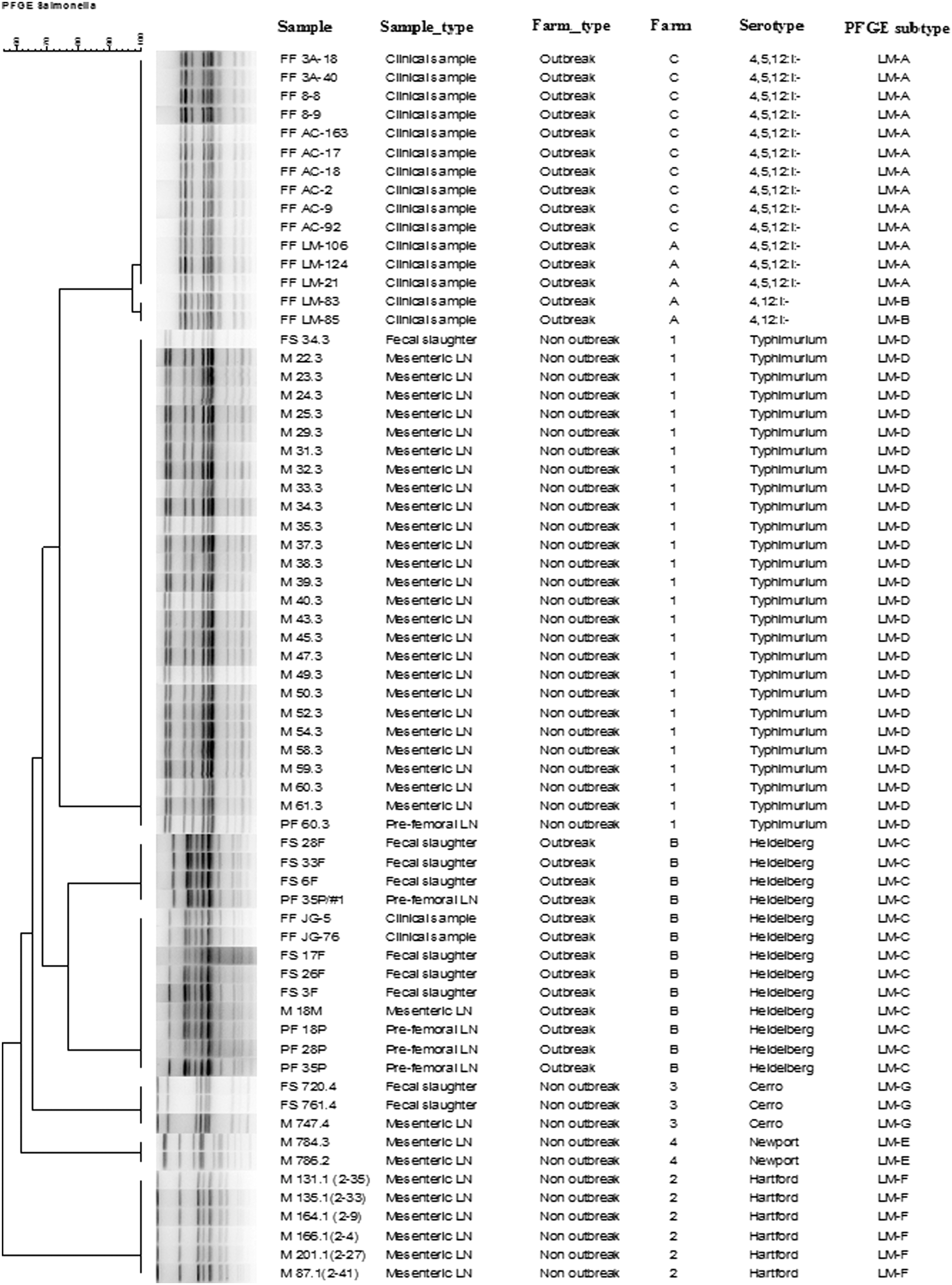
Dendrogram showing pulsed-field gel electrophoresis profiles for 75 Salmonella isolates recovered from veal calves at farm and harvest. Information about sample type, farm type (outbreak and nonoutbreak), farm, and serotype is included.
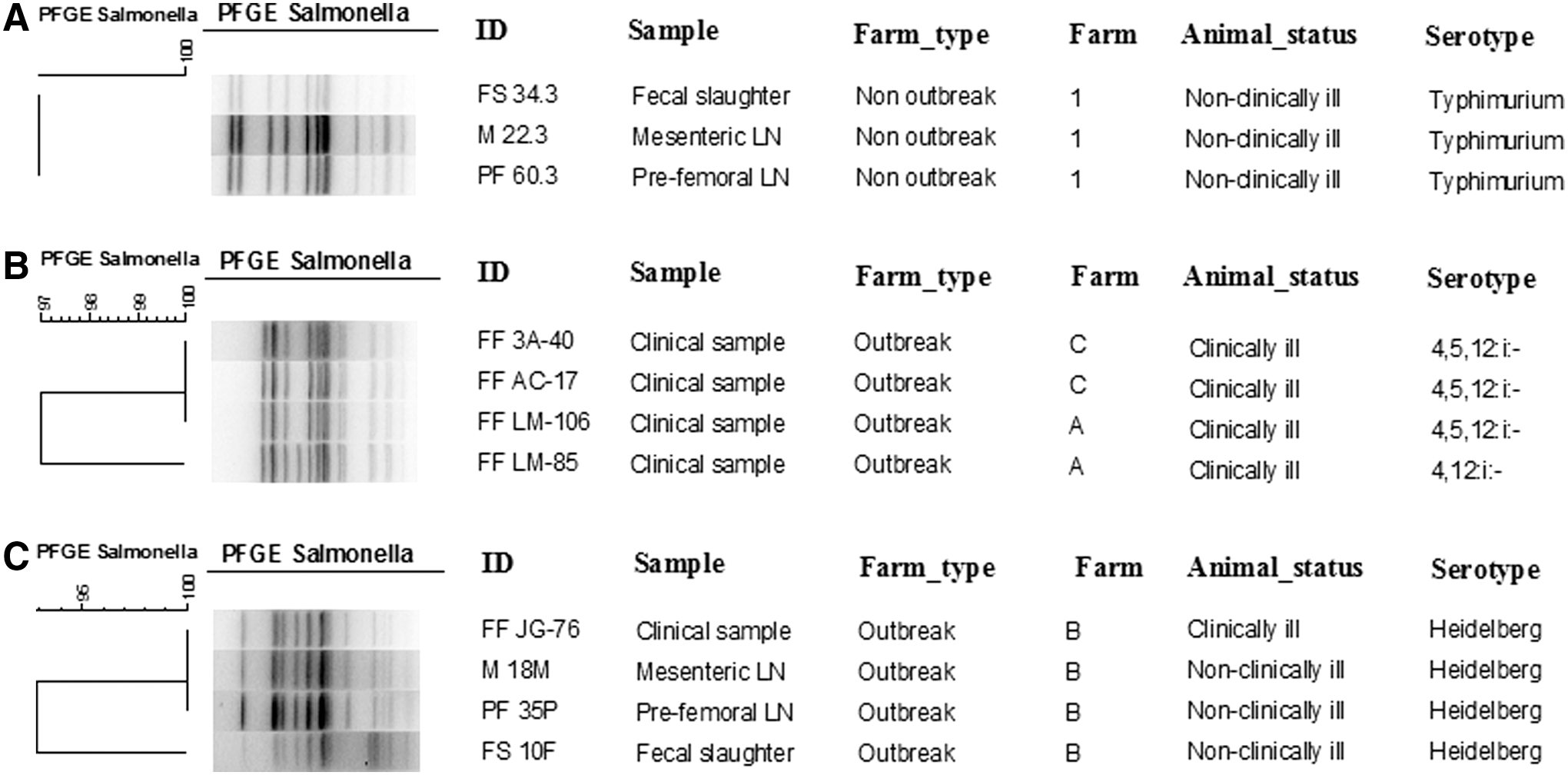
Dendrograms showing pulsed-field gel electrophoresis profiles for Salmonella isolates recovered from veal calves. Indistinguishable pulsotypes were observed
Salmonella recovery among cohorts with an outbreak
A total of 33 isolates were recovered from outbreak farms. All fecal samples from clinically ill calves (18/18) were Salmonella positive. Twelve (15%) of the 80 calves sampled at harvest were positive in at least one sample yielding 15 isolates, mostly originating from farm B (87%, 13/15) (Table 1). The prevalence was 11.3% (9/80), 1.3% (1/80), and 6.3% (5/80) in fecal swabs, mesenteric LNs, and prefemoral LNs, respectively.
Salmonella serotypes frequently associated with human salmonellosis (Patchanee et al., 2008; Soyer et al., 2009) were identified in clinically ill calves, including the monophasic Salmonella Typhimurium (mST) strains 4,5,12:i:- and 4,12:i:- from farms A and C, and Heidelberg from farm B. From the 15 harvest isolates, Salmonella Heidelberg was identified in feces and mesenteric and prefemoral LNs in calves from farm B. Typhimurium, which was not isolated from clinical samples, was recovered from prefemoral LNs of two calves from farm A.
All 33 isolates recovered from outbreak herds exhibited an MDR phenotype, and 88% of those were identified resistant to extended-spectrum cephalosporins. Frequency of antimicrobial resistance patterns according to sample type and farm type is summarized in Table 3.
Two nearly identical PFGE patterns (>97% similar) were identified in mST strains recovered from clinically ill calves from farms A and C (Figs. 1 and 2B), suggesting between-farm transmission of the outbreak strain. In addition, a clonal PFGE pattern (100% similar) was observed in all Salmonella Heidelberg recovered from clinically ill calves, harvest fecal samples, and mesenteric and prefemoral LNs within farm B (Fig. 2C), suggesting transmission of pathogenic Salmonella from farm to carcasses.
Comparison between outbreak and nonoutbreak cohorts
Across all farms, Salmonella was detected in 6.3% (15/240) of harvest fecal samples, 15% (36/240) of mesenteric LNs, and 2.5% (6/240) of prefemoral LNs. Nonsignificant differences were observed in the prevalence of Salmonella in fecal swabs and prefemoral LNs according to farm type (p > 0.05); however, outbreak farms had a numerically higher recovery of Salmonella in both sample types. Substantial variation in the prevalence of Salmonella in mesenteric LNs was detected among farms with the proportion of positive mesenteric LNs being statistically higher (p = 0.004) in nonoutbreaks farms; it should be noted that 25 of the 35 positive mesenteric LNs were recovered from a single farm.
High MDR was observed in Salmonella isolates recovered from both farm types. Despite that nonstatistical differences were detected (p > 0.05), a numerically larger proportion of isolates from outbreak farms exhibited an MDR phenotype (100%, 33/33), compared to 64% (27/42) of those recovered from nonoutbreak farms. In addition, resistance to extended-spectrum cephalosporins was observed in 87% and 64% of isolates recovered from outbreak and nonoutbreak farms, respectively. The Salmonella serotypes characterized as MDR differed from those with a pansusceptible phenotype; MDR included Salmonella Typhimurium, Heidelberg, 4,5,12:i:-, and 4,12:i:-. Contrarily, pansusceptible serotypes recovered from nonoutbreak farms (35.7%, 15/42) were identified as Salmonella Hartford, Cerro, and Newport.
Discussion
To our knowledge, prior research has not assessed the prevalence of Salmonella in veal calves at slaughter in the United States or the prevalence of Salmonella in surviving members of cohorts that experienced an outbreak of salmonellosis; these were assessed in this study.
Highly pathogenic Salmonella serotypes that were circulating among outbreak farms and were associated with high calf mortality, Heidelberg, 4,5,12:i:- and 4,12:i:-, have been also identified as common causes of illness in humans (Demczuk et al., 2003; Switt et al., 2009). Salmonella could have been introduced into these herds through a variety of routes, including contaminated feed and water, wild animals, personnel traffic, or infected calves (Anderson et al., 2001; Nielsen et al., 2011). More information on the biosecurity measures would be required to establish an epidemiological linkage of the between-farm transmission. However, the characterization of indistinguishable PFGE patterns from clinical isolates of two outbreak farms and clinical isolates and peripheral LNs within an outbreak cohort, certainly suggests that transmission of these pathogenic Salmonella serotypes from calf farms to harvest occurs, which could jeopardize the food safety. Preharvest strategies to decrease the colonization of cattle are highly recommended to prevent the entry of this pathogen into the food supply.
High levels of MDR were observed in this study. All isolates (33/33) from outbreak and 64.3% (27/42) from nonoutbreak farms exhibited MDR phenotypes. These phenotypes included resistance to third-generation cephalosporins, the drugs for treating salmonellosis in children and invasive infections in adults (Dunne et al., 2000). Our MDR results are higher than what has been reported from heifers fecal pats (Pereira et al., 2015) or from LNs from adult cattle. In a study assessing the prevalence of Salmonella in subiliac LNs from cull and feedlot cattle, Gragg et al. (2013) identified 8.3% isolates with MDR phenotypes. Multidrug resistance among isolates from cattle with clinical signs of salmonellosis is not uncommon (Cummings et al., 2009). However, Salmonella recovered from healthy cows display usually pansusceptible phenotypes (Ray et al., 2007), which contrast the high prevalence of MDR strains recovered from apparently healthy calves in this study. Data related to antimicrobial therapies in these calves were not provided, and therefore, assumptions about selective pressure imposed by possible therapies cannot be confirmed. Nevertheless, determinants associated with the high prevalence of MDR in these herds should be assessed to design strategies for prevention and mitigation.
Clinically healthy calves from nonoutbreak farms were harboring Salmonella. Despite the zero prevalence observed on farm, at least one Salmonella-positive sample was collected at harvest from all nonoutbreak farms, including fecal swabs or mesenteric LNs. In particular, the proportion of mesenteric LNs harboring Salmonella (21.9%) was significantly higher compared to outbreak farms (1.25%). Since the recovery of Salmonella in mesenteric LNs from healthy calves has been reported (Samuel et al., 1980) and LNs colonization can occur after a few hours of a single inoculation event (Edrington et al., 2016), our results suggest that (1) at the time of the farm visits, calves were already colonized, but not shedding Salmonella, (2) calves became colonized at the farm after our first sampling, without reporting clinical outbreaks, or (3) calves became colonized during lairage or transportation from the farm to the harvest facilities, without commencing the fecal shedding (Puyalto et al., 1997). Mesenteric LNs are not incorporated in the ground veal production; thus, Salmonella harbored in the tissues represent a low risk for food contamination. However, mesenteric LNs could be used as indicators of the prevalence of Salmonella and associated serotypes in veal calves.
The data presented in this study indicate that calves from farms with a reported outbreak had a numerically higher recovery of Salmonella in harvest fecal samples and prefemoral LNs, compared to nonoutbreak farms. While further research is needed to support statistically these differences, our results suggest that clinical salmonellosis in veal calves might represent a risk to the food safety, since prefemoral LNs are commonly incorporated for the ground veal production.
Conclusions
Highly pathogenic Salmonella serotypes identified in clinically ill people have been propagated among calf herds causing outbreaks with fatal consequences. Salmonellosis outbreaks in calves might be a risk factor for recovery of Salmonella at harvest. In contrast to what has been previously reported in adult cattle, both apparently healthy and clinically ill calves are reservoirs of MDR Salmonella that can contaminate the food supply. Thus, assessment of farm management practices and biosecurity measures (personnel traffic and disinfection practices) should be highly recommended to protect the health of the animals and the public.
Footnotes
Acknowledgments
We want to thank the veal producers and abattoir personnel for all the collaboration provided. Authors gratefully acknowledge the assistance of students O'Shaughnessy, Sharma, Ascot, Strait, and Sotiropoulos during the sample collection and processing.
Disclosure Statement
No competing financial interest exists.