




Abstract
The objective of this study was to assess the effect of washing on Staphylococcus aureus reduction in salads and the effect of reheating on Bacillus cereus vegetative cells and spores reduction in fried rice at restaurants using the stochastic food safety objective (FSO) tool. The leaf vegetable was inoculated with S. aureus and washed with tap water, 100 ppm of NaClO, or 30 ppm of slightly acidic electrolyzed water (SAEW) for either 60 s or 5 min. The washing effect of 30 ppm SAEW was greater than that of 100 ppm NaClO. Based on the FSO concept, washing leaf vegetables with 30 ppm SAEW for 5 min was the most efficient control measure for S. aureus in salads. In addition, the salad should be consumed within 4 h at 25°C and 2 h at 35°C after 5 min of washing with 100 ppm NaClO or 30 ppm SAEW. The fried rice was first inoculated with B. cereus vegetative cells or spores and was then reheated in a frying pan at medium (internal temperature of fried rice: 69.2°C–78.8°C) or high heat (internal temperature of fried rice:103.8°C–121.4°C) or in a microwave oven (internal temperature of fried rice:86.3°C–90.6°C) for 3 or 4 min. Based on the FSO, reheating rice in a microwave oven was the most efficient control measure for B. cereus vegetative cells and spores in fried rice. The holding time for fried rice can be extended up to 6 h at 25°C, 3 h at 35°C, and 2 h at 45°C with reheating. Microbiological hazards in salads and fried rice can be controlled by washing with a sanitizer and reheating, respectively and then by controlling of holding temperature before being served at restaurants.
Introduction
T
The lack of sanitation knowledge and improper food handling practices have been identified as two of the main potential health risk factors in food service establishments (Mitchell et al., 2007; Chung et al., 2010; Onyeneho and Hedberg, 2013). Several studies show the effectiveness of food sanitation management tools, such as Hazard Analysis and Critical Control Point (Soriano et al., 2002; Cenci-Goga et al., 2005) and employees' sanitary education (Park et al., 2010) to control food safety hazards in food service establishments.
Since fresh produce is not subjected to sterilization step at the restaurant, washing is one of the most important intervention methods. Several recent studies have demonstrated the efficacy of sanitization on the reduction of foodborne pathogen in fresh vegetables (Banach et al., 2017; Jung et al., 2017). Jung et al. (2017) reported that soaking the lettuce with electrolyzed water prevented cross-contamination among lettuce heads and controlled bacterial population during crisping at a retail setting. Pathogen reduction was also dependent on the organic load and temperature of wash water (Banach et al., 2017).
The FSO (food safety objective) is defined as the maximum frequency and/or concentration of a microbiological hazard in food at the time of consumption that provides the appropriate level of health protection (Cole, 2004). This can be interpreted as the acceptable level of hazard in the food served to consumers directly at the food service establishment. Thus, the FSO can be used as a tool to evaluate the effect of control measures, such as washing, heating, and disinfection, used to eliminate a microbiological hazard or reduce it to an acceptable level (Cole, 2004). In our preliminary study, we purchased salad and fried rice dishes from Western and Chinese restaurants in Seoul, respectively, and analyzed the microbiological qualities of the salad and fried rice qualitatively and quantitatively. The result of quantitative analysis showed that Staphylococcus aureus was detected in 10 of 65 salad dishes (15.4%) and Bacillus cereus was detected in 16 of 60 fried rice dishes (26.7%). These results indicate that microbiological hazards in foods served at restaurants need to be controlled.
Therefore, we conducted the following analyses. First, we evaluated the effect of washing on S. aureus reduction in leaf vegetables for salad using various sanitizers and the effect of holding temperature on the growth of S. aureus in leaf vegetables after the washing step. In addition, the reduction effect of the reheating method on B. cereus vegetative cells and spores was evaluated and effect of the temperature on the growth of B. cereus vegetative cells and spores in fried rice during the holding step was also compared.
Materials and Methods
Effect of washing and holding temperature on the control of S. aureus on leaf vegetables
S. aureus strain preparation
S. aureus was isolated from the salad served at a Korean traditional restaurant in our previous monitoring study and was maintained at −80°C in the form of beads stock (Viabank™; MWE, Corsham, Wiltshire, UK). It was confirmed to produce the enterotoxins A, G, I (SEA, SEG, and SEI) using a PCR assay (PowerChek™; Kogene Biotech, Seoul, Korea). For each experiment, the stock for one bead of S. aureus producing staphylococcal enterotoxin A was inoculated into a 125-mL Erlenmeyer flask containing 10 mL of sterile Tryptic Soy Broth (Oxoid, Hampshire, England), sealed with a silistopper and incubated on a rotary shaker (VS-8480SR; Vision, Seoul, Korea) at 36°C for 24 h at 140 rpm. The diluted stock culture with 0.1% sterilized peptone water was plated onto the Baird-Parker agar (Oxoid) supplemented with egg yolk tellurite emulsion (MBcell, Seoul, Korea). The plates were incubated at 36°C for 24 h, and the colonies on duplicated plates of each sample were enumerated. Viable cell counts of S. aureus at the end of the incubation period were at ∼10.0 log CFU/g after incubation.
Washing leaf vegetables for salad preparation
Iceberg lettuce, chicory, and cabbage are the most common salad vegetables served in the western restaurants in Korea. Thus, these three types of vegetables were purchased from a local market to investigate the effect of the washing and holding processes on the reduction of S. aureus in salads before serving. To eliminate background microorganisms, each sample was washed by tap water (TW) twice, submerged in 3.6% hydrogen peroxide for 5 min and rinsed with sterile distilled water (Kim et al., 2013). The samples were then dried on sterile aluminum foil under a clean bench for 30 min or more, until the sample dried. A total of 100 μL of prepared S. aureus suspensions was spot inoculated evenly onto 20 different locations on the surface of the iceberg lettuce, chicory, and cabbage (10 g) to achieve ∼3.0 or 6.0 log CFU/g of the sample. Four or five leaves (5 cm2/each) were used. The samples were air dried on sterile aluminum foil under a clean bench for 30 min or more, until they were dried.
Slightly acidic electrolyzed water (SAEW) was produced using a SAEW generator (BC-120; Cosmic Round Korea Co., Seongnam, Korea) that consisted of a nonmembrane electrolytic chamber with anode and cathode electrodes, with available chlorine concentrations (ACCs) of SAEW at 30 ppm. Around 100 ppm of sodium hypochlorite (NaClO; Hanson Hygiene Co., Korea) solution was also prepared by diluting 4% NaClO solution using distilled water. In addition, TW (turbidity 0.050 NTU, residual chlorine 0.4–0.57 mg/L, conductivity 180 μs/cm) was used as a control. The pH and ACC of the treatment solutions were measured using a pH meter (IQ Scientific Instruments, CA) and chlorine test paper (Toyo Roshi Kaisha, Ltd., Japan), respectively. The pH of TW, 30 ppm SAEW, and 100 ppm sodium hypochlorite was 7.0, 5.5, and 9.8, respectively.
Washing of inoculated vegetable samples was performed by submerging each sample in a sterile filter bag (INTERSCIENCE, Paris, France) containing 200 mL of TW, 100 ppm NaClO, or 30 ppm SAEW for 5 min. In addition, washing with SAEW for 60 s was examined to simulate a rinse procedure during salad preparation at restaurants. After treatment, the solutions for each treatment were immediately drained out from the filter bag. A total 90 mL of 0.1% peptone water (BD, Sparks, MD) was added, and subsequently pummeled in a stomacher (INTERSCIENCE) for 2 min. One milliliter of a homogenized sample was diluted with 9 mL of 0.1% sterilized peptone water. The diluted solution was plated onto Baird-Parker agar (Oxoid) supplemented with egg yolk tellurite emulsion (MB Cell). The plates were incubated at 36°C for 24 h, and the colonies on duplicated plates of each sample were enumerated.
Effect of temperature on the growth of S. aureus in leaf vegetables
To investigate effect of the temperature on the growth of S. aureus during holding step after washing, 10 g of iceberg lettuce, chicory, and cabbage was inoculated with 100 μL of diluted S. aureus overnight culture for a target population of ∼2.0 log CFU/g. The inoculated samples were aseptically air dried until the surface on samples was drained completely, put into a filter bag, and incubated at 10, 25, and 35°C. At a selected sampling time, based on the holding temperature of samples, each sample was homogenized using a stomacher with sterile 0.1% peptone water for 2 min. One milliliter of homogenized sample was diluted with 9 mL of 0.1% sterilized peptone water. The diluted solution was plated onto Baird-Parker agar supplemented with egg yolk tellurite emulsion. The plates were incubated at 36°C for 24 h, and the colonies on duplicated plates of each sample were enumerated.
Effect of reheating and holding temperature on the control of B. cereus vegetative cells and spores in fried rice
B. cereus strain and spore preparation
B. cereus was also isolated from fried rice in Chinese restaurant and was maintained at −80°C in the form of beads stock (Viabank; MWE). B. cereus was confirmed by PCR assay using the B. Cereus Detection Kit (PowerChek; Kogene Biotech). For each experiment, stock for one bead of B. cereus was inoculated into a 125-mL Erlenmeyer flask containing 10 mL of sterile nutrient broth (Oxoid), then sealed with silistopper, and incubated on a rotary shaker at 30°C for 24 h at 140 rpm. The diluted stock solution with 0.1% sterilized peptone water was plated onto mannitol egg yolk polymyxin (M.Y.P) agar (Oxoid) supplemented with egg yolk emulsion (MB Cell) and a polymyxin B supplement (Oxoid). The plates were incubated at 30°C for 24 h, and the colonies on the duplicated plates of each sample were enumerated. Viable cell counts of B. cereus at the end of the incubation period ranged from ∼8.0 to 8.5 log CFU/g.
Sporulation of B. cereus was conducted on a nutrient agar (Difco) supplemented with 5 μg/mL MnSO4. The surface of the plate was inoculated with 2 mL of B. cereus vegetative cells. Subsequent spore production reached a maximum value after incubation for 10 days at 30°C. The spores were then harvested with 5 mL of cold, sterile McIlvaine buffer (pH 7.0) using disposable, sterile plastic spreaders. Vegetative cells were eliminated by centrifuging at 4000 g for 20 min and washing the pellet three times with McIlvaine buffer (pH 7.0). The pellet was then resuspended with 10 mL of McIlvaine buffer, which was stored at 4°C until use. The spores were used after removing the B. cereus vegetative cells by heating at 80°C for 10 min (Yang et al., 2011; Enkhjargal et al., 2013). The sporulation was verified under the microscope (Nikon Eclipse800).
Effect of reheating on the reduction of B. cereus vegetative cells and spores
To investigate the effect of reheating on the reduction of B. cereus vegetative cells and spores, 300 g of frozen fried rice (HanWooMul, Jeonbuk, Korea) was heated using a microwave oven (LG MW201JW, 700Watts, 1.1 cu. ft, Countertop Microwave Oven; LG Electronics, Seoul, Korea) according to the manufacturer's instructions. After heating, the samples (10 g) were allowed to stand at room temperature and inoculated with B. cereus vegetative cells and spores to achieve ∼4.0–4.5 log CFU/g of sample. The inoculated fried rice was then reheated by conventional cooking methods using a frying pan or a microwave. With the frying pan, 300 g of the inoculated sample was reheated at medium heat or high heat for 3 or 4 min after preheating for 1 min (Table 2). The core temperature of frying pan after preheating for 1 min was 86.0°C ± 2.3°C with medium heat and 116.8°C ± 1.0°C with high heat. The internal temperature of the fried rice (medium heat: 148.3°C ± 6.2°C to 170.5°C ± 3.1°C, high heat: 218.8°C ± 6.9°C to 263.5°C ± 2.4°C) and the core temperature of frying pan (medium heat: 69.2°C ± 2.0°C to 78.8°C ± 5.1°C, high heat: 103.8°C ± 7.6°C to 121.4°C ± 2.3°C) were measured through an infrared thermometer (AR330+; Arco Electronics, Tsing Yi, NT, Hong Kong). For the microwave cooking, 300 g of the inoculated sample was also reheated for 3 or 4 min in a microwave oven and the internal temperature of the fried rice (86.3°C ± 0.3°C to 90.63°C ± 0.3°C) was also measured through an infrared thermometer (Table 2). After reheating by the two different methods, 30 g of the sample was diluted with 0.1% sterile peptone water and then pummeled in a stomacher for 2 min. One milliliter of the homogenized sample was diluted with 9 mL of 0.1% sterilized peptone water. The diluted solution was plated onto M.Y.P agar supplemented with egg yolk emulsion and a polymyxin B supplement. The plates were incubated at 30°C for 24 h, and the colonies on the duplicated plates of each sample were enumerated.
Effect of holding temperature on the growth of B. cereus in fried rice
To characterize the growth of the B. cereus vegetative cells and spores in fried rice during holding at various temperatures at restaurants, a total of 10 g of fried rice was placed in Petri dishes (60 mm) and inoculated with 100 μL of B. cereus vegetative cells or spores, individually, yielding an initial level of ∼1.5 log CFU/g, considering the contamination levels of B. cereus from the result of the quantitative analysis in our preliminary study. The inoculated samples, in duplicate, were then incubated at the temperatures of 10°C, 25°C, 35°C, 45°C, and 60°C. At a selected sampling time based on the holding temperature of the samples, B. cereus vegetable cells and spores in fried rice were enumerated as described above.
Assessing the effect of the control measures for microbiological hazards using FSO concept
To validate the effect of the control measures on microbiological hazards in salads and fried rice, which applied the FSO concept, Stochastic FSO tool 1.03 (ICMSF, 2011) was used. The program was utilized to determine the percentage compliance with various control measures to the following FSO equation (Cole, 2004):
In the current study, the data collection for each parameter (Ho, ΣR and ΣI) was conducted independently. The values of Ho, the initial hazard level, were taken from the contamination level of the results of our preliminary monitoring study for salad and fried rice, and thus the mean value and standard deviation of the monitoring results were entered into the Stochastic FSO tool. ΣR is the level of the total reduction of each hazard from washing the salad and reheating the fried rice. For the case of the salad, the total average reduction levels of S. aureus on three kinds of leaf vegetables from washing with TW, 100 ppm NaClO, or 30 ppm SAEW, were input into the spreadsheet of the Stochastic FSO tool. For fried rice, the total reduction levels of B. cereus vegetative cells and spores by reheating using a frying pan (medium or high heat) or a microwave oven (700 W) for 3 or 4 min were also input into the spreadsheet. ΣI is the level of increase of each hazard according to the time and temperature at holding. Since there was no discernible increase of S. aureus and B. cereus at 10°C or 60°C for the salad and fried rice, respectively, the growth data for S. aureus and B. cereus vegetative cells and spores at the temperatures of 25°C, 35°C, and 45°C were only used for the analysis. The levels of total increase were calculated by subtracting the initial inoculation level from the level at each sampling time.
A total of 2 log CFU/g for S. aureus in the salad and 4 log CFU/g for B. cereus in the fried rice was used for the FSO, the microbiological limit at the consumption level in Korea according to the food code (MFDS, 2016). Finally, the effects of the control measures for S. aureus for the salad and B. cereus vegetative cells and spores for fried rice were evaluated based on the FSO concept. The holding times required to satisfy the FSO with an acceptable probability (Pa) over 0.99 were also obtained, according to the control measures, including washing and reheating method.
Statistical analysis
Experiments for washing and reheating processes were replicated three times. Experiments for growth kinetics of S. aureus and B. cereus were replicated at least twice at different times with duplicate treatments in each replication. Data were analyzed with the Statistical Analysis System SAS V 9.3 (SAS Institute Inc., Cary, NC). The significance of the differences among the sample was determined by one-way ANOVA followed by Duncan's test for multiple comparisons at p < 0.05.
Results and Discussion
Section I: Effect of washing and holding temperature on the control of S. aureus in leaf vegetables for salad
Effect of washing on the reduction of S. aureus in leaf vegetables
Washing with TW for 5 min reduced populations of S. aureus on average less than 0.5 log CFU/g for all samples. Izumi (1999) reported that washing carrots, radish, and potatoes with water could only achieve a 0.4–0.6 log CFU/g microbial reduction. Similar results were also reported by Koseki et al. (2004), in which washing with TW failed to reduce the microbial loads on cucumbers and strawberries.
On the other hand, washing for 5 min with 100 ppm NaClO or 30 ppm SAEW significantly reduced the populations of S. aureus in all samples (p < 0.05). For case of samples with a high inoculation level (6 log CFU/g), the most effective reduction of S. aureus was shown in chicory (1.65 log CFU/g), followed by iceberg lettuce (1.49 log CFU/g), and cabbage (1.42 log CFU/g), with 30 ppm SAEW washing. Washing with 100 ppm NaClO also reduced the population of S. aureus in iceberg lettuce, chicory, and cabbage by 1.26, 1.38, and 1.45 log CFU/g, respectively. Although the ACC of SAEW is 30 ppm, which is much lower than that of NaClO (100 ppm), there was no significant difference in the washing effect between 30 ppm SAEW and 100 ppm NaClO in cabbage. However, a greater washing effect of 30 ppm SAEW was observed compared with 100 ppm NaClO in iceberg lettuce and chicory. Many studies have shown that SAEW has a similar or higher efficacy to NaClO at 100–150 ppm (Kim et al., 2003; Cao et al., 2009). The equivalent sanitization efficacy between 20 ppm SAEW and 100 ppm NaClO on aerobic mesophilic bacteria was also reported by Issa-Zacharia et al. (2011).
In the current study, washing with 30 ppm SAEW for 60 s reduced S. aureus populations between 0.92–1.06 log CFU/g, which is relatively less effective compared with 5 min washing with SAEW and NaClO (p < 0.05). Similar reductions (1.06 log CFU/g) of S. aureus on the shredded cabbage after treatment with 100 ppm NaClO for 60 s were reported by Lee et al. (2014). Considering the maximum contamination level of salad (2.73 log CFU/g) from the results of the microbiological analysis in the preliminary study, the treatment with SAEW for 60 s can also reduce contamination levels of S. aureus to the current microbiological limit (2.0 log CFU/g), which is suggested by the Food Code in Korea (MFDS, 2016). Additionally, the combined treatment of TW and SAEW for just 60 s can be a more effective and practical control measure at restaurants. According to recent results of a meta-analysis on the effects of sanitizing treatments (Prado-silva et al., 2015), the effectiveness of washing procedures is affected by several factors such as washing conditions (time, temperature, water circulation), type of produce (whole, pieces, leafy), sanitizers (chemical principles, concentration), and kind of pathogen (Escherichia coli, Salmonella, etc.). Results also indicated that the sanitizing effect on leaf vegetable is lower than the effect on nonleaf vegetables and SAEW is the most effective sanitizer for the inactivation of pathogen studied.
Considering the actual contamination level of S. aureus in the salad, the washing effect of the sanitizer was also investigated with a low inoculation level (3.0 log CFU/g) in the leaf vegetables. Overall, the reduction of S. aureus populations after washing is slightly less effective in all cases compared with the high inoculation level. Unlike the case of the high inoculation level, no significant differences in reduction populations were observed among 100 ppm NaClO, 30 ppm SAEW for 5 min washing, and 30 ppm SAEW for 60 s washing (SAEWs) for the iceberg lettuce. However, there was a similar effect in the reduction of S. aureus populations among 100 ppm NaClO, 30 ppm SAEW for 5 min washing, and 30 ppm SAEW for 60 s washing (SAEWs) in chicory and cabbage, regardless of the inoculation level (Table 1). Previous studies (Koseki et al., 2003; Abadias et al., 2008) also reported that the reduction efficacy on microorganisms by several sanitizers were not significantly different, regardless of the initial microbial level. It is hard to eliminate the penetrated bacteria inside vegetables with a sanitizer, regardless of the extent of the contamination level of bacteria (Abadias et al., 2008; Lynch et al., 2009). Koseki et al. (2004) also reported that even if the inoculated populations were of a low level, pathogens would penetrate into the interior of lettuce tissues such as stomata, regardless of the inoculation site.
Mean ± standard deviation (n = 3).
Initial inoculation level was 6.0 log CFU/g.
Initial inoculation level was 3.0 log CFU/g.
Dissimilar superscripts in the same column denote significant difference by Duncan's multiple range test (p < 0.05).
Percentage of reduction (%).
TW, tap water; NaClO, sodium hypochlorite solution (100 ppm); SAEW, slightly acidic electrolyzed water (30 ppm); SAEWs, 30 ppm SAEW for 60 s.
The bactericidal activity of 30 ppm SAEW against S. aureus on iceberg lettuce, chicory, and cabbage was better than that of 100 ppm NaClO in the present study. The main advantage of SAEW washing is that it may lower the residual available chlorine in vegetables after disinfection treatment compared with other chlorine sanitizers (Koide et al., 2009) and minimize adverse effects of hypochlorite solution, such as Cl2 off-gassing and corrosion of surfaces (Guentzel et al., 2008).
Effect of holding temperature on the growth of S. aureus in leaf vegetables
We also investigated the effect of holding temperature on the growth of S. aureus on washed leaf vegetables. The growth curves of S. aureus on washed iceberg lettuce, chicory, and cabbage at the temperatures of 10°C, 25°C and 35°C is shown in Figure 1.
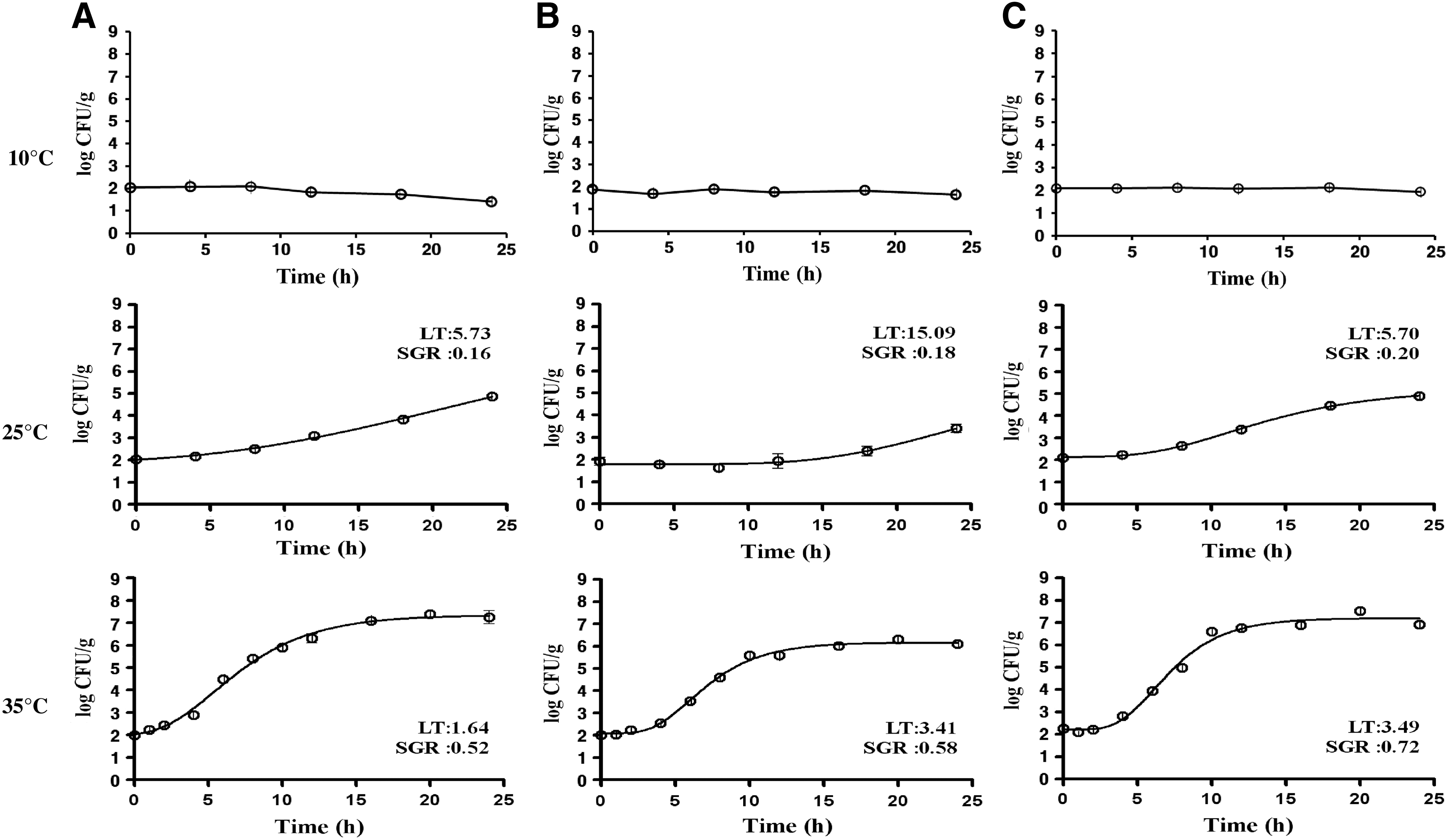
The growth kinetics of Staphylococcus aureus in iceberg lettuce
At 10°C, the growth of S. aureus was not observed in all samples. At 25°C, the lag time (LT) of S. aureus in chicory was 15.09 h (Fig. 1B), the longest time among all samples. Within 24 h, the populations of S. aureus in iceberg lettuce, chicory, and cabbage reached 4.87 (Fig. 1A), 3.40 (Fig. 1B), and 4.88 (Fig. 1C) log CFU/g, respectively. At 35°C, a significant difference in LT values was observed among the different types of leaf vegetables (p < 0.05). In particular, the LT of iceberg lettuce (1.64 h) was significantly (p < 0.01) reduced compared with chicory (3.41 h) and cabbage (3.49 h). On the other hand, the specific growth rate (SGR) of S. aureus at 35°C was three times faster than those at 25°C and S. aureus in all leaf vegetables reached the stationary phase within 15 h at 35°C. The fastest growth of S. aureus was observed in cabbage at both 25°C and 35°C (Fig. 1C). The maximum population density (MPD) of S. aureus in cabbage was 7.51 log CFU/g, followed by iceberg lettuce (7.43 log CFU/g) and chicory (6.30 log CFU/g). Similar to the results of the current study, Nicholl and Prendergast (1998) reported that shredded cabbage gave the highest log cycle increase of total aerobic mesophiles among salad ingredients. The slowest growth of S. aureus in chicory may be related to antimicrobial components in chicory, which might prevent the growth of spoilage bacteria and potentially dangerous species, such as A. hydrophila, as reported in previous studies (Marchetti et al., 1992; Guerzoni et al., 1996). The growth potential of E. coli in various leafy extracts was also studied. They reported that spinach was a better matrix to support E. coli growth than parsley and iceberg lettuce due to their different composition in vegetable tissues (Posada-izquierdo et al., 2016). Tian et al. (2012) studied the survival and growth of various foodborne pathogens on minimally processed vegetables at different storage times and temperatures. They reported that the population of S. aureus on iceberg lettuce at 15°C increased by 0.98 log CFU/g for 24 h and 2.35 log CFU/g for 7 days, whereas little growth (0.46 log CFU/g) was observed at 4°C for 15 days. From our results, we also recommend holding leaf vegetables at 10°C to prevent the growth of S. aureus before serving to consumers at restaurants. Maffei et al. (2016) also emphasized immediate refrigeration of ready-to-eat vegetables after the washing step to avoid postprocessing recontamination. However, if the salad was contaminated with high levels of S. aureus, additional control measures, such as sanitization, are required.
Section II. Effect of reheating and holding temperature on the control of B. cereus vegetative cells and spores in fried rice
Effect of reheating on the reduction of B. cereus vegetative cells and spores in fried rice
To simulate the temperature and time for reheating of fried rice at restaurants, reheating in a frying pan with medium heat (FM) or high heat (FH) for 3 or 4 min was used and compared with reheating in a microwave oven (MW). The effect of reheating conditions (internal temperature of medium heat: 69.2°C ± 2.0°C for 3 min, 78.8°C ± 5.1°C for 4 min, high heat: 103.8°C ± 7.6°C for 3 min, 121.4°C ± 2.3°C for 4 min, and microwave oven: 86.3°C ± 0.3°C for 3 min, 90.6°C ± 0.3°C for 4 min) on the reduction of B. cereus vegetative cells and spores in fried rice is also shown in Table 2. A total of 300 g of fried rice was inoculated with B. cereus vegetative cells or spores as an initial level of 4.41 or 4.02 log CFU/g, respectively. Reheating fried rice in a frying pan with medium heat reduced the populations of B. cereus vegetative cells and spores by less than 1.0 log CFU/g, in all cases. On the other hand, reheating using a frying pan with high heat reduced populations of B. cereus vegetative cells and spores by more than 1.0 log CFU/g in all cases. The lowest reduction (0.49 log CFU/g) was observed in B. cereus spores in fried rice, which was reheated in a frying pan with medium heat (internal temperature of fried rice was 69.2°C ± 2.0°C for 3 min). The highest reduction (2.34 log CFU/g) was observed in B. cereus vegetative cells in reheated samples for 4 min in a frying pan with high heat. The most effective reduction was observed in reheated samples for 3 min in a microwave oven for both B. cereus vegetative cells (3.41 log CFU/g) and spores (3.02 log CFU/g), considering the minimum detection limit of less than 1.0 log CFU/g (Table 2).
Mean ± standard deviation (n = 3).
Percentage of reduction (%).
FH, frying pan with high heat; FM, frying pan with medium heat; MW, microwave oven (700 W); ND, not determined.
Although the internal temperature of reheated fried rice in the microwave oven (86.3°C ± 0.3°C for 3 min and 90.6°C ± 0.3°C for 4 min) was lower than that in frying pan with high heat (121.4°C ± 2.3°C), a greater reduction effect on B. cereus vegetative cells and spores were observed in reheated fried rice by the microwave oven. These results indicate that a microwave oven is more effective on the reduction of B. cereus vegetable cells and spores compared with reheating with a frying pan. A microwave oven is effective in the inactivation of microorganisms, resulting in higher efficiency and better quality products compared with conventional heating processes (Shenga et al., 2010; Ojha et al., 2016). Thermal inactivation of Bacillus (Khalil and Villota, 1986) and Clostridium spores (Ojha et al., 2016) in a microwave oven was much more effective than that of conventional heating methods. The death rates of E. coli exposed to microwave irradiation were also higher than those obtained in conventional heat sterilization at the same temperature, and death of microorganisms by microwave treatment was due to not only heat but also microwave electric field (Banik et al. 2003).
Hamoud-Agha et al. (2014) reported that nonuniform heating is the main drawback in assuring the microbiological safety of food products through microwave heating. In the current study, fried rice was stirred every 1 min during microwave heating and thus no cold spot was observed in the reheated fried rice. In commercial settings, it is recommended to reheat fried rice using the microwave oven for 3 or 4 min. By stirring the sample in the middle of microwave heating, nonuniformity of microwave field can be prevented. More recent reviews on microwave processing techniques also demonstrate that microwave sterilization can be effectively used to ensure microbiological safety of food products and emphasizes the need for further research to minimize the negative effects on food quality and safety (Guo et al., 2017).
Effect of the holding temperature on the growth of B. cereus vegetative cells and spores in fried rice
After cooking and before serving to consumers at restaurants, the effect of holding temperature on the growth of B. cereus vegetative cells and spores in fried rice was investigated. Figure 2 shows the growth or survival kinetics of B. cereus vegetative cells and spores in fried rice at the temperatures of 10°C, 25°C, 35°C, 45°C, and 60°C. The initial contamination level of B. cereus vegetative cells and spores was 1.41 and 1.40 log CFU/g, respectively.
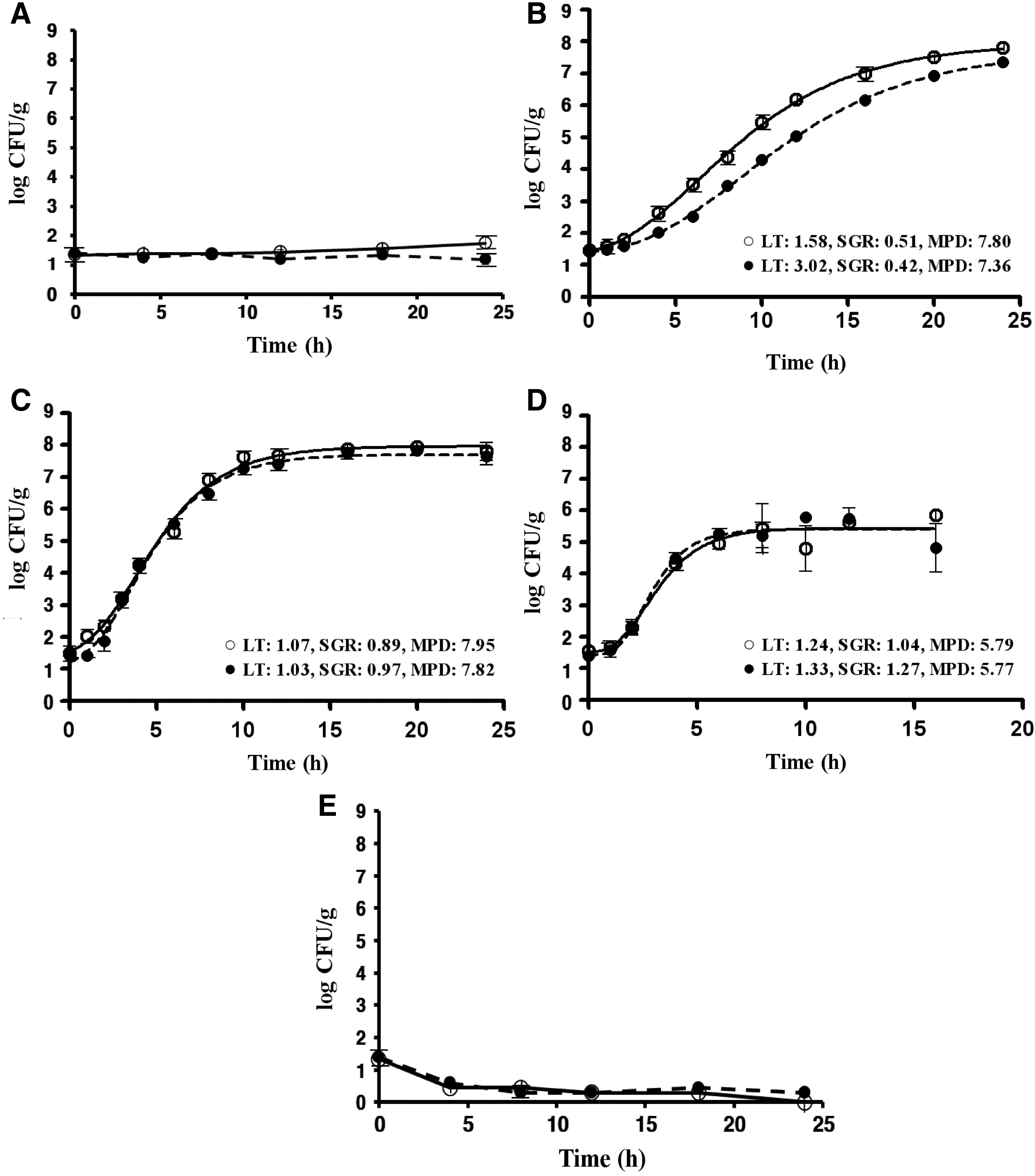
The growth kinetics of Bacillus cereus vegetative cells (○) and spores (●) in fried rice at 10
At 10°C, no growth was observed in both B. cereus vegetative cells and spores for 24 h (Fig. 2A), whereas rapid growth of B. cereus vegetative cells and spores was observed at 25°C, 35°C, and 45°C. At 25°C, the significant (p < 0.05) difference of both LT and SGR values of B. cereus between vegetative cells and spores was observed (Fig. 2B). The LT of B. cereus spores was 3.02 h, which is approximately two times slower than that of B. cereus vegetative cells (1.58 h). The SGR of B. cereus spores was also slower than that of B. cereus vegetative cells. At 35°C, the shortest LT values of B. cereus vegetative cells (1.07 h) and spores (1.03 h) were observed (Fig. 2C). In addition, B. cereus vegetative cells and spores reached a maximum population of 7.95 and 7.82 log CFU/g within 15 h, respectively, which was the highest MPD value among all other temperatures. At 45°C, the SGR of B. cereus vegetative cells and spores increased, whereas the LT values were slightly extended compared with 35°C (Fig. 2D). The MPD was reached within 10 h, which was below 6.0 log CFU/g and relatively lower than those at 25°C and 35°C. The results of the present study differ from those of Wang et al. (2014). They investigated the effect of temperature on the growth of B. cereus in cooked rice and showed that there were no significant differences among the final populations of B. cereus for all temperatures tested (15°C, 25°C, 35°C, and 45°C) for 72 h. This discrepancy may be due to the difference of physiological states of B. cereus cells or strain variations between the two studies. On the other hand, B. cereus vegetative cells and spores cannot survive and declined within 24 h at 60°C (Fig. 2E). According to the food code (FDA, 2014), cooked food should be kept above 60°C. It is recommended that the fried rice should be kept above 60°C before being consumed after cooking or reheating.
In the present study, B. cereus vegetative cells more than 104 per g, the microbiological limit for cooked food in Korea (MFDS, 2016), were attained after 8 h at 25°C and after 4 h at 35°C and 45°C. B. cereus populations in the range of 105 to 106 CFU/mL can produce enterotoxin (Szabo et al., 1991; Beuchat et al., 1997). The optimum temperature for enterotoxin production is 32°C (Kramer and Gilbert, 1989; Fermanian et al., 1997), whereas 12°C–15°C is the optimum temperature for the production of emetic toxin (Finlay et al., 2000). This suggests that the enterotoxin or emetic toxin could be sufficiently produced at room temperatures in a short time period. This current study demonstrates that fried rice containing even low population of B. cereus vegetative cells and spores can be unsafe if it is kept at unsuitable temperatures. Since heat-resistant spores of B. cereus can survive after cooking, storage of cooked rice at improper temperatures can allow spores to germinate, grow, and produce toxins (Daryaei et al., 2013). Thus, fried rice should be kept below 10°C or above 60°C before being served, otherwise, it should be provided to the consumer as soon as possible after cooking or reheating.
Validation of the control measures for microbiological hazards using FSO concept
The effects of the control measures for S. aureus in salads (Fig. 3) and B. cereus vegetative cells (Fig. 4) and spores (Fig. 5) in fried rice were evaluated based on the FSO concept. The washing treatment with a sanitizer for the salad and the heating temperature and time for fried rice were considered as control measures of each microbiological hazard. The holding time required to satisfy the FSO with an acceptable probability (Pa) over 0.99 before serving was also obtained, according to the control measures and the holding temperature (Table 3). For the case of fried rice, the reheating time was set to 3 min because there was no significant difference in the holding time between 3 and 4 min. For the case of salads, washing with TW did not satisfy the FSO for S. aureus. This means that washing with only TW is an unsuitable control measure of S. aureus for salads. At 25°C, the holding time that meets the FSO was 4 h, regardless of the type of sanitizer and washing time. This means that washing with SAEW for 60 s can be also used as a control measure, such as 100 ppm NaClO or 30 ppm SAEW for 5 min. At 35°C, the holding time that satisfies the FSO is 2 h, regardless of the kind of sanitizer, with washing for 5 min.
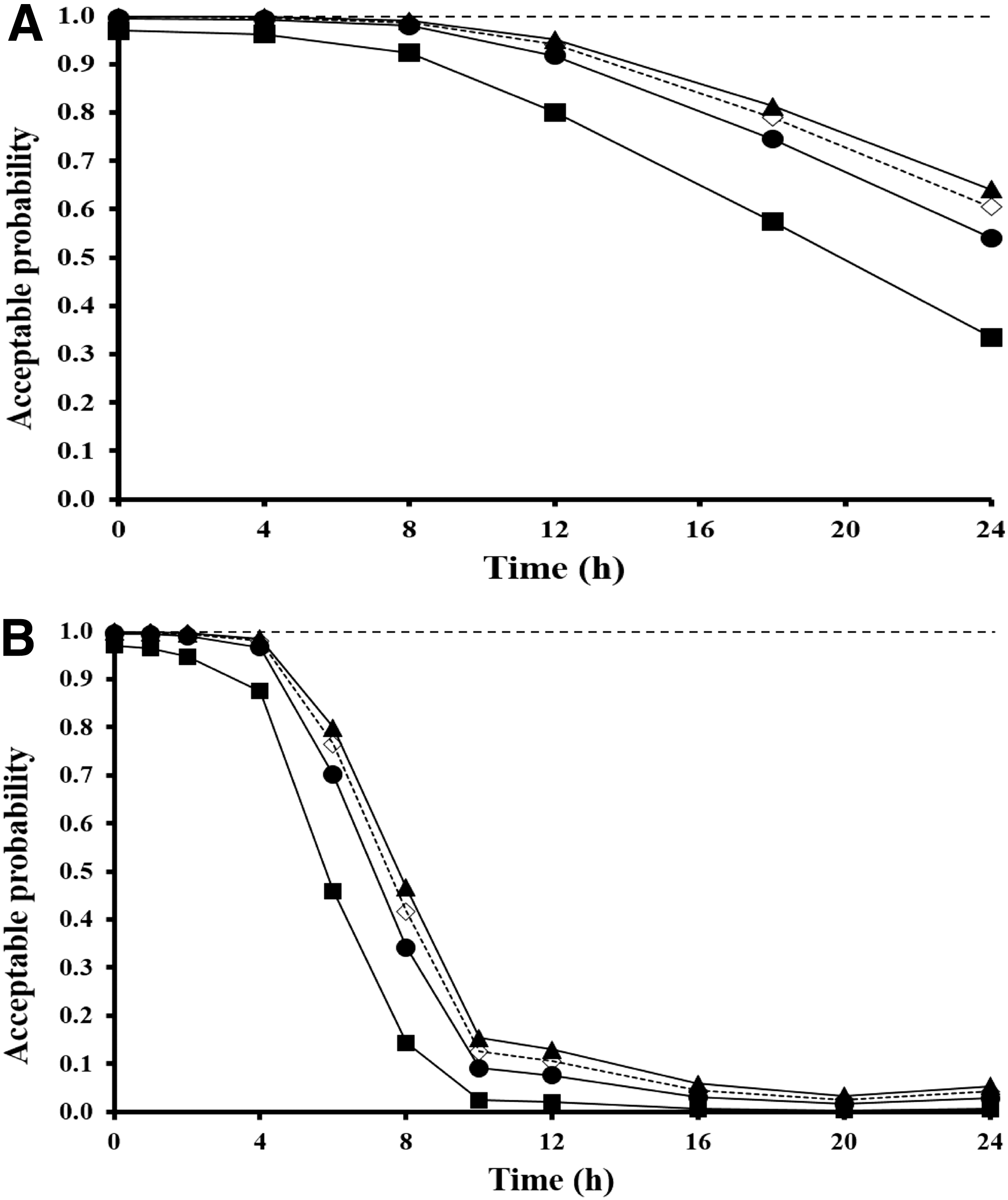
The impact of control measures of S. aureus on leaf vegetables on acceptable probability (99%) for FSO at 25
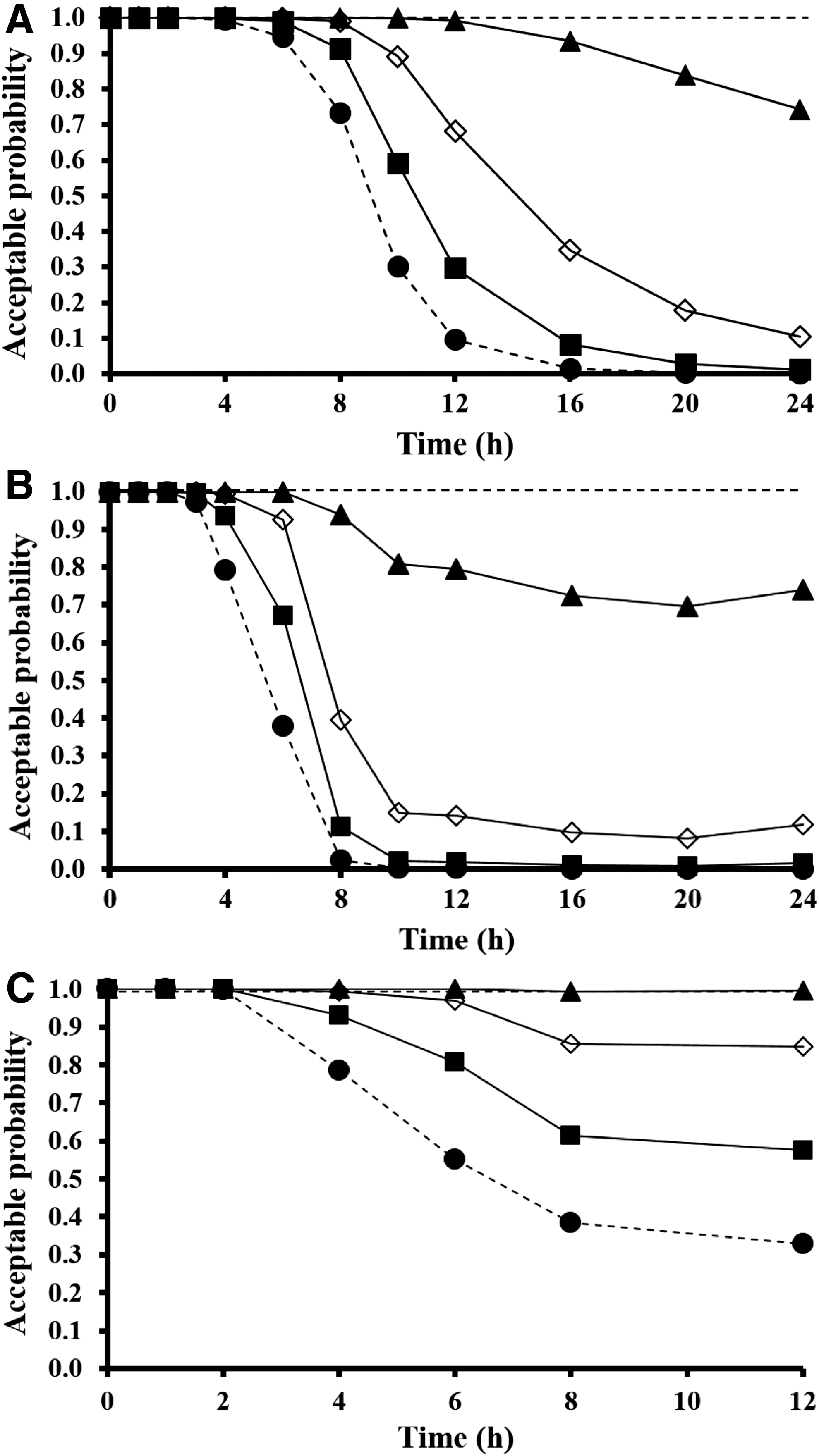
The impact of control measures of B. cereus vegetative cell in fried rice on acceptable probability (99%) for FSO at 25
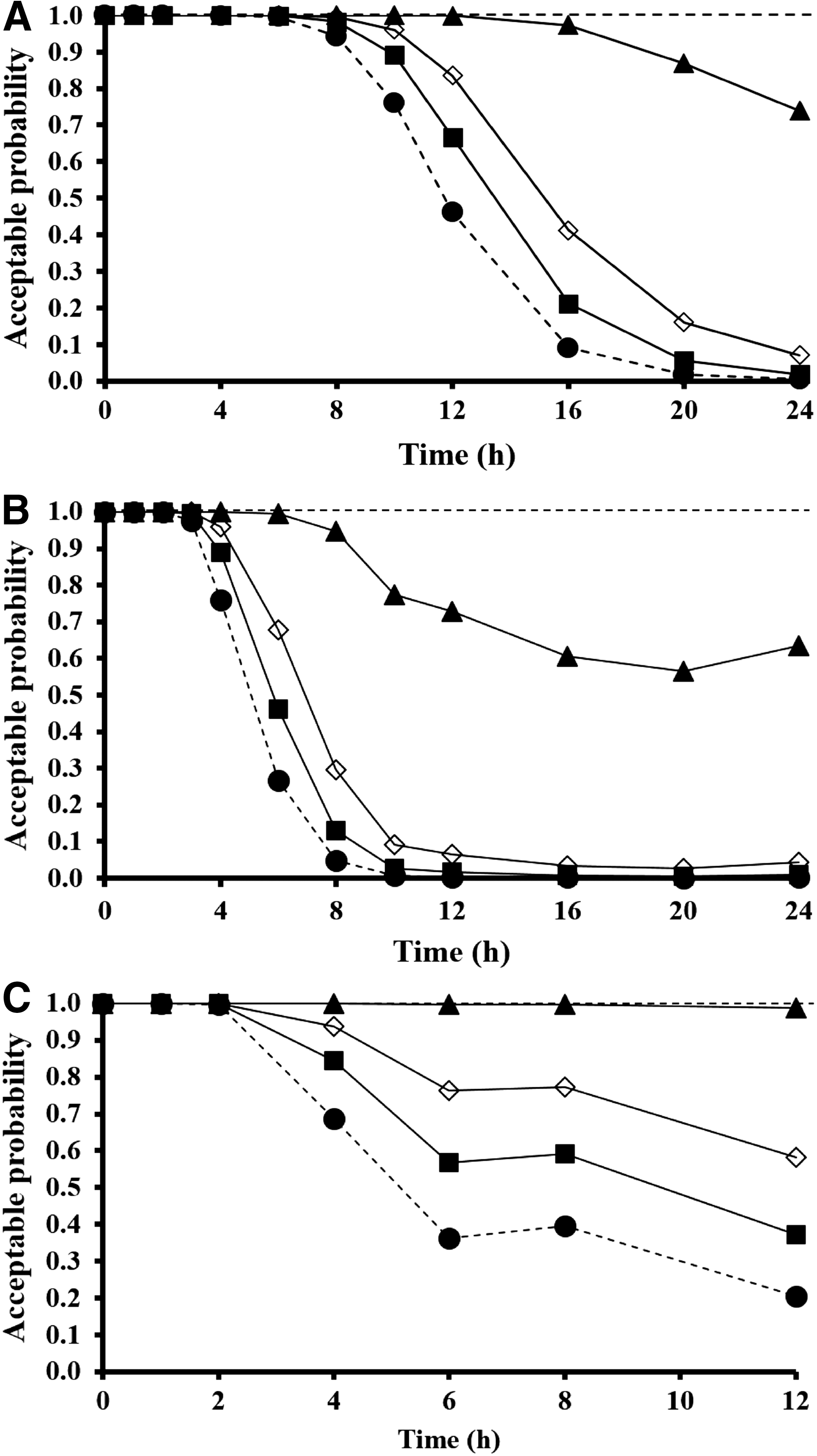
The impact of control measures of B. cereus spore in fried rice on acceptable probability (99%) for FSO at 25
Reheating for 3 min.
Control, without reheating; FH: frying pan with high heat; FM: frying pan with medium heat; MW: microwave oven (700 W); NaClO: Sodium hypochlorite solution (100 ppm); ND, not determined; NS, not satisfied; SAEW: slightly acidic electrolyzed water (30 ppm); SAEWs: SAEW for 60 s; TW: Tap water; v. cell, B. cereus vegetative cells; sp: B. cereus spores.
Along with investigating the effect of the control measures for B. cereus in fried rice, the holding time that meets the FSO for serving fried rice to the consumer without reheating was also examined (Table 3). As control measures for B. cereus vegetative cells and spores in fried rice, reheating using a microwave oven (MW) extended the holding time that meets the FSO compared with reheating with frying pan with medium heat (FM) or high heat (FH). This implies that MW is more effective than frying pan with FM and FH as control measures of B. cereus vegetative cells and spores in fried rice. For the case of using the frying pan with medium heat, the holding time that meets the FSO was the same for both B. cereus vegetative cells and spores. For the case of high heat, the holding time was shorter in B. cereus spores compared with B. cereus vegetative cells.
As observed for salads, the holding time of fried rice at 35°C was shortened by over half compared with 25°C in both B. cereus vegetative cells and spores, indicating that the holding temperature must be controlled to reduce the risk of B. cereus vegetative cells and spores in fried rice. Moreover, the noticeable difference of holding time between B. cereus vegetative cells and spores at 35°C and 45°C was shown in the reheated fried rice by frying pan with high heat. This difference is due to the high survival populations of B. cereus spores by reheating with a frying pan. The B. cereus spore is resistant to environmental stresses, such as heat, radiation, desiccation, extreme pH, and toxic chemicals (Ryu and Beuchat, 2005). The spores can survive at cooking temperatures and germinate and multiply to cause foodborne illness at improper holding conditions (Goepfert et al., 1972).
According to Zwietering et al. (2010), the control measures need to be validated to determine whether the products will meet the FSO as the role of validation is critical in the manufacturing process. Based on the relationship between FSO and control measures, the impact of the control measures for microbiological hazards in salads and fried rice was investigated during salad preparation and reheating steps at restaurant setting in this work. Based on the results of the holding time that satisfy the FSO at each holding temperature, it is recommended that salad should be consumed within 4 h at 25°C and 1 h at 35°C after washing with 30 ppm SAEW or 100 ppm NaClO for 5 min. Without reheating, fried rice should be consumed within 4 h at 25°C and 2 h at 35°C and 45°C. With reheating, the holding time that meets the FSO can be extended up to 6 h at 25°C, 3 h at 35°C, and 2 h at 45°C.
Footnotes
Disclosure Statement
No competing financial interests exist.